The New iTWB

Archive for the ‘SOF’ Category

USAF Stands Up Special Warfare Training Wing

Thursday, October 11th, 2018

To meet the demand for special operations warfighters and improve retention rates for these critical career fields, United States Air Force officials activated the Special Warfare Training Wing Oct. 10, here.
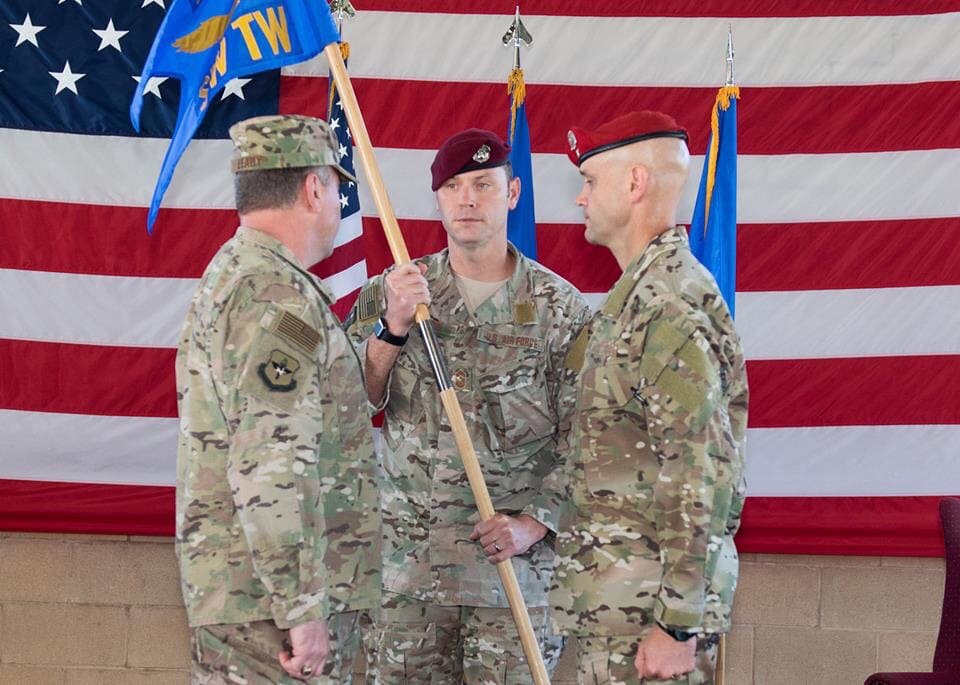
The mission of the new wing is to select, train, equip, and mentor Airmen to conduct global combat operations in contested, denied, operationally limited, and permissive environments under any environmental conditions.

“This new wing will help us provide additional oversight and advocacy for the complex, high-risk and demanding training that’s necessary to produce Airmen to meet the requirements of the joint force,” said Col. James Hughes, SWTW commander.

The new wing headquarters and subordinate organizational structure will consist of approximately 135 personnel. The existing Battlefield Airman Training Group, which was activated in June 2016, has been renamed to the Special Warfare Training Group and will report to the SWTW.

Building upon what the Battlefield Airmen Training Group has started, the previously established five pillars of marketing and recruiting, manpower and leadership, curriculum, equipment and infrastructure will serve as a starting point for the wing.

“Keeping these pillars in mind will allow us to continue focusing on building the best Airman we can from the time they step into a recruiter’s office up until the end of their careers,” said Hughes.

“Wings move the ball forward at an operational and strategic level,” said Hughes. “They can provide structure, oversight, strategic vision and unity of command. But to become a leader in the special warfare community, we have to continue pushing the envelope of science and technology. It all comes down to doing everything we can to create Airmen capable of problem solving across a wide-range of national security challenges to meet the joint force’s needs.”

Additionally, the wing will focus on improving human performance by staying at the forefront of science and technology with the addition of the Human Performance Support Group, a one of kind unit that will integrate specialists from a variety of sports and medical fields into special warfare training to optimize physical and mental performance, reduce injury and speed rehabilitation to create more capable and resilient ground operators.
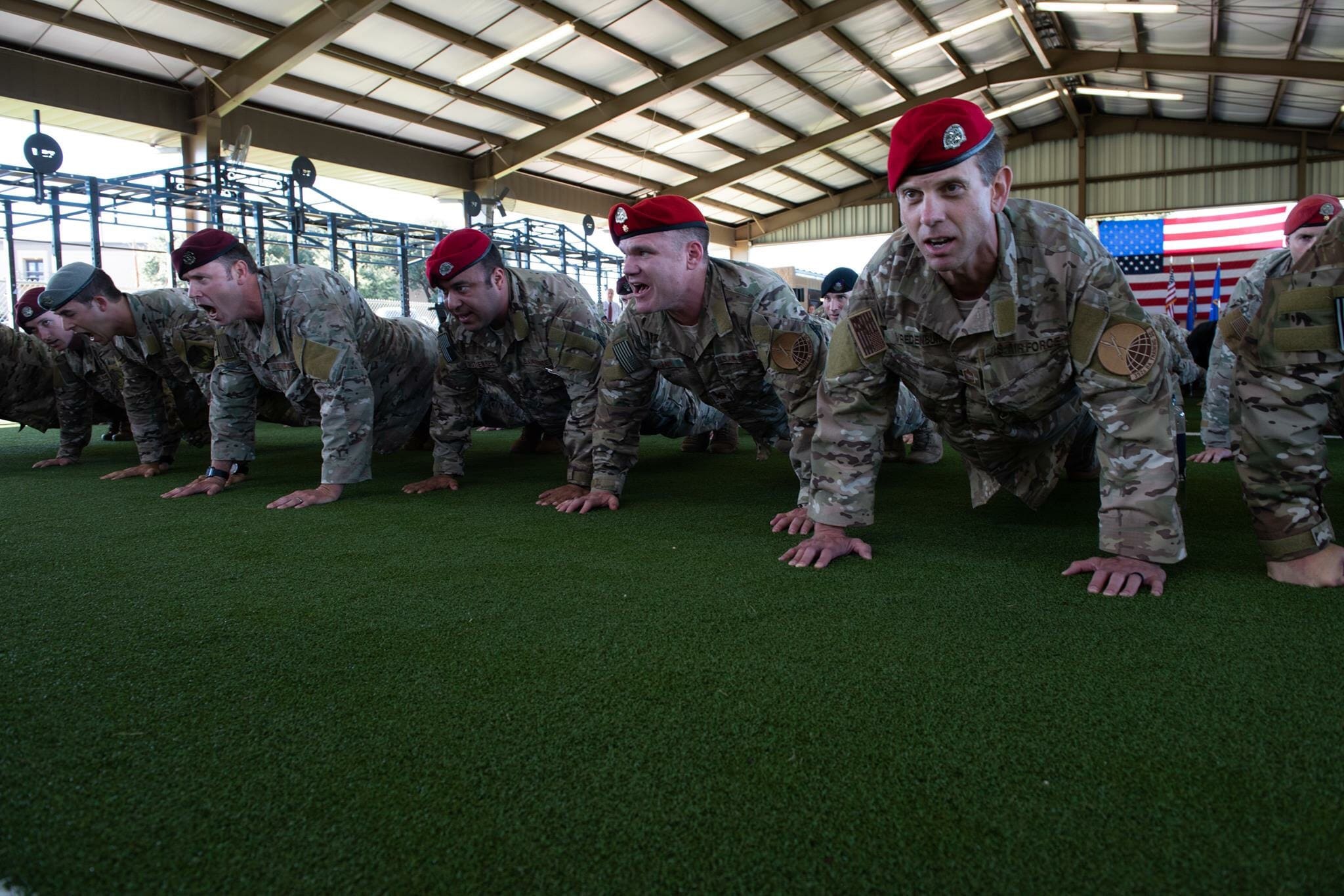
“By pushing the limits of science and technology, we’re going to find the most efficient and effective methods for improving human performance,” said Hughes. “We’re going to take what we already have learned and enhance how we produce the most physically and psychologically fit Airmen possible for the joint force.”

Special Warfare Airmen, previously known as Battlefield Airmen, are the critical ground link between air assets and ground forces. They are trained to operate as a ground component to solve ground problems with air power, often embedding with conventional and special operations forces. Their requirements have grown substantially since 2001 due to the effectiveness of and increasing demand for the precision application of air power in the joint combat environment.

Seven Air Force specialty codes currently fall into the Special Warfare category: Pararescue, Combat Rescue Officer, Combat Control, Special Tactics Officer, Special Operations Weather Team, Tactical Air Control Party personnel, and non-rated Air Liaison Officer. These Airmen share ground combat skill sets and a sharp focus on joint, cross-domain operations.

The first step toward more efficient and effective training is to combine the courses of initial entry for all special warfare candidates into one cohesive course.

“The various Special Warfare Air Force specialty codes are a lot more similar than they are different,” said Chief Master Sgt. James Clark, SWTW command chief. “These courses of initial entry are the bedrock of lethality and readiness. By combining them, we’re making the pipeline much more efficient, while also building a team mentality that focuses on our similarities, rather than our differences.”

This change is also the first step toward answering the most important question facing the SWTW: How do we create and develop the most adaptive and agile leaders possible?” said Clark. “It starts by continuing to be critical of ourselves, while searching for any way to become more efficient in everything that we do.”

www.specialwarfaretw.af.mil

-Air Education and Training Command
USSOCOM Selects SIG SAUER To Provide Squad-Variable Powered Scopes (Second Focal Plane)

Thursday, October 11th, 2018

Late last year, Naval Surface Warfare Center – Crane, working as the weapons procurement arm of the United States Special Operations Command, released a solicitation to industry for Squad-Variable Power Scopes to be used on M4 carbines out to 600m.

The plan was to buy First Focal Plane Scopes and other associated items as a 100% set-aside for small business, while a Second Focal Plane Scope and other associated gear would be full and open competition. SIG Optics replied to the Second Focal Plane Scope portion of the solicitation.

Today, they announced the Second Focal Plane contract, awarding a little over $12 Million to SIG SAUER for the same optic selected by the US Army for the Squad Designated Marksman Rifle.

BF188E67-7EF8-4B40-92EF-90DCAACF48C8

We first wrote about the Tango 6 earlier this year, during Enforce Tac.

This 6x optic is a variant of their commercially available Tango 6 optic, with final assembly in their Oregon plant. You can lock out the red dot on the custom BDC reticle between settings and the optic comes equipped with a throw lever. It also includes a SIG mount, manufactured there as well.

D2AB4D95-C6F1-49FA-B7A9-46A2A853AB9D

SIG plans to offer the Tango 6 for both government and commercial sale.

www.sigoptics.com

USAF Special Tactics History

Thursday, October 4th, 2018

Since we’ve discussed US Air Force Special Tactics in the past, I thought this video would be a good share.

www.airforcespecialtactics.af.mil

25th Anniversary – Battle Of Mogadishu

Wednesday, October 3rd, 2018

As time marches on, younger Americans step into the breach. It’s our duty to teach them about their heritage. Today marks the anniversary of a major event in US military history.

Additionally, the 75th Ranger Regiment was created on this day in 1984, with the stand up of its 3rd Battalion. Over 30 years later, the Ranger Regiment boasts boasts five battalions of some of the most elite warriors on the face of our planet.

But more importantly, this date also marks the 25th Anniversary of 1993’s Battle of Mogadishu during which, elements of TF Ranger which had deployed to Mogadishu, Somalia, conducted an operation on that city’s Olympic Hotel in order to capture key leaders of the Aidid Militia.

Unfortunately, during the exfil portion of the raid, a battle ensued which claimed the lives of 18 Americans and wounded another 73. Additionally, CW3 Michael Durant was captured by the Aideed militia. Fortunately, Durant was later repatriated and went on to retire from the 160th. Of the men killed that day, two would be awarded the Medal of Honor, Delta Operators Gary Gordon and Randy Shughart, for their selfless efforts to protect Durant after his aircraft, callsign Super 64, was shot down.

If you are unfamiliar with the events, one of the best accounts of the battle is contained in the book, “Blackhawk Down” by author Mark Bowden. Much of the information was serialized prior to the book’s publication in the Philadelphia Enquirer. Later this was made into a movie bearing the same name.

Please take a moment to remember these men and their sacrifice.

USSOCOM Selects Nightforce For Squad-Variable Powered Scopes (First Focal Plane) Contract Worth Up To $21 Million

Monday, October 1st, 2018

Late last year, Naval Special Warfare Center – Crane, working as the weapons procurement arm of the United States Special Operations Command, released a solicitation to industry for Squad-Variable Power Scopes to be used on M4 carbines to to 600m.

The plan was to buy First Focal Plane Scopes and other associated items as a 100% set-aside for small business, while a Second Focal Plane Scope and other associated gear would be full and open competition.

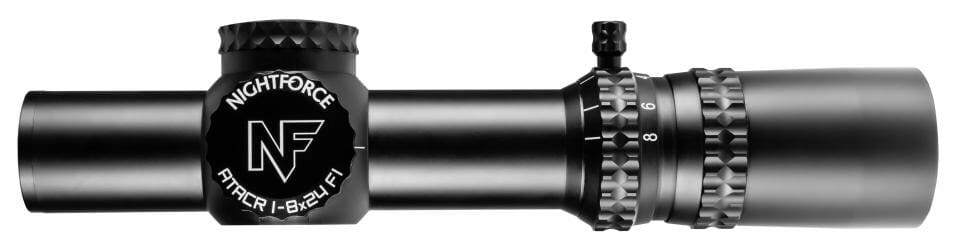
Today, they announced the First Focal Plane contract, awarding a little over $15 Million initially to Nightforce. Ultimately, the contract could be worth as much as $21 Million.

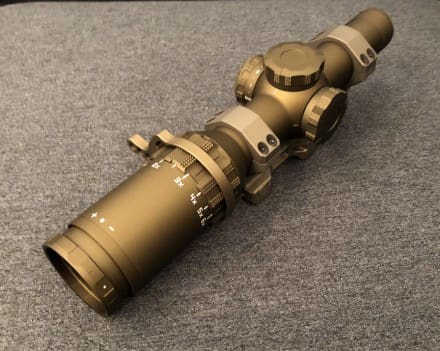
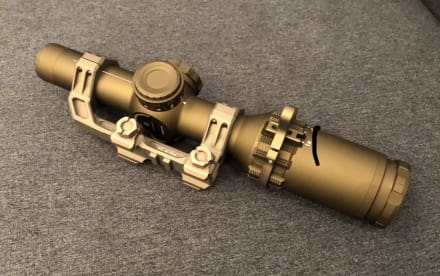
The Optic is the ATACR (Advanced Tactical Rifle) 1-8x. It is similar to the commercial variant except that it will be in FDE and utilize a custom BDC reticle specified by USSOCOM.

This is the DoD announcement:

Lightforce (sic) USA Inc.,* Orofina, Idaho, is awarded a $15,760,499 firm-fixed-price, indefinite-delivery/indefinite-quantity contract for the production of Squad-Variable Powered Scopes (S-VPS) in support of U.S. Special Operations Command.  This procurement is for the S-VPS, spare parts and training. The S-VPS is a low-profile, wide-field-of-view, passive scope for near-range engagements out to and beyond the maximum effective range of the weapon system, for small arms employed by special operations forces. This contract includes options which, if exercised, would bring the cumulative value of the contract to $21,172,435. Work will be performed in Orofino, Idaho, and is expected to be completed by September 2023. Fiscal 2018 procurement (Defense-wide) funding in the amount of $1,512,000 will be obligated at time of award and will not expire at the end of the current fiscal year. This contract was competitively procured via the Federal Business Opportunities website, with five offers received. The Naval Surface Warfare Center, Crane Division, Crane, Indiana, is the contracting activity (N00164-19-D-JQ31).

USSOCOM Replaces EOTech Sights With EOTech Sights

Saturday, September 29th, 2018

Naval Surface Warfare Center – Crane Division, acting as the program office for special operations weapons procurement on behalf of United States Special Operations Command has announced a $23,637,320 contract to L-3 Communications EOTech for Close Quarters Battle Sights. We do not yet have verification of which model was selected.

As you may recall, in September, 2015, we broke the story of severe issues with EOTech Holographic Weapon Sights. Ultimately, many (but not all) units within USSOCOM withdrew the sights from service and the US Department of Justice charged L-3 Communications with fraud. L-3 settled for over $25 million. This led to a massive commercial refund program by EOTech, taking back virtually any EOTech sight identified by customers.

SOF units tested and fielded various interim replacements and USSOCOM undertook a formal program to identify a replacement as part of their Miniature Aiming System – Day suite of optics. This contract award is a result of that effort.

Internally, EOTech cleaned house, fixed their production issues, and introduced the VUDU line of telescopic sight. It’s a testament to the dedication of EOTech that they were able to turn themselves in three years and win the business back. I’m impressed.

Is MultiCam The Future Of USSOCOM?

Wednesday, September 26th, 2018

In the past, there’s always been something interesting in the Marine Special Operations Command Booth and this year is no different. This manikin depicts a MARSOC Critical Skills Operator equipped with the latest and greatest gear.

Currently, the United States Special Operations Command purchases specialized clothing and individual equipment for its personnel in multiple colorways. These include MultiCam, AOR 1 & 2, various shades of Green, Coyote, and M81 Woodland, to support the various missions of its different components.

US Army Special Operations Command and Air Force Special Operations Command have been using MultiCam for over a decade, while Naval Special Warfare Command has used the AOR 1 and 2 camouflage patterns for Desert and Jungle environments, respectively. MARSOC, the newest SOF component, has relied primarily on Coyote PPE and M81 Woodland uniforms due to years of working as advisors to the Afghanistan National Army. Otherwise, the CSOs have worn Marine Corps Combat Utility Uniforms and 782 Gear in MARPAT Woodland or Desert.




For some time now, SOCOM has considered whether to transition all four components to a common camouflage pattern in order to streamline acquisition. For a short period, this looked to be the case, but a fiscal reality may have thrown a glitch into the plan.

For years, NSW has relied on the AOR patterns which are costly to field due to the Command’s small number of personnel and supply chain fabric minimum orders. For example, even if a glove order only requires 2,000 printed yards of a specialized fabric, the printer may require a minimum of 5,000 or even 10,000 printed yards in order to make it worth their while. Fabric that isn’t used still has to be purchased, even if it won’t be used for some time. At one point the process was tying up so much of industry’s working capital that the government took on inventorying the fabric and doling it out for each contract. Considering the number of different, technical fabrics worn by special operators, and doubling the numbers to accommodate two different prints, this can get very expensive.

The idea was raised to transition NSW to MultiCam. Already, individual units within the Command were purchasing MultiCam items for deployments. On the surface, it made sense. But reportedly, when the numbers were crunched, it turns out that replacing WARCOM’s current complement of equipment with brand new MultiCam gear, is more expensive than continuing to pay more for gear printed in AOR. It’s understandable; they can’t have SEALs wearing AOR blouses and MultiCam pants, or carrying packs in one pattern with armor in another. There’s just so much already invested in AOR.

It will be interesting to see at what point the math begins to make sense. Until then? NSW will remain a hybrid, fielding AOR at the program level and purchasing MultiCam at the small unit level.

On the other hand, MARSOC’s wear of M81 Woodland was tied to a specific mission which has all but gone away. The time of the old Woodland pattern is once again over. Aside from that, there has never been a large purchase of SOF-unique clothing for MARSOC. Consequently, procuring clothing and PPE in MultiCam from here on out isn’t as daunting a task. In fact, it’s a smart use of limited resources.

So, is MultiCam the future of USSOCOM? Eventually.

USSOCOM Awards Contract To Hardwire, LLC For Soft Armor

Monday, September 24th, 2018

Back in January of last year, the Unites States Special Operations Command released a requirement for soft body armor in support of the Special Operations Forces Personal Equipment Advanced Requirements (SPEAR) program.

For those of you who are fixated on price being the government’s number one factor for selection of a solution, this isn’t always the case. For this solicitation, they were intent on the best value with appropriate consideration given to the major factors listed in descending order of importance: Technical/Management, Past Performance, and Price. Technical/Management is significantly more important than Past Performance, which is significantly more important than Price.

Specifically, the Technical/Management Factor (Factor 1) is significantly more important than the Past Performance Factor (Factor 2), which is significantly more important than the Price Factor (Factor 3). With regard to Factor 1, Subfactor 1 is significantly more important than Subfactor 2 which is significantly more important than Subfactor 3 which is significantly more important than Subfactor 4:

Factor 1 –TECHNICAL / MANAGEMENT
Subfactor 1: Weight?Subfactor 2: Soft Armor Limited User Evaluation?Subfactor 3: Technical Approach and Independent Ballistic Test Data

Subfactor 4: Delivery Schedule and Production Capacity/Capability

Factor 2 – PAST PERFORMANCE

Factor 3 – PRICE

They cancelled this initial solicitation at the end of April of this year because none of the offerors could meet the spec, which remains classified.

The solicitation was re-released in July of this year and an award was announced on September 20th to Hardwire, LLC of Pocomoke City MD. The award is a five-year, IDIQ, Firm Fixed Price contract for a minimum of $100,000.00 and a ceiling of $8,000,000.00.