Archive for the ‘Advertiser’ Category
TNVC Presents: Decisive Action
Thursday, November 17th, 2022Griffin Armament Announces DUAL-LOK PSRTM Rifle Suppressors
Thursday, November 17th, 2022Watertown WI, Wed Nov 16 2022

Reflex Suppressors, or Over the Barrel Suppressors have been manufactured for quite some time, but recently haven’t been the focus by mainstream manufacturers. Griffin first made over the barrel suppressors over ten years ago with the introduction of the RSTA and SPR models. Meant to diminish blow back, provide superlative accuracy, excellent POI shift characteristics and add minimal system length, these suppressors were highly desirable among suppressor aficionados. Griffin is reintroducing next generation over the barrel suppressors with the DUAL-LOK PSRTM suppressor series. However, before going into detail on these models, a brief discussion on the history of reflex suppressors is warranted.


Unlike an integral suppressor, which typically has drilled holes in the barrel of the host firearm and the tube extending over the barrel; the over the barrel suppressor has an attachment system which goes rearward of the barrel’s muzzle by several inches thus making a shorter overall length suppressed firearm. Despite the long length of the suppressor itself, this allows for a ~9 inch suppressor to be something like only 6.5 inches or so of added length to the barrel. Popular Vietnam War era suppressors were all over the barrel varieties. Fast forward to a more modern time, the company Ops Inc, started providing these style suppressors in the early 1990’s and later became prolific integrating its suppressors with the SOF communities MK12 MOD0 and MOD1 firearms. Around the same time Knights Armament also started engineering similar products. In the early 2000’s, AAC, and Surefire started manufacturing over the barrel suppressors as well for military sale. These suppressors targeted the sniper community. Semi-automatic and bolt action rifles in the sniper community used over the barrel suppressors almost exclusively for some time in both the Army and Marines until about 2010. This was most likely due to accuracy being more consistent in harsh field use with over the barrel suppressors vs muzzle mounted variants. Fast forward to today and over the barrel suppressors are still in use by the sniper communities but not very popular by commercial recreational users due to their more limited versatility. Griffin introduced the RSTA and SPR around 2010. These suppressors were well liked by the small community of end users who purchased them due to their single piece muzzle devices which were much easier to install vs multi piece mounting systems from companies like OPS inc. Griffin refocused engineering efforts towards more mainstream muzzle mounted products around 2016 and chose to discontinue those models.

In the last several years Griffin has been spending considerable research efforts on developing lighter suppressors with better mounting systems and higher performance baffle technology. The advent of these developments brought about a reason to revisit the over the barrel suppressors. Current Griffin ECO-FLOWTM baffle tech is much more capable of using the volume of space in the large blast chambers of over the barrel suppressors. Laser welding technology has also allowed for light-weight tubeless versions of these suppressors which historically had a very negative weight impact vs muzzle mounted suppressors. The DUAL-LOKTM mounting system provides high performance attachment, greater user confidence, and a more modern feature set. Incorporating it into the over the barrel DUAL-LOK PSRTM series allows for a rigid locking system in an extremely accurate taper interface mount. Rough handling of the firearms muzzle device is not an issue with the PSR cans as there is a redundant support structure that forces alignment to be as exceptional as a brand new mounting interface regardless of dings and handling abuse common to the sniper field environment. The suppressors feature the patent pending pressure reduction front cap with integrated flash suppressor for extremely low flash. Blow back is lesser than previous Griffin RSTA and SPR suppressors in part due to the ECO-FLOWTM baffles as well as the patent pending end cap, and other internal geometric nuances. These suppressors are ear safe on gas operated firearms making them a perfect fit for bolt actions or semi-automatic systems.

“The DUAL-LOK PSRTM suppressors offer the benefit of over the barrel suppressors for precision rifles with weight penalties similar to lighter muzzle mounted systems. These are the best over the barrel suppressors available in the industry today.”
– Austin, Lead Design Engineer, Griffin Armament

DUAL-LOKTM suppressors are machined in Griffin’s Watertown Wisconsin facility by freedom loving Americans.
Key points :
• Patent pending DUAL-LOKTM wear free mounting system, requires no consumable parts
• Taper lock interface ensures security and accuracy
• ACME thread provides speed of attachment
• Locking ring incorporates 3 anti-rotation teeth to eliminate inadvertent loosening
• 120 effective positions ensure a rock-solid suppressor mount and provide extremely low POI shift
• 17-4 stainless steel & 718 Inconel materials
• Tubeless laser welded design
• Patent pending ECO-FLOWTM baffle system for reduced blow back
• Patent pending Pressure Reduction Cap with integrated flash hider
• 3/4” wrench flats on muzzle devices
• Collar Nitrided black and PVD’d on FDE models for increased surface hardness, corrosion, and wear resistance
• Heat treated and Cerakoted Black and FDE in a heat resistant finish
• Warrantied for life with Griffin’s Perpetual Lifetime Warranty
DUAL-LOK PSRTM 5 Specs:
• DIMS: 1.5”x 8.4”
• Weight: 14.9oz
• Sound pressure Level: 129.7db (16” 5.56mm Griffin MK1)
• MSRP: 1195.00
DUAL-LOK PSRTM 7 Specs:
• DIMS: 1.5”x 8.9”
• Weight: 15.8oz
• Sound pressure Level: 137.6 (16” 7.62mm AR10)
• MSRP: 1295.00
Muzzle devices supported :
• DUAL-LOK PSRTM muzzle brake
• DUAL-LOK PSRTM flash suppressor
Thread pitches supported:
• 1/2×28 (5.56mm)
• 5/8×24 (7.62mm)
To find out more on Griffin Armament’s entire product line, please visit their website at www.GriffinArmament.com. For attendees of the 2023 SHOT Show, Griffin Armament will be exhibiting the Optimus, along with the rest of their product line. Booth #20458.
BAE Systems’ New CV90 Variants Add Capabilities and Combat Efficiency for Swedish Army
Thursday, November 17th, 2022BAE Systems is launching two new variants of the CV90—the Forward Maintenance vehicle and the Combat Engineer vehicle—to support Swedish Army requirements

ÖRNSKÖLDSVIK, Sweden — Nov. 16, 2022 — BAE Systems has signed a follow-on contract worth $90 million with the Swedish Defence Materiel Administration (FMV) for two new CV90 variants, which are being added to the Swedish CV90 RENO upgrade program.
The two new variants will be delivered by BAE Systems’ Swedish joint venture HB Utveckling AB, which brings together BAE Systems Hägglunds and Bofors manufacturing capabilities. The new variants are the Forward Maintenance vehicle, which will provide critical frontline support, repair, and recovery for other vehicles, ensuring improved overall combat vehicle availability; and the Combat Engineer variant, which will significantly grow the ability to ensure route clearance and deny enemy forces mission critical mobility. These two new variants will join the Swedish Army’s mechanized formations with deliveries scheduled between 2023 and 2027.
“We are proud to be producing these two new CV90 variants for the Swedish Army,” said Tommy Gustafsson-Rask, managing director of BAE Systems Hägglunds. “The collaborative approach involved in the Swedish CV90 RENO program has been recognized as a key success factor in achieving a timely, balanced, and cost-effective solution to meet the customer’s capability requirements. We look forward to supporting our Swedish customer in increasing their combat efficiency.”
The two new CV90 variants will be produced at BAE Systems Hägglunds’ facility in Örnsköldsvik, Sweden and by Ritek in Levanger, Norway. Ritek is one of BAE Systems Hägglunds’ key industrial partners in the Norwegian CV90 program. Ritek’s role in this Swedish program is a significant milestone, moving Ritek into the international CV90 supply chain.
“Ritek has demonstrated that it has the industrial capability and skills required for such a program,” said Peter Sedin, BAE Systems Hägglunds’ director of operations. “As our production partner for a similar Norwegian Army program, it made sense to turn to Ritek when we were looking for the optimal industrial setup for this important FMV contract.”
There are approximately 1,300 CV90s in service with Denmark, Estonia, Finland, Norway, Sweden, Switzerland, and the Netherlands. The vehicle has a combat-proven track record and is designed to accommodate future growth to meet evolving missions. More recently, both Slovakia and the Czech Republic have selected CV90 to replace their legacy infantry fighting
vehicle fleets.
The CV90 will now be available in 17 variants and is designed to provide optimum mobility, with the highest level of protection in any terrain or tactical environment. The CV90 MkIV combines improved battlefield speeds and handling with an upgraded electronic architecture to support future growth capabilities as the complex battlefield evolves.
Emissary Development – TLR1 Paddle Shifter
Wednesday, November 16th, 2022
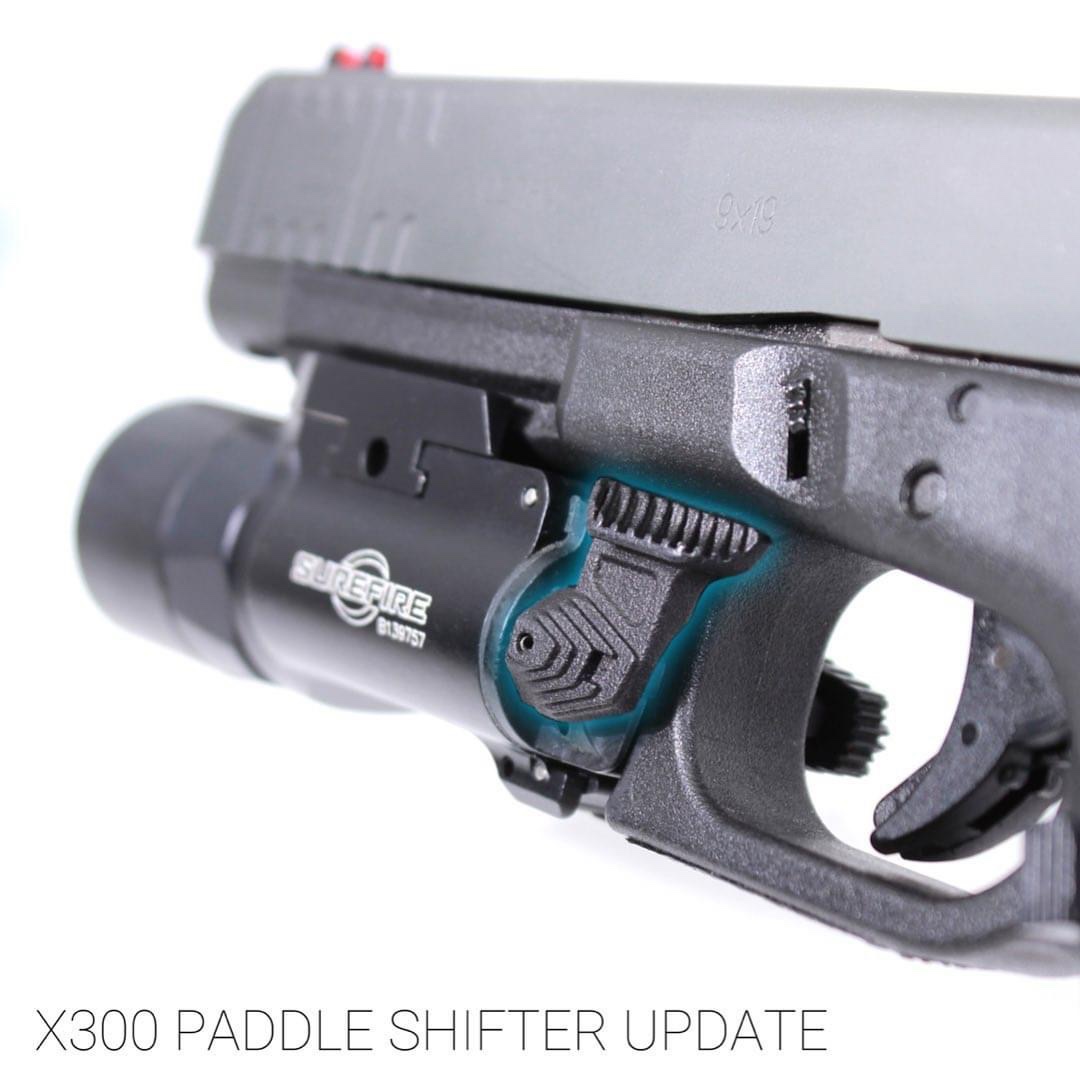
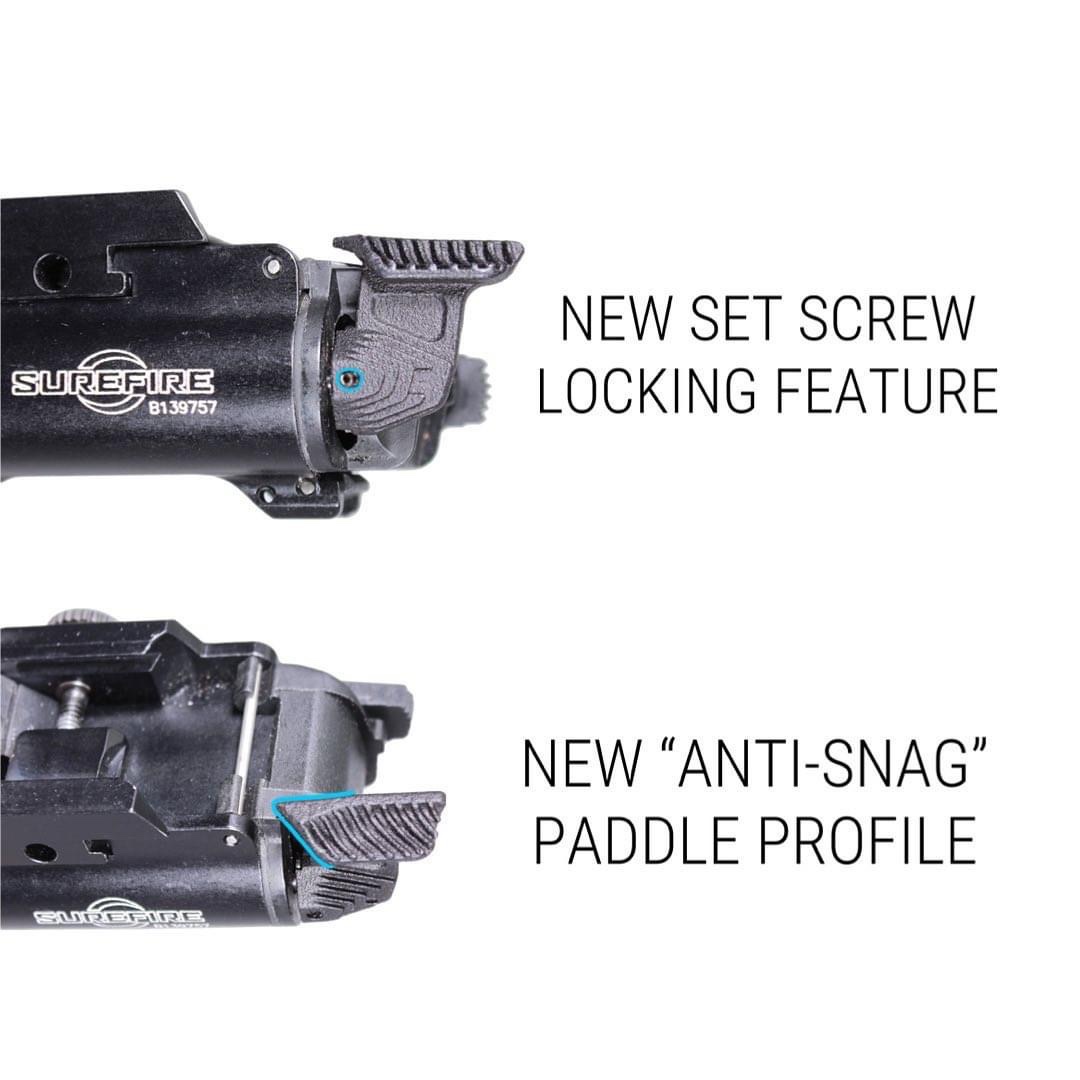
Emissary Development has just released the TLR1 compatible version of their Paddle Shifters.

The Paddle Shifter is a direct replacement for the stock Streamlight TLR-1 switch and is available in extended (momentary)or standard (constant-capable) sizes. These are made in the USA and come with an installation tool.


Get yours at emissarydevelopment.com/product/paddle-shifter-for-streamlight-tlr-1
Rheinmetall Takes Over Spain’s Expal Systems S.A. – Move Brings the Group New Ammunition Production Capacity
Tuesday, November 15th, 2022Rheinmetall AG today concluded a purchase contract with MaxamCorp. Holding S.L. of Madrid to acquire the entire share capital of Expal Systems S.A of Madrid, a globally renowned ammunition maker. Completion of the transaction, for which a closing date in summer 2023 is sought, is subject to approval by the competition authorities and other regulatory checks. The purchase price agreed between Rheinmetall and MaxamCorp., which is due after closing, is based on an enterprise value of €1.2 billion.
In making this acquisition, the Düsseldorf-based technology enterprise is seeking to bolster its core weapon, ammunition and propellant business in a sustained way, with increased spare production capacity and an expanded product portfolio the prime focal points.
In a dynamic market situation propelled by massive demand for military equipment in multiple countries, the acquisition provides Rheinmetall with swift access to significantly greater capacity. Given the expected large increase in demand from numerous nations, Rheinmetall wants to position itself as strongly as possible to address the anticipated inflow of new requests for tender for ammunition purchases. Of special strategic importance to Rheinmetall in this context is the resulting access to extra production capacity for propulsions and charges, which are subject to bottlenecks in Europe in the meantime.
Because the product spectrums of the two companies complement each other so well, the acquisition substantially augments Rheinmetall’s existing range of products, especially in the fast-growing market for artillery and mortar ammunition as well as mortar systems. The buyout also adds to Rheinmetall’s portfolio in the field of fuses and rocket propulsion systems, for example, as well as in medium-calibre ammunition and aircraft armament, while simultaneously reducing the Group’s dependence on suppliers for some industrial intermediates and ammunition components.
In important areas like purchasing and sales, synergies will have a positive impact on costs, which will also benefit customers.
Thanks to this acquisition, Rheinmetall is gaining a valuable strategic foothold in Spain, and thus direct access to this important market. Rheinmetall sees maintaining the company’s existing technology and staff as essential; all operational locations (Trubia, Burgos, Navalmoral, El Gordo, Albacete and Murcia in Spain as well as Texarkana, Texas in the USA) are therefore to remain open.
Expal Systems S.A. expects sales in FY 2022/23 to be around €400 million.
The company’s total capacity offers scope for potential annual sales of €700 to €800 million.
Introducing the RECC·E Carbine Stock by Reptilia
Tuesday, November 15th, 2022
15 November 2022
After more than two years of development and testing, Reptilia is proud to announce the RECC·E Stock for AR15/M16 and AR10/SR25 pattern rifles. Designed at the request of a military end user, the RECC·E Stock features a constant cheek weld, ambidextrous QD sling attachment points, rubber buttpad, and a modular design that allows usage of a standard AR15 carbine buffer system, or A5/SR25 carbine buffer system by replacing the receiver extension (buffer tube) and forward portion of the stock. Weighing only 12.0 ounces including the proprietary AR15-length receiver extension, the RECC·E stock is the ideal lightweight solution for the entire spectrum of AR-pattern guns from compact to precision.

Technical Specifications:
• Proprietary Receiver Extension: 7075-T6 Aluminum, Type III Milspec Anodized Finish
• Materials: Impact Modified, Glass-Filled Nylon Polymer
• Weight (AR15/M16): 12.0 oz.
• Weight (AR10/SR25): 12.7 oz.
• Length of Pull (AR15/M16): 10.8 in. – 14.2 in.
• Length of Pull (AR10/SR25): 11.6 in. – 15.0 in.

The initial production run of AR15-length RECC·E Stocks will be available exclusively through RSR Group for dealers, and direct to consumers at www.reptiliacorp.com. MSRP: $159.95 including receiver extension (buffer tube) and all mounting hardware. AR10/SR25 RECC·E Stocks will be available in late Q1 2023.

For further information, please contact sales@reptiliacorp.com or visit www.reptiliacorp.com.
SCUBAPRO Sunday – Operation Vengeance
Sunday, November 13th, 2022One of the biggest codebreaking achieved by Naval intelligence during WWII was on April 14, 1943, they learned that Adm. Isokoru Yamamoto was preparing a visit to the upper Solomon Islands to inspect Japanese bases. Commander in Chief Pacific Fleet Adm. Chester W. Nimitz immediately relayed the details to Secretary of the Navy Frank Knox, who informed President Franklin D. Roosevelt. According to reports, the president’s response was “Get Yamamoto.” Whether or not the president actually said those terms, the order was given to assassinate the mastermind of the Pearl Harbor attack.

Ironically, the object of American vengeance had repeatedly put his life on the line by speaking out against US wars. He saw how poor industrial Japan was in comparison to the United States and the United Kingdom because of his postings in America and England.
When asked how he thought a war between Japan and America would go, Yamamoto replied that he would “run wild for six months or a year, but after that I have absolutely no confidence.”

“It is a mistake to consider Americans as luxury-loving and weak,” Yamamoto said in a meeting with classmates from his hometown of Nagaoka on Sept. 18, 1941. Remember the American industry is much more mature than ours, and they have unlimited oil supplies, unlike us. Japan would never be able to defeat the United States. As a result, we should refrain from fighting the US.”
When his government decided to go to war, Yamamoto put his personal feelings aside and pledged to do everything in his power to win.
Yamamoto was playing chess with a member of his team, Capt. Yasuji Watanabe, when they learned over the radio about the assault on Pearl Harbor and Japan’s subsequent declaration of war. “That’s too bad, Watanabe,” he said. Tell the Emperor that the navy did not intend it this way from the start if I die before you.”

Operation Vengeance is a vengeance-seeking operation.
Adm. Yamamoto was killed when the Betty bomber was shot down over Bougainville on April 18, 1943.
Following that came an incredible run of Japanese victories. The Imperial Japanese Fleet was then defeated at Midway, nearly six months to the day after Pearl Harbor. Yamamoto saw the writing on the wall when the arduous Guadalcanal war ended in early 1943. “I sense that my life must be completed in the next hundred days,” he wrote in a letter to a friend in Marchs. He left for the south to oversee the next phase of the operation.

Operation I-Go was a joint Japanese navy-army aerial counter-offensive launched on April 1, 1943, to halt American advances in the Solomon Islands and New Guinea. Yamamoto, now based in Rabaul, decided on April 13 that he wanted to inspect Japanese bases in the upper Solomons. Yamamoto halted the offensive on April 16, pending the completion of his inspection, after acknowledging without question exaggerated pilot reports of ship sinking’s and aircraft shootdowns.
Eighteen P-38s were chosen and fitted with special drop tanks (sixteen for the assault, two spares). While the others targeted the fighter escorts, a “killer” flight of four fighters led by Capt. Thomas G. Lanphier, Jr. would target the two Betty bombers containing Yamamoto and his staff.

Nimitz had to time his window of opportunity to intercept Yamamoto perfectly. Fortunately for him, his opponent was known for being punctual. Yamamoto’s path was outside the control of naval fighters, but it was within the range of Army Air Force P-38Gs that had recently been deployed to Guadalcanal.
Maj. John Mitchell USAAF, commander of Squadron 339, found himself assisting Vice Adm. Marc Mitscher and other senior commanders in preparing the assault on April 17. The intercept will take place over Bougainville Island. A 1,000-mile round trip was planned, with a 600-mile roundabout approach from the south. Eighteen P-38s were chosen and fitted with special drop tanks (sixteen for the assault, two spares). While the others targeted the fighter escorts, a “killer” flight of four fighters led by Capt. Thomas G. Lanphier, Jr. would target the two Betty bombers containing Yamamoto and his staff.

Operation Vengeance is a vengeance-seeking operation.
Any of the pilots who flew Adm. Yamamoto’s assassination flight, Operation Vengeance. From left to right: William Smith, Doug Canning, Besby F. Holmes, Rex Barber (historians believe he was the pilot who shot down Yamamoto), John William Mitchell, Louis Kittel, and Gordon Whittiker. Roger Ames, Lawrence Graebner, Julius Jacobsen; Eldon Stratton, Albert Long, and Everett Anglin; and unknown, crouching from left to right. Image from the National Archives
The P-38s of Operation Vengeance took off at 7:25 a.m. on April 18, the first anniversary of the Doolittle Raid. They arrived at the intercept point at 9:34 a.m. and saw their objective exactly on time.
While the other planes assaulted the other escorts, Lanphier and 1st Lt. Rex T. Barber of the killer flight split up to target the Bettys and immediate escorts. One P-38 and its pilot, 1st Lt. Raymond K. Hine, were killed when both bombers were shot down.

“That son of a bitch will not be dictating any peace terms in the White House,” Lanphier radioed shortly before noon, as the returning P-38s prepared to land at Henderson Field. Yamamoto was no longer alive. Lanphier’s comment was a misinterpretation of Yamamoto’s words, as he broke radio silence to say. Yamamoto was implying that a military victory over America could not be achieved by winning a single war, or even a series of battles.
The Navy Cross was awarded to any pilot who took part in the assault. The question of who shot down Yamamoto’s plane sparked a debate, with both Lanphier and Barber claiming responsibility. Barber was later identified as the perpetrator by historians.
In Their Own Words – The 215 Gear Origin Story
Saturday, November 12th, 2022During a conversation with Eric at Soldier Systems, he had a great idea about giving some background as to how some of our products were originally designed. Sharing the Sea Story about the background, whilst sipping fine scotch. We will start this series off with how we started 215 GearTM . We go back to 2007, I was 10 years into my military service. My wife was working for Reebok, managing a team of field representatives. This was until Reebok merged with a larger company, with many programs being streamlined prior to the merger. This resulted in the decision for her to either relocate to the corporate office, or stay in Virginia without a job. I was always a gear guy, never being satisfied with what we were issued. For those in at that time frame, most of us were taking the standard field uniform and relocating pockets and adding Velcro. This was all prior to Crye Precision doing what is now the standard for a field uniform. I knew how to sew, but using industrial sewing machines and bartackers was foreign to me. Luckily I had a friend that went to Riggers school and had access to the paraloft. There, we were able to modify our gear. This knowledge would come into play later.
Faced with what to do with the current situation, I had the idea to start a company around making items that were not currently out there for the war fighter. If you were a startup in 2007, we hit a financial low. Banks were unwilling to make loans, the whole thing was a mess. 215 was started in a spare room over the garage, with one sewing machine. We still have that machine to this day, a constant reminder of the humble beginnings we had. We decided early on to do USA manufacturing, which was important to us. In my spare time, I would design, prototype and iterate products. I then turned to a contract sewing manufacturer to produce our first products. At the time, they had 4 major locations, down from a high of 12. With no loans available, we used personal credit cards to purchase raw materials for the products. Maxing credit cards and paying them, maxing and paying them. I’d like to take the opportunity to say, do not do this as a strategy. Obviously that was a huge gamble. After doing this for some time our bank finally gave us a line of credit to move forward with bigger purchases.

We quickly outgrew the spare room and garage, moving to our first industrial warehouse. We stayed there until 2011. Our manufacturing partner was continuing to downsize and it was now harder to quickly iterate our product line. By his time, it was time to decide the greater 215 destiny. We decide to go all in, moving into two large units in another industrial park. We purchased our own equipment and began hiring to move all production in-house. Funny enough, the week we got the keys and began moving, Hurricane Irene hit Virginia Beach. Additionally, I was in a cast from hip to ankle from knee reconstructive surgery. There is nothing like mopping up standing water in your new building. I invested heavily in laser cutting and computer controlled pattern sewing equipment. Knowing as a small company, anything we can do to stay productive and repeatable is key. We stayed there until 2015, when we purchased our own building and land. This would allow us to grow and expand the business, as we see fit. Fast forward to now, I retired mid 2021, 28 years of service. The recent focus has been on bringing metal CNC fabrication and Cerakote spraying into the mix. One of the best things about my military time was always learning new things and overcoming big challenges. There is something awe inspiring about taking a block of metal and murdering it violently with large machinery. I like to think of it as art therapy for the gunfighter.
215 has always been a family owned and operated business. None of this would be possible without my wife. Obviously someone had to run the company while I was training and deployed. We truly are humbled by the support and patronage of the people and units over the years. We have always prided ourselves with providing out of the box, timely solutions for the people doing the job. Our growth has only been because of the people reading this now.
– Jim V
Founder, 215 Gear