FirstSpear TV

Archive for the ‘Advertiser’ Category

SCUBAPRO Sunday – Split Fins vs Paddles Fins

Sunday, March 21st, 2021

When you first went thru dive school, you were giving a set of fins, and that’s what you used. When you got to your command after, you were giving a set of fins, and that’s what you used (most of the time). But as you started to see other guys at the team using different fins and you would ask, “Hey, where did you get those, and do you like them?” You would hear “they use to issue them” or “I bought them at Lynnhaven Dive” (or insect local dive store name). My point is sometimes you never know what else is out there, and I see a lot of people using gear they don’t like, but it is what they were issued.

In the big picture of dive fins, there are two basic blade types paddles and split. Both fins help you move underwater quicker and smoother, although there are distinct advantages and disadvantages of each kind of dive fin. So how do you choose what is the right fin for you? Well, the easiest way is to try different ones out. Remember also that gone are the days that one fin does it all, or I should say one fin needs to do it all. Many people love Jet fins, but there is no point in carrying them with you in the jungle for river and stream crossing or try and put them on over combat boots for an OTB.
In propulsion capacity and air conservation, split and blade fins often vary.

Split fins are based off of a whale’s tail with a slit down the middle, a relatively new choice for divers. When they came out. Instead of only moving them forward, this slit produces a vortex that lets divers get optimum thrusts and pace underwater.

Split fins act much like a propeller: the slit allows water to flow smoothly from both sides of the blade on the upward fin stroke, resulting in a foil shape. By creating the right lift, this shape helps you to step forward through the water. Split fins do not allow you to move fast in the water, and if you are a slow swimmer, there is a good chance you still will be. Their flow-through nature becomes less effective the harder you kick. Their design also provides less movement if you are pushing a lot of weight thru the water.
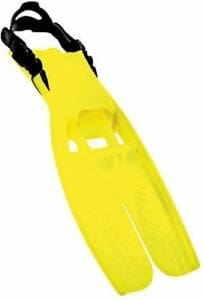
Paddle fins force the water back to help you move forward through the water, and they are more effective than split fins. Paddle fins often differ in length and stiffness, two factors contributing to speed and the kicking force required. Greater stiffness provides you with more forward momentum. Depending on the stiffness, this will make it harder to kick and lead to leg cramps. On the other hand, split fins do not have the rigidity of blade fins since they are relatively light and flexible.

Split fins channel any surface water in and out of their opening rather than over their arms. A spring-like movement is produced by this method, which provides a more robust and solid kick. Usually, you are using a flutter-type kick. It also decreases drag and effort, resulting in greater performance.
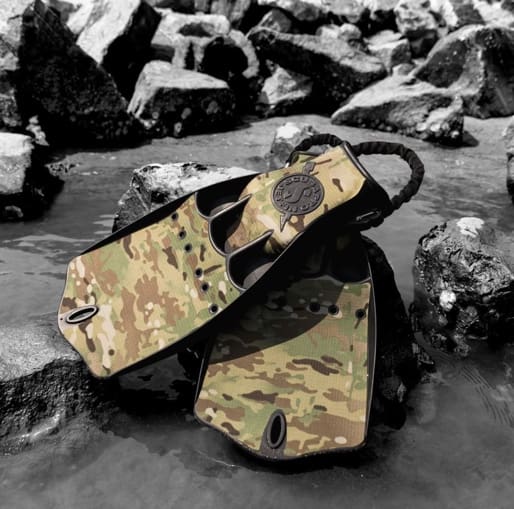
On most paddle fins, you will get spills of water over the sides of their blades. These fins are less powerful than split fins because of this reaction. It also results in more drag, and to go forward; you’ll need to kick more. That being said, many blade fins have ridges and stiffer sides to help fix that problem. The SCUBAPRO SeaWing’s and the Go Sport fins are just a couple of examples of that. I say those two because they are my go-to fins.

Split fins are said to be good for people with ankle or knee issues and divers who easily get cramps. Again, we say the same thing about the SCUBAPRO SeaWing’s  They are good for divers who only go straight without turns or moving in tight spaces. With the proper technique, the split fins can provide less joint pressure and pain because your strokes will feel less effective. I have found that they don’t give as much power for bigger divers, and if you have a lot of gear on, like a Dräger, a limpet, and your swim buddy, you have been pulling for two hours because he is “not a strong swimmer”. But they do have a place and a lot of people like them. The downside is. There are only two types, open or closed heal. There have not been any new break through’s when it comes to them.
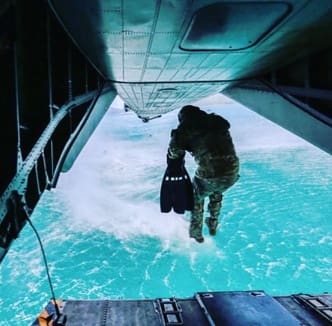
Paddle fins are like the swiss army knife of fins. There are so many different ones to choose from that you can almost always find the right one for the job. They are ideal for use in strong currents or swimming against the tide. They allow you to use different kick styles in more technical dives, like the frog, scissor, reverse, or dolphin, to name a few. Those types of kicks are more effective with paddle-type fins. If you have to pull a lot of weight, like going over the beach with a ruck or have to perform a buddy rescue, blade fins are going to be the best for this. Paddles are also suitable for doing a hook and climb; if you are the guy with the pole doing the hook, paddles are the way to go.
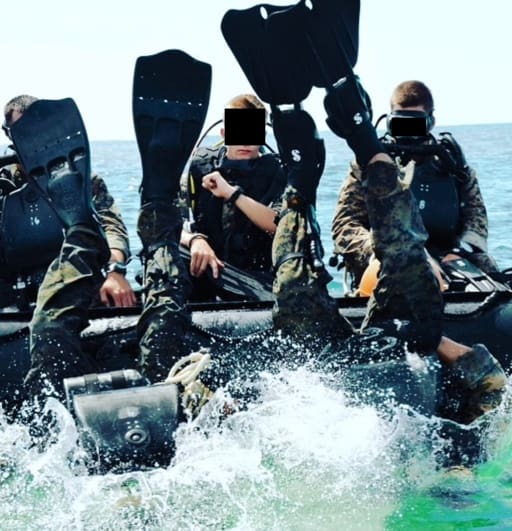
To summarize, split fins have more efficient thrusts and oxygen conservation. They, however, have some drawbacks such as decreased speed and kicking ability. Paddle fins excel in both departments because they give you more strength underwater. Paddle fins may be used in a variety of situations, from combat swimmer to over the beach.

Although split fins have some advantages over paddle fins, it’s difficult to say if they’re better. One of the biggest advantages over the split fins is that there are so many types of paddle fins. It comes down to trying both types of fins out and decide for yourself. I like to look at fins like shoes (I was going to say running shoes, but I do not run, everyone knows it breads cowardness). You are not going to wear the same shoes in the jungle that you would in the mountains. So, if you look at fins like that; you might be able to use just one set but having more than one opens up many more options and helps you do the job better and posable easier.

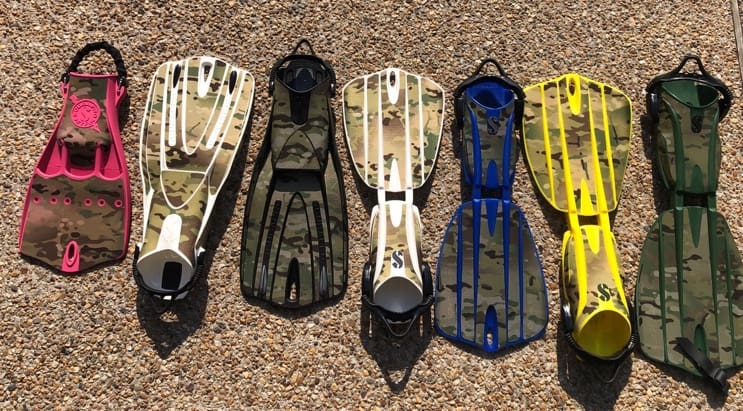
The fins have the Matbock Skins for SCUBAPRO, Jet fins, Seawing and Go Sport fins.

www.matbock.com/collections/skins/products/scuba-pro-skins

German Army Declares “System Panzergrenadier” Fit to Fight: a Milestone for the Puma infantry Fighting Vehicle and Future Soldier – Expanded System

Friday, March 19th, 2021

Supplied by Rheinmetall and its partner companies, the Bundeswehr’s System Panzergrenadier has reached an important milestone. On 18 March 2021, Lieutenant General Alfons Mais, the Chief of the German Army, declared the system fit to fight. He also recommended equipping NATO’s spearhead formation, the Very High Readiness Joint Task Force (VJTF) 2023, which the Bundeswehr will be furnishing, with the new system. In essence, System Panzergrenadier consists of an upgraded version of the Puma – the infantry fighting vehicle made by the Rheinmetall and Krauss-Maffei Wegmann joint venture PSM GmbH – and the VJTF2023 version of the Future Soldier – Expanded System (IdZ-ES) developed by Rheinmetall. Following extensive development and modification work, System Panzergrenadier underwent a three-week-long tactical evaluation at the Bergen major training area on the Lüneburg Heath in northern Germany in February 2021. It passed the test with flying colours.


System Panzergrenadier will substantially enhance the fighting strength and combat effectiveness of the VJTF 2023. Equipped with System Panzergrenadier, this formation will, for the first time in Germany, bring together a digitized vehicle platform – the enhanced VJTF version of the Puma infantry fighting vehicle – and a soldier system equipped for digital radio communication.

System Panzergrenadier offers two key advantages: first, all soldiers, whether mounted or dismounted, can access the same information; and second, they are able to share this information with greater precision, more quickly and more robustly. The closely knit network of sensors and effectors belonging to the soldiers and their infantry fighting vehicle minimizes the time between target detection and target engagement. This blending of capabilities into a single overarching system enables more effective tactical interaction of the soldiers and their IFV, enhancing in turn the overall combat effectiveness of mechanized infantry units.

A total of forty VJTF-grade Puma infantry fighting vehicles will form part of the VJTF 2023 panoply of equipment. The most advanced version of the Puma to date, it includes, among other things, integration of standoff-capable effectors like the MELLS multirole lightweight guided missile system; additional sensors such as a new driver vision system; and improved C4I architecture.

The new panoramic and driver vision system heralds the end of the periscope era. For the first time, the entire crew will be able to “see through” the armour, both day and night. The fusion mode combines daylight vision with high-performance thermal imaging, enabling swift detection of concealed targets around the clock. The Puma is the first significant Western combat vehicle to include a system like this as a standard feature.

Now that the Puma IFV has been declared fit to fight, the German Army’s Mechanized Infantry Corps finds itself on the threshold of a new era, with the prospect of the remaining battalions also being equipped with a comparable revamped version of the Puma.

Embodying a systemic approach to reequipping vehicle platforms and soldier systems, System Panzergrenadier forms a sound foundation for conceptualizing and kitting out larger coherent systems of systems. Looking ahead, System Panzergrenadier thus becomes the basis for digitally networked and directed formations. Given the substantial increase in experience and capabilities in the field of IT system integration, this path provides a powerful impetus for future projects. In the consortium cofounded with PSM GmbH, Rheinmetall Electronics GmbH is responsible for the command capabilities workshare, and thus for assuring cross-platform networking of the system of systems.

Furthermore, System Panzergrenadier is stimulating further development beyond the immediate project. The next generation of the IdZ-ES is already in the starting blocks, while the new Puma VJTF infantry fighting vehicle offers an excellent point of departure for expanded capabilities, e.g., in the sensor-to-shooter category.

System Panzergrenadier is a technological trailblazer whose continued development is poised to deliver new capabilities for the German Army’s Division 2027 and Digitized Land-Based Operations system, the D-LBO.

Coming soon from B.E. Meyers…

Friday, March 19th, 2021

FirstSpear Friday Focus: FS Will Attend ADS Take Your Best Shot

Friday, March 19th, 2021

FirstSpear will attend ADS’ Take Your Best SHOT at Lost Rhino Brewery in Ashburn, Virginia, on March 25th, 2021. Attendees will be able to network with industry leading suppliers and learn about the latest and greatest products at each their respective booths. We look forward to being able to showcase some of our new products and technology.

“With most trade shows being predominantly virtual this spring, we appreciate ADS’ efforts to make an in-person exhibition possible,” said Ronnie Fowlkes Vice President of Business Development at FirstSpear.

Qualified attendees include active duty military, federal, state and local government agencies, law enforcement, and first responders. Military and government attendees must present official government-issued identification.

For more information about FirstSpear, check out www.first-spear.com.

For more information about Take Your Best Shot, check out events.adsinc.com.

ADS Take Your Best SHOT at Lost Rhino Brewery in Ashburn, VA on March 25th

Thursday, March 18th, 2021

Join ADS at Lost Rhino Brewery in Ashburn, VA on March 25th at 1500 for Take Your Best SHOT. Learn about the latest and greatest products at each exhibitor booth, play in the cornhole competition, compete against your fellow peers, and connect with an ADS Sales Representative to plan for an amazing year.

Register here.

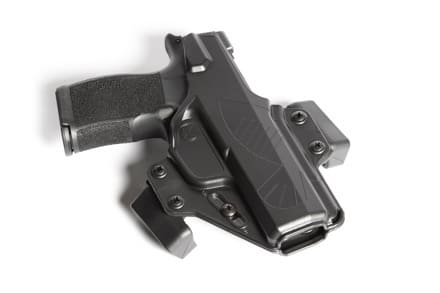
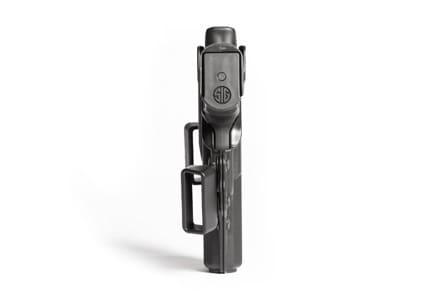
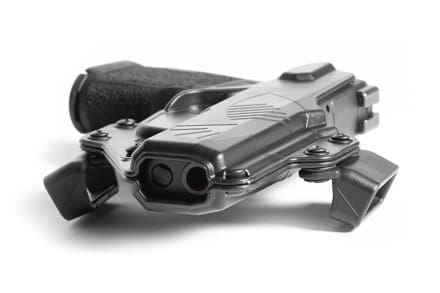
Raven Concealment Systems Announces Release of New Holster for SIG P365 and P365 XL Pistols

Thursday, March 18th, 2021

The new holster is a line extension of Raven Concealment’s popular “Perun” family of outside-the-waistband (OWB) concealment holsters – a family of holsters which has been adopted as the official, agency-wide issued concealment holster for multiple Federal law enforcement agencies.

The Perun is ambidextrous, has adjustable retention, and accommodates slide-mounted red-dot sights. Like all RCS products, the Perun is made from US-made polymers and colorants, in US-made tooling, by US citizens.

These units are in stock and shipping now. Retail price is $39.99. Order here:

rcsgear.com/perun-sig-sauer-p365-p365xl

5.11’s MultiCam “Commando” Kilt Is Back

Thursday, March 18th, 2021

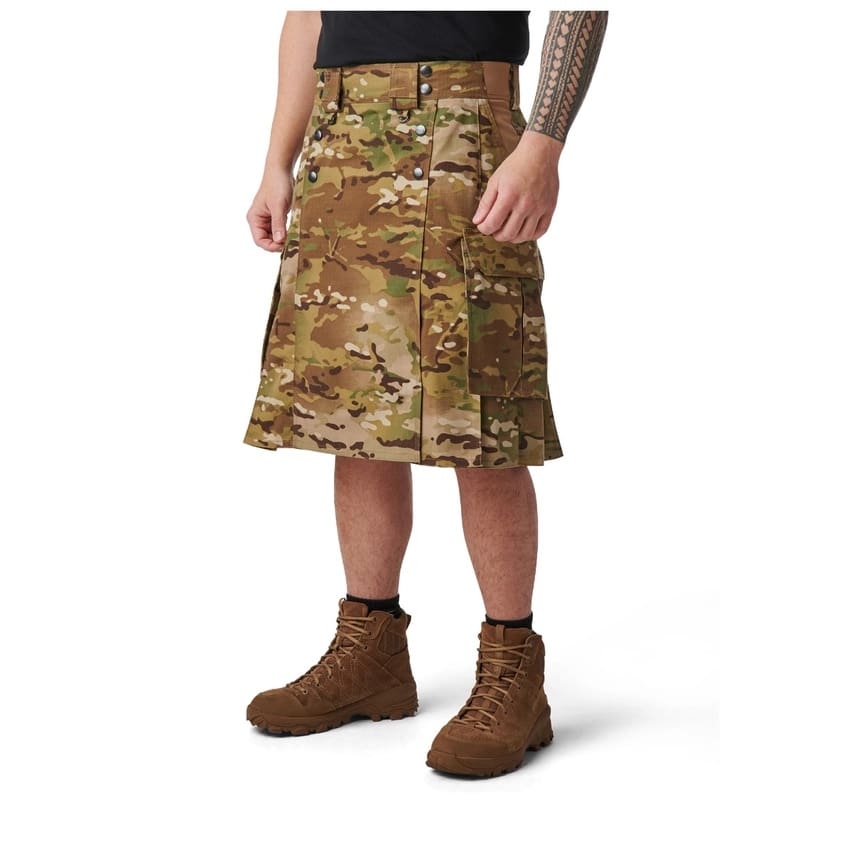
What started out years ago as an April Fool’s Day gag has turned into a perennial favorite from 5.11 Tactical.

Why is it called a Commando Kilt? Simple, it’s how you roll underneath.

Made from their durable 65% polyester/ 35% cotton Fast-Tac ripstop fabric, the kiot features a comfort waist, 4 pockets (2 hand and 2 cargo) and Badge tab d-rings at front belt loops.

Offered in MultiCam, waist sizes 28-50. Those of you who will guffaw at the larger waist sizes have obviously never been to a Highland Games.

www.511tactical.com/commando-kilt-multicam

SIG SAUER Academy to Host Inaugural P365 EDC Championship

Thursday, March 18th, 2021

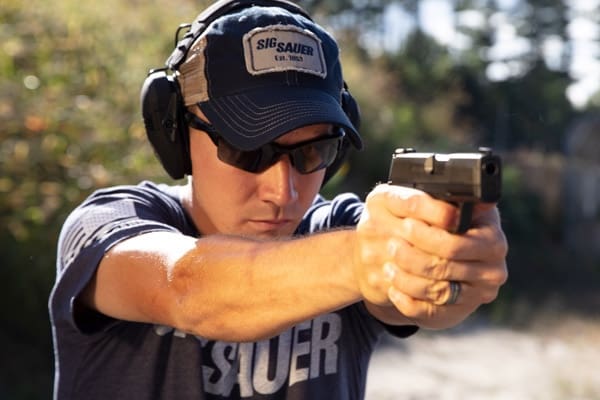
NEWINGTON, N.H., (March 16, 2021) – SIG SAUER Academy, the leading provider of the highest quality firearms instruction and tactical training in the world, is pleased to announce the Inaugural P365 EDC Championship to be hosted at the SIG SAUER Academy in Epping, New Hampshire July 21-24, 2021. 

“When the P365 was introduced, it was a game-changer and defined everyday carry, by delivering unprecedented capacity in a micro-compact size,” said Tom Taylor, Chief Marketing Officer and Executive Vice President, SIG SAUER, Inc.  “The P365 EDC Championship will challenge competitors to run a scenario-based course of fire on the grounds of the SIG SAUER Academy using a SIG SAUER P365 to put their marksmanship, competition, and concealed carry skills to the test.”

The P365 EDC Championship is a thirteen stage match on the grounds of the SIG SAUER Academy in Epping, New Hampshire.  A SIG SAUER P365 is required for competition use.  Squads will compete beginning Wednesday, July 21st through Saturday, July 24th and limited to 12 participants per squad.  Registration is $155 per competitor and opens on March 27, 2021.  For additional match information and rules visit sigsauer.com.