GORE-TEX Professional

Archive for the ‘Army’ Category

The US Army Releases A Two Volume Book About Operation Enduring Freedom

Thursday, November 18th, 2021

WASHINGTON – The U.S. Army Center of Military History released Modern War in an Ancient Land: The United States Army in Afghanistan 2001–2014, a two-volume history, today.

These volumes, prepared by the Operation Enduring Freedom Study Group, present a first cut operational-level narrative of how the U.S. Army formed, trained, deployed, and employed its forces in Afghanistan from October 2001 to December 2014. At the same time, it delves into the tactical realm when such insights amplify the implications of operational decisions or occurrences.

To write this history, the study group, led by Edmund J. “E.J.” Degen, embarked on an extensive research program that relied heavily on primary source documents. The group also conducted dozens of oral history interviews with key military and civilian leaders. These volumes include fifty maps, a wide range of campaign photography and artwork, and volume-specific indexes.

The Army routinely conducts after action reviews of operations that capture lessons learned and are intended to help guide and inform future decisions by military leaders at all levels.

The process of researching, analyzing and writing the history can take several years, Degen noted that, “It’s important to capture these historical lessons as soon as we can as they may apply to future wars.”

As part of the Army’s continuous campaign of learning, CMH will write more in-depth histories of all aspects of the war in Afghanistan, including operations from 2015 to 2021, the evacuation of Kabul, and security force assistance.

The two-volume book set will be released as CMH Pub 59-1-1 and will be available in print, as an eBook, and as a free pdf download starting November 17, 2021. Access to these options are found at: history.army.mil/html/books/059/59-1

The general public can also purchase print copies of these volumes from the U.S. Government Publishing Office. bookstore.gpo.gov

For additional information about the history of the U.S. Army in OPERATION ENDURING FREEDOM please visit:

history.army.mil/catalog/pubs/70/70-83 and history.army.mil/catalog/pubs/70/70-131

Guard Soldier First Woman to Graduate Army Sniper Course

Saturday, November 13th, 2021

HELENA, Mont. — A Montana Army National Guard Soldier became the first woman to complete the U.S. Army Sniper Course at Fort Benning, Georgia, Nov. 5.

At this time, the military is not identifying this Soldier by name.

“We are extremely proud of this Soldier’s achievement and recognize that this is a milestone for not only Montana, but the entire National Guard and Army,” said Maj. Gen. J. Peter Hronek, the adjutant general for Montana. “This Soldier had to volunteer several times to reach this goal, which is a demonstration of her dedication and commitment to service.”

The Soldier enlisted in the Montana Army National Guard in December 2020. She was then sent to Fort Benning to complete Infantry One Station Unit Training (OSUT), a 22-week course that combines Army basic training with advanced individual training in infantry skills.

While attending OSUT, her training staff and chain of command recommended she attend the sniper course due to her superior performance, which included qualifying as an expert shooter.

“We’re all incredibly proud of her,” said Capt. Joshua O’Neill, OSUT company commander. “She epitomizes what it means to be an infantry Soldier, and there wasn’t a doubt in our minds that she would succeed in the U.S. Army Sniper Course.”

The Soldier began the course in September 2021. This intensive seven-week course trains selected individuals assigned to sniper positions in the skills necessary to deliver long-range precision fire and the collection of battlefield information.

“The Soldier met every standard required to graduate the United States Army Sniper Course,” said Capt. David Wright, battalion commander, U.S. Army Sniper School. “She arrived prepared for training and physically conditioned to succeed. We are proud of the results of her efforts and the quality training provided by the sniper course cadre. We wish her luck as she heads back to her unit as a U.S. Army Sniper Course-qualified sniper.”

On hand for the sniper course graduation ceremony were Command Sgt. Maj. John Sampa, command sergeant major of the Army National Guard, and Command Sgt. Maj. Claudena Brady, state command sergeant major for the Montana Army National Guard.

With the completion of training, the Soldier will join her unit.

Story by MAJ Ryan Finnegan, Montana National Guard

Photo by SPC John Bright

Yuma Proving Ground Supports Cutting-Edge Technology Testing During PC 21

Thursday, November 11th, 2021

YUMA PROVING GROUND, Ariz. — Project Convergence, the Army’s campaign of learning, has returned to U.S. Army Yuma Proving Ground (YPG) to test a vast and astonishing array of new technology.

For the first time ever, every branch of the United States’ armed forces are testing their sensor-to-sensor capabilities in tandem.

In addition to representation from all branches of the military, this year’s iteration features all eight of the Army Futures Command’s cross-functional teams (CFTs). There is also a dramatically larger Soldier presence.

Among these CFTs is Future Vertical Lift (FVL), which is aggressively testing virtually every facet of the Army’s Future Attack Reconnaissance Aircraft (FARA) and FVL, as well as advancing knowledge on electronic warfare. Unmanned aircraft, air-to-ground missiles, rotary cannons, and all manner of ancillary technologies to expand communications capabilities and Soldier survivability are all being tested simultaneously here.

“There is a lot of learning going on out here over these several weeks,” said Jim Thomson, Acting Deputy Director of the Future Vertical Lift CFT. “Yuma Proving Ground is really a unique place to enable us to do this.”

YPG’s vast size includes nearly 2,000 square miles of restricted airspace. The proving ground’s clear, stable air and extremely dry climate combined with an ability to control a large swath of the radio frequency spectrum makes it a desired location for this type of testing.

YPG’s vast institutional UAS and counter-UAS testing knowledge is an added bonus, as is the presence of a wealth of other infrastructure meant for other sectors of YPG’s broad test mission that can be leveraged to support aviation evaluations. YPG is home to things like technical and tactical targets, as well as generator and combined maintenance shops.

“YPG in particular has been an outstanding host,” said Lt. Col. Tanner Spry, FVL CFT experimentation planner. “It’s a great area based on the distances that exist here to challenge our platforms.”

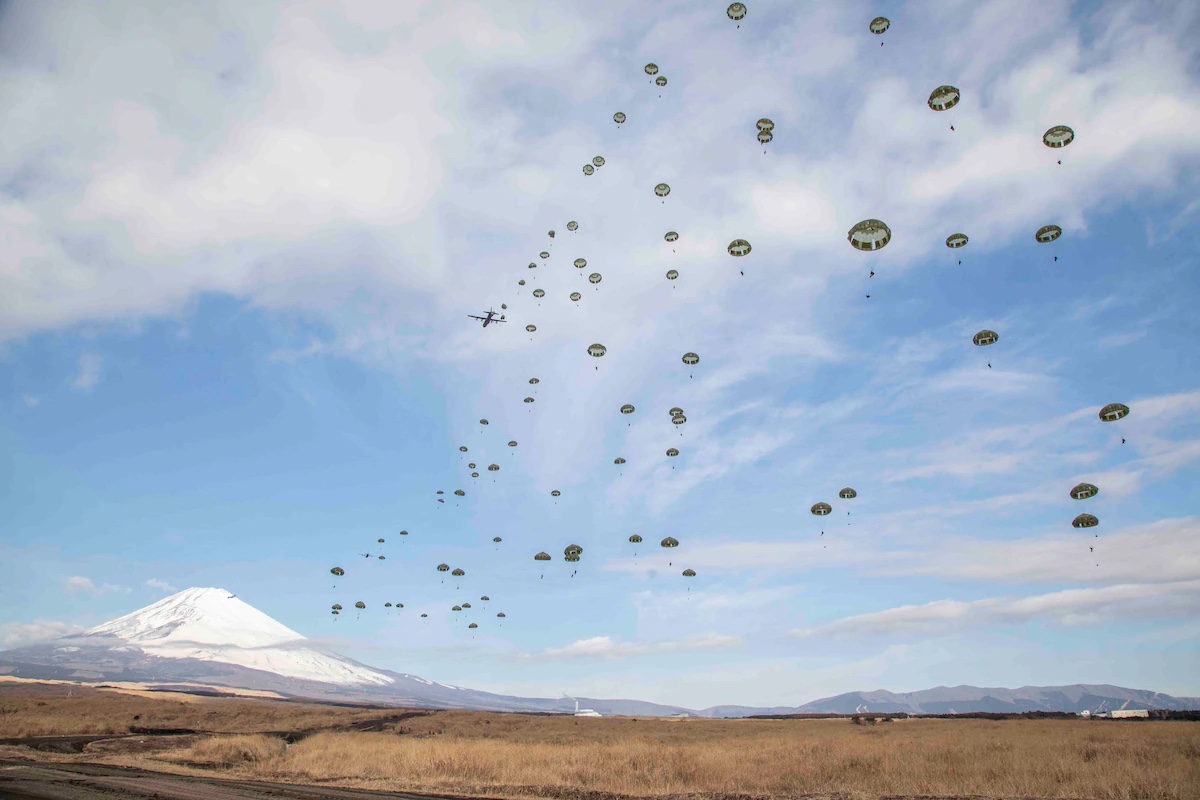
The breadth of equipment tested here over the course of the six-week demonstration is astonishing, and boasts multiple firsts. Testers say this year’s demonstration increased their ability to integrate into the joint force and improved the command and control network to extend the range Army aviators can operate in. This was shown multiple time in realistic scenarios in which Soldiers from the Army’s 82nd Airborne conducted simulated air assaults across YPG’s vast ranges.

“We’ll take a use case and run through multiple iterations to stress and challenge the technologies to make sure they are resilient,” said Spry.

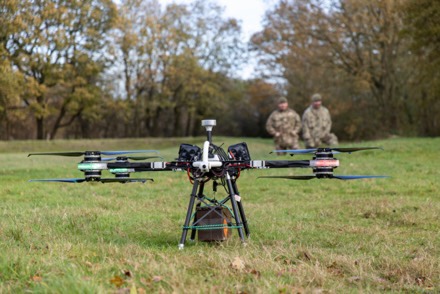
One of the more exciting technologies used was Air Launched Effects (ALEs), drones attached to a helicopter or other vehicle that can be an aviator’s eyes in an area of interest. These remarkable and low-cost surveillance UAS can also be launched off of light ground vehicles, but integrating them into aviation platforms is much more complex.

“They’ve done a tremendous amount of work to get the ‘air launched’ into the name air launched effect,” said Thomson. “But there are a lot of other options, too.”

As for the FARA and FVL themselves, multiple other facets are being tested here. A new Gatling-style 20mm machine gun that could serve as one of the platforms’ rotary cannon was integrated into a UH-60 Black Hawk serving as a surrogate and fired in flight for the first time here.

“It shoots fast, it shoots well, and it shoots accurately,” said Lt. Col. Cameron Keogh, Chief of Flight Test for U.S. Army Combat Capabilities Development Command. “As a previous attack and recon pilot, I like it.”

With things like the Gatling-style gun, artificial intelligence-aided threat targeting and detection systems, and even the ability to fly autonomously, developers are using a modular systems approach that would enable these things to be used on a variety of aircraft as needed. During PC 21, the testers demonstrated flying a legacy UH-60 completely autonomously.


“We have to be able to demonstrate autonomy in any environment,” said Stuart Young, Defense Advanced Research Projects Agency program manager. “Yuma is a great location to be able to bring all of these different pieces together. We have a lot of flexibility that we don’t have in other locations: we have large safety margins and here we have the space we need to conduct all of these firsts safely.”

All of these technologies are being refined to prepare for the potential of warfare with a near-peer adversary. As such, the participation of hundreds of Soldiers in PC 21 was useful for testers: Engineers had the opportunity to gain input about systems under test from Soldiers who have operated earlier iterations of the platforms in theater overseas.

“We are leveraging technology to reduce Soldier workload,” said Spry. “Sometimes moving yourself out of chaos by being able to operate at greater distances and ranges can give us a strategic advantage.”

By Mark Schauer

Army Future Command’s GEN Murray Visits DEVCOM Soldier Center for Program and Equipment Updates

Tuesday, November 9th, 2021

NATICK, Mass. — During an October 26 visit to the U.S. Army Combat Capabilities Development Command (DEVCOM) Soldier Center, Gen. John M. Murray, Commanding General of U.S. Army Futures Command (AFC), was updated on several programs and technologies helping advance two of the Army’s highest priorities — modernization and people.

DEVCOM Soldier Center’s mission, to research and develop science and technology solutions that protect and optimize warfighters on the battlefield, often occurs where these two priorities intersect, and Murray, charged with spearheading the Army’s force modernization efforts, got to see in person some key technologies the center is developing in support of the Soldier Lethality component of modernization.

“DEVCOM Soldier Center is executing a critical facet of the Army’s modernization strategy,” said Murray.

“By researching new approaches to optimize Soldier performance and developing new technologies with consensus from operating units to exceed the capabilities of our pacing threats, they are delivering on the tenets of their mission and reinforcing the Army’s commitment to its people.”

“I saw that in action here today,” said Murray.

The visit began with detailed updates on the progress of DEVCOM Soldier Center’s signature research program, Measuring & Advancing Soldier Tactical Readiness & Effectiveness, or MASTR-E, a comprehensive, data-based research effort to deliver infantry units the capability to measure, predict, and enhance human performance during close combat operations through the use of wearable biometric sensors.

Led by DEVCOM Soldier Center and supported by key S&T partners from infantry units, scientists, and engineers across the DoD, industry and academia, MASTR-E takes an integrated, multi-disciplinary approach to collecting and analyzing human performance data metrics, including physiological and behavioral indicators that give leaders a holistic view of their Soldiers’ status during close combat.

Murray also met with Human Research Volunteer, or HRV, Soldiers during the visit. The HRV program recruits approximately 30 new Soldiers from their Advanced Individual Training to voluntarily come to Natick for a 90-day assignment in which they participate in various human performance based research studies. HRV Soldiers support everything from field testing uniform and equipment items, sleep and nutrition studies, to cognitive, psychological, and physiological performance studies. HRV Soldiers play a vital role in the research and development of new technologies supporting modernization efforts.

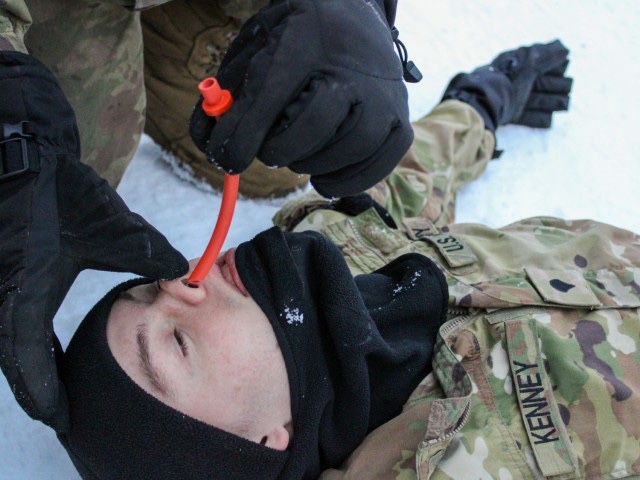
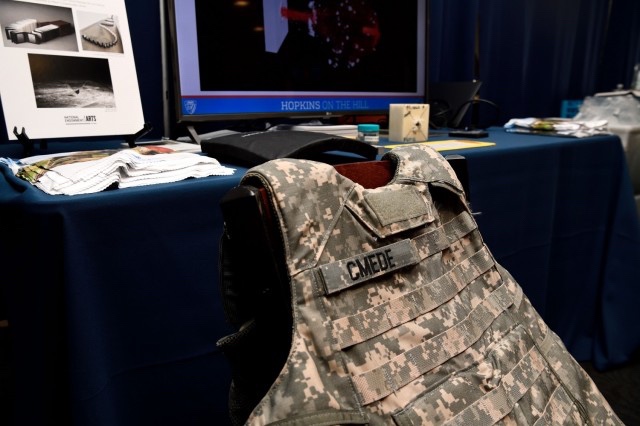
The visit also featured a hands-on display of several innovative technologies being developed by Soldier Center scientists and engineers, including Cold Weather Equipment, Load Carriage Equipment, future body armor prototypes, and the Combat Protective Ensemble, or CAPE.

For Cold Weather Equipment, Murray saw uniform and equipment items being developed through a multiservice collaborative effort guided by seven item priorities with the goal of outfitting an arctic brigade within the next 18 months. The technologies, which included gloves, boots, and layered parker systems, were constructed with novel performance materials with inherent properties that prevent freezing in extreme arctic environments.

The Load Carriage Equipment items included prototype ruck sacks designed to accommodate specific infantry tasks and missions. Soldier Center equipment specialists utilized end user feedback collected during Soldier Touchpoint evaluations to redesign the placement of straps, buckles, ammunition and utility pouches, and ballistic plate carriers to develop lighter, streamlined prototypes more conducive to foundational infantry tactics like shooting and moving to contact.

The future body armor items displayed took a similar approach to their design, in which plate carrier systems were built based on the threat level. Researchers are working to reduce the overall weight of body armor prototypes while maintaining ballistic protection against the majority of round calibers and blast threats faced on the battlefield.

The CAPE program addresses the challenge of having multiple Soldier-worn equipment systems by incorporating novel performance fabrics and materials in order to maximize Soldier protection and survivability, while optimizing the distribution of power and data.

After the equipment display, Murray visited the Design Pattern Prototype Studio, where he was shown several Soldier Center developed products under the Organizational Clothing and Individual Equipment program, including the Female IOTV, the Physical Fitness Bra, the Female Urinary Diversion Device, or FUDD, and the Improved Hot Weather Combat Uniform — Female, or IHWCU-F — items that support the role and performance of female Soldiers in combat.

The last stop of Murray’s visit was to the Combat Feeding Division for an overview presentation, ration display, and tour of the pilot kitchen where new items are created. At CFD, Murray saw the Close Combat Assault Ration, or CCAR, a one-day ration designed to sustain dismounted warfighters for seven days operating autonomously without resupply. The CCAR includes nutrient-dense items made using Microwave Drying Technology, which reduces the weight by about 75 percent and volume by 40 percent from an MRE, the standard individual ration.

“General Murray’s visit allowed us to successfully demonstrate the important work we’re doing to enhance Soldier performance.” said DEVCOM Soldier Center Technical Director, Doug Tamilio. “The programs and technologies he was updated on are helping advance Soldier Lethality and directly support the Army’s major priorities.”

Story by Jeff Sisto, DEVCOM Soldier Center Public Affairs

Photo by David Kamm, DEVCOM Soldier Center

US Army R&D Energizes Battery Charging for Soldiers

Monday, November 8th, 2021

ABERDEEN PROVING GROUND, Md. — Army researchers are exploring new ways to keep Soldiers’ electronic devices powered during extended missions by using wearable fuel cells for on-the-move battery charging.

As the Army continues to modernize the force with high-tech Soldier-worn and handheld equipment like radios, GPS, night-vision devices and weapons, the energy demand is continually increasing.

Engineers are working on optimizing the power density and efficiency of emerging fuel-cell based power generation technology when operated with packaged fuels as well as commonly available substitutes such as windshield washer fluid.

Army Futures Command (AFC) is leading work on the Soldier Wearable Power Generator (SWPG) that enables on-the-move charging, thus reducing the number of batteries required to be carried.

“We’re aiming to deliver a simple, easy-to-use way for Soldiers to extend battery life and keep moving in the field by developing wearable fuel cells,” said Shailesh Shah, a chemical engineer with the Command, Control, Communications, Computers, Cyber, Intelligence, Surveillance and Reconnaissance (C5ISR) Center — a component of AFC’s Combat Capabilities Development Command (DEVCOM). “Enabling fuel cell operation on windshield washer fluid already in the Army’s supply chain avoids the need to set up a logistics re-supply of custom fuels. The SWPG simultaneously reduces dependence on logistics for battery re-supply.”

The C5ISR Center’s research aligns with the Army’s renewed emphasis and interest in fuel-cell power generation for supplying power to dismounted Soldiers, according to Shah. Technology in the industry has improved significantly in the past 10 years in terms of size, weight, noise, thermal signature reduction, improved modularity and mounting systems.

Adding wearable fuel cells to the Soldier system enables users to charge the currently fielded thin, flexible Conformal Wearable Battery (CWB) worn on vests as a central power source for electronic devices. The fuel-cell research complements the C5ISR Center’s concurrent work to modernize the CWB with advanced materials.

Researchers are continuing SWPG design modifications to improve performance of the prototypes with an emphasis on size and weight reductions, according to Christopher Hurley, chief of the Center’s Tactical Power Branch. Soldiers on 72-hour missions could save 12 pounds in battery weight under normal power draws with current prototypes.

Additional organizations providing support are the Army’s Project Manager Integrated Visual Augmentation System, DEVCOM Soldier Center, the FBI and the National Defense Center for Energy and Environment.

“A key to enhancing our fuel-cell development is placing different prototypes in the hands of Soldiers during field exercises,” Hurley said. “C5ISR Center engineers have been side-by-side with Soldiers to gain feedback during the Army Expeditionary Warrior Experiment in 2020 and 2021 with plans for 2022. The Soldier touch points are an invaluable resource in our development process so we can immediately turn around and incorporate their evaluations into our hardware systems.”

By Dan Lafontaine, DEVCOM C5ISR Center Public Affairs

Utilizing Semi-Autonomous Resupply to Mitigate Risks to Soldiers on the Battlefield

Wednesday, November 3rd, 2021

YUMA PROVING GROUND, Ariz. — Situated in a broad swath of Arizona desert, Yuma Proving Ground offers the U.S. Army a prime location for testing — or “proving” — new capabilities.

It is a fitting home base for Project Convergence 2021, a modernization experiment organized by Army Futures Command’s Joint Modernization Command.

The event brings together members of the Joint Force to test and retest novel equipment and systems.

“It’s the initial steps of working out how our joint forces will need to operate in the future,” said Joseph Cruse, data collection and analysis execution lead for Project Convergence 2021.

Dotted throughout the dusty landscape at Yuma Proving Ground are high-tech, multi-phase exercises designed to validate the utility of first-of-their-kind tactical and operational scenarios, many of which are enabled by artificial intelligence.

One such scenario explores the Army’s ability to use joint sustainment semi-autonomous resupply mechanisms to improve logistical dexterity while mitigating additional exposure and risk to Soldiers.

“The goal is to ensure that we’re able to extend our reach, especially during MDO, which is multi-domain operations,” said Maj. Christopher Jones, the lead for semi-autonomous resupply testing at Project Convergence 2021.

“We can do that by applying semi-autonomous vehicles into our formations, to provide rest for Soldiers, to take the Soldiers off the ground and expedite those pushes that we need to get out to our Soldiers,” Jones said.

The semi-autonomous resupply process, as envisioned and executed, starts with a need on the battlefield — for food, supplies, ammunition or even replacement parts for heavy machinery.

The exercise at Yuma Proving Ground specified a need for a replacement part required by a tank operator in the field, setting into motion a number of steps to deliver the essential item.

Communicating with a base of operations, the tank operator described his location and the part needed, and personnel set to work quickly to obtain the part. Those responsible for doing so assumed a spare parts-limited environment, so a replacement was fabricated using a field-ready 3D printer capable of producing both plastic and metal objects.

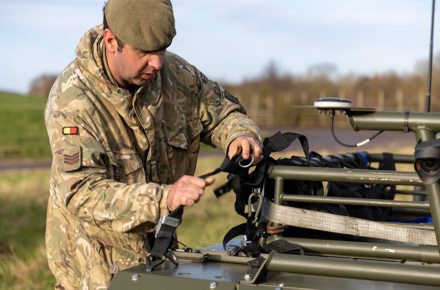
The Army then dispatched a small convoy of leader-follower tactical wheeled vehicles, which can be driven independently, remotely or be made to follow a vehicle, to deliver the part to an Expeditionary Modular Autonomous Vehicle (EMAV), a U.S. Marine Corps robotic vehicle, waiting at the (simulated) fighting edge.

Once the part was secured to the platform of the EMAV, Soldiers sent remote communications from a distance, signaling to the vehicle exactly where it should deliver the item. When it received the message, the previously still machine revved into gear, kicking tan dust onto its black tracks and road wheels as it accelerated up a hill and turned toward its destination.

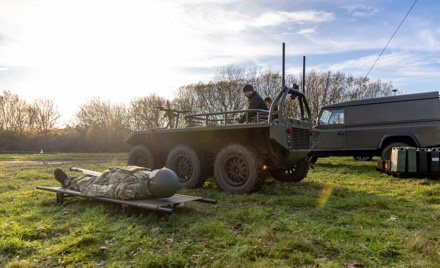
According to Dr. David Stone, a senior robotic engineer with the Marine Corps Warfighting Lab, the EMAV is operational in all terrains, possessing the ability to not only travel through muddy fields but also to pull other vehicles out of the mud. Despite its relatively smaller size, “the thing’s basically a truck,” Stone said.

Stone elaborated that the EMAV, which is a diesel-electric hybrid, is “very robust. Its versatility and the modular aspect — being able to do different warfighting functions — is the real value of it.”

Originally designed to accompany dismounted Marines, the durable autonomous vehicle can also serve the needs of Joint Force missions, as evidenced by the exercise.

“Between the Army and Marine Corps, we are going after the same thing,” Stone said. “Anything we can do to leverage on another’s work helps us do more with the money we have.”

While an EMAV was used for the training exercise, the Army also intends to use its Robotic Combat Vehicle-Light to serve a similar purpose in future semi-autonomous resupply missions.

Following the arrival to its destination approximately two miles away, and the human-assisted replacement of the tank part in the exercise, the EMAV returned to its starting point, powering easily through gravel and dirt as it traveled among a group of heavy military trucks.

The scenario demonstrated how the U.S. military can integrate new field-deployable technologies with existing ones, offering additional options to commanders while decreasing the human footprint necessary to carry out logistical resupply missions.

“People who are supplying us with ammo, water, food, etcetera — anything that puts Soldiers at risk, the EMAV takes them out, and it saves lives,” said Pfc. Daniel Candales of 1-508 Parachute Infantry Regiment, 3rd Brigade, 82nd Airborne Division, who was trained on the various functions of the vehicle.

The Army is additionally working to develop complementary capabilities that would allow for autonomous loading of supplies and digital tracking of items and vehicles and testing prototypes for these systems at Project Convergence 2021.

Reducing the need for hands-on support will also enable Soldiers who would otherwise be assisting with resupply chains to tackle other priority tasks. In addition, augmenting methods for delivering necessary equipment and supplies over treacherous ground will bolster the Army’s ability to function effectively across multiple domains.

“Logistics is something we always have to improve upon,” said Command Sgt. Maj. Robin M. Bolmer of the Army’s Futures and Concepts Center, who observed the exercise. He explained that new technologies open up numerous possibilities for growth, but that “the need to sustain what we have is always going to be there.”

The Futures and Concepts Center developed the initial concepts for many of the technologies and systems being tested during Project Convergence 2021, and will assume responsibility for organizing Project Convergence 2022, which is slated to include the participation of U.K. and Australian forces.

Bolmer shared that he was observing this year’s activities with an eye toward continual modernization progress, keeping the question of “how do we build upon all the great work being done here?” always at the forefront of his mind.

By Maureena Thompson, Army Futures Command

AF Supports Historic Army Warfighter Exercise, V Corps Becomes America’s Forward-Deployed Corps in Europe

Tuesday, November 2nd, 2021

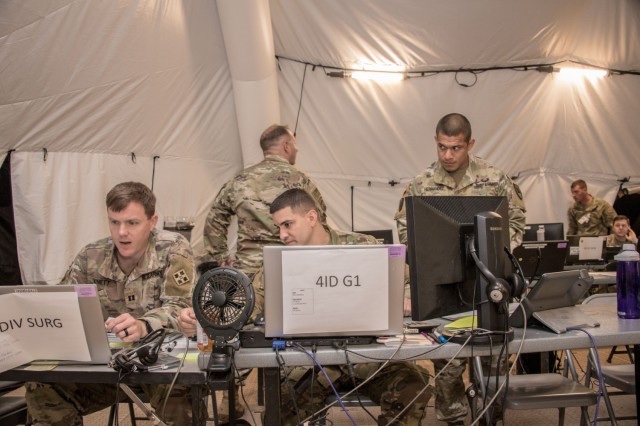
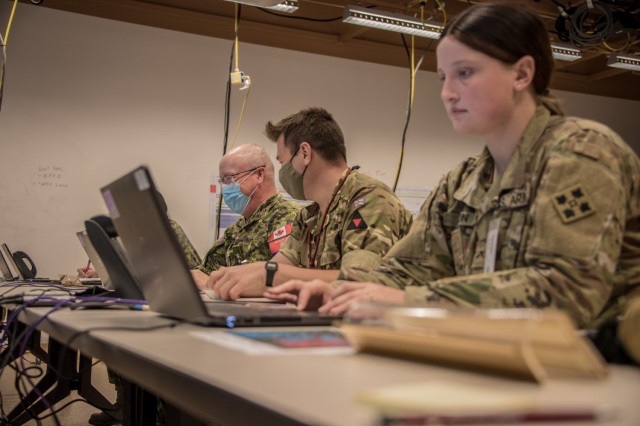
The 505th Command and Control Wing supported the U.S. Army’s Mission Command Training Program resulting in the validation of Victory Corps as a European Command allocated corps headquarters during the execution of Warfighter exercise 22-1 at Grafenwoehr, Germany, Sept. 27-Oct. 5.

The multi-component exercise, which had the main command post at Grafenwoehr, Germany, a rear command post at Fort Riley, Kansas, and a U.S. Air Force Air Component and Air Operations Center replication cell at Hurlburt Field, Florida, tested the V Corps’ ability to mission command large-scale combat operations, or LSCO, in a multi-national environment.

The mission command proficiency of 1,402 joint service personnel including Soldiers from U.S. Army Europe and Africa, V Corps, 3rd Infantry Division, 34th Infantry Division, and their respective subordinate units were tested and honed during the execution of WFX 22-1.

Warfighter exercises are distributed, simulation supported, multi-echelon, tactical command post exercises fought competitively against a live-thinking regional adversary in a complex environment to prepare units for future LSCO. 

“The warfighter [exercise] is rigorous, complex, and very time-intensive. It is a nine-day sprint in large-scale ground combat operations. It’s the only time our corps and divisions are collaboratively immersed against a near-peer competitor, where they’re forced to really understand and improve their wartime mission,” said U.S. Army COL. Robert Molinari, chief of operations Group A, Mission Command Training Program, U.S. Army Combined Arms Center.

A substantial part of any Warfighter exercise is replicating the air component; this mission is the responsibility of the U.S. Air Force’s 505th CCW, Detachment 1, based at Fort Leavenworth, Kansas. This total force integrated unit’s mission is to provide airpower expertise and exercise support to the U.S. Army’s MCTP and act as the U.S. Air Force’s Air Warfare Center liaison to the U.S. Army’s Combined Arms Center.

“This was probably the most significant air component replication for a WFX that we’ve done to date,” said U.S. Air Force Col. Michael Goodman, 505th CCW, Det 1 commander.  “Most WFX events utilize a corps to role-play the Combined Forces Land Component, but GEN. Cavoli, the U.S. Army Europe and Africa commander, took the opportunity to train V Corps, his assigned subordinate unit, directly as the CFLCC. 

Goodman continued, “The entire USAREUR-AF staff participated and imposed a level of discipline and realism that we’ve never seen during the WFX.  It was impressive and helped ensure that the aligned Airmen got the most realistic we’ve seen to date.” 

For WFX 22-1, 505th CCW, Det 1 members forward-deployed globally to multiple exercise locations integrating into the exercise control group, standing up the exercise’s replicated AOC, and acting as observer, coaches/trainers providing subject matter expertise in areas that include intelligence, surveillance, and reconnaissance, airspace management, tactical air control, and joint all-domain operations.

“V Corps did a great job. They gave 110% daily. They were receptive to coaching and observations and every single day, across the board, they got better,” said Molinari. “So, I think it was a fantastic opportunity for V Corps to really see themselves, to improve on, and to prepare for what the Army might ask of them.”

“Our purpose is to ensure we coach our tactical air control party, or TACP, members to improve not just their technical proficiency, but also their overall integration with their supported Army maneuver unit command teams and planners.”  U.S. Air Force Maj. Thomas Hopkins, 505th CCW, Det 1 chief observer and coach, Fort Leavenworth, Kansas. Hopkins made sure his team of coaches/trainers did not lose sight of their larger purpose during the event. 

Hopkins continued, “The bottom line is that we do everything we can to assist the Army’s MCTP in providing a training environment which enables the TACP units to leave the exercise a more ready and lethal enabler than when they arrived.”

The 505th CCW, Det 1’s main U.S. Air Force training audience were the Airmen assigned to the 4th Air Support Operations Group, Wiesbaden, Germany, and their subordinate units in the exercise.

“The men and women at the 4th ASOG did a phenomenal job under the leadership of Col. Dustin Dupuis, the 4th ASOG commander and also the V Corps air liaison officer,” said Goodman.   “Col. Dupuis and his team made significant gains validating new capabilities and authorities that will enable increased lethality of the joint force in LSCO.  It was huge win for the joint force and they made it happen.”

A team of 47 Airmen from the 505th Combat Training Squadron, Hurlburt Field, Florida, provided AOC replication during WFX 22-1 in coordination with the forward-deployed exercise control group from the 505th CCW, Det 1, and this team represented a full-spectrum air component replication to the U.S. Army training audience.  

The 505th Communication Squadron configured and maintained command, control, communications, computers, and intelligence, or C4I, and models and simulations, or M&S, systems, in addition to collaborative tools (chat, voice, email, etc.). 

“The support provided by the 505th CS allowed the AOC controllers to push real-time updates for air tasking orders and airspace control orders to theater representatives and ensured a valid common operating picture was in play,” said U.S. Air Force Lt. Col. Veronica Williams, 505th CS commander, Hurlburt Field, Florida. 

WFX 22-1 was a crucial exercise for V Corps in that it marked the final event in a yearlong effort to become a fully certified, operational, and combat-capable warfighting headquarters after their reactivation as a corps in October 2020. 

“The success of WFX 22-1 has provided the European region and our NATO allies a forward-deployed Corps ready and equipped to meet the demands of a near-peer conflict,” said U.S. Air Force Capt. Darrin Nottingham, 505th CS operations officer, Hurlburt Field, Florida. “The 505th CS performed admirably while upholding their squadron’s three main objectives: train, innovate, and communicate.” 

Providing air component replication to the joint force is one of the primary mission capabilities of the 505th Combat Training Squadron at Hurlburt Field, Florida. 

“As our strategic competitors present increasingly complex problem-sets, it is more vital than ever that our joint partners have a full understanding of the capabilities of airpower and the role of the air component in tackling emerging challenges,” said U.S. Air Force Lt. Col. Michael Power, 505th CTS director of operations.

Power continued, “The professionals at the 505th Combat Training Squadron are uniquely positioned to combine a deep experience in Air Force command and control procedures with a keen understanding of developing concepts to replicate the air component and provide an exceptionally realistic operational-level training environment.”

During the 8-day exercise, the 505th CTS’s team facilitated 232 sorties to present full-spectrum airpower, produced over 19 thousand airspace control measures, and published 43 air component planning documents to inform U.S. Army planners.

WFX 22-1 exercised the people, processes, and procedures to ready the joint force for LSCO against near-peer adversaries. 

V Corps will assume enduring mission requirements in support of U.S. Army Europe and Africa as a split-based headquarters with locations at Fort Knox, Kentucky, and Poznan, Poland. The return of the Victory Corps to Europe enhances security in the region and reassures our NATO and partner nations of the United States’ commitment to our European allies. WFX 22-1 was V Corps’ final certifying exercise in becoming the U.S. Army’s fourth corps headquarters and America’s forward-deployed corps in Europe.

The 505th CTS and 505th CS, Hurlburt Field, Florida, report to the 505th Combat Training Group, Nellis Air Force Base, Nevada, and the 505th CCW, Det 1, Fort Leavenworth, Kansas, report to the 505th CCW which is headquartered at Hurlburt Field, Florida.

Story by Deb Henley, 505th Command and Control Wing

Photos by PFC Devin Klecan

Project Origin Robotic Vehicles Join JRTC Rotation in Historic First

Monday, November 1st, 2021

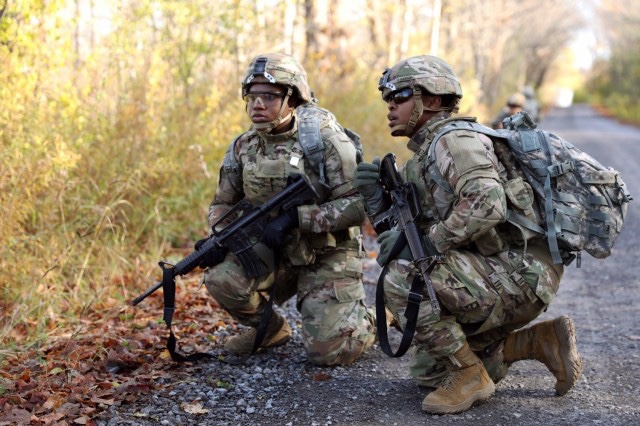
DETROIT — In an historic first, U.S. Army Soldiers integrated a Robotic Combat Vehicle (RCV) surrogate into the opposing force during a recent rotation at the Joint Readiness Training Center at Fort Polk, Louisiana, in September. This event enabled the Army to gain valuable insight in how best to utilize robotic vehicles in combat and furthered its ongoing Campaign of Learning around RCV development.

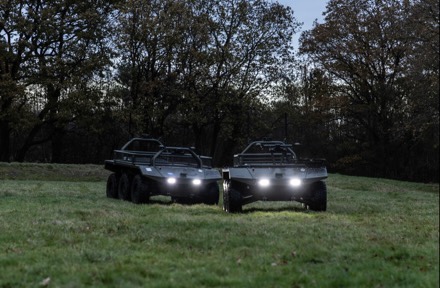
During the exercise, Soldiers from the 1st Battalion (Airborne), 509th Infantry — known as Geronimo — used two Project Origin vehicles (RCV surrogates) in a simulated battle with the 3/101st (Air Assault). The Origin vehicles are an Army Development Command (DEVCOM) Ground Vehicle Systems Center (GVSC) prototyping effort and provides the Army with the ability to conduct rapid technology and autonomous behavior integration that Soldiers assess during multiple touchpoints each year.

While on-site engineers and technicians collected technical data, the Soldiers in the field further validated the combat benefits of adding robots to a manned-unmanned teamed formation and identified new capabilities desired for the next Project Origin Soldier operational experiment.

“With these units, the human survivability rate increases significantly,” explained Sergeant First Class Eugene Lackey (Pathfinder Company). “This system allowed us to close with and destroy the enemy safely from a distance. It [also enabled] us to the find the enemy before he could find us. It is a great tool and I wish we could have it for little bit longer to really see how we can change the way wars are fought.”

The feedback from Geronimo Soldiers adds to the Army’s growing library of information on the use of robots.

“Project Origin’s key competency is its ability to collect Soldier feedback and technical data, use this information to rapidly iterate both its software and physical payloads, and evaluate the changes in relevant tactical environments,” said Todd Willert, Project Origin project manager at GVSC. “The lessons learned during Project Origin experiments directly support the development of the Robotic Combat Vehicle and the Army’s forthcoming Ground Autonomy Software, user interfaces (Warrior Machine Interface), and modular architectures.”

GVSC and the Army’s Next Generation Combat Vehicles Cross Functional team, both based at the Detroit Arsenal in Michigan, and the Army Capability Manager-Infantry Brigade Combat Team (ACM-I), based in Georgia, worked together to integrate the Project Origin platforms into the JRTC rotation.

“JRTC stressed the systems to their breaking points, allowing us to identify problems that would undoubtedly arise in the future,” said MAJ Cory Wallace, RCV lead for NGCV CFT.

During the exercise, the Soldiers and the robots also endured a tropical storm, further adding to its complexity.

Among the highlights of the exercise, the Geronimo force used the Project Origin platform to block a key intersection for 36 hours, an effort that benefitted from Origin’s low heat signature while conducting long hours of battery-powered “silent watch.” In addition, Geronimo used the project Origin vehicles to deny helicopter landing zones and conduct route reconnaissance. Using the robots to conduct these operations – the two platforms were controlled by four operators and an NCO – allowed the Soldiers who would have been assigned those tasks to be assigned different missions.

“This validated the notion that if we assign the dumb, dirty, dangerous missions to the robots, we can re-assign our Soldiers to the high-priority complex missions and tasks,” Wallace said.

The Army has additional Soldier Touchpoints, with Project Origin and other RCV platforms, scheduled throughout 2022 as it prepares to make future decisions on the potential acquisition of RCVs.

By Dan Heaton