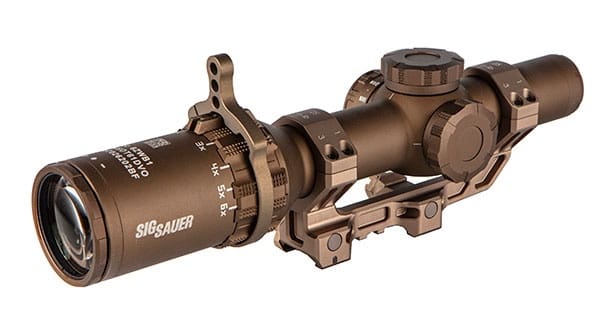
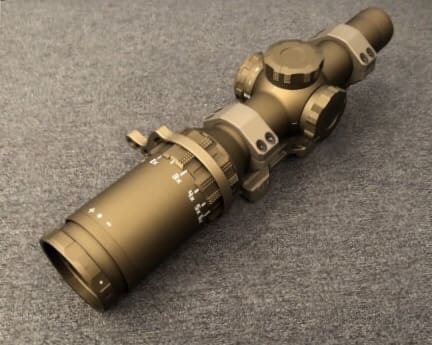
NEWINGTON, N.H., (November 9, 2020) – SIG SAUER, Inc. is proud to announce the TANGO6T has been selected by the U.S. Department of Defense for the Direct View Optic (DVO) in response to a solicitation to enhance squad performance with a variable powered riflescope. Unlike older generation non-magnified or fixed-magnification optics, the TANGO6T is a 1-6X variable-magnification riflescope that enables the soldier to engage both close quarter targets and targets at extended ranges.
This award from the U.S. DoD is the third award for the SIG SAUER TANGO6T; previously selections for the TANGO6T include the Squad Designated Marksman Rifle (SDMR) and the USSOCOM Squad-Variable Powered Scope (S-VPS). The TANGO6T riflescope is currently in use with the U.S. Army Squad Designated Marksman and U.S. Military Special Forces.
“After rigorous and stringent testing, where the best of the industry competed, we are proud to confirm the SIG SAUER TANGO6T riflescope has been selected by the U.S. Army as the Direct View Optic,” began Ron Cohen, President and CEO, SIG SAUER, Inc. “This is a three-peat for the TANGO6T as the riflescope continues to prove it will withstand the rigors of U.S. military testing making it the choice for use with our soldiers. The further proliferation of the riflescope into the U.S. Military’s M4A1 operating system is an exciting achievement for SIG SAUER Electro-Optics and further proof that the TANGO6T is the direction of the future.”
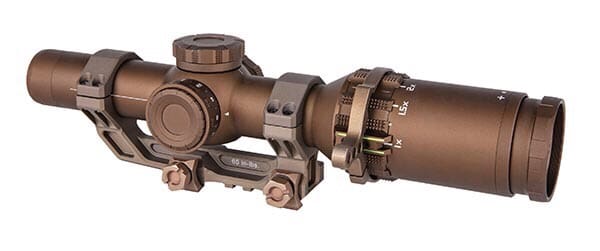
The TANGO6T 1-6×24 DVO riflescope will be used on M4A1 carbines and is a first focal plane ruggedized riflescope with a Flat Dark Earth (FDE) anodized aircraft grade aluminum main tube. The riflescope features the DWLR6 reticle capable of providing range estimation and wind holds at extreme distances, the advanced HELLFIRE illumination system for fast target acquisition, a locking illumination dial, Power Selector Ring (PSR) Throw Lever, the ALPHA4 ultralight mount, and a laser-marked scope level indicator for intuitive installation.
“The TANGO6T riflescope platform has been ruggedized and battle-hardened over the course of both the SDMR and S-VPS programs,” added Andy York, President, SIG SAUER Electro-Optics. “We are proud to assemble the TANGO6T here in the USA to support our warfighters with a variable powered riflescope that was developed to match the engagement requirements of today’s battlefield.”
The SIG SAUER TANGO6T 1-6x24MM riflescope is available commercially at local retailers and at sigsauer.com, in first and second plane, and varying reticles including 5.56/7.62 Horseshoe Dot, HELLFIRE MOA Milling, HELLFIRE FL-6 and the new DWLR6.
“This award solidifies the TANGO6T as the premier riflescope of the U.S. military as it continues to exceed the highest standards for ruggedization, range, and accuracy throughout testing protocols, and in the field with our soldiers. We are honored to partner with the U.S. Department of Defense as they continue to modernize their weapons systems and look forward to the continued proliferation of the TANGO6T amongst our fighting forces,” concluded Cohen.
All SIG SAUER TANGO6 riflescopes are designed and assembled in the USA at the state-of-the-art, ISO-certified, SIG SAUER Electro-Optics facility in Wilsonville, Oregon.
The Army envisioned DVO of being capable of variable power magnification with minimum magnification of 1.0x with no rounding and maximum magnification greater than or equal to 6.0 power.
Their rationale was that variable power magnification optics combine the capabilities of the non-magnified optic’s ability to engage close quarter targets with a fixed-magnification optic’s ability to detect, recognize, identify, and precisely engage targets at extended ranges. This allows the Soldier to have both critical capabilities without the limitations of either non magnified or fixed magnification optics.
The Army announced the program in June of 2019. It seemed to move rapidly at first, but then stalled as COVID-19 sidetracked many programs. The Army also used the time to consider prioritization of its Next Generation Squad Weapon program, intended to replace the 5.56mm M4A1 and M249 with new weapons firing a 6.8 x 51 mm round with increased range and penetration for use by close combat forces. These include Infantry, Cavalry Scouts, and Combat Engineers as well as those who provide them embedded support, such as Combat Medics. The Army has included its Special Operations Forces as well in the NGSW program.
Just when many expected the Army to cancel the program, they announced the contract award.
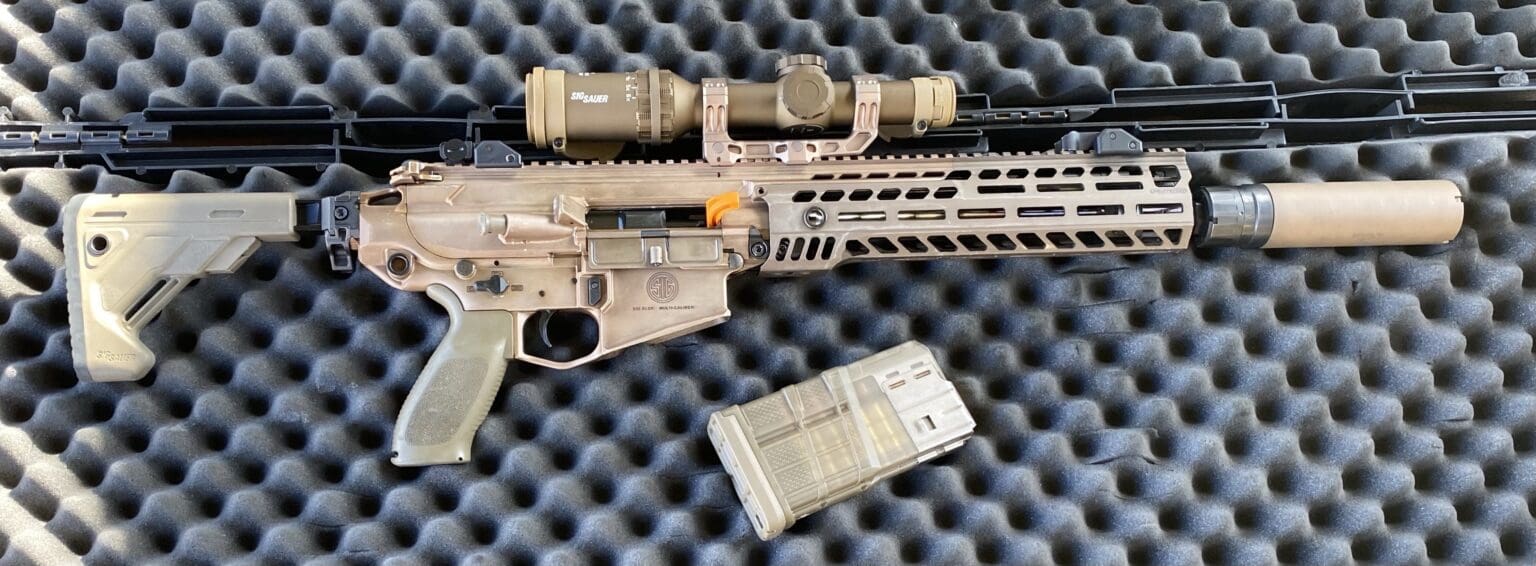
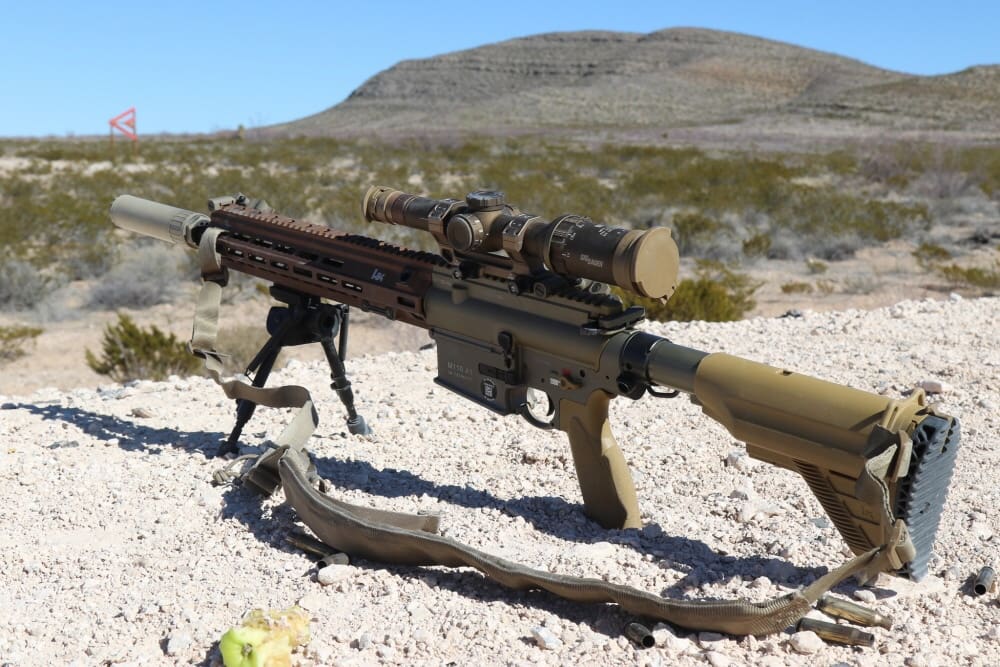
This is a TANGO6T mounted to the SIG SAUER SLSR in 6.8mm, their NGSW Rifle candidate, nicknamed the Spear.
The TANGO6T is a 1-6×24 riflescope featuring a Flat Dark Earth (FDE) anodized aircraft grade aluminum maintube, illuminated front focal plane reticle, an ultra-bright red horseshoe dot for fast daylight target acquisition, locking illumination dial, Power Selector Ring (PSR) Throw Lever, and a laser-marked scope level indicator for mount installation. All of the variants I have used so far have featured the red horseshoe dot.
The DVO version of the TANGO6T differs slightly from both the version already adopted by the Army for the Squad Designated Marksman Rifle and the version selected by US Special Operations Command for the Squad – Variable Power Scope program.
The SDMR optic procurement is complete and the S-VPS procurement is ongoing, with a new reticle, despite a lot of rumors to the contrary.
We’ll dispel another rumor as well. These are assembled in the US. No, the optical prescription doesn’t come from the US, no one’s does, at least not for any optic you’d want to use. But everything else is made here, and the whole thing is assembled here as well.
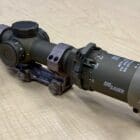
An initial version of the USSOCOM S-VPS.
There will be a new reticle for DVO. From what I understand it will be a BDC reticle for the M855A1 ammunition. It is also slightly shorter in length than the other versions. I’d expect a few other changes as well before it begins fielding, as this always happens. We’ll update you once we hear more.
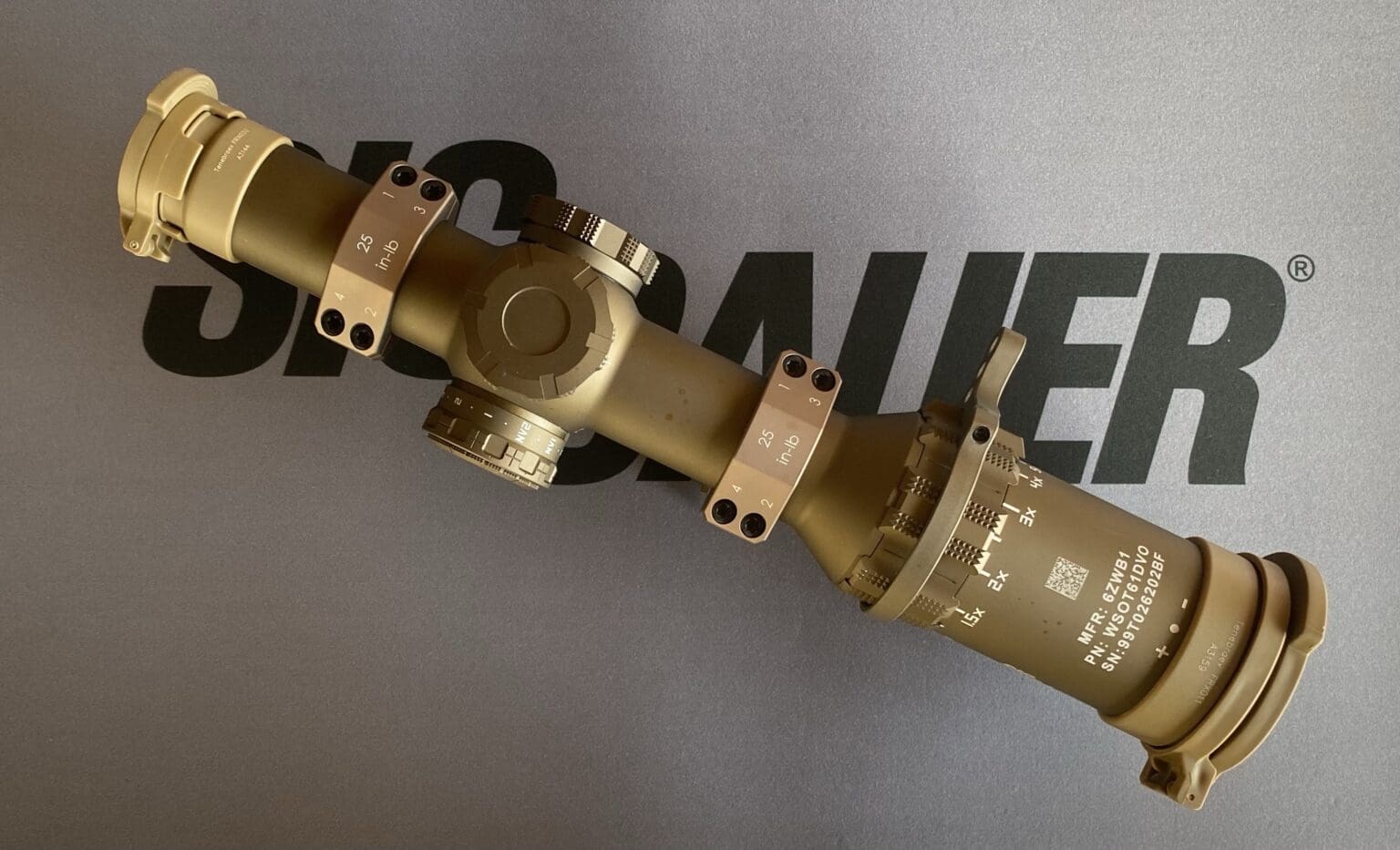
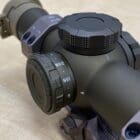
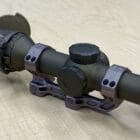
The optic below was built for the DVO program. It’s the one mounted to the Spear above. The color variations in the photos are due to lighting.
Expect this procurement to move out quickly. Test and evaluation should proceed rapidly as the TANGO6T is already a known quantity. Conversely, this new optic will also have significant impacts on marksmanship training in how to properly use a variable power optic, beyond snipers and designated marksmen. That could mean the training base will have to adapt the SDMR new equipment training for a new caliber, and wider audience. The optics will likely be ready before the force is ready to receive them.
The first tranche of around 45,000 DVO are supposed to go to the US Air Force for use by Security Forces, which is the largest enlisted careerfield in the AF. This will satisfy a requirement we’ve been reporting on since 2018.
However, the US Army will assuredly buy off this contract as well. They awarded it after all. To be sure, the Army is committed to the Next Generation Squad Weapon – Fire Control solution currently being evaluated alongside the NGSW candidates. However, there are two issues afoot. First off, FC will be very expensive and likely only used with the next gen guns once they come online. The second issue is that the Army has almost one million M4/16 rifles in their inventory. Even if NGSW is completely fielded it’s well short of the inventory of rifles and machine guns it will replace. I estimate the M4 will remain in service well into the 2040s in very large numbers, as in hundreds of thousands. While the M4 won’t be the main battle rifle used by close combat forces, there is no reason to not replace the current fixed magnification (1x magnification) M4 COMP from Aimpoint with a variable power optic.
Consequently, there is already talk of a procurement of tens of thousands of DVO for use by close combat forces awaiting NGSW since DVO was written specifically for use with the M4A1. Yes, you read that right, the Army will buy this scope. Remember, the Army initially talked about purchasing 120,000 optics (to include other agency buys) when the requirement dropped.
There’s a lot of room in the contract to buy optics and they can modify it to buy even more if the need arises. Considering it’s an OTA, modifying the ceiling isn’t difficult. The Army just needs to be careful about how long they use the section 804 authority to purchase this piece of equipment (up to five years according to the award data).
However, once it is assigned an NSN, they can transition procurement into sustainment and have the Defense Logistics Agency manage procurement. Along with that move is generally a new contract opportunity and a chance for other vendors to compete to build it. This usually occurs once the initial contract runs out, which is around five years.
FORT BENNING, Ga. – The Army is on track to equip its Soldiers with state-of-the-art gear that will give them a decisive edge in close-quarters combat, items that include a high-tech goggle, a more lethal rifle, and binoculars that see in the dark, a senior Army leader says in an official video.
The items are among those the Army is working with industry to develop for Soldiers to use on future battlefields in close combat against “near-peer” adversaries, Brig. Gen. David Hodne, the Army’s Chief of Infantry, says in the video.
Hodne also heads the Army’s Soldier Lethality Cross-Functional Team, which is working to develop the three items. Three other officers from the team also appear in the video.
What Hodne calls the “signature modernization efforts” are: the Integrated Visual Augmentation System, known as IVAS; Next Generation Squad Weapons, or NGSW, and the Enhanced Night Vision Goggle-Binocular, or the ENVG-B.
The National Defense Strategy drafted under former Secretary of Defense James Mattis and published in 2018 “identified a worrisome erosion in overmatch between U.S. Forces and our near-peer competitors around the world,” says Hodne.
“Nearly two decades of sustained combat operations continues to yield seasoned leaders and combat veterans skilled in small-unit action,” he says. “However, near-peer competitors studied how we project power, how we fight, and what we fight with.”
Also informing the effort was the “Russian New Generation Warfare Study” that was led by retired Brig. Gen. Pete Jones, a former Chief of Infantry.
“This study,” says Hodne, “combined with the Close Combat Strategic Portfolio Review, and the 2018 National Defense Strategy revealed gaps that warranted serious consideration.”
“Near-peer threats have capabilities that match and in some cases exceed our capabilities,” he says. “In some cases, our adversaries can detect before they’re detected, and that means they can target, and engage, before we do.
“Our current capabilities are not sufficient for battlefields distributed in urban and subterranean environments,” says Hodne. “And we have to anticipate the implications of new technologies on the battlefield and foster a culture of experimentation and calculated risk-taking.”
A major focus of the effort, says Hodne, is the Close Combat Force, or CCF, those who close with and destroy the enemy in close combat.
That force is made up of Soldiers in five military job categories: Infantry, Cavalry scouts, combat engineers, and their accompanying forward observers and medics.
Together they account for 4% of the overall force, Hodne says, and the major percentage of battlefield casualties.
“Historically, 90 percent of battlefield casualties generally occur among four percent of the force,” he says.
“It’s for these specialties, those Soldiers with the purpose of closing with and destroying the enemy in close combat, where we’ve focused our efforts,” he says.
“It’s worth noting this particular cohort of close-combat Soldiers generally receives a small fraction of the budget portfolio intended for modernization,” says Hodne.
Integrated Visual Augmentation System
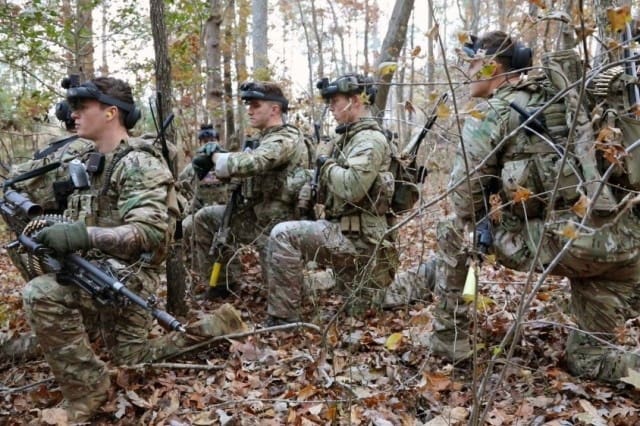
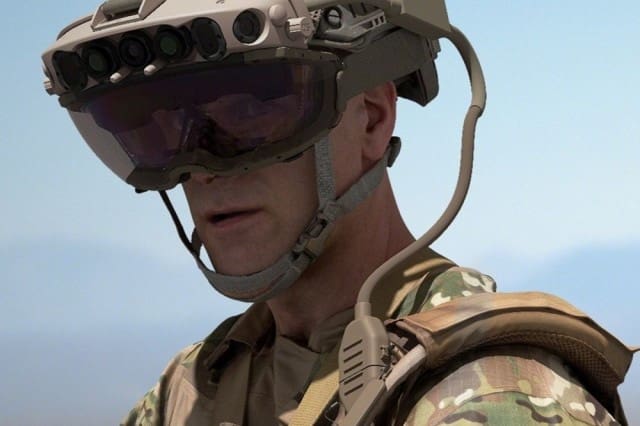
The first project highlighted in the video is the Integrated Visual Augmentation System, or IVAS. It’s a head-mounted digital goggle that connects to a small computer and a radio. A Soldier can see through it both in daylight and in the dark.
“IVAS takes night vision to a new level with leap-ahead digital technologies,” Lt. Col. Brad Winn says in the video. Winn is the Soldier Lethality CFT’s lead action officer for the IVAS.
“Department of Defense leaders wanted a single device Soldiers could use to fight, rehearse and train,” Winn says. “IVAS is that device. It improves Soldier sensing, decision-making, target acquisition, target engagement and situational awareness.”
According to the video, IVAS can show the Soldier battlefield information about where the enemy is and where others in the Soldier’s unit are; helps Soldiers see a target they need to shoot at, uses facial recognition software that can tell the Soldier who a person is; can translate various languages into English; and allows Soldiers to send one another various kinds of digital information, including map coordinates and imagery of what’s happening on the battlefield.
“IVAS has incorporated Intra-Soldier Wireless Connectivity and the ability to pass data among squad, platoon and company formations,” Winn says. “They can talk to each other and share images on and off the objective.”
That could include, for example, what a certain building or other objective looks like.
“The Soldiers following behind, or the next one on the objective, will know exactly what that objective looks like, whether it’s the inside of a building, wooded terrain – anywhere,” Winn says.
“IVAS enhances every aspect of Soldier lethality,” he says. “It improves and increases the Soldier’s situational awareness and enhances his or her ability to maneuver and outmaneuver our adversaries. IVAS will make a smarter, better-informed, more agile and lethal Soldier. It will save American lives on the battlefield.”
The Army has gathered more than 20,000 hours of testing involving nearly 1,000 Soldiers, Marines, and members of special operations forces, and expects to field the first unit in the latter part of 2021, Winn says.
The Army plans to field it to the entire Close Combat Force in the Army’s 58 brigade combat teams, in the Army’s Active and National Guard components, he says.
Next Generation Squad Weapons
A second item highlighted in the video are Next Generation Squad Weapons, or NGSW.
“Near-peer adversaries continue to acquire and develop capabilities that counter Army squad weapons and ammunition, reducing, and in some cases negating, our combat overmatch,” Maj. Wyatt Ottmar, the Soldier Lethality CFT’s project officer for the NGSW, says in the video.
The NGSW fires a 6.8 mm round. It would replace in the Close Combat Force the M249 and M4A1, both of which fire 5.56 mm rounds, says Ottmar.
Development of the NGSW is an outgrowth of the Army’s 2017 Small Arms Ammunition Configuration Study, which showed the need for a new weapon, Ottmar says.
The Army will test several rifle prototypes produced by various companies and expects to field a new squad weapon in the latter part of 2022.
Enhanced Night Vision Goggle-Binocular
The third project outlined in the video is the Enhanced Night Vision Goggle-Binocular, or ENVG-B.
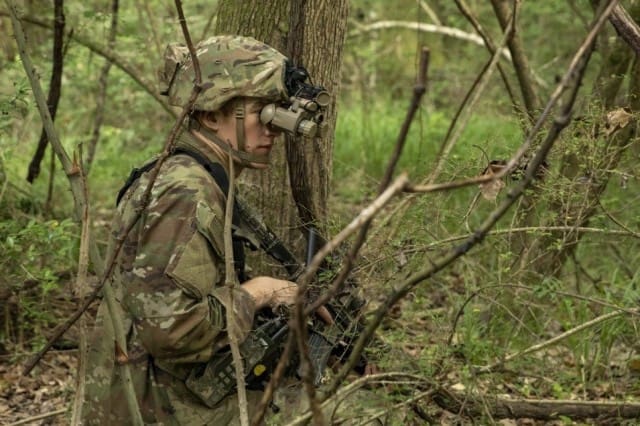
Night Vision Goggles are far from new, but the ENVG-B gives Soldiers a clearer view and are easier to use, Maj. James Siebert says in the video. Siebert is the Soldier Lethality CFT’s action officer for the ENVG-B project.
“The ENVG-B enables superior combat overmatch by providing Soldiers a binocular system that delivers unparalleled vision day and night in low light, no light, fog, smoke or inclement weather,” says Siebert.
“It offers greater clarity and better depth perception,” he says.
“Rather than looking down at a 2D map or smartphone device, Soldiers see virtual icons overlaid on their real-world view in real time,” says Siebert.
The video was one of several warfighting-related “Warrior Corner” videos produced for viewing by participants in the 2020 Virtual Maneuver Warfighter Conference, held online Sept. 9-10 by Fort Benning’s U.S. Army Maneuver Center of Excellence. The MCoE has since made them available to the public on YouTube.
Jericho, Vt. – The Vermont National Guard will break ground on a new $27 million facility for the Army Mountain Warfare School on Thursday, Nov. 5 at Ethan Allen Firing Range in Jericho.
The socially-distanced ground-breaking ceremony is scheduled for 10:00 a.m.
“In my many conversations with the Secretary and the Chief of Staff of the Army, the Chief of the National Guard Bureau, and the Director of the Army National Guard, it was clear to me that replacing the facilities of the Army Mountain Warfare School allowed the Army to greatly expand and improve its capabilities,” said Vermont Senator Patrick Leahy. “As Appropriations Vice Chairman I was glad to be in a position to be able to ensure that it was funded, when the Army told me that despite the need it had not been included in the budget submission. I’m proud of the opportunity ahead of us for Vermonters to expand our ability to teach Soldiers and other members of our Armed Services how to not only survive, but to master and make the most of difficult terrain and cold climates.”
The 82,668 square foot facility will include educational space, billeting for 174 personnel, and a dining facility. The new schoolhouse will also offer students a unique four-story indoor climbing wall and will use a geothermal ground source system to provide heating and cooling. Space for the installation of photovoltaic panels will also be incorporated. Project completion is expected near April 2022.
“The Army Mountain Warfare School cadre are among the best and brightest in the field; this school is where students learn to become competent mountaineering professionals,” said Maj. Gen. Greg Knight, Vermont adjutant general. “This new facility is a testament to those Soldiers, and the thousands of graduates and cadre that have come through the school for nearly four decades.”
The Vermont National Guard has operated the only Army Mountain Warfare School in the country since 1983. They now instruct courses in basic, advanced, and specialty mountain warfare. They also provide additional mission specific training to United States and foreign military forces in a variety of countries.
“This new facility ensures the continuation of excellence in mountain warfare operations, and the lasting value this school brings to Vermont and the U.S. Army. Sincere thanks to Senator Leahy for his efforts in making this a reality,” said Knight.
Joint Force Headquarters, Vermont National Guard Public Affairs
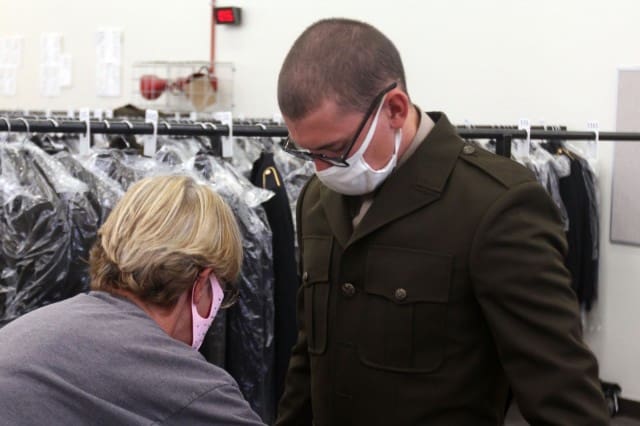
FORT SILL, Okla. –A basic combat training battery at Fort Sill is the first in the Army to get the new Army Service Green Service Uniform, a retro-style dress uniform modeled after the one worn by Gen. Dwight E. Eisenhower and other notables during World War II.
“Matter of fact, we’re the first Army training base to get the Army Green Service Uniform, which is pretty neat for obviously these Soldiers in training and obviously for the leadership,” 434th Field Artillery Command Sgt. Maj. Donald Harding said as nearly 200 trainees in A Battery, 1st Battalion, 79th Field Artillery waited outside the Vessey Hall Clothing Initial Issue Point (CIIP) Oct. 14 to receive the various components of their new uniforms.
Drill sergeants with 434th FA Brigade were issued their Army Green Service Uniforms the first week of September, during a three-night event at Military Clothing and Sales inside the PXtra.
Harding said he had nothing to do with the decision for Fort Sill to be the first to get new uniforms, as it came down from higher headquarters. He’s definitely proud that trainees here are first in line “because it brings back the tradition and the histories of the U.S. Army.”
The decision as to which battery here would get the uniforms was based on timing and the phase of training, Harding said. The brigade was given a date for the issue to take place, and it so happened that this battery was in week five of the second phase of their “2+8” training cycle.
“A basic combat training battery at Fort Sill is the first in the Army to get the new Army Green Service Uniform, a retro-style dress uniform modeled after the one worn by Gen. Dwight D. Eisenhower and other notables during World War II.
So they’ll come through, they’ll get the sizing, and then they get the alterations done here at CIIP, and then they’ll come back here in about three weeks or so to receive the tailored uniform and turn it in to dry cleaning for the graduation week,” he said.
The senior enlisted man for 434th FA Brigade does not yet own a set himself, but expects to get one as battalion and brigade command teams are getting over to the store to buy the issue.
Luis Navas, chief of supply services for Fort Sill, said the uniform is a big deal in the Army right now – “they’ve been working toward this day for a long, long time. We have a lot of people from outside, in the Army, just looking at what we do, how we do it, the quality of the product, so we can improve from this point on.”
Each trainee is issued one free uniform. They get the jacket, pants, dress shirt, brown oxfords, matching socks, their rank, two T-shirts (one long-sleeve, the other short), ties, gloves, and the garrison cap. Female trainees were segregated from the males and taken to changing rooms upstairs to be fitted for their version of the Army Green Service Uniform.
Since the trainees get only one suit of dress clothes, everyone gets instructions on how to take care of their uniform and make it last for a long time.
Navas said basic training units run around 240 trainees, and he was told that 150-200 would be going through the CIIP for the Oct. 14 uniform issue.
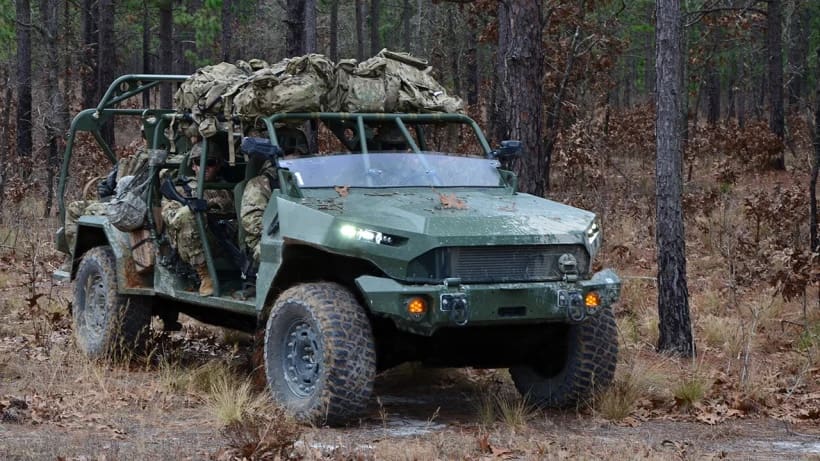
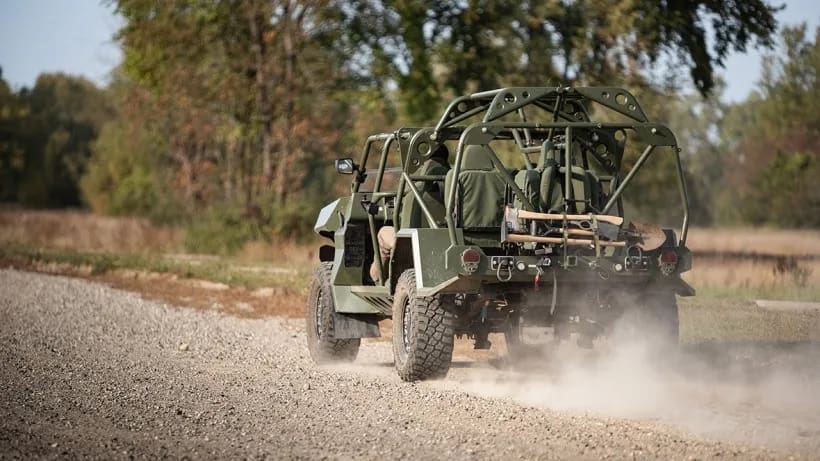
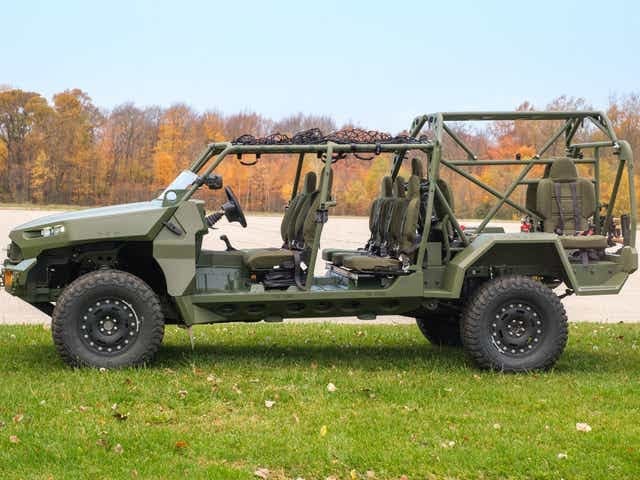
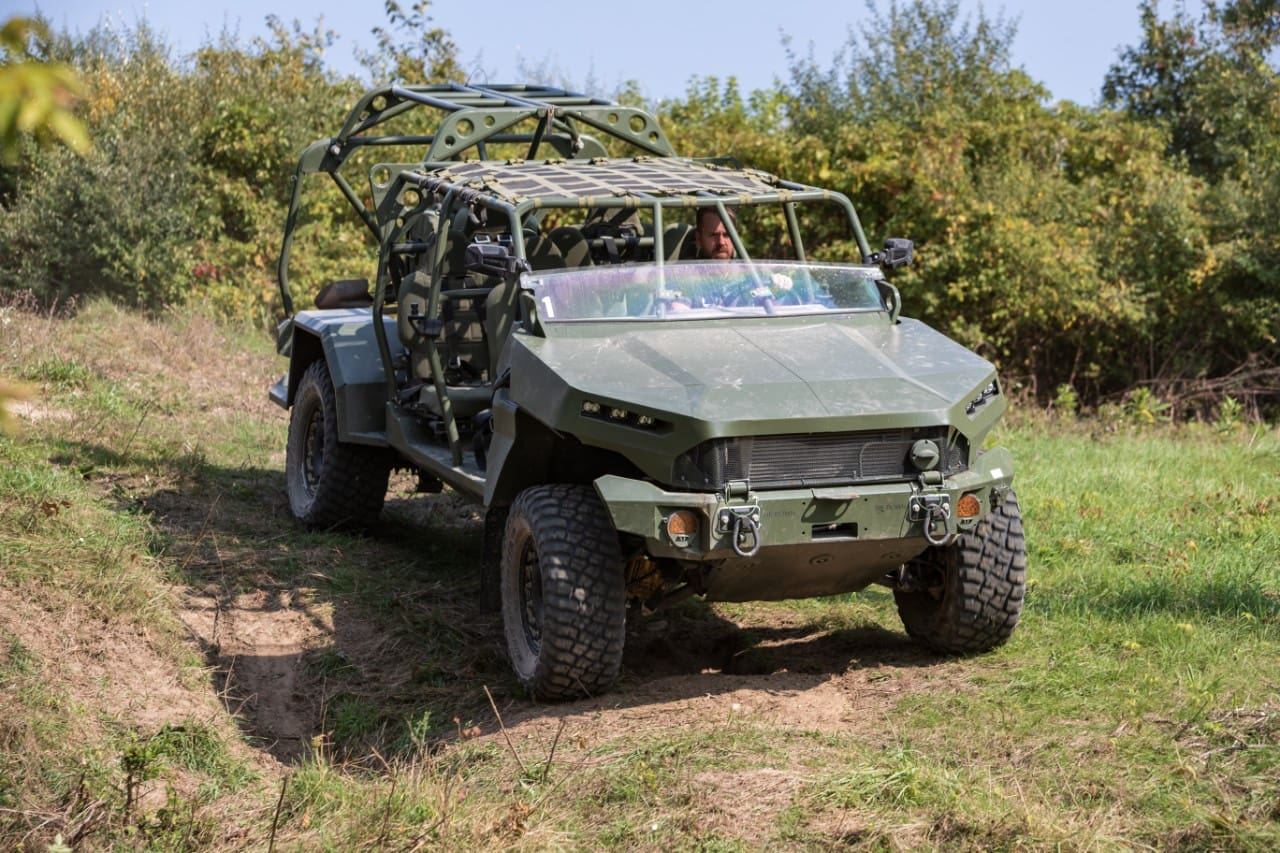
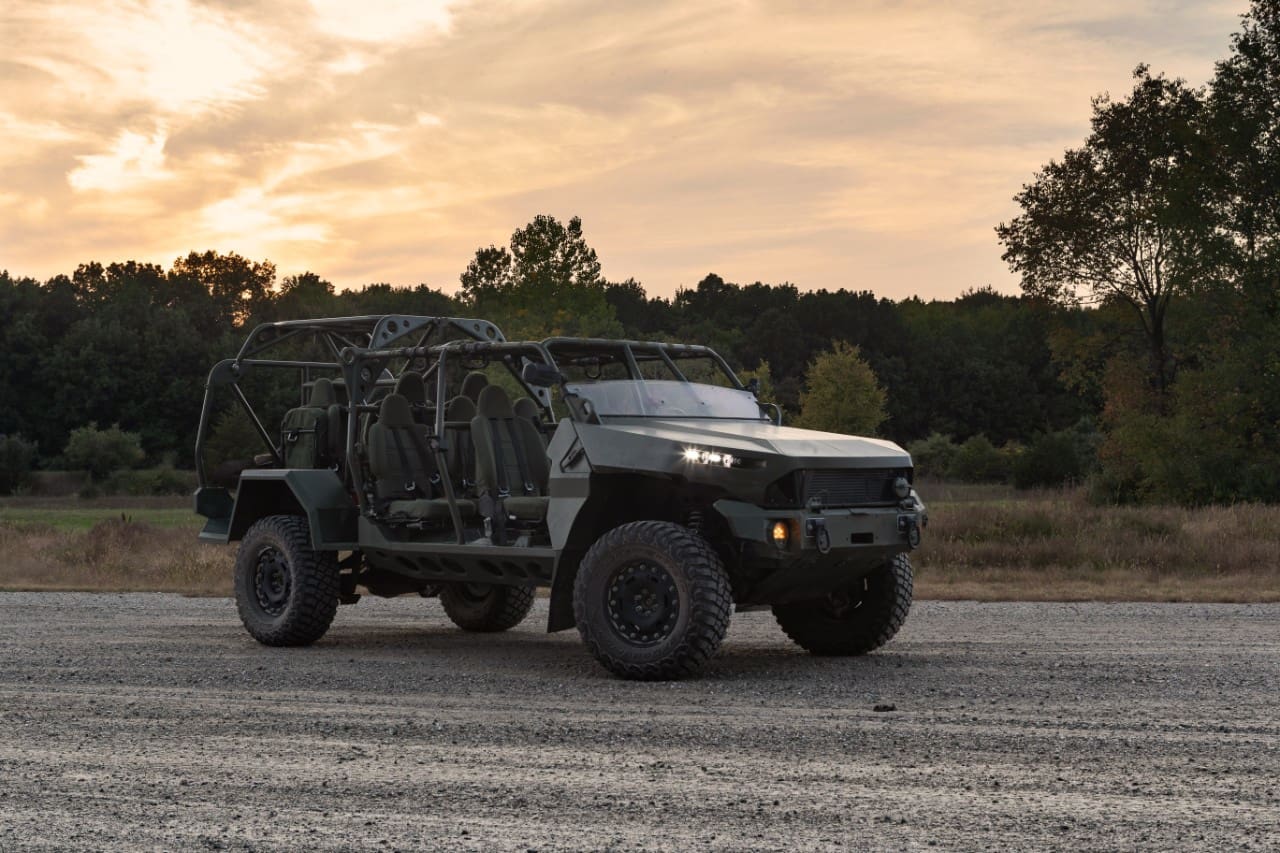
MILFORD, Mich. — GM Defense LLC, a subsidiary of General Motors, is celebrating the first delivery of the Infantry Squad Vehicle (ISV) – a light and agile all-terrain troop carrier intended to transport a nine-Soldier infantry squad and their equipment – to the U.S. Army as part of a $214.3 million contract awarded in June. GM Defense will manufacture 649 ISVs and will support the production of up to 2,065 vehicles with additional authorization over eight years. This is the first major award and delivery for GM Defense since the subsidiary was reestablished by its parent company in 2017.
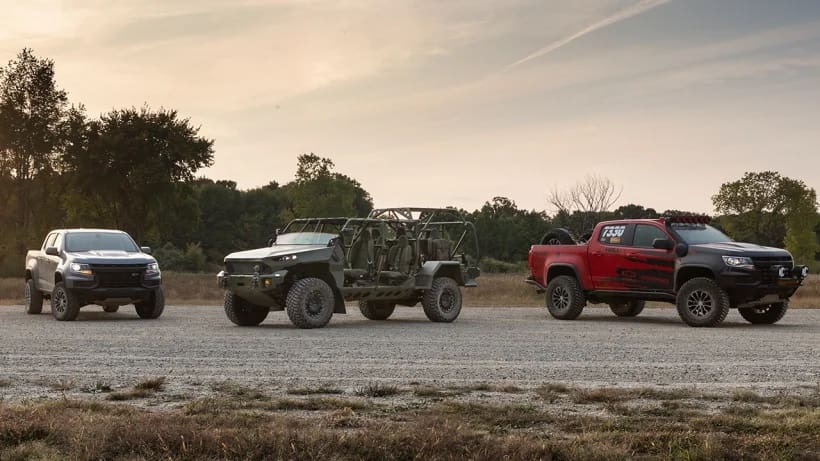
The ISV is based off the award-winning Chevrolet Colorado ZR2 midsize truck architecture and leverages 90 percent proven commercial-off-the-shelf (COTS) parts, including Chevrolet Performance race components. The 5,000-pound ISV was uniquely engineered to fulfill military requirements and designed to provide rapid ground mobility. The expeditionary ISV is light enough to be sling loaded from a UH-60 Blackhawk helicopter and compact enough to fit inside a CH-47 Chinook helicopter for air transportability. The COTS parts, combined with the ISV’s innovative Rollover Protection System, will provide agile transportability on the battlefield to support mission success.
“One hundred and twenty days from contract award to delivery is a significant milestone, and I am very proud of the team for this accomplishment,” said David Albritton, president of GM Defense. “We’re leveraging General Motors’ engineering prowess and immense manufacturing capabilities to bring transformative solutions to the military vehicle market. Our initial success with the ISV shows our commitment to our customer and highlights our unique right to win in the military mobility market.”
“The value we bring to our Army customer is our willingness to listen and adapt,” said Mark Dickens, GM Defense chief engineer. “During Soldier testing, the feedback we received was paramount in delivering a vehicle that met Soldiers’ needs, while maximizing safety and performance and taking their comfort into consideration. The production ISV we’re delivering today is an evolution from our original prototype design, and it’s certainly a vehicle that is a source of pride for the team.”
GM Defense has a teaming agreement with Ricardo Defense, which will lead the Integrated Product Support for the ISV, including technical manual development, new equipment training, provisioning, total package fielding and field service support.
“The success of the ISV program within 120 days is a true testament to the hard work and determination of a great partnership between GM Defense and Ricardo Defense,” said Chet Gryczan, president of Ricardo Defense. “Ricardo Defense is proud to be leading the creation and integration of critical ISV logistics products to ensure a successful transition of the ISV to the Army’s inventory.”
GM Defense is driving the future of military mobility by leveraging the best-in-class capabilities of General Motors for unmatched innovation, proven performance and breakthrough life-cycle economics. The ISV will bring world-class manufacturing efficiencies, ease of maintenance and a well-established global supply chain to the U.S. Army.
WASHINGTON — The Defense Digital Service is a team of 82 engineers, data scientists and computer scientists, working on some of the hardest problems in the Defense Department.
Brett Goldstein, DDS director, said they’re a “swat team of nerds.” He spoke remotely today to the Center for a New American Security in Washington, D.C.
A big advantage of DDS, he said, is that it reports directly to the secretary of defense.
That means the team is able to quickly answer the call if any tech issue arises. He also said that they could work on large projects rapidly when needed.
DDS has worked on the much-publicized “hack the Pentagon” program, which looks for vulnerabilities in the department’s information technology systems and comes up with ways to fix them, as well as to improve software and hardware.
Currently, DDS is partnering with the National Security Agency to cyber-protect Operation Warp Speed’s search for a COVID-19 vaccine, he said.
DDS has also partnered with the medical community to develop COVID-19 symptoms checkers, which DOD personnel and their families can use to figure out if they need to get medical care, he said.
Another important ongoing program is the counter-unmanned aerial systems initiative, which addresses the problem of being attacked by swarms of small, hard-to-detect unmanned aircraft systems. Goldstein said that a rapid response team is on standby to fly out to remote areas should the problem arise.
For example, when the USNS Comfort and Mercy hospital ships were aiding in the COVID-19 effort, DDS personnel were helping to ensure small UAS were not being used to attack them.
DDS is also working with the Joint Artificial Intelligence Center to advance AI and machine learning, he said.
Most DDS employees recruited are civilians coming for two- to four-year terms, from the Silicon Valley world. The selection process is very rigorous, he said, because those who are selected will be working on the hardest problems in the department.
Goldstein said the team members are given the most “wicked” projects to work on and they’re okay with that because “engineers love challenges.”
Some advice Goldstein has for information technology leaders in the department: “We need to sometimes talk a little less and execute a little more. Sometimes we’ll be dead-on and sometimes we’ll fail, learn from the failure and then be okay with the failure and just try again. Like that’s the type of environment we need to encourage. Americans are innovative. We need to foster that innovation here.”
The 160th Special Operations Aviation Regiment is the primary rotary-wing support to Department of Defense Special Operations Forces and offers opportunities for Officer, Warrant Officer, and Enlisted Army personnel in a wide variety of Military Occupational Specialities, not just CMF 15.
There is an application process to become a Nightstalker, with assessment, selection and training requirements.