SIG SAUER - Never Settle

Archive for the ‘AUSA’ Category

AUSA 24 – Tomahawk Ground Control Stations

Monday, October 21st, 2024

Although all of AeroVironment’s uncrewed systems are open architecture and will accept control solutions from other vendors, AeroVironment purchased Tomahawk Robotics just over a year ago due to interest in their Ground Control Solutions.

The Tomahawk GCS is an AI-enhanced, open-architecture common control system providing multi-domain, multi-robotic command-and-control capabilities. Tomahawk’s Kinesis software and Kinesis SDKs enable rapid development, integration, and deployment of 3rd-party technology to the warfighter at the edge…

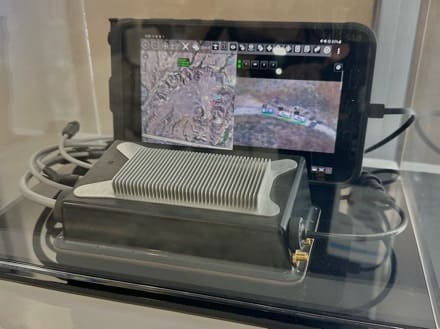
Seen above is the Grip S20, a rugged controller designed around the Samsung Galaxy S20 Tactical Edition smartphone. Grip S20 is military-hardened and provides an intuitive UI to simplify UxV control. It is run by their Kinesis software which offers unmanned systems control, TAK/ATAK integration to provide video rebroadcasting, COT messaging, and bi-directional syncing of POIs. Kinesis optimizes the vehicle pairing process, enables UxV formations and control, and a map engine that supports multiple sources via layers, DTED, and coordinates in both Lat Long and MGRS.

The controller can be paired with an edge processor like the MxC-Mini which is a Nett Warrior-compliant data link that seamlessly integrates with tactical UxVs. These edge processors ingest large amounts of data for high-speed, body-worn computation, reducing cognitive load, and fusing raw intelligence data for real-time decision-making.

www.avinc.com/uas/network-connectivity

AUSA 24 – InfraHex Multispectral Camouflage by 4D Tactical

Monday, October 21st, 2024

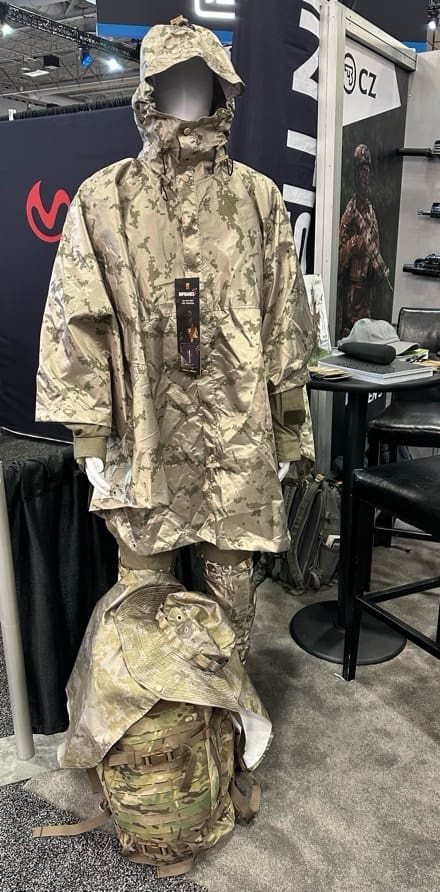
I ran across InfraHex Multispectral Camouflage in the Colt CZ Group booth. It’s offered by 4D Tactical which is based in the Czech Republic and part of CZ Group.

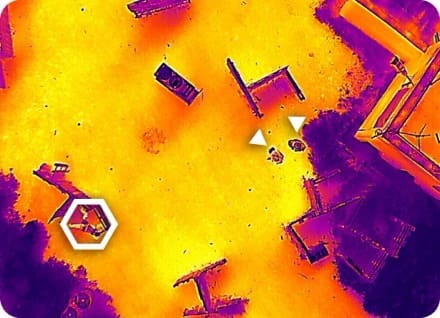
This is another one of those technologies which has become critical due to the ISR threat demonstrated in the conflict in Ukraine. The ability to hide even the individual Soldier from visual (day and night) as well as various wavelengths of thermal sensors is a challenge as they can be fielded cheaply.

InfraHex is a 9-layer, nanotech fabric which reduces infrared signatures by as much as 96%. It’s also breathable and has a fluorocarbon coating to reduce water buildup.

www.infrahex.com

AUSA 2024 – GORE-Tex Defense Fabric WINDSTOPPER Fabric

Monday, October 21st, 2024

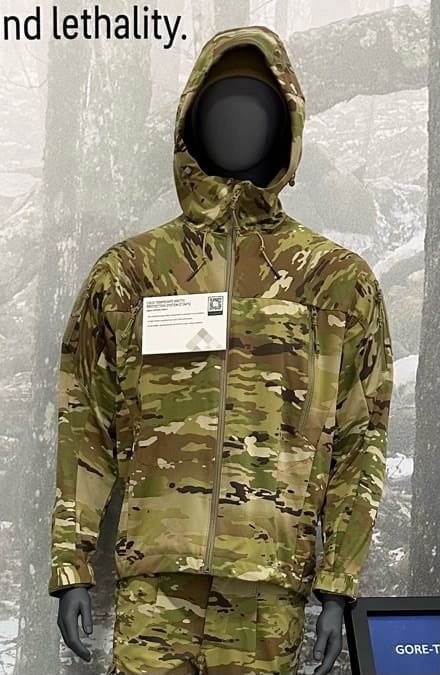
GORE-TEX WINDSTOPPER Fabric has been around for decades but with the recent move away from PFAS based Durable Water Repellent treated fabric, the argument for WINDSTOPPER use has seen a resurgence.

In the past, many customers looked to GORE-TEX fabrics for hardshell protection but now that DWRs aren’t so durable anymore, the inherent properties of WINDSTOPPER really shine.

The US Army has fielded a specialty clothing system in Alaska called Cold Temperature and Arctic Protection System, or CTAPS for short. It was a bit of a science project for several years, but the stand up of the 11th Airborne Division, made it a priority for the Army.

Some of the materials are a bit dated, and precede the move across industry to eliminate PFAS DWR from garments. In response, WL Gore & Assoc stepped up with their GORE-TEX WINDSTOPPER technology to fill the gap. Not only did they propose a new fabric to keep the Soldier more comfortable, but they also updated the design of the garment to be more in line with other commercial items favored by Alaska’s Arctic Angels.

The fabric offers stretch, insulation, breathability, and weather protection, but is more durable and maintains its weather protection longer than other fabrics.

Learn more at www.goretexprofessional.com.

AUSA 24 – SIG SAUER XM250 with Quick Change Barrel

Monday, October 21st, 2024

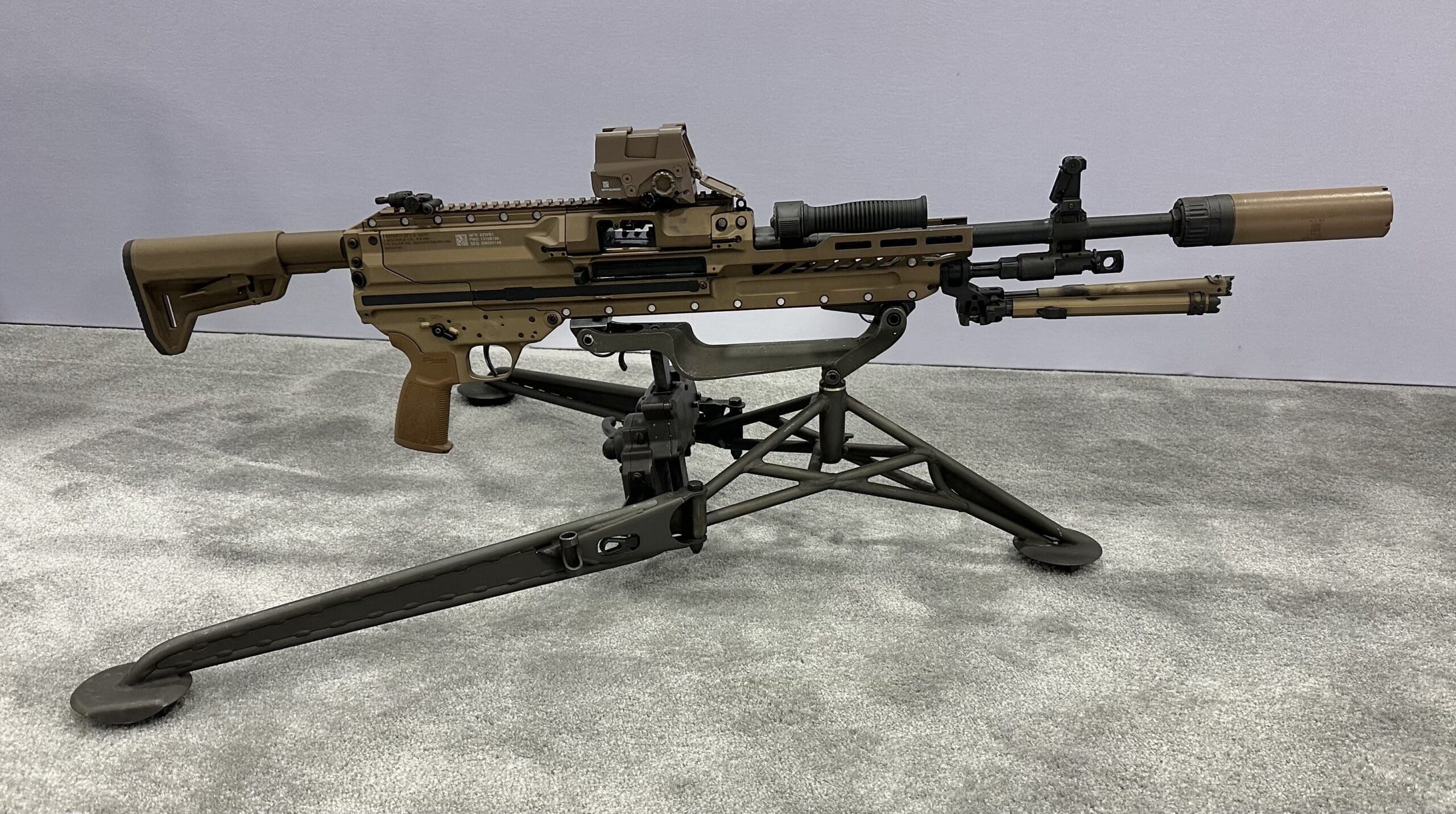
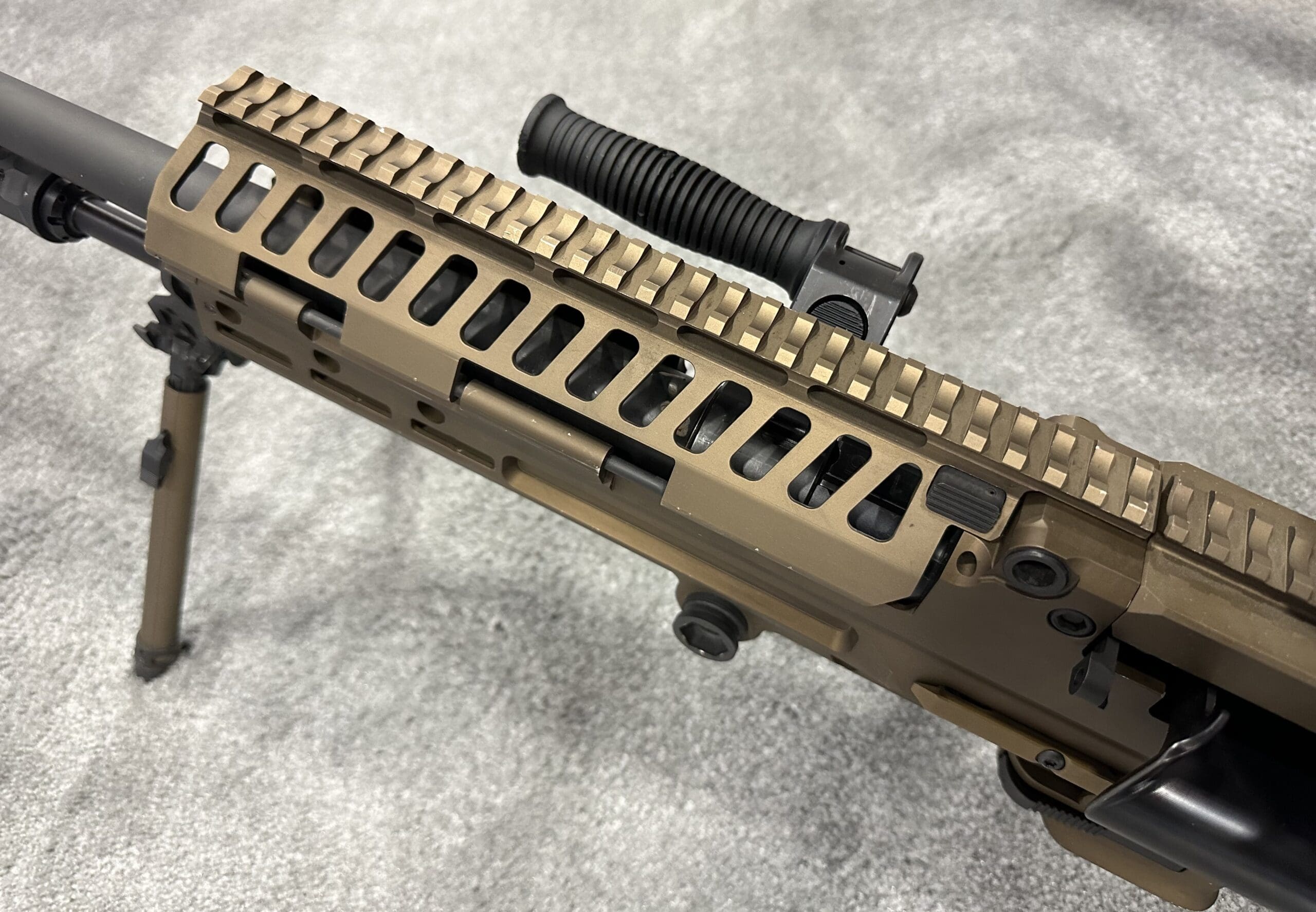
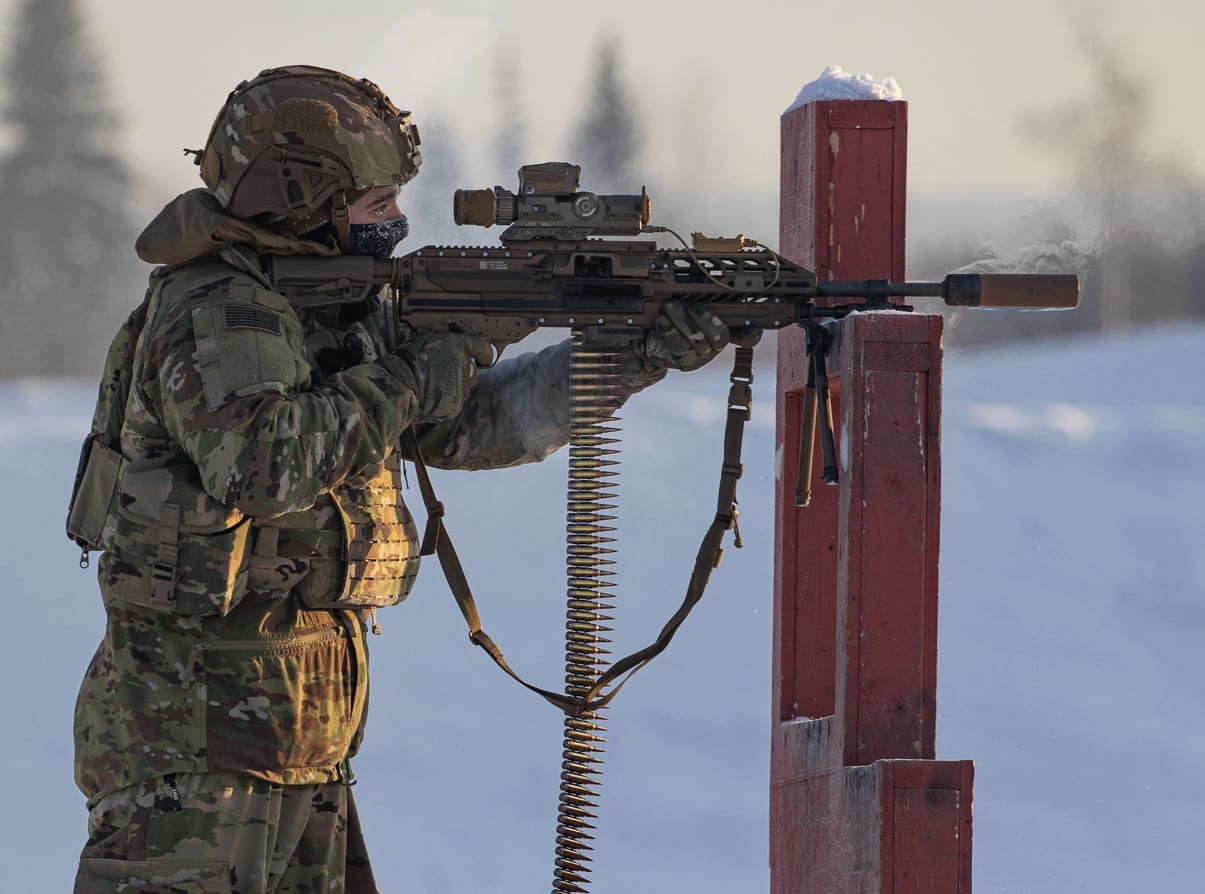
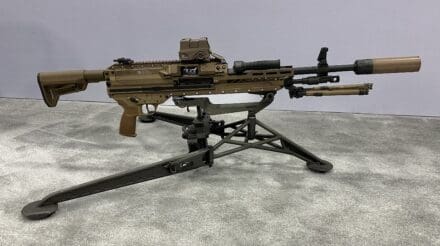
This is an XM250 in 6.8x51mm. Essentially, it’s the same Automatic Rifle the Army adopted under the Next Generation Squad Weapons program with one exception, it has a quick change barrel. That feature, makes it quite suitable to fulfill the role as a sustained fire, belt-fed machine gun.
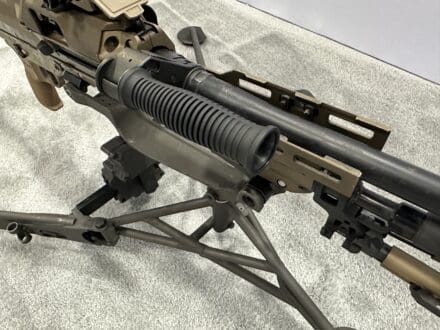
This isn’t a new characteristic. It was part of the original design, but the Army didn’t want a quick change barrel as part of NGSW. So, in order to save weight, it was left off. This version of the SIG light machine gun is referred to as the “World” configuration as it is how the gun is marketed to everyone else, except the US Army.

What Makes It Different
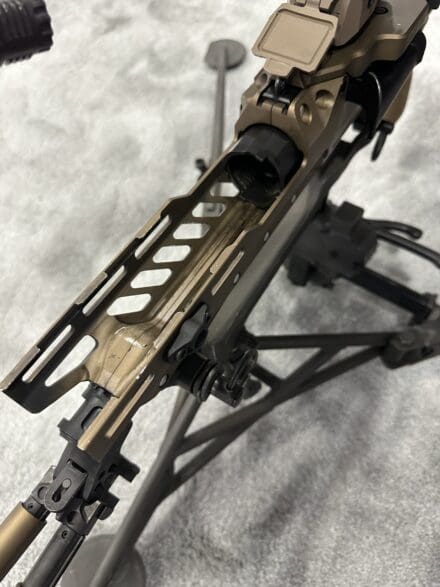
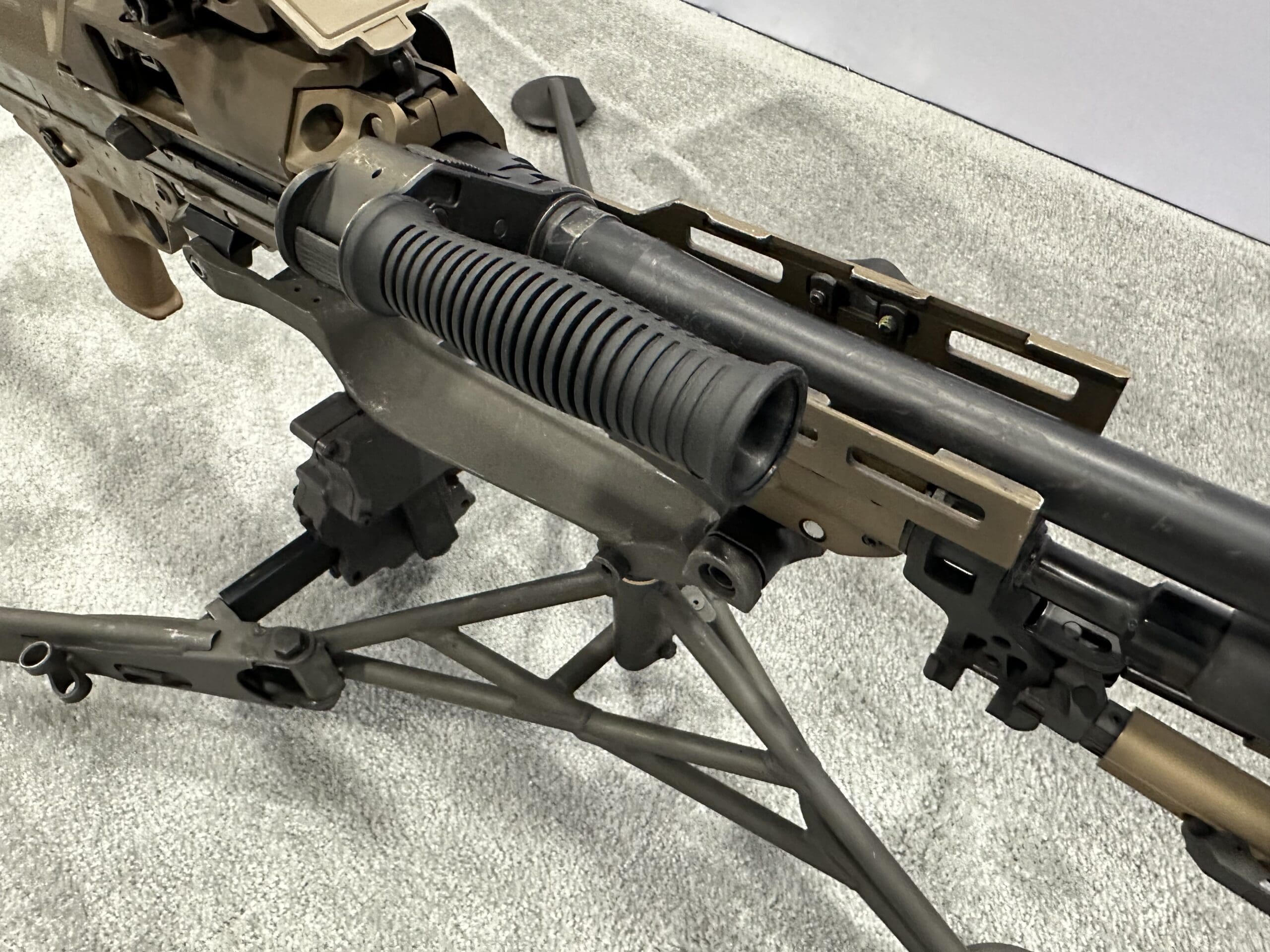
As you can see, it is configured here with no top cover over the barrel to facilitate quick barrel changes. However, SIG tells me there is a hinged cover available, as seen on the MG338.
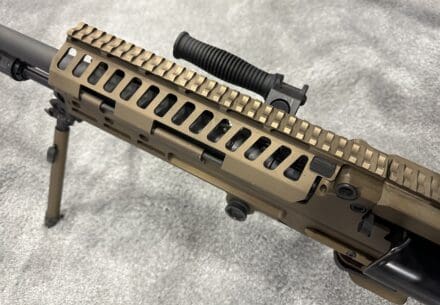
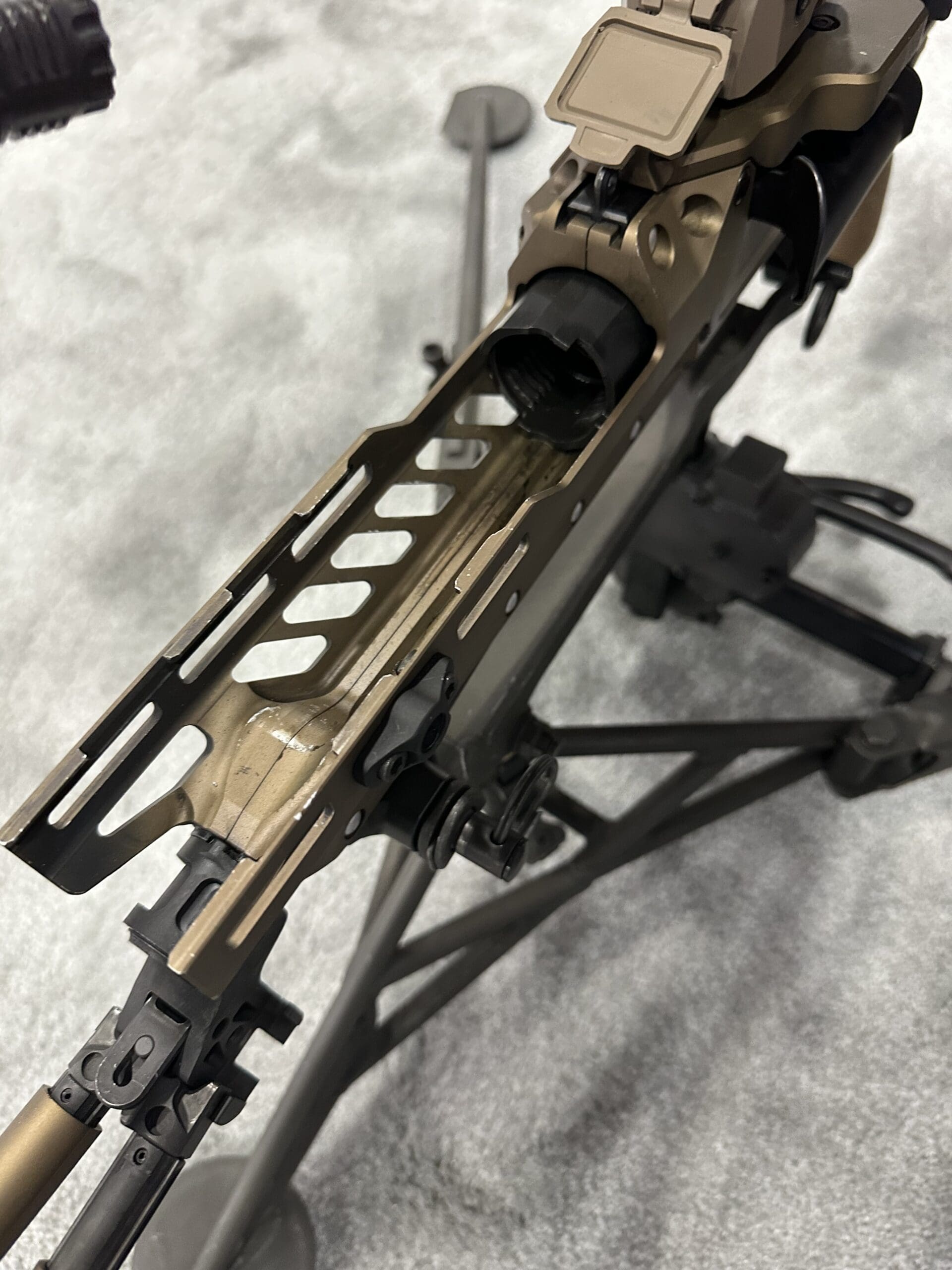
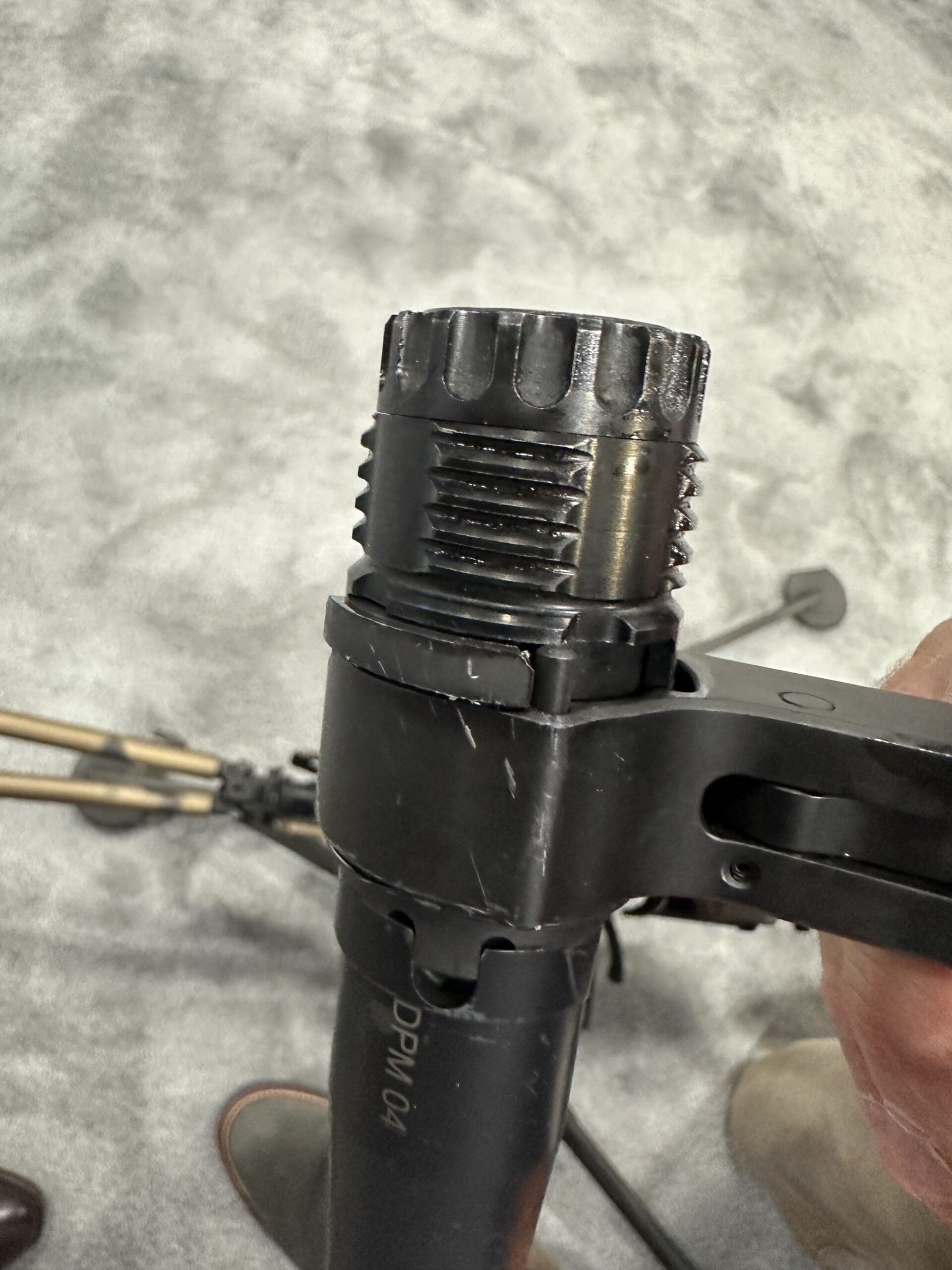
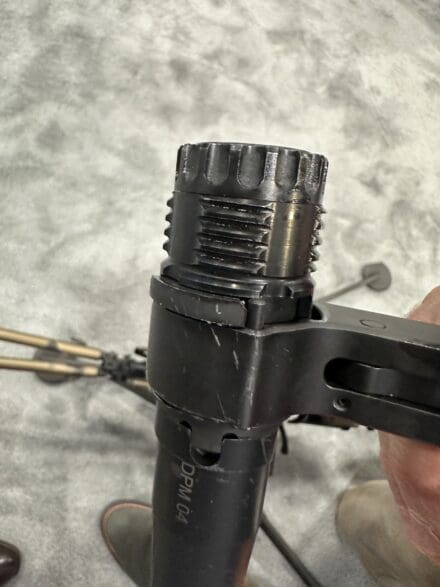
The barrel is locked in place via two buttons. It can’t be removed or secured in place without simultaneously depressing the rocker and secondary locks. Additionally, the plunger must be depressed to fully engage the handle lock.
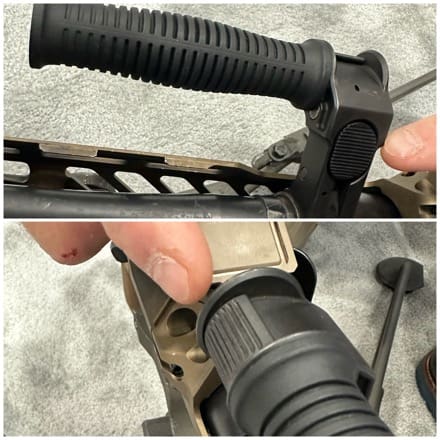
Here you can see the lugs on the barrel which lock the barrel into the receiver.
Why It Matters Now

The Squad Arms and Ammunition Configuration study led to the development of the 6.8 cartridge and Next Generation Squad Weapons. Afterwards, a study was conducted for the Platoon called, aptly enough, the PAAC study. Although it was completed well over a year ago, Army leaders continue to evaluate the study’s findings to decide on a path forward.

One of the key decisions is how to proceed regarding a machine gun for the platoon. Options under discussion include adopting the 6.8 common cartridge architecture for the role, as well as seeking out an additional cartridge such as the 338 Norma Mag option currently under adoption by USSOCOM.

Regardless of the caliber choice, fielding of the initial XM250 Automatic Rifles to the first units is already highlighting the disparity between the new 6.8 round and its 7.62 predecessor. The current M240s are heavier, offer reduced range and lower delivered energy on target than NGSW.

As of right now, NGSW is only intended for the close combat force consisting of Infantry, Cav Scouts, Combat Engineers, SOF, and select enablers. That means there are just over 13,000 XM250s being fielded to replace M249 SAWs in those formations. This leaves tens of thousands of SAWs across the Army. Chances are good, those will be replaced with XM250s over the coming years. However, the issue is even larger for the M240. No matter the desired course of action for caliber of choice post-PAAC study decision, the Army has to decide what to do with the ~120,000 M240s in inventory.

Many have suggested that they simply reconfigure them to fire the new composite case 6.8X51mm. The thought process is that the Army already owns them and they are serial numbers on the books; no need to buy new guns.

Considering the number of guns involved, it will easily take five years or more to develop a barrel and operating system capable of reliable, long-term firing of the high pressure 6.8 cartridge and to actually reconfigure the guns. It is likely that up to 20% of the guns currently in service ought to be coded out and replaced. They are old and have seen a lot of service over the past 30 years. If the Army does, in fact need all 120,000 guns, that means they’ll have to purchase more M240s to replace the worn-out examples of an almost 70-year-old design. Detractors of this plan ask why the Army would want to buy more old guns that they’ve already decided to replace.

Adoption of a new gun for the sustained fire role is likely a more cost effective solution in the long-term. If the Army desires to transition to 338 NM that has to happen because there’s no gun currently in the inventory to do it. If they don’t, one option is to pure fleet the XM250, with quick change barrels, replacing both M249 SAWs and M240 MGs. In many ways, it’s an easy button. This moves all belt-fed guns to one caliber and one platform across the formation, simplifying doctrine, employment, training and logistics. It also makes the entire force more lethal, and reliable, with new guns which will last longer than modified legacy guns. It’s also a faster option than starting a new program.

No matter the near-term path forward, a version of the XM250 with quick change barrel will inevitably enter Army service.


2024 Association of the United States Army Annual Meeting

Monday, October 21st, 2024

Last week I attended the Association of the United States Army’s annual meeting in Washington, DC. I chose to delay my coverage until this week because the show was so overwhelming, with lots to see and multiple meetings per day. I also wanted to take some time to absorb what I had experienced.

The Army is moving at a speed I haven’t seen since the invasion of Afghanistan. In fact, the event had the same vibe as during the peak of the war, around 2008, except right now, thanks to an ineffective Congress, there’s no money. Continuing Resolutions don’t engender confidence in programs, let alone properly fund Operations and Maintenance coffers which allow the Army to conduct its day-to-day mission. It’s a significant challenge.

The Army I encountered last week is different than the one that fought the GWOT. It is rapidly updating its capabilities with new systems, despite budget woes. If you’ve heard of Transformation in Contact, you’d have seen it happening last week; at least for industry. The convention center was packed wall-to-wall with drones and new combat vehicles, all powered by Artificial Intelligence. The Army wants all of it, and more.

While I’ll a touch a bit in those emerging capabilities this week, we’ve got some good old fashioned soldier systems coverage as well.

GM Defense Debuted “Next Gen” Tactical Vehicle at AUSA 2024

Friday, October 18th, 2024

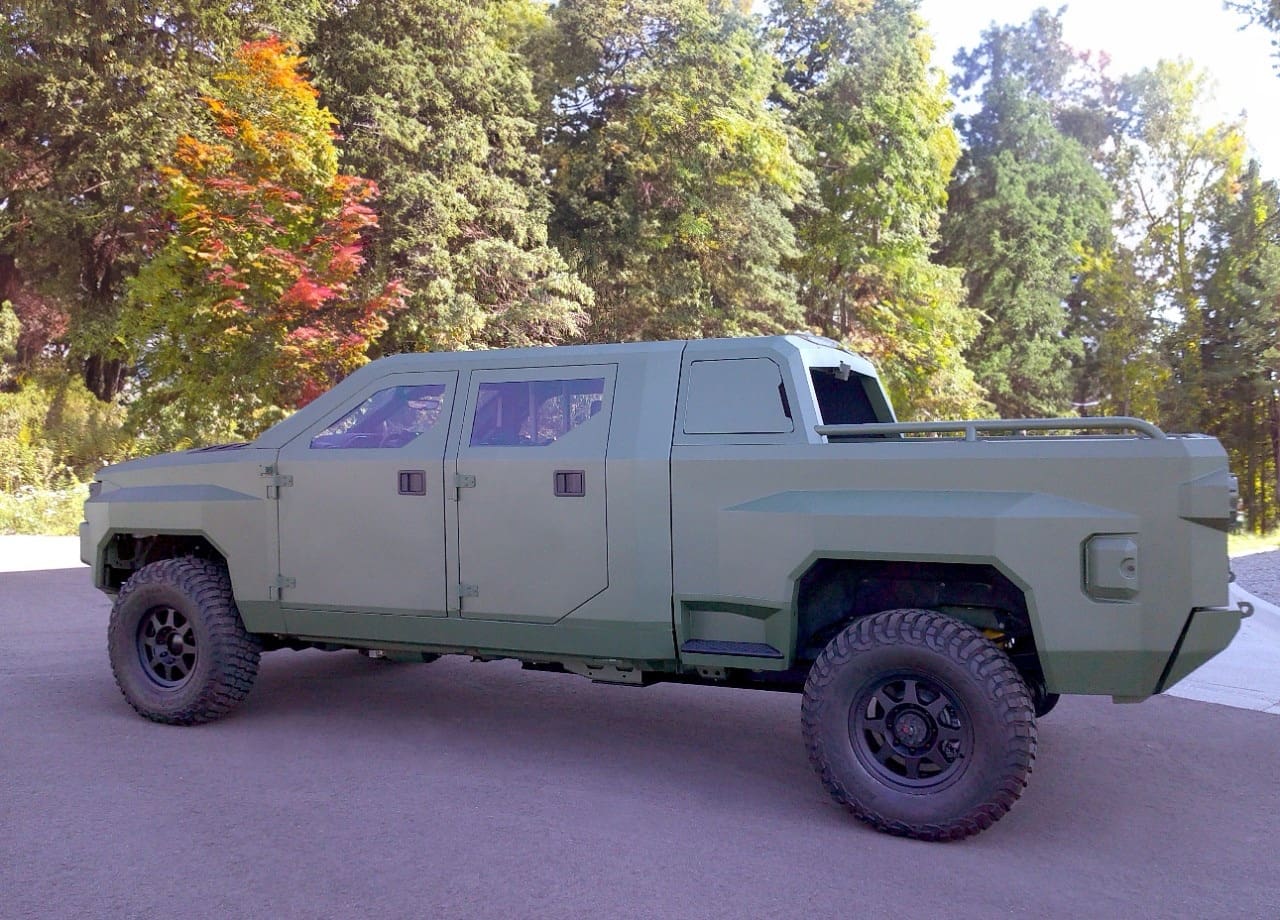
GM Defense, a subsidiary of General Motors (GM), unveiled its new “Next Gen” tactical vehicle prototype at this week’s AUSA 2024, the annual meeting and exposition of the Association of the U.S. Army.

Based on the Chevrolet Silverado 2500HD ZR2 truck, the rugged and durable Next Gen combines GM’s 2.8L Duramax® turbo-diesel engine with a 12-module battery pack, in addition to drive motors for the front and rear axles that enable Silent Drive and Silent Watch, technologies that make the vehicles harder to detect. 

Side view of GM Defense’s Next Gen tactical vehicle

The technologies enable stealthy ingress and egress through high threat zones, with onboard power to support high-energy-demand sensors, shooters, and Soldier kit. The vehicles offer active and passive safety features, including roll-over protection, anti-lock braking, electronic stability control, four- and five-point seat belt harnesses, and 360-degree camera capabilities. 

“Our Next Gen vehicle is a game-changing mobility solution that delivers tactically significant capabilities by integrating GM’s proven commercial technologies,” said Steve duMont, president of GM Defense. “This rugged and highly capable diesel-powered vehicle offers tactical advantages, such as Silent Operations, exportable power, and increased range with extended mission duration. Our warfighters deserve the latest technology that industry can offer in order to gain and maintain competitive advantage over our adversaries. Our Next Gen mobility solution can be customized and fielded now.”

Next Gen offers the following tactical advantages:

• Silent Drive and Silent Watch, enabling low acoustic and thermal signatures;

• Exportable power capable of charging mission systems;

• Tactically significant range with extended mission duration;

• Designed to be autonomy-ready with manned and unmanned options; and

• Add-on armor capable.

In addition, Next Gen provides sustainment benefits, including:

• Fuel demand reduction;

• The ability to use existing JP8 fuel infrastructure;

• Lower maintenance requirements from reduced parts and subsystems in the overall propulsion system; and

• Reduced logistics tail for fuel, batteries, and vehicle parts.

“Next Gen’s ‘wow’ factor is right behind the wheel,” said John ‘JD’ Johnson, vice president of GM Defense’s Government Solutions and Strategy Division. “Customers need to drive this highly capable vehicle to see, feel, and hear the benefits. Next Gen fundamentally changes the discussion around modern mobility through the tactical benefits delivered by its propulsion system, including its ability to address the power gap in the formation. This highly capable tactical vehicle leverages billions of dollars of investments GM has made in R&D and innovation to enhance warfighter capability. We encourage customers to test drive it so that we can get these capabilities fielded immediately.”

Next Gen is offered in two-, four-, and six-seat configurations. The vehicle will be optimized to support multi-mission capabilities, including command and control, launched effects, network extension, counter unmanned aerial systems anti-armor, casualty evacuation, and other critical missions. 

Barrett Firearms Manufacturing Inc. Unveils Squad Support Rifle System (SSRS) at AUSA Annual Meeting

Tuesday, October 15th, 2024

MURFREESBORO, TENNESSEE — Barrett Firearms Manufacturing Inc. has unveiled the Squad Support Rifle System (SSRS), its entrant into the U.S. Army’s Precision Grenadier System (PGS) Program, at this year’s Association of the United States Army (AUSA) Annual Meeting in Washington, D.C.  

As a part of Barrett’s continued commitment to delivering innovative, battle-proven solutions for U.S. and allied soldiers, the SSRS is designed to meet the evolving needs of modern combat.

Barrett has teamed with MARS Inc., an innovative tech start-up and finalist in the U.S. Army’s xTechSoldier Lethality competition. This strategic collaboration brings together two innovators in soldier lethality systems to develop a next-generation 30mm support rifle.

“We are excited to be working with Barrett, the world’s premier soldier weapons manufacturer, to mature our 30mm Support Rifle System for the U.S. Army’s PGS Program,” Michael Merino, President of MARS Inc, said. “Together, we’re developing a solution that will greatly enhance the soldier’s ability to engage a wide range of battlefield threats.”

The SSRS will offer soldiers an advanced counter-defilade capability and the ability to defeat Unmanned Aerial Systems (UAS) and dismounted soldier targets. Designed for the U.S. Army’s upcoming PGS solicitation expected in FY2026, Barrett will head a team of industry-leading partners to develop a cutting-edge system optimized for lethality and soldier safety.

“Barrett will bring together a team of innovative partners to deliver a PGS solution that incorporates unique technologies optimizing lethality and soldier safety,” Bryan James, CEO of Barrett, said. “The SSRS is a key part of our expanded product line, offering new capabilities that enhance the effectiveness of allied forces on the battlefield.”  

The U.S. Army announced the launch of the PGS program during an industry day event at Picatinny Arsenal in August. As a part of this initiative, Barrett’s SSRS is positioned to play a critical role in shaping the future of soldier weapons systems.  

Attendees of the AUSA Annual Meeting are invited to visit the Barrett booth #3615 to view a model of the MARS xTech demonstration system and learn more about Barrett’s vision for the future of soldier lethality.

B.E. MEYERS & CO. Unveils New 2025 Product Lines At AUSA 2024

Tuesday, October 15th, 2024

October 14th, 2024 (Redmond, WA)B.E. Meyers & Co., Inc., a Defense Technology Manufacturer specializing in advanced photonic solutions for military, law enforcement, consumer, and aerospace applications worldwide, will unveil their new product lines for 2025 at AUSA2024 at the Walter Washington Convention Center, Washington, DC 14-16 October 2024.

• The DAGIR®-V1 and DAGIR®-V2 variants of the DAGIR® Multi-Platform Advanced Laser System, as well as the SAL-UHP Squad Aiming Laser – Ultra High Power program variant awarded by US Special Operations Command (USSOCOM) as part of the Miniature Aiming Systems – Laser (MAS-L) contract (H9240324D0009).Based on a revolutionary new digital Vertical-Cavity, Surface Emitting Laser (VCSEL) diode core, the DAGIR® series supports the widest range of platforms and applications that allows for a singular comprehensive solution for advanced night operations.

• The MILR™ Miniature Intelligent Laser Rangefinder, the world’s first ballistically disturbed infrared laser Fire Control System. Based on our proprietary and revolutionary new MINIRVA™ (Mapped Integrated Near InfraRed Vertical-Cavity, Surface Emitting Laser (VCSEL) Array) diode core, the MILR™ supports the widest range of platforms and applications that allows for a singular, lightweight, and comprehensive solution for advanced ranging, aiming, illuminating, and ballistic solutions. Optimized for machine gun use and fully feature capable for precision rifles as well as remote weapon stations, the MILR™ is the only device that enables full day and night ballistic capability from a weapons platform without the use of a clip-on night vision device.

• The VSLAP™ Variable Six Laser Advanced Pointer, a compact high-power near infrared handheld target pointer and illuminator system supporting TACP, CCT, JTAC, SOTAC, ANGLICO, and JFO applications and other air-to-ground integration and communication needs.  Using our proprietary DeathStar™ technology of integrating sixindependent lasers into a single concentrated beam, the VSLAP™ emits up to 1.21 Watts of near infrared pointing/illuminating capability in a variety of continuous wave or select pulse settings.  The VSLAP™ can be adjusted to produce either a tight near infrared pointer or,by turning the beam adjustment collar, combining all beams into a smooth NIR illuminator. This results in undeniable power on target from the palm of your hand.

• The BOARS®-M2.1 Optics and Accessory Rail System, a revised modular mounting solution for the M2A1 series of .50 Caliber Heavy Machine Gun, with alternating upper rail platforms for both MILSTD1913 and Aimpoint® MegaRail™ bases supporting the Aimpoint® FCS-13 and FCS-14 Fire Control Systems.  The BOARS®-M2.1 is extremely rugged and capable of supporting any large optical system on an M2A1 platform during maritime, aviation, or land-based gunnery applications.

• The IZLID® Ultra Airborne Kit infrared pointer system (NSN 5860-01-697-2989) currently adopted by Naval Air Systems Command (NAVAIR) for use on GAU-17 (M134), GAU-19 (M3M), and M240D weapons platforms and others across equipped rotary wing platforms and other aircraft.

• The IZLID® Ultra 24V with Extreme Duty Bracket (EXDB®-UE) is a lightweight, infrared pointing and illumination laser for use with night vision and IR sensors. The IZLID® Ultra 24V with EXDB®-UE is configured for use on the M134 and GAU-19 weapons series. Capable of operating on standard 24V DC power standard for aviation platforms, with a protective shield to guard against impactsduring use and storage while also serving as a heat and debris shield during use. Select IZLID® Ultra 24V EXDB®-UE kit configurations utilize the Unity Tactical® Spade Grip Mount™ for ergonomic control, and can include cabling systems specific to Dillon Aero M134 platforms, Fulcrum Concepts GAU-19 heavy weapon platforms, and other systems upon request.


In addition to these new product lines, B.E. Meyers & Co. will be showcasing their New 2024/2025 50th Anniversary Defense Systems Product Catalog and innovative defense systems product lines including the MAWL®, IZLID®, GLARE®, BOARS®, and KIJI® series of proven high-performance defense systems products. For B.E. Meyers & Co.’s established line of optoelectronic components for unmanned aerial vehicles and other integrated sensor systems, please see their Integrated Systems product catalog.

For sales information on the above mentioned systems as well asother innovative laser solutions from B.E. Meyers & Co., please visit bemeyers.com or connect with us at info@bemeyers.com.

All B.E. Meyers & Co. products are proudly Made in the USA. Systems are available for sale specific to US regulations (FDA, DDTC, BIS, etc.) to respective consumer, law enforcement, and military entities in the US and internationally.