FirstSpear TV

Archive for the ‘Contracts’ Category

US Army Issues Prototype Project Opportunity Notice for Next Generation Squad Weapon – Fire Control

Tuesday, June 4th, 2019

The Army’s Next Generation Squad Weapon Program promises to field machine guns and carbines which will shoot further than current models. Now, the Army seeks to improve hit capability with a Next Generation Squad Weapon – Fire Control effort.

Consequently, U.S. Army Contracting Command – New Jersey (ACC-NJ), on behalf of Project Manager Soldier Weapons, recently issued a Prototype Project Opportunity Notice (PPON) for the Next Generation Squad Weapons – Fire Control (NGSW-FC) program. The purpose of this PPON for NGSW-FC is to award up to two prototype Other Transaction Agreements (OTA) under the authority of 10 U.S.C. § 2371b, developing a fire control system under the NGSW-FC program.

NGSW-FC is intended to increase the Soldier’s ability to rapidly engage man sized targets out to 600m or greater while maintaining the ability to conduct Close Quarters Battle. This objective is achieved by leveraging technologies to calculate and display a disturbed reticle to the User.


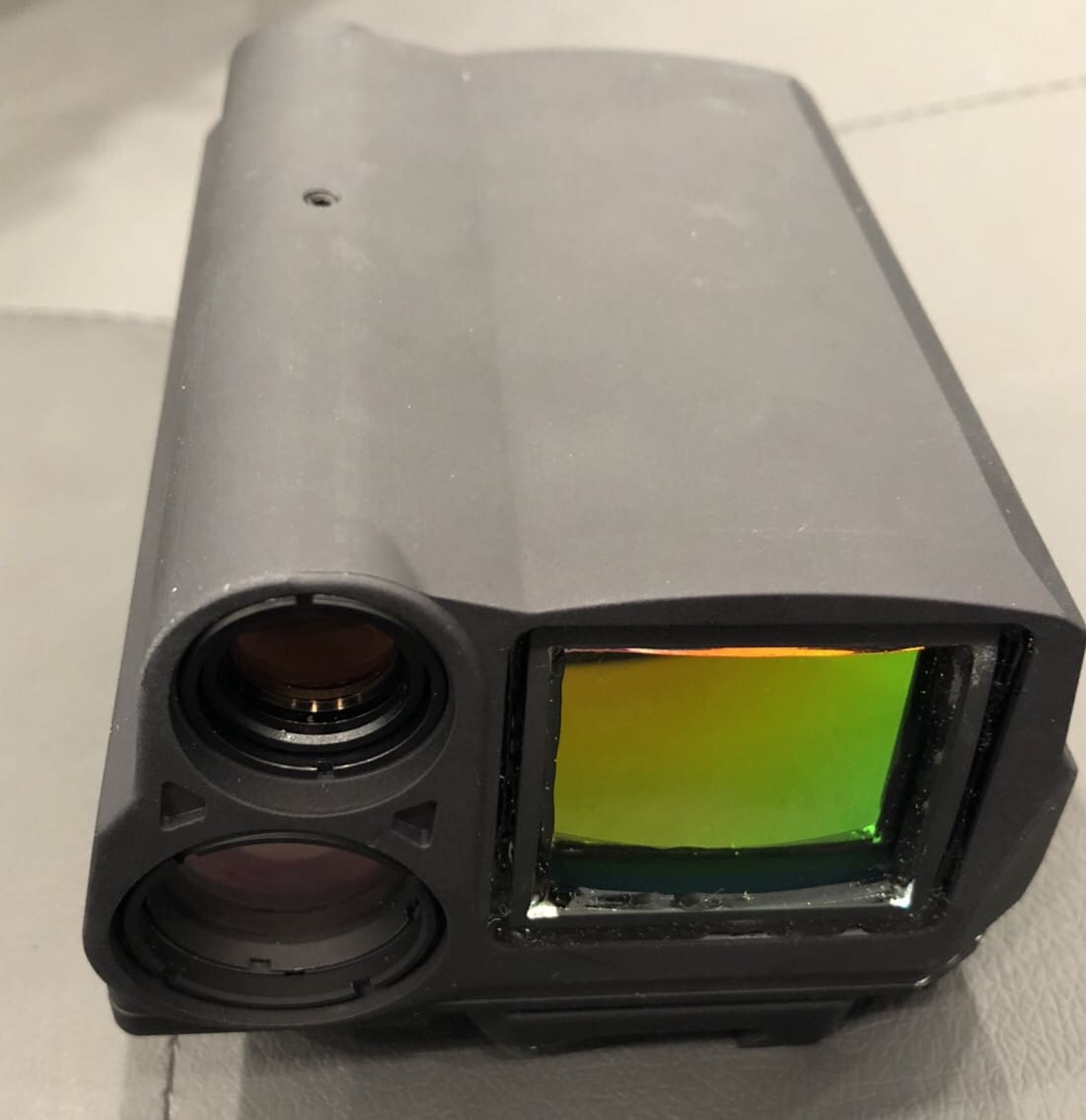
Prototype SIG SAUER Next Generation Optic

NGSW-FC will integrate Government Ballistic Solver – Small Arms (GBS-SA), which is the Government developed software ballistic kernel that will serve as the system’s ballistic calculator. This will be used to provide an adjusted aiming point (disturbed reticle) that considers range to target, atmospheric conditions, and ballistics of weapon/ammunition.

The system is comprised of a weapon-mounted fire control system including a soft case, remote(s), lens covers, mounting and alignment tools, lens cleaning kit, User manual/instructions, zeroing chart(s), and two sets of batteries.

Results of the Small Arms Ammunition Configuration (SAAC) Study provide validation that development of advanced fire control systems to reduce system errors is a major factor in increasing the overall system lethality. Project Manager Soldier Weapons (PM SW) has conducted various industry days, trade studies, and technology developmental efforts to support the next generation of fire control systems for small arms weapons systems. In 2018 the Army prioritized the Next Generation Squad Weapons (NGSW) programs. PM SW determined it would be in the Government’s best interest to hold a full and open competition to support rapid prototyping of the NGSW Fire Control (NGSW-FC). The NGSW-FC will be integrated with both the Next Generation Squad Weapon – Rifle (NGSW-R) and Next Generation Squad Weapon – Automatic Rifle (NGSW-AR) within the Close Combat Force. This PPON seeks to explore fire control system level integration, test and evaluation.

The program also aspires to provide advanced camera based capabilities: automatic target recognition, target tracking, facial recognition, as well as optical augmentation: denial of enemy’s capability, pre-shot threat detection, etc.

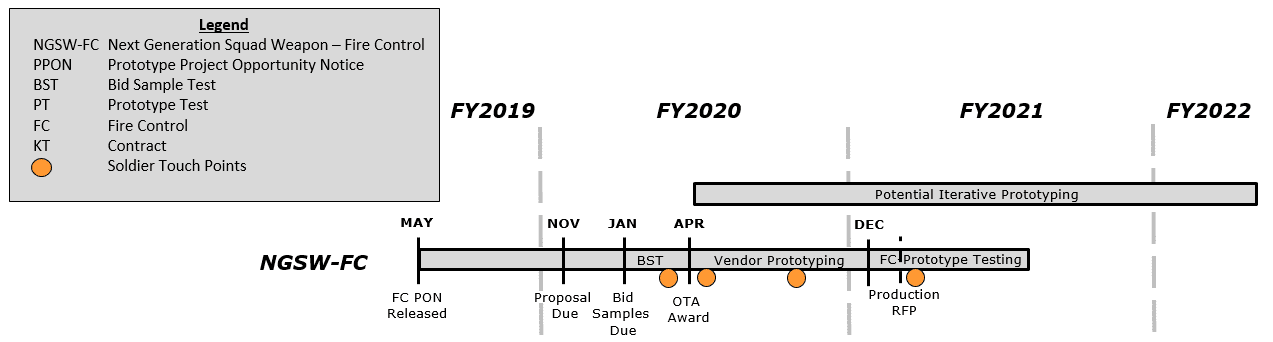
The Government intends to award up to two independent fixed amount OTAs for NGSW-FC prototyping. The duration for each prototype OTA is estimated to be up to five years. Deliverables for each prototype OTA include 115 NGSW-FC systems, spare parts, tools/gauges/accessories, engineering support, management support; an option for additional NGSW-FC systems in increments of 10 (not to exceed 100 additional systems); an option for additional NGSW-FC systems in increments of 50 (not to exceed 250 additional systems); an option for additional design representative mock-ups in increments of 5 (not to exceed 50 additional mock-ups); and iterative prototyping efforts as defined in the Statement of Work. Each prototype will undergo Fire Control – Prototype Test (FC-PT) events which include technical testing and Soldier Touch Points (STPs). The initial prototyping and testing for NGSW-FC will be approximately 14 months.

Offerers have until Nov 04, 2019 4:30 pm Eastern to submit.

For full details, visit www.fbo.gov.

US Military Purchases Aquabotix Swarmdriver

Friday, May 31st, 2019

Aquabotix awarded an approximately US$150,000 contract to supply SwarmDiver system, training, and test support.

Sydney, Australia and Virginia and Massachusetts, USA – UUV Aquabotix Ltd (ASX:UUV) (“Aquabotix” or the “Company”) is pleased to announce that it has been awarded an approximately US$150,000 contract for the purchase of its SwarmDiverTM system along with training and test support for the United States Military. This hardware and services sale will enable necessary government evaluation activities for the Military’s consideration of operational use of the product in theatre.


This award represents the fourth (4th) order placed by the United States Armed Forces related to the SwarmDiver family of vehicles since the product’s launch in April 2018. Chief Executive Officer of the Company, Whitney Million, “We are proud to have this opportunity to provide our SwarmDiverTM solution once more to the United States Military and are optimistic about related future opportunities. We see this award as being significant for a few reasons. First, the award demonstrates a now solid trend of acquisition activity by the United States Military branches – a trend oftentimes followed by other nation’s navies as products become qualified for use. Additionally, the value of this award is significantly larger than those from the United States Military to Aquabotix in the past. While contract values for providing this type of hardware and services support for evaluation activities are generally small, they represent meaningful and necessary steps to progress commercially developed product to a state of full operational use. These facts leave us anticipating potential future, more sizeable orders from both United States and other navies.”

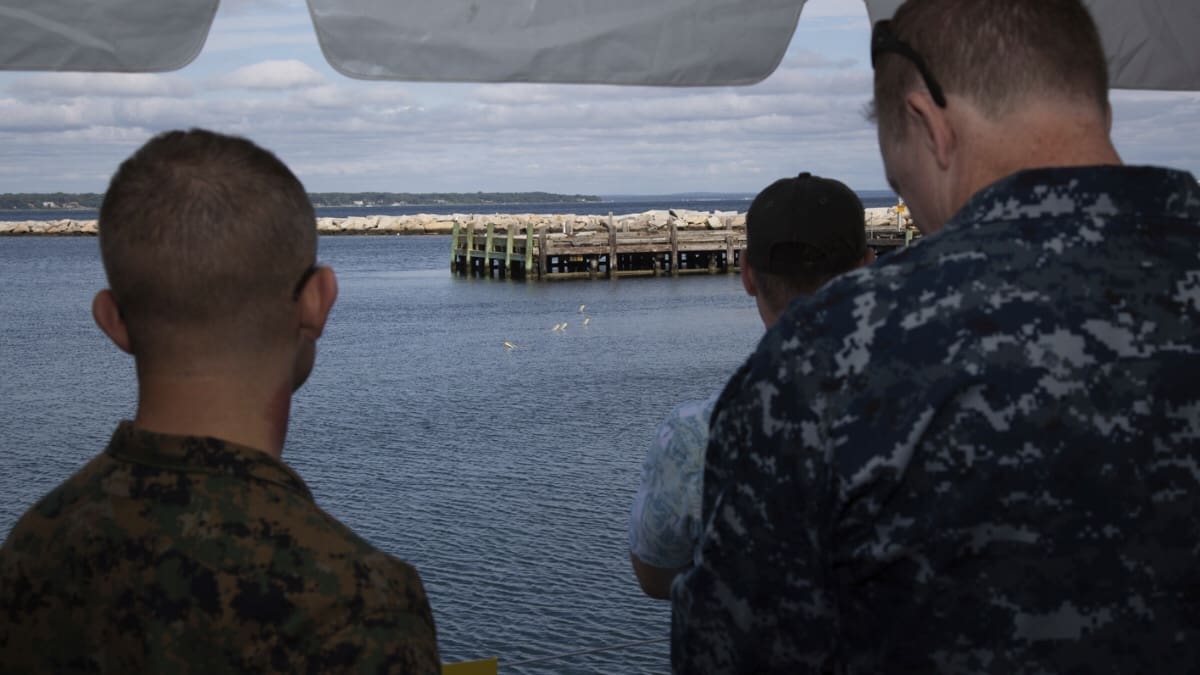
U.S. Military personnel reviewing the SwarmDiver system during the U.S. Navy’s Advanced Naval Technology Exercise in August 2018.

Revisions Adds Two Products to the US Army’s Authorized Protective Eyewear List (APEL)

Wednesday, May 29th, 2019

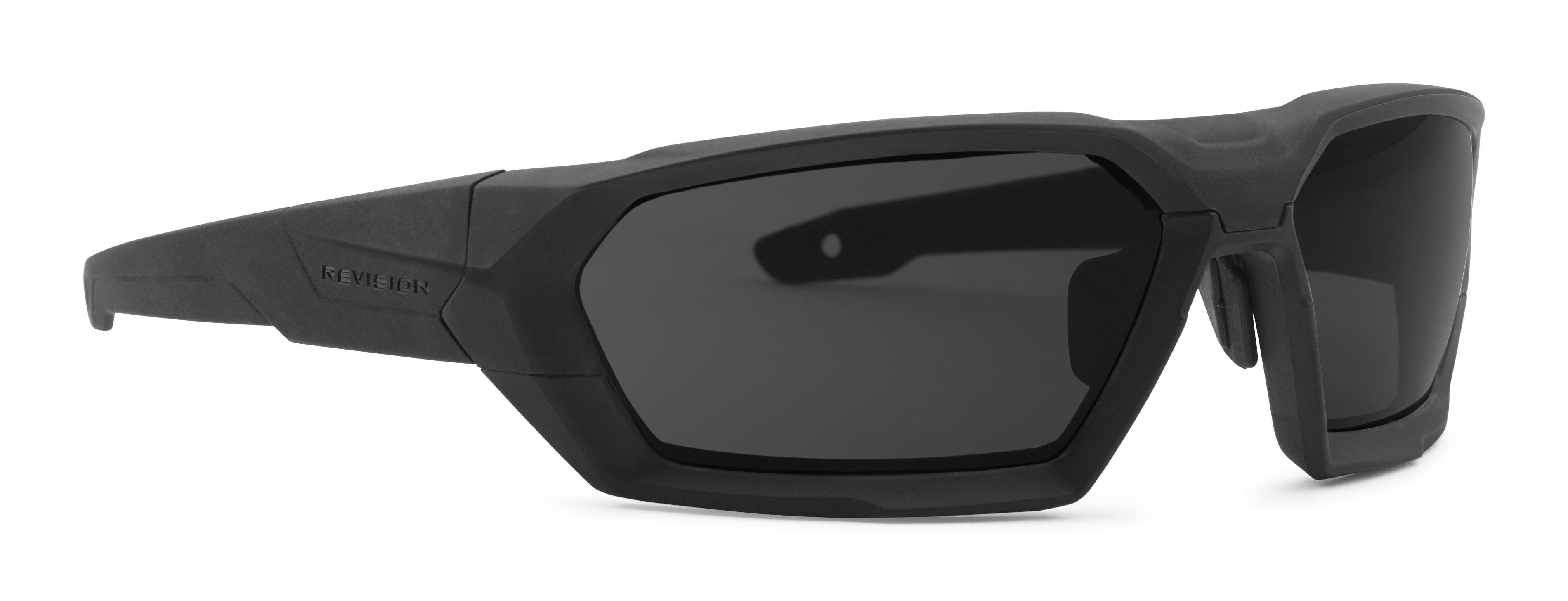
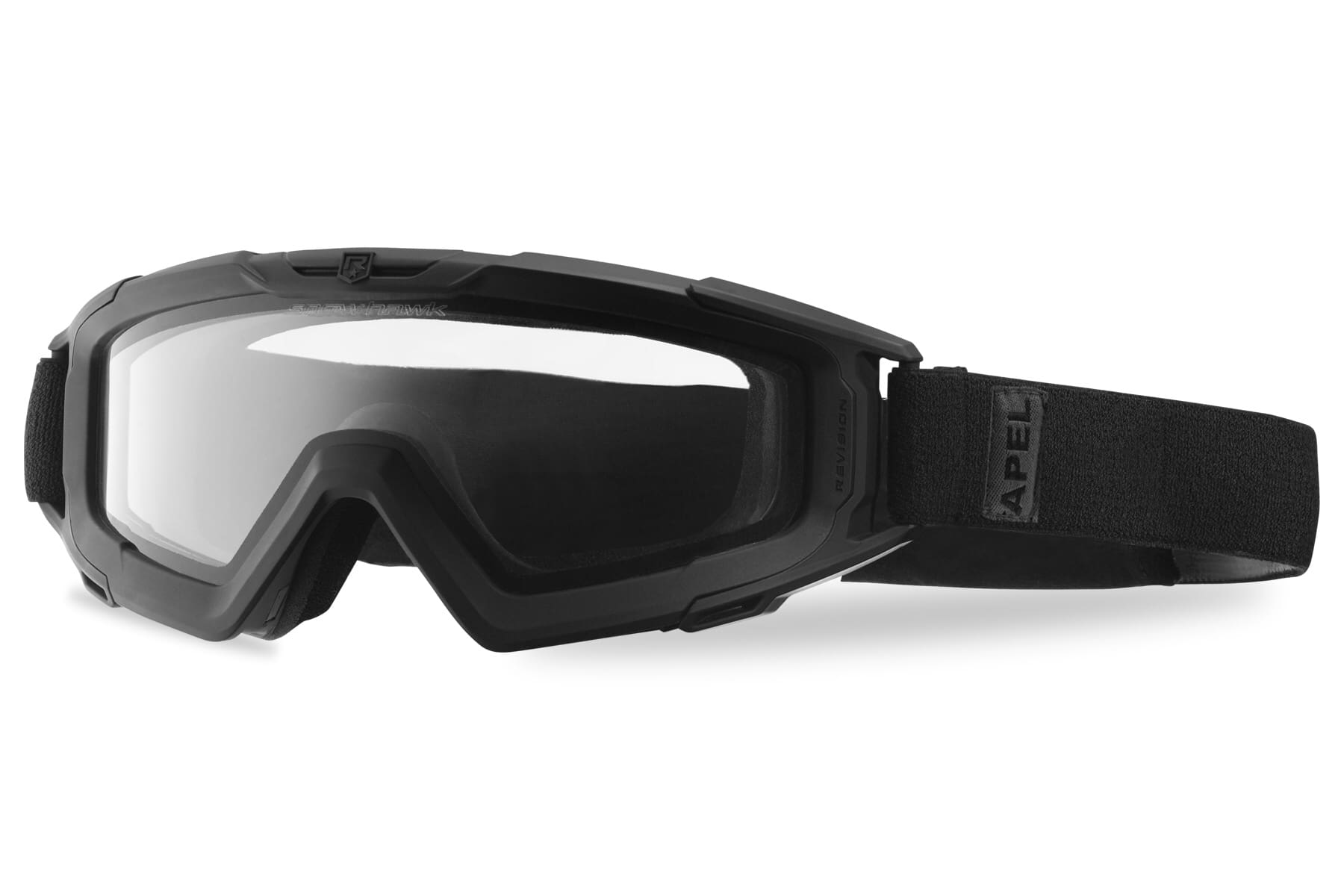
Revision’s ShadowStrike Ballistic Sunglasses and SnowHawk Cold Weather Goggles have been added to the APEL Program by the U.S. Army

Essex Junction, Vermont (May 29, 2019) – Revision—the world leader in protective eyewear solutions—announces the selection of two new eyewear lines for inclusion on the Authorized Protective Eyewear List (APEL®), as determined by the U.S. Army’s Program Executive Office (PEO) Soldier. After comprehensive laboratory testing and user trials, the Product Manager, Soldier Protective Equipment (PM SPE), selected Revision’s ShadowStrike™ Ballistic Sunglasses and SnowHawk™ Cold Weather Goggle System for inclusion on the APEL. The ShadowStrike Sunglasses are the first dual lens, ballistic sunglasses to offer OcuMax® Anti-Fog performance, and the SnowHawk goggle system is the first Cold Weather Goggle System to offer a magnetically integrated balaclava for extreme protection in cold weather environments (balaclava procured separately).

“Revision has been a leading provider of protective eyewear on the APEL program since it was created in 2006,” said Jonathan Blanshay, CEO, Revision. “This is an achievement we are very proud of, and represents our continued commitment to adapting to the changing environments and threats soldiers are facing around the globe today.  Over the years, as we have evolved our products and developed new eyewear solutions, we’ve submitted our cutting-edge eyewear for inclusion in the APEL program. Our presence on the APEL is a major factor in our global standing as an industry-leading protective eyewear designer and manufacturer. We target our solutions to exceed the increasingly more stringent standards that the Army requires, and we are honored to be a part of this prestigious program.”

Manufacturers and products listed on APEL have had their products examined and tested in accordance with the Army’s guidelines, meeting Army standards for ballistic protection (assessed against the Military Combat Eye Protection performance specification MIL-PRF-32432A). This year’s qualification process is especially noteworthy because the Army has instituted several updates to their standards, including more stringent ballistic standards—an increase in ballistic testing velocities (goggle testing velocities with a 0.22cal projectile increased from 550?560 ft/s to 580?590 ft/s and spectacle testing velocities with a 0.15cal projectile increased from 640?660 ft/s to 700?725 ft/s)—as well as the creation of a new category for extreme cold weather (for which SnowHawk was selected).

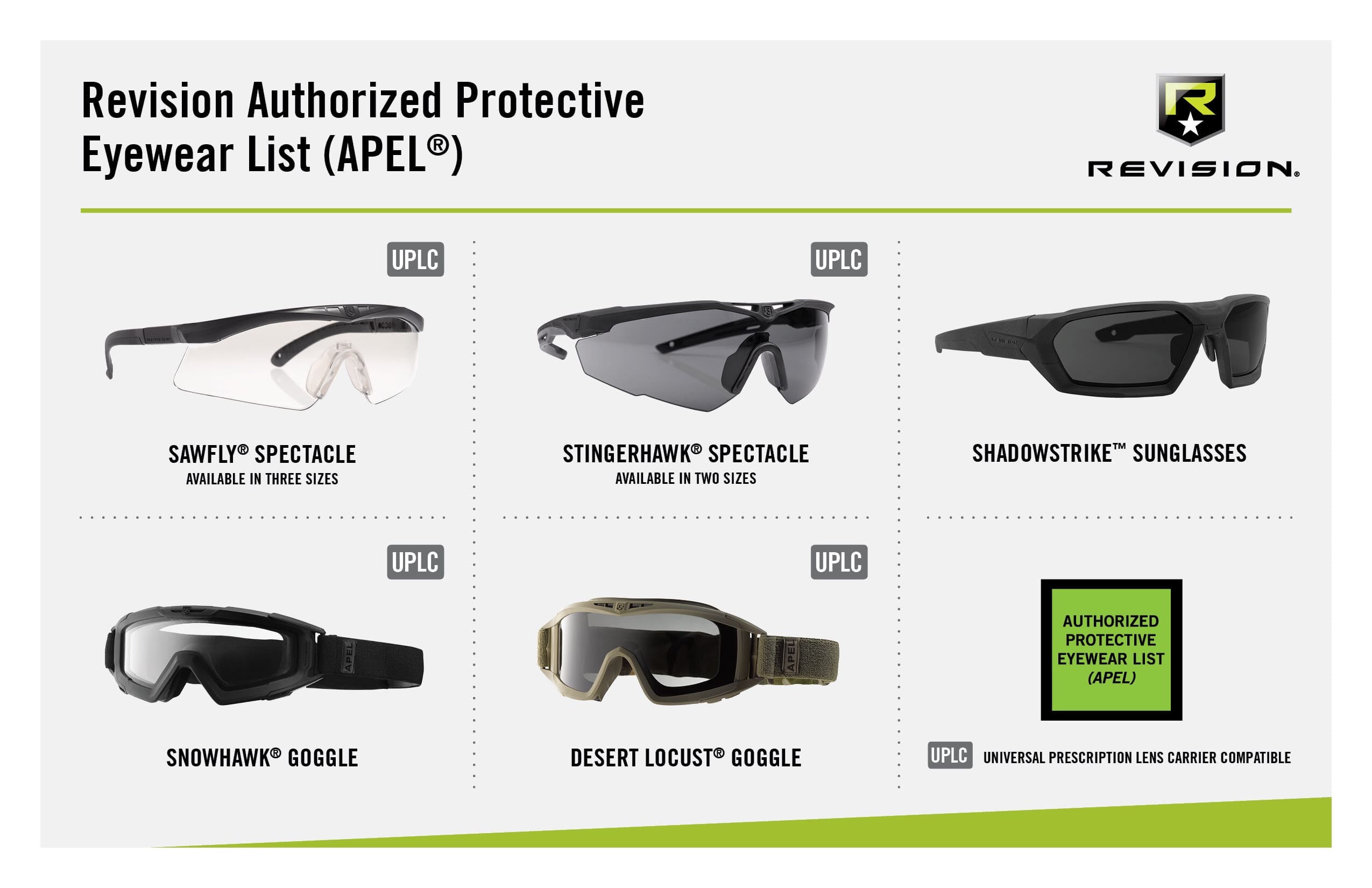
The U.S. Army recently released the 2019 APEL list, which includes ShadowStrike sunglasses (black frames with smoke and clear lenses) and SnowHawk goggles (black or tan frames with smoke and clear lenses)—alongside Revision’s Sawfly® spectacles, StingerHawk® spectacles, and Desert Locust® goggles.  The following products are all compatible with the Universal Prescription Lens Carrier (UPLC) – Sawfly and StingerHawk spectacles, and Desert Locust and SnowHawk goggles.  All products have been assigned National Stock Numbers (NSN) and are available for purchase through supply channels.

Ops-Core AMP Communication Headset Selected By USSOCOM To Modernize SOF Communications

Friday, May 17th, 2019

New technology in configurable headset delivers 3D Hear-Through and advanced hearing protection for combat operations.

May 16, 2019

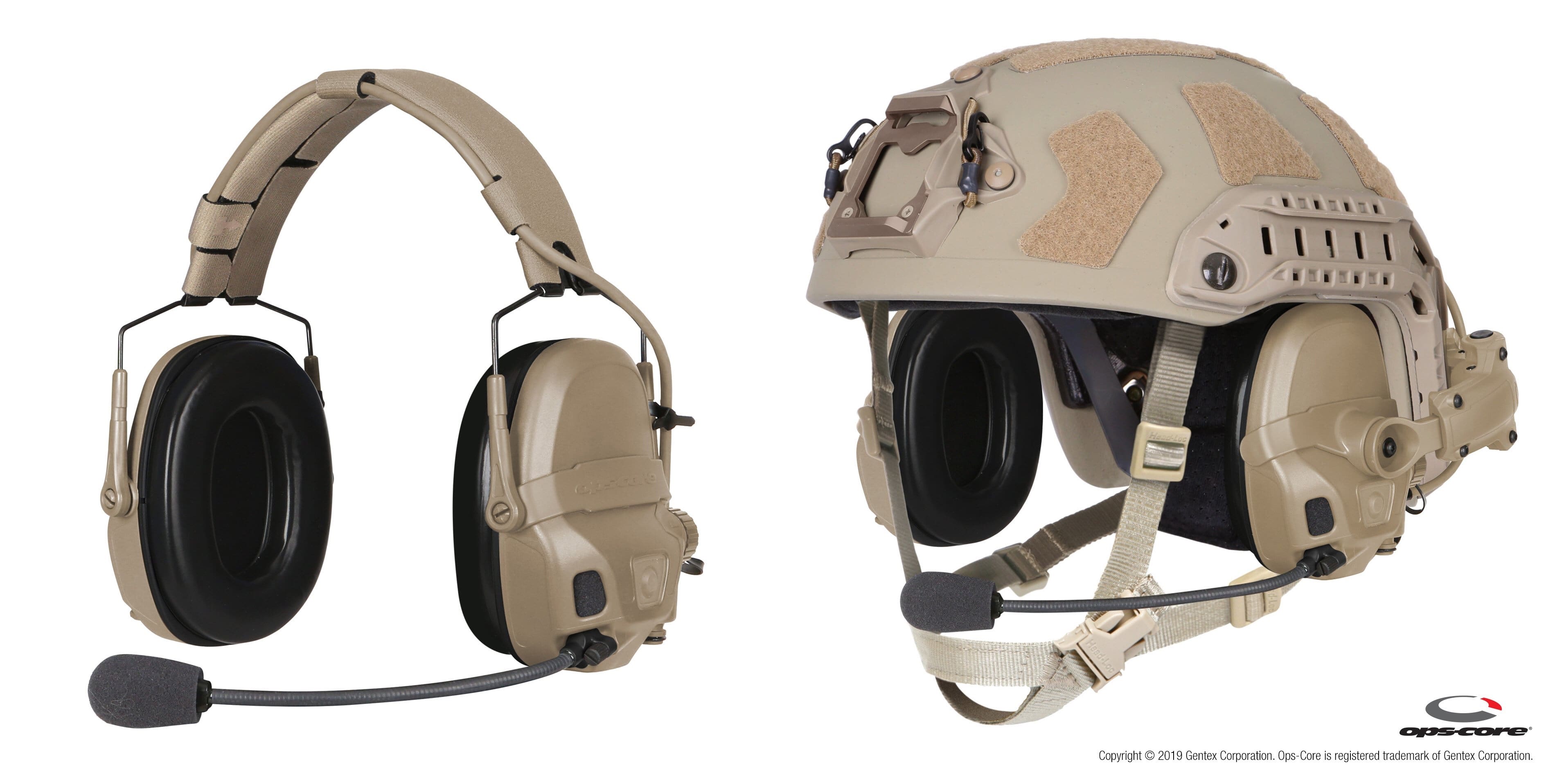
Carbondale, PA, May 16, 2019. Gentex Corporation, a global leader in personal protection and situational awareness solutions for defense forces, emergency responders, and industrial personnel was selected by the United States Special Operations Command (USSOCOM) for its Ops-Core® Adaptive Mission Platform (AMP™) Communication Headset as part of the Communication Accessory Suite Land (CASL) program. The AMP headset features 3D Hear-Through Technology, which restores and enhances the operator’s “natural hearing” of the outside environment for improved situational awareness in high noise environments, while also providing robust hearing protection with a Noise Reduction Rating (NRR) of 22db. 

The Ops-Core AMP Communication Headset pushes the boundaries of operator configurability with a modular design that can be changed quickly from headband to helmet-rail mounted use and includes removable connectorized downleads with options for single, dual, or no downlead configurations. Additionally, the immersion rated, noise-canceling boom microphone can be swapped to the user’s preference of earcup, without the use of tools, or removed entirely. 

“Listening to end users and responding to their evolving needs has fueled Ops-Core’s heritage of innovation, which is evident again in the configurable AMP Headset,” said Peter Harbeck, SOF Business Development Manager, Gentex Corporation. “Our business development and product management team, comprised mainly of former and current end users, are dedicated to upholding the mission of Ops-Core—getting elite forces the products they need to keep them safe and enhance their mission effectiveness.”

Additional features of the Ops-Core AMP Communication Headset include optional wire-free, battery-free, Near Field Magnetic Induction (NFMI) Earplugs, which increase the systems NRR to 34dB, while maintaining clear-communication audio and ambient hear through.

“We’re proud to continue to support the military in combating the issues of operating in high noise environments with our latest communications and hearing protection technology,” added Tom Short, Vice President Ground Systems, Gentex Corporation.  “Based on decades of experience with military communications and hearing protection, Gentex also provides the Active Noise Reduction (ANR) headset for the F-35 program.”

The Ops-Core AMP Communication Headset will be on display in the Operator Pavilion during SOFIC 2019, May 20-23 in Tampa, Florida.

Part of Gentex Corporation’s portfolio for defense, emergency response, and security forces, the focus and dedication of the company’s Ops-Core brand remains the same –protecting elite forces.  The modular, scalable, open-architecture design of Ops-Core products allow for seamless integration and true system level performance. 

www.ops-core.com

Gentex Awarded Contract for USSOCOM Next Generation SOF Helmets

Friday, May 17th, 2019

Ops-Core helmet system delivers true system-level performance and innovation

May 16, 2019

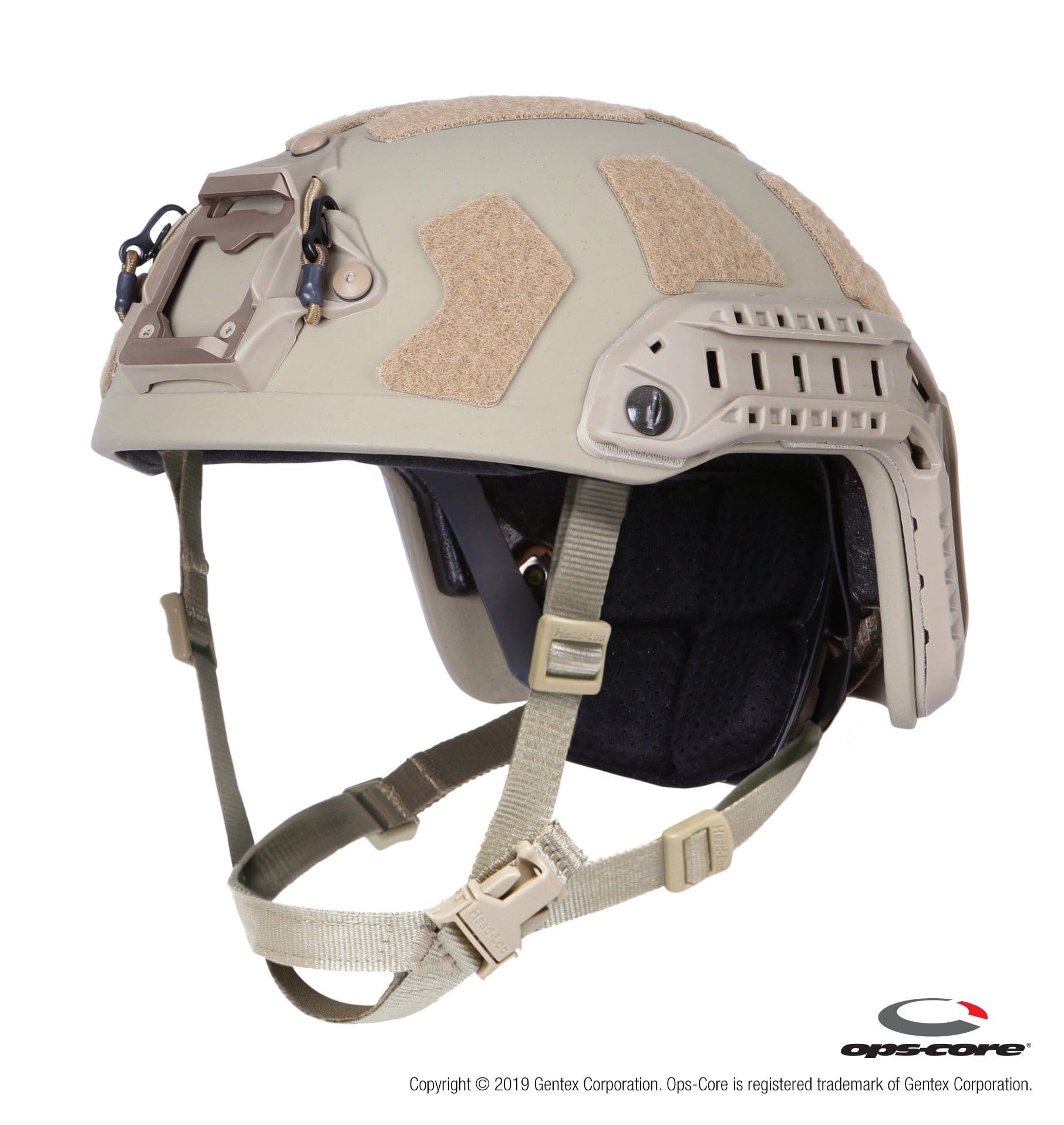
Carbondale, PA, May 16, 2019. Gentex Corporation, a global leader in personal protection and situational awareness solutions for defense forces, emergency responders, and industrial personnel, announced today that its Ops-Core® FAST helmet system was chosen by the U.S. Special Operations Command (USSOCOM) to fulfill their contract for Special Operations Forces Personal Equipment Advanced Requirements (SPEAR) Family of Tactical Headborne Systems (FTHS) — Ballistic and Non-Ballistic Helmets. 

Gentex Corporation has supplied helmets and accessories driven by user input from special operations forces for SOCOM since the introduction of the Para Master High Altitude Low Opening (PM HALO) helmet in 2005 and the acquisition of Ops-Core Inc. in 2011. As the incumbent in the highly competitive bid process, Gentex Corporation received the award through full and open competition. The company utilized the latest design and technological innovations of its Ops-Core FAST SF helmet to deliver a high performing FTHS system that features improved comfort, increased stability, reduced personal signature, greater system integration and a significant weight reduction over currently fielded Ops-Core FAST helmets.

“We’re honored to have been chosen again to deliver the next generation of helmet systems for SOCOM Operators,” said Tom Short, vice president Ground Systems, Gentex Corporation. “Working directly with current operators to understand their needs, plus continued investments in cutting-edge technologies has enabled us to deliver the most advanced, innovative solutions to USSOCOM and other global defense, emergency response, and security forces.” 

The new SPEAR FTHS helmet system comes in ballistic and non-ballistic versions, each compatible with all current USSOCOM headborne accessories. Separate from FTHS, new modular Ops-Core accessories include an NVG compatible Step-In Visor, a range of mandibles (including ballistic, non-ballistic, and force-on-force), and a scalable two-piece ballistic applique for the non-ballistic helmet which provides the same level of ballistic protection as the FTHS ballistic helmet. The commercially available ballistic version of the helmet system, the Ops-Core FAST SF Super High Cut Helmet System, will be on display in the company’s booth at SOF Select in the Operator Pavilion during SOFIC 2019, May 20 – 23 in Tampa, Florida.

Part of Gentex Corporation’s portfolio for defense, emergency response, and security forces, the focus and dedication of the company’s Ops-Core brand remains the same –protecting elite forces.  The modular, scalable, open-architecture design of Ops-Core products allows for seamless integration and true system level performance.

www.ops-core.com

Canadian DND Exercises $33m Ballistic Helmet Contract With NP Aerospace

Thursday, May 16th, 2019

Canada’s Department of National Defence (DND) has issued full options on a $33 million combat helmet contract with Canadian armour technology manufacturer, NP Aerospace.

The contract is for supply and delivery of the CM735 lightweight ballistic helmet and spare components over a seven-year period.

NP Aerospace has supplied combat helmets to the Canadian DND since 2015. The CM735 helmet is designed and manufactured using advanced composite technology to deliver greatly improved ballistic and fragment protection with a weight reduction of 25 percent from the CG634 helmet. Its structural design also helps avoid severe injury from back face deformation and impact to the head when hit by fragments and bullets.

James Kempston, CEO, NP Aerospace, comments: “We are honoured to continue to supply our ballistic helmets to the Canadian Armed Forces and are proud of our long-standing partnership providing the highest quality body armour. This contract is among many with Canada which has allowed us to innovate and enhance our global product offerings. The next generation technology within the CM735 helmet, for example, has benefited the development of our composite spall liner which is now used in military vehicles across the world.”

NP Aerospace manufactures a range of full and high cut helmets as part of its Lightweight Armoured Soldier Architecture (LASA®) portfolio. The CM735 composite helmet shell has a weight of less than 920 grams (32 ounces) while providing ballistic protection against fragments and NIJ Level 3A hand gun rounds. Its low weight significantly improves user performance while reducing fatigue. The LASA portfolio also includes hard body armour plates and shields for a range of threats including covert operations as well as various rifle bullets.


USMC Interested In A Squad Common Optic

Wednesday, May 15th, 2019

This week, Marine Corps Systems Command issued a request for information to industry for a Squad Common Optic (SCO) that may be used on the M4, M4A1, and M27.
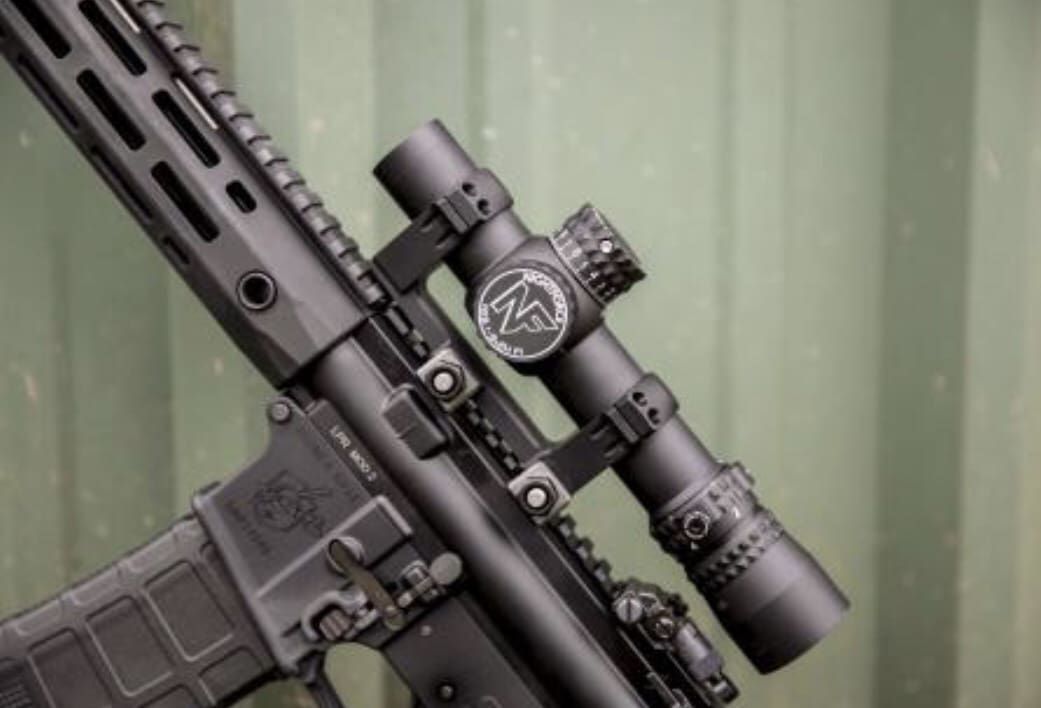
Nightforce NX8 1-8×24 which meets the requirements set out below.

At a minimum, potential SCOs should meet the following requirements:

• Interoperability. The Squad Common Optic device should be interoperable with and cause no degradation in function to currently fielded host weapons. Squad Common Optic should be compatible with current visual augmentation systems, weapons accessories, lasers, and clip-on night vision devices using a MIL-STD-1913 rail interface as listed below:

NSN
Nomenclature
Model #
1240-01-619-2962
Grenade Launcher Sight
SU-277-PSQ
5855-01-559-7064
Individual Weapon Night Sight-Thermal
AN/PAS-27
5855-01-558-3616
Individual Weapon Night Sight-Image Intensified
AN/PVS-24A
5855-01-550-2780
Mini-Integrated Pointer Illuminator
AN/PEQ-16A
5855-01-582-1584
Mini-Integrated Pointer Illuminator
AN/PEQ-16B
5855-01-577-7174
Advanced Target Pointer Illuminator Aiming Light
AN/PEQ-15
1240-01-667-8204
Sniper Squad Range Finder
I-CUGR

• Major Components. Each Squad Common Optic should include the following major components:
o Day Scope
o Lens Covers
o Reticle
o Elevation Turrets/Caps
o Windage Turrets/Caps
o Operator’s Manual (hard and digital copy)
o Quick Reference Guide
o Required Tools
o Scope Mount
o Reticle Battery
o Magnification Change Device
o Soft Protective Carrying Case
o Lens Cleaning Kit with Bush and Lens Cloth
• Weight. The Squad Common Optic should be less than or equal to 2.1 pounds (T), 1.4 pounds (O). Weight is characterized as including the optic, mount, turret caps, and battery.
• Size. The Squad Common Optic length should be less than or equal to 10.5 inches (T), 10 inches (O). Length excludes the lens covers. Length is measured at the maximum extended range of adjustment.
• The Squad Common Optic should be able to positively identify and acquire targets at 600m (T), 900m (O). Positive identification refers to the range at which a potential target can be positively identified by facial, clothing, weapon and vehicle features, or an activity.
• Magnification Range. The Squad Common Optic should have no point of aim shift when adjusting through the entire magnification ranges. The Squad Common Optic should have a magnification range of 1X +0.05X to ?8X magnification range.
• Adjustable diopter: The diopter should be adjustable from +2 to –2 diopters.
• Diopter Locking Mechanism. A locking mechanism should be provided on the diopter setting to prevent inadvertent movement (O).
• Adjustment Range. For all configurations, at least 15 Milliradian (mrad) (T), and 30 mrad (O) in Elevation and at least 12 mrad in Windage adjustment should be required. There should be hard stops at both ends of Windage and Elevation adjustment and no dead clicks. A dead click is defined as a tactile adjustment click that does not move the reticle.
• Adjustment Increments. Each Squad Common Optic configuration should have adjustment increments less than or equal to 0.1 mrad Elevation and Windage (E/W). Adjustment increments on both E/W should be consistent in movement, tactile, and have no dead clicks and require no settling rounds. Settling rounds are defined as host weapon live fire that causes the reticle to move initially but stabilize after the live fire event.
• Adjustment Accuracy. For Squad Common Optic, a less than or equal to 2% adjustment accuracy is required across the full travel in Windage and Elevation (T) and a less than or equal to 1% adjustment accuracy is required across the full travel in Windage and Elevation (O).
• Windage/Elevation Caps. For Squad Common Optic, the Windage and Elevation turret adjustments should be covered with a threaded cap.
• Field of View. At minimum magnification, possess a minimum field of view of 18 degrees (T), 20 degrees (O). At maximum magnification, possess a minimum field of view of 2.5 degrees (T), 3 degrees (O).
• Eye Relief. All Squad Common Optic configurations at any magnification should have an eye relief of at least 3.1 inches (T), 3.7 inches (O).
• Exit Pupil. All Squad Common Optic configurations at any magnification should have an exit pupil range of no less than 2.5mm to no more than 13mm.
• Resolution. The resolution for the Squad Common Optic should be 10 arc-seconds or less. The 30% contrast resolution for the Squad Common Optic should be 15 arc-seconds or less.
• Focus/Parallax Adjustment. The Squad Common Optic should have a fixed focus set at 150 meters ± 50 meters and be parallax free at the focus range.
• Focal Plane. Configurations should be first focal plane and/or second focal plane.
• Reticles.
o All Squad Common Optic reticle configurations should offer Mil-Reticle patterns vice a Bullet Drop Compensator (BDC) style of reticle pattern.
o All Squad Common Optic reticle configurations should offer an illuminated central aiming point no greater than 1.5 minute of angle (MOA) (T) or 0.5 MOA (O) that is visible during daylight conditions.
o All Squad Common Optic configurations should offer a variety of reticles (i.e., crosshair, German, duplex, Christmas tree, others).
o All reticles should be level with a cant of ± 1 degree (T) or no discernable cant (O) when installed in its MIL-STD-1913 compatible mount.
o Reticle should be usable in the event of degraded capability or no power situation.
• Future Reticles
o Reticle. The vendor should allow for future reticle designs and operational needs to be included in the Squad Common Optic: Mil Dot, Milliradian Line, Ballistic, Velocity, and Grid hybrids. Graduated grid should provide a method that supports the ability to use Windage hold offs and Elevation holds and holdovers accurately. There should also be coarse and fine methods to quickly range targets. A method to allow for rapid engagement of moving targets should be provided on the main horizontal.
o Configuration. There should be no changes to the Squad Common Optic design when changing to a new reticle other than the reticle itself.
• Reticle Illumination. The reticle illumination should be accomplished using side mounted rotary knobs. The Squad Common Optic should have multiple intensity settings, two night vision goggle compatible settings, and tactile illumination off positions after each on position. Reticle settings should be able to be locked in place to provide for inadvertent power cycling in the field. Reticle should be powered by a single commercially available battery for at least 96 hours at highest illumination setting. The Squad Common Optic should allow for battery changes without removal from the weapon and without specialized tools.
• Scope Mount. All scope mounts should be MIL-STD-1913 compatible. Various scope mount heights should be available. Any dissimilar metals should not interact and cause corrosion or damage when subjected to saltwater and other adverse environmental conditions.
• Magnification Change Capability. The Squad Common Optic should incorporate an attachable (T) or integrated (O) field-adjustable magnification change capability that will allow quick magnification changes from minimum to maximum magnification without passing between the eyepiece and rail interface, hitting the host weapon, or interfering with the function of the host weapon.
• Backup Iron Sights. The Squad Common Optic shall not require the removal of the host weapon’s front and rear iron sights. The front and rear iron sights shall be immediately useable upon removal of the Squad Common Optic.
• Lens Accessories and Protection. All Squad Common Optic configurations should be delivered with detachable protective front and rear lens covers or caps. The Squad Common Optic should feature lenses made of durable scratch resistant hydrophobic material and non-reflective lens coatings (T). All Squad Common Optic configurations should provide lenses with sufficient abrasion resistance that they do not require lens covers (O).
• Surfaces. External surfaces (except for light-transmitting elements) should be finished in a flat neutral non-black color that is non-reflective and corrosion resistant. All the exposed optics should have corrosion and scratch resistant coatings, which permit operation in salt sprays and blowing sand. All markings, coatings, finishes, and exposed O-rings should be resistant to paints solvents, Chemical, Biological, Radiological, and Nuclear contaminants, and Super Tropical Bleach (STB) decontaminant.
• Signature Reduction and Counter Detection. The Squad Common Optic should be a dull, non-reflective, neutral, non-black color. The Squad Common Optic should not have an audible or visible signature.

The Marines have expressed interest in purchasing between 18,000 and 30,000 of the optic.

Interested vendors should submit a 10-page white paper to SYSCOM via e-mail, regular mail or SAFE no later than 3:00 p.m. Eastern Daylight Time, 10 June 2019.

To learn more, visit www.fbo.gov.

Schiebel Wins Norway’s Tender For Unmanned Air System Deployment In The Arctic

Sunday, May 12th, 2019

Vienna, 2 May 2019 – Norway’s Andøya Test Center selected Schiebel’s market- leading CAMCOPTER® S-100 Vertical Takeoff and Landing (VTOL) Unmanned Air System (UAS) for extensive search and rescue trials as part of the Arctic 2030 project.

The CAMCOPTER® S-100 was selected for its exemplary international reputation and its successful record of accomplishments in the maritime domain with customers all around the world. In a typical configuration, the CAMCOPTER® S-100 operates six hours continuously and is able to simultaneously carry multiple payloads, offering significant payload flexibility to the user. Therefore, the S-100’s missions deliver aerial views that reach considerably farther than manned helicopters.

The S-100 also offers a number of key advantages for naval operations in the Arctic. As a VTOL platform, the CAMCOPTER® does not require any additional start or recovery equipment and its minimal footprint is perfect for offshore patrol vessels (OPVs) with small deck sizes. The S-100 also distinguishes itself through its ability to perform in the harshest weather conditions, flying at temperatures down to -40°C. This has been successfully proven in a series of intensive trials, such as the Canadian icebreaker operations. In this particular case, the CAMCOPTER® S-100 was deployed 60 nautical miles north of Fogo Island, providing a wide-view image of the ice structure as well as identifying the boundaries between flat and rough ice.

The goal of the Andøy Municipality project is a demonstration of VTOL UAS use in the Arctic region in an effort to increase maritime safety. For this purpose, the CAMCOPTER® S-100 will be equipped with an Electro-Optical/Infra-Red (EO/IR) camera gimbal, an Overwatch Imaging PT-8 Oceanwatch payload, an Automatic Identification System (AIS) receiver and a Maritime Broadband Radio (MBR) by Radionor. Such a combination of payloads is intended to strengthen emergency preparedness in the region and provide search and rescue mission support.

Tests are scheduled to commence in the fall of 2019 with the UAS being deployed from Norwegian Coast Guard vessels in Andfjorden, Northern Norway. More operations are planned in Spitsbergen in the spring of 2020.

“This is clearly an important milestone in the project,” said Gunnar Jan Olsen, General Manager of the Andøya Test Center. “We have already gained some experience with the Schiebel CAMCOPTER® S-100 UAS during an impressive demonstration in 2017. We believe that these current, more extensive S-100 trials will demonstrate that maritime safety in the Arctic can effectively be increased with the help of VTOL UAS.”

“The CAMCOPTER® S-100 has performed a series of challenging demonstration flights in the Arctic over the years and has proven its operational value and mission effectiveness,” added Hans Georg Schiebel, Chairman of the Schiebel Group.

www.schiebel.net