SIG SAUER - Never Settle

Archive for the ‘Contracts’ Category

ASI Awarded Defense Innovation Unit (DIU) Prototype OTA for AI-Enabled Joint Sustainment Decision Tool (JSDT)

Friday, February 20th, 2026

BOSTON, Feb. 19, 2026 — Air Space Intelligence (ASI), a pioneer in AI-powered decision support software for the world’s most demanding domains, today announced it has been awarded a contract by the Defense Innovation Unit (DIU) to configure and implement advanced logistics decision-support for leaders operating in complex, multi-domain operational environments.

Under the award, ASI will deliver its commercial software capability for decision support, capable of generating realistic and actionable courses of action (COAs) for decision makers facing operational uncertainty and adversary pressure. ASI’s solution will rapidly analyze evolving conditions, identify critical dependencies across the logistics kill chain, and present commanders with viable options that account for disruption, attrition, and constrained resources.

Modern military operations are increasingly shaped by the ability, or inability, to sustain forces. Adversaries actively target logistics networks, infrastructure, and decision timelines, turning sustainment into a decisive element of the fight. ASI’s solution reflects this reality by explicitly modeling logistics as an operational system, enabling commanders to understand how logistics decisions impact operational endurance, tempo, and risk over time.

“Commanders today must make decisions faster than ever, often with incomplete information and under persistent threat to the status, suitability and capacity of their nodes and distribution networks.,” said Mark Lepczyk, President of ASI Federal. “This award from DIU recognizes the need for AI-centric solutions that don’t just optimize a single plan, but help leaders explore multiple courses of action and understand how each one stresses or preserves the logistics kill chain.”

ASI’s commercial solution is designed to support decision-making in dynamic environments where traditional assumptions break down—where resupply is uncertain, infrastructure is contested, and degradation is the norm rather than the exception. By combining AI-driven analysis with domain-informed models, the solution helps commanders evaluate tradeoffs between speed, risk, sustainability, and mission outcomes.

This DIU award reflects the Department of War’s continued focus on becoming an “AI-First” warfighting force.  ASI’s work directly supports this mission by applying advanced analytics and machine learning to command-and-control and sustainment problems that increasingly determine operational success.
Rheinmetall Framework Agreement with NATO Procurement Agency for 120mm Tank Ammunition – Initial Order Worth Around €200 Million

Monday, February 16th, 2026

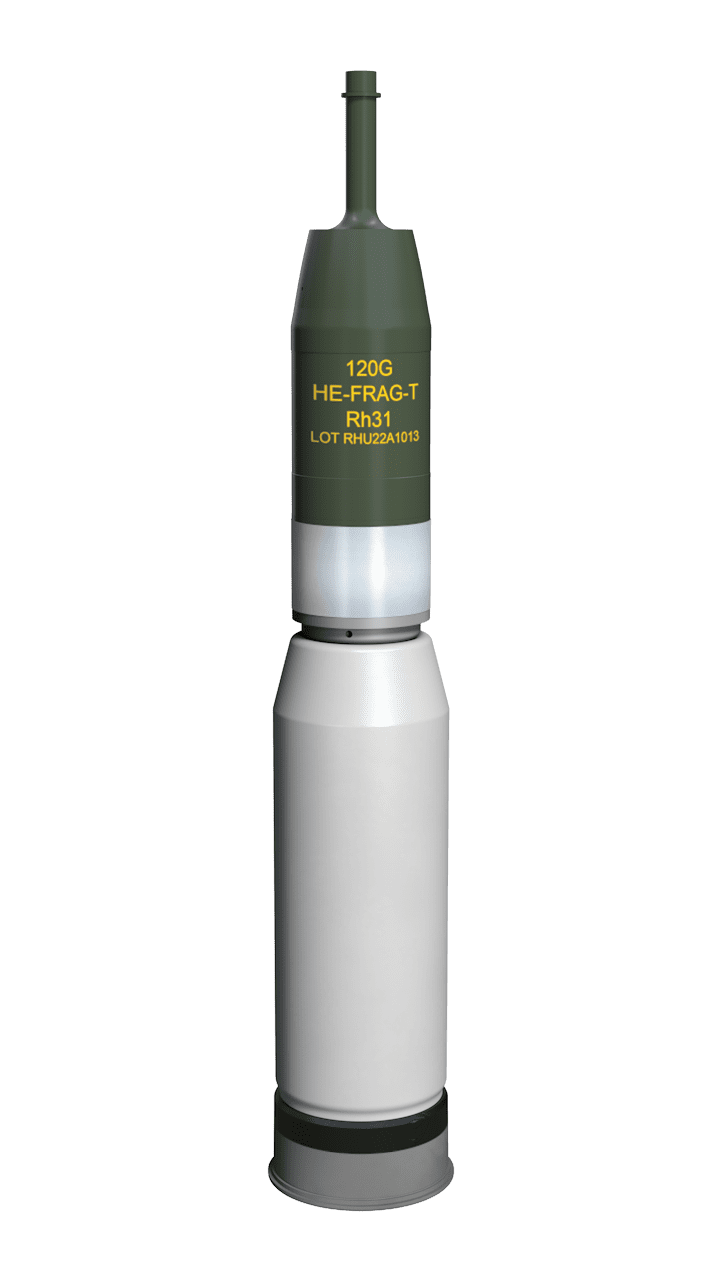
Rheinmetall is further expanding its role as a leading manufacturer of 120mm tank ammunition. The NATO Support and Procurement Agency (NSPA) has called off its first batch of ammunition, worth around €200 million, under a 2025 framework agreement for 120mm ammunition, a contract of substantial scope and value. The end customers are various NATO countries.

The ‘Basic Contractual Instrument’ (BCI) signed with NSPA in July 2025 defines the terms and conditions as well as all technical specifications for various types of 120mm tank ammunition. NATO and NATO-equivalent members can use the framework agreement to simplify the procurement of Rheinmetall ammunition. They can order the ammunition directly from the NSPA. This significantly simplifies the procurement of 120mm tank ammunition within the Atlantic Alliance. Rheinmetall can thus further expand its role as a leading supplier of 120 mm tank ammunition.

Used in the field by many nations since 1980, Rheinmetall’s 120mm smoothbore technology has become the established main battle tank armament within the armed forces of Germany, NATO and other allied nations worldwide. It is the standard system on the Leopard 2 and M1 Abrams main battle tanks. Due to their superior performance and still available power reserves, Rheinmetall can continue to offer innovative and threat-appropriate technical solutions in the caliber 120mm in the medium term.

Allen-Vanguard Breaks into South America with a Multi-Million Dollar Order for Their EQUINOX NG and SCORPION 2 ECM systems

Friday, February 6th, 2026

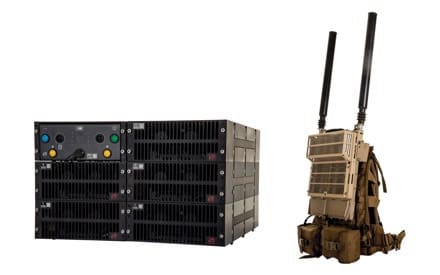
Allen-Vanguard, the global leader in providing customised solutions and enabling technology across the Cyber and Electromagnetic Activities (CEMA) domain, has recently received multi-million dollar orders for EQUINOX NG (their vehicle-based Electronic Countermeasure (ECM) system) and SCORPION 2 (their manportable ECM system). Due to the sensitivity of the purchasing nation’s operations, it is not possible to disclose specific customer details. However, this initial multi-million dollar order is a major capability uplift for the end user, will deliver enhanced protection to their personnel operating in high-risk Radio Controlled Improvised Explosive Device (RCIED) environments and help mitigate the threat posed by the increasing use of drones to deliver lethal effects.

Allen-Vanguard has over 20 years of expertise in providing customised ECM solutions for defeating Radio Frequency (RF) based terrorist and extremist threats. These threats include the continued global use of RCIEDs to target security forces and the increasing prevalence of drones or Unmanned Aerial Vehicles (UAV) being used for intelligence, surveillance, target acquisition and reconnaissance (ISTAR) or lethal means. Defence Forces, Public Safety & Security agencies around the world trust Allen-Vanguard’s capability solutions, because they are easy to use, robust, reliable and have been operationally proven on the battlefield and in the most challenging of peace-keeping missions protecting those who protect us.

Based on the current threat profile, the customer has purchased EQUINOX NG, a highly sophisticated vehicle-based ECM system. Its agile and flexible technical architecture has been developed around the leading global standards for Electronic Warfare (EW) hardware, ensuring compliance and easy integration with major programs for an enduring and ‘ever-greening’ capability. Coupled to a highly flexible and scalable physical format, allows it to be easily configured for a wide range of scenarios from armoured vehicle fits for operational theatres, VIP convoy protection or static vulnerable fixed site locations. The system can be configured with relative ease to address both the RCIED and drone threats alike. SCORPION 2, has all the same technical heritage and similar capabilities as EQUINOX, but has been specifically designed to be portable using a backpack for patrol-based operations. Clearly, it can also be fitted to vehicles or used at static locations, offering maximum flexibility.

The contract comes with a full support package, including training for users, technicians and mission fill development. This support includes the deployment of Field Service Representatives to ensure the development of indigenous ECM capability and reach back to the Threat Management Team.

This team of RF experts optimise algorithms specific to the end user’s needs to combat evolving threats specific to their region of operations. This comprehensive wrap-around support maximises the protection offered by the ECM systems, both from a physical capability perspective but also from the essential changes to tactics, techniques and procedures necessary to keep operators safe.

Bobby Strawbridge, President Allen-Vanguard, said: “This is an important milestone in Allen-Vanguard’s history, breaking into the South American market. We are operationally proven with NATO countries globally and have been trusted by peace-keeping forces in the MENA region for many years. Our systems are not only market leading in relation to their technology and capability but our support packages also ensure purchasing nations improve their wider ECM capability and remain updated with the latest algorithms and software to maintain their protection.”

US Army Awards Persistent Systems Contract for $87.5 Million Supporting Next-Generation Command and Control Prototype

Thursday, February 5th, 2026

Contract marks a total of $121.5 million awarded to company for NGC2 prototype
NEW YORK, Feb. 4, 2026 — Persistent Systems, LLC (“Persistent”), a leader in mobile ad hoc network (MANET) technology, announced that the U.S. Army’s Capability Program Executive Command, Control, Communications, and Network (CPE C3N) has submitted a second order of $87.5 million for MANET devices, as part of the transport layer for Next-Generation Command and Control (NGC2) prototype. 

This second order is a follow-on to the $34 million contract the company received in October. The follow-on award will incrementally add capability for Army prototypes of NGC2. Together, these awards total $121.5 million.

“In the transport layer, we are responsible for moving all the 1s and 0s across the battlefield, so data reaches the warfighter who needs it, when they need it,” said Jon Patrick, Vice President of Business Development at Persistent.

Faster information delivery times and more reliable access to data enable faster, more efficient decisions, streamlining command and control (C2). The MANET radio continues to demonstrate it can serve as part of the transport layer, with the speed, resilience, and capacity required for combat operations.

“As the Army has presented us with increasingly demanding benchmarks, our team continues to deliver highly resilient transport that can empower an armored division on the move,” said Dr. Herbert Rubens, Founder and CEO of Persistent Systems. “We’re proud to provide a commercial solution that supports the Army’s transport layer and strengthens the warfighter at echelon.”

Over the coming months, deliveries will be underway as Persistent looks forward to empowering the Army with the most advanced communications technology, shaping the Army’s future network.

Denmark Commissions Rheinmetall to Supply Ammunition – Initial Orders Under Framework Agreement Worth Hundreds of Millions of Euros

Tuesday, February 3rd, 2026

Rheinmetall has been commissioned by Denmark, a member of the EU and NATO, to supply ammunition. The signing of a  large-volume framework agreement was marked by a ceremony on 30 January 2026. The agreement has a term of seven years. It covers the supply of several types of ammunition. These include medium-calibre ammunition for infantry fighting vehicles and self-propelled anti-aircraft guns, 120 mm ammunition for main battle tanks and 155 mm ammunition for artillery.The first orders in the medium-calibre ammunition sector include various types of cartridges in 30 mm x 173 and 35 mm x 228 calibres. The total number is in the high five-digit range, with the order value in the low three-digit million euro range.In the area of 120 mm tank ammunition, Rheinmetall will supply over 1,000 rounds of kinetic-energy ammunition. The order value is in the high single-digit million euro range.”We are grateful for the trust Denmark has placed in us for its ammunition supply,” said Armin Papperger, CEO of Rheinmetall AG. “Rheinmetall sees this as confirmation of its role as one of the world’s leading ammunition manufacturers.”

Draganfly Selected to Provide Draganfly Flex FPV Drones and Training to US Air Force Special Operations Command Units in Partnership with DelMar Aerospace

Monday, February 2nd, 2026

Tampa, Fla. —  February 2, 2026 — Draganfly Inc. (NASDAQ: DPRO; CSE: DPRO; FSE: 3U8A) (“Draganfly” or the “Company”), an award-winning developer of drone solutions, software, and robotics, today announced an award to provide Flex FPV Drones and Training to U.S. Air Force Special Operations Command units with partner DelMar Aerospace Corporation, a leading provider of advanced uncrewed aircraft systems (UAS) training, tactics, techniques, and procedures (TTPs), for U.S. Government customers. 

The partnership with DelMar brings together Draganfly’s operationally proven uncrewed platforms with DelMar Aerospace’s expertise in delivering cutting-edge, mission-relevant UAS instruction to Government operators. Initial training activities include First Person View (FPV) UAS instruction, with a comprehensive curriculum covering FPV assembly, repair, flight operations, advanced mission planning and execution. 

The award is to provide foundational FPV training with Draganfly Flex FPV Drones to U.S. Air Force Special Operations Command units. Training will take place at DelMar Aerospace’s Camp Pendleton UAS range training facility, a controlled environment purpose-built to support advanced instruction that replicates a range of battlefield scenarios. The first training cohort is scheduled to begin in mid-February. 

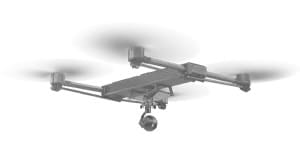
Draganfly’s Flex FPV serves as the modular backbone for future small UAS configurations, uniquely capable of meeting evolving Department of War operational requirements. The Flex FPV’s innovative design enables rapid transition across operating profiles, allowing a variety of flight characteristics and payload capacities to be deployed with a single unit. This adaptability enables widespread adoption via a common training and sustainment baseline while providing a unique and compelling value proposition to any tactical drone program.

 “Our shared focus is on readiness and combat capability,” said Cameron Chell, CEO of Draganfly. “Partnering with DelMar Aerospace helps ensure operators are training on systems and tactics designed for real-world conditions, with the Flex’s modularity and reliability required to adapt as missions and threats evolve.” 

DelMar Aerospace will lead instruction delivery, curriculum development, and standards alignment, ensuring training remains tactically relevant while compliant with U.S. Government contracting and security requirements. 

“This collaboration is about developing operators who are prepared to employ uncrewed systems effectively in demanding environments,” said Stanley Springer, DelMar Aerospace’s Chief Operating Officer. “Our focus is disciplined training grounded in combat-proven TTPs and operational realism.” 

This announcement reflects ongoing work in support of U.S. Government programs. Specific operational details are not being disclosed.

Saab Selected by Missile Defense Agency for the SHIELD Program

Sunday, February 1st, 2026

Saab, Inc. was awarded a contract for the Missile Defense Agency Scalable Homeland Innovative Enterprise Layered Defense (SHIELD) indefinite-delivery/indefinite-quantity (IDIQ) contract. This contract encompasses a broad range of work areas that allows for the rapid delivery of innovative capabilities to the warfighter with increased speed and agility.

“Saab’s proven systems integration and layered defense capabilities deliver scalable missile defense solutions that directly support the warfighter,” said Erik Smith, President and CEO of Saab, Inc. “By bringing together advanced sensors, command and control, and rapid integration expertise, we execute at the pace the mission demands—helping accelerate capability delivery and stay ahead of evolving and complex threats.”

Saab has extensive experience and knowledge in implementing technologies such as advanced weapons and sensors, artificial intelligence and machine learning, and practices including model-based systems engineering and agile acquisition and development. Saab is building a state-of-the-art munitions facility in the U.S., increasing domestic production capacity for shoulder-launched weapons and precision fire systems.

This award enables Saab to compete for future task orders over the contract’s period of performance. Saab has not received an order or signed a contract for deliveries relating to this program.  

Italian Army’s A2CS Programme Kicks Off – First Four New Infantry Fighting Vehicles Delivered by LRMV Joint Venture

Thursday, January 29th, 2026

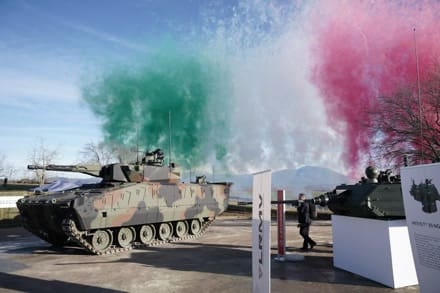
Rome, 27/01/2026 – Today, at the Italian Army Multifuncional Experimentation Center (Ce.Poli.Spe) in Montelibretti, the Leonardo Rheinmetall Military Vehicles (LRMV) Joint Venture delivered to the Armed Forces the first four Lynx KF-41 infantry fighting vehicles. This first delivery marks the official launch of the “A2CS” (Army Armoured Combat Systems) programme, for which an initial contract for the acquisition of 21 new “A2CS Combat” vehicles was signed at the end of last    year.
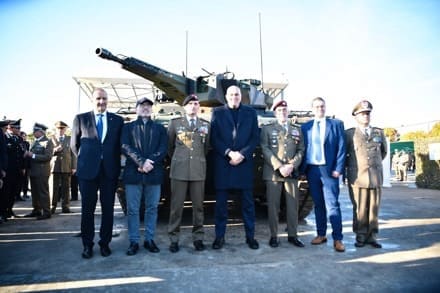
The ceremony was held in the presence of the Minister of Defence, Guido Crosetto, the Chief of Staff of the Italian Army, General Carmine Masiello, the Chief Executive Officer of Leonardo, Roberto Cingolani, and Dr. Björn Bernhard, Head of Rheinmetall’s Vehicle System Division Europe. Also present were the CEO, Laurent Sissmann and the Executive Chairman of the Joint Venture, David Hoeder.

The Minister of Defence, Guido Crosetto, stated: “The international scenario requires a constantly evolving Defence, capable of ensuring the security of the country and safeguarding national interests. This calls for a modern, flexible and credible model, based on high levels of operational readiness, qualified personnel and advanced technological capabilities. Within this framework comes the delivery of the Lynx armored vehicle, the result of Italian-German industrial cooperation, to the Italian Army, aimed at strengthening land systems through the introduction of state-of-the-art platforms. In this process, the Army’s Multifunctional Testing Center (CEPOLISPE) plays a central role, ensuring the testing and technical evaluation of vehicles, equipment and weapon systems to determine their suitability for operational use.”

 “The Army has a clear direction and well-defined requirements for the new vehicles to accelerate the ‘mechanization’ path of the Armed Force, which concretely begins today. After 30 years in which the Italian soldier has demonstrated courage, commitment, determination and professionalism in peace support operations — to the point of coining the ‘Italian Way’ of peacekeeping — we have no doubts about their capabilities. They will be able to operate at their best if equipped with technology that meets the challenges ahead: this vehicle will radically change the way the Army fights”, stated the Chief of Staff of the Italian Army, Gen. C.A. Carmine Masiello, at the presentation of the A2CS “Lynx”.

Roberto Cingolani, Chief Executive Officer and General Manager of Leonardo, stated:
“The start of deliveries of the new armoured vehicles represents an important milestone in the programme we are carrying out with the Italian Army. The international alliance between Leonardo and Rheinmetall continues to stand as a key reference point for strengthening national defence and for the development of a solid, integrated and competitive European industrial base. This is a commitment we consider essential to ensuring national and European security and strategic autonomy.”

Armin Papperger, Rheinmetall Chief Executive Officer said: “With the handover of the first armoured vehicles to the Italian armed forces, we are opening a new chapter in the success story of the Lynx vehicle family. As a next-generation combat vehicle, Lynx not only sets standards in terms of versatility, protection, effectiveness, scalability and future-proofing, but also in terms of enhanced European armaments cooperation.”

The Lynx platform is capable of fulfilling multiple roles, including infantry fighting vehicle, troop transport, mobile command post and ambulance. The 4 vehicles delivered today complement Rheinmetall’s Lance 30mm turret, which will later be replaced by Leonardo’s Hitfist 30mm turret. The latter will equip all the other 16 armoured vehicles of this contract.

The A2CS programme – Army Armoured Combat System, originally named AICS – Armoured Infantry Combat System together with the new Main Battle Tank programme will renew the Italian Army’s heavy vehicle fleet , providing cutting edge technology, characterised by high levels of digitalisation and connectivity, and capable of operating within the most complex multidomain contexts. This will also provide an opportunity for the renewal of the armoured fleets of international partners.