Aquaterro

Archive for the ‘Contracts’ Category

Army Announces Additional Competitive Award for Next Generation Command and Control (NGC2) Prototyping Efforts

Wednesday, September 3rd, 2025

ABERDEEN PROVING GROUND, Md. — The U.S. Army has awarded a new Other Transaction Authority (OTA) agreement to Lockheed Martin Rotary and Mission Systems and their team of non-traditional innovators and commercial technology providers. This agreement aims to advance the Army’s Next Generation Command and Control division-level prototyping and experimentation by delivering an integrated data layer capability to the 25th Infantry Division.

Next Generation Command and Control, or NGC2, is the Army’s new, innovative approach to equipping commanders with the data they need to make better, faster decisions than the enemy amid rapid technological change.

The OTA was awarded through the NGC2 competitive Commercial Solutions Offering (CSO) on behalf of Program Executive Office Command, Control, Communications, and Network (PEO C3N) for $26 million with a not to exceed period of performance of 16 months.

The new OTA builds on the Army’s recently extended NGC2 OTA agreement to Team Anduril, which also includes several teamed industry partners. Vendor teams participating in NGC2 are flexible, allowing the Army to collaborate with the team leads to adjust capabilities and participants based on prototyping outcomes. Additionally, the Army is accepting proposals on the CSO for potential future team lead or component integration into the NGC2 technology stack.

“This isn’t the end of competition, this is the beginning. Through these two industry team lead agreements, we’ll evaluate different models for shared responsibility and aligned incentives during the NGC2 prototyping phase. We don’t want to have great capabilities simply at the start — we want a durable partnership model that keeps pace with an ever-evolving American tech sector and creates continual opportunity to find and insert the best technology solutions,” said Joseph Welch, deputy to the commanding general, Army Futures Command. “By encouraging companies to self-organize and team with each other and enabling them to integrate and solve these problems directly with the operational force, we will be able to rapidly and continuously improve the command and control capabilities we deliver to Soldiers.”

In July, the Army continued an OTA agreement to Team Anduril to maintain NGC2 momentum from Project Convergence experimentation. The agreement will deliver a NGC2 prototype architecture to the 4th Infantry Division, which is conducting prototyping across applications, data, infrastructure, and transport within a full “technology stack.” The Team Lockheed Martin OTA will focus on the integrated data layer, allowing the Army to assess NGC2 software options. These options will be supported by the C2 Fix transport and infrastructure capabilities already fielded to the 25th Infantry Division. The OTA also supports the Army’s goal of increasing competition and creating multiple opportunities for vendors to contribute technology to the NGC2 ecosystem.

“Next Generation Command and Control is about accelerating transformation and optimizing the innovation of both industry and our warfighters to deliver critical Warfighting capabilities at speed,” said Jesse Tolleson, acting assistant secretary of the Army for Acquisition, Logistics and Technology. “This is not business as usual and reflects exactly what we are trying to achieve through transformation across the Army and the acquisition community.”

Lessons learned by the 4th Infantry Division and 25th Infantry Division will provide insights into how heavy and light units will apply NGC2 differently. These efforts will also examine how NGC2 elements function across the technology stack, with a focus on the data layer’s ability to ingest, transport, and organize data from multiple warfighting systems. Additionally, they will inform future fielding considerations for the broader Army.

“The pace at which we are moving with NGC2, both in terms of contracting and getting the equipment into the hands of Soldiers, is exceptional and laser focused on making our formations faster and more lethal,” said Brig. Gen. Shane Taylor, PEO C3N. “The NGC2 CSO is one way we are transforming our acquisition approaches to drive continuous competition and equip Soldiers with technologies that will win in the future fight.”

Previously fielded with the Army’s C2 Fix capabilities — which provided a “fight tonight” division communications architecture with a mix of military and commercial off-the-shelf capabilities as a down payment on NGC2 transformation — the 25th Infantry Division is postured to demonstrate how NGC2 software capabilities operate with C2 Fix hardware.

“At the 25th Infantry Division, we are humbled to play a role in bringing Next Generation Command and Control into the hands of Soldiers,” said Lt. Col. Eugene Miranda, spokesperson for 25th Infantry Division. “This effort is about giving our leaders and formations the ability to sense, decide, and act faster together than any adversary. By working alongside our industry partners and allies, we are learning in real time how human skill, disciplined processes, and emerging technologies can come together to strengthen deterrence and win in the Indo-Pacific. We are proud to contribute to this Army-wide transformation, knowing that every lesson we learn here helps drive the change our Army needs at the speed of need.”

Through NGC2, the Army is transforming not only technology, but also processes in requirements, resourcing, acquisition and contracting. The NGC2 competitive CSO enables continuous open solicitation with specific “decision windows,” allowing vendors to support rapid integration of new capabilities. During the most recent CSO opportunity for NGC2 prototyping with 25th Infantry Division, more than 80 vendors submitted team lead or component provider proposals.

“Contracting for NGC2 is not just about buying a product; it’s about investing in strategic partnerships with vendors,” said Danielle Moyer, executive director, Army Contracting Command – Aberdeen Proving Ground. “By continuing to embrace open dialogue and collaboration with industry and offering an environment that continues to leverage competition across all aspects of the NGC2 ecosystem, we can better equip our Soldiers with the most agile and innovative technology available.”

By PEO C3N Public Communications Directorate

Polaris Government and Defense Awarded NSPA Framework Contract for MRZR D Tactical Off-Road Vehicles

Tuesday, September 2nd, 2025

Minneapolis – September 2, 2025 – Polaris Government and Defense, a division of Polaris Inc. (NYSE: PII), has been awarded a two-year framework contract by the NATO Support and Procurement Agency (NSPA) for the supply of MRZR D light tactical vehiclesvalued at hundreds of millions USD. Contract options could extend the agreement up to five years, enabling NATO members and partner nations to acquire the MRZR D to enhance mobility and mission readiness across a range of operational environments. This procurement approach fulfills competition requirements, streamlining the acquisition process and eliminating the need for additional, time-consuming and costly trials and competitions.

With this multi-year agreement, NATO member states and partner nations can call off MRZR D2 and D4 light tactical vehicles via the NSPA platform. MRZR Ds are currently fielded with more than 50military and security forces worldwide, supporting expeditionary, rapid response and special operations missions. The MRZR D’s modular payload design, diesel powertrain, air and sea transportability make it a trusted platform for tactical mobility in complex terrain and contested zones.

According to the NSPA, “Mobility and interoperability are key pillars of operational success in today’s multinational missions. Polaris’ MRZR D vehicles provide our allied forces with agile, mission-ready mobility to meet the evolving demands of modern operations. This contract further strengthens our ability to deliver critical capabilities to NATO and partner nations.”

In addition to bulk pricing benefits and expedited acquisition, NSPA enables interoperability, standardization and a reduced logistics footprint across NATO members and partners.

“Polaris Government and Defense has partnered with NSPA for several years, delivering tactical vehicles and mobility solutions to allied forces. The MRZR D has proven to be a highly adaptable and reliable platform for our NATO partners,” said Steve Canner, manager, EMEA, Polaris Government and Defense. “We are proud to continue our support of NATO missions with vehicles designed to perform in the world’s most demanding environments.”

Polaris first introduced the MRZR platform in 2012 and has continued to enhance the vehicle to meet the mission demands of the U.S. military, delivering gas and diesel variants to more than 50 allied forces worldwide. MRZRs feature a mission-flexible modular design, collapsible roll cage for internal tactical air transport, one meter fording capability, greater payload and extended range over commercial platforms. The MRZR D is combat-proven and transportable inside AW101 Merlin, CH-47 Chinook, V-22 Ospreyand most in-service fixed wing aircraft, as well as maritime vessels, enabling rapid deployment and dispersal of forces from aircraft or ship-to-shore platforms into theater. It is a highly configurable platform that supports personnel transport, casualty evacuation, command and control and light cargo roles — all with a focus on speed, versatility and off-road capability.

Since their introduction, MRZRs have been outfitted with counter unmanned aerial systems (C-UAS), weapons and high-energy laser systems, intelligence, surveillance and reconnaissance (ISR) systems, expeditionary command and control systems, autonomy packages, litters for medical and casualty evacuation, aircraft refueling systems and communication equipment.

The MRZR D is part of Polaris Government and Defense’s broader portfolio of off-road mobility solutions that include the MRZR Alpha, MV 850, DAGOR and militarized snowmobiles.  

B.E. Meyers & Co. Awarded Miniature Aiming Laser – Ultra High Power (MAL-UHP) Program by USSOCOM

Tuesday, September 2nd, 2025

August 30, 2025 (Redmond, WA) – B.E. Meyers & Co., Inc., a Defense Technology Manufacturer specializing in advanced photonic solutions for military, law enforcement, consumer, and aerospace applications worldwide, is honored to be awarded the contract for the Miniature Aiming Laser – Ultra High Power (MAL-UHP) program by US Special Operations Command (USSOCOM), with a total value of over $5,000,000.

The MAL-UHP is based off of the B.E. Meyers & Co. DAGIR® Multi-Platform Advanced Laser System. The DAGIR® series of Laser Aiming Modules (LAM) is offered in two variations, DAGIR®-V1 and DAGIR®-V2. USSOCOM recently selected the DAGIR®-V1 for the Squad Aiming Laser – Ultra High Power (SAL-UHP) program in fall 2024. The MAL-UHP implements the DAGIR®-V2, which shares the same features and specifications as the SAL-UHP but with an added button for visible laser override. This allows for immediate use of the visible laser without needing to switch modes.

The DAGIR® Series is a multi-platform advanced laser system that combines a low-profile form factor with cutting-edge VCSEL technology to deliver fully digital control of visible and infrared aiming and illumination functions. Designed for weapon-mounted applications—from carbines to crew-served weapons and remote platforms. It features synchronized digital power and divergence control, ruggedized environmental durability, and a proprietary Wakizashi™ communications port for versatile cable integration via Unity® Tactical remotes. Developed with extensive end-user feedback and engineered for performance, reliability, and rapid adaptation to dynamic environments. The DAGIR® represents a significant evolution in combat laser systems and is proudly made in the USA.

The MAL-UHP as part of the DAGIR® laser series joins a variety of other B.E. Meyers & Co. trusted product lines including the IZLID®, MAWL®, MILR®, KIJI®, GLARE®, DIAL®,and BOARS® series of defense systems products, as well as an established line of optoelectronic components for unmanned aerial vehicles and other integrated sensor systems.

For sales information on MAL-UHP, DAGIR®, and other innovative laser solutions from B.E. Meyers & Co., please visit bemeyers.com or connect with us at info@bemeyers.com

Canadian Army Selects Bohemia Interactive Simulations to Deliver Next-Generation Digital Training

Thursday, August 28th, 2025

Immersive virtual environments enable complex mission planning and training

Bohemia Interactive Simulations (BISim), a wholly owned subsidiary of BAE Systems, Inc., has been awarded a five-year enterprise license contract to deliver the Digital Virtual Trainer (DVT) for the Canadian Department of National Defence (DND), with three additional option years of maintenance support. The DVT program will provide immersive, flexible, and highly scalable synthetic training to support mission readiness across the Canadian Army.

Built around BISim’s ecosystem of simulation products, the DVT solution empowers Canadian Army personnel to plan, rehearse, execute, and review complex missions in immersive virtual environments across the globe through realistic first-person training experiences and large-scale collective training exercises. 

“We’re proud to support the Canadian Army’s vision for modern, flexible training with a proven, battle-tested virtual platform,” said Pete Morrison, chief product officer at BISim. “Whether rehearsing for rural maneuvers or complex urban operations, the Canadian Army can train with confidence on highly authentic virtual terrains.”

At the heart of the DVT solution is Virtual Battlespace 4 (VBS4), paired with the Blue IG image generator to deliver immersive visual realism and seamless integration with legacy systems. The DVT solution is designed for interoperability and ease of use with advanced tools for exercise control, after-action review (AAR), and more.

To maximize flexibility and give the Canadian Army the ability to replicate a global range of training scenarios with remarkable fidelity, DVT also includes TerraTools Platinum. BISim’s advanced terrain generation software enables the rapid creation of geo-specific, mission-tailored environments using real-world Geographic Information System data. 

The DVT contract award follows a competitive evaluation process and reflects BISim’s strong track record of delivering mission-critical simulation solutions to allied defense forces worldwide.

Spike NLOS Down Selected For M-LRPSM Competition, Proved Out Capability In Successful Demo

Thursday, August 28th, 2025

Orlando, Fla., August 26, 2025 – The U.S. Army down selected Lockheed Martin’s (NYSE: LMT) Spike Non-Line-of-Sight (NLOS) system capability for the Mobile-Long Range Precision Strike Missile (M-LRPSM) Directed Requirement competition, awarding the company the first phase of the contract to develop and test a precision-guided missile system prototype for the M-LRPSM Directed Requirement for use by Infantry Brigade Combat Teams (IBCT).  Only a week following contract award, Lockheed Martin successfully demonstrated the Spike NLOS system’s capabilities to the U.S. Army, showcasing its ability to engage long-range targets with precision, mobility and accuracy.

The demonstration took place at Dugway Proving Grounds in Utah and included three shots, all of which resulted in direct hits, including one unobstructed and two obstructed targets. The shots were ground-launched from a vehicle and highlighted the system’s non-line-of-sight capability, engaging with targets without a direct line of sight. The system’s organic capability to engage long-range targets from an IBCT-equivalent vehicle is critical for the U.S. Army, which is seeking a capability that can be readily available and easily fielded to bridge a current gap in operational requirement.

“Our matured Spike NLOS system provides the U.S. Army with an advanced defense solution that delivers direct-strike and long-range capability in combat operations where maneuverability, reconnaissance and security matter most,” said Casey Walsh, Lockheed Martin Multi-Domain Missile Systems program director. “We understand the importance of the M-LRPSM Directed Requirement and look forward to working with the U.S. Army to demonstrate how Spike NLOS is the ideal choice when it comes to combat agility and increased operational flexibility.”

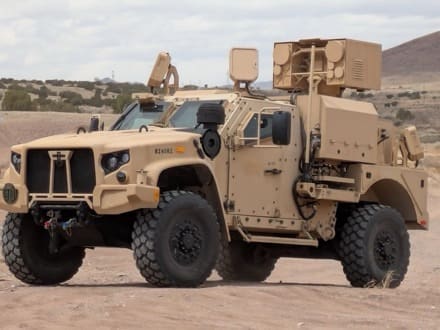
Spike NLOS has been qualified under the current Long Range Precision Munitions Directed Requirement (LRPM DR) contract on the U.S. Apache AH-64E. It also has been ground vehicle tested and integrated on Oshkosh’s Joint Light Tactical Vehicle (JLTV) for the U.S. Special Operations Command (USSOCOM).

With the U.S. Army’s desire to accelerate the development and fielding of a system to its IBCT users, Lockheed Martin is positioned to leverage and adapt the matured Spike NLOS system to fulfill long-range capability needs, providing a rapid M-LPRSM solution for light combat vehicles like the JLTV.

Next steps in the competition include a second phase of the competition, which includes safety confirmation testing and the further down selection to a limited number of competitors. A final decision on which competitor will be selected for the M-LRPSM Directed Requirement will be announced following the completion of the second phase of the competition.

More information at Lockheedmartin.com.

Israel MOD to Procure Thousands of Drones from XTEND Worth Millions of Dollars

Wednesday, August 27th, 2025

The Israel Ministry of Defense (IMOD) Defence Procurement Directorate (DPD) announced that XTEND has won a tender, worth millions of dollars, to supply thousands of FPV (First Person View) drones to the IDF Ground Forces, equipped with advanced technology. The project is being led by the IDF’s Ground Forces and Technological and Logistics Directorate.

Led by the DPD’s Deputy for Air and Naval Procurement Unit, this domestic ‘Blue and White’ procurement is part of IMOD Director General Maj. Gen. (Res.) Amir Baram’s comprehensive strategy to strengthen Israel’s defense production capacity and local industries while maintaining full support for IDF operational needs now and in the intense decade ahead.

The drones will be delivered to the IDF over the coming months alongside comprehensive training and instruction programs provided by the company, and are expected to significantly enhance the operational capabilities of the Ground Forces while delivering optimal solutions to modern warfare challenges.

US Army Taps LiquidPiston to Build Ultra-Compact Mobile Command Post Auxiliary Power Unit

Wednesday, August 27th, 2025

Contract Awarded Under US Army’s SBIR CATALYST Program
BLOOMFIELD, Conn. — August 27, 2025 — LiquidPiston, Inc., a leading innovator in compact, efficient, heavy-fueled rotary combustion engine technologies and hybrid power systems, has begun developing an ultra-compact auxiliary power unit (APU) for mobile command posts under a U.S. Army Small Business Innovation Research and Small Business Technology Transfer (SBIR|STTR) contract.

With a potential total value of $15 million or more, the SBIR CATALYST award advances the Army’s Mobile And Survivable Command Post (MASCP) initiative, which aims to integrate a mobile power solution for future Command Post Modernization efforts. MASCP targets vulnerabilities in current command posts, which face rising electric power demands, often rely on separate trucks or trailers to transport heavy electric power generators and require greater mobility and distribution to support warfighter operations and reduce exposure to hostile threats. 

LiquidPiston’s proposed solution features a vehicle-mounted, ultra-compact 10-kilowatt (kW) APU based on its 10 kW portable electric generator platform, powered by its basketball-sized, 25-horsepower, heavy-fueled XTS-210 X-Engine™. 

Launched in 2022, the SBIR CATALYST Program brings together the U.S. Army, integrators, and small businesses to accelerate the development and deployment of advanced technologies. The program uses a gated, milestone-driven approach to funding and awards up to $1 million over six to 12 months to Phase II and Direct to Phase II recipients who present clear, actionable transition plans.

Recipients who successfully complete base performance may qualify for a SBIR CATALYST Phase II Enhancement award, structured through a 2:1:1 matching fund model across 12 to 24 months. The structure enables up to $3.5 million in matched contributions from both a government transition partner and an integrator, unlocking up to $7 million in matching SBIR funds and totaling $15 million or more in potential award funding. 

“U.S. small businesses like LiquidPiston use Army Innovation Programs—including xTech, SBIRSTTR, and SBIR CATALYST—to develop critical solutions that address the Department of Defense’s operational needs,” said Dr. Matt Willis, Director of Army Innovation Programs. “These programs deliver resources and funding that help small businesses fast-track transformative, commercially viable technologies to support current and future Army missions.”

The Army recently featured LiquidPiston in its U.S. Army SBIR|STTR Spotlight.  

The SBIR CATALYST award builds on several Department of Defense contracts awarded to LiquidPiston, including: 

“We’re very proud and excited to be able to continue to mature our X-Engine and power systems platforms in support of the U.S. DoD’s initiatives to provide operational energy to our warfighters who need to be constantly on the move in contested logistics environments,” said Alec Shkolnik, co-founder and chief executive officer of LiquidPiston. “Our innovation and product development efforts are focused on enabling smaller, lighter portable and vehicle-mounted power systems which operate efficiently on military-grade and other fuels.”

Polaris Government and Defense DAGOR Vehicle Delivers Extreme, Off-Road and Air Transportable Firefighting Power for the US Air Force

Tuesday, August 26th, 2025

Minneapolis – August 26, 2025 – The DAGOR vehicle, an off-road and air transportable tactical mobility platform from Polaris Government and Defense, is redefining expeditionary firefighting. With a request from the U.S. Air Force (USAF), ADS partnered with Ward Apparatus to create the Ward Mobile Airfield Rescue Kit (Ward MARK-1), using the Polaris DAGOR, to deliver a first-of-its-kind off-road firefighting vehicle. These trusted names in innovative emergency response vehicle manufacturing have pioneered a compact, rugged and versatile military-grade firetruck that is C-130 internally transportable and sling loadable for rapid deployment anywhere in the world.

The USAF needed a rugged, off-road fire truck that could function in extreme temperatures, navigate through rough terrain, carry all necessary firefighting equipment – and be easily loaded and transported via a C-130 or sling loaded beneath a helicopter. The Polaris family of light tactical vehicles, including DAGOR, already support operations across the U.S. and our allies, meeting off-road mobility, durability and air transportability requirements. Working directly with USAF, Ward Apparatus and ADS transformed the Polaris DAGOR vehicle into a firefighting apparatus for the most demanding environments.

“This has been an incredible process working with our team at Ward, the U.S. Air Force, Polaris, ADS and all the individual suppliers to develop this very unique custom solution. It is an honor to be recognized as an innovative leader within the fire industry and to be involved in helping keep our U.S. Air Force safe and providing them with this equipment,” said Scott Beecher, owner and CEO of Ward Apparatus.

Designed for pilot rescue and contingency location team support, the Ward MARK-1 boasts capabilities specific for Air Force fire and rescue missions. This includes all essential pilot egress tools, a water capacity of 150 gallons, providing ample suppression capability for vast fire scenarios, a 95-gallons per minute pump to support efficient water supply and is equipped with a high and low-flow bumper turret for added versatility. The vehicle includes hoses and a sump pump for drafting from water sources, plus a large diameter hose for refilling or connecting to hydrants. Designed to carry up to three operators, the vehicle also includes a litter basket for secure and efficient patient transport – all while retaining the rugged durability and capabilities DAGOR is known for.



In just 24 months, the Ward MARK-1 went from concept to completion. Production continues and fielding has begun, with the U.S. Air Force positioning them at remote airfields around the world in support of off-road fire and rescue missions.

Polaris designs and manufactures the most capable light tactical and all-terrain military vehicles available. The company’s expertise in light off-road mobility has produced the MV850, MRZR D, MRZR Alpha and DAGOR. Polaris vehicles support more than 60 military forces worldwide, which is a testament to the capability gap these vehicles fulfill. These platforms provide unmatched off-road capability, intuitive operation, streamlined maintenance, air transportability and are supported globally by the worldwide presence of Polaris dealers and distributors.