Register Now for SOF Week

Archive for the ‘Contracts’ Category

OTTO Engineering Providing Noizebarrier Tactical Communication Suite To Federal Agents

Tuesday, July 27th, 2021

OTTO Engineering is proud to be providing our elite Federal agents with our Noizebarrier Tactical Communication Suite. The OTTO suite of products was selected over currently fielded solutions and provides agents with unparallel Audio clarity, Situational Awareness / hear through, ruggedized solutions for any environment. OTTO Noizebarrier TAC provides increased communication intelligibility in all environments.

OTTO is working on several new technologies to increase operational awareness including their Lynq Pro handheld Position Location device.

Most ATAK enabled EUDs require a cellular connection or RF comms between radios that have been pre-programmed taking hours to set up. The Lynq Pro system works with or without an EUD but you can easily pair to your EUD via BLE or hardwire, providing a real time encrypted data link between your squad members even when networks are denied.

Core technology is an intelligent network well suited for comms denied contested environments that’s low power, RF quiet and rapidly deployable, 256 encrypted and peer to peer with jamming resistant with chirp spread spectrum frequency hopping. A next gen squad level blue force tracker — capable of secure location and LPI/LPD comms that drastically enhance situational awareness and ensure no personnel is left behind.

Come visit OTTO Engineering in VA Beach July 28th & 29th at Bad Ass Coffee across from the Virginia Beach Convention Center.

Rheinmetall’s Optionally Manned Fighting Vehicle Concept Down-selected for U.S. Army’s program – Team of Industry-leading Experts to Digitally Design Advanced OMFV

Monday, July 26th, 2021

The U.S. Army has awarded American Rheinmetall Vehicles – a Sterling Heights, MI, U.S. subsidiary of leading defense industry giant Rheinmetall – a develop¬mental contract for the Phase 2 Digital Design of the Optionally Manned Fighting Vehicle (OMFV) program. American Rheinmetall Vehicles will execute Phase 2 with its teammates, a group of unsurpassed defense industry companies, including Raytheon Technologies, L3Harris Technologies, Textron Systems and Allison Transmission.

The U.S. Army’s OMFV program is a ground-modernization effort to replace nearly 3,800 Bradley Fighting Vehicles among the U.S. Army’s Armored Brigade Combat Teams.

“This is a great win for American Rhein¬metall Vehicles and Team Lynx as a whole,” said Matt Warnick, Managing Director of American Rheinmetall Vehicles. “With this contract award, we take another important step forward in bringing the kind of next-generation technology solution, partnership and industrial capability the U.S. Army deserves and that Team Lynx is so well prepared to deliver for the OMFV program.”


Team Lynx will work with the U.S. Army on the digitally engineered design and development of the team’s OMFV concept using Rheinmetall’s proven Lynx KF41 Infantry Fighting Vehicle (IFV) as the point of departure for the design. The team’s solution will provide the U.S. Army with a next-generation infantry fighting vehicle featuring a game-changing platform with a modular open systems architecture. This will enable rapid insertion of new capabilities as they become available, guaranteeing overmatch today and overmatch tomorrow.

Variants of American Rheinmetall Vehicle’s Lynx KF41 IFV are advancing in multiple countries around the world. The Hungarian Army became the launch customer in 2020 with an order for 218 locally produced vehicles. In Australia, for the Land 400 Phase 3 program, Rheinmetall was down selected along with one other combat vehicle manufacturer for a risk reduction test phase that involves extensive vehicle testing comprised of field trials, survivability and mobility testing. The KF41 performed to a high standard.


The Digital Design Phase kicks off the OMFV program and continues through early 2023, laying the foundation for future development and production phases. Team Lynx is developing industrialization plans to fully deliver the OMFV as a Made in the USA, next-generation vehicle. The team will grow U.S. Defense manufacturing capacity and introduce advanced manufacturing capabilities. Competition for Phase 3 (Detailed Design) is anticipated to start in 2023, followed by Phase 4 (Prototype Build and Test), which results in government testing in early 2026.

“We are incredibly proud at American Rheinmetall of the commitment we are making to the US Army, to Soldiers and to advanced American technology, design and production,” said Stephen Hedger, CEO at American Rheinmetall Defense, the U.S. parent headquarters for Rheinmetall.

AeroVironment Receives Puma 3 AE and Raven Unmanned Aircraft System Orders Totaling $15.9 Million from United States Air Force

Thursday, July 22nd, 2021

• United States Air Force to equip its Security Forces with Puma 3 AE systems; support existing fleet of Raven systems with spares packages

• AeroVironment’s family of tactical UAS allows customers to use the same ground control station and software for multiple UAS for added simplicity and efficiency

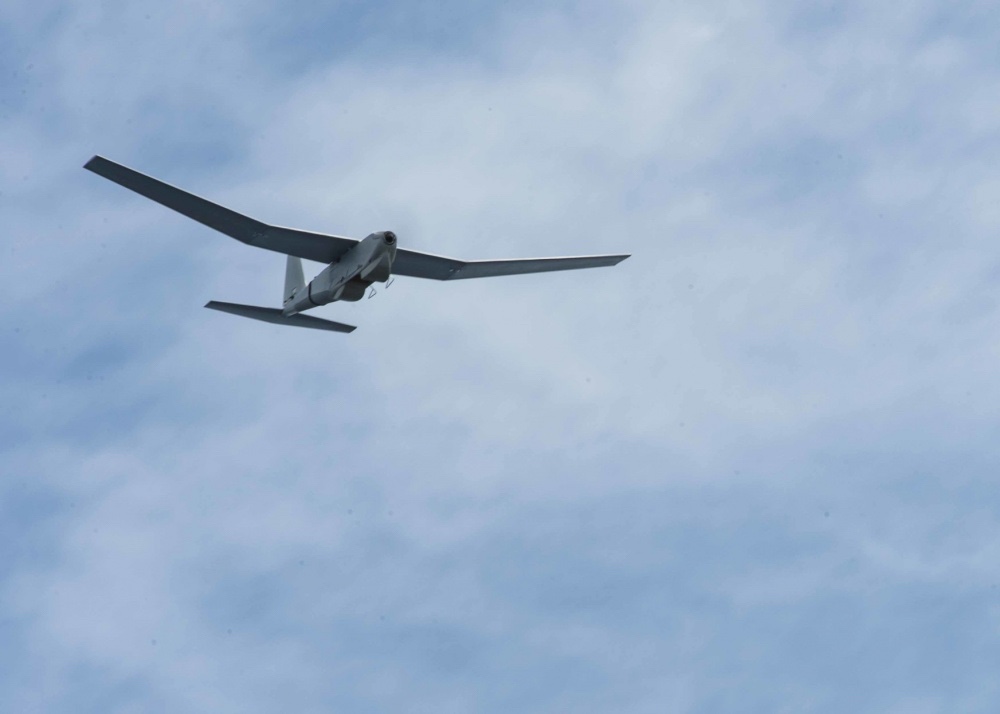
The Puma 3 AE and Raven systems empower operators with on-demand tactical intelligence, surveillance and reconnaissance that they can rely on for situational awareness and mission success. (Photo: AeroVironment, Inc.)

ARLINGTON, Va., July 22, 2021 – AeroVironment, Inc. (NASDAQ: AVAV), a global leader in intelligent, multi-domain robotic systems, today announced receipt of two firm-fixed-price orders totaling $15,940,378 from the United States Air Force. The orders, received on April 19, 2021 and May 6, 2021, encompass the procurement of Puma™ 3 AE unmanned aircraft systems (UAS) and spares packages, as well as Raven® UAS spares packages. The Puma 3 AE systems and spares were delivered on April 30, 2021. Delivery of the Raven spares is anticipated by November 2021.

“The combat-proven Puma 3 AE and Raven are versatile, rugged and reliable tactical unmanned aircraft systems designed to provide the United States Air Force Security Forces with the enhanced situational awareness and mission effectiveness they require when safeguarding bases,” said Trace Stevenson, AeroVironment vice president and product line general manager for small UAS.

The AeroVironment Puma 3 AE UAS is designed for land and maritime operations. Capable of landing in water or on land, the all-environment Puma 3 AE and Mantis i45 EO/IR sensor suite empower operators with extended flight time and a level of imaging capability never before available in the tactical UAS class. The hand-launched Puma 3 AE has a wingspan of 9.2 feet, weighs 15 pounds and can operate for up to 2.5 hours. The aircraft also has a range of 12.4 miles (20 kilometers) with a standard antenna, and up to 37.2 miles (60 kilometers) with AeroVironment’s Long-Range Tracking Antenna (LRTA). It also features reduced system packaging with a flyable configuration and GCS in one case.

AeroVironment’s Raven system is designed for rapid deployment and high mobility for operations requiring low-altitude intelligence, surveillance and reconnaissance. With a wingspan of 4.5 feet (1.4 meters) and weighing just 4.2 pounds (1.9 kilograms), the hand-launched Raven provides situational awareness, day or night, with an operational range of 6.2 miles (10 kilometers). The Raven’s Mantis i23 EO/IR gimbaled payload delivers real-time video or infrared imagery to ground control and remote viewing stations.

Both Raven and Puma 3 AE UAS can be operated using Crysalis™, AeroVironment’s next-generation ground control solution for command and control, which improves battlefield communication and collaboration by enabling users to easily share real-time information and coordinate mission-critical decisions.

AeroVironment has delivered tens of thousands of new and replacement unmanned air vehicles to customers within the United States and to more than 50 allied governments. For more information, visit www.avinc.com/uas.

Rheinmetall to Supply the Bundeswehr with Laser Light Modules

Wednesday, July 21st, 2021

The Bundeswehr has selected Rheinmetall to supply laser light modules for the German armed forces. A corresponding framework contract has now been signed, which envisages delivery of up to 130,000 laser light modules. To begin with, 2,460 devices worth a total of €3 million will be delivered. For Rheinmetall, the framework contract represents up to €178 million in potential sales. This is the largest order for laser light modules ever booked by the device’s maker, Rheinmetall Soldier Electronics of Stockach, Germany. The framework contract is initially set to run for seven years.

Because the devices can be mounted via a standard inferface onto all assault rifles, submachine guns, machine guns and sniper rifles currently in the Bundeswehr inventory, they will greatly improve the ability of German troops to fight at night. Delivery will begin this year. The Bundeswehr will initially take delivery of 360 devices earmarked for integrated verification management. These will be followed by the remaining 2,100 laser light modules now on order.

The device selected is a version of the Rheinmetall’s latest-generation LLM-VarioRay laser light module. Intended primarily for small arms carried by infantry and other soldiers who fight on foot, it is used for detecting, identifying and marking targets.

Weighing around 250 grams including the bracket, the LLM-VarioRay can be mounted on any assault rifle with a MIL-STD 1913 rail/STANAG 4694 and operated via a trigger cable. It features a powerful white lamp, a red-light laser marker, an infrared laser marker and an electrically focusable infrared illuminator. The light source can be selected with a rotary switch and is infinitely adjustable. The device has a fully integrated, factory-aligned laser block, enabling easy adjustment and alignment of the aiming device and weapon. Together with night observation and thermal imaging devices, it lets German troops perform a full range of operational missions around the clock and in all weathers.

Among other things, the LLM-VarioRay product family forms part of the German soldier system “Future Soldier – Expanded System” (IdZ-ES). It is also in service with the British Army, which calls it the Laser Light Module MK3, and with the Swiss Army, where it is known as the Laser-Licht-Modul 19.

Rheinmetall offers an extensive portfolio of infantry equipment, including a variety of aiming and illumination modules. These were developed in order to enhance the tactical effectiveness of modern small arms. One of these products is the LM-VTAL. Standing for “Laser Module – Variable Tactical Aiming Laser”, it is used by Bundeswehr special operators. Rheinmetall’s aiming and illumination devices are compatible with all standard night observation devices and can be coupled with the “TL-MissionLight”, a separate modular weapon lamp also made by Rheinmetall. Another top-of-the-line Rheinmetall product is the “FCS-TacRay Ballistic”, a rangefinder/ballistic computer for snipers and machine gunners.

PROOF Research Awarded Contract for Future Weapon Systems Development

Tuesday, July 13th, 2021

PROOF Research®’s latest contract award builds on their small caliber barrel technology already in service with U.S. Military Forces.

Columbia Falls, Mont. (July 2021) – PROOF Research®, has been awarded a $12.7 million contract for the development and delivery of prototype advanced composite medium caliber barrels and components for next generation weapon systems. PROOF Research is the leading manufacturer of advanced high-temperature composite aerospace/defense materials and components, cut-rifled steel and carbon-fiber composite precision rifle barrels, and custom rifle systems that deliver extreme accuracy and enhanced performance with up to a 50% weight reduction.

The program builds on PROOF Research’s successful small caliber barrel technology already in service with U.S. military forces, and will enable medium caliber weapons with increased performance that provide overmatch capability on tomorrow’s battlefield. “This project demonstrates the scalability and performance advantages of PROOF’s technology in any weapon system,” stated PROOF Research CEO, Larry Murphy. John Clements, PROOF Research VP of Business Development and Military Programs, underscores the importance of the program to defense, “It is a progression of our commercial and military small caliber products that will generate a tactical advantage in larger weapons. We are extremely excited about this opportunity to improve the tools available to our Warfighters.”

“PROOF’s composite materials technology is unique in that it opens up the weapon design space to enable performance advantages that cannot be achieved with traditional materials and techniques. We design and build medium caliber weapon system barrels and components with characteristics previously not attainable,” said PROOF Research Advanced Composites Division General Manager and project Principal Investigator, David Curliss, PhD.

This effort is sponsored by the U.S. Government under Other Transaction number W15QKN-09-9-1001/W15QKN-12-9-0001/W15QKN-14-9-1001 between the National Armaments Consortium and the Government. The views and conclusions contained herein are those of the authors and should not be interpreted as necessarily representing the official policies or endorsements, either expressed or implied, of the U.S. Government.

AeroVironment Selected by U.S. Special Operations Command for $22 Million Beyond Line of Sight ISR Services Award Under Mid-Endurance Unmanned Aircraft Systems IV Program

Tuesday, July 13th, 2021

• First award for satellite communications-enabled beyond line of sight (BLOS) on competitive Mid-Endurance Unmanned Aircraft Systems (MEUAS) IV program

• AeroVironment receives task order to provide ISR services at additional customer location

• AeroVironment JUMP 20 is a vertical takeoff and landing (VTOL), fixed-wing unmanned aircraft that AeroVironment uses to provide advanced multi-sensor intelligence, surveillance, and reconnaissance (ISR) services


JUMP 20 is a VTOL, fixed-wing unmanned aircraft system that can be deployed quickly and requires no launch equipment or runway. (Photo: AeroVironment, Inc.)

ARLINGTON, Va., July 13, 2021 – AeroVironment, Inc. (NASDAQ: AVAV), a global leader in intelligent, multi-domain robotic systems, today announced it was awarded a competitive task order valued at approximately $22 million on May 21, 2021 from the U.S. Special Operations Command (USSOCOM) for ISR services using JUMP® 20 medium unmanned aircraft systems (UAS) at an undisclosed customer location. The ISR services include the first SATCOM-enabled unmanned aircraft system for beyond line of sight operations as part of the existing Indefinite Delivery, Indefinite Quantity (IDIQ) MEUAS IV contract. The task order specifies a 12-month period of performance and multiple follow-on option years for ISR services.

“The JUMP 20 delivers an unmatched level of versatility, with runway and infrastructure independence, multiple payload configurations, class-leading endurance and a track record of reliability and ruggedness,” said Gorik Hossepian, AeroVironment vice president and product line general manager for medium UAS. “The inclusion of a SATCOM payload adds beyond line of sight operation to the JUMP 20, providing our customer with expanded reach and situational awareness, and representing another game-changing, market-leading capability.”

The AeroVironment JUMP 20 is the first fixed-wing unmanned aircraft system capable of vertical takeoff and landing (VTOL) to be deployed extensively in support of U.S. military forces. Ideal for multi-mission operations, JUMP 20 delivers 14+ hours of endurance, a standard operational range of 185 km (115 mi) and is runway independent. The system can be set up and operational in less than 60 minutes without the need for launch or recovery equipment and has a useable payload capacity of up to 30 pounds. The JUMP 20 also features a common autopilot and ground control system architecture providing a highly customizable, modular platform which can be custom-configured to meet operational or customer requirements.

USAF First to Order on Army’s Direct View Optic Contract

Wednesday, July 7th, 2021

According to a source close to the program, the US Air Force has placed the first order on the US Army’s Direct View Optic program, obligating $49 million. This fulfills an Air Force requirement for a variable power optic that has been on the books since at least 2018, although at the time, the service stated that it desired a 1-8 optic rather than the 1-6 capability of DVO. DVO will replace the M68 Close Combat Optic and other systems within the service’s ground combat forces which number nearly 50,000 including the Special Warfare enterprise and around 40,000 Security Forces Airmen.

The Army’s requirement is reportedly still in draft status.

The DVO contract was awarded at the close of Fiscal Year 2020 to SIG Sauer Electro Optics for the 1-6×24 TANGO6T. There are currently three different versions of the TANGO6T adopted by the US military. The initial buy was for the Squad Designated Marksmanship Rifle, next was USSOCOM’s Squad-Variable Power Scope and finally, DVO.

The SDMR and S-VPS variants feature a standard tube length, but the DVO version is slightly shorter based on the Army’s OAL requirement. Some of this length is made up via a narrower diopter.

Each one of the optics features a different reticle. Here’s the breakdown:

DWLR-6 First Focal Plane: Dual Wind, Long Range 6 is currently fielded on the SDMR. Calibrated for the M118LR fired from the SDMR, the DWLR6 provides users with range estimation capability, holdovers for various distances and 5mph and 10mph wind holds out to 1000m.

DWLR-556 First Focal Plane: Dual Wind, Long Range 556 will be the DVO reticle. Similar in design to the DWLR6, the DWLR-556 is calibrated for M855A1. The reticle provides users with range estimation capability, holdovers for various distances and 5mph and 10mph wind holds out to 800m.

FL-6 Second focal plane: This is the SVP-S reticle. The FL-6 is calibrated for M855A1 fired from a customer specific rifle. The reticle provides similar range estimating capability as the others by using horizontal bars equivalent to 20” targets at various distances. When zeroed at 300m these holdovers represent 400, 500, 600 and 700m drops. The horizontal stadia provides directional indictors and holds for engaging moving targets of various speeds.

Tulmar Awarded Canadian Forces Life Preserver Contract

Monday, July 5th, 2021

[Hawkesbury, ON – July 5th, 2021] Tulmar Safety Systems is pleased to announce contract award W8482-218815/001/DMARP4 from the Canadian Department of National Defence to supply the Royal Canadian Navy with Hazardous Duty and Maritime Pouch Life Preservers. Under this contract, Tulmar will provide a firm quantity of 4,000 units with an option to supply up to an additional 14,400 units.

This multi-year contract is familiar work for Tulmar, having delivered more than 32,000 of these life preservers to the Royal Canadian Navy over the past five (5) years under a similar contract for the Department of National Defence.

“We are proud to work as a partner with the Canadian Armed Forces with this opportunity to provide world class, lifesaving equipment to the men and women of the Royal Canadian Navy.” Matt Fisher, Defence Solutions Manager for Tulmar and responsible for the relationship with the Canadian Department of National Defence went on to say, “The quality of the product we supply is a testament to the processes of our company and the skill of our staff.”

www.tulmar.com