Phantom Lights

Archive for the ‘EW’ Category

52nd Collaborative EW Symposium Welcomes UK for First Trilateral Event

Sunday, March 22nd, 2026

NAVAL AIR WARFARE CENTER WEAPONS DIVISION, POINT MUGU, Calif.

Welcome to the Invisible War

Invisible wars demand visible action. In this arena, coalition electronic warfare, interoperability and spectrum superiority will decide victories in future near-peer conflicts.

Whoever owns the electromagnetic spectrum owns the battlefield.

That’s why nearly 500 electronic warfare leaders from the United States, Australia and — for the first time — the United Kingdom gathered at Naval Base Ventura County, Point Mugu, March 11-13 for the 52nd annual Collaborative Electronic Warfare Symposium.

The Naval Air Warfare Center Weapons Division and the Association of Old Crows jointly host the annual symposium under a co-sponsorship agreement. The event focuses on collaboration and innovation in EW, uniting government and industry partners worldwide.

Policies and Platforms Risk EW Static

One of the biggest challenges in coalition EW is getting different nations and services to operate seamlessly in the EMS. Without standardized doctrines, aligned classification standards and compatible technological platforms, coalition operations risk becoming disjointed.

Bottom line: Coalition forces shouldn’t encounter more static from their own policies than from their adversaries.

Coalition EW Steps Up for Near-Peer Showdown

This year’s theme, “Coalition EW in Near-Peer Conflict,” explored interoperability across coalition EW operations, from ground and airstrike to naval combat, in a classified setting. Symposium co-chairs David Wood and Thomas Bluhm, NAWCWD’s lead event planners, guided discussions on enhancing coalition readiness for near-peer conflicts.

This year’s symposium brought together everyone from four one-star military officers and civilian specialists to young professionals in the Engineer and Scientist Development Program.

“Effective coalition EW requires alignment at every level, from senior leadership down to junior warfighters and support personnel,” Bluhm said.

One Team’s Mission to Unite Three Nations

Two years of policy hurdles. Classification roadblocks. Endless coordination challenges.

Dave Mohler, NAWCWD’s Airborne Electronic Attack International Programs lead, and his team overcame them all with one clear mission: bring the United Kingdom into the EW conversation alongside the United States and Australia.

“Our International Programs team is made up of highly specialized and dedicated professionals,” Mohler explained. “It wouldn’t have been possible without my international policy analysts, security specialists, and foreign contact officers”

Mohler coordinated with senior Navy and Department of Defense officials to expand the previously bilateral U.S.-Australia symposium, held since 2015, to include the UK.

Bringing the UK into the fold was critical, as AUKUS enables deeper coalition collaboration.

Established in 2021, AUKUS initially focused on nuclear-powered submarines. Its second pillar prioritized collaborative defense capabilities, including EW — creating the opportunity Mohler needed.

“This was not a simple or easy task,” Bluhm said. “Mr. Mohler and his team worked through many denials and hurdles to secure approvals for this first-ever tri-national Collaborative EW Symposium.”

Mohler emphasized why this expanded partnership matters.

“More than ever, we must acknowledge that the wars of tomorrow will not be deterred, nor fought, alone,” Mohler stressed. “This is the first step toward understanding how we operate together and identifying areas where we can cooperatively develop solutions for the warfighter.”

Thanks to Mohler’s efforts, the three nations now have a clear framework for deeper cooperation, making AUKUS a blueprint for dominating the EMS.

Why Point Mugu Still Leads the EW Fight

For the first trilateral event focused on dominating the invisible fight, you go where history has proven itself — a quiet naval base along California’s coast: Point Mugu.

In April 1951, Cmdr. Clifton Evans Jr. established the Countermeasure-Interference Division, creating the Navy’s first dedicated EW capability — a visionary move that was decades ahead of its time. More than 70 years later, pioneering foresight keeps Point Mugu at the forefront of EW, laying the groundwork critical to coalition EW in the age of near-peer threats.

“In the 74 years since, spectrum warfare technologies have grown exponentially,” Bluhm said. “Denying adversaries the use of their radars, communications and navigation signals while ensuring our coalition allies maintain resilient and effective spectrum operations is best done with our trusted allies.”

With Point Mugu’s legacy established, the focus shifts to next-generation technologies allies are leveraging to close EW capability gaps.

How AUKUS Allies Are Closing the EW Gap

The symposium showcased next-generation EW technologies from government and industry partners across the three AUKUS nations. Highlights included advanced directed energy weapons, such as high-power microwave systems, and compact, low-cost SWaP jammers delivering high performance. Attendees also explored radar alternatives and innovative command-and-control systems for EMS operations.

On day two, gray skies and periodic rain greeted attendees at the Station Theater for the symposium’s strategic panel.

Moderated by Bluhm, the panel featured U.K. Royal Air Force Air Commodore Blythe Crawford, commandant of the Air and Space Warfare Centre; Australian Air Commodore Peter Robinson, commander of Air Combat Group; and NAWCWD’s director of research and development, Harlan Kooima.

“The U.K. delegation is delighted to be attending the Collaborative EW symposium at Point Mugu alongside our U.S., Australian and industry partners,” Crawford remarked. With a smile, he noted that the weather reminded him of his hometown in Lincolnshire, England.

He went on to highlight the strategic importance of the trilateral partnership.

“If we are to fight together, then we need to leverage each other’s technologies, methodologies and processes for spectrum management,” Crawford explained. “We all have discrete expertise in EW. Collaborative approaches are essential if we are to prevail as partners in any future fight.”


Each nation brings powerful EW platforms to the table: the U.S. Navy EA-18G Growler, with its precision jamming; the Royal Australian Air Force E-7 Wedgetail, an airborne early warning system with vast range; and the U.K. Royal Air Force Eurofighter Typhoon, armed with the advanced Praetorian Defensive Aids Sub-System.

Even the best tools fail if they’re not speaking the same language. Disparate systems and upgrade cycles complicate joint tactics, letting adversaries exploit gaps with advanced jamming and spectrum denial.


The U.S.-Australia Next-Generation Jammer, deployed in 2024 with significant Australian investment, provides a proven model for coalition EW synergy and interoperability, demonstrating how allies can eliminate vulnerabilities in the spectrum fight.


AUKUS Shifts from Blueprint to Battlefield

Tight coordination is critical in the congested and contested EMS. Without it, coalition forces risk accidental interference — a self-inflicted jam session.

Robinson sees the symposium as AUKUS in action, turning high-level strategy into concrete, battlefield-ready capabilities.

“AUKUS calls for the three countries to work together to share an understanding of the tools, techniques and technology to enable our forces to operate in contested and degraded EW environments,” Robinson explained.

He noted they’ve moved beyond philosophical debates toward aligning policy, doctrine and joint operational planning—a critical step as threats rapidly evolve.

And the coalition isn’t wasting any time. One example is already moving from concept to reality.

“In 2025, under AUKUS, we’ll conduct a tri-nation EW experiment focused on hypersonic threats and adversarial AI-driven spectrum denial,” Kooima said. “We’ll test new countermeasures and share the playbook.”

Together, the three nations will practice defending against advanced missiles and AI-powered signal jamming designed to disrupt communication and radar systems.

But Kooima believes the coalition needs something even more targeted to tackle the Indo-Pacific’s unique EW threats.

“I’d push for AUKUS-specific wargames — tabletop and live-fly — that pit us against AI-driven EW threats in Indo-Pacific conditions,” Kooima recommended. “These venues build muscle memory and trust we’ll need in a real fight.”

What a $25 Balloon Taught Us About War

Sometimes, war isn’t won by how much you spend. It’s won by how much it costs your adversary.

Crawford highlighted a powerful lesson from Ukraine: A simple $25 balloon drifting into Russian airspace baited missiles worth enough to buy a garage full of high-end Ferraris — proving how low-cost ingenuity can deflate multimillion-dollar air defense systems.

“While we initially perceived Russia as having an advantage, Ukraine showed us the spectrum is wide open for innovation,” Crawford noted.

He also emphasized another issue revealed by the Ukraine conflict: Modern warfare rapidly exhausts weapon supplies, and the coalition’s industrial base isn’t yet equipped to swiftly replenish expensive weapons. Disposable, inexpensive systems can bridge this critical gap.

The Spectrum Isn’t a Side Mission — It’s The Mission

As the symposium concluded, one theme emerged: Victory in EW demands advanced jammers with pulse-by-pulse agility, near-instant waveform adaptation and coalition teams operating in concert like an elite orchestra.

“This symposium proved one thing: All three nations face the same challenges with respect to future threats and our exploitation of the EMS,” Crawford said.

Robinson went even deeper, pointing to history. Shared values may build alliances, but winning in the EMS demands clear strategy, tight coordination and constant adaptation.

“Australia is blessed to hold the deep relationships we have with the United States and the United Kingdom. Each of our nations has a history of fighting for the values we share. We will fight together again,” Robinson said. “A key part of our success or failure in future conflicts will come down to our ability to win the battle in the EMS.”

For Mohler, this symposium capped years of effort uniting the three nations under AUKUS. And it’s only the beginning.

“Going forward, this event will continue to serve as a platform for the AUKUS partners to gather and drive successful outcomes for the coalition in the years to come,” Mohler concluded.

Kooima envisions a future where AUKUS partners share real-time intelligence, standardize tactical training and rapidly innovate next-generation technologies like quantum computing, artificial intelligence and advanced EW.

“It’s about trust, tech and tempo,” Kooima said. “Get those right, and we’ll outmatch any near-peer coalition.”

Yes, AUKUS is an agreement. But it’s also the strategic frequency coalition forces must tune into to dominate the spectrum fight.

Via NAVAIR

Modernizing Air Force TACP Ground Evaluations

Tuesday, March 17th, 2026

FORT CAMPBELL, Ky. — Air Force tactical air control party (TACP) operators from the 19th Air Support Operations Squadron underwent a comprehensive mission evaluation in January, utilizing advanced electronic warfare and autonomous drone technology to validate new ground combat standards.

The evaluation, which became a requirement for Air Force Special Warfare TACP units roughly two years ago, ensures operators maintain combat mission readiness through a full mission profile. The rigorous assessment covers every phase of a deployment, including preparation, infiltration, action on objectives, exfiltration, and a final mission debrief. Special Operations Warfare Ground Evaluations are conducted every 24 months to validate the unit’s combat mission readiness and ability to operate in in contested environments.

The evaluation began in a classroom setting where the team received a warning order detailing the mission. Lt. Col. Craig Lowrey, the 19th ASOS director of operations, served as the team leader during the exercise. He said the initial phase required the team to analyze the overarching mission set and discuss the scheme of maneuver while identifying the expectations for both friendly and enemy forces.

Once the planning phase concluded and a written portion was completed, the team moved to the field for a target acquisition mission. Evaluators provided only a rough area of interest, forcing the team to rely on specialized equipment to pinpoint an enemy location on an airfield.

The insertion took place in total darkness, requiring every operator to utilize night vision goggles. 1st Lt. Michael Morin, a ground evaluator assigned to the 19th ASOS, said the lack of ambient light made the mission particularly difficult.

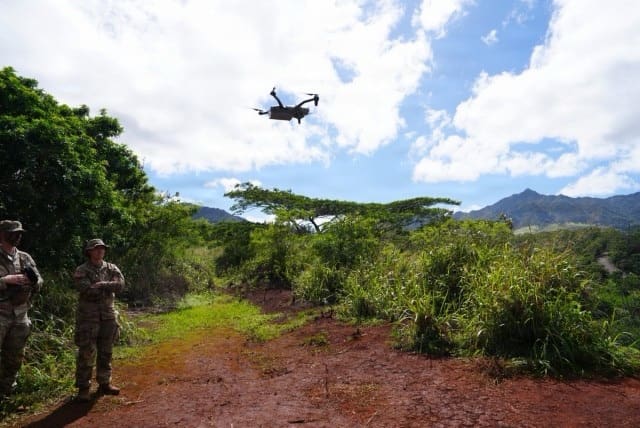
Upon reaching the vicinity of the objective rally point, the team secured the area. While the assistant team leader maintained security, the team launched a small Unmanned Aircraft Systems (sUAS) Skydio X2D drone. The sUAS was flown several hundred meters from the target area, obscured by the tree line, to get eyes on the objective.

The sUAS, which features 3D mapping and collision avoidance, allowed the team to navigate the forest and locate targets in a large open area. This provided the commander with a live video feed to refine the targeting data.

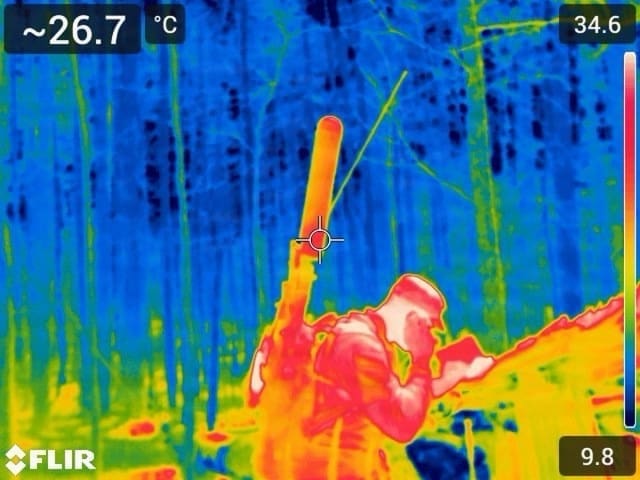
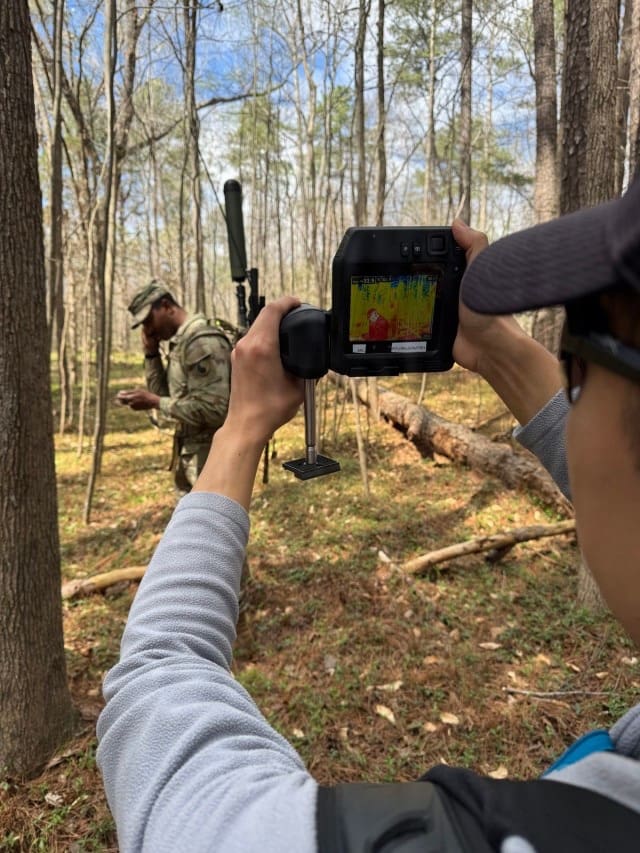
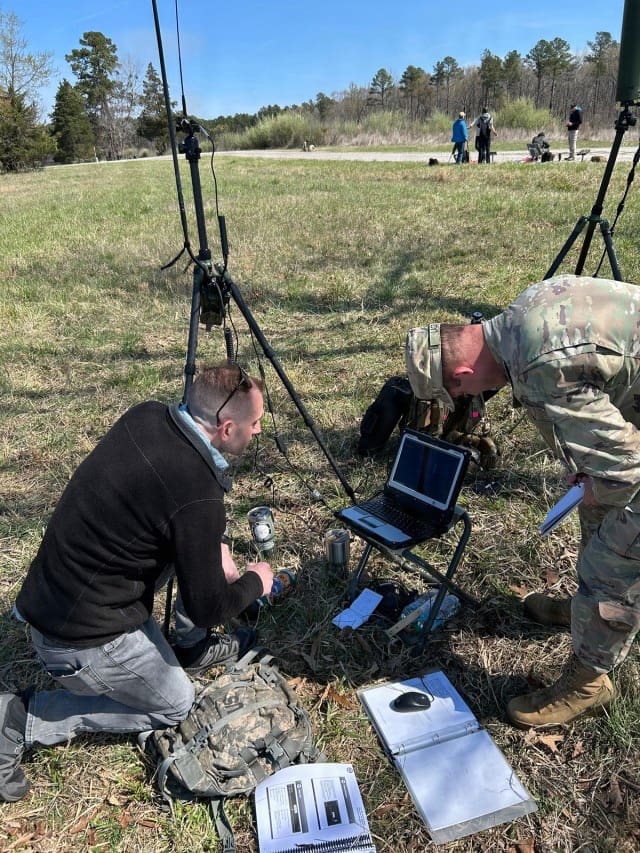
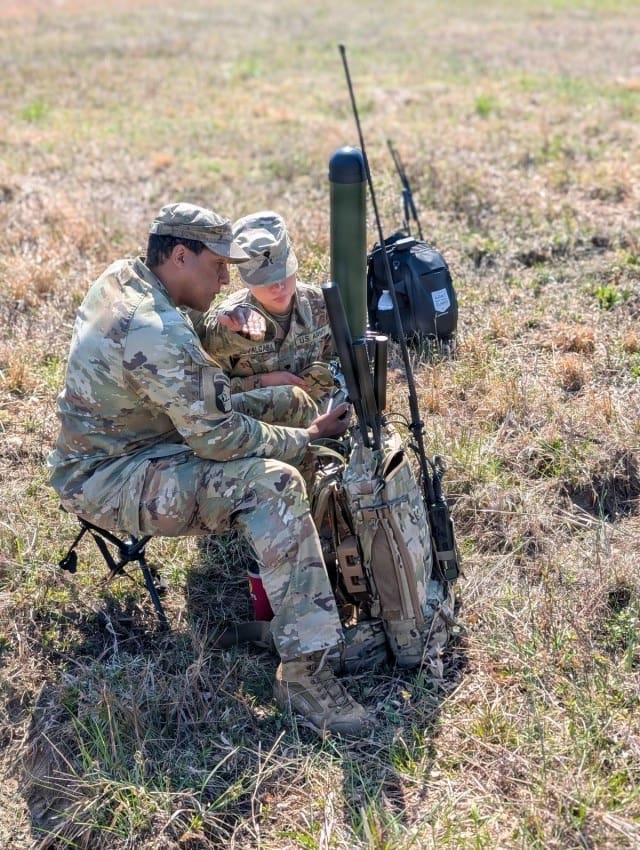
Simultaneously, the team utilized Electromagnetic Spectrum Operations (EMSO) using the Beast+ platform. This handheld device identifies and tracks adversary signals, such as radio or cellular communications.

“It can hear what kind of frequencies are being used,” Morin said. “It can help us pinpoint where radio traffic is coming from.”

By combining the signal data from the Beast+ with the visual data from the drone, the commander was able to determine the exact direction and location of the enemy.

Lowrey said the team made its way through multiple checkpoints before reaching the objective area. By using the technology to refine their targeting, they were able to send reconnaissance and surveillance teams forward to pinpoint high-priority targets. This allowed the team to successfully coordinate simulated airstrikes and artillery strikes.

The introduction of these ground evaluations reflects a shift in how the Air Force tests its special warfare operators. Morin noted that because these evaluations are relatively new, units are still refining the process to ensure operators are tested to the highest of their abilities.

The integration of low-profile, high-power technology like the Beast+ and Suas autonomous drones are essential for the TACP community as it prepares for near-peer conflicts where the electromagnetic spectrum is a primary battlefield.

By Jedhel Somera

Roke USA – Perceive MR Antenna

Wednesday, March 4th, 2026

Part of Chemring Group, Roke USA specializes in electronic warfare systems.

The Perceive Multi Role antenna features a small form factor head for Adaptive Digital Beamforming and Super Resolution Direction Finding (separate multiple signals on same channel) including azimuth and elevation outputs.

Compatible with PREFIX2 and VIPER software it offers 100MHz instantaneous bandwidth covering 2MHz to 6GHz.

Epirus, Digital Force Technologies Partner to Develop Non-Kinetic Counter UAS Kill Chain

Friday, February 27th, 2026

Los Angeles & San Diego, Calif—February 23, 2026Epirus and Digital Force Technologies (DFT) have partnered to deliver a fully integrated counter-UAS kill chain unifying the companies’ respective technologies for detection, tracking, identification, localization and non-kinetic, low collateral defeat of unmanned aerial systems (UAS) threats.

Under the agreement, Epirus will lead systems integration of DFT’s Seraphim command-and control and multi-modal sensor fusion software with Epirus’ Leonidas high-power microwave (HPM) platform for critical point defense.

Epirus’ Leonidas high-power microwave is a proven non-kinetic counter-UAS solution that  leverages electromagnetic interference to defeat swarming, AI-controlled and fiber-optic guided UAS that can evade legacy electronic warfare tactics. The Leonidas platform emits precise  electromagnetic interference to disable the critical electronics onboard a drone, neutralizing the  threat. Using software-based, operator-defined safe zones, Leonidas provides a scalable, high precision and low-collateral counter-UAS capability. The platform defeated a 49-drone swarm simultaneously with a targeted burst of electromagnetic interference at a 2025 live-fire demonstration.

DFT’s Seraphim software platform and counter-UAS Family of Systems deliver autonomous  tracking and identification of UAS threats in complex operational environments. Trusted to support  critical missions worldwide, Seraphim is built on a modular, scalable architecture that remains  sensor- and effector-agnostic, enabling rapid integration of best-in-class capabilities. Seraphim  combines sensing, decision support and effects coordination through a unified operational  interface. By fusing data in real-time and autonomously prioritizing threats, the platform enables  operators to move from detection to response with speed and precision.

“Leonidas was designed to maximize interoperability with partner technologies,” said Andy Lowery, Epirus CEO. “This collaboration marries our systems integration and swarm defeat  expertise with DFT’s edge processing and automation knowhow to deliver exactly what our  customers are asking for: a flexible, adaptable and fully integrated counter-UAS kill chain for critical point defense missions.”

“Integrating Seraphim with Epirus’ Leonidas high-power microwave platform extends AI-enabled  decision making through the defeat layer of the counter-UAS kill chain, delivering a turnkey detect to-defeat capability,” said Justin MacLaurin, Digital Force Technologies CEO. “This partnership  reflects a shared commitment to scalable, interoperable systems that give operators faster, more  effective solutions to defeat evolving drone threats.”

The companies will partner on U.S. government demonstration activities and are expected to  present their full counter-UAS kill chain solution later this year.

Eyes on the Horizon: Honing Counter Drone Skills in Eastern Europe

Friday, February 27th, 2026

Download the full document here: No. 26-1120, Eyes on the Horizon: Honing Counter Drone Skills in Eastern Europe (Feb 26) [PDF – 2.9 MB]

“In a situation where seconds determine survival, C-sUAS training isn’t just preparation, it’s a measurement of readiness. We must be ready to counter the evolving threat of unmanned systems…to dominate the skies.”

– 173rd IBCT (A) UAS subject matter expert.

Introduction

Observations from the Russia-Ukraine War have revealed emergent tactics, techniques, and procedures (TTPs) in the employment of small-unmanned aircraft systems (sUAS), which have proliferated across the battle space. Russian sUAS have become a significant and persistent factor in protection considerations for Eastern European nations, particularly bordering Ukraine. The rapid employment of sUAS compresses the decision-making cycle to mere seconds, rendering traditional centralized air defense approval processes ineffective at the tactical edge. Consequently, the training environment in future U.S. Army Europe and Africa exercises must replicate the compressed decision cycles and complex threat environments seen in Eastern Europe, ensuring tactical leaders have both the tools and the authority to act decisively.

Numerous drone incursions from the Russia-Ukraine War have spilled over into neighboring countries. These incursions have heightened concerns over unexploded ordnance (UXO), particularly in Moldova’s southern regions: Cahul, L?pu?na, and Tighina which are near the Ukraine border. UXO threats in these regions raise concerns about public safety and regional security. These challenges and concerns are not unique to Moldova but are prevalent across NATO’s Eastern Flank Deterrence Line, underscoring the need for enhanced counter small-unmanned aircraft systems (C-sUAS) capabilities and regional collaboration. This publication provides insights on how U.S. Army Europe and Africa (USAREUR-AF) units plan and execute C-sUAS training along with lessons learned from exercise Fire Shield ’25 executed in Moldova in August 2025.

Background

USAREUR-AF leadership plans to conduct C-sUAS activities in exercises to build readiness with subordinate units, integrate emergent technologies, and exchange best practices with Allies and partners. However, host nation legal frameworks governing radio frequency (RF) jamming often constrain full replication of real-world, non-kinetic defeat operations across many established training areas in Western Europe during peace time. Partner nations, like Moldova, that formerly belonged to the U.S.S.R., are optimum locations to conduct C-sUAS training because of drone incursion threats that bleed over from the Russia-Ukraine War. These threats have created a regulatory environment that allows C-sUAS equipment to operate and a host nation appetite for electronic warfare (EW) focused training. As a result, the 173rd Infantry Brigade Combat Team (Airborne) partnered with the 2nd Moldovan Brigade to conduct C-sUAS training as part of the Moldovan annual exercise Fire Shield ‘25 from 4-14 August 2025 at the Bulboaca Training Area in Moldova.

By CPT Madison Fuentes, CPT Saundra Johnson, Scott Safer, Samuel Flaming

Allen-Vanguard Breaks into South America with a Multi-Million Dollar Order for Their EQUINOX NG and SCORPION 2 ECM systems

Friday, February 6th, 2026

Allen-Vanguard, the global leader in providing customised solutions and enabling technology across the Cyber and Electromagnetic Activities (CEMA) domain, has recently received multi-million dollar orders for EQUINOX NG (their vehicle-based Electronic Countermeasure (ECM) system) and SCORPION 2 (their manportable ECM system). Due to the sensitivity of the purchasing nation’s operations, it is not possible to disclose specific customer details. However, this initial multi-million dollar order is a major capability uplift for the end user, will deliver enhanced protection to their personnel operating in high-risk Radio Controlled Improvised Explosive Device (RCIED) environments and help mitigate the threat posed by the increasing use of drones to deliver lethal effects.

Allen-Vanguard has over 20 years of expertise in providing customised ECM solutions for defeating Radio Frequency (RF) based terrorist and extremist threats. These threats include the continued global use of RCIEDs to target security forces and the increasing prevalence of drones or Unmanned Aerial Vehicles (UAV) being used for intelligence, surveillance, target acquisition and reconnaissance (ISTAR) or lethal means. Defence Forces, Public Safety & Security agencies around the world trust Allen-Vanguard’s capability solutions, because they are easy to use, robust, reliable and have been operationally proven on the battlefield and in the most challenging of peace-keeping missions protecting those who protect us.

Based on the current threat profile, the customer has purchased EQUINOX NG, a highly sophisticated vehicle-based ECM system. Its agile and flexible technical architecture has been developed around the leading global standards for Electronic Warfare (EW) hardware, ensuring compliance and easy integration with major programs for an enduring and ‘ever-greening’ capability. Coupled to a highly flexible and scalable physical format, allows it to be easily configured for a wide range of scenarios from armoured vehicle fits for operational theatres, VIP convoy protection or static vulnerable fixed site locations. The system can be configured with relative ease to address both the RCIED and drone threats alike. SCORPION 2, has all the same technical heritage and similar capabilities as EQUINOX, but has been specifically designed to be portable using a backpack for patrol-based operations. Clearly, it can also be fitted to vehicles or used at static locations, offering maximum flexibility.

The contract comes with a full support package, including training for users, technicians and mission fill development. This support includes the deployment of Field Service Representatives to ensure the development of indigenous ECM capability and reach back to the Threat Management Team.

This team of RF experts optimise algorithms specific to the end user’s needs to combat evolving threats specific to their region of operations. This comprehensive wrap-around support maximises the protection offered by the ECM systems, both from a physical capability perspective but also from the essential changes to tactics, techniques and procedures necessary to keep operators safe.

Bobby Strawbridge, President Allen-Vanguard, said: “This is an important milestone in Allen-Vanguard’s history, breaking into the South American market. We are operationally proven with NATO countries globally and have been trusted by peace-keeping forces in the MENA region for many years. Our systems are not only market leading in relation to their technology and capability but our support packages also ensure purchasing nations improve their wider ECM capability and remain updated with the latest algorithms and software to maintain their protection.”

CACI to Strengthen US Army Readiness and Spectrum Dominance with Next-Gen Electronic Warfare

Wednesday, January 28th, 2026

RESTON, Va.-CACI International Inc (NYSE: CACI) announced today that it has been awarded a five-year task order valued at up to $250 million to enhance spectrum dominance for the U.S. Army Capability Program Executive – Intelligence, Electronic Warfare & Sensors (CPE IEW&S).

“At CACI, we are making bold investments in battle-proven, software-defined EW solutions that allow us to stay one step ahead of the enemy and drive decisive action,” said John Mengucci, CACI President and Chief Executive Officer. “We empower warfighters to achieve and maintain spectrum dominance, especially when their lives are on the line in highly contested environments.”

CACI will leverage its intrinsic knowledge to provide comprehensive integration and sustainment of the technology to advance the Army’s multi-domain EW and spectrum dominance capabilities.

Safran Federal Systems Demonstrates Blacknaute Inertial Navigation System on US Army Black Hawk Following AUSA Debut

Thursday, January 22nd, 2026

ROCHESTER, NY – January 21, 2025

Safran Federal Systems, a trusted U.S. Department of Defense mission partner and leader in Assured Positioning, Navigation and Timing (A-PNT), announced the successful flight demonstration of its Blacknaute™ Inertial Navigation System (INS) aboard a U.S. Army UH-60 Black Hawk helicopter.

Purpose-built for multi-domain operations, Blacknaute™ delivers precise navigation in GPS-denied and electronic warfare-contested environments, fulfilling a critical need for resilient, open-architecture PNT capabilities across air, land, sea, space, and cyber domains.

The live flight test confirmed Blacknaute’s ability to maintain high-accuracy inertial performance without GNSS support, validating operational readiness just days after its U.S. debut at the 2025 Association of the United States Army (AUSA) Annual Meeting & Exposition in Washington, D.C.

“Our demonstration onboard the Army Black Hawk showcases the tactical readiness of Blacknaute™,”said Jon Leombrone, Executive Vice President of Navigation Systems at Safran Federal Systems. “The system maintained drift of less than 0.4 nautical miles per hour over several hours—proof of its SWaP-optimized, NAVWAR-resilient design engineered for rapid deployment across the Joint Force.”

Blacknaute™ combines multiple cutting-edge technologies in a rugged, lightweight system weighing less than 16 pounds. Key features include:

HRG Dual Core™ Technology: Safran’s patented hemispherical resonator gyro platform, fielded in more than 40,000 units and proven over 30 million operational hours across defense and aerospace applications.

M-Code Ready GNSS Receiver: Supports secure, multi-constellation satellite navigation using military-grade M-Code signals.

Ultra-Stable Atomic Clock: Provides highly precise timing with drift of less than one second every 30,000 years, ensuring reliable synchronization across mission systems.

Interference Detection and Mitigation (IDM): Built-in capabilities for detecting and mitigating GPS spoofing and jamming threats, enhancing survivability in electronic warfare environments.

Open Systems Architecture: Fully compliant with MIL-STD interfaces and TSO-C220 standards, enabling plug-and-play integration with modular open systems used across modern defense platforms.

Safran Federal Systems provides advanced, classified navigation and PNT solutions to Safran Defense & Space, Inc. (Safran DSI), accelerating innovation across multi-domain operations in support of U.S. defense programs.

For more information, visit us at BlackNaute | Air Navigation | Safran Federal Systems.