Aquaterro

Archive for the ‘EW’ Category

Roke Redefines Electromagnetic Attack with a New Portable SOSA-Aligned, Modular EW System

Thursday, May 8th, 2025

EM-Vis Deceive is the dismounted Electromagnetic Attack platform that ushers in a new frontier for electronic warfare. Modular, open-standards based, and mission configurable, it delivers operational advantage at the edge  

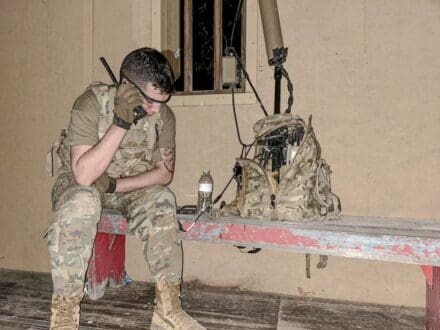
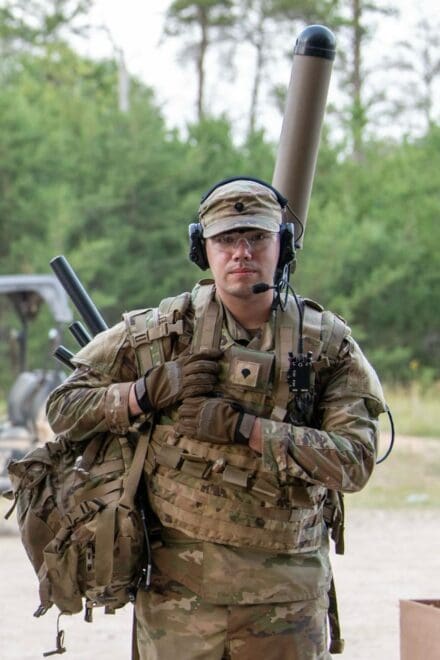
The system is light enough for a single soldier to carry, and has been designed so that even an unskilled operator can deliver battlefield impact 

Launched at AOC Europe 2025, EM-Vis Deceive is STICS/SOSA aligned 

Romsey, UK, Wednesday, May 7, 2025?- Roke has launched EM-Vis Deceive, a new portable electronic warfare system that brings electromagnetic attack (EA) capabilities directly to troops on the ground. The lightweight system, something a soldier can carry like a backpack, helps military forces detect, track, and disrupt enemy communications, drones, or other electronic signals. 

EM-Vis Deceive is the first fully integrated person-borne system of its kind to be designed and built to modular open standards – providing a flexible, upgradable and tailorable solution for different missions. EM-Vis Deceive is also STICS aligned. STICS is a suite of open standards and specifications enabling modularity and interoperability in C5ISR and Electronic Warfare (EW) systems. 

The system can disrupt a wide range of enemy targets – from drones, to missiles and communication systems – and can be operated by skilled light, medium or heavy EW specialists or by general troops with minimal training. 

It marks a major step as electronic warfare moves closer to the frontline, responding to the growing need for faster, more flexible responses to threats on the modern battlefield. 

Roke, a UK company that stands at the forefront of defence and security, delivering cutting-edge intelligence and engineering solutions that protect nations, troops, borders, and businesses, launched EM-Vis Deceive today at AOC Europe 2025 in Rome.  

Paul MacGregor, Roke Managing Director, said: “EM-Vis Deceive marks a major turning point in electronic warfare. For decades, most EA systems on the battlefield were custom-built, one-offs, made to counter specific threats. These were expensive, slow to upgrade and hard to integrate with other technology. And with weaponry, and the battlefield in general, evolving so quickly, these clunky systems were leaving troops at a severe disadvantage.  

“Let’s take drones as an example, Ukraine has had to defend itself from 18,000 drone attacks in the last year alone according to UK intelligence. An army squad could be using an electronic warfare system to jam enemy drones – but what happens if a new enemy drone model appears that uses different frequencies? A new custom build would have to be designed, tested and deployed – it could take months or even years.

EM-Vis Deceive changes all of that, it can be quickly upgraded, software updates can be pushed faster and it can easily communicate with other systems.” 

Experts in electromagnetic warfare 

Roke has been at the forefront of Cyber and Electromagnetic Activity (CEMA) technology for more than 40 years. This experience has been integrated with technology gained from small form factor radio system development to produce a highly agile system in a modest package, with a range of integrated support functionality. Key attributes of EM-Vis Deceive include:  

Modular by design – easily configured to meet the full spectrum of EW missions through swap in/swap out Software Defined Radios (SDR).? 

Open standards driven – uses OpenCPI generated Applications and open APIs to develop new techniques or port existing IP onto the system? 

Scalable and multifunctional – initial release will be person-borne based on demand for increased survivability in peer threat environment, but scalable and stackable to support high mobility and platform mounted deployment? 

At AOC Europe 2025, themed “EMO in Transition – Learning from the Ukrainian/Russian War”, Roke will:? 

Launch and demonstrate its new targeted attack EW capability, giving attendees a first-hand look at this game-changing technology.? 

Exhibit a suite of EW and EMSO solutions, reinforcing its position as a trusted partner in electronic warfare innovation.? 

Engage with partners and defence leaders, sharing insights on collaborative approaches to developing resilient and agile EMO strategies.? 

Visit Roke at Stand B06 to meet the team, explore the new EW product’s capabilities, and learn how Roke is helping reshape the electromagnetic battlespace.? 

For further information, please contact:?info@roke.co.uk 

SOF Week 25 – Anduril Industries Pulsar-L EW System

Tuesday, May 6th, 2025

No larger than a 3kw portable generator Anduril Industries’ new Pulsar-Light is a software-defined Electromagnetic Warfare (EW) system designed primarily for counter drone operations, combining detect, ID, track, and defeat all in one box.

Deployable in two minutes, Anduril is fielding two configurations of Pulsar-L:

– Airborne, designed for airborne EW missions

– Expeditionary, built for every warfighter

Like other versions, Pulsar-V (vehicle), Pulsar Alpha (airborne) and the fixed-site emplacement, this new Light model can be operated independently or integrated with Lattice. It is also compatible with other C2 and Common Operating Picture solutions, including TAK.

VTG Acquires Triaplex, Enhancing Cyber and Signals Intelligence Capabilities

Friday, May 2nd, 2025

CHANTILLY, Va., April 30, 2025 — VTG, an industry-leading national security solutions provider, announced that it has acquired Triaplex, Inc., gaining access to expert signals and cyber warfare expertise. Triaplex is based in Fulton, MD, and expands VTG’s Intelligence Community footprint to new customers in the National Capital Region.

“We are excited to welcome Triaplex and its exceptionally skilled cadre of deep domain experts and specialized engineers to VTG,” said John Hassoun, VTG President and CEO. “Acquiring Triaplex enables VTG to tackle emerging national security challenges and highlights our continued investments in the advanced technical capabilities and expertise the Intelligence Community needs most.”

Triaplex, Inc., founded in 2020, has earned a reputation for delivering radio frequency solutions that protect our nation’s warfighters and their mission-critical systems. Triaplex CEO David Lee said, “This partnership allows us to make the right, focused investments in our talent and technology, bolstering our core RF expertise. The combined resources & talent will scale exponentially across VTG’s diverse Defense and Intelligence Community program portfolio.”

The acquisition of Triaplex is VTG’s fourth since receiving a majority investment from private equity firm A&M Capital and underscores the Company’s commitment to accelerating growth within the Intelligence Community.

About VTG
VTG delivers modernization and digital transformation solutions that expand America’s competitive advantage in the modern battlespace. Headquartered in Chantilly, Virginia, VTG provides full lifecycle engineering for naval, aerospace, network, and digital requirements. Whether at sea, in the air, on land, or in cyberspace, VTG delivers Tomorrow’s Transformation Today. For more information, visit us at www.VTGdefense.com.

Tecore Delivers Legally Compliant Intelligent Jamming to U.S. Correctional Facilities

Monday, April 7th, 2025

IntelliJAM™ Featured at CLA 2025 Technology Conference; Backed by more than 20 Patents and Over a Decade of Proven Deployments

HANOVER, Md., — Tecore Networks, the inventor of managed access technology (MAS) and a leader in the combat of contraband cellphone use in correctional and secured facilities, is showcasing its advanced IntelliJAM™ platform at the Correctional Leaders Association (CLA) 2025 Technology Conference, being held today in Charleston, SC. Attendees are invited to visit Booth 51 for demonstrations and discussions with the Tecore team.

With over a decade of operational deployment, IntelliJAM is the most comprehensive, legally compliant intelligent jamming technology in use today—delivering real-time signal control, selective access, E911 support, and advanced analytics in a single, integrated platform. Backed by over 20 patents, Tecore’s innovations are engineered to combat contraband cellphone threats while maintaining compliance and connectivity for authorized users.

The newly proposed Cellphone Jamming Reform Act of 2025—introduced by Senator Tom Cotton (R-AR) and Congressman David Kustoff (R-TN)—seeks to obtain authority for jamming. Such measures may face delays and resistance due to concerns around potential interference with public safety, impacts to nearby residential real-estate, commercial businesses, and broader liability risks. However, Tecore’s IntelliJAM is already industry compliant and engineered to support multiple jamming methods activated with a simple software configuration.

Unlike sweeping jamming approaches, IntelliJAM is precision-targeted to operate without affecting surrounding public coverage and is effective in both indoor and outdoor environments, including housing units and courtyards of correctional facilities.

“The technology since we first introduced this bill has increased greatly down to very precise targeting,” Senator Cotton stated in a recent press conference.

Congressman Kustoff added, “I think we can all agree that if people lawfully have a cellphone, they should be entitled and be able to use and get a signal. The programming with some technology is you can program lawful numbers from within a prison or a jail that can make or receive calls. But if there is a contraband cellphone, and obviously that number is not authorized, it doesn’t get a signal. So the technology has advanced a lot over the last several years. It will continue to advance and the fact that you can protect the innocent people, those who should be able to lawfully use cell phones and not harm them – to me makes this issue a no brainer.”

“Identify people who are in jails or prisons, guards other personal who lawfully have the right to be able use their phone, allow them to have access and essentially cancel out the contraband cell phones, that protects everyone,” Congressman Kustoff stated.

Key Capabilities of IntelliJAM Include:

Selective Access Management: Blocks contraband cellphones while maintaining secure access for staff, first responders, and designated users.

Legally Compliant Intelligent Jamming: Localized, facility-contained signal control that preserves access for authorized personnel and emergency services.

Legally Compliant E911 Functionality: Supports emergency call routing in accordance with current regulatory standards.

Stakeholder-Aligned Interoperability: Designed in collaboration with all key wireless stakeholders for secure, authenticated device management and system integrity.

Proven Deployment Across U.S. Correctional Facilities: In operation for over 15 years with consistent, complaint-based results.

Patent-Driven Innovation: Backed by more than 20 patents specific to intelligent jamming, analytics, and lawful control protocols.

Real-Time Intelligence and Analytics: Captures call patterns, text activity, locations, and behavioral insights to detect and investigate criminal activity.

Software-Driven Flexibility: Easily configured to support “jam-all” strategies where legally authorized—without the need for infrastructure overhaul.

IntelliJAM unifies jamming control and actionable intelligence in one system—empowering facilities to not only block illicit cellular activity, but also to combat broader patterns of contraband use, gang coordination, and criminal activity through analytics-based intervention.

“Recognizing the unique security challenges correctional institutions face,” said Bipin Noble, Vice President of Business Development at Tecore Networks, “we designed IntelliJAM to deliver not only an immediate solution to contraband cellphone use but also a robust intelligence platform to combat threats proactively. Our system equips facilities with real-time insights while remaining flexible enough to integrate future policy changes without operational burden.”

Tecore Networks remains at the forefront of public safety innovation—committed to providing trusted, scalable, and compliant wireless control technologies for the nation’s most secure environments.

New Dismounted Spectrum Warfare System Rapidly Addresses Critical Army Need

Monday, December 16th, 2024

Fueled by the tailored use of acquisition pathways, Program Executive Office Intelligence, Electronic Warfare and Sensors (PEO IEW&S) greatly accelerated the timeline to field the Terrestrial Layer System – Brigade Combat Team (TLS BCT) Manpack. Soldiers and Army units received the system this past summer, marking the first unit issued milestone in providing an asymmetric advantage in the electromagnetic spectrum (EMS).

The TLS BCT Manpack is a fully configurable system capable of conducting radio frequency (RF) surveying, signals collection and direction-finding operations, electromagnetic attack and force protection operations, as well as EMS visualization and scanning/surveying operations. The system provides both mobile electronic attack (EA) and electronic support (ES) capabilities to inform the Commander’s decision-making process.

As the rebirth of the Electronic Warfare Corps within the Army is still recent, having a system that allows the pairing of non-kinetic options with the pre-existing kinetic weapons is key to fighting in a Multi-Domain environment.

“The TLS BCT Manpack system is providing the BCT Commander a tactical advantage with a robust state-of-the-art mobile EW capability for Multi-Domain Operations,”

said Maj. Austin Knighton, Assistant Product Manager for TLS BCT Manpack. The system is the Army’s first tailorable, modular, terrestrial capability that allows the integration of signals intelligence (SIGINT) and EW collection, processing, exploitation, reporting, and effects capabilities within the SIGINT Collection Team and Electronic Warfare Team elements.

“The TLS Manpack is a proven EW technology based on a design originally fielded to Army Special Operations Forces. It leverages existing COTS (commercial off the shelf technology) equipment that provides direction-finding capabilities to the tactical edge,” said Col. Leslie Gorman, Army Capability Manager – Electronic Warfare (ACM EW) Director.  “Its smaller form factor and relatively light weight add to its functionality, important features for EW Soldiers supporting light infantry units.”

Getting the new EW capability into Soldiers’ hands was due in large part to the efforts of Project Manager Electronic Warfare & Cyber (PM EW&C), ACM EW, ACM Intelligence Sensors (ACM IS), the Army Test and Evaluation Center, and Electronic Warfare Officers (EWOs) in multiple operational units, to include the new Transform in Contact (TIC) units.

“This expeditious and near record turnaround was made possible by rapid prototyping and rapid fielding — underscoring the utility of Middle Tier Acquisition (MTA) to quickly bring a capability to fruition,” said Ken Strayer, PM EW&C. “Such focused urgency and execution to demonstrate, test, and rapidly procure this modular and mobile system is making a significant contribution to winning the EMS fight.”

In just a year, the TLS BCT Manpack program received requirements and achieved a production and fielding decision from the Army Acquisition Executive (AAE) with an initial fielding quantity award.

“The reason why we leaned forward to expedite TLS BCT Manpack fielding was to get the capability out to Soldiers, foremost the designated TIC units,” said Gorman. “This enables the ACM EW team to conduct immersive experimentation and operational feedback opportunities with EW Soldiers using TLS BCT Manpack and the PM. The feedback from these sessions will directly impact capability improvements.”

Specifically, the Soldiers provided human systems integration feedback through surveys and hands-on events. They looked at the size, weight, and power of the systems as well as the safety, survivability and usability of the user interface in both at the halt and on the move configurations. User feedback and recommendations were captured, vetted, and prioritized. EW Warfighters are now directly involved in designing systems that allow them to accomplish their mission.

“The system is going to be deployed to every brigade combat unit in the Army,” said Strayer.  “This is exciting because we are finally getting program sensor data within an enduring capability out and into the hands of our electronic warfare officers, something we have been on a glide path for the last two years.”

The system has already been fielded to two TIC units with a plan to field up to two BCTs a month over the course of the next three years. PEO IEW&S delivers capability now through affordable and adaptable programs that pace the threat. The TLS BCT Manpack is part of the PM EW&C Portfolio with the mission to develop and field integrated capabilities for spectrum warfare.

By Brandon Pollachek | PEO IEW&S

Allen-Vanguard Collaborates with Metis Aerospace to Deliver Enhanced Counter-Drone Capabilities

Monday, November 18th, 2024

Allen-Vanguard, a global leader in providing customised solutions for defeating Radio Frequency (RF) based terrorist and extremist threats, is very excited to announce a strategic collaboration with the domain knowledge experts in passive RF detection, Metis Aerospace. This collaboration has been established to leverage their respective expertise and proven products to address the growing requirement for a highly mobile counter unmanned air system (C-UAS) capability that delivers a tried and tested baseline capability to detect and defeat an increasing range of threats posed by the nefarious use of drones. Both Allen-Vanguard and Metis Aerospace will be at the Specialist Defence and Security Convention (SDSC) on 18th-20th November 2024 at Telford International Centre, UK to discuss this collaboration and their respective range of existing products and capabilities.



Metis has extensive experience in the RF detect domain, with several products that are already the cornerstone of many larger protection systems across a wide range of sectors. For over 10 years, they have been at the forefront of C-UAS detection capability development, advising the MoD and receiving research funding to develop their innovative technologies, such as SKYPERION. Allen-Vanguard is equally an operationally proven subject matter expert in defeating RF threats, including cutting-edge counter-drone solutions, like ANCILE, that are used by militaries, security forces and NGOs globally to protect their personnel and key assets.

In an era where drone technology is rapidly evolving, and how drones are being employed on the battlefield is going through an unprecedented revolution, the Allen-Vanguard and Metis collaboration combines their respective ground-breaking and innovative technologies to provide the necessary expertise, agility and technology to properly mitigate this threat. The operationally proven ingenuity and agility of both companies can be brought to bear on the key subset of the C-UAS market that is demanding increased manoeuvrability and effectiveness at a practical price point. In addition, both companies have built an excellent reputation for enduring customer support to ensure deployed systems are maintained with the latest detection and defeat waveforms as the RF battlespace evolves.

Tony Burnell, CEO of Metis Aerospace said: “We are very excited to be collaborating with Allen-Vanguard to develop this capability that we see meets a growing market demand. It makes perfect sense for us to work together and exploit our expertise in the detect function and then fully synchronise and integrate with an Allen-Vanguard defeat capability. This combination will be a real protection benefit for all our customers.”


Bobby Strawbridge, President of Allen-Vanguard said: “I am delighted to announce this collaboration with Metis that, as fellow SME domain knowledge experts, perfectly complements our own portfolio of products. The ability to combine the detect and defeat functions into one capability will undoubtedly deliver enhanced C-UAS capabilities to better counter modern hostile drone operations.” He added, “We are also pursuing a number of qualified opportunities in the Middle East and Eastern Europe from users who have reached out, seeking a cost-effective and efficient system for a baseline, mobile C-UAS capability. The strength of Metis’ portfolio of offerings also has applicability to domestic and international requirements outside the scope of C-UAS and we’re actively engaged in exploring these exciting opportunities”

Army Experiments with Capabilities, Multi-Domain Integration at Vanguard 24

Saturday, November 9th, 2024

FORT HUACHUCA, Ariz. — The 3rd Multi-Domain Effects Battalion, 3rd Multi-Domain Task Force, partnered with the U.S. Army Intelligence Center of Excellence, Joint and Allied forces, and industry partners to execute the Vanguard 24 experiment from September 8-24, 2024.

Mission-tailored teams of 3rd MDEB Soldiers operated from the 1st Lt. John R. Fox Multi-Domain Range, the Buffalo Soldier Electronic Test Range and other training areas in the Southwest. Vanguard provided a venue for 3rd MDEB Soldiers to experiment with and assess various cutting-edge sensors, high altitude platforms and data transport solutions that are not yet Army programs of record.

“Multi-Domain Task Forces are the signature formations for the Army’s continual transformation. The emerging capabilities our Soldiers are training on help inform the Army on which capabilities should be pursued and possibly developed further and integrated at scale across the Army and DOD,” said Col. Michael Rose, 3rd MDTF commander.

These teams executed training and experimentation focused on integrating cyber, electronic warfare, extended range sensing and data transfer. The distances between training areas and teams replicated the distances required to operate in the Indo-Pacific Command theater, where 3rd MDTF is assigned.

“The challenge with extended range multi-domain sensing comes down to several problem sets — platforms, payloads, data backhaul and analysis. Vanguard provided the venue for the MDEB to tackle each of these problem sets at operationally relevant distances,” said Rose.

“My team was able to effectively locate signals of interest, aggregate the sensor data, pass it back to the MDEB tactical command post at Fort Huachuca, then integrate the data into mission command systems to include the Army Intelligence Data Platform, and send the data to the TF level All Domain Operations Center back in Hawaii,” said MDEB Commander Lt. Col. Pablo Diaz. “We met our key training objectives and look forward to taking the lessons learned to keep pushing the envelope.”

Objectives for 3rd MDEB were to experiment with high altitude and persistent platforms such as high-altitude balloons and unmanned aerial systems, various electronic warfare and cyber payloads, long range data backhaul solutions and validate defensive cyber capabilities

Vanguard 24 is an annual capstone experiment that provides a venue to explore, integrate, and test emerging technologies, tools, and concepts that address specific capability gaps and future warfighting requirements.

Vanguard provided capabilities development, testing, and training elements, with an INDOPACOM operational scenario that expanded the scope and scale of the experiment, which spanned from Fort Huachuca’s Buffalo Soldier Electronic Test Range and 1st Lt. John R. Fox Multi-Domain Operations Range, as well as across the Southwestern U.S.

By MAJ Stephen Page

MSRS Navigation – A Solution for Navigating in a GPS-Denied Environment

Wednesday, September 25th, 2024

I get excited when I find out about small businesses with innovative technologies that solve real problems, particularly those owned by fellow veterans. Even better when these capabilities are low cost.

Take for example, MSRS Navigation, which was founded by a retired Tier One operator after having experienced GPS jamming while deployed overseas. In fact, all five of the company’s employees are Veterans and the gear is made in Asheville, NC.

Confronting the Electronic Warfare threat is now a challenge faced by everyone and the Western use of Global Positioning System for navigation can no longer be solely relied upon to accurately determine position and route.

MSRS Navigation has developed the only ITAR-free, Denied-GPS navigation system. What’s more, the system is completely non-RF, with no reliance on satellites or any signals for that matter. There’s nothing to jam.

Having been awarded two patents with three more in process, they instead rely upon an AI/ML engine which examines data and identifies errors from GPS degradation, identifying last known good point to base modeling from. This is supplemented with real-time data from multiple sensors. The result is .1 meter accuracy per mile and is correctable by the end user at any point by simple correction via drag/drop of the icon on the map-based interface GUI, to the correct point. Alternatively, there is a plug-in for ATAK users.

The systems runs independently from, but in parallel with GPS, allowing the user to rely upon GPS in high-fidelity environments. At any point, the user can switch to MSRS if for example, they enter a degraded environment such as jamming or dense foliage or tunnels. MSRS always runs in the background.

The current Army program of record is Mounted Assured Positioning, Navigation and Timing System (MAPS) Gen II which is great if you’re part of the BOIP. If not, MSRS is available today, for immediate deployment. Over forty of their fly away kits (FAK) are currently in use with US and International SOF in overseas combat environments.

Simple to employ, the FAK comes packed in a Pelican 1200 and can be installed in under 30 minutes. Additionally, MSRS is about the quarter of the price of MAPS.

While the system is currently configured for ground and sub-T navigation, the company has a CRADA in place with USSOCOM through SOFWERX to support an upcoming evaluation of the system. To expand its use, they have partnered with Hefring Marine out of Iceland to build a Maritime system and expect to have a working prototype in early 2025.

For more information, visit www.msrsnav.com.

Eric Graves