GORE-TEX Professional

Archive for the ‘Guest Post’ Category

Tactical Tuesday: Back in [MultiCam] Black Giveaway!

Tuesday, June 18th, 2024

Vertx has teamed up with the heavy hitters (Premier Body Armor, SureFire, Oakley, and Aero Precision) to bring you a tactical gear package that’ll make your buddies green with envy.

This giveaway features some truly exclusive items – created in MultiCam Black ONLY for this giveaway! You won’t find these items in MultiCam Black anywhere else. AND there’s 3 chances to win!

Hurry, giveaway ends 6/30 – enter here: gleam.io/2gDHQ/back-in-milticam-black

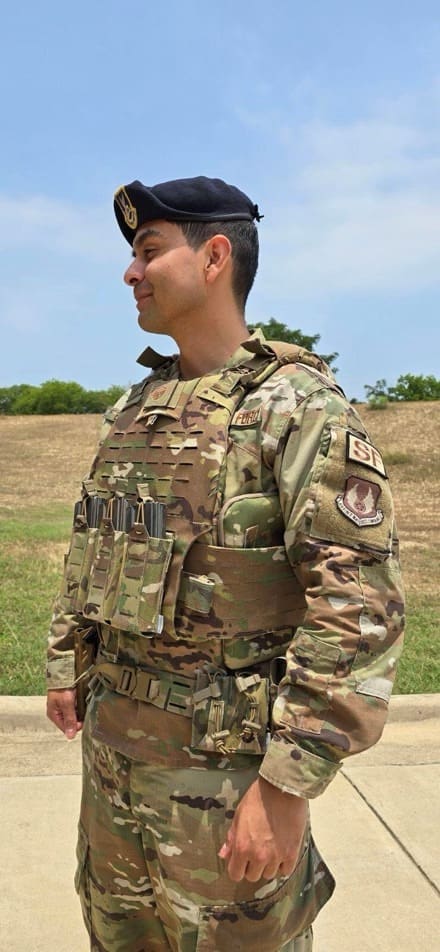
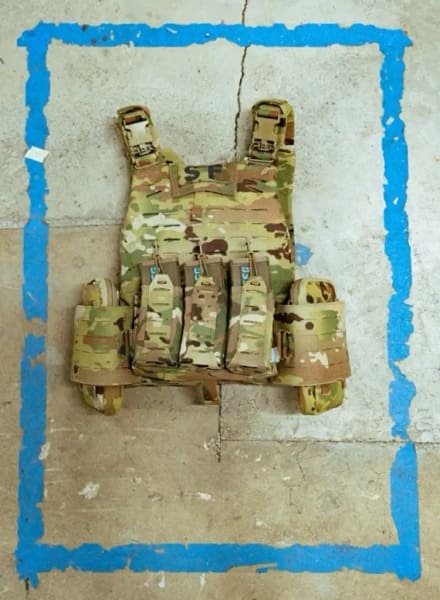
AFSFC Reaches Final Phase of Fielding Model Defender Gear

Tuesday, June 18th, 2024

JOINT BASE SAN ANTONIO-LACKLAND, Texas (AFNS) —  

A four-year initiative to modernize the day-to-day equipment of active-duty Air Force security forces defenders reached its fifth and final phase recently with the award of a $39 million contract for state-of-the-art defender gear.

In addition to securing the contract award through the Air Force Installation Contracting Center’s 773rd Enterprise Sourcing Squadron, the Air Force Security Forces Center worked with Air Force Materiel Command logisticians to get the equipment into the Logistics Readiness Inventory Control System.    

“Because of this effort, not only will it be easier to account for equipment, defenders will now be able to move from one installation to another with their Model Defender Individual Equipment Kit under the Gear for Life program,” said Master Sgt. Derek Walton, AFSFC Model Defender and Gear for Life program manager. “This means they will no longer need to have that equipment issued at each installation as they progress in their careers.”

At the direction of Air Force Security Forces, the Model Defender initiative began in June 2020 with a focus on standardizing must-have daily gear for every defender in the Department of the Air Force.   

“The establishment of the Model Defender Individual Equipment Kit was crucial as it standardized gear across the Air Force security forces enterprise enhancing operational efficiency, ensuring the safety and professional appearance of personnel and fostering modernization within the Total Force,” said Dennis Rodriguez, AFSFC individual protective equipment branch chief. 

AFSFC started the new initiative by developing a standardized equipment list of 23 items which was then coordinated, amended and approved through major commands and security forces headquarters. This resulted in a final Model Defender Individual Equipment Kit.

Working with industry and Air Force contracting partners, the center then conducted phase 1 testing of state-of-the-art equipment using active-duty, National Guard Bureau and Air Force Reserve Commanddefenders in the San Antonio area. 

“This collaborative effort with industry partners for phase 1 testing also streamlined the acquisition process, ensuring that all security forces are well equipped and ready for their duties,” Rodriguez said. 

Based on testing results, AFSFC continued to phase 2 for expanded day-to-day testing at eight installations across four major commands, and phase 3 where the center consolidated and scrutinized collected data before presenting their findings to the Air Force Equipment and Weapons Configuration Board for validation.

During both of these phases, AFSFC worked with AFICC’s contracting experts for an acquisition strategy that would move the purchase forward once decisions were made about what equipment was best for the defender force.   

“By conducting ongoing testing with the consolidation and analysis of test results, we were able to swiftly transition through the phases,” Rodriguez said. “This parallel processing allowed for immediate adjustments and expedited the validation and acquisition processes.”  

As a result, the equipment procurement plan was set to go immediately after the team confirmed the best equipment for the security forces enterprise, he added.  

Phase 4, the first purchase of Model Defender kit equipment took place May 2023 with Blue Force Gear and marked a significant milestone in the timeline. 

“Blue Force Gear developed a kit specifically to meet the needs of our security forces enterprise,” Walton said. “Their laser cut technology is cutting edge and integrates seamlessly with the body armor solution that was selected by the Air Force.”   

Upon receiving the initial small equipment purchase, the AFSFC team shifted focus to begin collaboration with Headquarters Air Force.

“The goal was to integrate the Model Defender items into the supply system through the Gear for Life initiative,” Rodriguez said. “Which was crucial for us to ensure the newly acquired equipment would be seamlessly incorporated into the broader system, enhancing the overall readiness and capability of the SF enterprise.”

“Our collaboration with headquarters was pivotal,” he added. “Integrating the Model Defender equipment into the Gear for Life initiative is not just a step, it’s a leap toward equipping defenders with the tools they need to face the future head-on.”

The final phase award was the career field’s largest purchase ever when the full contract of $39 million was awarded to Blue Force Gear in April.

Equipment rollout to the field is expected to begin in December with full delivery to the field by early 2025. 

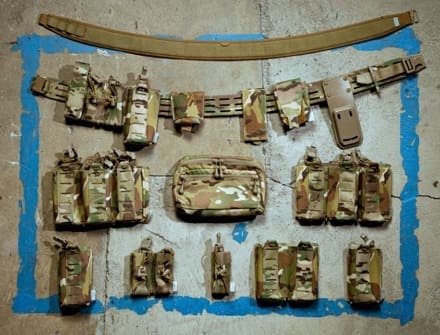
The finalized Model Defender kit consists of:   
– M-4 magazine pouches 
– M-18 magazine pouches   
– Dump pouches (for easily stowing a variety of items like empty magazines)   
– Holster adapters   
– Mollie belts (a webbed belt that allows gear to be attached in a variety of configurations)   
– Utility and handcuff pouches   
– Flashlight and baton pouches

By Debbie Aragon, Air Force Installation and Mission Support Center Public Affairs

Army Renames Air Defense System After Vietnam War Medal of Honor Recipient

Monday, June 17th, 2024

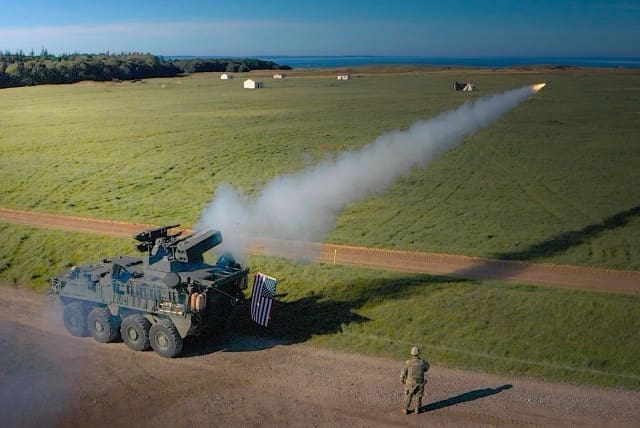
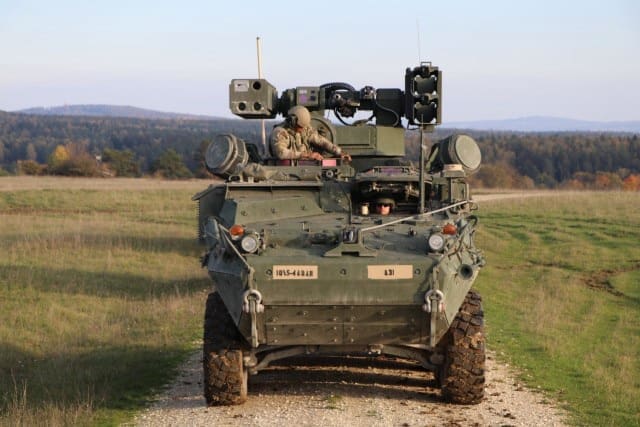
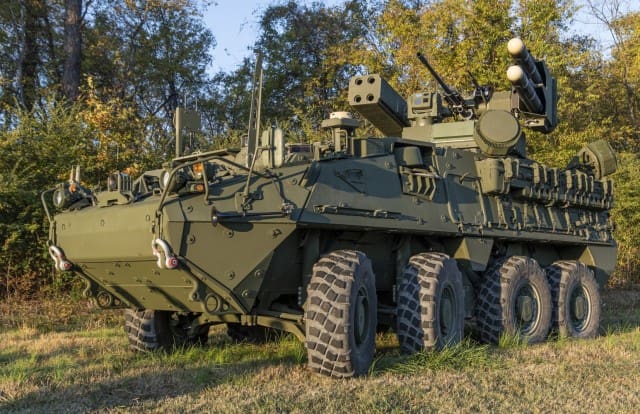
WASHINGTON — The Army renamed the Maneuver-Short Range Air Defense system for Medal of Honor recipient Sgt. Mitchell W. Stout during an Army birthday festival today at Fort Belvoir, Virginia.

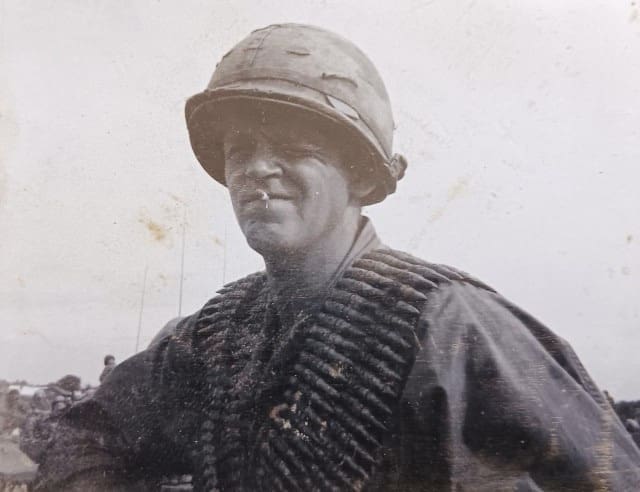
Stout, an artilleryman with the 1st Battalion, 44th Air Defense Artillery Regiment, was killed during the Vietnam War protecting fellow Soldiers. He grabbed a grenade thrown into their bunker and ran for the exit. As he reached the door the grenade exploded, but by holding it close to his body, he was able to shield the other Soldiers from the blast.

“Naming this game-changing air defense capability after Sgt. Stout was appropriate and well-deserved, given his heroic efforts to protect fellow Soldiers from danger,” said Doug Bush, assistant secretary of the Army for acquisition, logistics, and technology. “The M-SHORAD was designed to do the same against a variety of airborne threats.”

The system uses a mix of guns, missiles, and onboard sensors attached to a Stryker Infantry Carrier Vehicle to defend against unmanned aircraft systems, rotary wing, and fixed-wing aircraft.

Soldiers with the 5th Battalion, 4th Air Defense Regiment were the first to receive and test four of the increment one defense systems. They successfully conducted live-fire tests at the Putlos Bundeswehr range on the Baltic Sea coast of Germany in 2021 and became fully equipped with the systems in 2023.

The Army plans to field 144 air defense systems to four battalions by fiscal year 2025 with an additional 18 systems for training, operational spares and testing.

Incremental upgrades to the system will feature enhanced effects including directed energy, and improved missiles and ammunition. The Rapid Capabilities and Critical Technologies Office completed the delivery of four directed energy systems to the 4th Battalion, 60th Air Defense Artillery Regiment last fall.

“The M-SHORAD family of systems adds commensurate mobility or survivability to maneuvering forces and joint maneuvering forces through protection against enemy air threats,” Bush added. “Its flexibility and versatility provide a best value for the nation and increases Soldier capabilities through performance and training capabilities.”

The M-SHORAD will now be named the SGT STOUT

Sgt. Mitchell W. Stout, from Loudon, Tennessee, joined the Army in August 1967 at 17 years old after dropping out of high school. He completed paratrooper school before the Army realized he was too young when he joined and discharged him.

By that time, he already turned 18. He went to a recruiter’s office the very next day and signed up again, this time as an artilleryman.

“He wanted to be where he was needed,” said his sister, Susan Tyler. “That’s the way we grew up. If your country needs you, you do what you can and volunteer.”

Stout completed a tour in Vietnam and returned home in 1969. After speaking with friends and family, he volunteered to return to Vietnam to help the young Soldiers still fighting.

“I think he had a calling, I really do,” Tyler said. “I think he knew somehow in his heart that if he went back, he could help someone in some way.”

A few weeks after returning to Vietnam, on March 12, 1970, a North Vietnamese company attacked his unit’s firing position at the Khe Gio Bridge. Stout and a crew of Soldiers went into a bunker as they came under heavy mortar fire.

When the firing stopped, the enemy threw a grenade into the bunker, prompting Stout to act and save the lives of his fellow Soldiers.

“He cared about those Soldiers that put their boots on every day, who shine their brass and do their best,” Tyler said. “And that’s what he died for, he died for them.”

Stout was posthumously presented with the Medal of Honor on July 17, 1974. He is the only Army air defense artilleryman to earn the award.

By Christopher Hurd, Army News Service

Developers, Warfighters Come Together at DTRA Demonstration

Sunday, June 16th, 2024

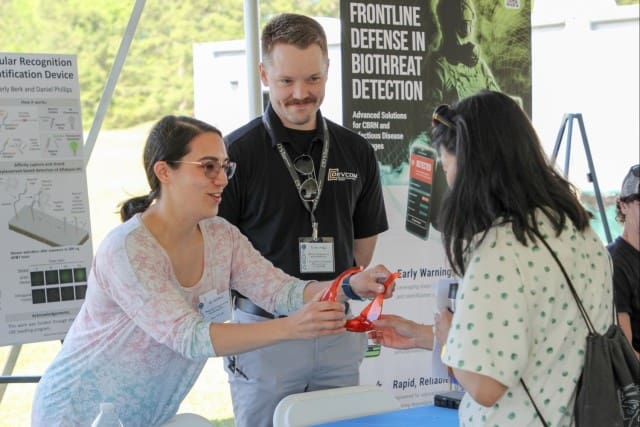
ABERDEEN PROVING GROUND, Md. — Every year since 2018, the U.S. Army Combat Capabilities Development Command Chemical Biological Center — DEVCOM CBC — has helped the Defense Threat Reduction Agency plan and execute an in-the-field user assessment of chemical, biological, radiological and nuclear technology called Chemical and Biological Operational Analysis. This year, CBOA was held at Camp LeJeune, North Carolina from April 13 to 18, and DEVCOM CBC was in the thick of it.

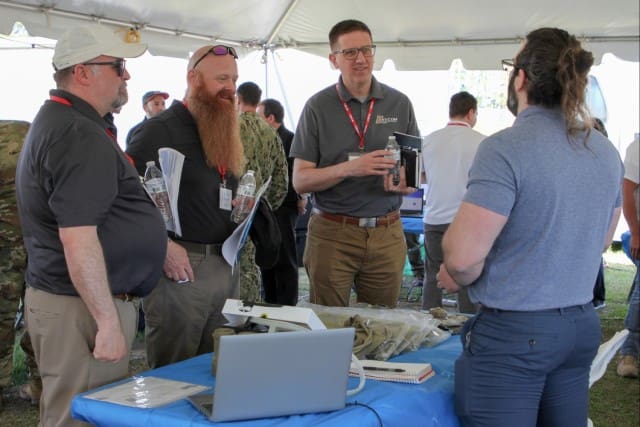
CBOA is funded under the Chem-Bio Defense Program and executed by the Joint Science and Technology Office of the Defense Threat Reduction Agency, or DTRA. It brings technology developers from government agencies, industry and academia together with warfighters in order to put new technologies into warfighters’ hands. Warfighter feedback provides vital input to technology developers, enabling them to make improvements and correct shortfalls.

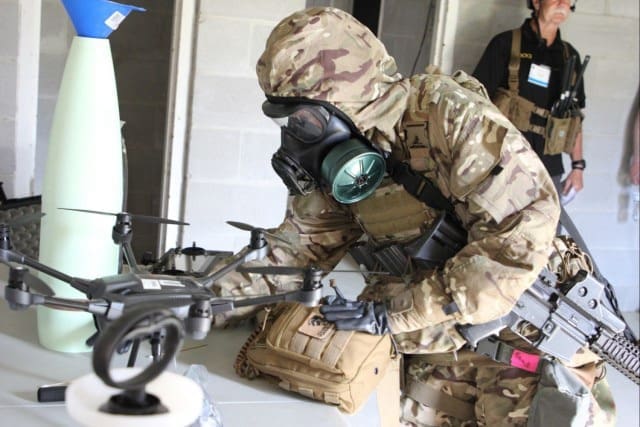
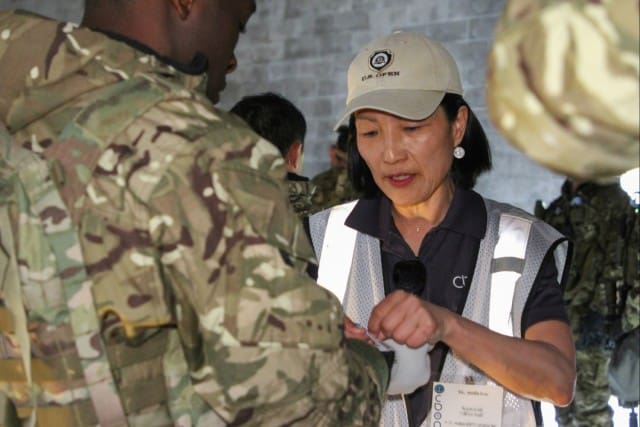
At Camp LeJeune, warfighters put these protypes through their paces in realistic field scenarios in which warfighters used them to interrogate mock unknown CBRN weapons caches. After running through each scenario, the warfighters gave the technology developers very specific feedback on what worked, what did not and how they could be improved.

That feedback is often simple but important, such as, “The labeling of the buttons on the chemical agent detection device is confusing.” It can also lead to new innovations, such as, “Can I mount the device on my helmet so that my hands are free?” Feedback can also include how warfighters are taught to use the new equipment, such as “Most of the people in my unit are visual learners, can you make a video version of the user’s manual?”

Clare Hamilton, a DEVCOM CBC program analyst, has supported CBOA since its inception. This year, she managed the Concept Tent during the CBOA event where technologies under development but not mature enough to use in the scenarios were displayed. Starting last October, she helped evaluate all the candidate technologies submitted by the technology developers and coordinated their participation in the Concept Tent. Of the 19 technologies displayed on tabletops in the tent this year, five were developed by DEVCOM CBC.

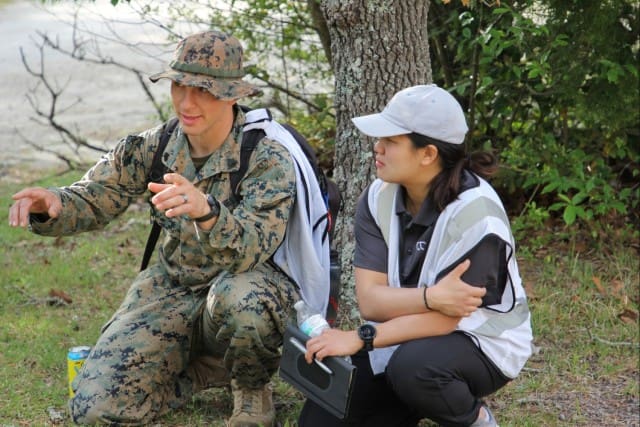
Some of the tasks DEVCOM CBC personnel took on were highly technical. David Glynn, a DEVCOM CBC liaison officer to the U.S. Army Maneuver Support Center of Excellence at Fort Leonard Wood, Missouri, assisted as a “lane walker” at one of the scenario locations. It is a role that requires a keen knowledge of both CBRN technology and the way the scenario was designed.

“It was my responsibility to ensure that the warfighters participating in the scenario were trained in the proper use of the assigned new technology. I also ensure all users were at the right location at the right time in order to start the missions,” said Glynn. “While conducting missions, I made sure that every technology was used in the manner it was designed to be used. I also ensured the right simulants were in place in order to properly trigger a response form the technology.”

DTRA organizers have used lessons learned over time to steadily improve CBOA’s value to both technology developers and warfighters. This year’s event included two full days of warfighter training on the prototype technologies before the actual scenario run-throughs.

There were six scenarios in all, spanning chemical, biological, and pharmaceutical-based agents, as well as radiological threats. The scenario participants, 110 in all, included U.S. Special Forces, Marines, Soldiers, Airmen, Coast Guard, and Custom and Border Patrol members. At the end of each scenario, warfighters shared their evaluations of the new CBRN technologies in both face-to-face discussions and by filling out detailed questionnaires. As the DTRA project manager for the event, Markham Smith, put it, “We want technology developers to make their improvements while the clay is still wet.”

DEVCOM CBC Director Michael Bailey attended the event and was pleased with what he saw. “At CBOA we get to see early science and technology that will pay off in time. Many technologies we and others have brought over the years have been licensed to industry for production and are now fielded,” he said. “CBOA is able to do this because of the wide range of organizations it brings together, agencies like the Department of Homeland Security, defense research laboratories, the services and many different technology developers from industry. That makes CBOA a big contributor to the nation’s CBRN defense. I appreciate that DTRA uses our help for this extraordinary event every year.”

By Brian Feeney

Army Leverages Army SBIR and xTech Prize Competitions to Secure AI Pipeline

Saturday, June 15th, 2024

WASHINGTON — The U.S. Army Small Business Innovation Research and xTech Programs collaborate with artificial intelligence innovators to find and scale solutions across the Army. Led by the Office of the Assistant Secretary of the Army for Acquisition, Logistics and Technology, Army SBIR and xTech prize competitions support a secure, Army-ready AI pipeline.

In March 2024, Mr. Young Bang, ASA(ALT) principal deputy, announced the ASA(ALT) AI Implementation Plan, that kicked off with a 100-day sprint. The plan aims to deliver a single, coherent approach to AI across the Army, aligning multiple, complex efforts within 100 and 500-day execution windows, and establishes the baseline to continuously modernize AI and contributing solutions as technologies rapidly evolve.

The Army SBIR and xTech Programs’ initiatives are at the forefront of these efforts to drive digital transformation and deliver required AI capabilities across the Army.

As the 100-day window concludes this summer, the Army is outlining a plan that leverages the outcomes of the 100-day sprint to adopt industry solutions without competing with commercial vendors. However, there are inherent risk factors associated with the adoption of AI solutions.

“Some of the obstacles include looking at and understanding AI risks such as poison data sets, adversarial attacks and trojans,” Bang said. “Developing AI in a controlled, trusted environment owned by the Army or Department of Defense can make addressing these risks easier.”

Bang and his team have prepared an initial AI Layered Defense Framework called #DefendAI to help tackle the risks associated with third-party algorithms, while helping to operationalize industry AI technologies. His team is looking to collaborate across industry and academia to evolve the framework and prioritize capability exploration and implementation in support of Army programs, such as Project Linchpin, which is building an operational pipeline of trusted AI solutions.

Initiated by Program Executive Office Intelligence, Electronic Warfare and Sensors, Project Linchpinaligns with Bang’s AI risk evaluation efforts. Bharat Patel, Project Linchpin-Sensor AI product lead, noted that the program aims to deliver commercial capabilities to the Army by applying fundamental concepts such as test and evaluations, and adopting an AI risk framework.

“It’s your infrastructure, it’s your standards, it’s your governance, it’s your process. All those areas are things that we’re taking on, because that’s how you can tap into the AI ecosystem and that’s how you deliver capabilities at scale,” Patel said.

ASA(ALT) is progressing with the AI Implementation Plan and its alignment to Project Linchpin to prepare the Army for AI at scale. As these initiatives ramp up, the Army SBIR and xTech Programs are strategically focused on leveraging excellence in the private sector to speed up the Army’s broad adoption of AI.

Army SBIR’s AI funding

The Army SBIR Program collaborates with small businesses and Army customers to align innovative solutions with Army priorities. It awards more than $350 million annually to reinvigorate the Army’s technology ecosystem, and is prioritizing and funding cutting-edge AI solutions.

The program has invested nearly $102 million in active AI projects in fiscal year 2024, distributed among approximately 75 small businesses across the country, and aims to align small businesses with the Army’s larger AI pipeline through funded AI initiatives.

In FY24, Automated Detection and Prevention solutions received $30 million in Army SBIR investments, representing 29% of the program’s AI and machine learning portfolio by the number of awards. Within this framework, the Army categorizes technologies as automated systemic-based controls that stop threats and predict the next attack for improved prevention.

There are currently 20 active Army SBIR Automated Detection and Prevention awards with organizations such as PEO IEW&S; PEO Simulation, Training and Instrumentation; and Army Test and Evaluation Command.

Army SBIR investments in FY24 have directly supported Army programs such as Project Linchpin, with two awards made in FY24 and 16 additional planned to start in FY25. The Joint Program Executive Office Armaments and Ammunition also recently leveraged $48 million in Army SBIR funding to modernize munitions manufacturing processes using AI.

Looking forward to FY25, Army SBIR’s AI/ML portfolio is projecting upwards of $105 million in AI funding. Six AI-focused solicitations are slated for release this summer, which will comprise approximately $55 million of the FY25 funding. Several of the solicitations, which include an AI/ML open topic solicitation, align to Project Linchpin thrust areas, amongst other potential Army transition partners.

xTech’s scalable AI

In late 2023, Bang requested that Dr. Matt Willis, the director of Army Prize Competitions and Army SBIR Program, and his team leverage xTech prize competitions to scale AI. This led to the launch of xTechScalable AI in December 2023, which sought innovative AI solutions from U.S.-based small businesses with scalable solutions to defend against adversarial AI threat vectors.

Leveraging prize competition authorities, xTech offers cash prizes along with opportunities for participants to receive direct feedback on their solutions, plus mentorship and networking opportunities with Army customers to help accelerate their unique AI solutions towards Army capabilities. xTech competition winners find themselves well-positioned to compete for follow-on contracts, such as Army SBIR awards.

xTechScalable AI was not the first competition aligning AI with Army needs. Earlier in the year, the xTechPrime competition funded two Army SBIR contract awards to inform Project Linchpin pipeline tools and services, totaling almost $4 million.

The xTechScalable AI competition is following a similar track, offering up to $370,000 in cash prizes and $8 million in follow-on Army SBIR contract awards for critical AI solutions.  Through these competitions, 150 small businesses received exposure and feedback from Army customers and experts, and introductions to follow-on contract opportunities to continue the development of their AI solutions for the Army.

“xTech is a valuable mechanism for identifying and nurturing scalable, commercial AI solutions to strengthen the Army’s security framework,” Willis said. “Paired with ASA(ALT)’s vision, we can operationalize AI to enhance data accuracy and combat cybersecurity threats.”

xTechScalable AI 2 launched in March 2024 and focuses on identifying small businesses with game-changing technologies that can feed into Project Linchpin’s operational AI pipeline. The competition offers up to $603,000 in cash prizes and opportunities post-competition to submit proposals for a Phase I or Phase II Army SBIR contract valued at up to $250,000 and $2 million, respectively.

xTech will host the finals at the Association of the United States Army Annual Meeting and Expo in October. Additionally, xTech will hold more AI-focused competitions in the coming year, including several AI-focused Technical Grand Challenges.

Commercial vendors and small businesses have made quick progress in developing and implementing AI capabilities. As part of ASA(ALT)’s AI Implementation Plan and the upcoming 500-day execution window, Army SBIR and xTech are adopting AI solutions and preparing them for operational use in a secure, government-owned environment.

“Army SBIR and xTech are committed to strategically investing in areas where we can leverage the excellence of the private sector and transition technologies to Army programs such as Project Linchpin,” Willis said. “We have the funding and processes in place to drive industry collaboration and investment opportunities for these large-scale Army efforts.”

About the programs

The Army SBIR Program offers Phase I contract opportunities to U.S.-based small businesses showing commercial viability, feasibility and technical merit. It also offers Phase II and Direct to Phase II contracts to vendors with mature technologies meeting Phase I qualifications.

The Army SBIR Program releases contract opportunities on an ad-hoc basis to address current and expected Soldier needs. The program will promote new contract releases via solicitation announcements and email. For more information, please visit the Army SBIR website.

Established in 2018, the Army xTech Program offers prize competition opportunities for entities including nontraditional vendors direct exposure to Army laboratories, program executive offices, program managers and end-users. Participants receive feedback from Army DoD stakeholders and have access to training, mentorship and networking, and opportunities to win non-dilutive cash prizes.

For current and upcoming competitions, visit the xTech website.

By Anna Volkwine, Office of Army Prize Competitions and Army SBIR Program

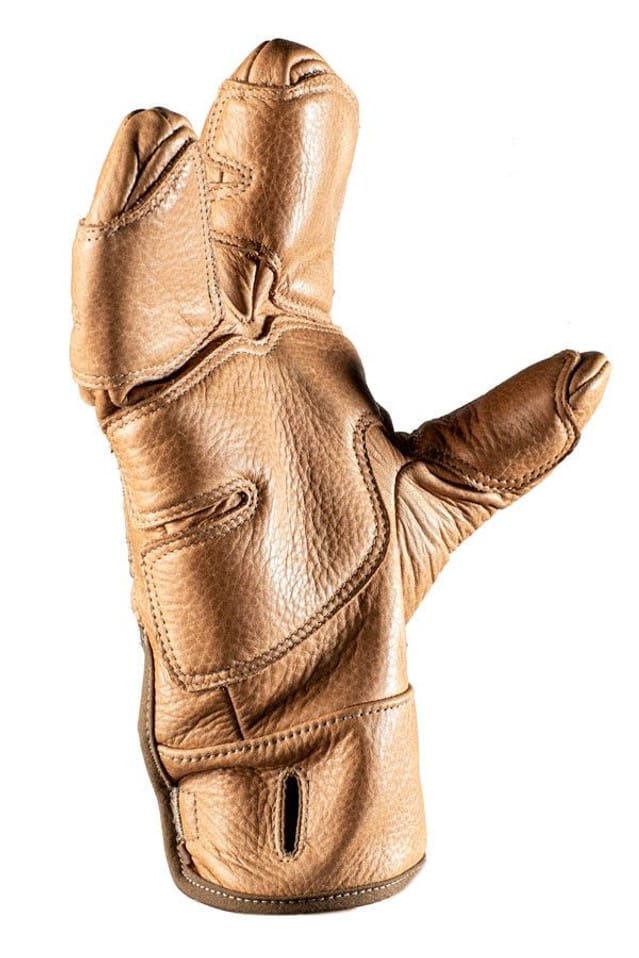
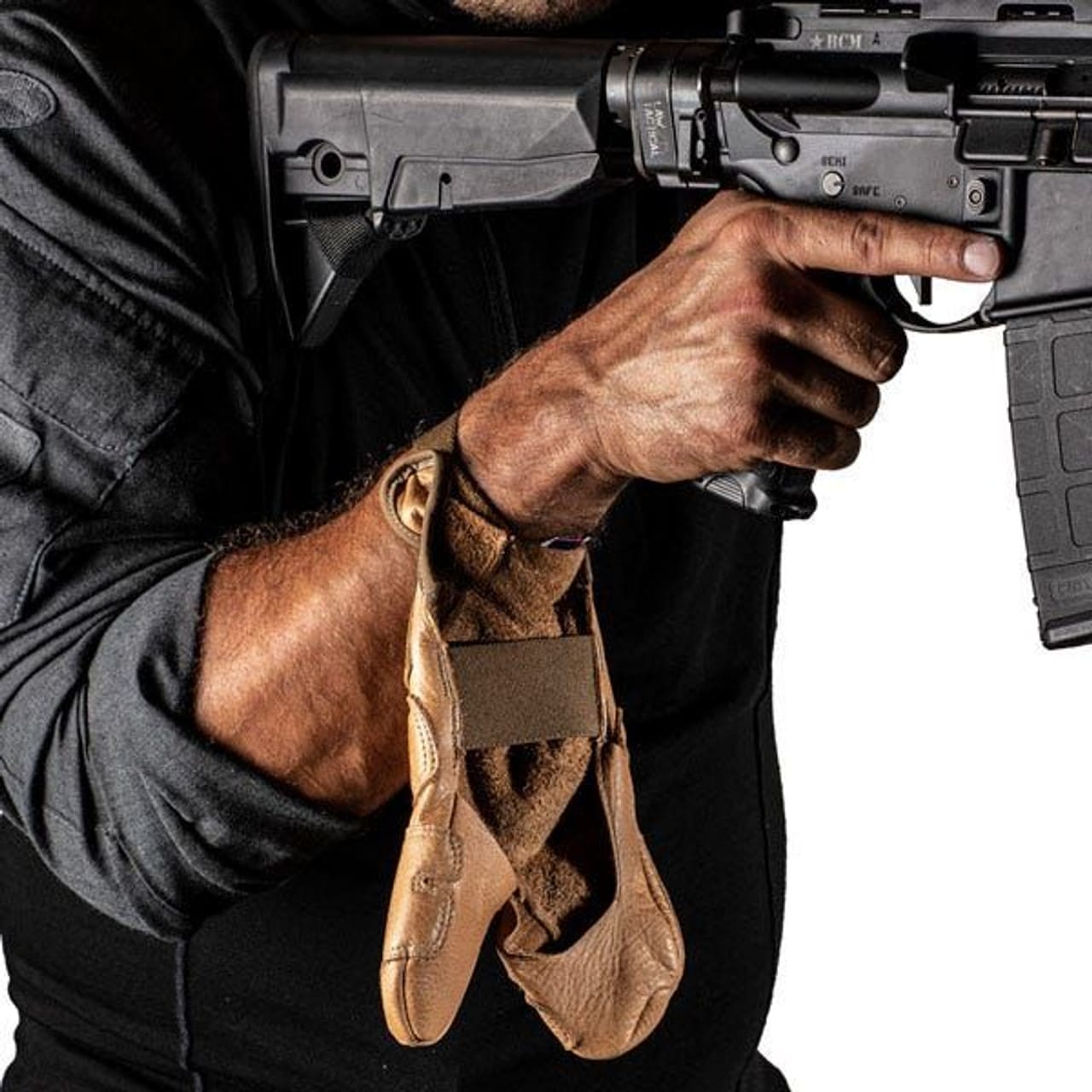
FirstSpear Friday Focus: Fast Rope Mitt

Friday, June 14th, 2024

• 100% Berry Compliant “Roper” Cow Leather

• Double Layered

• Firmer grain/external texture on the grain of the leather

• Softer texture on internal side

Looking for a minimalist glove that won’t burn through your hands during those intense fast rope insertions? Look no further than the Fast Rope Mitt (FRM). Not only does it fold flat for easy transport, but its advanced two finger pattern allows for quick access to your trigger finger as soon as you hit the ground. This fast rope glove puts all other gloves to shame.

For more information, check out: www.first-spear.com/fast-rope-mitt.

DPAA Recovery Team Works to Bring Home WWII Service Member in Bosnia and Herzegovina

Friday, June 14th, 2024

BOSNIA AND HERZEGOVINA —  

A Defense POW/MIA Accounting Agency (DPAA) recovery team finished a joint field activity (JFA) in Bosnia and Herzegovina on May 31, 2024. They worked carefully with local officials and the U.S. Embassy to attempt to recover the remains of a U.S. service member missing since World War II. This team, composed of specialists from various fields, is united by a common mission: to bring our fallen heroes back home.

DPAA conducts extensive historical research on each case before excavation. Matt Cheser, a historian working at DPAA assigned to the Bosnian region, emphasized the importance of the work.

“There are still approximately 12 personnel missing from World War II in Bosnia,” Cheser stated. “It is our sacred obligation to bring them home.”

DPAA is committed to providing closure and peace to the families of the missing. To achieve this, each team deploys either a forensic anthropologist or forensic archaeologist as a scientific recovery expert (SRE) to study each case and lead excavations. This recovery team’s SRE, Dr. Laurel Freas, a DPAA forensic anthropologist, has been with the agency for 15 years. She explained how her extensive experience has prepared her for this mission.

“Every field mission I’ve done in the past has taught me important lessons that help me prepare for each new, upcoming mission,” Freas said. “For this mission, the most valuable past experiences relate to traveling to a new country, interacting with local officials we’ve never met before and who’ve never collaborated with DPAA before, and working with the team to bridge our differences in culture and language to convey the humanitarian nature of the agency’s mission.”

Freas highlighted the importance of earning trust and support from local officials.

“On this mission, we’ve been very fortunate to have excellent support from the local health inspector who has jurisdiction over the site where we were working,” said Freas. “I attribute that to the professionalism and dedication of the entire team.”

Garnering support from local officials is imperative to mission success but each mission and case are special and hold their own unique set of challenges.

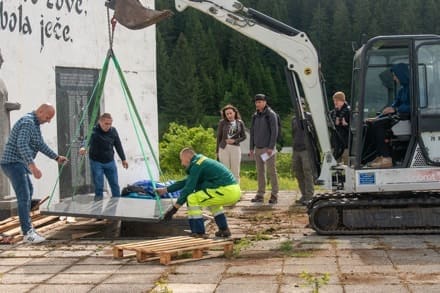
“On most of my past missions, we were working in remote and isolated areas that are difficult to find, and even harder to get to,” said Freas. “On this mission, we’ve been working in and around a well-known local memorial monument, with all the concerns and sensitivities that go with that. It’s very important that we be conscious of our activities at all times, to make sure we’re always being respectful to the space we are working in.”

To face this challenge head-on and ensure collaboration success, DPAA works in partnership with multiple different organizations, commands, and programs. They acquire short term individual augmentees (STIA), such as linguists, who are valuable assets on every recovery team. Among the team members was U.S. Air Force Master Sgt. Nikola Bozic, a STIA linguist who previously assisted the DPAA in investigating this case back in 2022. Bozic’s unique language skills and cultural awareness proved invaluable for navigating the complex cultural landscape of Bosnia. His expertise, combined with the wonderful hospitality of the local officials, ensured the entire mission ran smoothly.

“Growing up in Bosnia has had a profound impact on how I approached various situations during our mission,” Bozic shared. “My deep understanding of the local culture and customs has allowed me to bridge the gap in understanding how the local community perceives our team’s efforts. This understanding has been crucial in navigating sensitive conversations and building trust, leading to more successful operations.”

To gain a better understanding of not only the language but the cultures and customs, linguist such as Bozic undergo extensive training in their backgrounds. Bozic received further training from the Air Force Cultural Language Center, specifically through the Language Enabled Airman Program (LEAP) and eMentor language training.

“This training has equipped me with practical skills for current and future DPAA missions or partnerships,” Bozic noted. “It has underscored the importance of cultural understanding in our missions.”

Prior to 2022, Bozic never thought that his training would contribute to such an operation.

“I was initially unaware of what DPAA does,” said Bozic. “However, after participating in DPAA missions, I can confidently say that these were the most fulfilling experiences of my military career. These missions allowed me to contribute to a noble cause and help bring back our missing service members. If given the opportunity to be part of DPAA’s missions, I highly recommend seizing the chance to do something that you will remember positively for the rest of your life.”

Bozic is one of the many linguists invited back by DPAA to increase mission success. He, like other STIAs, returns because he holds a deep belief in DPAA’s mission.

“It’s a noble cause dedicated to locating and bringing home the remains of missing service members.” Bozic said. “The tireless work of DPAA signifies its commitment to fulfilling the promise made to our service members that they will never be forgotten or left behind. This dedication offers reassurance to families that one day, their loved ones’ remains will be located and returned home.”

Freas echoed this feeling, stating, “I feel incredibly honored and privileged to be a part of DPAA and contribute to the Agency’s mission. I am proud of the work we do to provide answers to the families of the missing.”

As the DPAA team continues its work in Bosnia, they carry with them the hope and determination to bring closure to the families of those who served and sacrificed so much during World War II. Their efforts are a testament to the enduring promise that no service member will ever be forgotten.


See the full image gallery here:  Bosnia and Herzegovina

By SSgt John Miller

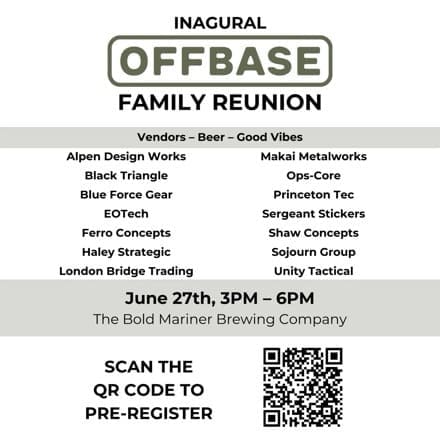
Offbase Family Reunion – June 27th 2024

Thursday, June 13th, 2024

We are excited to announce our first-ever Family Reunion! This event is open to the public and a fantastic opportunity to meet and mingle with reps from some of your favorite brands. Whether you’re a long-time customer or a first-time visitor, we welcome you to join us for an afternoon of fun and conversation!

Join us at the Bold Mariner Brewing Company
Thursday, June 27th
3 PM to 6 PM

Meet with Reps – Have your questions answered, learn about new products, and get insider information from the experts.

First Round’s On Us – Pre-register for the event and get your first beer for free.

Giveaways & More – Get there early for freebies and door prizes!

Pre-register here.

We look forward to seeing you there!