Troop Performance

Archive for the ‘Guest Post’ Category

Army Begins Cognitive Testing at Initial Entry Training

Tuesday, September 3rd, 2024

WASHINGTON — The Army has begun baseline cognitive assessments during Initial Entry Training, and all services will follow in the coming months, officials say.

The Army is taking a multipronged approach to reduce brain health risks, including improved awareness through a Force Health Protection Information Campaign; expanded brain health monitoring; identification of blast overpressure protective measures; tracking and monitoring blast exposure; and developing a comprehensive strategy to enhance and advance the science and medical care for brain injuries, said Col. Jama Vanhorne-Sealy, who oversees the Occupational Health Directive, Force Health Protection in the Office of the Surgeon General.

Fort Sill, Oklahoma, home of the United States Army Field Artillery School, was the first Army Initial Entry Training location to establish permanent cognitive testing, with all services scheduled to roll out the testing at all entry training locations by the end of 2024.

In addition, Army personnel will be evaluated at least every three years after initial screening, which can help identify any unusual cognitive change, Vanhorne-Sealy said. Early detection allows for early intervention to restore or enhance cognition, should it be necessary, she said.

A long-standing cognitive assessment program that began in 2007 has shifted from a pre-deployment and injury-centric model to a regular cognitive monitoring program, which means military health authorities can better help Soldiers throughout their career, said the Chief of Neurocognitive Assessment in the Office of the Army Surgeon General, Dr. Steven J. Porter.

The Cognitive Monitoring Program, much like the Army’s ongoing hearing testing, is a screening tool to assess for cognitive change in soldiers.

Cognitive assessment means documenting the way an individual thinks, reasons and remembers.

“Without ongoing testing, changes to a Soldier’s thought processes may not be evident until an event that could put both the Service Member or their unit in jeopardy,” Porter said.

Since June 2007, more than 3.4 million assessments have been collected, processed, and stored at the Neurocognitive Assessment Branch Data Repository at Joint Base San Antonio, Texas, to aid in treatment and track recovery after a concussive or suspected concussive event, Porter said. The testing identifies cognitive changes to help inform a Soldiers need for medical care, rest and recovery. Early identification can help avert further potential injury.

Vanhorne-Sealy said over time, advancements in understanding of brain functionality have led to improved testing, expanding the program to better evaluate areas of the brain potentially impacted by blast overpressure.

Blast overpressure is the sharp rise in atmospheric pressure from an explosive or firing of a weapon causing shockwave, traveling faster than the speed of sound. Blast overpressure exposure occurs when someone is close enough to physically feel the shockwave.

In a report by the House Committee on Appropriations regarding the Department of Defense Appropriation Bill of 2021, the Committee asked the Department of Defense to develop a cost analysis plan for conducting traumatic brain injury baseline testing for all new recruits.

Currently, a medical provider may request a Soldier’s cognitive baseline from the repository if it needed for treatment planning and tracking recovery. CMP authorities are working to develop a system to directly upload the test data to the Soldier’s medical record.

The CMP assessment tool is an FDA-approved medical device, and all test records are privileged information.

By Jonathan Austin, Army News Service

Army Family Takes on New Meaning for Soldier Reunited with Biological Father Also Training at Fort Leonard Wood

Monday, September 2nd, 2024

FORT LEONARD WOOD, Mo. — When Pfc. Brayden Sumare’s bus pulled into Fort Leonard Wood, nothing could have prepared him for the twist of fate that awaited him just inside the doors of the 43rd Adjutant General Reception Battalion.

The 18 year old graduated from basic combat training at Fort Jackson, South Carolina, in the summer of 2023, between his junior and senior years of high school. He arrived at Fort Leonard Wood in July, to complete his initial entry training.

Sumare, a native of Pine Bluffs, Wyoming, said he arrived at Fort Leonard Wood at about 3 a.m., and there was something oddly familiar about his bay leader, a trainee everybody called “Pops” — he exchanged a few lingering glances with him — but didn’t think much about it.

“The next day, I was laying down in my bunk as the bay leader was walking around getting all the new people’s names for the roster,” Sumare said. “When he got to me, he asked my last name, and I said ‘Sumare.’ And then he asked, ‘Brayden Hunter Sumare?’”

Sumare said he was bewildered and returned the man’s question with another question, “How did you know that?”

According to Sumare, he was “shocked” at the man’s response of — “I’m William Reeves” — his biological father.

Pfc. William Reeves said he will never forget the moment he realized he was looking into the eyes of his biological son.

“It was unbelievable,” Reeves said. “What are the chances we both joined the Army and were at Fort Leonard Wood at the same time for our training?”

Sumare said he thought they didn’t recognize each other because they both looked very different than when they met for the first, and only, time about four years ago.

“When I met him, he had long hair and a full beard. When I saw him at reception, he had a buzzed haircut and was cleanly shaven,” Sumare said.

To add to the unbelievable happenstance, Reeves said he had been nicknamed “Pops” before Sumare even arrived on post.

“I’m almost 40; I have life experience. My peers lean on me for that. They started calling me Pops and it stuck,” Reeves said.

Amanda Sumare, Brayden’s mother, said when Brayden called her to let her know he made it to Fort Leonard Wood and tell her Reeves was also there, she was awestruck, and it took her a minute to wrap her head around the coincidence.

“I was so very shocked. It is the craziest thing ever,” Amanda said.

Reeves, from Poteau, Oklahoma, said he and Brayden’s mother were young when they found out she was pregnant.

“It was unexpected. We did a DNA test when he was born, and he was mine. Our lives had gone in different directions and Brayden’s mother was living in Wyoming, engaged to the man who eventually became Brayden’s adopted father,” Reeves said. “I supported him financially but decided I didn’t want to be too involved and upset Brayden’s solid family unit.”

The two spent several days together at Fort Leonard Wood’s reception battalion, waiting to go to their separate training units.

“Over the next few days, as I watched him interact with other people, I saw familiar mannerisms. It was like looking in a mirror,” Reeves said. “I got to learn a lot from him, and I think that is really cool.”

Since Brayden had already attended BCT and earned the title of Soldier, Reeves said Brayden was able to help the new trainees at the reception battalion prepare for it.

“Brayden taught me how to Ranger roll my uniform. And not just me, he showed us all how. He also showed us what to pack before we left for our units and what to buy from the Exchange when we got a chance. I enjoyed watching him lead others. I am proud of Brayden. He has a bright future,” Reeves said.

According to Brayden, running into his biological father was, “one of those weird life things,” and he was glad he was there to help Reeves prepare for basic training and wish him well.

“I got to tell him goodbye, good luck and give him a hug,” Brayden said. “I think it is awesome that he joined.”

Amanda said she is impressed by both of them and their desire to serve.

“The Army is a good fit for Brayden because he isn’t one to just sit back and watch the world go by. He wants to be involved. He has a strong love and passion for our military and always has. He has so much potential. I am very proud to be his mama,” Amanda said. “I’m also proud of William for stepping up to serve our country. I wish him the best future.”

Brayden is in the middle of six weeks of advanced individual training, with Company C, 58th Transportation Battalion, learning the military occupational specialty of 88M Motor Transport Operator. Reeves is with Company D, 35th Engineer Battalion, for 14 weeks of one station unit training to become a 12C Bridge Crewmember.

“My fingers are crossed I may be able to attend his graduation next month,” Reeves said. “I like to joke — I am going to build the Army’s bridges, and he is going to drive his truck over it.”

By Melissa Buckley, Fort Leonard Wood Public Affairs Office

101st Airborne Division Conducts Historic Air Assault Mission

Monday, September 2nd, 2024

FORT CAMPBELL, Ky. –On Aug. 28, 2024, more than 3000 Soldiers assigned to the 2nd Mobile Brigade Combat Team “STRIKE”, 101st Airborne Division (Air Assault) finished their second rotation to the Joint Readiness Training Center (JRTC) in eight months. However, the beginning of the exercise was transformative and historic. The 2MBCT conducted a “large-scale, long-range” air assault (L2A2) operation consisting of 80 aircrafts, across three states, flying from Fort Campbell, Ky. to Fort Johnson, La. Aug. 13-17.

After traveling for over 500 miles, including stops at six forward arming and refueling points (FARPs), scattered over multiple southern states, the 2MBCT arrived at JRTC..

The movement method was not a typical way a brigade travels to “The Box”, but a way that was reminiscent to the founding of the 101st. Traditionally, units move by ground to Fort Johnson, spend several days preparing before entering the combat scenario. The Strike Brigade moved by air-to-ground into simulated-contested landing zones.  Thus began a two-week bout with the well-known opposing forces “Geronimo,” 1st Battalion, 509th Infantry Regiment.

“The legacy that we have, dating all the way back to World War II when we were an Airborne Division fighting in Europe,” said U.S. Army Col. Travis McIntosh, the deputy commanding officer for support for the 101st Airborne Division (Air Assault) “Your 101st Airborne Division now is Air Mobile–it’s Air Assault, we have a number of helicopters. That’s how we fight in this division and we’re demonstrating that from Kentucky and Tennessee all the way down to Louisiana.”

This was much more than an aviation mission. On Aug. 13, troops and equipment from across the Division began their movement from Fort Campbell to FARP s across Mississippi and Louisiana. The sites, far from a simple pit stop along the operational path, provided vital sustainment for the troops and helicopters along the way.

“Our birds [aircraft] are able to come in get fueled, get armed and continue the fight,” said 1st Lt. James Tate, a quartermaster officer with Echo Troop, 2nd Squadron, 17th Cavalry Regiment, 101st Combat Aviation Brigade. “We can puddle hop across and get the birds further over a shorter period of time.”

The ability to send an entire brigade into an enemy area of operations further and faster is not the only aspect that allows this type of exercise to succeed – it also needs to be done at night.

“We conduct all our operations under a period of darkness,” said Tate. “We like the birds to get in, receive their fuel, get armed and off of our pads within 12 to 15 minutes.”

The quick turnaround represents a massive amount of coordination from within the division but training like this is only made possible by the support of the local communities, airports, and National Guard locations who hosted the FARPs.

“We are overwhelmed by the support from the community,” said McIntosh. “From law enforcement to the elected and appointed officials, airport management, emergency services, Louisiana National Guard, support has really poured on to the 101st Airborne Division here and we couldn’t be more grateful.”

The Soldiers of the Strike Brigade descended into JRTC for their training in an auxiliary manner as the Army continues to modernize, innovate and transform its warfighting capabilities. The L2A2 displays the combat power of today with 101st, just as airborne paratroopers did in World War II. The 101st doesn’t just keep older ways of combat entry relevant but to make those unique abilities the future of combat operations.

“We’re experimenting on some of the most modern equipment that the Army has fielded and we’re looking forward to providing that feedback to the Army,” said McIntosh. “We’re demonstrating the capability that’s only seen in the 101st Airborne Division and that’s long-range air assault.”

By SSG Kaden Pitt

Combined SOF Training During Ulchi Freedom Shield 24

Sunday, September 1st, 2024

Multi-domain operations, Joint and combined forces planning together, special reconnaissance across various terrains, and enhanced readiness, just a typical day at Special Operations Command, Korea.

Recently U.S. Army Green Berets from the 1st Special Forces Group – Airborne, ROK Special Warfare Command, and 15th Marine Expeditionary Unit aviators completed a joint training exercise during the first week of Ulchi Freedom Shield 24, demonstrating their ability to plan and conduct operations across a variety of domains. The combined training included night-time land navigation, special reconnaissance, simulated air strikes during terminal guidance operations training, and joint partner missions over several days and nights in the Korean mountainous terrain.

Even rain from a passing a typhoon didn’t stop the training, fortifying the integrated deterrence posture and response capabilities of our combined forces.

UFS 24 reinforces the role of the alliance as a cornerstone for regional peace and security, reaffirming the ironclad commitment between the United States and the Republic of Korea to defend their homelands.

Courtesy of SOCKOR

USAMMDA Commercial Partner Receives FDA Emergency Use Authorization for Plasma Powder

Saturday, August 31st, 2024

FORT DETRICK, Md. — A U.S. Army Medical Materiel Development Activity commercial partner received Emergency Use Authorization from the U.S. Food and Drug Administration for the Department of Defense to use octaplasLG Powder — a potentially lifesaving treatment option for blood replacement therapies in certain operational circumstances. Notice of the EUA for this product was received by the company, Octapharma USA, on Aug. 8, 2024.

USAMMDA’s Warfighter Protection and Acute Care Project Management Office, which has a Cooperative Research and Development Agreement with Octapharma USA, manages research and development efforts for several blood products, including Freeze-Dried Plasma, for the DoD. The EUA for octaplasLG Powder is a significant milestone in WPAC’s development mission, which includes blood replacement therapies for emergent care use during military operations and training.

“The WPAC team played a vital role in assisting our commercial partner under the CRADA, helping them navigate the EUA approval request and process to give our Warfighters another tool in their aid bag in far-forward environments,” said Kendra Lawrence, Ph.D., WPAC’s program manager. “While the octaplasLG Powder is not intended to replace current FDA-approved blood replacement therapies during emergency treatment, it does give medical commands and frontline providers added capabilities when facing possible shortages of traditional blood plasma in austere locations across the world.”

The EUA authorizes U.S. military medical commands to begin procuring octaplasLG Powder (blood types A and AB) and allows military medical personnel and other authorized providers to administer the lifesaving therapy to treat hemorrhage or coagulopathy when no other FDA-approved treatments, like fresh frozen plasma, are available — or when the use of traditional plasma is not practical in a compressed time continuum during military operations.

Blood loss is a significant threat to U.S. service members during combat operations and training, and treating hemorrhage or coagulopathy is imperative to saving the lives of the wounded and injured until medevac to higher echelons of care is arranged. Logistical and supply lines during future conflicts may stretch hundreds or thousands of miles, possibly causing shortages of FDA-approved blood products at and near the point of injury. Therapies like octaplasLG Powder are designed to serve as a stopgap when whole blood, fresh frozen plasma, or liquid plasma are in short supply, according to U.S. Army Maj. Andrea Mountney, WPAC’s military deputy project manager.


“During combat operations, whether in the Arctic, the Indo-Pacific, or other regions of interest, we will be facing the dual challenges of time and distance due to the austerity of those operating environments,” said Mountney. “Each passing second after a Service member is wounded or injured increases the complications caused by combat trauma. The longer it takes to begin blood replacement therapy, the higher the chances of mortality.

The WPAC team provides solutions for capability gaps, working with stakeholders across the DoD, academia, and industry to develop treatments that are affordable, reliable, and expeditionary,” she added. “Our goal is to meet the needs of the customer—the Joint Service end-user who may one day need these life-saving treatments. Solutions like octaplasLG Powder go a long way to equip our medical providers with the tools needed to treat the Warfighter during future operations.”

USAMMDA develops, delivers, and fields critical drugs, vaccines, biologics, devices, and medical support equipment to protect and preserve the lives of Warfighters across the globe. USAMMDA Project Managers guide the development of medical products for the U.S. Army Medical Department, other U.S. military services, the Joint Staff, the Defense Health Agency, and the U.S. Special Forces community. The process takes promising technology from the Department of Defense, industry, and academia to U.S. Forces, from the testing required for U.S. Food and Drug Administration approval or licensing to fielding and sustainment of the finished product. USAMMDA Project Management Offices will transition to a Program Executive Office under the Defense Health Agency, Deputy Assistant Director for Acquisition and Sustainment.

No official endorsement of third parties or their products is made or inferred.

Read the FDA’s announcement

By T.T. Parish

FirstSpear Friday Focus: FS Silkies Restock

Friday, August 30th, 2024

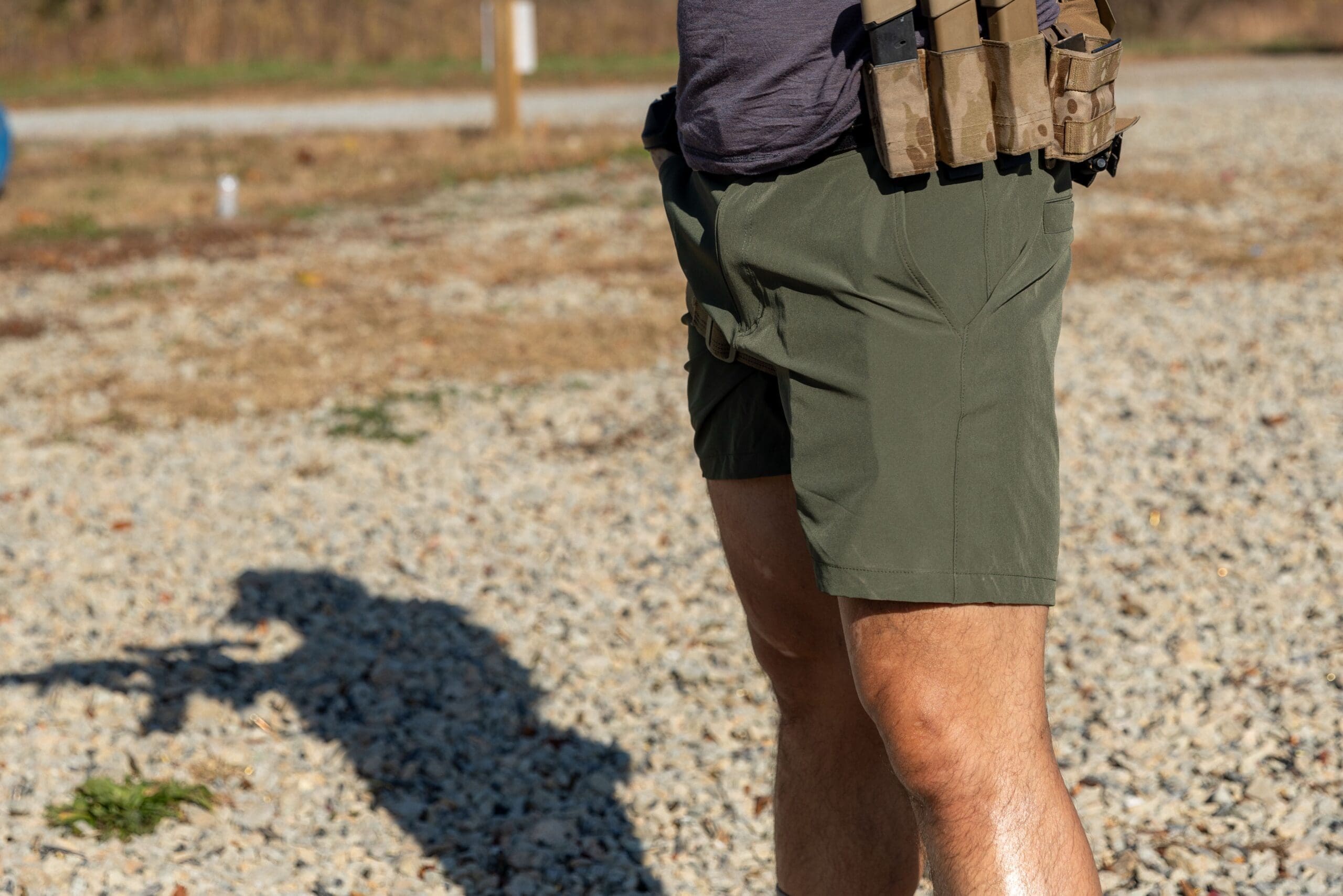
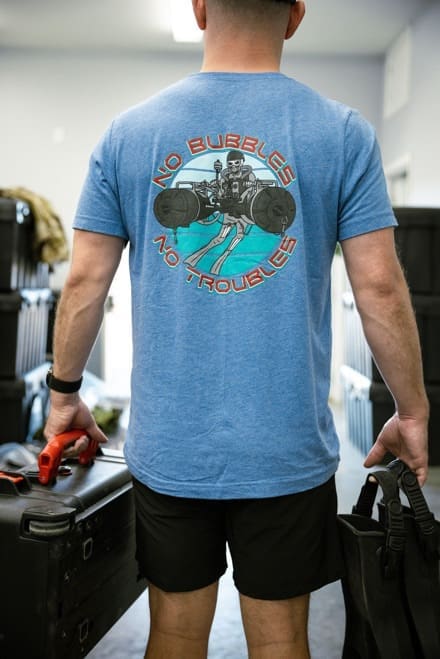
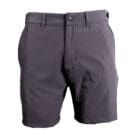
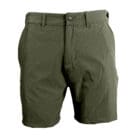
Attention! The FirstSpear Silkies are back in stock, and this is not a drill. Whether you’re running a PT test or making a tactical snack run, these legendary shorts will have you feeling like a lean, mean, freedom-loving machine. With a cut so high they’d make a 1980s gym coach blush, these beauties guarantee maximum ventilation, freedom of movement, and just enough leg exposure to give your CO a minor heart attack. Wear them with pride, whether you’re at the gym or just flexing your quads in the cereal aisle.

And let’s be honest, if Chuck Norris was issued a standard-issue uniform, it would be these Silkies. Pair them with a deployment beard that screams “I just survived 90 days in the field,” and some aviators that reflect both the sun and your unstoppable confidence. You’ll be drawing more attention than an officer at an enlisted party.

• These shorts feature an elastic waistband and no drawstring for a comfortable, high-performance fit and feel
• Brief style liner in these shorts provide additional support and helps prevent chafing
• PT shorts feature a short inseam for optimal athletic capability
• Made of durable, moisture-wicking 100% nylon material that will help keep you cool and dry while you sweat
• Feature an inner waistband pocket for storing a key or money while exercising
• Available in Black & Ranger Green with the FirstSpear Logo in S, M, L, XL, 2XL

Embrace the short shorts life and get ’em before they’re gone. No Returns — Sorry friends, these are too snug—if you buy them and try them, we can’t resell it.

Visit FirstSpear to find American Made kit and accessories, Built For The X.

Green Berets Use Disruptive Cyber Technology During Swift Response 2024

Friday, August 30th, 2024

In 1991, U.S. Army Col. (ret) John Collins authored the special operations forces (SOF) truths. These five stanzas outline what it means to be a SOF soldier, and how the force must operate to be successful. Chief among those is truth number 1: “People are more important than hardware”. SOF capabilities have evolved considerably since 1991, however, and while people remain the most important asset, hardware has led the evolutionary change.

Advancements in technology have increased the capabilities of the people in the SOF community. Not only are they masters of air, land, and sea, but now there is a fourth domain. Cyberspace has become a key part of the battlefield, and quickly has become just as critical as the physical realm in battlefield superiority. It’s for this reason that Operational Detachment Alpha (ODA) teams trained with disruptive cyber technology during Exercise Swift Response 2024 near Skillingaryd, Sweden this month.

“What this allows us to do is target an objective, use the signaling equipment to gain access to any WiFi networks originating at the target, and then monitor activity from that location for a period of time,” explained an identity protected ODA team member.

“It’s a very useful tool for us, because it gives us another set of eyes and helps to paint a clearer picture of our objective.” he said.

During the exercise, the aforementioned ODA team identified a target building and used a remote access device (RAD) to identify the networks coming from the facility. They were able to crack the WiFi password, enumerate the network, and run exploits on the target computer inside the building. This enabled the team to manipulate security cameras, door locks, and other security systems in the building.

While one team was in charge of manipulating the building through cyber disruption, a second ODA team conducted an infiltration operation on the facility. They conducted a military free fall (MFF) jump and marched seven miles to access the building, which they were able to enter easily due to the cyber disruption. From there they placed signal jamming equipment to clear any trace of the attack and exited the premises.

Training on a set of tools gives the team the ability to master them, living up to the second SOF truth, which is that quality is more important than quantity.

“In a real-world situation, this would allow us to gain information in a way that we haven’t always had,” explained the commander of the INFIL ODA team. “If we have a specific target or objective we need to reach, we now have the capability to glean critical information in a way that is undetectable if we do our jobs right.” he said.

The third SOF truth is that special operations cannot be mass produced. The ability to hack into a building through cyber technology is not exclusive to the special operations community, but the ability to do so, while also incorporating an MFF jump, and 7 mile foot march undetected is a SOF skill that when combined with the cyber capability gives special operations a unique set of skills that is exclusive said the ODA cyber team member.

“We are able to see what’s happening, and we know what the INFIL team is doing,” he said. “We have eyes on the whole scenario.”

The fourth SOF truth states that special operations forces cannot be produced after an emergency. They must be established, ready, and fully competent. This is why training in exercises like Swift Response is so important. It allows team members to sharpen their skills in an unfamiliar environment and put their knowledge to the test.

Advancements in hardware are due to the fifth SOF truth, which is that SOF requires non-SOF support. Cyber disruption is not brand new technology, but a tool that continues to develop. Staying current with the technology is a critical task, said the ODA cyber team member.

“This capability is something that we need to train on, and keep current with,” he said. “Because it’s evolving so rapidly, the devices we use today could be obsolete next year. It’s been five years since I first went to school for this – it’s changed so much in that time, I feel like it’s a whole new world.” he said.

While advancements are inevitable, the five SOF truths remain. New capabilities fall in line with established practices, and the entire machine keeps moving forward. Working during exercises like Swift Response 24 with Allies and partners such as Sweden enables special operations to remain uniquely postured to counter malign influence, build interoperability, rapidly respond to emerging threats and if necessary, defeat aggression.

By SFC Tim Beery

AFIMSC Introduces Combat Support Instructor Course to Increase Air Task Force Readiness

Thursday, August 29th, 2024

FORT BLISS, Texas (AFNS) —  

The Air Force Installation and Mission Support Centeris developing a course designed to equip combat air base squadron leaders with the skills needed to teach and lead combat support warfighters through every phase of the Air Force Force Generation model.

The new Combat Support Instructor Course was introduced at the first of two 2024 Installation and Mission Support Weapons and Tactics Conferences, which focused on advancing agile combat support operations in an era of Great Power Competition.

A beta test of the course, held Aug. 5-23 at Fort Bliss, was planned and conducted by the Air Force Security Forces Center weapons and tactics team. This rapid development was driven by the Air Force’s evolving need as it tests the Air Task Force construct, said Maj. Richard Cordova, Air Force Security Forces weapons and tactics program chief.

“A lot of effort had been put into creating an ATF training plan and building out Combat Support Training Range sites, but there was a piece missing. We needed an expert to advise and lead the commanders and the chiefs of these CABS and ATFs to be successful through their 18-24 months of training, exercise planning and execution,” Cordova said.

Airmen assigned to ATFs will work and train together throughout the AFFORGEN cycle. Each ATF includes a combat air base squadron, or CABS, consisting of around 300 Airmen from 54 different Air Force specialty codes to manage sustainment, protection and airfield operations.

“Currently, there is no standardized training approach or expertise within the ATF to integrate diverse combat support AFSCs into a training plan, build exercises or oversee the training calendars needed for combat readiness,” Cordova said. “In deployed settings, there is also a gap in aligning base operating support with the needs of combat platforms abroad.”

The CSIC will bridge the gap by developing leaders proficient in managing these critical functions.

“The course will break down functional silos and deliver cross-functional training, providing a comprehensive overview of how combat support capabilities and AFSCs synchronize to form a cohesive unit of action,” Cordova said.

The course will also be important to the overall success of AFIMSC’s Combat Support Training Rangeinitiative, which is developing a network of training ranges that will serve as platforms for units to conduct self-training and certification events tailored to their mission requirements.

“CSTRs are intended to be platforms for unit-led training and certification events, but many units do not currently have members with the required expertise to effectively implement this vision. CSIC will build a cadre of combat support personnel with the skills to facilitate planning and execution of unit-led training events,” said Col. Ross Dotzlaf, AFIMSC combat support rapid integration chief.

About 20 CABS Airmen attended the three-week CSIC beta test, covering topics such as operations planning, weapons training, exercise development, and topics from the ATF training plan, including sustainment, force protection, airfield operations and port operations.

“These folks are going to be the key advisors in the ATFs, the ones who are able to break down the training silos among the combat support communities,” Cordova said.

The course featured classroom instruction and field training with the goal of equipping students to return to their home stations and develop effective training programs for their units, said Senior Master Sgt. Sean Bambino, CSIC course director.

“The students have been fantastic. They’ve had positive attitudes the entire time and we know they’re getting a lot out of it,” Bambino said.

For Chief Master Sgt. LeRay Smedley, senior enlisted leader with the 13th Combat Air Base Squadron atLuke Air Force Base, Arizona, the course is a crucial step in preparing to lead his Airmen for deployment.

“My role is to organize, train and equip my team to ensure that when we deploy, not only are we ready to engage, ready to sustain and ready to support, but that we come back as one team,” Smedley said.

He added that the course would advance his team significantly, providing a broader understanding of the Air Force’s future direction under the new Air Task Force construct.

“It’s truly been an amazing experience,” Smedley said.

Lessons learned from the CSIC beta test, including feedback from the first group of students applying their knowledge with their units, will help AFIMSC prime a more robust course and move into the next phase of course development.

“We’re going to develop this course to make it bigger, to make it better and to bring more people in over time,” Bambino said.

By Shannon Carabajal, Air Force Installation and Mission Support Center Public Affairs