SIG SAUER - Never Settle

Archive for the ‘Guest Post’ Category

US and German Forces Compete for Coveted Marksmanship Badge

Saturday, March 28th, 2026

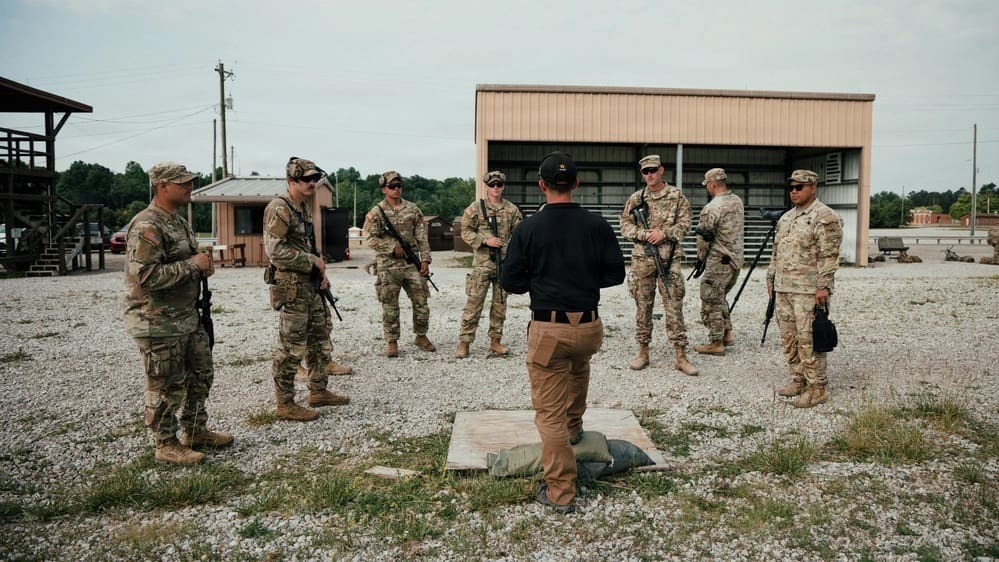
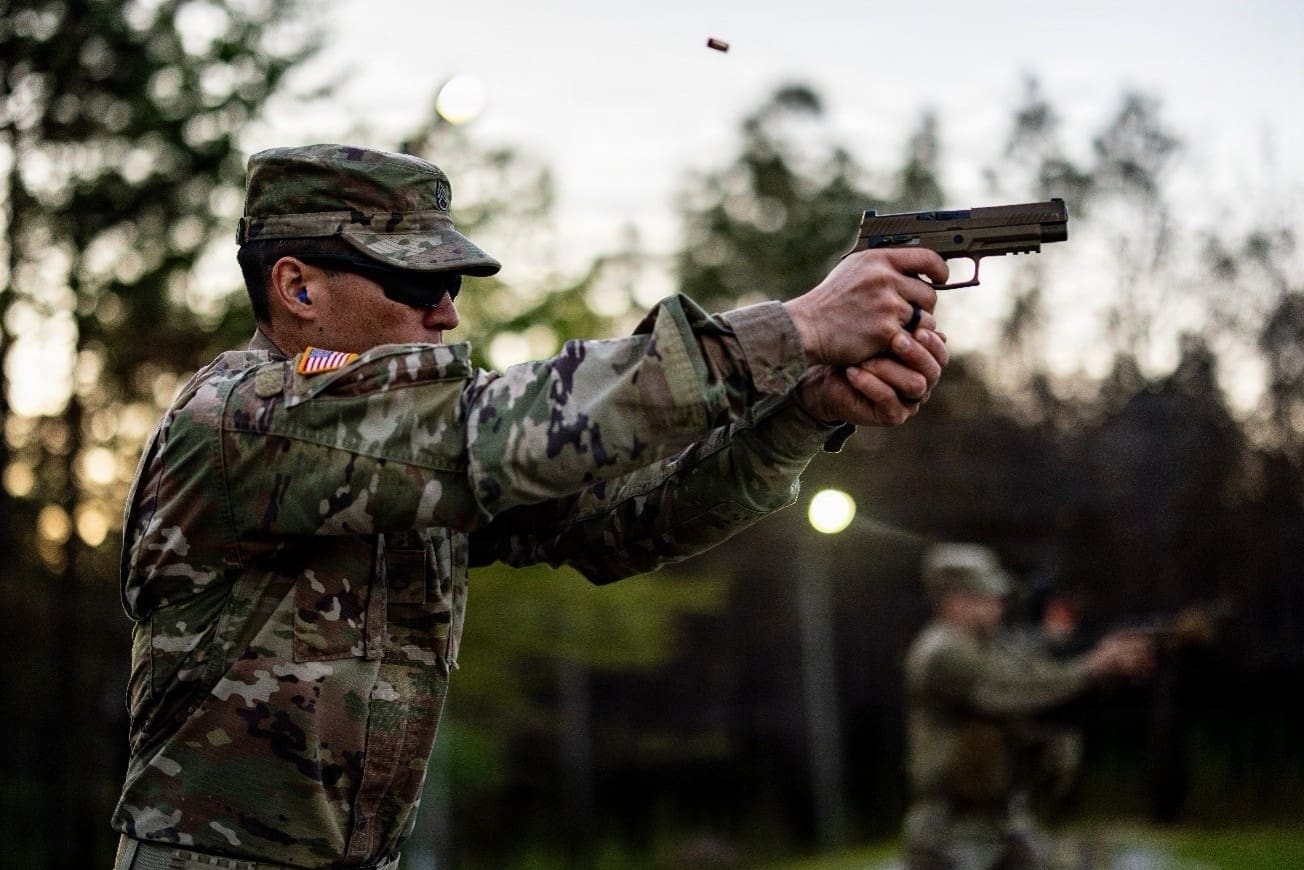
PIRMASENS, Germany– In a display of camaraderie and tactical skill, American service members from across the Kaiserslautern and Stuttgart Military Community joined their German Bundeswehr counterparts today for the Schützenschnur, a prestigious German armed forces badge for weapons proficiency.

The not only tested the participants’ marksmanship but also strengthened the spirit of cooperation recently forged during the German-American Friendship Days in Ramstein.

The diverse American contingent included soldiers from Public Health Command Europe, Veterinary Readiness Activity, Rheinland Pfalz, security forces from the 596th United States Forces Police Squadron, a member of the 86th Medical Squadron from Landstuhl Regional Medical Center and several of their Navy counterparts. This broad participation underscores the deep level of cooperation between the allied nations.

The Schützenschnur, a tradition with deep roots in German military history, is a highly respected decoration and a testament to a soldier’s shooting prowess.

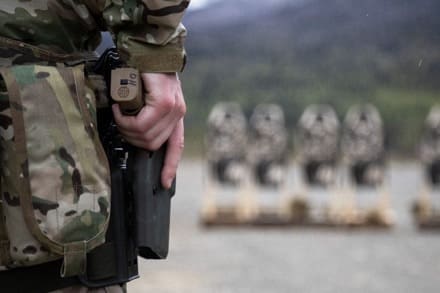
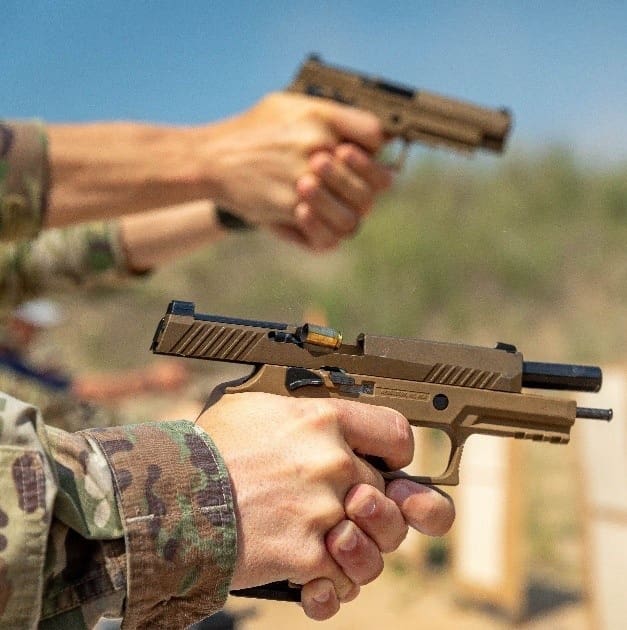
Participants fired the German G36 rifle and the P8 pistol. The G36 is a 5.56x45mm assault rifle that has been the standard issue for the Bundeswehr since 1997 and the P8 is the German military’s standard service pistol.

For many of the American participants, the experience was a unique opportunity to step outside their own military’s standard procedures and equipment.

Sergeant Jhonas Lopez, Brigade S1 noncommissioned officer in charge at PHCE, shared his enthusiasm for the cross-cultural exchange.

“I enjoyed the most was getting to work with our International partners and get a feel of their weapon systems and comparing it to what we use on the U.S. side,” said Lopez.

The event was not without its trials. The demanding course of fire pushed the service members to their limits.

“The most challenging part was having to move to the next fighting position and engage the target,” Lopez explained. “My heart rate was running and it made it more interesting.”

Despite the difficulty, Lopez said his goal was to earn the highest-level badge. “Gold is the standard!” he declared.

The sentiment of partnership and mutual respect was echoed by the German hosts.

“My goal is for everyone to have fun, stay safe and earn a Schützenschnur they can wear with pride,” stated Bundeswehr Senior Master Sgt. Brian Wagner. “Above all, this was a chance to build partnerships with our allies, connect and exchange expertise.”

Notably, all participating soldiers from Public Health Command Europe achieved the gold standard. Earning the gold Schützenschnur, the highest of three levels, requires a soldier to achieve the top score on all weapon systems in the competition, demonstrating exceptional marksmanship.

The following soldiers from Public Health Command Europe were recognized for their participation:

Capt. Javier Pino

Sgt. 1st Class Marissa Henson

Staff Sgt. Tatiana Jones

Sgt. Syarra Bermudez

Sgt. Dayton Crawford

Sgt. Jhonas Lopez

By Michelle Thum

Heller Foundation Announces Partnership with Greenline Tactical

Friday, March 27th, 2026

Dear Friends, Supporters, and Partners,

I am thrilled to announce an exciting new strategic partnership between The Heller Foundation and Greenline Tactical, a premier provider of advanced firearms and tactical training. This collaboration represents a significant step forward in our shared mission to promote responsible firearms ownership, enhance personal and community safety, and ensure that law-abiding Americans have access to the highest-quality instruction grounded in real-world experience and constitutional principles.

As the lead plaintiff in the landmark District of Columbia v. Heller case—which affirmed the individual right to keep and bear arms for self-defense under the Second Amendment—I have dedicated my work through The Heller Foundation to education, training, and advocacy that empowers citizens nationwide. Partnering with Greenline Tactical allows us to expand our impact by designating them as our preferred training partners for firearms instruction and specialized active shooter response training.

This partnership is particularly meaningful because of the exceptional leadership and expertise of Don Edwards and Sam Houston at Greenline Tactical. Don Edwards, the founder and lead instructor, brings over 20 years of experience as a U.S. Army Special Operations veteran, with extensive service providing tactical advisory support to the Department of Defense in high-threat environments, including Iraq and Afghanistan. He is a FLETC-certified firearms instructor and a respected figure in the industry for his hands-on, no-nonsense approach to training.

Sam Houston, a 10-year U.S. Navy veteran who served as a Flight Tech and Sensor Operator in combat operations, complements Don’s expertise with specialized knowledge in night vision tactics, surveillance, and defensive skills. Together, Don and Sam have built Greenline Tactical into a trusted source for elite training, including their renowned Night Operations Summit and courses tailored for law enforcement, military, and responsible civilians.
I am especially enthusiastic about our joint focus on active shooter training for houses of worship, schools, synagogues, and other soft-target community institutions nationwide. In an era where threats to innocent lives are all too real, equipping faith leaders, educators, administrators, and congregants with practical, life-saving skills is essential to preserving our freedoms and protecting our communities.

As I often say: “I’m incredibly excited about this partnership with Greenline Tactical. Don Edwards and Sam Houston are true professionals with unmatched credentials—decades of elite military service, proven combat experience, and a commitment to excellence in training. By teaming up, we’re not just teaching skills; we’re strengthening the Second Amendment in action, helping everyday Americans defend themselves, their families, and their places of worship with confidence and competence.”

Kristie Tertel, our National Director of Legislative Policy and Senior Advisor to the White House, and Jessica Spindle, Global Director of Community Outreach and Business Development, share this heightened enthusiasm in a joint statement- and has been instrumental in advancing our policy and outreach efforts. They add: “This strategic alliance with Greenline Tactical, led by Don Edwards and Sam Houston, is a game-changer for The Heller Foundation. Their elite backgrounds ensure that our training programs deliver real-world preparedness, particularly for protecting vulnerable spaces like churches, schools, and synagogues. We’re proud to elevate responsible firearms education and active shooter response nationwide, empowering communities to exercise their constitutional rights safely and effectively.”

“As the founder of Greenline Tactical I’m proud to be partnering with The Heller Foundation to provide quality life saving skills to responsible citizens and I’m looking forward to the future of this relationship.” -Don Edwards , Founder and Lead Instructor, Greenline Tactical.

Sam Houston, Instructor at Greenline Tactical, adds his perspective: “For what it’s worth—my two cents—this partnership with The Heller Foundation is a natural fit. Don and I have spent years honing life-saving tactics in the most demanding environments, and now we get to bring that expertise directly to communities that need it most. Together, we’re building real preparedness for churches, schools, synagogues, and beyond, empowering good people to protect the innocent without apology.”

The Heller Foundation looks forward to rolling out joint training programs, workshops, and resources in the coming months. For more information on upcoming sessions or how your organization can get involved, please visit our website or contact us directly.
Thank you for your continued support of The Heller Foundation’s mission to defend, protect and educate on the Second Amendment. Together, we are building a safer, more prepared America.

Sincerely,

Dick Heller
Founder and Executive Director
The Heller Foundation

FirstSpear Friday Focus: March Merch Drop

Friday, March 27th, 2026

New merchandise from FirstSpear has arrived, bringing updated favorites and everyday essentials into one lineup.

The SPICY UBER v2 T-SHIRT builds on the popularity of the original design with a refreshed look and the same comfortable, all-day wearability.

The BFTX COFFEE TUMBLER delivers durable, dependable performance, built to handle early mornings, long hours, and constant movement without compromise.

The ROPE TRUCKER HAT is offered in two styles and colorways, both providing a structured, breathable fit with a clean profile, built for consistent everyday wear.

The ICON SPEAR TIP HAT delivers a classic trucker style with the same unmistakable FirstSpear branding and reliable comfort. It adds a timeless edge with a versatile profile that transitions easily from on-duty environments to off-duty wear.

Each piece stands on its own, combining function, durability, and identity—gear designed to perform wherever the day takes you.

To request an estimate click image above or visit First-Spear.com/Request-For-Estimate. FirstSpear is the premier source for cutting-edge tactical gear for military, law enforcement and those who train. For more information visit First-Spear.com.

Joint Force Comes Together for Special Operations Sniper Competition

Friday, March 27th, 2026

In a demanding test of precision, endurance and teamwork, 17 elite sniper teams participated in the U.S. Army Special Operations Command International Sniper Competition at Fort Bragg, North Carolina, March 15-19.

The U.S. Army John F. Kennedy Special Warfare Center and School hosted the competition, now in its 17th year. Special Forces sniper course instructors and leadership designed the various challenges and served as officials and scorekeepers.

“This competition represents the pinnacle of the sniper craft,” said Army Col. Simon Powelson, commander of the 2nd Special Warfare Training Group. “We have brought together highly trained teams from across the joint force and partner nations. These competitors are not just here by chance; they are the product of intense and specialized training within their respective units.”

The five-day event included special operations forces representing multiple allied nations with participants drawn from the ranks of Army Special Forces, Army Rangers, Naval Special Warfare Command, Marine Forces Special Operations Command and Coast Guard units.

Designed to strengthen interoperability and foster esprit de corps among partner forces, the competition featured a series of complex engagements conducted both during the day and under the cover of darkness that pushed competitors to their physical and mental limits.

Throughout the week, sniper teams of two highly trained operators were evaluated across multiple ranges at Fort Bragg. Competitors demonstrated proficiency with sniper rifles, carbines and pistols, engaging at distances of up to 1,200 meters while adapting to constantly changing scenarios.

The opening day set the tone for the grueling challenge ahead. Persistent thunderstorms brought intermittent rain and strong winds, forcing teams to contend with reduced visibility, slick terrain and unpredictable shooting conditions, adding a layer of realism for competitors.

“The weather played a significant role,” said Timothy Gozelski, the sniper course manager. “Our goal with the wind and rain was to make sure the visibility was the same for all the teams.”

In the following days, the weather cleared, but conditions remained poor. Temperatures dropped to 35 degrees, and variable winds swept across the ranges, complicating long-distance shots.

Competitors had to calculate wind speed and direction on the fly while maintaining communication and coordination with their teammates.

“Good, clear, concise communication is a must,” said Richard Cuza, a sniper course instructor. “It’s beyond important; it’s crucial.”

Each stage of the competition emphasized not only marksmanship but also teamwork.

Sniper pairs had to locate, range and engage multiple targets in rapid succession, often while maneuvering between firing positions. Communication, trust and synchronization proved just as critical as shooting accuracy.

“Being in sync with your teammate is equal in importance to communication,” Gozelski said. “To be successful, the two have to talk and be on the same page in everything they do.” 

Organizers emphasized the competition was more than a test of skill. It brought together international partners and joint force teams in a high-stress training environment. As a result, the event allowed competitors to build relationships, and it improved the joint forces’ ability to operate seamlessly in real-world missions.

“It’s awesome to have international teams competing,” Gozelski said. “It helps with interoperability and being able to look at each other’s equipment and techniques. It’s not just about competing; it’s about learning some things from our allies and how they operate. All the foreign teams are thrilled to be here. This competition helps us in expanding operational expertise.”

Cuza added that “it was great to have allies and teams from our sister services here. It will help us in working together and that’s important.”

After five days of intense competition, the Army Special Operations Command team emerged as the overall winner, demonstrating consistent performance across all events and conditions. The Army’s 3rd Special Forces Group team finished second.

As the competition concluded, participants departed not only with sharpened skills but with stronger bonds between allied forces and sister services.

“Most importantly, this competition is a powerful vehicle for building esprit de corps among an elite group of warriors who may one day serve alongside each other,” Powelson said.

By Ken Kassens, U.S. Army John F. Kennedy Special Warfare Center and School

Joint Interagency Task Force Awards Critical Counter-UAS Contract

Tuesday, March 24th, 2026

Joint Interagency Task Force 401 has successfully executed additional contract awards as part of Domestic Shield to procure counter-unmanned aerial systems capability in support of U.S. Northern Command and U.S. Strategic Command.

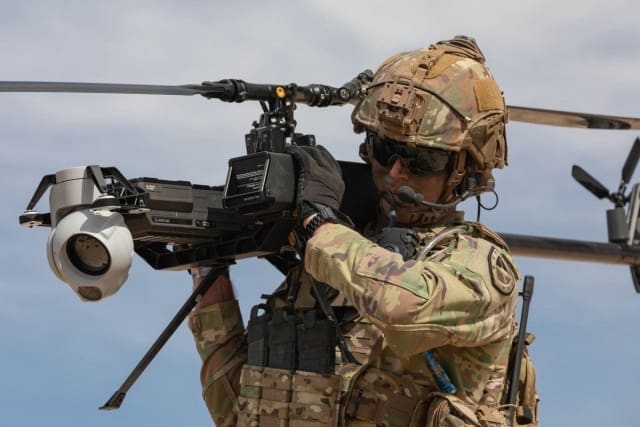
The combined contract, valued at $6.1 million, includes the purchase of 210 SmartShooter Smash 2000LE systems and one AeroVironment Titan Cerberus XL system. This milestone expands the layered defenses that protect installations and critical defense infrastructure from the emerging UAS threats in the U.S.

“We need a layered defense that includes distributed sensing, the ability to track in real time, and capabilities to engage with both non-kinetic and kinetic countermeasures,” said Army Brig. Gen. Matt Ross, task force director. “This purchase does not solve that problem, but it’s a step in the right direction.”

He added that both contracts were executed at a record pace, underscoring JIATF 401’s commitment to cutting through red tape to deliver critical counter-UAS capability at the speed of relevance during combat operations in support of Operation Epic Fury.

The rapid award timeline reflects strong coordination across requirements, contracting and mission stakeholders to ensure timely responses to operator needs.

Additionally, two radar systems have been assigned to support the National Capital Region in coordination with the Department of Homeland Security, enhancing the region’s ability to detect and counter emerging UAS threats. Ross said this strategic move strengthens local defense capabilities, ensuring that critical infrastructure remains protected.

In support of this reconfiguration, JIATF 401 is also advancing the integration of the Lattice system, a cutting-edge, tactical user interface for command-and-control of counter-UAS that links sensors and effectors across installations and agencies. This integration will boost response times and strengthen national defense, enabling more agile and effective counter-UAS operations.

The task force is pioneering acquisition reform practices to ensure the services and the entire joint force receive the critical technologies they need to maintain the operational advantage and keep America safe.

By Army Lt. Col. Adam Scher, Joint Interagency Task Force 401

101st Airborne Division Tests Next-Gen Drones

Tuesday, March 24th, 2026

FORT CAMPBELL, Ky. — The 101st Airborne Division (Air Assault) tested their ability to integrate unmanned aircraft systems to support ground forces during a live-fire exercise on March 12.

“We are no strangers to innovation here on Fort Campbell,” said Brig. Gen. Travis McIntosh, deputy commanding general of operations for the 101st. “Drones are reshaping the geometry of the battlefield in real time and we must adjust. Distance and sanctuary no longer provide the protection they once did, and mass and speed of decision-making will increasingly be enabled by autonomy and AI. This event tested and proved these assumptions for us.”

Advancing Secretary of War Pete Hegseth’s directive for drone dominance, the division utilized UAS operators from its 1st Mobile Brigade Combat Team, 2nd Mobile Brigade Combat Team, and 101st Combat Aviation Brigade, to fly multiple UAS, alongside 5th Special Forces Group (Airborne). The sortie, that consisted of an MQ-1C Gray Eagle, C100 small UAS and Attritable Battlefield Enabler 1.01 systems, provided aerial clearance for 5th Special Forces Group Soldiers during the exercise.

“Drones are a great tool for over the hill reconnaissance,” said Spc. Basil Holland, an infantryman and C100 small UAS operator assigned to the 1st Battalion, 502nd Infantry Regiment. “They have a lot of ability to identify short and medium range targets and get eyes on whatever you need. It’s proven to be super useful.”

Representatives from the U.S. Army Reserve Command also attended the event. They were interested in learning how the 101st incorporates emerging technologies.

“We wanted to get a clear understanding of how the big Army is integrating UAS,” said Mr. Sammy Stevens, a counter UAS lead planner for USARC. “We want to try and replicate their efforts with the Reserve. During counterinsurgency operations everyone was used to looking down, to identify improvised explosive devices, now we have to look up in the air.”

Partnering with USARC highlights the division’s commitment to improving lethality for the entire Army.

“The 101st has been very gracious in supporting us,” said Master Sgt. Bryan Pettaway, USARC senior enlisted advisor for operations and logistics. “By showing us what has worked, and what hasn’t, they have helped us avoid those same mistakes.”

The exercise validated the division’s ability to operate UAS in a kinetic, multi-domain setting. This successful pairing of systems and Soldiers ensures the 101st Airborne Division (Air Assault) remains at the forefront of Army transformation efforts.

“Today’s demonstration was a direct answer to the Secretary of War’s directive,” said Chief Warrant Officer 2 Page Frazier, the exercise coordinator and member of the 101st Robotics and Autonomous Integration Directorate. “We did some unorthodox things and always made first contact with a machine. Before we sent a sapper to breach, we sent an [Attritable Battlefield Enabler]. Before we sent a tech to lase for laser guided munitions, we sent a Gray Eagle. Before we sent cavalry troops or light infantrymen to gather ground reconnaissance, we sent a UAS for medium-range reconnaissance and I don’t think any other exercise has done that. We leveraged modern technology to set conditions for a safe employment of a ground force.”

“I am superbly proud of the teamwork, from both the operational and institutional sides of the Army, as well as the conventional and Special Forces on Fort Campbell,” said McIntosh. “This exercise demonstrates one of the many ways we will dominate in tomorrow’s fight.”

By CPT Andrew Lightsey IV

BFG Monday: Lightweight Load-Carriage for the Warfighter

Monday, March 23rd, 2026

Warfighter equipment is always in a constant state of evolution, where the difference between adequate and exceptional can be measured in ounces. For over two decades, Blue Force Gear has not just kept pace with that standard, they have set it. Ever since the early BFG days, making gear as lightweight as possible has always been their design philosophy. BFG is truly meticulous about it; they will go out of their way to design and re-design a product, simply to reduce weight by a few ounces (sometimes even grams).

The question is why? Why is this so important?

The modern warfighter carries a tremendous amount… heavy armored plates, ammo, comms gear, trauma kits, water… and the weight compounds quickly. Every pound added to a Soldier or Marine’s kit is a pound of performance, endurance, and survivability subtracted from the mission. A Pub Med study showed that “each kilogram added to the foot increases energy expenditure 7% to 10%; each kilogram added to the thigh increases energy expenditure 4%.”1

These warriors will often retire after years of service with broken knees, hips, and backs from the effect of that extra weight. Another Pub Med study stated that injuries can span from “musculoskeletal injuries (e.g., joint/ligamentous injuries and stress fractures) to neurological injuries (e.g., paresthesias).”2 Many gear manufacturers noticed this issue, but none made it their mission to reduce weight with the same passion and dedication as Blue Force Gear. 

Their design philosophy acknowledges the old military axiom: ounces equal pounds, and pounds equal pain. It sounds simple, but acting on it requires rejecting the assumption that heavier automatically means more durable. BFG proved that wrong. By combining superior materials, precision manufacturing, and relentless user feedback driven design, BFG became known as the industry leader to systematically engineer weight out of every component of a warfighter’s load carriage system. They did this without sacrificing a single standard of strength or durability but rather, increasing performance and making gear last longer.

That obsession produced results no one had ever seen. Now, Blue Force Gear’s product line is the world’s lightest and is trusted by the most elite professionals. A few of their revolutionary technologies include Ten-Speed, a military-grade elastic pouch that offers a truly multi-use carrying capability; Helium Whisper, the lightest and strongest MOLLE pouch attachment system in the world; and MOLLEminus, the ground-breaking concept of removing fabric to create rows of MOLLE (i.e., webless MOLLE).

These innovations are only part of what sets BFG apart as the leaders in the lightweight load carriage pursuit. Reducing weight for the warfighter while also enhancing their effectiveness and survivability is and always has been the goal. Ounces equal pounds, and pounds equal pain.

Stay tuned for next week’s article where we take a deeper look at the Ten-Speed technology.

References:

1Joseph J Knapik, Katy L Reynolds, Everett Harman; 2004 Jan;Soldier load carriage: historical, physiological, biomechanical, and medical aspects; pubmed.ncbi.nlm.nih.gov/14964502

2Robin Orr, Rodney Pope, Thiago Jambo Alves Lopes, Dieter Leyk, Sam Blacker, Beatriz Sanz Bustillo-Aguirre, Joseph J Knapik; April 11, 2021; Soldier Load Carriage, Injuries, Rehabilitation and Physical Conditioning: An International Approach; pubmed.ncbi.nlm.nih.gov/33920426

260th Special Purpose Brigade Activated to Strengthen Security in the Nation’s Capital

Monday, March 23rd, 2026

The District of Columbia National Guard activated the 260th Special Purpose Brigade at the D.C. Armory, March 7. It is the only brigade in the Army specifically designed to coordinate military support to civil authorities and protect critical infrastructure in the nation’s capital.

The brigade was created in response to Executive Order 14339 and a subsequent directive from the secretary of war. These called for the immediate establishment, training and equipping of a dedicated National Guard unit. The goal is to support public safety operations and strengthen coordination between military forces and civilian security partners in the district.

Army Brig. Gen. Craig Maceri, land component commander for the D.C. National Guard, presided over the activation ceremony. Soldiers stood in formation as the brigade’s colors were uncased — a military tradition that signals a unit’s formal activation and readiness for duty.

“The activation of the 260th Special Purpose Brigade represents the deliberate execution of national guidance,” Maceri said. “This unit provides the critical command and control structure that enables us to execute a broad spectrum of scalable operations while effectively integrating with our federal and district partners.”

The brigade will coordinate military support to civil authorities and enabling National Guard forces to rapidly integrate with federal and local agencies responsible for safeguarding the capital.

Washington presents a unique operational environment, including the constitutional institutions of the federal government, foreign embassies and national monuments, as well as millions of visitors each year. Protecting that environment requires close coordination between military forces and civilian agencies during major national events, security operations and emergencies.

Among the brigade’s key partners is the U.S. Marshals Service, which regularly works alongside the D.C. National Guard during security operations in the capital.

“Partnerships like this are essential in Washington,” U.S. Marshal Jurgen Soekhoe said. “The 260th Special Purpose Brigade brings a level of coordination and readiness that allows federal law enforcement and the National Guard to operate as a unified team when security demands it.”

Army Col. Lawrence Doane, commander of the 260th Special Purpose Brigade, said the brigade structure ensures continuous coordination with partner agencies. It also allows the brigade to expand rapidly when missions require additional forces.

“This brigade gives us an operational foundation for unity of effort,” Doane said. “It ensures continuity of planning and coordination so that when the situation changes, we can respond quickly and with clarity.”

The brigade also reflects the unique federal role of the D.C. National Guard, which reports directly to the president, not a state or territory governor. This structure places the organization at the center of national-level security planning for the capital.

The unit’s new patch connects the brigade’s modern mission with its historic lineage. The design features three red stars and two red bars drawn from the District of Columbia flag, itself derived from the coat of arms of George Washington’s family.

The brigade carries forward the heritage of the 260th Military Police Command, a D.C. National Guard headquarters brigade that, for decades, coordinated military police operations supporting civil authorities and emergency response across the district, until its inactivation in 2011. Its lineage reflects a long-standing mission of integrating National Guard forces with federal and local partners to protect critical institutions and maintain security in the nation’s capital.

At the patch’s center is an upright, unsheathed sword representing the brigade’s role in providing security for all who live, work and visit the nation’s capital.

“This new patch reflects something bigger,” Doane said. “It represents our commitment to protecting every person who sets foot in the nation’s capital.”

With the uncasing of its colors, the 260th Special Purpose Brigade begins its mission as a dedicated force. It will support public safety, infrastructure protection and coordination between civilian and military agencies in Washington.

By Army CPT Kristy Singletary,?Joint Task Force D.C.