Celebrate 20 years of the TLR-1

Archive for the ‘Guest Post’ Category

Largest Night Match in History SUCCESS: RPGI

Saturday, March 16th, 2024

The shooters know what they want. That’s something former SOF Soldier Brendan Souder of Range Project Group International (RPGi) always mentions about competitors in the Virginia/West Virginia area. This truism is proven every year when RPGi hosts its annual Day n Nite Match at Shadow Hawk Defense Range in Hedgesville, WV.
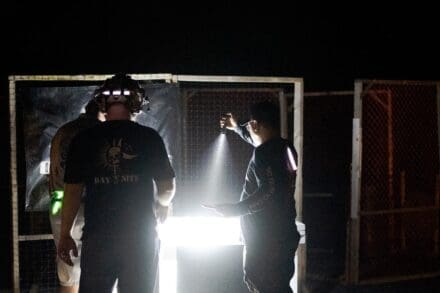
RPGI Day ‘n’ Nite Match

by Saami Spec

It’s the largest competition night match in history. (That we’re aware of, anyway.) The event will accommodate 150 shooter slots, all of which quickly sell out.

The shooters do know what they want, and in this case, it’s shooting at night under a good match director and team.

Directing a night match is no easy feat, let alone the largest in history. Many will not even entertain the thought due to liability worries, e.g., dudes shooting under nods or white light. Pair that with logistical struggles, such as hard time stops due to city ordnance. However, each year (this being the fourth), RPGi handles these issues with professionalism and knowledge.

Not only does RPGi direct a multitude of matches around the country, but Brendan is changing the game when it comes to allowable firearm inclusivity in shooting sports and, another first, hosting international matches!

In this article we will talk about the night match, what it takes to shoot one, and an overview of how RPGi is a positive influence in growing the shooting sports.
Range Project Group International (RPGi)

Founded by Brendan Souder and located in the panhandle of Florida, Range Project Group international runs a multitude of matches both domestically and internationally along with providing high-end professional training courses.

Souder retired from the Special Forces Community as a Chief Warrant Officer 2 after a 20-year career both within the Ranger and SF community. This very much influenced his knowledge and desire for international shooting matches. On the civilian shooting career side, Souder holds a GrandMaster Classification in USPSA and a multitude of certifications. In addition to Souder, RPGi  has a staff of prior military along with higher classified shooters.

The Day n Nite Match

Every year, RPGi travels to Shadow Hawk Defense Training Center in West Virginia to host the annual night match. This event always sells out quickly, pulling competition shooters from the Northern Virginia area, including all the way down to Marine Corps Base Quantico. The last match was in November 2023, and in that match, most of the trophies were taken by Marine Corps shooters working under night vision.

Night Clinic

Before match day, RPGi held a night clinic at Shadowhawk to address the needs and wants of shooters who had never shot a night match before. This was a three-hour format that involved a few drills and runs through a stage. Runs were critiqued and allowed to be shot again. Any division was welcomed, but the clinic was split up on the drills, depending on whether the competitor was running white light or had night vision.

Match Overview

The Day N Nite match was split into two portions: a day portion with 7 stages and a night portion with 7 stages. These stages are in a CQB style format with targets arrayed from 5 to 25 yards (all paper) and are kept under 30 rounds with time plus points scoring. In layman’s terms, two hits on paper allow you to move on to the next target. If impacting a no-shoot or failing to engage, time penalties are added. Physical exercises are added to the daytime stages but are removed during the night for safety reasons.

Many of the stages were unloaded starts. Taurus provided two “stage” guns, a lever gun and a pistol, which added a fun aspect to the match.

Day ‘n’ Nite Match Divisions

  • White Light Pistol
  • White Light Rifle
  • White Light PCC
  • NVG Pistol
  • NVG Rifle
  • NVG PCC

Who Shoots It?

To put these matches in perspective, we will go over the last Day N Nite match scores.

Out of 150 shooters, there were…

32 military shooters, 8 of those being top ten overall in the match
96 civilians, 7 of those being top twenty overall in the match
6 lady competitors
4 Law Enforcement Officers (LEOs)
2 junior competitors
6 senior competitors

NVG (PCC, Carbine, Pistol): 66 shooters
White Light (PCC, Carbine, Pistol): 84 shooters

The Physical Aspect

RPGRPGi likes to put a level of physical stress into their matches, such as in their Tough Gunner and SOF matches. Not only are there options to wear kit, but there will often be exercises such as deadlifts or tire flips that add to your time and get the heart pumping. In the Day N Nite match, there were tire flips, sled pulls, deadlifts, and sprints. If a shooter chose not to participate in the exercise, an alternate exercise was provided, and/or time was added to the overall stage time.

This is another excellent reason for dudes who run guns for a living to come shoot these matches.

Shooting YOUR First Night Match

It can be intimidating.

While this last match allowed for a day portion before the night portion of the match, these night matches are not always day and night. Thus, if you are shooting your very first match, it should probably be a local club match during the day. Each of these matches has seen a small number of brand-new shooters, and while they got through it, the Day N Nite match has higher stakes when it comes to safety. Shooters with at least one match under their belt is an understandable, warranted ask.

These are fast-paced matches with a time cut-off at night. The match needs to run smoothly, and all shooters and gear need to be ready when they get up to shoot.

Note: If you are running night vision, this also shouldn’t be the first time that you’ve run a gun with them.

Equipment will be division-dependent. The match is very inclusive, allowing most shooters to grab what they already have and shoot. Crazy competition belt setups aren’t needed.

For instance, have a pistol, outside the waistband (OWB)  holster, and weapon-mounted light? You can shoot. Only have an inside-the-waistband (IWB) holster? Cool, you can shoot the match. In fact, there were shooters that shot this entire competition IWB. Have a .223 gun with a white light? Come out and shoot. Running full kit with white phosphorus dual tube night vision? Bring it out and show off your money.

This is a big reason why night matches like these—and the match directors who run them—are so appreciated and needed. Not only does it allow civilians to experience running and gunning in such environments, but it’s good for the military and LEO competitors, too. Let’s be real. Military dues aren’t often running their issued equipment in training settings like this. They’re usually on flat ranges with heavy left and right limits, and they’re only hitting a couple of courses a year.

In a competitive environment like this, the pace is much faster, and targets are much tighter. These matches will make guys better with the equipment they use. Thank you to RPGi and Brendan Souder for allowing an environment to make that happen.

Personal Takeaway

As a female shooter with a small amount of USPSA-style matches under my belt and most of my background being in long-range precision matches, the RPGi Day N Nite match in West Virginia was a bit intimidating, especially because it was the first time I shot a night match. I chose to run carbine white light due to not having the opportunity to run carbine in CQB style very often. I ran a 16-inch .223 carbine with a 14.5-inch Ballistic Advantage barrel with a pin and welded Cobalt Kinetics RCB Key Mo muzzle devise. For white light, I ran a Modlite PLH in an Arisaka offset mount. On top was an Aimpoint RDS on a Unity Tactical FAST Mount. I wore a simple Blue Force Gear CHLK belt with one mag pouch and a med kit on my back.
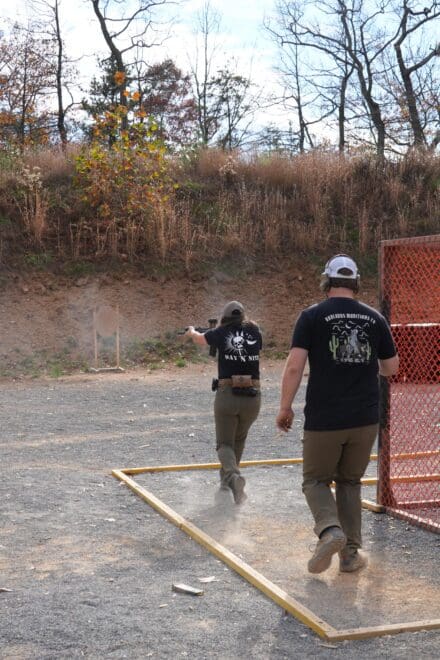
RPGi’s night clinic before the match gave me the opportunity to gain some comfort and confidence before the actual match. The clinic proved that if you know safe gun handling and have shot matches before, you should be fine at night with white light. You may be slower, but a lot moves from the day into the night.

I’m a smaller-framed female. The physical portion was not too much for me. If it was, I had the option to choose an alternate event or even skip it for a time penalty. I was able to successfully complete each physical event, though, and it added a fun stressor.

As far as the atmosphere of the match goes, it’s a really fun set-up. There was a food truck out there all day, and lunch was paid for within the match fee. Between the day and night portions, there was about a two-hour break waiting for it to get dark. Many hung out and tailgated while waiting and prepping their gear for the night shoot. Shooters were having a great time while still coming out and being competitive.

Overall, the match allowed me to get comfortable shooting at night and test my gear. As said previously, I don’t get to run my carbine build much, which taught me a few lessons. For instance, the unloaded starts caused me to adjust my mag catch to run a little tighter. It also caused me to add dielectric grease to the threads of my Modlite, as the battery cap was being really finicky about powering the light.

International Matches

Brendan Souder’s unique background has allowed him to travel all around the world and stay in these places for months at a time. This has influenced his passion for international travel and his desire to spread this culture to the shooting community. Just like the risk that Souder takes on holding low-light matches, he is now taking on the responsibility of hosting matches internationally and bringing Americans and their guns overseas to shoot these matches.

Shooting International Films

What many Americans don’t realize, and what Souder saw firsthand during his travels, is that in many countries, gun laws are very different than in the U.S. They often involve geo-political friction points. To get more eyes on these issues and give Americans a more informed perspective on gun rights, Brendan started filming Shooting International. These films show first hand accounts from citizens that live and shoot within those countries about laws and experiences within the shooting sports. Brendan’s films also provide background on the country and allow his team to show us around. So far, Souder and his crew have traveled to Colombia and Brazil to film and shoot.

All-Inclusive Matches

Inclusive matches, meaning those that allow all different kinds of guns and gear to shoot, will often be smaller local club matches. To shoot larger matches, shooters will need to adhere to strict division rules like those within the United States Practical Shooting Association (USPSA) and similar organization’s sanctioned matches. However, RPGi has shown inclusive matches can be large, even completely selling out. The 2023 Day N Nite match was the largest match of its kind in history.

Souder’s crew will prove this again in a few months when RPGi comes back to West Virginia to host the Cinco de May Match with a new authorized division: shotgun.

Yes, shotguns will be shooting right next to PCCs, .223 rifles, and open-type pistols. That’s a pretty unique thing. There just aren’t many opportunities to run shotguns in fast competitions that aren’t a 3-gun style match or sanctioned IPSC event.

More from RPGi

Upcoming Matches

These are just a few of RPGi’s upcoming events. Be sure to check their schedule regularly – new events are hitting the calendar regularly.

Florida

RPGi SOF Match 2024 “Luck of the Irish” (PCSL): March 16, 2024

RPGi USPSA Low Light Match: March 23, 2024 ·

RPGi Tough Gunner 2024 RNG Match at the Farm (Gaskin, FL): April 13, 2024 ·

RPGi USPSA April 2024 Match at the Farm: April 20, 2024 ·

RPGi Florida State “9-Banger” Rifle Championship (PCSL) at the Farm: June 15, 2024

West Virginia

RPGi Cinco De Mayo CQB Match hosted at Shadow Hawk Defense: May 4, 2024 ·

RPGi Blackout Nationals hosted at Shadow Hawk Defense: November 14, 2024

International

RPGi PCSL Caribbean Championship hosted at MH Tactical: January 20, 2024. Now complete.

Training

Along with private sessions, RPGi offers specialty training such as competition and night shoot clinics. For military, gov, and LE folk, RPGi has access to a live shoot house and offers weekend courses.

Shooting International

Be on the lookout for more Shooting International episodes. Not too long ago, for example, Brendan Souder and the RPGi team traveled to Trinidad and Tobago for the first International PSCL match (that’s Practical Competition Shooting League).

Learn more:

About the Author

“Saami Spec” is a pseudonym, as required by the author’s full-time employer. Saami is a veteran of a full-time Army National Guard unit where she served as a Small Arms Repairer and worked to bolster their marksmanship team. Now a gunsmith and technical writer in the Federal LE world, she writes with a background of many armorer classes and numerous competitions under her belt. An avid reloader who builds the bullets she competes with, she is currently heavily involved in the long-range world and competes in the National Rifle League Hunter, various Gas Gun Precision Series, PSCL, and assorted other kinds of competitive shooting.
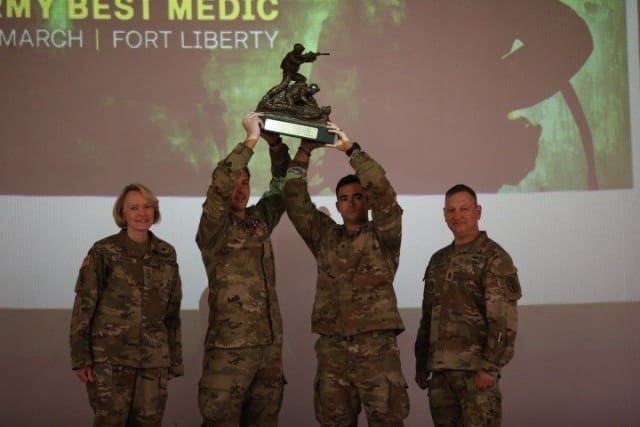
75th Ranger Regiment Medics Prove They’re the ‘Best of the Best’

Saturday, March 16th, 2024

Fort Liberty, N.C. — The 2024 Command Sgt. Maj. Jack L. Clark, Jr. U.S. Army Best Medic Competition was held from March 4-8, at Fort Liberty. This year’s winners are Staff Sgt. Patrick Murphy, 75th Ranger Regiment, and Staff Sgt. Ryan Musso, 75th Ranger Regiment, both of Hunter Army Airfield.


The Army Best Medic Competition is a two-Soldier team competition that physically and intellectually challenges the Army’s top medics in a three-day event that includes a realistic simulated operational environment. The competition pushes Soldiers to their limits to test their tactical and technical operational medicine capabilities — the skills required to bring the injured, ill or wounded warfighter home. More than 50 competitors squared off in teams of two for this year’s competition.

“This is about our Soldiers having combat ready care on the battlefield [in order] to be the most lethal force,” said Lt. Gen Mary K. Izaguirre, Surgeon General of the Army and commanding general of Army Medical Command, at the finish of the competition’s mystery event. “[Soldiers] are going to need everything we ask of you.”

The course tests medical skills and physical capabilities. However, the rigor prepares medics for combat deployments or any other demanding assignment the medics needs to do.

The competition is designed to simulate a realistic environment that includes emerging threats and to represent real-world combat conditions.”

“This competition makes me want to train harder,” said Musso. “To bring my [Soldiers] up to the level where we had to be over the last few days.” Musso said the hardest part was pushing himself farther than he had before.

The competition included events such as were foot marches, prolonged field care, weapons qualifications, day and night land navigation, knowledge test, and a mystery event and of a series of tasks the medics might face on the battlefield.

“Really glad to see all the hard work paid off,” said Murphy. “The hardest event for me was the dragging the Skedco for more than two miles.” (Editor’s note: A Skedco is a stretcher system used for transporting patients.)

Command Sgt. Maj. Timothy Sprunger said to the competitors at the conclusion of the final event, “We were here to find the best of the best. Congratulations.”

Army medics serve as the first line of care for injured, ill or wounded Soldiers and ensures medical readiness. They must be ready when called upon to deploy, fight and win in combat.

“They put it all out there,” said Sprunger. “They did a great job.”

The Command Sgt. Maj. Jack L. Clark, Jr. Army Best Medic Competition is dedicated to the 13th command sergeant major of the U.S. Army Medical Command. Clark was one of the most respected leaders and noncommissioned officers in the history of the command who understood the important role of medics in the Army and the trust Soldiers and leaders of units in combat must have in the Army Medical Department.

The competition is open to all active duty, Army National Guard and Army Reserve medical soldiers who have earned the competitive Combat Medical Badge or Expert Field Medical Badge.

Both Musso and Murphy agreed that future medics considering the competition should, “put themselves in really hard situations and force themselves to not quit.”

By Ronald Wolf

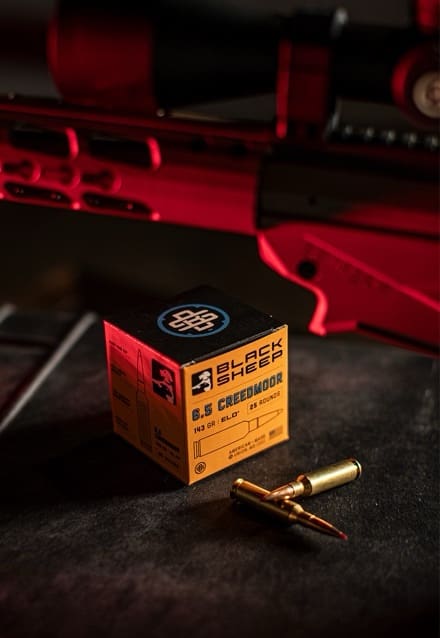
6.5 Creedmoor Now Available from Black Sheep Ammo

Friday, March 15th, 2024

UNION, Missouri – Black Sheep Ammo, Veteran owned / 100% USA owned ammunition manufacturer is now building 6.5 Creedmoor, 143GR ELD. Built with premium USA components and propellants designed to excel in long range applications. Black Sheep Ammo is dedicated to building clean, reliable, 100% USA ammunition.

blacksheepammo.com/6-5-creedmoor-143-gr-eld-25-rounds

FirstSpear Friday Focus – Hooded Field Shirt

Friday, March 15th, 2024

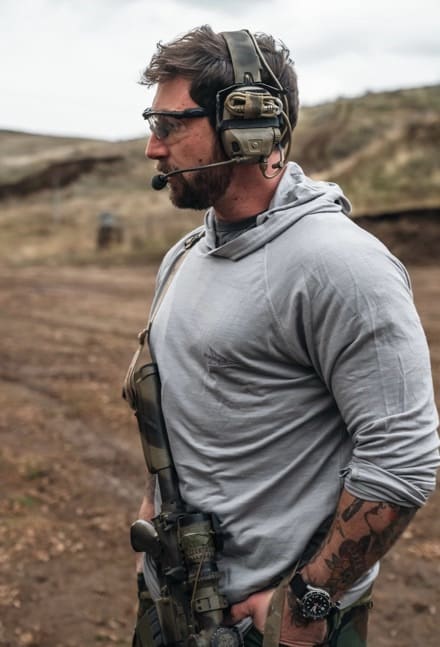
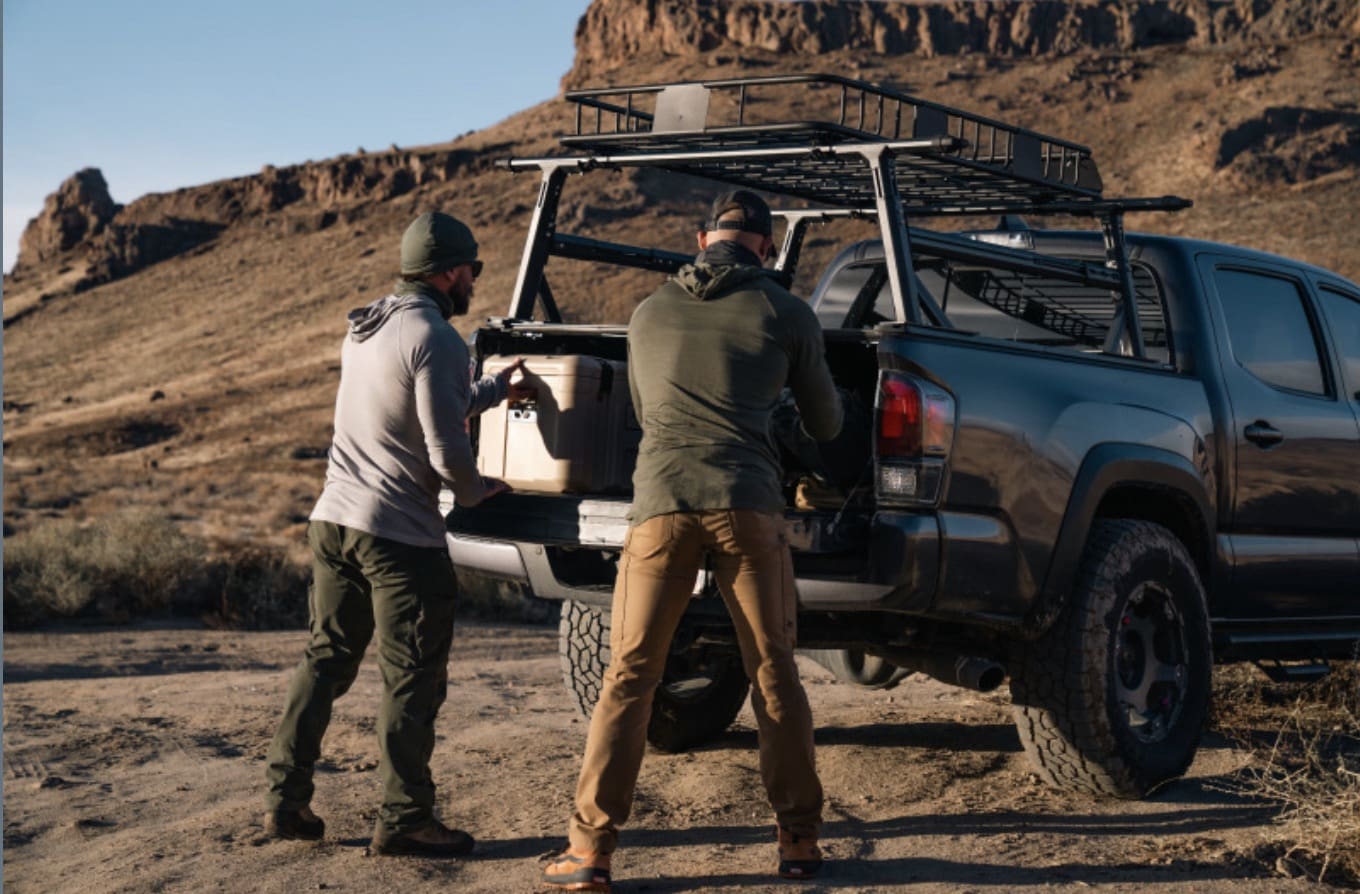
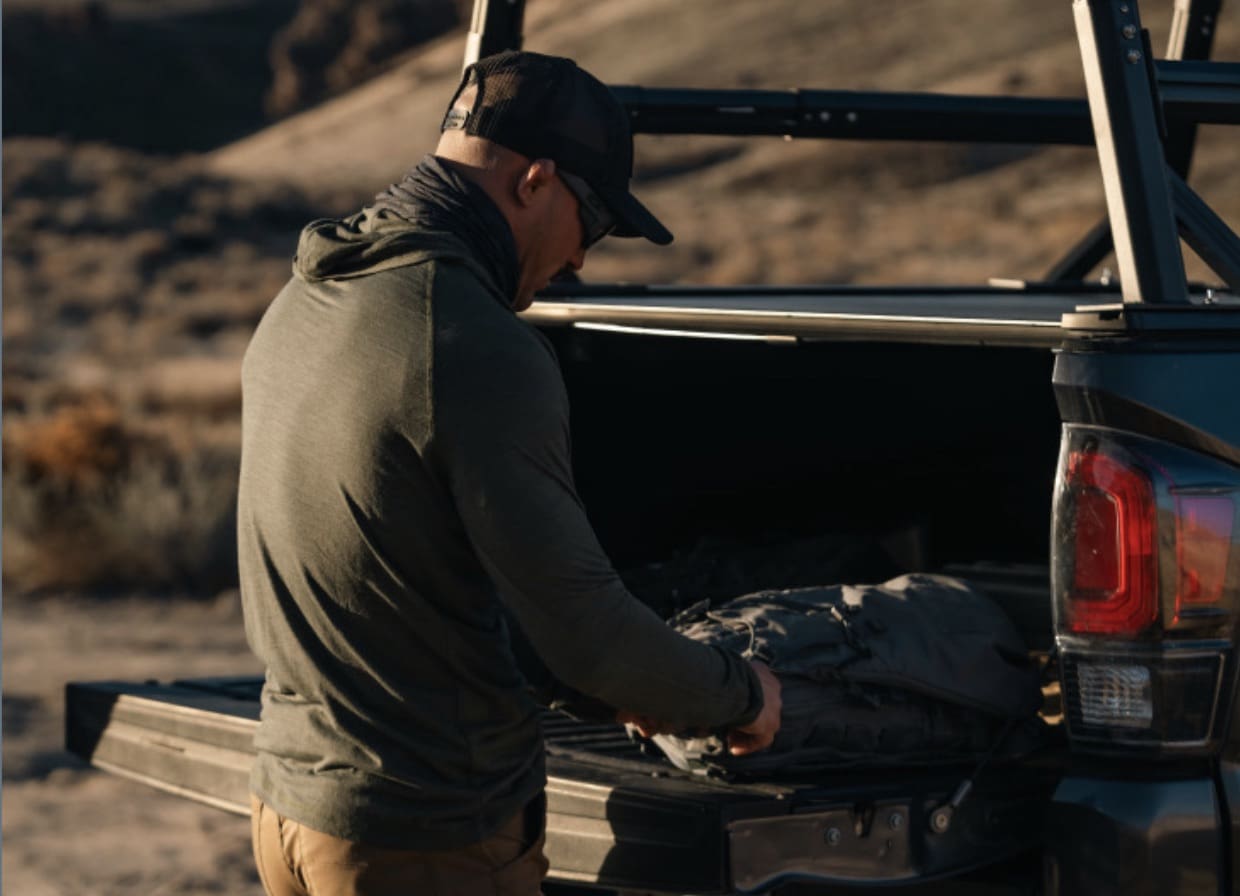
This week’s Friday Focus, is the Hooded Field Shirt. Designed for the modern warrior, this garment seamlessly blends functionality with comfort, ensuring peak performance in any mission or adventure.

• American Wool
• Oversized hood
• Low profile cuffs with thumb holes
• Made in the USA
• Antimicrobial

Don’t be fooled by its lightweight feel – this ACM Base 150 wool fabric offers unparalleled performance benefits that you won’t find in any ordinary shirt. Its updated makeup of 55% Lenzing, 33% wool and 12% nylon offer the perfect blend of synthetic and wool to offer superior fabric properties with increased durability. The hooded field shirt features a slightly larger hood, low profile cuffs, and thumb holes. Use it as a base layer or wear it all on its own, no matter which way you choose, you’ll be sure to stand out as a true patriot in this American-made garment. Don’t leave home without it.

The integrated hood provides additional protection against the elements, allowing you to adapt to changing weather conditions without compromising on performance. Whether it’s shielding from  wind, or harsh sunlight, the hood offers versatility without sacrificing functionality.

Built to withstand the rigors of the field, this shirt exemplifies FirstSpear’s commitment to quality and reliability. From the reinforced stitching to the premium wool, every aspect of its construction is designed to endure the demands of your mission, season after season.

The FirstSpear Hooded Field Shirt is more than just a piece of clothing; it’s a testament to innovation, performance, and resilience. Whether you’re a professional operator, outdoor enthusiast, or weekend warrior, this garment empowers you to face any challenge with confidence.

For more information about the Hooded Field Shirt click here.

Recovery of Air Bases Denied by Ordnance (RADBO) Showcases Abilities at COPE NORTH 24

Friday, March 15th, 2024

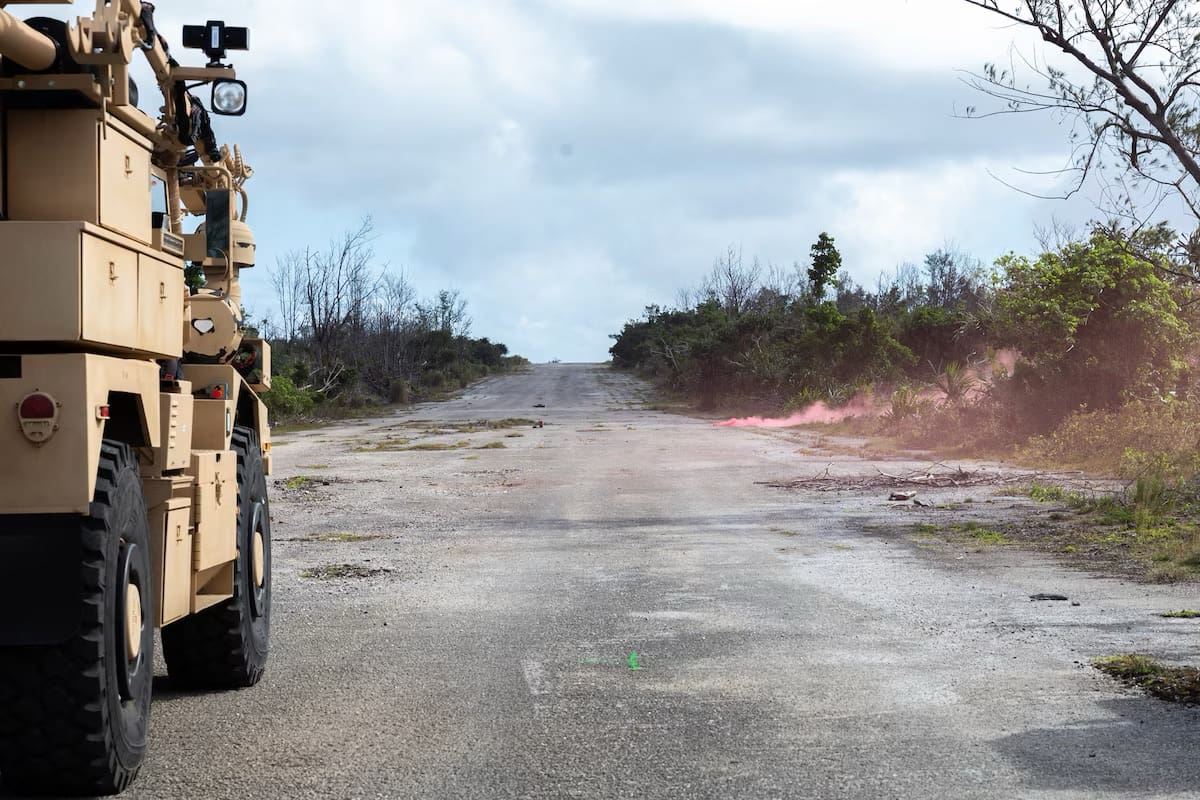
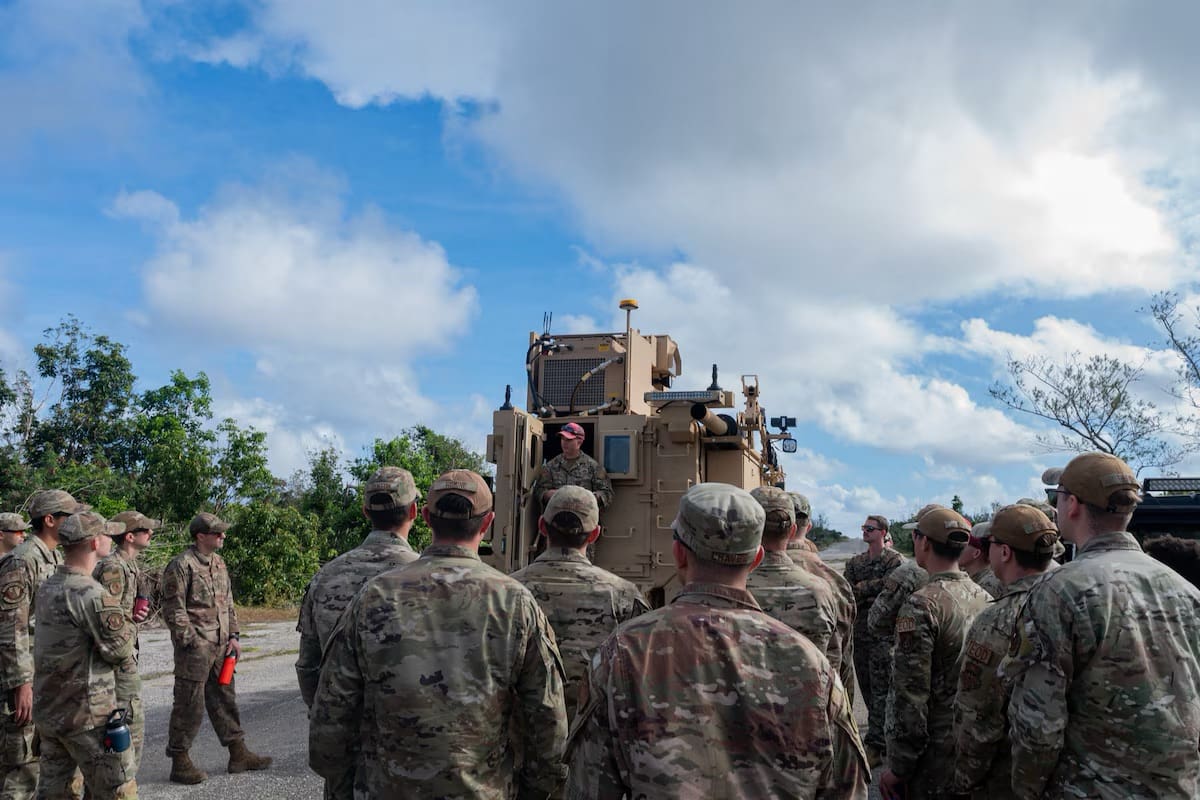
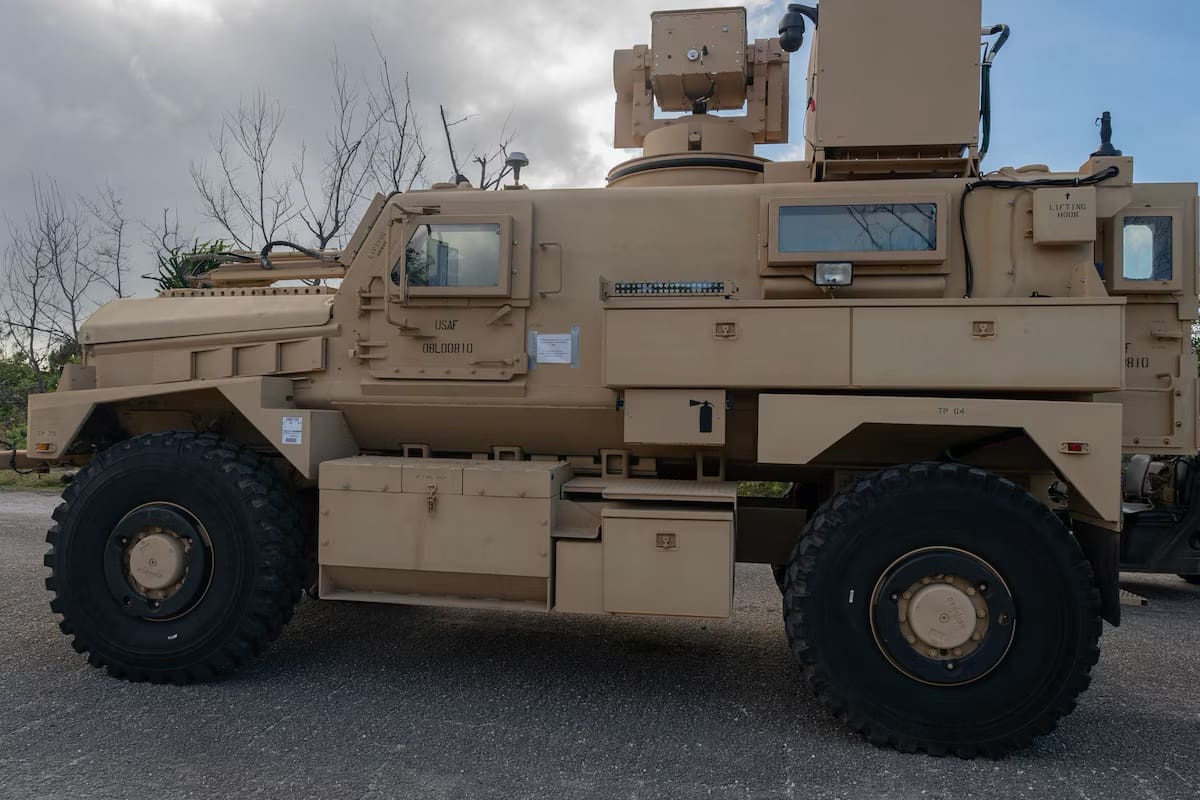
WRIGHT-PATTERSON AIR FORCE BASE, Ohio – The Recovery of Airbase Denied by Ordnance (RADBO), a variant of the Mine-Resistant Ambush Protected (MRAP) family, was utilized operationally for the first-time during Exercise Cope North 24 at Andersen Air Force Base, Guam, in late January.

Cope North 24 is a multinational, U.S. Pacific Air Forces-sponsored, field training exercise  focused on airborne integration for large-force employment and agile combat employment.

“Exercise Cope North is an annual exercise where EOD Technicians from across the Air Force, as well as the joint service, practice the EOD portion of the Rapid Airfield Damage Recovery  mission,” said John Stewart, Air Force Civil Engineer Center EOD Modernization Program analyst and RADBO User Representative. “As a premier RADR exercise, fielding RADBO to the Andersen’s Red Horse Training Squadron provided exposure to the larger Air Force EOD enterprise who will start seeing RADBOs delivered to air bases and training locations globally.”

The intent of the vehicle is to utilize directed energy, or lasers, to safely neutralize and clear unexploded ordnance – such as bombs, grenades, improvised munitions, or other explosive devices – on airfields in deployed or austere locations.

“From a program office point of view, the performance was excellent,” said Tony Miranda, RADBO program manager with the Agile Combat Support Directorate’s Support Equipment and Vehicles Division. “There was a learning curve due to the atmospheric interference not encountered before, but the field service reps from the original equipment manufacturer made adjustments and resolved the focus issue.”

Miranda highlighted that the Explosive Ordnance Disposal teams were excited to have the RADBO asset in hand and praised the vehicle’s performance.  RADBO is a crucial part of the Air Force Civil Engineering Center’s Rapid Explosive Hazard Mitigation and Rapid Airfield Damage Recovery concept.

“The role of RADBO is to rapidly neutralize any unexploded ordnance after an airfield attack so the airfield is safe for civil engineering to repair runway damage, allowing the air mission to continue and get the aircraft back in the fight,” said Miranda.

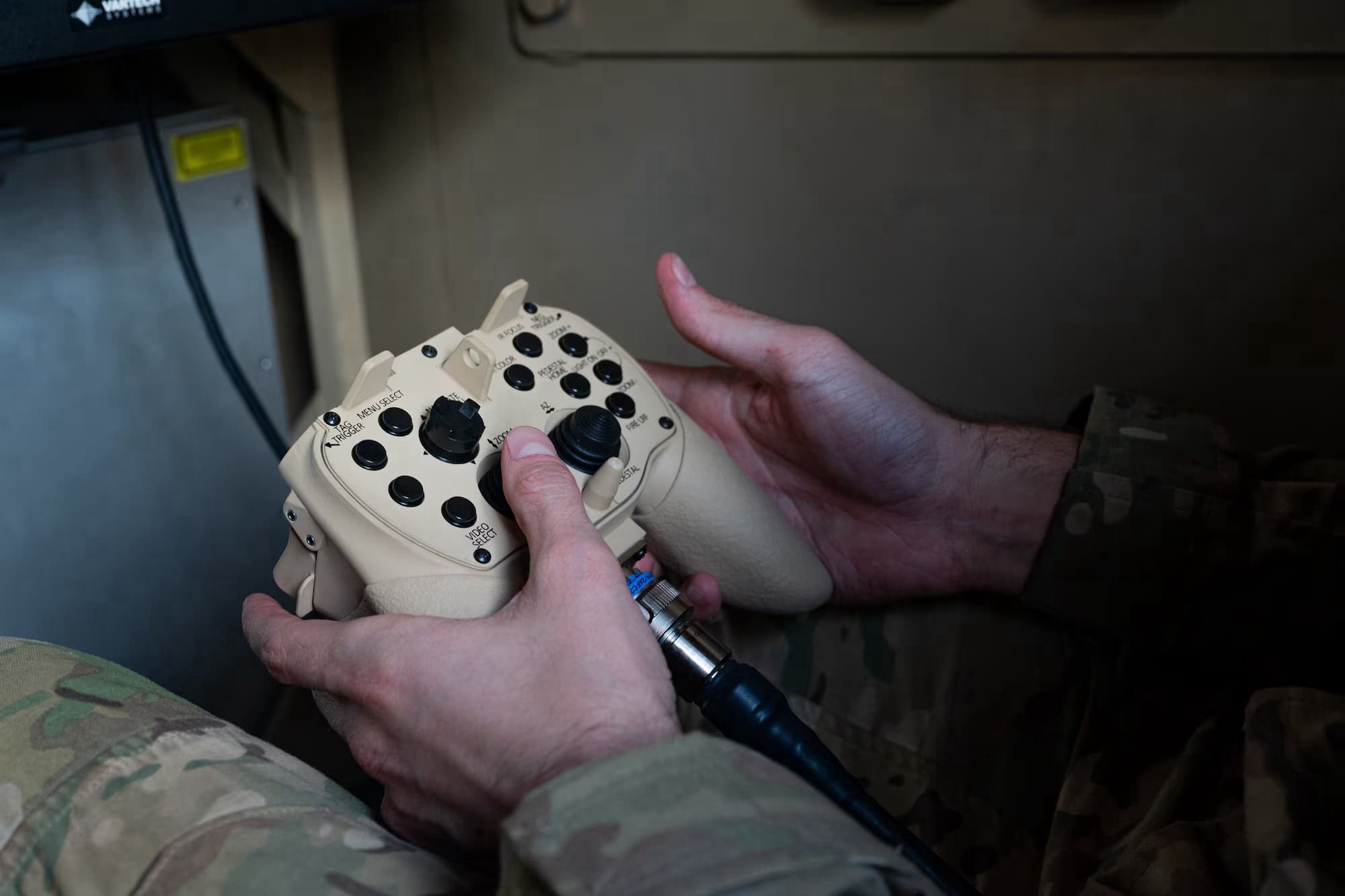
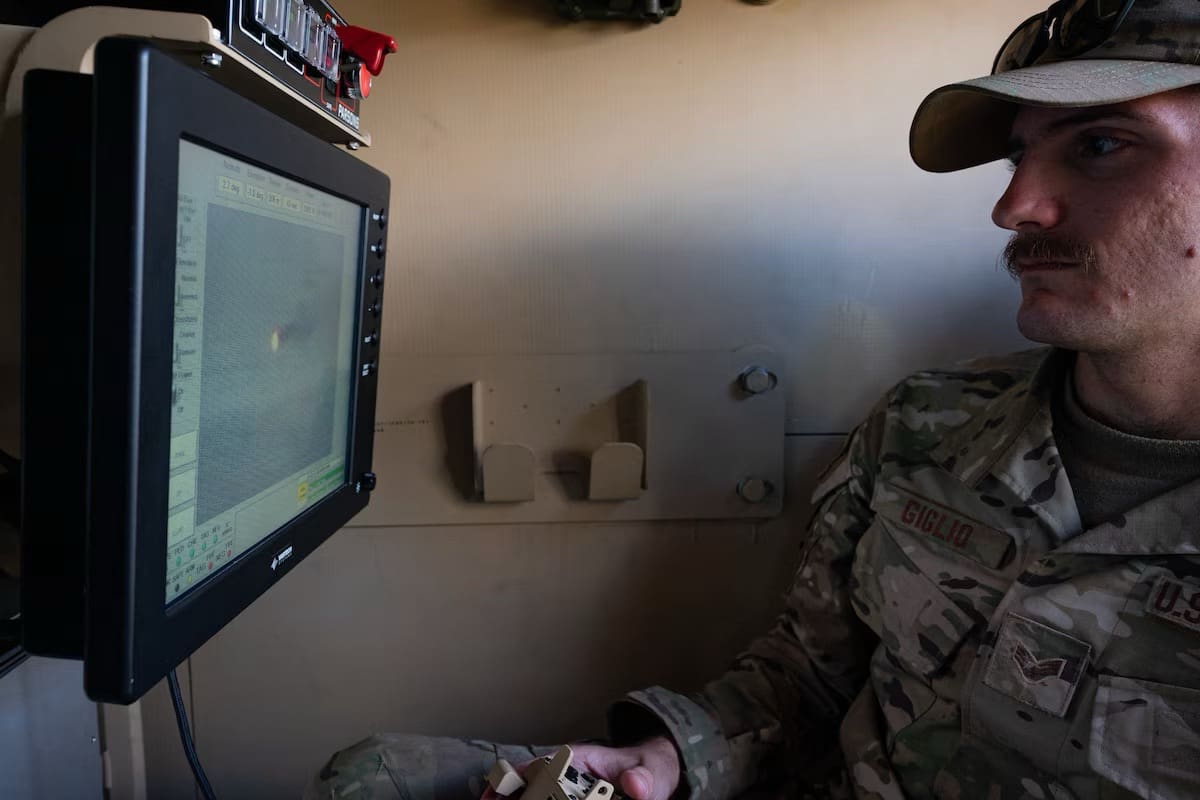
The key features of the RADBO allow for EOD operators to neutralize unexploded ordnances from the safety of the armored vehicle.

“The host chassis is a MRAP CAT 1A1 Cougar in which the Zeus III Laser System is integrated on,” said Miranda. “The Zeus III Laser System is a 3KW fiber optic laser that can fire continuously, provided there is diesel in the tanks for the Cougar to produce power.”

The Zeus III Laser System is effective at ranges from 50-300 meters. The requirement for a RADBO was identified in 2012 by Gen. Goldfein, then Combined Forces Air Component Commander.

“Gen. Goldfein signed an urgent operational need to rapidly neutralize multiple UXOs, repair the damaged runway, and return the airfield to service quickly,” explained Miranda. “Directed energy was somewhat of a new technology for the Air Force, so it has taken a very long time to get to where we are now.”

Currently the program office has fielded 13 RADBOs.  Two prototypes are being upgraded to a production configuration, for a fleet of 15.

“The program office is also working on a contract modification to produce 14 additional RADBOs,” said Miranda. “Moreover, there is a lot of interest from our global allies in the RADBO system, so the program office foresees different variants of RADBO around the world in the next 10 years.”

Story by SSgt Mikaley Kline, Air Force Life Cycle Management Center Public Affairs

Photos by SrA Jasmine M. Barnes

AFRL’s XQ-67A Makes 1st Successful Flight

Thursday, March 14th, 2024

WRIGHT-PATTERSON AIR FORCE BASE, Ohio (AFNS) —  

The Air Force Research Laboratory’s Aerospace Systems Directorate successfully flew the XQ-67A, an Off-Board Sensing Station, uncrewed air vehicle Feb. 28, at the General Atomics Gray Butte Flight Operations Facility near Palmdale, California.

The XQ-67A is the first of a second generation of autonomous collaborative platforms. Following the success of the XQ-58A Valkyrie, the first low-cost uncrewed air vehicle intended to provide the warfighter with credible and affordable mass, the XQ-67A proves the common chassis or “genus” approach to aircraft design, build and test, according to Doug Meador, autonomous collaborative platform capability lead with AFRL’s Aerospace Systems Directorate. This approach paves the way for other aircraft “species” to be rapidly replicated on a standard genus chassis.

This new approach also responds to the challenge of Great Power Competition by speeding delivery of affordable, advanced capability to the warfighter.

“This approach will help save time and money by leveraging standard substructures and subsystems, similar to how the automotive industry builds a product line,” Meador said. “From there, the genus can be built upon for other aircraft — similar to that of a vehicle frame — with the possibility of adding different aircraft kits to the frame, such as an Off-Board Sensing Station or Off-Board Weapon Station.”

So, what is an autonomous collaborative platform?

“We broke it down according to how the warfighter sees these put together: autonomy, human systems integration, sensor and weapons payloads, networks and communications and the air vehicle,” Meador said.

“We’ve been evolving this class of systems since the start of the Low Cost Attritable Aircraft Technologies initiative,” he added.

The major effort that initially explored the genus/species concept was the Low Cost Attritable Aircraft Platform Sharing, program, which fed technology and knowledge forward into the OBSS program that culminated with building and flying the XQ-67A, Meador said.

“The intention behind LCAAPS early on was these systems were to augment, not replace, manned aircraft,” said Trenton White, LCAAPS and OBSS program manager from AFRL’s Aerospace Systems Directorate.

In late 2014 and early 2015, the initial years of the LCAAT initiative, the team began with some in-house designs, for which Meador credits White, who led the studies early on that evolved into the requirements definition for the Low Cost Attritable Strike Demonstrator, or LCASD, Joint Capability Technology Demonstration. The LCASD team defined, designed, built and tested the XQ-58 for the first time in 2019.

“The first generation was XQ-58, and that was really about proving the concept that you could build relevant combat capability quickly and cheaply,” White said.

The OBSS program built upon the low-cost capability that LCASD proved by leveraging design and manufacturing technology research that had taken place since the first generation and was directed to reduce risk in the development of future generations, White added.

“We had always intended from the start of LCAAT to have multiple vehicle development spirals or threads of vehicle development,” White said. “Then once the vehicle is proven ready, you can start integrating stuff with it, such as sensors, autonomy, weapons, payloads and electronics.”

With the XQ-67A, the team is using the platform-sharing approach or drawing leverage from automotive industry practices.

“We are looking to leverage technology development that’s been done since XQ-58, since that first generation,” White added.

With advancements in manufacturing technology since the XQ-58, the team aimed to use that system and the technology advancements to create a system design with lower cost and faster build in mind.

“It’s all about low cost and responsiveness here,” White said.

The team began discussing LCAAPS in 2018, focusing on the notion of “can we provide the acquirer with a new way of buying aircraft that is different and better and quicker than the old traditional way of how we build manned aircraft,” Meador said. “Which means we pretty much start over from scratch every time.”

Instead, the team considered the same approach that a car manufacturer applies to building a line of vehicles, where the continuous development over time would work for aircraft, as well. 

“It’s really about leveraging this best practice that we’ve seen in the automotive and other industries where time to market has decreased, while the time to initial operating capability for military aircraft has increased at an alarming rate,” White said.

With this genus platform, White said a usable aircraft can be created faster at a lower cost with more opportunities for technology refresh and insertion if new models are being developed and rolled out every few years.

AFRL harnesses science and technology innovation for specific operational requirements to ensure meaningful military capabilities reach the hands of warfighters. The XQ-67 is the first variant to be designed and built from this shared platform, White said.

“The main objectives here are to validate an open aircraft system concept for hardware and software and to demonstrate rapid time-to-market and low development cost,” he added.

This project looked at incorporating aspects of the OBSS and the OBWS to different capability concepts. The OBSS was viewed as slower while carrying sensors but have longer endurance, while the OBWS was considered faster and more maneuverable, with less endurance but better range.

“We wanted to design both of those but figure out how much of the two you can make common so we could follow this chassis genus species type of approach,” Meador said.

XQ-67A has been just over two years in the making, moving quickly through the design, build and fly process. While the team initially worked with five industry vendors, AFRL decided at the end of 2021 to exercise the opportunity to build the General Atomics design.

This successful flight is initial proof that the genus approach works, and aircraft can be built from a chassis.

“This is all part of a bigger plan and it’s all about this affordable mass,” Meador added. “This has to be done affordably and this program — even though there’s an aircraft at the end that we’re going to get a lot of use out of — the purpose of this program was the journey of rapid, low-cost production as much as it was the destination of a relevant combat aircraft.”

This signals to other companies that there is a new approach to constructing an aircraft, moving away from the conventional method of starting from scratch, Meador said.

“We don’t have the time and resources to do that,” Meador said. “We have to move quicker now.”

By Aleah M. Castrejon, Air Force Research Laboratory Public Affairs

Air Force Special-Order Uniforms Provide Accommodations

Wednesday, March 13th, 2024

WRIGHT-PATTERSON AIR FORCE BASE, Ohio (AFNS) —  

Military uniforms are designed to accommodate most body types, but many individuals face difficulty finding a good fit based on unique proportions or even medical needs.

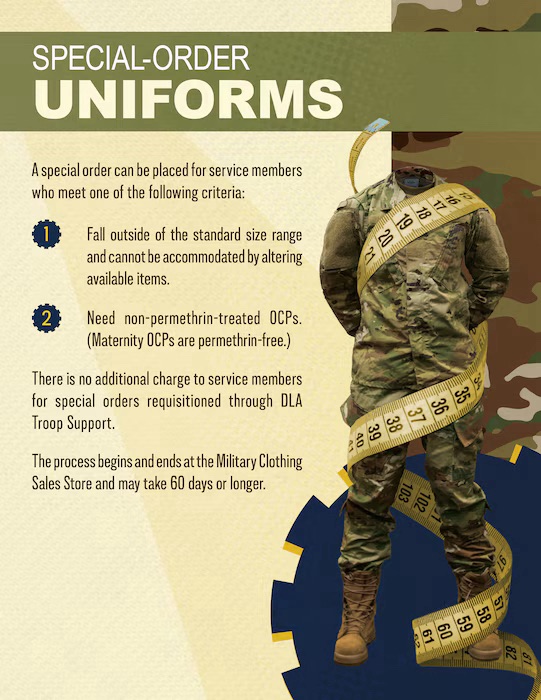
The Air Force provides special-order – often used interchangeably with special-measurement which is the most common type of special order – uniforms to service members who fall outside of the standard size range. There are also options for those who need non-permethrin-treated operational camouflage pattern, or OCP, uniforms. Permethrin is an insect repellent. The special-order process allows service members to comply with military standards and maintain a professional appearance without incurring additional costs.

“What the customer pays is the standard price of the item,” said David James, Defense Logistics Agency Troop Support Customer Cell chief. The DLA Troop Support customer is the Army Air Force Exchange Service, or AAFES, which operates the Military Clothing Sales Store, or MCSS, on behalf of the Department of the Air Force.

“MCSS locations purchase uniforms from DLATS [commonly used as an abbreviation for DLA Troop Support] at cost and sell at cost,” said Shawn Martinson, AAFES military clothing buyer. “If a service member requires clothing or footwear that is unavailable in the sizes provided in store and they cannot be accommodated by altering an available item, the military clothing associate prepares a special-measurement requisition through DLATS.”

When the Air Force transitioned to OCPs, Lt. Col. Katie Henschel, a program manager with the U.S. Transportation Command, noticed she broke out in hives during duty days.

“I had red, bumpy, itchy skin all along my arms and legs whenever I was in uniform; however, over the weekend, my skin would return to normal,” Henschel said. “My medical provider suspected an allergic reaction to the permethrin-treated OCPs. Their advice was to see if non-permethrin-treated OCPs were an option.”

The special-order process begins and ends at the MCSS.

First, a service member tries on several standard sizes to determine if a common size garment can be used. If not, the store associate indicates the best fitting standard size, describes how the garment fits improperly, and takes the service member’s body measurements.

Forms for special-order uniforms are completed and submitted to either DLA Troop Support or the Air Force Clothing and Textile Liaison Office, or AFCTO. The AFCTO, part of Agile Combat Support’s Human Systems Division, assists those unfamiliar with the special-order process by guiding them and reviewing their requests for completion prior to submission to DLA Troop Support. Upon receipt of the special-order request, DLA Troop Support puts the order on contract with their vendor. Finally, the DLA Troop Support vendor develops the requested item and ships it to MCSS for customer pickup.

The special-order process for footwear is similar but may require a visit to a healthcare provider if a medical condition is confirmed or suspected. A healthcare professional will take foot measurements and tracings and fill out required forms. The paperwork is then given to MCSS for requisition.

“Most special orders can be filled in 60 days, but depending on the item there may be exceptions,” James said.

By Maj Tiffany Low, Air Force Life Cycle Management Center, Agile Combat Support Directorate

Tactical Tuesday: Feel the Coolness of Fusion Flex, Powered by 37.5 Technology

Tuesday, March 12th, 2024

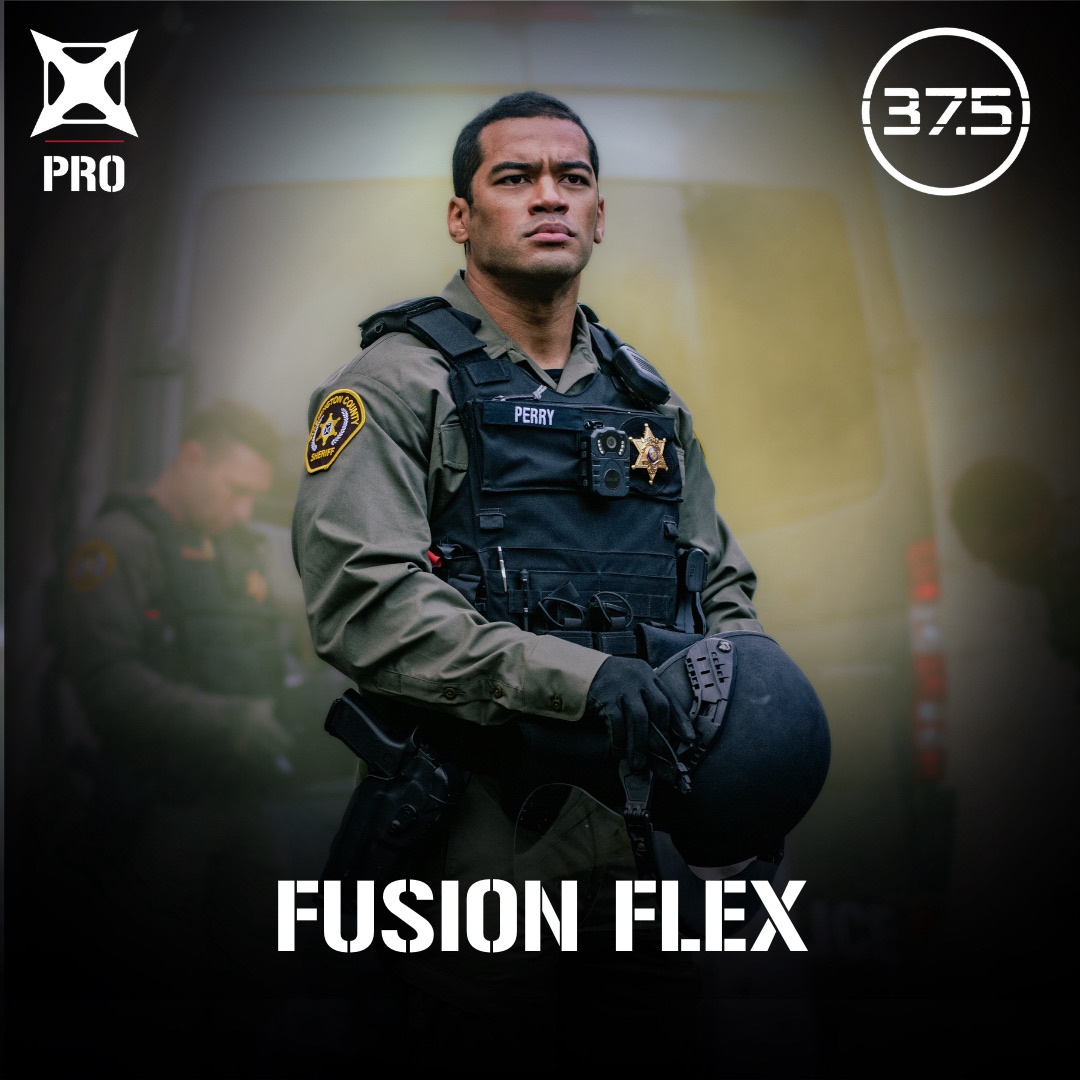
Fusion Flex is the first Vertx Pro uniform that ingeniously integrates 37.5® Technology into both shirt and pants. Think of this evaporative cooling technology as your personal thermostat, keeping sweat at bay and your body temperature just right for ultimate comfort. Plus, it’s a natural odor-buster that stays effective for the garment’s entire lifespan.

Available in four colors and tailored fits for both men and women – Fusion Flex provides comfortable flexibility without compromising its durability.

Check out the Fusion Flex Collection and other Vertx products with 37.5® Technology.