SIG SAUER - Never Settle

Archive for the ‘Guest Post’ Category

Soldiers Test Drone-Delivered Breach Capability

Tuesday, June 30th, 2026

ORCHARD COMBAT TRAINING CENTER, Idaho — A heavy-lift drone climbed into 25 mph gusts above the high desert June 22, carrying a live Bangalore torpedo toward a wire obstacle.

For combat engineers, breaching that kind of obstacle is one of the most dangerous missions on the battlefield. Army doctrine accounts for that risk with a 50 percent casualty planning factor for a deliberate breach.

This time, no Soldier had to sprint forward to place the charge.

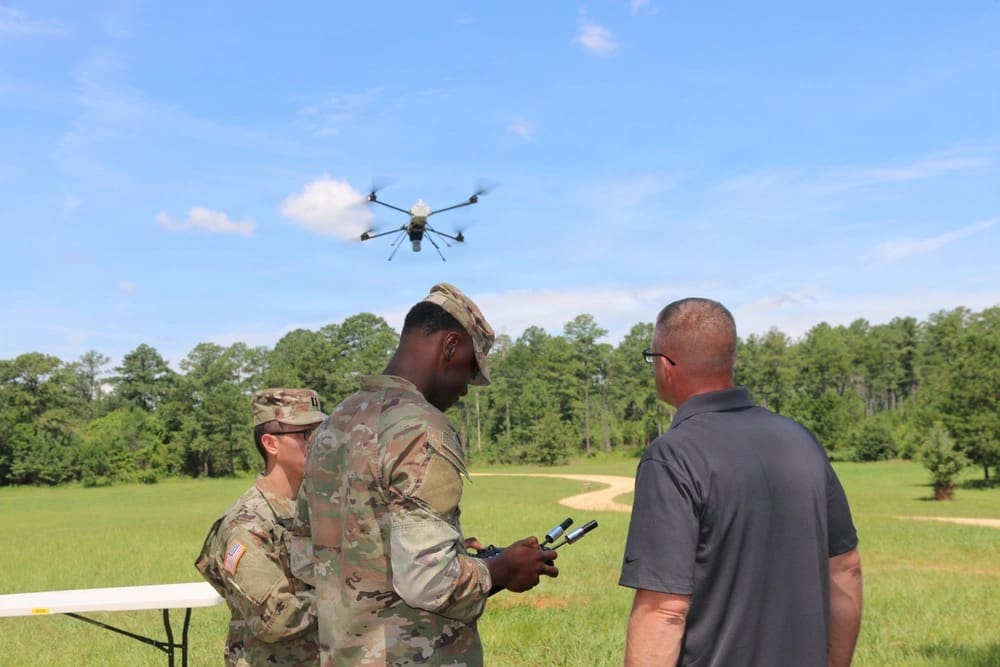
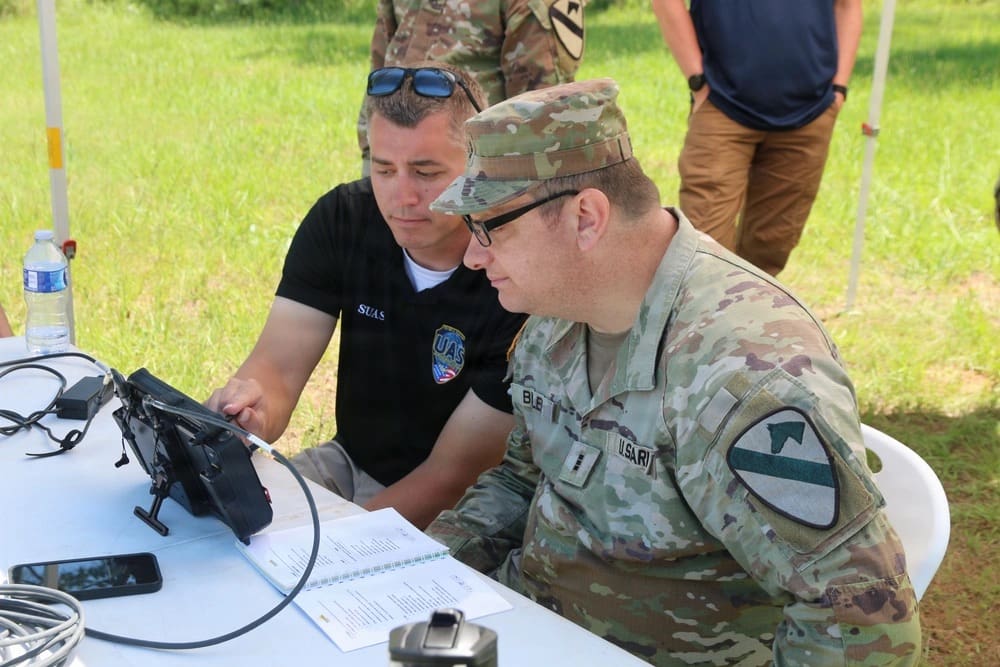
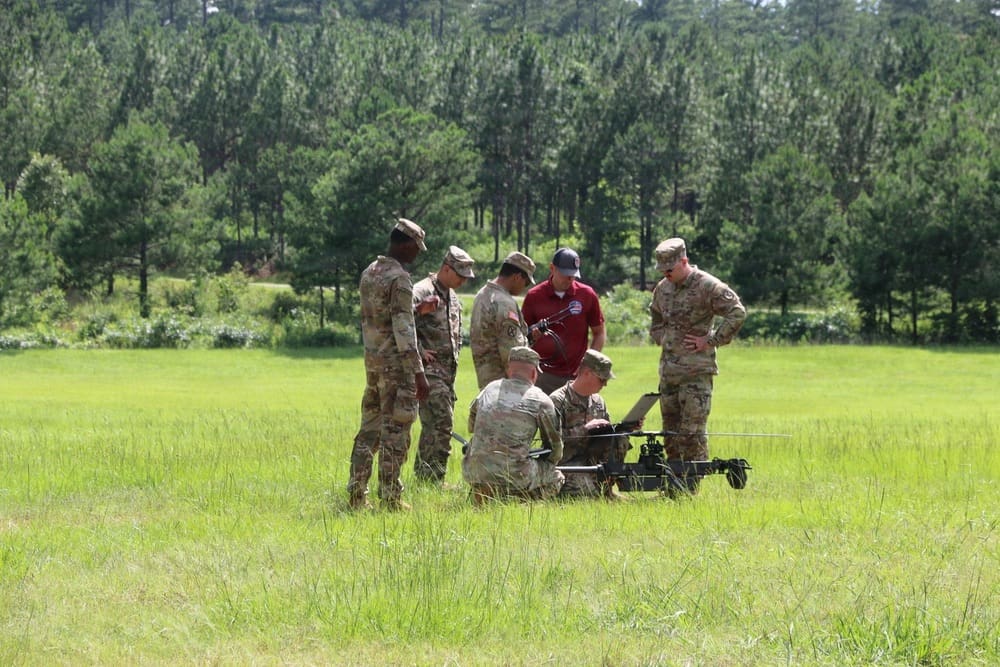
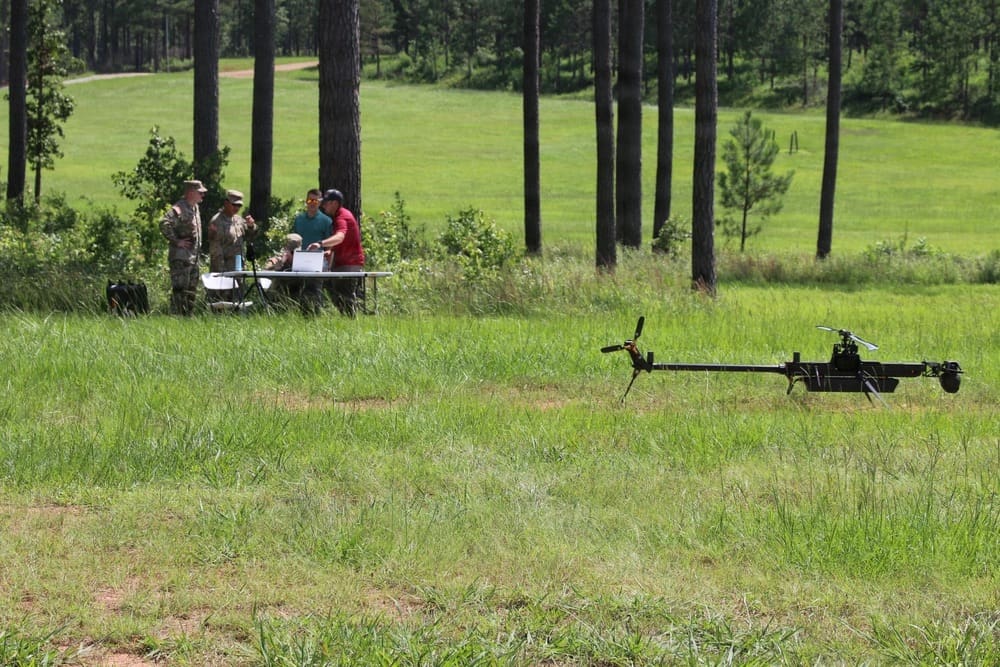
Soldiers from Bravo Company, 741st Brigade Engineer Battalion, 41st Infantry Brigade Combat Team, Oregon Army National Guard, used a drone-delivered Bangalore torpedo to breach the wire obstacle on Range 22. The drone released the charge, shock tube unspooled behind it and the Soldiers took cover before the Bangalore detonated, opening a lane through the wire.

The proof of concept marked the close of a months-long innovation effort by the 741st BEB’s drone working group. Battalion commander Lt. Col. Eric Zimmerman established the group with a directive to defeat a wire obstacle using a commercial off-the-shelf or similar drone during the battalion’s annual training. The working group’s research found no precedent for the tactic in the U.S. Army.

“Mostly Ukraine,” Zimmerman said when asked what drove the concept. “Watching what was going on in Ukraine, and how innovative they are, it inspires you to get better and think bigger.”

The doctrinal cost of a breach added urgency to the effort.

“The most casualty-producing thing that Army engineers do is the breach,” said 1st Lt. Andrew Lucas, who co-led the working group from the battalion S-3 operations section. “Expect 50 percent casualties. If you can deliver something to clear the breach with a $40,000 drone, instead of putting Soldiers in harm’s way, that’s worth experimenting with.”

Innovation surrounded by doctrine

Zimmerman said his intent was to apply emerging technology to a problem engineers already know how to solve.

“I want us to talk about drones around something we already do really well, which is defeating obstacles,” he said. “So let’s do this non-doctrinal thing, but surround it with doctrine.”

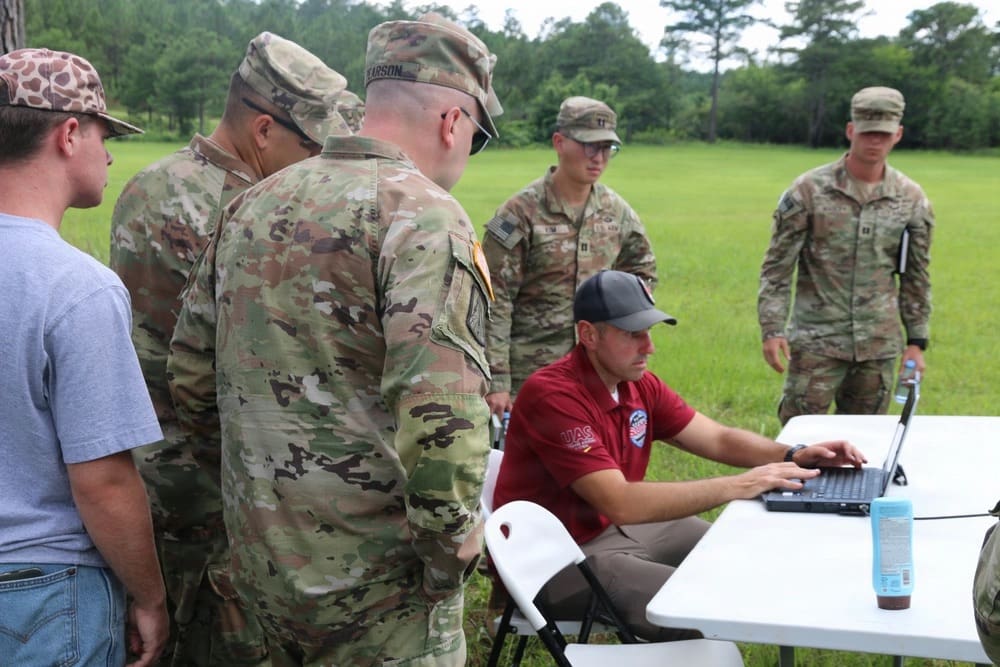
The working group was led by Lucas and Capt. Samuel Cushing, the battalion’s plans officer, with input from senior noncommissioned officers, including 1st Sgt. Joshua Martin. The team first studied commercially available drones priced from $2,000 to $40,000.

After funding for a commercial purchase did not come through, the team turned to the Oregon Army National Guard’s 249th Regional Training Institute. The RTI’s existing drone-build program could not produce an airframe with the lift capacity required by the mission. Lt. Col. Mark Timmons, the 249th RTI commander, told the working group his program could not meet the requirement within the available timeline.

Rather than abandon the effort, the battalion operations section continued pursuing alternatives. Working from specifications developed by the drone working group, Maj. Harvey, the battalion S-3, and Martin, the battalion operations noncommissioned officer, vetted industry partners before determining Lorica Technologies could meet the requirement.

When Lucas arrived for annual training, he believed the search had come up short.

“We’d been told no, it’s not going to happen, we’re not going to get a drone,” he said. “And that’s when Maj. Harvey said, ‘Oh, we actually got a drone.’ So, full speed ahead.”

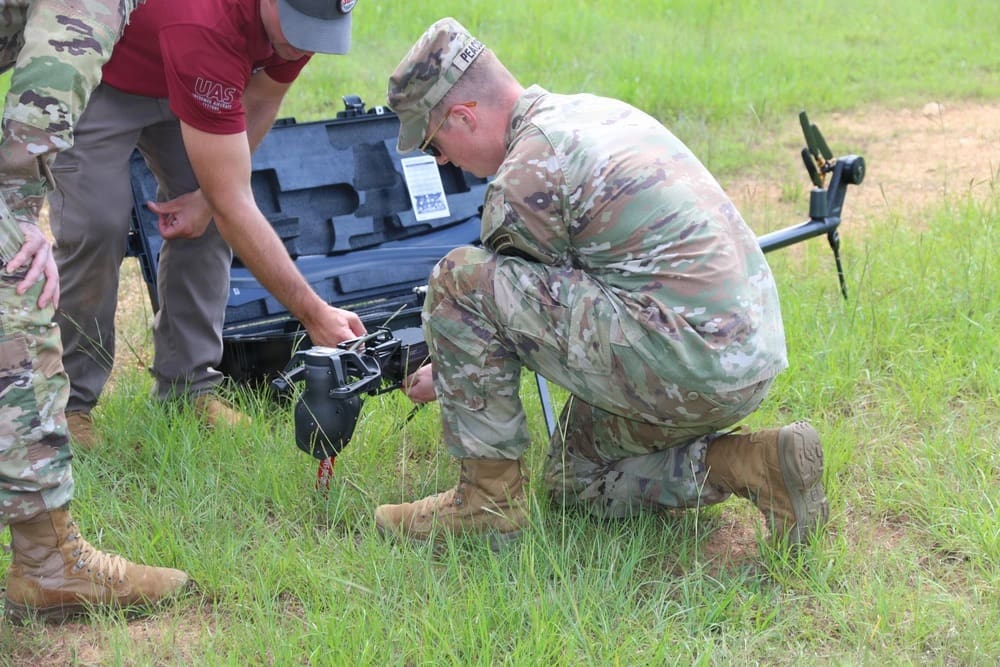
The Mule 28

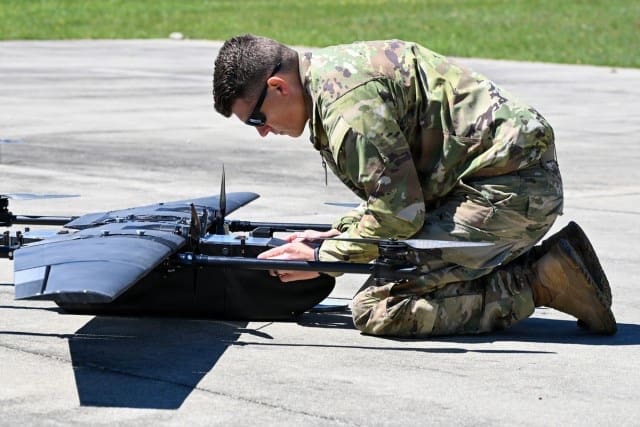
Lorica’s contribution was the Mule 28, a heavy-lift, multi-mission unmanned aerial system designed and built in-house at the company’s Ashland facility.

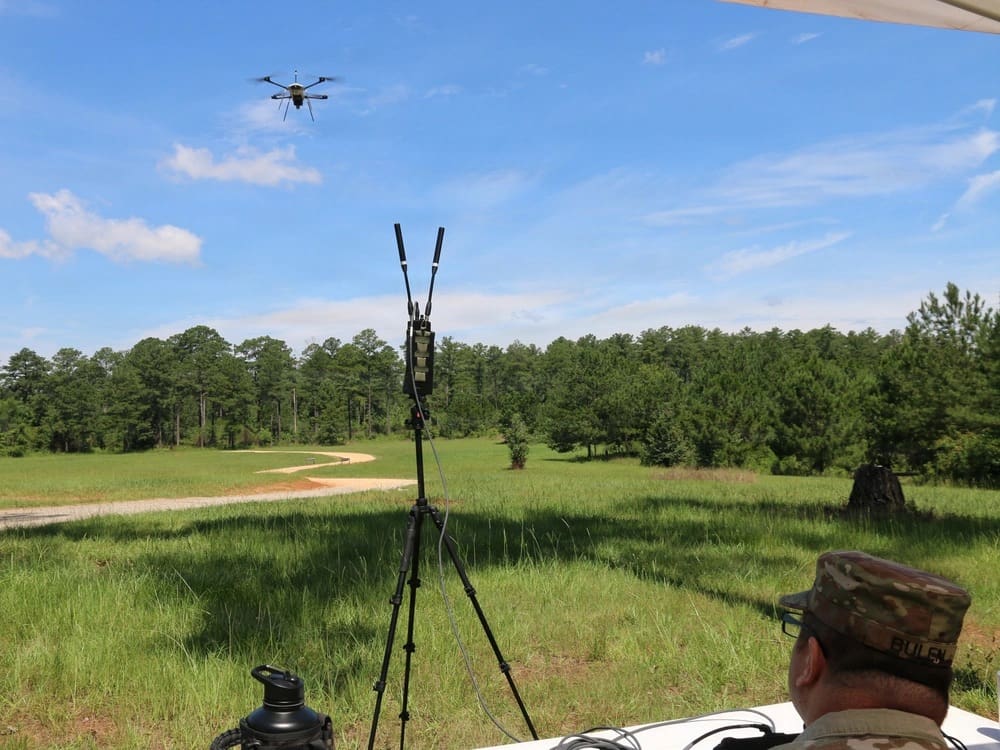
The airframe weighs about 45 pounds, can lift about 200 pounds and is powered by eight motors turning eight 28-inch bi-blade propellers. It carries onboard artificial intelligence processing, software-defined radios and a sensor package designed to support recognition and targeting functions. The drone can also derive coordinates from its camera using trigonometry and focal length, allowing it to mark drop points on objects it identifies.

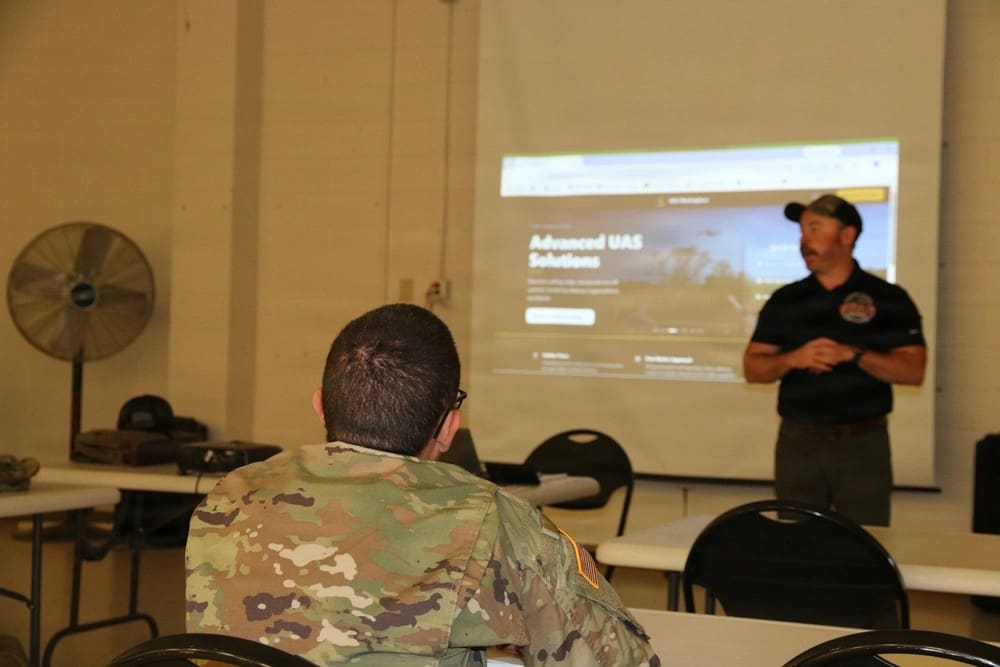
Lorica founder and CEO Christopher Dye said the company’s software, including a swarm-control system called Hive, is what makes the platform distinct.

“It doesn’t matter what the vehicle is, as long as we understand the capabilities and the parameters of the vehicle,” Dye said. “We can task the swarm based on what the job needs to get done. Right now, we’re working on natural language control, so that you can just talk to the bird and tell it, ‘Hey, I want a reconnaissance around this building. I need to know how big that ditch is before we get there, how many steps, how high the windows are.'”

Lorica currently fields three Mule 28 prototypes. The company had about six weeks to develop the airframe for the Oregon project.

Cushing said working with a domestic manufacturer to build to specification, rather than buying a commercial drone with Chinese components, was a deliberate choice that helped reduce electronic warfare and supply chain vulnerabilities.

“It’s been helpful to have contractors that can meet every specification we’re asking for and produce a drone that also meets the Army’s intent for any sort of technology that we integrate,” he said.

Soldiers with Bravo Company, 741st Brigade Engineer Battalion, 41st Infantry Brigade Combat Team, conducted a proof-of-concept drone-delivered breach against a wire obstacle June 22, 2026, on Range 22 at Orchard Combat Training Center, Idaho. U.S. Army video by Maj. W. Chris Clyne, Oregon National Guard Public Affairs.

Building the safety case

The team built safety into the project by increasing risk in stages. The drone first carried an inert training aid identical in size and weight to the M1A3 Bangalore. Once the platform could reliably deliver an inert charge on target, the team progressed through limited live-fire iterations before flying a live, two-section M1A3 Bangalore torpedo.

Every iteration involving live explosives was initiated using a shock tube spooled from the drone to the obstacle. The team deliberately avoided an electronic trigger that could be jammed or prematurely activated.

“Ideally, you would love to be able to remote-detonate this without having to have a spool of shock tube,” Lucas said. “But in the LSCO environment, we’ve seen so many other systems jammed that if you have the ability to, it’s not a detriment that we’re doing it this way.”

The M1A3 Bangalore torpedo demolition kit consists of 10 tube sections, each 2.5 feet long and containing a 5-pound composition B4 main explosive charge. Doctrine permits up to four sections joined together for a single shot. The working group used two-section assemblies June 22 and made one small adjustment to prevent the blasting cap junction from pulling loose in flight.

“We’re trying to introduce a new TTP here anyway,” Cushing said. “We want to see if we can deliver a Bangalore remotely and defeat a wire obstacle. Everything beyond that is something we’ll take into consideration as the project evolves.”

Both working group officers said the broader value of the project is giving engineers a tool tailored to their core mission rather than relying only on infantry-focused drone applications that have dominated the field.

“Mobility, counter-mobility is the bread and butter of the engineers, so we should focus on leaning into that versus infantry tasks,” Lucas said.

Cushing said the Bangalore breach could become a foundation for broader experimentation.

“The platform they’ve built, if we got an entire annual training with plenty of explosives, range time, and the ability to make modifications as we go, I think we could be defeating 10, 20 times more obstacles than we’re talking about today.”

Lucas said the next conceptual step is autonomy.

“We’re not that far technologically from a drone that has an AI processor on it that could identify where concertina wire is. And you could put in a rough coordinate of, ‘Hey, I know the obstacle’s there,’ and you could send it to autonomously deploy the Bangalore on the wire with near-perfect precision, where there’s no possibility of it being jammed, because it’s all running off of internal direction.”

Dye said the next iteration of the Mule 28 will refine flight controls, dropping mechanisms and safety systems, with the goal of integrating AI-driven obstacle recognition that could allow the drone to identify a wire obstacle, position itself and release the charge autonomously. Lorica plans to return to additional inert drops in the coming weeks and is preparing for follow-on demonstrations.

Zimmerman said the successful demonstration reflected more than a new capability. It showed collaboration across the battalion.

“I’m really proud. We have a true group project that highlights innovation across everything we do is possible,” he said. “The Soldiers of Bravo Company took an idea from the battalion staff and applied their expertise to make that idea functional and effective.”

For Dye, watching the live Bangalore release and detonate as planned was, in a word, “relief.”

“It’s been very nerve-wracking the last few days,” he said.

The 741st BEB plans to capture lessons learned in a battalion white paper and forward the concept to the engineer community.

By MAJ Wayne Clyne

BFG Monday: Choosing the Right Belt System for the Mission

Monday, June 29th, 2026

Not every mission requires the same equipment setup.

The belt system that works well for a patrol officer, infantryman, range instructor, or prepared citizen may not be the right answer for someone working around helicopters, elevated structures, maritime environments, or vertical access operations.

That is why belt selection should start with the job itself.

Modern warfighters and armed professionals ask a lot from their equipment. A combat belt may need to support holsters, ammunition, medical gear, communications equipment, breaching tools, retention equipment, or climbing capability, all while remaining stable and comfortable during extended wear.

The challenge is that not every user needs the same level of capability.

Some users need a streamlined battle belt optimized for load carriage and daily operational use. Others require a more specialized system that integrates climbing or restraint functionality directly into their equipment setup.

Those are two very different requirements.

That distinction matters when discussing the BFG CHLK Belt and the Integrated Stealth Harness (“ISH®”).

The CHLK® Belt Was Built for Modern Load Carriage

For many users, a dedicated combat belt remains the right answer.

The BFG® CHLK® Belt was designed as a lightweight load carriage platform built to support modern combat equipment without unnecessary bulk. Built around the MOLLEminus®platform and BFG’s ergonomic curved belt design, the CHLK helps distribute weight more naturally while maintaining stability during movement.

That matters over long periods of wear.

A poorly designed belt can create pressure points, shift under load, restrict movement, or become increasingly uncomfortable once ammunition, medical equipment, radios, and other gear are added. The problem becomes even more noticeable during vehicle operations, long movements, or repeated transitions between standing, kneeling, and prone positions.

The CHLK Belt was designed to address those realities while maintaining a low-profile footprint that supports a wide range of operational roles.

For many military, law enforcement, and prepared citizen applications, that is exactly what is needed. A stable, lightweight gun belt capable of supporting essential equipment without adding unnecessary complexity.

Sometimes simpler is better.

The ISH® Was Developed for Specialized Operational Requirements

Some environments demand additional capability.

The BFG Integrated Stealth Harness (“ISH”) was developed for users who require the functionality of a combat belt along with integrated vertical, restraint, or climbing capability within a single adaptable platform.

Rather than functioning as a standalone belt, the ISH integrates harness functionality directly into the overall equipment system. The platform combines elements of a tactical climbing harness, gun belt, and travel restraint into one lightweight solution designed for specialized mission sets.

That integration allows the user to transition from weapons handling and movement to climbing or restraint operations without stopping to don separate equipment.

For certain operational roles, that matters significantly.

Helicopter work, maritime environments, elevated structures, confined access points, and other specialized tasks can quickly complicate equipment management. Carrying separate harness systems adds bulk, increases complexity, and may interfere with weapon access or mobility.

The ISH was designed to reduce that burden by integrating those capabilities into a single streamlined platform.

Just as importantly, it was built around the same ergonomic curve design and MOLLEminus architecture found in the CHLK system, helping maintain consistency across equipment setups.

Capability Should Match the Mission

Modern tactical equipment discussions often push users toward the most feature-heavy setup available. More capability is often assumed to mean better capability.

That is not always true.

The best equipment setup is usually the one that matches the actual mission requirement without adding unnecessary weight, complexity, or bulk.

For many users, a dedicated combat or battle belt like the CHLK is the right tool for the job. It provides stability, scalability, and comfort in a streamlined package designed for daily operational use.

For users operating in environments where vertical access, restraint capability, or climbing integration becomes necessary, the ISH provides a specialized solution designed around those realities.

Both systems solve problems. They simply solve different ones.

That distinction matters.

The goal is not to choose the most equipment. The goal is to choose the right equipment for the mission at hand.

For units seeking to increase survivability and operational performance through reduced load carriage by upgrading to Helium Whisper, contact the Blue Force Gear Military Department or visit BlueForceGear.com.

Army Armaments Center Develops New Counter-UAS Capability

Monday, June 29th, 2026

PICATINNY ARSENAL, N.J. — A new effort led by the U.S. Army Combat Capabilities Development Command Armaments Center demonstrated advancements developed for fire control, enabling the ability to engage and defeat drones with a common remotely operated weapon station while shooting on the move.

The fire control project is a Science and Technology Integration Office software effort that is designing, developing and demonstrating advanced counter-drone fire control capabilities. The project underwent testing in April at the Aberdeen Proving Ground in Aberdeen, Maryland.

According to Nick Cascia, project officer, the initiative began as a mission-driven response to the emerging small unmanned aerial system threat after leadership directed the team to pursue an advanced fire control capability to defeat small drones.

The effort integrated the Armaments Center’s Gunslinger fire control, originally developed under the Future Attack Reconnaissance Aircraft program, and adapted it for ground-to-air targeting. The remote weapon station is able to defeat small moving targets while the vehicle is in motion by using the Gunslinger’s fire control, as well as various vehicle sensor feeds, to provide real-time data, ensuring the weapon is accurately aimed at the target drone.

This fire control solution uses a modular open system approach, so the developed software as well as any future enhancements can be shared across the Army. Once matured, the software will improve system accuracy against drones, reducing the number of rounds needed to defeat the threat.

According to James Little, deputy project lead, the development team received promising results from their April tests and will iterate and build upon these results in subsequent tests to improve system performance. With these tests, developers will continue to increase the speed of both the vehicle and drone.

“It’s a great start to the effort,” Cascia explained. “The [project] team has put considerable time and effort into developing our advanced fire control algorithms and preparing for this test. Once we started destroying drones, it showed the hard work was paying off.”

By Tyler Barth

Space Force Integrates with Air Force in AI Sprint to Ensure Mission Dominance

Sunday, June 28th, 2026

LAS VEGAS, Nevada – To secure mission dominance in a future, contested environment, the Joint Force must make decisions faster than any adversary. This imperative was the driving force behind the Multi-Decision Advantage Sprint for Human-Machine Teaming, or MASH, a complex, two-week experiment recently hosted in Las Vegas.

Building on the successes of previous single-function Decision Advantage Sprints for Human-Machine Teaming experiments, the MASH marked a significant evolution by integrating an ensemble of artificial intelligence and automation software services from the first three DASH events. For the first time, U.S. Space Force Guardians joined Airmen to work side-by-side with software developers, evaluating how these disparate tools can effectively integrate to solve complex problems across the air, space, cyber, maritime, and ground domains.

“The Combined Joint All-Domain Command and Control Campaign Plan demands that we make better, timelier decisions,” said U.S. Air Force Col. John Ohlund, Advanced Battle Management System Cross-Functional Team director. “By incorporating AI into our battle management architecture, we are ensuring our operators can rapidly process vast amounts of data and deliver lethal effects faster than ever before.”

Conducted within a dedicated Shadow Operations Center-Nellis facility in Las Vegas, the MASH experiment set the stage for this strategic collaboration, led by the Department of the Air Force’s Advanced Battle Management System Cross-Functional Team. The experiment was executed in partnership with the Air Force Research Lab, U.S. Space Force, and the 805th Combat Training Squadron, also known as the ShOC-N, further reinforcing the collaborative effort required to deliver decisive combat power for the Joint Force. Furthermore, four allied nations observed the experiment, gaining insights into the U.S. approach to integrated architectures and setting the foundation for future interoperability.

Space Force Integration: A Critical Milestone

A defining feature of the multi-decision sprint was the active participation of Space Force Guardians. Moving beyond observational roles, Guardians were “in the seat,” directly influencing the development of battle management tools that encompass the space domain.

“Working with Air Force battle managers opened my eyes to how the air domain tackles these challenges. Their focus on tempo, synchronization, and rapid Courses of Action iteration mirrors what Space Force needs, especially when dealing with contested electromagnetic environments,” said U.S. Space Force 1st Lt. Abby Warner, 16th Electromagnetic Warfare Squadron deputy flight commander. “Turns out our decision-making headaches are similar across domains, and Transformational Model-based services adapt quickly to space ops.”

U.S. Air Force Lt. Col. Corey Ellsworth, ABMS Cross-Functional Team integration lead, agreed.

“There are parallels to decision advantage requirements between the air and space domains, especially during major combat operations where all domains are contested,”  Ellsworth said.

He noted that the next step for the DAF’s solution to battle management is to continue integrating with each service’s modernization approach to data and decision-making. The battle management software solutions tested at the MASH are “directly translatable” to Navy, Marine Corps, and Army partners, emphasizing that this collaboration is the next pivotal step in providing “combat multi-domain power” for the “Total Joint Force.”

U.S. Space Force Col. Teina Stallings-Lilly, ABMS Cross-Functional Team deputy director for space operations integration, emphasized the long-term impact of this integration.

“As the operations integrator between the services, my goal is to bridge the gap between our domains,” Stallings-Lilly said. “By having our Guardians in the seat for this experiment, they are seeing the direct applicability of these AI tools and, in turn, are providing the expertise needed to build a truly integrated DAF Battle Network.”

Stallings-Lilly explained that the DAF is moving beyond simple decision support systems to field capabilities that process information at machine speeds. This sprint, she noted, is fundamentally about building a human-machine team that ensures operators can think faster and stay decisively ahead of any adversary.

The need for deep, cross-service integration extends far beyond the air and space domains, shaping the future of command and control.

“The reason we challenge the software to solve multi-domain problems is because that’s the reality of the future fight,” said Ohlund. “An Air Force air battle manager doesn’t have the authority to execute a space or cyber effect, but like any good staff officer, it’s their job to prepare the information and package the options for the general. We want the computers to do that work, to ruminate over every possible multi-domain effect; that way we can present the highest quality menu of decisions to the right commander, faster than ever before.”

WARTECH: Co-Creation for Rapid Fielding

This deep integration of multi-domain warfighters into the development process is a key component of the larger  AFRL process known as WARTECH, which brings together warfighters, technologists, planners, and acquisition personnel to collectively develop operational concepts motivated by future force design and enabled by high-payoff science and technology.

“The DASH to MASH series is really a textbook example of what WARTECH is intended to accomplish and right in line with the Command, Control, Communications, and Battle Management strategy for agile, rapid, and iterative fielding of software solutions to support immediate warfighter needs and long-term force modernization,” said Jeffrey Palumbo, AFRL C3BM Capability Area lead. “This approach of user-producer co-creation allows for proof of concept, energizes the industrial base, allows for early operator feedback to shape development, and sets us up to deliver chunks of decision advantage capability to the warfighter in a rapid and repeatable cycle.”

The MASH Ensemble: Perceive Actionable Entity, Match Effector, and Generate Battle COAs

The experiment challenged six industry software development teams and the ShOC-N’s own military software development team to build tools that address three core decision functions derived from the DAF’s Transformational Model:

PAE: Recommending what actions can be taken against a target.

Match Effector: Given a list of possible effects, ranking a capability or a set of capabilities best suited for the given effect, and repeating for each of the other provided effects.

Generate Battle COAs: Given a list of matched effect-effector pairs, adding the additional capabilities throughout the execution window needed to support the principal match, and repeating for each of the next ranked pair.

A major breakthrough of the event was the successful integration of these disparate vendor tools.

“AFRL has done incredible work building an orchestrator that ensures these different companies can exchange data, ontologies, and metadata seamlessly,” Ohlund said. “We are proving that a true plug-and-play, modular approach not only works, but it fosters continuous competition and allows the government to select the best-of-breed software services as they mature.”

The Warfighter as Expert Evaluator

Throughout the sprint, the Airmen and Guardians were tasked not just as operators, but as expert evaluators. Their mission was to stress-test the AI’s decision logic, identifying limitations and providing immediate feedback to the developers sitting directly behind them.

“This is a true co-creation environment where software developers work directly with warfighters to ensure the tools meet their exact needs,” said Elizabeth Frost, AFRL MASH lead. “The teams are eager for feedback and implemented changes rapidly. This collaborative effort paid off during the second week of the sprint, as we saw a remarkable increase in the volume and quality of courses of action submitted.”

The operational impact of this co-creation was immediate and undeniable for the tactical operators.

“A week ago, it took my team and me 50 minutes to an hour to get one tasking done. With the help of the tool, we were able to get five or six taskings done,” said U.S. Air Force Capt. Adam Sochia, 552nd Operations Support Squadron ABM. “Basically, in the amount of time that we can do one tasking, this tool gives us the data and accurate options to complete five or more additional taskings.

Delivering a Lethal, Integrated Future

The event also featured the ShOC-N’s military software development team, who built their own solutions alongside industry. According to Carlos Dye, the ShOC-N MASH software development team lead, the military developers focused on applying their direct operational experience to the coding process. Their approach ensured that the machine took the brunt of the data processing, while the human operator remained firmly in control of the final tactical decisions.

This unique environment, which physically co-located military operators, Airmen developers, and industry partners, was critical to the event’s success.

“The synergy we are seeing here… is what has been lacking in previous attempts to accelerate delivery of warfighter capability,” said Lt. Col. Wesley Schultz, 805th CTS/ShOC-N commander. “Our mission at the ShOC-N is to remove barriers to creative problem-solving, allowing us to turn innovative concepts like human-machine teaming into tangible, lethal capabilities at speed.”

A key factor in enabling that speed and synergy was the underlying technical framework. Elizabeth Frost, the AFRL MASH lead, noted that by establishing a common application programming interface and architecture, the team was able to provide a unified user interface. This meant that regardless of which vendor’s software was running in the background, the experience remained consistent and intuitive for the warfighter, proving that integrated tools deliver a far better outcome than isolated solutions.

Ultimately, the MASH experiment provided an actionable blueprint for the future of multi-domain operations. The event validated the DAF’s Transformational Model, proving that when battle management is broken down into specific decision functions with a common integration framework, machines can process data at a speed unmatched by humans.

Ohlund concluded, “By demonstrating that diverse, AI-enabled tools can integrate effectively within this model to accelerate the kill chain, the DAF has taken a critical step toward securing decision advantage for the Joint Force.”

Deb Henley

505th Command and Control Wing

Public Affairs
LBT Wants To Hear Your Gear Stories

Saturday, June 27th, 2026

We want to hear from our favorite people! If our gear has ever been an asset to you in your military service tell us about it. We’d love to tell your story!

Send it to marketing@lbtinc.com with subject line:

LBT STORY

US Strategic Command Launches ETHEREAL FORGE to Field Advanced Electromagnetic Warfare Capabilities

Saturday, June 27th, 2026

OFFUTT AIR FORCE BASE, Neb. –

U.S. Strategic Command’s Joint Electromagnetic Spectrum Operations Center is launching ETHEREAL FORGE, a new initiative designed to accelerate the deployment of advanced electromagnetic warfare capabilities and strengthen operational effectiveness in the electromagnetic spectrum  Through this effort, the JEC is conducting rapid, iterative testing and evaluation of software-centric systems to meet operational requirements.

Congressionally-funded, ETHEREAL FORGE supports the United States and its allies in maintaining a technological edge by focusing on Modular Open Systems Approach compatible systems. MOSA is a “plug-and-play” design approach that allows the Department of War to upgrade systems quickly and more affordably by using compatible parts from multiple manufacturers.

“The electromagnetic spectrum is critical maneuver space, not a warfighting domain; it is the connective tissue that binds together every other domain,” said U.S. Air Force Maj. Gen. AnnMarie Anthony, the JEC director. “ETHEREAL FORGE creates a structured, funded mechanism to test innovative solutions to complex EMS challenges and provide acquisition decision-makers with the operationally informed data that they need to move quickly.”

ETHEREAL FORGE provides an operationally relevant environment to accelerate the maturation and fielding of software-centric EW capabilities, significantly reducing time-to-field. By establishing a standardized infrastructure, this initiative enables a modular ecosystem that integrates flexible, best-of-breed applications, allowing operators to efficiently tailor EMS operations system configurations to mission-specific requirements.

“As it stands today, existing EW capabilities and platforms are aging,” said U.S. Air Force Lt. Col. Duc Bui, the project manager for ETHEREAL FORGE. “This puts increased risk to the Joint Force and U.S. allies and partners.”

Click to learn more about USSTRATCOM’s Joint Electromagnetic Spectrum Operations Center

“ETHEREAL FORGE is a paradigm shift in how we field the capabilities that we need to fight and win in the modern operational environment,” he said. “That is denying the adversary while simultaneously providing our force access to the EMS.”

As competitors rapidly advance their own technologies, the EMS environment has become increasingly contested. The project will ultimately help ensure the Joint Force maintains a decisive advantage in this critical area.

“Every warfighting domain depends on the electromagnetic spectrum,” Anthony said. “ETHEREAL FORGE is how the JEC will ensure the Combined Joint Force that we own it.”

For ETHEREAL FORGE, the JEC is seeking advanced, non-fielded, MOSA-aligned EW capabilities that meet specific selection criteria. Interested parties should contact stratcom.jec.ethereal-forge@mail.mil

By U.S. Strategic Command Public Affairs
FirstSpear Friday Focus: Exigent Circumstance Pack

Friday, June 26th, 2026

When the call comes, you go. The FirstSpear EXIGENT CIRCUMSTANCE PACK™ is a true assault pack engineered for exigent moments, purpose-built for entry teams, breachers, and SWAT operators who need fast access to masks, grenades, and breach tools without slowing the stack. Carry it as a traditional backpack or convert it to single-strap mode to keep your rifle shoulder pocket clear for a clean weapon mount and unobstructed transitions.


At its core, the EXIGENT CIRCUMSTANCE PACK™ is built around three working zones: an exterior shock-cord flap that expands to carry a helmet or positive-air breathing system, an internal flap pocket sized for the Avon M53 Series Protective Mask with an integrated elastic daisy chain for grenade retention, and a rear main compartment that accepts hydration up to 3 liters or an optional internal frame. At 16 liters and just over two pounds, it carries lean, opens fast, and reconfigures to whatever the mission requires. The EXIGENT CIRCUMSTANCE PACK is available in Black, Coyote, Manatee Grey, MultiCam, Ranger Green, and MultiCam Black. $350.00.


Built for military personnel, law enforcement officers, and prepared professionals who demand reliable equipment, the EXIGENT CIRCUMSTANCE PACK™ delivers mission-ready organization without sacrificing speed or access. Small enough to stay out of the way. Tough enough to earn a permanent spot in your kit rotation. FirstSpear is the premier source for cutting-edge tactical gear for military, law enforcement, and those who train. For more information visit First-Spear.com.

US Army Establishes Space Operations Branch to Enable Multidomain Dominance

Friday, June 26th, 2026

WASHINGTON — Today, the U.S. Army announced it established its newest branch, the Space Operations Branch, marking an historic milestone in the service’s continuous transformation to meet the challenges of modern, multidomain warfare.

The Space Operations Branch consolidates and formalizes the career paths of the Army’s space professionals. The new branch brings together Army Space Operations Officers, currently designated as Functional Area 40, and enlisted Tactical Space Operations Specialists, designated under the recently established Military Occupational Specialty 40D.

“Land power requires warfighting expertise in all domains. What makes me proud is that our Army is not just building a capability, we’re growing professionals at every echelon,” said Gen. Christopher LaNeve, U.S. Army Vice Chief of Staff. “That’s what the 40D MOS is about—Soldiers delivering the foundational excellence our Joint Force depends on.”

Space Operations Branch serves as a critical component in the utilization of space capabilities and supports the ongoing transformation of Army force structure for multidomain operations.

Combat credibility demands resilient space systems and dedicated counterspace capabilities to protect U.S. assets and deny adversaries the ability to target joint forces from outside the Earth’s atmosphere. Army space professionals ensure our forces maintain the initiative and operate from positions of relative advantage across all domains.

The new Space Branch provides highly trained, ready and deployable Soldiers and formations, equipped to deliver specialized capabilities to enable successful Army and joint force operations while effectively denying, disrupting and degrading adversary operations within the space domain.

“The Army is the largest user of space capabilities in the joint force, and space integration is absolutely critical to multidomain operations at every echelon,” said Lt. Gen. John Rafferty, commanding general, U.S. Army Space and Missile Defense Command. “Establishing the Space Operations Branch is an important step in the Army’s continuous transformation. It provides the Army with the professional structure to deliver space-based effects directly to our Soldiers and units at the tactical edge enabling commanders to fight and win in a contested, multidomain environment.”

Establishing the new branch also relieves operational pressure, primarily on the ADA, Signal, and MI branches, which previously provided enlisted personnel to execute space missions on temporary tours. The transition allows these branches to decrease non-mission-essential billets and redistribute Soldiers to critical vacancies, optimizing readiness across the wider Army.

The Army currently integrates hundreds of thousands of space-enabled systems to enhance maneuver and enable multidomain operations. This structural transformation ensures the service keeps pace with the growing space operations force structure required across the joint force, particularly within its modern multidomain task forces and theater strike effects groups. The Space Operations Branch will produce well-rounded experts to deliver close space support and space interdiction capabilities that maneuver commanders depend on to gain and maintain the initiative.

The transition to the new branch will leverage existing training pipelines. Officer and enlisted training will continue to be conducted at the Space and Missile Defense School, part of Army Space and Missile Defense Command’s Center of Excellence in Colorado Springs, Colo. Eligible Soldiers in grades E-3 through E-9 have the opportunity to request reclassification to MOS 40D through a central selection board process, with the transfer window officially opening in October 2026. Officers may continue to request acceptance to become FA40s, including Assured Functional Area Transfer, after serving in their basic branch.

US Army Public Affairs