FirstSpear TV

Archive for the ‘Guest Post’ Category

TAK Stak from VK Integrated Systems

Thursday, November 30th, 2023

TAK Stack is the one stop shop for all things TAK related! Our application has multiple free features and resources to let users download the full CIV TAK api, the most updated Map Imagery, the latest versions of the most popular plugins, and how-to user guides. Along with the ability to subscribe to your own encrypted private server and access to the Mission After-Action Review System (M.A.R.S.)

No longer will users have to source all the additional add-ons from across the web to get the maximum use of ATAK, everything is conveniently located in one location!

Download TAK Stack from the Playstore.

MRF-SEA Sensing Team Advances Sensing EAB Concepts During Exercise SAMA SAMA 23

Thursday, November 30th, 2023

SORSOGON/LEGASPI, PHILIPPINES —

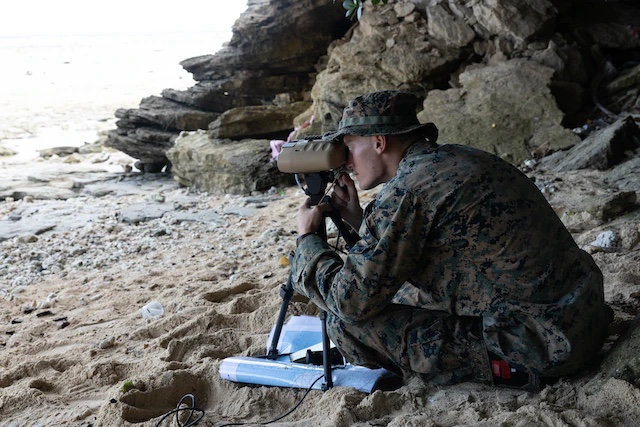
A Maritime Sensing Team with Marine Rotational Force-Southeast Asia completed a Maritime Domain Awareness training exercise at Lebanon Beach from October 9 to 12, 2023.

MDA refers to understanding anything associated with oceans, seas, and other navigable waters that could impact a nation’s security, safety, economy, or environment. The MRF-SEA MST, comprised of infantrymen, intelligence, surveillance, and reconnaissance systems engineers, communications, and intelligence Marines, establish remote sensing sites to provide situational awareness, threat detection, and prevention and to enable decision-making within an area of operations. These expeditionary sensing sites play a pivotal role in enhancing the maritime domain awareness picture and the overall lethality of joint forces.

During the training exercise, the MST and 1st Air Naval Gunfire Liaison Company’s Detachment Team 2 tested novel systems, software, and equipment that sharpened the cutting edge of what these mobile sensing units are capable of.

Throughout the exercise, communication Marines focused on establishing network and data services; the sensor operators set up a SIMRAD radar, a commercially available off-the-shelf radar, and hoisted it 30 feet into the sky. The SIMRAD radar is the primary sensor employed by the MST. Its small scale and portable size allow the team to maintain a minimal signature and footprint while still providing surveillance of the maritime domain.

 “Maritime awareness and the Expeditionary Advanced Base Operations concept are tied hand-in-hand,”

-Capt. Philip Badrov, ADET Team Lead

“Employing the SIMRAD enables us to detect ship movement within straits and littorals,” said Capt. Philip Badrov, ADET Team Lead. “Using the data collected, we report suspected targets to higher echelons, contributing to the overall maritime awareness picture.”

Complementing the SIMRAD’s detection capabilities is the RQ-20B PUMA, a small, unmanned aircraft system equipped with a camera that provides essential visual data needed to identify suspected targets.

“[The PUMA] is a versatile collection tool that can be employed on-site,” said Sgt. Abigail Andrews, MST chief. “It’s hand-launchable with capabilities including a gimbaled camera capable of capturing full-motion video and photos.”

The MST combines these two types of sensors, the SIMRAD and the RQ-20B PUMA, to build a holistic view of the maritime domain.

The training culminated with a simulated close-air support scenario that validated the integrated capabilities of the SIMRAD and PUMA. Using the data from the SIMRAD to detect a target and the PUMA to identify it, Joint Terminal Attack Controllers from 1st ANGLICO could then coordinate close-air support attacks from a Hawker Hunter onto the simulated target. Moreover, the MST provided critical radar data directly to the U.S. 7th Fleet Maritime Operations Center, successfully demonstrating joint capabilities.

“Maritime awareness and the Expeditionary Advanced Base Operations concept are tied hand-in-hand,” Badrov added. “EAB with small teams and sensors en masse, we can eliminate gaps in radar coverage and further contribute to the awareness.”

MRF-SEA, an operational model under Marine Corps Forces Pacific, fosters planned exchanges with subject matter experts, promotes security goals with Allies and Partners, and strategically positions I Marine Expeditionary Force west of the International Date Line, solidifying its commitment to regional security and stability.

By Gunnery Sergeant Alexandria Blanche and 1st Lt. Charles T. Kimbrough | I Marine Expeditionary Force

Green Berets Complete Dive Requalification

Wednesday, November 29th, 2023

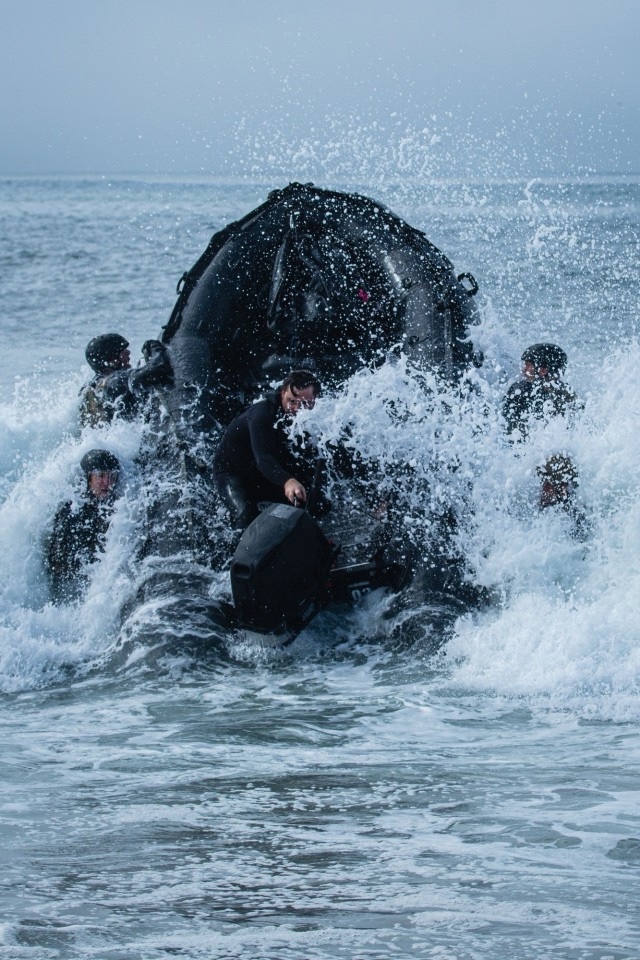
CAMP PENDLETON, Calif. — In the uncertainty of the Pacific Ocean, combat divers assigned to 2nd Battalion, 10th Special Forces Group (Airborne) successfully completed their annual dive requalification exercise on Oct. 10 – 27, 2023.

With overcast skies, fast winds and cold waters, the combat diving teams planned and executed multiple maritime operations, enhancing their effectiveness in various tactics and procedures.

“We want to familiarize our divers [old and new] with different team tactics and procedures as well as exposing the team in a progression and operational glide path,” said a team captain. “We test ourselves in more advanced and punishing conditions such as intense surf, cold water, low visibility and an overall more demanding environment.”

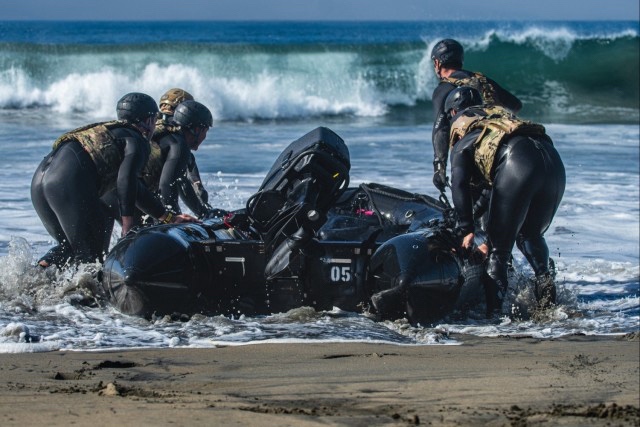
During the 17-day training period, the two combat diving teams initiated their preparation by acquainting themselves with the Zodiac, a boat used within special operations, and diving equipment. This familiarization helps combat divers develop confidence and comfort with their equipment.

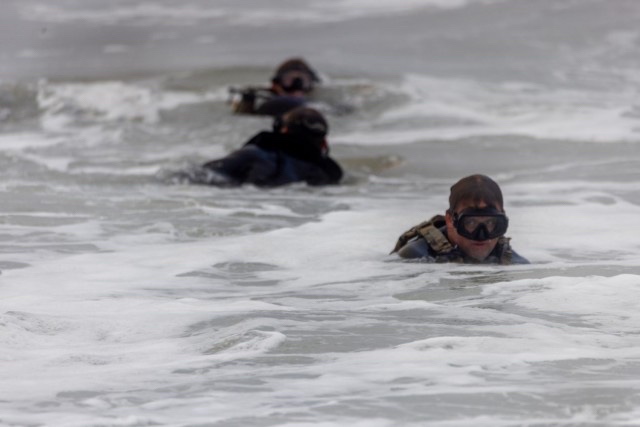
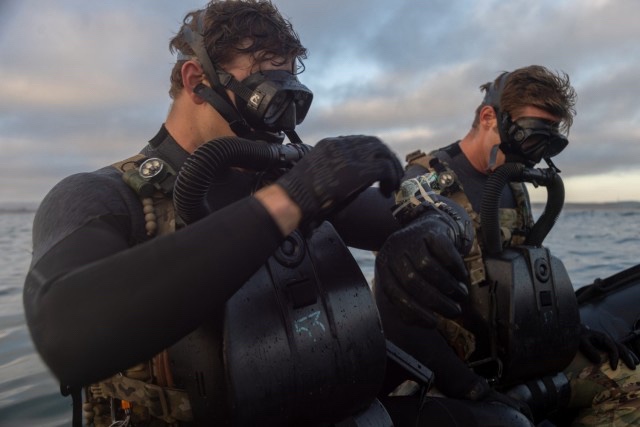
The teams then carried out a series of exercises focused on extensive swimming, beach landing techniques, infiltration, extraction, navigation at depths reaching up to 120 feet beneath the water’s surface and long-distance navigation. Some of these operations were conducted in daylight and under the cover of night.

By being proficient in these skills, combat divers can use their abilities as a method of infiltration to access target points in real life operations.

“For us [combat divers], diving is an ability and a skill to apply on unconventional warfare settings, which is our expertise as Green Berets,” said one of the team sergeants. “It makes Green Berets calmer and more lethal underwater and even more in any real-world situations.”

The divers also had the opportunity to work alongside the U.S. Navy, performing long range movement. This tactic is used to infiltrate target points within the intercoastal or coastal waters.

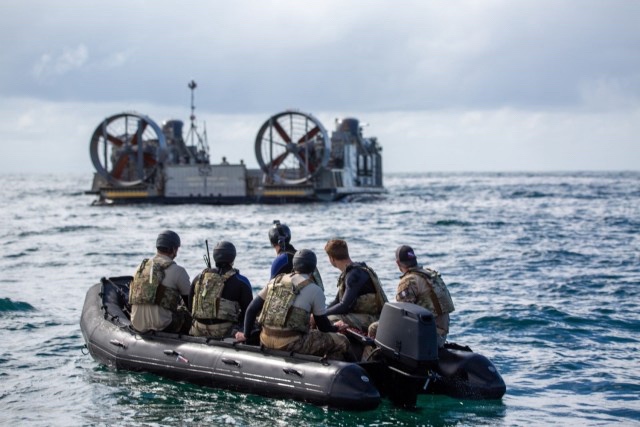
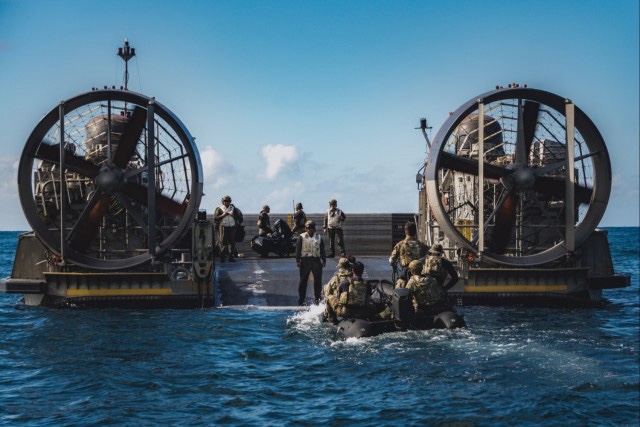
The teams also took advantage of practicing with a landing craft air cushion, or LCAC. The LCAC is a type of hovercraft used to carry out smaller boats for longer distances in more demanding conditions to complete this exercise.

“We are always looking to do joint exercises with other U.S. military branches and even with partner allies,” said a team captain. “Today, we had the opportunity to work with the U.S. Navy in this operation and it was a success.”

Lt. Col. Matthew Mesko, 2nd Battalion, 10th SFG (A) commander, emphasized the importance of mastering different operation domains as the special operations command finds new ways of mitigating operational strategic threats in the maritime domain.

Green Berets defy the belief that they excel only on land; they excel in maritime environments too, proving their expertise in any conditions.

“Our teams here are practicing their mastery in waterborne infiltration methods, improving their lethality across all kinds of domains,” said Mesko. “10th SFG (A) has a proud track record of presenting the best maritime dive capabilities. These gentlemen right here work hard to foster and cultivate that reputation within the country and with our allies.”

An old saying tells that water is unforgiving, however, these elite warriors operate silently and unseen in both, the shadowy depths of the water, and the unpredictable demanding surface. They represent a unique and highly specialized branch of the U.S. Army and the Special Forces Operations Command.

Photos and Story by SGT Luis Solorio

Photos by SSG Isaih Vega

Unmanned Aerial Systems, Emerging Technology Showcased at Annual Maneuver and Fires Experiment

Monday, November 27th, 2023

By SGT Luis Santiago, 24th Theater Public Affairs Support Element

FORT SILL, Okla.– Nearly 30 government organizations and industry partners from across the defense enterprise gathered to identify, integrate, and leverage new tactical capabilities using cutting-edge technologies during the annual Maneuver and Fires Integrated Experiment, simply known as MFIX, from Oct. 23 to Nov. 3, 2023.

Established in 2014, MFIX is the primary live experiment spearheaded by the Fires Battle Lab, under the Fires Capabilities Development and Integration Directorate or Fires CDID based at Fort Sill, Okla. MFIX is part of a series of experimental events as part of the U.S. Army’s overarching effort to remain at the forefront of technological innovation and warfighting ability for the Army of 2030 and beyond to maintain superiority over any potential adversary.

The two-week event brought Department of Defense partners and defense industry leaders from across the U.S. to experiment on various programs of record with emerging technology to seek possible solutions in today’s operating and complex environment.

Soldiers from across different Army organizations, to include the famed 1st Armored Division, took part in this year’s MFIX to provide industry partners with the Soldier’s perspective.

As part of MFIX, Soldiers directly handle and experiment with new and improved technologies and give direct feedback to industry, government partners to gather key insight and reduce the time it takes to get technology into the field and in Soldiers’ hands to operate in the field.

“Every technology gets an assessment based on Soldiers’ touch points, and we have our report, which is an analysis and observation, based on the collected data points,” said Robert Muniz, a Fires Battle Lab targeting expert. “The industry partners will come in, and they have new technology that gets assessed for a year and the end state of all of this is to reduce the time it takes to get technology into the field and in Soldiers hands.”

As the primary orchestrator of the event, the Fires Battle Lab aims to foster innovation and facilitate the rapid integration of promising technologies into the Army’s capabilities.

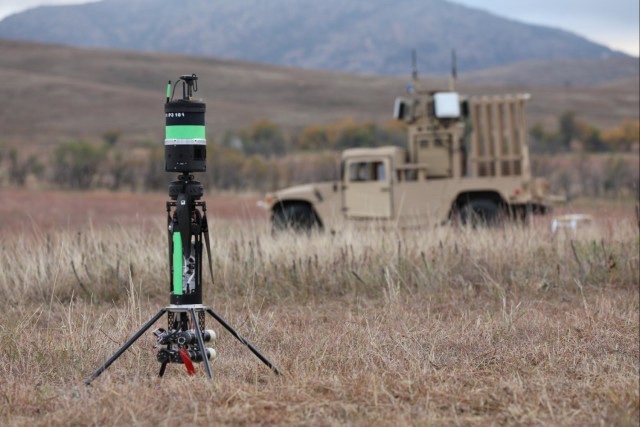
“This year’s MFIX featured several new technologies, including unmanned aircraft systems, advanced fire control systems, laser technology, and a defeat system against intelligent UAS detection,” Muniz added.

In previous years, the participants were immersed in a simulated combat environment, allowing for the real-time analysis and assessment of various technologies and strategies. However, this iteration of MFIX was used as an observational period as the Army runs a series of exercises designed to coordinate data collection, communication, and decision-making leading up to U.S. Army Futures Command’s centerpiece event ‘Project Convergence-Capstone 24 (PC-4)’ being held in early 2024.

“This year is a little bit different,” said Muniz. “The Soldiers we have this year have been used more as data collectors and observers on the system,” Muniz continues. “In previous years, Soldiers got new equipment training, they got an understanding of the capability of each technology or what each system can do, and they used it at MFIX.”

Project Convergence is rebranding as a culmination of several exercises across the force as the event shifts from tactical level to theater level operations with full divisions and a focus on global military integration for command and control. The testing conducted at MFIX is just one small part of a concerted effort to incorporate knowledge gained from training ventures as part of the PC-4.

Army Col. Osvaldo Ortiz, chief of the Army G-3/5/7’s mission command division, told reporters during a June 2023 media interview that “all those exercises are going to inform what the Army Futures Command is going to get after at PC-4 capstone.”

As the U.S. Army continues to train for potential near-peer conflicts, exercises like MFIX allow industry and government partners to offer state-of-the-art solutions as the Army changes the way it organizes, equips, and fights.

” The goal of MFIX is for [Soldiers] to get an understanding of what these new technologies can do, and they’ll have an understanding of what it will be able to do in the future,” said Muniz.

Female Vietnam Vet, Journalist, Reflects on Battlefield Experience

Sunday, November 26th, 2023

By Shannon Collins, Army News Service
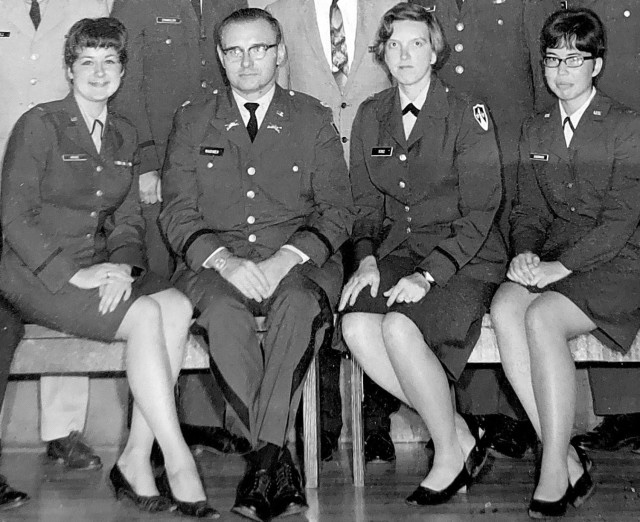
WASHINGTON – Growing up in a newspaper and military family, Karen King-Johnson wanted to serve her country.

In 1965, as the Vietnam War escalated, she attended Officer Candidate School and commissioned into the Army as a public affairs officer.

She said she was inspired to join the Army by her father, a World War II infantry officer who fought with Gen. George Patton’s 3rd Army before being killed by a mortar blast Nov. 11, 1944.

While in Vietnam, King-Johnson served as the command information officer for the U.S. Army Vietnam in Long Binh and circulation manager for the Stars and Stripes newspaper, publishing 100,000 copies each day. She led a team of 43 enlisted photographers and combat correspondents.

She led a team that distributed the publication in five shops in Vietnam. King-Johnson and her staff also produced another publication, “The Army Reporter.” If a pallet didn’t get delivered, she and her team personally delivered it via a helicopter.

“We were in the field every day, taking pictures and riding with the units,” she said. “Two of my guys are on the Vietnam Wall [Memorial].”
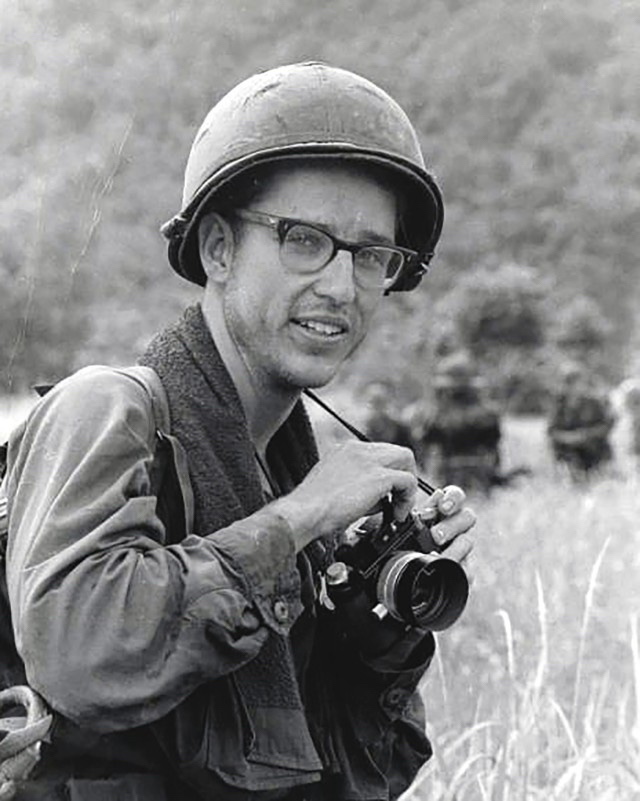
King-Johnson and her staff often embedded with U.S. troops in the field and worked with civilian media. They escorted dozens of media, including legendary American reporter Walter Cronkite.

“We flew almost everywhere we went, and I had a jeep with a [.50-caliber] machine gun,” she said. “There were 754 correspondents in Vietnam. Our job was to escort them safely in and out. We were out in the field, delivering papers. If troops were moving, we were moving.”

They also dealt with logistical challenges in the field. King-Johnson and her staff wore 75-pound wet cell pack radios on their backs that weighed 75 pounds to sustain battery life.

“The radio had to have a 10-foot antenna on it,” she said. “I had a clip on the back of my helmet so it wouldn’t hit me in the head. The young guys would climb the trees and get the antennas up higher so we could communicate with the Air Force. We didn’t want [enemy forces] dropping bombs on us.”

She said they had to “shoot, scoot and communicate.”

“Our job was to make sure everybody back home knew what the guys were doing over there and tell their stories, to make sure no one was forgotten,” she said.

She served in Vietnam with back-to-back tours from 1970 to 1972.

“The VC [Viet Cong] would try to come over the wires at night. They’d turn our ammo around against us, the mortars we had on the outer fence. If we ran out, then they blow back on us. We had to get smart about that,” she said. “They attacked at night.”

Her cousin was a medical evacuation helicopter pilot who flew night and day. He was shot down in 1968. The POW/MIA team is still looking for his remains.

From medical evacuation pilots to nurses to infantrymen, everyone loved the newspapers. If people didn’t get the paper, she heard about it from the three-star general down.
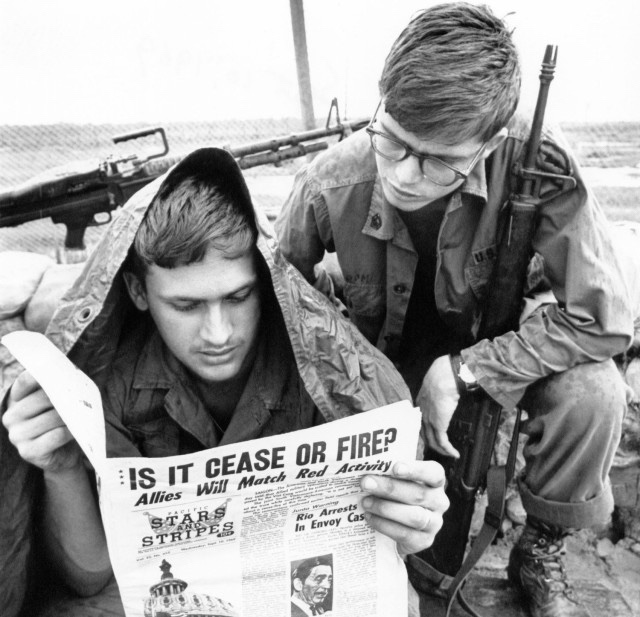
“Everybody loved us,” she said. “We were their favorite thing. They liked us better than food trucks with hot meals. We always gave them extra film. We were using 35-milimeter. My guys would take pictures, and they’d send the extra photos home to their parents. They thought we were great.”

When she returned from Vietnam, she served at Army Recruiting Command and then at Army Training and Doctrine Command, writing field manuals like her father. While there, she met her husband, who served in the Air Force as a Titan II missile commander but retired from the Army and became a federal judge.

King-Johnson, who retired as a major, said she highly recommends serving in the military to the next generation. She said the military provides unique professional training experiences.

“Name a commercial pilot that didn’t get their training in the military,” she said. “You can get so much on-the-job training for free. There are so many different career fields. They’re doing sub training; you’re not going to do that anywhere else in the world. I’m amazed that the American people don’t know what their military does. The military is decades ahead in planning. They knew they were going into the Middle East back when I was in Vietnam.”


Air Force, Coast Guard Partner for Rescue Exercise

Saturday, November 25th, 2023

By Senior Airman Courtney Sebastianelli

23rd Wing Public Affairs

MOODY AIR FORCE BASE, Ga. (AFNS) —  

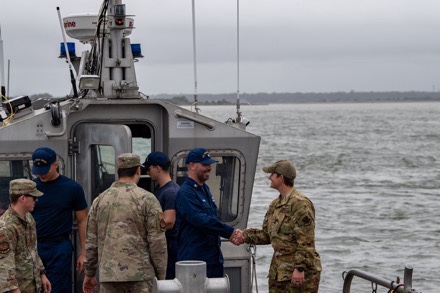
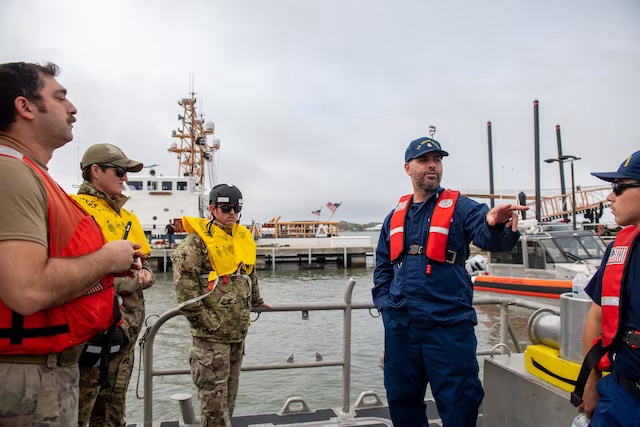
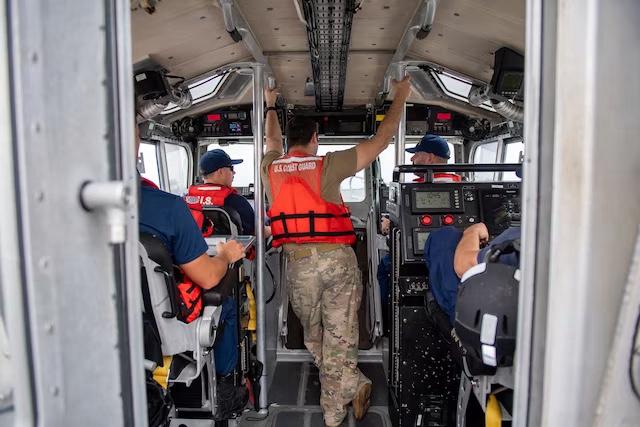
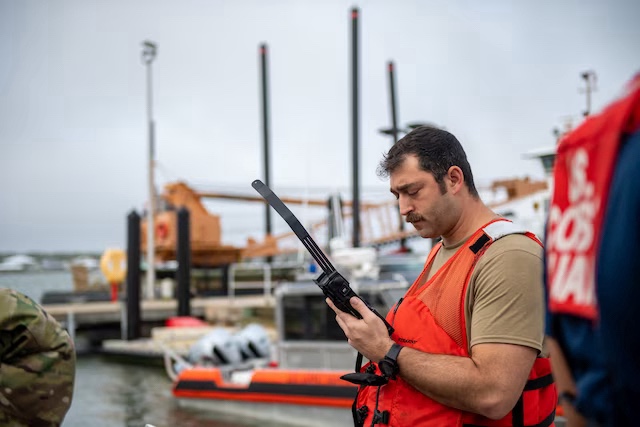
The 347th Operations Support Squadron at Moody Air Force Base partnered with U.S. Coast Guard Station Mayport, Florida, Nov. 17, for a simulated water rescue of a downed pilot during exercise Mosaic Tiger 24-1.

Bad weather off the coast of Jacksonville and Saint Johns River stopped the actual exercise rescue from happening, but the relationship built during the planning process will help future joint operations between the two services.

“As we train, we can’t be singular in our approach,” said Air Force Tech. Sgt. Michael Mendes, 347th OSS group weapons and tactics load master. “We have to work together to seamlessly merge, and since our HH-60Ws [Jolly Green II] don’t get maritime training as often, it was a valuable experience for our Airmen to integrate with another branch.

Training with the Coast Guard allowed us to test and improve our proficiency in how we communicate and respond to maritime rescues.”

Moody AFB rescue Airmen used the Mosaic Tiger readiness exercise as a way to get ready for future real-world deployment cycles. During the week, they worked with three different Coast Guard Stations: Mayport, St. Petersburg and Cape Canaveral each provided safety boats, simulated hoist operations and the personnel in the water.

When life or death is at stake, especially for an over-water rescue, understanding joint team concepts ensures service members at every level can seamlessly integrate to move quickly and efficiently. Joint commanders can then leverage the unique capabilities of each branch to choose the right rescue package and save lives.

According to the Air Force guide titled The Joint Team, or the Purple Book, joint integration requires effective coordination among the military branches. The guide outlines how U.S. forces are required by national command authorities to respond on short notice to unpredictable crises in a joint force capacity.

Despite weather interference, the Air Force and Coast Guard were able to train for just that purpose.

“This training opportunity benefits both sides by giving our respective crews new encounters with environments and capabilities,” said Coast Guard Petty Officer 1st Class Tim Mathis, USCG STA Mayport unit supervisor. “Complacency can be the divider between failure and success, and exposing search-and-rescue resources to fresh scenarios deepens the well to draw from when the call comes in real time.”


The search-and-rescue community is a tight-knit group of professionals, regardless of their branch of service. During the remainder of the day, Airmen and Coast Guardsmen worked to establish effective communication practices and demonstrate joint team integration when faced with real-time situations.

Mendes said mission success depends on how well integrated forces can merge to streamline communication and overcome differences in execution methods. There is overlap between the Air Force’s search and rescue mission and the Coast Guard’s commitment to ensuring maritime safety—both of which came together to produce an effective outcome during a rescue need.

“We benefit from working with the Air Force by working through a different set of scenarios that we may not usually see or expect,” Mathis said. “This promotes real-time risk assessment and evaluation that is essential to growing as first responders. The opportunity to develop a universal standard or response cannot be understated as more resources are available to respond in any given situation.”

FirstSpear Friday Focus – Overrun Deals

Friday, November 24th, 2023

Overrun gear developed for Tier 1 operators. Save this Black Friday on world class gear and equipment. Matter of fact savings on matter

of fact kit. Check out our overrun options now.

Visit FirstSpear to find American Made kit and accessories, Built For The X.

Strengthened Army Industrial Base Doubles Artillery Production

Friday, November 24th, 2023

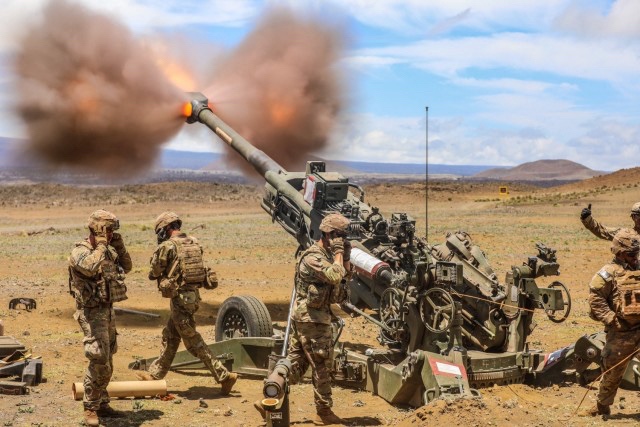
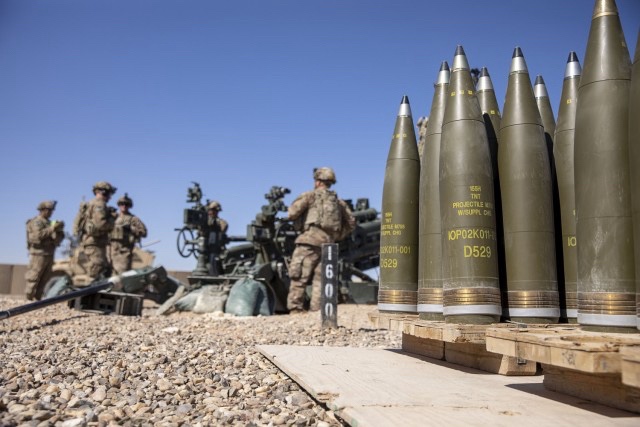
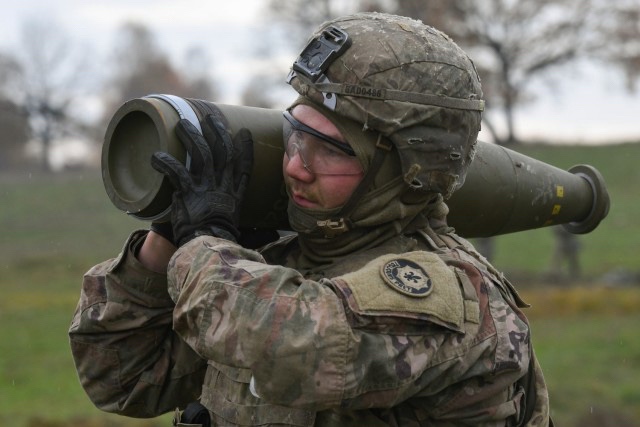
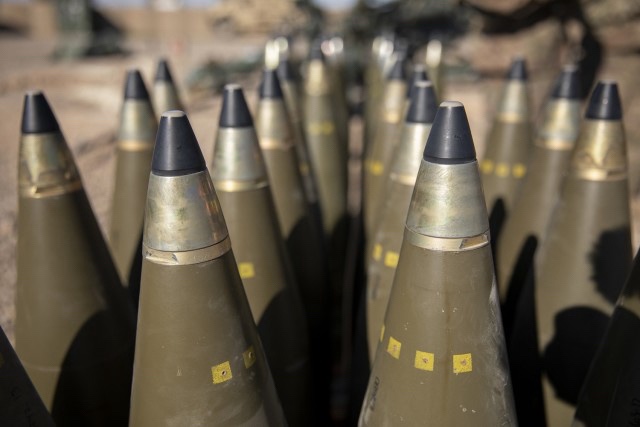
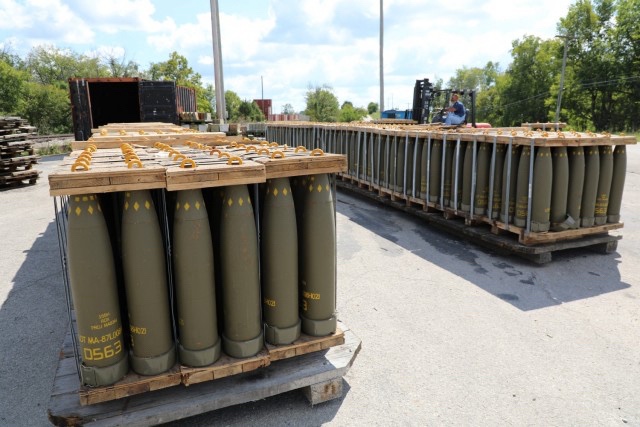
WASHINGTON — The Army’s artillery production doubled in the last year with the service currently producing 28,000 155-millimeter howitzer rounds a month.

The dramatic uptick comes as the Army expanded its capacity at current facilities while looking to bring new ones into the mix next year.

“We will have taken, over a couple years, what was a very fragile, admittedly, industrial base and dramatically improved its strength,” said Doug Bush, assistant secretary of the Army for acquisition, logistics and technology.

The need for the increased artillery comes in response to supporting the war in Ukraine, the recent conflict in Israel and replenishing U.S. stockpiles. The service has sent more than two million rounds to Ukraine thus far.

Currently, the Army ships steel from Ohio to two facilities in Pennsylvania, the Scranton Army Ammunition Plant, and a sister facility in Wilkes-Barre. These two plants turn 2,000-pound steel rods into two-foot-tall artillery shells.

The shells are then transported to the Iowa Army Ammunition Plant, where they are filled with explosives and sealed. The propellent and charges for the rounds are mostly produced at the Radford Army Ammunition Plant in Virginia and the Holston Army Ammunition Plant in Tennessee.

Throughout this year, the Army expanded production at these facilities by constructing new buildings, installing new equipment and improving automation. These upgrades helped double the Army’s artillery production rate, Bush said.

With the expanded capacity at current facilities, the Army is shifting its focus in fiscal year 2024 toward bringing brand-new production facilities into the manufacturing process. This will give the service multiple sources for each production step.

“Which is what you want in the ammunition production world,” Bush said. “You don’t want one building being the single point of failure.”

The service is building a new factory in Mesquite, Texas, and it awarded a contract last year to a Canadian company to build the artillery shells. It is also funding two new facilities to load the shells with explosives. One will be in Arkansas, and the other will be in Kansas.

The improved production process is part of the Army’s modernization plan to bring the industrial base into the 21st century. Current and future Army readiness requires modernization on a sustainable path that develops, implements, and deploys new technologies to deter current and emerging threats.

Bush said the Army aims to increase 155-millimeter production to 60,000 by next summer and to 100,000 by the end of 2025. The 100,000-round goal is largely contingent on the approval of President Joe Biden’s request to Congress for fiscal year 2024 emergency supplemental funding, which has $3.1 billion for 155-millimeter artillery production and facility modernization.

“This important legislation is needed to make sure the Army is ready to meet the growing challenges we face today, and in the future,” Bush said. “It will strengthen our industrial base to ensure we can supply our defense needs while we serve as the arsenal of democracy for our allies.”

Story by Christopher Hurd, Army News Service