TYR Tactical

Archive for the ‘Guest Post’ Category

FirstSpear Friday Focus – Gun Belts

Friday, July 21st, 2023

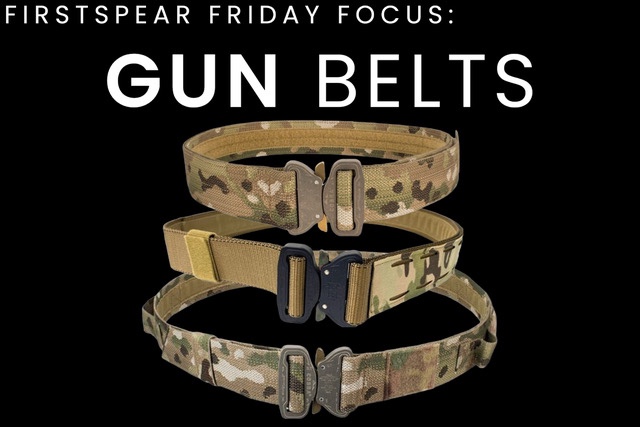
Whether you are law enforcement, military or a squared away civilian, you need reliable equipment that you can count on. FirstSpear belts offer durability and performance for when it counts most — on the X.

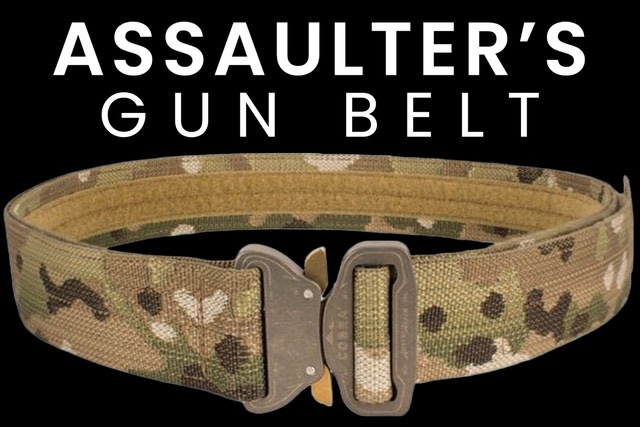
Discover FirstSpear’s flagship tactical belt, the Assaulter’s Gun Belt (AGB). This versatile belt is designed to handle tough situations and provide users with the best possible comfort and security. The AGB is accessed through a two-point, high strength metallic buckle that facilitates combat-equipped buddy drags. It can integrate with the AGB Padded Sleeve to provide more comfort and provide you with additional 6/12 attachment points.

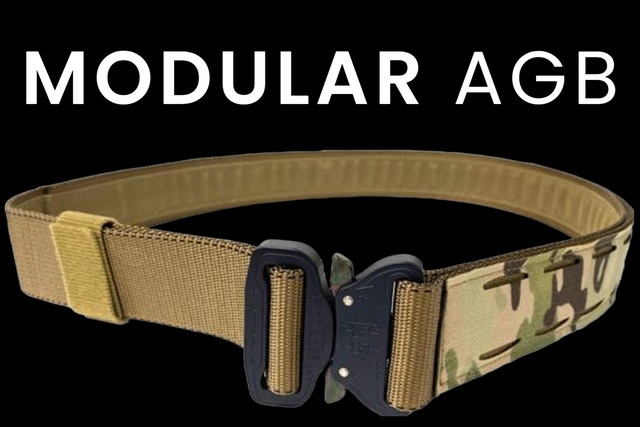
Upgrade to the classic AGB, the Modular AGB was developed to be as close to an overt tactical load carriage belt as possible without compromising strength. The Modular AGB allows you to mount small 6/9 or MOLLE pockets directly to the belt, making it ideal for those who need a more secure way of carrying their gear.

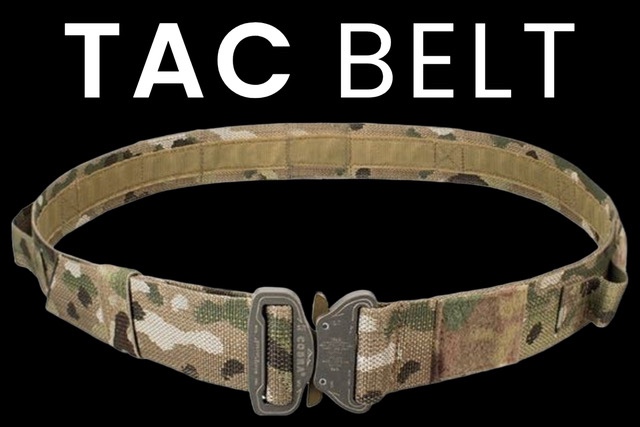
The Tac Belt is also a reliable option. It features a sturdy metal buckle and is less stiff than the AGB and Modular AGB. Additionally, it features security loops so you can feel confident that your gear won’t fall off during dynamic operations. This belt is perfect for carrying pistol mags, folding knives or flashlights with belt clips on them, or any other small items you need to keep secure while on duty.

Visit FirstSpear to find American Made kit and accessories, Built For The X.

Nijmegen March Offers Challenge, Inspiration to Participants

Friday, July 21st, 2023

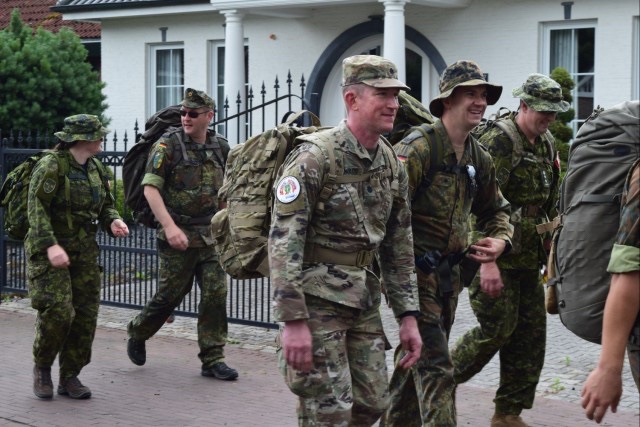
BRUNSSUM, Netherlands — Teams across U.S. Army Garrison Benelux and its mission partner organizations have prepared their minds and bodies for the Four Days March July 18 to 21, 2023, in Nijmegen.

Otherwise known as “De Vierdaagse” in Dutch, participants walk between 30 to 50 kilometers — or 18.6 to 31 miles — each day through villages and the countryside while an estimated 2 million spectators cheer them on. The ultimate goal for the marchers is to achieve the Four Days March Cross, an official decoration of the Kingdom of the Netherlands, which can be worn on many nations’ military uniforms.

Lt. Col. Shaun Reynolds, a civil affairs officer with the Allied Joint Force Command Brunssum J9 (Civil-Military Cooperation), is registered to participate with the installation’s Allied International Marching Team. Reynolds finished the march for the first time last year, receiving his cross. This year he is marching for the second award, which adds a crown to the medallion.

“It’s a motivator, getting the cross,” Reynolds said, “but [now] doing it a second year … I’m going for the crown.”

This year celebrates the 105th edition of the Nijmegen Four Days March. As the world’s largest multiple day marching event, it invites up to 47,000 participants from over 70 nationalities. Participants can register as an individual or in a group and choose to compete in either the civilian or the military category. Ages range from as young as 11 years old to over 90 years old.

“There’s people that travel from all over the world [to participate in the march],” said Staff Sgt. Alexander Bertsch, a 424th Air Base Squadron air traffic controller at Chièvres Air Base, Belgium, and team captain of the installation’s marching team. This is his second time participating.

The team, made up of service members from the U.S. Air Force and Army, started training for the march a few months ago.
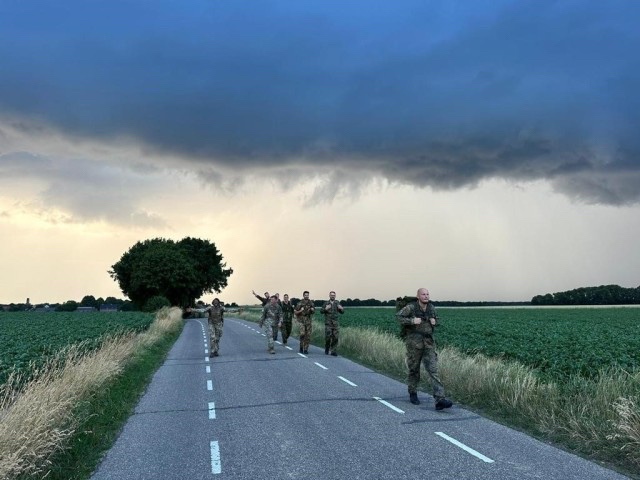
“It’s not just a show-up-and-do-it kind of thing,” said Bertsch.

Master Sgt. Stephen Spaeder, 424 ABS emergency operations superintendent, agreed.

“I went in thinking it was just a walk. It was a lot more challenging than I expected [and] definitely a humbling experience,” he said. “I had just run a marathon the month beforehand, so I thought I was ready.”

Spaeder sustained a serious knee injury from the lengthy marching last year, landing him in physical therapy for three months after the event was over.

He learned valuable lessons from the previous year and began training earlier for the 2023 event. Additionally, this year Spaeder knows exactly what he will carry in his rucksack. While all military participants must carry 10 kilograms — 22 lbs. — of weight on their backs, it takes experience to know what items are best to bring along.

Spaeder also determined that taking more breaks throughout each marching day to take off his boots and socks in order to cool his feet and ward off blisters is an essential ingredient to success.

“You learn a lot about yourself and your feet,” Reynolds said. From his practice marches and experience last year at the Nijmegen event, he discovered that he needed to purchase boots a whole size larger than usual for a march this length.

He also emphasized how important it is to wear broken-in boots and learn how to properly care for your feet before even attempting the march.

While blisters top the list for injuries during the march, Bertsch struggled with different issues starting on the third day. The excessive marching caused his calves and ankles to tighten up, and he had to push hard through the final day to the finish line.

“I struggled to take each step,” he said. “You have to rely on the people around you. Without my team, I don’t think I would have made it.”

Even so, Bertsch will never forget the atmosphere of all four days of the march.

“It’s really inspiring to see all these people going through a rough time and being happy about it,” he said. “You can do a lot more walking than you think you can do, and keep good spirits despite the challenge.”

Members of both teams recounted how special it was to see the community and spectator involvement at the event. They explained that throughout the four days children were passing out snacks and candy, giving high-fives and asking for military patches off their uniforms. Crowds were clapping at 4 a.m. as the marchers began their day’s journey. Spectators cheered them on nearly the entire course as they marched up to 12 hours each day. DJs and bands played live music at many locations. One of the rest stops even offered drinks and bratwursts.
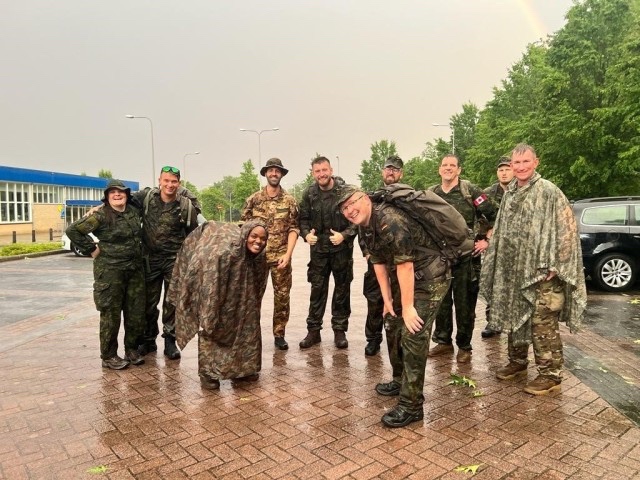
Maj. Juan Fuentes, future operations officer at USAG Benelux-Brunssum, will be participating in the march for the first time this year as part of the Chièvres Air Base team.

“I just really want to experience being … part of something,” he said. “There’s always a little bit of nerves and excitement. It’s an event I need to be part of.”

The Allied International March Team and Chièvres Air Base team join nearly 5,000 other military participants in the march. Their course will begin and end each day at the military camp Heumensoord, just south of Nijmegen. This camp is built every year for the Four Days March and supplies a dining facility, showers and sleeping accommodations for registered military detachments.

Nearly 90% of those who start the march cross the finish line four days later. Typically, around 70% of those people have participated in the march on more than one occasion.

“The atmosphere is what brings people back,” said German Armed Forces Maj. Heiko Lingelbach, a member of the German Communications Directorate at JFC Brunssum.

Lingelbach, who is also the chairperson of the Allied International March Team and leads a multi-national group of 41 participants this year, has seen people sign up for the march again and again.

“It grows on you, and you say ‘ok, I can do this again,’” said Lingelbach.

Reynolds emphasized the tremendous crowd support towards the end of the march.

“The last day you’re really on air even if you’re hurting,” he said.

During the last 5 kilometers (3.1 miles), all marchers are given gladiola flowers as they join a procession down the Nijmegen city center called Via Gladiola.

More than 250,000 spectators gather for this finale and offer high-fives, hugs, and cheers. Senior officials and dignitaries salute the military as they finish their last steps.

“I recommend that anyone who has the chance to do it, should do it,” said Spaeder, “I had a blast!”

By Sandra Wilson, USAG Benelux Public Affairs

Editor’s Note: The following story is the thirteenth in the series Bits of the Benelux. This series takes a deep dive into the stories, cultures and traditions found throughout Belgium, the Netherlands and Germany.


National Guard’s State Partnership Program Marks 30 Years

Thursday, July 20th, 2023

WASHINGTON — This weekend, the National Guard’s State Partnership Program marks 30 years of contacts, exercises and aid to nations around the world.

The SPP is a unique program that began in 1993. It paired state National Guard units with the newly independent nations of the former Soviet Union and nations emerging from the Warsaw Pact.

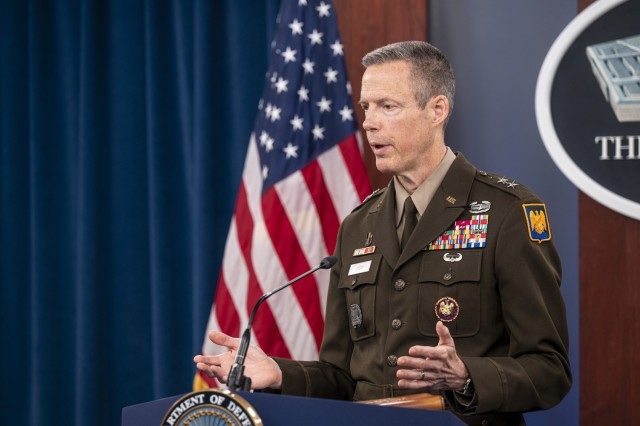
“The program that began in 1993 with just 13 countries and has now grown to 100 countries,” said Army Maj. Gen. William L. Zana, the Guard’s director of strategy, plans and international affairs. The general spoke about the program at the Pentagon today.

The importance of allies and partners is a cornerstone of U.S. strategy. “It is a theme that runs deeply through our national security strategy, national defense strategy, and national military strategy,” Zana said. “And I’d argue [it] is deeply encultured within what we do as the U.S. military, how we operate and our values.”



The SPP is based on working side-by-side with willing partners around the world. The National Guard Bureau administers the program in close consultation with Defense Department officials and the State Department. The aim is to build trust, confidence and capabilities with partner nations.

In the program’s early days, the emphasis was on helping nations throw off 47 years of Soviet domination. Many nations in that first class of partners are now proud members of the North Atlantic Treaty Organization.

The program soon punched above its weight and spread to U.S. Southern Command, U.S. Central Command, U.S. Africa Command, and U.S. Indo-Pacific Command. “The Guard is currently partnered with more than half of the world’s nations, and we expect to see continued growth in the coming years,” Zana said.

Combatant commanders universally praise the program. “[The SPP] is 1 percent of the nation’s security cooperation budget and results in 20 to 30 percent of the touch points or engagements that combatant commands have,” the general said. “So, they inherently see that value and the multipliers that go with that.”

These contacts are not limited to senior military and civilian officials, rather they stretch from privates and airmen up to generals. Guardsmen — unlike active-duty personnel – tend to stay in place, and many of the Guard’s noncommissioned officers and officers have “grown up” with their partners.

Zana, who has worked two of the last four years in Africa, said exercises are good training but often of short duration. “It’s not the same as having a relationship that has endured over many, many years where … families know one another, you’ve broken bread on both sides of an ocean,” he said. “You can’t build that trust overnight. I think it’s something that we, as the United States military, are particularly good — and our partners are really good — at.”

The partners have done more than simply exercise together. When U.S. National Guard units began deploying in harm’s way, the partners came with them. “The richness of those connections it can’t be… be overstated,” the general said. “It’s one of those things that made the program popular and built the enduring enthusiasm for it.”

National Guardsmen are Citizen-Soldiers who bring experiences and education from their civilian occupations to the process. “Often, some of the most creative activities and the things that happened with the program are an expansion beyond mil-to-mil or the creativity that goes with our Soldiers, Airmen and their counterparts from other countries,” he said. “That said, there are limitations with the funding of the program.”

The program calls for around $50 million, with additions coming from Congress. Zana would like to see all the money “on budget” to create a better planning horizon. “This year, we’ve got hundreds of events that we’ve either had to cancel or postpone,” he said. “And these are all events that are very much aligned with our national defense strategy and very much aligned with our partners and our combatant commands’ theater strategies.”

Ukraine was an early member of the program, partnering with the California National Guard in 1993. California Guardsmen helped train Ukrainian service members in NATO standards. They also trained them in using weapons like the Javelin and Stingers, which were so crucial in the early days of the Russian invasion of the country.

The California connection thrust the SPP into the news, and Americans got an idea of the depth and breadth of the military-to-military relationship. “In advance of Russia’s invasion of Ukraine, we were doing close partnerships, not just with the, with California and Ukraine,” Zana said. “One of the things we often refer to is ‘You marry one state, but you get the whole family with the Guard.’ So, when there’s a capability that doesn’t exist within the Army Guard or Air Guard within a state, we reach across the 54 states, territories and the District of Columbia to be able to get additional resources or capability.”

One aspect that hasn’t gotten the attention it deserves is the way Ukraine has adopted the U.S. emphasis on unit and tactical-level leadership, driven by noncommissioned officers. “If you look at the small unit, tactics and success within Ukraine, I think part of that is attributed back to much of the work that was done between Ukraine, California and other partners in the region,” he said.

The 30th anniversary will be marked at National Harbor in Maryland on July 17-18. Partner officials will join National Guardsmen, DOD officials, State Department officials and ambassadors to mark the event. Army Gen. Mark A. Milley, the chairman of the Joint Chiefs of Staff, will be the keynote speaker on July 17.

By Jim Garamone, DOD News

Additional Info:

State Partnership Program Celebrates 30 Years

State Partnership Program 30th Anniversary media roundtable 

Major General William Zana Briefing on 30th SPP Anniversary

30th Anniversary of the State Partnership Program

State Partnership Program turns 30

A Five-Part Series By Master Sgt. Jim Greenhill and Sgt. 1st Class Zach Sheely, National Guard Bureau

‘Why Don’t we do a Little Partnership Thing?’ The Department of Defense National Guard State Partnership Program is Born

‘Our Real Superpower as a Nation is our Allies and Partners’ The Department of Defense National Guard State Partnership Program Today

‘A Mosaic of Opportunities’ The Department of Defense National Guard State Partnership Program Looks to the Future

‘It truly is a Team Sport’ How the Department of Defense National Guard State Partnership Program Works

‘The Most Important People in the Army are the Sergeants’ The Department of Defense National Guard State Partnership Program: A Crucial Arrow in Ukraine’s Quiver

492d SOTRG Change of Command, Air Commando Development Center-Provisional Activation

Wednesday, July 19th, 2023

HURLBURT FIELD, Fla. —  

Today, Colonel Brian Helton relinquished command to Colonel Robert Johnston who is now dual-hatted as commander of the 492d Special Operations Training Group and the Air Commando Development Center-Provisional, ACDC-P.

The evolution to ACDC-P with this change of command signifies Air Force Special Operations Command’s commitment to deliberate training and experiencing, to ready Air Commandos for crisis, competition, counter violent extremism and conflict.

“I am honored to be part of this team and extremely grateful for the privilege and the opportunity to lead it,” said Johnston. “This is an extraordinary unit charged with a critical responsibility; to develop our air commandos for future generations to come. You’ve already done it in an outstanding manner, and I expect nothing less as we make the transition.”

The ACDC-P is comprised of the U.S. Air Force Special Operations School, the 371st Special Operations Combat Training Squadron and the new 370th Special Operations Combat Training Squadron planned for fiscal year 2024. Additionally, the ACDC-P will be a direct report unit to the Air Force Special Operations Command commander.

The center will execute development for all personnel assigned to AFSOC, core-SOF and non-core SOF AFSCs, as well as direct specialized combat training in the appropriate Force Generation phase to enable preparation in addition to certification, verification, and validation prior to deployment. Standing up the ACDC-P demonstrates the commitment AFSOC places on developing a high-performing Air Commando force.

“We’re reframing our thinking on the way we organize, train and equip Air Commandos to meet our future challenges,” said Lt Gen Tony Bauernfeind, AFSOC commander. “We must continually develop our teams by ensuring our Air Commandos have the right training and experiences they need to fight tonight…and standing up the ACDC will meet that intent.”

These changes continue AFSOC’s efforts to get after Air Force Chief of Staff, Gen. C.Q. Brown Jr.’s five drivers for change across the force: Force Generation, Agile Combat Employment, Multi-capable Airmen, wing A-staff implementation and mission command.

By 2nd Lt Cassandra Saphore, Air Force Special Operations Command Public Affairs

445th OSS Tests New Protective Mask Suited for Wing C-17 Aircrew

Tuesday, July 18th, 2023

Airmen from the 445th Operations Support Squadron’s aircrew flight equipment (AFE) shop and 89th Airlift Squadron participated in a field testing and training event for the M69 Joint Service Aircrew Mask for Strategic Aircraft (JSAM SA) assembly, the new aircrew flying chem gear June 5-9.

The M69 JSAM SA assembly will replace the Mask Breath Unit-19P Aircrew Eye and Respiratory Protection (AERP) equipment. It is currently approved for all fixed-wing, non-ejection seat, non-pressure breathing large frame aircraft, such as the C-17 Globemaster III.
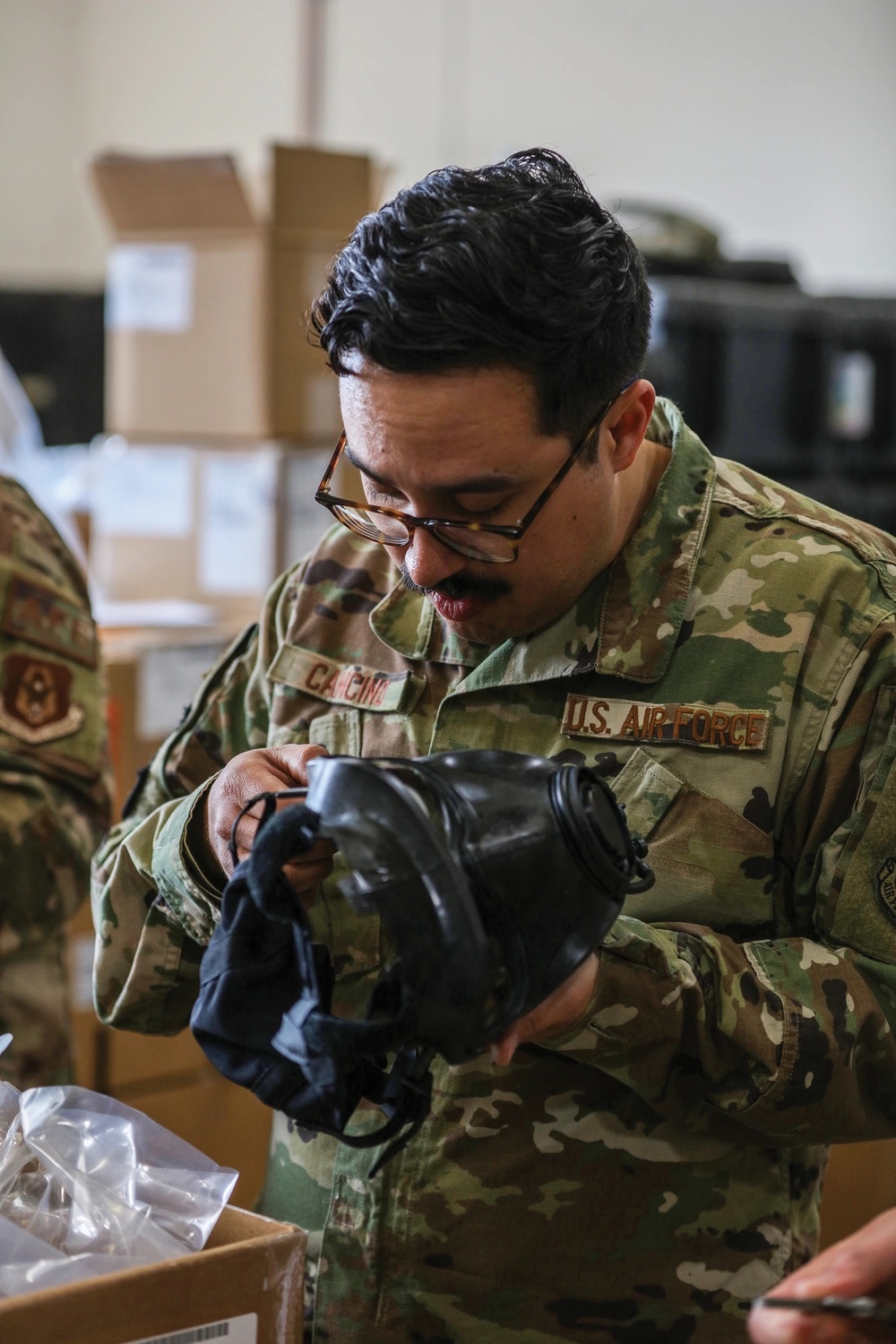
When the new masks arrived, they were unpacked with each one carefully inspected for defects or damage before being added to the inventory list.

Members with Headquarters Aircrew Flight Equipment and Air Force Life Cycle Management CBRN (Chemical, Biological, Radiological, and Nuclear) Defense Systems from Aberdeen Proving Ground, Maryland participated with the 445th AFE for the equipment inspection and provided the training.

The deputy program executive officer for the AFLC¬MC Agile Combat Support Directorate, Col. Carlos Quinones, was on hand to see how the inspection process works and understand the new assembly in comparison to the current MBU-19P AERP, as the six divisions under his directorate provide materiel solutions, acquisition life cycle management and support equipment, among many other functions, to meet Air Force operational needs.

Master Sgt. Diego Cancino, 445th Operations Support Squadron AFE flight chief, gave high re-marks about the new equipment compared to the current equipment being used.

“The new mask system is a breath of fresh air for both AFE as the equipment maintainers and aircrew as the end user,” Cancino said. Our old legacy system, while proven effective, was beginning to show some age, and we felt that we were overdue an update.”

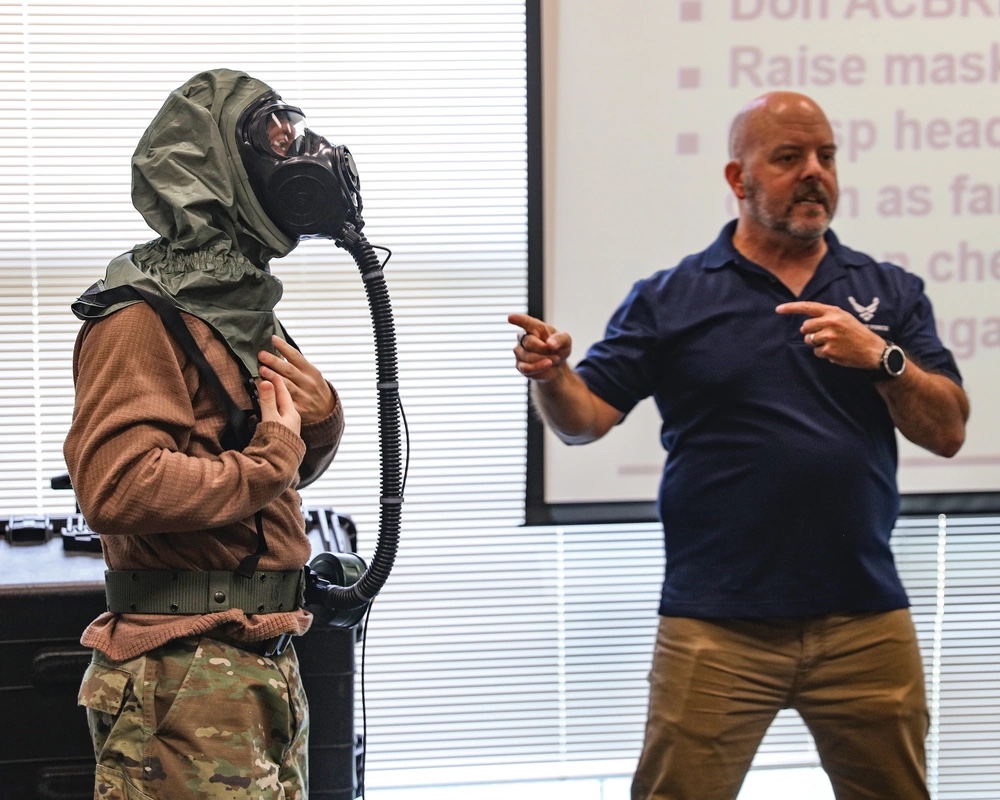
Bryan McCoy, a U.S. Air Force Aircrew CBRN fielding coordinator from Aberdeen provided training to 445th AFE Airmen and gave a presentation and demonstration to 89th AS aircrew members (pilot and loadmaster). The purpose was to share information and answer questions that aircrew members might have about M69 JSAM-SA.

The AFE shop will be individually fitting each aircrew member with the M69 mask and providing training on use and wear.

“We are all really excited to implement this new mask to the field here,” Cancino said. “The support and guidance we have received from our higher headquarters leadership on implementation and fielding has also been some of the best I have ever experienced in my career.”

Story by Stacy Vaughn

445th Airlift Wing, Public Affairs, Wright-Patterson AFB, Ohio

Jolly Vihar 23 Enhances US, Hungarian Air Forces Interoperability

Monday, July 17th, 2023

PÁPA AIR BASE, Hungary (AFNS) —

The 56th Rescue Squadron and the 56th Rescue Generation Squadron assigned to Aviano Air Base, Italy, are participating in the bilateral training exercise Jolly Vihar 23-2 at Pápa Air Base, Hungary June 26 through July 7.

Exercise Jolly Vihar is aimed to enhance the U.S. and Hungarian forces’ ability to conduct integrated combat search and rescue scenarios and perform maintenance operations. This exercise benefits the 56th RQS and 56th RGS along with NATO ally and partner nations by enhancing interoperability while learning each other’s techniques, strategies and procedures.

“The purpose of exercise Jolly Vihar for the 56th Rescue Squadron is terminal employment,” said U.S. Air Force Tech. Sgt. Kayleigh Jones, 56th RQS special missions aviator instructor. “This is a great time for aircrew to practice factor threat analysis because we never know what squadron or unit we’re going to be working with. The more we integrate, the better we can facilitate personnel recovery across Europe.”

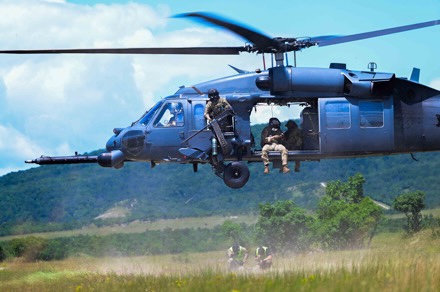
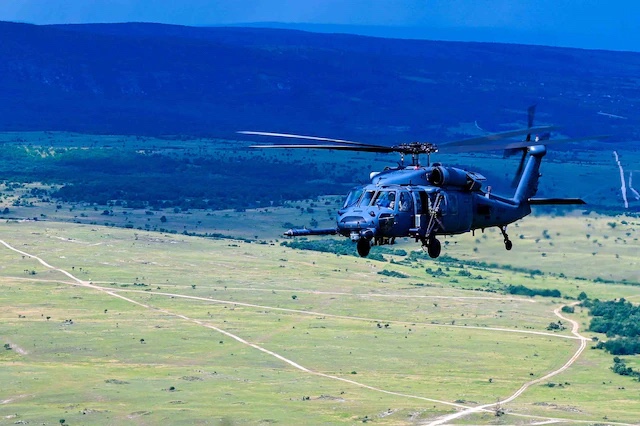
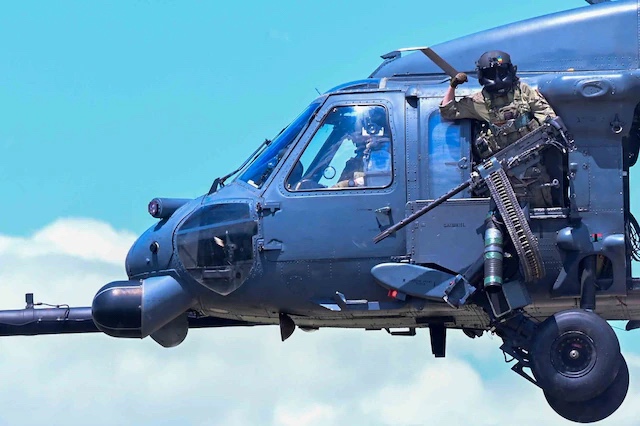
Three U.S. Air Force HH-60G Pave Hawks flew to Pápa Air Base for Jolly Vihar. During the two-week exercise, a large portion of the training was live fire and search and rescue missions. Airman assigned to Aviano AB and Pápa AB act as red cells during the search and rescue missions. Red cells are role players whose purpose is to present problems that the aircrew must solve as a team.

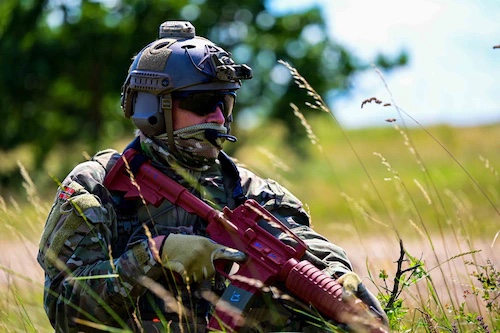
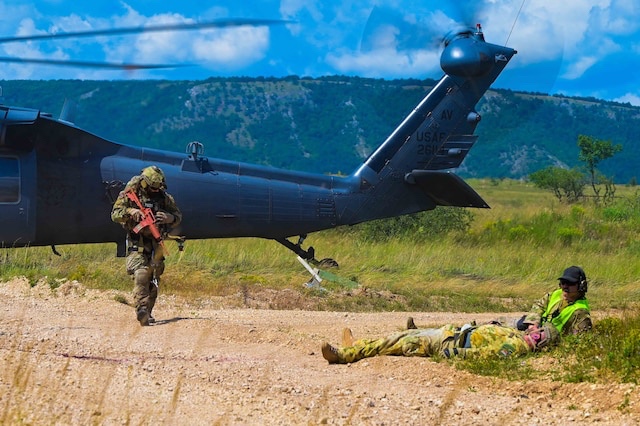
A Norwegian flight medic responds to a survivor during exercise Jolly Vihar at a training range near Pápa Air Base, Hungary, June 28, 2023. Search and rescue missions covered a large portion of exercise Jolly Vihar and role players acted as survivors needing to be recused by the aircrew. (U.S. Air Force photo by Airman Synsere Howard)

Norwegian forces on each aircraft fulfill the role of a pararescue team. Their job is to help to mitigate threats and safely recover red cells with information relayed to them and the aircrew. According to Jones, working with the Norwegian forces improves cohesion with the knowledge learned from one another. This can also be applied to real-world situations.

“We’re out here working with NATO allies and partner nations such as the Norwegians and the Hungarians,” Jones said. “We’re working on interoperability and learning their techniques and procedures while sharing ours with them.”

According to Jones, there are a lot of moving pieces in an exercise of this magnitude. The mission cannot be accomplished without other agencies, such as maintenance personnel, aviation resource managers, communications technicians and aircrew flight equipment specialists.

“These personnel are essential to making sure this exercise is executed safely and efficiently,” Jones said.

Jolly Vihar aims to advance and support rescue capability in U.S. European Command and NATO. Training with NATO allies and partners in exercises like Jolly Vihar strengthens partnerships, reduces tensions between nations and helps address potential conflicts before they start.

“We’re trying to build this network to increase our partner building capabilities,” Jones said. “We can’t do this alone.”

By Airman Synsere Howard, 31st Fighter Wing Public Affairs

Naval Legend and Original Naval Commando Honored at SEAL Graduation

Sunday, July 16th, 2023

CORONADO, Calif.  –  

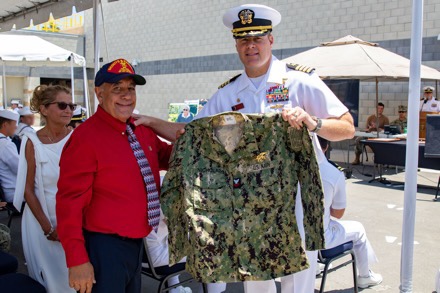
The indomitable spirit of Boatswain’s Mate 1st Class Art Nicholas, one of the first naval commandos and a celebrated World War II veteran, was honored once again as Basic Training Command (BTC) paid tribute to him with a Trident presentation during the SEAL Qualification Training Class 355 graduation this week.

This remarkable recognition held immense significance as Nicholas, a member of the Scouts and Raiders, helped lay the foundation for Naval Special Warfare (NSW) before the Trident was a symbol of the Navy SEALs. After celebrating his 100th birthday in February, Art was unable to travel due to his age. However, his enduring legacy was recognized through the attendance of his devoted son, Jeff Nicholas, who traveled to Coronado to receive the Trident on his father’s behalf, signifying his honorary status as a U.S. Navy SEAL.

The three-day long event commenced with the Knife Ceremony, a poignant tradition that symbolizes the passing of responsibility and authority from one generation of warriors to the next. Jeff, standing among the Navy SEAL candidates, embodied the proud legacy of his father, Art, as one of the original naval commandos who paved the way for the formation of NSW and the Navy SEALs.

Following the Knife Ceremony, the SQT Class 355 graduation dinner provided a momentous platform for graduating candidates and attendees to come together and pay their respects to BM1 Art Nicholas. As Jeff Nicholas spoke on his father’s behalf, he shared stories that highlighted Art’s unwavering dedication to his country and his instrumental role in shaping the history of NSW. The BTC quarterdeck was adorned with photographs capturing Art’s heroic exploits, offering a visual testament to his extraordinary service. Admirals, officers, and fellow Navy SEALs joined in expressing their heartfelt gratitude and admiration for Art’s selfless contributions. The collective appreciation and camaraderie in the room served as a testament to the profound impact Art Nicholas made on the lives of those he served alongside.

The highpoint of the week arrived with the SQT Class 355 graduation ceremony on June 30. Jeff Nicholas stood before the crowd to receive the Trident on behalf of his father. This ceremonial transfer of responsibility represented the legacy of BM1 Nicholas and his role as one of the original naval commandos. It signified Art’s honorary status as a SEAL, symbolizing the enduring bond between past and present generations of warriors who embody the indomitable spirit of the Navy SEALs.

Addressing the audience, Capt. Timothy Sulick, commanding officer of BTC, recounted BM1 Nicholas’ valorous actions during World War II and his principled contributions to the Navy.

“Art Nicholas embodies the essence of a true American hero, exemplifying the finest qualities of a Navy SEAL. As one of the original naval commandos, his legacy is etched in the fabric of NSW,” Sulick stated with utmost reverence. “Today, as we honor him at this SQT graduation, we pay tribute to his extraordinary service and the timeless legacy he has left behind.”

The Navy’s tribute to BM1 Art Nicholas, underscores the enduring importance of honoring those who have shaped the history of NSW and the SEAL Teams. It serves as a reminder of the sacrifices made by brave men and women throughout history and the indomitable spirit that continues to shape the Navy’s elite warriors.

By Lt Teresa Meadows, Naval Special Warfare Center Public Affairs

TRADOC and the Release of FM 3-24, Counterinsurgency

Saturday, July 15th, 2023

The Sept. 11, 2001, terrorist attacks on the United States were a watershed in U.S. history. Though terrorist attacks on the American homeland and its global assets were not unique, they were neither common nor large scale.

The 9/11 attacks prompted a U.S. counterattack in fall 2001 against Afghanistan, which was the haven and training ground for the 19 Al Qaeda terrorists who had hijacked the four commercial airliners that claimed nearly 3,000 lives. Then, in spring 2003, came the invasion of Iraq for numerous reasons, most of all for allegedly developing and possessing weapons of mass destruction.

Though U.S.-led international military operations against Afghanistan and Iraq were initially successful and generally conventional in nature, occupation of both countries without full conquest of either one quickly inspired insurgency, often supported by international terrorist organizations. This shift led the American military to formulate counterinsurgency (COIN) doctrine to guide its ground forces primarily.

COIN required complex and nuanced operations directed at defeating the insurgents while rebuilding both countries as independent and secure states. TRADOC’s role in the roughly twenty years of the Global War on Terrorism involved training Soldiers for duty, principally in Southwest Asia and the Middle East, and convening the experts who produced the first formal Army doctrinal manual for conducting counterinsurgency operations since the Vietnam War.

After Vietnam and TRADOC’s establishment in July 1973, the U.S. Army largely abandoned its traditional experience with insurgency and counterinsurgency, dating all the way back to the American War of Independence. After the 1973 Arab-Israeli War, the Army focused instead on the activities and programs associated with the Europe-focused AirLand Battle and the Big 5 materiel developments.

Now faced with the need from 2003 onward to defeat robust insurgencies, the Army, with TRADOC leading and with significant contributions from the U.S. Marine Corps, began to resurrect, revise, and reissue counterinsurgency doctrine.

Along the way as a stopgap measure, the Ft. Leavenworth, Kansas-based U.S. Army Combined Arms Center published Field Manual-Interim 3-07.22, Counterinsurgency Operations, in October 2004, with a scheduled expiration two years hence.

Then-Lieutenant General William S. Wallace, later the 12th TRADOC Commanding General, commanded CAC, which oversaw most of the Army’s service schools and wrote the bulk of the service’s doctrine. The changes initiated by the new counterinsurgency manual ultimately resulted in a cascade of updated doctrinal publications, including capstone doctrine, all reflecting the experiences of recent combat operations.

In September 2005, then-Lieutenant General David H. Petraeus assumed the duties of CAC Commanding General. Petraeus possessed extensive counter-terrorism experience in Bosnia about the time of the 9/11 attacks and later while commanding the 101st Airborne Division during and after the Iraq invasion.

Right away, Petraeus engaged both his USMC GWOT colleague, then-Lieutenant General James N. Mattis, commanding the Marine Corps Combat Development Command, and his West Point classmate, retired Army Lieutenant Colonel Dr. Conrad C. Crane, then-Senior Historian at the U.S. Army War College’s Strategic Studies Institute.

Starting in mid-February 2006 in a conference at CAC, Dr. Crane led the writing team composed of experts from the military, academia, and the private sector and served as the principal author for the Army’s effort quickly to research, write, publish, and distribute the seminal December 2006 joint Army-USMC FM 3-24/Marine Corps Warfighting Publication 3-33.5, Counterinsurgency. The manual served for the next eight years as the Army’s guidepost for conducting GWOT counterinsurgencies.

Rooted in both historical study and contemporary experience, the manual drew immediate worldwide attention for many reasons, including its counterintuitive yet utilitarian “Paradoxes of Counterinsurgency Operations,” which included such strictures as “Sometimes Doing Nothing Is the Best Reaction,” “Many Important Decisions Are Not Made by Generals,” and numerous others.

In May 2014, the Army and USMC released the next and still current joint edition of FM 3-24/MCWP 3-33.5, now retitled Insurgencies and Countering Insurgencies, which builds on the 2006 version and casts counterinsurgency within the larger context of a range of military operations.

By TRADOC Military History and Heritage Office