FirstSpear TV

Archive for the ‘Guest Post’ Category

Arctic Angels Put Freeze-Dried Plasma to the Test

Friday, May 19th, 2023

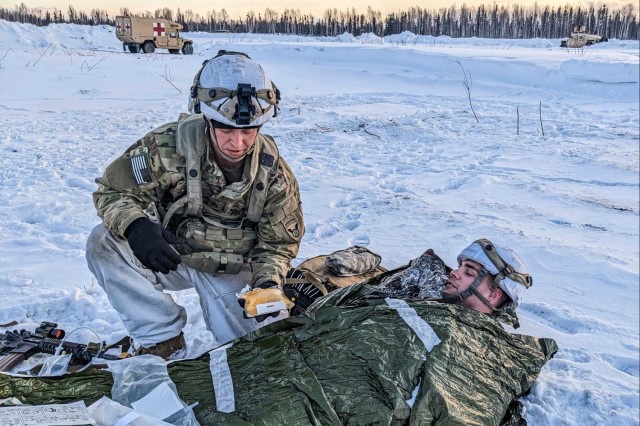
FORT WAINWRIGHT, Alaska — Team members with U.S. Army Medical Materiel Development Activity participated in an arctic conditions assessment of its freeze-dried plasma, or FDP, program recently, partnering with the 11th Airborne Division at Fort Wainwright, Alaska to assess performance of its plasma kits as part of the Joint Pacific Multinational Readiness Center exercise last month.

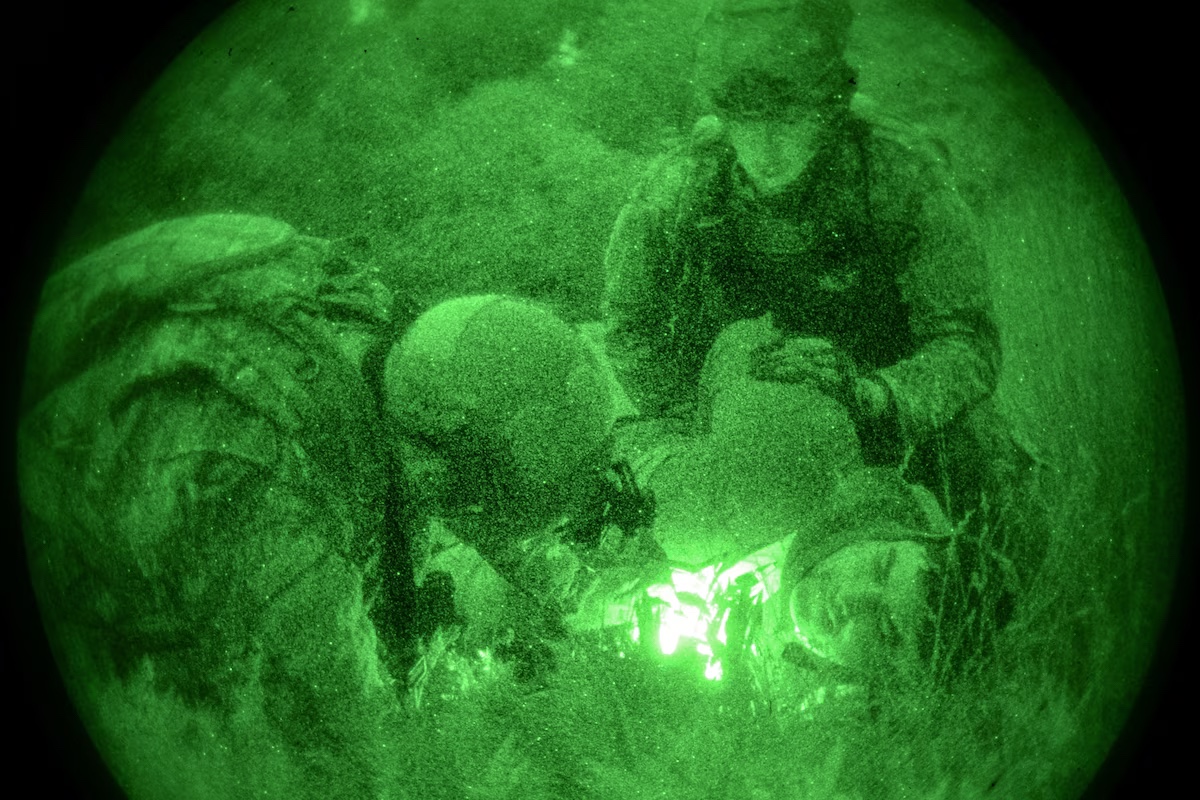
During the assessment in Alaska, 11th Airborne Division medical providers, conducted scenario-based training for casualty treatment in real-world conditions. These scenarios included mass-casualty training, frontline field treatments and airborne operations to test the FDP kits in conditions paratroopers may face during combat operations.

Assessments of treatments, products and devices, including FDP, are critical to the development process of the lifesaving technologies designed for the rigors of U.S. combat operations. Exposure to extreme elements, like the blistering cold found at Fort Wainwright, help serve as proof-of-concept for products like FDP, according to Andy Atkinson, FDP product manager with USAMMDA’s Warfighter Protection and Acute Care Project Management Office, known as WPAC PMO.

“We really value the input from individual Soldiers on FDP’s performance during an airborne operation in the Arctic,” said Atkinson. “Freezing temperatures create unique challenges for medical products which can degrade with repeated freeze-thaw cycles. The Soldiers didn’t see that with FDP and the overall resounding feedback from the field was positive, with Soldiers eager to get their hands on this product. That’s really valuable feedback for the program office.”

USAMMDA’s WPAC PMO has been developing both human and canine FDP since 2010 as part of its modernization efforts in support of medical providers in the U.S. military joint forces — plasma and other blood products are a key focus of the U.S. Army and the Department of Defense’s medical development efforts to help prepare warfighters for tomorrow’s wars.

A distinct advantage of FDP over similar blood products designed in previous years is its durability and suitability for use as close to the point-of-injury as possible — placing expeditionary FDP in the hands of medics, corpsmen and medical officers to begin blood replacement in the critical minutes and hours after injury, according to Lindsey Garver, Ph.D., deputy project manager with WPAC.

“FDP provides a shelf-life and storage conditions that allow it to be used as far forward as Role 1,” said Garver, referring to medical care provided by first responders at the unit level. “It could be stockpiled offering a significant logistical advantage over whole blood for hemorrhage control. It is one of several blood components USAMMDA has in development to supplement the blood supply on the battlefield.”

The WPAC team is leading the development efforts for both human and canine FDP, partnering with stakeholders across the Department of Defense and non-DOD medical development partners. A critical component of the FDP development process is the feedback gained through touchpoints to assess both the current needs of the frontline medical providers and the utility of FDP in its current state of development. Responses from potential end-users like the medical providers with 11th Airborne Division help the WPAC team refine their approach during all phases of development, according to Garver.

“FDP is one component of blood that can be used for transfusion; it can also be used to maintain a service member at or near the point-of-injury as a bridge to transfusion,” said Garver. “In the case of the 11th Airborne Division partnership, it allowed us to understand how FDP would be used in an Arctic environment, how the product and packaging held up during airborne operations with combat medics, ease of use and if it performed to standard at both the point-of-injury and battalion aid station level of care. There is significant interest in ensuring a safe and substantial blood supply is available to our warfighters in environments with contested logistics and evolving battlefield scenarios. FDP is a critical part of that.”

Blood plasma, the liquid part of blood, “contains important proteins and other substances crucial to one’s overall health,” according to the American Red Cross. U.S. military medical providers have used plasma since at least WWII due to its lifesaving properties when no or limited supply of whole transfusable blood is available.

Given the wide range of possible future battlefields, it is important to develop, test and field blood products, including FDP, that are approved by the Food and Drug Administration; user-friendly; and expeditionary, according to Kendra Lawrence, Ph.D., the WPAC program manager with USAMMDA. Near real-time feedback from intended end users, including the evaluation of FDP in partnership with 11th Airborne Division during JPMRC, gives the WPAC development team insight into current progress of FDP and to cater the product with the end-user in mind.

“The JPMRC exercise and collaboration with 11th Airborne Division was a unique opportunity for the program office to gain real-world user feedback on the performance of a life-saving blood product in an artic environment,” said Lawrence, herself an Army and Iraq War Veteran. “Importantly, they showed that freeze-dried plasma is resilient, transportable, and easy to use under austere freezing conditions.”

By T. T. Parish
Exercise in Philippines Assesses Progress of 1st Multi-Domain Task Force

Thursday, May 18th, 2023

CAMP MAGSAYSAY, Philippines — As one of Army Futures Command’s first forays into in-theater persistent experimentation, a team of observers/assessors were in the Philippines looking at the 1st Multi-Domain Task Force’s capabilities in the Pacific.

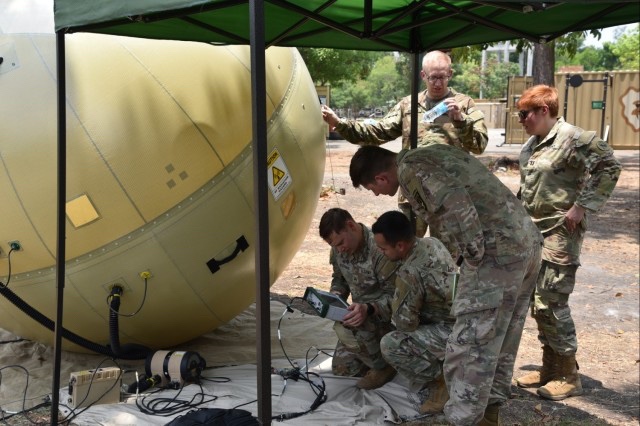
This Joint Warfighting Assessment, or JWA, team observed the 1st MDTF’s concepts and capabilities during Balikatan 23, a Marine-led exercise. The JWA23 team is led by the U.S. Army Joint Modernization Command and includes experts from various capability development integration divisions. The assessment is meant to build on the lessons learned during past Joint Warfighting Assessments and Project Convergence capstone events. With persistent experimentation, regular assessments like this throughout each year will allow Army modernization and transformation efforts to maintain momentum and speed.

Brig. Gen. Bernard Harrington, commander of the 1st MDTF, underscored the significance of initiatives like JWA23 in shaping the future of the Army in the Indo-Pacific.

“JWA23 is an opportunity to get multiple teams together to figure out how we get the Joint force into position in the Indo-Pacific” Harrington said. “Over the last two years, [U.S. Army Pacific] has steadily increased investments in the first island chain, placing combat-credible forces on key terrain to build interoperability with key partners. JWA23 is one feedback mechanism to evaluate how we prevent conflict and prevail in competition.”

The MDTF is the newest formation in the Army and is at the forefront of Army experimentation. Many of the new capabilities the Army is looking to in the future would come from the MDTF. During JWA 23, the JMC-led team assessed the 1st MDTF’s ability to integrate with joint partners and allies, joint sensor-to-shooter efforts, joint networking and joint force protection. As part of preparing for future conflict, the MDTF is being asked to do things the Army has never done before.

Balikatan is the largest annual bilateral exercise conducted between the Philippines and the United States. This year’s exercise, which took place in late April, was the largest to date, with more than 17,600 participants. Balikatan advances combined military modernization and capability development efforts by providing realistic rehearsals of concept, as well as numerous subject matter expertise exchanges.

From the beginning, the build of the MDTF was designed to be a joint force enabler. Looking specifically at the Pacific, adversaries have spent the past 20 years designing a network to keep out the Army’s joint force partners, focusing on high-flying aircraft and large maritime vessels, said Lt. Col. Ben Blane of the 1st MDTF.

“When we talk about the Balikatan exercise, we do have this relationship with the partners here in the Philippines,” Blane said. “But we’re also bringing in our partners from the U.S. Air Force and the U.S. Marines. We’re connected with our partners afloat in the Pacific and also in our main operations center at Joint Base Lewis-McChord who are helping us with some of these concepts. It’s that partnership, and then together, really building those capabilities forward in the Pacific. So, if we do rise to the point of conflict, we have some survivable positions here that can support the joint force.”

The Joint Modernization Command and its Joint Warfighting Assessments have been important to the MDTF’s experimentation and development from the start, Blane said. And as part of AFC’s persistent experimentation efforts, JWAs continue to be an integral part of developing the right capabilities with the right people for the future of competition and warfare.

“To take you all the way back to JWA19, the assessors saw the value in filling some of these gaps that we were talking about,” he said. “There was a quote in the final document that said the Army needs to immediately prioritize this formation and get into both PACOM and EUCOM as fast as possible. You saw the activation of the MDTF soon after.

“Bringing in this team here during JWA23, we refine these ideas, talk about these concepts, talk about the things we’re learning, and then get it through that other lens where we’re bringing in experts with the JMC team and all of the Army Modernization Enterprise,” Blane said. “We’re really honing in on what we’re doing here, why it’s important and then taking that refined message and then being able to push that back out to the rest of the force. That’s huge. And I’ll tell you what, the Soldiers are super excited about what they’re doing.”

MDTF experimentation is critical to getting the formations and capabilities of future warfare correct. Joint and Combined multidomain operations are key to the future, and the MDTF is at the cutting edge of that concept.

By Jonathan Koester

Emerald Warrior 23 Hones Mission Command in Environment of Competition

Wednesday, May 17th, 2023

HURLBURT FIELD, Fla. —  

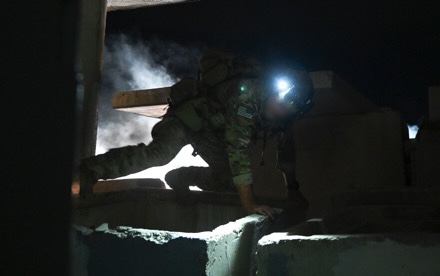
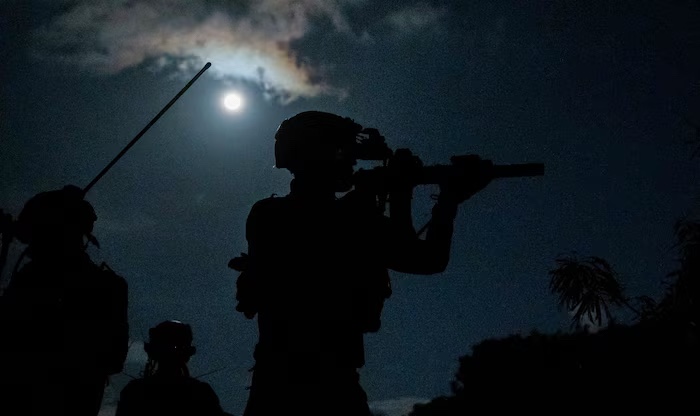
Air Force Special Operations Command concluded the 16th annual Emerald Warrior exercise which provides realistic and relevant, high-end pre-deployment training encompassing multiple joint operating areas to ensure preparedness of Special Operations Forces, conventional force enablers, partner forces and interagency elements.

This annual exercise allows AFSOF to integrate with and execute full spectrum Special Operations in a complex and evolving security environment using all aspects of live, virtual, and constructive training assets – spanning multiple geographic locations. This year locations included Hurlburt Field, Homestead Air Force Base and Puerto Rico.

The EW 23 planning team applied lessons learned from last iteration and real-world operations to train and ready AFSOF with sister service and partner forces, while keeping focus on security priorities laid out in the 2022 National Defense Strategy, specifically, pacing strategic competitors.

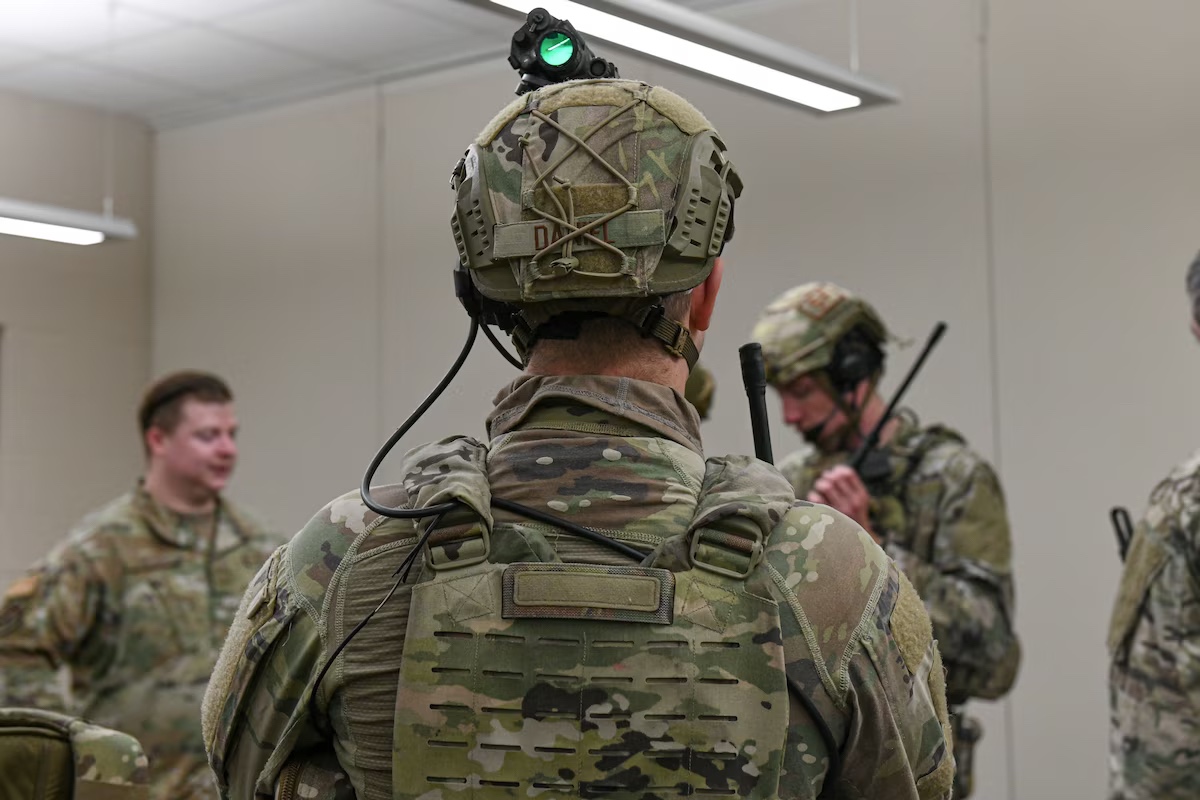
“In this year’s iteration of Emerald Warrior, we continued to improve on AFSOC’s new approach to mission command of Air Force Special Operations Forces through the continued employment of the Special Operations Task Group (SOTG) and Special Operations Task Units (SOTU),” said U.S. Air Force Lt. Col. David Allen, Emerald Warrior exercise director. “The geo-separation of leadership created within the EW exercise scenario, allowed for real-time, on-the-ground decision making from the SOTG and SOTU commanders.”

Not only was the objective for EW 23 to hone the processes for mission command of SOTG’s and SOTU’s with geo-separated AFSOF, but also, to incorporate agile combat employment movements through austere, more complex environments.

“Honing AFSOC’s rapid ACE capability was a priority set for Emerald Warrior this iteration and the last as we continue to develop this concept through our mission sustainment teams or MSTs,” said Allen. “Being able to bring AFSOF and our partner force allies to the island of Puerto Rico allowed us to really get to exercise this rising capability in environments that we don’t typically get to in the states, and for that we are very appreciative of the government and people of Puerto Rico.”

MSTs established forward operating bases for a SOTG HQ and SOTUs to operate out of, providing initial site security, receiving cargo and personnel and setting up shelter.

In addition to exercising employable command and control structure, EW continued to exercise the incorporation of non-kinetic effects (NKE) and capabilities. This year’s iteration brought a more robust NKE fusion cell than previous exercises, incorporating information related capabilities such as information operations, intelligence, intelligence support to IO and public affairs.

“Synchronizing Information Related Capabilities (IRCs) across intelligence, information operations, cyber, space, and public affairs subject matter experts allowed us to further educate our SOTG and SOTU commanders on the capabilities they can provide when down range,” said Maj Jessica Vogle, Emerald Warrior J2 and Non-Kinetic Fusion Cell lead. “Whether it be the utilization of cyber effects to create complex dilemmas for our adversaries, space capabilities to get a site picture of the operation area or using IO and PA to get strategic messaging out, fusion cells create operational effects in the information environment and strategic advantage for AFSOF, our allies and partners through unique access and placement.”

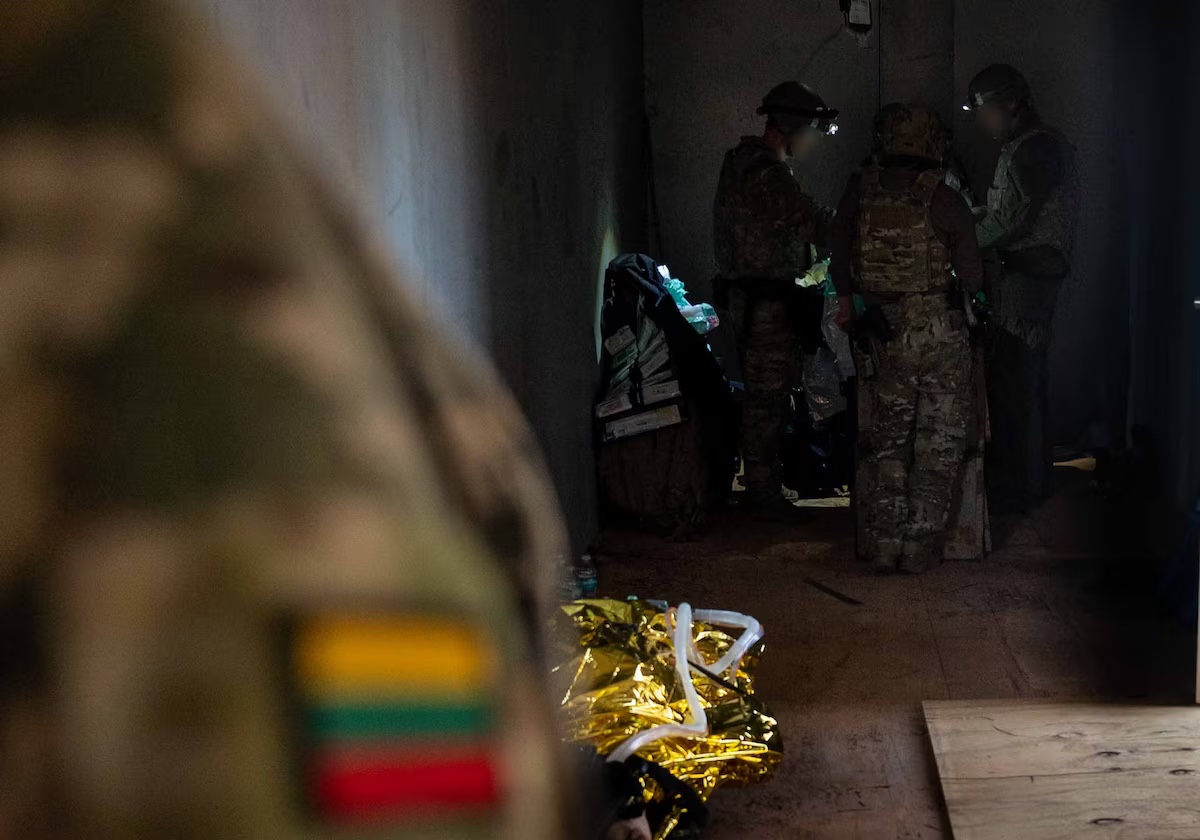
A key part of Emerald Warrior is having partners and allies training alongside US forces. This year France, Germany and Lithuania participated in the three-week exercise.

“Interoperability with partner forces is always a priority mission set here at Emerald Warrior,” said Allen. “Training together makes all of us stronger, so we are appreciative that France, Germany and Lithuania were able to participate this year and are looking forward to having them back again in the future.”

Story by Capt Jantzen Floate, Air Force Special Operations Command Public Affairs

Photos by SSgt Joshua De Guzman and SrA Stephen Pulter

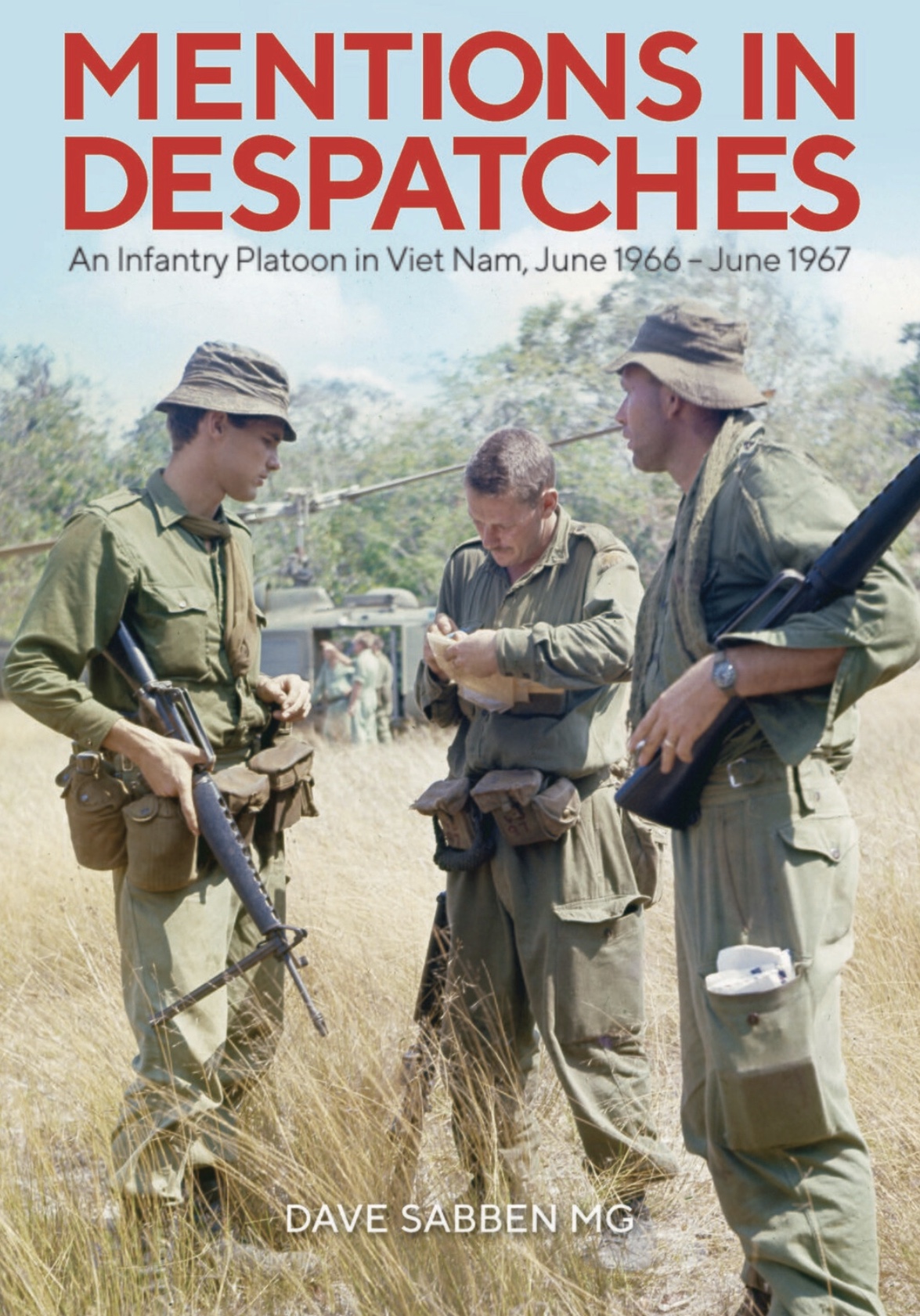
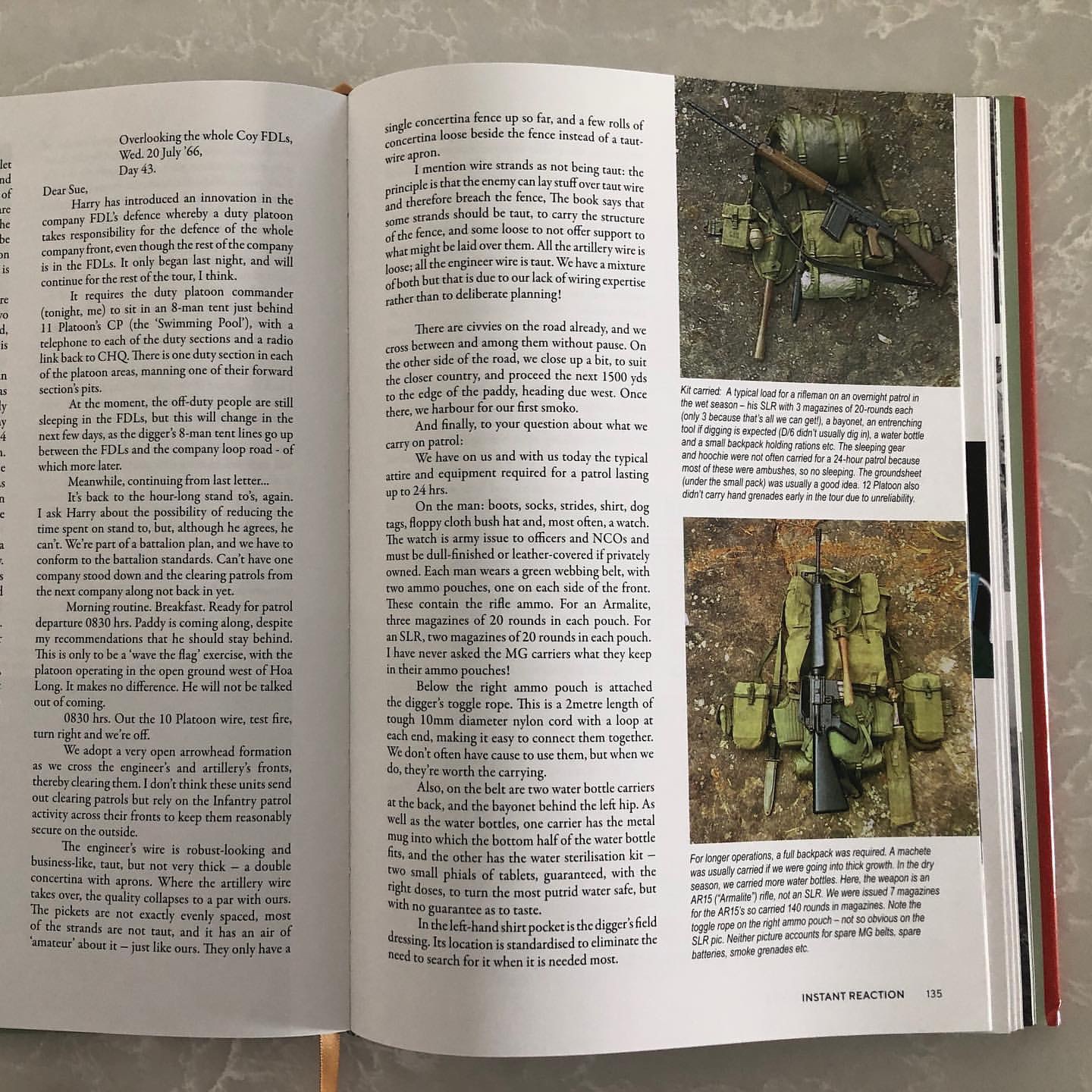
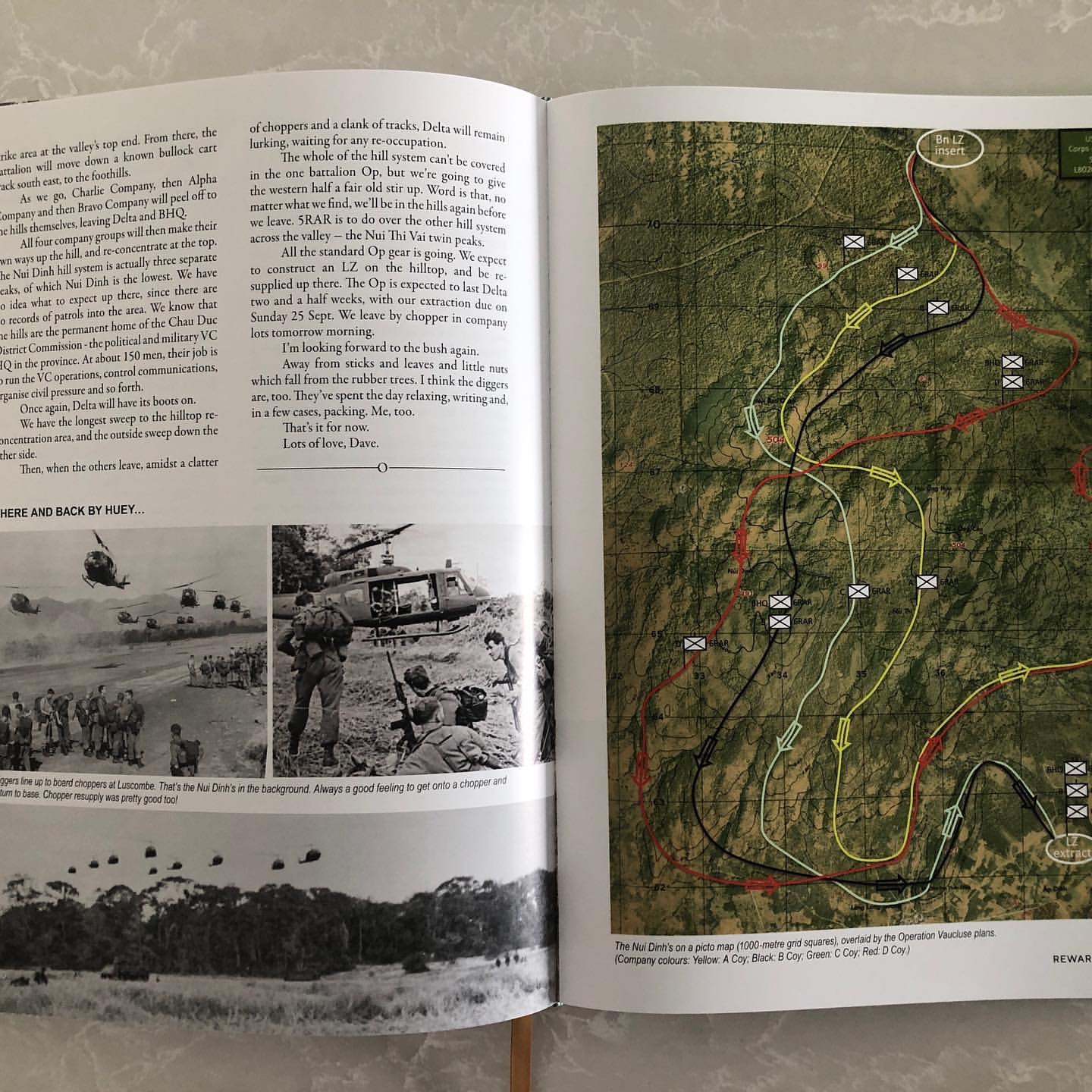
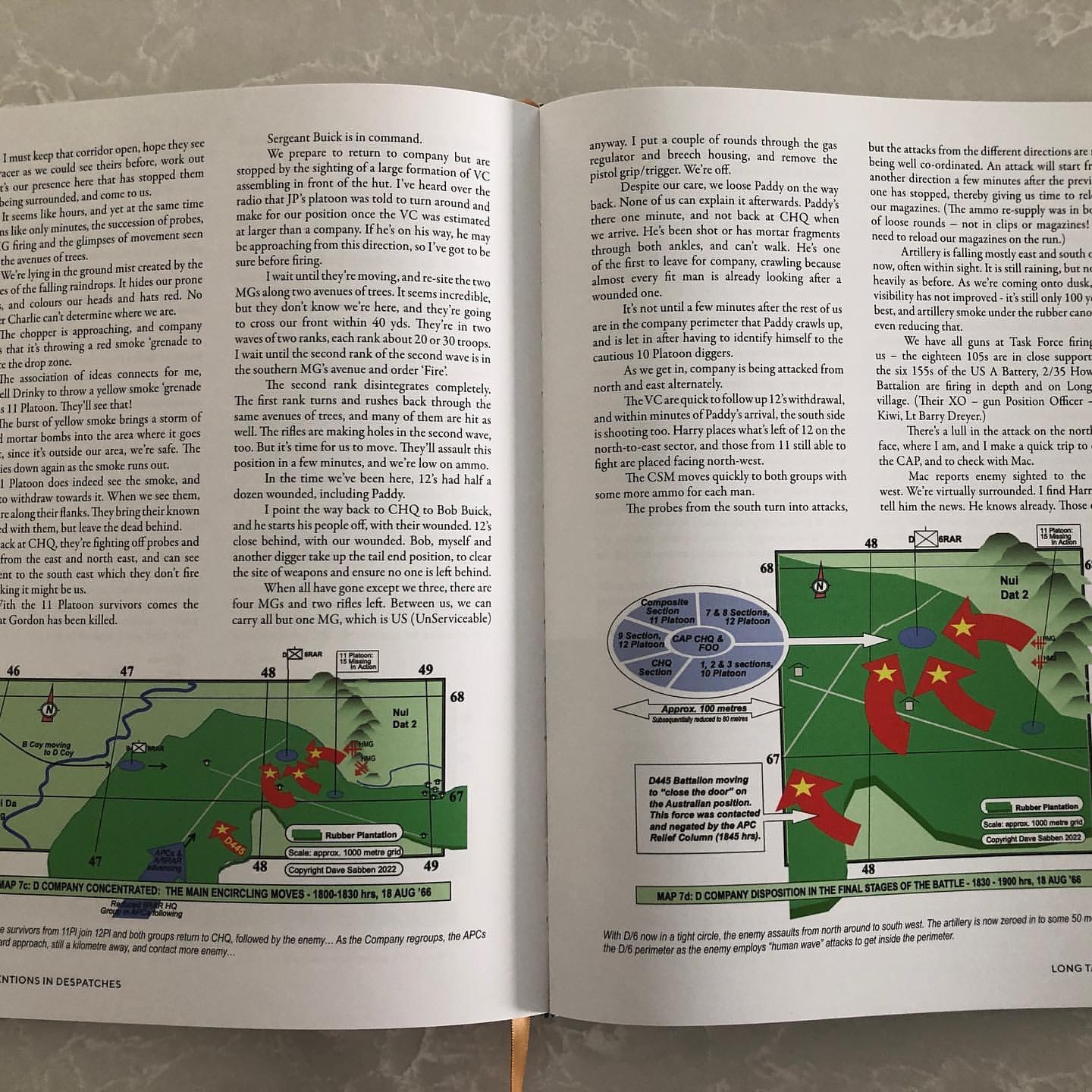
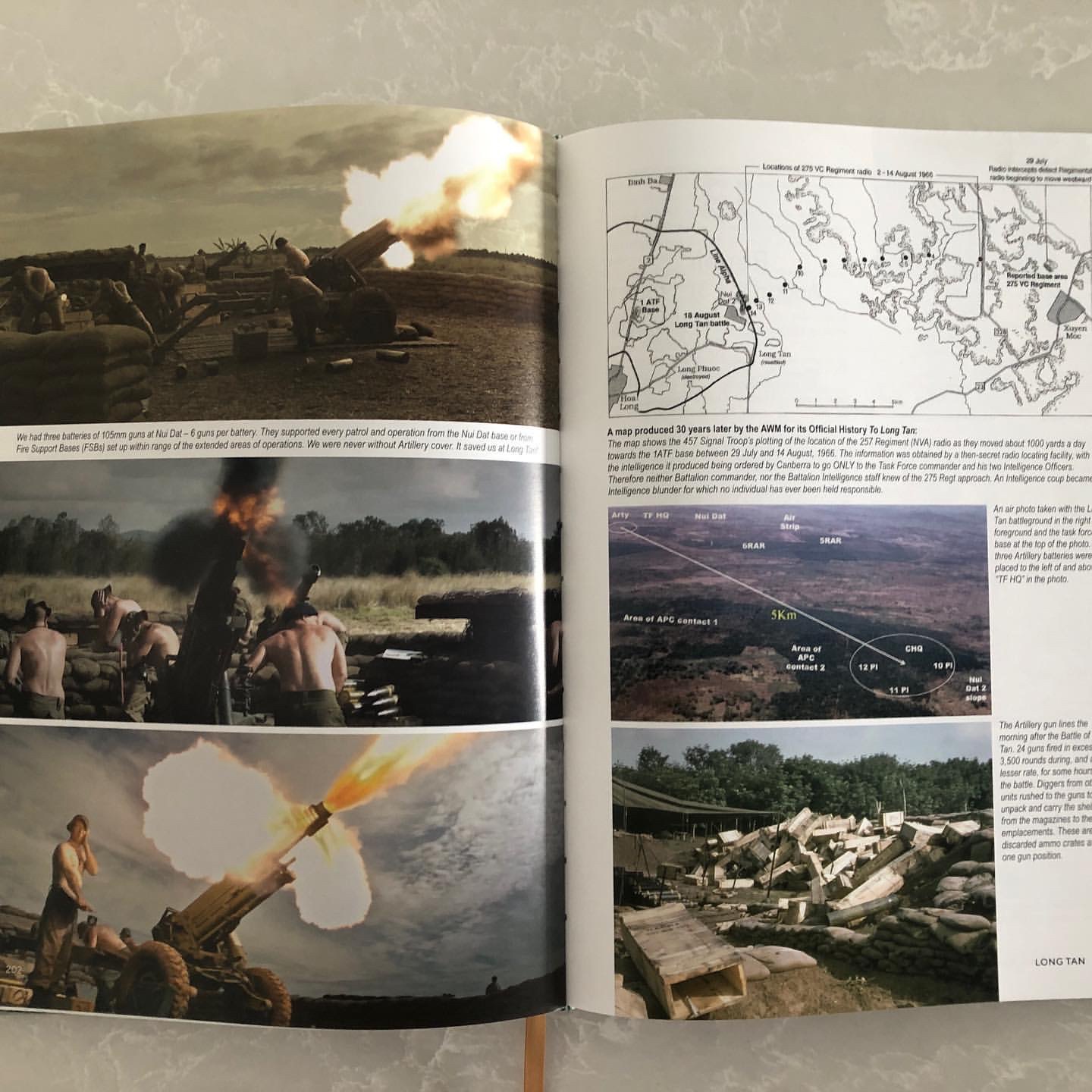
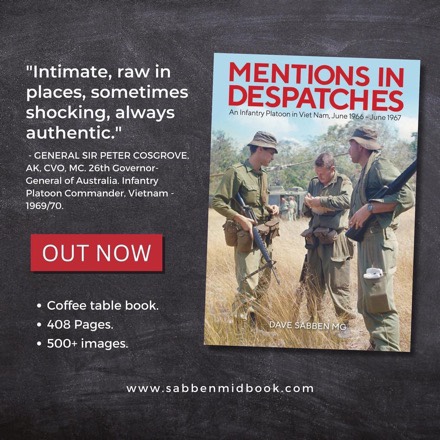
“Mentions In Dispatches: An Infantry Platoon in Viet Nam, June 1966 – June 1967”

Tuesday, May 16th, 2023

I just found out about a brand-new book by Battle of Long Tan / Vietnam veteran, 2Lt Dave Sabben MG. According to the website, “It offers an extraordinary and fascinating, detailed insight into a one year tour of duty in Vietnam.” I’ve already ordered my copy but it would make a great gift or addition to your personal collection.

Dave Sabben was 20 years old when he volunteered for conscription in the Australian Army in 1965. He completed officer training at the Scheyville National Service Officer Training Unit and in January 1966 was posted to 6RAR in Brisbane and appointed commander of 12 Platoon, Delta Company aged 21.

Dave was recommended for a Military Cross for his leadership and actions in the Battle of Long Tan, but that was downgraded by higher echelons to a Mentioned In Despatches (MID). In 2008 this was upgraded to a Medal Of Gallantry (MG).

This high-quality coffee-style book, chock full of 500+ images, maps, letters, tables, diagrams, and will take you into an average Australian infantry platoon across a 12-month tour of duty in the year the 1st Australian Task Force was set up at Nui Dat, in Phu?o??c Tuy Province, South Vietnam.

It will take you from the early days – June 1966 – when a bare rubber plantation was occupied in the middle of the ‘enemy’ controlled province, while a new operational base was established.

Hundreds of soldiers enduring six two-hour sleep periods every three days for weeks on end. In between those periods of sleep, they patrolled with heavy kit in dust-dry or monsoonal-wet and dangerous conditions to clear the enemy from their own bases. And when not on patrol, they were digging pits, trenches, latrines, command posts, clearing the undergrowth around Nui Dat, and erecting barbed wire fences.

All proceeds go to Dave Sabben and the book is available directly from him at sabbenmidbook.com. Click on the cover to add it to your basket.

AFSOC Establishes New Directorate: A7 Air Commando Development

Tuesday, May 16th, 2023

HURLBURT FIELD, Fla. —  

On April 25, Air Force Special Operations Command established the Air Commando Development Directorate, also known as the A7, that will lead the way America’s Air Commando’s deliberately train, exercise, experience, and educate to prepare, prevent, and prevail in competition.

This new directorate is aimed at providing policy, oversight, and guidance to support the Command’s collective training, readying Air Commando’s to win.

“We have a no-fail mission to ensure America’s Air Commandos are Ready to Fight Tonight,” said Lt. Gen. Tony Bauernfeind, AFSOC commander. “The A7 will serve as the AFSOC HQ Champion to ensure prioritization and integration of training, education, exercises and experiences for the command as we evolve to a new force presentation model.” 

Col. Eries L.G. Mentzer will serve as the first AFSOC/A7, Air Commando Development director and CMSgt Jeremiah Clark as the senior enlisted leader. The new directorate is the key integrator for the headquarters staff and will also closely collaborate with Headquarters Air Force and USSOCOM counterparts, as well as AETC, SOF partners, and allies to maximize knowledge sharing and leverage best practices.

“As the command broadens from decades of success countering violent extremism and organically gaining experience and building relationship through high ops tempo deployments, the A7 and Air Commando Development Center will orient Air Commandos to the evolved force presentation model, strengthened though integrated training and exercise experiences in a mission command culture,” said Mentzer.

In response to the Air Force Chief of Staff, Gen. “CQ” Brown’s cultural change areas, the A7 is also leading the command’s pivot to a Mission Command culture.  In partnership with joint counterparts and the LeMay Center, A7 will host the second Mission Command Summit, from 16-18 May, at Hurlburt Field to identify barriers to Mission Command in AFSOC formations.

The execution arm for the A7 will be the Air Commando Development Center, which is scheduled for activation on July 14 at Hurlburt Field.  The center will be comprised of units focused on education, training, and exercise integration executed by the U.S. Air Force Special Operations School, the 371st Special Operations Combat Training Squadron, and the 370th Special Operations Combat Training Squadron.

By Air Force Special Operations Command Public Affairs

19th SFS Implements New ACE Training Course

Monday, May 15th, 2023

LITTLE ROCK AIR FORCE BASE, Ark. (AFNS) —  

The 19th Security Forces Squadron recently implemented a new 30-day training program to equip defenders with the foundational skills and knowledge to counter peer adversaries, ensure security in an Agile Combat Employment environment and develop leadership qualities as valuable multi-capable Airmen.

The locally designed program, known as Agile Combat Employment and Leadership for Multi-Capable Airmen, was implemented in the squadron to reteach and emphasize the basics of air base ground defense and help train for atypical missions.

Defenders were able to expand their knowledge on dismounted operations and tactics and conduct by-law training, which teaches and evaluates use of non-lethal weapons for de-escalation, to demonstrate mission readiness in a contested environment and at home station.

“The main goal of this program is to better the capability of our defenders by honing in on close-quarters battle tactics and focusing on doing things to help out our adjacent forces, such as explosive ordnance disposal, medical and other career fields,” said Staff Sgt. Alexander Jackson, 19th SFS training instructor.

During the course, Airmen went through scenarios where they practiced security and troop-leading procedures while demonstrating base defense principles, force protection measures and multi-domain awareness.

ACE-LMC is an improved and revised program that was constructed from a previous week-long program called Horse Blanket.

“Horse Blanket was beneficial, but it only focused on by-law training and not much on dismounted operations,” Jackson said. “ACE-LMC helps us practice more on our skills and become more agile in order to be ready for tomorrow’s fight.”

Throughout the course, Airmen practiced active threat response in ready training areas, basic communications, chemical biological radiological and nuclear training, comprehensive Airmen fitness, integrated defense, small arms and tactical combat casualty care.

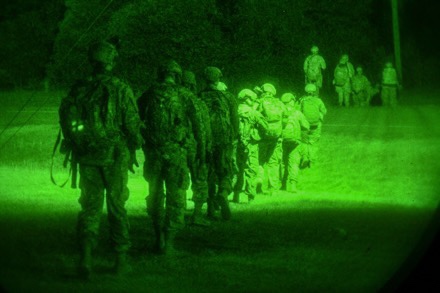
The 30-day training course culminated in a 12-hour field training exercise where defenders spent the night in a simulated contested environment, drilled securing and assuming control over an airfield and practiced various scenarios relating to air base ground defense.

As an instructor, Jackson gives defenders skillset repetitions that can be used in future operations and empowers Airmen at all levels with the opportunity to lead and train in a contested environment.

“My role as the lead instructor for the course is to motivate and bring the intensity back into our career field,” Jackson said. “We are trying to get Airmen out of their comfort zones and make sure that they are able to carry out the mission anytime and anywhere.”

The ACE-LMC program has successfully introduced critical training into the squadron, aiding in the development of mission-ready Airmen. All defenders are able to benefit from the course, whether they are fresh out of technical training or they have been in the unit for a while.

“As an Airman who just graduated from tech school not too long ago, ACE-LMC has been a refresher and I am able to enhance my skills,” said Airman 1st Class Angel Sacta Espinoza, 19th SFS main entry controller. “It really makes us think outside the box and realize that this is preparing us for future conflict against our adversaries. We are touching on stuff we don’t really perform day to day.”

Although ACE-LMC is currently only available to security forces members, Jackson said his hope is for Airmen from other career fields to be able to experience this training in the future.

“We are trying to integrate adjacent career fields to join in the course as well in order for them to gain familiarization on skills that could help them during a situation not related to their job,” Jackson said. “We want to make it bigger and better every time, and every day we learn something new and different in order to improve the course.”

By Airman 1st Class Maria Umanzor Guzman, 19th Airlift Wing Public Affairs

French-led NATO Exercise ORION is First of its Kind in Over 30 Years

Saturday, May 13th, 2023

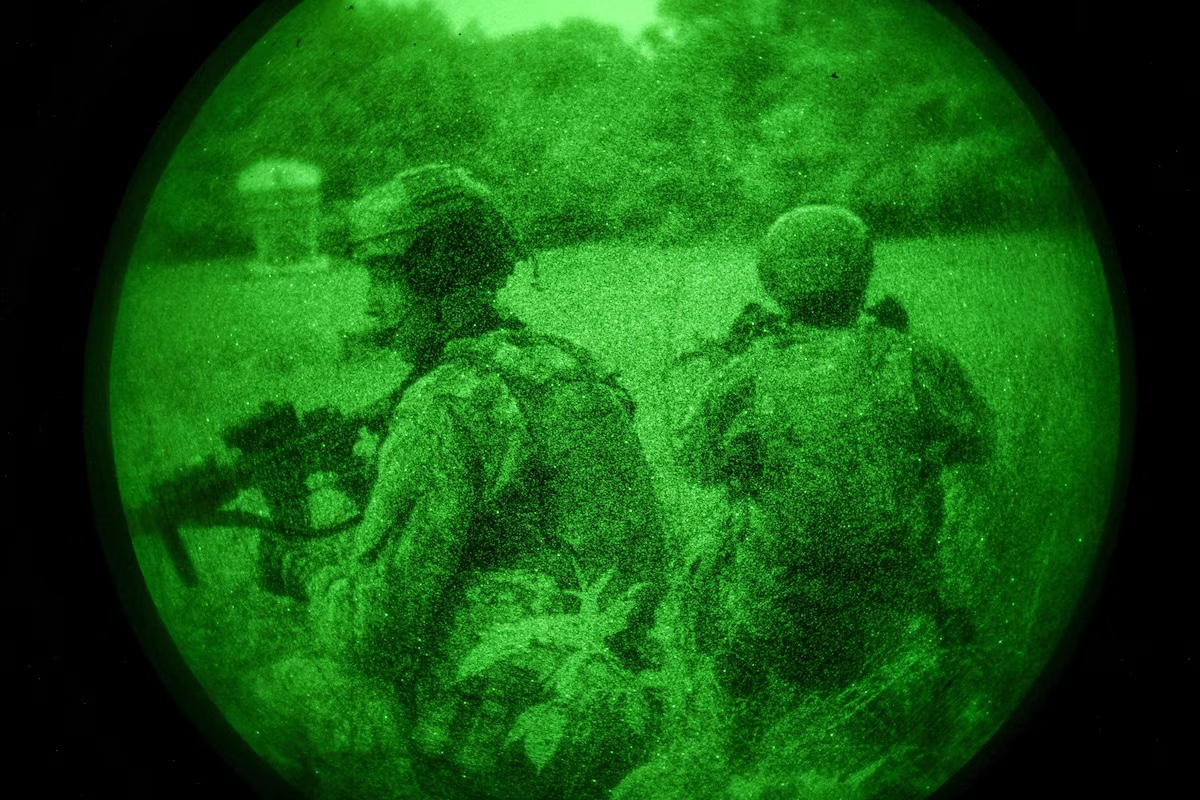
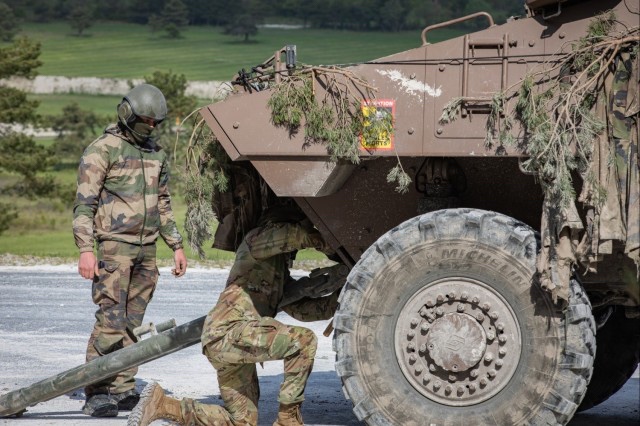
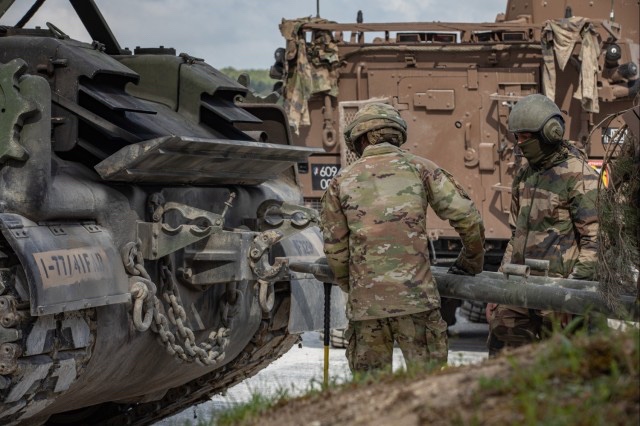
CAMP DE MAILLY, France — U.S. Army and NATO allies work side by side in a French-led interoperability coalition training for the first time in over thirty years.

The French 3rd Division’s exercise, Large-scale Operations for a Resilient, Integrating, high-intensity Oriented and New Army, nicknamed ORION, was a culminating national exercise that took place across several French regions, from April 17-May 4, 2023.

“It’s their national exercise, so it’s their ability to show that they can lead this force in a large-scale combat operation,” said Maj. Robert Moore, an operations officer assigned to 1st Battalion, 77th Field Artillery Regiment. “It’s also an opportunity to show that we can have seamless unity and be able to provide large-scale combat operations against any foe that we may encounter.”

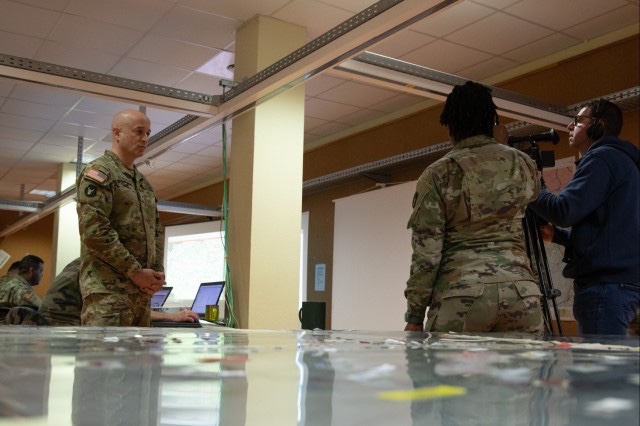
The exercise combines field tactic maneuvers, artillery maneuvers as well as air-space surveillance technology with joint air-ground integration centers composed of command teams from multiple nations.

“ORION encompasses a command post exercise,” said Capt. Shawn Botin, a brigade planner assigned to the 1st Armored Brigade, 34th Infantry Division. “It builds multinational interoperability and allows us to train with our partner nations in NATO.”

The exercise jointly trained over thirteen countries and foreign military forces in multiple facets.

“Our main interoperability goal is to learn the similarities between our nation and the other nations,” said Botin. “This refines our processes because if the United States were to be called upon to serve with a partnering nation, we can assist with providing a seamless transition into their work processes.”

ORION focused on large-scale combat operations; foreign forces have rallied together under French 3rd Division command to exhibit multinational interoperability.

“We are not just here to train our Soldiers but also to assist with the training of the French 3rd Division as they are conducting the live portion of this exercise,” said Botin. “This exercise fortifies the relationships the U.S. Army has with its partners and lays the foundation to build new ones.”

During the exercise, U.S. Army troops with different specializations had the opportunity to work with their immediate counterparts from countries like Belgium, United Kingdom, Germany, Spain and more.

“I think the biggest take-away for the Soldiers is understanding that there are military members outside of the United States military,” said Botin. “Learning how to operate with them and seeing a specialist in the U.S. Army isn’t that much different from a specialist in the French or British forces.”

Moore went on to express that more than just on a tactical level, this campaign has benefited Soldiers on a personal level as well.

“The Soldiers love to work with other countries and to build camaraderie, not just within their own unit but also our partners’,” said Moore. “You realize that we have a lot more in common than we have different.”

By PFC Alejandro Carrasquel

FirstSpear Friday Focus – Sherpa

Friday, May 12th, 2023

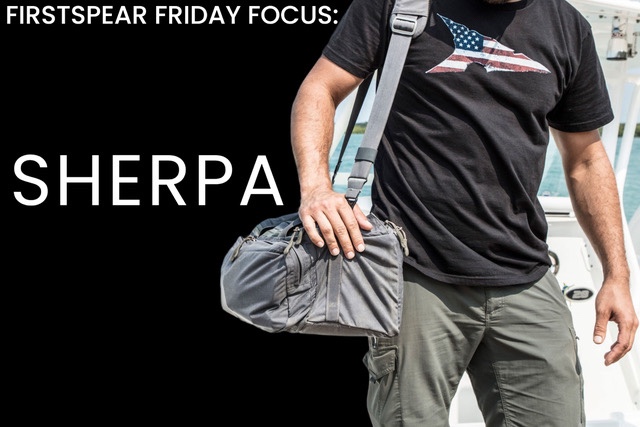
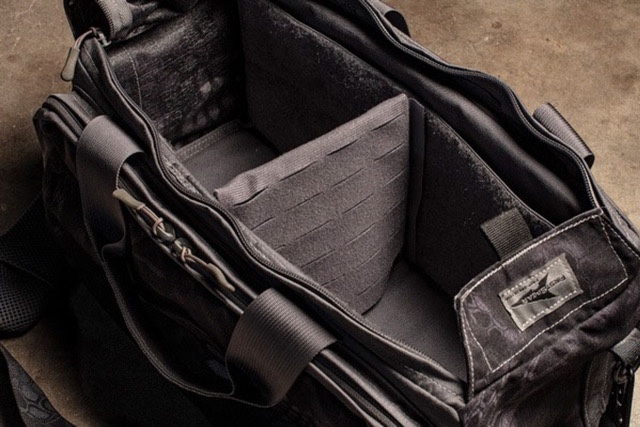
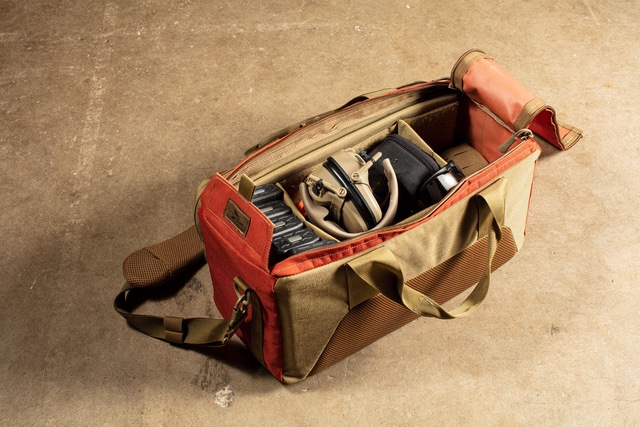
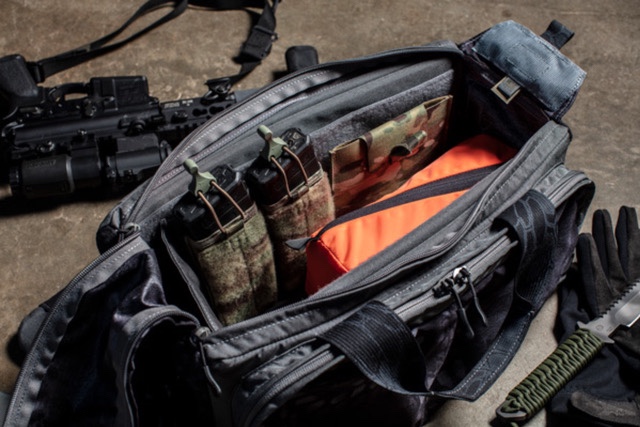
Designed in conjunction with FS professional users, the Sherpa is a hard use day bag that can be put to work across a wide variety of environments and situations. Whether you are going to the range, relaxing on the boat, or heading to a call out, this bag is the perfect size for those on the move. It comes standard with full 500D construction and premium hardware. Interior organizer panels can be completely removed or re-arranged to fit new equipment. Our Deluxe Sherpa Divider is available to accessorize your new Sherpa.

Check out FirstSpear to find American Made kit and accessories, Built For The X.