SIG SAUER - Never Settle

Archive for the ‘Guest Post’ Category

Persistent Modernization Underpins Army’s Future Force Development

Wednesday, September 28th, 2022

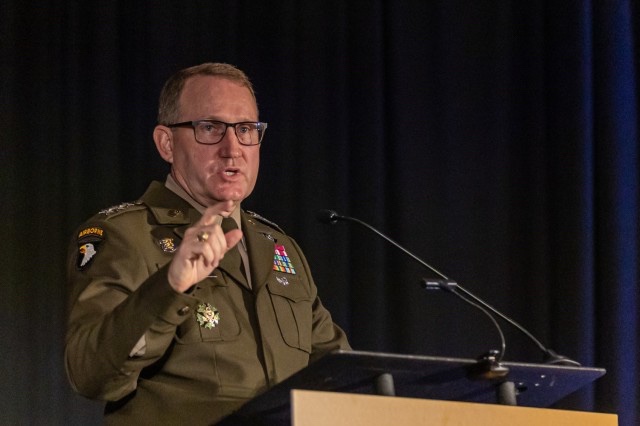
AUSTIN, Texas – “Our Soldiers, with our systems, must get accustomed to being constantly modernized,” said Lt. Gen. Thomas H. Todd III, Deputy Commanding General for Acquisition and Systems and Chief Innovation Officer at U.S. Army Futures Command (AFC).

Todd spoke about the importance of persistent modernization – which is intentionally designed to take place “now and often” – to a full audience of defense industry experts and innovators on Wednesday as part of the 2022 NDIA Future Force Capabilities Conference and Exhibition in Austin.

The event, hosted by the National Defense Industrial Association, provided participants an opportunity to learn about new developments in future-focused defense capabilities while also engaging with fellow defense professionals.

Todd’s keynote address highlighted the Army’s work to increase speed, range and convergence on the future battlefield, including by expertly harnessing and incorporating rapidly evolving warfighting technologies.

“We love to get after what’s next – constantly,” Todd said.

AFC, headquartered in Austin, surveys, develops and validates integrated concepts, models, simulations and technologies in order to steer future Army investments and ideas, Todd explained.

The command additionally serves as “lead trail boss” for multiple signature modernization efforts, furthering achievements through research, analysis and synchronization conducted by its Futures and Concepts Center, Combat Capabilities Development Command and Cross-Functional Teams, among other organizations.

“We are the operational architect,” Todd said, noting AFC coordinates closely with other Army commands and with the Office of the United States Assistant Secretary of the Army for Acquisition, Logistics and Technology and other partners to advance Army tools and systems.

Underpinning these activities, Army Futures Command leverages artificial intelligence, autonomy, sensors, robotics, synthetic biology, materials by design, additive manufacturing and other nascent technologies.

Exploration of human-machine teaming, which enables operational advantages on the ground and in the air by deliberately pairing human adaptability and intuition with machine speed and precision, is also proving integral to Army modernization.

“Let humans be good at what humans are good at; let robots be good at what robots are good at,” Todd asserted.

Meeting future warfighting demands, including the rigors of Multi-Domain Operations and the necessity of Joint interoperability, requires the active participation of industry, which is why events such as the NDIA-hosted conference function as productive platforms for information sharing and idea generation.

“We can no longer afford to be episodic; we have to be persistent,” Todd reiterated to audience members.

“Without you, we can’t achieve this.”

By Maureena Thompson, Army Futures Command

Whiskey Two Four – Accessory Panel 38

Tuesday, September 27th, 2022

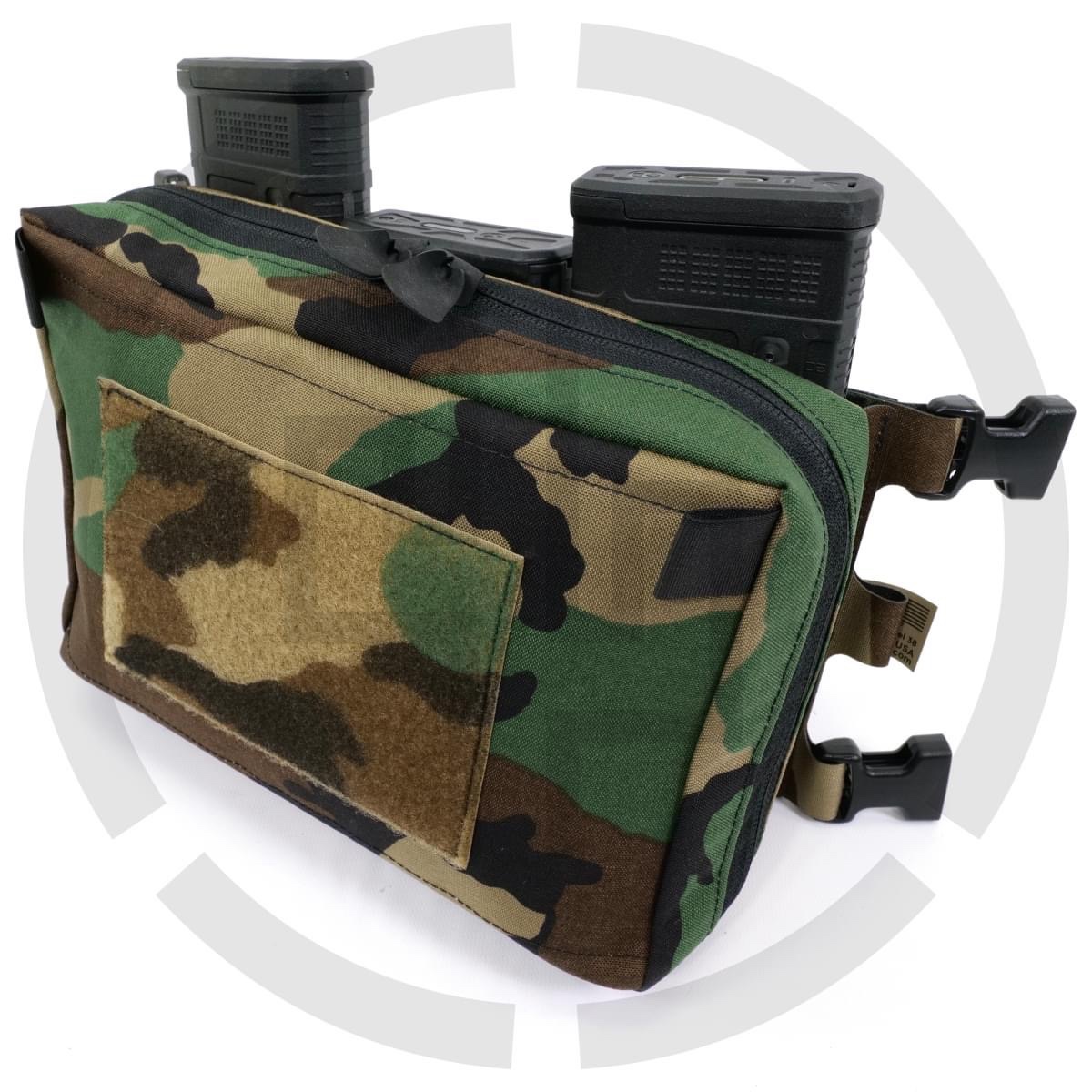
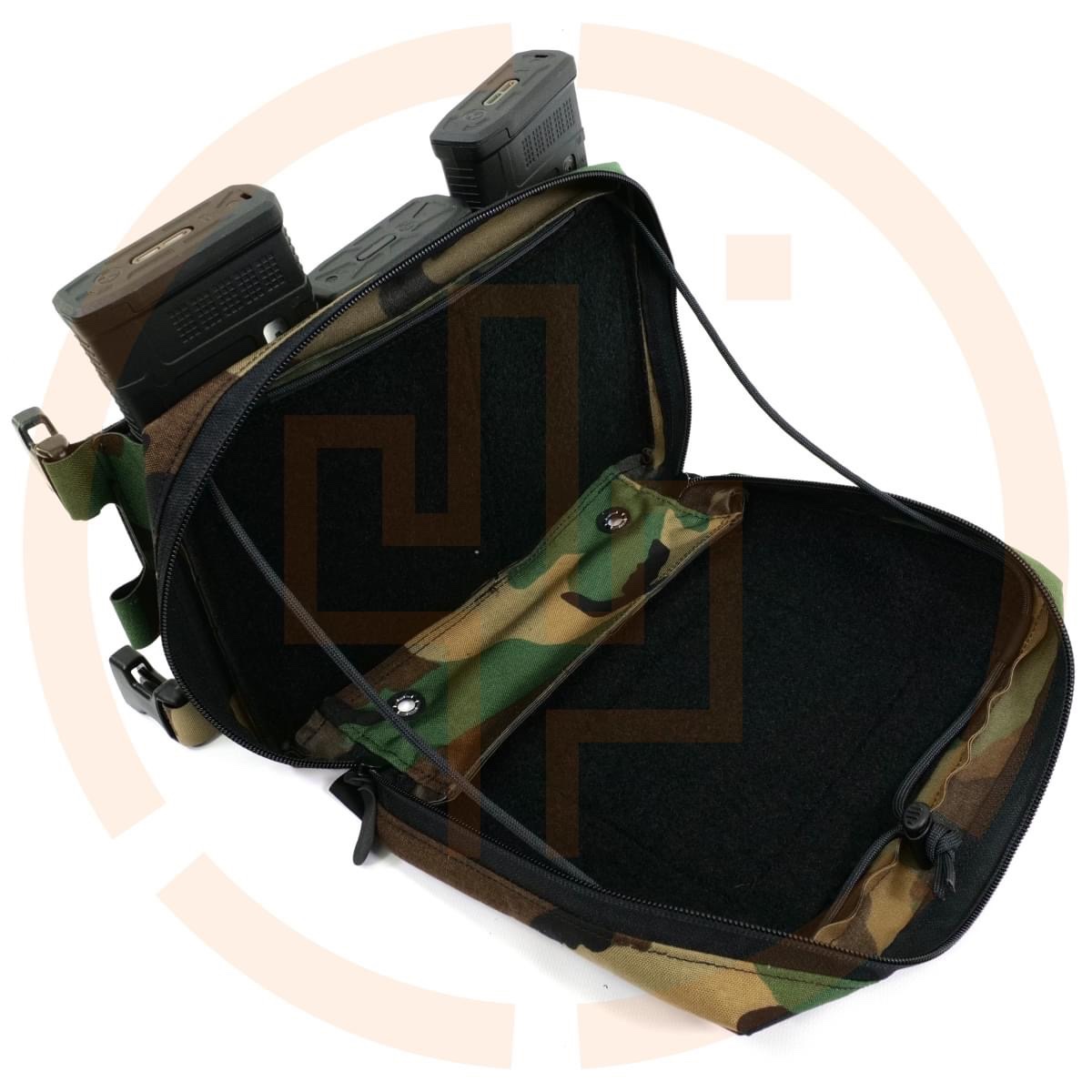
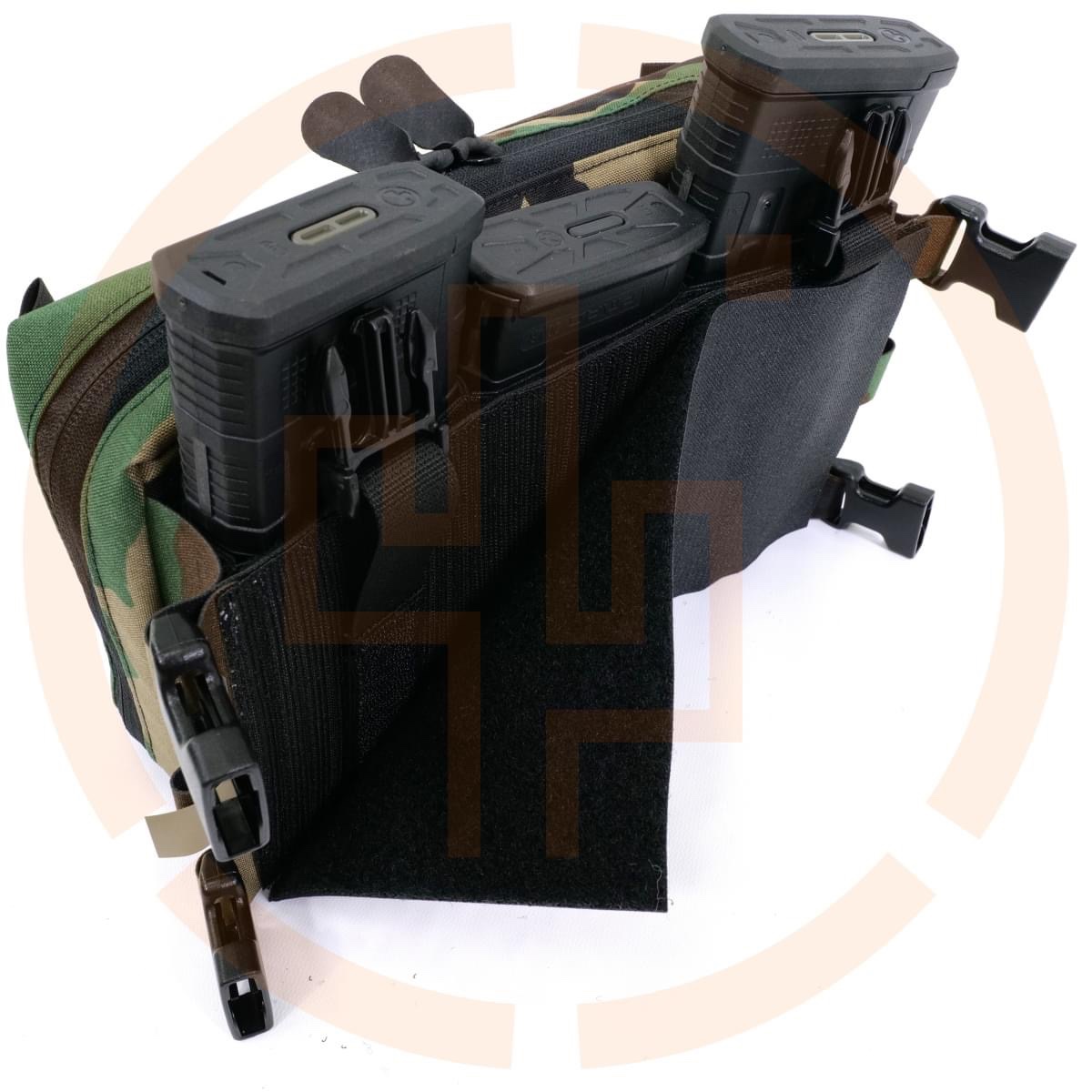
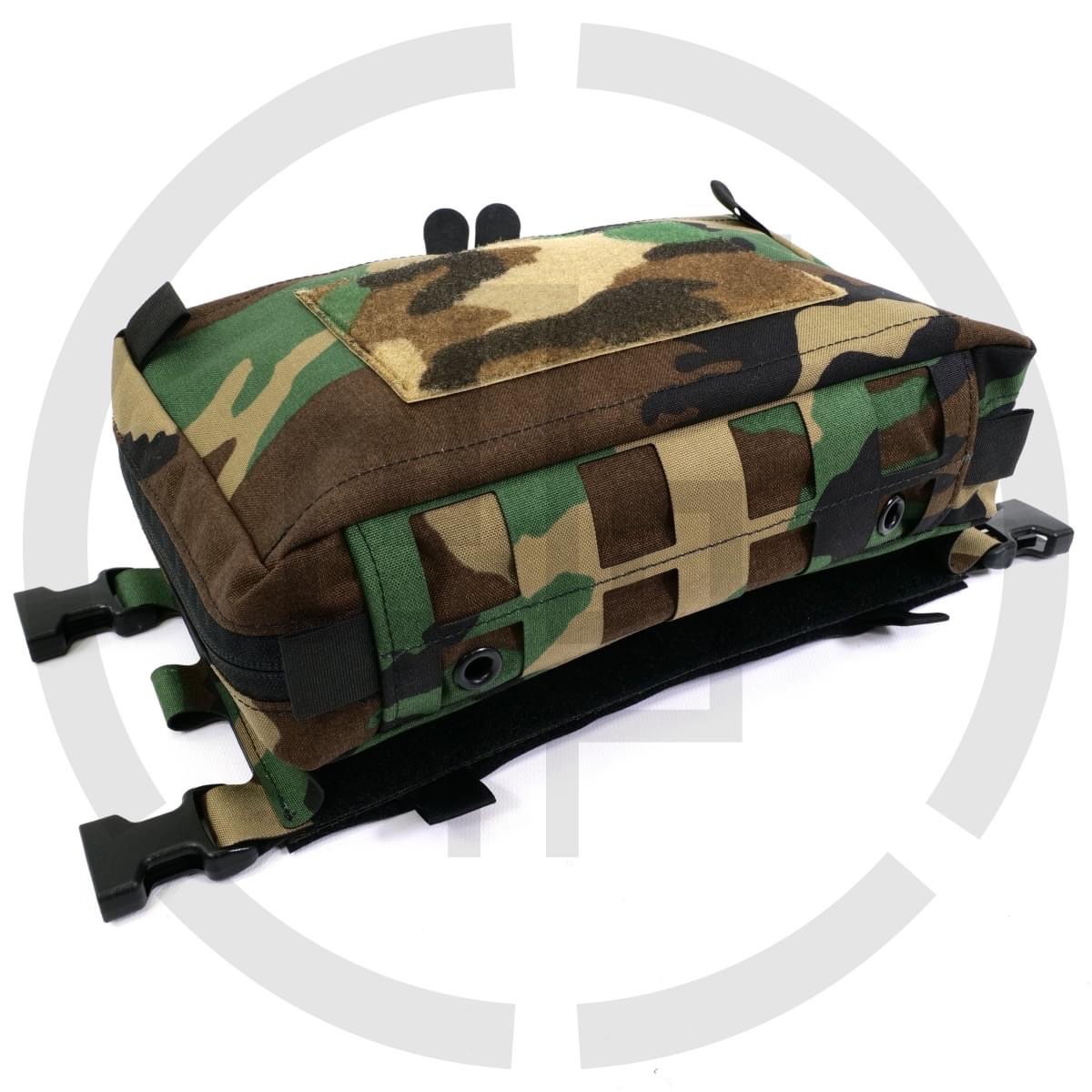
WTF’s Accessory Panel 38 integrates with armor carriers and harnesses. Panel 38 accepts up 3x Magpul Industries Corp. 25rd 762 mags with one or more of our magazine inserts.

Acc’y Panel 38 has a large clamshell zippered pouch with loop lining to accept hook backed accessories. Panel 38 is made in the USA with Berry compliant textiles.

2×3 PALS panel on the bottom accepts smaller PALS compatible pouches, tourniquet holders, etc. Two male and four female SRBs are included to integrate with your carrier or harness.

Two drain holes offer quick water evacuation. 550 cord and ITW Cordloc limiter offer adjustable opening. 10.8oz / 304g.

Order yours here.

Multi-Domain Task Force Activated for Indo-Pacific Duty

Tuesday, September 27th, 2022

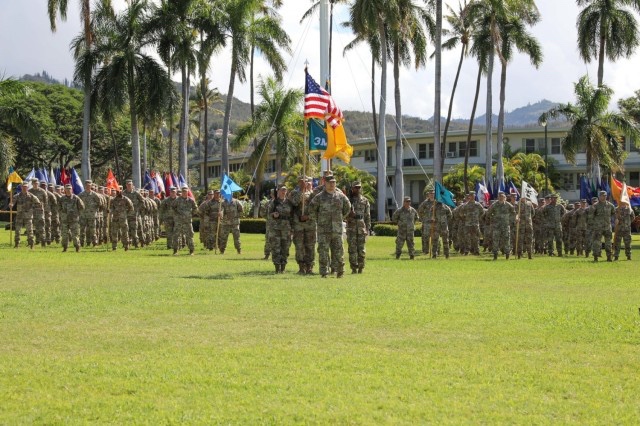
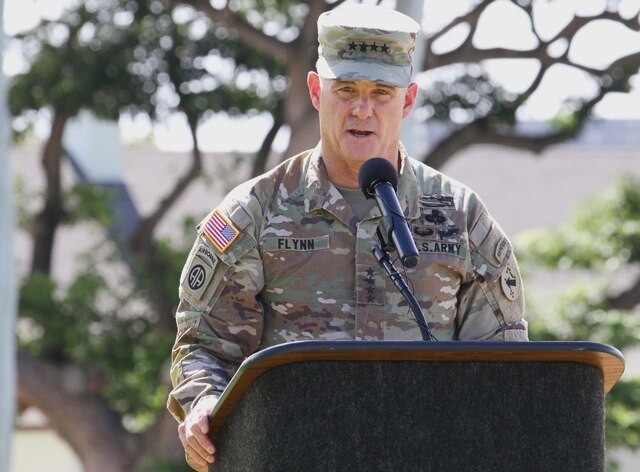
Fort Shafter, Hawaii—United States Army Pacific commander, Gen. Charles A. Flynn, constantly reminds people wherever he goes that the Indo-Pacific region is the most consequential theater for the United States this century. The Army was listening, and today activated its third multi-domain task force, the second such formation to be aligned to the Pacific.

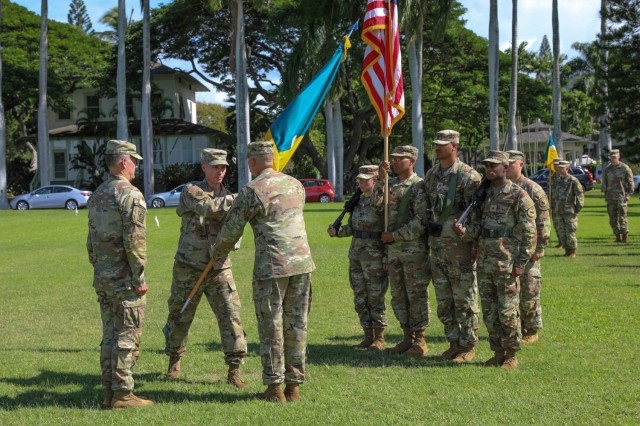
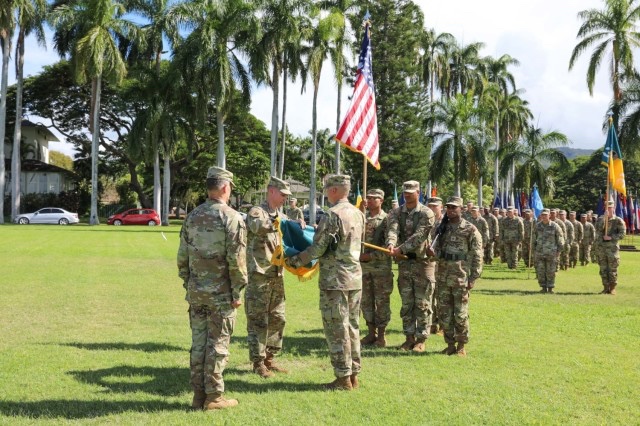
On Historic Palm Circle here, the 3rd Multi-Domain Task Force unfurled its colors in front of assembled leaders and Soldiers, and took its place among the other units that make up U.S. Army Pacific, a command region that stretches over half the world’s surface.

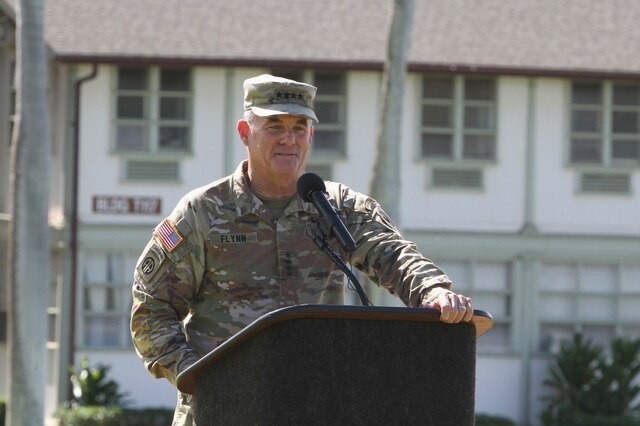
“While they may not have a distinguished and storied history yet, this unit is quite special and unique,” said Flynn. “The multi-domain task force is a perfect example of how the Army creates warfighting advantages for the Joint Force.”

Multi-Domain Task Forces are the signature formations for the Army’s transformation, and are theater-specific units that employ long-range precision effects, including cyber, electronic warfare, intelligence, and long-range fires. The concept of the MDTF brings together existing lethal and non-lethal capabilities by integrating and synchronizing them across multi-domains (air, land, water, space, cyber) in order to overcome a specific target.

The first MDTF became operational in 2017 at Joint Base Lewis McChord in Washington State, focusing on the Indo-Pacific. The second MDTF is in Germany aligned with U.S. Army Europe and Africa. This third MDTF will call Fort Shafter home, and becomes the second specialty unit to operate in the Indo-Pacific, or what the Department of Defense has labeled, its “priority theater.”

“Our MDTFs are essential to building joint readiness, strengthens interoperability with our allies and partners, and denying adversaries key terrain,” said Flynn.

The unit’s first commander is Col. David Zinn, an officer with experience in the theater having served in Hawaii and in Korea.

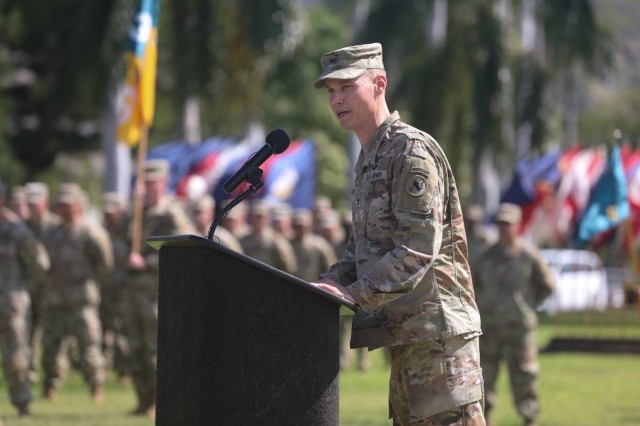
“Our activation in Hawaii reflects the Army’s commitment to this theater as our nation’s priority. We bring increased capacity, and complementary capability to the joint force in the Pacific. Our formation will provide capability to synchronize long-range precision effects, with long-range precision fires, providing increased freedom of action for the Joint Force,” said Zinn.

U.S. Army Pacific has set a goal for the new MDTF to reach full operational capability in fiscal 2023, and are currently evaluating opportunities for the unit to integrate itself with Theater Army exercises such as “Operation Pathways,” and to also work with allies and partners in the region.

Story by Russell K. Shimooka

Photos by PFC Perla Alfaro and PFC Christopher Smith

Disabled Veteran to Conduct March to Raise Funds for Gulf War Syndrome Research

Monday, September 26th, 2022

We received this info from a sponsor who asked if we could share it.

Hello Dear Friends,

My name is John Mumby and I am a proud Gulf War Veteran from Operation Desert Storm (1990- 1991). I would like to take a moment of your time to share with you the lasting effects of what is called “Gulf War Syndrome”. In the spring of 2020, I started developing neuromuscular and skeletal symptoms from the inhalation of Saran gas and other chemical agents due to improper exposure and disposal during the war. These symptoms are debilitating and chronic and have taken me out of the work force like so many other Gulf war vets. The hardest part about this is I have passed on progressive debilitating health issues to three of my children.

I am setting out on my last road march from Waskom Tx, to El Paso TX in an effort to raise awareness for other veterans suffering from Gulf War syndrome and to gain the attention of our state congress and senators to press forward with legislation to force the Veteran’s administration to recognize Gulf War Syndrome as a disability and all of its symptoms.

I am humbly requesting your assistance in this endeavor. I will need financial support on the road march to El Paso, TX. This a planned, 6O day walk with military backpack (rucksack or ruck) and I am asking that you go the distance with me and sponsor me by the miles walked for the Gulf War Syndrome Research at UT Southwestern, in Dallas, TX. Any amount will provide hope for this and other broken warriors!

All funds are to be directed to the Col. Bill Davis fund at engage.utsouthwestern.edu/donate-vets. If you wish to support me personally, please present all donations to my wife Lisa Mumby. Her contact info is 903-975-3144

Thank you in advance for your support and donations to finding a cure.

John Mumby

Disabled Veteran, US Army

PO Box 1102

Winnsboro, TX 75494

////

Date: 26 SEP 2022

Logistical Support for Ruck March

Needs:

Meal Ready to Eat 28 ea $12.00 ea       336.00

Mileage Pledge $_______       Per Mile

Donation Amount $______


This letter of contribution from _________________________________________________

Is to support John Mumby in raising awareness for Gulf War Syndrome

And his Road March endeavor across the state of Texas.

Date: /— Originally Signed –/

John Mumby

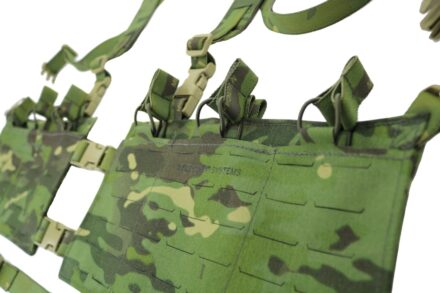
Beez Combat Systems AR Split-Front Chest Rig MultiCam Tropic

Monday, September 26th, 2022

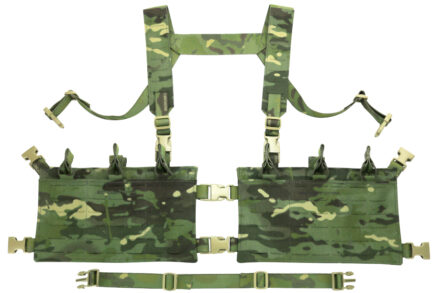
The AR Split-Front Chest Rig supports 6 mags in a low profile configuration. Laser cut grid allows the user plenty of realestate to build out the rig for recce or sustainment type operations.

The chest rig is a load-carriage system built for heavier loads. The Beez Combat Systems padded harness and extensive pouch suite provide for endless user configuration options.

The chest rigs, pouch suite and padded harness are available in multiple color options. 

Chest rigs – www.beezcombatsystems.com/collections/chest-rigs

Hurlburt Field Wing Takes ACE C2 to Next Level for Lead Wings

Monday, September 26th, 2022

HURLBURT FIELD, Fla. (AFNS) —

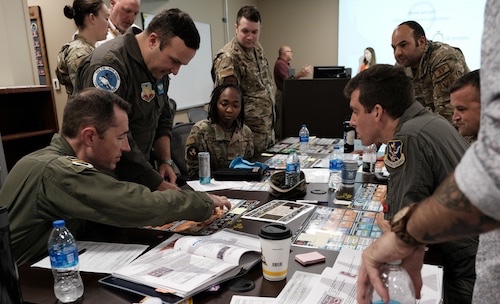
For almost a decade, U.S. defense officials have deemed the return of great-power competition to be the most significant challenge to U.S. national security. As a result, the Department of Defense’s leadership is taking bigger and bolder steps to maintain the U.S. military and technological edge over pacing challenges such as China and Russia. With this effort, the ability of the U.S. to deter coercion, aggression, and even war in the coming decades is at stake. To bolster the U.S. Air Force’s ability to meet those challenges, the 705th Training Squadron executed Air Combat Command’s first Lead Wing Command and Control Course at Hurlburt Field, Florida, Aug. 23-26.

Participants included leaders from the A-staff of all five designated ACC lead wings: Moody Air Force Base, Georgia; Seymour Johnson AFB, North Carolina; Mountain Home AFB, Idaho; Davis-Monthan AFB, Arizona; and Offutt AFB, Nebraska. Additionally, representatives from Headquarters Air Force, 15th Air Force, and the 505th Command and Control Wing attended.

The LWC2C is ACC’s groundbreaking lead wing leadership training course for distributed operations in support of Agile Combat Employment. ACE is a proactive and reactive operational scheme of maneuver executed within threat timelines to increase the survivability of forces while generating combat power through a deterrence continuum. When applied correctly, ACE complicates an adversary’s targeting process, creates political and operational dilemmas and creates flexibility for friendly forces.

“The overall current and future operating principle for the Air Force is based on places, not large, fixed bases. As a result, the Air Force will increasingly rely on smaller, more agile force packages and expeditionary air units with the ability to move between austere, temporary bases to complicate peer adversaries’ planning,” said Lt. Col. Marcus Bryan, 705th TRS commander. “The shift was largely driven by China and Russia’s more assertive behavior and new capabilities designed to disrupt and destroy U.S. command and control networks and thwart U.S. power projection.”

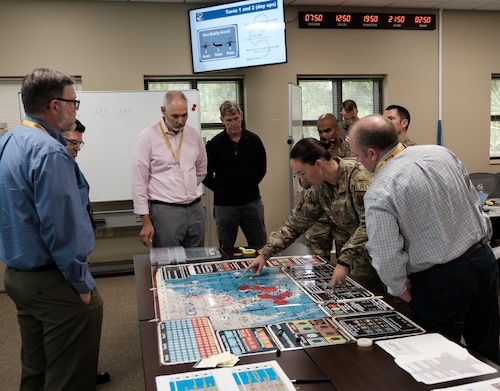
The course is designed to prepare a lead wing A-staff for operations in support of an air component commander in any theater. This new course captures the challenges of executing C2 in a denied, degraded, or contested environment while conducting effective ACE operations. The LWC2C is designed for immediate student immersion into joint and Air Force doctrine using Kingfish ACE game boards. Col. Troy Pierce, HAF Directorate of Plans and Programs, designed the original board game entitled Kingfish ACE to first introduce Airmen Air Force-wide to the concept and challenges of ACE.

“The innovative approach our team took with LWC2C is a huge step in breaking the military training paradigm with regards to how the military approaches academics and training. We are focusing on introducing lead wing A-staffs to the complexity of distributed C2 of ACE through a more hands-on approach rather than the traditional ‘death by PowerPoint’ approach,” said Lt. Col. Benjamin Lee, 705th TRS director of operations. “Our training doesn’t stop with this course, the 505th CCW will be an integral part of the entirety of a lead wing’s C2 training program. As each wing progresses from ACE lead wing academics through certification in the ‘Prepare and Ready’ phases of the AFFORGEN [Air Force Force Generation Model] cycle, we anticipate continuous teaching and mentoring.”

Upon completing the LWC2C, attendees will understand the concepts and considerations of integrating ACC’s lead wing activities into the air component C2 structure to support ACE operations within any theater.

“The U.S. military can no longer assume that it will have the freedom of action in a conflict that it had in the past by gaining early superiority in the air, space, cyberspace and maritime domains,” said Col. Adam Shelton, 505th Test and Training Group commander. “In any future conflict, U.S. forces will need to fight for advantage across these domains – and then continue fighting to keep it – in the face of a continuous peer adversary efforts to disrupt and degrade U.S. battle-management networks.”

Story by 505th Command and Control Wing Public Affairs, 705th Training Squadron

Photos by Keith Keel

SCUBAPRO Sunday – Wetsuit Care

Sunday, September 25th, 2022

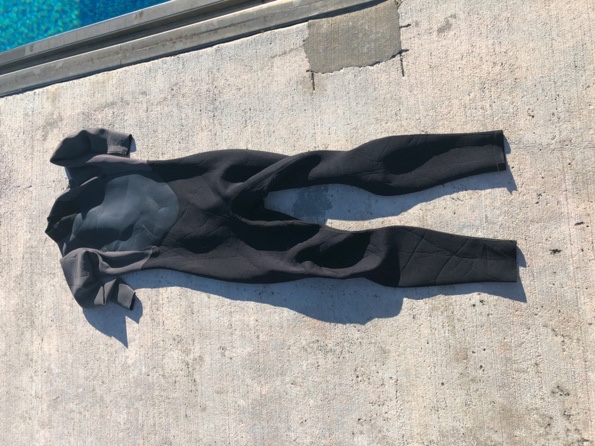
Your wetsuit is an essential part of your dive gear, as it protects your body from heat loss, abrasions, and wildlife injuries on a dive. Without proper care, neoprene can be damaged easily when you’re not even diving. Although they are designed to last a long time, certain elements will destroy it, if you don’t take care of it. Here are a few things that will damage neoprene. This stuff will also damage your H-gear/ Armor carrier and other nylon equipment.

Sunlight

Sunlight is one of the worst things for any nylon product. You never want to leave your wetsuit hanging in direct sunlight to dry. Neoprene takes a beating from UV radiation, and it will begin to break it down quickly. Paired with heat, it can break a new wetsuit down in a matter of months.

Heat

Even in the absence of sunlight, heat is not good for neoprene. Under no circumstances should you ever put neoprene in the dryer. Even leaving it in a hot car can begin the process of deterioration. The best way to dry your wetsuit (after a fresh water rinse, of course!) is to hang it in the open air, in the shade. So, try not to store your wetsuit in a Conex box.

Salt and Minerals

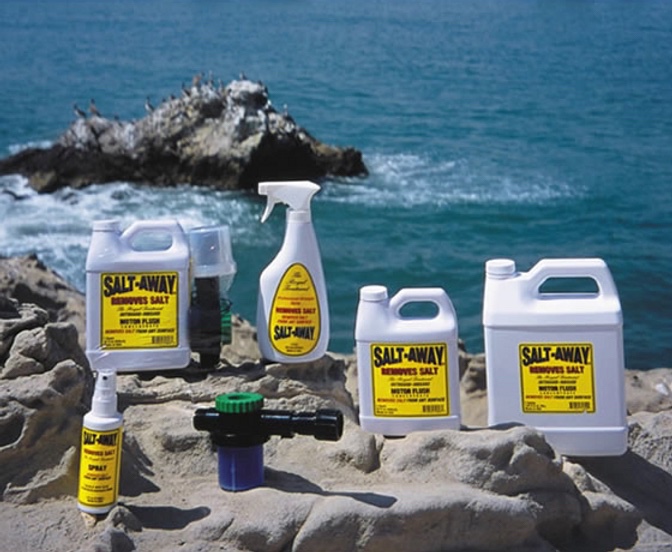
If you’ve been diving in the ocean, you’ll need to rinse your wetsuit immediately with fresh water so that the salt, minerals, and bacteria accumulated during the dive will not remain to crystallize and produce odors. Soaking it in a tub is the best way to do this. Do more than just rinse it with a hose and hang it up to dry. Even if you haven’t exposed your wetsuit to any of the other damaging elements in this post, a stinky, bacteria-laden wetsuit is just as ruined if you never rinse it. Occasional soakings with a product like Sink the Stink are a great way to refresh your wetsuit every few weeks or months, depending on how often you dive. Also don’t think “oh I just used it in a pool it will be fine” chlorine is bad for your wetsuit. Look at all the people that use the same T-shirt in the pool and never wash it, it is a different color because of the chlorine. I have also just discovered something called Saltaway- this is great stuff to use to clean your suits and gear after a week or so of diving. I am not saying to use it if you have only used your suit for one dive, but you don’t need to use it every time you dive. It will help get all the salt off of your gear.

Improper Storage

As well as suffering heat damage, leaving your wetsuit wadded up in your gear bag, trunk, or garage will cause rapid deterioration, as it compromises the structure of neoprene. Hanging your wetsuit on a proper wetsuit hanger is the ideal storage, but if you’re limited on space, you can store it folded in half in a dry container once it is fully dry.

If you rinse your wetsuit with fresh water after every use, it should stay clean in most cases. However, you sometimes might find that your wetsuit gets a little funky. If you pee in it, it will get funky. Make sure that you always use a cleaner that is designed for wetsuits. The wrong type of cleaning product on your wetsuit can be the thing that damages neoprene. Some people say you have to get a new wetsuit every 3 to 5 years. The truth is it depends on how much you use it and how deep you go. Every time you dive deep it will compress the wetsuit and push some of the bubbles that are in the neoprene out. So there is no real time line on how long a suit will last. But like most things the better you treat it the longer it will last and more importantly the better it will treat you when you need it the most.

What Makes a Good Tactical Flashlight?

Saturday, September 24th, 2022

“Tactical” is a word that gets thrown around a lot these days, used for everything from pens to bacon. In this context though, we mean a light that’s designed specifically for use in high-stress situations and demanding environments, both with and without a firearm.

First and foremost, it needs to produce enough light. There’s a great deal of debate about what constitutes “enough” light, but we can comfortably say a tactical light needs to output at least 300 lumens on its highest setting.

Next, we want to consider the secondary attributes of the beam. The most common metric for this is candela. While lumens measure the total amount of light a flashlight creates, candela measures how much of that light is focused in a single direction. A higher candela means a more focused beam with higher intensity. A light with very high lumens but very low candela is basically going to be a lantern rather than a spotlight.

Candela often gets simplified into “flood” and “throw.” Flood describes a flashlight’s ability to light up a wide area, while throw speaks to how well it can illuminate objects far away.

In a good handheld tactical flashlight, we want a combination of the two. Good flood is important, because you may not know exactly where the suspected threat is, but you also want your light to be able to illuminate objects and figures from a good distance.

After a good beam, we want to look at the control scheme. A tactical flashlight needs to be usable with a pistol, so one-handed operation is important. A push-button tail switch is usually best.

Most firearm/flashlight techniques are designed around flashlights with tail switches, so low-light training will be easier if you’re starting with a tail switch light. There are a few exceptions, though, so a switch located somewhere on the body is not necessarily a deal-breaker if it’s well designed.

Regardless of the activation system, a tactical flashlight must be capable of going straight to high output with a single button press. There’s no time for cycling through modes when you’re trying to decide if a shadow in the darkness is a threat or not.

Other tactical features like crenelated bezels or shielded switches are nice to have, but largely unnecessary. A crenelated bezel can improve the flashlight’s performance as an impact weapon or glass breaker, but that’s not the primary purpose of a tactical flashlight.

Shielded switches, especially tail switches, are convenient in that they make the flashlight less likely to activate unintentionally. Shielded tail caps can make a light easier to balance pointed straight up, which is nice if you need room-wide light for an extended period, such as during a power outage. But again, that’s not the primary purpose of a tactical light, so we file that under convenient rather than necessary.

With all that in mind, let’s look at a few of the most popular tactical lights on the market.

Streamlight ProTac 2L-X
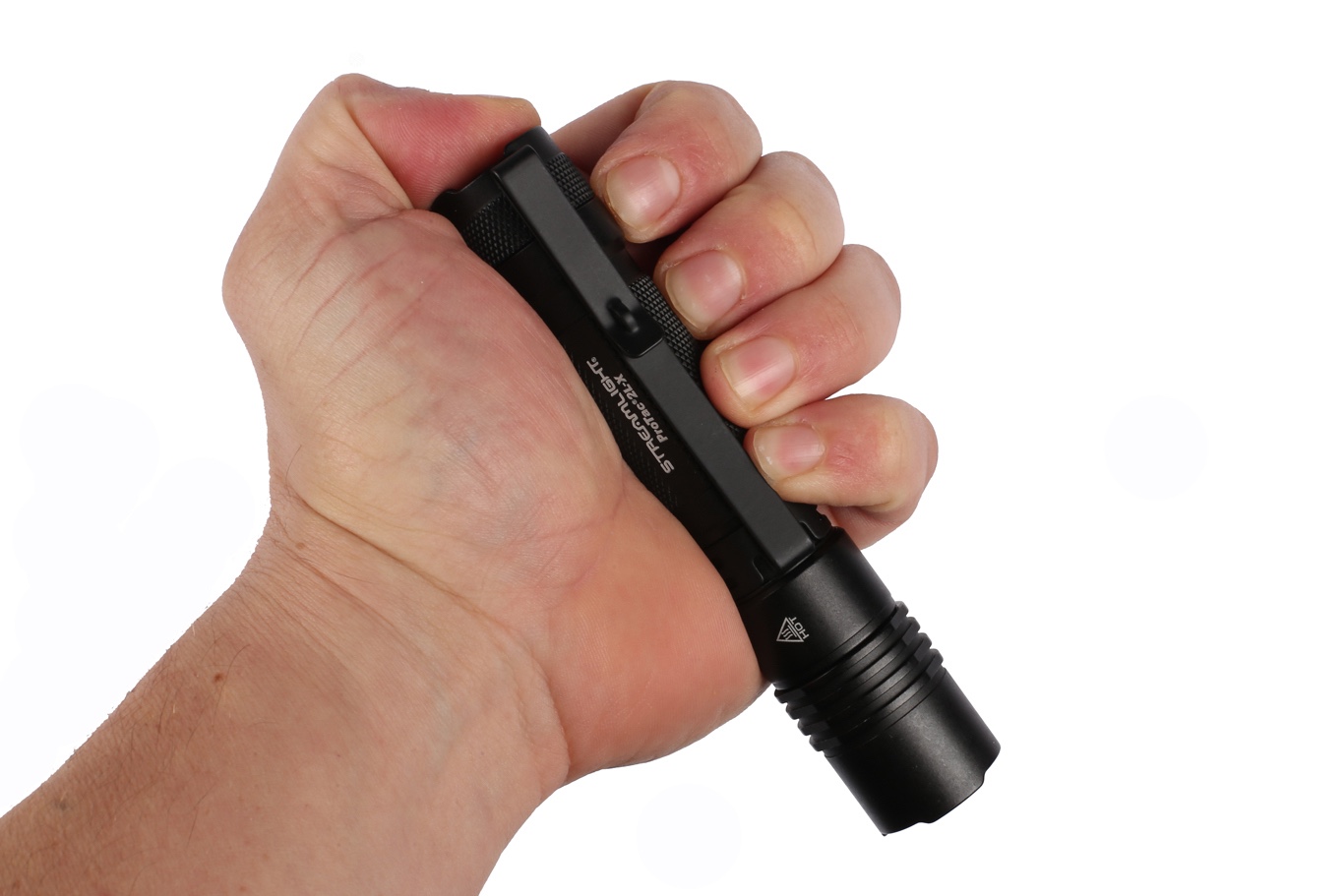
The Streamlight ProTac 2L-X won’t break the bank, but it’s a great example of all the features we look for in a tactical flashlight. It has a full aluminum body and can put out up to 500 lumens with 6,800 max candela. That’s a fairly low candela number for a tactical flashlight, so the ProTac 2L-X is going to have a lot of flood, perfect for an urban or suburban environment. If you want to be able to use your tactical flashlight to light up pastures, though, you may want to opt for one with more throw.

The switch is programmable with several different modes but comes from the factory in a high/strobe/low configuration.

This is good for tactical use, as it allows you to get straight to high output, but users would be wise to practice with it a bit. It’s easy to mash the button too hard and get constant-on when you wanted momentary, especially when you’re swimming in adrenaline.

It’s a multi-fuel light, so you can use your choice of disposable CR123A batteries or a rechargeable 18650. The bezel is lightly crenelated—enough to protect the light and make it effective as an impact weapon or maybe even as a glass breaker, but so much as to chew through your pocket. The tail switch is shielded to help discourage accidental discharge, but not quite enough to allow it to tail stand effectively.

At over five inches long, it’s what we would consider “full-size” for this kind of flashlight: anything larger wouldn’t really fit in a standard pocket and would be more at home on a belt. As such, it’s small enough for everyday carry, but most users are going to notice the extra weight and bulk in their pocket.

SureFire EDCL1-T
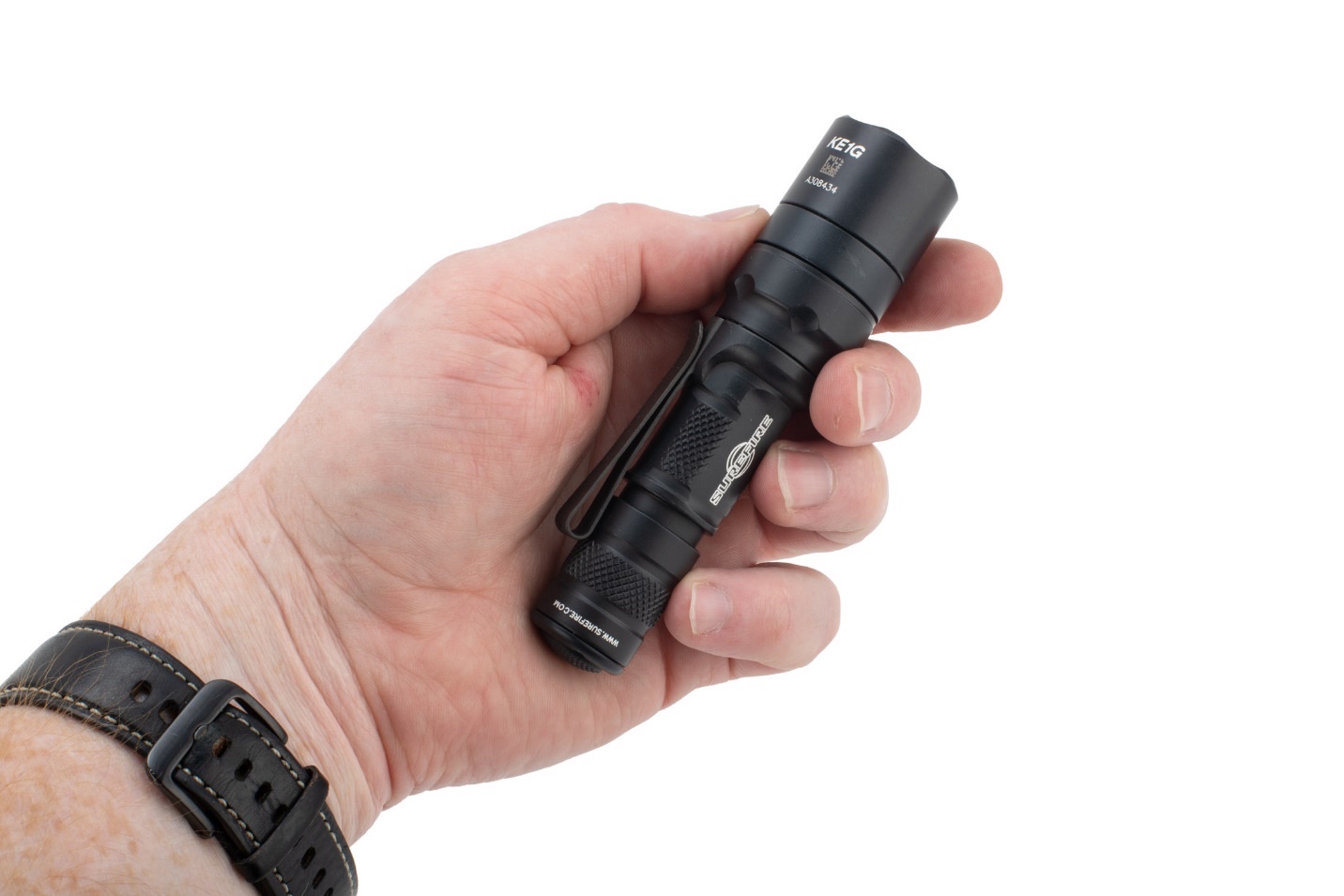
For a more pocket-friendly light, we recommend looking at the SureFire EDCL1-T.

The EDCL1-T offers many of the same features of full-size tactical lights, just in a smaller package. It outputs 500 lumens at high and an unobtrusive 5 lumens on its low setting. At 7,600 candela, it’s mostly focused on flood rather than throw, but with 500 lumens it will still reach out far enough for most applications.

It’s also got low-profile crenelation around the bezel but doesn’t feature any significant tail switch shrouding and won’t be able to stand upright on its tail. Not that this is a big deal; it’s a purpose-driven tactical light.

This is most evident in its switch design, which is very well thought-out. A light press activates the low setting, outputting 5 lumens, while a hard press gives you the full 500. This is perfect for high-stress use; just mash the button and see what’s out there. Both options are momentary, so there’s no chance of accidentally hitting constant-on.

Constant-on with this light is achieved by activating the desired mode and then twisting the bezel.

Sadly, the EDCL1-T is not compatible with rechargeable 18350 batteries; it runs on a single CR123A, with no dual-fuel function.

Modlite Systems PLHv2
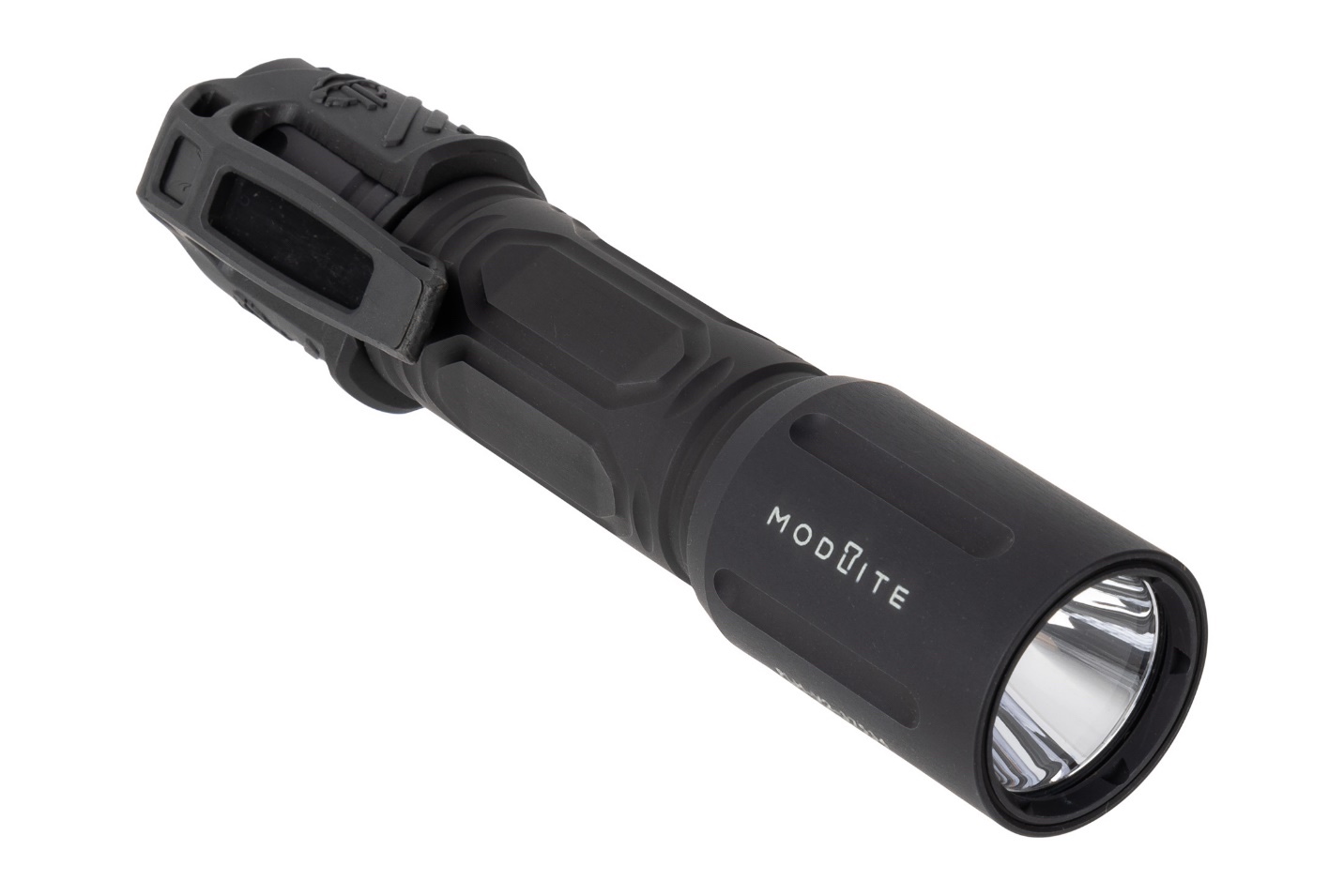
The Modlite PLHv2 is the most powerful light on our list, kicking out a whopping 1350 lumens: no low mode, no high mode. The beam is potent as well, packing 54,000 candela.

The Modlite is deceptively simple in design; it looks basic, with no crenelations around the head or tail. The tail switch is fully shrouded though, recessed into the body of the light to prevent accidental activation. This full recess also allows the light to stand on the tail cap. The clicky tail switch works similarly to many of the others, offering momentary activation with a light press or constant-on with a full press.

To achieve its prodigious output level, the PLHv2 runs exclusively on 18650 or 18350 rechargeable batteries, depending on the body size you choose. It does not accept CR123A batteries at all; in fact, Modlite states that CR123 lithium batteries can explode if used in Modlite flashlights. Modlite does, however, offer a bundle with the handheld light and an appropriate 18650/18350 battery and charger, so you have nothing to worry about.

Lastly, because of Modlite’s design, popularity, and range of models, their flashlights enjoy a wider range of aftermarket accessories than most on this list. Heads, switches, pocket clips, retention rings; if they make it for a handheld flashlight, they make it for a Modlite. This gives Modlite a much higher range of available customization than the other lights.

The (Tactical) Light at the End of the Tunnel

There you have it: three tactical flashlights for your consideration, from budget to bespoke. Each has its own pros and cons and serves a particular use case. Like handguns, pocket knives, and most other tools, some will serve your individual needs better than others, but the most important thing is to have one on you when you need it.

Whether it’s telling if that thing rummaging through your garbage is a rabid raccoon or the neighbor’s cat, or identifying a figure lurking in an alleyway, a tactical flashlight gives you options a weapon light simply can’t.