SIG SAUER - Never Settle

Archive for the ‘Guest Post’ Category

2022 SOLGW CARBINE Series

Wednesday, September 7th, 2022

6 September 2022 – San Antonio Texas – SOLGW is pleased to announce that registration is filling for the 2022 SOLGW Carbine Series to be held at The Ranch TX on 12/13 November 2022. With 12 challenging stages competitors will shoot from 0-600 yards. All prizes are on location for distribution upon completion of the event. Match director is Jeremy Reid and runs under the USSL-URL-EMG Match.

Sign up is open now at Practiscore practiscore.com/the-sons-of-liberty-gun-works-carbine-series-2022/register

Media / Sponsor inquires – carlo@sonsoflibertygw.com

SureFire Field Notes Ep 73 – How to Setup a Low Power Variable Optic with Michael Baccellieri

Wednesday, September 7th, 2022

In this episode, Michael Baccellieri discusses how to properly setup a LPVO.

Michael “Buck” Baccellieri grew up in the Pacific Northwest where he started his military career at age 17. He joined the Army National Guard while still in high school, attending basic and AIT, and spent three years as an infantry rifleman. Upon completing a deployment to the Middle East, he cross-decked to the Marine Corps, where he spent four years as an infantryman, assault climber, CWSS swimmer, and Scout in an STA platoon. Baccellieri later returned to the Army National Guard, taking up a slot in a sniper section and, after completing sniper school, moving on to the role of sniper team leader. He finished his career as an instructor at the Fort Chaffee sniper schoolhouse in Fort Smith, Arkansas.

Baccellieri now works for Leupold & Stevens, Inc., as the lead optics and firearms instructor for all military/LE training. He fills his time between classes by performing military business development for the Oregon-based company.

www.leupold.com

www.surefire.com

DEVCOM SC’s Army Tactical Bras Designed to Meet the Performance Needs of Female Soldiers

Wednesday, September 7th, 2022

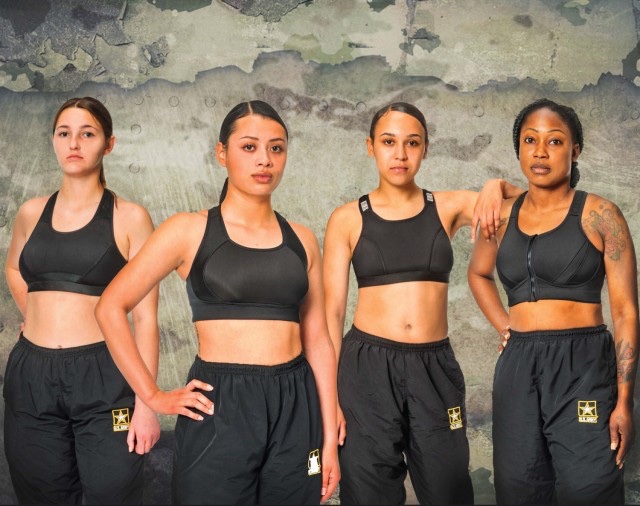
NATICK, Mass. — The U.S. Army Combat Capabilities Development Command Soldier Center, or DEVCOM SC, has designed Army Tactical Bras (including four concept bras) to meet the needs of female Soldiers who perform physically demanding tasks in a wide variety of environments.

“It’s important to recognize that Soldiers are the ultimate athletes, and they need something very specific,” said Annette LaFleur, team leader for the Design, Pattern & Prototype Team, part of the Soldier Protection Directorate at DEVCOM SC.

LaFleur explained that as ultimate athletes female Soldiers often endure arduous physical conditions that are much more intense than “say a female running a weekend road race or playing in a soccer game for a few hours.”

“Consider a design that may be worn days on end, in the cold, jungle or desert, layered under her uniform, body armor, ruck sack and while different threats may come her way,” said LaFleur.

Ashley Cushon is a clothing designer on the Design, Pattern & Prototype Team. As project officer and lead designer for the Army Tactical Brassiere Program, Cushon has led the design development and the test strategizing for the ATB concepts since the start of the program. She noted the importance of equipment that fits well and meets the needs of female Soldiers.

“The last thing the Soldiers need is to lose focus due to the discomfort of a next-to-skin garment that is meant to support them and not distract them,” said Cushon.

“As with all uniform and individual protection items we develop and evaluate, our goal is for the Soldier to not think about what they are wearing and be focused on their job,” said LaFleur.

Based on feedback from survey and focus group efforts, DEVCOM SC designers learned about capability gaps presented by the sports bras currently worn by Soldiers as well as Soldier preferences.

“We considered how to improve the comfort levels of a military appropriate performance sports bra, incorporating features that Soldiers prefer while making sure, on a design level, to keep functionality and support a priority throughout design development,” said Cushon. “The goal is to not only accommodate Soldiers that are doing field training exercises, but also those operating in combat environments where there could be potential exposure to different threats.”

The design of the Army Tactical Bras was driven by Soldier feedback and takes into consideration a variety of factors.

“It is the combination of materials, design, construction (seams/stitches) and fit which create the importance of the item — not just one feature alone,” said LaFleur. “Ashley and a team of other technical experts have been working with female Soldiers so that we can take their feedback into the design process from the start.”

The designers are working to provide female Soldiers with a few different bra options to accommodate individual preferences, match their activity level, and meet the needs of specific tasks.

“As Army clothing designers, our considerations expand beyond the general look or style of the garment, though that is definitely a factor,” said Cushon. “We aimed to provide the Soldiers with a variety of options inclusive of features that they identified work well for their activity level. One thing to keep in mind is that there is no ‘One Size Fits All’ solution out there.”

Cushon said that other very important considerations include the Soldiers’ familiarity and experimentation with the variety of styles (which varies) and a certain allegiance that they may have towards a particular type of bra.

“We had to look at this from two different perspectives; first as women, understanding a sports bra is very preference dependent and personal,” said Cushon. “Second, as designers, we interpret feedback and incorporate these points as functional elements within a design. This way, we are able to understand and reach more individuals within our target users.”

The DEVCOM SC team worked to include a wide variety of features, ranging from customizable fit to flame resistance.

“We added various features that allow Soldiers to customize the fit of the ATB concepts to their desired compression or support level,” said Cushon. “We also wanted to offer concepts that have less fasteners and hardware without forfeiting functionality, for Soldiers who prefer simplicity. Of course, a key feature is the Flame Resistant, or FR, protection, which we were able to integrate seamlessly into the designs. Whether it is the addition of a closure, the finish on a joining seam, the moisture management of the materials, the size and location of hardware or thread weight, every detail was meticulously considered to ensure we provided adequate variation for these first iterations.”

“Fit, Form and Functionality” shape the approach to products that are designed by the Design, Pattern and Prototype Team. Given that incorrectly fit bras can cause pain, and skin irritation, these three elements were particularly important in the design of the Army Tactical Bras.

“In this instance, where Army sports bras could almost be considered a niche-use case, these three elements take on a whole new level of importance,” said Cushon. “Females in general have become all too familiar with experiencing adverse effects related to the continued wear of an ill-fitting bra. Skin damage related to abrasion, or pain in the breast, shoulders and back relative to the lack of breast support are some common examples. For the ATB Concepts, we are utilizing a combination of size, style and military appropriate design elements for the individual Soldier’s body type and activity level that can help to mitigate distractions related to ill-fit or discomfort that could compromise their focus — ultimately enhancing their readiness level while active.”

The Army Tactical Bras are an important part of DEVCOM SC’s ongoing efforts to meet the needs of female warfighters.

“We see this as one of many great opportunities to provide female Soldiers items that are developed with input from their unique experiences guiding the development and evaluation,” said Cushon.

“Here at DEVCOM Soldier Center we have a strong multi-disciplined team — including military designers, anthropologists and textile technologists to name a few — that use science and technology in developing optimized solutions to keep our warfighters, in this case female, protected and focused on their mission,” said LaFleur. “The bra is an essential component to the female Soldier’s system of clothing.”

LaFleur explained that “ATB technologies developed at the Soldier Center will serve to inform the Army of potential functional product specification and material options which optimize bra performance for combat at training environments. These technologies and research findings will also provide insights as to how specific performance requirements can be defined for these and other Soldier worn garments.”

By Jane Benson, DEVCOM Soldier Center Public Affairs

AFSOC’s Mission Sustainment Teams Provide Innovative Leap in SOFORGEN

Tuesday, September 6th, 2022

HURLBURT FIELD, Fla. —  

Air Force Special Operations Command (AFSOC) continues to innovate the way Air Commandos train and execute joint special operations missions in this century’s complex and competitive battlespace.

Among these recent innovative changes include the further development of multi-functional Airmen and their integration into a new Special Operations Task Unit (SOTU), known as a Mission Sustainment Team (MST).

“As the Air Force continues to operationalize and codify its approaches to Agile Combat Employment (ACE), a key effort is establishing how we’ll bring together the complementary capabilities of our fighter, bomber, mobility, and special operations forces,” said Dr. Sandeep Mulgund, Senior Advisor to the Air Force’s deputy chief of staff for operations. “Doing so will be key to creating, maintaining, and fighting from positions of advantage, which the CSAF has emphasized in recent remarks about ACE. By integrating MSTs into SOF capabilities, we’ll provide more options for our joint force and coalition commanders on how to generate and employ airpower.”

For nearly a year, the 1st Special Operations Wing, has developed its MST as a proof of concept to ensure multi-capable Airmen within AFSOC are able to meet the needs of combatant commanders against any potential adversary in the future. Its role will be to act as the connective tissue that bridges the Air Force’s ACE capability with current AFSOF capabilities in a joint environment.

“Our MST allows us to provide force support, civil engineering, communications, logistics, security forces, medical, airfield management and contracting capabilities,” said Col. Daniel Magruder, 1 SOW vice commander. “We now can take what are normally base support functions and operationalize them to support combat missions. Ultimately, without the total package of aviation, maintenance, and support provided by our multi-capable Airmen, the mission will not get done.”

In order to accomplish this capability, MSTs are designed to train 58 Air Commandos from 22 different Air Force AFSCs with seamlessly blending their operations and becoming proficient in several competencies in order to receive, prepare and redeploy aircraft expeditiously.

“It’s a huge asset to the MST for our Airmen to have the adaptability and confidence in varying skills to better meet the challenges of the changing threat environment and determine best practices for mission support within the ACE construct moving forward,” said Capt. Melissa Cecil, 1st Special Operations Mission Support Group Detachment 1 commander. “Our goal is to empower our Air Commandos to problem solve and think critically while also giving them the tools they need to operate and make decisions at dispersed locations. In some of these locations, they will be relied upon as the subject matter expert for all things mission support.”

Utilizing multi-capable Airmen was at the forefront of AFSOC leaders’ mind when they developed the MST.

“Our MSTs are empowered to adapt to assigned missions,” said Magruder. “As an Air Force, it is important to empower units at the lowest level to achieve their assigned missions.”

“Each of the military services are developing approaches to operations that recognize the need for agility and maneuver in the future threat environment,” added Mulgund. “They each have their unique focus areas and nuances, but common to all is this idea of being light on your feet to shift forces and effort where and when required. Joint approaches to agility will pull all these together to meet the needs of our combatant commanders worldwide. MSTs are part of that joint solution. Our Air Commandos now can enable and support austere operations by other special operations forces as well as allied forces when required.”

The 1 SOW’s MST recently tested their ability to help generate and integrate into air operations components during its recent participation in two exercises with drastically different theaters of operation.

“MSTs provide flexibility to the force because they can establish, sustain and retrograde forward operating locations for AFSOF mission generation,” said Magruder. “The team has been aggressively rehearsing this training in exercises like Agile Flag or INDOPACOM’s Rim of the Pacific (RIMPAC) exercise.”

As part of Air Combat Command’s Agile Flag, an exercise in a simulated rural deployed setting, the MST assisted in enabling scripted joint force air component ACE missions.

“Multi-capable Airmen is what gives the MST the capabilities it has,” said Capt. Patrick Sutton-Buscavage, 1 SOMSG Det 1 director of operations. “During Agile Flag we were able to rapidly support and sustain operations for Aircrew, maintenance and forward arming and refueling point (FARP) teams in two separate locations at the same time. Without multi-capable Airmen on our team, this doesn’t happen.”

Although Agile Flag is aimed at testing several different units’ mission generation, command and control, and base operating support-integrator elements, the MST’s inclusion provided an avenue to test the newly implemented special operations sustainment task unit in a realistic and controlled setting. It also allowed those who will be deploying in the newer, more predictable, deployment structure to develop the continuity of processes and team building needed to effectively operate in austere conditions or in support of a Theater Special Operations Command.

“The intent of MST is to align directly with the SOFORGEN cycle and integrate into a SOTU construct downrange,” Cecil said. “Although the MST is still in its infancy, we are working to build relationships and seek out further training and utilization opportunities to demonstrate how we can best be integrated across multiple areas of operation.”

In addition to Agile Flag, the MST also supported INDOPACOM’ recent RIMPAC exercise, which is the world’s largest international maritime warfare exercise. The MST’s involvement in the exercise directly influenced the ability for commanders to employ not just American special forces but also from India, Germany and the Republic of Korea.

“Large exercises, like RIMPAC, allow our team to showcase our force generation capabilities to the joint and international forces while also looking for ways to collaborate,” Magruder said. “The benefits of the MST concept is that it allows our commanders to employ multiple teams across a large AOR in order to form a more theater level power projection platform.”

“Whatever the challenge, we’ll need small multi-disciplinary teams like MSTs to support mission generation in a wide variety of operating environments,” Mulgund added.

The MST continues to prove that the development of multi-capable Airmen is pivotal to the future of how AFSOC generates forces.

“Multi-capable Airmen are the building blocks for developing small capable special operations teams required to adapt to any combat environment,” said Magruder. “Their incorporation into the MST is the first step in the wing’s campaign to improve the way we process and provide sustained logistical support against any potential adversaries.”

By TSgt Michael Charles, 1st Special Operations Wing

Beez Combat Systems SIDEWING HH3 (Haley Strategic D3CRH)

Monday, September 5th, 2022

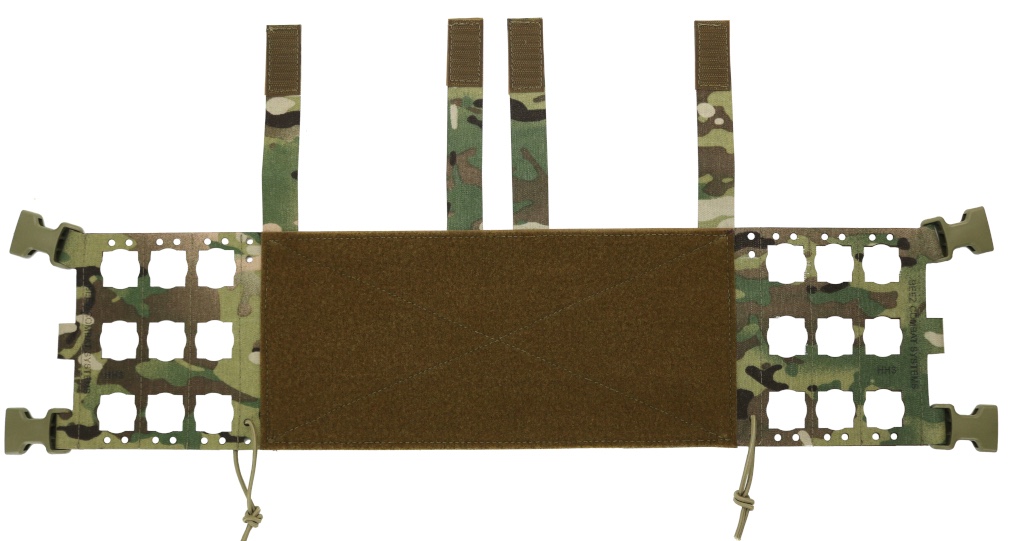
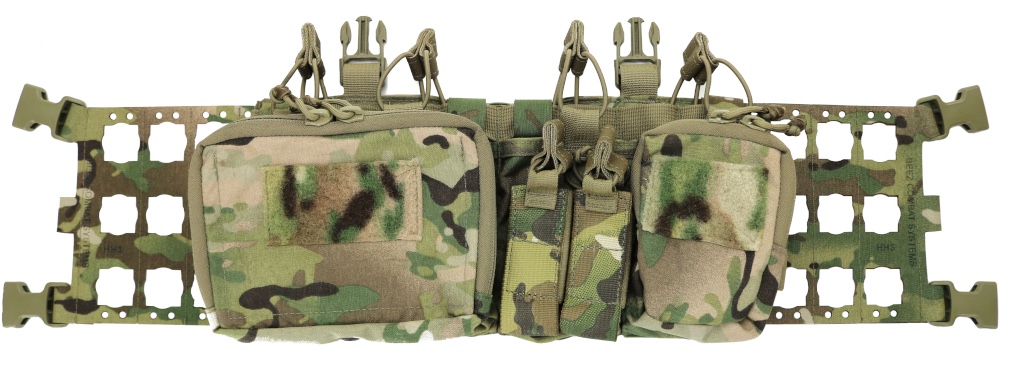
The SIDEWING H(Haley)H(Heavy)3 allows the user to convert the Haley Strategic D3CRH into a larger chest rig with additional attachment realestate. Ideal for those that need to carry a little bit more.

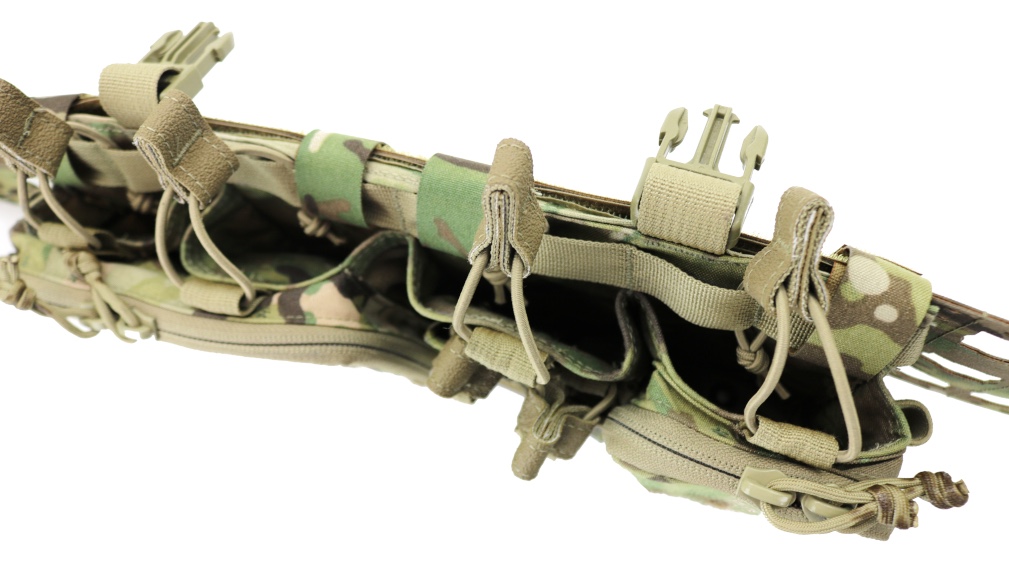
The SIDEWING HH3 laser cut design supports a front and back channel system. This allows the user to attach on both sides essential items such as a tourniquet pouch, radio pouch and general purpose pouches.

The laser cut laminate lock down straps secures the SIDEWING to the D3CRH for the increased load of additional pouches.

Sidewings – www.beezcombatsystems.com/collections/sidewings

***all Haley Strategic trademarks, brands, etc are the sole property of the respective companies.  Haley Strategic does not endorse this products***

Brazilian Army Leadership Lauds Opportunity to Train with US Army

Monday, September 5th, 2022

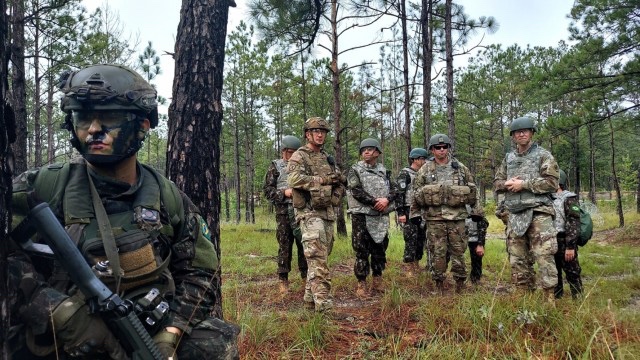
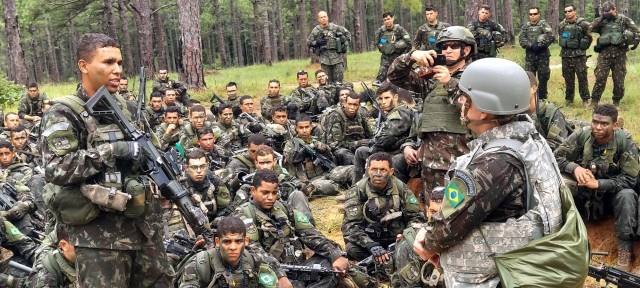
FORT POLK, La. — Prior to his soldiers arriving to the Joint Readiness Training Center at Fort Polk to take part in a bilateral training exercise, Gen. Estevam Cals Theophilo, commander, Brazilian Army Land Operations Command, emphasized the importance of his troops being ready for the next conflict.

“Our mentality must be that are prepared to fight in combat,” Theophilo said. “We can go a thousand years without war, but we can’t afford one second without being prepared to fight when war arises.”

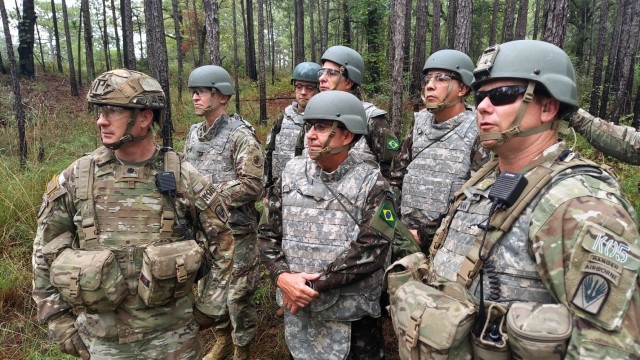
Theophilo, along with Brig. Gen. Lynn Heng, U.S. Army South deputy commanding general, were able to see firsthand the Brazilian troops train in the area known as the “Box” during a visit to JRTC, Aug. 24-26 as part of a Distinguished Visitors Day.

“This training for us is very important,” Theophilo said. “We know this kind of exercise replicates fighting in true combat and the realness of this exercise prepares us to be ready.”

The Brazilian Army, or Exército Brasileiro, participation in JRTC is the part of an agreed to activity which was included in a five-year plan developed between the Exército Brasileiro and U.S. Army South during annual Army-to-Army Staff Talks. The Staff Talks Program promotes bilateral efforts in order to develop professional partnerships and increase interaction between partner nation armies.

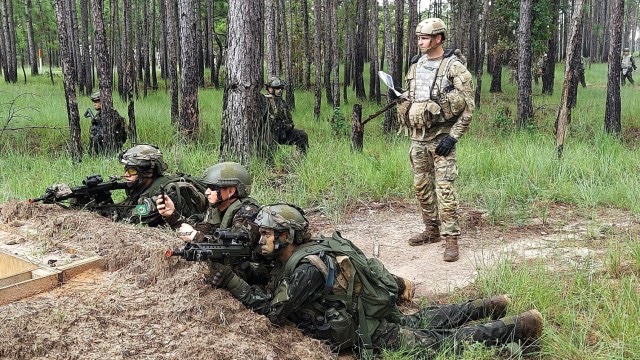
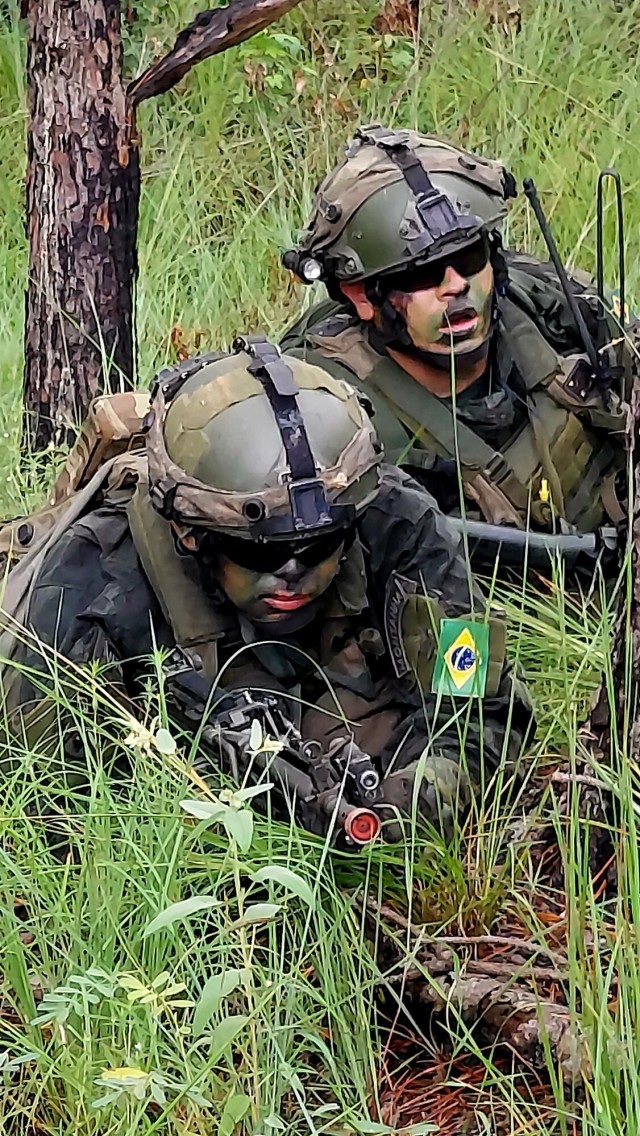
Having arrived at Louisiana in early August, a company element of the 5th Light Infantry Battalion (Air Mobile) integrated with the 2nd Battalion, 506th Infantry Regiment (White Currahee), 101st Airborne Division (Air Assault) as part of rotation 22-09 to conduct tactical infantry operations, exercise interoperability and strengthen their ability to plan and execute complex maneuver operations.

The mission of the JRTC and Fort Polk is to train Brigade Combat Teams to conduct large scale combat operations on the decisive action battlefield against a near-peer threat with multi-domain capabilities. JRTC Rotation 22-09 was the second time a Brazilian Army unit came to the Combat Training Center to train with a U.S. Army brigade.

Once on the ground, the Brazilian soldiers were praised for their professionalism, tactical skills and ability to embed with their U.S. Army counterparts. While training in the Box, the Brazilians were given after action reviews by the Observer-Controllers, where they were given feedback on what they planned to do, what actually happened, and engaged with the opposing forces to learn what they did well and what they could improve on.

“They’ve done an exceptional job of deliberate planning, conducting rehearsals and understanding the mission they have to accomplish and moving to that location to accomplish that mission,” said Maj. Micah Chapman, JRTC Operations Group Task Force 3 executive officer. “They’re really effective in terms of security — whether its short halts, long halts, securing themselves, securing an area and having an active mindset of understanding the situation and responding, when necessary, lethally.”

Although much attention during the bilateral training engagement was focused on kinetic and tactical operations at the company and platoon-level, a critical area the Brazilian Army wanted to improve was developing leaders at their combat training centers to be more realistic to train their soldiers for combat.

A small contingent, comprised of several officers and noncommissioned officers, embedded with the JRTC Operations Group and completed an abbreviated academy where they could capture and coach the best practices of combined arms maneuver.

“We put them right in where they were able to make decisions, do coaching and adjudicate fights that were taking place between friendly and enemy forces,” Chapman said. “There are some differences between the way the U.S. Army go about observing, coaching, and training, and they desire to move in our direction.”

After watching his soldiers take part in the blank fire rehearsal, Lt. Col. Attila Balczó, commander, 5th Light Infantry Battalion (Air Mobile), gleamed with pride in describing their actions upon seizing the objective.

“I am very proud,” Balczó said. “We had many exercises and spent more than 120 days in the field to prepare our soldiers for this training. When I saw our soldiers executing on the battlefield here today, it was gratifying to see that our preparation had great results. They put on a good showing in simulated combat and their performance allows us to have interoperability with our U.S. partners.”

Balczó added that JRTC allowed the best environment for his soldiers to improve their capabilities and they will return to Brazil with much experience and become better trained to fight.

Army South Deputy Commanding General Brig. Gen. Lynn Heng mentioned the United States is fortunate to have the caliber of soldiers the Brazilian Army possesses as our allies to protect mutual security interests in the Western Hemisphere.

“We need to do these types of exercises to build upon our defensive capabilities and we enjoy doing these types of exercises, especially with Brazil, which further enhances our interoperability,” Heng said. “Brazil has been a key partner for us in the U.S. Southern Command area of operations for many decades and will be for many to come.”

Heng added as part of Army South’s motto “Defense and Fraternity” that it is imperative the command keep strong the fraternity with Brazil so that both armies remain successful in meeting training objectives and strengthening partnerships.

Following three hours of continuous assault on the rough central-Louisiana terrain, Theophilo addressed the soldiers, where he commended their efforts and recognized the occasion of Dia do Soldado, or Day of the Soldier — a Brazilian national holiday on Aug. 25 commemorating the birthday of the Duke of Caxias, patron of the Brazilian Army.

He asked his sweat-drenched, muddied and exhausted soldiers on their impressions of the training and received responses expressing how it was a unique opportunity to work with U.S. Soldiers, gain new experiences and familiarization with aircraft, share best practices and tactics and train in a different climate.

“Our countries have always been friends in military matters,” Theopilo said. “We have conducted training in the jungles of Brazil and now we’re training together here at Fort Polk. At the end of the day, this is what matters. Being ready for war is only possible through much practice, adjustments and more practice. Without field exercises, conversations aren’t worth anything.”

Finally, the general reminded his troops, “The U.S. is our principal ally — we have no doubt about that.”

By Donald Sparks

SCUBAPRO Sunday – Combined Operations Assault Pilotage Parties

Sunday, September 4th, 2022

As I am sure you can tell, I love history. I find it amazing that even today, you can read something about WW2 that you never knew about. There were so many specialty units that sometimes it was hard to say, “Oh, this group gets its roots from…” Combined Operations is one of those groups, and they had so many smaller Units / Parties (I think I might have liked being part of “Parties” more than a Team. So, it would be “I am a party guy” and not “I am a Team guy”) that we are just now finding out about that they might not have been the father of some groups today. Still, they might have been the mother or the ugly step-sister.
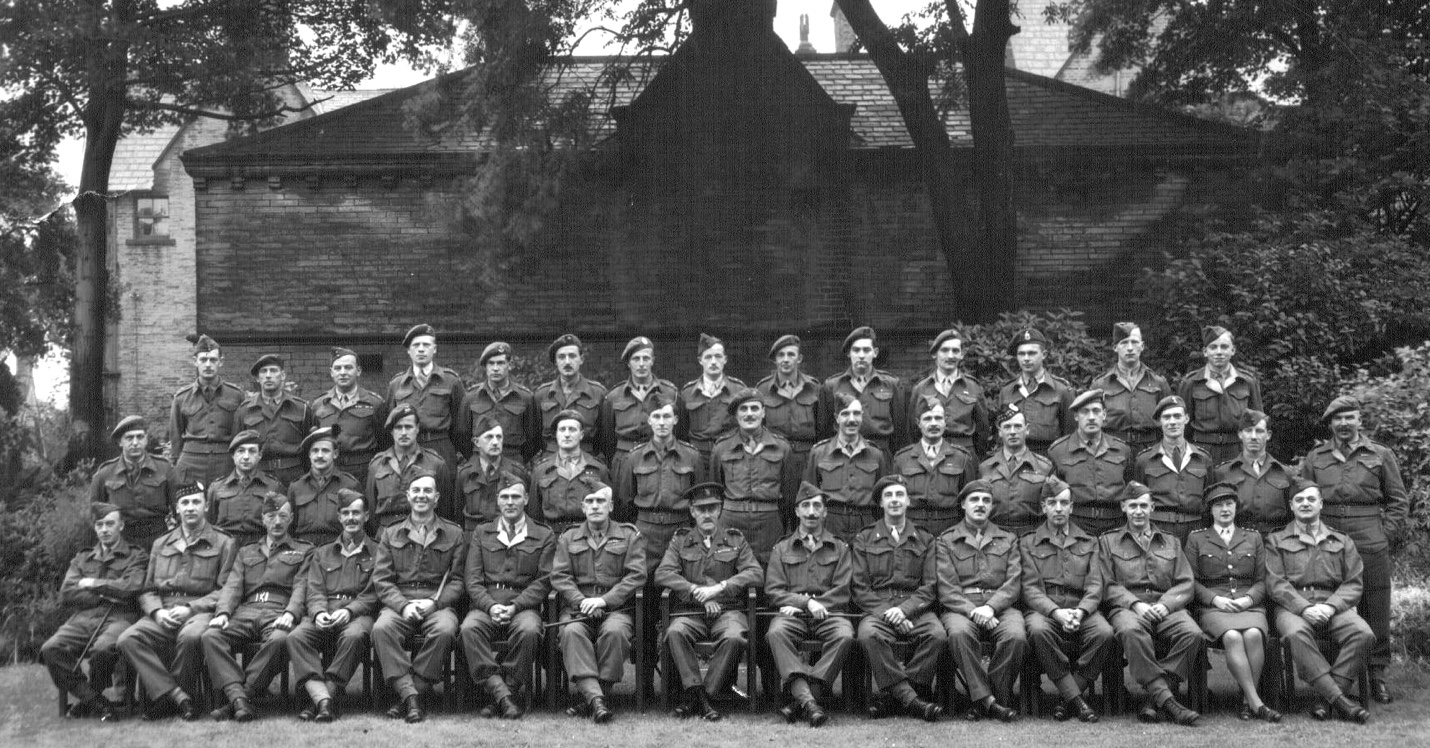
While serving in the Second World War, Nigel Clogstoun-Willmott established the Combined Operations Assault Pilotage Parties (COPP), which were responsible for covert beach reconnaissance. This proved to be critical in the success of the Allied seaborne invasion campaign. Amphibious force attacks on land and sea are among the most dangerous of all military operations. Apart from the fact that they necessitate the precise coordination of armed forces on the ground, air, and sea, they might also be subjected to various issues associated with landing on foreign enemy beaches.

Among these are tidal roughness, inadequate sand and shingle texture, steep beach gradients, and restricted beach exits, for example. Various enemy defenses, including mines, beach obstructions, pill boxes, and gun emplacements, can make natural disasters more dangerous and challenging to overcome. Nigel Clogstoun-Willmott, an accomplished navigator in the Royal Navy, was one of the few who truly understood the gravity of the risks involved. He recognized that amphibious troops must be carefully directed into coastal waters by men who had been deployed to the coast ahead of the fleet.
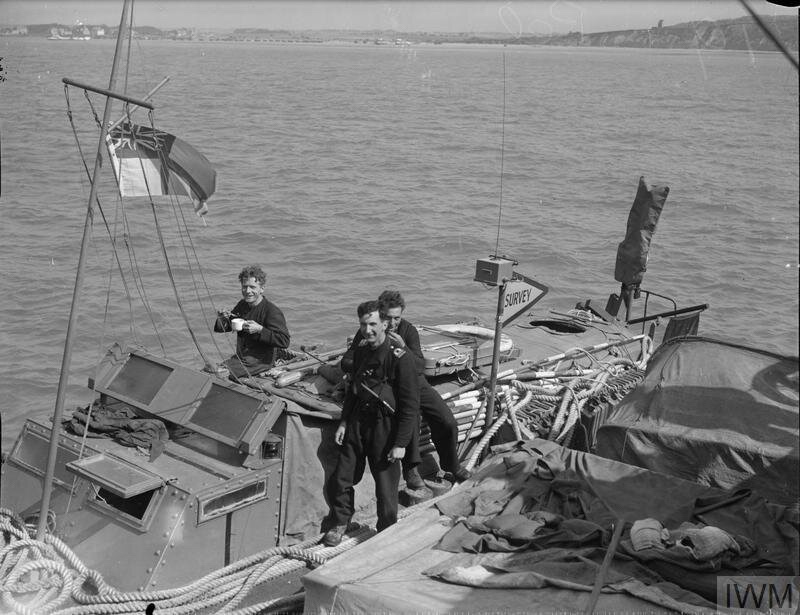
Furthermore, he recognized that the only way to resolve these issues truly was to conduct a thorough reconnaissance of the proposed beach landing sites, work that would require men skilled in navigation, hydrography (marine surveying), and engineering to land covertly on the beaches at night.

Of all special forces operations, beach reconnaissance was one of the most clandestine and risky. The men engaged were forced to conduct their operations right under the noses of the enemy, knowing that if they were arrested and interrogated, their intelligence might jeopardize the entire operation and their lives.

In 1910, Clogstoun-Willmott was born in the Indian city of Shimla. A senior engineer, his father worked on significant infrastructure projects throughout northern India, including the construction of roads and bridges.
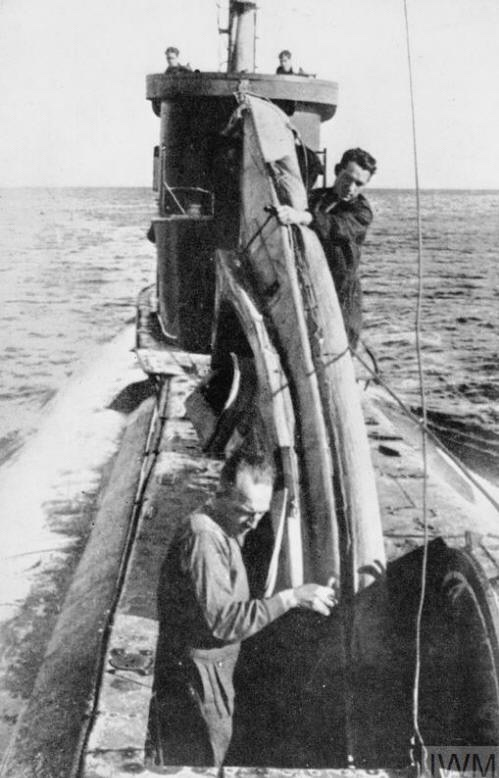
He was transported to England for his education, attending Lambroke School and Marlborough College until he was eight. He joined the Royal Navy when he was 17 years old, specializing in navigation and quickly earning a reputation as a creative problem solver and unique thinker.

The fact that he was aware of the dangers of landing on enemy shores came to him early in life. Gallipoli was the first sizeable amphibious operation of modern times, and his uncle ‘Cloggy’ had been severely wounded during the battle in 1915.

As a Beach Master for the landings at Narvik in the far north of the country, Clogstoun-Willmott received first-hand knowledge of these perils during the unsuccessful Norwegian campaign of 1940.
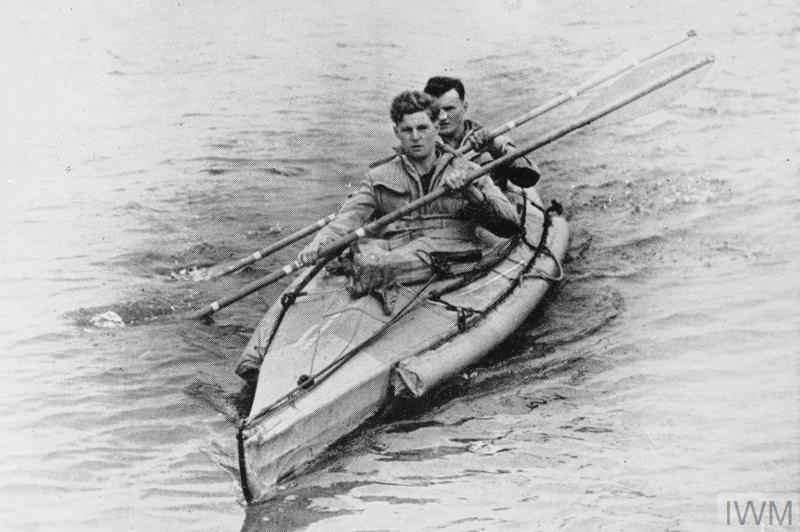
He was charming, courteous, and good-natured, but he was also a military professional who took his duties seriously. He spent a long time reflecting on the lessons learned from this campaign and how amphibious operations should be conducted going forward. In 1941, Clogstoun-Willmott was stationed in the Mediterranean with ‘Layforce,’ a commando group that had been dispatched to the Middle East. With the challenge of attacking the Italian-controlled island of Rhodes, Layforce got his first chance to put his theories into action.

As a result of his collaboration with Captain Roger Courtney, a canoeist who had recently created the Special Boat Section, which was primarily intended for marine reconnaissance operations, he could complete this task. Courtney and Clogstoun-Willmott worked together to conduct the world’s first in-depth military beach reconnaissance mission.
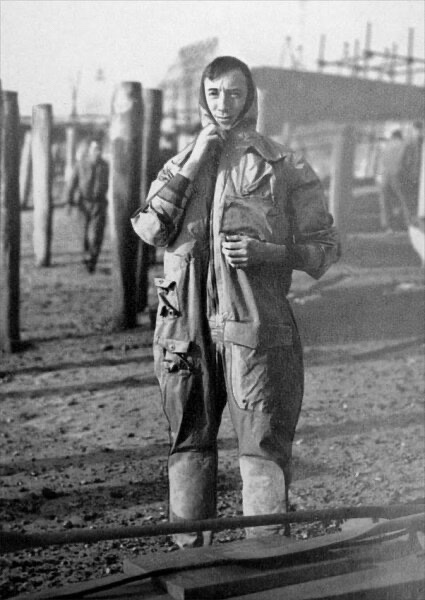
A wide variety of equipment was available, from flimsy cold-water suits made of heavily greased long johns and jumpers to the newest infrared signaling technology and the humble chinagraph pencil for taking notes in dripping wet conditions.

The mission was a resounding triumph. Both soldiers were honored, with Clogstoun-Willmott getting the Distinguished Service Order and Clogstoun receiving the Distinguished Service Medal. However, the valuable information gathered as a result of this work was never put to good use.

As a result of the British being lured into a futile attempt to resist the German invasion of Greece, the mission was called off entirely. Clougstoun-Wilmott was again called upon to serve as a Beach Master, coordinating British forces’ evacuation. His narrow escape from capture came after he commandeered a Greek caique and sailed it to Egypt, where he was one of the last to leave. Not until August 1942, following the failure of a massive raid on the French port of Dieppe, was it realized how essential Clogstoun-theories like Willmott’s were.
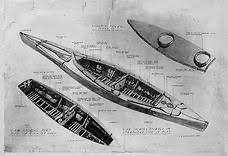
Admiral Louis Mountbatten, Director of Combined Operations, approached him and requested him to assemble a team – dubbed ‘Party Inhuman’ – to assist with Operation Torch, the invasion of French North Africa. He agreed and formed the team. When this endeavor proved successful, it resulted in the formation of the COPP in early 1943. The first order of business for the COPP was to conduct reconnaissance in preparation for the upcoming invasion of Sicily. However, due to insufficient training and equipment, achievement came at a high price this time. Only four of the sixteen guys who were assigned to the mission returned.

Later, Clougtoun-Wilmot, who is by nature a martinet and a training fanatic, collaborated with Mountbatten to guarantee that the COPP had access to the resources it needed to prepare for the invasion. The COPP teams were re-energized and contributed significantly to the Allied landings in Italy after re-energizing. During the D-Day landings, the COPP faced its most difficult challenge. COPP troops were now armed with tiny submarines known as X-craft, as well as specialty landing boats and diving gear, in preparation for the invasion of France.
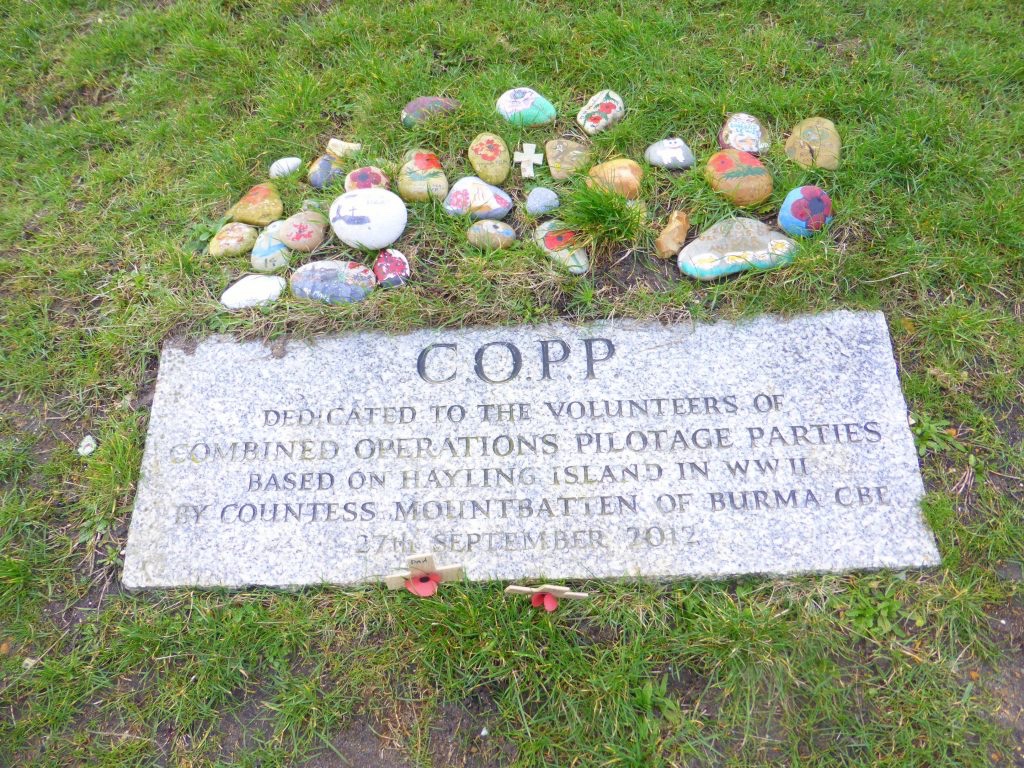
They carried out a thorough study of the potential beaches and returned samples for analysis to establish that big trucks would be able to pass through them without being damaged. On D-Day itself, COPP personnel were dispatched ahead of the massive invasion fleet to ensure that it arrived safely. This scientific approach to warfare played an essential role in preparing for what was considered the most complex military operation in history.

While D-Day was the apex of the COPP’s operations, the unit also saw significant action in the Far East and the Mediterranean during its tenure. In 1945, it made it easier for people to cross the Rhine into the heart of Germany. Following World War II, the mission of the COPP was absorbed into what is now known as the contemporary Special Boat Service (SBS). They were beneficial during the amphibious operations during the Falklands War in 1982 due to their knowledge and expertise.

Later in life, Clogstoun-Willmott worked for the Navy in several positions and the intelligence agency MI5. At age 81, he passed away in Cyprus in 1992, after continuing to live an active life as a sailor until a few years before his death.

The COPP’s work was so closely guarded that it was not made public until after the Second World War had concluded. In the eyes of the public, Clogstoun-Willmott and his troops of the COPP continue to be unsung heroes of the Special Forces.


US Army Reserve Officer Presents “Medical Care in a Radioactive Environment” to NATO Members

Sunday, September 4th, 2022

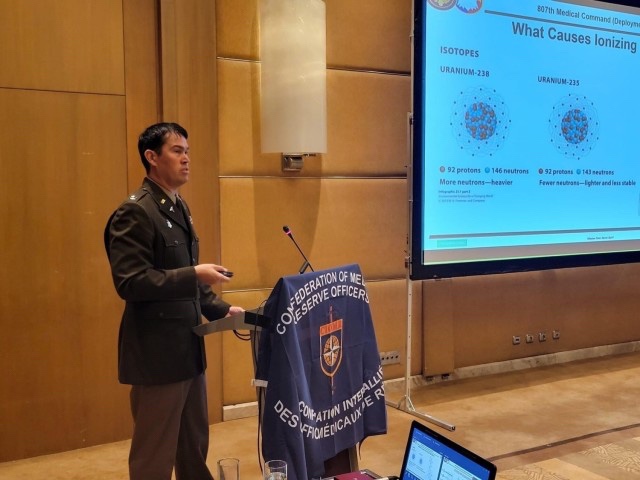
During his presentation at the Interallied Confederation of Medical Reserve Officers event on Aug. 3, 2022, in Athens, Greece, U.S. Army Reserve Capt. Eliot Fletcher, commander of the 491st Medical Care Area Support from Santa Fe, New Mexico, discussed the topic of radiation exposure in an increased global threat environment.

The CIOMR Junior Medical Reserve Officer Workshop provided North Atlantic Treaty Organization and partner nation junior Medical and Medical Support Officers a professional development program in a multi-national environment, focusing on NATO medical planning, civil-military negotiation training, and operation medical planning within a chemical, biological, radiological, and nuclear environment.

Fletcher, an Army biochemist, holds a doctorate in genetics and conducted his post-doctoral research in Radiation Biology, so his knowledge of radioactive environments and radiation injury treatment made him a perfect fit to present at the conference.

“The issue of operating in a radioactive environment is more critical today than it has been since the end of the Cold War,” Fletcher said. “Since the Russian Federation invaded Ukraine in February, there has been increased rhetoric surrounding the use of nuclear weapons and increased risk of a radiological incident.”

Fletcher discussed how ionizing radiation damages DNA and the body’s ability to repair the damaged DNA and continue normal cell function. (Ionizing radiation provides enough energy to disrupt the normal structure of surrounding materials, like living tissue. Tissue damage occurs when DNA repair is overwhelmed). A person’s typical exposure to background radiation is 2.4 millisieverts, or mSv per year, and at 100 mSv, there is a slightly increased risk of cancer.

Fletcher then examined the biology of radiation through five historical exposures. Hiroshima and Nagasaki both experienced extremely high exposure due to the use of nuclear weapons.


“Detonating a bomb high enough that the fireball does not actually touch the surface of the Earth, is called an air blast. Conversely, a nuclear bomb detonated at surface level, land or water, is perceived as a surface blast,” Fletcher said.

Both explosions were surface blasts, pulling debris into the air, leading to radioactive fallout. These explosions resulted in large numbers of people being exposed to high levels of radiation. To date, thousands of people are still tracked for elevated rates of cancer. Survivors had a significantly elevated rate of cancer, while their offspring showed no signs of increased abnormalities, and no detected elevation of the mutation rate.

The study of the 1986 Chernobyl disaster (due to a reactor shutdown causing the Reactor 4 explosion) and the Fukushima nuclear accident of 2007 (due to an earthquake and ensuing tsunami damaging the cooling systems and resulting in a partial meltdown of the reactors and release of radiation) focused on increased health issues, acute radiation illness, and potential for cancer based on distance from the epicenter and exposure levels of radiation.

“The lessons learned from these radiological/nuclear incidents relate directly to the effects of specific doses of radiation on biology. They also taught us how hard it is to track people exposed to radiation and determine exactly their dosage,” Fletcher said. “This highlights the importance of being able to track how much radiation a Soldier is exposed to in order to treat that person specifically.”

Fletcher concluded the presentation drawing attention to the invaluable data gained from radiation during space travel and its applicability to the battlefield. Protecting against radiation in space is crucial, as some radiation particles can pass through the skin, damaging cells and DNA, and/or cause acute radiation sickness. However, unlike most environments, it is impossible to evade space radiation during space travel. Similarly, in a radioactive combat zone, it may not be feasible to rapidly escape from a radioactive environment.


“The Russian invasion of Ukraine has brought to the forefront at least two concerns, 1) an increased Global Threat of a radiological disaster and 2) that rapid ingress and egress will be difficult in large scale operations. When these two concerns are combined, it creates an environment for the warfighter in which we need to begin preparing to fight and operate for potentially prolonged periods in a radiological environment,” Fletcher said.

Fletcher received the CIOMR JMROW “Best Overall Presentation” award and will pursue a technical advisor position on the NATO CBRN working group.

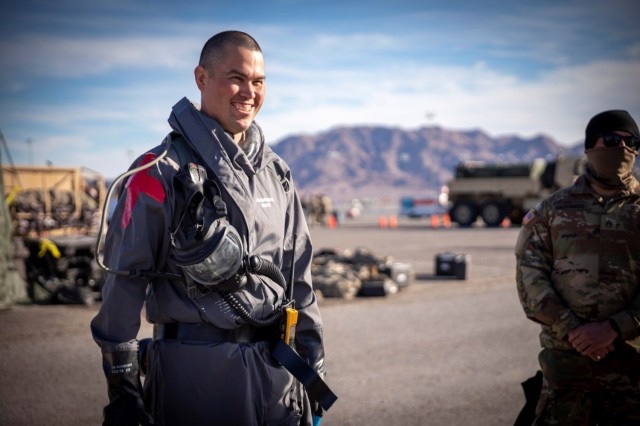
Fletcher’s unit, the 491st MCAS, is currently assigned to the Command and Control CBRN Response Element-A, or C2CRE-A mission. When directed by the Secretary of Defense, the military CBRN Response Enterprise will conduct CBRN response operations within the U.S. and its Territories or outside the continental U.S. to support civil authorities in response to CBRN incidents in order to save lives and minimize human suffering.

The 491st MCAS conducts quarterly training exercises honing decontamination tactics and techniques and identifying and treating acute radiation syndrome and chronic radiation illness. Since 2019, the unit has trained in the Guardian Response exercise at the Muscatatuck Urban Training Center, Indiana, conducting a CBRN disaster in a controlled environment.

By SPC Ronald Bell, LTC Kristin Porter and MAJ Sherrain Reber