SIG SAUER - Never Settle

Archive for the ‘Guest Post’ Category

Army Re-Activates Historic Airborne Unit, Reaffirms Commitment to Arctic Strategy

Wednesday, June 15th, 2022

FORT WAINWRIGHT, Alaska – Several hundred Soldiers gathered in formation within the Alaskan Interior on a bright June morning Monday to take part in the activation of the 11th Airborne Division, posturing U.S. forces for strategic advantage in the harsh Arctic terrain.

The 11th Airborne Division unites about 12,000 Soldiers in Alaska under one flag, marking the first time that the Army has activated an airborne division in 70 years. During flag ceremonies Monday at Fort Wainwright and Joint Base Elmendorf-Richardson, shortened as JBER, the Army also re-designated the 1st Stryker Brigade Combat Team and the 4th Infantry Brigade Combat Team, formerly of the 25th Infantry Division, into the 1st and 2nd Infantry Brigade Combat Teams of the 11th Airborne, respectively.

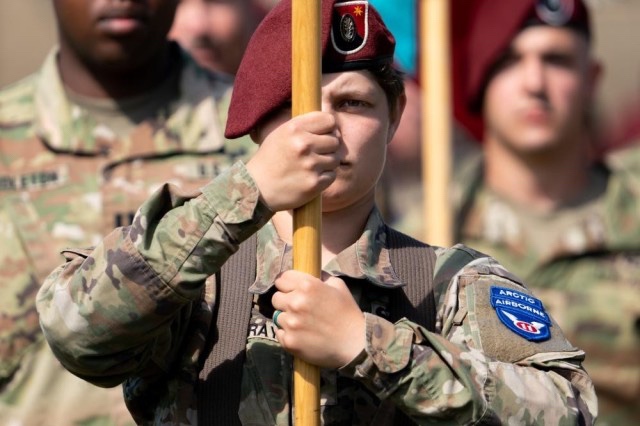
The activation reaffirms the Army’s commitment to its recently announced Arctic Strategy, which outlines the service’s plan to equip, organize and train with partner units to establish military dominance in the region. The division will be headquartered at JBER and members will wear the unit’s distinctive blue patch with a red and white emblem with angel wings to symbolize the unit’s call sign, “Angels.”

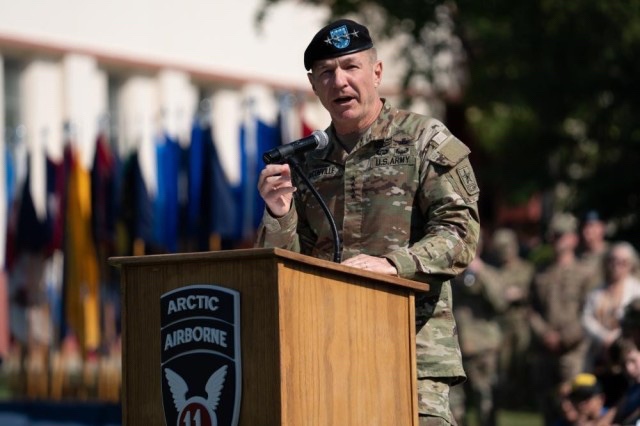
“Wherever you go, you will be the most highly trained, disciplined and fit Arctic warfighting unit in the world; ready to fight and win,” Army Chief of Staff, Gen. James C. McConville said to Soldiers at Fort Wainwright. “That is what you will do. That is who you are. We are counting on you.”
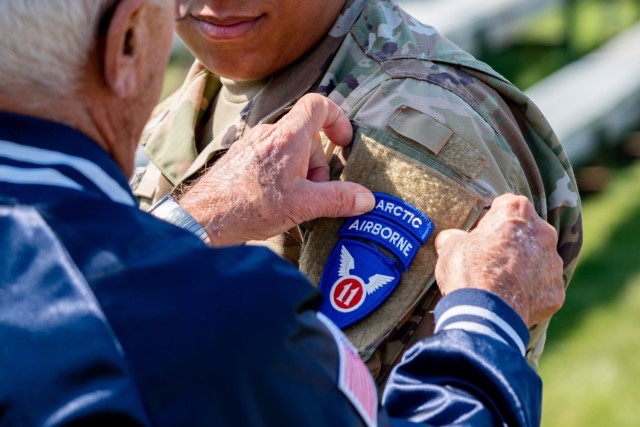

(Photo Credit: Photo by U.S. Air Force Senior Airman Patrick Sullivan)
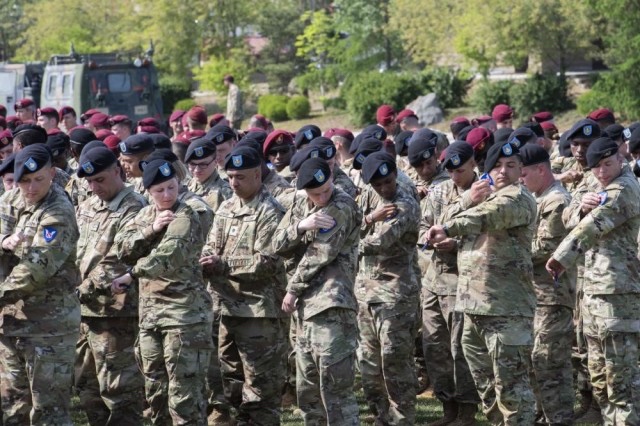
The activation also serves another purpose. By uniting the Army units as one airborne unit, Army leaders hope the activation can ignite a greater a sense of camaraderie and enthusiasm for Soldiers serving in one of the U.S. military’s most remote and desolate locations.

In recent months, the Army’s senior leaders have met with commanders at Alaskan installations to address quality of life concerns of Soldiers. Assessments revealed that the previous unit designations did not support unit cohesion.

“Experience has told us that units that have a common unit identity is a source of pride,” McConville said during a meeting with reporters. “It’s extremely important. And the history of a unit and the patch matter.”

McConville said the Soldiers of the 11th Airborne Division will be equipped with cold weather gear within the next 1 to 2 years. He added that the unit will serve as the Army’s leading experts for Arctic military operations.
McConville said that the Stryker Brigade Combat Team based at Fort Wainwright will transition to become a more mobile, infantry-based brigade combat team bolstered with a stronger air assault capability and the skills to maneuver effectively in extreme cold weather environments.

McConville added that the Army plans to move the armored Strykers out of Alaska by the end of the summer as it continues the acquisition process of Cold Weather, All-Terrain Vehicles or CATVs.

The 11th Airborne Division originally played a critical role during World War II and the Vietnam War. The Army credits the unit with the amphibious assault landing at Luzon, Philippines, and eventually helped secure the liberation of Manila from Japanese forces.

“The 11th Airborne Division has a storied history of valor during World War II in the Pacific and also has a proud history of innovation,” McConville said. “So we expect them to live up to the legacy … We expect them to be masters of their craft in Arctic warfighting and extreme cold weather and high altitude and terrain. We expect them to develop innovative ways of operating in this environment.”

The Army now has a strategically located unit that can quickly deploy to any region, especially those in cold weather climates such as Nepal and India.

“Their focus will be on dismounted and Arctic mobility and capabilities of sustained operation in the Arctic [and] extreme cold weather,” said 11th Airborne Division Commander Maj. Gen. Brian Eifler. “In addition, they will providing those capabilities in other cold weather environments.”

Eifler added that U.S. Army Pacific Commander Gen. Charles A. Flynn traveled to Nepal to meet with Nepalese leaders on coordinating more training opportunities with U.S. Army infantry brigade combat teams. Eifler said that includes the possibility of taking part in a joint expedition on Mount Everest.

By Joe Lacdan, Army News Service

Air Force Medical Service Launches ‘Nutrition Kitchen’ Series

Tuesday, June 14th, 2022

FALLS CHURCH, Va. (AFNS) —  

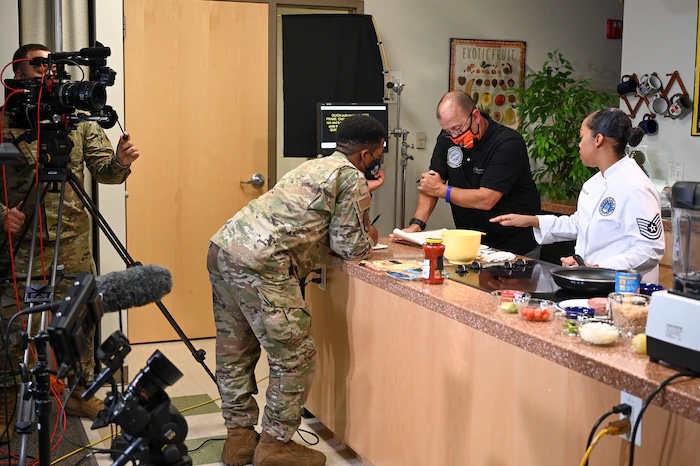
The Air Force Medical Service is launching “Nutrition Kitchen,” a series of online nutritional cooking classes geared toward service members and their families.


The Nutrition Kitchen’s goal is to inspire healthy meal choices by providing options for service members to make realistic changes to foods they are already eating, while also providing the opportunity to learn the science behind those choices and “level up” their nutrition knowledge.

Each episode introduces different options to “level up” a classic meal, starting with simple ingredient substitutions and ending with a chef-curated recipe option taught by Tech. Sgt. Opal Poullard, chef and culinary instructor at the Joint Culinary Center of Excellence at Fort Lee. Following each cooking episode, Sahra Pak, registered dietician at Travis Air Force Base, California, shares the science behind the nutritional choices made.

“Nutrition has a profound impact on the health, performance and readiness of our active-duty personnel,” said Maj. Gen. Sharon Bannister, Medical Operations director, Office of the Air Force Surgeon General. “Combatting unhealthy weight gain and obesity and the detriment of poor nutrition is obligatory to improving warfighter readiness.”

Beyond maintaining a healthy weight, improvements to physical and mental performance and underlying chronic health conditions are among some of the benefits.

Giving nutrition the spotlight it deserves is a key tenet of the rapidly growing lifestyle medicine field.

“Nutrition Kitchen is lifestyle medicine at its best,” said Col. Mary Anne Kiel, Air Force Medical Home chief, Air Force Medical Readiness Agency, and chair the Lifestyle and Performance Medicine working group. “Food has an enormous potential to harm or to heal, but it’s surprising how infrequently we consider the types of foods we are eating every day. It is time for that to change. It’s time to empower the members of all our military services to upgrade their nutrition by making choices to keep them ready for the mission and to improve their health.”

The Nutrition Kitchen series aims to make the sometimes difficult process of both selecting and cooking nutritious meals more engaging, approachable and fun.

The recipes for this series were developed to be tasty, easy to prepare, and low-cost, all while providing the fuel necessary to “level up” service members’ health.

Service members can look forward to several delicious recipes heading their way over the next few weeks. The chef-curated dishes range from banana pancakes with date syrup to a cauliflower black bean ranchero taco bowl, a favorite among recipe taste-testers.

More conveniently, this series will be available at service member’s fingertips, where they can watch and cook completely on their own time. New episodes are set to release weekly and can be found on the Nutrition Kitchen page or via YouTube.


Air Force Surgeon General Public Affairs

Photo by Cynthia Griggs

Helmet Pads from Hard Heads: Micro Lattice For Your Lid

Sunday, June 12th, 2022

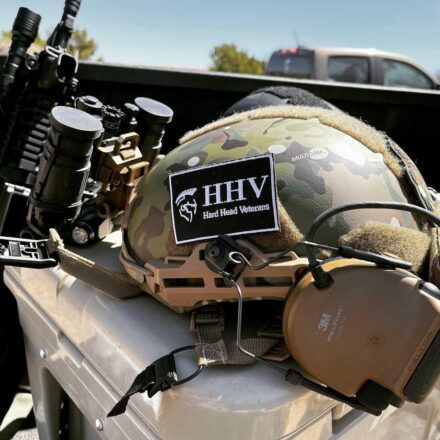
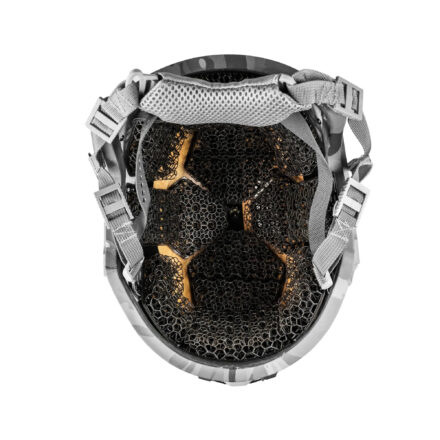
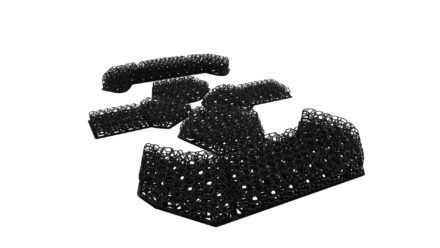
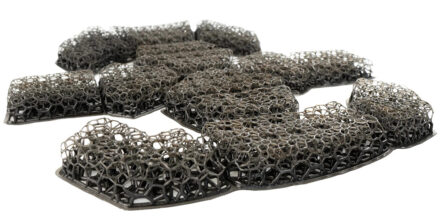
Hard Head Veterans is excited to showcase their Micro Lattice Helmet Pads – an excellent and affordable upgrade for tactical or ballistic helmets. Developed in association with Carbon, using their Digital Light Synthesis manufacturing process, the Micro Lattice assembly is a superb energy-absorbing structure.

Hard Head Veterans Helmet Pads

This substantially improves the protective capabilities of a helmet by mitigating and even preventing head trauma.

The Micro Lattice Pads average single-digit deformation numbers when tested to 1400 fps with 9mm projectiles on our ATE ballistic helmet. Regardless of whether they are at -60 degrees or 160 degrees they still perform the same.

Micro Lattice Helmet Pad system

This cannot be said for standard foam pads.

HHV Micro Lattice Helmet Pads

  • Up to a 66% decrease in ballistic transient deformation over standard foam pads
  • Up to a 21.70% decrease in blunt impact accelerations over standard foam pads
  • Lattice construction allows unrestricted airflow keeping helmets an average of 14 degrees cooler
  • Pads do not absorb sweat or water making them quick-drying, positively buoyant, and easily washable.
  • The comfort lattice conforms evenly to the user’s head
  • Available in 1” and ¾” sizes

Micro Lattice Helmet Pads

Shock Absorption

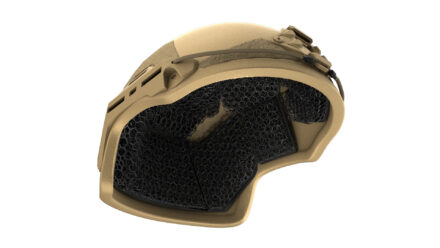
The Carbon DLS process enables lattice structures that absorb and dissipate energy through the precise tuning of strut thickness and cell size.

Micro Lattic

This lattice structure facilitates the absorption and dissipation of energy by aligning internal damping struts against the directions of impact. With over 28,000 individual struts, the lattice is built so each strut is specially tuned at every point on the helmet. Increases or decreases in the stiffness of the lattice structure are enabled through precise adjustments to the thickness of each strut, allowing the lattice to absorb and disperse energy from various impacts.

Helmet padding system

The Micro Lattice Helmet Pads are compatible with the following helmets, among others: ACH, MICH, LWH, ECH, Crye Precision, Ops-Core, MTEK, Revision/Galvion, Gentex, Team Wendy, United Shield, and most others that utilize Velcro attachment.

Helmet Pad Systems

You can find documentation of the ballistic testing online here; read a more in-depth explanation on the Hard Head Blog.

You can find the Micro Lattice Helmet Pad system on the Hard Head Veterans website.

FirstSpear Friday Focus: Pub Shorts V2

Friday, June 10th, 2022

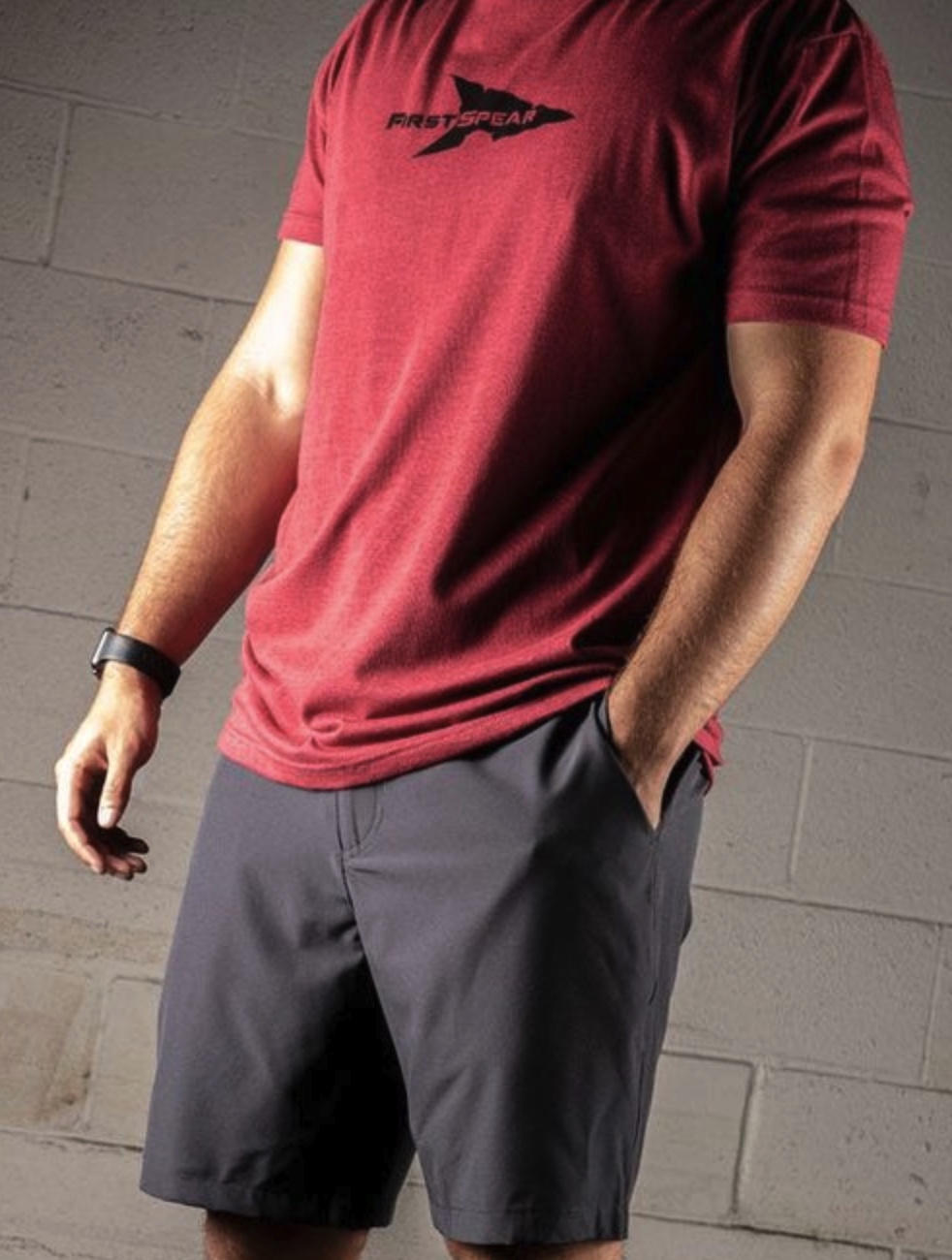
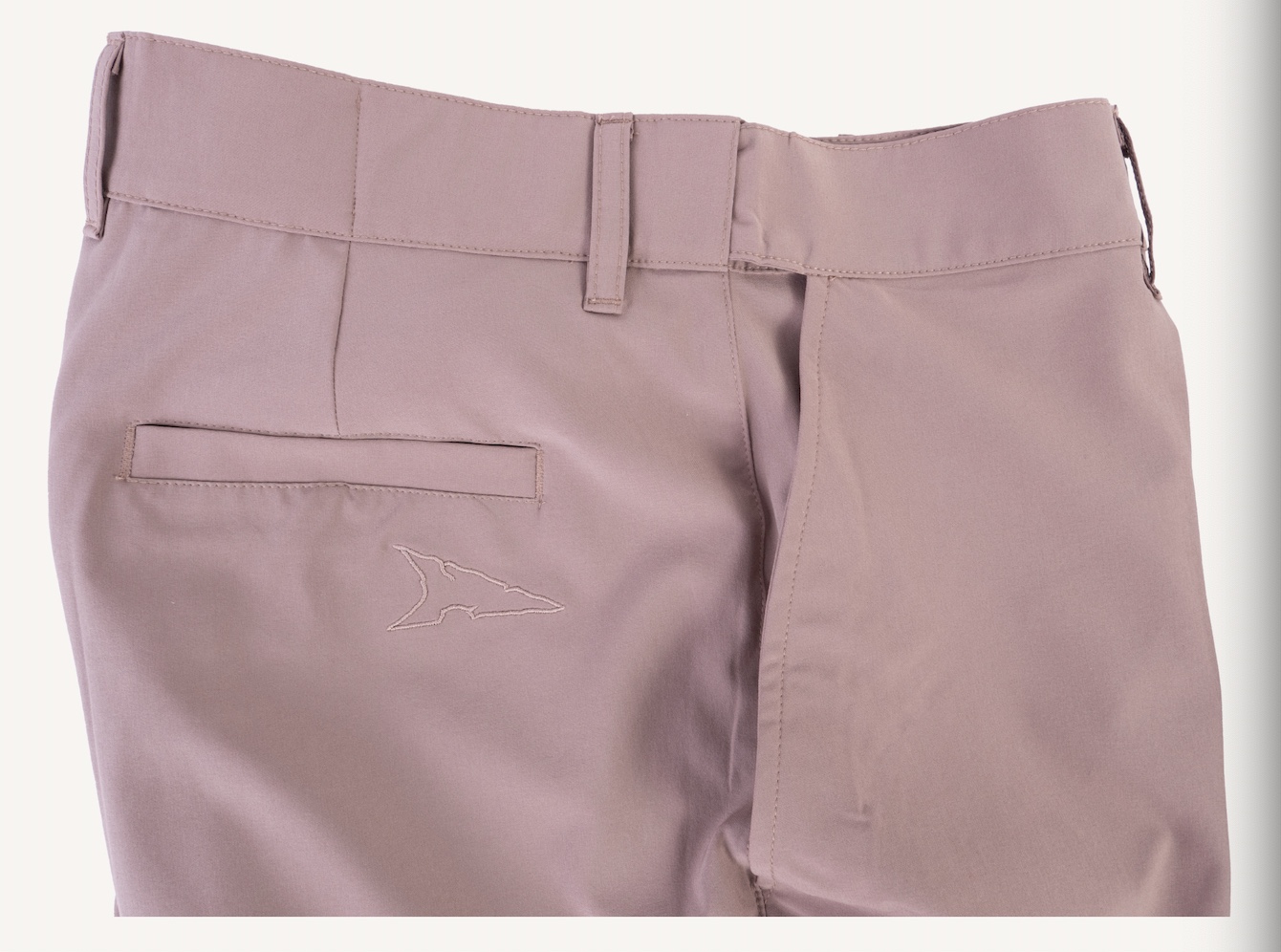
Fathers Day is around the corner, FirstSpear’s American Made Pub Shorts are here to deliver.

The FirstSpear Pub Shorts feature a lightweight, breathable performance material blend that stretches and wicks away moisture.

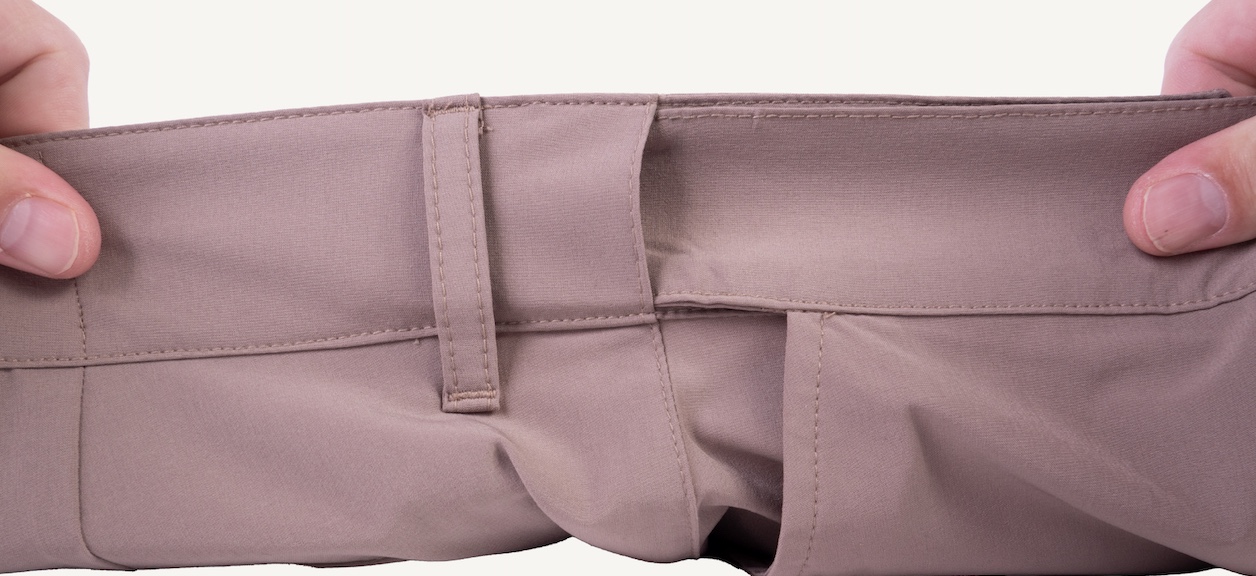
“I was a little hesitant to order these because of the cost, but I’m glad I did. Totally worth it! Fit was right on target with my waist size. The adjustable waist band is a nice touch when carrying a IWB holster, allows for enough give and doesn’t feel like my shorts are busting at the seams. The performance blend material dries quickly and is comfortable to the touch. Not to mention they’re USA Made. From the gym, to the range, to a night out these will defiantly be my go to pair from now on.”

— Scott

The enhanced pockets are deep and conform to the body. These shorts are sewn with an 8.5” inseam and provide a stylish look without sacrificing performance.

The elastic waistband is sturdy and has a soft knit for an extremely comfortable feel against the body.

Check out FirstSpear for these and many more products for America’s Warfighter.

USAF’s ShOC-N Battle Lab Hosts Distributed Command and Control Event

Friday, June 10th, 2022

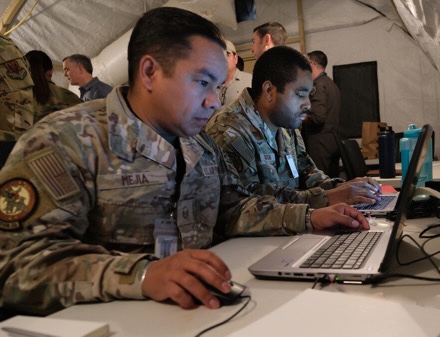
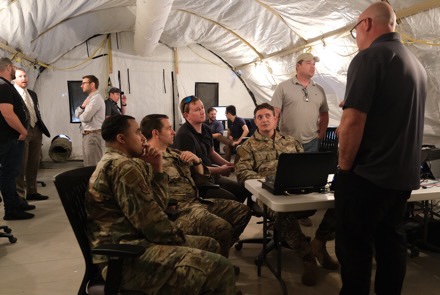
Nellis Air Force Base, Nevada — The 805th Combat Training Squadron’s Shadow Operations Center – Nellis, or ShOC-N, is the U.S. Air Force’s premier battle lab supporting the development, advancement, and maturation of key technologies and capabilities designed to compress the kill-chain for joint and coalition warfighters.

The ShOC-N accomplishes this mission by utilizing multi-domain, all-domain, and cross-domain solutions spanning all classification levels, working closely with key defense, industry, and sister services such as the Office of the Secretary of Defense, Defense Advanced Research Projects Agency, Missile Defense Agency, and the Defense Industrial Base.

In addition to hosting government sponsors and industry partners daily, the ShOC-N is helping to steer and evolve Joint Staff doctrine and guidance for all-domain and cross-domain solutions and capabilities by focusing on defining and developing instrumentation for data, networks, software, and air component-specific command, control, communications, computers, and intelligence, or C4I, warfighting processes.

Working closely with their wide range of mission partners, the ShOC-N is a vanguard unit on the frontlines of next-generation technologies for the USAF and Joint Staff. With key placement and access to Nellis AFB’s unique mission, the ShOC-N is providing a critical venue to advance and refined key technologies and showcase them to U.S. and coalition leadership in a tactically and operationally relevant setting – to see the technology working in a warfighter environment with real-world operators at the helm vice a clean lab with scientists only.

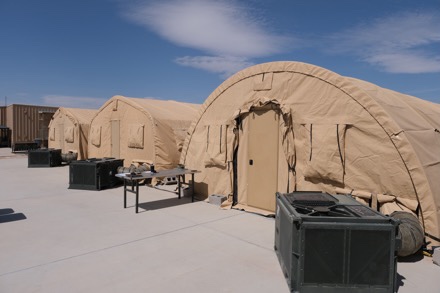
Normally, ShOC-N leverages existing exercises to meet mission requirements.  But sometimes, when no other appropriate venue exists, the ShOC-N team will host its own organic event to advance and refine technologies. A recent example occurred at the end of April. The ShOC-N hosted an organic Distributed Command and Control Event simulating Agile Combat Employment utilizing new technologies available at the ShOC-N. The ShOC-N set up an austere location simulating a pacing adversary threat environment for the new technologies and their ability to operate in a degraded setting.

“ShOC-N’s ability to operate in the shadows of operational theaters or large-scale exercises allows us to experiment in the most realistic, operationally relevant ways.  Everything we do is nested within the USAF Warfare Center’s Pacing Challenge Campaign Plan. All new technology is vetted against our ability to compete with China,” said Col. Frederick Coleman, 505th Command and Control Wing commander, Hurlburt Field, Florida.

The Air Combat Command C2 Futures Branch’s Tactical C2 Weapon Systems Division leveraged the event to shape Battle Management Command and Control functions requirements, viewing several mobile and rapidly deployable tactical air component C2 systems at work in an ACE environment.

“Major General Slocum, ACC/A3 [director of operations], challenged the staff to rapidly prototype and field a Tactical Operations Center – Light, or TOC-L, capability,” said Maj. Carl Rossini, C2 Futures Branch chief. “[The] ShOC-N enabled us to meet that challenge by quickly bringing together the event, data, warfighters, test organizations, and acquisitions.”

Not only did this event leverage unique ShOC-N capabilities, but it also served as a risk reduction event for the Pacific Air Forces’ Valiant Shield 2022 exercise, along with ACC’s participation in the U.S. Army Futures Command’s Project Convergence 2022 exercise.

Organizations that partnered with the ShOC-N for the TOC-L experimentation included the Office of the Under Secretary of Defense Research and Engineering 5G support team, the Missile Defense Agency, representatives of the ACC staff, the Air Force Joint Test Program Office, the 605th Test and Evaluations Squadron, the 422nd Test and Evaluations Squadron, Lockheed Martin, Raytheon Solypsis, Global C2 Integration Technologies, Lower Echelon Analytics Platform – Tactical, or LTAC, and Novetta Systems.

In addition to external mission partner involvement and success, the ShOC-N employed their organic data scientist team to develop methodologies to measure data latency from various systems, data files, and logs. Their analysis proved successful and demonstrated data scientists’ current and future utility, along with the need to advance and automate instrumentation.

“Collecting and storing mass amounts of data without a plan is of no value. Turning volumes of data into decision quality information is where we show value, and I’m proud of our data science team,” said Lt. Col. David Spitler, 805th CTS/ShOC-N commander.

Instrumentation is a core attribute of the battle lab still under development.

“The analytics shown by our data science team and the LTAC cyber team sparked the imagination of what is possible. However, it also showed how much more investment is needed to truly instrument the battle lab,” said Col. Aaron Gibney, 505th Combat Training Group commander, Nellis AFB, Nevada. “We need to be able to define what we’re measuring and then measure it in an automated, objective, quantitative way.”

When data is collected, classified, labeled, properly tagged, and stored with ontologies, the instrumented data provides the basis for objective evaluation of technical performance in the experimental lab environment. Instrumentation is intended to enable objective methods for A|B comparisons, measuring compression of warfighting processes, data latencies, and the efficacies of prototypes against currently fielded hardware and software. With instrumentation, the ShOC-N will provide objective reviews to inform senior leader decisions for the continued prototyping and/or transition to test to deliver capabilities to the warfighter rapidly.

The Distributed Command and Control Event showed how critical the ShOC-N is as the USAF develops and matures advanced technologies to compress the kill-chain and streamline the decision-making process for warfighters. The ShOC-N was able to showcase key technologies in an ACE environment and will continue advancing its mission to support the warfighter. 

“The warfighter ethos is alive and strong in the ShOC-N,” said Coleman.

The 805th CTS reports to the 505th CTG, Nellis AFB, Nevada, and the 505th Command and Control Wing, headquartered at Hurlburt Field, Florida.  

By Deb Henley

505th Command and Control Wing

Public Affairs

SureFire Field Notes Ep 70: Driver Skills with Scott Brady

Thursday, June 9th, 2022

Visual Information Service Members Compete for ‘Best Combat Camera’

Thursday, June 9th, 2022

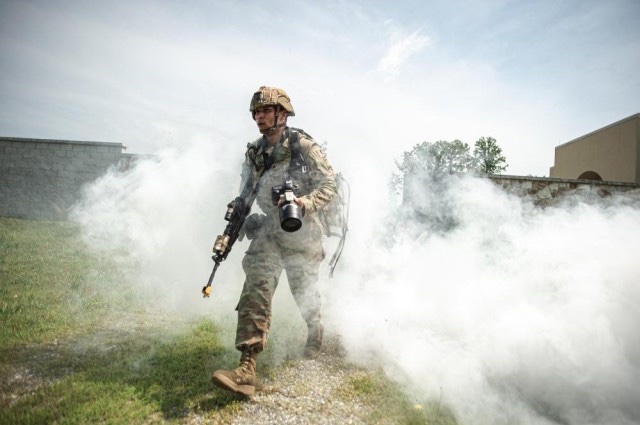
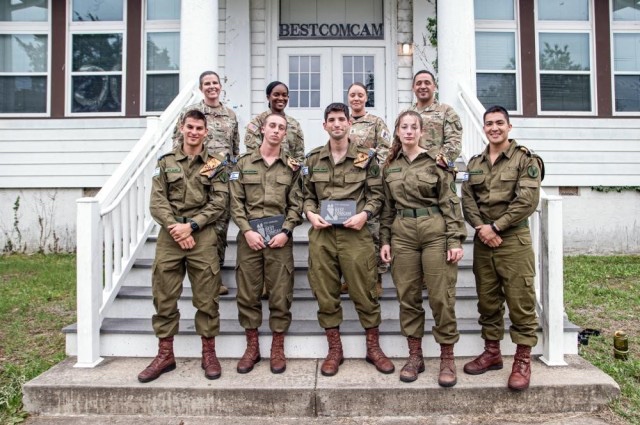
FORT A.P. HILL, Va. — The Spc. Hilda I. Clayton Best Combat Camera Competition, now in its ninth year, is an event hosted annually by the 55th Signal Company (Combat Camera) to challenge combat camera personnel and honor the life of Clayton. This year’s competition was held at Fort A.P. Hill and concluded on May 24, 2022.

Clayton was assigned to the 55th Signal Company (Combat Camera), 114th Signal Battalion, 21st Signal Brigade, based at Fort Meade, Maryland. She deployed in support of Operation Enduring Freedom, Regional Command-East and Combined Joint Task Force-101. She was tasked as the unit’s combat camera covering the 4th Brigade Combat Team, 1st Cavalry Division, “Task Force Long Knife.”

Clayton was involved in a deadly mortar explosion in Jalalabad, Afghanistan while documenting an Afghan military exercise. Her final camera shot captured the explosion that led to her death and claimed the lives of four Afghan soldiers.

The competition is a joint, multi-national event consisting of visual information specialists, public affairs mass communication specialists and combat photographers. Competitors from across the DOD and participating multinational partners are tested on physical, tactical and technical proficiencies.

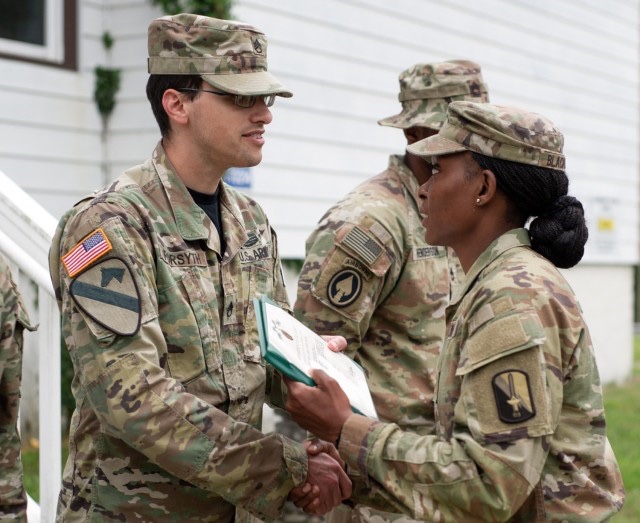
“This competition is truly special for the Department of Defenses’ visual information, public affairs specialists and international combat camera photographers,” said U.S. Army Maj. Octavia Blackwell, the commander of the 55th Signal Company (Combat Camera). “Our earnest hope is that this competition brings honor to the hard work, selfless dedication and sacrifice that service members in these career fields bring to fight, every single day. With the Army’s decision to merge the visual information and public affairs career fields, we look forward to the continued growth of the ‘Best COMCAM’ competition.”

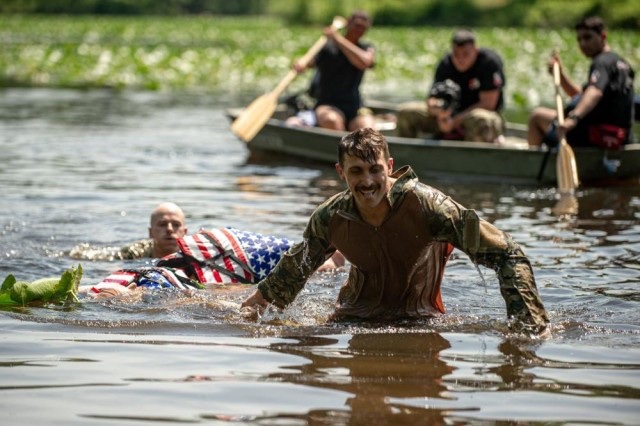
Similar to other military competitions, this event is composed of fitness trials and soldier tasks, with one major exception — the competitors are required to document each other. They must develop powerful, creative and informative visual information products to be submitted before the end of the five-day competition. Final products are then judged and graded by military and civilian personnel from visual information and public affairs career fields.

The Best Combat Camera Competition is a staple competition for DOD visual storytellers. Competitors assess their skills, strengths and weaknesses before the first event begins to ensure they’re ready for the challenge.

With the enduring effects of the COVID-19 pandemic and on-going unrest in Eastern Europe, military storytellers are far-flung and often find themselves supporting multi-faceted training rotations and deployments. Amidst this intensity of operations, 20 service members answered the call and applied to compete in the 2022 Best Combat Camera Competition.

This year’s competition includes service members from the active and reserve components of the U.S. Army, the reserve component of the U.S. Air Force as well as service members of the Israeli Defense Forces Combat Camera Unit.

Army units represented included:

The 3rd Psychological Operations Battalion (Airborne), 8th Psychological Operations Group (Airborne) from Fort Bragg, North Carolina

The 22nd Mobile Public Affairs Detachment, 18th Airborne Corps from Fort Bragg, North Carolina

The 982nd Signal Company (Airborne) from Atlanta, Georgia

The 55th Signal Company (Combat Camera) from Fort George G. Meade, Maryland

The Air Force Reserves were represented by the 4th Combat Camera Squadron, 315 Airlift Wing from Charleston, South Carolina.


The Israel Defense Forces were represented by the Combat Camera Unit from Tel Aviv, Israel — regular participants in the annual event.

With 18 competitors and 21 events, this year’s competition was in its history.

Events included Hero workout of the day, capabilities briefings, day and light land navigation, a swim event, undisclosed distance ruck marches, a tactical lane, sensitive site exploitation and a variety of ranges including pistol challenges, marksmanship qualifications and stress shoots.

For some competitors, travel for this event marked their first trip to the U.S.

“It’s exciting to learn about the culture of the U.S.A., and the Army, and work together,” said Sgt. Lee Hershkovitz of the Israeli Defense Forces Combat Camera Unit. “I’m looking forward to meeting new people, because we are combat photographers and they are combat photographers in another country. It’s very interesting to know what they do because in Israel, in the U.S., it’s not the same thing.”

When asked how she felt about the competition, Hershkovitz responded, “I’m a little bit nervous, but it’s going to be fun and interesting.”

This competition brings out the very best of military creatives. The competition serves as a melting pot of talent, equipment, technical knowledge and experience. New competitors and veteran-teams alike earn the respect of their fellow competitors while establishing long-lasting partnerships across their career fields.

The 315 Airlift Wing’s 4th Combat Camera Squadron’s Tech. Sgt. Corban Lundborg and Senior Airman Joseph LeVeille, won first place at the 2022 Spc. Hilda I. Clayton Best Combat Camera Competition. Their victory marks the first year a team from the Air Force Reserve won the event.

“It was a fun competition this year and it was good training” Lundborg said. “There were a lot of great teams. It’s really about getting to meet everyone in this career field, building relationships and getting better at our job.”

“It was a privilege to compete with such talented professionals and an honor to tell my dad’s story,” said LeVeille. One of the winning team’s project submissions was a video telling about how LeVeille’s father, who lost his life while serving in the Army, inspired him to join the military.

“As one of the more senior competitors, I love the training opportunities that come with this competition,” Lundborg added. “The week isn’t all about beating the other teams, but putting your best foot forward and helping others along the way. We’re all able to learn from each other and give back to the community.”

The 55th Signal Company (Combat Camera) holds the proud distinction of being the U.S. Army’s only active duty COMCAM unit. Their mission is to provide still and video documentation of Army operations during peacetime, contingencies, and combat. Ready to deploy on a moment’s notice, the 55th employs state-of-the-art documentation equipment and is equipped with still and motion cameras, night vision equipment, and editing suites. The unit also has the distinction of an airborne capability requiring the unit to conduct monthly airborne operations to maintain the airborne qualified status of select members of the unit.

By Michael Meisberger

Editor’s Note: U.S. Air Force Michael Dukes, 315th Airlift Wing, Command Information Chief and U.S. Army Sgt. Henry Villarama, 55th Signal Company (Combat Camera) contributed to this article.

Predator Ghillie Spectralflage Blanket – Beez Combat Systems

Wednesday, June 8th, 2022

www.beezcombatsystems.com