XC3 Weaponlight

Archive for the ‘Guest Post’ Category

Airmen Train, Deliver Humanitarian Aid to Honduras

Sunday, September 18th, 2022

SOTO CANO AIR BASE, Honduras (AFNS) —

Airmen assigned to the 22nd Airlift Squadron and 60th Aircraft Maintenance Squadron from Travis Air Force Base, California, collaborated to deliver more than 90,000 pounds of humanitarian aid to Honduras during a combined Major Command Service Tail Trainer (MSTT) and Denton cargo mission Aug. 21-31, 2022. Members of Youngstown Air Reserve Station’s 76th Aerial Port Squadron helped palletize and load the cargo.

Maj. Zachary Barrington, 22nd Airlift Squadron C-5M Super Galaxy pilot instructor, led a 14-member crew that delivered approximately $38,000 worth of medical supplies and other goods to support the Denton Program, which allows private U.S. citizens and private organizations to transport humanitarian goods to approved countries in need.

The crew consisted of pilots, flight engineers, loadmasters and crew chiefs with varying levels of experience. Each member received real-world operations training for the C-5M, enabling some members to become fully qualified and ready to support rapid global mobility.

“It was incredible to witness how the crew divides and conquers each challenge to successfully deliver aid where it’s needed,” said Staff Sgt. Darren Hopkins, a recently cross-trained 22nd AS C-5M flight engineer.

With the guidance of his instructor, Tech. Sgt. Beverly Castro, 22nd AS C-5M flight engineer instructor, Hopkins transitioned from simulators and theoretical systems studies to real-world applications in operations for the first time on this mission.

Each student on board received guidance and debriefs during flight and upon completion of their performance at every stop from their respective career field instructor.

“One of our goals during these MSTT missions is obviously to expedite students’ upgrade training, but just as important is to build our loadmasters’ competence and confidence,” said Tech. Sgt. Jacob Buruato, 22nd AS loadmaster instructor.

These long missions allow pilots, flight engineers and loadmasters the opportunity to check off tasks required to reach proficiency.

“These training missions are imperative to the development of our students’ skillset and ultimately, to mission success.” said Buruato. “Whether you are a pilot, flight engineer or a loadmaster student, MSTTs equip our Airmen with additional knowledge and real-world experience to tackle obstacles in the future should they face any.”

Both students and instructors benefit during these training missions.

“The moment when your student understands and realizes the importance of their role during a mission is very rewarding,” said Buruato, “And missions tend to drive that newfound mindset home.”

Dual-purpose missions like these tend to do just that.

“Flying into Honduras was a unique experience on its own,” said Hopkins. “Realizing that these supplies contribute to the development of that country helped me put things into perspective.”

The rest of the training consisted of stops to unique places such as Colorado, Ohio, Florida, South Carolina and Portugal.

“One of my personal takeaways from my first flight in my new career field is witnessing how these trainings support growth on the road, enhance communication and draw the crew closer to become one team, one fight when it comes to rapid global mobility,” said Hopkins. 

By Senior Airman Karla Parra, 60th Air Mobility Wing Public Affairs

Kosovo Security Force Members Make History, Earn U.S. Air Assault Badge

Saturday, September 17th, 2022

JOHNSTON, Iowa– Two Kosovo Security Force members made history by becoming the first KSF soldiers to graduate from a U.S. Air Assault course Sept. 9, 2022, at Camp Dodge in Johnston, Iowa.

Maj. Gen. Ben Corell, the Adjutant General of Iowa National Guard, along with representatives from the Des Moines Consulate of the Republic of Kosovo and senior KSF leadership, were present to congratulate Pvt. Sead Berisha, a psychological operations soldier, and Staff Sgt. Lorik Ramaj, a civilian affairs soldier, on earning their U.S. Air Assault badges. Sead and Ramaj stood at attention alongside U.S. Soldiers and Airmen as their mentors and loved ones pinned them with their “wings” on graduation day.

On the first day of the course, Berisha described feeling strange being in a different uniform from the U.S. service members surrounding him, but said that his fellow students were approachable and encouraging.

“It’s my first time in the U.S. and in Iowa, and I feel really special to be here,” said Berisha.

Berisha and Ramaj represent their countrymen in their admirable achievement but also the flourishing National Guard State Partnership Program that joins Kosovo and Iowa in military-to-military engagements in support of defense security goals and cooperation objectives that also foster cultural exchange.

Over 290 service members converged at the post to earn the coveted Air Assault Badge, Pathfinder Badge or title of Rappel Master throughout August and September.

It was the first time in four years that Mobile Training Teams based out of the Army National Guard Warrior Training Center at Fort Benning, Georgia, traveled to Camp Dodge to teach the courses. The cadre led the Soldiers and Airmen through grueling tasks that were both physically and mentally challenging.

The U.S. Army Air Assault course trains service members across all branches in sling load operations and rappelling, as well as being a true test of grit. It includes phases that test not only their technical aptitude, but their ability to negotiate a tough obstacle course between repetitions of various exercises and — for those who pass all other tests — finishes with a timed 12-mile ruck march.

As for the Pathfinder course, a 2020 Army Times article stated the course would get the axe as projected at the time, but Sgt. 1st Class Josh Ludecke said that’s not the case. Ludecke is the primary Pathfinder instructor assigned to Company B, ARNG WTC.

“We’re still here for the Army National Guard, and our training center has absorbed executive agency of the Pathfinder school,” said Ludecke. “We’re doing things that we can to fit [the course] more toward the force we need.”

1st Lt. Tanner Potter is an Iowa National Guard Soldier currently serving on active duty orders as the executive officer of Company B, ARNG WTC. He explained the difference between the Army’s Pathfinder and Air Assault courses.

“Pathfinders are able to be off on their own establishing drop zones and can go in ahead of a unit,” said Potter. “It’s just extremely in-depth, almost like college-level classes. Air assault is much easier for younger Soldiers to understand, strictly focusing on tower rigging and rappelling, that sort of thing.”

Each course has overall objectives and knowledge that culminates with each skill level. Air Assault is meant to lay the foundation for Pathfinder as well as the Rappel Master course, which is currently being held at Camp Dodge.

Sgt. Briton Ensminger, a cavalry scout with Troop A, 1st Squadron, 113th Cavalry Regiment, IANG, said the Pathfinder course involved “very, very rigorous studying.” Yet, the long hours of mental strain paid off when he earned his badge on graduation day alongside his twin brother, Sgt. Bergen Ensminger, and was pinned by the primary Air Assault instructor. The Ensminger brothers are from Mount Pleasant, Iowa.

“The non-commissioned officer-in-charge of Air Assault is an old squad leader of mine [from] when I deployed,” said Ensminger. “He got to pin on my torch for me, so that was pretty cool.”

The Rappel Master course at Camp Dodge, which also offers a valuable and specialized set of skills focusing on aircraft rigging and rappelling, is set to graduate approximately 27 service members Sept. 15. This will close out a significant joint training event that gives service members a chance to both stand out and stand together with others who’ve earned these skills and badges.

Story by SSG Samantha Hircock

Photos by SSG Tawny Kruse

FirstSpear Friday Focus: The Slick

Friday, September 16th, 2022

Ultra Lightweight Plate Carrier — SAPI CUT

The FirstSpear Slick™ is designed for wear underneath garments or Load Carriage Platforms. The Slick is light and comfortable, cut to fit either SAPI ballistic plates or swimmer / shooter plates that are the same size as carrier.

This minimalist carrier is not designed to be an outer most carrier for Tactical Operations.

Visit FirstSpear to find all the gear and apparel for America’s Warfighter.

Special Warfare Training Wing Strengthens Inclusion

Friday, September 16th, 2022

Joint Base San Antonio-Lackland, Texas. —  

Those who go to war together must live and train together, according to the philosophy behind the Air Force’s Special Warfare Training Wing here, which prepares operational Airmen in seven career specialties.

Modified facilities were built at the SWTW to ensure appropriate levels of privacy for mixed-sex cohorts of trainees at the Special Warfare Candidate Course, the course of initial entry for those who want to become Air Force Special Warfare Airmen.

These mixed-sex facilities include open-bay dormitories where male and female trainees bunk together, equipped with specially designed mixed-sex locker areas to incorporate individual shower rooms and restrooms with privacy for each trainee.

 “Fostering an environment of inclusion is an imperative for the SWTW,” said Col. Nathan Colunga, SWTW commander. “The mixed-sex facilities built at our candidate course, where we first welcome Special Warfare Airmen, are only the beginning for the SWTW. The larger strategy is to build mixed-sex facilities throughout the entirety of the SWTW footprint, across the nation where every trainee, regardless of gender, is afforded the same level of privacy.”

In 2015, the U.S. Air Force began the process of integrating women into the AFSPECWAR career fields previously closed to them. The construction of the mixed sex facilities marks a positive step in the wing’s progress.

For Air Education and Training Command and 2nd Air Force, the process of broadening the pool of recruits for instructors and trainees in the Air Force’s technical-training pipelines is a top priority.

“We continuously struggle to recruit enough people who have the potential to meet our standards in Air Force Special Warfare,” said Maj. Gen. Michele Edmondson, 2nd Air Force commander, who oversees basic military training and the majority of non-flying technical training for AETC.

“I want to leave no stone unturned,” she said.  “We need to be more deliberate about bringing in anyone who has the propensity to serve in these career fields and meets the standards it takes to graduate.”

The SWTW has graduated five female AFSPECWAR Airmen to date and continues to see the benefits of the mixed-sex integration efforts. There are currently two female trainees in the SWTW pipelines and continued efforts to fully integrate facilities for all sexes will ensure further diversity, inclusion and integration.

One of those graduates is Capt. Lauren Laffosse, a tactical air control party officer who is currently the chief of force integration at 2nd Air Force.

“My focus is not just on women in the special warfare pipelines,” said Laffosse. “I look at all under-represented groups and my job is to help remove barriers and ensure equitable processes across all career fields trained in 2nd Air Force.”

Laffosse participates first-hand in training courses to discover ways to make instructor and training opportunities available to a wider range of potential recruits.

“I go into training environments alongside students to observe and experience things personally,” she said.  “My experience as a TACP enables me to understand the operational and training requirements so that we’re not changing the standards.”

One example Laffosse cited was a lack of female restrooms or changing areas in facilities where AFSPECWAR candidates train, something the SWTW is working to rectify.

“We need to negate the unintentional barriers that prevent people from being on the team,” said Edmondson. “I believe it is a national imperative that we look at the future fight and ensure we have the right operators available to be able to assemble the proper team required to meet an evolving mission set that looks different in the future than it has in the past.

“If we don’t appeal to all demographics to join these career-fields, we are missing a huge portion of the available talent our nation has to offer,” she said. “We need to entice anyone who can meet the community’s standards.”

For the SWTW, the future of training will be completely mixed-sex integrated.

The SWTW aquatics training center set for completion in August 2023 will be fully equipped for mixed-sex training. When complete, the $66.6M aquatics training center will accommodate training for more than 3,000 AFSPECWAR trainees annually by incorporating a full range of special operations training scenarios.

The 76,000 square-foot center will feature mixed-sex restrooms, locker rooms, and showers, as well as two enclosed climate-controlled indoor pools of varying depths geared to meet the training needs for the Air Force’s global combat operations.

 “The foundation we set today at the SWTW will produce the operators of the future who will compete, deter, and win the future high-end fight against peer and near-peer adversaries,” said Colunga. “We must ensure that these operators, who begin their careers in our pipelines, are able to reach their full potential and are not limited by the barriers of the past to then form the lethal and inclusive APFSPECWAR teams we need.”

Members of SWTW provide initial training for all U.S. Air Force Special Warfare training specialties, to include combat controllers, pararescue, special reconnaissance and tactical air control party Airmen.

To learn more about AFSPECWAR Airmen or other U.S. Air Force Special Warfare career opportunities, go to: www.airforce.com/careers/in-demand-careers/special-warfare.

By 1st Lieutenant Xiaofan Liu

Special Warfare Training Wing

Army Medical Materiel Development Activity Looks to Modernize Oxygen Delivery

Thursday, September 15th, 2022

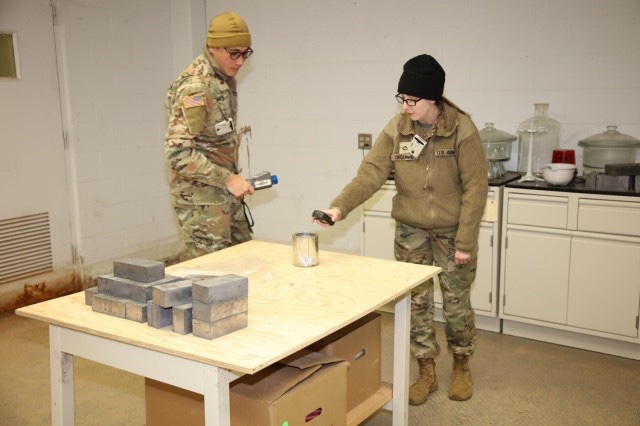
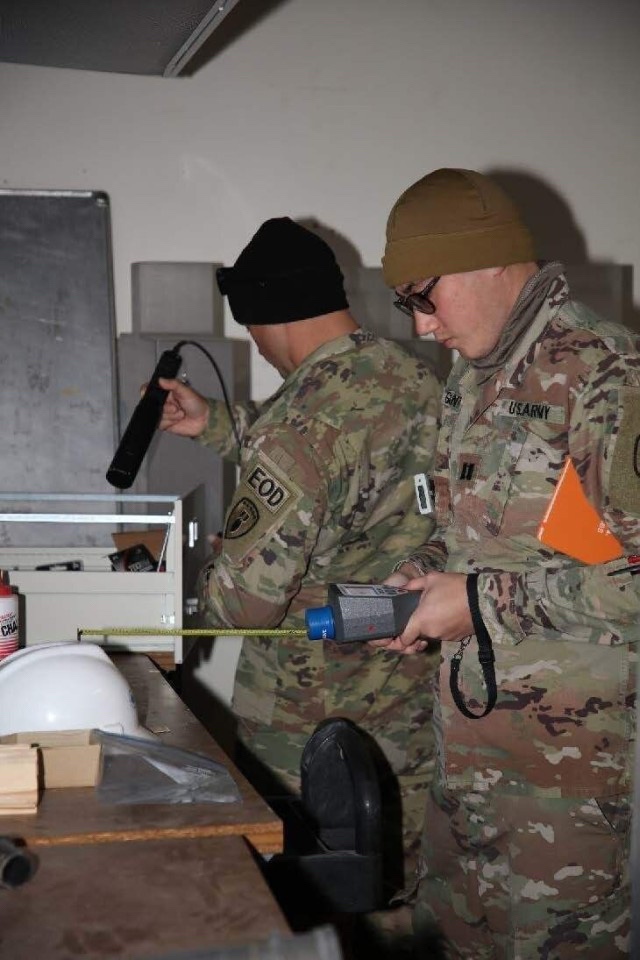
FORT DETRICK, Md. — The U.S. Army Medical Materiel Development Activity’s Warfighter Deployed Medical Systems and the U.S. Army Medical Test and Evaluation Activity, or USAMTEAC, recently partnered at Fort Detrick to assess three commercially available medical-grade oxygen generating systems in early August.

Soldiers from Fort Bragg and Joint Base Lewis-McChord participated and received training on each system prior to the evaluation and testing. Once trained the Soldiers operated the products as if they were deployed.

During the testing process, standard-sized cylindrical oxygen tanks are vacuumed before being refilled to verify the flowrate. Next, the oxygen is tested for purity before the tanks are vacuumed and recycled through the process again.

“On the battlefield, patients who need oxygen would come to us,” said Staff Sgt. Lorrence Wilder of the 551st Medical Logistics Company at Joint Base Lewis-McChord. “For example, a field hospital may need purified oxygen and it would be our job to use one of these products to refill their oxygen supply.”

The Soldiers and the USAMTEAC personnel verify that the products meet the standards and perform as expected.

“This modernization is a two-year process,” said Austin Langdon, deputy product manager at Warfighter Deployed Medical Systems — Modernization. “In phase one, the teams gathered data and information, to develop a list of essential characteristics to describe the requirements products had to meet. That wasn’t done in a vacuum, we worked with the Future Field Integration Division, the Capability Development and Integration Directorate, and others to put the list of essential characteristics together.”

Each essential characteristic has a minimum level and a desired level that vendors must meet to be considered.

All three devices operate on pressure swing absorption systems, which take in ambient air and filter-out other gases until the oxygen reaches the desired purity level.

“We are conducting unbiased testing on one system at a time,” said Eitter Rodriguez, one of the USAMTEAC test officers. “Each system evaluated on its own merits. The tests are the same across the board. They are all different systems, but the requirements for each are the same.”

“Maintenance and sustainability are considered in addition to the test results,” said Langdon. “If two machines meet the requirements, but one requires significantly more costs to maintain, then that needs to be assessed as well.”

Evaluators say the goal is to make a selection, field and fully deliver a product to the field to take care of Warfighters. The Army Medical Logistics Command maintains and sustains the product throughout its lifespan.

“Our Medical Maintenance Operation divisions throughout the United States, Europe and Korea call us when there’s a maintenance issue,” said Leigh Anne Alexander, director of the Integrated Logistics Support Center under the Army Medical Logistics Command. “So, identifying test parameters early-on, ensures the system is doing what it is supposed to do, is really important.”

Story by Scotty Hogan

Photos by Denver Beaulieu-Hains and T. T. Parish

Prometheus Design Werx – All Terrain Pouches

Wednesday, September 14th, 2022

Zipper Opening Accessory Pouches, Waterproof Rated to IPX7

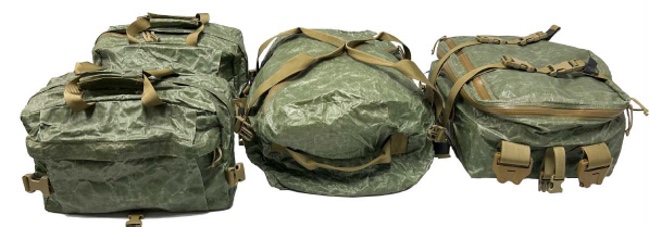
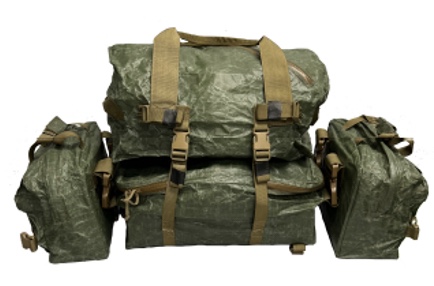
Prometheus Design Werx introduces their new, All Terrain, zippered, waterproof accessory pouches in three sizes. Instead of the simpler, flat, 2-dimensional construction method, a more complex and time intensive, 3D box type construction was used in the making of these, dramatically improving usable space. With high frequency seam welding and waterproof zippers, the All Terrain Pouches were able to achieve an IPX7 waterproof rating. The 600D RPET fabric is rugged yet light weight and 2 styles also feature translucent windows to easily ID interior contents. These pouches are ideally suited for rainy weather, travel in all conditions, to any activities in and around water.

The PDW ATP-1, ATP-2, and ATP-3 are available in Universal Field Gray.

The Design and R&D Team at PDW states:

“These took us a while to do. We worked on these for over 2 years until we arrived at the final iterations which we were happy with. We saw an opportunity to create a waterproof accessory pouch that went beyond the typical flat style. By adding walls to create a box type construction, we were able to push these into the Z-axis realm and have a 3-dimensonal shape with LxWxH volume. Using high frequency seam welding and waterproof zippers were able to attain an IPX7 waterproof rating. These All Terrain Pouches will be ideal for storing small personal effects, first aid, fire making supplies, EDC tools, and much more, in a truly waterproof environment. Each style features our M.OLLE C.ompatible A.rray (MCA™) on the back to mount to any PALs friendly system.”

The PDW ATP-1 and ATP-2 will be available for $19 and $23 respectively, at noon Pacific, today, Wednesday September 14, 2022 via their website, prometheusdesignwerx.com. The ATP-3 will follow later in late September.

AGR Program Changes on the Horizon

Wednesday, September 14th, 2022

ROBINS AIR FORCE BASE, Ga. (AFNS) —  

In line with Lt. Gen. John Healy’s strategic priorities of “Ready Now!” and “Transforming for the Future,” Air Force Reserve Command is instituting changes to the Active Guard and Reserve program effective Oct. 1.

On that day, roughly 6,000 AGR positions will complete the transition to “term” and have initial tour determination and extension approval authority at the wing commander level. Career status will be granted at six cumulative years of service in the AGR program.

“The AGR program will continue to provide promotion, career progression, retention, education and professional development opportunities for Reserve Citizen Airmen,” said Healy, chief of the Air Force Reserve and commander of AFRC. “Taking care of our Airmen will remain our priority during the transition as commanders ensure they have the critical AGR positions filled to be combat ready to meet operational demands in the future.”

As always, the program may lead to Airmen earning an active-duty retirement after attaining the required years of total active federal military service.

Career AGRs who wish to remain in the AGR program will continue to adhere to existing guidance and will accept permanent change of station, permanent change of assignment, training, developmental education and force development opportunities in accordance with Air Force Manual 36-2114, section 6.6.

AGR term positions were successfully introduced in 2019, and provide more agility in recruiting, retaining and managing AGR talent. After three years of implementation and review, AFR leadership is instituting changes to the AGR program. The transformation is part of AFRC’s mission and compliance with Healy’s task order “to ensure units are mission ready and properly resourced.”

Wing commanders, or their equivalent, will have tour length determination and extension approval authority. In the past, initial term tours were fixed at three years, with an extension up to five years requiring Deputy Commander, Air Force Reserve Command (AFRC/CD) or Deputy to the Chief, Air Force Reserve (AF/RE-D) approval. Now, advertisements for initial tour lengths – two, three, four or five years – will be determined by wing commanders and above. Tour extensions may not exceed a total tour length of five years.

The second change will remove the AGR career status option from the AGR continuation decision process. AGR members will be granted career status after completion of six cumulative years in the AGR program, in accordance with Department of Defense Instruction 1205.18, section 6.6.

Over the next month, communication will be provided through virtual town hall meetings, Facebook Live events, email and MyPers messages, and updates to command social media sites regarding the AGR changes.

For additional information, elevate any questions through your Numbered Air Force A1 staff or Headquarters Commander Support Staff.

Air Force Reserve Command Public Affairs

Now IN-STOCK Curv Tactical from 1947LLC and OSI: Black/Grey 0.7mm, 0.9mm and 1.4mm Ultra-Matte Black 0.7mm, 0.9mm and 1.4mm

Tuesday, September 13th, 2022

Curv Tactical™ can be used in anti-ballistic applications and in conjunction with puncture-resistant materials such as Aramid fiber. It can also be used as a stiffener in bags, backpacks, holsters, ballistic vests and more. Because of its unique mono-construction; Curv Tactical™ can be sewn, glued, laser-cut or thermoformed for precise fitment. High stiffness, high tensile strength, superior impact resistance and formability with extremely low density are all highlights of Curv Tactical™.

For pricing and info contact:
Geoff Senko
440-670-9421
geoff@osinnovate.com

1947 LLC is the Exclusive Distributor of Curv® Tactical

1947LLC is a Division of Ocean State Innovations

www.osinnovate.com