Wilcox Ind RAID Xe

Archive for the ‘Guest Post’ Category

Air University Stands Up Global College of PME, Adds Enlisted Education

Thursday, May 5th, 2022

MAXWELL AIR FORCE BASE, Ala. —  

Air University has reorganized and renamed its distance learning program to reflect the direction civilian institutions are taking with their online courses and to recognize and welcome the addition of enlisted professional military education programs to its offerings. 

The activation of the Global College of PME now places the university’s officer and enlisted distance learning programs under one organization. Previously, distance learning programs for officers fell under the eSchool of Graduate PME and the Thomas N. Barnes Center for Enlisted Education for enlisted members.

The distance learning programs now nested under the Global College of PME are Squadron Officer School; Air Command and Staff College; Air War College; Online Master’s Program; and Airman Leadership School, Noncommissioned Officer Academy and Senior NCO Academy for enlisted members. The enlisted programs are currently transferring to GCPME, with plans to be completely moved over by early summer. Under current Air Force policy, the enlisted online courses are primarily taken by Air National Guard and Air Force Reserve members.

The newly launched enlisted PME courses will take advantage of the same Arizona State University learning management system that officer courses have been on for the last two years.

“What I’m most excited about with this change is the impact to our Airmen around the world,” said Col. Craig Ramsey, who assumed command of the Global College of PME as its first commandant on April 1, 2022. “This gives us access to programs and technology that really enhances the student experience as they complete the courses. Instead of completing assigned readings and taking a test on it, there will be the opportunity for peer-to-peer exchange with others in the online class.”

Ramsey now leads an organization with a projected faculty of 96 and more than 30,000 online students, graduating about 20,000 officers and enlisted members annually. Organizationally, the Global College of PME falls under Air Command and Staff College.

“I’m so proud of the Global College team and what they’ve been doing to get to this point. These professionals continue to deliver a learning experience that gets rave reviews from the students,” he said. “There’s an opportunity here to deliver military education to our Airmen throughout their careers in much the same way they pursue education with a civilian institution. We are fortunate to be on the cutting edge of technology and programs in providing our students a valuable learning experience.”

By Phil Berube, Air University Public Affairs

Danish Military Signs Armor & Load Carriage Contract with TYR Tactical

Wednesday, May 4th, 2022

PEORIA, Ariz. – On Monday, April 25, Jason Beck, Founder and CEO of TYR Tactical and the Danish Ministry of Defense (DALO) signed a historic contract worth $200,000,000.00 ($200M). The contract will provide each soldier in the Danish military the most state-of-the-art body armor system in existence.

This agreement will have an impact of more than 100 advanced manufacturing jobs for TYR Tactical, which is headquartered in the City of Peoria. This allows for higher economic growth and greater employment opportunities in the west valley spanning the next decade.

“We have spent decades building strong relationships locally, nationally, and ones that span the globe. We have had the honor to serve the Danish Military for over 10 years with our life saving products and been extremely proud of how we have designed and manufactured the best in the world. Our Danish friends have been incredible partners in innovation, working with us to protect those who protect us.  Their commitment to providing the world’s best protection for their military personnel is incredible. With this historic signing, we are thrilled to continue our long-term partnership with the Danish military, and our friendship with the Danish people. Today is a day of celebration that we share with our friends from Denmark, the entire TYR family, and our incredible employees whose commitment to 100% quality control results in saving lives,” said Jason Beck, CEO.

One hundred percent of the tactical gear that Denmark will receive will be manufactured in Peoria, Arizona.

DEVCOM Teams Explore Low-Cost, Lightweight Sensors for Warfighter Use

Wednesday, May 4th, 2022

ABERDEEN PROVING GROUND, Md. — The Soldier in the field is often required to carry multiple pieces of gear to handle various situations and every pound matters. With this in mind, Army scientists and engineers are using their diverse skills to cultivate a microsensor development capability at the U.S. Army’s Combat Capabilities Development Command Chemical Biological Center, or DEVCOM CBC.

This proof-of-concept study seeks to provide warfighters with sensors that are light in weight, low in cost, small in size and easy to carry. “We’re always trying to unburden the warfighter. We want to develop sensors that can be deployed to provide personnel with greater situational awareness of their field environment,” said Army Senior Research Scientist for Chemistry Dr. Patricia McDaniel.

According to BioSciences Division Chief Dr. Nicole Rosenzweig, CBC scientists and engineers want to figure out how they can potentially transport these deployable sensors into an area on ground vehicles or unmanned aircraft systems. “Whether it is a ground vehicle or an unmanned aerial vehicle release, the autonomous deployment element of this is a key component of the effort,” Rosenzweig said.

For example, the sensor can be deployed from high altitude into a plume by an aerial drone or mounted on a ground vehicle to provide situational awareness of a given area. During this operation, the microsensor can detect possible hazardous contamination and alert the warfighter so they can make decisions on how to proceed.

Staying aware of warfighter needs makes the miniaturization of sensors a natural transition for the scientists at DEVCOM CBC. Currently, this effort is jointly funded between the Defense Threat Reduction Agency and the CBC. The idea to focus on microsensors surfaced during discussions among CBC researchers and leaders about new innovations. “We started looking at our research strengths, where technology is heading and determined where we can make the greatest contribution to the Army’s modernization process and advanced manufacturing efforts,” said McDaniel.

Scientists are working to miniaturize sensors so that they can communicate with Soldiers and equipment through a universal interface, which will allow users to select and customize capabilities for each unique mission. Researchers envision stealth microsensors for deployment, while being cost-effective enough to discard after use. This paves the way for a “place-and-forget” microsensor that can be used as a one-off after completing its task.

The development of microsensors is a CBC-wide collaborative campaign with the objective to integrate science, technology, modeling, engineering and novel manufacturing processes. According to McDaniel, the CBC is pushing the boundaries of microsensors using additive manufacturing. “We’re trying to pull all of these research elements together to achieve the next generation of chemical or biological detection,” she said.

The CBC is also collaborating with small businesses and universities to move the development of microsensors forward. Recently, CBC researchers worked with the University of Alabama and Forensense Solutions, LLC, and have filed a patent application for their microsensor prototype called the Portable Impedance Based Chemical Sensor. The prototyping objective is to understand current and past efforts across DoD Science and Technology (S&T) programs that have explored sensing. This sensor is designed to detect toxic industrial chemicals, chemical warfare agents and emerging chemical threats.

The CBC is also working to leverage Soldier touchpoint opportunities to continue the development of these prototypes. The goal is to coordinate multiple microsensor demonstrations. This would allow Soldiers to provide input on how microsensors make their jobs easier in the field and provide feedback on future prototypes.

The next steps in developing the microsensor capability at the CBC involves finding additional partners who can help to propel this effort into the future by providing miniaturized chemical detection, novel engineering solutions and low-cost manufacturing methodologies. CBC researchers are integrating technologies developed across the various government laboratories to maximize microsensor capabilities.

The overall vision for the microsensor program is not only to bring new technologies to the CBC but also to advance existing technologies. According to McDaniel, the goal is to pull all of these elements together along with partners’ efforts in order to establish the CBC as the premier laboratory for innovation. “Microsensors is not a singular effort. It’s a spiral effort. The whole idea is to set up the infrastructure so that as we see technologies emerging, we can integrate them into the chemical biological detection world,” she said. “We have the ability to assess, understand and implement them into something truly innovative.”

By Jerilyn Coleman

The New Future for Air Mobility Liaison Officer Training

Tuesday, May 3rd, 2022

JOINT BASE MCGUIRE-DIX-LAKEHURST, N.J. (AFNS) —  

With constant, real-world demands on an aging fleet of aircraft, out-of-the-box thinking is the linchpin for big changes in the way the U. S. Air Force trains its specialized air mobility officers.

Air Mobility Liaison Officers, or AMLOs, are senior Air Force pilots and navigators, hand-selected for training on everything from doctrine and command relationships to the complexities of aircraft landing zone and drop zone operations, radio communications, and the cultural differences between the Air Force, Army, and Marine Corps.

“AMLOs are stationed worldwide,” said Lt. Col. Andrew Baker, Air Mobility Liaison Officer Qualification Course director. “Their mission is to ensure our sister services know how to utilize AMC (Air Mobility Command) airlift to better support their mission. AMLOs eliminate those friction points so the mobility enterprise operates smoothly.”

In order to train others and multiply force capabilities, AMLOs need to be proficient in their specialty. This is done through an intensive eight-week Air Mobility Liaison Officer Qualification Course, or AMLOQC, offered by the USAF Expeditionary Operations School.

The AMLOQC class consists of six weeks of in-class training at Scott Air Force Base, Illinois, followed by two weeks of field training in Colorado. The entire first week in the field, students receive hands-on experience coordinating and communicating with AMC aircraft during takeoff, landing and airlift drops.

Typically, these support aircraft are C-130 Hercules from active duty and Air Reserve Wings using the unit’s own funding. Since these are training missions, any real-world operation that arose had the potential to cancel the mission. Many times, this happened, leaving AMLOQC without aircraft needed for the critical training.

“In a resource-constrained environment, we have to figure out ways that don’t rely on others showing up and spending their own money to support our courses,” said Col. Marcus Cunningham, USAF Expeditionary Center director of operations.

Thinking out of the box in 2019, AMLOQC was able to negotiate with an Air Force Special Operations Command unit and procure an entirely different aircraft: the smaller, lighter AC-208 Combat Caravan.
Since then, the USAF EOS has been working on changing the old way of asking airlift wings to provide aircraft and instead contracting air support. This ensures reliable aircraft support and in-turn, more effective training for the future AMLOs.

In April 2021, this new program was put into place. Two C-130s, a C-145A Combat Coyote, and an AC-208 were used to support AMLOs in their field training. Being smaller and more agile, the C-145 and AC-208 were able to provide five times more landings and takeoffs than a C-130.

“Between ourselves and the C-145, we supported around 20 landings each, which we did within an hour, whereas the C-130 got about six in the hour. We must have done close to 60-70 landings in the three days we were there,” said Brian Hoffmeyer, an AC-208 Combat Caravan load master with the Air Education Training Command, who participated in the new aircraft training at the USAF EOS.

“I was in awe of how much training we got this time around compared to what I saw a couple years ago,” Baker, who explained that students previously only had a couple of chances to coordinate aircraft, said.

“Now, if you make a mistake with your first call, you get another nine chances to make it right,” Baker continued. “It’s good because the students can go out into their operating locations after they’ve moved on from our training and feel more confident. Whether you’re controlling a C-130 or an AC-208, the procedures and communications are exactly the same.”

C-130s and C-17 Globemaster IIIs are still necessary for moving large amounts of cargo, equipment, and personnel worldwide and AMLOs will continue to be trained to work with these grey tail aircraft. However, smaller and more mobile aircraft can support troops at a lower scale when flexibility and speed are key.

“An AC-208 isn’t going to keep an entire base alive for 24 hours, but for forward operating bases and combat outposts, it does just fine,” Hoffmeyer said.

Positive remarks have been flowing into Cunningham’s office about the course change.

“This was a proof of concept for using a AC-208 to do forward support and it went lovely,” Cunningham said. “When you cooperate and you do things differently, it can sometimes lead to a better way of doing business.”

AMLOQC just graduated its latest batch of AMLOs last week and the AC-208 was right there with them as they did their field week of training. Using the AC-208 over the past few AMLO courses has proven the worth of trying something a little out of the box.

The USAF EOS, part of the U.S. Air Force Expeditionary Center, develops and delivers expeditionary training and education for the Air Force. Its mission is to train and educate total force Airmen for a broad spectrum of expeditionary operations today and tomorrow.

By SSgt Sarah Brice, U.S. Air Force Expeditionary Center Public Affairs

MATBOCK To Host Open House

Monday, May 2nd, 2022

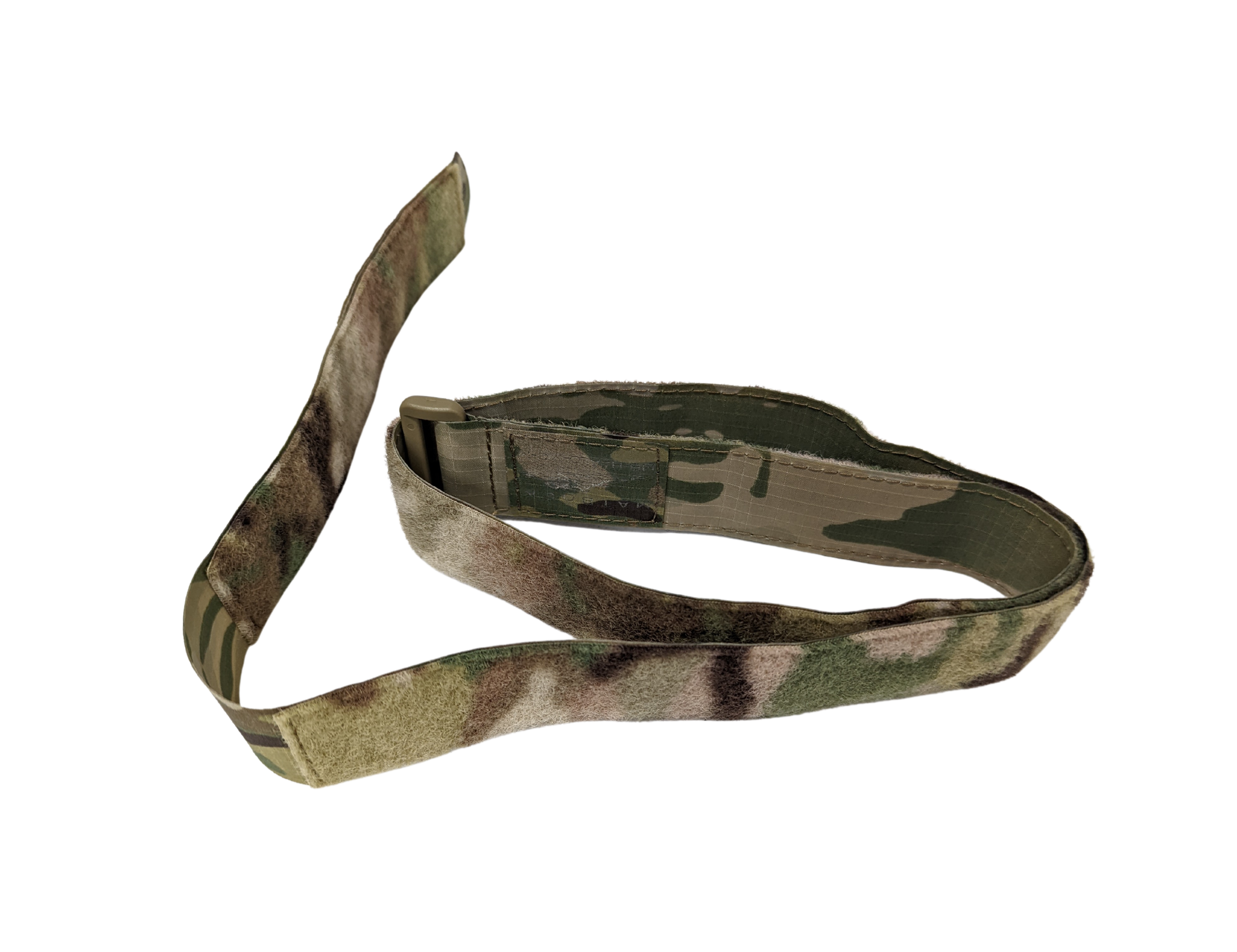
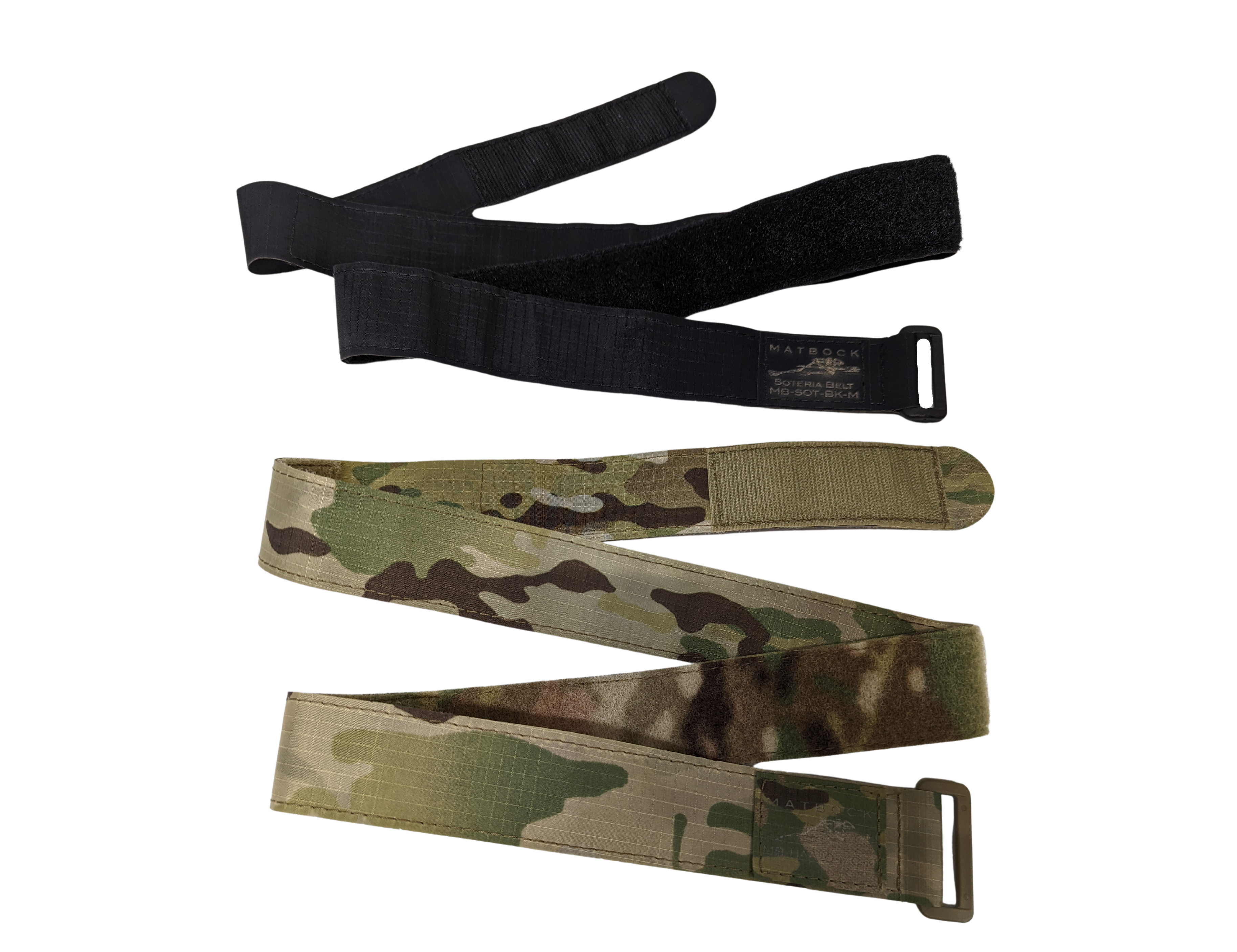
Join MATBOCK on 11 May 2022 at 544 Central Drive, Suite 110, Virginia Beach, VA 23454 from 11am till 2:30pm for an open house. They will be showcasing all of their products with the primary focus on their new 2022 OTB line and the other 2022 products.

There will be free food & drinks provided and they are asking that you please register here: calendly.com/matbock/matbock-open-house?month=2022-05&date=2022-05-1

Any other questions, please reach out to sales@matbock.com

Next Generation Mission-Ready Power Solutions from EXO Charge at Modern Day Marine and SOFIC IGNITE

Monday, May 2nd, 2022

EXO Charge will be showcasing its latest solutions at the Modern Day Marine and SOFIC IGNITE exhibitions in May – including the following:

Small Tactical Universal Battery (STUB) – Developed to meet the DoD’s MIL-PRF-32383 requirement, the STUB is a new family of standardized, rechargeable military batteries that will provide a common power source across different devices. This improves interoperability and reduces the physical battery burden and logistics for the Warfighter. The STUB series also includes the latest USB Power Delivery (USB PD) and Programmable Power Supply (PPS) for fast charging and USB-C connector technology for improved performance and standardization. Work has also begun on a range of accessories for interoperability with legacy power systems and devices.

Rugged Auxiliary Charger (RAC) – Featuring GaN semi-conductor technology, the rugged, compact, and powerful RAC utilizes USB Power Delivery (USB PD) and Programmable Power Supply (PPS) fast charge technology – and can charge several devices simultaneously. Supporting up to 300W of total power and equipped with an SAE and a Nett Warrior connector, the RAC is compatible with the UBC standard military bulk charger, as well as working as a stand-alone charger for standard batteries such as the 2590 and CWB. The RAC will be MIL-STD-810 & 461 qualified and features two USB-C ports for fast charging for the new STUB series of batteries – as well as commercial off-the-shelf devices.

Augmented Power Pack (APP) – The APP is a fully ruggedized 300Wh power bank designed for operational use in austere environments that can charge several devices simultaneously using USB Power Delivery (USB PD) and Programmable Power Supply (PPS) fast charging technology. Featuring two USB-C ports and a Nett Warrior connector, the APP delivers multi-voltage support (5V-20V) for exceptional power flexibility and system interoperability. Built to MIL-STD-810 & 461 ruggedness standards, the APP features an NVG-compatible display screen and has a form factor optimized for tactical carriage and use.

Visit the EXO Charge booths to find out more:

Modern Day Marine – booth 666, Hall E, Walter E. Washington Convention Center, Washington D.C.

SOFIC IGNITE – booth J520, the Tampa Bay Ballroom in the JW Marriott, across from the Tampa Convention Center, Tampa, Florida

Xentris Wireless created the EXO Charge division specifically to address the needs of next-generation portable power solutions for military applications. Incorporating globally proven, and industry standard, technologies such as USB help improve the operational capabilities of electronics at the tactical edge – as well as helping to reduce the battery weight and logistical burden borne by the Warfighter.

Follow EXO Charge online and on Facebook, Instagram, and LinkedIn to keep up to date on the latest news, views, and developments.

‘The Backbone of Everything We Do:’ Army Advances New Communications Network Baseline

Monday, May 2nd, 2022

FORT MYER, Va. — From current support operations in Europe, to experimentation with emerging technologies at Project Convergence, leaders say it is clear that the Army must rely on an integrated, adaptive communications network to accomplish its missions.

“The network is the backbone of everything we do, and data is our new ammunition,” said Lt. Gen. James Richardson, Acting Commanding General of Army Futures Command, or AFC. “All of the experimentation we are doing today is informing where we are going for the future.”

On Tuesday, the Army took an important step forward in delivering that network with the completion of the critical design review for Capability Set 23, or CS23. CS23 aligns more than 40 systems — from Soldier radios and satellite terminals to mission command software and network operations tools — into a system of systems that increases network resiliency, capacity and convergence. Informed by test and experimentation, while balancing capabilities’ technical maturity, operational relevance and affordability, the critical design review is the acquisition event that finalizes the capability set design and authorizes limited production of CS23 systems.

“Capability Set 23 is not a singular, monolithic program — it is a compilation of many programs that come together to provide an operationally useful capability,” said Maj. Gen. Robert Collins, Program Executive Officer for Command, Control, and Communications — Tactical, or PEO C3T, the organization that leads the capability set process, along with AFC’s Network Cross-Functional Team. “It has been a tremendous collective team effort.”

The Army’s two-year network capability set delivery cycle is designed to enable consistent modernization driven by Soldier-led experimentation, commercial technology progress and overarching Army strategy — as well as Department of Defense initiatives such as Joint All-Domain Command and Control, or JADC2.


The Army is simultaneously fielding and developing several capability sets: CS21 is fielding, CS23 is in near-term development, CS25 is in technology maturation and prototyping, and CS27 design goals are being developed. While CS21 focused on Infantry formations at Brigade and below, Capability Sets 23 and 25 and beyond are increasingly targeting network modernization for mounted formations, as well as the Division level as the Army transitions to the Division as unit of action.





“From an operational perspective, what you’re really starting to see is how the Army wants to fight in the future be baked into each iteration of the Capability Sets,” said Lt. Gen. John Morrison Jr., Deputy Chief of Staff, G-6.

As the Army evolves to more data-centric, expeditionary and dispersed operations, Capability Set 23 will also deliver a foundational tactical data fabric that will provide commanders with relevant data at the point of need, as well as Mission Partner Environment data exchange capability that increases interoperability with coalition partners.

“We need to create a data centric environment, a cloud environment, a backbone that we can reach to for our data and render that data to our commanders so they can make informed decisions,” said Brig. Gen. Jeth Rey, Director of the Network CFT.

Capability Set 23 also increases integration of electronic warfare, intelligence, fires and sustainment capabilities into the network. It introduces high-throughput, low-latency satellite communications through commercial services and non-traditional orbits to provide additional communications options for commanders.

For Stryker formations such as the 2nd Cavalry Regiment — which has participated throughout the CS23 design and assessment process and will be the first mounted unit equipped with CS23 — the new technology improves digital voice and data communications for mounted and dismounted operations.

“This allows Soldiers to maintain their communications while inside the vehicles, and as they dismount the vehicles, they maintain that connectivity throughout their mission,” said Mindy Gabbert, Deputy Project Manager for Capability Set Development at PEO C3T.

Capability Sets utilize synchronized Soldier touchpoints, developmental and operational tests, and experiments such as Project Convergence and CyberQuest in order to fully vet and integrate systems so they are prepared for fielding. This ensures that input from the operational force, including lessons-learned from units supporting operations in Europe, is captured in the iterative design process.

“Tactical level Soldier/operator feedback more clearly informs and defines capability requirements,” said Maj. Todd M. Klinzing-Donaldson, head communications and network officer for the 2nd Armored Brigade Combat Team, 3rd Infantry Division, whose unit executed an Armor formation networking pilot earlier this year. “Our unit experimented with three unique equipment sets, focused on creating a more robust upper tactical internet capability that would build a better common operational picture for the unit commander.”

Feedback from the pilot event is already informing Capability Set 25, which will extend the network to Armor formations and continue to incorporate commercial solutions that enable the future network to be transport-agnostic, data-centric and underpinned by modernized security architecture and cyber resiliency. In parallel, the next step for Capability Set 23 will be a two-phase operational demo with the 2nd Cavalry Regiment that will take place staring in June, which will inform final CS23 fielding decisions to take place in Fiscal Year 2023.

By Claire Heininger and Amy Walker

SCUBAPRO Sunday – Sergeant Paul Yauwiga WW2

Sunday, May 1st, 2022

New Guinean Police Sergeant Paul Yauwiga spent 1943 leading native guerilla bands on jungle reconnaissance missions and local psyops in Northern Bougainville. Recognizing his potential, he was re-deployed to Australia to train troops in Jungle Warfare in 1944. He had been advised in Bougainville not to engage with superior Japanese forces due to the value of the intel he provided, and his mission had always been “observe and report.” Yauwiga wasn’t a big fan of this and remarked, “Why do we run away the same as women do?”

The Australia gig quickly ended, as Allied forces needed Yauwiga to flush out the stubborn Japanese resistance still fighting in Bougainville in 1945. His first major contract was with a mixed band of 80 Japanese troops and tribal collaborations. He annihilated 25 of the enemy with two other guerillas after only 15 minutes.

He made sure to add some salt to the injury he caused to Japanese forces. Yauwiga killed a known tribal collaborator and spread false rumors that the now dead man had been an Allied agent. The Japanese responded with heavy-handed paranoia, executing 10 of their best spies. He followed this bit of genius psyops by arresting 30 other tribal collaborators and destroying the Japanese spy network in the process.

By June 1945, his small team had accounted for 57 confirmed kills over only 17 months in the jungle. Barefoot, bare-chested, and armed with a mixture of Allied provided rifles, and they punched well above their weight. Unfortunately, a white phosphorous grenade accidentally exploded in Yauwiga’s face in a freak accident as he attempted to signal Allied aircraft. He was evacuated to Australia, where his left arm was amputated and his left eye removed. A corneal transplant saved his right eye from the blue-eyed Australian donor, one of the earliest surgeries.

The first-ever blue-eyed Melanesian returned to New Guinea after only three months in hospital – too harsh for a long stint in bed. At his award ceremony, the local legend received a Distinguished Conduct Medal with 80,000 people. He remained a well-respected community leader until he died in 1982.