Phantom Lights

Archive for the ‘Guest Post’ Category

First Contact: Meet the Dive Medical Recovery Team of Artemis II

Friday, April 10th, 2026

SAN DIEGO — The first face the Artemis II crew will see upon their return to Earth will be the face of a U.S. Navy Sailor.

Lt. Cmdr. Jesse Wang, Senior Chief Hospital Corpsman Laddy Aldridge, Chief Hospital Corpsman Vlad Link, and Hospital Corpsman 1st Class Steve Kapala make up the dive medical team who will be the first to open the Orion capsule upon its return to Earth, make initial medical assessments of the Artemis II crew, and assist them out of the capsule safely and efficiently.

They will provide initial one-on-one assistance to Christina Koch, Jeremy Hansen, Reid Wiseman, and Victor Glover respectively. Training for this mission has been a years-long process between the four team members as the first-contact medical providers inside the capsule.

Often working in expeditionary warfare communities, Navy dive medical personnel are certified divers and undergo specialized training, making them experts in decompression illnesses and other undersea medical considerations. Their mission is to care for and ensure dive-qualified service members are safe to conduct diving operations.

Following Orion’s reentry into Earth’s atmosphere and splashdown in the Pacific Ocean, the medical team will enter the capsule to conduct initial exams for the crew, provide triage care as necessary, and assist the astronauts in egress onto the inflatable raft set up outside by Navy divers. The first-contact medical providers will then prepare the crew to be airlifted by Helicopter Sea Combat Squadron (HSC) 23 back to amphibious transport dock USS John P. Murtha (LPD 26) for follow on evaluations.

Wang, assigned to Explosive Ordnance Disposal Group 1, serves as the lead for the four-man team. From Laguna Beach, Calif., he is a board-certified emergency medicine doctor by trade, having completed residency training at Lincoln Hospital in Bronx, New York. He joined the Navy in 2021 and was designated as an undersea medical officer in 2024.

“As a proud member of the undersea medical community, I am particularly humbled to play a part in this mission,” Wang said. “It is the honor of a lifetime to stand here today, ready to provide the absolute best care to the Artemis II crew.”

Aldridge, from Cushing, Okla., will be the first member to make contact with the crew upon their return to Earth. Assigned to Explosive Ordnance Disposal Expeditionary Support Unit 1, he will open the capsule, enter the space, and begin medical assessments.

“Coming from three generations of military service in my family, I’m honored to serve as the senior dive independent duty corpsman for this mission,” Aldridge said. “This effort is the culmination of both our training to bring world class care to the Artemis II crew and countless dedicated years of Navy Diving and Navy medicine.”

Dive independent duty corpsmen like Aldridge, Link, and Kapala are specifically trained in dive medicine.

Link, assigned to Explosive Ordnance Disposal Mobile Unit (EODMU) 1, is the third member of the team and hails from Chelsea, Mass. He has 18 years of experience in dive medicine, but he shares that this mission is already a highlight of his career.

“I have been exposed to the Navy since I was a young teenager, and I’m proud to represent both my family and hometown,” Link said. “Contributing our efforts to NASA and the Artemis II mission is something we take great pride in as part of that legacy.”

The fourth member, Kapala, assigned to EODMU-11, hails from Alpena, Mich., and has been practicing dive medicine since 2018. He notes the significance of the historical mission as a unified effort, both for himself and everyone involved.

“I grew up reading sci-fi novels and watching space movies, never thinking that I would play a part in a recovery mission like this,” Kapala said. “It is surreal to play a part in safely recovering the astronauts from the capsule to get them home safe to their families, an effort that really makes you realize this team is bigger than just the four of us.”

With immense levels of experience and specialized training under their belts, this team of expeditionary medical providers is prepared to give the Artemis II crew a warm welcome back to Earth following their 10-day lunar mission.

“Our fellow divers, the Sailors on the ship, the helicopter squadron, our partners at NASA, and everyone supporting this mission are ready to bring the Artemis II crew home,” Wang said. “This team is undoubtedly making history.”

U.S. Navy Divers assigned to EODGRU-1 are underway on USS John P. Murtha in the U.S. 3rd Fleet area of operations supporting NASA’s Artemis II mission, retrieving the crew and spacecraft following their return to Earth and splashdown in the Pacific Ocean. NASA’s Artemis II mission sent four astronauts on a flight around the moon in the Orion space capsule, marking the first time humans journeyed to deep space in over 50 years.

Story by Lt Erin Wiley 

Explosive Ordnance Disposal Group One

Ferro Concepts – TRAK Bag

Friday, April 10th, 2026

The TRAK (Tactical Rope Access Kit) Bag is a streamlined, purpose-built solution for lightweight rope operations, personal escape, and hasty rescues. Optimized for high mobility where weight and bulk must be minimized, it provides a compact platform for maintaining rope and essential hardware in a readily deployable state. From vertical urban movement to jungle environments and roof-top breaches, the TRAK Bag delivers immediate access when seconds count.

Available in MultiCam and Black.

ferroconcepts.com/products/trak-bag

B.E. Meyers & Co. Announces Retirement of Master Prototype Machinist After 35 Years of Service

Friday, April 10th, 2026

10 April, 2026, REDMOND, WA — B.E. Meyers & Co., Inc., a Defense Technology Manufacturer specializing in advanced photonic solutions for military, law enforcement, consumer and aerospace applications worldwide has announced the retirement of Master Prototype Machinist, Paul Phelps, after more than three decades of service.

Phelps, whose craftsmanship has been a cornerstone of the company’s success, joined B.E. Meyers & Co. in 1991, during a critical moment in the company’s history, when it transitioned from its initial focus on night vision devices toward specialized and advanced laser systems.

Over the course of his 35-year career with B.E. Meyers & Co., Phelps has had a personal hand in every product in the company’s catalog, transforming raw materials into the precision technologies trusted by the most specialized operators around the globe.

“None of our success would have been possible without the dedication and skilled craftsmanship of our employees,” Matt Meyers, CEO of B.E. Meyers, & Co., reflects. “Paul’s expertise inprecision movement and time is unparalleled. His involvement in every product has helped shape who B.E. Meyers is today.”

Phelps maintained a singular standard, “Quality work on time, every time.” Known for his ability to execute complex designs with robust precision, ensured that the company’ products maintained their repute for durability in the most demanding environments.

To honor his monumental contribution to the company’s legacy, B.E. Meyers & Co. has commissioned a custom, commemorative timepiece from Ares Watch Co., an American brand known for its mission-ready timepieces. Known for its shared values of American craftsmanship and uncompromising reliability, Ares watches are built by artisans. The collaborative Ares Automatic Field Watchwatch serves as a functional celebration of Phelps’ career with B.E. Meyers, & Co.  

SPECS:
FIELD-1 Movement

The FIELD-1 Mission Timer is manufactured with a precision Swiss movement:

    •    Swiss Automatic: ARES currently uses ETA Swiss movements for our automatic DIVER-1 (ETA 2824)

FIELD-1 Case, Caseback, Crown & Bezel

    •    Turned from a solid bar of 316L stainless steel in Ogden, UT 

    •    Hand finished in bead blast Urban Stainless 

Crystal, Dial & Hands

    •    Domed sapphire crystal with inner anti-reflective AR coating

    •    Brass dial with Super LumiNova C3 printed hour indicators, painted minute indices and logo

    •    Brushed hands with C3 in brushed stainless 

Performance & Testing

    •    Individually tested and certified, fully assembled, to 35BAR = 350M.

    •    Anti-magnetic rating 18.8Oe, shock resistant to NIHS-91-10 standards, and thermo-compensated -0 to 50+ C

FirstSpear Friday Focus: Shadow Pack

Friday, April 10th, 2026

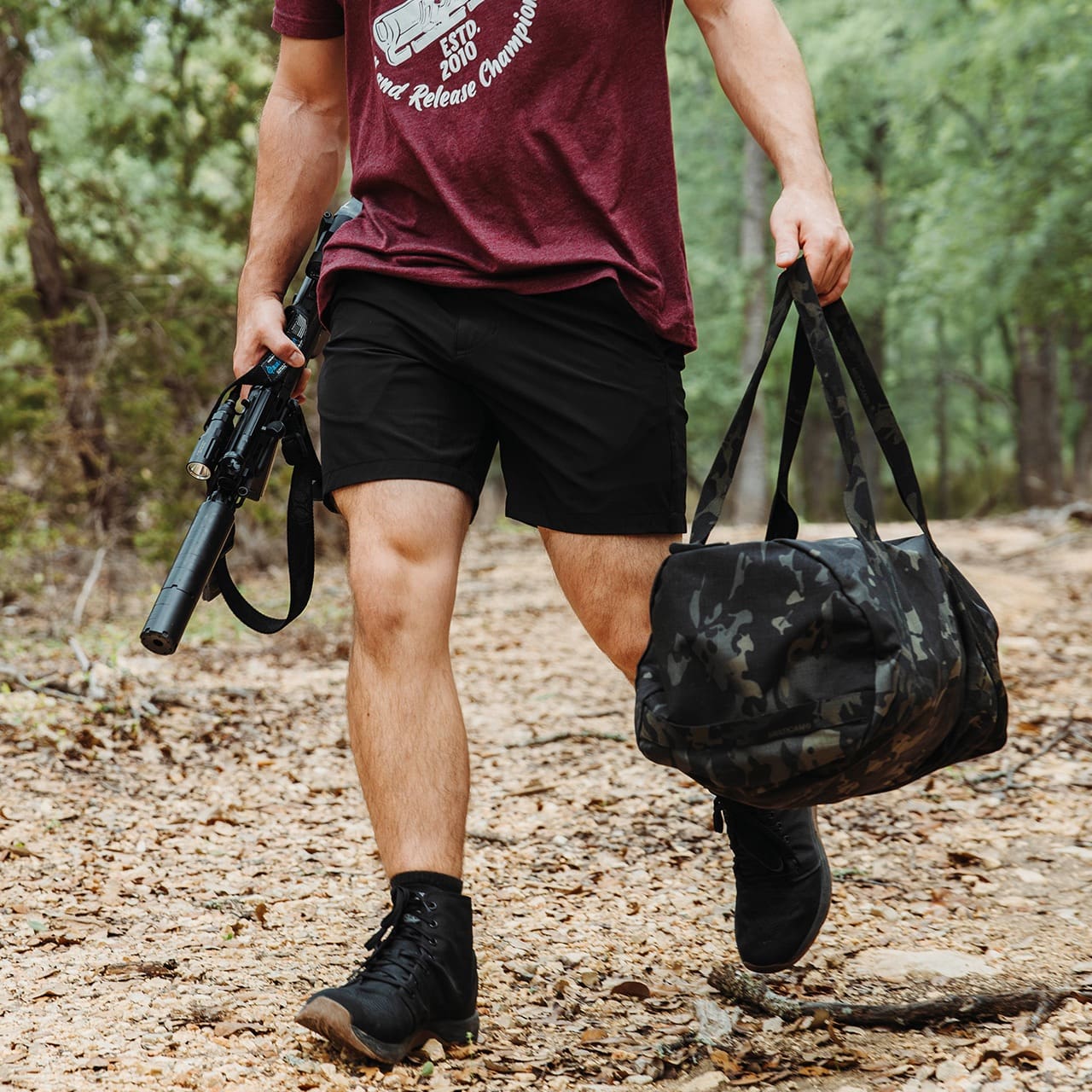
The FirstSpear SHADOW PACK is built to move weapons without advertising it. It discreetly carries short rifles, sub-guns, and shotguns inside a low-profile, non-tactical exterior that blends in where loud gear doesn’t belong.

Designed for plain-clothes, surveillance, and urban work, it keeps capability close without drawing a second look. Adjustable shoulder straps and a quick-release sternum strap keep it secure on the move and gone when it needs to be. Internal and external pockets keep mags, tools, and essentials organized and within reach.

A rear zippered compartment keeps small essentials secure and out of sight, while an integrated muzzle cover and adjustable bungee retention straps keep your weapon stable and controlled. Lightweight and durable, it holds up without weighing you down. It’s not tactical—until it absolutely is.

To request an estimate click image above or visit First-Spear.com/Request-For-Estimate. FirstSpear is the premier source for cutting-edge tactical gear for military, law enforcement and those who train. For more information visit First-Spear.com.

Green Berets Avoid Drone Detection During New Training Scenario

Friday, April 10th, 2026

HOHENFELS, Germany – Green Berets with 2nd Battalion, 10th Special Forces Group (Airborne), U.S. Special Operations Command Europe, put their skills to the test with a new and innovative training scenario, Exercise Deep Strike, at the Joint Multinational Readiness Center here, February 15-23, 2026.

This exercise simulated a complex real-world mission that challenged small special forces teams to infiltrate enemy territory, avoid drone detection, use drones to strike targets or resupply units, execute advanced tactics and complete stressful operations under winter conditions.

It served as a crucial testing ground for modernizing the force, validating the effectiveness of cutting-edge technologies like advanced unmanned systems to ensure our forces maintain an operational advantage in complex, multi-domain environments. This feedback loop ensures that emerging technologies are rapidly refined and fielded, directly translating innovation into combat capabilities.

“This exercise is designed to prepare our forces for the realities of modern warfare,” a planner with the 10th SFG (A) said. “It closely replicates real-world battlefield conditions, including the complex electronic warfare environment. It’s about pushing our teams to the limit and testing their ability to adapt to changing circumstances.”

In October 2025, SOCEUR tasked the Hohenfels Wolverine training battalion, a group of former Green Berets, with planning Deep Strike. The scenario involved a team of eight or more Green Berets infiltrating a 150-kilometer stretch of flat terrain in winter weather. It tested their physical and mental endurance, and their ability to remain focused on the mission. Their objective was to move undetected through the terrain, navigate past conventional forces and launch a strike drone to neutralize a simulated high-value target.

The operation required the team to rely only on mission-specific gear, excluding weapons. Their movement was restricted to nighttime hours to maximize stealth. They had to navigate through harsh winter conditions while avoiding detection, not just from enemy forces but also from civilian farmers, hikers, hunters and local law enforcement.


“This is no simple walk in the woods,” the team sergeant said. “In addition to avoiding conventional forces, our operators must stay off the radar of drones and keep a low profile around civilians who could unknowingly jeopardize the mission.”

The climax of the exercise occurred when a Special Forces team reached their destination after the grueling 150-kilometer movement. They then launched an unmanned aerial system, which carried live munitions to strike and destroy a designated enemy target. Once the team completed the mission, they were extracted by helicopters.

A team from SOCEUR’s Theater Edge Innovation Lab,alongside drone designers,were involved in the exercise as well, preparing drones for flights and assisting Green Berets with their operation. Aside from strike missions and avoiding their detection, they used drones to deliver supplies to Green Berets in the field.

Looking ahead, Deep Strike is expected to expand in scope with future iterations incorporating NATO Special Operations Forces. This will enhance coordination and interoperability among NATO forces, ensuring that they remain prepared to respond to dynamic security challenges across Europe and beyond.

“Deep Strike is not just about training our own forces,” the planner said. “It’s also about creating opportunities for greater collaboration with our allies, ensuring that we’re all ready to tackle whatever challenges may lie ahead.”

This exercise is a critical step in building a permanent training lane for U.S. and NATO forces to practice deep strike missions together, enhancing the alliance’s collective combat power and unified response to threats. This joint training will sharpen the alliance’s ability to seamlessly integrate multi-national assets, from intelligence to strike, ensuring that the right weapon is delivered to the right target at a decisive moment.

Story by SGT Glenn Brennan 

U.S. Special Operations Command Europe

101st Airborne Division (Air Assault) operates Aevex Atlas Technology at JRTC

Thursday, April 9th, 2026

U.S. Soldiers assigned to the 101st Airborne Division (Air Assault), in collaboration with Aevex and Program Manager Unmanned Aircraft Systems (PM UAS), conduct the inaugural integration of the Aevex Atlas system during a Joint Readiness Training Center (JRTC) rotation at Fort Polk, Louisiana, April 1, 2026. The video depicts Soldiers configuring the Aevex Atlas Ground Control System (GCS), featuring a 30-foot mast and integrated interface box, and the Aevex Atlas Launcher, designed to enable small units to deploy loitering munitions and unmanned aerial systems (UAS). Additionally, senior leaders observe soldiers utilizing the Aevex Atlas Flight Simulator and Soldier Robotic Controller (SROC) to create flight mission plans. This rotation marks the first time the Aevex Atlas system has been integrated into training at JRTC, representing a significant milestone in Army modernization. These tactical innovations provide ground forces with organic, high-tech tools to dominate the modern multi-domain battlefield.

(U.S. Army video by Spc. Mariam Diallo)

Rampart Range Day & Expo 2026 – Sold Out!

Wednesday, April 8th, 2026

Rampart Range Day & Expo 2026 is now sold out. Rampart Range Day & Expo is Canada’s largest operational range day and equipment expo, taking place May 26, 2026, at the Stittsville Shooting Range in Ottawa, Ontario.

Now in its fourteenth year, the event brings together 800+ Law Enforcement, Military, Corrections, and Government end users for a full day of hands-on equipment evaluation, live demonstrations, and direct interaction with manufacturers.

Event Highlights:

• Hands-on evaluation of operational equipment and protective gear

• Direct access to manufacturers and technical specialists

• Opportunities to compare solutions side by side in a practical environment

• Networking with agencies from across Canada

• First opportunity in Canada to get hands-on with the new GLOCK Gen 6 pistols

Brands in Attendance Include:

• GLOCK

• Aimpoint

• Arc’teryx PRO

• ASP

• Avon Protection

• B.E. Meyers

• Cadex Defence

• Colt Canada

• Defense Technology

• Galvion

• Ghosthood

• INVISIO

• Mechanix Wear

• Mustang Survival

• Night Vision Devices

• Princeton Tec

• Rapid Assault Tools

• SORDIN

• Streamlight

• And many others

A waitlist is open for companies interested in securing booth space should it become available. There is also limited availability on the range for firearm-focused vendors who don’t require a booth, utilizing dedicated shooting bays only.

For more information or to join the waitlist, visit:

rampartcorp.com/rampart-range-day-and-expo

Florida Air Defense Battalion Trains with 82nd Airborne in First Minuteman Rotation

Wednesday, April 8th, 2026

FORT POLK, La. — Soldiers from the Florida Army National Guard’s 3rd Battalion, 265th Air Defense Artillery Regiment trained alongside the 82nd Airborne Division during a combat training center rotation 15-20 March, marking the first time a Guard unit has integrated into an active-duty rotation under the National Guard’s new Minuteman Rotation concept.

The Minuteman concept aligns National Guard annual training with combat training center rotations, allowing units to meet their 15-day requirement while operating alongside active-duty formations. Leaders said the approach increases readiness and interoperability across the total force.

Senior Army National Guard leaders visited the rotation March 19-20, including Director of the Army National Guard Lt. Gen. Jon M. Stubbs, Command Sgt. Maj. James (Brian) Kendrick, along with Florida Adjutant General Maj. Gen. John D. Haas and Command Sgt. Maj. Robert F. Sweat. The visit highlighted the integration of Guard forces into active-duty training and the expansion of opportunities for Guard units to train in high-intensity environments.

“This is about building a total force that can close with and destroy the enemy,” Stubbs said during the visit. “What we are seeing here is a National Guard battalion fully integrated with an active-duty brigade, delivering a capability that is critical on today’s battlefield.”

At JRTC, often referred to as “the box,” units contend with a near-peer opposing force, limited resources and extended operations. The environment tests a unit’s ability to operate under stress while maintaining command and control across dispersed terrain.

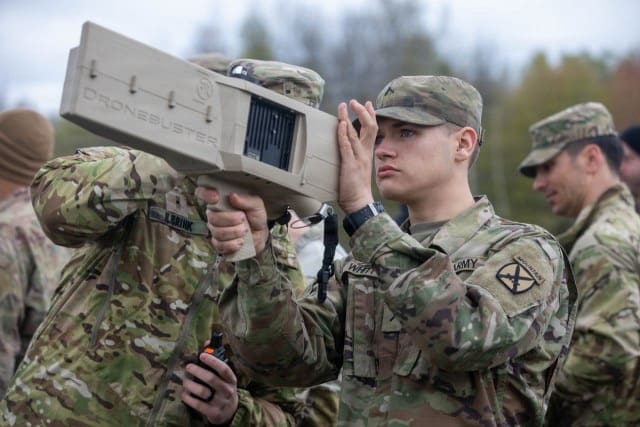
The Florida battalion provided short-range air defense capabilities during the rotation, focusing on countering unmanned aircraft systems and low-altitude threats. Soldiers employed Sentinel radar and Avenger air defense systems while repositioning with maneuver elements to protect command posts, logistics nodes and key terrain.

A live battery moved with the brigade throughout the exercise, while the battalion headquarters operated as a division-level air defense element in a simulated environment. Leaders said the integration allowed the unit to train as it would fight in a real-world conflict.

Army Lt. Col. Adam Bailey, commander of 3rd Battalion, 265th Air Defense Artillery, said the unit prepared for the rotation through multiple command post exercises with the 82nd Airborne Division before arriving at JRTC.

“Coming to JRTC, we rapidly integrated into division’s scheme of maneuver and protection plan. That enabled us to execute a true [Short Range Air Defense] mission in support of a division,” he added.

The Panther Brigade’s dispersed operations increased exposure to aerial threats, particularly small drones capable of disrupting command and control or target sustainment operations.

Army Col. Daniel Leard, commander of the 3rd Brigade Combat Team, said the Army Guard unit filed a critical capability gap.

“Air defense is a critical enabler — we could not have executed our mission without them,” Leard said. “The Soldiers of 3-265 ADA integrated with our team on the fly. They were experts on their systems and that made an immediate impact.”

The Army National Guard’s Minuteman Rotation aligns annual training with combat training center rotations, enabling units to build readiness in a high-intensity environment alongside active-duty forces.

Kendrick, who previously served as the command sergeant major of the Florida National Guard, said the training reflects how the force will operate in future conflicts.

“This is exactly where our Soldiers need to be,” Kendrick said. “Training at this level, with this kind of realism, ensures they are ready to deploy and fight as part of a larger team.”

The approach does not replace traditional Army National Guard rotations but expands access to high-end training while supporting Soldiers’ civilian careers, education and communities. Stubbs said the goal is to integrate a Guard element into every combat training center rotation.

For junior soldiers, the experience highlighted the pace and complexity of modern warfare.

Army Sgt. Jason Dumervile, Headquarter and Headquarters Battery, said the experience changed how he views his role.

“You see how everything connects,” he said. “We are not just protecting ourselves — we are protecting the whole brigade so they can accomplish their mission.”

Florida leaders said the battalion’s performance demonstrated the value of integrating Guard units into active-duty training environments as the Army adapts to evolving threats.

“I’m incredibly proud of our Florida Guardsmen,” said Haas. “They’re highly disciplined and have benefitted from great leadership to ensure they’re trained and ready.”

By Lt. Col. Carla Raisler