Phantom Lights

Archive for the ‘Guest Post’ Category

Marines Participate in Advanced Radio Frequency Intelligence Operators Course

Friday, April 17th, 2026

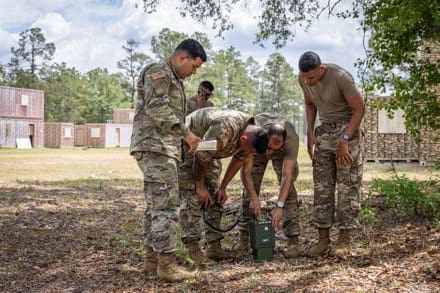
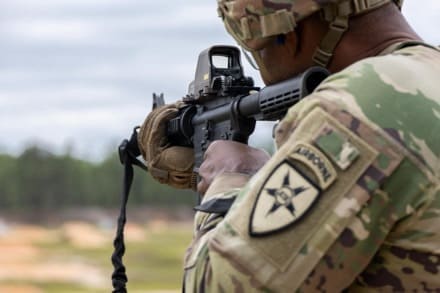
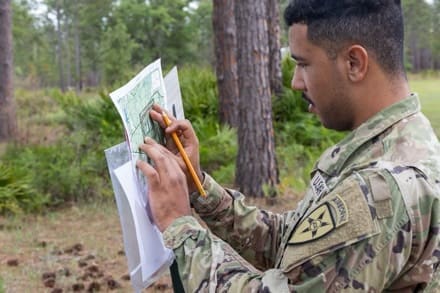
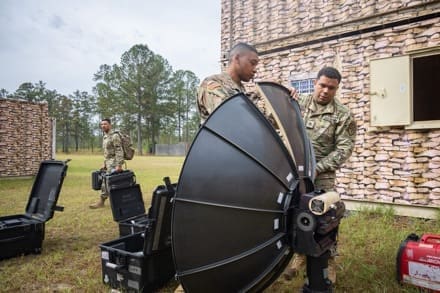
U.S. Marines participated in the Advanced Radio Frequency Intelligence Operators Course (ARFIOC) 26-1 at Camp Shelby Joint Forces Training Center, Mississippi, Feb. 26, 2026, led by U.S. Marine Corps Forces, Central Command (MARCENT) and sponsored by U.S. Central Command (CENTCOM). A program focused on advancing signals intelligence and electronic warfare capabilities in support of operational forces.

ARFIOC builds on foundational Signals Intelligence (SIGINT) training by providing intermediate to advanced instruction in electromagnetic spectrum awareness, radio frequency theory, signal identification, signal characterization, and advanced geolocation techniques. The course is designed to refine technical proficiency and prepare Marines to operate in complex and contested electromagnetic environments.

Originally developed during the 2015 Marine Corps SIGINT Strategy Working Group, ARFIOC addresses training gaps identified during pre-deployment cycles and has been hosted by MARCENT since Fiscal Year 2017. In Fiscal Year 2026, CENTCOM adopted ARFIOC as a training platform to support deploying SIGINT units.

The course progresses through foundational instruction, individual skills development, advanced operator training, and culminates in a complex, live radio frequency scenario known as the Culminating Exercise (CULEX). Throughout the evolution, Marines operate in a layered electromagnetic environment replicating pacing threat conditions and are challenged with tactical and operational problem sets.

Training events include multi-domain reconnaissance and surveillance, signal reconnaissance target development, static and mobile SIGINT operations, and contingency response scenarios such as Tactical Recovery of Aircraft and Personnel (TRAP) missions in contested environments. These exercises require distributed teams to detect, analyze, and geolocate signals while maneuvering and adapting to changing conditions.

“ARFIOC is about sharpening the skills that directly impact operational readiness,” said Master Gunnery Sgt. Rafael Alcala, ARFIOC course director. “Our Marines are learning to operate confidently in contested electromagnetic environments and provide commanders with timely, relevant intelligence. That level of technical competence and adaptability is critical to success in today’s operational landscape.”

ARFIOC incorporates both digital and analog signal sets, frequency-agile communications, high-frequency targeting, and advanced direction-finding techniques to mirror modern operational challenges. Written and practical evaluations measure student progression and provide feedback to continuously refine the program of instruction. In addition to strengthening tactical proficiency, ARFIOC serves as a venue to test emerging technologies and inform future SIGINT training requirements. By advancing individual expertise and reinforcing unit readiness, the course prepares Marines to support commanders in competition and conflict across the electromagnetic spectrum.

“This course has honestly been one of the best training opportunities I’ve had,” said Cpl. Coby Prociw, a student in ARFIOC 26-1. “It forces you to think and adapt in real time instead of just going through the motions. The scenarios feel real, and it’s definitely making me more confident and better prepared for when we have to do this outside of training.”

With ARFIOC 26-1 complete, course leadership continues refining the program of instruction based on student performance and operational feedback to ensure the curriculum remains aligned with evolving mission requirements. The next iteration of ARFIOC is tentatively planned for fall 2026, continuing the effort to advance Marine Corps signals intelligence readiness and prepare the joint force for future operational demands.

Story by Ruben Cordero 

31st Marine Expeditionary Unit

Photos by Sgt. Angela Wilcox 

U.S. Marine Corps Forces Central Command

101st Electronic Warfare Soldiers Operate the TEWS-I ISV at JRTC

Wednesday, April 15th, 2026

US Army Soldiers, Electronic Warfare, assigned to the 3rd Mobile Brigade, 101st Airborne Division (Air Assault) maneuver an Infantry Squad Vehicle (ISV) equipped with the Tactical Electronic Warfare System–Infantry (TEWS-I) while on a training mission at the Joint Readiness Training Center, Fort Polk, Louisiana, April 10, 2026. An ISV with the TEWS-I package conducts mobile electromagnetic sensing, giving light infantry units the ability to detect, identify, and disrupt enemy signals while maneuvering across complex terrain.

TEWS-I integrated into the Infantry Squad Vehicle (ISV), making it the first EW capability mounted on this light utility platform. This gives infantry squads a “middleweight” EW system—more powerful than man-portable gear but lighter and faster than heavy vehicle systems.

US Army video by MSG Anthony Hewitt

Daniel Defense Welcomes Casey Brinkley as Military Sales Manager

Monday, April 13th, 2026

Daniel Defense is proud to welcome Casey Brinkley as Military Sales Manager. Casey brings over 17 years of combined service with the United States Army, including 12 years on active duty, and continues to serve as a Sergeant First Class in the U.S. Army National Guard.

With a strong operational background and firsthand understanding of the needs of today’s warfighters, Casey adds valuable perspective to the team. In his role, he works closely with military partners to deliver dependable, field-proven solutions, backed by a commitment to performance, reliability, and service.

www.DanielDefense.com

BFG Monday: The Hidden Weight That’s Destroying Our Warfighters

Monday, April 13th, 2026

Injuries in the lower back and limbs “are attributed primarily to running and foot marching long distances with heavy loads”according to an article by U.S. Medicine. At Blue Force Gear (“BFG”), we understand that every gram – yes, every single gram – counts. That’s why we developed our patented Helium Whisper MOLLE pouch attachment system over a decade ago that drastically reduces weight and streamlines the back panel design to eliminate potential manufacturing failures many Soldiers, Marines, and Airmen are familiar with.


Photo credit: Army SPC Juan Perez

Though revolutionary for their time, legacy MOLLE pouch attachment systems are simply heavier than our newer technology. The back panels alone require more than 25 separate components (snaps, stiffeners, multiple sewn layers of fabric and webbing) to attach a single pouch to a vest or plate carrier(compared to a similar BFG Helium Whisper pouch). Every one of those components adds weight. Every sewn seam and metal snap is a potential failure point waiting to manifest at the worst possible moment.

Helium Whisper replaces all of those parts with a single laser-cut piece of proprietary ULTRACOMP high-performance fabric facing laminate. The result is a system built from just 6 parts that cuts the attachment system weight by as much as 50% compared to legacy alternatives. Fewer parts mean fewer opportunities for something to break, corrode, or come apart and the laser precise design eliminates backers that are out of spec. The attachment straps are integral to the backer itself, with no sewn seams to fail or tear away. When a pouch is placed under tension, Helium Whisper tightens its grip rather than pulling apart.

The math is simple: a warfighter running full kit of legacy MOLLE pouches is carrying a significant and entirely unnecessary weight penalty, extra ounces on every pouch can add up to 3 to 5 pounds across a full Rifleman loadout. Those pounds punish knees, destroy backs, and slow down the men and women who cannot afford to be slowed down. Helium Whisper doesn’t just cut weight, it saves lives.

To learn more about how your unit can increase lethality and survivability and drastically reduce load carriage weight, contact the BFG Military Department or visit BlueForceGear.com.

About Blue Force Gear®

Widely known for supplying the world’s best weapon slings, Blue Force Gear also leads the lightweight load carriage equipment revolution with Ten-Speed multi-use pouches, MOLLEminus platforms, and their patented Helium Whisper attachment system. Their proprietary ULTRACOMP high-performance coated fabric laminate material, unrivaled innovation, attention to detail, and obsession with reducing weight sets Blue Force Gear apart from others in the tactical equipment industry. Blue Force Gear is a Great Place to Work Certified Company. For more information on products, proprietary technologies, or how BFG continues to reduce weight for the warfighter, visit their website: www.blueforcegear.com

US Army Yuma Proving Ground Showcases Latest Airdrop Technology in Large Demonstration

Monday, April 13th, 2026

U.S. Army Yuma Proving Ground’s Yuma Test Center (YTC) demonstrated the most cutting-edge developments of the U.S. Army Combat Capabilities Development Command Soldier Center (DEVCOM SC) for an entire week in March.

More than 300 participants from the United States and 11 different partner nations attended the event, necessitating a massive effort by YTC personnel to accommodate the visitors.

“At least 100 people at YPG have played a role in planning or executing this mission,” said Edgar Hurtado, Air Delivery Branch Team Lead. “There are a couple of technologies that we are seeing for the first time, but really we wanted to showcase this to the U.S. and partner nations.”

The wide array of cutting-edge cargo and personnel parachute technologies brought a significant number of personnel from the airdrop community together in one place to exchange ideas. Virtually all of these systems have undergone extensive testing at YPG, or will be soon, particularly in the realm of powered cargo systems.

“There are a lot of aerial denial capabilities by adversary forces,” said Hurtado. “When we have forces within an aerial denial bubble, it gets hard to resupply them with ammo, food, water, and equipment. The idea is to drop something outside of that bubble and have that powered system fly into there and resupply our troops with accuracy.”

Personnel parachutes were an important aspect of the demonstration as well.

“We’ve been working on a project for interoperability between the U.S. T-11 main parachute and the European A400M transport plane,” said Hurtado. “For this big test week, we invited a lot of international partners to showcase the interoperability that we already have. The Army already has safety confirmations for the Low Velocity Airdrop System platforms for heavy equipment like vehicles and fuel blivets and Container Delivery System that often contains food, ammo, and water.”

“We’re in the middle of making a new update to the T-11 personnel parachute,” added Lt. Col. Kevin Hicks, YTC Commander. “We demonstrated a mass tactical exit of an aircraft on two days. We have glide modifications, long-range GPS-guided delivery packages: you name it, we have it.”

Yet YPG’s size alone does not account for its elite standing in the air delivery community: While other ranges might have the air space to conduct an event like this, they are not specifically designed to do it with the infrastructure and standard operating procedures to coordinate multiple sorties safely.

“We have a one kilometer by seven kilometer drop zone that doesn’t exist anywhere else in the country,” said Ross Gwynn, YPG Technical Director. “All of the instrumentation coupled with that can collect all the data testers need in an experiment. Within the decelerator community, YPG is at the tip of the spear in advancing those capabilities and providing the performance data that they need to continue iterating.”

The demonstration site consisted of a set of bleachers under an awning and several large tents, all overlooking an immensely desolate drop zone bordered by distant mountains. As each system was demonstrated, narrators addressed the crowd over a loudspeaker. With multiple sorties per day, each with multiple airdrop passes, spectators did not want for parachute action. The event provided a prime opportunity for engineers and military officers from different allied nations to discuss the state-of-the-art technology, both for inspiration and to avoid unnecessary duplication of existing ideas.

“This demonstration is really showcasing where the Army is moving when it comes to contested and congested logistics,” said Hicks. “It’s ensuring we’re putting out the best kit to the warfighters that we can.”

By Mark Schauer

AI Bootcamp Readies Air Commandos for Next-Gen Advantage

Sunday, April 12th, 2026

HURLBURT FIELD, Fla. —  

Air Force Special Operations Command has begun hosting AI Bootcamps, a pioneering training course designed to arm servicemembers with the skills to ethically and effectively integrate artificial intelligence into their daily duties.

The course stems from the command’s commitment to leveraging emerging technologies to maintain a competitive advantage in an increasingly complex operating environment. The goal of the initiative is to empower Air Commandos to utilize AI tools, streamlining procedural processes and tasks to reclaim valuable time for mission-critical responsibilities.

“The AFSOC AI Bootcamp was created out of a forward-thinking effort to prepare our servicemembers for an AI-integrated environment,” said Dr. Christina Parker, AFSOC chief learning officer. “We accomplish this by identifying and addressing concerns of using AI; identifying AI appropriate tasks; highlighting “Human in the Loop” strategies and techniques; and providing highly practical, hands-on application training.”

As part of practical application practice, students are taught how to assign the AI system a role to play for accomplishing an identified task.

“AI can serve as a ‘brainstormer’ to move past the ‘blank page’ problem, a ‘translator’ to reformat data and adjust the tone of materials, a ‘red teamer’ to identify weaknesses in a plan, and even a ‘tutor’ to break down complex topics for upskilling,” said Parker.

The course was designed to create a bridge the knowledge gap on generative AI systems, creating a baseline understanding for users no matter their experience level.

“It’s rare to leave a one-day course feeling you’ve gained a truly foundational understanding of something so transformative,” said a course participant. This wasn’t just another training day; this felt mission critical.”

AFSOC’s prioritization of AI integration began in September 2025 with the establishment a standalone A9 directorate, with a mission focused on data, AI, analytics, and assessments.

“We were tasked with designing this training in November 2025,” said Parker. “When the Secretary of War’s ‘Harness Artificial Intelligence’ memorandum was released in December, we were already positioned to execute.”

Parker states AFSOC’s proactive stance in designing, developing, and delivering the AI training has led higher headquarters and other commands across the Joint Force to reach out to request her team’s materials for review and use.

Through this forward-leaning approach, AFSOC is not just initiating the charge for mass AI adoption but is actively building the framework to teach servicemembers how to rapidly integrate these capabilities. This initiative positions them at the forefront of shaping how the Joint Force will team up with artificial intelligence.

“The primary goal is for every servicemember to have the mindset that AI is not a replacement, but a powerful teammate,” said Parker.

By Capt Brandon DeBlanc

Air Force Special Operations Command

SOE Expeditions Presents: WW2 Scotland – Forging US Special Forces

Saturday, April 11th, 2026

Scotland played a pivotal role as a training ground for some of the most Elite Allied forces, including the U.S. Army Rangers, the Office of Strategic Services (OSS), and the Jedburgh teams.

The rugged landscapes of the Scottish Highlands, combined with the expertise of the Special Operations Executive (SOE) & Commandos provided an unparalleled environment for training in guerrilla warfare, sabotage, and special operations. The collaboration between British Commandos, SOE operatives, and their American counterparts helped forge the foundations of modern day Special Forces.

Rangers

The formation of the 1st Ranger Battalion marked a significant milestone in the development of Elite U.S. Military forces during WW2. The battalion’s initial members were primarily drawn from two divisions recently sent to Ireland from the United States: the 34th Infantry Division and the 1st Armoured Division. In May 1942, Company A of the 1st Ranger Battalion was established, comprising all volunteer soldiers under the leadership of Captain William Darby.

B Company, 1st Ranger Battalion on a training road march near Achnacarry, Scotland, July 1942.

After its formation, Company A relocated to Scotland, where the men were trained by British Commandos at the rigorous Commando Basic Training Centre (CBTC) near Achnacarry Castle. Training was supplemented by the SOE, whose Elite Raiders had extensive experience in covert operations and behind-enemy-lines missions.

This collaboration exposed the Rangers to advanced techniques in sabotage, reconnaissance, and amphibious assaults. Some Rangers participated in their first combat action during the Dieppe Raid in August 1942, becoming some of the first U.S. troops to fight in Europe during the war.

Lt. Derek Burr Commando Depot stands behind four men of a Ranger unit instructing in the use of a M.1. Rifle. Feb 1943.

Over time, the 1st Ranger Battalion expanded into a force of 467 men. It played a key role in the North African campaign, including Operation Torch, serving alongside Nos. 1 and 6 British Army Commandos. This success led to the formation of additional Ranger battalions, which went on to participate in operations across all major theatres of the war.

Following the successes of the 1st Ranger Battalion in North Africa, Captain William Darby was tasked with forming two additional battalions: the 3rd and 4th Ranger Battalions, activated and trained at Nemours, Algeria, in April 1943. The 1st Battalion was restructured with its original A and B Companies, while the 3rd and 4th Battalions were formed around C/D and E/F Companies, respectively. Darby, supported by experienced officers and non-commissioned officers, incorporated hundreds of combat-tested soldiers from Seventh Army units into the new battalions.

Brigadier General Lucian Truscott Jr. (Centre with riding boots) and Major William O. Darby (pointing) inspect C Company, 1st Ranger Battalion on 2 September 1942 at Dundee, Scotland.

The 3 Battalions underwent an intensive three-week training regimen to prepare for Operation HUSKY, the Allied invasion of Sicily. In summary, the 1st Ranger Battalion was the pioneering unit and the precursor to later Ranger units that followed in the post-war era, such as the establishment of the modern day 75th Ranger Regiment.

OSS Training in Scotland

The training of Office of Strategic Services (OSS) operatives in Scotland had its foundation in the expertise and methodologies developed by the British Special Operations Executive (SOE). The OSS, created in 1942 as America’s first centralised intelligence and Special Operations Agency, partnered with the SOE to leverage their experience in unconventional warfare. Early OSS operatives often trained alongside SOE personnel, adopting and refining techniques that had already proven effective in sabotage, espionage, and guerrilla warfare.

The Office of Strategic Services (OSS) was created under the leadership of Major General William J. “Wild Bill” Donovan. Known as the “father of American intelligence.

Before the Office of Strategic Services (OSS) was officially formed in June 1941, some American personnel, including future OSS operatives, received informal training alongside the British Special Operations Executive (SOE) in Scotland starting in 1940.

These early training efforts focused on sabotage, guerrilla warfare, and espionage. After the OSS was established, it began sending operatives to Scotland for more structured training in 1942, building on the collaboration with the SOE.

Additionally, Camp X in Ontario, Canada, was set up in December 1941 to provide formal espionage and sabotage training, with operatives often training there before being sent to Scotland for further specialised instruction.

OSS on Operation Rype Norway May 1945.

The OSS adopted many of the SOE’s training techniques and operational strategies, particularly in the use of small, autonomous teams for high-risk missions. The collaboration was instrumental in preparing operatives to work effectively behind enemy lines.

In occupied Europe, OSS agents often partnered with SOE operatives and local resistance movements, engaging in activities such as: Sabotaging railways, bridges, and supply depots to hinder enemy logistics. Organising and arming guerrilla forces to launch coordinated attacks. Gathering and transmitting vital intelligence on enemy positions and movements.

Arisaig House Special Training School, designated STS21.

The Scottish Highlands provided an ideal setting for this training, as the rugged terrain and unpredictable weather mirrored the challenges operatives would face in the field. The shared training experiences between the OSS and SOE not only forged strong Allied partnerships but also laid the foundation for the OSS’s evolution into a highly effective covert operations force.

The OSS and SOE worked together for about 2 years, from 1940 when informal training began, through the OSS’s formation in 1941, and continuing through 1942–1943 as part of more formalised training.

The early collaboration with the SOE proved to be a defining element of the OSS’s success. The techniques, tactics, and ethos learned during their Scottish training shaped the OSS into a formidable wartime organisation and provided the foundation for the creation of modern American Special Operations Forces and intelligence agencies. This partnership underscored the enduring importance of joint training and innovation in special warfare.

Jedburgh Teams

Project Jedburgh was a ground-breaking Allied initiative involving the OSS Special Operations (SO) branch, the British Special Operations Executive (SOE), and the French Bureau Central de Renseignements et d’Action (BCRA). Its goal was to support and coordinate with resistance movements in occupied territories.

Aug 6th 1944, England, 4 Jedburgh’s from team ‘IVOR’ shortly before heading to France.

A total of 83 American, 90 British, 103 French, 5 Belgian, and 5 Dutch operatives were meticulously trained in paramilitary techniques for Jedburgh missions. Selected men were sent for two weeks of commando training in Scotland, followed by further specific training at Milton Hall, near Peterborough. Teams were designed to:

Supplement and support existing SO/SOE resistance networks (known as “circuits”). Organise, arm, and train local resistance forces. Arrange supply drops and procure intelligence. Conduct sabotage operations and liaise between resistance groups and Allied forces.

Members of OSS Operational Group ADRIAN prepare to jump into occupied France in September 1944.

Ninety-three Jedburgh teams parachuted into France, and eight were deployed to The Netherlands. A typical team consisted of three members: one French, one British, and one American operative. Each team had at least one officer and a radio operator, though team sizes varied from two to four personnel.

These teams played a critical role in disrupting German operations, supporting the Allied advance following the D-Day landings, and bolstering resistance efforts across occupied Europe.

Legacy and Modern Influence

The experience and innovations developed by the Rangers, OSS, and Jedburgh teams during WW2 provided the foundation for the creation of modern U.S. Special Forces. The Elite training, unconventional warfare techniques, and emphasis on small-unit operations directly influenced the formation of units like the U.S. Army Special Forces (Green Berets), the Navy SEALs, and other modern day Special Forces Units.

The collaboration with the SOE the Commandos and the lessons learned from Scotland’s rugged training grounds remain central to modern Special Operations doctrine. These pioneering groups not only helped secure victory in WW2 but also shaped the future of military and intelligence operations.

Join us in Scotland this March and October on our Elite Raiders of WW2 Experience, as we learn about their training, visit historical sites and follow in the footsteps of legends.

This article was shared by our friends at SOE Expeditions.

A New Force in Army Acquisition: PEOs Soldier and Ground Combat Systems Merge to Form CPE Ground

Saturday, April 11th, 2026

Fort Belvoir, Va  –  

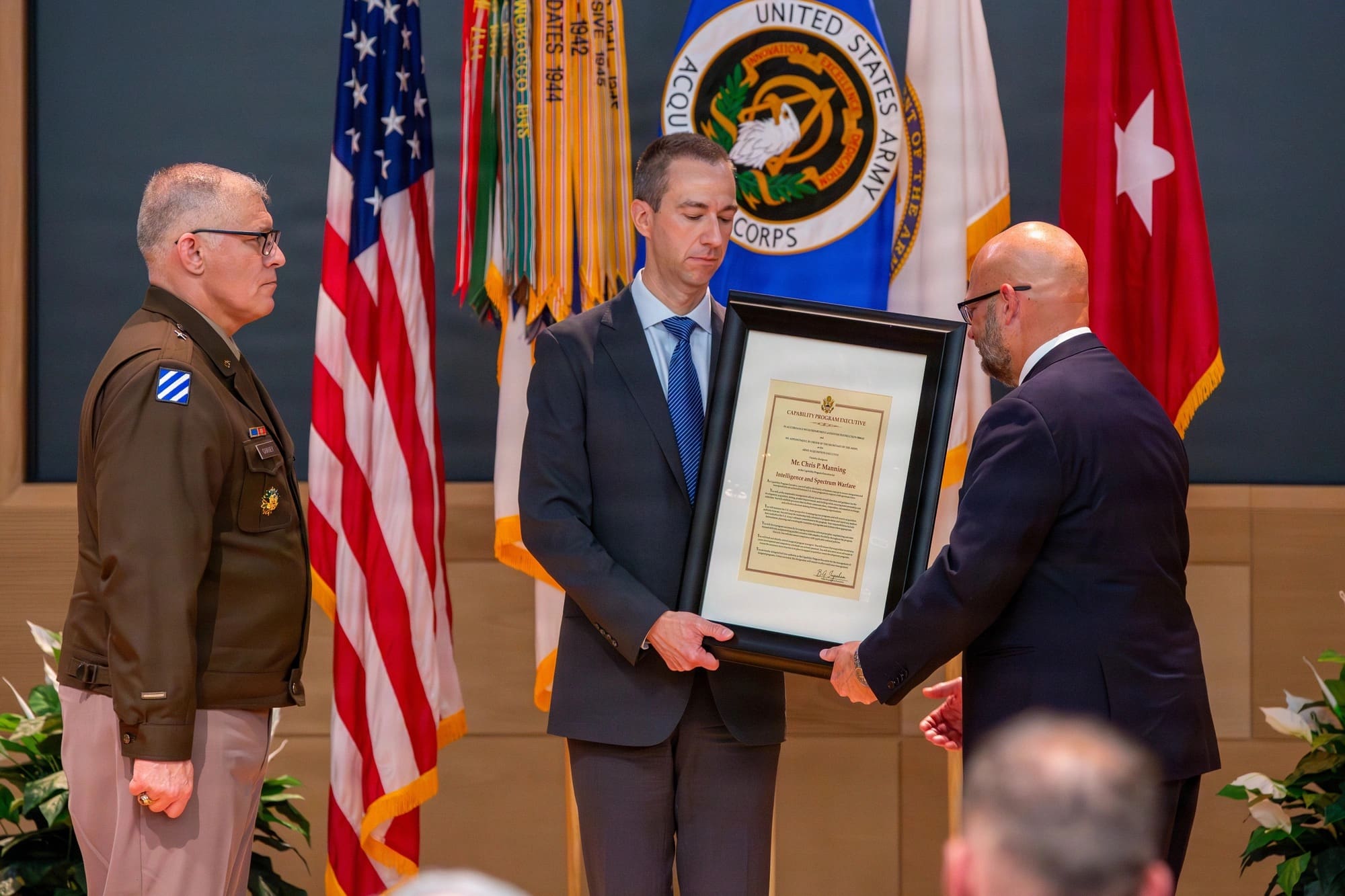
The United States Army is currently executing the most significant overhaul of its acquisition enterprise in decades, designed specifically to increase modernization, reduce bureaucracy, and get critical warfighting capabilities into the hands of America’s Soldiers as fast as possible. This new powerhouse organization marks a fundamental shift in how the Army develops and delivers technology, unifying the teams behind the Soldier and ground combat systems into a single, integrated enterprise – Capability Program Executive (CPE) Ground. This change occurs as the Army is undergoing a deliberate transformation – altering our acquisition enterprise to match the speed, complexity, and scale of today’s security environment.

As part of this major reorganization, Program Executive Office Soldier (PEO Soldier) and Program Executive Office Ground Combat Systems (PEO GCS) are combining to form CPE Ground, bringing together Soldier systems and ground combat platforms under a single, unified organization focused on delivering integrated combat power to formations. The result is a unified force laser-focused on a single mission: delivering fully integrated combat power to our formations at the speed of relevance. The switch to a portfolio-based model ensures responsibility, authority, and accountability remain in the same hands and allows for the greatest operational impact.

This strategic move is the centerpiece of a sweeping Army-wide acquisition reform aimed at accelerating modernization. As Army Undersecretary Michal Obadal best put it, “A modernized acquisition system will position us ahead of our adversaries, strengthen our readiness, and maintain a technological edge in all domains.”

This transformation, which has been in the works for over a year, is much more than just a name change. It is a complete structural and operational realignment designed to increase unity of effort, reduce seams between platforms and Soldier systems, and accelerate capability delivery across the force.

Our North Star is efficiently delivering formation-based capabilities while driving Soldier adoption. By aligning platforms, weapons, protection, power, and mission command systems within one enterprise, CPE Ground will ensure integrated solutions are not only delivered rapidly but are intuitive, sustainable, and embraced by the Soldiers who depend on them.

CPE Ground’s portfolio includes some of the Army’s most critical modernization programs, including the M1E3 Abrams, XM30 Mechanized Infantry Combat Vehicle, M7 Rifle and M250 Automatic Rifle, Soldier Borne Mission Command (SBMC), Infantry Squad Vehicle (ISV), and the Army’s family of mortars capabilities that together strengthen combat formations from the individual Soldier to armored brigades.

And with this new realignment comes new leadership.

Leading CPE Ground will be Brig. Gen. Troy M. Denomy, who will serve as the Capability Program Executive for CPE Ground. Denomy brings two decades of experience working with and supporting Soldiers in high-profile and combat environments.

Denomy currently serves as the Program Executive Officer for PEO Soldier and is therefore deeply familiar with the breadth of systems transitioning into CPE Ground, as well as the teams that build and sustain them.

“This transformation is about delivering integrated combat power at the speed of relevance,” said Denomy. “By unifying the strengths of [PEO] Soldier and [PEO GCS] into CPE Ground, we are breaking down barriers between platforms and the Soldiers who operate them. Our focus is clear to deliver integrated, affordable, interoperable ground formation-based capabilities that provide decisive overmatch across the full spectrum of operations. The success of our work will strengthen formations from the individual rifleman to armored brigades, ensuring our Army remains lethal, agile, and ready to dominate in any fight.”

This new leadership and organizational structure streamlines the acquisition process by centralizing authority with leaders directly responsible for delivering and sustaining capabilities every day. By combining the strengths of the former PEO Soldier and PEO GCS, CPE Ground reduces bureaucratic barriers and accelerates decision-making across portfolios.

While the Army is evolving, the mission remains unchanged: to deliver integrated, interoperable ground capabilities that enable Soldiers to fight, survive, and win on the modern battlefield.

CPE Ground’s vision remains clear: to be an agile Army acquisition enterprise that rapidly delivers decisive, sustainable, and adaptable capabilities for the future fight.

Consistent with Department of War guidance, CPE Ground will field integrated capability sets more quickly, improve interoperability across weapons, sensors, protection, power, and mission command systems, and remain responsive to modernization priorities aligned with operational needs.

The stand-up of CPE Ground builds on the proven legacy of PEO Soldier and PEO GCS, positioning it to operate more effectively and respond more rapidly to emerging threats and technological change. It ensures that platforms, weapons, protective gear, and mission command systems are developed and fielded as a cohesive fighting system.

This integrated approach allows the Army to respond more rapidly to emerging threats. It ensures that America’s Soldiers will always be the most lethal and effective fighting force in the world.

By Zach Montanaro Army