FirstSpear TV

Archive for the ‘Guest Post’ Category

TMS Tuesday – Diesel: K9 Simulator

Tuesday, October 5th, 2021

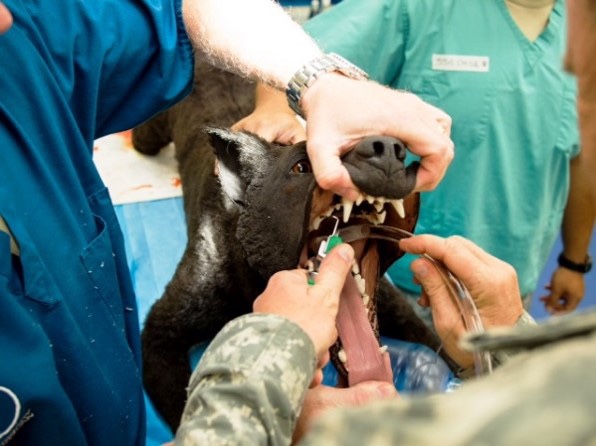
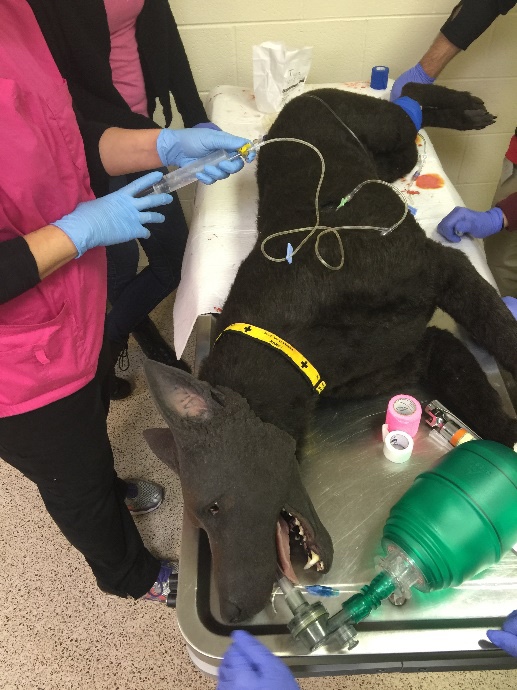
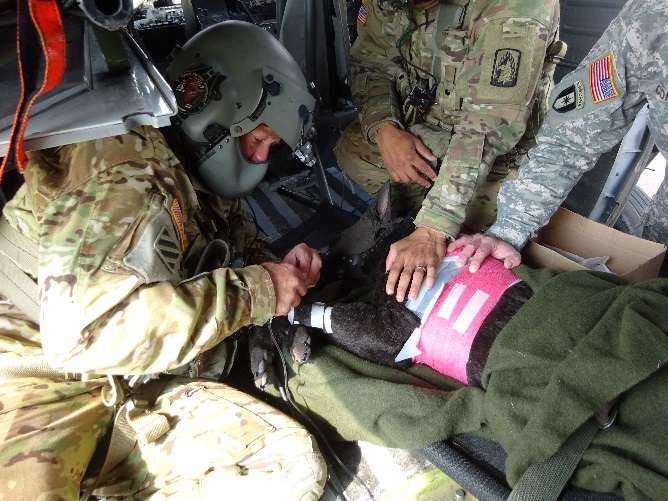
K9s faithfully serve along side us in the military and on law enforcement teams, so it is our responsibility to be ready to help them in the case of an emergency. TacMed’s two K9 simulators, K9 Diesel and K9 Hero, are advanced full-body K9 simulators that serves as a skills trainer by simulating active breathing, audio queues, and over 28 different features and medical intervention sites.

It has adjustable breathing, interchangeable limbs, audio, pulse, full anatomical skeletal motion, and bleeding junctional wounds. It can serve to help train in IV insertion, intubation, amputation scenarios, paw lacerations, CPR, bloat, needle decompression, wound packing, and more!

It is currently used by trainers, veterinarians, military handlers, and K9 first responders. Get yourself trained and ready for a K9 emergency.

Check it out: K9 DIESEL – TacMed Solutions

Kessel Run’s C2IMERA Used During Afghan Evacuation

Tuesday, October 5th, 2021

BOSTON (AFNS) —

Kessel Run’s C2IMERA application was used in support of the recent Noncombatant Evacuation Operation in Afghanistan.

C2IMERA, which stands for Command and Control Incident Management Emergency Response Application, is an application focused on reporting, planning, force generation, emergency management, and command and control monitoring and execution. The capability is developed by the Air Force Life Cycle Management Center’s Detachment 12, also known as Kessel Run, which is a software development and acquisitions unit.

The C2IMERA team with their industry partners from Leidos, who execute software development of the application, were able to understand the rapidly-changing requirements and iterate on the application, in real time, in order to meet real world operational needs, during the evacuation operation.

“The safe transit of more than 124,000 Americans and U.S. personnel, allies and partners, and Afghans at special risk from Kabul in the last two weeks of August was an extraordinary effort professionally carried out by (Air Mobility Command) and (U.S. Air Forces Central), coalition, and joint force Airmen,” said Lt. Gen. Greg Guillot, Ninth Air Force (AFCENT) commander. “Kessel Run’s C2IMERA application served as a reliable, adaptable tool as we planned and executed this complex, historic operation.”

Kessel Run was able to update the C2IMERA software in a four-day period; enabling real-time, theater-wide awareness of key logistics and NEO support information. This provided aggregated views of base level data for decision making, and understanding of the operational environment. These abilities were delivered to AFCENT, and encompassed more than 650 new user accounts.

“Prior to the capability request, AFCENT and their installations were relying on typical manual processes like Excel spreadsheets — which works in many cases — but is inefficient and does not provide ability for distributed access, data aggregation, or visualization capabilities,” said Capt. Maurice Morrell, program manager for the C2IMERA team with Kessel Run. “Kessel Run’s C2IMERA team was able to modernize and update the software for theater and installation systems, providing an effective tactical to operational C2 bridge, as the operation was happening in real time.”

During this period, an AFCENT location had an incident that affected a base’s local flying operations. The Combined Air and Space Operations Center used C2IMERA and further showcased its use beyond the NEO by being able to receive automated alerts of the local incident and response.

“The AFCENT Crisis Action Team was able to coordinate aircraft diversion in near real-time without traditional manual reporting processes, saving untold time in response and man hours,” Morrell said.

The event transpired within the same month Gen. Mark D. Kelly, commander of Air Combat Command, directed Kessel Run’s C2IMERA be used across all ACC’s installations.

C2IMERA is used in more than 40 Air Force installations, with another 20 installations scheduled to onboard the capability before the end of the year. It is a wing command and control, or C2, capability used to provide an integrated composite picture of installation resources.

The application uses a common operating picture and dashboarding capabilities as communication tools, which consolidates and shares information for leaders, and boasts a plethora of features to provide C2 capabilities. These tools are customizable and optimized based on the individual needs of the installation and also focus on updating and communicating data in real time to give commanders a constant picture of their installations, environment, assets and personnel.

That information is also viewable to whatever Air Force major command oversees the installation, thereby enabling it to view detailed aspects of each of its installations in real time.

“Kessel Run’s products are operational and impacting our warfighters abilities today,” said Col. Brian Beachkofski, Kessel Run commander. “Using DevSecOps (development, security, operations) we were able to iterate on C2IMERA in real time, to meet the operational needs of a user. This showcases just how fast we can deliver software solutions warfighters love.”

By Richard Blumenstein, Kessel Run Public Affairs

Space Force, Purdue Partner on STEM Education, Innovation

Monday, October 4th, 2021

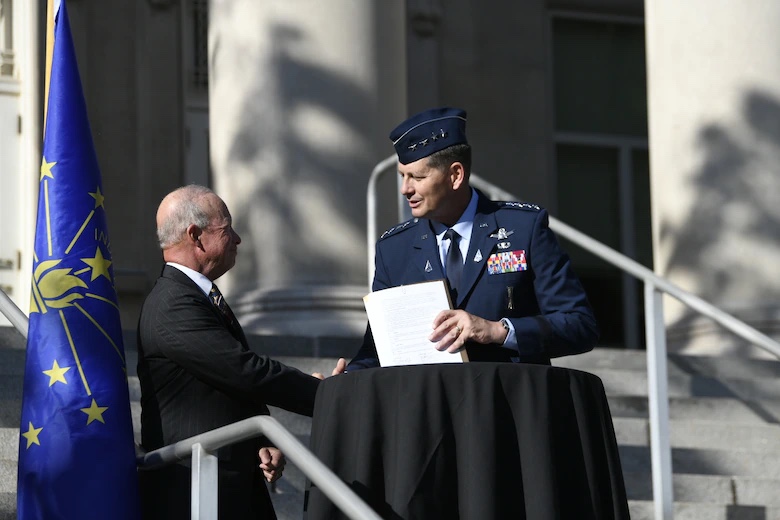
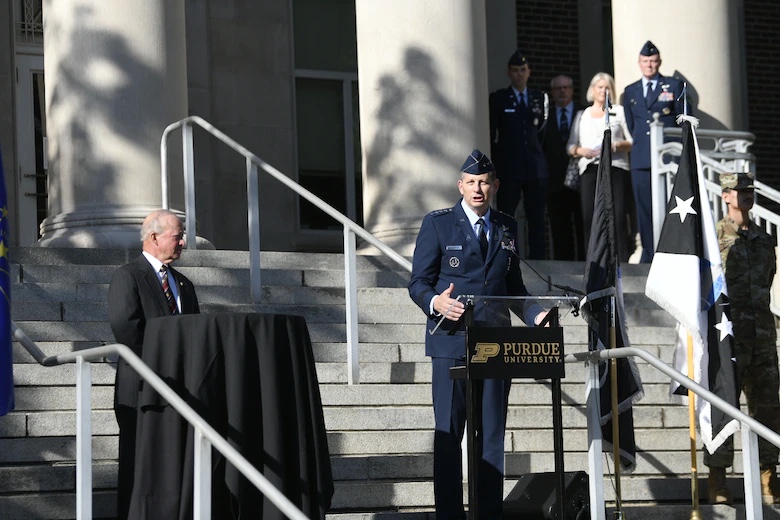
WEST LAFAYETTE, Ind — The Space Force established an agreement with Purdue University Sept. 29, making Purdue the latest entrant into the Space Force’s University Partnership Program.

Purdue President Mitch Daniels and Gen, David D. “DT” Thompson, USSF vice chief of space operations, signed a memorandum of agreement in Hovde Hall on the Purdue campus.

“For quite some time, Purdue’s involvement in space has expanded far beyond our distinguished history of astronauts,” Daniels said. “Our partnership with the Space Force provides yet another example of our commitment to space exploration and national security.”

The signing was part of a two-day campus visit for Thompson, who received his master’s degree in aeronautics and astronautics from the university in 1989. Thompson said the UPP will leverage the internationally-renowned research and educational opportunities available at Purdue to take on the engineering, science and technology issues facing the Space Force.

“As someone who has personally benefited from the caliber of education Purdue provides, I am excited for the next generation of Guardians who will expand their knowledge and expertise through this partnership,” Thompson said. “Those Guardians must have the STEM foundation that provides a deep understanding of the space domain to conquer the challenges of today, coupled with the confidence and commitment to solve the problems we are certain to encounter in the future.”

While on campus, Thompson met with Air Force ROTC cadets training for Space Force, as well as officers in the Purdue Military Research Initiative.

Air Force Col. Ken Callahan, currently posted with Purdue’s Air Force ROTC detachment, said Purdue graduated several ROTC students directly to the Space Force this past spring and recently welcomed several new Space Force military graduate students to campus.

“These students are just one an example of the quality of education we have at Purdue,” Callahan said. “People in the Air Force know about Purdue and its expanding connection to space and the Space Force program.”

Thompson also talked with university leaders, heard from faculty at Maurice J. Zucrow Labs and took driving tours of Purdue’s Discovery Park and the Aerospace District, a university-affiliated aerospace business hub for public and private research collaborations on research and commerce.

Purdue is one of 11 universities initially selected to join the UPP.  Establishing strategic partnerships with this select set of nationally-renowned universities allows the Space Force to recruit and educate a diverse, high-caliber workforce, offer opportunities to advance research in specific areas of interest, and develop a 21st century, technology-savvy military service. Research is the largest component of the program, with Purdue and other universities each having its own research component.

Purdue was selected on criteria including the quality of STEM (Science, Technology, Engineering, Math) degree offerings and space-related research laboratories and initiatives; a robust ROTC program; a diverse student population; and degrees and programming designed to support military, veterans and their families in pursing higher education.

Following Wednesday’s signing, Purdue and the Space Force will begin working together to meet the program’s major goals, including establishing research assistantships, internship agreements, opportunities for Guardians to pursue advanced degrees and both ROTC and civilian scholarship programs.

By Secretary of the Air Force Public Affairs

SCUBAPRO Sunday – APNEA Snorkel

Sunday, October 3rd, 2021

There are two schools of thought when it comes to carrying a snorkel when you dive in the civilian world, and I guess in the military world also. It is to carry or not carry a snorkel. You are taught to have one to save air when you are close to the surface for whatever reason so you can use it and not the air in your tank. When I first started diving in the teams, you had to have a snorkel on us. We would get issues a cheap old school “J” type one with the big orange stickers on it you had to peel off and then you would have to cut a couple of inches off of it and keep with you in case you had to work around piers or whatever so you could save O2. Well, I never used it and stopped carrying it as soon as I could. But that doesn’t mean I would have never used it or could have; I choose not to have it.

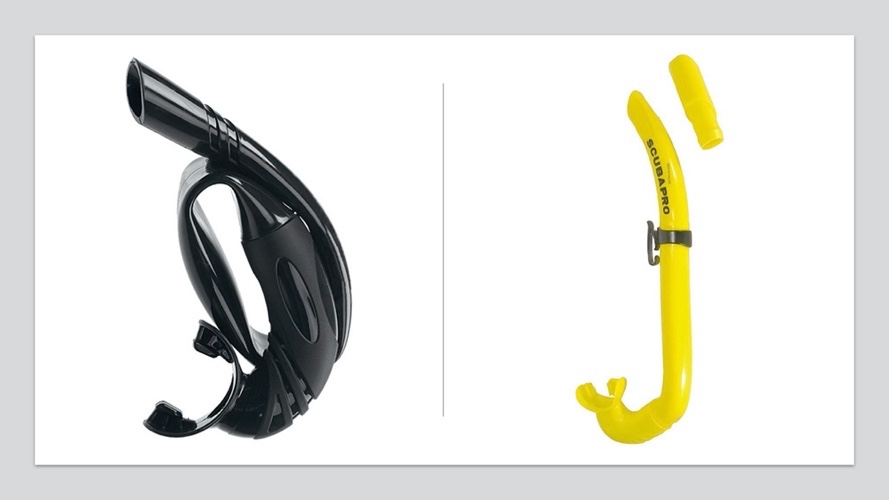
Like everything else in the world, technology is growing faster and faster. Once a problem is fixed, companies move onto the next one. So, the issues associated with the old “J” snorkel have been fixed; that is not to say that companies still do not make them have them; they are still around. But now there are all kinds of snorkels out there. There are several different types of snorkels Classic (J type), Simi-dry, Dry, and Flexible, to name a few.  

So why carry a snorkel? A snorkel helps on the surface when you are in rough water. You can keep your head in the water and not drink as much seawater when you are just floating waiting to be extracted. It is also useful when you are in the water waiting for a helo pick up, and you are under its rotor wash, or when you are doing a K-duck or a swamp duck. It is also helpful to have when you jumped into the water, and you have to undo some of your parachute lines that might be tanged in your fins or whatever.  It makes it easier to breath on the surface without lifting your head out of the water if you have to swim to a boat or shore for some reason.

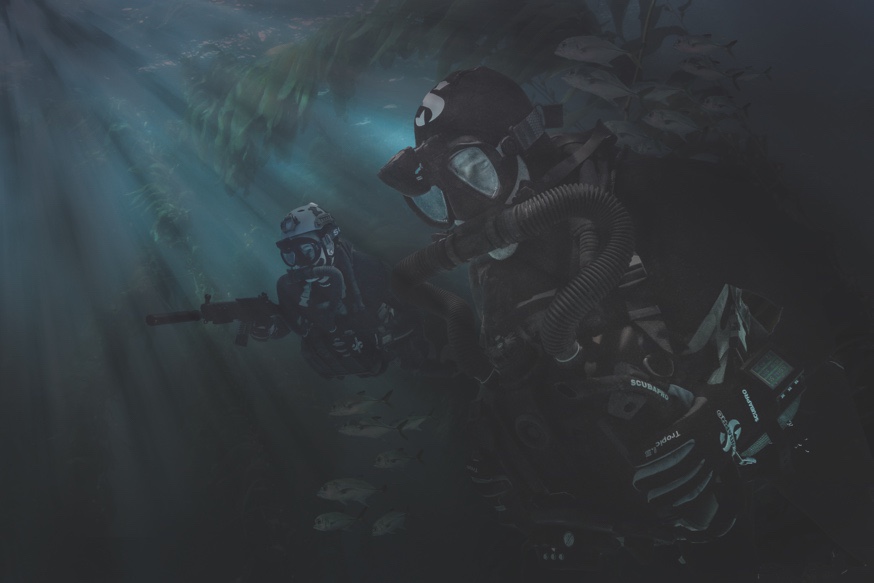
Diving in the military is different than as a civilian as you would never leave your snorkel hanging on your mask during a dive. This is why we would cut it down a little so that we could tuck it away or you would hang it off the bottom of your LAR V with heavy rubber bands. But with today’s technology, most companies have one that you can roll-up.  For SCUBAPRO, it is the Apnea Snorkel, it was launched in 2015 for Apnea divers and won the SCUBALAB’s 2015 best buy.

The SCUBAPRO Apnea Snorkel is a foldable/ rollable freediving snorkel design. Made from a soft and flexible non-toxic silicone, SCUBAPRO Apnea Snorkel easily attaches to your mask strap when being used. When not needed, it can be rolled up and stowed away in a pocket. When it’s time to do some more stuff on the surface, it pops right back into shape. The Apnea’s upper barrel can be removed if you prefer to use a shorter pipe. Without question, this is an easy-to-use and very versatile surface breather. Functional yet straightforward traditional “J” Snorkel design. No valves that can leak. It was designed specifically for spearfishing and free diving. The contoured shape of the silicone mouthpiece and the air tube has been ergonomically designed to follow the profile of the spear fisherman’s face to reduce its visibility significantly during the dive. This flexibility is also advantageous when around piers or rocks and rolling it up for storage.

FirstSpear Friday Focus: NEW Sage Green Stratton Flannel in 4 Ounce

Friday, October 1st, 2021

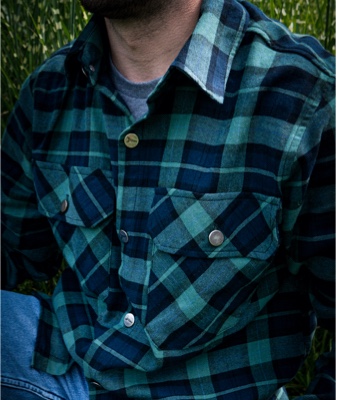
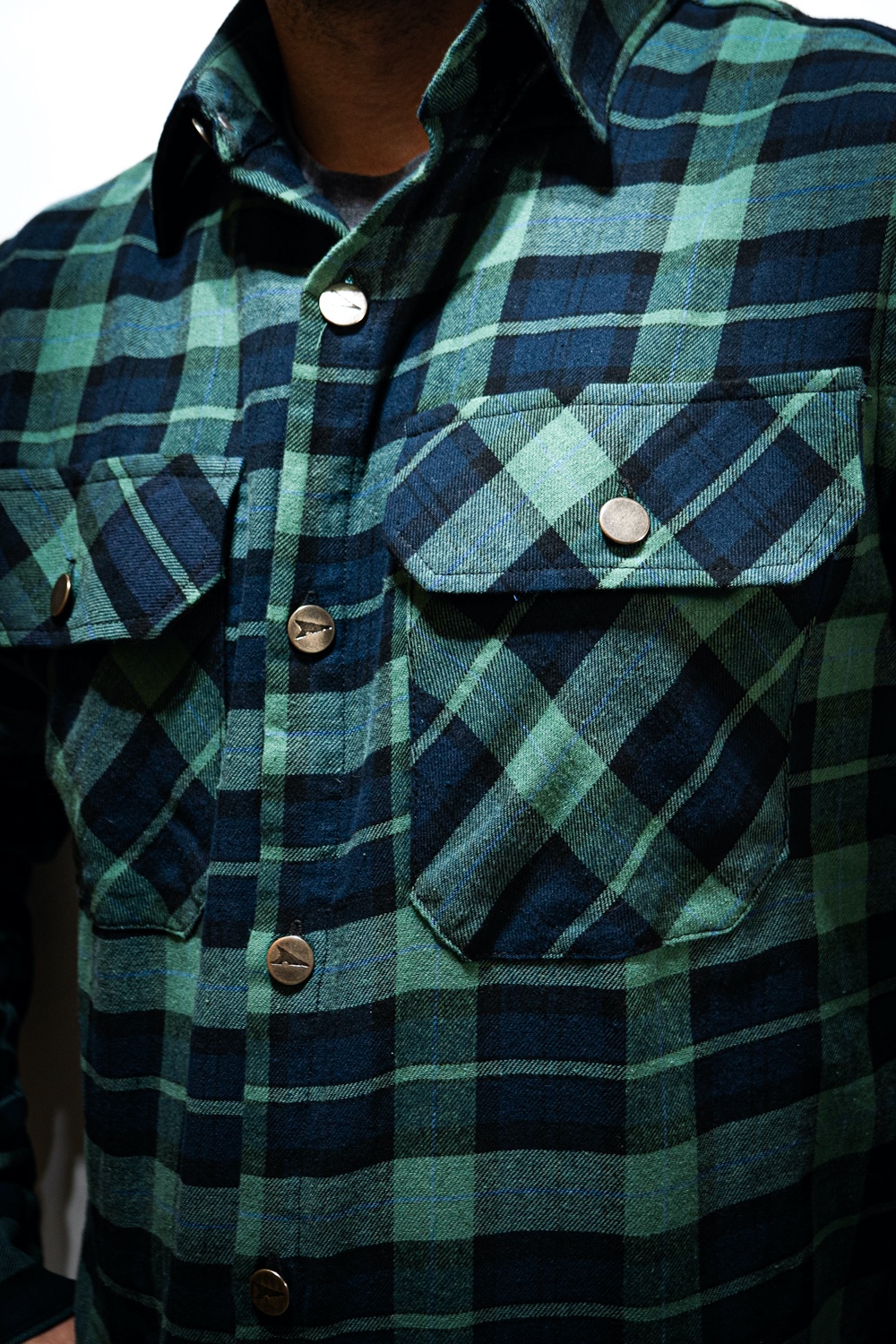
FirstSpear’s new fall weight Stratton Flannel has arrived in Sage Green Plaid! Perfect for fall weather, crisp evenings and bonfires.

These flannels are 100% American made in a lighter 4 ounce weight. Premium construction with oversized breast pockets, exterior hang loop, and two button closure on forearm and cuff. They are machine washable and oversized to accommodate 3% shrinkage after a few cycles in the wash. Please note that the Stratton Flannel is an oversized design, so step down one size from your normal T-shirt size for a standard fit.

• Offered in 4oz and 9oz weight
• Two oversized chest pockets
• Long sleeve with button cuffs
• Machine washable
• Made in the USA

“This is a heavy duty, no BS kind of flannel. It makes anything store bought look cheap and flimsy. On anything but the absolute of coldest days, a base layer and this flannel are plenty to keep you warm. And yes, everything that says size down is correct. I’m 5’7″ and 160lbs and the small is perfect on me after a wash or two.”

— Online Review (9 ounce Stratton Flannel)


“I have had this flannel for about a year and it is my go to fall and winter shirt. Quality is excellent. On par or better than Filson. Does run big. I’m 6ft 200lbs with a 34 in waist and generally wear an XL. I bought a large and dried it on hot and it fits well. Probably could get away with a medium for a really fitted look.”

— Online Review

For more information about Stratton Flannels, check out www.first-spear.com/stratton-flannel-7385

To stay up to date with our latest product launches and new episodes of FSTV, sign up for our email subscriber list: www.first-spear.com/landing

Army Assesses IVAS Network Capability at NetModX

Friday, October 1st, 2021

?

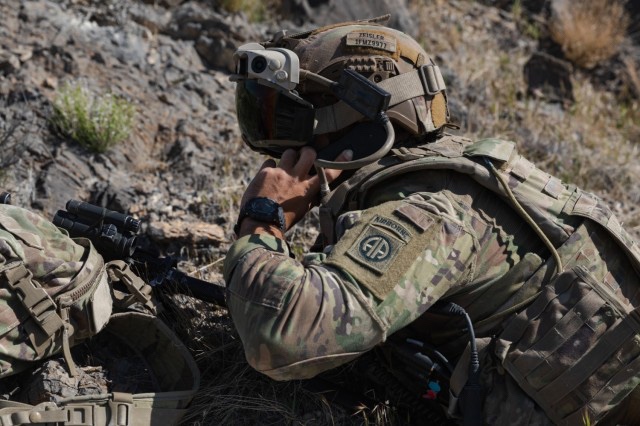
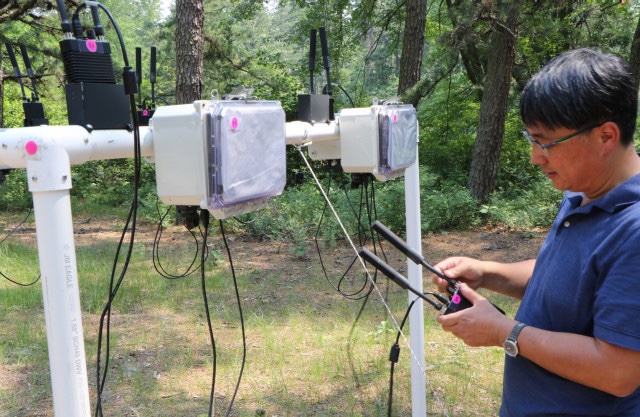
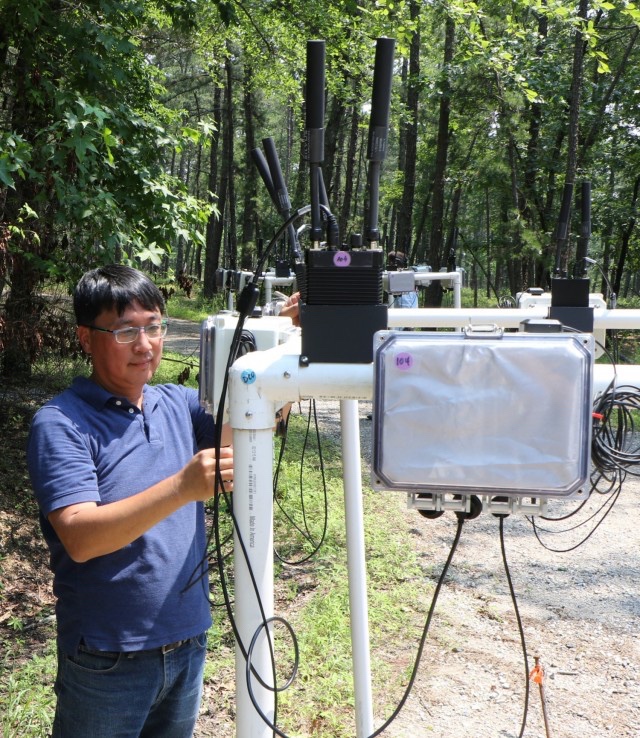
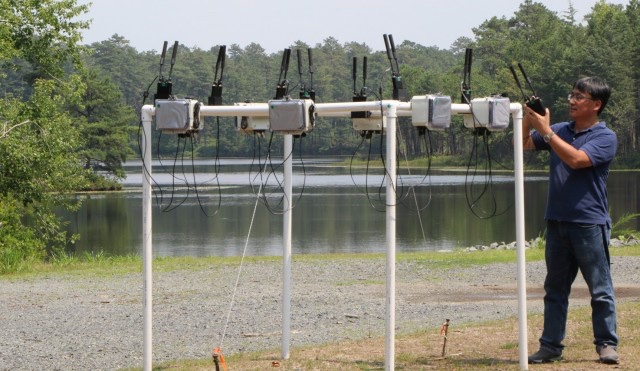
JOINT BASE McGUIRE-DIX-LAKEHURST, N.J. — The Army is continuing to inform  Integrated Visual Augmentation System (IVAS) network integration by evaluating  emerging commercial radio technology that enables data exchange among Soldiers.

A series of experiments this summer at the Army’s annual Network Modernization Experimentation (NetModX) allowed engineers of the Command, Control, Communications, Computers, Cyber, Intelligence, Surveillance and Reconnaissance (C5ISR) Center — a component of Army Futures Command (AFC)’s Combat Capabilities Development Command (DEVCOM) — to help inform Army program offices of potential capability by providing a technical assessment and analysis on the state of available industry radio communication solutions.

IVAS enables greater situational understanding and decision making through high resolution display of sensor, target, and target engagement data. The system provides Soldiers with a single platform to fight, rehearse and train. These unique characteristics require a tactical radio that can provide Soldier-wearable connectivity for the IVAS platform, according to Dan Ku, a C5ISR Center electronics engineer.

“Events like NetModX enable the Army to assess commercial-off-the-shelf radios’ ability to support the IVAS system in terms of scalability and resiliency,” Ku said. “The data from the field event informs the design of the network to support IVAS.”

The C5ISR Center provides engineering support to Army organizations — Project Manager Tactical Radios (PM TR) and PM IVAS — that are making network design considerations by incorporating NetModX results. The event helps the Army validate and verify which performance metrics and requirements are most important leading to the procurement process.

The radios enable Soldiers to pass IVAS data helping to establish a common operating picture (COP) among the unit during a mission. The real-time COP is displayed on the IVAS heads-up display for improved situational awareness.

Engineers are evaluating the performance of each vendor’s radio system for transmitting differing network traffic loads in benign and contested environments, Ku said. Each type of radio must be able to scale to a specific number of units while transmitting data among a team of Soldiers.

“Experimentation gives the Army a holistic picture on how radios perform initially in a lab setting and then during a large-scale field environment like NetModX,” said James Koh, chief of the Center’s Commercial Technology and Integration Branch. “With these complementary experiments, we’re able to produce a comprehensive set of data and radio system characteristics to support Army acquisition decisions. NetModX also serves as a forum for industry partner collaboration.”

By Dan Lafontaine, DEVCOM C5ISR Center Public Affairs

Additional photos by SGT Robert Whitlow, 49th Public Affairs Detachment

VIRTUAL FLAG: JAGIC C2, First-of-its-kind Joint Training Event

Thursday, September 30th, 2021

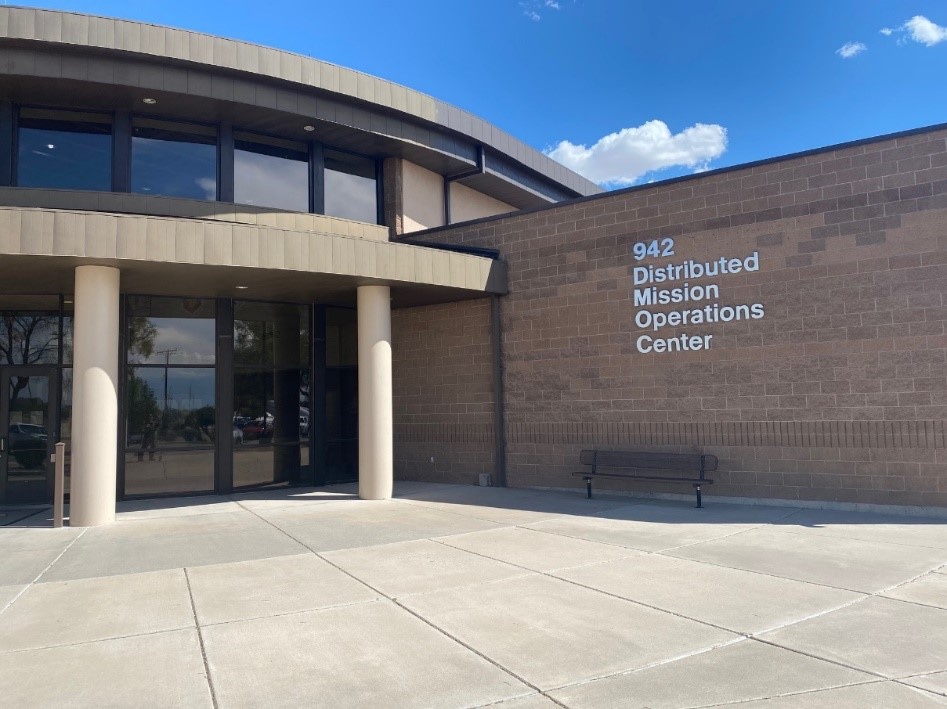
The first VIRTUAL FLAG exercise dedicated to training the Joint Air Ground Integration Center’s command and control was successfully executed at the 705th Combat Training Squadron’s Distributed Mission Operation Center located at Kirtland Air Force Base, New Mexico, Aug. 23-27.
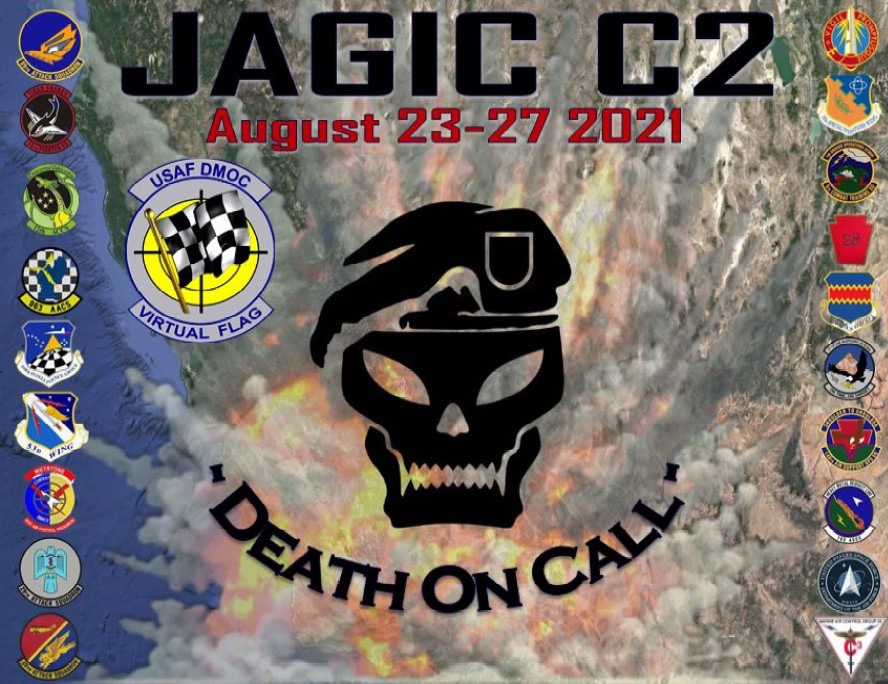
The DMOC developed, integrated, and successfully executed VF: JAGIC C2 with facilitation of the Airmen from 505th Command and Control Wing, Detachment 1 at Fort Leavenworth, Kansas. 

The exercise was designed specifically for the JAGIC training audience which encompassed a mixture of U.S. Air Force active duty and National Guard Airmen from the 13th, 148th, and 168th Air Support Operations Squadrons, and U.S. Army Soldiers from the 28th Infantry Division. U.S. Marine Corps’ conceptual Marine Air Operation Center, or MAOC, tactical C2 elements from 3rd Marine Aircraft Wing, participated virtually in the first-of-its-kind exercise event providing multi-layer airspace deconfliction support to strike, intelligence, and C2 platforms.

The DMOC is the USAF’s hub for distributed combat training exercises and testing. Warfighters at locations around the globe, connected through the DMOC, face realistic threat scenarios to practice tactics and procedures. The DMOC architecture integrates virtual and constructive simulations across various networks to support a synthetic battlespace that models weapons, C2, and intelligence, surveillance and reconnaissance systems.
“VF:  JAGIC C2 provided the entire training audience an opportunity to interact with joint elements of the Theater Air Control System with minimum additional personnel demands on high-demand/low-density assets,” said 2nd Lt. Rachel Pohl, VF: JAGIC C2 technical director. “Through the DMOC, VF: JAGIC C2 linked geographically-separated joint units from across the country together, allowing each to interact with one another using weapons system simulators at their home stations.”  

While the DMOC’s VFs are well-known for their success in exercising various tactical-to-operational weapon systems, VF: JAGIC C2 marked the first time it has made the JAGIC the principal training audience.

“The objective in VF: JAGIC C2 was to integrate and deliver DMO capabilities to prepare warfighters for combat in a joint environment; specifically developing tactics, techniques and procedures, through a first-ever networked system called JTAGSS [Joint Theater Air-Ground Simulator System],” said Lt. Col. Lindsay Post, 705th CTS commander. “Nobody dies in a virtual exercise but they learn how to survive, thrive and win in a real-world fight.”

The 505th CCW, Det 1, is the USAF Warfare Center’s resident liaison to the USA’s Combined Arms Center and Mission Command Training Program at Fort Leavenworth, Kansas. 505th CCW, Det 1 Airmen are experienced observers, coaches, and trainers who prepare a host of USAF liaison and C2 elements – including those within the JAGIC – for future global operations through MCTP training events such as Warfighter exercises. Det 1 Airmen consisting of intelligence, C2, and tactical air control party subject matter experts leveraged their experience during VF: JAGIC C2 to stress and teach the JAGIC’s training audiences.
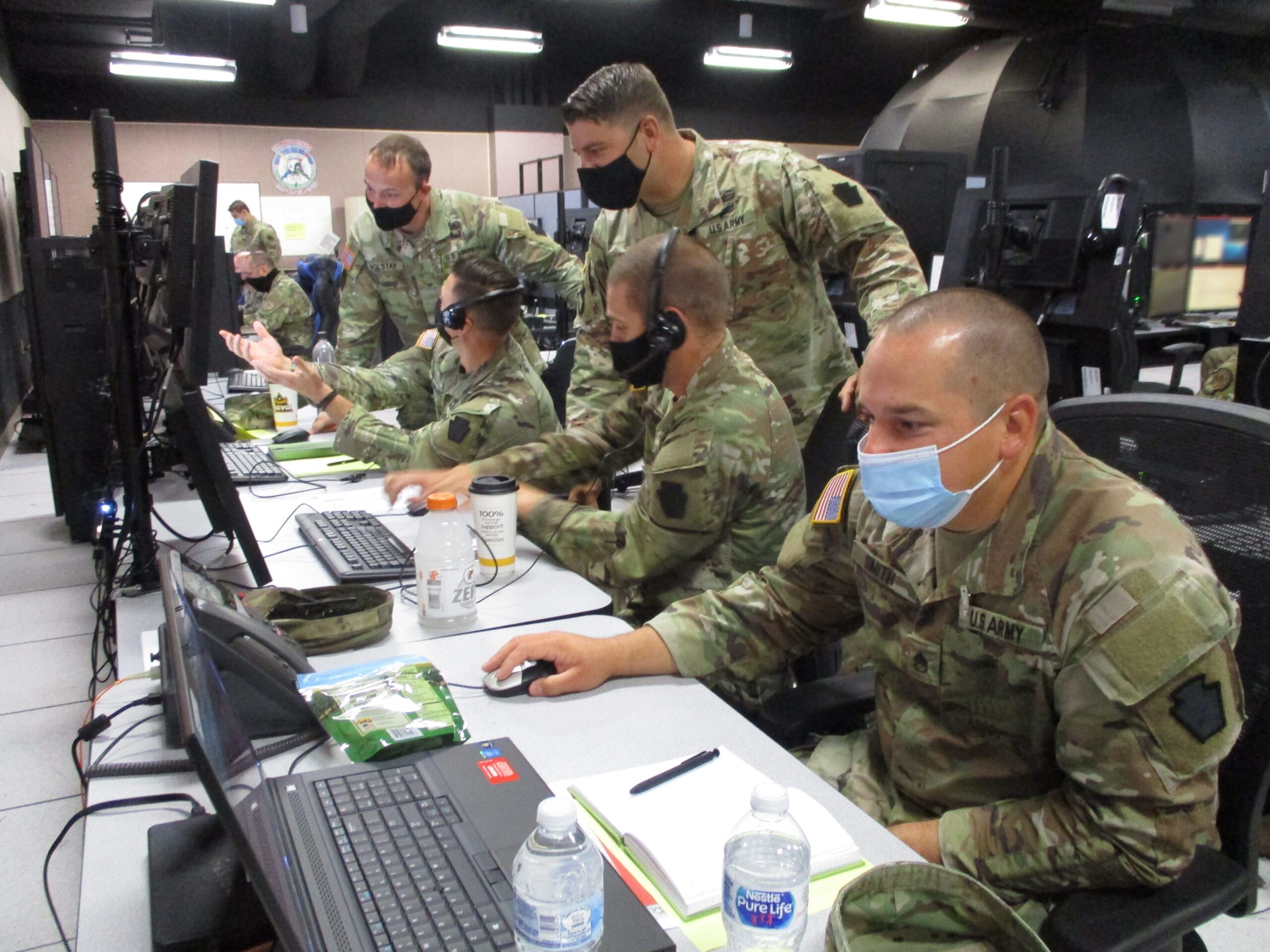
Det 1 members worked within the DMOC led the Operational Assessment Cell to fill a wide range of support roles during the exercise. Detachment Airmen provided hands-on coaching and training to USAF and USA JAGIC personnel joint fires integration leveraging many virtual and constructed USA fire support systems such as High Mobility Artillery Rocket Systems and MQ-1C Gray Eagles, and USAF air-to-ground strike platforms including A-10s, F-35s, and B-52s. Through mission execution observation Det 1 Airmen developed mission debrief focus points which sharpened JAGIC members’ procedural control skills, air interdiction coordination proficiency, and post-strike assessment processes in a Large Scale Combat Operations environment.

Capt. Matthew Winot, 505th CCW, Det 1, ISR liaison officer, never lost sight of his team’s ultimate aim of helping JAGIC training audiences depart VF: JAGIC C2 more effective fighting forces than they arrived.

“We, as Det 1 representatives, coached JAGIC members on multi-domain C2 processes with a focus on those joint and coalition capabilities that would likely be employed in an LSCO fight,” said Winot.  “Specifically, as Det 1’s ISRLO, coaching JAGIC training audiences on how to leverage traditional and nontraditional ISR assets for battle damage assessment and collection efforts enabled each JAGIC to streamline their doctrinally-based processes and tactics.”

Col. Michael Goodman, 505th CCW, Det 1 commander, highlighted the significance of the event, “As the [U.S.] Air Force lead for C2 experimentation, training, testing, exercise, evaluation and tactics development, the 505th CCW conducted VF: JAGIC C2 at COMACC’s [Commander Air Combat Command] direction to provide a realistic virtual training environment for joint operational and tactical warfighters.”  

Goodman continued, “Overall, this was a huge win for ensuring our future competitiveness against a near-peer adversary.”

VF: JAGIC C2 provides a much-needed avenue to train critically important JAGIC teams when the USA component’s renewed focus on LSCO and associated weapon systems advancements hold the potential to affect the Theater Air Ground System, according to Goodman.

“Modern surface-to-surface land component fires now have the capability to range far into the airspace and area of operations that is historically the responsibility of the air component commander for C2 and air interdiction,” said Goodman. “These new surface-to-surface fires represent another capability to help disintegrate integrated air defense systems, but first, we’ve got to train in a joint manner to realize those effects fully.  VF: JAGIC C2 is where we’re going to make that happen.”

“VF: JAGIC C2 was an intense look at a particular aspect of the bigger war that we do not usually get the chance to focus on.  It is always incorporated into our bigger fight-focused exercises but this time we got down into the mud with it,” offered Lt. Col. Michael Butler, 705th CTS director of operations.  

VF: JAGIC C2 was best summed up during the post exercise hot-wash by a participant who said “this is the best exercise we have ever had.  We have never had the opportunity to be the supported participant and that made the difference.  That said, we discovered that we have much more to work on in future JAGIC C2 exercises.”

The 705th CTS reports to the 505th Combat Training Group, Nellis AFB, Nevada, and the 505th Command and Control Wing headquartered at Hurlburt Field, Florida.

505th Command and Control Wing (ACC)
Public Affairs

Powering Tactical Electronics – Making Every Ounce Count

Wednesday, September 29th, 2021

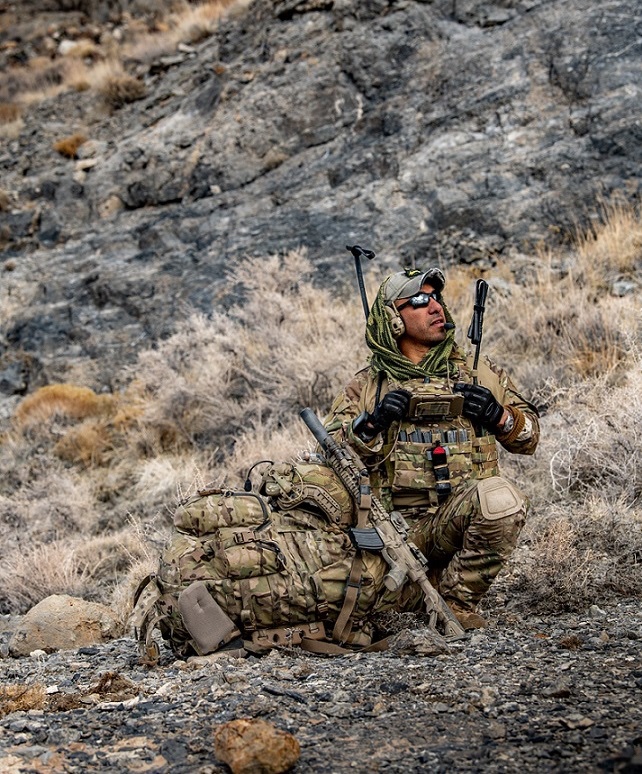
There has been an order of magnitude increase in the number of electronic systems on the battlefield over the past 2 decades, and thanks to these systems, our Boots-on-the-Ground now have unmatched C5ISR capabilities at the tactical edge.

However, this increase in capabilities comes at the cost of an increased burden on the troops – as many spare batteries must be carried to keep systems operational. As a result, it is now common for Squad members to carry 20-40 pounds of spare batteries on a typical patrol – on top of all the other things they need to carry (such as food, water, ammunition, and clothing). As a result, the total individual load can often exceed well over 100 pounds.


Numerous studies have demonstrated the debilitating effect that such heavy loads have on the physical health and performance of our service members, as well as their operational effectiveness. But while much focus has been put on making gear and equipment lighter, there is still much room for improvement in reducing “the burden of power”.

As mentioned above, spare batteries make up the majority of the bulk and weight associated with the power burden. However, short of changing the Laws of Physics, what can be done to decrease the amount of spare batteries that troops need to carry to be operationally effective? Standardization and interoperability are two areas where step-change improvements can be made that will reduce the number of different, and often proprietary batteries, that don’t work across platforms.

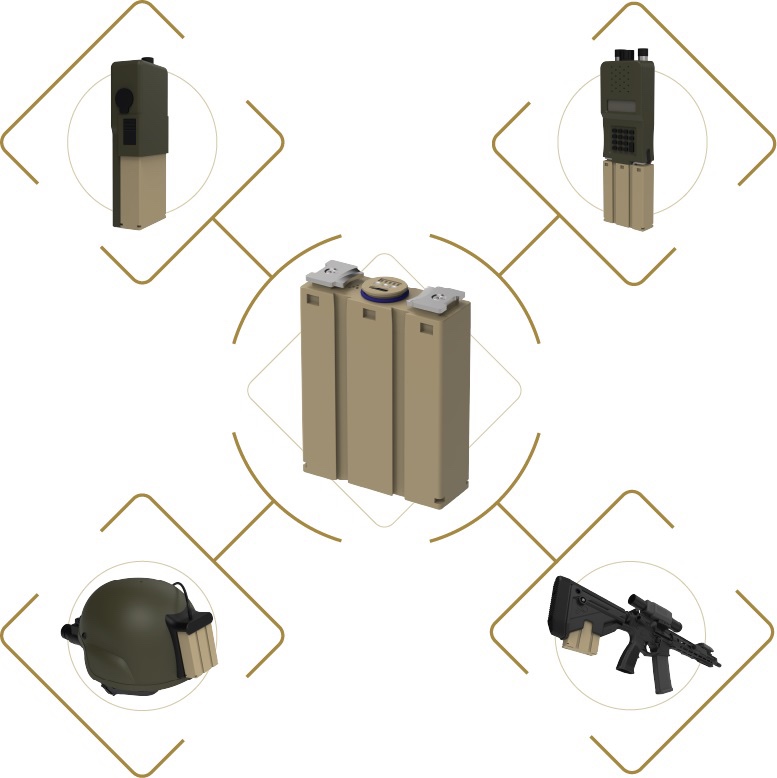
The Small Tactical Universal Battery (STUB), which was featured last week, is a major step towards creating standardization, interoperability, and mission-adaptive power for the Warfighter. With eight different capacity and size options, plus eight different attachment methods, the STUB series reduces the Warfighter’s battery burden and provides unprecedented levels of interoperability and power commonality. The STUB is a significant step toward reducing complexity in the supply chain, easing logistics and reducing the battery burden on the troops.

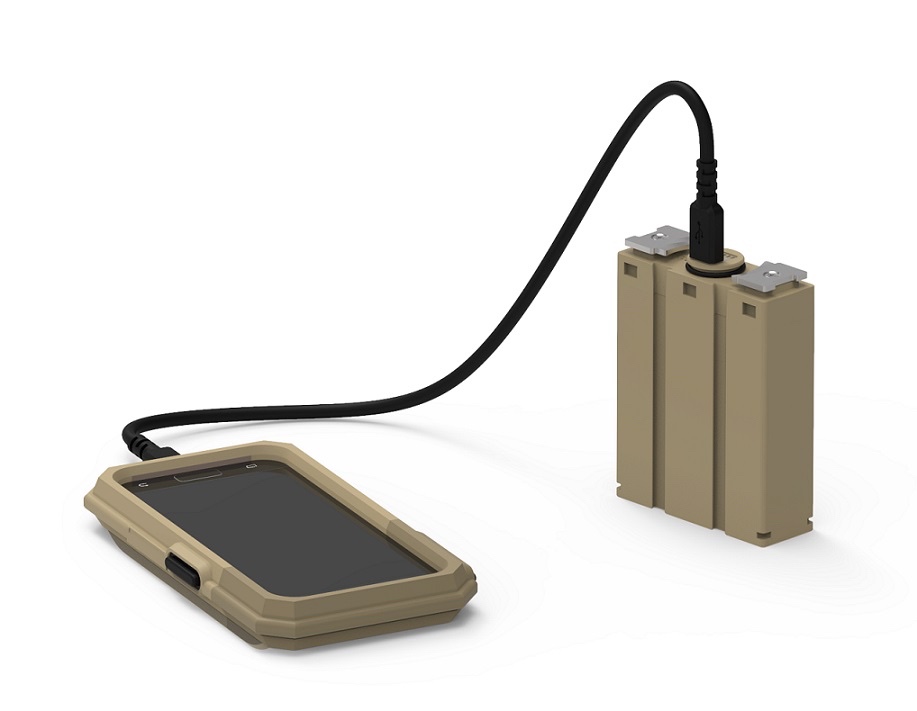
A supporting avenue of approach is the incorporation of USB technology. Leveraging industry-standard USB protocols enables shorter product development cycles, reduces overall program cost, and simplifies training, logistics and support for end-users. The use of USB technology also brings advantages in terms of end-user familiarity and platform commonality and interoperability. USB technology also delivers weight savings and performance improvements over legacy military platforms and power sources.


Developing and delivering solutions that are purposefully-designed to provide power commonality and interoperability will certainly help ensure that every ounce counts. Incorporating globally-proven industry-standards and technologies will also help reduce the battery burden and enhance operational effectiveness for the Warfighter. These approaches also constitute a formula that can be implemented now to cost-effectively reduce the battery burden and extend the capabilities of tactical electronics.

Guest post by EXO Charge