FirstSpear

Archive for the ‘Guest Post’ Category

Improving the Service Member’s Human Performance

Thursday, November 11th, 2021

Every year thousands of Reserve and National Guard service members from across all forces of Department of Defense (DoD), come to Fort Bliss before deploying. While service members are at Fort Bliss, they execute different levels of training based on individual and unit proficiency, naturally a unit does not execute URM training if they have not qualified with the individual weapon; we, at Task Force Stallion, under 5th AR BDE, see qualification as a pre-requisite for any advanced training. Observer-Coach/Trainers play a crucial role in the units training, as we observe first, then coach and train to give them honest feedback through After-Action Reviews. One of the training events that service members go through at Fort Bliss is the Gunfighter Gymnasium (GfG).


5th AR BDE GfG, OC-Ts, Instructor Trainer Course, Nov 2020: (left to right) SSG Pleinis, SGT Barton, SSG Gomez, SSG Ziegler, SSG Beavers.

5th Brigade has made an Investment in the Service Member and the effect is Revolutionizing Readiness across the Brigade through what is being called the Gunfighter Gym (GfG).  This investment is not a material solution, but rather a wholistic Soldier investment in eyes, mind, central nervous system, and body.  The gym’s focus is to rapidly guide service members to reach their Peak Human Potential (PHP) in a very short time.  By, investing in the service members cognitive decision making under stress, while fighting in a 360-degree environment, we are witnessing, measuring, and analyzing data across multiple units, as our great men and women, are going from Zeroing their rifle in Basic Rifle Marksmanship (BRM), into Urban Rifle Marksmanship (URM) in the GfG, culminating out at the live-fire range; and reaching new personal bests across all qualifications.  Thus, creating and confirming a more lethal, faster thinking and reacting service member. The same effect is happening in pistol and automatic weapons training.


The GfG provides service members with opportunities that they rarely see at home station training. Some examples are the new Army Weapons Qualification for the M4 carbine, where service members complete their virtual marksmanship qualification tables (Table II), as outlined in TC 3-20.40, “I attempted this qualification standard once and got 18 or so 3 times, this time, at the range I got 35 out of 40, first time and it seemed so much easier” (SSG, 864th Theater Support Group, Feb 2021). Others are the execution of training packages which include Urban Rifle Marksmanship (URM), Close Quarters Battle (CQB), Team/Squad Battle Drills (with their assigned weapon or Conflict Kinetics Synthetic Weapons) and this Gym can easily add support by fire, call for fire and crew served weapons. The ability to change the environment in the GfG is limitless, which has allowed us to truly focus on the servicemembers needs based on their area of deployment.

During the first 6 months of throughput in the GfG, while under COVID restrictions, exceeded 1 million shots fired, over 3.5 million decisions made, and over 4108 Servicemembers from U.S. Army, Air Force, and Navy having been trained and mobilized.  Our gym is being run 24/7 and there have been zero down training hours/days due to equipment malfunctions. The GfG is leveraging video-based roll players, with further capabilities to bring VR/MR and shoot-back capabilities for full mission profiles. They are capturing big data on cognitive, emotional, and physical performance for the life of the service member, that further down the road, we could leverage in the unfortunate event of a TBI or MTBI incident.  The ability that the GfG gives us, knowing what a service members PHP was prior to suffering the trauma, can more rapidly map them back to full operational capacity.  It is great for the service member and great for the United States of America.

The GfG provides much more realistic training and scenarios, than a live-fire range ever could. In one day, service members can fire over ten times the number of rounds than they would at a live-fire range. Not only that, but they can also switch up scenarios in a matter of minutes and train in different situations and environments. Using the Conflict Kinetics (CK) training methodology is less costly, gives service members more time to sharpen their marksmanship skills, lets them have more repetitions, gives service members more time training because they do not have to worry about how much ammo they are allotted, or how much time they have left on the range based on scheduling or daylight. As stated by a member of the 864th Theater Support Group, “Being scheduled for the gym on the training calendar, allowed us to focus on only this task for the first time in years” (1LT, 864th Theater Support Group, Feb 2021).

After going through the Instructor Training Course provided by CK, having served over 18 years of service to my country and the Army, I improved my lethality, cognitive skills, speed, and accuracy in 5 days of training. With my years of experience, I have not seen a better system, that truly helps the individual service member and units collective training that CK provides through Human Performance. There are over 3200 drills that Soldiers can train on, so the ability to game the system is impossible. With varying scenario’s, Soldiers are trained to react to threats rapidly and in a more lethal manner. All drills have lethality zones built into the target, which takes the shooters actions into account as well as the drills actions, and provide a lethality score per shooter. Another unique advantage to this system that I have seen, is the ability to create a Unit Identifier (UID) that can follow the service member anywhere there is a GfG. This is an area I have not seen before with simulators. My personal UID, if I were to PCS to the 173rd in Italy, as an example, I could see the site tech at the 173rd, give him/her my UID, and in no more than 1 week time frame, my profile and everything I have shot will be in the system at my new duty station. Potentially, if this system were across the Army, we could track a Soldiers shooting career from Basic Training until they exit the Army, what I could have done with that data as a 1SG, would have been limitless! PVT X goes to shoot in the GfG, he is a lethal shooter but that day shoots horribly, this lets me know his mind is somewhere else, and provide focused attention to care for the Soldier through his leaders.

The GfG has been certified to Army Doctrine standard by DOTD, Maneuver Center of Excellence and has created a training path called the “Principal Path” that has been proven to be more efficient and effective than taking the troops to the live fire range. In a recently published Marine Corps MCOTEA study the GfG was shown to be a “viable substitute for live fire.” As we see it here at 5th Brigade, if we continue to invest in the wholistic training of the service member, how they see, think, react and more, we are delivering highly trained, problem solving, lethal service members in the shortest amount of time for Combatant Commanders within their Theaters of Operation.  

By MSG James S. Sharp, TF Stallion 3-362 IN, 5th AR BDE

MSG James S. Sharp is an Infantryman and has served for 18 years. He joined the Army in 2003 and has been on 7 combat tours, 3 to Iraq and 4 to Afghanistan. He has served most of his time at Fort Drum, but was also in Alaska at Fort Richardson, and was a Drill Sergeant at Fort Benning. MSG Sharp is currently at Fort Bliss were he serves as a Senior OC/T for 3-362 IN, TF Stallion 5th AR BDE. He has been an Master Trainer for the Gun Fighter Gym system for over a year. He is 44 years old and has a wife and two sons.

The views of MSG Sharp are his own personal opinions and do not reflect official DoD policy or endorsement.

Yuma Proving Ground Supports Cutting-Edge Technology Testing During PC 21

Thursday, November 11th, 2021

YUMA PROVING GROUND, Ariz. — Project Convergence, the Army’s campaign of learning, has returned to U.S. Army Yuma Proving Ground (YPG) to test a vast and astonishing array of new technology.

For the first time ever, every branch of the United States’ armed forces are testing their sensor-to-sensor capabilities in tandem.

In addition to representation from all branches of the military, this year’s iteration features all eight of the Army Futures Command’s cross-functional teams (CFTs). There is also a dramatically larger Soldier presence.

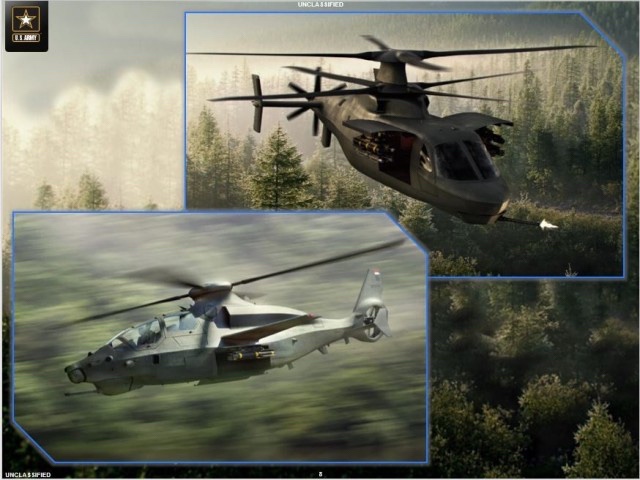
Among these CFTs is Future Vertical Lift (FVL), which is aggressively testing virtually every facet of the Army’s Future Attack Reconnaissance Aircraft (FARA) and FVL, as well as advancing knowledge on electronic warfare. Unmanned aircraft, air-to-ground missiles, rotary cannons, and all manner of ancillary technologies to expand communications capabilities and Soldier survivability are all being tested simultaneously here.

“There is a lot of learning going on out here over these several weeks,” said Jim Thomson, Acting Deputy Director of the Future Vertical Lift CFT. “Yuma Proving Ground is really a unique place to enable us to do this.”

YPG’s vast size includes nearly 2,000 square miles of restricted airspace. The proving ground’s clear, stable air and extremely dry climate combined with an ability to control a large swath of the radio frequency spectrum makes it a desired location for this type of testing.

YPG’s vast institutional UAS and counter-UAS testing knowledge is an added bonus, as is the presence of a wealth of other infrastructure meant for other sectors of YPG’s broad test mission that can be leveraged to support aviation evaluations. YPG is home to things like technical and tactical targets, as well as generator and combined maintenance shops.

“YPG in particular has been an outstanding host,” said Lt. Col. Tanner Spry, FVL CFT experimentation planner. “It’s a great area based on the distances that exist here to challenge our platforms.”

The breadth of equipment tested here over the course of the six-week demonstration is astonishing, and boasts multiple firsts. Testers say this year’s demonstration increased their ability to integrate into the joint force and improved the command and control network to extend the range Army aviators can operate in. This was shown multiple time in realistic scenarios in which Soldiers from the Army’s 82nd Airborne conducted simulated air assaults across YPG’s vast ranges.

“We’ll take a use case and run through multiple iterations to stress and challenge the technologies to make sure they are resilient,” said Spry.

One of the more exciting technologies used was Air Launched Effects (ALEs), drones attached to a helicopter or other vehicle that can be an aviator’s eyes in an area of interest. These remarkable and low-cost surveillance UAS can also be launched off of light ground vehicles, but integrating them into aviation platforms is much more complex.

“They’ve done a tremendous amount of work to get the ‘air launched’ into the name air launched effect,” said Thomson. “But there are a lot of other options, too.”

As for the FARA and FVL themselves, multiple other facets are being tested here. A new Gatling-style 20mm machine gun that could serve as one of the platforms’ rotary cannon was integrated into a UH-60 Black Hawk serving as a surrogate and fired in flight for the first time here.

“It shoots fast, it shoots well, and it shoots accurately,” said Lt. Col. Cameron Keogh, Chief of Flight Test for U.S. Army Combat Capabilities Development Command. “As a previous attack and recon pilot, I like it.”

With things like the Gatling-style gun, artificial intelligence-aided threat targeting and detection systems, and even the ability to fly autonomously, developers are using a modular systems approach that would enable these things to be used on a variety of aircraft as needed. During PC 21, the testers demonstrated flying a legacy UH-60 completely autonomously.

“We have to be able to demonstrate autonomy in any environment,” said Stuart Young, Defense Advanced Research Projects Agency program manager. “Yuma is a great location to be able to bring all of these different pieces together. We have a lot of flexibility that we don’t have in other locations: we have large safety margins and here we have the space we need to conduct all of these firsts safely.”

All of these technologies are being refined to prepare for the potential of warfare with a near-peer adversary. As such, the participation of hundreds of Soldiers in PC 21 was useful for testers: Engineers had the opportunity to gain input about systems under test from Soldiers who have operated earlier iterations of the platforms in theater overseas.

“We are leveraging technology to reduce Soldier workload,” said Spry. “Sometimes moving yourself out of chaos by being able to operate at greater distances and ranges can give us a strategic advantage.”

By Mark Schauer

Operation Hat Trick: Supporting American Service Members and Veterans

Wednesday, November 10th, 2021

SIG SAUER is proud to partner with Operation Hat Trick, a non-profit organization that generates awareness and support for the recovery of wounded service members and veterans. Through the sale of branded merchandise and products, OHT donates proceeds to selected organizations that fulfill the OHT mission.

OHT is dedicated to American service members as they recover from the visible and invisible wounds of war by helping them move past the traumas of battle so they can focus on their lives and families at home.

Proceeds from the sales of OHT branded merchandise are donated to Operation Hat Trick to support its mission to assist American service members and veterans.

SIG OHT ODG Hat

SIG OHT Blue and White Hat

SIG OHT Kryptek Highlander Hat

SIG OHT ODG and Tan Hat

SIG OHT Blue + White Ball Cap

SIG OHT Kryptek Typhon Hat

Beyond Is Committed To Protecting Those Who Protect Us

Wednesday, November 10th, 2021

This Veteran’s day, on the 11th hour of the 11th day of the 11th month, we are shutting down our website for 24 hours to raise awareness for mental health. There are people in our lives today fighting battles that we cannot see.

Please.  Take a moment and reach out to a Veteran to remind them they have loved ones in their corner. We’re all in this together.  We’re all fighters of the good fight.

Air Force Recruiting Releases Docuseries on BMT

Wednesday, November 10th, 2021

JOINT BASE SAN ANTONIO-LACKLAND, Texas (AFNS) —  

Anyone wondering what the process of joining the Air Force is like, leading up to and through the completion of Basic Military Training, should check out a new docuseries that follows five individuals as they transition from civilians to Airmen.

Titled “Basic,” the eight-part docuseries was released on the Air Force Recruiting official YouTube page Oct. 28.

For Air Force leaders, this is a unique opportunity to show recruits an in-depth look into their upcoming experience.

“From a recruiter’s first meeting with a future Airman or Guardian, their first questions always seem to be about what they can expect at Basic Military Training,” said Maj. Gen. Ed Thomas, Air Force Recruiting Service commander. “Today’s BMT isn’t what mom or dad went through decades ago, and it’s not necessarily what Hollywood portrays. The Air Force is granting access to BMT as it happened for brand-new Airmen. This series aims to shine a light on the reality and professionalism of basic training. We want future Airmen and future Guardians to know what to expect when they make decisions and prepare for this uncommon life.”

“I’m excited to provide this unique look into the journey America’s sons and daughters take as they become Airmen in the world’s greatest Air Force,” said Chief Master Sgt. of the Air Force JoAnne S. Bass. “Their service to our Air Force and nation has never been more important, and seeing our military training instructors in action as they develop these Airmen to fulfill those roles is motivating to say the least.”

Basic was produced and directed by Ken Raimondi, a former Air Force recruiter and current civil service producer and director with the 3rd Audio Visual Squadron. He led a team that grew from four to 17 people to complete the project. Raimondi said he has always wanted to do an in-depth documentary on BMT since he was on active duty.

“I was a recruiter from 2003-2006 and I wished there was something like this then that showed Basic Military Training in great detail from the perspective of the service member,” he said. “It just hasn’t existed up until the release of this project, in this amount of depth.”

Raimondi said the series shows all the emotions recruits go through during the process and gives viewers an inside look at BMT.

“It shows their nervous thoughts at home before they leave, the shock of the first weeks, the highs and lows, successes and failures, and everything in-between,” Raimondi said. “The eight-part series opens the doors to BMT in a way you’ve never experienced. Imagine being a fly on the wall throughout BMT and once a week, getting the chance to hear directly from the subjects, away from anyone else, including their military training instructors, to hear exactly what they think and feel.”

The project was initially brought to Raimondi in 2019 by the superintendent of BMT at the time, Chief Master Sgt. Lee Hoover.

“They wanted an in-depth look at the BMT experience,” Raimondi recalls. “After an initial discussion, we agreed to bring Air Force Recruiting Service on board as they have the highest traffic for the target audience we knew we wanted to go for.”

Rather than just tell the story of BMT and some of the changes in recent years, Raimondi had other ideas on how to tell this story.

“I pitched the idea to not just tell the world how BMT has changed, but let’s show it through the lives of five civilians as they make that transition to Airman,” he said. “The great thing about BMT is that the drama is built in from the start. It’s a captivating story that thousands of people experience every week here and taking just five of those stories and letting them tell it as they experience it accomplished multiple goals. It’s entertaining to watch, authentic, and informs our audience organically of what modern-day BMT is like.”

When BMT agreed to take the approach Raimondi pitched, they knew it couldn’t happen without the support of AFRS.

“First of all, recruiters are the face of the Air Force to many of our communities,” Raimondi said. “If recruiters were not involved in this, we would be missing a huge chance to reach our target audience at the very place where they would be asking the questions this series could answer. Beyond that, we also knew it would cost money to send our team of four on the road for five weeks from one hometown to another to cover the pre-Air Force life of our subjects.”

AFRS agreed to help fund the project. Now Raimondi had all the major stakeholders behind his idea and was free to see his vision through to the end. For AFRS, supporting this project was a no-brainer.

“This was an excellent opportunity for Air Force recruiting to provide potential recruits some insight into what that life changing moment of Basic Military Training is like,” said Wes Fleming, chief of plans and programs for AFRS public affairs. “We felt like this story hasn’t been told before, showing the life changing experience of becoming an Airman.”

AFRS did help fund this project, but also played a critical role throughout the making of this docuseries.

“AFRS was involved since pre-production,” Raimondi said. “They helped me narrow down our cast and paid for our travel from place-to-place before we began filming at BMT. Their participation from the start was critical to the success of this. They also helped me coordinate with the recruiters of each person so we can see some of that interaction. In fact, we get to cover a prospective battlefield Airman as he goes through training for the [Physical Ability Stamina Test] used in Special Warfare career fields before he ever leaves for BMT. That access is all due to AFRS.”

Raimondi realizes this is not the kind of product normally produced for AFRS.

“You may expect something shorter, punchier or slicker, and that would be fair,” Raimondi said. “They are vying for the attention of a target audience that has plenty of other things to do and see outside of what the Air Force offers. Speaking as a former recruiter, I know how hard that is. Now this series may not bring more people to the recruiting doors; I don’t know for sure. What I do know is that AFRS wants to make sure that the folks they do send to BMT are well informed and ready to succeed in the Air Force. I am 100% confident this series will do that.”

Raimondi optimistically thinks this series will motivate people to want to join, but at minimum, it gives recruits some understanding of what to expect at BMT.

“The important thing is that now the world has insight into how the Air Force trains civilians to become Airmen,” he said. “With that knowledge out there, prospective recruits and potential Airmen can make an informed decision and be ready to tackle the challenge of their lives.”

Tackling a project of this scope is no easy task for Raimondi and his team.

“I was lucky in the fact that the Navy produced a short format docuseries called ‘Boot Camp: Making a Sailor,’” he said. “I reached out to the producer, Austin Rooney, to hear some things that worked and some things that were challenging ahead of us moving forward. His insight definitely helped me think through some things and he helped me avoid some challenges that they faced in producing theirs. It’s a great series and I’m thankful Austin took the time to share the background with me.”

The one thing he knew he wanted to do differently was to be there every step of the way. From their hometowns to graduation, his small team of four spent seven days a week and upwards of 18 hours a day with them.

“The philosophy being that if we aren’t there to capture what happens, we can’t tell the entire story to the audience,” Raimondi said. “Documentary is all about being there when it happens and we made the sacrifice to do that, including holidays, weekends, evenings, mornings, whatever it took. It was an exhausting endeavor that allowed us to take home more than 20 terabytes of footage. Hundreds of hours of footage cut down to about five hours making up this eight-part series.”

The other thing that was really important to Raimondi was absolute authenticity. He said this isn’t the Air Force’s story or BMT’s story, it’s the story of the five.

“We didn’t conduct traditional interviews outside of the hometown visits,” he said. “The trainee sat in front of what we called a confessional camera, and was allowed to speak freely whatever they thought and felt from the week they experienced. As the editor, it wasn’t the easiest thing to cut as people didn’t just give simple sound bites, but to me that’s where the authenticity lives. It’s messy, real, raw … it’s life. I think modern audiences appreciate projects that have the shine off and show you how it really is. My goal is that the audience wouldn’t feel the hands of the director or editor, but instead be immersed into the story as it unfolds.”

Raimondi and his team felt fortunate to have wrapped up their production on this project January 6, 2020.

“Had COVID(-19) hit us while we were in production we would have had to stop filming and would have lost the whole project,” he said. “Training and safety come first and if the presence of our crew ever got in the way of either, we would have had to stop filming. As I was editing it, isolated in the edit bay during the social-distancing measures, it was weird watching all of these unmasked trainees working in close proximity. At the time it felt like another world. Thankfully, with vaccines picking up steam, I think a return to normal is around the horizon. I know I’m thankful for that.

I’m so proud of this project,” Raimondi said. “I fully expect this will reach a lot of people, and when they get to BMT, they will be ready to experience what’s ahead of them. For the parents and families of those leaving to serve, it will allow them a sneak peek into the BMT experience. For the casual fan of documentaries, they’ll love the drama that unfolds at BMT. Tears, cheers, blood, sweat and even laughter… it’s all there because that is the BMT experience.”

“Basic” will air on the Air Force Recruiting Service’s official YouTube at 8 p.m. EST, with a new episode each Thursday, with the exception of Thanksgiving night, beginning Oct. 28. Viewers can access it here.

TacMed Tuesday – Importance of K9 Transport Legislation

Tuesday, November 9th, 2021

In 2018, Sgt. Sean Gannon and his K9 Nero suffered life-threatening gunshot wounds. Unfortunately, Sgt. Gannon succumbed to the injury, but K9 Nero was effectively treated on site by a Federal medic previously trained by K9 MEDIC®. The situation dramatically highlighted the state regulations that legally limited care and transport of K9s by local and state providers. Many states currently don’t have any legislation that would allow EMS to treat and transport an injured working K9. Today, Nero is alive and healthy and serves as an advocate for more states to support life-saving care.

Because many states such as Colorado, Massachusetts, Florida, Rhode Island, and more have recently begun passing legislation allowing for EMS treatment and transport of K9s, EMS K9 training is becoming increasingly important. One training resource that K9 Medic utilizes is TacMed Simulation Rental Program. Through this program, Jo-Anne Brenner and her K9 Medic team have been able to host a variety of training classes using our K9 Diesel and K9 Hero simulators. These simulators can provide over 28 different features and medical intervention sites to provide training on a wide range of critical life-saving tasks with a realistic experience.

We are thankful for K9 MEDIC® and other similar organizations who provide top-notch training and education for EMS personnel in order to best be prepared for a K9 emergency.

If you are a K9 Handler or part of a K9 Team, seek out proper training and equip yourself with the necessary life-saving medical equipment from TacMed™. Check out our K9 Handler Line here: tacmedsolutions.com/collections/k9-handlers

Army Future Command’s GEN Murray Visits DEVCOM Soldier Center for Program and Equipment Updates

Tuesday, November 9th, 2021

NATICK, Mass. — During an October 26 visit to the U.S. Army Combat Capabilities Development Command (DEVCOM) Soldier Center, Gen. John M. Murray, Commanding General of U.S. Army Futures Command (AFC), was updated on several programs and technologies helping advance two of the Army’s highest priorities — modernization and people.

DEVCOM Soldier Center’s mission, to research and develop science and technology solutions that protect and optimize warfighters on the battlefield, often occurs where these two priorities intersect, and Murray, charged with spearheading the Army’s force modernization efforts, got to see in person some key technologies the center is developing in support of the Soldier Lethality component of modernization.

“DEVCOM Soldier Center is executing a critical facet of the Army’s modernization strategy,” said Murray.

“By researching new approaches to optimize Soldier performance and developing new technologies with consensus from operating units to exceed the capabilities of our pacing threats, they are delivering on the tenets of their mission and reinforcing the Army’s commitment to its people.”

“I saw that in action here today,” said Murray.

The visit began with detailed updates on the progress of DEVCOM Soldier Center’s signature research program, Measuring & Advancing Soldier Tactical Readiness & Effectiveness, or MASTR-E, a comprehensive, data-based research effort to deliver infantry units the capability to measure, predict, and enhance human performance during close combat operations through the use of wearable biometric sensors.

Led by DEVCOM Soldier Center and supported by key S&T partners from infantry units, scientists, and engineers across the DoD, industry and academia, MASTR-E takes an integrated, multi-disciplinary approach to collecting and analyzing human performance data metrics, including physiological and behavioral indicators that give leaders a holistic view of their Soldiers’ status during close combat.

Murray also met with Human Research Volunteer, or HRV, Soldiers during the visit. The HRV program recruits approximately 30 new Soldiers from their Advanced Individual Training to voluntarily come to Natick for a 90-day assignment in which they participate in various human performance based research studies. HRV Soldiers support everything from field testing uniform and equipment items, sleep and nutrition studies, to cognitive, psychological, and physiological performance studies. HRV Soldiers play a vital role in the research and development of new technologies supporting modernization efforts.

The visit also featured a hands-on display of several innovative technologies being developed by Soldier Center scientists and engineers, including Cold Weather Equipment, Load Carriage Equipment, future body armor prototypes, and the Combat Protective Ensemble, or CAPE.

For Cold Weather Equipment, Murray saw uniform and equipment items being developed through a multiservice collaborative effort guided by seven item priorities with the goal of outfitting an arctic brigade within the next 18 months. The technologies, which included gloves, boots, and layered parker systems, were constructed with novel performance materials with inherent properties that prevent freezing in extreme arctic environments.

The Load Carriage Equipment items included prototype ruck sacks designed to accommodate specific infantry tasks and missions. Soldier Center equipment specialists utilized end user feedback collected during Soldier Touchpoint evaluations to redesign the placement of straps, buckles, ammunition and utility pouches, and ballistic plate carriers to develop lighter, streamlined prototypes more conducive to foundational infantry tactics like shooting and moving to contact.

The future body armor items displayed took a similar approach to their design, in which plate carrier systems were built based on the threat level. Researchers are working to reduce the overall weight of body armor prototypes while maintaining ballistic protection against the majority of round calibers and blast threats faced on the battlefield.

The CAPE program addresses the challenge of having multiple Soldier-worn equipment systems by incorporating novel performance fabrics and materials in order to maximize Soldier protection and survivability, while optimizing the distribution of power and data.

After the equipment display, Murray visited the Design Pattern Prototype Studio, where he was shown several Soldier Center developed products under the Organizational Clothing and Individual Equipment program, including the Female IOTV, the Physical Fitness Bra, the Female Urinary Diversion Device, or FUDD, and the Improved Hot Weather Combat Uniform — Female, or IHWCU-F — items that support the role and performance of female Soldiers in combat.

The last stop of Murray’s visit was to the Combat Feeding Division for an overview presentation, ration display, and tour of the pilot kitchen where new items are created. At CFD, Murray saw the Close Combat Assault Ration, or CCAR, a one-day ration designed to sustain dismounted warfighters for seven days operating autonomously without resupply. The CCAR includes nutrient-dense items made using Microwave Drying Technology, which reduces the weight by about 75 percent and volume by 40 percent from an MRE, the standard individual ration.

“General Murray’s visit allowed us to successfully demonstrate the important work we’re doing to enhance Soldier performance.” said DEVCOM Soldier Center Technical Director, Doug Tamilio. “The programs and technologies he was updated on are helping advance Soldier Lethality and directly support the Army’s major priorities.”

Story by Jeff Sisto, DEVCOM Soldier Center Public Affairs

Photo by David Kamm, DEVCOM Soldier Center

SOCOM-led Tactical Assault Kit Product Center Hosts Hybrid Workshop in Colorado Springs

Monday, November 8th, 2021

COLORADO SPRINGS, Colo. — The Tactical Assault Kit (TAK) Product Center is hosting a hybrid (in-person and virtual) workshop to expedite the development and integration of situational awareness tools Nov. 30 to Dec. 3.

The Tactical Assault Kit (TAK) is a map-based software application that enables coordination among thousands of users with features such as a position data, chat, mission planning and shared overlays. It is compatible with Android, Apple iOS and Windows.

The TAK offsite will offer an opportunity for stakeholders from across the Department of Defense (DoD), federal agencies and industry to exchange information and identify critical needs. The event will offer tracks for programmatic updates and training on the TAK platforms. A separate track for developers will be held virtually later this year.

“While programmatic briefs and demonstrations are important, feedback from previous TAK Offsites has been heavy on the value of hallway discussions and introductions between sessions,” said Mark Roberts, deputy director for the TAK Product Center. “This year’s hybrid event facilitates in-person meetings which are key to building strong, lasting relationships amongst community members while simultaneously enabling virtual participation from TAK users around the globe.”

As the central software development hub for all TAK efforts, including 13 federal programs of record, the TAK Product Center provides core development, software updates, cybersecurity and testing for an enhanced user experience.

To foster innovation, the TAK Product Center approved the public release of a non-military variant for federal and government agencies – known as the Android Team Awareness Kit-Civilian (ATAK-CIV) application – on Google Play and the open-source Standard ATAK Software Development Kit on TAK.gov.

“The crowd-sourced nature of the Team Awareness Kit (TAK) is unique among government materiel development programs. The TAK Product Center has proven that focusing on the user provides optimal solutions and wide adoption,” said Col. Paul Weizer, Program Executive Officer for SOF Digital Applications. “I expect open-source elements of the TAK software development/delivery model will become ubiquitous across government software program offices.”

Registration for the offsite is available at tak.gov/events/2021_Offsite until November 26th. Learn more about the event here:

By USSOCOM PAO

U.S. Army photo by SPC Joshua Cofield