SIG SAUER - Never Settle

Archive for the ‘Guest Post’ Category

From Wagon Peddler to International First Responder Distributor

Saturday, April 24th, 2021

The history of today’s largest First Responder Distributor, GALLS®, started as one immigrant’s dream of America.
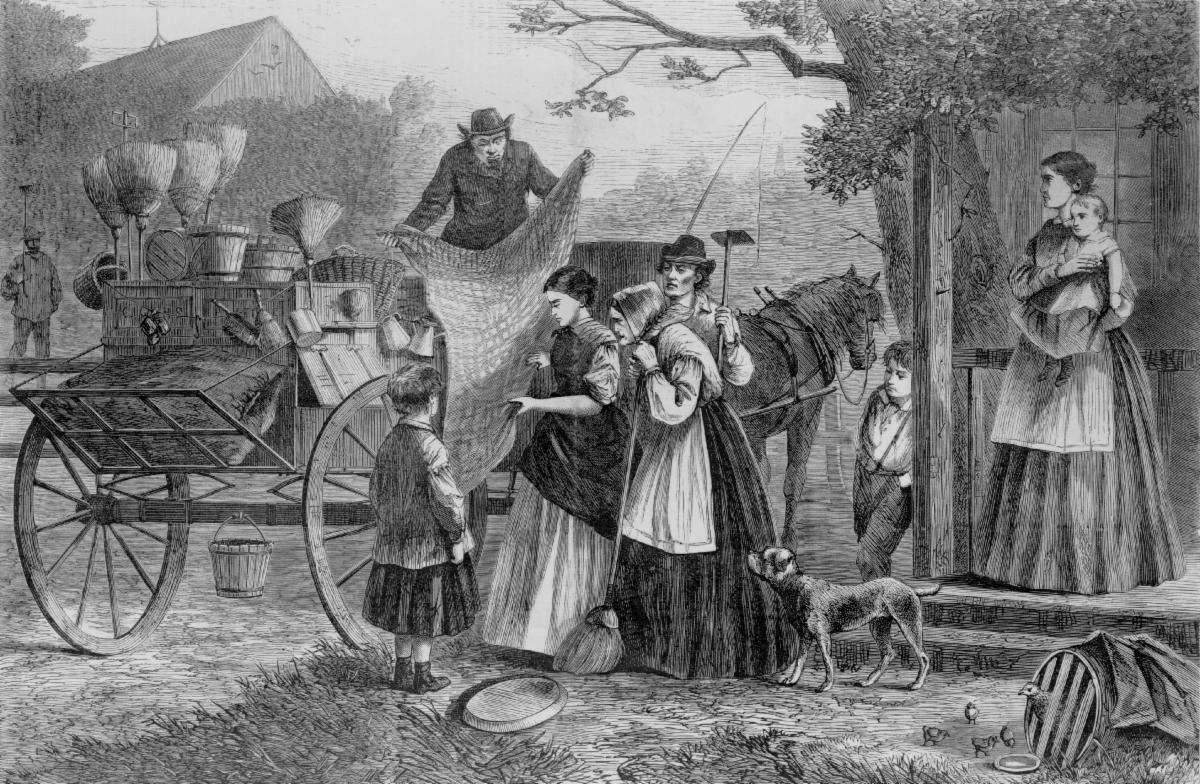
The Peddler was for many rural Americans, the only way to shop.

FOR IMMEDIATE RELEASE

Lexington, Ken. (April 2021) – GALLS® is today the largest leading distributor of law enforcement and 1st responder apparel, gear, and equipment with over 100 locations, 300,000 sq. ft. of distribution, and 1,500 employees. Although its origins were modest compared to the size and breadth of the organization today, the founding principle is as relevant now as it was when Phillip Gall took a wagon laden with household ware into the hills and hollers of Kentucky at the turn of the 19th century.

“Phillip Gall was the epitome of the American dream come true,” Mike Fadden, CEO of GALLS Inc. said. “As an immigrant in a new country, he found a unique niche to call his own, and through his steadfast pursuit of building long-lasting customer relationship, was able to turn a ware-laden wagon into a very successful Lexington, Kentucky-based family business.”

As an immigrant from Lithuania, Phillip Gall came to America with a dream of finding freedom and opportunity for his family. Settling in Lexington, Kentucky with his wife and son, Isaac, Phillip traveled the backroads of Lexington’s surrounding hills peddling household items such as cookware, sewing supplies, and tools. Phillip Gall visited his customers’ homes, tucked away in the woods, or standing alone surrounded by farmland, that every visit was special. He developed close relationships with his customers, seeming to know what they wanted and how to turn every exchange of their hard-earned money for goods into a special occasion. Phillip Gall brought his own customer service expertise to the Kentucky hills.

At the turn of the 19th century, Isaac, now a grown man, with his father, opened a second-hand store on Water Street in Lexington. Eventually, the second-hand store transitioned into a pawn shop, which eventually transitioned into a retail store including outdoor camping equipment, firearms, and police gear.

Phillip Galls’ store continued to meet the needs of their customers, whether it was moving the store to better locations or including products that their customers were seeking.

Sidney, Isaac’s son, grew up spending available time at Phillip Gall’s storefront helping out with everything and anything that was needed to service their growing customer base. It was a natural move for Sidney after he came home from serving in the war, to come into a partnership with his father, Isaac. During his tenure at Phillip Gall, the storefront moved from Water Street to West Main Street in 1972.

“During the third generation’s tenure of the Phillip Gall store, Sidney had developed both sides of the business, the outdoor and the law enforcement, as far as it could go within the confines of its location and their business model,” Fadden continued. “Times were changing and Sidney found within Alan Bloomfield, the potential to concentrate on one part of the business and relinquish the other part.”

In 1983, the Phillip Gall store sold off the police equipment and firearms part of the business to a young man who had also grown up in the storefront retail business in downtown Lexington. Alan Bloomfield’s parents owned a women’s department store and the retail business was in his blood. After the purchase, Phillip Gall was called Phillip Gall Outdoor & Ski and continued to serve outdoor enthusiasts. The police part of the business, now operated by Alan Bloomfield, was renamed Galls Inc. Alan Bloomfield hit the ground running, sending flyers to police departments offering specials on everything from guns to uniforms. During Bloomfield’s ownership, Galls Inc. became a national and international supply house for police, EMS, fire, and first responder equipment and the largest mail order and catalog house within that community. Within five years, the Galls Inc. Catalog won the National Catalog Association’s “Catalog of the Year.”

“Bloomfield was a legend in the catalog business. He took a relatively small mom-and-pop cop shop and turned it into one of the largest and most dynamic police and emergency equipment suppliers in the world. He was very much a visionary and saw outside the borders of Lexington and by building the Galls Catalog and mail-order business extended his product line offerings to law enforcement across the country,” Fadden remarked. “By 1995, Bloomfield had taken Galls Inc. from a 4-person, family-based company to a 250 employee-based distributor powerhouse. And he felt it was time for him to step aside.”

Aramark, a company founded in Philadelphia in 1936, provided uniform services, as well as food and facility service to clients in the healthcare, education, business, prisons, and leisure industries, purchased Galls Inc. in 1995 and quickly brought the catalog giant into the digital age. Within two years, Galls Inc. had inside and outside sales force to facilitate serving their growing law enforcement customer base. The new sales force was able to adapt to the current conditions and needs of the community. By 1999, Galls added a new sales partner with the launch of Galls.com allowing existing customers to interface with Galls and attracting new customers with their state-of-the-art website.

“Galls is changing rapidly during these years. The rapid growth included more service centers, more employees, and new technologies. At the same time Aramark purchased Galls, I came aboard Aramark,” Fadden said. “Little did I know at the time that my future at Aramark would put me in a leadership position at Galls. Meanwhile, my focus is primarily on the direct sale and rental uniform side of operations at Aramark. Those twenty-five years, in a variety of leadership positions, became critical stepping stones for my future position at Galls.”

CI Capital, a private North American investment group, purchased Galls Inc. in 2011 and began an accelerated program of growth and acquisitions including some of the top equipment and uniform vendors such as Quartermaster, Blumenthal Uniforms, Muscatello’s, Patriot Outfitters, and Red the Uniform Tailor, to name a few. As part of their aggressive growth platform, Galls continued to streamline processes within their company, and in 2011, eQuip, an online uniform and equipment procurement and management software platform, was launched.

“When a company is in serious acquisition mode and undergoing explosive growth, it is primarily focusing on building its infrastructure and streamlining processes such as accounting, distribution, sales, and marketing. It’s an inward-focused style of management, and although necessary for the company to grow, customers can start to feel as if they are no longer priority number one,” Fadden continued.”

In 2018 Galls, again changed hands when CI Capital Partners sold the company to Charlesbank Capital Partners based in Boston and New York. Within the next several years, Galls accumulated six more uniform and police equipment companies and a change of leadership when Mike Fadden became the new CEO of GALLS in June of 2020.

“Up until the past couple of years, Galls was still a traditional catalog-style company with a smaller B2B mindset in which either agencies came to us or our sales team drove sales to agencies,” Mike Fadden explained further. “Galls was this large company, now comprised of many smaller companies, across the country doing business their way. Unfortunately, in all of this massive growth, something very special was lost, something I think Phillip Gall would instantly recognize; the personal relationship with the customer was beginning to suffer.

As we enter this new decade, businesses are facing increased competition from outside and it is my imperative that we at Galls will always lead when it comes to outstanding customer service. That doesn’t just mean a pleasant voice on the other end of the telephone, but finding ways to provide efficient, cost-effective, and personalized service to our customer base. When I came aboard, Galls already had some of these service drivers in place such as eQuip, which allows our customers to manage their uniform and equipment purchases and uniform allotments. It gives them power and confidence over their budgets they never had when dealing with outside sales reps. What I found in my first 90-days were often small errors, whether a misshipment of product or delays and backorders due to the complicated order processing we had. It was literally dying from a thousand small cuts.

First things, first. We needed a central location to receive customer complaints, suggestions, or compliments and that box literally became my email address. We have been including a small card, a gesture, to our customers in every shipment, to let them know Galls IS listening and we want to know the good, the bad, and the ugly about our company. Since this out-reach program began, we have accumulated enough data to understand where our strengths and weaknesses lay and to act on them.”

Fadden and his executive team drove significant changes to the company’s IT structure to allow greater transparency between departments, increase efficiency, and speed up the process from initial ordering to delivery, thus shortening the duration while eliminating waste and cost overruns. In February of 2021, “Chief to Chief,” an email newsletter for agencies’ executive management was created. The monthly newsletter features a video of Mike Fadden, CEO of Galls, talking directly to the email recipient and encouraging an open dialog between one Chief to another. Again, Mike’s email box has been inundated with praise, suggestions, and some complaints, but Mike and his team compile all results and present changes to the company that has, in a few short months, already benefited customers and Galls’ employees.
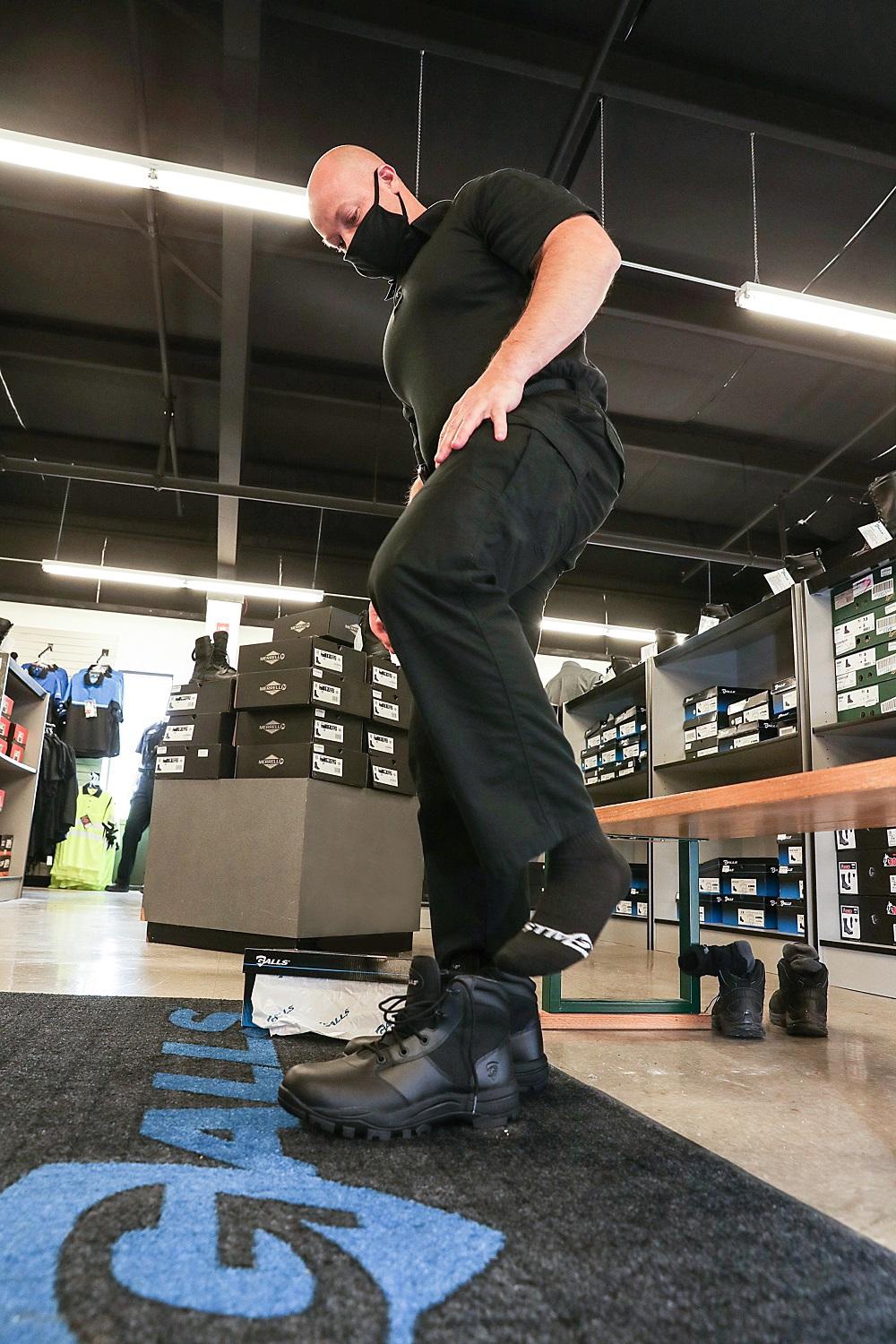
“I think Phillip Gall could walk into our headquarters and not only be amazed at what he started but be proud of what Galls’ is doing today, in respect to building the trust and loyalty between our company and our customers,” Mike Fadden concluded. “He never lost sight of the importance of excellent customer service and it helped him build his dream, the American dream. It is our responsibility to continue to build on that tradition because superior customer service is one thing that never goes out of style.”
The Baldwin Files – Lighting A Fire

Saturday, April 24th, 2021

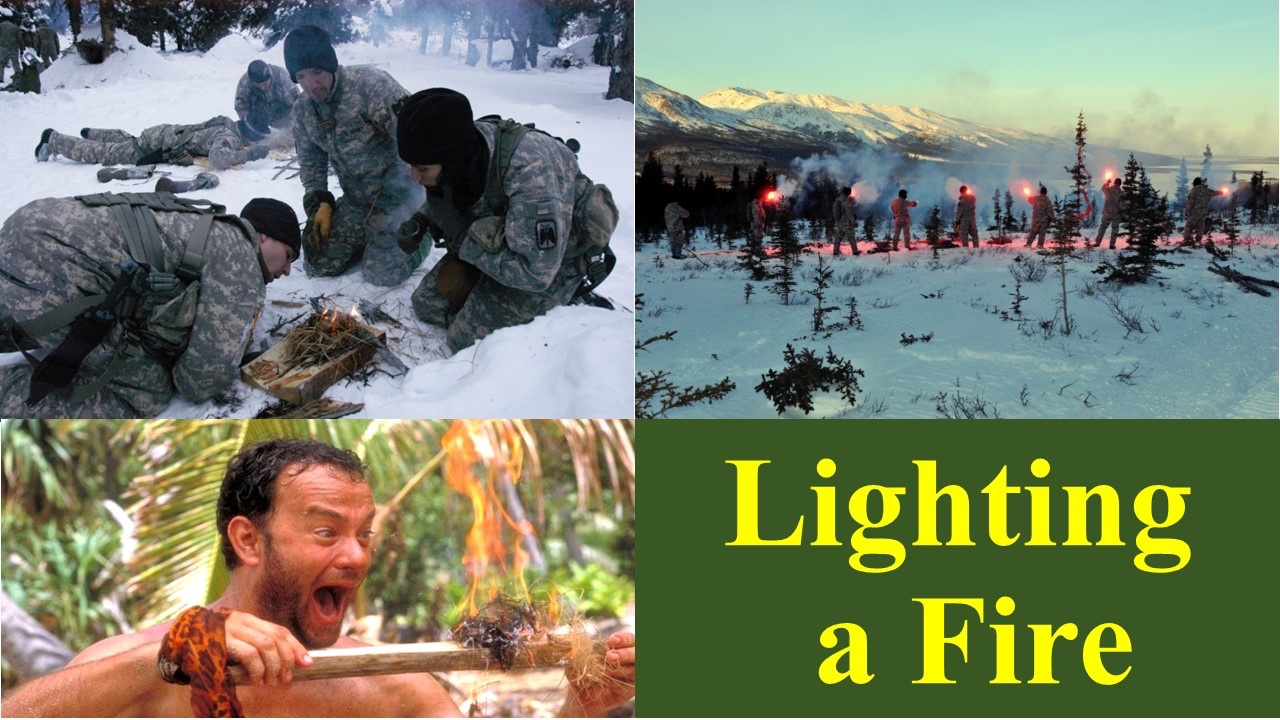
This article is about how to light a fire. Of course, as is my habit, I will meander a bit on the way to the final objective for this Wisdom Walk. The last week of February, I got the opportunity to do something that was both enjoyable and personally rewarding. I was invited to engage with some motivated young EOD members of the Air National Guard (ANG) at an ANG facility in Portland, Oregon. They had gathered in Portland from EOD Detachments as far away as Vermont and Texas for a colloquium, i.e., a series of seminars focused on professionally developing the junior airmen who had the opportunity to participate. My role, over a couple of days, involved facilitating some small group discussions on leadership and team building. We talked about issues relevant to them and their individual detachments and I told a few (hopefully) illustrative war stories to prompt additional thought and discussion.

Most of the attendees were E-4s becoming eligible for E-5, with 2-3 years’ time in service, and in their mid-20s. Some were full-time and others part-time. A couple had prior service in non-EOD specialties in the Army and USMC. Generally, they were not at all confident that the Air Forces’ NCOES system for their grade was adequately preparing them for leadership positions. Therefore, all the Airmen came willing and eager to learn. To their credit, the EOD organizational leadership had authorized and funded the colloquium – and perhaps subsequent iterations – to formally address at least some of the perceived gaps in their training. From my perspective, everyone involved from leadership to the most junior attendee was switched on and dedicated to the mission. By the way, the NCO who did the bulk of the leg work to put it together and then executed the plan was a Technical Sergeant (E-6). It was top-down supported, but not top driven. That is a good way of doing business. A worthy effort by all to light some leadership fires.

I did get off to a less than stellar start on my first day. Those of us not from Portland stayed at the same hotel near the ANG facility. I shuttled with some of the others in a rental SUV to the base. Because I was the oldest – by a wide margin – they let me ride in the front passenger seat. We all passed our IDs to the driver so that he could show them at the gate. Since I retired, I visit a military base about once or twice a year and normally drive my own car. Frankly, since I was a passenger this time, I was sightseeing and not paying attention or thinking about protocol. I was the only officer in the car and when the ANG gate guard saw my ID he saluted – and I missed it. As we pulled away, one of the guys said something about it and I immediately realized my mistake. I asked the driver to turn around and we circled out and back into the gate so that I could apologize to the Airman on duty and render a proper salute.

I was embarrassed by the unforced error. However, in hindsight, making the extra effort to correct my unintentional mistake perhaps served as a better leadership lesson than if I had done it right the first time. One does not get respect without giving respect. The various seminars that the Airmen attended and the small group discussions I already mentioned were not the entirety of the program. Additionally, they had daily homework which involved readings and informal briefbacks to the group and debate on various subjects. I sat in and observed many of those and, again, was impressed that everyone seemed to be putting in the work. I met briefly with the Squadron Commander who was hosting the event and had the opportunity for one-on-one sidebars with some of the senior NCOs on site. I learned a lot.

I did have an issue with one of the books on their reading list. It was, “On Combat” by LTC(R) David Grossman. This is as good a time as any to share my unfavorable opinion of this particular officer and his books. I served with 2LT Grossman in A Company, 2nd Battalion, 47th Infantry, 9th Infantry Division, Fort Lewis, Washington in 1979-80. He was my Company’s Executive Officer and I was a Sergeant (E-5). The silly SOB once tried to put me in for an (undeserved) ARTICLE-15 (Non-Judicial Punishment). Long story short, I had ample reason not to like the guy. Sometimes new leaders will try hard to be “nice” to their subordinates. Rationalizing, I suppose, that appeasement is the quickest way to get the respect they know that is needed to successfully function as leaders. That is a rookie mistake. Soldiers will take advantage of the “nice” leader but will never respect or have real confidence in his or her leadership. It is a cliché but true, soldiers respect leaders they see as “tough but fair.” Soldiers know that “nice” will not cut it when a mission goes off the rails. Of course, some leaders do the opposite. They imagine they will get respect by being dicks to their subordinate leaders and soldiers. That is also a rookie mistake, but that is the way 2LT Grossman decided he wanted to go.

So, I have a very poor opinion of the guy’s leadership skills in 79-80. To be sure, even leaders who start off on the wrong foot can evolve and improve over time. I never served with him again, and for all I know he got better with age. Maybe. Either way, that is not why I find his books problematic. His first was “On Killing” published in 1995 and apparently based on his doctoral thesis in psychology. For those that have not read it, “On Killing” beats two points to death – no pun intended. One, that humans have a powerful and innate inhibition against killing. Two, that modern military training uses “Pavlovian and operant conditioning” to overcome this allegedly “instinctive aversion” to killing. Moreover, Grossman extrapolated that violent movies and video games were doing the same thing to the youth of the world. The book did not get much attention initially. Then the Columbine School shooting happened in April 1999. Suddenly, in the post mass shooting hysteria, Grossman was a hot commodity and on all the TV shows. He was able to conveniently provide the answer that people wanted to hear. It was not bad parenting, drugs, or simply two demented teenagers who were responsible for their own heinous actions. It was violent movies and video games that were to blame for the shooting. His book sales soared.

Indeed, Grossman continued to repeat his two core assertions over and over again – in all his books. Nevertheless, they are not true nor are they supported by any real scientifically valid data or by the entirety of human history. In fact, the vast preponderance of evidence tends to prove the exact opposite. Humans instinctively averse to killing? Tell that to Cain or Able. Anyone who believes that has not had much contact with homo sapiens or read “Lord of The Flies.” I do not need a doctorate in psychology to have observed that humans kill for any and every imaginable reason – and for no reason at all. I spent some time in 1997 in Liberia. That country was at the end of a twelve-year civil war. One of the signature features of that brutal conflict was gangs of teenage boys roaming the streets hacking their neighbors to death with machetes. They had guns, but liked inflicting maximum pain and terror and enjoyed the kill more when it was slow. These boys had never seen a violent movie, or TV, or video game. Most had never lived in a house with electricity. We had run-ins with quite a few of these misguided “children.” They avoided direct confrontation with us – because they were not suicidal – but continued to terrorize the civilians out of our sight.

I have seen similar albeit less egregious examples in many undeveloped places in the world. Adolescent humans, especially males, are amoral at best. Without proper socialization, supervision, and reinforcement, they are dangerous, undisciplined, and vicious predators. More than that, Grossman claimed in his first book that almost every country in the world was experiencing a surge in violence – especially among teenagers – that was fueled entirely by those evil video games. Wrong. His earnest assertions notwithstanding, even in the 90s, despite high profile events like Columbine, violent crime was – and continued – declining in most developed countries. That is still true today. No matter how realistic the graphics, video games do not cause people to kill. Remember, Grossman also claims that first-person “shooter games” are so dangerous to a young person’s psyche because they virtually replicate the military’s insidious “Pavlovian conditioning.” That is news to me. I have personally trained hundreds of soldiers in shooting and other combat skills. I have routinely applied realistic practical application drills and repetition but I have never used – or seen anyone else use – any “brainwashing” techniques. My mission was to train soldiers not psychos. Grossman knows better and his insinuation about military – and police – training is inaccurate, insulting, and dangerous.

If bellowing out “To Kill, Drill Sergeant” when the NCO in the Round Brown asks “What’s the spirit of the bayonet” during bayonet drills is all it takes to suppress this supposedly deeply ingrained aversion to killing, I would suggest that is further evidence that it was not much of an inhibition in the first place. The American people need not worry. Military training is not going to turn little Jonny and Sally into psychologically damaged killing machines. I have already given this guy more oxygen than I would prefer. But it irks me personally and professionally that these books are still on so many reading lists and taken by some as gospel. I could continue to deconstruct his writings point by point. Many of his other dubious claims – presented as facts – are easily refuted, as are the cherry-picked anecdotal vignettes he provides as “evidence” to support his arguments. However, there are a number of other sources online who already do that debunking in more detail for those interested. Are there any “truths” in his books at all? Sure, there are kernels of valid insight here and there – mostly repeated from earlier writers. But those nuggets are buried deep in the BS that I already described. In my opinion, they are not worth digging out of the surrounding crap.

Since I always try to do my due diligent research for these articles, I did something I never intended to do. I bought Grossman’s “On Killing” and “On Combat” so I could refresh my memory. I looked at them and they were as grossly misleading as I remembered. Now, because I am loath to put them in my bookshelf with better books, I have them sitting on my desk and they annoy me. As a matter of principle, I do not believe in banning or burning books. Nor, in good conscience, could I pass these to someone else. However, if I ever have an emergency and need to start a fire, I will not hesitate to sacrifice these books as tinder for that fire. I do not think that would subtract anything significant from the sum total of humanities’ knowledge. It is probably the most utility I can expect to get from them. I trust that I have explained in sufficient detail why I would never recommend any of Grossman’s books for professional development. Still, I am not trying to make it my business to tell people what to read or not read. Consequently, I intend for this “public service warning” to serve only to more fully inform potential future readers of Grossman’s books.

Now, let us wade out of the swamp and back onto the trail. I would like to more directly address the subject of starting fires. I use fire as a tool a lot here on the Homestead. There is rarely a week that goes by that I am not starting one to burn debris. Just before my trip to Portland, we had an ice storm here. The ice brought down several trees and big branches all over my property. I have already cleared some of the stuff that was in the way, but it will be late in the summer before I get everything cleaned up. Once I get it chainsawed down to a size I can move, I carry or drag it all into an open area to burn. I prefer not to use accelerants like gasoline or fancy fire-starting techniques. I find that a crumpled local newspaper and a Bic lighter gets the job done just fine. I have been trained on a lot of methods to start a fire. I exercise some of those skills – like using flint and steel – from time to time to stay in practice but use the more expedient modern methods to get real work done.

Starting a fire with flint and steel is a neat trick of the trade. It is common practice in survival training to start by introducing this technique first. If I am giving a class, I do the same. It is a confidence builder because the student is rightly impressed that two inherently non-flammable items can produce sparks when struck together. Of course, a spark only lasts a split second – not long enough to actually start a fire. Therefore, it is necessary to capture those sparks on intermediate material like charcloth to produce an ember that will last longer. The ember is transferred to a loose tinder bundle, – a birds’ nest works well – the instructor blows gently into the bundle to introduce more oxygen, and the nest bursts into flames! The flaming nest is transferred under some pre-arranged dry kindling and voila, a fire has been started. There are countless videos on YouTube demonstrating how to use flint and steel and other “primitive” fire starting methods. Of course, in real-life survival situations, flint and steel is sort of the throwaway course of action. Traditional flint and steel are not included in any military survival kits and only someone with training who intentionally wants to go “old school” would even consider those items for everyday carry vice matches or a lighter.

It is probably obvious by now where I am going with this. I truly appreciate the art of making real fire, but I am much more fascinated by the more challenging process of “lighting a fire” in a soldier’s head and heart that eventually – with luck – turns a follower into a leader. I am not talking about motivating a soldier to get the assigned task of the day accomplished. That is different. It is considerably easier to get someone to DO something than it is to get someone to BE something new, i.e., becoming a leader themselves. After Portland, I started giving it some serious thought. At first, it seemed logical to me that starting a fire in the way I described above was directly analogous to inspiring an individual to lead. The premise seemed straightforward enough. An experienced leader provides a spark, magically the spark becomes the ember, the ember becomes a flame, and a new leader is produced. However, the more I thought about my own experiences, the more I realized that I had never seen it work exactly that way. First, a proverbial spark or two from one leader is not enough. Soldiers are not necessarily predisposed to be fire-ready charcloth, tinder, or kindling. Nor, can they simply internalize a spark by osmosis, self-generate an ember, then a flame, without additional outside heat and pressure being applied.

It eventually came to me that a more accurate analogy is that soldiers are like lumps of coal. I grew up with coal fires. Most people reading this probably never used coal to heat their homes or cook their food like we did when I was young. Even before electricity and natural gas were available options for heating, coal was only accessible in certain limited areas of the country – like the hills of Eastern Kentucky. Therefore, most people alive today have only experience with burning wood in their fireplaces – if at all. Coal is funny stuff. It is not easily combustible. Sparks could shower on it all day and nothing happens. You can hold the flame of your trusty Bic on a piece of coal until your hand gets tired and it still does not light. It takes more direct heat for a longer period of time. So, to burn coal, one has to start a hot wood fire first and only then throw in a couple lumps of coal. Once the coal ignites there is no need for additional wood unless the ashes go cold and you have to start over. The coal burns hotter than wood and is not consumed as fast so the fire does not have to be refueled as often. If you have used charcoal briquettes that are not pre-infused with lighter fluid in your grill you might have some idea how hard it is to work with coal. In other words, one does not start a fire with coal. The fire has to come first.

That means that a leader cannot get by just producing sparks, embers, or small flames. A leader has to have a full-on leadership coal fire in his or her belly first. A leader, in direct proximity, has to provide enough heat and pressure to get a subordinate lump of coal (soldier) to ignite and burn independently. It takes time and probably multiple leaders reinforcing the process to make it happen. It is not easy. At least, when lighting an actual fire, one has the benefit of real-time feedback. Sparks, embers, and flames are visible. You can tell immediately if you are producing the results you want or not during every stage of the process. Not so with a leadership fire. Even the best new soldiers are only at entry-level and are still figuring out how to do their individual jobs right. It takes weeks or months – maybe years – for them to recognize, absorb, and internalize, more complicated leader skills.

We often talk about teaching, coaching, and mentoring, in the military almost in one breath. We practically say it as one word “teachcoachmentor” as if the three are interchangeable leader tasks. They are not. I may discuss them in greater detail at a later time. For now, suffice to say that I think of teach and coach as a mostly “push” process. The teacher or coach has knowledge that he or she is pushing down to the students and the student is generally in the receive mode. Mentoring is more of a “pull” process, with the person being mentored pulling the specific information they need from the mentor. I have found that tactical level leaders are fairly effective at providing push (teaching and coaching style) support, training, and guidance to their subordinates. Mentoring, not so much. Additionally, a subordinate may or may not be comfortable trying to reverse the normal dynamic and take the lead to pull information from his supervisor. That is why I recommend soldiers seek to find mentors outside their chain of command. There is just too much baggage between a soldier and his immediate leadership to overcome.

That is also why command directives for supervisors to “professionally develop” their subordinates by mentoring them on a strict schedule never produce the desired positive results. Not to mention the inevitable follow-on tracking and reporting requirements. Real mentoring is not something that can be top driven or one size fits all. Besides, no matter how hot they are, Battalion Commanders and leaders at Brigade and higher are just too far away for their heat to reach the individual lumps of coal (paratroopers) on Ardennes Street. Too far away to pass on that leadership fire. It is Sergeant’s business. It is Company Grade Officer’s business. It has to be done by hand on an individual basis. That does not mean that senior leaders do not have a role. One thing that all leaders can do is set the right example. Remember that a leader is always on parade. Be the best possible role model you can be for your subordinates. Do not try to be nice and avoid being a dick. Make an honest effort to earn respect. Do it right. You are being watched.

In fact, reflecting on my experience, I realize that I got my fire by watching leaders I respected and had the privilege of getting close to over many years. I observed intently their daily successes – and occasional failures – as they strove to achieve mastery of the art and science of war and displayed sincere dedication to principled leadership. I followed in their footsteps as best I could and hopefully provided enough heat of my own to light other fires and pass the torch of leadership successfully to those that followed me. That is the point of this article, and that was the intent of the colloquium. We will not really know if any of our efforts worked until sometime in the future when those E-4s become NCOs and we find out if the fire in their bellies is hot enough to ignite the generation of EOD Airmen coming on their heels. That is when we will have our Tom Hanks happy moment and know that we have done our part to perpetuate a fire that endures.

De Oppresso Liber!

LTC Terry Baldwin, US Army (Ret) served on active duty from 1975-2011 in various Infantry and Special Forces assignments. SSD is blessed to have him as both reader and contributor.

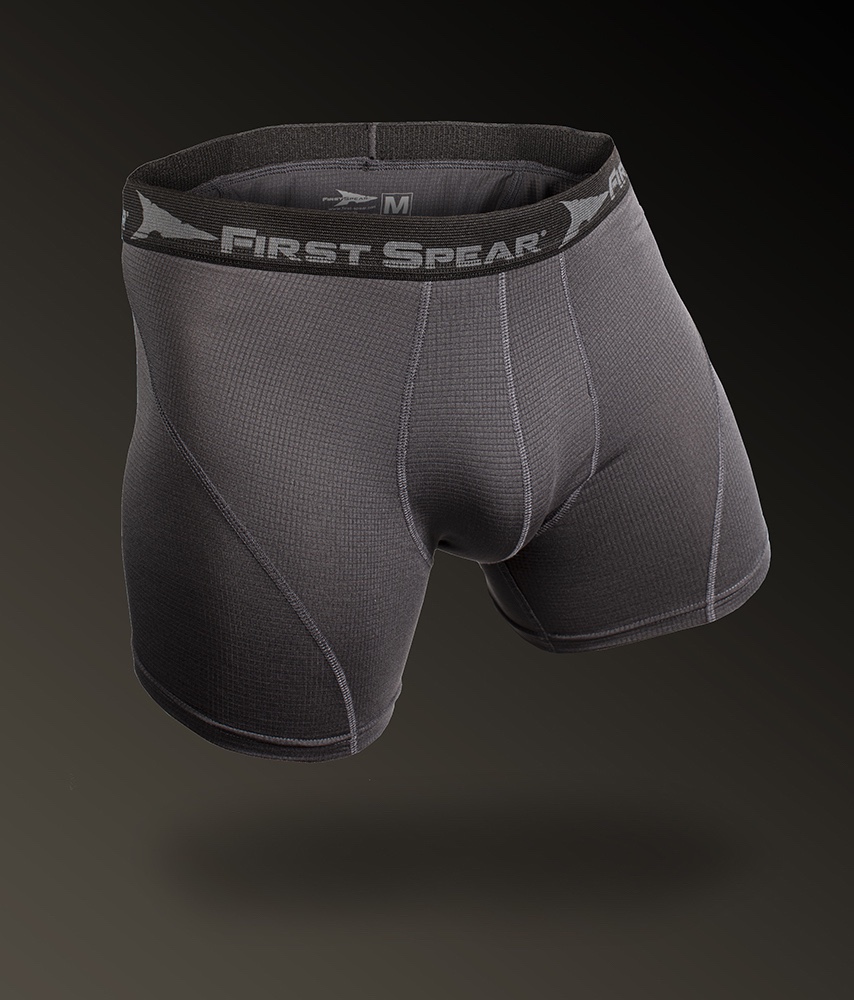
FirstSpear Friday Focus: Performance Briefs

Friday, April 23rd, 2021

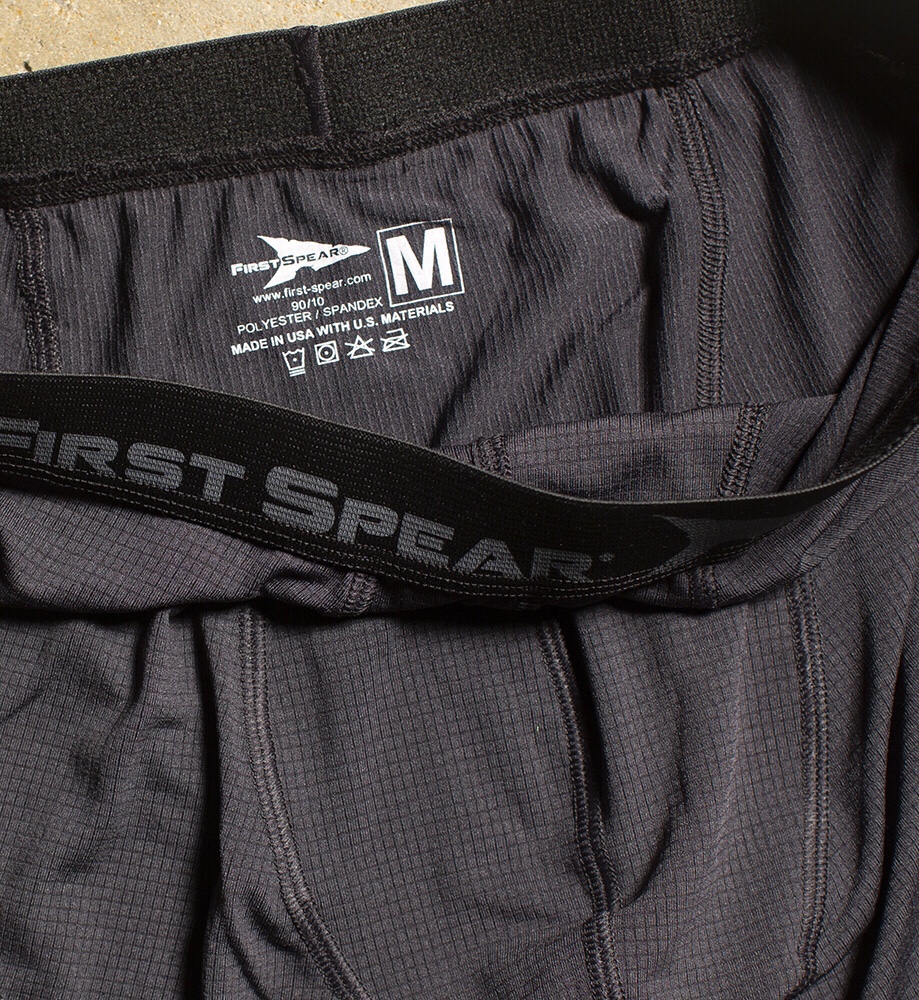
• 100% American Made with American Materials, Berry Compliant
• Ultra-lightweight flex grid blend
• Moisture Wicking / Anti-Microbial
• Low profile comfort waistband
• Enhanced front panel for extra support
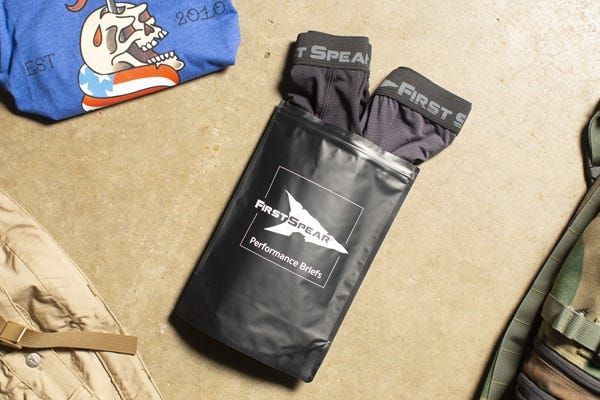
• Pack of 2

FirstSpear Performance Briefs are packed full of features. Constructed from a flex grid polyester/spandex blend allows the Briefs to be extremely lightweight and breathable which translates to all-day comfort.

“Very impressed with the fit and comfort. They don’t ride up, they stay cool, and they breath very well. The waistband is super nice and doesn’t dig in like some other brands of athletic wear tend to do. Tagless design is a nice touch too, plus I’m happy to support an American-made product.” — Online Review

“The Best underwear I have ever used.

I’ve been using these underwear on the job. My requires me to wear full coveralls in a very HOT production factory environment, and requires me to walk 5-8 miles per day. These underwear are by far are the most comfortable and durable I have found! Plus USA made is an absolute must for me. I highly recommend these underwear for physically active jobs. FirstSpear high quality!”
—Online Review

Superimposed flat seam technology and a soft brushed elastic waistband that won’t roll over and stay where you want it. The flex grid is a four-way stretch design with exceptional antimicrobial and moisture-wicking properties. Extra room built into the front panel for extra support. Sold as a two-pack in graphite and black. They are 100% Berry Compliant; made in the USA with USA materials.

For more information, check out www.first-spear.com/performance-briefs.

New Process Breaks Down Biodegradable Plastics Faster

Friday, April 23rd, 2021

Invention Could Solve Waste Management Challenges on the Battlefield


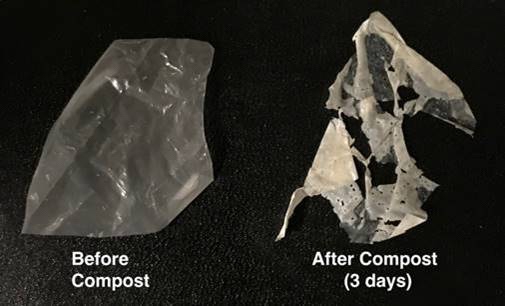
RESEARCH TRIANGLE PARK, N.C. — With Army funding, scientists invented a way to make compostable plastics break down within a few weeks with just heat and water. This advance will potentially solve waste management challenges at forward operating bases and offer additional technological advances for American Soldiers.

The new process, developed by researchers at University of California, Berkeley and the University of Massachusetts Amherst, involves embedding polyester-eating enzymes in the plastic as it’s made.

When exposed to heat and water, an enzyme shrugs off its polymer shroud and starts chomping the plastic polymer into its building blocks — in the case of biodegradable plastics, which are made primarily of the polyester known as polylactic acid, or PLA, it reduces it to lactic acid that can feed the soil microbes in compost. The polymer wrapping also degrades.

The process, published in Nature, eliminates microplastics, a byproduct of many chemical degradation processes and a pollutant in its own right. Up to 98% of the plastic made using this technique degrades into small molecules.

“These results provide a foundation for the rational design of polymeric materials that could degrade over relatively short timescales, which could provide significant advantages for Army logistics related to waste management,” said Dr. Stephanie McElhinny, program manager, Army Research Office, an element of the U.S. Army Combat Capabilities Development Command, known as DEVCOM, Army Research Laboratory. “More broadly, these results provide insight into strategies for the incorporation of active biomolecules into solid-state materials, which could have implications for a variety of future Army capabilities including sensing, decontamination, and self-healing materials.”

Plastics are designed not to break down during normal use, but that also means they don’t break down after they’re discarded. Compostable plastics can take years to break down, often lasting as long as traditional plastics.

The research teams embedded nanoscale polymer-eating enzymes directly in a plastic or other material in a way that sequesters and protected them until the right conditions to unleash them. In 2018, they showed how this works in practice. The team embedded in a fiber mat an enzyme that degrades toxic organophosphate chemicals, like those in insecticides and chemical warfare agents. When the mat was immersed in the chemical, the embedded enzyme broke down the organophosphate.

The researchers said protecting the enzyme from falling apart, which proteins typically do outside of their normal environment, such as a living cell, resulted in the key innovation.

For the Nature paper, the researchers showcased a similar technique by enshrouding the enzyme in molecules they designed called random heteropolymers or RHPs, and embedding billions of these nanoparticles throughout plastic resin beads that are the starting point for all plastic manufacturing. The process is similar to embedding pigments in plastic to color them.

“This work, combined with the 2018 discovery, reveals these RHPs as highly effective enzyme stabilizers, enabling the retention of enzyme structure and activity in non-biological environments,” said Dr. Dawanne Poree, program manager, ARO. “This research really opens the door to a new class of biotic-abiotic hybrid materials with functions only currently found in living systems.”

The results showed that the RHP-shrouded enzymes did not change the character of the plastic, which could be melted and extruded into fibers like normal polyester plastic at temperatures around 170 degrees Celsius (338 degrees Fahrenheit).

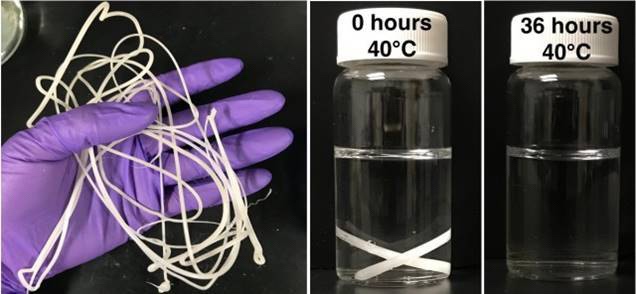
To trigger degradation, it was necessary only to add water and a little heat. At room temperature, 80% of the modified PLA fibers degraded entirely within about one week. Degradation was faster at higher temperatures. Under industrial composting conditions, the modified PLA degraded within six days at 50 degrees Celsius (122 degrees Fahrenheit).

Another polyester plastic, PCL (polycaprolactone), degraded in two days under industrial composting conditions at 40 degrees Celsius (104 degrees Fahrenheit). For PLA, the team embedded an enzyme called proteinase K that chews PLA up into molecules of lactic acid; for PCL, they used lipase. Both are inexpensive and readily available enzymes.

“If you have the enzyme only on the surface of the plastic, it would just etch down very slowly,” said Ting Xu, UC Berkeley professor of materials science and engineering and of chemistry. “You want it distributed nanoscopically everywhere so that, essentially, each of them just needs to eat away their polymer neighbors, and then the whole material disintegrates.”

Xu suspects that higher temperatures make the enshrouded enzyme move around more, allowing it to more quickly find the end of a polymer chain and chew it up and then move on to the next chain. The RHP-wrapped enzymes also tend to bind near the ends of polymer chains, keeping the enzymes near their targets.

The modified polyesters do not degrade at lower temperatures or during brief periods of dampness. For instance, a polyester shirt made with this process would withstand sweat and washing at moderate temperatures.

Soaking the biodegradable plastic in water for three months at room temperature did not cause it to degrade, but soaking for that time period in lukewarm water did.

Xu is developing RHP-wrapped enzymes that can degrade other types of polyester plastic, but she also is modifying the RHPs so that the degradation can be programmed to stop at a specified point and not completely destroy the material. This might be useful if the plastic were to be re-melted and turned into new plastic.

“Imagine, using biodegradable glue to assemble computer circuits or even entire phones or electronics, then, when you’re done with them, dissolving the glue so that the devices fall apart and all the pieces can be reused,” Xu said.

This technology could be very useful for generating new materials in forward operating environments, Poree said.

“Think of having a damaged equipment or vehicle parts that can be degraded and then re-made in the field, or even repurposed for a totally different use,” Poree said. “It also has potential impacts for expeditionary manufacturing.”

In addition to the Army, the U.S. Department of Energy with assistance from the UC Berkeley’s Bakar Fellowship program also funded the research.

By U.S. Army DEVCOM Army Research Laboratory Public Affairs

Interagency Virtual Training for the Civil Affairs Professional of Tomorrow

Tuesday, April 20th, 2021

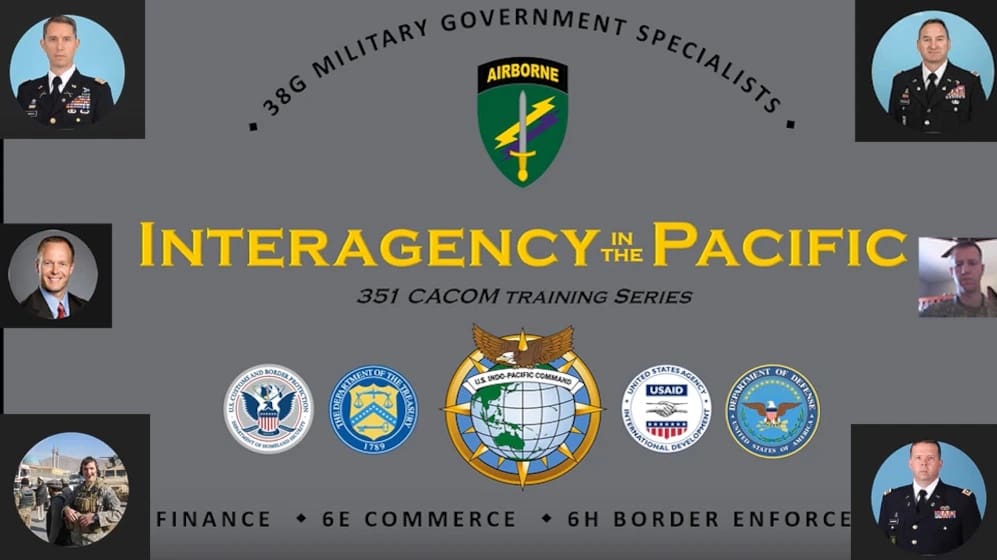
MOUNTAIN VIEW, CALIF. – Various Soldiers within the civil affairs community from across the U.S. participated in the ‘Interagency in the Pacific’ virtual training conducted on March 20, 2021. The virtual training, instructed by multiple U.S. government agency representatives, focused on the economic, security, and structural environment of a country within the operational area. This type of instruction enhances U.S. military forces’ holistic understanding of the cognitive environments in which they operate, it is instrumental to the success of the mission, and the wellbeing of the personnel on the ground. For civil affairs Soldiers, possessing the right information could be pivotal to future relationships with international partners. Moreover, Soldiers having the full perspective about a government can mean the difference between mission success or mission failure.

“The Interagency in the Pacific training was very good for the kinds of missions we perform. The insights into China’s belt and road investment strategy inform us of what our Asian partners see when they consider China’s overtures. The briefings from U.S. Customs and Border Protection taught us that some of our foreign partners have built their own customs and processes on U.S. models,” said Lt. Col. Anthony Alfidi, a participant of the training and a military intelligence Soldier with the 351st Civil Affairs Command out of Mountain View, Calif.

The training ranged from an in-depth review of how a financial system works in other countries to how specific security processes were in place to prevent drug trafficking across national borders, providing civil affairs Soldiers with the knowledge of what to look for while on mission to another country.

“I think that we need more interagency training,” said Alfidi, “civil affairs Soldiers may end up working with other USG officials at local levels, provincial levels, and national levels. CA practitioners need to know what the other agencies can accomplish.”

Alfidi mentioned how knowing more about commerce and treasury helps promote trade and investment with a country. He explained how commerce can sponsor trade missions for U.S. firms and treasury which can assist countries in making their budgeting systems more transparent. As a result, the country can possibly benefit through increased stability.

Alfidi also observed that well informed civil affairs Soldiers tend to be better equipped to function within their operational environment and be effective and efficient when operating within the given parameters of their mission, and training like the Interagency in the Pacific program are designed to promote this level of readiness.

“This training is valuable to civil affairs because no functional specialty such as public health, governance, infrastructure, rule of law, etc., exists in a vacuum. We must have a basic understanding of the other functional specialties and our civilian counterparts to be effective in the field, and execute a whole-of-government approach as doctrinally intended,” said Lt. Col. Leah Trapp, a participant and Soldier with the 322nd Civil Affairs Brigade. “For example, rule of law is the basis for any government, which then decides what policies to enact and fund, such as a national health system. In turn, the national health system relies on infrastructure, like clinics, roads to transport supplies and specimens for testing, laboratories, hospitals, etc.”

The better prepared, the higher success that a civil affairs unit will have on the ground when operating on foreign soil. Trapp would like to see this training expanded, formalized, and adopted by the Civil Affairs Command and Training and Doctrine Command to ensure civil affairs generalists and functional specialists have a mutual understanding of how to best employ functional specialists.

Lt. Col. Charles Arensman, economist with the 351st CACOM, stated that, to improve the functionality of civil affairs teams when deployed, the Interagency in the Pacific virtual training would assist in providing a baseline understanding for professional development among 38G personnel.

“The FxSp [functional specialties] is what we’re composed of, and for the last few months, our section’s chief, Col. Bradford Hughes, has tried to promote subject matter expertise within our teams. As an economist in the unit, I put this material together to give our personnel a baseline understanding on interagency economics of the Indo-Pacific command,” said Arensman.

Arensman coordinated with speakers from organizations which represented the whole of the government or this training and based on expertise. This is the information which primarily assists civil affairs personnel, or FxSp teams, during overseas missions.

“Most important thing to know is your partners to the left and to the right of you. The interagency perspective shows us who is out there and what they’re doing In the INDOPACOM,” said Arensman, “and all this is thanks to Col. Hughes, he has done an exceptional job shepherding and growing the professionalism of the FxSp through his leadership and efforts.”

The reason for this training and how or why it was initiated can best be answered by Maj. Dale Kooyenga, civil affairs officer with the 352nd CACOM and a member of the U.S. Army Civil Affairs and Psychological Operations Command (USACAPOC) Strategic Initiatives Group (SIG). This group is developing a 38G program while recruiting the nation’s top candidates by creating institutional alignments with universities and other organizations.

“About a year ago we started doing online training, in part because of the coronavirus but also in part to have a team of specialists that were geographically dispersed, operationally it made sense,” said Kooyenga. “We are trying to create training content that is unclassified and available to a wider audience.”

The SIG training group started about a year ago around February 2020 and is led and produced by 38Gs and or their partners in the civilian world. The training conducted is being recorded to develop a library of content which will then be made available to the civil affairs community and other interested parties.

“It was the cultural heritage team who got this initiative started, this team is the modern day ‘monuments men’ movie equivalent,” said Kooyenga, ”they started doing a lot of training virtually, initially the training was scheduled to be in person, but they soon changed it to a virtual training because of COVID.”

Some of the training that has been conducted includes training on money laundering, interagency cooperation, training on ‘The Hague Convention,’ and other training related specifically to civil affairs topics. But for 38Gs the ‘Interagency in the Pacific’ training is the first of its kind and it is critical to be able to operate while conducting civil affairs missions.

“It is not a mission that the department of defense or specifically USACAPOC can do on its own. It will take tremendous coordination across other U.S. government agencies and private sector partners to really understand and assess the situation and coordinate. It would not only be ineffective for U.S. personnel within the DOD to operate in a vacuum, it would actually be harmful to the overall mission,” said Kooyenga.

As stated by Kooyenga, the intent of these training sessions is to provide a database of quality information which will provide officers and non-commissioned officers with the insight on complex civil affairs missions. Moreover, civil affairs personnel should know that there are partners in other institutions available to coordinate with who may also provide insight on specific topics or areas.?

Story by Rosario Urquieta, 351st Civil Affairs Command

goTenna Pro X Deployment Kit Tutorial

Sunday, April 18th, 2021

This is a tutorial on how to use the goTenna Pro X Deployment Kit. With this kit, your team can create an ad hoc mobile mesh network with up to 30 VHF or UHF devices at a moment’s notice.

This compact and ruggedized network management kit is used by teams operating goTenna Pro X devices and third-party software like ATAK in complex environments where no service is not an option.

For more information on the goKit, visit: gotennapro.com/products/gotenna-pro-x-deployment-kit

SCUBAPRO Sunday – Eugene Stoner and the M63/M63A Stoner Machine Gun

Sunday, April 18th, 2021

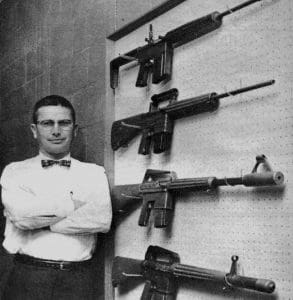
Eugene Morrison Stoner is the father of the AR family of rifles (and everyone knows AR stands for Armalite Rifle), that includes the AR-5, AR-15 and the M16. The family of M16s are one of the most iconic weapons engineered in world history. Stoner worked for the Vega Aircraft Company installing armament units after graduation from a vocational high school and before joining the Marine Corps right after Pearl Harbor was attacked. He served in the Pacific until the end of the war. In 1945 he went to work for Whitaker, an aircraft equipment maker in 1954, he transferred to Fairchild Engine & Airplane Corporation as chief engineer for a newly formed small division called Armalite, which was headed by George Sullivan, a patent counsel for Lockheed Corp. They met at a local range, where Sullivan was testing a new prototype for an Air Force survival rifle.

The AR5, is the product of Eugene Stoner’s feedback on the survival rifle. The AR5 is now better known as the AR7, or Henry Rifle’s US Survival Rifle. Stoner finished the first run of the ArmaLite AR-10 design in 1955. This was a game-changer in the world of small arms – a firearm that was small, quick to shoot, and didn’t weigh a ton. When the AR-10 was chambered for the 7.62x51mm NATO. When it was changed to chamber the new .223 Remington round its name was changed to the AR-15. Stoner’s name would go down in history if he had done nothing but build the AR-15, but he did so much more than that. He was a self-made man with only a high school education. Stoner changed the world as we know it forever, in addition to changing the landscape of American firearms, as well as the world stage, by inventing the M16. That gun, along with the AK (idea stolen from WW2 German guns) family of weapons, are the two most famous guns globally. He also designed one of the most iconic weapons of the Vietnam War and SEAL Team’s history. Eugene Stoner, left ArmaLite around 1961 to join Cadillac Gage Corp. There he started to build an entirely new set of weapons.

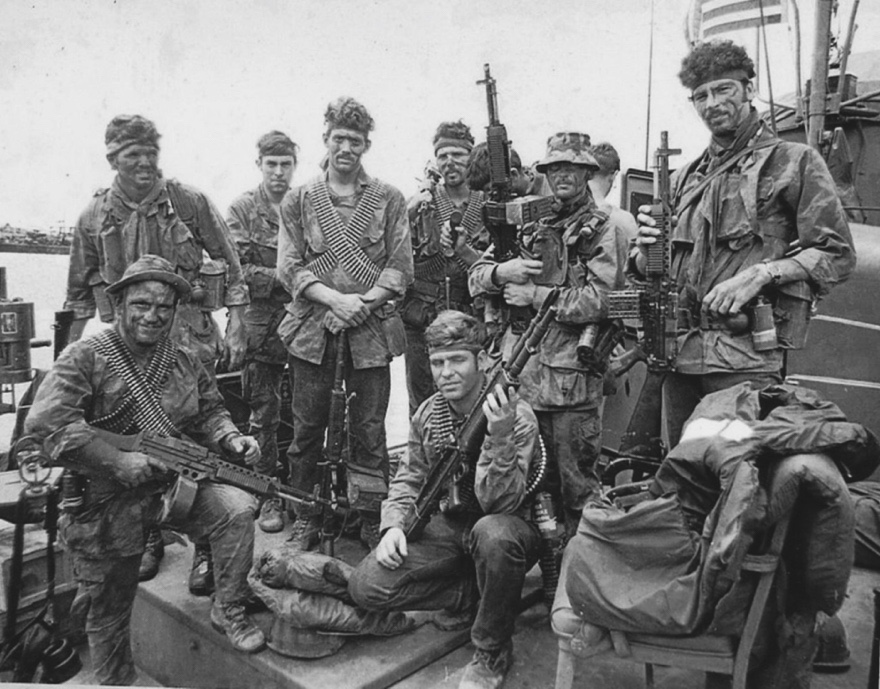
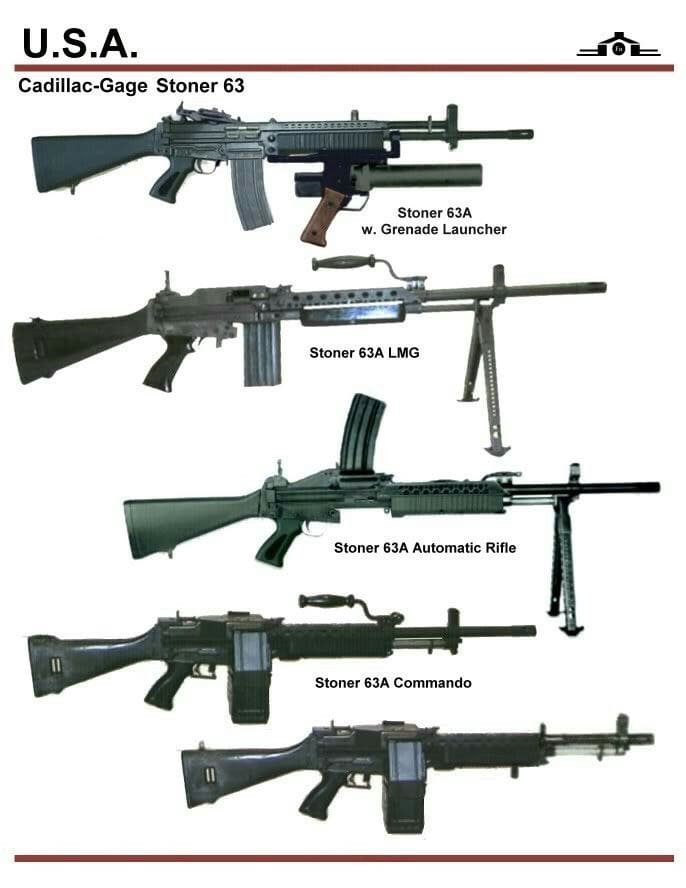
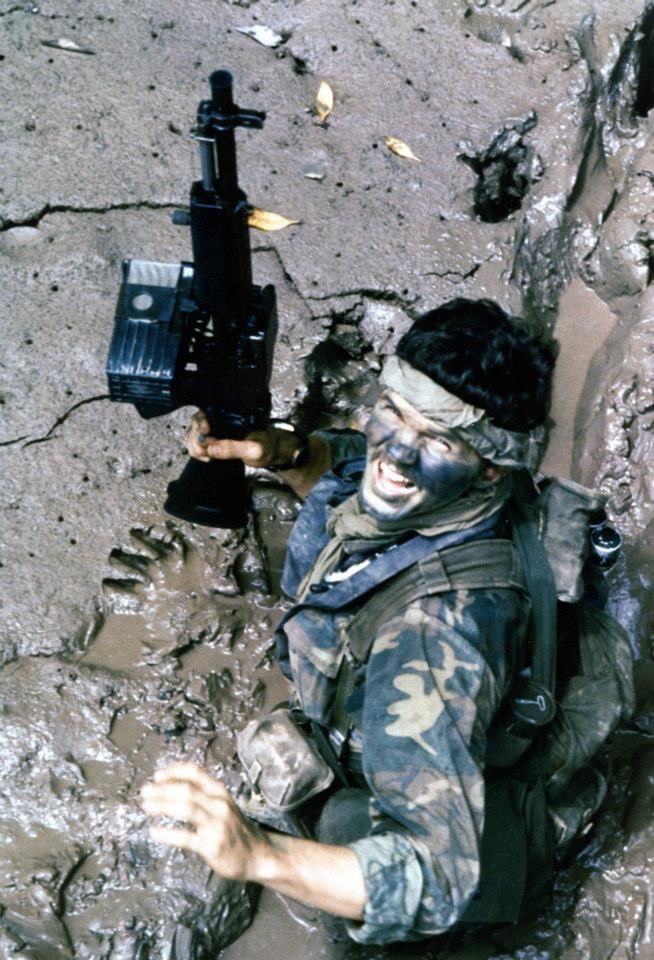
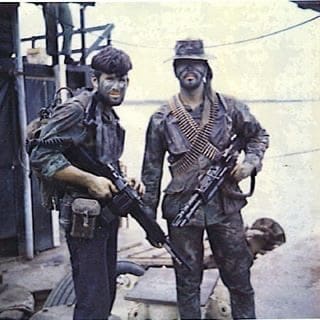
In 1962, known as Stoner 62, the first version, chambered the 7.62x51mm NATO ammunition. Later that year, it was changed to chambered for 5.56mm to help save weight. The name also changed to the Stoner 63. That system, developed and promoted until the early 1970s, was extensively tested as the XM22 (Stoner 63A rifle), XM23 (Stoner 63A carbine), and XM2077 by the U.S. military (light machine gun with belt feed). However, the Mk.23 model 0 belt-fed light machine gun configuration was used in small numbers by both the Navy and some Marines in Vietnam. In general, the Stoner system was somewhat too costly and also slightly over-complicated for a dedicated light machine gun, though having the advantages of modularity and interchangeability of parts allowed for great versatility in tactical use. The Stoner was known for being a little finicky when cleaning and maintaining, but reliable if proper care was taken. Overall, between 1962 and 1971, some 3,500 to 4,000 Stoner M63 weapon kits were made. Of those, some 2400 Stoner 63 Light machine guns were purchased by the U.S. Navy for Special Forces in Vietnam and about 100 more were purchased for the enhanced Mk.23 mod.0 variant. Starting in 1963, the Stoner 63 was used in combat in Vietnam, primarily in the hands of SEAL Teams.

The Stoner machine gun was developed to maximize firepower. The versatility of the Stoner 63 made it the perfect weapons system for the newly minted SEAL teams during the Vietnam War. SEAL Teams One and Two evaluated the 63A, saying that the weapon was “significantly superior” to the M60 machine gun and suggested at least six guns for every 12-man SEAL platoon. It was also claimed that immediate action drills and tactics for contacts with the enemy were based around the weapon system and were actively established by SEAL platoons to fit with the 63A.

One of the last times the Stoner was used by the U.S. Military was by the Marines in limited numbers during the 1983 invasion of Grenada.  Despite its success, the Stoner 63 never saw wider acceptance. After the Army provided the 63A Light Machinegun (LMG) version for evaluation to some Green Berets in the 1970s, the branch concluded that the unique platform was too tricky for battlefield maintenance,  which is ironic, given that it was the unique recoil buffering mechanism of the Stoner 63 that helped make the platform so flexible in the first place, in combination with the multi-use receiver.

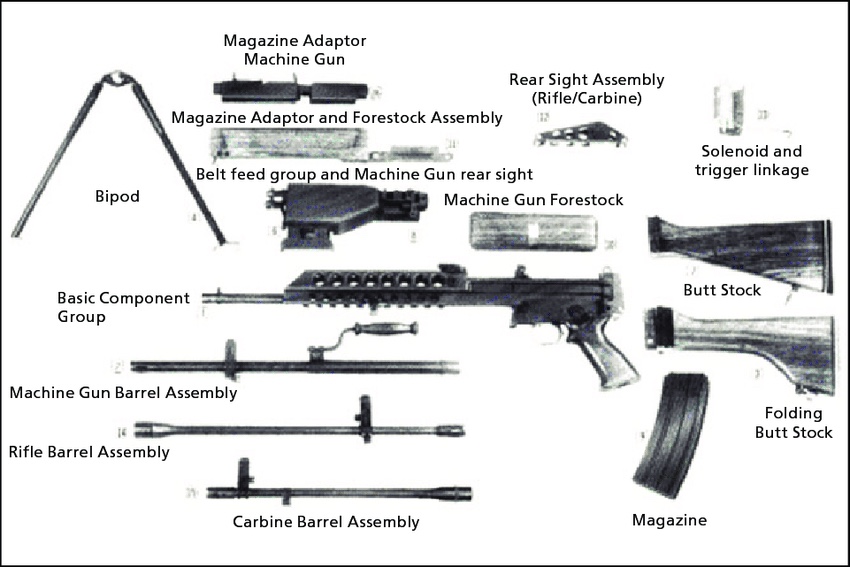
The Stoner 63 framework has several barrel types for LMG models, with different lengths and profiles. Small, fluted barrels were used by the Navy Mark 23 model 0 machine guns, but other models (with long barrels) also saw action in Vietnam.

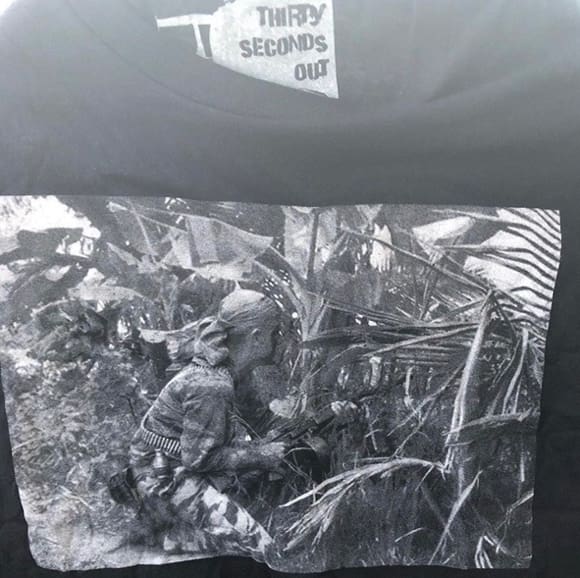
A universal bolt group is used in the stamped steel receiver, with a multi-lug rotating bolt and a long-stroke gas piston with a gas tube. For the attachment of all other sub-assemblies and the quick-detachable barrel, the receiver also has many sets of mounting points. The receiver is so orientated in the rifle. The carbine configuration is such that the gas device lies above the barrel and the feed unit’s mounting points are below the receiver. Some pictures are so iconic people make shirts out of them( Thirty Seconds Out)

The receiver is turned ‘upside down’ in all machine gun setups, either belt or magazine fed, with the gas system being below the barrel, ejection on the left side, and the feed unit above the receiver. The trigger unit has no hammer in the machine gun configuration; instead, its sear interoperates with the cut in the gas piston rod, only allowing fully automatic firing, and only from the open bolt. The magazine feed unit can handle patented curved box magazines and can be used to configure both rifle and machine gun. It was only possible to use the belt feed unit in machine gun setups.

Early guns had a left-side feed, which often triggered jams due to ejected shells’ reflection back into the ejection window. Later guns had a right-side feed that eliminated this problem. The 100-round box containers, made of plastic, were issued with late production LMG’s with right-side feed. All the containers were clipped to the receiver’s rim, and various rear sight units were available for different setups, with the front sights being mounted on quick detachable barrels. The charging handle was located on the right side of the bolt carrier for the earlier Stoner 63 device weapons; the safety and fire selector were merged into one control, located on the trigger unit’s left side. The charging handle was attached to the gas piston rod on the modified Stoner 63A device and projected from the top in the rifle/carbine configuration or from the bottom in the MG/LMG configuration; safety was formed as a separate lever on the front of the trigger guard, with the fire mode selector still located above the pistol grip on the side of the trigger unit. Plastic was the traditional buttstock and forearm. All Stoner 63 light machine guns were supplied with detachable folding bipods; although Cadillac Gage Corp produced tripods and even vehicle mounts, it seems that they were never really used in combat.

The Stoner machine gun is one of the most iconic weapons of the Vietnam War. I always think about buying an airsoft version just to frame and hang in my garage. But, that said, I started out as a 60 gunner so, if anything, I would have to get an Echo Three first. If you have ever had the opportunity to fire one, you are a very lucky person. Well not in the “hey those guys are shooting at us, I should return fire with my Stoner”. I mean more of the “Hey, I am shooting a Stoner on the range”……not that shooting back at people that are shooting at you is bad thing.

Get Back Outdoors!

Saturday, April 17th, 2021

MIAMI, OKLA. – After a long winter, plus indoor quarantining due to COVID-19, it’s time to get back outdoors. Many families are planning their camping trips in anticipation of good weather and as a way to safely take a break from COVID-19 restrictions.

Both RVing and camping are seeing a strong upwards trend for families. Whether you’re a seasoned camper or a first-time RVer, it’s essential to be prepared before you hit the open road.

Prepare: Drinkable Water

Ensuring you have a surplus of drinkable water for the duration of your trip needs to be a top priority. As you plan, take a cue from experts in preparedness, the U.S. Armed Forces, and put Scepter Military Water Cans on your “must-have” list of gear. Standard issue to the U.S. and Canadian Armed Forces, these easy-to-carry, virtually indestructible containers are up to the task of camping trips, sports expeditions, boating and more.

Scepter Military Water Cans are BPA-free to keep chemicals, odors and tastes out of your water. They’re also corrosion- and fungus-resistant, so your drinking water is clean and safe. A quick-pour option makes it possible to empty up to five gallons of water in under seven seconds through the four-inch wide cap opening. Or, there are two ways to pour slowly when you’re at your campsite. There is a small cap on the top (along with air secondary air vent) built into the major cap. This makes it easy to pour normally. An optional dispenser spout is also available for when you need to fill cups or bottles.

Hassle-Free Fuel Options

Having a comfortable and convenient way of refueling sporting equipment, recreation vehicles and other gear can make your travel prep and on-the-go fill-ups clean, fast and hassle-free.

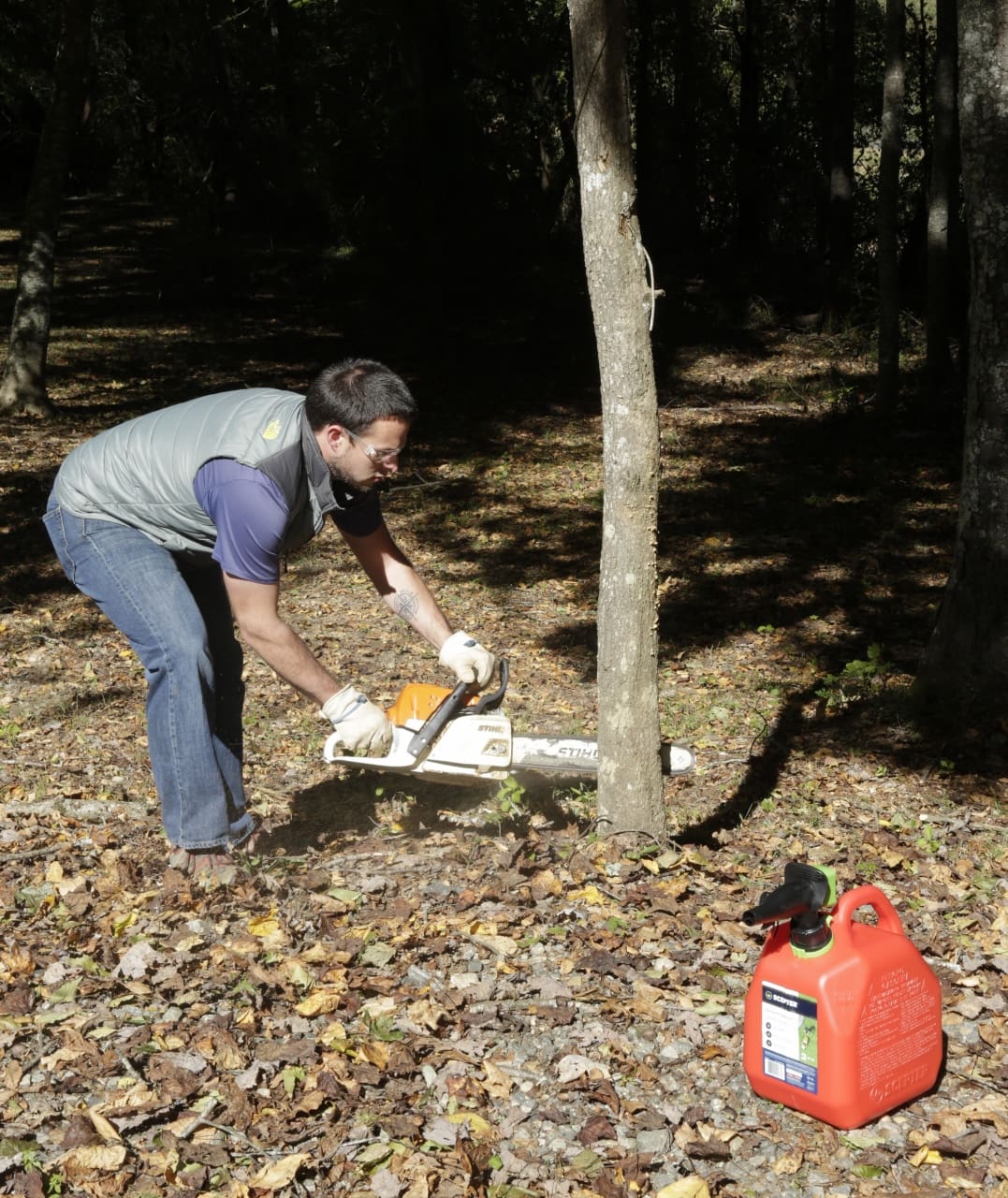
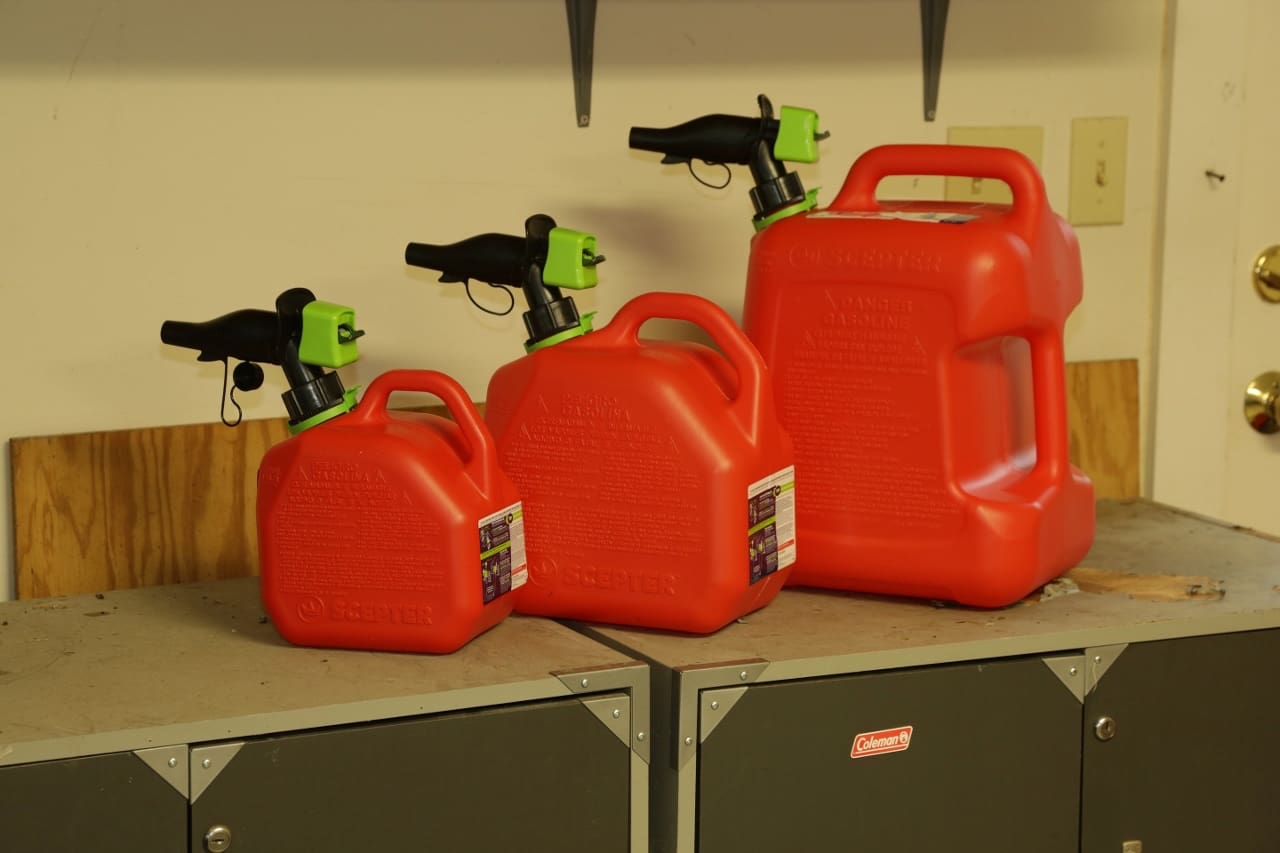
The Scepter SmartControl family of fuel containers makes refueling hassle-free while on vacation. The line-up is available in one-, two- and five-gallon sizes for gasoline, diesel and kerosene. The containers come in different shapes and with different handle options to fit the application, for controllable flow and no-mess usage.

With a single motion, the user simply presses the lever up on the SmartControl container to unlock the child safety feature. Then, with the palm of the hand you squeeze the large button. The first squeeze is done when upright to vent the container. Next, the nozzle gets placed over the tank. A second gentle squeeze allows you to pour just the right amount of fuel for your outdoor activity.

 Scepter Military Water Cans are available from Amazon, Walmart®, Grainger®, Tech Supply and Services, Bottom Line Military Sales, Lexington Container Company, DS Tactical and JerryCan.ee. Scepter SmartControl fuel containers can be found in The Home Depot®, Walmart®, Lowe’s®, AutoZone®, Pep Boys, Target and Northern® Tool + Equipment stores. Visit www.scepter.com for more information.