FirstSpear

Archive for the ‘Guest Post’ Category

MATBOCK Monday Tarsier Eclipse

Monday, April 27th, 2020

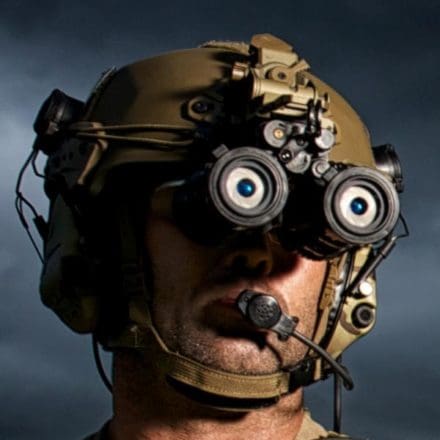
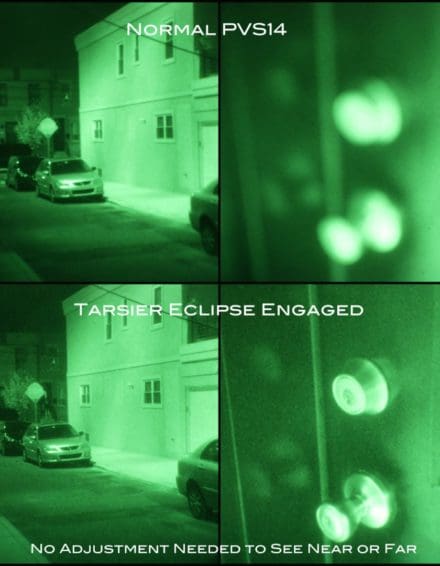
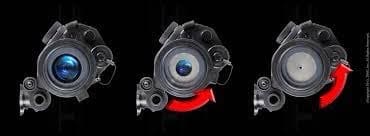
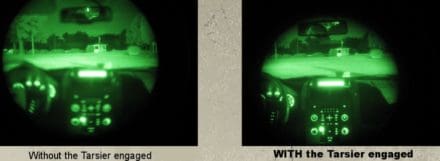
Good morning and Happy MATBOCK Monday, The Tarsier Eclipse ™ has been a staple on the battlefield for years, but now is the time to see it in action! Check in Monday at 4:30 PM EST to see it live. Please bring questions as we will be conducting a live Q&A.

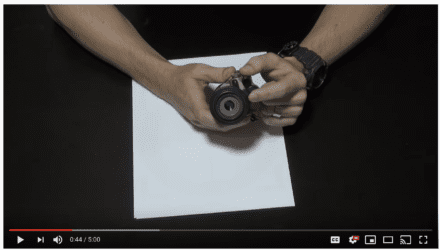
Click below for a quick overview. We will also be conducting a live demonstration Monday night at 4:30 PM EST!

More Great Images

Remember to tune in Monday at 4:30 PM EST as we do a live demo of the Tarsier Eclipse and answer your questions!

MATBOCK Monday link: zoom.us

SCUBAPRO Sunday – Special Forces Watches in the NAM

Sunday, April 26th, 2020

When I first joined the Navy, they were switching from a version of the Type l, and ll to the Timex Iron man watches. I had never seen any of the Type l and ll, (Patch’s Watson had one he always had on at the reunions) but what I do remember is walking thru the compound and seeing one of the supply people sitting out onside with a hammer breaking all the watched that looked like type l and ll so that we could get more Timex. You can’t buy new ones until the old ones are gone. I have always heard that Rolex had made a watch for the Teams. I would love to have one of those watches, knowing the history of what it has seen, and it had been a part of.  

The Benrus Type l and later the Benrus Type ll was explicitly made for US Special Forces. They were mainly a dive watch, but they did make ones for land navigation, but they were also waterproof. Here are two articles that talk about watches. Some of the most iconic pictures from the early days of SEAL teams and Special Forces, you can see them wearing the watches.

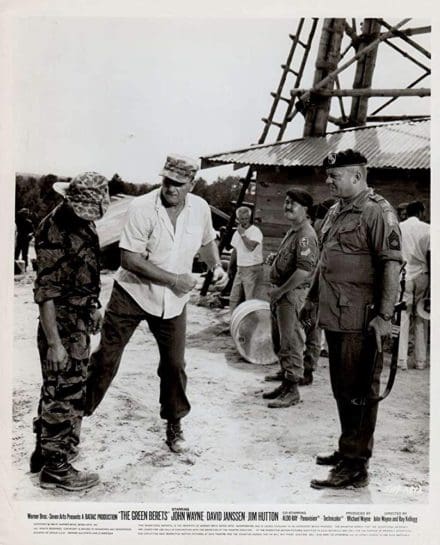
Even Aldo Ray wore one in the movie The Green Berets. Why do I point that out? Well MSgt Muldoon rocks in that movies, and he was UDT in WW II. When he rips into the reporter about communist domination, that is one of the best scenes ever. I am not a fan of reporters.

huckberry.com/journal/posts/the-special-forces-watch-that-never-existed

wornandwound.com/benrus-type-i-and-type-ii-mil-w-50717-military-dive-watches

Army Laboratory Tests For Best Homemade Face Covering Materials

Sunday, April 26th, 2020

Aberdeen Proving Ground, Md. — Now that the Centers for Disease Control and Prevention, the Department of Defense, and many governors are recommending that people wear face coverings when out in public and unable to maintain proper social distancing, the Combat Capabilities Development Command (CCDC) Chemical Biological Center is using its more than 100 years of experience designing chemical and biological agent protective masks to determine the best material to use for making a homemade mask.

Over the last month, the Center has been contacted by more than 30 defense agencies, federal agencies and health organizations to see if its experts can help with the national shortage of personal protective equipment (PPE). The Center is one of only a handful of agencies that is experienced in performing tests that precisely measure materials’ filtration efficiencies in strict accordance with National Institute for Occupational Safety and Health (NIOSH) standards. It is also one of a very few organizations that have the Model 8130 Automated Filter Tester, which is no longer in production. So the Center was the obvious choice to perform this research.

“The challenge is to pick a material that effectively blocks the virus particles from going through the material while not being too hard to breathe through,” said David Caretti, chief of the Center’s Chemical Biological Protection & Decontamination Division and leader of the team testing homemade face covering materials. “If the resistance is too high, airflow will simply bypass the covering and go around the edges.”

“We knew that claims about masks and face coverings were exploding all over the internet, and we wanted to make sure that any decisions about materials these agencies make will be based on proven science,” said Caretti.

The Center performs its testing by spraying a salt aerosol at a swatch of material. The suspended salt particles are 0.2 to 0.3 microns in size, which is the hardest size for any material to filter, which is why that size is used in testing. The corona virus is 0.125 microns, making it a very close match. The testing team simply measures the density of salt aerosol suspended in the air on one side and compared it to the density on the other side after it passes through the material.

The team started out by testing materials sent to them by organizations seeking their expertise, then broadened out to testing materials likely to be found in the home that members of the public could use to make their own face coverings.

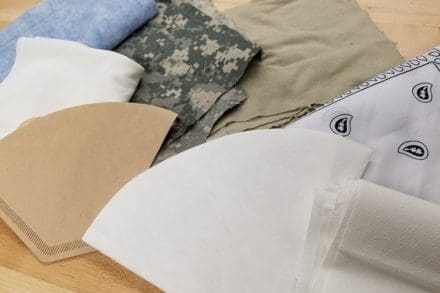
They found that the best readily available material to use in a homemade face covering is four-ply microfiber cloth which can be found in the cleaning section of most big box stores. It filters out over 75 percent of particles. In comparison, the N95 mask used by healthcare workers in hospitals can filter 90 percent of particles. The team also found that even a polyester bandanna can be reasonably effective if it is used in layers. It will filter out 40 percent of suspended particles.

Thus far, the Center has tested more than 50 materials and continues to test new materials. Armed with this information, the Center is now able to give other agencies the best filtration efficiency information possible for them to pass on to their stakeholders.

By CCDC Chemical Biological Center

SureFire Spotlight: The ProComp

Saturday, April 25th, 2020

SureFire Spotlight videos are a high level rundown of specific products. This one focuses on the ProComp.

The advanced SureFire ProComp muzzle brake, greatly reduces both recoil impulse and muzzle rise so that the weapon tracks straight back to keep you on target for faster shot-to-shot recovery. Its patented Impulse Diffusion design minimizes side blast and rear-directed concussion effects. The ProComp duplicates the design of the SureFire SOCOM SFMB muzzle brake, but unlike the latter it cannot be used to mount SureFire SOCOM suppressors. The ProComp is offered in both 5.56 and 7.62.

ProComp 5.56

ProComp 7.62

New Design Could Make Fiber Communications More Energy Efficient

Friday, April 24th, 2020

RESEARCH TRIANGLE PARK, N.C. — Researchers say a new discovery on a U.S. Army project for optoelectronic devices could help make optical fiber communications more energy efficient.

The University of Pennsylvania, Peking University and Massachusetts Institute of Technology worked on a project funded, in part by the Army Research Office, which is an element of U.S. Army Combat Capabilities Development Command’s Army Research Laboratory. The research sought to develop a new design of optical devices that radiate light in a single direction. This single-sided radiation channel for light can be used in a wide array of optoelectronic applications to reduce energy loss in optical fiber networks and data centers. The journal Nature published the findings.

Light tends to flow in optical fibers along one direction, like water flows through a pipe. On-chip couplers are used to connect fibers to chips, where light signals are generated, amplified, or detected. While most light going through the coupler continues through to the fiber, some of the light travels in the opposite direction, leaking out.

A large part of energy consumption in data traffic is due to this radiation loss. Total data center energy consumption is two percent of the global electricity demand, and demand increases every year.

Previous studies consistently suggested that a minimum loss of 25 percent at each interface between optical fibers and chips was a theoretical upper bound that could not be surpassed. Because data centers require complex and interwoven systems of nodes, that 25-percent loss quickly multiplies as light travels through a network.

“You may need to pass five nodes (10 interfaces) to communicate with another server in a typical medium-sized data center, leading to a total loss of 95 percent if you use existing devices,” said Jicheng Jin, University of Pennsylvania doctoral student. “In fact, extra energy and elements are needed to amplify and relay the signal again and again, which introduces noise, lowers signal-to-noise ratio, and, ultimately, reduces communication bandwidth.”

After studying the system in more detail, the research team discovered that breaking left-right symmetry in their device could reduce the loss to zero.

“These exciting results have the potential to spur new research investments for Army systems,” said Dr. Michael Gerhold, program manager, optoelectronics, Army Research Office. “Not only do the coupling efficiency advances have potential to improve data communications for commercial data centers, but the results carry huge impact for photonic systems where much lower intensity signals can be used for the same precision computation, making battery powered photonic computers possible.”

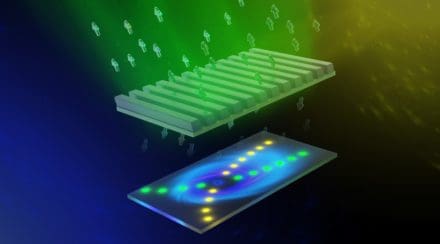
To better understand this phenomenon, the team developed a theory based on topological charges. Topological charges forbid radiation in a specific direction. For a coupler with both up-down and left-right symmetries, there is one charge on each side, forbidding the radiation in the vertical direction.

“Imagine it as two-part glue,” said Bo Zhen, assistant professor, department of physics and astronomy at University of Pennsylvania. “By breaking the left-right symmetry, the topological charge is split into two half charges – the two-part glue is separated so each part can flow. By breaking the up-down symmetry, each part flows differently on the top and the bottom, so the two-part glue combines only on the bottom, eliminating radiation in that direction. It’s like a leaky pipe has been fixed with a topological two-part glue.”

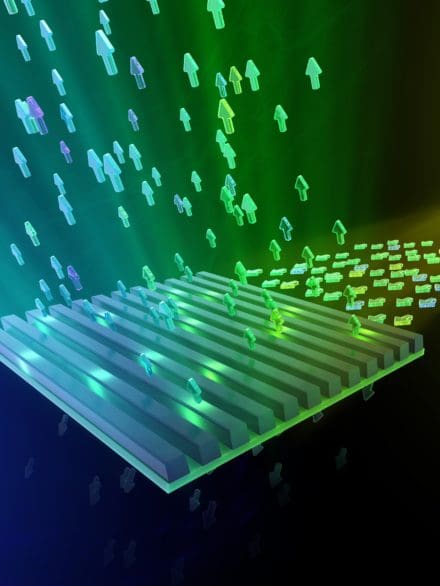
The team eventually settled on a design with a series of slanted bars, which break left-right and up-down symmetries at the same time. To fabricate such structures, they developed a novel etching method: silicon chips were placed on a wedge-like substrate, allowing etching to occur at a slanted angle. In comparison, standard etchers can only create vertical side walls. As a future step, the team hopes to further develop this etching technique to be compatible with existing foundry processes and also to come up with an even simpler design for etching.

The authors expect applications both in helping light travel more efficiently at short distances, such as between an optical fiber cable and a chip in a server, and over longer distances, such as long-range Lidar systems.

This project also received funding from the Air Force Research Laboratory, MIT Lincoln Laboratory, Natural Science Foundation of China, and HPCP of Peking University.

By US Army CCDC Army Research Laboratory Public Affairs

FirstSpear Friday Focus – New FirstSpear Duffel

Friday, April 24th, 2020

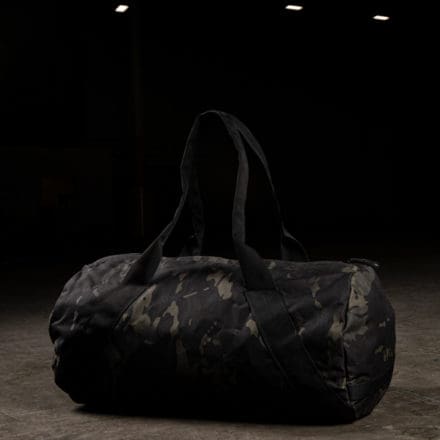
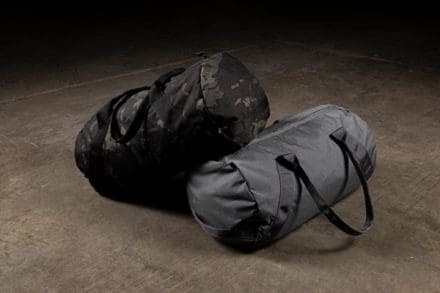
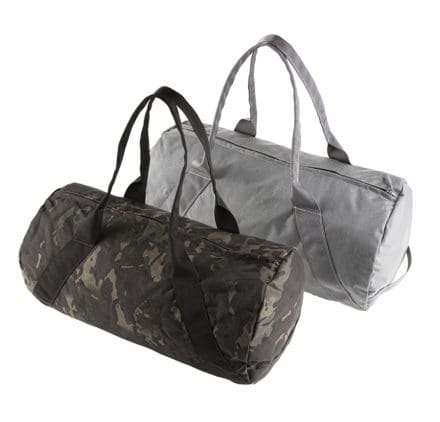
Today we are getting a look at an all new duffel from FirstSpear. Minimalistic design utilizing just a few materials to accommodate around 2000 cu in of storage in an incredibly light and simple platform.

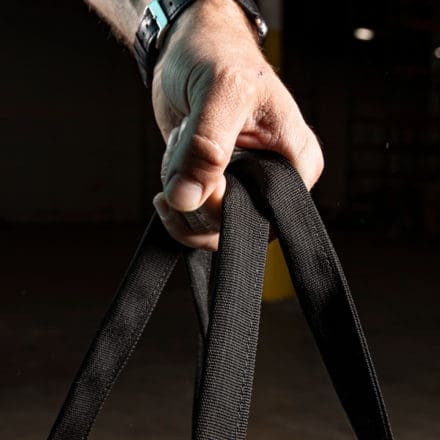
500D nylon construction with 2” webbing sewn into extra long carry handles allow this bag to carry heavy contents balanced and secure. Extra large zipper opening with premium hardware. The top features a webbing handle perfect for hanging the pack vertically in a locker. Another great all purpose bag you can use for anything from a rope or tool bag to a gym or range bag. 100% made in the USA . Available and now shipping.

Approximately 22”L x 10”W x 11xD

www.first-spear.com/duffle

New Mathematical Model Uses Information Theory to Improve Epidemiological Predictions

Thursday, April 23rd, 2020

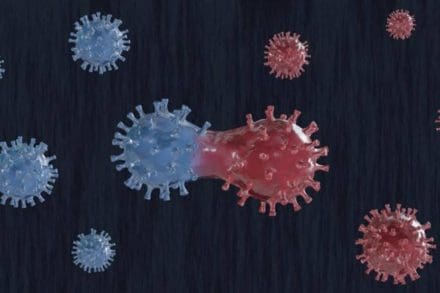
As the world grapples with the COVID-19 pandemic, a new mathematical model could offer insights on how to improve future epidemic predictions based on how information mutates as it is transmitted from person to person and group to group. The Army Research Office funded this model, developed by researchers at Carnegie Mellon University and Princeton University.

Researchers hope to improve future epidemic predictionsNew mathematical model uses information theory to improve epidemiological predictions

RESEARCH TRIANGLE PARK, N.C. — As the world grapples with the COVID-19 pandemic, a new mathematical model could offer insights on how to improve future epidemic predictions based on how information mutates as it is transmitted from person to person and group to group.

The U.S. Army funded this model, developed by researchers at Carnegie Mellon University and Princeton University, through the Army Research Laboratory’s Army Research Office, both elements of the Combat Capabilities Development Command.

The model suggests that ideas and information spread and evolve between individuals with patterns similar to genes in that they self-replicate, mutate and respond to selective pressure as they interact with their host.

“These evolutionary changes have a huge impact,” said CyLab faculty member Osman Yagan, an associate research professor in Electrical and Computer Engineering at Carnegie Mellon University and corresponding author of the study. “If you don’t consider the potential changes over time, you will be wrong in predicting the number of people that will get sick or the number of people who are exposed to a piece of information.”

In their study, published March 17 in the Proceedings of the National Academy of Sciences, the researchers developed a mathematical model that takes the evolutionary changes of both disease and information into consideration. The research tested the model against thousands of computer-simulated epidemics using data from two real-world networks: a contact network among students, teachers, and staff at a U.S. high school, and a contact network among staff and patients in a hospital in Lyon, France.

“We showed that our theory works over real-world networks,” said the study’s first author, Rashad Eletreby, who was a Carnegie Mellon doctoral candidate when he wrote the paper. “Traditional models that don’t consider evolutionary adaptations fail at predicting the probability of the emergence of an epidemic.”

The researchers said the epidemic model most widely used today is not designed to account for changes in the disease being tracked. This inability to account for changes in the disease can make it more difficult for leaders to counter a disease’s spread or make effective public health decisions such as when to institute stay at home orders or dispatch additional resources to an area.

“The spread of a rumor or of information through a network is very similar to the spread of a virus through a population,” said Dr. H. Vincent Poor, one of the researchers on this study and Princeton’s interim dean of engineering. “Different pieces of information have different transmission rates. Our model allows us to consider changes to information as it spreads through the network and how those changes affect the spread.”

While the study is not a silver bullet for predicting the spread of today’s coronavirus or the spread of misinformation, the authors say it is a big step.

In the future, the team hopes that their research can be used to improve the tracking of epidemics and pandemics by accounting for mutations in diseases and ultimately considering interventions like quarantines and then predicting how those interventions would affect an epidemic’s spread when the pathogen is mutating as it spreads.

“This work demonstrates the importance of basic research and the ability of scientists in various disciplines to inform each other’s work,” said Dr. Edward Palazzolo, program manager for the Social and Cognitive Networks Program at the Army Research Office. “Although in its early stages, these models show promise for understanding network diffusion in light of mutations.”

In addition to the Army, the National Science Foundation and the Office of Naval Research also supported this research. Other researchers co-authored the paper include Yong Zhuang and Kathleen Carley from Carnegie Mellon University.

By CCDC Army Research Laboratory Public Affairs

Defense Production Act Contract to Provide 39 Million Masks

Wednesday, April 22nd, 2020

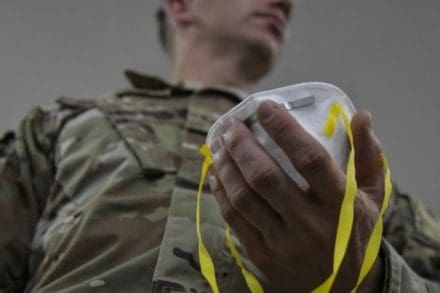
WASHINGTON — A Defense Department contract under the Defense Production Act will provide more than 39 million N95 respirator masks over the next 90 days to help in the fight against the coronavirus, Defense Secretary Dr. Mark T. Esper said.

“This will help ensure our government has the industrial capacity to meet the nation’s needs,” Esper said during a Pentagon news conference yesterday.

Also, he said, a $415 million contract awarded by the Defense Logistics Agency is providing 60 systems that can decontaminate as many as 80,000 N95 respirator masks each day, allowing those masks to be reused.

“This will allow medical professionals to reuse masks up to 20 times and will reduce the nation’s need for new inventory,” Esper said. Six decontamination units have already been delivered to cities including New York; Columbus, Ohio; Boston; Chicago; and Tacoma, Washington, and the rest should be available by early May, he added.
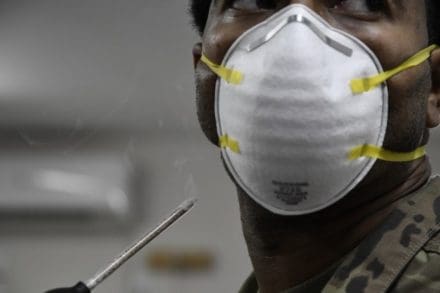
Combined, the 60 systems will allow for the decontamination of some 4.8 million masks each day once they’re all in place. Distribution of those systems will be handled by the Federal Emergency Management Agency and the Department of Health and Human Services, Esper said.

DOD has delivered 10 million of the new N95 masks to FEMA and HHS already, the secretary said, and is prepared to provide 10 million more.

The Defense Department has more than 50,000 service members from all services deployed in support of the fight against the coronavirus, Esper told reporters, with more than 4,000 of those being military doctors, nurses and medical professionals. Around 2,100 of those are now in New York City, including 300 who are in civilian hospitals to relieve civilian medical professionals.
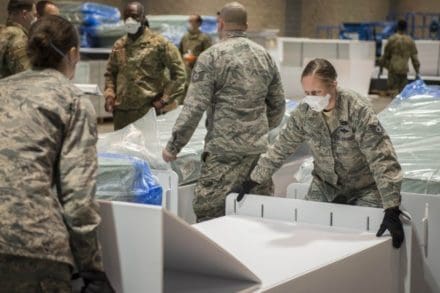
Experience has shown that local hospitals in cities such as New York do, in fact, have the number of beds needed to treat patients, but that medical professionals in those facilities have been overtaxed, Esper said, so that is where the U.S. military is focusing its assistance now.

“What’s obviously become strained, stressed, are these hard-working nurses and doctors and respiratory therapists and everybody who’s been at this now for weeks,” he said. “They’re getting burned out and worn down.” They’re also falling victim to the coronavirus themselves, he added.

“So that’s where we’ve now pivoted in the last week or so — to move our doctors — and we’re doing that now,” Esper said. DOD is moving some doctors off the Navy hospital ship USNS Comfort, which is docked in New York, and putting them into the New York City hospitals to provide relief, he said.
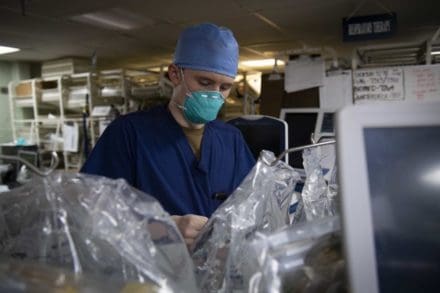
Meanwhile, Esper said, the department is deploying 14 Army urban augmentation medical task forces to priority regions. Six of those task forces are in New York, three are in New Jersey, two are in Massachusetts, and Connecticut, Michigan and Pennsylvania have one each.

The Navy, he said, now has fully established expeditionary medic medical facilities in New Orleans and Dallas, while the Army Corps of Engineers is constructing 25 alternate care facilities around the nation that are expected to make available an additional 15,500 beds in cities such as New York, Detroit and Chicago. Construction of a 450-bed medical facility in Miami also is being discussed, Esper said.

By C. Todd Lopez, Defense.gov