
GORE-TEX Professional

Archive for the ‘Guest Post’ Category

Army’s Principal Cyber Advisor Says Cyber Key to Preparing for Future Fight

Monday, September 22nd, 2025

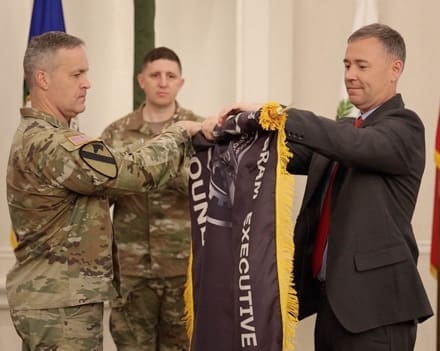
WASHINGTON — Cyber is central to the Army’s once-in-a-generation transformation and to defending the homeland’s critical infrastructure, said Principal Cyber Advisor to the Secretary of the Army Brandon Pugh to attendees at the Billington CyberSecurity Summit, Sept. 11.

Pugh said the Army’s Continuous Transformation aims to put the right technology in Soldiers’ hands faster while strengthening readiness for the future battlefield — where cybersecurity underpins everything from base operations to mobilization.

“This is our effort to make sure the Army is adapting to the future battlefield,” Pugh said. “Cyber is a key component of Army Continuous Transformation.”

Pugh participated in “The Future of Cyber Threat” panel, moderated by Chris Townsend, an Elastic vice president. Alongside Pugh were Col. Ivan Kalabashkin, Deputy Head of Ukraine’s Security Services Cyber Division; Vikram Thakur, Technical Director at Broadcom; and Josh Salmanson, Vice President for the Defense Cyber Practice at Leidos. Panelists discussed a range of cyber-related issues.

People first

“People are the core of the Army,” Pugh said, noting that modernization efforts revolve around Soldiers and Army civilians who defend the nation every day. He highlighted opportunities to better harness the skills of Army National Guard and Army Reserve cyber professionals — many of whom work in cybersecurity in their civilian careers. “Who is better positioned to defend a critical infrastructure threat than the people who live there?” he asked.

Protecting critical infrastructure at home

Pugh emphasized that defending the homeland is a top priority, and that the Army has a direct stake because vulnerabilities in privately owned critical infrastructure — from power grids to transportation networks — can affect Army installations and unit mobilization. He pointed to assessments by the Army Cyber Institute at the U.S. Military Academy at West Point that examine how infrastructure weaknesses could disrupt the Army’s ability to project forces in crisis or conflict. “We need to be able to mobilize forces and equipment at a moment’s notice,” he said.

When asked how to address critical infrastructure vulnerabilities, Salmanson urged organizations to “get back to the basics” — patching systems, reducing vulnerabilities and avoiding shared passwords — to cut noise in networks and improve response to new threats. “We’re seeing higher volumes and better quality [attacks] consistently,” he said.

AI for cyber — at scale

Panelists agreed adversaries are already using artificial intelligence to increase the speed and quality of attacks. Kalabashkin said Ukraine has faced more than 13,000 cyberattacks on government and critical infrastructure systems since the start of the full-scale war, with Russia using AI in recent months to scan for network vulnerabilities.

Pugh said the Army is leaning into AI where it can provide a decisive edge. “How can AI be used more effectively and at scale for defensive cyber operations and perhaps even offensive cyber operations?” he asked, noting strong work already underway across Army Cyber Command and U.S. Cyber Command. “We should leverage AI to gain the upper hand — a force multiplier for our Soldiers.”

Speed to capability

Pugh said the Army is working to shorten timelines to field cyber capabilities, particularly from innovative companies with niche solutions. “If you have a unique capability that can add value to the military, there should be an ability to get that in the hands of a warfighter and test it in weeks,” he said. That effort, he added, aligns with the Army’s broader push to transform how it acquires, tests and fields technology.

By MAJ Sean M. Minton

Beyond the Strategic Corporal: 9th Communication Battalion Extends Gen Krulak’s Vision to Information Domain

Sunday, September 21st, 2025

“Attention in the COC!”

The gentle ripple of hushed conversation and rustling papers in the expeditionary command operation center completely subsided in response to the watch chief’s baritone voice. Heads snapped from computer monitors to the sound of his voice, and pens scrawled shorthand notes, recording his description of enemy signal interference.

After receiving the report, corporals and sergeants of the 9th Communication Battalion’s newly established intelligence department swiftly analyzed it and initiated an assessment that would be routed to the operations officer. The report indicated interference from an adversary’s nearby electronic warfare training exercise. The Marines sprang into action and applied pre-coordinated frequency protocols, maintaining the integrity of their communications and preventing their location from being revealed, thus preserving the mission.

This fictional scenario highlights a different kind of challenge Marines face today: not one of firepower or physical maneuver, but of connectivity and communication in a contested information environment, which is increasingly characterized by jamming, malware, and cyberattacks. These attacks, which have become a growing concern of military planners throughout the world, threaten communications and can lead to the isolation of forward elements. Marine tacticians say the potentially high tempo and wide range of simultaneous attacks in the information environment require decentralization of information operations.

As part of this transition to decentralization, the battalion, based at Marine Corps Base Camp Pendleton, California, stood up an intelligence staff section in July 2025. The creation of the intelligence section makes the battalion more tactically responsive to threats in the information environment. The intelligence section now proactively monitors the electromagnetic spectrum for potential interference, analyzes adversary abilities related to electronic warfare and cyberattacks, develops threat assessments tailored to communication assets, and provides real-time intelligence updates to commanders and subordinate units. This is a significant shift from the past, when Marine Corps communication battalions relied upon Marine Corps Forces Cyberspace Command (MARFORCYBER) to fulfill these functions.

“Historically it was very reactive,” stated Capt. Brock Turner, the company commander of 9th Communication Battalion. “A malicious actor would attempt to gain access to our networks, and we would then receive feedback from MARFORCYBER. Now we are putting in measures to ensure that we strengthen posture based upon examination of adversarial tactics, techniques, and procedures.”

2nd Lieutenant Aaron Hern, an intelligence officer with 9th Communication Battalion, I Marine Expeditionary Force Information Group, explained the reason for the change.

“Our integration into the battalion is crucial in supporting the Battalion Commander’s decision-making in support of all domain operations, with impacts on communication units of action,” he said. “My signal intelligence capabilities of signature management and electronic warfare aid the planning process and employment of communications capabilities.”

The decentralization of information warfare follows a precedent set by U.S. Marine Corps Gen. Charles C. Krulak, the 31st commandant of the Marine Corps, who emphasized the importance of small unit leadership through his conceptualization of the “Strategic Corporal,” a noncommissioned officer whose tactical decisions on a three-block battlefield could have strategic, international consequences. Krulak understood and embraced the possibility of junior leaders being isolated in geographically dispersed locations and having to make important, time-sensitive decisions on the spot. His philosophy placed confidence in junior leaders to do so and emphasized tough training to prepare them for the task.

Krulak articulated his vision in “The Strategic Corporal: Leadership in the Three-Block War”, which appeared in the January 1999 edition of Marines Magazine. Although his article, which was written while the internet was still emerging, focuses on war on land and in the air rather than in the information environment, the information warriors of 9th Communication Battalion say it’s just as applicable to information operations today.

“We are directly supporting leadership decision making cycles by providing intelligence reporting,” said Sgt. Gabriel Tuazon, an intelligence specialist with 9th Communication Battalion.

During a training exercise at Camp Pendleton in August 2025, 9th Communication Battalion incorporated its new intelligence capability into the task of establishing and maintaining communications while dealing with a variety of notional threats to their networks. The training exercise provided a realistic environment for Marines to hone the skills necessary to identify threats and develop innovative solutions to overcome adversary actions.

Cpl. Tobias Laskowski, a transmission system operator with 9th Communication Battalion, provided a general description of the battalion’s activity during the exercise. He explained that this exercise provided an opportunity for the Marines to train on less familiar radio waveforms, which allows for communication to continue in the event of enemy disruption to primary channels.

“When the enemy uses their electronic warfare assets to jam us and disrupt our communication, we can keep communicating with whatever echelon we need to talk to,” Laskowski said.

Tuazon said the battalion 9th Communication Battalion is adapting to the new challenges of a rapidly changing battlespace by embracing a decentralized approach and empowering Marines to operate as strategic corporals. He envisions broad application of the information warfare tactics now being employed at the battalion.

“I definitely see this integration model being a standard across the Marine Corps as other communication battalion S-2s (intelligence sections) can support their operations,” said Tuazon.

Story by Sgt Sean Potter    

I MEF Information Group

Lethality, Innovation, and Transformation Through AI Education at the U.S. Army School of Advanced Military Studies

Sunday, September 21st, 2025

THE ARMY UNIVERSITY, FORT LEAVENWORTH, Kansas – In late July 2025, the Advanced Military Studies Program at the School of Advanced Military Studies, known as SAMS, launched its first-ever experimental, three-day, Practical Application of Artificial Intelligence module.

The mission was simple: transform the program with an innovative, hands-on AI learning experience for students and faculty. The purpose was to enable warfighter lethality through AI education and training.

“AI is changing the character of warfare. Our graduates have got to be ready to lead formations powered by AI—and that’s why we did something about it,” Col. Dwight Domengeaux, Director, SAMS said.

Dr. Bruce Stanley, Director, AMSP, envisioned a module that pushed institutional norms about how mid-career officers learn about AI and learn with AI.

“Did we accept risk? Yes. We did—to create a critical learning opportunity for our students,” Stanley remarked. “We knew what was at stake, and we trusted our faculty and students to make it work.”

And make it work they did.

According to AMSP faculty, the module’s experimental instructional design was key, consisting of ten-and-a-half hours of total classroom contact time divided over three lessons.

“We covered a lot of ground with our students in three days,” Dr. Jacob Mauslein, associate professor, AMSP, said. “Subjects ranged from AI theory and ethical considerations of AI, to applying AI tools, and leading AI-enabled organizations.”

A novel feature of the module was that it was developed by AMSP students. As a task in their Future Operational Environment course, six students from the Class of 2025, mentored by two faculty, developed the AI module that would be taught to the Class of 2026. The students’ final draft was adopted almost without change by the faculty.

“Incorporating students as full participants in the process allowed us to co-develop lesson objectives and materials that deeply mattered to them,” Dr. Luke Herrington, one of the faculty leads for the module shared.

Meeting students where they were in terms of their AI skills and then taking them to the next level was part of the academic approach for the AI module, Herrington explained.

Maj. Justin Webb, PhD, an AY 2025 AMSP student, and one of the module’s developers explained it this way: “SAMS is a warfighting school—so we chose learning activities that would help us become more lethal warfighters with AI. Using AI tools like CamoGPT, Ask Sage, and others for several hours over three days helped us get there.”

Some students in the AY 2026 class were initially skeptical of using AI.

“At first, I didn’t know what I didn’t know,” Army Maj. Stuart Allgood, an Armor officer SAMS student said. “But by the end of the first day my thinking about AI had changed. After the second day, I could use AI tools I had never even heard of.”

Maj. Callum Knight, an intelligence officer from the United Kingdom summed up his experience.

“Before this course I viewed AI as just a data point,” Knight said. “Now that I’ve experienced what’s possible with AI, I realize it’s an imperative that is going to impact everything I do going forward.”

So, what’s next for AI at SAMS?

“Based on what our students got out of this, we intend to add more AI learning moments across the program,” Stanley said. “The priority now is to integrate AI into our upcoming operational warfare practical exercise.”

AMSP is one of the three distinct academic programs within SAMS.

The other two SAMS programs are the Advanced Strategic Leadership Studies Program or ASLSP – a Senior Service College equivalent, and, the Advanced Strategic Planning and Policy Program or ASP3 also known as the Goodpaster Scholars—a post-graduate degree program.

Matthew Yandura is an AMSP assistant professor, and retired Army colonel.

By Matt Yandura, Assistant Professor, School of Advanced Military Studies

US Army Retires Two Most Distinguished Aerial Intelligence Platforms

Saturday, September 20th, 2025

CAMP HUMPHREYS, Korea — The 501st Military Intelligence Brigade-Theater (MIB-T) observed the closure of the U.S. Army’s two most distinguished aerial intelligence, surveillance and reconnaissance (ISR) legacies, GUARDRAIL and Airborne Reconnaissance Low (ARL) during events, July 30-31, 2025.

In an event designated Operation PACIFIC SUNSET, the 501st MIB-T hosted a commemorative ceremony at the Desidario Army Airfield that featured a final flight of the aerial platforms, exhibition flights, and a runway display of aircraft. Soldiers of the Republic of Korea concluded the ceremony with a dedication honoring the contributions of the 3rd Military Intelligence (MI) Battalion, ARL, and GUARDRAIL Common Sensor (GRCS).

Since 1975, GUARDRAIL has provided indications and warnings to United States Forces Korea. Throughout its operational history, GUARDRAIL monitored the Demilitarized Zone (DMZ) through a series of diplomatic crises on the peninsula. In 1988, under the 3rd MI Battalion, the first version of GRCS entered service, ensuring foreknowledge of any aggressive actions across the DMZ for many years to come.

“[GUARDRAIL] is our longest serving U.S. Army ISR asset in the [Korean Theater of Operations], and our only true [program of record] aircraft,” said Lt. Col. Derrick J. Zantt, commander of the 3rd MI Battalion.

At the program’s high point, GUARDRAIL aircraft and ground stations became standard, serving in six aerial MI battalions. Each iteration, at its debut, was on the cutting edge of technology.

By the 1990s, the U.S. Army Intelligence and Security Command (INSCOM) had gained considerable experience in the development and fielding of special electronic mission aircraft. ARL emerged out of a shift in national priorities toward counterdrug smuggling, primarily out of the Andean Ridge region of South America. Originally a quick reaction capability, ARL was developed to satisfy low intensity multi-intelligence requirements in U.S. Southern Command and quickly proved its worth.

When the Army decided to retire the OV-1D Mohawks, the service looked to DoD and Congress for a solution.

“JSTARS couldn’t do it. The Air Force U-2 couldn’t do it. Even satellites couldn’t do it,” said Dr. Thomas Hauser, U.S. Army Intelligence and Security (INSCOM) historian and author of the INSCOM aviation book series. “INSCOM came through at the last minute with a solution: the versatile ARL. Their ever-watchful eyes stayed open all these years. It was always on the flightline or in the air, ready to serve the Army.”

During five decades of service, GUARDRAIL and ARL flew over 120,000 hours of support, over 30,000 sorties, and were flown by more than 800 military pilots through the 3rd MI Battalion over the life of the systems.

The final flights of these aerial intelligence platforms come as the Army transitions to more modern and lethal assets.

“Through the end of [its] life, the aircraft continued [its] operational collection mission until the last day and were able to effect a seamless handoff to the ATHENA program, which is serving as our bridge,” said Col. Brian Tinklepaugh, 501st MI Brigade-Theater commander.

The Army Theater-level High-altitude Expeditionary Next Airborne (ATHENA) platform combines multiple intelligence disciplines into a singular platform, enabling the Army to have a multi-intelligence approach to targets where the Army can use geospatial intelligence, signals intelligence, and electronic intelligence to look at a single target and better define that target for operational commanders.

“These bridge aircraft will continue to inform HADES programmatic requirements, facilitate early implementation of new training concepts and fielding strategies, and ultimately ensure “No Cold Starts” for the HADES program,” said Jordan Rubin, chief, INSCOM G3 ISR Operations.

The Army’s shift to the High Accuracy Detection and Exploitation System (HADES) marks a pivotal step in the future of aerial intelligence. HADES is a crewed aerial multi-intelligence collection system optimized for active campaigning in areas where range, speed, and data convergence are critical to rapidly gain and maintain situational understanding, freedom of maneuver, overmatch, and decision advantage in multi-domain operations. The system will employ on-board data processing using artificial intelligence and machine learning and will provide sensor-to-shooter links to shorten the kill chain to operate at the tempo and volume of high-intensity conflict.

HADES replaces legacy platforms such as GUARDRAIL and ARL and gives commanders the ability to see deeper, decide faster, and strike more effectively across multiple domains. As large-scale combat operations grow more complex, HADES and other strategic aerial assets will be central to ensuring U.S. forces maintain overmatch and decision advantage on the battlefield.

“As we move forward to the Army’s aerial future with HADES, I’m incredibly proud of not just the [legacy] aircraft, but the men and women who have flown the aircraft, maintained the aircraft, and who have provided that intelligence watch over more than five decades,” said Tinklepaugh.

By Erin Rohn

Wired for War: Drones, Real-World Lessons, and Future Frontiers

Friday, September 19th, 2025

Oak Grove Technologies is pleased to announce an exclusive event, Wired for War: Drones, Real-World Lessons, and Future Frontiers hosted at our Test & Training Center (T&TC) near Fort Bragg, NC. This symposium brings together active-duty military personnel and select invited vendors to explore cutting-edge drone technologies, real-world battlefield lessons, and the future of unmanned systems.

Date: Wednesday, 5 November 2025

Tome: 1230 – 1700

Location: OGT Test & Training Center

158 Rushing Rd.

Hoffman, NC 28347

Details:

• Live and simulated demonstrations showcasing innovative unmanned systems technologies

• A dial-in briefing from the front lines in Ukraine

• Industry and government panel discussion

• Networking opportunities with government, military, and industry leaders

Please Note: Attendance is limited to Government personnel and invited vendors only.

More details and registration information to follow, but for now please mark your calendars!

The Agilite Rear Hanger Pouch is LIVE

Friday, September 19th, 2025

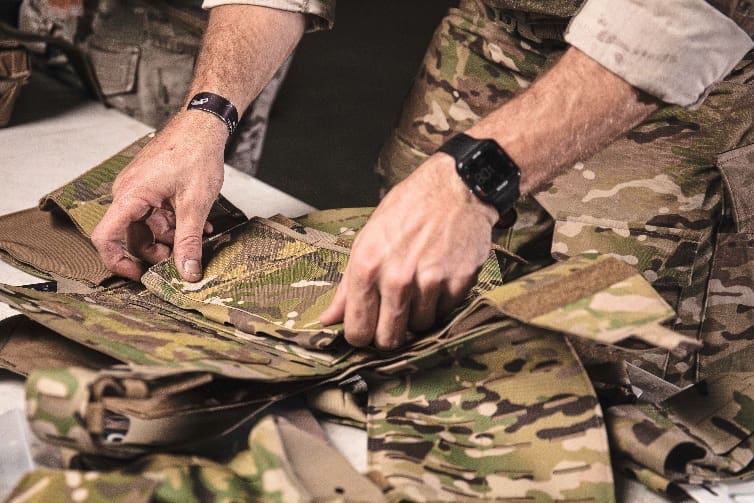
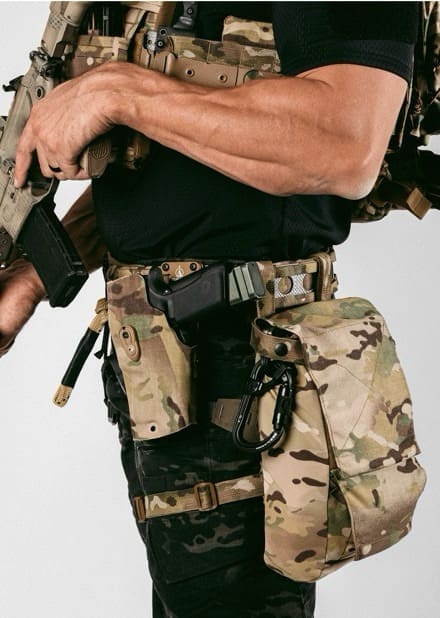
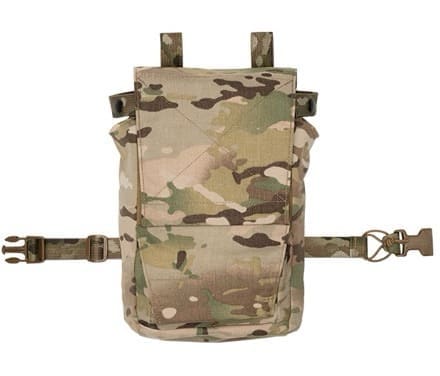
Agilite has just released the patent-pending Rear Hanger Pouch that unlocks the rear of a plate carrier for accessible storage.

The space below a plate carrier has never really been utilized because it was both hard to access and impossible to return gear to without assistance. The Rear Hanger solves this issue making it a great solution for medical gear, warm clothing, extra ammunition or other gear. 

See how it works at agilitegear.com/products/rear-hanger

It is also available in a Berry Compliant version, for Government sales contact govsales@agilitegear.com.

FirstSpear Firday Focus: MultiMag Rapid-Adjust Pocket

Friday, September 19th, 2025

The MultiMag Rapid-Adjust Pocket is a highly adaptable, ultralight magazine pouch designed for mission-ready performance straight out of the box. Engineered with patented adjustment and retention hardware, it allows users to quickly fine-tune the fit for a wide variety of firearm magazines and similarly sized items.

At just over 2 ounces, its 6/9 construction keeps weight to a minimum without sacrificing durability or functionality. The integration of the Boa Fit System gives the operator precise, micro-level control over retention, ensuring a secure fit for any loadout configuration.

This pocket eliminates the need for inserts, though optional speed reload kits—compatible with two pistol magazines or a single M4—are available for those seeking even faster access. This pocket is compatible with FirstSpears Molded Speed Tab Kit (sold separately) for further customization based on mission-specific needs to enhance quick reload capabilities, making it ideal for high-stress environments where every second counts.

Fully backward compatible with MOLLE/PALS platforms, the MultiMag Rapid-Adjust Pocket integrates seamlessly into your existing kit. It’s purpose-built for the operator who demands adaptability, speed, and reliability in one low-profile solution. Whether mounted on a plate carrier, chest rig, or belt system, this pouch stays secure and responsive. Its intuitive design reduces snag points while maintaining quick-access functionality.

Ideal for use in both training and operational environments, it supports a streamlined, modular approach to gear management. The MultiMag Rapid-Adjust Pocket reflects a modern evolution in tactical magazine carriage—precise, efficient, and ready for anything.

To request an estimate click image above or visit First-Spear.com/Request-For-Estimate. FirstSpear is the premier source for cutting edge-tactical gear for military, law enforcement and those who train. For more information visit First-Spear.

Oregon Guard Advances Drone Capabilities with New Training Systems

Friday, September 19th, 2025

RAYMOND REES NATIONAL GUARD TRAINING CENTER, Ore. – The Oregon Army National Guard is transforming its unmanned aircraft systems training at the 249th Regional Training Institute, introducing advanced platforms while developing innovative solutions to meet evolving battlefield requirements.

During September 2025, the Regional Training Institute at Rees Training Center hosted two distinct training events that showcase Oregon’s expanding role as the state’s center for drone operations. A specialized Master small Unmanned Aircraft Systems pilot course focused on the Flightwave Edge 130 system from Sept. 3-5, followed by the broader Small Unmanned Aircraft Systems course running Sept. 3-12.

The training represents a significant evolution from the RQ-11B Raven systems that were divested in March 2024. Students now learn on the RQ-28A Sky Ranger, officially designated by the Army for Short Range Reconnaissance missions, along with the more advanced Edge 130 platform.

“The course itself is 10 days, but with optimal weather conditions and smaller class sizes, we could potentially complete the comprehensive training in about five days,” said Staff Sgt. First Class Mannen, the course manager. “That includes all the classroom instruction and flight operations, which allows me to give students more hands-on flight time.”

The Edge 130, manufactured by Red Cat Holdings’ Flightwave division, represents a significant upgrade in capabilities. The aircraft features vertical takeoff and landing with transition to fixed-wing flight, providing 60 minutes of flight time in vertical mode and 90 minutes in fixed-wing configuration.

“The edge 130 has three different payloads on it right now,” explained Peter DeJoseph, a Flight Trainer Three with Red Cat Holdings. “You have the gimbal 360 payload that can gimbal 360 around, has 10 times zoom, and has electro-optical infrared functionality on it. And then the other payload is the mapping array where you can set a survey of an area.”

The training methodology has also evolved. Red Cat’s approach includes a Learning Management System that students access two weeks before arrival, allowing them to complete theoretical modules at their own pace.

“They get two weeks and go through each module and learn,” DeJoseph said. “When they get through a module, they can take a 15-minute practice, take out that part of the system, build up the aircraft, go through the ground control station, build missions, download maps, and be all hands on with that learning module system.”

Perhaps the most innovative aspect of Oregon’s UAS program is the development of custom-built aircraft designed to supplement expensive commercial systems. Lt. Col. Mark Timmons, RTI commander, initiated this effort after recognizing the financial constraints of relying solely on $45,000 commercial platforms.

“These systems cost $45,000 apiece, so talking with Sgt. 1st Class Mannen, here do we go once we get them here and we want to loan these out to various UAS operators? Well, what’s going to happen? We know what’s going to happen. They’re going to crash,” Timmons explained.

Working with Echo MAV, a company that specializes in NDAA-compliant components, Oregon has developed prototypes that cost between $2,000-$5,000 including ground control stations. The initiative draws inspiration from similar programs at the 101st Airborne Division and 25th Infantry Division.

“The opportunity for us to be able to essentially design and build by 3D printing our own aircraft, partnering with a company who are experts in the technology piece of it and the compliance piece of it, putting those two efforts together gives us an Oregon-made, essentially US-made system,” Timmons said.

Oregon’s UAS training builds on infrastructure established through partnerships with the U.S. Navy. The state operates the Unmanned Aerial System Operating Facility in Boardman, a $13 million, 12,400-square-foot facility that opened in April 2023. While the RQ-7B Shadow Tactical UAS no longer operates from that facility, it established Oregon as a significant player in unmanned systems training.

Rees Training Center now serves as the primary hub for Oregon Army National Guard drone operations, with capabilities extending beyond basic flight training to include intelligence, surveillance, and reconnaissance applications, mapping surveys, and potential support for environmental monitoring missions.

The versatility of the new systems opens possibilities for diverse mission support. Plans include using the Edge 130’s mapping capabilities to conduct environmental surveys of the Rees Training impact area to locate burrowing owl habitats for the Oregon National Guard’s environmental office.

“With the edge 130 we could task the platoon to do a map survey with the mapping payload and we can get a high fidelity aerial photography of that impact area for environmental, which is super cool,” Timmons noted. The training also addresses modern operational challenges, including electronic warfare considerations and fiber optic drone flight capabilities, preparing soldiers for the evolving nature of unmanned operations in contested environments.

As the Oregon Army National Guard continues developing its UAS capabilities, Rees Training Center positions itself as not just a training facility, but as an innovation hub where soldiers learn to operate, maintain, and even build the unmanned systems that increasingly define modern military operations.

The September training courses represent another step in Oregon’s journey from traditional UAS operations to a comprehensive program that combines commercial systems, custom-built platforms, and innovative training methodologies to prepare soldiers for the future of unmanned warfare.

Story by MaJ Wayne Clyne

Oregon National Guard Public Affairs Office