GORE-TEX Professional

Archive for the ‘Guest Post’ Category

Free Tool Boxes For Veterans

Sunday, October 6th, 2019

We’ve got a lot of veterans in my family. Not only is my father a veteran, but he’s also a retired Air Force maintenance guy. He recently ran across an announcement for “free tool boxes for veterans” and suggested that I share it with my readership. I thought it was a good idea, so here it is?:

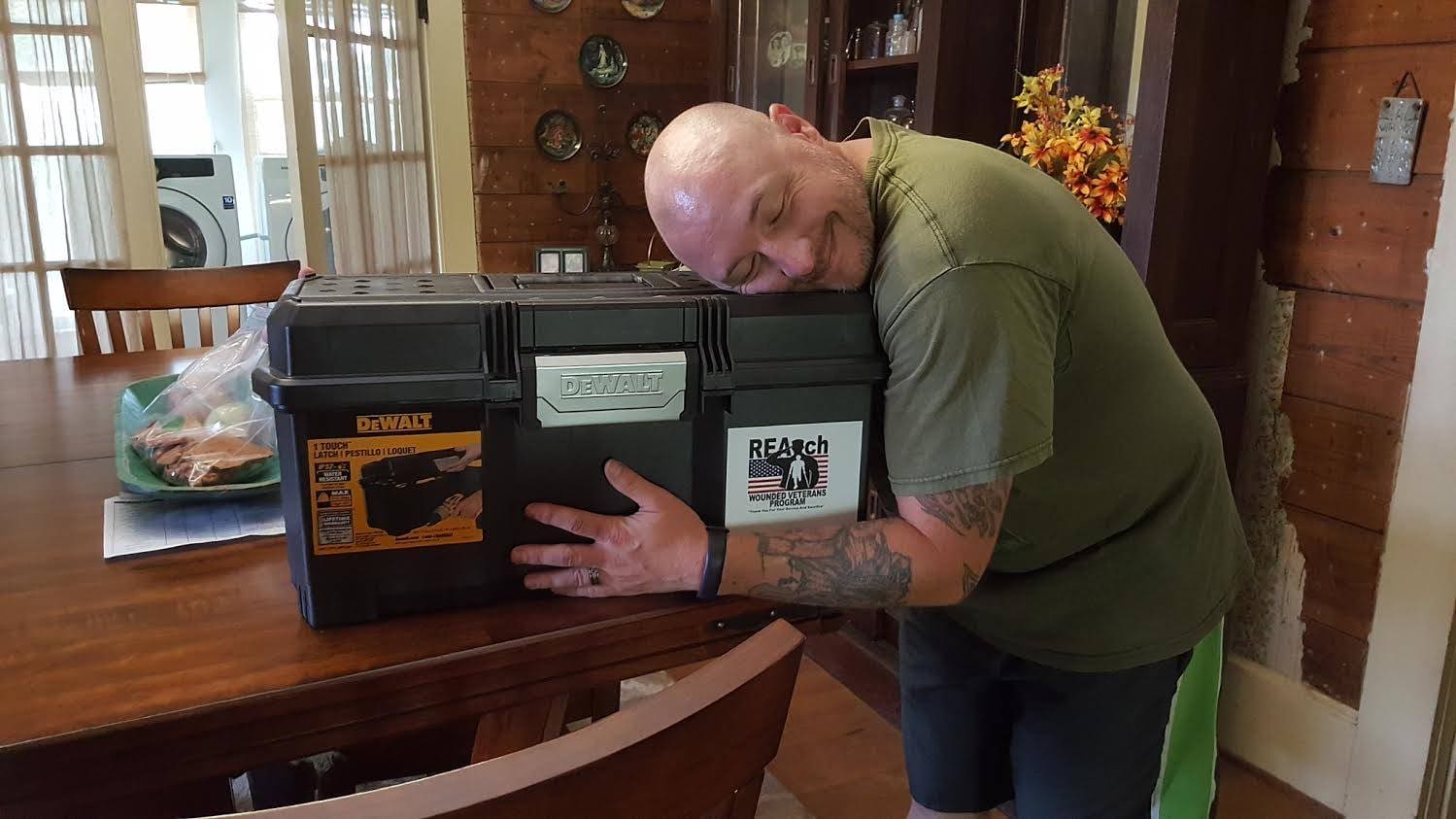
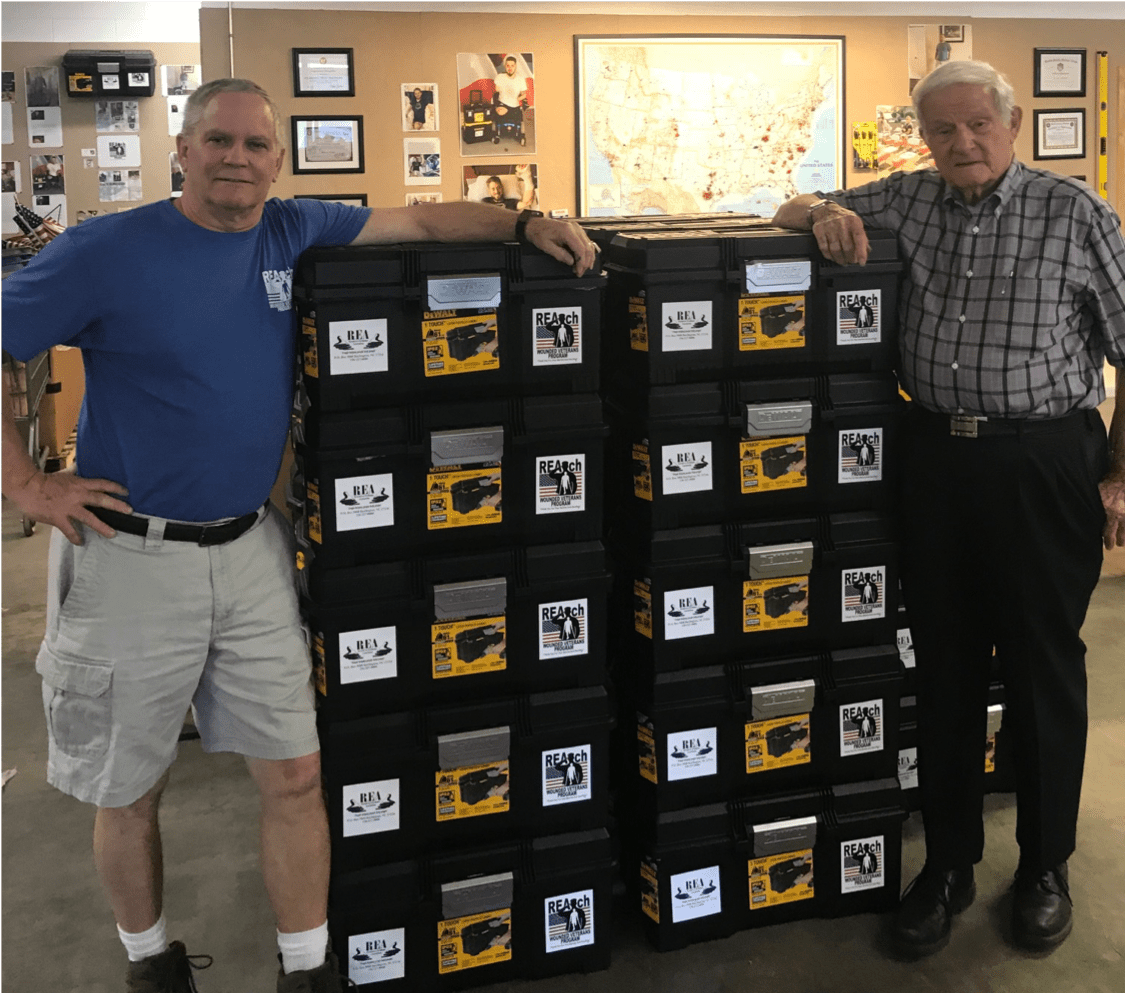
REAch program has shipped more than 8,000 toolboxes to Veterans

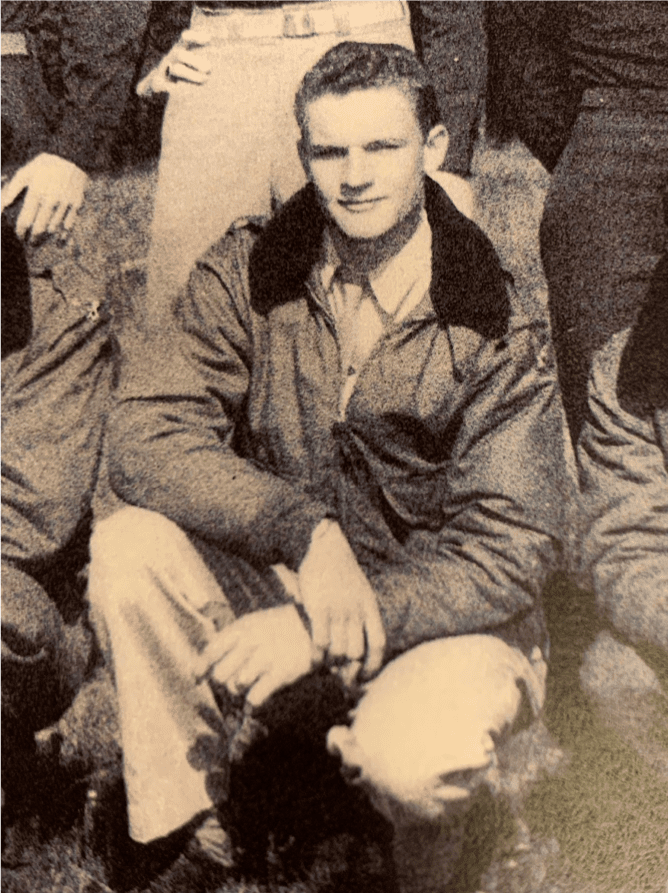
In 1994, U.S. Army Air Corps WWII Veteran and former POW Clarence Robert “Bud” Shepherd opened a small warehouse in Burlington, North Carolina, to assist 501 (c) (3) non-profit organizations, like schools, churches and daycares.

Shepherd refocused his attention on Post-9/11 combat wounded Veterans in 2012 by creating the Veteran Toolbox Program. He provided them with free toolboxes to assist with their transition into civilian life. Although Post-9/11 Purple Heart Veterans are priority for the program, all Veterans can apply.

“I always wanted to do something for Veterans, and I came up with the toolbox program,” said Shepherd. “We talked to some tool companies, and they were interested in getting involved. We talked to Stanley and Black and Decker about what we wanted to do and they came back with one word – absolutely! APEX tools, Wooster paint brushes, and Johnson & Johnson are also great supporters.”

The REAch Veteran Toolbox Program has shipped more than 8,000 toolboxes to Veterans, which contains about $600 worth of tools.

“This is the most satisfying thing I’ve ever done in my lifetime,” said the 94-year-old.

Shepherd works six days a week, gets up at 5 a.m., and leaves work at 6 p.m. most days. But he’s no stranger to hard work.

He enlisted in the U.S. Army Air Corps in 1943, when he was 18 years old. He served in the 8th Air Force in England as a tail-gunner on a B-17. Enemy forces shot down his plane six months before the end of WWII. Shepherd was captured and sent to a prisoner of war camp near Berth, Germany.

“Once we got settled down, things went along fairly smooth because there was 9,000 of us, all Air Force people,” Shepherd recalled. “About 7,500 Americans and a few Brits. We were liberated by the Russians and I made my way back home.”

“We hear from a lot of these guys and their families,” Shepherd said. “Last week we got an e-mail saying ‘You saved my husband’s life. He hasn’t been out of the house in three months but ever since he got his toolbox he’s been out in the garage or the backyard working on something.’”

REAch operates in Graham, North Carolina, but ships the toolboxes across the country.

“I go to the VA hospital in Durham, North Carolina, for yearly physicals, but my health is excellent,” he said. “These people down there that I deal with at the VA hospital, they are just good people… In my lifetime, I’ve been blessed, and I enjoy every minute of it.

Learn more about the Veteran Toolbox Program at: reainc.org

This article was written by Tim Hudak and published via blogs.va.gov.

Author Tim Hudak joined the VA in December 2013 and is on the Veterans Experience Office team. Tim, a Chicago-land native enlisted in the Marine Corps straight out of high school. As an intelligence analyst he deployed to Al Anbar province, Iraq with Marine Heavy Helicopter Squadron 363 in 2006 and 2008. After the Marine Corps, Tim used the GI Bill to earn a degree in Intelligence Studies from Mercyhurst University in Erie, Pa., and co-founded the university’s first student Veteran organization. Tim is active in many Veteran organizations.

Homebrew Blood Diamond Carbine by Frank Woods

Sunday, October 6th, 2019

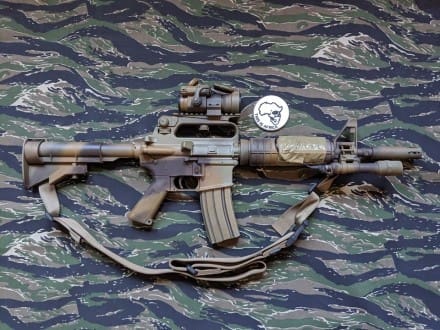
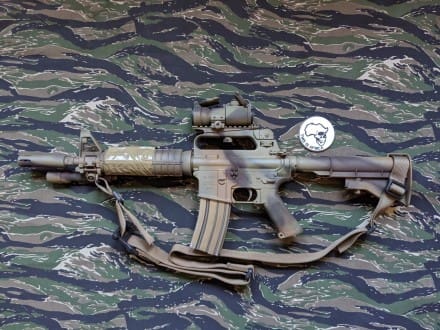
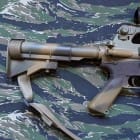
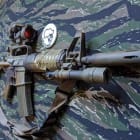
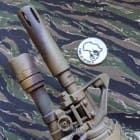
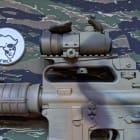
I’ve been wanting to do a Blood Diamond CAR-15/XM177/GAU-5/whatever you’d call it for a long time now, and with Brownells, Inc. putting a bunch of parts I needed for it within reach via their Retro line, I was finally able to get to it.

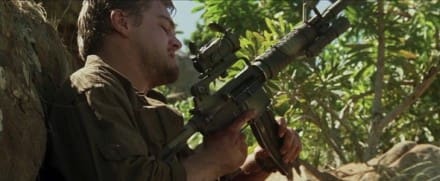
There are some obvious inconsistencies between mine and the movie version (pics included for comparison,) primarily the light (I had extra M600Us laying around and didn’t feel like paying extra money for the lesser Surefire 660 light,) and the Teal Blue Bravo PDQ ambi bolt catch/release (because it’s 2019 and none of my USGI forged lowers don’t have one, for sake of consistency.)

I used Fulton Armory receivers since they make the A2 upper receiver with M4 feed ramps, and went with one of their lowers to have a matched set. Barrel is a Brownell’s Retro Series 10.3″ 1/7 twist, and the stock and A1 grip come from the Retro line also. I had the faux moderator laying in the parts bin for YEARS waiting for the other parts to come along, well before the Brownell’s Retro line existed.

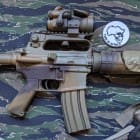
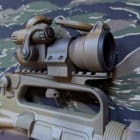
Aimpoint is a PRO 2MOA that didn’t have a rifle to sit on, but since it looks externally the same as the OG Aimpoint CompM2, fuck it, why not. It sits on an ARMS #2 carry handle rail mount, in an Aimpoint SRW-L mount I procured with help from a friend.

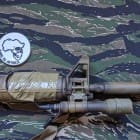
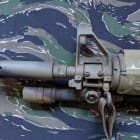
I did my due diligence trying to replicate the patterning of the rattle can colors as they appeared on the movie gun itself, the side we could see anyway. Colors used were Aervoe Olive Drab, Field Drab, and a little bit of Marine Corps Green, and the Dark Brown was either Krylon or Rust-Oleum, I don’t remember which. I misted it with some ODG & MCG once the overall painting was finished. Since I couldn’t find OD Green camo form wrap in stock anywhere I went with olive drab USGI style duct tape to secure the light’s ST-07 switch to the rifle.

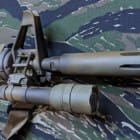
The Surefire M14 style light mount clamp had to be shaved down on the grinder wheel a bit to fit it through the slot in the FSB, and I didn’t need the M10 ring to secure the light since the integrated 1913 mount on the Scout body clamped onto the light mount’s rail perfectly.

Magazine is an old ass pre-ban USGI mag that has this cool patina to it. I went with a Magpul MS1 sling because the tension adjustment is second nature to me being that I’ve standardized on this sling otherwise. I *tried* to make it work with an R4 sling but unless I ONLY had the sling around my neck it just fuckin sucked because of the way the fabric would dig into my shoulder when the sling twisted.

I guess I can call this one the “Danny Archer.” Yah yah ?

Fine-tuning the Corps’ Amphibious Combat Vehicle in Preparation for IOT&E

Friday, October 4th, 2019

MARINE CORPS BASE QUANTICO, Va. —

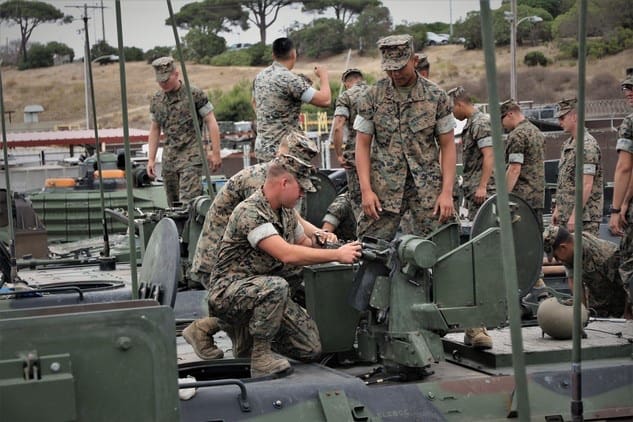
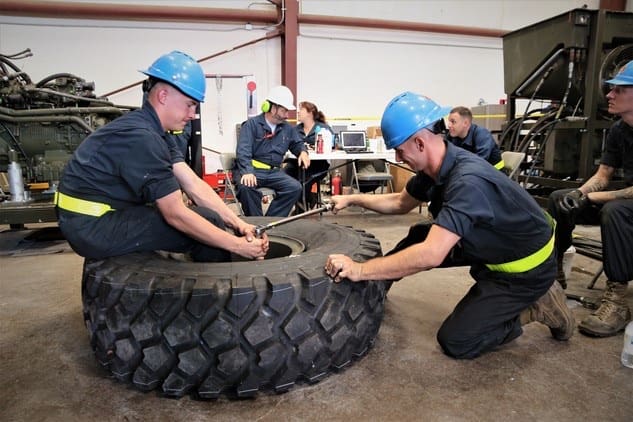
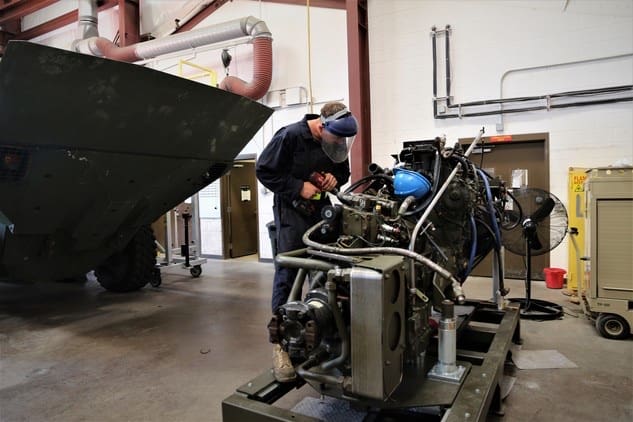
Three thousand miles away from the epicenter of Marine Corps Amphibious Combat Vehicle acquisition, a cadre of Marines, civilians and contractors are hard at work completing a logistics demonstration effort on the vehicle.

The logistics demonstration effort—or Log Demo—is one of the last steps the Advanced Amphibious Assault program office at Program Executive Officer Land Systems needs to execute before training Marines in the Operating Forces to use and maintain the vehicle during IOT&E, the integrated operational test and evaluation activities scheduled for next year.

“Log Demo’s main purpose is to verify the validity and accuracy of the ACV’s technical manuals,” said Tommy “TJ” Pittman, Log Demo’s technical manager lead for PM AAA. “We want to make sure that the Marine can do the job, given the technical manual, training and tools [provided to them].”

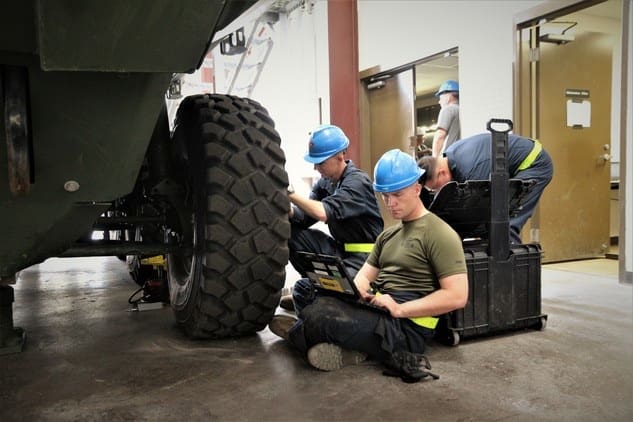
For the logistics demonstration team, this means individually reviewing and performing nearly 1,500 work package procedures in the Interactive Electronic Technical Manual designed for Marines in charge of vehicle maintenance.

The demo also involves reviewing 125 work packages—spanning over 2,000 pages—in the Electronic Technical Manual designed for Marine ACV operators. The Common Remotely Operated Weapons System—or CROWS—on the ACV also has its own technical manual that the team must verify.

“This is less about our ability to perform the task or our skills as a mechanic, and more about whether the IETM can direct us to do the task properly” said Staff Sgt. Justin Hanush, lead ACV maintenance instructor for Advanced Amphibious Assault program office’s new equipment training team at PEO LS. “We’re painstakingly going through the IETM word-for-word, letter-by-letter, illustrations, everything—to make sure we can do the task as the IETM is written.”

A next-generation technical manual for a next-generation vehicle

The IETM is especially noteworthy because, for the Marine Corps, it’s the first of its kind for ground vehicles.

“I’ve personally worked for 15 years on getting the Marine Corps an interactive electronic tech manual that can be updated within moments,” said Pittman.

As a former Assault Amphibious Vehicle operator, the 24-year Marine Corps veteran has extensive experience operating and maintaining vehicles in the amphibious assault community. Pittman worked with Army Aviation and Missile Command to integrate the ACV’s IETM onto their software system and servers.

The interactive aspect of the technical manual streamlines the diagnostic and troubleshooting process Marines use when performing maintenance on a vehicle. By collaborating with the Army on a virtual manual, the Marine Corps can also reduce the amount of time needed to make updates to the IETM.

In the past, it could take up to a year for the technical manual for the ACV’s predecessor, the Assault Amphibious Vehicle, to be updated, said Hanush. With the introduction of the new IETM software, updates to the technical manual are implemented overnight.

On the ACV operator side, the team is ensuring their technical manual is clearly written so Marines can properly operate the vehicle and provide first-level maintenance on the vehicle if needed, said Sgt. Jarrod Warren, lead ACV operator instructor for the NETT.

“It’s important that the outcomes we reach when going through the ETM are the same outcomes stated in the book,” said Warren. “It’s also important to make sure we can maintain the vehicle at our level and, if not, we know when to bring it up to the maintenance side.”

The importance of meticulously reviewing the technical manuals to ensure the validity and accuracy of the document is not lost on Hanush, who noted, “I could have grandchildren someday who join the Marine Corps, and they could be working off the manual that I’m helping to write.”

Technical manual writing aside, Hanush is appreciative of the dedication of his fellow Marines during Log Demo, saying, “I couldn’t ask for a better group of ACV mechanics. They’re knocking it out of the park.”

One team, one fight, under one roof

Unlike other logistic demonstrations undertaken by the Corps, which typically take place at a contractor’s facility, this one takes place at the Marine Corps’ Amphibious Vehicle Test Branch at Camp Pendleton, California.

The three-month logistics demonstration took more than a year-and-a-half to plan, said Pittman. He said a unique aspect of Log Demo was that the program office, rather than the contractor, planned and created the logistics demonstration plan.

Equally critical to the success of the Log Demo effort are PM AAA’s industry partners, whose participation spans multiple states and continents, and whose roles vary from field service representatives to technical illustrators.

“We have about 65 individuals on the ground here, between the Marines, civilians, BAE, and one foreign representative from Iveco, which is the subcontractor to BAE on the vehicle,” said Pittman. “We have the right people—the writers, the illustrators, the engineers, the Marines, the data collectors, the safety people and the —in one location, which makes communication between the groups so much easier.”

Moving forward to IOT&E

Currently, the Marines on the NETT are the Corps’ uniformed subject matter experts on the ACV. Following Log Demo, Hanush, Warren and the rest of the NETT will use the verified training manuals as their guide to train and prepare Marines for IOT&E.

IOT&E is the program office’s final evaluation of the ACV before fielding the vehicle. During IOT&E, executed by Marine Corps Operational Test and Evaluation Activity, the NETT will take a step back from operating and maintaining the vehicle and instead enable Marines to put the vehicle through its paces.

“IOT&E is sort of like a dress rehearsal for the system,” said Maj. Scott Jennings, a project officer at MCOTEA who will be involved with IOT&E of the ACV. “Marines will operate the vehicle in realistic environments and go on realistic missions so that we can evaluate the operational suitability and effectiveness of the system and see if it does what we want it to do in the way we want to do it.”

Until then, PM AAA’s focus is to ensure the ACV is ready for use. The modernized vehicle brings the Corps’ amphibious assault capabilities back to the forefront and will assist Marines in reestablishing themselves as a naval expeditionary force-in-readiness prepared to operate inside actively contested maritime spaces in support of fleet operations.

“I believe wholeheartedly in the mission these [Marines] do out there because I’ve been there,” said Pittman, who has dedicated over 48 years of his life to the assault amphibious community as an active duty Marine and a civilian. “I believe that we need to give them the best assets that we can possibly put in their hands, to not only save their lives, but to also protect our freedom.”

By Ashley Calingo, PEO Land Systems Public Affairs | Marine Corps Systems Command

FirstSpear Friday Focus – New Head Wear

Friday, October 4th, 2019

New FirstSpear hats are available in the FS web store Including flex fit styles and adjustable snap backs. In-stock and now shipping.

www.first-spear.com/technical-apparel/t-shirts

West Point Parachute Team: Where Astronauts Learn to Fly

Thursday, October 3rd, 2019

WEST POINT, N.Y. — On the precipice 240 miles above the earth, Jeff Williams was ready to enter into the void.

It was a feeling he’d become used to over the years; solid ground beneath your feet, nothing but empty air across the ledge.

But this time it was different.

This was no helicopter flying over the U.S. Military Academy’s Camp Buckner, where he had jumped countless times as a member of the West Point Parachute Team.

It was a step off the space shuttle for a seven-hour spacewalk to continue the process of constructing the International Space Station.
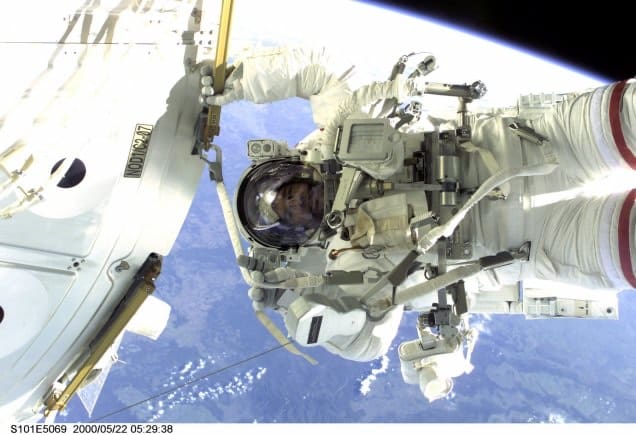
“The sensation of being outside the spacecraft, orbiting the earth every 90 minutes, controlling yourself with just fingertip control and seeing the earth below, that is why I call it the ultimate skydive,” Williams, a retired Army colonel, NASA astronaut and a member of USMA Class of 1980, said. “It is absolutely incredible.”

When he arrived at West Point from the dairy farm in Wisconsin where he was raised, a future that included flying on anything, let alone a rocket into space, wasn’t on Williams’ radar. His father had served in West Germany for a few years following World War II, but that was the extent of the military service in his family.

Williams learned about the academy through his father’s role as a high school guidance counselor and from the get go his plan wasn’t necessarily a lengthy Army career. Heck, he wasn’t even sure if he was going to stay at West Point for the full four years. His goal was simply to prove his friends wrong who had doubted he would last at the banks of the Hudson River.

“I remember having friends from my hometown and one said you won’t make it past the summer and Beast Barracks,” Williams said. “The other one said he probably won’t make it to Christmas. I was going to at least win their arguments and beat both of them.”

Then he learned to fly and any thoughts of leaving the academy were gone.

When he’d first entered the academy, Williams didn’t even know the Army had aircraft, but at the end of his plebe year in 1977 he found the West Point Parachute Team. At the same time, his cadet sponsor was the commander of the academy’s aviation detachment.
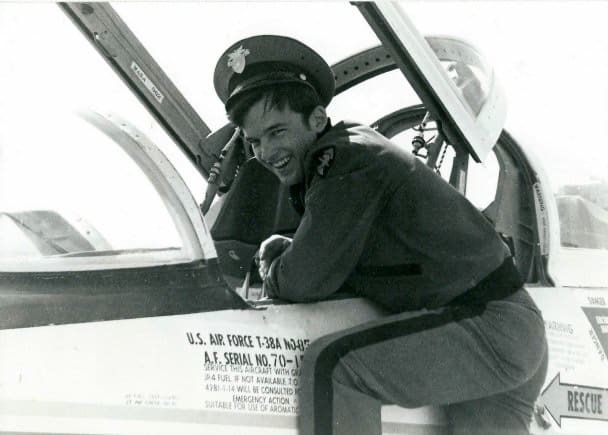
By leaving the ground and soaring through the air, he found the balance needed to be successful at West Point. His sponsor and the other members of the aviation detachment taught him about their experience flying in Vietnam and introduced him to all an Army aviator could do, while the parachute team brought him friends and adventure.

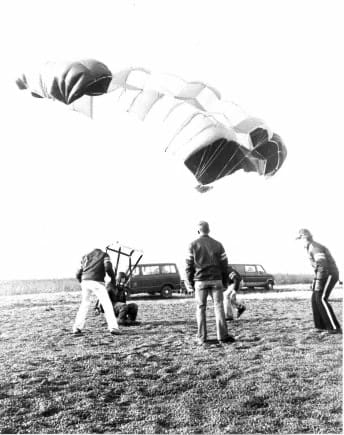
First, the members of the team learned to jump via static line. Then they did “hop and pops” where you jump out and immediately pull your parachute. Finally, they started adding freefall time, first 10 seconds, then 20, then 30.

In those days, during the afternoon the members of the team would jump into Camp Buckner, whereas nowadays the team spends its afternoons after class jumping onto The Plain at the center of the academy. On weekends, they would travel out to Walkill to an abandoned airfield and jump all day. Go up, jump, land, fold up your parachute and go again six or seven times in a single day.

Jump after jump, Williams came to love the thrill and the intricacies of learning how to use and trust the parachute system. After not even knowing the Army had aircraft, he quickly set his sights on becoming a pilot following graduation.

It was also during those years when Williams first considered the idea of being not just an Army pilot, but an astronaut. During his cow year at the academy, Gen. Bob Stewart was selected to become a NASA astronaut making him the first active duty Army officer selected by NASA. A visit by Stewart to West Point, time spent with future astronaut Jim Adamson, who was teaching at West Point at the time, and reading “The Right Stuff” by Tom Wolfe opened Williams’ eyes to the possibility of space flight, much as joining the parachute team had first peaked his interest in being a pilot.

Following graduation, Williams’ first duty assignment was Germany, just as it had been for his dad years before. He learned to fly OH-58s and Hueys, but the astronaut program was never far from his mind. He applied for the first time in 1985 and would go on to apply five more times over 10 years before being selected as a member of the astronaut class of 1996.

“It is a good lesson I try to communicate to folks,” Williams said of applying six times and interviewing three. “One, to persevere with your goals and two, don’t take the disappointments personally because they’re usually not personal.”
He launched for the first time on May 19, 2000 aboard the space shuttle Atlantis for a 10-day mission to work on constructing the International Space Station. He’d launch again in 2006, 2009 and 2016, each time aboard a Russian Soyuz rocket for a six-month mission seeing the ISS go from just started to fully operational across his four trips.

He spent nearly 32 hours outside performing spacewalks during his trips. It is in those experiences where his time spent training with the parachute team really came full circle to help him succeed.

Hanging by nothing but his fingertips, Williams would move around by “walking,” but it was really a hand over hand crawl through the void of space. The ability to control his body, move through the air and deal with important tasks while in a risky environment were all skills he had first learned a few thousand feet above Camp Buckner, but he was now using a couple hundred miles above earth.

“In some ways there are parallels between going out and being completely free of touching things in a skydive and controlling your body, the aerodynamics of your body by moving your arms and legs around and managing the risks and the challenges of doing a spacewalk,” Williams said.

Williams is still flight ready and on the astronaut roster, but his days of launching into space have likely come and gone following 534 days in space. The pathway from the West Point Parachute Team to the International Space Station continues, though.

Their paths to NASA were different, but as members of the parachute team, Col. Drew Morgan and Lt. Col. Frank Rubio, both in USMA Class of 1998, learned to fly together. The two made their first jumps on the same day, and although their Army careers took them to different places their paths have at times run parallel with both attending medical school and now both serving NASA as astronauts.
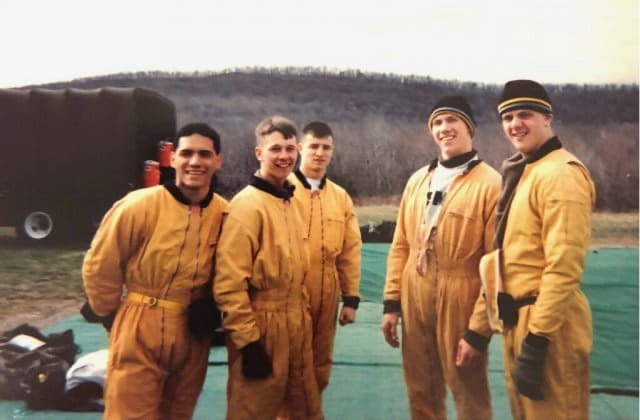
That connection started as plebes at the U.S. Military Academy when Morgan and Rubio found their way to the parachute team.

For Morgan, it was a continuation of a family legacy. Family stories of his great uncle Harry McClintock, a member of the 101st Airborne Division who jumped into Normandy on D-Day, had spurred his already budding interest in serving in the military and introduced him to the idea of becoming an Army paratrooper.

Rubio came to the academy for the education, unsure of what all was offered at West Point. He spent his first year playing what was then called 150s and is now Sprint Football but jumped at the opportunity to join the parachute team once he heard about it.

There, he found his best friends. The team demanded he give up time during the summer and over breaks, but it was worth it to take to the skies with teammates, including Morgan, who quickly became more like brothers.

“What I learned the most from the team was a sense of responsibility. Ultimately, you are getting trained to be a jumpmaster very early on in your life,” Rubio said. “You quickly learn that it is a lot of fun, it is a really neat thing to do, but it is a lot of responsibility. It is something you’ve got to take pretty seriously.”

Morgan is currently orbiting earth aboard the International Space Station during his first mission to space. He was a member of the astronaut class of 2013 and launched to the space station in July to take part in Expedition 60 and 61.
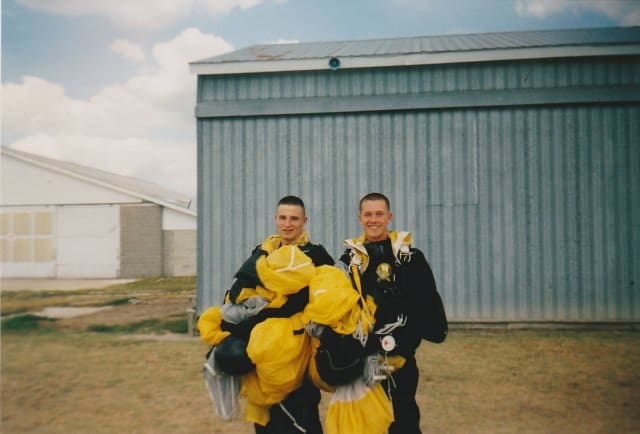
On Aug. 21, he followed in Williams’ footsteps and made the ultimate skydive into space for his first spacewalk.

“That camaraderie that we had (on the parachute team) and that dependency we had on each other, making sure that we were skilled in the aircraft and skilled in the air, our lives depended on each other to do safety checks of each other … I think about how 20 years ago, I was developing those skills at an early age and didn’t even know it,” Morgan said in a NASA interview.

While being an astronaut was always Morgan’s goal, it had only registered as a slight possibility to Rubio. That changed in 2017 with a phone call from his former parachute teammate. NASA was accepting a new class of astronauts and Morgan reached out to encourage him to apply.

“I was pursuing my own dreams at the time of being a special operations surgeon,” Rubio said. “When they took the next class and Drew gave me a quick call and said you may want to consider trying out I think you would be a good candidate, I began to think about it at length.”

Rubio was accepted as a member of the class of 2017 and began his two years of training as an astronaut candidate, which he will graduate from soon.
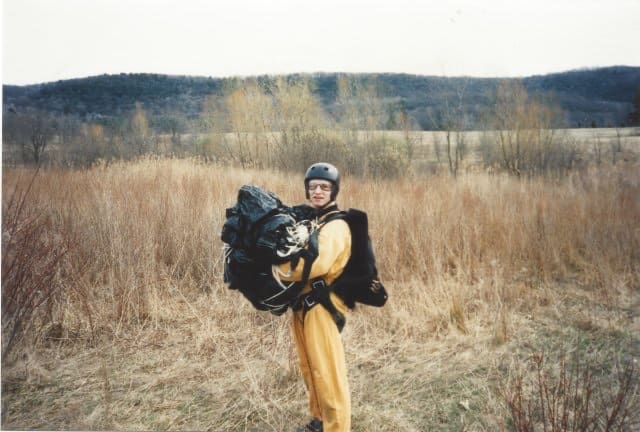
The training course teaches future astronauts how to fly a T-38 Talon, use the space suit, operate the robotics at the space station and how to operate the International Space Station. Due to NASA’s close relationship with the Russian Space Agency, astronaut candidates also have to learn Russian.

After graduation from astronaut candidate school, Rubio and his classmates will wait to be assigned missions, which typically takes a minimum of two years. After selection it is another two years of training before launching to the space station.

Williams was the first to make the leap from parachute team to astronaut, but Morgan and Rubio have followed along the same path and laid the groundwork for current and future team members to follow their own dreams to space.

With fall temperatures rolling in making the afternoons cooler and the sun setting over The Plain, the current members of the parachute team hone their skills much as their three predecessors did as cadets. Grab your parachute, fist pump the 2nd Aviation pilot, ascend to 3,000 feet, jump, land, fold up your parachute and do it all over again.

Jump after jump the team grows closer and their skills improve. How to control your body. How to trust your equipment. How to function in a high stress environment. All of it pays dividends no matter the career they choose to pursue in the Army, but as Williams and Morgan have shown and Rubio will soon learn, it also prepares you for the moment on the ledge with the earth spread out before your eyes as you prepare to make the ultimate skydive.

“To me that means I have a chance, honestly, which I think is super cool,” Class of 2021 Cadet Matthew Blejwas, a current member of the parachute team and aspiring astronaut, said. “Right now, just being able to follow in the footsteps of people that are making these great bounds for us as a society and as humanity is really humbling. I recognize that I’m in a spot where I have an incredible opportunity, and I don’t take that lightly.”

By Brandon OConnor

Brigantes Presents – The Outdoor Military Show (OMS)

Wednesday, October 2nd, 2019

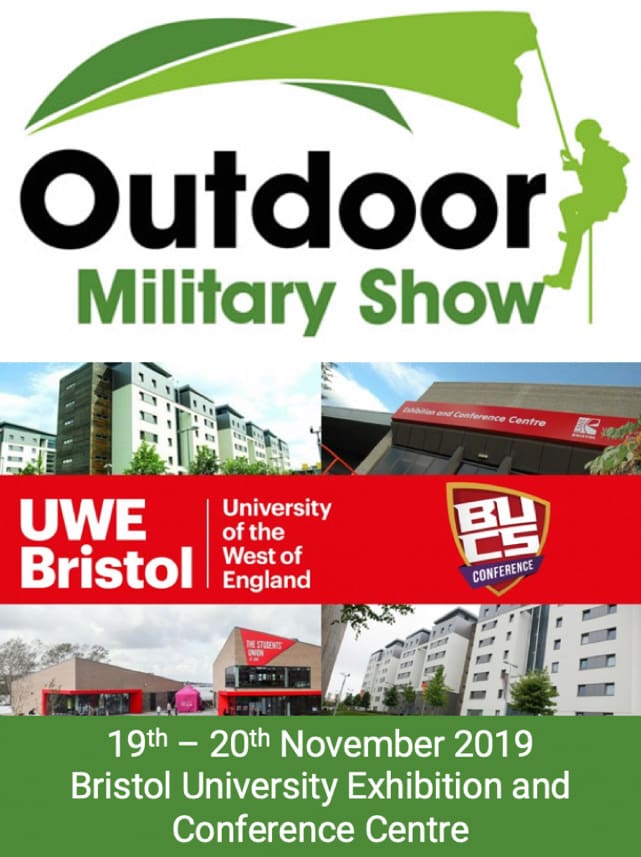
On 19th-20th November, Brigantes, in association with the Outdoor Industries Association (OIA) are hosting the Outdoor Military Show (OMS) in Bristol.

The UK’s only defence show for the outdoor industry, is holding their third year at UWE Bristol Conference and Exhibition Centre. It promises to be bigger and better than before where brands get the opportunity can showcase their specialist tactical and outdoor clothing, kit and equipment to the military user.

Visitors get the opportunity to browse a range of leading brands, with decades of experience in the outdoor industry. Their innovative products pave the way for a glimpse of what successes are already apparent and how future military procurement should be.

To register your interest contact warrior@brigantes.com

Royal Marines Unleash Heavy Weapons During Training On Salisbury Plain

Wednesday, October 2nd, 2019

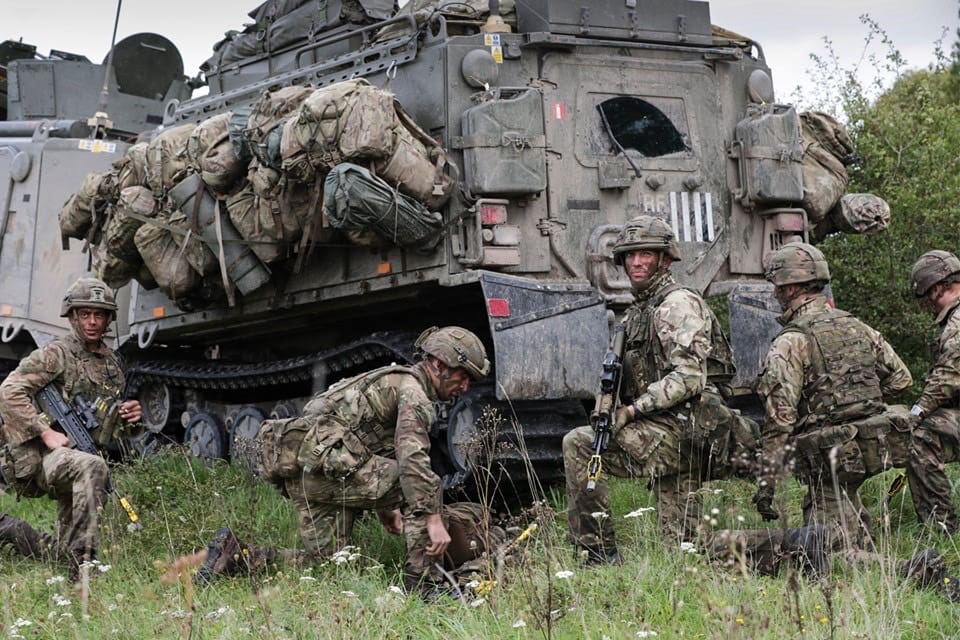
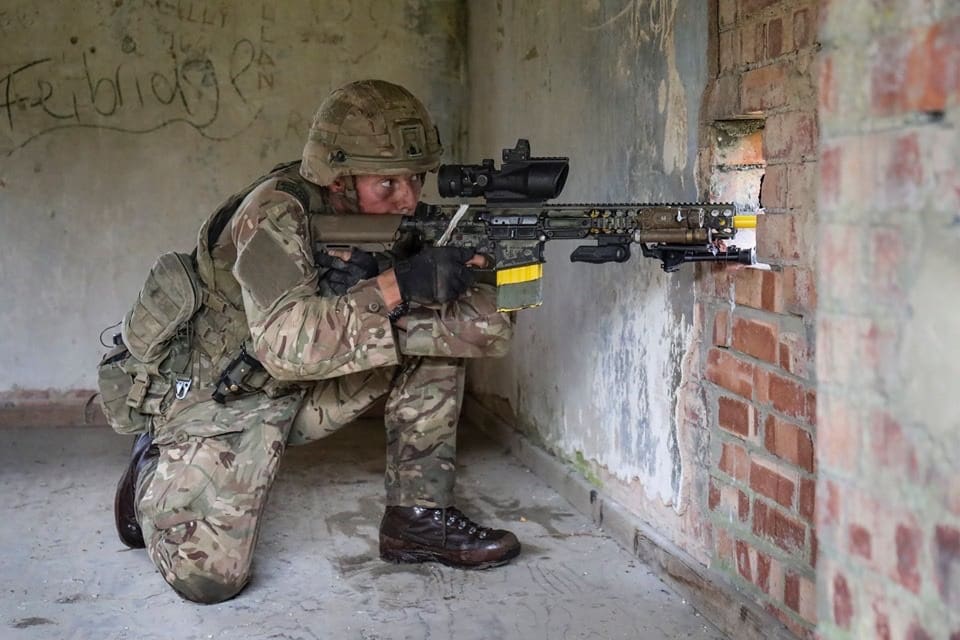
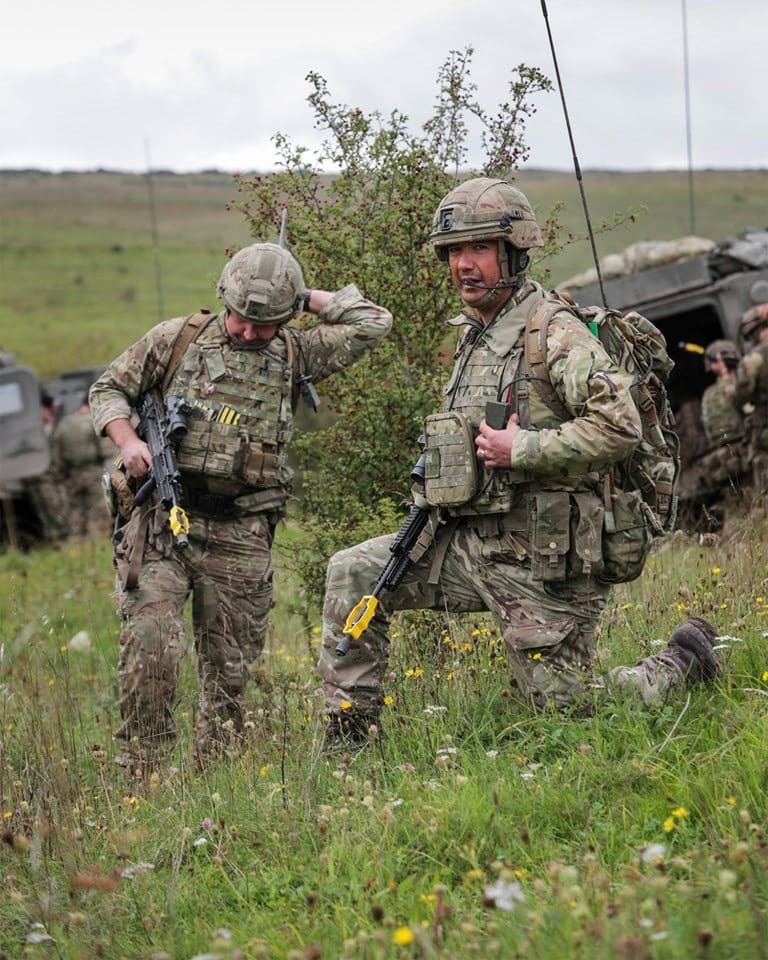
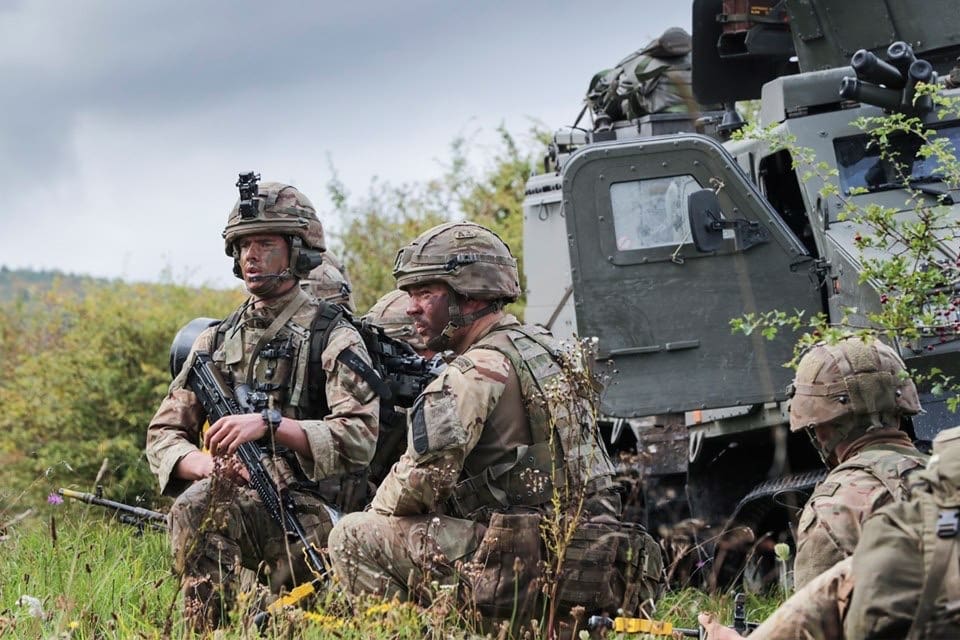
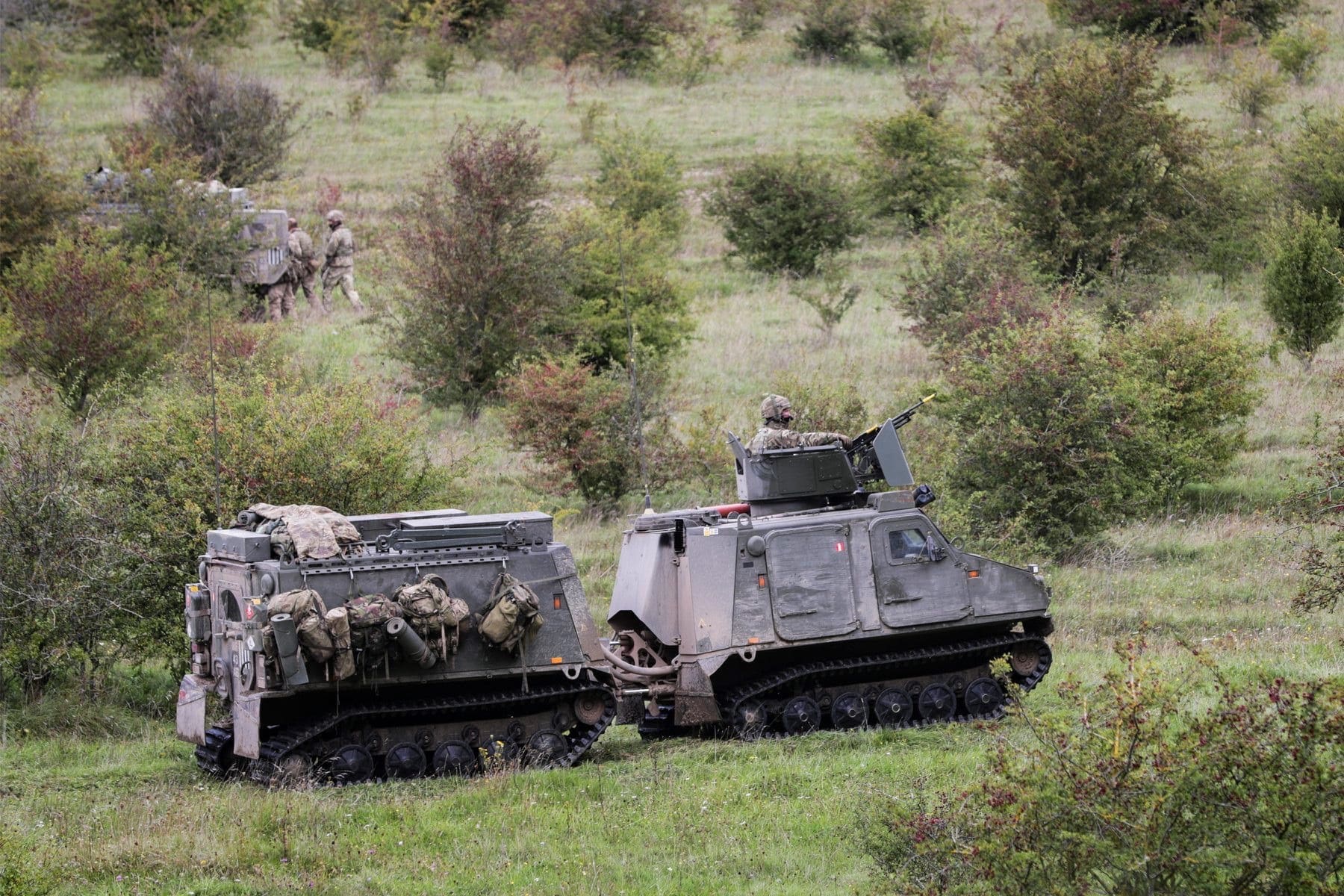
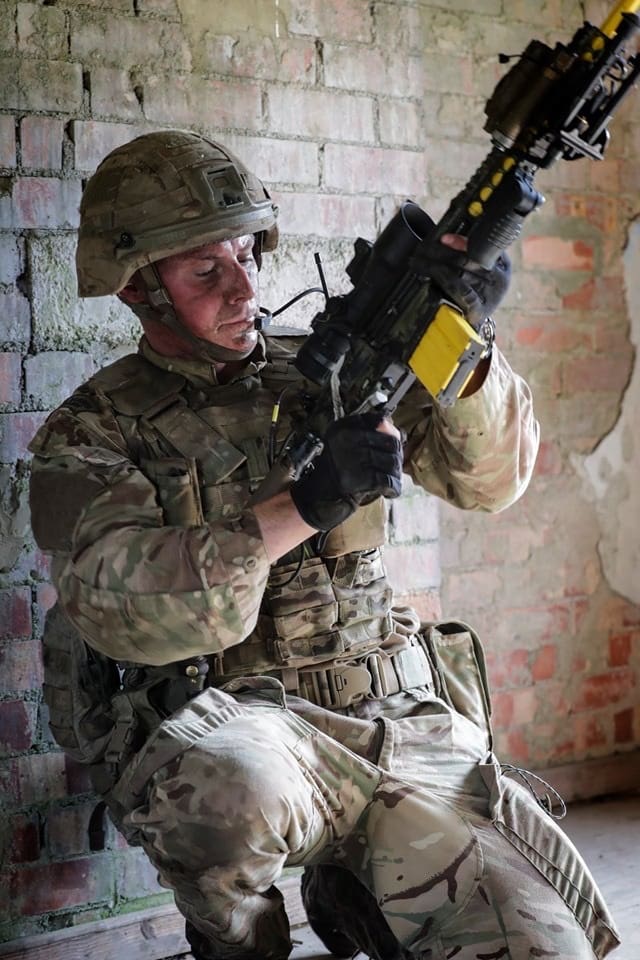
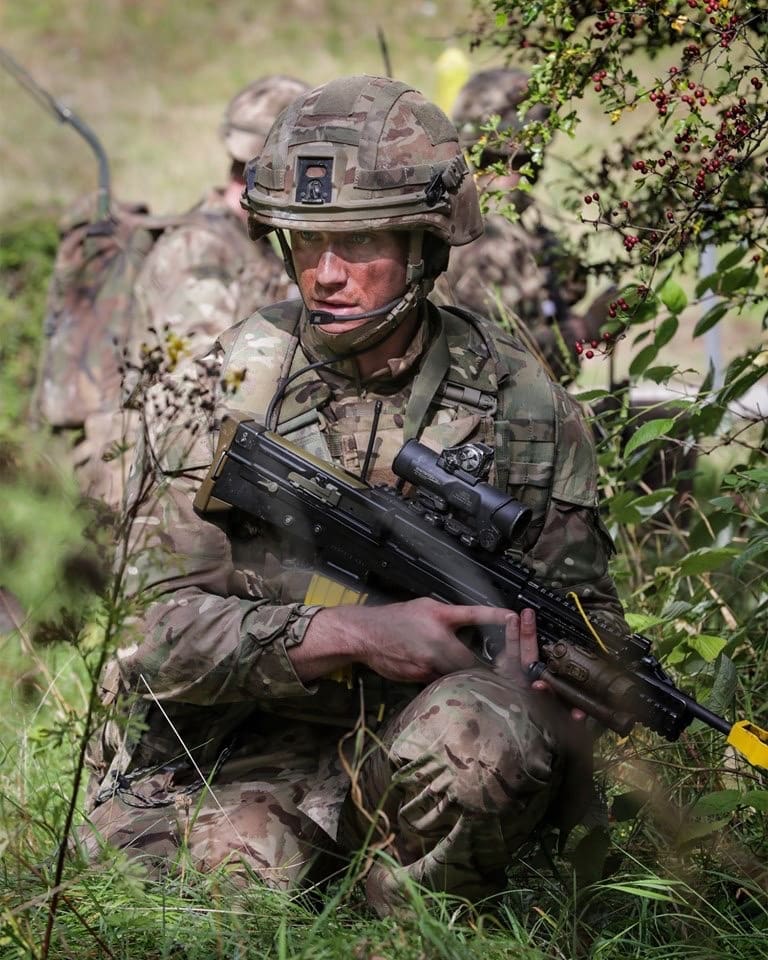
Royal Marines unleashed their heavy weapons and armoured vehicles to assault ‘enemy’ positions during battles on Salisbury Plain.

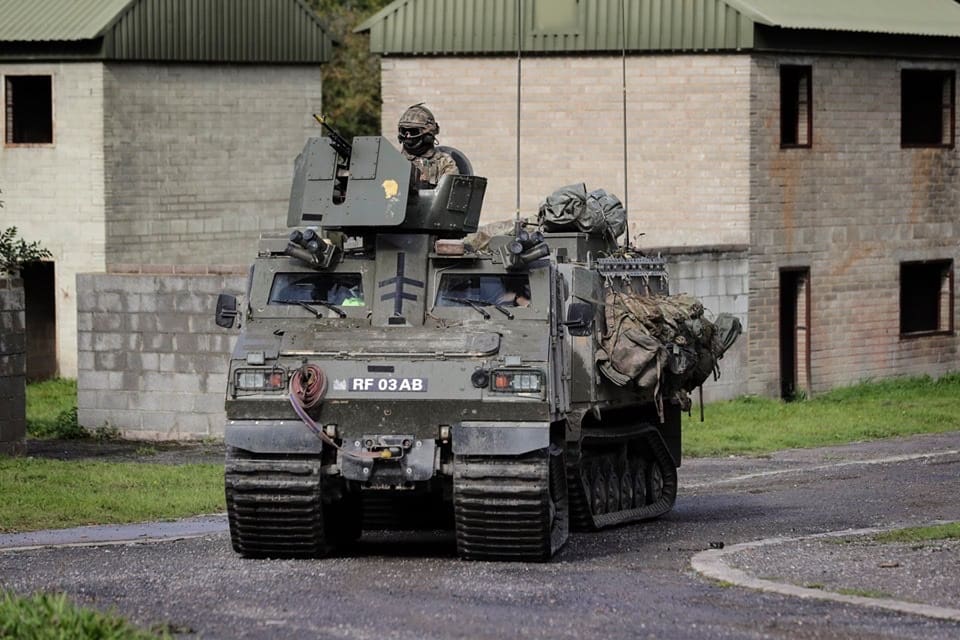
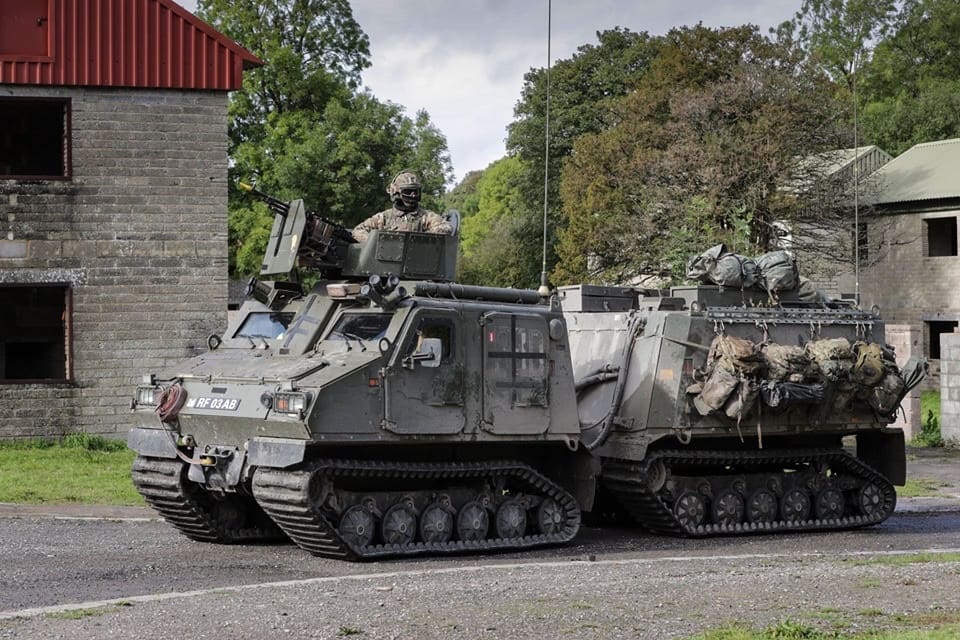
Armed to the teeth and backed by Viking and Jackal vehicles, 45 Commando led an assault through Berrill Valley, pushing their adversary back across villages and bridges using some of their most potent anti-armour weaponry. 

Ten different pockets of resistance were routed in a day-long assault, as the commandos tackled undulated terrain and driving rain in Wiltshire, ahead of stepping off on deployments in the jungle, desert and Arctic in the next few months and into next year.

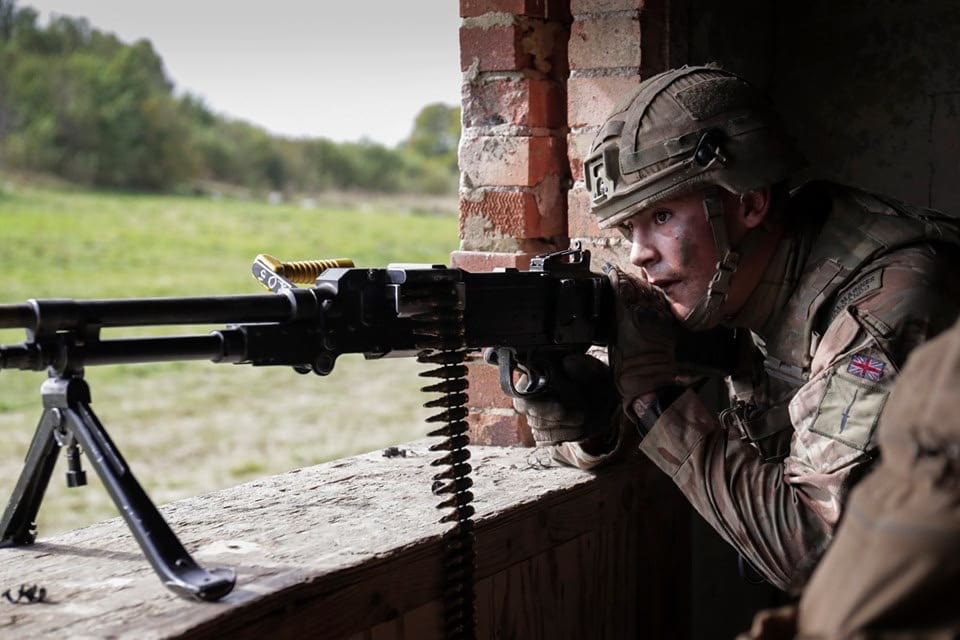
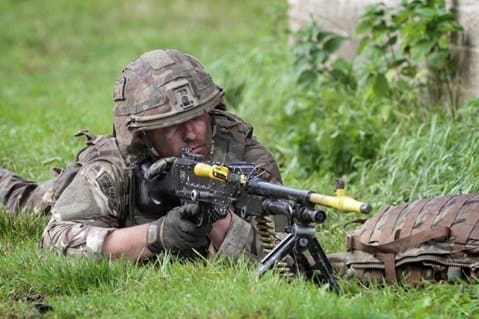
It was a chance for the heavy weapons experts, the Fire Support Group (FSG), of the Arbroath-based unit to test their machine guns, grenade machine guns and Javelin anti-tank weaponry on the battlefield.

The FSGs and X-Ray Company were transported into location using the Vikings to a site near the enemy before, with ruthless efficiency, gaining the upper hand during assaults.

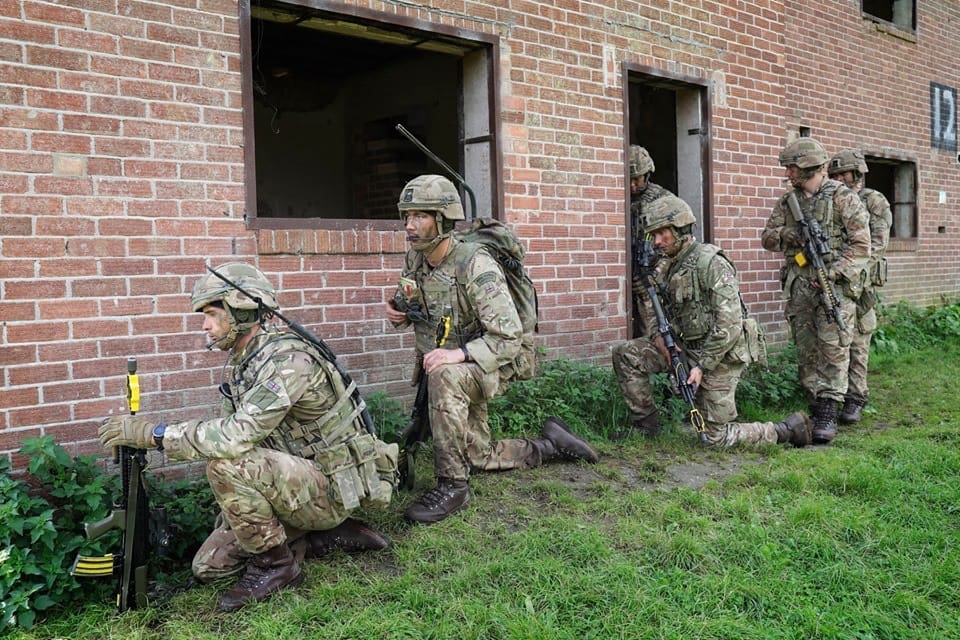
With the FSG using their heavy weapons, laying down supressing fire in positions flanking enemy targets, X-Ray tested their close combat abilities, working through the valley and into the village of Imber – a settlement abandoned in 1943 to make way for training for the invasion of Europe in World War Two.

This was the fiery crescendo of the tactical phase of Exercise Blue Steel and Exercise Viking Warrior, which started with live firing, where FSGs from around 3 Commando Brigade gathered to blow off the cobwebs on the ranges.

“It’s important to shake out when we can to improve our ability to conduct those operations and avoid skill fade,” said Captain Oli Crow, Officer Commanding of 45 Commando Fire Support Groups.

“Each commando has a selection of FSGs which are a part of each close combat company and they provide the direct fire support capability to enable close combat troops to engage the enemy.

“It goes back to fighting a near peer enemy. You can expect them to have heavy armour which is a far cry from the previous decade when they haven’t.

“We have to ensure we can combat such a threat. It’s a really important aspect. We can’t predict what will happen but there are adversaries out there with high-tech equipment that matches or surpasses our own, so need to clearly know how to combat it.”

The marines cleared through woodland, hamlets and into Imber before taking back two strategically vital bridges from the enemy.

They moved on Vikings across a 10km area, each time with the FSG providing firepower to X-Ray’s commandos before they committed to the decisive assaults.

After being on the ranges, this was about perfecting their skills and offering the chance to work alongside armoured vehicles.

“Our role is to provide support to the troops from a nearby position. We’ll suppress a target from a distance, so we’ve got stand-off from their weapons systems and capabilities,” said anti-tank expert Marine Lewis Boateng of Zulu Company’s Fire Support Group.

“Once we’ve supplied that suppressive rate of fire that’s when the troops sweep through into positions.

“We’re due to go to the jungle in two weeks’ time. We haven’t done any anti-tanks for a while, so it’s great to blow off the cobwebs.”

Major Sam Hughes, Officer Commanding of X-Ray Company, was pleased to put his commandos through their paces.

He said: “Sitting on the range is one thing. Doing that in the wind and rain we’ve experienced this week in a tactical scenario, working with those vehicles, is huge. Hence why it’s really important to come together.

“The exercise has gone really well. It’s about recording what we’ve learnt. We’re about to go in to more traditional mountain training which is more on foot. Probably less of the heavy weapons and vehicles but that’s different skills. 

“So we will combine the training we’ve done here and the mountain training when we go to Norway in January for a three-month deployment doing Arctic training when we will have the Vikings, we will have the heavy weapons. It’s about taking forward the skills we’ve got.”

Published by Royal Navy.

US Army Medics Jump With Plasma, Test New Lifesaving Delivery Method

Tuesday, October 1st, 2019

FORT BRAGG, N.C. — According to U.S. Army Medical Research and Materiel Command, bleeding is the leading case of death on the battlefield. When service members receive serious wounds, they are often transported to a surgical team for treatment. These casualties often suffer from severe blood loss due to the inability of their blood to clot normally, which represent approximately 40 percent of combat casualties.

The USAMRMC says frozen blood is currently the standard for treatment. But due to technical and logistical limitations, the demand for a more transportable plasma product with the same hemostatic properties grew.

The U.S. Army Medical Materiel Development Activity, along with a partner company, are testing transportation methods to deliver freeze dried plasma, or FDP, to address this issue and increase the survival rate of wounded Soldiers.

New Roads, Louisiana native Cpt. Robert Crochet, a primary medical test officer, and an Army Medical Department Board – alongside medical personnel assigned to the 432nd Blood Support Detachment, 44th Med. Brigade at Fort Bragg – are testing FDP’s ability to be transported safely and quickly using means that were previously dismissed due to risk of breakage.

Currently used is French frozen plasma, which is contained inside glass tubes, unlike the new FDP, which is sealed inside a ready-to-use bag along with a 250ml bag of sterile water for injection and rehydrating. These are then stored inside a hard plastic sheath designed to protect the product during transport.

For the test mission, Soldiers of the 432nd BSD rehydrated the FDP and packaged it, then waited for transportation by a CH-47 Chinook helicopter. The airborne Soldiers from Fort Bragg then jumped out of the Chinook with the plasma packed in their bags. Upon landing, Crochet and his team inspected the containers and the FDP for signs of damage. They reported their findings to members of the research and development teams for on-sight data collection.

“Tourniquets helped in enhancing survivability for our war fighters, but it’s blood that keeps them alive,” said Col. Roberto E. Marin, material systems branch chief, AMEDD Board.

According to USAMRMC, there is no current method to supply troops in the battlefield with FFB; it has to be maintained by role 2 medical facilities, advanced trauma management and emergency medical treatment, with the ability to freeze and store the blood at constant temperatures. Medical teams operating in a Role 1, unit-level medical care, do not have the ability to store FFB, thus limiting treatment available for wounded Soldiers, according to USAMRMC officials.

Another disadvantage with FFB is the amount of time required to prepare the blood for use on wounded soldiers.

“Currently FFB takes roughly thirty minutes to thaw for surgical use,” Crochet. “With freeze dried plasma, it takes roughly 1-6 minutes to rehydrate and become ready to administer to the casualty. Those minutes can be the difference in life or death.”

Currently FDP and it’s airborne delivery method is still in the testing phase.

By SGT Brian Micheliche