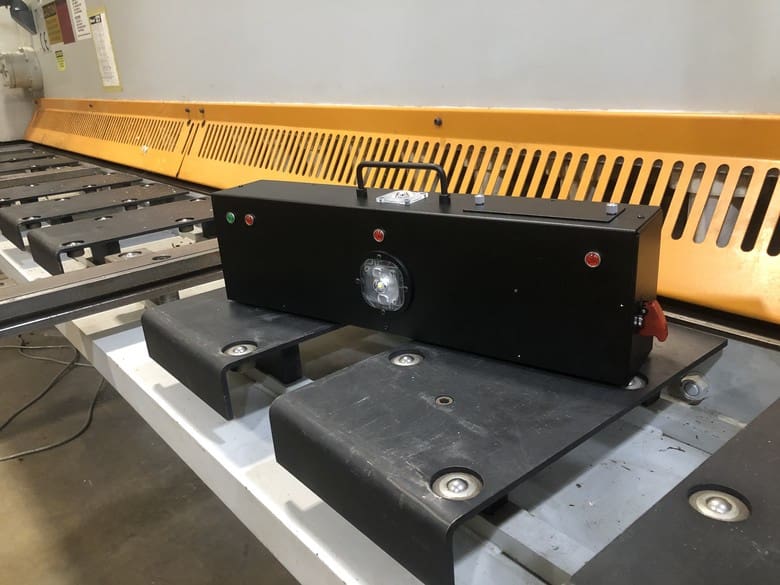
XC3 Weaponlight

Archive for the ‘Guest Post’ Category

Army Scientists Develop Cutting-Edge, Durable 3D Printing Technology

Saturday, February 22nd, 2020

ABERDEEN PROVING GROUND, Md. — Army scientists are on the brink of a pioneering additive-manufacturing technology to help Soldiers quickly swap out broken plastic components with durable 3D printed replacements, says a top Army researcher.

In the past, troops have either lugged replacement parts around or ordered them from warehouses thousands of miles away, only to wait weeks for them to arrive.

But with dual-polymer 3D printed parts — developed by scientists at the U.S. Army Combat Capabilities Development Command Army Research Laboratory, or ARL — Soldiers could be a few clicks away from swapping out broken pieces and heading back to the fight within hours.

“We’re crossing a threshold where low-cost, easy-to-operate and maintain printers will be proliferated on the battlefield — and able to produce engineering parts of very good quality with short turn-around times,” said Dr. Eric Wetzel, ARL’s research arealeader for Soldier materials.

“In order to do that, we need printing technologies that can print parts that are accurate geometrically and have mechanical properties that are sufficiently robust to survive conditions in battle,” he added.

The printing technology comes on the heels of Secretary of the Army Ryan McCarthy pushing an advanced manufacturing policy last October, intended to enhance supply chains in the field.

Until this point, 3D printing technologies that produce mechanically robust parts have required printers and print technologies that are not suitable for austere environments, while the printers suitable for austere environments produced poor-quality parts, Wetzel said.

That’s where the ARL scientists come in. For the last few years, they have delved into this issue, Wetzel said. For the first time, ARL scientists have developed a cutting-edge filament capable of being used in off-the-shelf, low-cost 3D printers to produce mechanically strong, battlefield-ready parts.

“By summer, we hope to have samples of the filament distributed to Army transition partners,” Wetzel added. Based on their feedback, ARL could ramp up production — with help from industry partners — and have it in the hands of Soldiers within the calendar year.

THE DUAL-POLYMER TECHNOLOGY

“Conventional polymer filaments for 3D printing are made up of a single polymer,” Wetzel said. “Our innovation is that we’ve combined two different polymers into a single filament, providing a unique combination of characteristics useful for printing and building strength.”

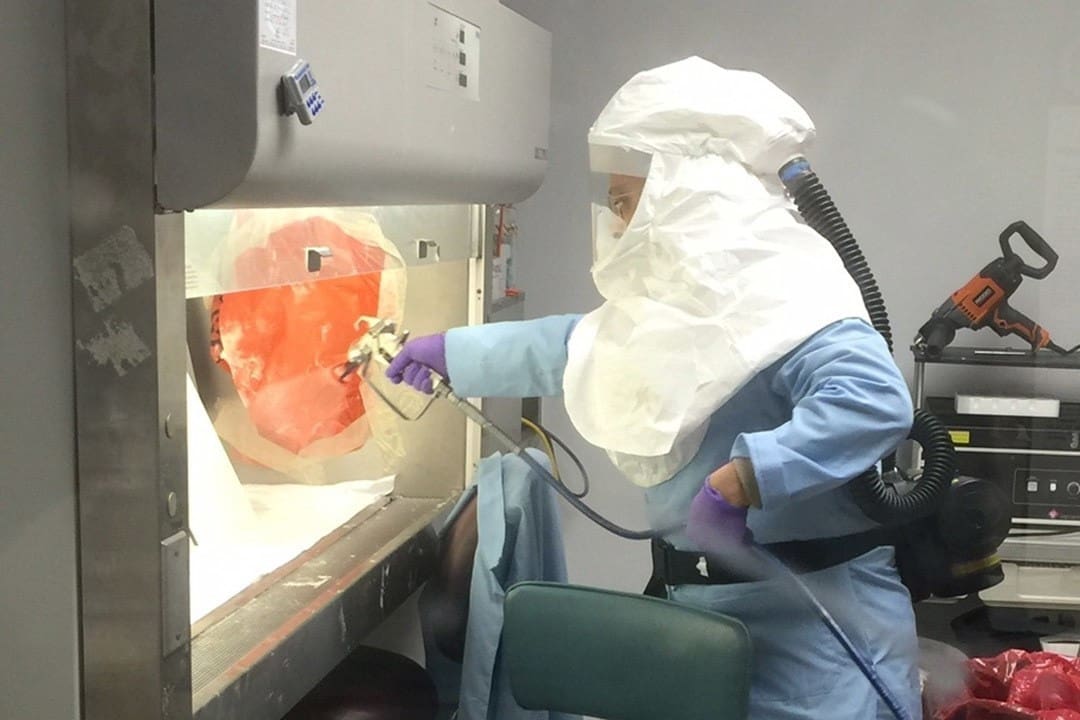
The dual-polymer filament combines acrylonitrile butadiene styrene, or ABS, with polycarbonate, or PC. A critical design feature of the filament is that the ABS and PC phases are not simply mixed together, a common approach for creating blended polymers. Instead, a special die-less thermal drawing process developed by ARL is used to create an ABS filament with a star-shaped PC core. Once coupled, the filament is used as feedstock in a desktop fused-filament fabrication, or FFF, printer to create 3D prints with a heavy-duty ABS/PC meso?structure.

FFF printers work with a heated nozzle that emits thin layers of melted plastic, similar to molten glass. The filament is deposited onto a print bed, one layer on top of another until it forms the 3D printed part. In order to fabricate a unique part, the nozzle, print bed, or both move while the hot plastic streams down.

The two polymers found in the new filament technology have distinct melting temperatures, Wetzel said.

After the solid bodies are initially printed, they are put in an oven to build strength. During this annealing process, the deposited material layers fuse together while maintaining their geometry and form. This stability is caused by the higher temperature resistance of the built-in framework.

“The second polymer holds the shape like a skeleton while the rest of it is melting and bonding together,” Wetzel said. “Through a series of filament design trials, we were able to identify that the star-shaped PC core provided a superior combination of part toughness and stability compared to other arrangements of ABS and PC in the filament.”

Current filaments — traditionally consisting of a single thermoplastic — produce parts that are brittle and weak, and would deform excessively during the annealing process, he said.

“We focused in on what can we do to improve those mechanical properties,” he added. “We wrote a series of papers getting very fundamentally down to the details of exactly why conventional single-polymer parts are not sufficient, what’s happening in the physics of the polymer — really at a molecular level — that prevents conventional printed polymer parts from meeting these requirements.”

The legacy thermoplastic deposits like a hot glue gun, he said. As the layers build, they don’t stick very well to the previous layer because by the time the second layer adds, the first one is cooled off.

“So, you’re not melting the layers together, you’re just solidifying material on top of one another, and they never really bond between layers,” Wetzel said. “Our technology is an approach that allows us to use these conventional desktop printers, but then apply post-processing to dramatically improve the toughness and strength between layers.”

“Manufacturing at the point-of-need provides some exciting possibilities,” Wetzel said. “In the future we can imagine Soldiers deployed overseas collaborating with engineers in the United States, allowing new hardware concepts to be designed and then sent as digital files to be coverted into physical prototypes that the Soldiers can use the same day. This paradigm shift could allow us to innovate at a much higher speed, and be keenly responsive to the ever-changing battlefield.”

Story by Thomas Brading, Army News Service

Photos by EJ Hersom

Air Force Changes Path of Entry for Enlisted Special Warfare Operators

Friday, February 21st, 2020

JOINT BASE SAN ANTONIO-RANDOLPH, Texas – To better afford enlisted recruits the time and opportunity to find the path of their greatest calling, the Air Force has created a single path of entry into the special warfare recruiting and initial training pipeline.

TACP FTX @ Camp Bullis, Texas

The Special Warfare Operator Enlistment Vectoring program will officially commence in early April of this year with a new Air Force Specialty Code for accessions and the first shipment of special warfare candidates to the service’s basic military training.

“On initial entry into the Air Force, the 9T500 AFSC will be the only path for new Airmen to pursue a career into the Combat Control, Pararescue, Tactical Air Control Party or Special Reconnaissance career fields,” said Lt. Col. Joseph Lopez, chief of the special warfare division at Air Education and Training Command headquarters. “This change allows candidates to make a more informed career decision, prior to being vectored, after months of education, training, development, and mentorship, to see what career field might be the best fit for them. The program also enhances the Air Force’s ability to assign Airmen a permanent AFSC in an equitable way across the special warfare community after a thorough “whole-person” evaluation has been conducted on every candidate going through through the accessions and initial phase of training.”

Every day, special warfare Airmen deploy around the world to project American military power through global access, rescue friendly forces through personnel recovery operations and to destroy the enemy through precision strikes.

The SWOE-V program centers on a “coach-develop-mentor” mindset that begins in the pre-accession phase where recruiting development teams identify potential special warfare operators and begin the process to prepare them for the rigors of the special warfare training pipeline and later, their designated career field.

“The typical special warfare scouting, recruiting and development process for a candidate from pre-accessioning to shipping to BMT takes from four to six months,” said Lt. Col. Heath Kerns, commander of the 330th Recruiting Squadron which specializes in special warfare and combat support recruiting. “During pre-accessioning with help from our developers, candidates begin a 21-day “Pass the PAST” workout program developed to help them pass the Physical Abilities Stamina Test, while at the same time being educated on special warfare components, missions and specialties and the SWOE vector process.”

Another key element to the SWOE-V program will be the base lining of enlistment standards for recruits.

“Having a standardized baseline of enlistment standards will eliminate confusion amongst potential recruits, as well as opens up a larger pool of candidates during the recruiting process who might be eligible for and interested in a career in special warfare,” Kerns said.

After a potential candidate passes the PAST, a test that represents the minimum physical fitness entrance standards for enlisted special warfare career fields, they compete for selection and receive a developer recommendation before contracting and shipping to BMT at Joint Base San Antonio-Lackland, Texas, as a SWOE candidate, Kerns said.

During BMT, SWOE candidates will master curriculum that includes the Air Force mission and vision, core values, drill and ceremony, history and priorities, field training and joint warfare like every other trainee, but undergo additional training to prepare them for the Special Warfare Prep Course.

100% and then some, TACP apprentice course

“While assigned to their special warfare BMT flights, candidates conduct additional physical training and continue their education about all things special warfare related including components, missions and specialties and the SWOE vectoring process,” Lopez said.

SWOEs’ BMT performance evaluation data is collected throughout training to be included as part of the vectoring process once trainees enter the Special Warfare Prep course, administered by officials at the Special Warfare Training Wing, also at JBSA-Lackland.

“Along with the performance data from BMT, data from the Special Warfare prep course, and a SWOE’s career preference, candidates are vectored to either the Special Tactics and Guardian Angel, or the Tactical Air Control Party, courses of initial entry,” Lopez said.

Selection for a specific special warfare Air Force Specialty Code is heavily based on a candidate’s performance, which drives a competitive model early on, even before shipping to BMT, thus helping shape individual’s drive, determination and strengths, intended to create trust and team cohesion among candidates, Lopez said.

Special Warfare trainees honor fallen combat controller

“Nothing is given; Airmen must earn their spot in their chosen career field and fight for it,” Lopez said. “We are evaluating them continuously through pre-accessioning, BMT and the Special Warfare Prep Course, using a whole person concept that includes cognitive, physical skills, as well as Airmanship and instructors’ evaluation of teamwork and attitude.”

From this point in the pipeline, SWOE candidates are split into one of two paths: the four-week Special Tactics and Guardian Angel course of initial entry or the TACP initial course of entry.

“After successful completion of the ST/GA initial course of entry, candidates will be assigned into the combat controller, pararescue or special reconnaissance AFSC based on their continued performance during training and their preference,” Lopez said. “After successful completion of that course, candidates continue along their respective AFSC-specific training pipelines.”

Special Warfare Airmen train with U.S. Marine Corps Reserve

Those who enter the TACP course of initial entry and successfully complete it will continue along in the remainder of the TACP training pipeline, said Lopez.

“The SWOE-V really is a big deal as it represents a momentous change for the Air Force special warfare community,” Lopez said. “By removing constraints in the recruiting and accessions process, we are expanding the talent pool while streamlining entry into the service. We also ensure ensure equitable distribution consistent with and proportional to Air Force-established production goals.”

By Dan Hawkins, Air Education and Training Command Public Affairs

AF Note: To hear more about the SWOE-V program, listen to “The Air Force Starts Here” podcast featuring Lt. Col Lopez, AETC’s special warfare division chief, and Lt. Col. Heath Kerns, 330th Recruiting Squadron commander. The podcast is available for download or streaming on Apple Podcasts, Spotify and Google Play, as well as on the AETC website.

FirstSpear Friday Focus – Everyday Vest

Friday, February 21st, 2020

Today we are getting the first look at an all new addition to the FirstSpear’s American Merino Wool line, the Everyday Vest (EDV). Built with FirstSpear ACM Warm 600, which is the heaviest wool package offered and is also used in the FS Woobie.

Features a high collar with a 1/4 zip front and horizontal chest pocket along with a hidden internal pocket. Provides exceptional warmth even when wet as well as helping to wick away moisture from the body. 100% Berry Compliant featuring American merino wool.

Available now in black, commando, and heather grey.

www.first-spear.com/everyday-vest

Operational Security Key to Mission Success

Thursday, February 20th, 2020

DUKE FIELD, Fla. — A Citizen Air Commando wrestles to equip his night vision gear as he sets off into the desert of a foreign land. Another Citizen Air Commando monitors a screen in a dark room as she determines which life to take in the theater of conflict.

Reservists from Duke Field are all over the world performing unique missions, including some whose stories can never be told. None of these operations could be completed without a strong Operational Security program.

“We’re talking about how we protect our daily mission,” said Craig Robinson, the OPSEC program manager for the 919th Special Operations Wing. “A lot of people are so used to safeguarding classified information, they sometimes forget the unclassified but sensitive information they need to protect.”

OPSEC is a broad program encompassing logistical details about operations, such as troop movements for example, said Robinson. This information might not be classified, but it’s central to how we get our mission done. If an adversary became aware that we were moving troops from point A to point B, they could possibly hinder the operation.

“If you don’t protect OPSEC, the adversary could get that information and make a decision to act on it causing injury or death to our members,” said Senior Airman Kimberly Nelson, a radio frequency technician with the 919th Special Operations Communications Squadron.  “It could also result in the mission just not happening.”

“I [often] work with cyber operations where all the information we use is important or critical,” said Nelson. “Giving out information that is critical to the mission would be considered an OPSEC violation. Just because you’re in the military or might be my friend doesn’t mean you have a need to know.”

One important OPSEC component that’s been highlighted by recent events is service-members social-media use, said Robinson. Voicing details or opinions about overseas military operations, even if it’s within the workcenter, can damage the overall mission. Airmen need to be careful about what they’re posting online. The same care needs to be taken with sharing photographs as well.

“I’ve seen my friends post pictures posing with planes and such,” said Robinson. “While it’s not classified, it’s about the overall scheme. By photographing sensitive information, we’re making folks an easy target for an adversary in a foreign country. So the less an adversary knows about our equipment, processes and personnel, the better.”

Nelson agreed and said keeping potential adversaries in the dark regarding current and future operations is the best approach.

“People don’t need to know the location where you’re deployed,” said Nelson. “They don’t need to see pictures of the equipment that you’re using because that’s no one else’s business.”

“I’ve heard stories of family members posting things about stuff,” said Nelson. “Airmen often tell their mom where they’re going, when they’re going there, what they’re doing and then what the deployed conditions are like. Then mom might post something such as, ‘I’m so proud of my Airman…he or she did this on this day. They’re coming back from overseas at this time.’ She’s being a mom and is excited, but she’s also giving out pertinent information.”

If you think that sensitive information has been released, contact your squadron’s OPSEC coordinator as soon as possible, said Robinson. That’s the focal point in each squadron that Airmen could go to if they think there’s an OPSEC problem.

“We have to be very careful when we share sensitive information,” said Robinson. “Practicing good OPSEC is the responsibility of every Airman. We all have to make sure we’re protecting details on our operations to ensure the mission goes according to plan.”

By Senior Airman Dylan Gentile, 919th Special Operations Wing

Army Uniform Board Votes On Soldier-Driven Changes for New AGSUs

Wednesday, February 19th, 2020

WASHINGTON — The Army Uniform Board (AUB) recently met to address and vote on the latest feedback from Soldiers for improving the design of the new Army Green Service Uniform (AGSU). The AUB, which included the first all-female board for the female uniform, sought and addressed the critical changes from Soldiers in designing the uniform for function and fit.

The AUB discussed and voted on 20 uniform changes for both complex and simple design features. These changes directly stem from Soldier participation in the limited user evaluation that is intended to enhance the AGSU’s performance and functionality for Soldiers across the Army.

Voting efforts focused on balancing responses from Soldiers and costs for the Army and Soldiers. “It was important we voted in such a way that demonstrated we understand the valuable input and concerns of our Soldiers. We must also continue to safeguard our promise to keep the AGSU cost down,” stated Lieutenant General Duane Gamble, Deputy Chief of Staff G-4 and AUB Chairman.

The AUB is the Army’s only forum to address the changing requirements of Soldiers’ uniforms and accessory items. Every Soldier can contribute to the Uniform Board process by providing his or her recommendation to his or her unit’s Sergeant Major. Incorporating the feedback from our Soldiers is a big part of the AUB process and without their input, the new uniform would not have the support it currently has.

Members of the AUB include Soldiers of all levels, and representatives from the active component, the Army Reserve, and the Army National Guard. Each member has an equal vote in deciding which recommendations go forth to the Chief of Staff of the Army.

By Ms. LeAndrea O White (G4)

Brigantes Presents – Brigantes Issue Essentials

Wednesday, February 19th, 2020

Each week we bring you products that should be on all military standard issue kit lists. This week it’s the Armadillo Merino Condor base layer.

ARMADILLO MERINO make clothing that is made for tactical operators and other professionals in the most extreme environments. They have had our products go to space, and worn by professionals operating in some of the highest risk places and environments on earth.

Their condor uses a soft but strong rib knit structure (similar to honeycomb) for maximum versatility. In summer this open knit structure moves heat and moisture away from the skin keeping you cooler and drier. In winter this same knit structure traps still air to give you a buffer zone of warmth.

The strong and stretchy knit structure is designed to be figure hugging and with flat lock stitching the Condor functions as the ideal base layer garment for year round applications.

Its Rib knit designed for year round comfort but the tight design enables it to be worn under your uniform. The seamless shoulders and underarm, with extra strong thread and a tag free neckline are ideal for load carrying, eliminating chaffing and a tag free neckline.

The Condor benefits from Armadillo’s “no melt or drip” technology. They have natural flame resistance up to 1100F, and will not melt or drip when exposed to heat.

Their garments do not smell as they have natural anti-microbial properties. You can wear the Armadillo tops for days on end without odor. A great all round base layer to give super comfortable 365 days a year.

For more information contact international@brigantes.com

For UK sales contact warrior@brigantes.com


USAF Parachute Riggers: One Ripcord at a Time

Tuesday, February 18th, 2020

CAMP LEMONNIER, Djibouti (AFNS) — The Air Force uses more than 20 types of parachutes to conduct personnel recovery, airdrops and asset insertion into combat zones. Knowing what type of parachute is required for each mission and verifying the safety of those parachutes is the job of a parachute rigger.

This responsibility on Camp Lemonnier is up to the 82nd Expeditionary Rescue Squadron Aircrew Flight Equipment riggers, deployed from Moffett Federal Airfield, California.

“Being a rigger, everything we do has to be 100 percent,” said Tech. Sgt. Isaac Corniel, the 82nd ERQS AFE NCO in charge. “There is no room for mistakes. There’s no room for error. Their lives are in our hands. Even if we have a small twist in a line we want to make it straight, as it can mean someone’s life.”

Being deployed to Djibouti has allowed the 82nd ERQS AFE to train on real-world missions unlike any other training they can get at home station.

AFE riggers are required to pack a variety of chutes in a variety of conditions throughout the world to meet mission needs. The packing can take from 35 minutes to several hours to inspect and repack. Along with the complex quality control measures that must be performed.

“We just try to be the best that we can. We preach quality, quantity and efficiency,” Corniel said. “We are combined with a variety of military forces being deployed, so our guys get to train on more scenarios than they would at home.”

According to Corniel, being deployed to Africa has allowed the team to have hands-on experience with more airdrop missions, whereas back home they would only provide chutes for one or two drops a month. The AFE Airmen said they have grown their understanding on the job to make their deployment a success.

“The guys have been great. They all live up to the riggers creed; they know now what it is to be a rigger,” Corniel said. “We are a part of something special and we strive to keep the history of excellence between the pararescue teams and riggers.”

By SSgt Carlin Leslie , Combined Joint Task Force-Horn of Africa Public Affairs

Wanted: Ideas on Space Force Members’ Name, Ranks

Sunday, February 16th, 2020

ARLINGTON, Va. (AFNS) — The U.S. Space Force is looking for feedback from U.S. military space professionals on what Space Force members should be called – similar to how the Air Force refers to its members as ‘Airmen’ or the Army refers to its members as ‘Soldiers’.

Given the significance a name has to the identity and culture of an organization, the Space Force is taking a deliberate approach to ensure Space Force member titles and ranks appropriately convey the nature of the newest Armed Forces branch and the domain in which it operates.

Toward that end, Space Force officials are soliciting ideas related to Space Force ranks, names for operational units and what Space Force members should be called collectively. They are especially interested in soliciting ideas from those currently assigned to the U.S. Space Force or those who expect to be members of the Space Force in the future.

Air Force Common Access Card holders with access to Air Force Portal should submit their ideas online by Feb. 24 through the IdeaScale website at usaf.ideascalegov.com/a/ideas/recent/campaigns/122. Space Force officials will also be reaching out to the Army, Navy and Marine Corps space communities to offer military space professionals in other services the opportunity to submit ideas.

“As we continue to forge the Space Force into a lean, agile and forward-looking 21st century warfighting branch, we want to provide space professionals the opportunity to influence what the members of our new service will be called,” said Lt. Gen. DT Thompson, U.S. Space Force vice commander. “The decisions we make today will shape the Space Force for decades to come, so we want to ensure those who will serve in the Space Force have a say when it comes to important organizational and cultural identity considerations.”

Officials emphasized several guidelines respondents must consider when submitting ideas. For example, proposals must be gender-neutral, distinctive and should emphasize a future-oriented military force. In addition, submissions cannot violate copyrights, infringe on trademarks or other intellectual property rights, or be proprietary. Any submission falling into those categories will not be considered. Submissions must also be in good taste.

Once the submission deadline closes, a panel of Space Force officials will review inputs along with other feedback received from various sources to help inform a final decision on the new Space Force member moniker. That decision, which will be made by senior Space Force leaders, will be announced publicly at a future date to be determined.

By Secretary of the Air Force Public Affairs