Colt

Archive for the ‘Guest Post’ Category

Like Moths to a False Flame: Lethality and Protection Through Deception Operations

Thursday, July 10th, 2025

The ongoing war in Ukraine has dem­onstrated the deadly efficiency of modern battlefield targeting. Rapid sensor-to-shooter integration, enabled by signals intelligence (SIGINT), geo­spatial intelligence (GEOINT), and un­manned aerial systems (UAS) recon­naissance, has shortened kill chains to the point where detection often leads to immediate engagement. High-value assets, identified through electronic emissions or ground-based reconnais­sance, face a severe risk of engage­ment and destruction. The prevalence of SIGINT collection, integration of UAS, and massed indirect fires in the doctrines of American adversaries rep­resents a complex problem that can be mitigated by the use of tactical decep­tion.1

Russia and China both employ multi-layered information collection and rap­id sensor-to-shooter systems. Com­mand and Control (C2) nodes are an example of High-Value-Targets (HVT) targeted by adversary doctrines and are a convenient example for exploring the use of, and opportunities created by, deception. Adversary doctrine de­scribes the following kill chain for en­gaging C2 nodes: mobile SIGINT collec­tors locate command nodes, UAS con­firm the target location, and artillery at echelon execute massed fires strikes before blue force commanders can re­act. The threat to U.S. forces this sys­tem represents is not theoretical, it un­folds daily on the battlefields of Ukraine and represents the conditions under which American forces are ex­pected to fight and win. These doc­trines are replicated every rotation at the National Training Center (NTC), where the Troopers of the 11th Ar­mored Cavalry Regiment (Blackhorse) serve as the professional opposing force (OPFOR). Blackhorse provides units with a critical opportunity to train against the techniques America’s adversaries use daily. Unexercised so­lutions already exist within Army for­mations to mitigate the effects of the modern battlefield’s shortened kill chains. By understanding adversary collection techniques, reducing signa­ture, and presenting deception signa­tures, battalions can disrupt enemy targeting cycles and create opportuni­ties for lethal response.

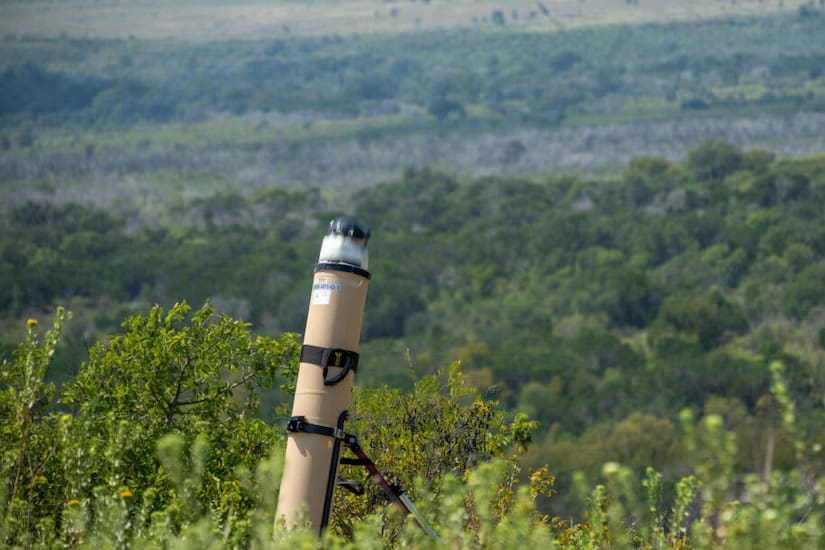
Figure 1. NESTS in the vicinity of Strawberry Fields oriented towards Dazashah collecting on rotational brigade MCP and enabler signatures in the Pass Complex targeting Joint Battle Command-Platform (Photo by 11th ACR Regimental S2)

Threat Collection Doctrine

Russia and China prioritize rapid target acquisition, integrated information col­lection, and fire control automation as core tenets of their military doctrine. The 7-100 series doctrinal manuals lay out their shared approach to large-scale combat operations (LSCO), detail­ing the reliance on multi-layered information collection systems that feed directly into massed indirect fires, shortening the time between detection and engagement. SIGINT plays a criti­cal role in this process, by geolocating friendly forces C2 nodes and tracking emissions from communications and mission command information sys­tems. GEOINT, collected by UAS, sup­plements SIGINT data by confirming target locations and conducting battle damage assessment (BDA) to refine follow-on strikes. This integrated tar­geting process ensures that friendly forces are rapidly engaged before they can reposition, react, or conceal them­selves.

For U.S. forces, the threat posed by this level of collection and targeting cannot be overstated because of our reliance on digital mission command systems. The ability of adversaries to rapidly detect and engage formations means that any electronic emissions or movement bears significant risk of compromise and targeting. Without ef­fective mitigation measures, units risk being outpaced in the decision-making cycle, allowing the enemy to dictate the tempo of battle. Blackhorse repli­cates these conditions at NTC, ensur­ing that rotational training units (RTUs) experience the same information-driv­en targeting process they will face in combat. By understanding how adver­saries collect and process information, U.S. forces can better prepare to dis­rupt, degrade, deny enemy kill chains.

Threat Replication

Blackhorse executes information col­lection operations by integrating SI­GINT, UAS, and ground-based recon­naissance to target friendly command and control C2 nodes, thereby disrupt­ing decision-making processes. Their layered sensor network operates in a sequence designed to detect, validate, and engage targets in real time. The Networked Electronic Support Threat Sensors (NESTS) system collects SIGINT, identifying emissions from satellite-based communications, while the Ver­satile Radio Observation and Direction (VROD) system intercepts frequency modulated (FM) transmissions to lo­cate and classify targets. Identification of likely targets by SIGINT cues UAS to confirm targeting data and refine col­lection. Due to limited time on station, UAS only remain on their assigned named areas of interest (NAIs) long enough to confirm targeting data be­fore moving on to identify additional targets in support of the maneuver fight. Small UAS (sUAS) may conduct BDA later if required.

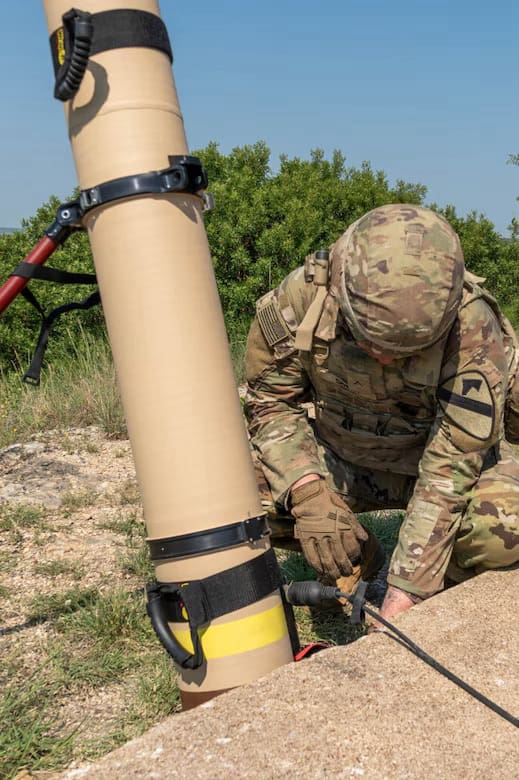
Figure 2. FM NEST Emission Assessment for 2/11 TOC (Photo by 11th ACR Regimental S2)

Once validated, the Blackhorse Regi­mental Targeting Intelligence Cell (RTIC) processes the refined target data and passes it to fires elements for strike execution. This sensor-to-shoot­er process mirrors adversary work­flows, where electronic detection leads to physical compromise and rapid en­gagement. The effectiveness of this process underscores the necessity for signature management, deception, and counter-fire strategies to disrupt enemy kill chains.

Defeat through Deception

Deception is a fundamental aspect of modern warfare but is typically rele­gated to a survivability operation. Suc­cessful battlefield deception forces ad­versaries to misallocate resources, de­lay decision-making, and strike false targets. FM 3-90 defines deception as actions executed to deliberately mislead adversary decision-makers about friendly military capabilities, in­tentions, and operations.2

Adversary intelligence, surveillance, and reconnaissance (ISR) networks rely on rapid detection, classification, and engagement. By integrating deception, friendly forces can manipulate enemy perception, disrupt targeting cycles, and increase survivability.3&4

Deception operates across all domains and targets two specific dimension: physical and technical. Together these dimensions influence the cognitive, or human, dimension of decision making. Physical deception uses false positions and decoys to mislead enemy analysts into assessing a decoy as a legitimate target. Technical deception manipu­lates the electromagnetic spectrum (EMS) by emitting signals that mimic actual targets, causing adversary col­lectors to misinterpret the data. C2 nodes have both a physical and techni­cal signature, making them a useful ex­ample for exploring the requirements of a deception story.5

Units generate deception stories by creating signatures inside the collected spectrums, that force adversary ana­lysts to make false assessments. In the electronic spectrum, the deception node must emit signatures that mimic a C2 node. This requires units to allo­cate FM and Joint Battle Command-Platform (JBCP) capability to the de­ception node as both systems are pres­ent in MCPs. JBCPs constantly update their location data to the network, cre­ating a continuous low-power emis­sion. JBCP emissions are commonly as­sumed to be too weak to be detected, this is a false assumption. In addition to being detectable, the static nature of C2 nodes allows enemy analysts to accurately classify their emissions as a C2 node and initiate a queuing cycle and kill chain.

Reinforcing the deception story re­quires physically constructing the de­ception node to present a believable target. After SIGINT assets identify a likely MCP, adversary doctrine calls for UAS or ground reconnaissance to validate the target. Blackhorse repli­cates this effect with a dedicated MQ-1C Gray Eagle during NTC rotations. When UAS collection begins, the de­ception node must match the physical signature of an actual MCP. To achieve this, units must equip the deception node with wheeled vehicles, tentage, antennas, and other identifiable MCP-associated equipment.

Battalions can improve deception ef­fectiveness by creating deception kits from non-functional or excess equip­ment components. Broken antennas simulate active communication archi­tecture, while trailers transporting generator mockups and fuel cans rep­licate life support systems. Worn-out power cables present the image of power distribution to tents, reinforcing the illusion of an operational command node. Because high quality thermal sensors are widely available common commercial markets, the deception node should also mimic the thermal signature of an operational command node. Crews can simulate a generator’s thermal signature by piping exhaust from the towing vehicle into the decoy, allowing it to escape through a repli­cated exhaust port. Properly routing exhaust tubing and covering both the vehicle and the fake generator with camouflage netting obscures the de­ception and breaks up its physical sig­nature, making identification of the de­ception story as a deception less likely. Damaged shelters staged as command post structures further reinforce the deception story without risking mis­sion-essential assets. Integrating these elements allows units to construct de­ception nodes capable of withstanding both SIGINT and GEOINT validation.

To reduce risk, all personnel should withdraw from the deception node once it establishes. A technique to im­prove the deception teams survivabil­ity is to locate them in offset security positions, several hundred meters away, minimizing exposure while main­taining operational control of the node. Using wired connections to FM radios enables deception teams to transmit from secure positions, in­creasing the deception node’s electro­magnetic (EM) signature while keeping personnel protected. This method strengthens deception by making the site appear active while preserving force survivability. Another technique to strengthen technical deception is to equip the deception node with a CX-13298 Retrans Cable, commonly known as a “dog bone”. This cable al­lows the deception node to act as a re­trans site, mimicking the radio traffic of the actual C2 node while simultane­ously allowing the C2 node to broad­cast lower power transmissions, reduc­ing the likelihood of electronic detec­tion.

The final step in any deception opera­tion is concealing the actual asset. While the deception nodes attract en­emy collection by design, the real MCP must obscure or eliminate the signa­tures that would expose its location. This requires reversing the techniques used to make the deception node ap­pear authentic and ensuring the pro­tected asset remains undetected.

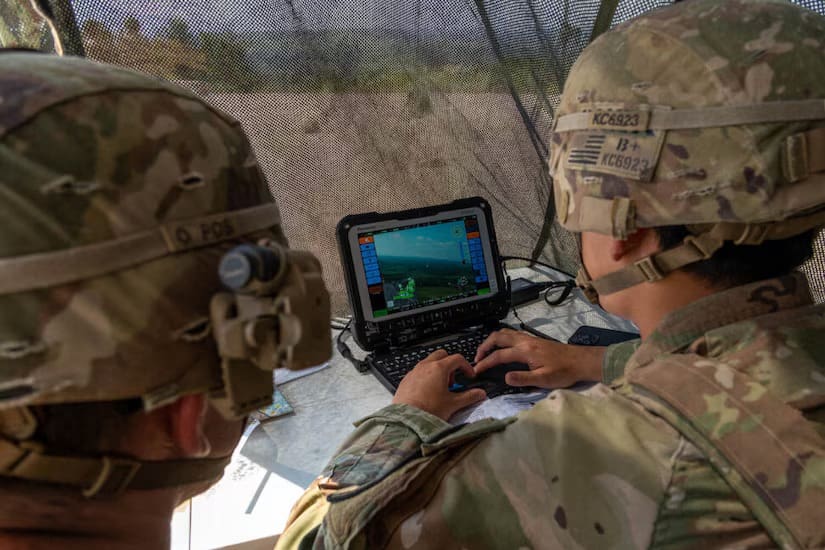
Figure 3. JBC-P NEST Emission Assessment for Troop CP and 2/11 TOC (Photo by 11th ACR Regimental S2)

Minimizing electromagnetic emissions is the first priority. JBCP should oper­ate on communications windows, es­tablish offset from the MCP, or estab­lish behind terrain that completely masks horizontal emissions. FM radios should connect by hardline to an offset antenna farm, preventing immediate correlation between transmissions and the MCP’s physical location. ATP 6-02.53, “Techniques for Tactical Ra­dio Operations,” details how antennas can offset more than two miles using ASIP remote operations via hardline connection, reducing the MCP’s expo­sure to SIGINT collection.6 When using a retrans setup on the deception node, the C2 node can locate in terrain that masks FM communication forward but allows broadcasts to hit the retrans system. These techniques not only im­prove concealment but also reinforce the deception story by generating EM emissions at the decoy location.

Beyond SIGINT mitigation, the physical composition of the MCP should be structured to blend into the operation­al environment while still meeting op­erational requirements. Use of vehi­cles and equipment incongruent with an MCP, reducing the size of the node, and collapsing assets during periods of UAS reconnaissance all contribute to the deception story by representing the C2 node as a different asset.

Reports of contact with UAS should trigger protection battle drills, includ­ing breaking down easily identifiable equipment, applying additional cam­ouflage, or even jumping the command post to prevent the presentation of an easy target. Once the ISR threat is neu­tralized or off-station, units can restore digital communications as needed.

Leveraging Lethality from Deception

A well-integrated deception plan must align with counter-reconnaissance, fires, and intelligence planning, antici­pating how and when enemy collection assets will react, and how to actively counter their efforts. This concept is rooted in reflexive control, a strategy developed by the Soviet Union in the 1960s and 1970s. Reflexive control seeks to manipulate an adversary’s de­cision-making process by shaping their perception, leading them to take ac­tions that are predictable and favor­able to the initiator. In this context, de­ception forces the enemy into a pre­dictable reaction, which friendly forces can prepare to exploit.

Given the passive nature of SIGINT col­lection, the first engagement window occurs when enemy UAS attempts to validate the deception target. To coun­ter this, units should establish anti-air ambushes near MCPs and deception nodes, positioning short-range air de­fense (SHORAD) or mobile air defense teams in ISR flight corridors. This al­lows friendly forces to engage enemy ISR platforms before they collect ac­tionable intelligence, denying the en­emy the ability to confirm or refine tar­gets.

If the enemy cannot validate the target with UAS, they may deploy ground re­connaissance teams to confirm or deny its presence. By identifying and secur­ing ground infiltration routes, units deny the enemy access to the decep­tion node, reinforcing the perception that a high-value target is present while creating opportunities to trap and destroy enemy reconnaissance el­ements before they can collect.

If deception is successful, the enemy will likely commit fires assets against the deception node without validation, encouraged in their belief that these protective efforts are aligned against a real asset. The final engagement op­portunity, where counter-fire radar, ground moving target indicator (GMTI) radar, and national level collection can detect and track enemy fires assets that have unmasked for a valueless en­gagement. Friendly forces can track and destroy these targets, preventing their use against friendly forces and creating hesitation to unmask assets for future strikes.

By integrating deception with air de­fense, counter-reconnaissance, and counter-fire operations, units can force the enemy into predictable, exploit­able mistakes while preserving their own combat power. Deception is not passive. It is a deliberate operation that includes all warfighting functions and sets conditions for the enemy to fail.7

Conclusion

By understanding adversary collection techniques, reducing the signature of high-value targets, and leveraging de­ception to shape enemy behavior, units can force adversaries to misallocate ISR and fires assets, disrupting their kill chain and protecting friendly forces. Current conflicts are occurring in high­ly contested ISR environments, where failure to integrate deception will re­sult in rapid targeting and engage­ment.

Deception is not just a defensive tool, it shapes the battlefield by forcing ad­versaries to react to false information, creating opportunities to disrupt their targeting cycles and degrade their ef­fectiveness. A well-integrated decep­tion plan must synchronize with recon­naissance, fires, and intelligence plan­ning to maximize survivability and cre­ate conditions for decisive action. Suc­cess in deception is not based on what friendly forces do, but by what the en­emy demonstrates they believe, mea­sured by the actions they take. When applied effectively, deception forces adversaries to waste resources, com­mit to false targets, and fight based on a reality that no longer ever existed.

By CPT Paul Dolan

Paul T. Dolan, a Captain in the Army, is currently assigned as a Battalion Intel­ligence Trainer with Panther Team at the National Training Center in Fort Ir­win, California. Prior to this, he served as a Squadron Intelligence Trainer with Cobra Team, also at the National Train­ing Center. Previous assignments in­clude Battalion Intelligence Officer for 2-8 Cavalry, 1st Cavalry Division; Cur­rent Operations Intelligence Officer for Task Force South East in Paktia Prov­ince, Afghanistan; and Platoon Leader for Bravo Troop, 1-40 Cavalry, 4th Bri­gade Combat Team, 25th Infantry Divi­sion. His military schooling includes the Armor Basic Officer Leader Course at Fort Benning, Georgia; Stryker Leader Course at Fort Benning, Georgia; Mili­tary Intelligence Captains Career Course at Fort Huachuca, Arizona; and the Army Space Basic Cadre Course at Peterson Space Force Base, Colorado. Dolan holds a Bachelor of Arts in Stud­ies in War and Peace from Norwich University and is currently pursuing a Master of Science in Unmanned and Autonomous Systems from Embry Rid­dle Aeronautical University.

Notes

1 ATP 7-100.1, “Russian Tactics”, 2024

2FM 3-90, “Tactics”, 2019

3ATP 7-100.1, “Russian Tactics”, 2024

4 ATP 7-100.2, “North Korean Tactics”, 2024

5 FM 3-90, “Tactics”, 2019

6 ATP 6-02.53, “Techniques for Tactical Ra­dio Operations”, 2019

7 FM 3-90, “Tactics”, 2019

Army Scales Down Military Working Equid Program for Warfighting Priorities

Wednesday, July 9th, 2025

WASHINGTON – The U.S. Army is streamlining its Military Working Equid program to align more resources with warfighting capability and readiness. MWEs include horses, mules, and donkeys owned by the Department of Defense and housed on Army installations.

Starting in July 2025, the Army will sunset ownership, operation and materiel support of MWE programs at Fort Irwin, California; Fort Huachuca, Arizona; Fort Riley, Kansas; Fort Sill, Oklahoma; and Fort Hood, Texas. However, MWE programs will continue with The Old Guard caisson units at the Military District of Washington and Joint Base San Antonio, Texas.

Concentrating the MWE program with The Old Guard will allow the Army to achieve significant cost savings while retaining the program for national ceremonial duties.

The Army is committed to ensuring a smooth transfer to appropriate owners and will continue to maintain the highest standards of care for the MWEs that remain in its formations. This initiative will save the Army $2 million annually and will allow the funds and Soldiers dedicated to MWE programs to be redirected to readiness and warfighting priorities.

Installation commanders will have one year to transfer, facilitate adoption, or donate the MWEs to vetted owners according to federal law. The Army Surgeon General’s MWE Task Force, comprised of equine veterinarian experts, will provide oversight to ensure the MWEs go to appropriate owners.

By Office of the Assistant Secretary of the Army (Manpower & Reserve Affairs)

Army Researchers Speed Up Delivery of Electromagnetic Warfare Capabilities

Tuesday, July 8th, 2025

ABERDEEN PROVING GROUND, Md. (July 7, 2025) — To accelerate the pace of deploying electromagnetic warfare techniques to Soldiers, Army researchers are developing new methods to deliver capabilities with greater speed and flexibility.

The Army Command, Control, Communications, Computers, Cyber, Intelligence, Surveillance and Reconnaissance (C5ISR) Center’s DynamIQ Electromagnetic Attack program improves how EW tools move rapidly across the battlefield to match the operational pace required in today’s warfare.

The Center’s research supports the Army’s EW Arsenal — demonstrated this year at Project Convergence Capstone 5 and Cyber Quest 2025 — that enables Soldiers to view a repository of available EW techniques, systems and targets. Given the mission objective and threats, users can understand their tools and quickly engage the adversary.

The key to C5ISR Center’s DynamIQ EA program is the ability to take validated EW techniques from the lab or from existing systems and transport them quickly to additional hardware platforms in a matter of hours, with no additional development time, according to a branch chief Shane Snyder. The Army saves time, money and resources by advancing from legacy EW systems to portable solutions.

“The Army is building a flexible foundation for evolving threats by creating a modular mission payload,” Snyder said. “Developing EW techniques in a modular fashion creates platform independence. Soldiers now have the freedom to choose which tools they need for a mission.”

The C5ISR Center has a long history of science and technology investments in Army EW systems, Snyder said. Multiple C5ISR Center R&D teams continue to invest in both offensive and force protection EW systems to ensure the Army can protect Soldiers from EW threats while impacting the threat decision cycles through offensive EW techniques.

C5ISR Center scientists and engineers working with Soldiers, specifically the 11th Cyber Battalionsince its activation in 2019, during field testing and experimentation events has provided valuable operational input, said Yaakov Gorlin, a C5ISR Center EW subject matter expert.

Testing events like Project Convergence and Cyber Quest provide the C5ISR Center with venues to test out both emerging concepts and maturing technologies, while getting direct operational feedback through their employment by the Soldiers. The C5ISR Center values these types of events as it allows the engineers and scientists to get first-hand insight into the capabilities being developed by the Center and provide the Soldier with relevant technology faster.

“Soldiers giving us direct feedback and talking about implementation during the development phase enables the Army to move faster,” Gorlin said. “Researchers need to understand what their work in the lab means from an operational perspective. These interactions with Soldiers help C5ISR Center achieve goals of improving ease of use and decreasing the cognitive burden. Software capabilities are tailored to the user.”

By Dan Lafontaine, C5ISR Center Public Affairs

US, Sweden Partner for CSAR Training

Saturday, July 5th, 2025

LULEA, Sweden (AFNS) —  

In the challenging terrain of northern Sweden, the 57th Rescue Squadron based out of Aviano, Italy and Swedish air force rangers based out of Ronneby, Sweden, collaborated to accomplish high-stakes personnel recovery training from March 30 through June 14. What began as planned participation in the Arctic Challenge Exercise transformed into a focused bilateral mission in one of Europe’s most strategically vital regions.

“This exercise focuses on traditional personnel recovery—retrieving simulated downed pilots or isolated personnel from contested areas and safely reintegrating them into friendly forces,” explained U.S. Air Force Staff Sgt. Drew Guerra, 57th RQS Tactical Air Control Party joint terminal attack controller.

The 57th RQS sent a small, specialized team composed of TACP, intelligence, communications and survival, evasion, resistance and escape specialists to integrate with the Swedish air force rangers. Together, they executed live, full-mission profiles to develop and test tactics, techniques and procedures for the ever-evolving battlefield in Unmanned Aircraft Systems, counter-UAS and infiltration methods for traditional and non-traditional personnel recovery.

“We like to have [the 57th RQS] join us on as many occasions as possible, and vice versa,” said Master Sgt. Rasmus Antonsson, Swedish air force ranger troop chief. “We aim to train and compete with the best, and to us, that is the U.S. Air Force.”

The unforgiving northern terrain of swamps, hills and dense woods presents unique operational challenges. Helicopter teams must adapt to limited landing zones while ground crews navigate harsh conditions to move patients swiftly and safely.

For the 57th RQS, this environment is unfamiliar and the experience is invaluable. Training in Sweden offers critical exposure to the operational demands of northern Europe and deepens integration with Swedish partners.

“We have a great history of integration with Sweden and are always grateful for the opportunity to work with our northern allies,” said U.S. Air Force Tech. Sgt. Matthew Doyle, 57th RQS SERE specialist. “Their constant professionalism and willingness to exchange lessons learned is a testament to our seamless partnership.”

Located near the Arctic Circle, northern Sweden offers a critical staging ground for allied operations. In the event of conflict, pre-positioned aircraft and recovery forces in the region could launch missions across the Baltic Sea faster and with greater cohesion. Thanks to this training, U.S. and Swedish teams are laying the groundwork for an integrated, ready and resilient task force in the High North.

By SSgt Brooke Rogers, 31st Fighter Wing Public Affairs

FirstSpear Friday Focus: Wetter Is Better V2

Friday, July 4th, 2025

The WETTER IS BETTER V2 T-shirt is made for those who thrive in the mud, surf, and grind—not behind a desk. Constructed from a saltwater-approved cotton/poly blend, this shirt holds up against the elements while maintaining its soft, comfortable feel.

The athletic cut ensures a dialed-in fit that stays true, even after a plunge in the ocean or a downpour. Proudly printed in the USA, this tee is a nod to the kind of people who embrace the suck and keep moving.

For those who see rain and waves not as obstacles, but as invitations—this is your uniform. It’s more than just a shirt—it’s a statement. Staying dry is for tourists, office workers, and the uninitiated.

Wetter means you’re doing it right. Whether you’re trudging through surf zones, getting smoked in the rain, or just living on the edge, this shirt lets others know you’re built different. Wetter is better—and you wouldn’t have it any other way. FirstSpear is the premier source for cutting edge-tactical gear for military, law enforcement and those who train.

For more information visit First-Spear.com.

USACE Marks 250 Years with Pivotal Support to the Army’s Birthday

Friday, July 4th, 2025

WASHINGTON, D.C. — As the U.S. Army celebrated its 250th anniversary June 14 with a birthday festival and parade in the nation’s capital, the U.S. Army Corps of Engineers was hard at work behind the scenes and on the logistical front lines. In a powerful intersection of history and engineering excellence, USACE’s contributions helped ensure parade success while also symbolizing its own 250th anniversary of building and defending the nation.

Just two days later, June 16, USACE marked its own 250th anniversary, dual milestones that illustrate the organization’s longstanding role in supporting the nation and the warfighter.

“Army engineers have served and strengthened America since 1775,” said Lt. Gen. William “Butch” Graham Jr., USACE commanding general and 56th Chief of Engineers. “We are proud to carry on that legacy as we continue engineering solutions to the nation’s toughest challenges.”

Protecting the Parade Route: USACE Baltimore District installs protective plating

One of the parade’s logistical challenges was how to safely operate heavy tracked vehicles like the M1 Abrams main battle tanks, M2 Bradley Fighting Vehicles, M109 Paladins and M88 Hercules recovery vehicles through the heart of Washington, D.C. In particular, the Abrams, weighing more than 140,000 pounds and nearly 30 times the weight of a standard SUV, could have posed a risk to city streets, especially at any turning points where tracked vehicles must pivot, creating added stress and friction on asphalt.

To help protect the parade route, USACE Baltimore District spearheaded the installation of metal plating at critical 13 pivot points along the route. These protective measures ensured that turns and idling points where tracked vehicles exert the most pressure would not result in damage to the roads.

“The infrastructure protection plan was a success,” said Baltimore District Commander Col. Francis Pera. “Close coordination with partner agencies allowed us to honor our rich history while preserving the structural integrity of D.C.’s roadways.”

Plate removal was complete by June 17 and officials determined the protective plates performed as intended. Subsurface inspections will also be completed in the coming weeks in conjunction with the NPS.

Beyond the protective plating, other key precautions included installation of new rubber track pads on all tracked vehicles to avoid the stresses of direct metal-on-pavement contact, and slow driving speeds that allowed vehicle crews to exercise maximum caution as they moved along the route.

Geospatial Precision: AGC mapping supports parade safety and planning

Beyond road protection, the Army Geospatial Center (AGC) played a crucial role in assessing the parade route through geospatial analysis. The Geospatial Visualization Team (GVT) from the Warfighter Support Directorate’s Engagements Branch conducted ground-based video reconnaissance both before and after the Army’s 250th Birthday parade to support damage assessments and potential repair planning.

Using vehicle-mounted cameras, the team captured more than 155 gigabytes of high-resolution 4K video from both the front and rear perspectives of the route. Engineers then reviewed and analyzed the footage to identify any signs of road damage directly linked to the movement of tracked and heavy wheeled Army vehicles.

Keeping the Mission on Track: ERDC optimizes vehicle transport

Further north in Jessup, Maryland, the U.S. Army Engineer Research and Development Center (ERDC) played a pivotal role in the logistical success of the parade. With just hours to offload more than 60 heavy combat vehicles, engineers turned to ERDC’s Rapidly Available Interface for trans-Loading (RAIL) system, a mobile solution built to speed up rail operations while reducing manpower and safety risks.

“The RAIL system for rail ops proved 100% critical for timely operations,” said Col. Brandon Perdue, NORTHCOM Plans Team chief. “This system reduced download and upload times from about 2.5 days on both ends to just a few hours. Without this system, the only option for tracked vehicle download was a single crane.”

The modular RAIL system was designed to offload military vehicles at any point along a rail line, providing greater operational flexibility to quickly move combat power where and when it’s needed most. Two RAIL systems were used to simultaneously unload the various tracked and wheeled vehicles. Soldiers received onsite training from ERDC experts, proving how the organization’s innovation directly supports mission readiness and modern solutions.

Building the Nation, Supporting the Army

As the U.S. Army Corps of Engineers continues celebrating 250 years of service to the nation, the role of Army Engineers remains vital. From battlefield engineering in the Revolutionary War to modern-day infrastructure, mapping and mobility solutions, Army Engineers continue to deliver solutions to the nation’s toughest challenges.

By MAJ Spencer Garrison and Kathryne Gest

Primary Arms Exclusive Source for Geissele Blemula Line

Thursday, July 3rd, 2025

We’re excited to announce a powerful new partnership between Primary Arms and Geissele Automatics!

In addition to having the largest selection of Geissele products online, Primary Arms is now the exclusive source for the highly sought-after Geissele ‘Blemula’ blemished product line, which offers the full performance of Geissele products at a fraction of the regular price.

This collaboration brings together Geissele’s industry-leading craftsmanship and innovation with Primary Arms’ commitment to providing everyday great prices and world-class service.

Primary Arms now offers the most comprehensive selection of Geissele products available anywhere. From small parts to complete rifles and accessories, PA is the best place to shop for anything Geissele.

Shop confidently with Primary Arms’ renowned customer service, easy ordering, and fast shipping.

www.primaryarms.com

Beez Combat Systems Launches Uncrewed Systems Line

Thursday, July 3rd, 2025

As the landscape of modern warfare evolves, Beez Combat Systems is leading the charge with its newly launched “Uncrewed Systems” line; specially designed for drone operators and warfighters evading thermal detection. This cutting-edge tactical gear line acknowledges a clear shift: The battlefield is no longer confined to boots on the ground. Drones and autonomous systems are now critical assets in reconnaissance, surveillance, and tactical engagement.

www.beezcombatsystems.com/collections/uncrewed-systems