SIG SAUER - Never Settle

Archive for the ‘International’ Category

Milrem Robotics and InnoVfoam Present the Multiscope Rescue Hydra UGV at Sofins

Thursday, July 1st, 2021

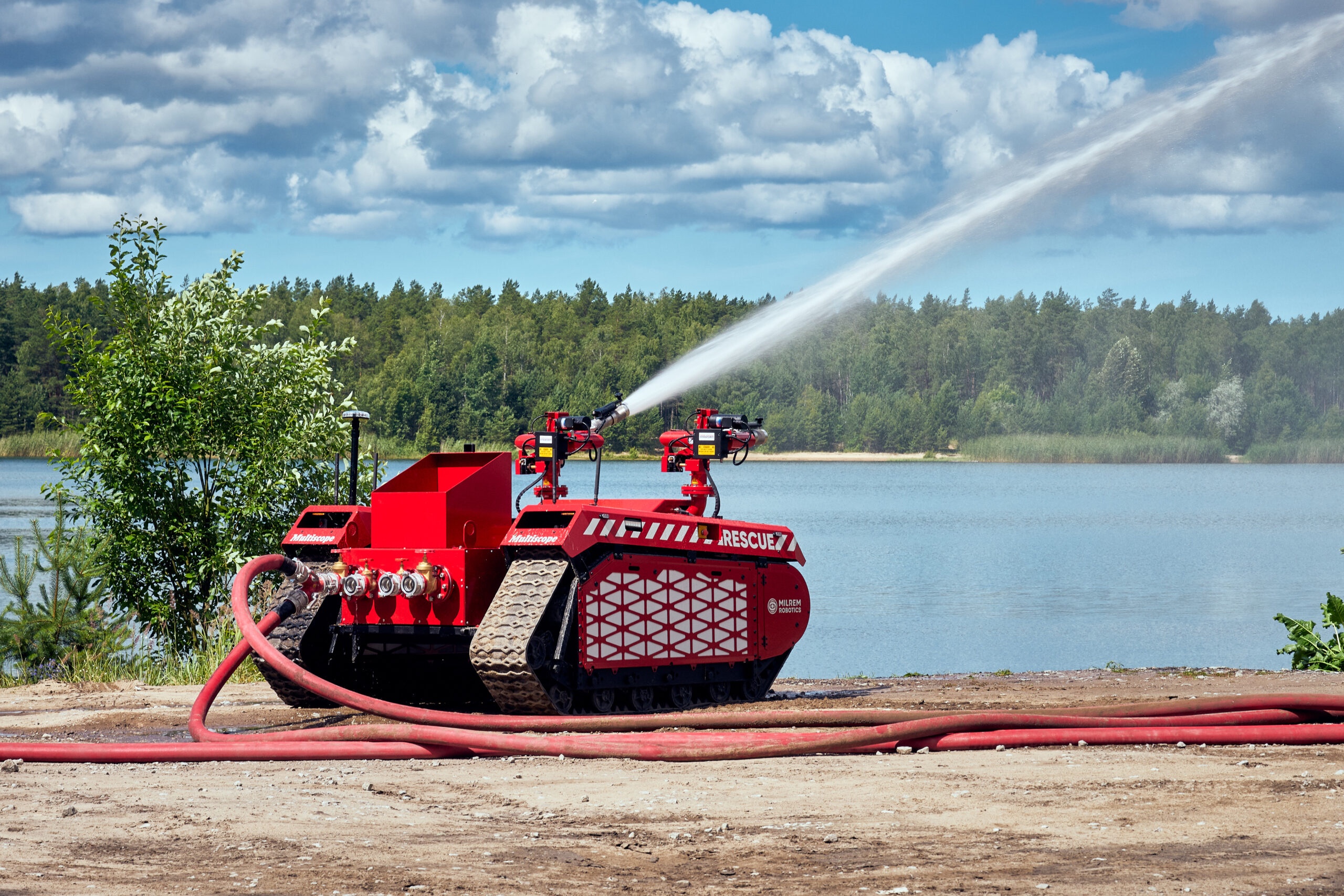
The European leading robotics and autonomous systems developer and system integrator Milrem Robotics and InnoVfoam, the specialist in foam extinguishing technology present the Multiscope Rescue Hydra unmanned ground vehicle (UGV) at the Sofins exhibition held in France from June 29 until July 1st.

The jointly developed firefighting solution combines Milrem Robotics’ unmanned ground vehicle (UGV) Multiscope Rescue and InnoVfoam’s Hydra fire monitor and foam proportioning system.

The firefighting robot can be remotely operated by firefighters who remain at a safe distance while receiving a complete overview of the operation area via various cameras, i.e. thermal and infrared, and sensors onboard the robot that can additionally detect gas or chemical leaks.

The fire monitors can be operated independently from the UGV thanks to separate cameras on the UGV and the monitors allowing the vehicle to change position while maintaining a perfect overview of the fire. The system can also be complemented with additional preventive and repressive systems and autonomous functions.

”The Multiscope Rescue Hydra developed together with InnoVfoam can alleviate dangers firefighters face and help contain fires faster,” said Kuldar Väärsi, CEO of Milrem Robotics. “This is also an ideal tool for military rescue services that face the same challenges as other firefighters,” he added.

The Multiscope Rescue has a maximum payload capacity of 1200 kg and pull force of 15 000 N allowing it to be equipped with a variety of firefighting specific payloads including foam or water tanks, but also tethered drones for better situational awareness.

Robot firefighters can also deliver heavy firehoses to reach areas and enter structures that are inaccessible with bigger vehicles or may collapse on top of firefighters. They also help firefighters conserve energy and time. In case of forest or landscape fires, the robot firefighters can be airdropped to start limiting the spread of fires.

InnoVfoam’s fire monitors can dispense water and foam from 2000 up to 20 000 liters per minute.

Delivery of the GTK Boxer Vehicles Ordered by the Bundeswehr Now Completed

Monday, June 28th, 2021

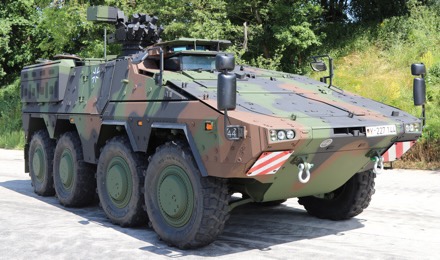
ARTEC GmbH, on behalf of its parent companies Krauss-Maffei Wegmann (KMW) and Rheinmetall, has officially handed over the last of the Boxer armoured transport vehicles (GTK) ordered to date by the Bundeswehr to representatives of the Federal procurement agency (BAAINBw) and the Ministry of Defence.

The contract for the 2nd batch, which was concluded in December 2015, comprised 131 GTK Boxers and was worth EUR 478 million. All the experience gained with modifications from the successful Afghanistan mission have been incorporated into this A2 version.

Despite the pandemic, which in some cases had a significant impact on delivery dates, the contractual deadlines were met thanks to the constructive, pragmatic and trusting cooperation between the industry and the customer.

In total, the two parent companies of ARTEC GmbH have delivered 405 Boxer vehicles to the Bundeswehr. Among them were 72 Boxers in the ambulance variant, 65 command vehicles and 256 infantry group vehicles.

The combat upgrade commissioned by the Bundeswehr in 2017 provides for all Boxer vehicles, including those from the 1st batch, to be adapted to the A2 design standard.

Most recently, in February 2021, the corresponding upgrade of a second batch of Boxer command vehicles to the A2 standard was contracted, so that from 2024 the entire fleet of a total of 65 German Boxer command vehicles will be available at the latest level.

ARTEC GmbH was founded in 1999 and is a joint venture between Krauss-Maffei Wegmann GmbH & Co. KG and Rheinmetall.

The company coordinates series production and serves as the point of contact for all export issues relating to the Boxer.

SPARTANAT – Thermal Clip-On TigIR from Andres Industries

Friday, June 25th, 2021

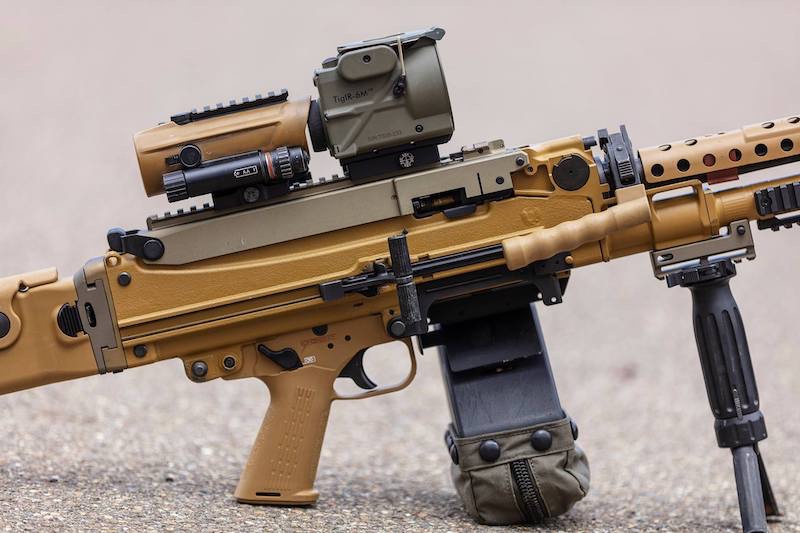
Currently different NATO-partners are introducing the new Thermal Clip-On TigIR from Andres Industries to their armed forces. The special feature of the TigIR (pronounced tiger) is its particularly short design. This makes it the only thermal Clip-On to date that can also fit on the short optical mounts of machine guns. With a recognition range of 3km and weighing only 500g, it is also very light.

With a length of only 6cm, the TILO-6MA is to date the smallest thermal imaging goggles in the world with a resolution of 640 pixels. It is sea water resistant and is therefore also used by naval units. It can also be used, for example, in front of the ELCAN-Specter as a Clip-On Thermal.

The NSN, also known as the „supply number“ to NATO-members, is used in trade between NATO member states to correctly identify ordered equipment – even across language barriers. Specifically, the numbers are 5855-12-416-6304 for the TigIR-6M and 5855-12-416-6303 for the TILO-6MA. Civilian variants of both devices also exist and are already available in the US.

Links:

Andres: www.andres-industries-shop.de

TigIR: www.andres-industries-shop.de

spartanat: www.spartanat.com

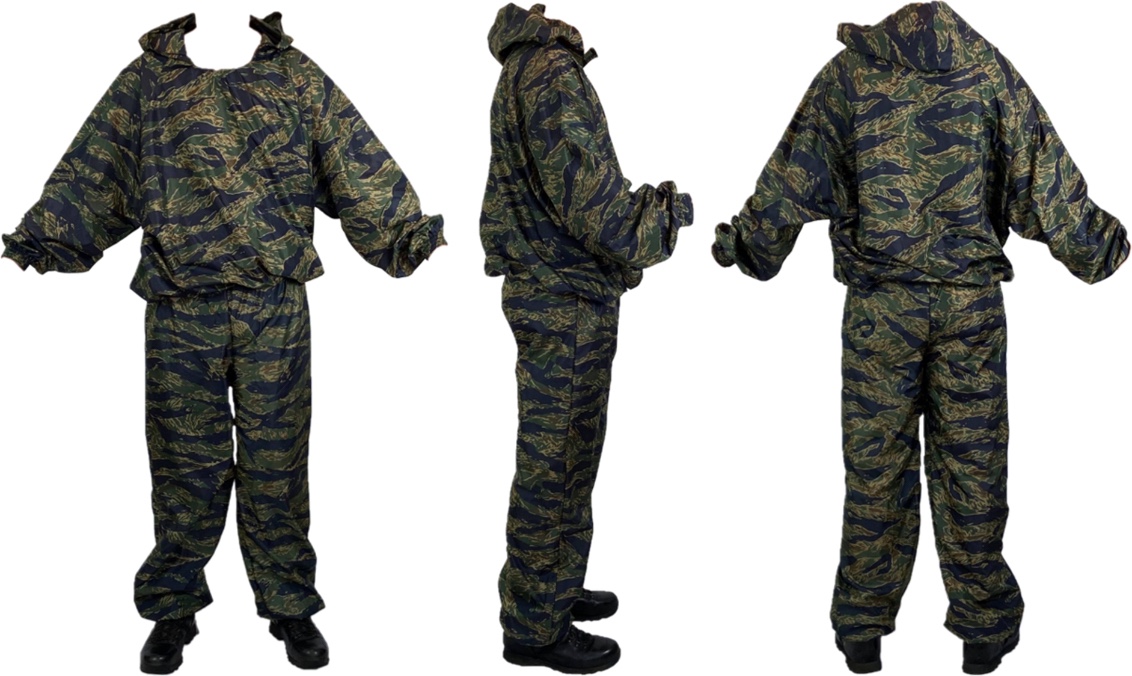
Tiger Stripe Cierzo Suit Launches This Weekend

Friday, June 25th, 2021

GET IT HERE: www.ftactical.co.uk/collections/tiger

Flimmuur Tactical and TRC Outdoors are VERY excited to announce a product collaboration!

In parallel to Flimmuur’s current project of developing modern equipment and nylon goods in Tiger Stripe Camouflage, Flimmuur is collaborating with other brands to bring modern clothing products to market. To kick things off, we present the Tiger Stripe Cierzo Suit.

Flimmuur Tactical has long been a leader in innovative design for load bearing equipment particularly the use of laser-cut laminates.  Ed from Flimmuur is also well known for his encyclopaedic knowledge on all things camo.  TRC Outdoors are therefore very pleased to have been recognised by Flimmuur for our Cierzo Suit design, and invited to join in this collaboration.

Tiger Stripe Camouflage

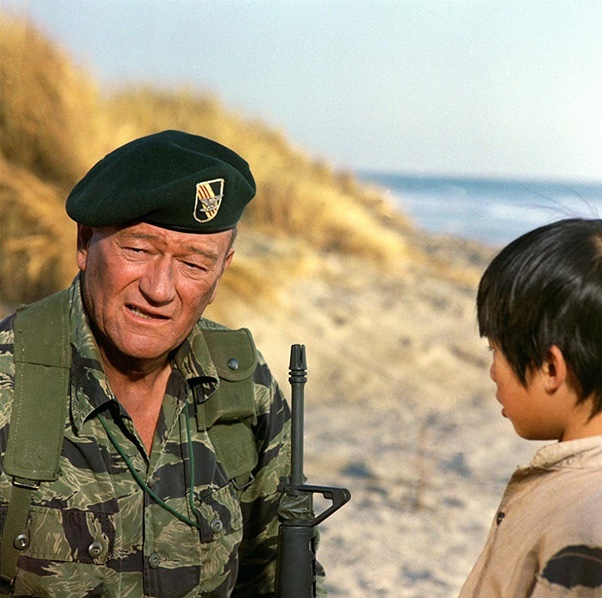
The Tiger Stripe family of camouflage patterns has always been fascinating for Ed, since its phylogeny perfectly encapsulates the tumultuous period of world history that immediately followed the end of the Second War. During the First Indochina War of the 1950s, French forces and notably paratroopers were issued with TAP 47/52 uniforms in the tenue du leopard or Lizard pattern.

Emblematic of the winds of change, the failure of this French attempt to reassert their dominion gave way to the rise in geopolitical tensions of the Cold War.  By the early 60s, the Republic of Vietnam had started creating derivative camouflage patterns, re-using and adapting many brushstroke motifs that resulted in a marked familial resemblance to the earlier Lizard patterns.

Fearing the fall of successive countries to Communism (Domino Theory), increasing American intervention drove a demand for uniforms that were suitable for jungle warfare in humid climes. Many advisors sought out locally produced S?c R?n or striped uniforms of their local counterparts, which resulted in a flourishing cottage industry within Vietnam. In fact, Mom-and-Pop shops from nearby Thailand and Okinawa retooled to capitalise on such insatiable demand, reflecting the significant and oft-forgotten contributions of the wider South East Asia region to the war effort. Mirroring the evolutionary processes of the natural world, slight changes were incorporated into the Tiger Stripe family, resulting in the diversity of camouflage patterns, dyes and fabrics that we observe today.

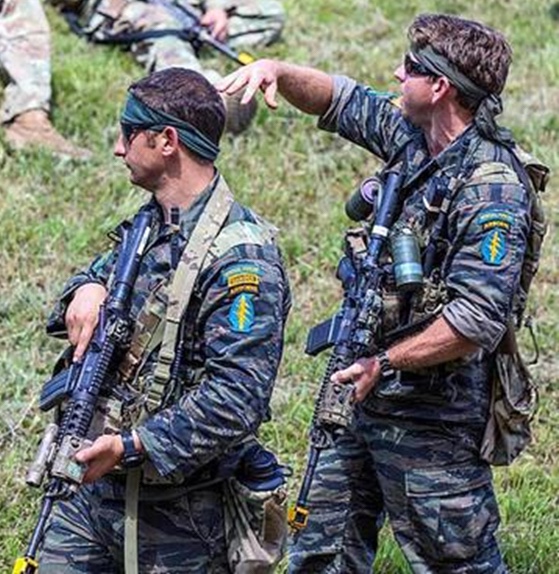
With the passage of time, Tiger stripe continues to evolve and variants remain in service within Thai and Filipino forces, as a mark of elite status among their special units. Within Western units, Tiger Stripe and its desert variants have re-emerged in Afghanistan; its legacy lives on, with operators from the US 5th Special Forces Group pictured in such uniforms on a recent exercise.

Whilst fabric and manufacturing technologies have come leaps and bounds, it is his intention that the spirit, sacrifices and history of our forefathers can be preserved. To this end, Ed of Flimmuur Tactical has dedicated a lot of time and effort in recreating a classic Tiger Stripe pattern, based on a period artifact. Who knows, Gold Tiger Stripe and French Lizard may be in the works for future projects.

Cierzo Products

Cierzo Shirts are born out of a garment staple used by British SF and Airborne Forces throughout the BCE (before Crye existed) era, falling out of fashion during the GWOT.

The first mention of them we have found was as garments made by SAS Troopers from their parachutes after they had dropped into France prior to D-Day.

TRC Outdoors resurrected them and bought them up to date with modern fabric, a few design tweaks and modern construction techniques.

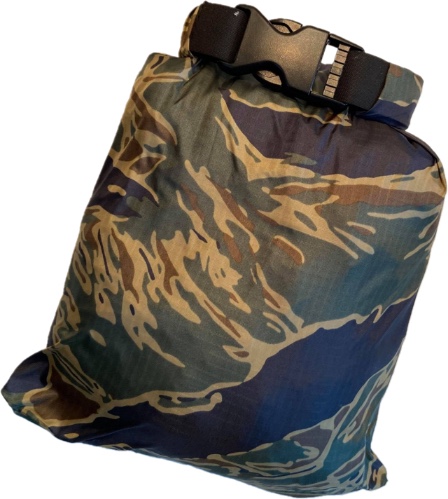
The garment is meant to be used as a windproof outer layer or as an intermediate layer.  They can even be worn under a damp outer layer while it dries out.  Cierzos punch well above their weight in terms of the warmth they offer, especially in windy conditions and mountainous terrain.  They also excel for use in the Jungle in Wet/Dry drills due to the compact size of the garment and waterproof bag.

Offered here as an individual Shirt or Suit set, which consists of Shirt and Trousers. The Dry Bag can be purchased separately, but is offered as a discount, when purchased with the Suit.

Shirt: www.ftactical.co.uk/collections/tiger/products/cierzo-shirt

Suit: www.ftactical.co.uk/collections/tiger/products/cierzo-suits

Dry Bag: www.ftactical.co.uk/collections/tiger/products/tigerstripe-dry-bags

Royal Danish Air Force Brings Deployment Tradition to Shaw AFB

Friday, June 25th, 2021

SHAW AIR FORCE BASE, S.C. (AFNS) —

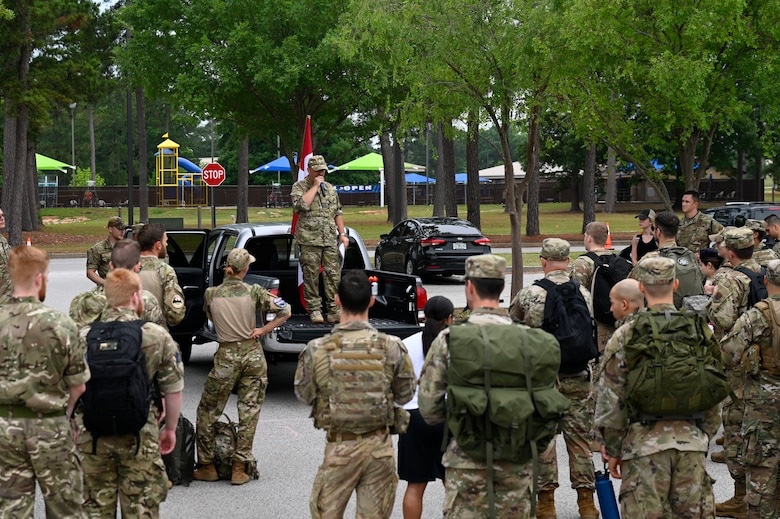
With 49 years of tradition in the making, the Royal Danish Air Force hosted their first Danish Contingent, or DANCON, march on U.S. soil at Shaw Air Force Base, June 5.

More than 60 participants from the RDAF, Ninth Air Force (Air Forces Central), 20th Fighter Wing, U.S. Army Central and other coalition forces had six hours to carry a 22-pound ruck for 15.5 miles.

“The history of the DANCON dates back to 1972, where it was held for the first time at a U.N. mission in Cyprus in the Mediterranean Sea,” said Royal Danish Air Force Lt. Col. John Roland Pedersen, the Danish detachment commander. “Ever since, it has become tradition that Danish contingents on a mission around the world have arranged a march similar to this one, which we are doing today.”

The march not only gives participants the opportunity to demonstrate their physical abilities, but it also allows them to build camaraderie within their own units and with members from other military branches and countries.

“At some point my legs were cramped up pretty bad,” said U.S. Army Sgt. 1st Class Layelquinn Ferguson, a forward observer assigned to the 4th Battlefield Coordination Detachment, USARCENT. “I was actually unable to stand until a coalition member stopped and helped me stretch and that was a huge help. To be honest, I would not have been able to get up by myself if he did not stop and help me up. And that’s what this is all about, coalition forces helping each other out.”

The DANCON march is not just about showing how fast you can finish and who finishes first. This traditional ruck reinforces teamwork and shows how military members take care of each other. They have great pride in upholding traditions and honoring legacies.

“The purpose of the DANCON is to challenge your physical, mental endurance and determination, but more importantly, it is an opportunity to meet new friends, have a few laughs and a pleasant break in the daily routines,” Pedersen said.

Members from the RDAF recently deployed to Shaw AFB as part of the recent transition of the 727th Expeditionary Air Control Squadron, known as “Kingpin,” from Al Dhafra Air Base, United Arab Emirates, to Shaw AFB. DANCONs, previously held at deployed locations overseas, are a legacy that will continue by the RDAF at Shaw AFB and other places around the globe.

By TSgt Elysia Wray, Ninth Air Force (Air Forces Central) Public Affairs

Under Contract to EMSA Schiebel Camcopter S-100 Supports Finnish, Estonian and Swedish Coast Guards

Thursday, June 24th, 2021

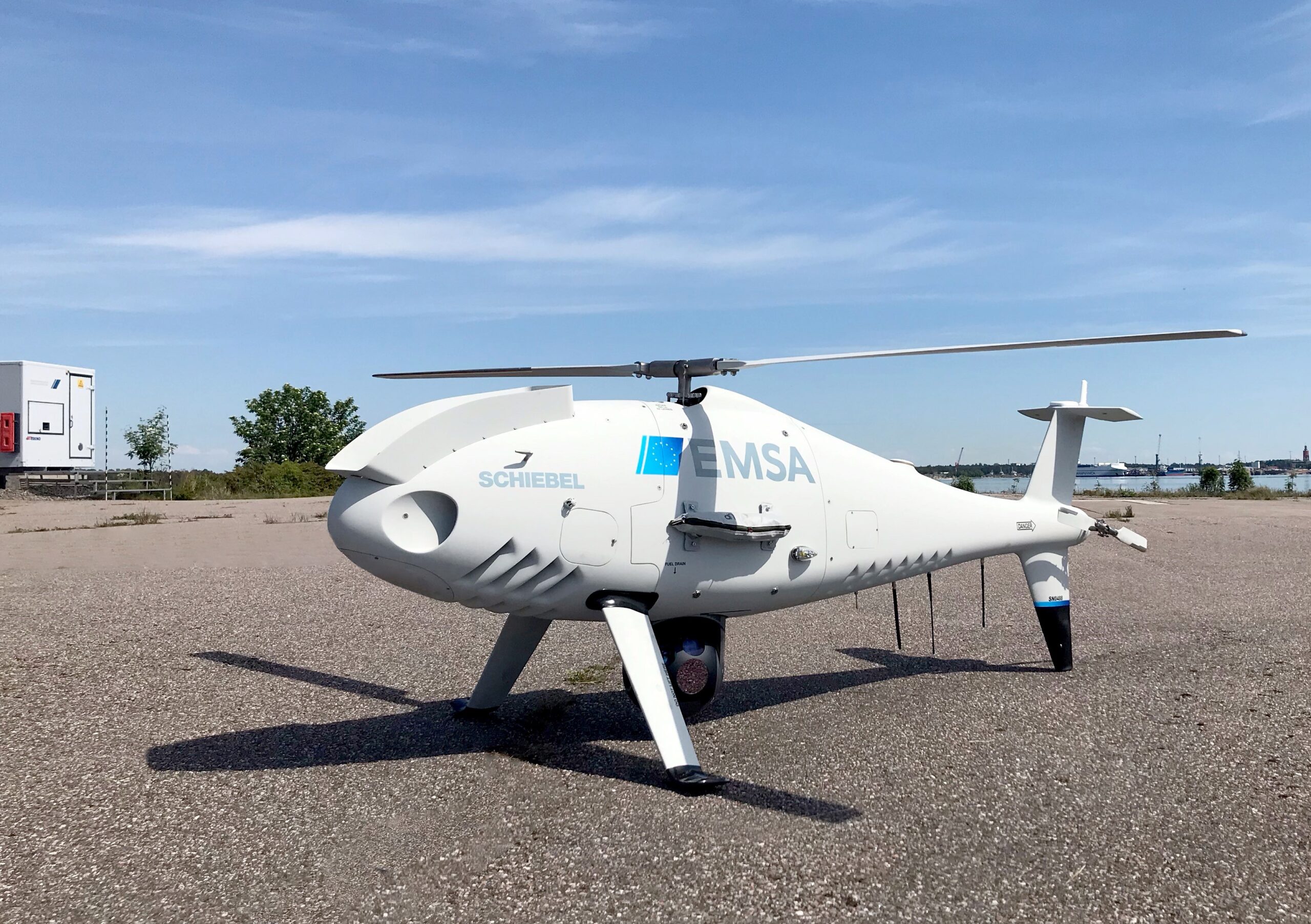
Vienna, 21 June 2021 – The Finnish Border Guard is once again operating the CAMCOPTER® S-100 for implementing coast guard functions in the Baltic Sea. The Remotely Piloted Aircraft System (RPAS) service is offered by the European Maritime Safety Agency (EMSA).

Based at a coast guard station in Hanko, Finland, the CAMCOPTER® S-100 is supporting the Finnish authorities in carrying out Coast Guard functions, such as maritime border surveillance, search and rescue, monitoring and surveillance, ship and port security, vessel traffic monitoring, environmental protection and response, ship casualty assistance, as well as accident and disaster response. The information collected in the Baltic Sea from the on-board RPAS system is shared in parallel with multiple Member States, allowing for a common maritime picture and more comprehensive coordination. The operations will continue until end of July.

The S-100 will execute these tasks equipped with an L3 Wescam Electro-Optical / Infra-Red (EO/IR) camera gimbal, an Overwatch Imaging PT-8 Oceanwatch, a Becker Avionics BD406 Emergency Beacon Locator and an Automatic Identification System (AIS) receiver.

This deployment comes on top of two other CAMCOPTER® S-100 operations for EMSA currently being carried out in Estonia and Romania conducting maritime surveillance. It is also the third deployment for the Finnish Border Guard, after a trial in 2019.

Hans Georg Schiebel, Chairman of the Schiebel Group, said: “Another great example of enhanced maritime surveillance and information sharing capabilities of our CAMCOPTER® S-100. Since contract begin, we have conducted operations all over Europe and are proud to play such an important role in EMSA’s services for its member states.”

www.schiebel.net

WFEL to Supply Philippine Army with Rapidly Deployable DSB Mobile Military Bridges

Thursday, June 24th, 2021

UK Military Bridge manufacturer, WFEL, is to supply a number of its Dry Support Bridges (DSB) to the Philippine Army under the Horizon 2 phase of the revised AFP Modernisation Programme.

The DSB systems can be deployed in around 90 minutes to provide temporary infrastructure and will be supplied with pedestrian walkways, for use in Disaster Relief operational situations, as well as other military scenarios.  The Philippine Army, having a choice of launch vehicle chassis for its bridges, opted for the Rheinmetall MAN Military Vehicles (RMMV) 45m 10 x 10 systems.

Intended for use by the Philippine Combat Engineers, the Dry Support Bridges will be manufactured at WFEL’s production facility in Stockport, UK; delivery will begin during 2023.

An Integrated Logistics Support package is also included in the contract for this new Combat Engineering Equipment, ensuring back-up and support from WFEL’s Technical Engineering Teams and giving confidence to the Combat Engineers of continued through-life support and spares availability.

Ian Anderton, WFEL’s Managing Director, commented, “We warmly welcome the Philippine Army into our ever-growing user base of DSB Military Bridging Systems.  We are proud of the fact that the Dry Support Bridge is the world’s most technically advanced, rapidly deployable military bridge of its type and has proven its worth in both Combat and Disaster Relief situations time after time.

“By adopting the Dry Support Bridge, the Philippine Army is ensuring it has the future capability to quickly manoeuvre across wet and dry gaps in complex, physical terrain, including man-made gaps, ravines and rivers, as efficiently as possible and under the widest possible operational scenarios.”

With a 120 tonnes Military Load Classification, the Dry Support Bridge was initially designed and developed by WFEL for the US Army.  Offering full interoperability with any other DSB bridging system, it has been adopted by various countries worldwide, including USA, Turkey and Australia.  Switzerland has also acquired a number of Dry Support Bridges and is known to have extensively deployed the DSB as temporary infrastructure following flooding and other natural disasters.

This increasing worldwide user-base provides an off-the-shelf, low risk military bridging solution.  The DSB is currently being evaluated by UK MoD as a replacement for their BR90 bridging systems.

www.wfel.com

A New Member in the Family: Rheinmetall Mission Master XT, an Extreme Terrain Autonomous UGV

Saturday, June 19th, 2021

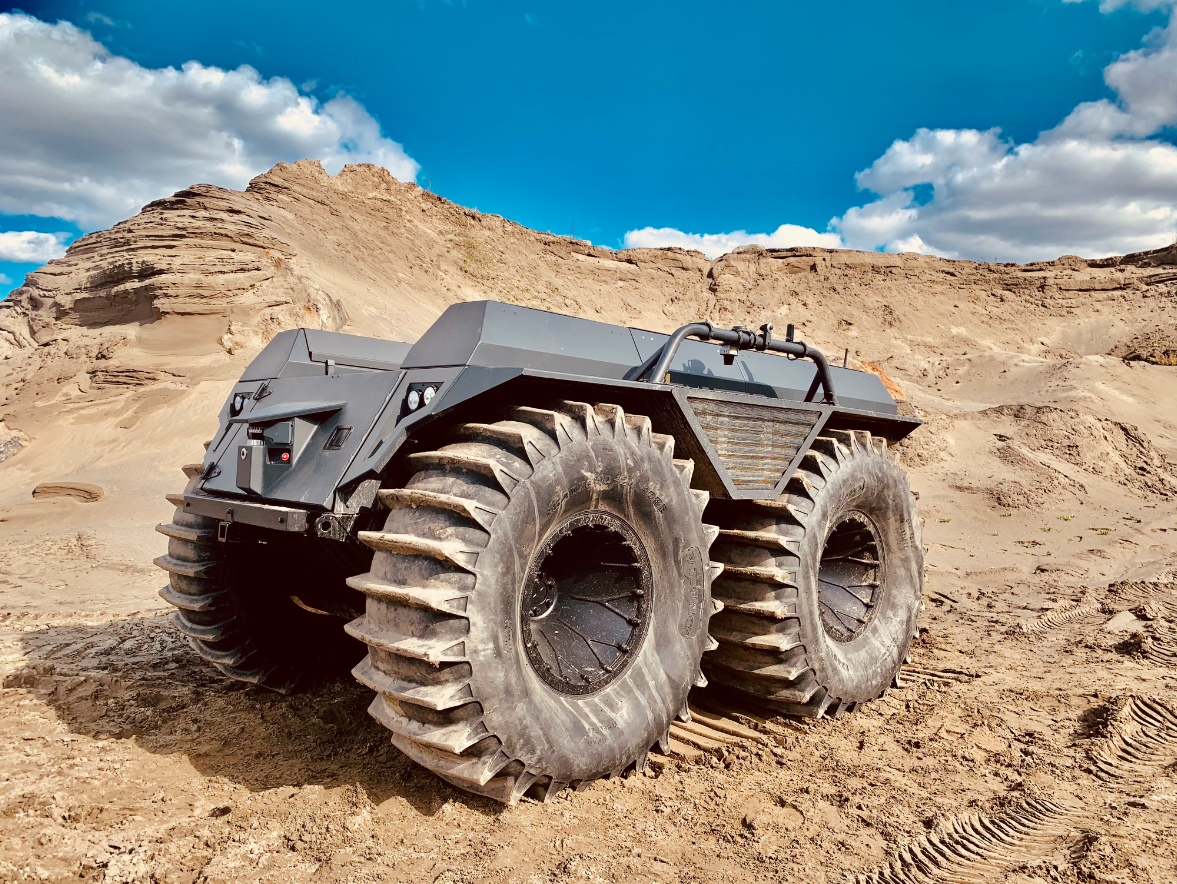
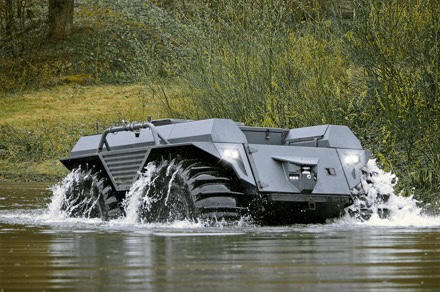
Rheinmetall proudly announces the release of the Mission Master XT, the latest member of its successful Mission Master family of Autonomous Unmanned Ground Vehicles (A-UGVs). Unlike the Mission Master SP platform, which is already introduced to the market, the Mission Master XT has a diesel-powered engine. Responding to a new set of needs, the Rheinmetall Mission Master XT is highly mobile even in the toughest terrain and capable of carrying impressive payloads. The Mission Master XT was developed by Rheinmetall Canada.
A true companion when the going gets tough
The Rheinmetall Mission Master XT thrives in extreme terrain. It easily tackles ice, snow, and sub-zero weather conditions, as well as sandy, rocky and mountainous topography. Its advanced amphibious capabilities allow it to float and swim while maintaining its full payload capacity. Weighing in at 2217 kg, this powerful A-UGV can carry a 1000 kg payload in all scenarios, allowing troops to transport special equipment to hard-to-reach locations. The diesel-powered engine allows it to travel 750 km without refuelling, while lithium-ion batteries enable up to 6 hours of silent watch operations.

Another remarkable feature of the Rheinmetall Mission Master XT is its continuous tire inflation system, which adjusts the tire pressure as needed based on the terrain. Featuring high endurance and survivability, the A-UGV keeps moving on even with 2 cm-holes in the tires.
Autonomous, intelligent and easy to control
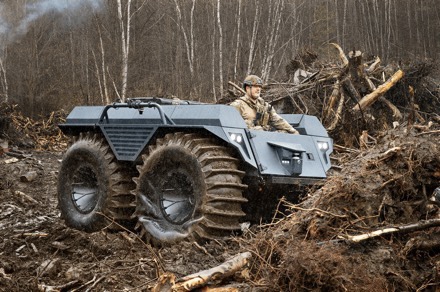
Like the other platforms in the Rheinmetall Mission Master family, the Mission Master XT is optimized to take on dull, dirty and dangerous tasks, allowing soldiers to focus on their core missions more effectively and in greater safety. It is driven by Rheinmetall PATH, a proven autonomy kit (A-kit) that enables a wide range of autonomous driving and navigation capabilities.

The Mission Master family is fully compatible with NATO-standard battle management systems and can be controlled through a variety of teleoperation options. “The most multifunctional of these is a smart tablet developed by Rheinmetall, which allows the operator to control any Mission Master platform and payload through a single interface, a first for the market”, explains Alain Tremblay, Vice-President of Business Development and Innovation at Rheinmetall Canada. “For instance, users can monitor camera feeds or direct a weapon station, then quickly program the platform to navigate itself autonomously to a desired location, all from the same device”, adds Mr Tremblay.

If necessary, this robust, tried-and-tested mechanical platform can operate in manned configuration, with an integrated joystick and emergency seat.

Multi-mission capabilities
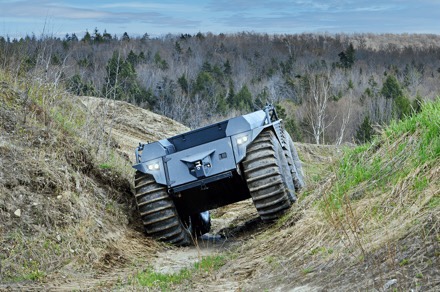
Thanks to its modularity, the Rheinmetall Mission Master XT can take on multiple missions in any situation. The scope of activities the A-UGV can conduct includes logistic transport, surveillance, fire support, rescue, medical evacuation, CBRN detection, communication relay and a multitude of other client-specific requirements. Rheinmetall is committed to maximum operational safety at all times, keeping a human in the loop in all kinetic operations.

A powerful component of Joint All Domain Operations
As enemy capabilities become increasingly advanced, the ability to quickly leverage large amounts of data in order to make informed decisions in the field is more critical than ever. Foreseeable force deployments are likely to take the form of multinational Joint All Domain Operations (JADO) that encompass every dimension of the modern battlefield: land, air, sea, cyber and information space as well as outer space.

Just like the other members of Rheinmetall’s Mission Master family the new Mission Master XT features a unique NATO standard battle management system (BMS) integrated into every platform. This allows each system to process large amount of tactical data. The Mission Master XT thus becomes an integral member of the tactical combat team able to share and exchange information from its vehicle and module sensors to improve the team’s common operating picture. The BMS also uses information in the network from other contributors to improve its own situational awareness with regard to terrain as well as the location of friendly and enemy forces. The built-in BMS allows many Mission Master platforms to operate as an UGV team when carrying out standard military missions in direct support of troops on the ground.

Finally, the Mission Master XT will also benefit from the systematic integration of new artificial intelligence applications, allowing it to evolve and continue contributing to successful outcomes in the complex JADO battlespace of tomorrow.
Renaming of the existing Mission Master
To make room for the newcomers in the Mission Master family, the existing Mission Master platform now becomes the Rheinmetall Mission Master SP. Named for its role as “silent partner”, the Mission Master SP remains an invaluable asset for dismounted troops in a wide range of missions, including high-risk situations.


www.rheinmetall.com