SIG SAUER - Never Settle

Archive for the ‘Medical’ Category

2020 International Tactical Medicine Competition Registrations Opens 12/1/19 at 1200 EST

Wednesday, November 27th, 2019

REGISTRATION OPENS 12/1/19 at 1200 EST2020 International Tactical Medicine Competition

The International Tactical Medic Competition is an event created to allow tactical medical providers from around the world the opportunity to collaborate and compete in a community of peers. Civilian Tactical Medicine is a relatively new topic within the world of pre-hospital medicine. ITMC creates opportunities to increase awareness, collaboration and training. This competition is a great opportunity to bring like minded individuals together, and support a cause greater than self.


NOW ACCEPTING SPONSORS
For more information visit
www.TACMEDCOMPETITION.com

SCUBAPRO Sunday – Drinking Saltwater

Sunday, November 24th, 2019

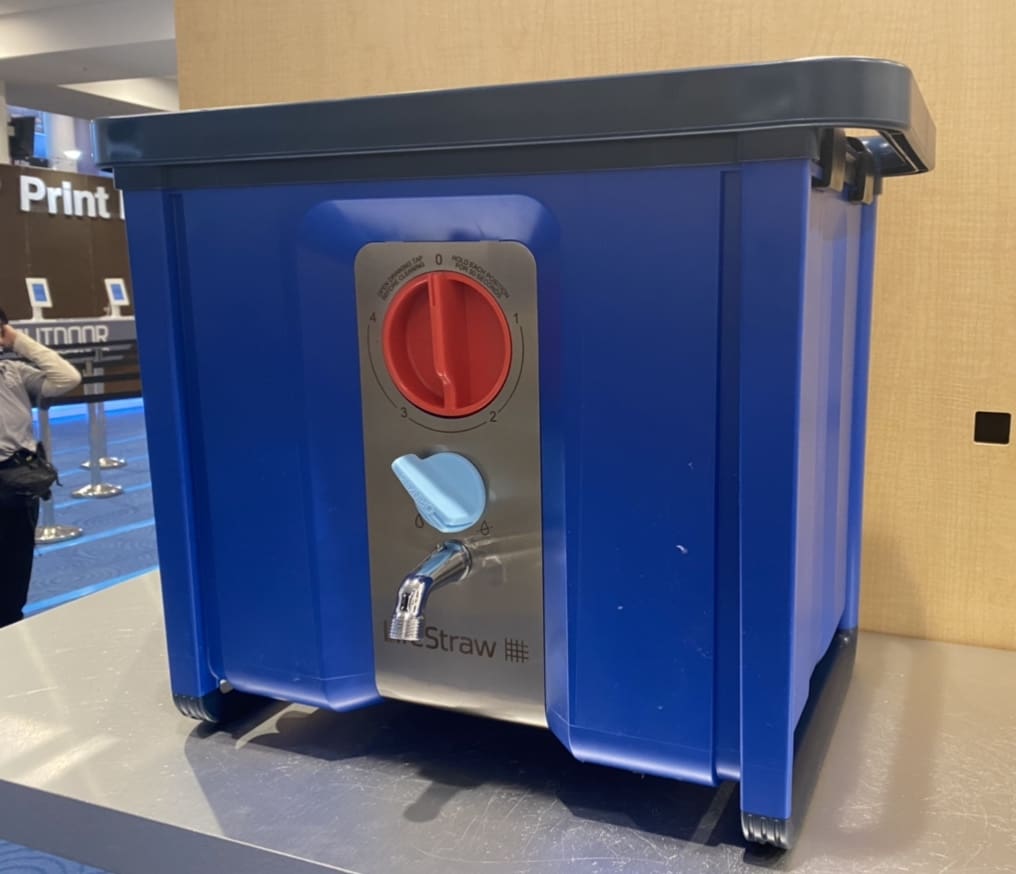
I know most people will never be on a boat that sinks and be in the situation, whereas they would have to try and survive by drinking saltwater. First, don’t drink saltwater it will kill you. But there might come a time that you are on are out in the field for a long time, and you have to find water, and its either get it from the ocean or possible from a river or swap that has brackish water (half salt/ half fresh). The best method is to have a pump with you that can be used for saltwater. It will be a lot of work pumping saltwater and turning it into fresh is a lot of work for a little reward. There is also a way to get clean water out of saltwater that uses a leaching method that you can fill and forget. HTI uses Osmosis is the natural diffusion of water through a semi-permeable membrane from a solution containing a low concentration of dissolved solids to a solution having a higher level of dissolved solids. When it comes to the best method for you that depends on the situation, I am going to talk about a few different techniques and also suggest a few things you can just buy and keep around.


Getting salt out of seawater requires the following essential components. It doesn’t matter what you do to accomplish this, but they should be as clean as posable.

1. Method of evaporation

2. Something to catch condensation

3. A way to collect the condensation back into a substantial container.

There are a lot of things you can use to accomplish this, and during a real survival situation, knowing the necessary actions will go a long way. You should always carry the right items, so if you find yourself in this situation, it will make it a lot easier. All of this will go a long way and could save your life. You should always have items to purify water on your boat because you never know what will happen. You can have this in your boat, and if you need it, it is there.


Above is a basic Solar still, you can even just put a plastic bag on green vegetation and collect water that way.

This can be accomplished with a poncho also. Beach well. Along the coast, obtain water by digging a beach well. If you are near a beach you can go back on the beach or inland a little bit and dig a beach well, let it fill with water and drain it at least three times before you drink it. It should be boiled or treated.


There was an 18year old kid from Indonesia that survived 49 days on a tiny fishing boat, and he used his clothes to filter the water thru to make it (more) drinkable. He used his cotton shirt and drank the water thru it. Some studies have shown that filtering water through a sari, is a garment that is commonly worn by women in the Indian subcontinent, can significantly increase its potability. In 2003, scientists discovered that filtering water from rivers and ponds in Bangladesh through a folded piece of cotton cloth taken from a sari cut the risk of infection with cholera by half. Interestingly, they noted that old fabric makes for a better filter than new material because the pore size of loose threads is smaller.


In a follow-up study in 2015, researchers found that a filter made of four layers of worn cotton material could filter out more than 99 percent of all cholera bacteria.

One of the biggest things to remember in a survival situation is, do not eat if you don’t have water. If you have water available to you, you should try and filter it as much as possible. But if it comes to, I am going to die if I don’t drink the water. Well, most survival experts say to drink it. (that only counts for freshwater not water with salt in it) When you are rescued, a lot of what you can get from drinking bad water can be treated.


ITS Releases an All-New Bleeding Management Kit

Friday, October 25th, 2019

ARLINGTON, TX, 10/28/2019] Imminent Threat Solutions is proud to release a compact solution for treating the number one cause of preventable death, extremity hemorrhage, aka traumatic bleeding. This kit was designed to fulfill the requirements for a kit to control bleeding that many states across the country are now mandating in schools, government buildings and other public venues.

All components of the Bleeding Management Kit™ are stored inside the proven ITS Nylon Zip Bag and sealed with one of the breakaway tamper-evident ITS Security Seals. This provides peace of mind that if your kit is stored in a publicly accessible location, a quick glance will let you know it’s still sealed.

Additionally, the ITS Bleeding Management Kit™ fits perfectly into a desk drawer, backpack or even tucked inside a wall-mounted defibrillator case commonly found in buildings.

Imminent Threat Solutions provides indispensable skill-sets and products to explore your world and prevail against all threats.

For more information on ITS Medical products, please visit store.itstactical.com/collections/medical

Scientists Find a Direct Link Between Individual’s Immune System and Sensitivity to PTSD; Seeking Finding and Volunteers to Further Research Efforts

Wednesday, October 23rd, 2019

October 18, 2019: Huntsville, AL: Little Orange Fish, a 501(c)(3) non-profit committed to furthering community mental health, announced the launch of its Inner Defense Research Initiative, which is a collaborative effort aimed at identifying markers in the immune system that indicate and possibly predict sensitivity to PTSD (post-traumatic stress disorder). This initiative, a collaboration including iXpressGenes Inc., Paragon Research Corporation, the University of Alabama at Huntsville and individual contributors is based on a breakthrough study reporting a strong correlation between the immune system and stress affliction.  The analysis, which is based on a simple blood draw, might guide clinical approaches to PTSD diagnosis and treatment, possibly bringing a revolutionary solution to a crippling problem for many people.

The Inner Defense Research Initiative focuses on developing the diagnostic screen to inform solutions for prevention and treatment, to provide education and outreach and to influence policy change.

For Dr. Joe Ng, founder, and president of iXpressGenes, this mission is personal.  Having survived the mass shooting at UAH in 2011, this research was born from the struggles and firsthand observations of the carnage- caused traumatic stress.  “In honor of those who did not survive and those who did, but suffer terribly,” Dr. Ng said, “I want to find a path to resiliency. The immune system might be that path.”

Dr. Ng’s company, iXpressGenes,  (iXG) is a synthetic biology company located at the HudsonAlpha Institute for Biotechnology, specializing in solutions based on molecular protein structures. iXG has conducted preliminary studies of T-cell receptor transcriptome sequences that offer an unprecedented analysis of linking an immune repertoire to sensitivity or resilience to PTSD, demonstrating that certain immune conditions are more common in people with PTSD. This knowledge opens up a wealth of preventative measures one can take as well as directed treatment options for long-term health.

“Approaching PTSD from the perspective of the immune system changes everything,” said Peggy Sammon, Director, iXG. “The neural-immune axis brings a new set of tools to those who are seeking solutions for PTSD and other debilitating stress conditions.”

While the preliminary findings are encouraging and provide strong support for the proposed study;  the next step is to expand the size of their participant pool and validate the findings in a bigger study. The goal is to collect immune repertoire data for a thousand or more soldiers and first responders who have been exposed to trauma to help establish a secure and intelligent database for analyses and data mining in the search for predictive markers.  Once the markers have been identified and verified, intervention strategies can be recommended.  The team is seeking funding to perform a larger study.

“There is such promise in the science we’ve seen,” John Schmitt, Iraq war veteran and collaborating microbiologist added, “we have built a powerful team of technical experts and innovators in the field, but we will need the support from the wider community to accelerate this work and really make a difference in lives.” 

To learn more about the Inner Defense Research Initiative, participate in the study or to donate, please visit www.innerdefense.org.

Engineered Viruses Could Protect Soldiers, Fight Antibiotic Resistance

Friday, October 11th, 2019

RESEARCH TRIANGLE PARK, N.C. — Antibiotic resistance is a one of the world’s most pressing public health problems. Army scientists have developed a new weapon to combat super-bugs, which could protect Soldiers and fight resistance.

Bacteriophage, a virus that infects and replicates within bacteria, kill bacteria through different mechanisms than antibiotics, and they can target specific strains, making them an appealing option for potentially overcoming multidrug resistance. However, quickly finding and optimizing well-defined bacteriophages to use against a bacterial target is challenging.

Researchers at the MIT Institute for Soldier Nanotechnologies, identified a way to do just that. The U.S. Army established the institute in 2002 as an interdisiciplinary research center to dramatically improve protection, survivability and mission capabilities of the Soldier and of Soldier-supporting platforms and systems.

“This is a crucial development in the battle against these superbugs,” said Dr. James Burgess, program manager, Institute for Soldier Nanotechnologies, Army Research Office, an element of the U.S. Army Combat Capabilities Development Command’s Army Research Laboratory. “Finding a cure for antibiotic-resistant bacteria is particularly important for soldiers who are deployed to parts of the world where they may encounter unknown pathogens or even antibiotic-resistant bacteria. Wounded Soldiers are even more susceptible to infections, and they may come home carrying these drug-resistant bugs.”

In this study, published in Cell, MIT biological engineers showed that they could rapidly program bacteriophages to kill different strains of E. coli by making mutations in a viral protein that binds to host cells. The results showed that these engineered bacteriophages are also less likely to provoke resistance in bacteria.

“As we’re seeing in the news more and more now, bacterial resistance is continuing to evolve and is increasingly problematic for public health,” said Timothy Lu, an MIT associate professor of electrical engineering and computer science and of biological engineering and the study’s senior author. “Phages represent a very different way of killing bacteria than antibiotics, which is complementary to antibiotics, rather than trying to replace them.”

The researchers created several engineered phages that could kill E. coli grown in the lab. One of the newly created phages was also able to eliminate two E. coli strains that are resistant to naturally occurring phages from a skin infection in mice.

The Food and Drug Administration has approved a handful of bacteriophages for killing harmful bacteria in food, but they have not been widely used to treat infections because finding naturally occurring phages that target the right kind of bacteria can be a difficult and time-consuming process.

To make such treatments easier to develop, Lu’s lab has been working on engineered viral scaffolds that can be easily repurposed to target different bacterial strains or different resistance mechanisms.

“We think phages are a good toolkit for killing and knocking down bacteria levels inside a complex ecosystem, but in a targeted way,” Lu said.

The researchers wanted to find a way to speed up the process of tailoring phages to a particular type of bacteria. They came up with a strategy that allows them to rapidly create and test a much greater number of tail fiber variants.

They created phages with about 10 million different tail fibers and tested them against several strains of E. coli that had evolved to be resistant to the non-engineered bacteriophage. One way that E. coli can become resistant to bacteriophages is by mutating LPS receptors so that they are shortened or missing, but the MIT team found that some of their engineered phages could kill even strains of E. coli with mutated or missing LPS receptors.

The researchers plan to apply this approach to target other resistance mechanisms used by E. coli and to develop phages that can kill other types of harmful bacteria.

“Being able to selectively hit those non-beneficial strains could give us a lot of benefits in terms of human clinical outcomes,” Lu said.

The Institute for Soldier Nanotechnologies engages in fundamental, multidisciplinary nanoscience research relevant to the Soldier. In collaboration with Army and industrial partners, this focused nanoscience research creates opportunities for new materials, properties and phenomena that will directly advance modernization efforts. As an Army University-Affiliated Research Center, the institute’s contract is administered and overseen for the U.S. Army by the Army Research Office.

______________________________

The CCDC Army Research Laboratory is an element of the U.S. Army Combat Capabilities Development Command. As the Army’s corporate research laboratory, ARL discovers, innovates and transitions science and technology to ensure dominant strategic land power. Through collaboration across the command’s core technical competencies, CCDC leads in the discovery, development and delivery of the technology-based capabilities required to make Soldiers more effective to win our Nation’s wars and come home safely. CCDC is a major subordinate command of the U.S. Army Futures Command.

Ops-Core Special Operations Tactical Respirator

Wednesday, October 9th, 2019

The Ops-Core Special Operations Tactical Respirator, or SOTR, is a half mask particulate respirator designed to provide the highest level of protection against a wide range of harmful contaminants while still allowing for normal use of weapons systems and other mission-critical equipment. The front-mounted filter allows for quick, one-handed filter changes and enhanced the field of vision. Easily adjustable suspension straps, head harness, velcro straps, and optional O2 strap allows the user to configure their respiratory protection to their exact mission or environment. The SOTR integrates seamlessly with NVGs and other tactical gear, such as the Ops-Core FAST SF Ballistic Helmet, AMP Communication Headset, and Mk1 Performance Protective Eyewear, to create a customizable protective head borne system.

shop.gentexcorp.com/ops-core-sotr

US Army Medics Jump With Plasma, Test New Lifesaving Delivery Method

Tuesday, October 1st, 2019

FORT BRAGG, N.C. — According to U.S. Army Medical Research and Materiel Command, bleeding is the leading case of death on the battlefield. When service members receive serious wounds, they are often transported to a surgical team for treatment. These casualties often suffer from severe blood loss due to the inability of their blood to clot normally, which represent approximately 40 percent of combat casualties.

The USAMRMC says frozen blood is currently the standard for treatment. But due to technical and logistical limitations, the demand for a more transportable plasma product with the same hemostatic properties grew.

The U.S. Army Medical Materiel Development Activity, along with a partner company, are testing transportation methods to deliver freeze dried plasma, or FDP, to address this issue and increase the survival rate of wounded Soldiers.

New Roads, Louisiana native Cpt. Robert Crochet, a primary medical test officer, and an Army Medical Department Board – alongside medical personnel assigned to the 432nd Blood Support Detachment, 44th Med. Brigade at Fort Bragg – are testing FDP’s ability to be transported safely and quickly using means that were previously dismissed due to risk of breakage.

Currently used is French frozen plasma, which is contained inside glass tubes, unlike the new FDP, which is sealed inside a ready-to-use bag along with a 250ml bag of sterile water for injection and rehydrating. These are then stored inside a hard plastic sheath designed to protect the product during transport.

For the test mission, Soldiers of the 432nd BSD rehydrated the FDP and packaged it, then waited for transportation by a CH-47 Chinook helicopter. The airborne Soldiers from Fort Bragg then jumped out of the Chinook with the plasma packed in their bags. Upon landing, Crochet and his team inspected the containers and the FDP for signs of damage. They reported their findings to members of the research and development teams for on-sight data collection.

“Tourniquets helped in enhancing survivability for our war fighters, but it’s blood that keeps them alive,” said Col. Roberto E. Marin, material systems branch chief, AMEDD Board.

According to USAMRMC, there is no current method to supply troops in the battlefield with FFB; it has to be maintained by role 2 medical facilities, advanced trauma management and emergency medical treatment, with the ability to freeze and store the blood at constant temperatures. Medical teams operating in a Role 1, unit-level medical care, do not have the ability to store FFB, thus limiting treatment available for wounded Soldiers, according to USAMRMC officials.

Another disadvantage with FFB is the amount of time required to prepare the blood for use on wounded soldiers.

“Currently FFB takes roughly thirty minutes to thaw for surgical use,” Crochet. “With freeze dried plasma, it takes roughly 1-6 minutes to rehydrate and become ready to administer to the casualty. Those minutes can be the difference in life or death.”

Currently FDP and it’s airborne delivery method is still in the testing phase.

By SGT Brian Micheliche

SCUBAPRO Sunday – Cramps

Sunday, September 29th, 2019

When you are doing a long dive there is a good chance that you are going to get a cramp. Cramping can happen for several reasons. Being dehydrated, diving for a couple of weeks straight or even you haven’t dove in a while. Most of the time you try and straightening out your leg that has the cramp while only kicking with your good leg, you try and grab your fin and stretch it out while keeping up with your swim buddy. Cramping occurs in the calves, hamstring, quadriceps, thighs and the feet—mainly due to the finning action that causes muscle fatigue and triggers muscle spasm. But mostly in diving, you get a cramp in your upper and lower calf from pointing your toes while you are diving.

So, what can you do to stop this from happening?

• Replace old equipment if it doesn’t fit you properly, it can cause feet related cramps. So that favorite pair of fins you stole when you were in training should be retired, hang them on your wall in your garage.

• Check the foot pockets of your fins to make sure your feet are comfortable enough and that there is sufficient room for them to move a bit. So, make sure your fins fit all the boots/footwear you are going to use, you might use a large in the summer but in the winter when you are wearing thicker boots or a dry suit you might need bigger fins. That also goes for shoes, like Vans or LALO’s that you might wear when doing a dive where you will need to have shoes on for climbing or good traction. You might have a size 10 for summer and a 12 for winter, so you can add insulation.

• Make sure you are using the right type of fin for the kick you use. Make sure the stiffness and surface area of your fins’ blades are what you need. Fins are designed for different types of kicks; Jet fins are great for a power kick or a frog kick, Seawing Nova’s are made to be great for propulsions with not as much effort as saying a jet fin. Also, look at the stiffness. There are two types of Seawing Nova. The Seawing Nova and the Seawing Nova Gorillas. The Gorillas are a stiffer fin, and they are great for a working diver or someone in good shape. So, pick the right one for the job you are doing and the environment you will be in.


• Your footwear should not be too tight as this will restrict circulation and bone movement in your foot. If you are diving in the winter and you add a dive sock to your booties to keep you warm, what you are doing is restricting your circulation, and that will make you cold and cause cramps. If you want to add layers have different sizes booties.

• The strap should not bite into the back of your heels too tightly, pushing on your Achilles tendon. This can happen if your footwear is too big and you are shoving your foot in and barely getting your strap around you heal or you are afraid you will lose your fin, so you pull the strap really tight. Something that could help with this is a self- adjusting fin, like a bungee strap or a steel spring. This will help keep the right pressure on your heel.  


Cramping generally affects people that have taken a long break from finning. I say finning and not diving because you don’t have to dive to fin. So, like all of your other skills, shooting, moving, and communicating. You need to practice finning, so you stay in finning shape. You should try and swim a couple of times a week and do it with fins on. When you are at the gym, don’t just do arms. Do functional workouts that include a lot of exercises for your calves and strengthening the specific muscle groups that cramp when diving. Also try and include foot flexing exercises, as one of the other reasons for cramping is your feet are not used to being pointed for long periods of time, as I mentioned above. I know a lot of groups are getting back into the water but are still living in the desert. So, when you have the chance try and get back into the water or into the gym.