The New iTWB

Archive for the ‘Press Release’ Category

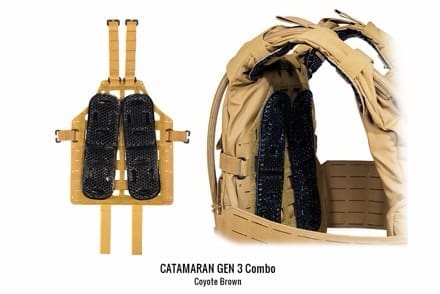
Qore Performance Expands CATAMARAN Gen 3 Universal Plate Carrier Adapter Panel with New Coyote Brown Colorway

Friday, October 2nd, 2026

Knoxville, TN (September 29, 2026) — Qore Performance, Inc. has announced the official availability of its CATAMARAN Gen 3 Universal Plate Carrier Adapter Panel in Coyote Brown. Joining the original Black colorway, the new Coyote Brown option allows military units and law enforcement agencies with strict uniform regulations to integrate Qore Performance ICEVENTS® and ICEPLATE® Gen 3 thermoregulation and hydration tools into issued body armor without policy conflicts.

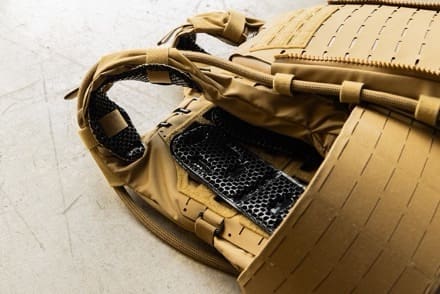
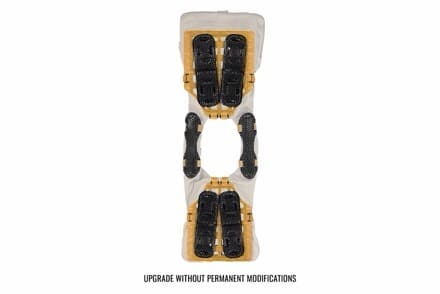
Built on the ICEPLATE EXO® Gen 3 architecture, CATAMARAN Gen 3 adds a laser-cut Velcro® loop field to any plate carrier or soft armor vest on the market. This universal platform allows operators to retrofit both legacy and contemporary issued armor, including the Crye Precision JPC 2.0, U.S. Army MSV, and USMC PC Gen III, with any combination of cooling, heating, hydration, or ventilation desired without permanently modifying plate carriers/body armor.

Technical Specifications and System Capabilities

  • Regulatory Uniformity: The Coyote Brown colorway maintains a compliant appearance on issued plate carriers and armor chassis.
  • Universal Non-Permanent Attachment: Mounts to anyhard or soft armor vest (MOLLE or slick) using MOLLE, Velcro® One-Wrap, elastic side straps, or elastic shock cord without permanent modifications.
  • Thermoregulation Integration: Serves as the mounting foundation for ICEVENTS® Classic Plate Carrier Ventilation Pontoons for evaporative airflow, or the IMS Pro Gen 3 system to combine evaporative cooling with ICEPLATE® Gen 3 conductive cooling, heating, and hydration.
  • Ultralight Hydrophobic Construction: Built from laser-cut laminate, the panel weighs 1.6 ounces (~3.8 ounces total when paired with ICEVENTS® pontoons) and measures 0.125 inches thick, resisting water absorption and sweat weight gain.
  • Customizable Airflow Geometry: Allows operators to position ICEVENTS® ventilation pontoons tailored to individual body shapes and needs.

CATAMARAN Gen 3 in Coyote Brown and Black is available immediately as a standalone panel or as a complete combo kit with ICEVENTS® Classic Pontoons directly at QorePerformance.com.

For government procurement officers, unit acquisitions, or official agency quotes across the complete ICEAGE ECOSYSTEM, visit the official Qore Performance Procurement Portal.

UF PRO Expands Its Rain Protection Range with Monsoon X

Friday, October 2nd, 2026

KOMENDA, SLOVENIA (1 October 2026)

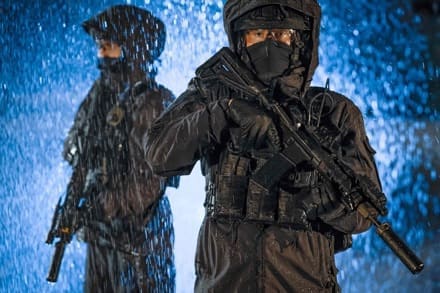
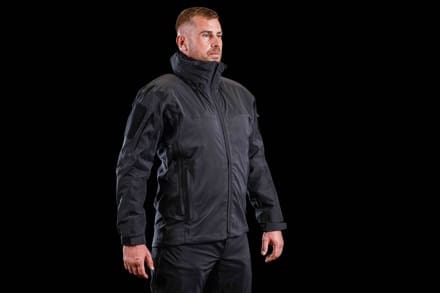
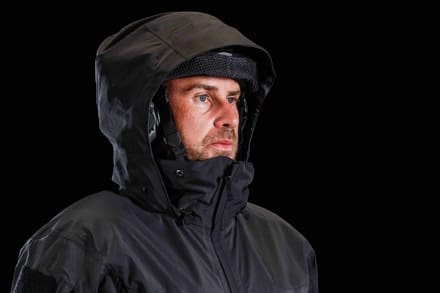
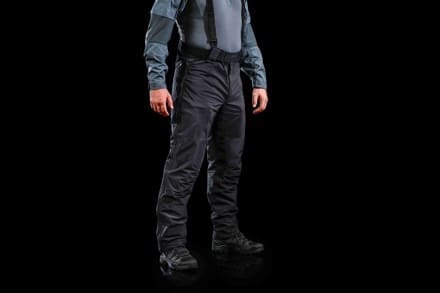
UF PRO has introduced the Monsoon X Tactical Rain Jacket and Tactical Rain Pants, a new lightweight hard-shell system developed for sustained operations in heavy rain, wind and foul weather.

The Monsoon X is UF PRO’s lightest hard-shell rain system. It combines 100% waterproof protection with a lightweight, low-bulk 3-layer laminate that stretches in two directions. This provides greater freedom of movement while maintaining compatibility with body armour, backpacks and other tactical equipment.

The Monsoon X Rain Jacket weighs 0.80 kg in size L, while the Rain Pants weigh 0.60 kg in the same size. Both garments provide waterproof, windproof and breathable protection and are easy to pack and deploy as weather conditions change.

“Rain protection should never get in the way of the job. With Monsoon X, we focused on reducing weight and bulk while adding stretch, so professionals can keep moving comfortably with the rest of their gear, even during long periods of heavy rain,” said Dejan Kastelic, Head of Research and Development at UF PRO.

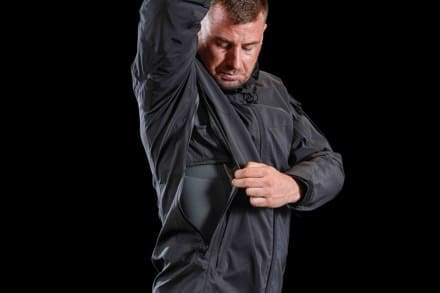
The jacket features long ventilation openings that release excess heat and provide direct access to equipment worn underneath. Its helmet-compatible hood uses the UF PRO Hood/Harness® system to follow the wearer’s head movements, while removable air/pac® shoulder inserts improve comfort when carrying backpacks, plate carriers and other equipment.

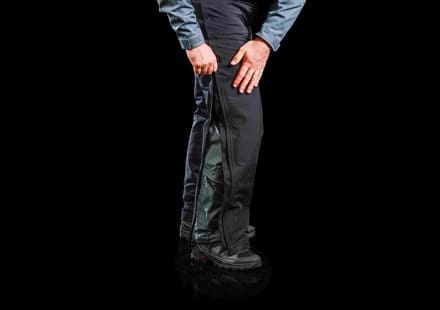
Designed as rapidly deployable overpants, the Monsoon X Rain Pants feature full-length side zippers that allow them to be put on or removed without taking off boots. A modified UF PRO Waist/Flex system and detachable suspenders help maintain a stable fit during movement. Adjustable lower hems and integrated boot hooks secure the pants over footwear in wet and windy conditions.

With their combination of low weight, 2-way stretch and packable construction, the Monsoon X Rain Jacket and Rain Pants provide a more mobility-focused option for professionals requiring full protection during prolonged exposure to severe weather.

The new Monsoon X garment system will be available from 15 October 2026. Learn more: ufpro.com/int/c/foul-weather-gear.

HII Wins U.S. Navy Contract for 10 ROMULUS USVs, Accelerating Deployment of Proven Autonomous Capability

Thursday, October 1st, 2026

MCLEAN, Va., Sept. 29, 2026 — HII (NYSE: HII), America’s largest military shipbuilder and the global leader in autonomous seapower, was awarded a contract by the U.S. Navy to build 10 ROMULUS unmanned surface vessels (USVs) for the Medium Unmanned Surface Vessel (MUSV) program. The award marks a major advancement in the U.S. Navy’s transition from experimentation to fleet-scale deployment of trusted, operational autonomy across the maritime domain.

“HII has made deliberate, early investments in the development of autonomous systems, advancing capabilities essential to the Navy’s hedge strategy,” said Chris Kastner, HII president and CEO. “We remain firmly committed to supporting the U.S. Navy’s vision and accelerating this critical capability from production to operational deployment.”

The U.S. Navy’s selection underscores HII’s shipbuilding expertise and leadership in proven autonomous unmanned surface and underwater maritime systems to deliver reliable production at the speed and scale required for emerging unmanned fleet production and operations.

At the core of ROMULUS is HII’s Odyssey Autonomous Control Solutions (ACS), a combat-tested autonomy suite that enables trusted, coordinated operations across surface and undersea domains. HII has delivered more than 750 REMUS unmanned underwater vehicles (UUVs) to customers in more than 30 countries. Together, ROMULUS, REMUS and Odyssey ACS provide a scalable foundation for autonomous maritime operations supporting the U.S. Navy and allied fleets.

In 2025, HII committed to securing the partners, production capacity, supplier network and infrastructure needed to move quickly from design and development to construction of ROMULUS USVs. That investment reflected HII’s continued support of the U.S. Navy’s unmanned maritime priorities and advancing the unmanned surface program with mature technology and a production-ready approach. By beginning work in 2025, HII positioned the ROMULUS program for accelerated delivery, reduced production risk and to provide the U.S. Navy with a scalable path to fielding autonomous unmanned surface capabilities at the pace the nation demands.

“Unmanned vessels ultimately must be built, integrated, tested and sustained as part of a fleet,” said Andy Green, president of HII’s Mission Technologies division. “As the nation’s largest shipbuilder, HII understands that challenge from both sides. By pairing our advanced cutting-edge technologies with our shipbuilding expertise, and leveraging experienced regional partners and suppliers, we are creating a production ecosystem capable of delivering reliable autonomous platforms at the pace and scale the U.S. Navy requires.”

Odyssey ACS: The Autonomy Behind ROMULUS

A key differentiator of ROMULUS is HII’s Odyssey ACS, a modular, open-architecture autonomy suite developed from decades of experience designing, building, operating and sustaining unmanned maritime systems.

Odyssey is designed to deliver consistent, predictable autonomous behavior, a requirement for the U.S. Navy’s transition from experimentation to operational deployment. It provides decision-making architecture that enables unmanned systems to perceive their surroundings, navigate, manage onboard systems and payloads, coordinate with other manned and unmanned platforms, and execute complex missions with limited human intervention.

Odyssey’s modular, open-architecture lets the U.S. Navy and allied partners rapidly integrate emerging sensors, command-and-control (C2) technologies and AI algorithms, ensuring ROMULUS remains upgrade-ready for evolving threat environments.

HII, with its partners Applied Intuition, Greenroom Robotics and Rodi Marine, successfully completed the evaluation phase of the MUSV program. HII’s Odyssey ACS vessel capabilities were validated through a series of operationally representative test events, demonstrating performance, reliability and mission readiness. The U.S. Navy-monitored testing took place in the Gulf of America over a 13-day period and evaluated the system under demanding, real-world operating conditions.

The most rigorous event was a long-endurance mission simulation. HII’s autonomy system successfully completed the full 420-nautical-mile mission over 28 hours, meeting all established success criteria and demonstrating the endurance and autonomous performance required for sustained maritime operations.

Designed and Built by Shipbuilders for Scale

For ROMULUS, HII is combining that expertise with a distributed production model that leverages regional shipbuilders and manufacturing partners. This approach expands available production capacity, strengthens the U.S. maritime industrial base and enables vessels to be produced efficiently and repeatedly as U.S. Navy demand grows.

HII is working with Gulf Coast build partners including Breaux Brothers Enterprises, Halimar Shipyard and Bayou Metal Supply & Manufacturing in Louisiana to support ROMULUS production, and developed in partnership with Beier Integrated Systems and Incat Crowther.

HII also recently announced a new10,000-square-foot expansion to increase the capacity of HII’s existing 40,000-square-foot unmanned manufacturing production campus capacity to build, develop and integrate advanced unmanned and autonomous maritime systems for both the REMUS family of UUVs and ROMULUS USVs.

The model allows major components and assemblies to be produced efficiently before final vessel integration, increasing throughput and creating a repeatable production architecture that can scale across the ROMULUS USV family.


DroneShield Awarded JIATF-401 Domestic Shield IDIQ Contract

Thursday, October 1st, 2026

Three-year, $500 million contract vehicle supports accelerated deployment of counter-UAS capabilities for U.S. homeland defense
Warrenton, VA – 30 September 2026 – DroneShield, a global leader in advanced counter-drone technology, today announced it has been awarded an Indefinite Delivery, Indefinite Quantity (IDIQ) contract supporting Joint Interagency Task Force 401 (JIATF-401)’s Domestic Shield initiative, with a maximum contract value of up to $500 million over three years.

The award establishes a streamlined procurement pathway for DroneShield’s counter-UAS capabilities to support Domestic Shield requirements and the rapid fielding of technology to protect defense critical infrastructure and other high-priority locations across the United States.

Domestic Shield is a JIATF-401 initiative focused on accelerating the deployment of counter-UAS capabilities in response to the rapidly evolving threat posed by unmanned aircraft systems (sUAS).

“Defending against small UAS threats is an immediate homeland defense requirement, and rapidly fielding proven technology is critical to the mission,” said Nate Webb, Director of Strategic Partnerships at DroneShield.“DroneShield continues to field proven capabilities while investing in next-generation technology designed to evolve with the threat. This award provides a streamlined pathway to deliver those capabilities to end users who need them.”

The award builds on DroneShield’s expanding support of JIATF-401 and broader U.S. counter-UAS initiatives.

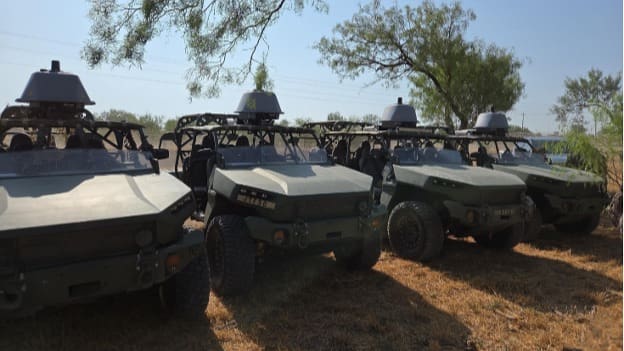
DroneShield has previously delivered DroneSentry-X Mk2, on-the-move counter-UAS capabilities in support of JIATF-401 requirements, including successful installation and acceptance of deployed technology. DroneShield capabilities are also represented on the JIATF-401 Counter-UAS Marketplace, established to accelerate access to vetted counter-UAS technologies.


Image: DroneSentry-X Mk2 recently installed on Infantry Squad Vehicles (ISV) as part of JIATF-401 initiative

The Domestic Shield IDIQ creates an additional contracting pathway through which DroneShield can support emerging operational requirements as the United States expands counter-UAS protection across military installations, critical infrastructure and other priority locations.

“JIATF-401 is continuously working with industry partners to provide the counter-UAS capabilities needed to protect warfighters and installations,” said U.S. Army Brig. Gen. Matt Ross, director of JIATF-401. “Our approach allows us to identify the right capabilities for specific operational requirements and rapidly deliver those capabilities to the warfighter.”

DroneShield provides counter-drone technology across dismounted, mobile and fixed-site operations, including radio frequency sensing, electronic countermeasures, command-and-control, artificial intelligence and multi-sensor integration. Its modular architecture enables capabilities to be deployed independently or integrated with third-party sensors and effectors to meet evolving operational requirements.

DroneShield will announce material orders awarded under the IDIQ in accordance with applicable disclosure requirements.

OKSI Announces Its Line Of Custom Intelligent Seekers For Missile Platforms And Precision Munitions

Thursday, October 1st, 2026

Passive, AI-enabled next-generation EO/IR seekers that deliver autonomous precision in GPS-denied and contested electronic warfare environments.

LOS ANGELES — Oct. 1, 2026 — OKSI, a defense leader in advanced artificial intelligence, computer vision and autonomous systems, announced its line of custom Intelligent Seekers, purpose-built to deliver autonomous precision in GPS-denied and contested electronic warfare environments.

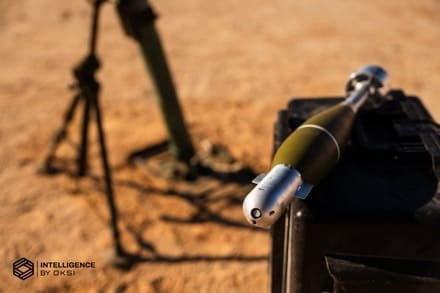
OKSI’s Intelligent Seekers bring advanced electro-optical and infrared (EO/IR) sensing, computer vision and target recognition, along with tracking, terminal logic and guidance, navigation and control (GNC) algorithms directly on board weapon systems. They are a production-ready solution with low size, weight, power and cost (SWaP-C) that operates without GPS, laser designation or radio frequency (RF) communications from launch to impact.

Unlike traditional guided weapon systems that depend on external guidance or continuous designation, munitions equipped with OKSI’s Intelligent Seekers autonomously acquire, recognize, track and engage static or dynamic targets, with computer-vision algorithms engineered to hold performance even when traveling from low subsonic to hypersonic speeds.

Presently, laser-dependent systems are often limited to a single shot. Integrating onboard intelligence also enables lock-on-after-launch and rapid ripple-fire engagements that allow multiple munitions to be deployed in quick succession against multiple targets without continuous external designation.

“Modern electronic warfare has made single-shot, signal-dependent guidance a liability,” said Chris HolmesParker, CEO, OKSI. “Our Intelligent Seekers give munitions a passive path to target lock. They sense, detect, recognize, track and guide, all on board. That is what autonomous guidance should truly mean in a contested environment.”

ONE ARCHITECTURE. MULTIPLE MISSIONS.

OKSI’s Intelligent Seekers are built around a modular open systems approach (MOSA) and sensor open systems architecture (SOSA), combining a common software stack with a modular electromechanical architecture. Commercial compute modules, multiple sensor modalities, embedded AI, guidance, terminal logic and GNC can be configured to meet mission requirements without reengineering the underlying architecture for each platform. This enables faster integration, independently versioned and validated software, supply-chain flexibility and adaptability across platforms and concepts of operation.

The technology supports the U.S. Department of War’s full find, fix, track, target, engage, assess (F2T2EA) mission flow on board the munition while addressing the growing requirement for assured positioning, navigation and timing (PNT) and non-RF alternative PNT in GPS-denied and contested environments.

OKSI Intelligent Seekers support air, ground and surface applications across mission sets including counter-UAS, maritime strike, indirect fire, land attack and interception at speeds ranging from low subsonic to hypersonic.

Built for rapid integration and production, OKSI’s Intelligent Seeker line combines proven performance, low SWaP-C, open architecture, a robust supply chain and more than 35 years of engineering expertise to deliver adaptable intelligence across today’s and tomorrow’s precision weapon systems.

MEET OKSI AT AUSA 2026

OKSI will be at the AUSA Annual Meeting & Exposition in Washington, D.C., Oct. 12–14, 2026.

Attendees interested in learning more about OKSI’s Intelligent Seekers and integration capabilities are invited to schedule a meeting with the OKSI team.

To schedule a meeting, contact solutions@oksi.ai.

YETI and KOR Partner to Bring Reusable, Vacuum-Rigidizing Protective Inserts

Thursday, October 1st, 2026

KOR’s patented Vacuum Rigidizing Structure (VRS) technology offers a reusable, reconfigurable alternative to traditional foam inserts.

Scottsdale, Ariz. — September 15, 2026 — KOR, the maker of the patented KOR® Protection System, today announced a partnership with YETI to bring KOR’s reusable Vacuum Rigidizing Structure (VRS) protective inserts to the YETI® LoadOut® hard-case platform. The protective inserts are designed to help users secure and transport equipment without relying on single-use foam inserts.

The collaboration gives customers another way to configure durable protection for valuable gear, while supporting reuse across different equipment setups.

For decades, protecting sensitive equipment in transit has meant one of two bad options — precision-cutting custom foam that only fits one configuration, or fighting with generic pluck-and-pull foam that never fits quite right and can’t be reconfigured. KOR’s VRS technology eliminates the trade-off. A KOR insert starts as a flexible panel filled with proprietary media. Place your equipment on it, draw the air out with the KOR pump, and in seconds the panel rigidizes around the exact contours of whatever it’s holding — an optic, a radio, a drone, a camera body, a diagnostic instrument. Release the vacuum and the same insert resets, ready to be reconfigured for the next payload.

“We set out to to develop new packing technology to replace  antiquated packaging materials with the goal of reducing environmental impacts associated with single use materials,” said GP, Founder of KOR. “Pairing that with the LoadOut platform puts reusable, field-grade protection in the hands of the people who are hardest on their equipment — and lets them stop treating protection as something disposable.”

One system. Infinite configurations.

Unlike cut foam, a single KOR insert can be reset and reconfigured as equipment changes. That flexibility can help users make better use of interior case space while reducing the need for multiple custom inserts.

Key advantages of the KOR® Protection System on the YETI® LoadOut® platform:

– Reusable, One insert reconfigures for endless payloads — no more cutting foam, no more waste.

– Reconfigure in seconds. Fluid to rigid in seconds; reset and reshape in under 30 seconds.

– 360° protection. Superior shock and vibration attenuation with full encapsulation and support

– Built for the field. Waterproof, dustproof, and contaminant-resistant, in a rip- and tear-resistant performance fabric.

– Mission-tested. Engineered to exceed MIL-STD-810H for shock, vibration, temperature, and altitude, with flame resistance (16 CFR 1610), tear strength (ASTM-D2261), and air retention (MIL-C-83489).

Built to protect what matters

The partnership is aimed at the people who move sensitive or high-value equipment and need adaptable protection in rugged conditions. For these users, the KOR + YETI combination means a single rugged case and a single reusable insert that can protect different gear setups, from optics and electronics to communications equipment and instruments.

Availability

The YETITM LoadOutTM KOR® Protective Inserts are available at www.yeti.com/loadout-kor-protective-inserts starting September 15, 2026. KOR’s full lineup of Protective Systems for Defense is available at kortechnik.com.

About KOR

KOR is a U.S.-based manufacturer redefining protective packaging through its patented Vacuum Rigidizing Structure (VRS) technology. The KOR Protection System replaces single-use foam with a reusable, infinitely reconfigurable protective platform that hardens around any object in seconds and resets for the next payload. Berry compliant and made in the USA, KOR’s products are engineered to exceed MIL-STD-810H and are trusted to protect optics, communications, drones, medical devices, cameras, and other high-value equipment in transit. Leave an Impression.™ Learn more at kortechnik.com.

NIOA to Unveil Training Payload for SYPAQ Corvo at Land Forces 2026

Thursday, October 1st, 2026

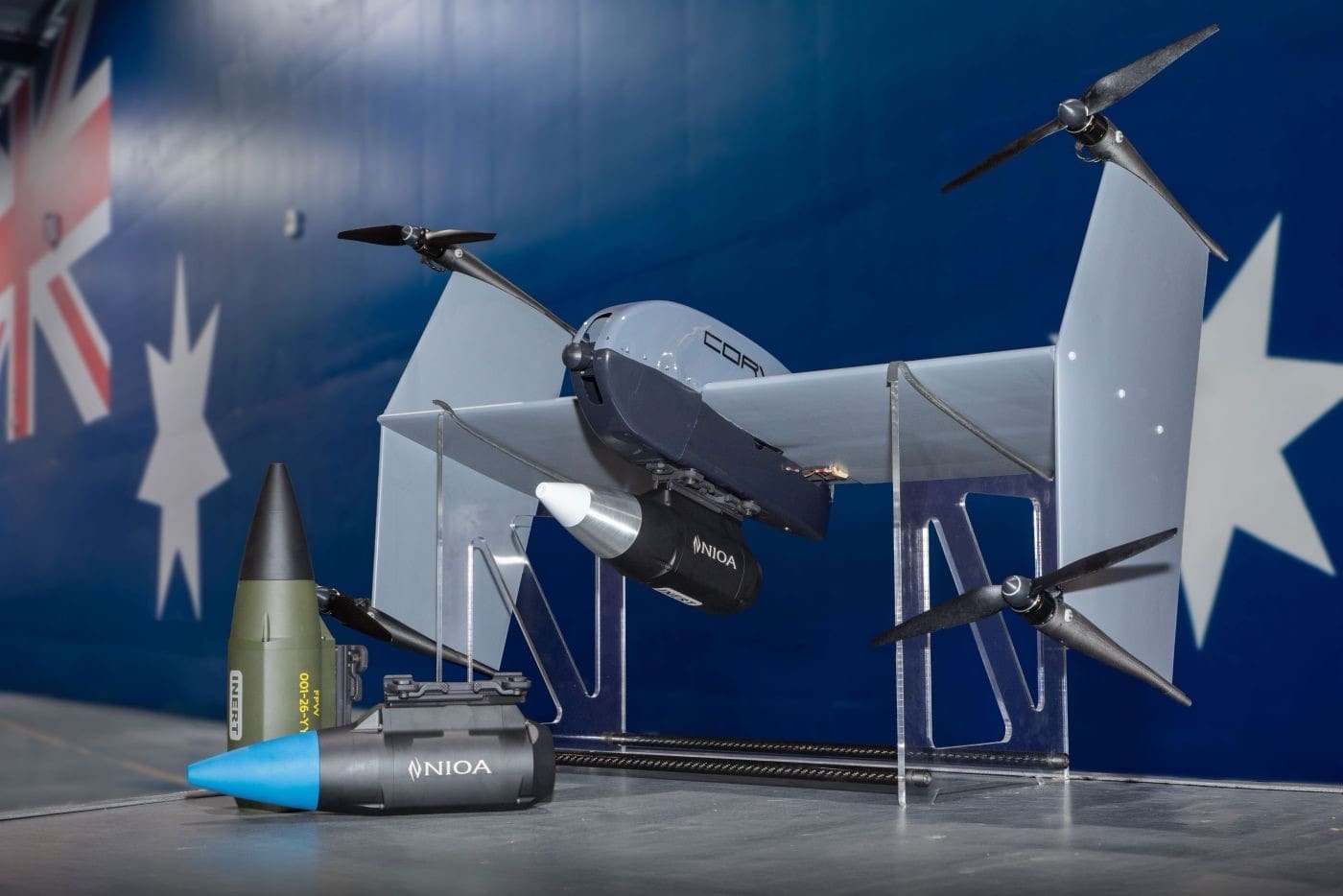
All-Australian… the SYPAQ Systems CsUAS CORVO interceptor with the NIOA family of payloads.
1 OCTOBER 2026

NIOA will use the stage of the Land Forces International Defence Exposition in Perth to unveil for the first time the training and live payload being developed for the SYPAQ Systems CORVO Counter small Uncrewed Aerial System (CsUAS) interceptor platform.

The training payload represents a significant milestone in NIOA’s contribution to the sovereign Australian counter-drone capability being developed by SYPAQ for the Advanced Strategic Capabilities Accelerator (ASCA) Mission Syracuse.

The capability combines NIOA’s expertise in fuzing, warheads and explosive ordnance engineering with the Australian-designed and manufactured CORVO interceptor platform developed by SYPAQ Systems.

The functionally representative training payload integrates a telemetry-capable Power & Interface Controller (PIC) electronic subsystem, Proximity Fuze, inert Electronic Safety, Arming & Functioning (ESAF) device plus an inert mass representative kinetic effector payload, enabling comprehensive flight testing and data collection ahead of live payload qualification activities.

NIOA Australia-New Zealand Executive Vice President Ben James said the industry unveiling demonstrated the rapid progress Australian defence industry SMEs could achieve through collaboration.

“Less than six months after partnering with SYPAQ on their work under Mission Syracuse, and engaging Hydrix to provide electronic design integration support to SYPAQ, we are proud to showcase a tangible capability that highlights the strength of Australia’s sovereign defence industrial base,” he said.

“This CORVO interceptor training payload is an important step toward delivering a credible, scalable and operationally relevant counter-drone capability for the Australian Defence Force.

“The schedule in which this payload has been developed is a real testament to the skilled workforce and exceptional collaboration between SYPAQ Systems, NIOA and Hydrix.”

The development program brings together Australian-owned defence companies NIOA, SYPAQ Systems and Hydrix, combining expertise in explosive ordnance design, electronics engineering, advanced software integration and uncrewed systems development.

Amanda Holt, Managing Director and CEO, SYPAQ Systems said: “Working in partnership with NIOA, supported by our sovereign supply chain members, allows us both to accelerate the design, development and demonstration of the Corvo Strike C-UAS capability through ASCA Mission Syracuse. SYPAQ is proud to lead this endeavour drawing upon our expertise in autonomous systems, guidance, navigation and control, and mission systems integration.

“NIOA’s expertise delivers both a mission optimised, modular warhead capability, whilst providing an inert training capability, to the program. This allows rapid risk reduction and future mission expansion – by design.”

Hydrix recently completed delivery of a benchtop integration system supporting software development, platform-interface communications and integration of key payload subsystems.

The company is responsible for development of the PIC electronics subsystem, a critical subsystem incorporating telemetry, safety interlocks, fuzing logic and Picatinny Common Lethality Integration Kit (CLIK) compatible platform interface functions.

Hydrix Director Development & Delivery Andrew Beal said the milestone demonstrated Hydrix’s ability to rapidly translate complex Defence requirements into working technology.

“Defence capability development needs to move from concept to field evaluation at a pace that matches the threat,” he said.

“This project demonstrates the value Hydrix can bring to sovereign capability development, solving complex integration challenges and helping emerging defence technologies mature rapidly from concept through to operationally relevant capability.”

To see the NIOA family of training and live payloads, visit the NIOA stand #4G16 Land Forces 2026 from October 6-8.

New Rabbit Rounds Multi-projectile Ammunition from Franklin Armory Creates More Sporting Fun for America’s Favorite Gun

Wednesday, September 30th, 2026

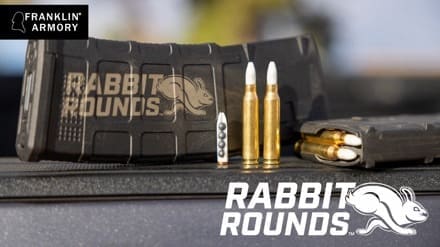
MINDEN, Nev. – September 30, 2026 – Franklin Armory, one of America’s leading manufacturers of innovative firearms, accessories—and now ammunition—today announced Rabbit Rounds™, a new multiple-projectile cartridge designed to more effectively harvest smaller game with the ubiquitous AR-style Modern Sporting Rifle (MSR).

Franklin Armory’s patent-pending Rabbit Rounds feature four spin-stabilized projectiles, encased in a multi-piece, self-discarding sabot. Rabbit Rounds are available in 5.56x45mm for use with AR-pattern firearms chambered in .223 Remington, .223 Wylde, and 5.56 NATO. The company plans to bring Rabbit Rounds in additional popular hunting calibers to market soon.


Rabbit Rounds provide coyote, wild pig and other medium-sized game hunters with an alternative to more cleanly harvest smaller game with non-expanding, shotgun-like pellets. Each 45-grain Rabbit Round projectile assembly provides more than double the typical shotshell speed and power, achieving 3,150 feet-per-second muzzle velocity and 992 ft-lbs. of energy from a 16-inch AR-15 rifled barrel. The imparted spin-stabilization on Rabbit Round’s four hard-hitting lead projectiles maintain an effective pattern beyond 40 yards, increasing hit probability on fast-moving targets over single projectile ammunition.

“Rabbit Rounds allow your AR to fire super-velocity, spin-stabilized shot,” said Franklin Armory President Jay Jacobson. “This ammunition greatly expands the sporting capabilities of .223 Remington and 5.56 NATO firearms.”

Rabbit Rounds are available directly from Franklin Armory and through certified dealers. For testing and evaluation of Rabbit Rounds, please email media@franklinarmory.com.