Phantom Lights

Archive for the ‘Sensors’ Category

Echodyne Named as Radar System for Trust Automation’s $490M Air Force Counter-UAS Engineering Contract

Tuesday, April 21st, 2026

EchoShield® radar integrated into Small-Unmanned Air Defense System (SUADS) to deliver on $490M Air Force IDIQ

Kirkland, WA, April 20, 2026 – Echodyne, the radar platform company, today announces its inclusion as a primary radar system within Trust Automation’s Small-Unmanned Air Defense System (SUADS) Counter-UAS platform, to be delivered to the U.S. Air Force under a $490M IDIQ contract announced in August 2025.


Rapidly Deployable Small-Unmanned Air Defense System (RD-SUADS), Fixed Site Small?Unmanned Air Defense System (FS-SUADS), and Expeditionary Small-Unmanned Air Defense System (EX-SUADS) platforms adhere to the Sensor Open Systems Architecture (SOSA) standard with EchoShield radars being the first fully integrated SOSA solution in the platform. The RD-SUADS platform is a self-contained, self-powered C-UAS system fitted to standard pallet sizes for easy transport via military aircraft, while the FS-SUADS is for deployment at permanent military installations and can be integrated as a group or standalone for diverse redundant base protection and 360-degree security.  The EX-SUADS detection only system is designed for checked baggage transportation and sized to fit with cases in larger SUV vehicles.

EchoShield is the market-leading medium range radar that reliably and consistently generates precise location data for all drone types and configurations. A commercial-off-the-shelf (COTS) radar system, EchoShield’s industry standard interfaces and rich data options create a baseline data set that more accurately slews optical sensors, cues effector options, and accelerates reaction time. Boasting advanced classification capabilities built on recursive neural network (RvNN) machine learning models, EchoShield tracks all movement and pinpoints system and operator attention where and when it matters.

“It is becoming more and more evident that the fidelity of radar data, its accuracy in all data dimensions, is a critical attribute of any radar system,” said Eben Frankenberg, CEO at Echodyne. “The new table stakes for every defensive system is actionable data at the range of reaction and with the precision to consistently direct kinetic effectors onto fast, nimble, UAS threats.”

“Integrating Echodyne’s advanced radar into our RD-SUADS, FS-SUADS, and EX-SUADS systems enhances both detection range and accuracy, enabling operators to identify threats sooner and respond with greater confidence,” said Ty Safreno, CEO at Trust Automation, Inc. “These systems provide agile, comprehensive C-sUAS capability that helps protect warfighters and critical facilities through elevated situational awareness.”

For more information about EchoShield and Echodyne, Eben Frankenberg will present to Counter-UAS Technologies in London, UK on April 20-22, and Echodyne can be found at Modern Day Marine in Washington, DC on April 28-30.

Ruggedised Second Skin Enclosures for Fujinon SX Camera Range

Tuesday, April 21st, 2026

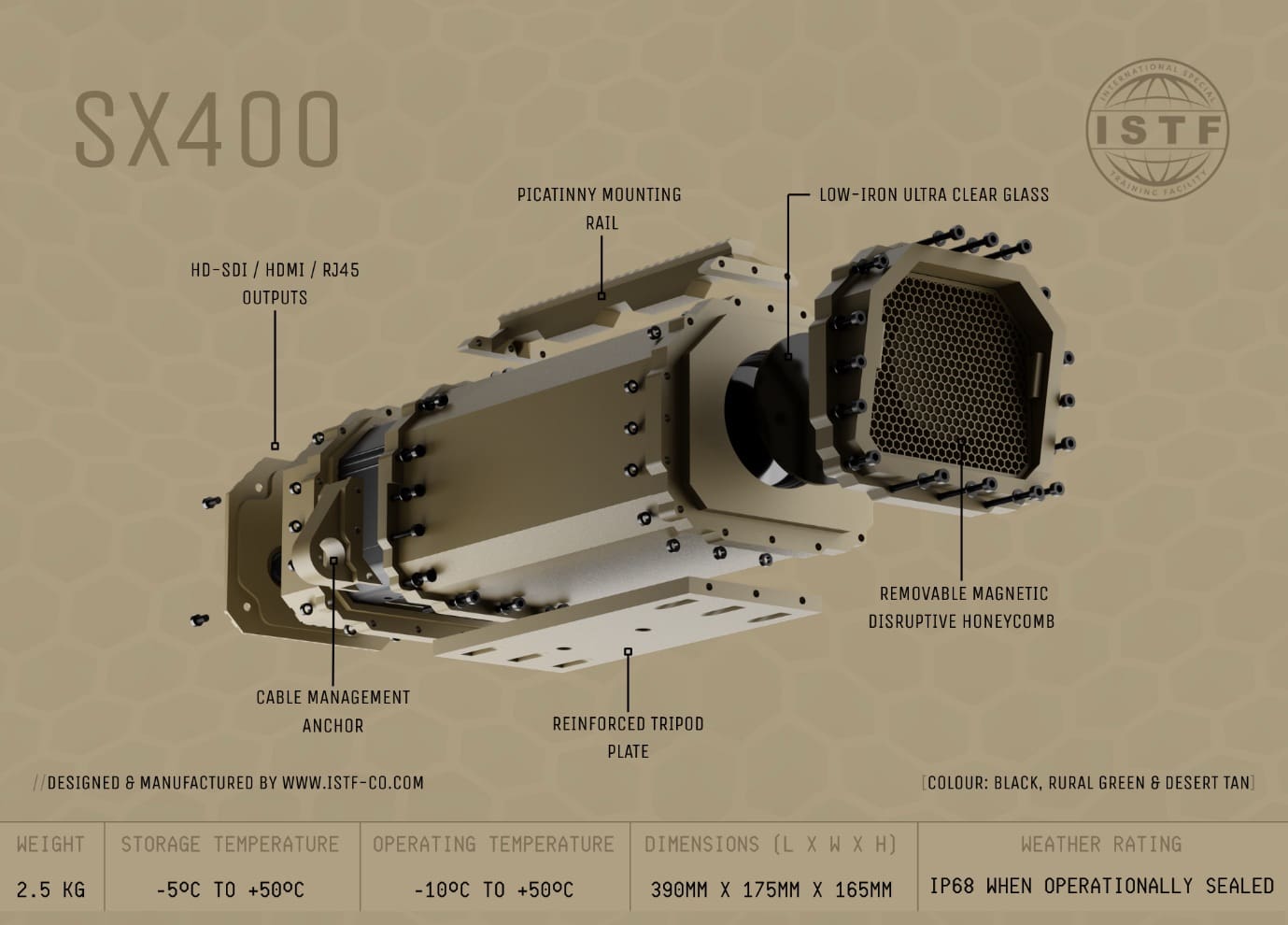
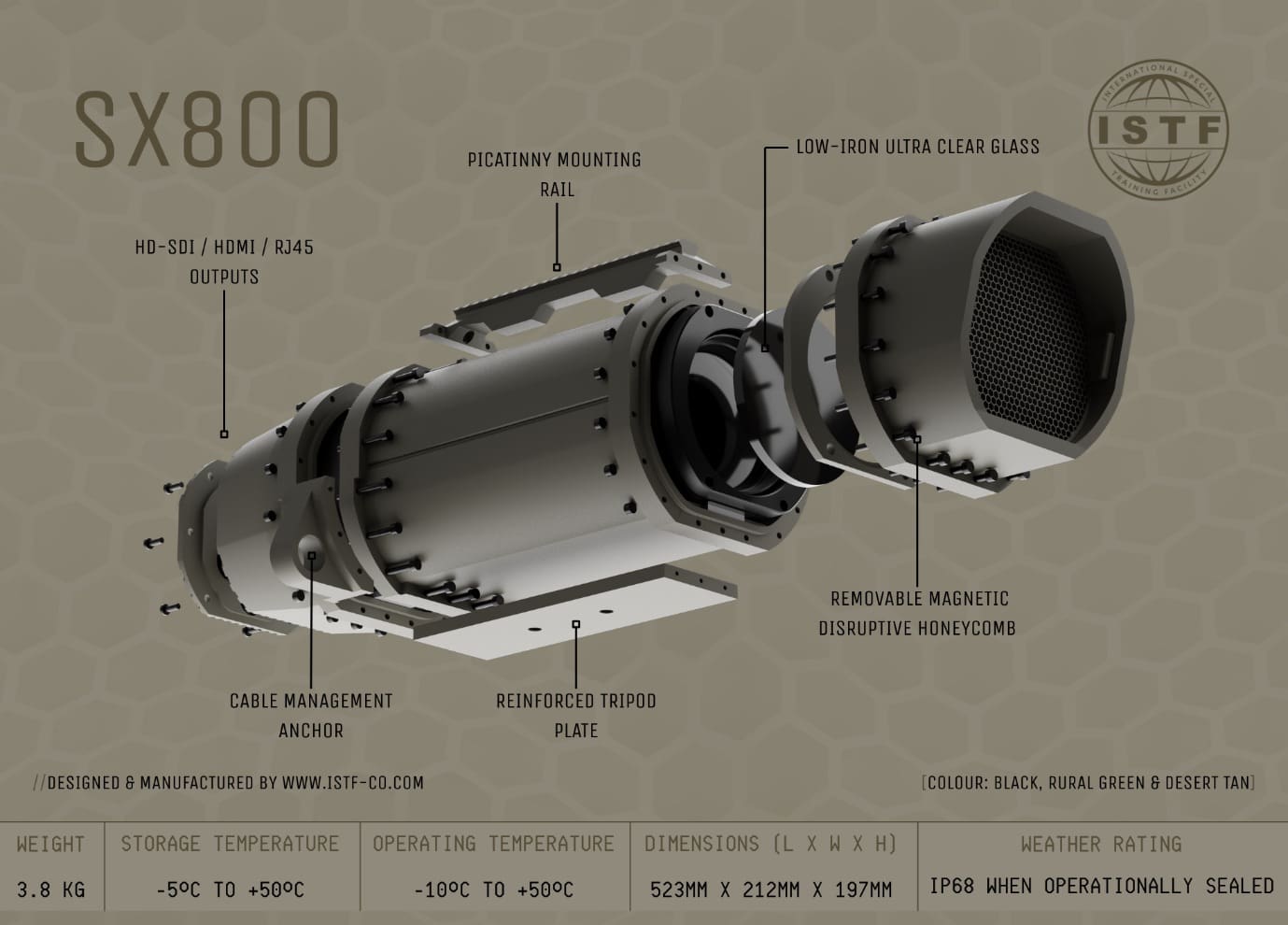
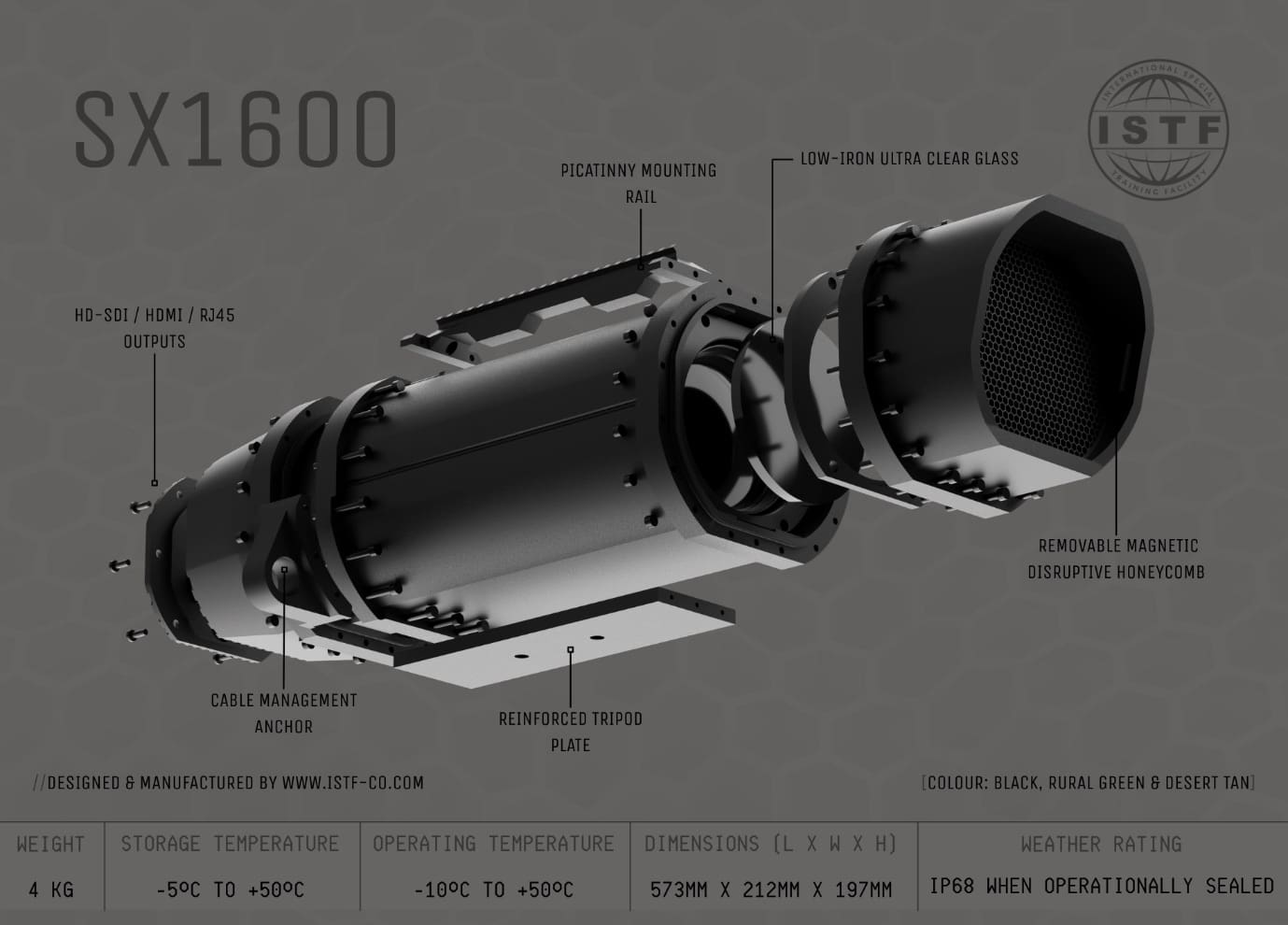
Hereford, UK – The International Special Training Facility development cell is releasing the first 3D printed deployment-ready rugged second skin enclosures, manufactured from our specially developed resin to withstand harsh environments for the Fujinon SX Camera Range.

This innovative product is designed to enhance operational capabilities, ensuring reliability and protection for critical equipment in demanding environments:

Since 2011, The International Special Training Facility has provided covert tactical and technical training, products and design to Special Forces, Law Enforcement CT-TSU and Government Security Services & Agencies.

ISTF is an independent organisation, with no affiliation, partnership, or ownership ties to any related entities, by policy ISTF does not provide its services to the private sector.

Our expertise has ‘silently’ enhanced the effectiveness of small teams operating in complex Rural and Urban environments, ensuring their success when executing covert manoeuvres.

We provide tactical and technical training, products, and design services. For further information, please contact us at info@istf-co.com

US Army Strengthens Gray Eagle With New ELINT Upgrade

Friday, April 17th, 2026

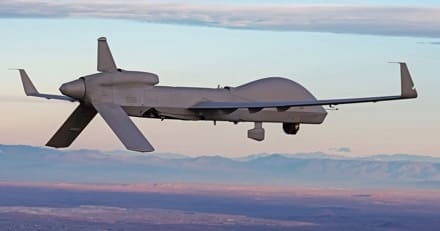
SAN DIEGO – 15 April 2026 – The U.S. Army is upgrading its MQ-1C Gray Eagle® Extended Range (ER) with enhanced electronic intelligence capabilities via a contract awarded to General Atomics Aeronautical Systems, Inc. (GA-ASI). ELINT supports long-range sensing for the Integrated Air Defense System (IADS), providing critical information to ground commanders. This capability allows Gray Eagles to operate outside threat ranges while looking deeply into the battlespace and enables advanced manned-unmanned teaming to increase survivability for crewed Army aircraft.

“Combining long-range detection with the range and persistence of the Gray Eagle platforms ensures that commanders always know when an adversary IADS is operating,” said GA-ASI President David R. Alexander. “Gray Eagle’s open systems architecture makes this a simple but impactful upgrade.”

The ELINT sensor identifies and geo-locates critical threats vital to Joint Force Operations. To further enhance the Gray Eagle ERs electronic support capabilities, GA-ASI, along with Capability Program Executive Intelligence and Spectrum Warfare, will partner with SNC to integrate advanced radar detection and signal collection technology.

In addition to ELINT, the Gray Eagle ER has also been configured with modernized Communications Intelligence (COMINT), Synthetic Aperture Radar/Moving Target Indicator (SAR/MTI), and Mobile Ad Hoc Network (MANET) radios in multiple Army demonstrations, highlighting the platform’s C5ISR Modular Open Suite of Standards (CMOSS) architecture. The aircraft also supports the integration of best-of-breed sensors, payloads, and weapons to rapidly adapt to threats or specific missions.

Gray Eagle ER was featured in the U.S. Army’s Project Convergence Capstone-5 (PCC-5) last year. The multi-mission, multi-sensor Gray Eagle ER performed persistent Detect, Identify, Locate, and Report (DILR) missions in an electronically contested environment, simultaneously providing mesh network aerial tier support to maneuver units and connecting the soldiers and launched effects that might otherwise be obstructed by terrain or be out of range.

PCC-5 demonstrated Gray Eagle ER’s ability to transform contact, fight, and survive capabilities, automating operator input with easy-to-use human-machine interfaces. Resilient to jamming while integrating and cross-cuing ELINT, COMINT, SAR, and Aerial Tier Network Expansion (ATNE), Gray Eagle ER enhanced the survivability of the maneuver forces while supporting the Combined Joint Task Force (CJTF).

Sapient Perception Secures €2M to Advance 10K Sensor Systems for Mission-Critical UAV Operations

Thursday, April 16th, 2026

Software-defined cameras and AI framework expands drone coverage 100x, with deployments planned for frontline operations in Ukraine and other contested environments

COPENHAGEN, Denmark, April 14, 2026 — Sapient Perception ApS, which builds physical AI sensor systems for UAVs, has raised a €2M pre-seed round co-led by Balnord and FORWARD.one. The Danish startup will utilize the capital to accelerate development of the company’s software-defined cameras and AI framework that enable mission-critical decision-making and autonomy through large area perception. The round will also assist in growing its engineering team, and supporting initial deployments with customers across the defense, security, and emergency response industries.

Founded by Anthony Garetto (CEO), Lau Norgaard (CTO), and Michael Messerschmidt (CBO), Sapient Perception is focused on solving a fundamental visibility challenge in modern UAV operations. Drones capture more images and data than ever, but bandwidth limitations force a tradeoff between imaging coverage and resolution. Operators are constantly switching views to compensate.

Sapient addresses this problem with first-of-its-kind 10K sensors that cover up to 100 times larger areas than conventional sensors at the same detailed resolution in a single frame. Meanwhile, its novel edge processing pipeline enables actionable insights from enhanced imaging to be delivered onboard in real-time with whatever AI models are preferred by operators. By overcoming constraints related to bandwidth, latency, and human cognitive overload, Sapient Perception unlocks autonomous operational capabilities that were previously inaccessible in time-critical environments.

“In mission-critical situations, the ability to make fast, informed decisions determines outcomes,” said Anthony Garetto, CEO and co-founder of Sapient Perception. “Our perception layer enables persistent situational awareness through a far wider lens, while delivering the important details to operators in real time. Having this whole picture means decisive action can be taken faster and with a higher level of confidence.”

The company is already working with Dropla Tech to integrate Sapient’s large area perception sensors into UAVs designed to fly low and ahead of military convoys. Sapient’s imaging will feed into Dropla Tech’s Blue Eyes platform, which is being used today by the Ukrainian Ministry of Defence to process real-time drone video to detect ambush drones and landmines along supply routes near Ukraine’s front lines. Sapient is also working with partners deploying its sensors on high-altitude platforms, including stratospheric systems for wide-area ISR, highlighting the flexibility of its perception layer to customers, system integrators, and industrial partners across Europe and North America.

The investment from Balnord and FORWARD.one reflects growing demand for edge-based intelligence as operational complexity and the criticality of advanced sensors increase across defense and security domains.

“Modern defense and security operations are not taking advantage of the most advanced sensors and the vast data they generate,” said Jarek Pilarczyk, Partner at Balnord. “Sapient Perception addresses this challenge with a highly differentiated edge AI approach that we believe will become foundational to next-generation systems.”

“In the environments Sapient Perception serves, every second matters. Their technology turns high-quality sensor data into real-time insights at the edge, enabling 100× greater coverage than today’s systems. It’s a clear step change — built by a team that knows how to move fast and deliver,” added Cailin Greiner, Investment Manager at FORWARD.one.

Roke USA – Perceive MR Antenna

Wednesday, March 4th, 2026

Part of Chemring Group, Roke USA specializes in electronic warfare systems.

The Perceive Multi Role antenna features a small form factor head for Adaptive Digital Beamforming and Super Resolution Direction Finding (separate multiple signals on same channel) including azimuth and elevation outputs.

Compatible with PREFIX2 and VIPER software it offers 100MHz instantaneous bandwidth covering 2MHz to 6GHz.

ISI Introduces KNIGHT– A Very High-Resolution Satellite with Advanced SWIR and Video Capabilities

Thursday, February 26th, 2026

Knight combines 35 cm true?color imaging, Full Motion Video and 1.5 m SWIR sensing to extend space?based intelligence into night and low?visibility conditions

February 25, 2026, Israel – ImageSat International (TASE: ISI), a global leader in space-based intelligence solutions, reports that the KNIGHT development program is progressing according to schedule and has entered its final stages. The satellite is designed to strengthen ISI’s operational portfolio by delivering persistent, high-clarity observation of critical targets across day, night, and degraded visibility environments, enabling effective collection in low-visibility conditions such as haze, smoke, fog, and during dawn and dusk.

For defense and security users, KNIGHT provides reliable monitoring in conditions where conventional electro-optical systems face limitations. Its integrated SWIR channel enhances detection, recognition, and tracking capabilities, while onboard AI processes imagery directly in orbit – prioritizing mission-critical data and accelerating response timelines.

Building on the intelligence-centric architecture pioneered by ISI’s RUNNER satellite, KNIGHT incorporates proven in-orbit analytics, real-time movement tracking, and efficient narrow-band intelligence dissemination via embedded AI. It extends this foundation into the very high-resolution domain and into night and limited-visibility operations, combining 35 cm true-color imaging with a dedicated SWIR channel and integrated video capabilities to deliver a richer and more dynamic intelligence picture.

Advanced onboard computing enables real-time image and video assessment, autonomous memory management, and optimized downlink usage. The satellite can filter low-quality data, re-task areas of interest autonomously, and deliver actionable intelligence directly to operational networks. Its flexible processing architecture also allows software and algorithm updates throughout its lifetime, ensuring continuous performance enhancement and evolving analytical capabilities in orbit.

“Completing recent development milestones demonstrates the maturity of the Knight program and our continued execution towards a launch planned for 2027,” said Noam Segal, CEO of ImageSat International. “KNIGHT is being developed to provide defense and security users with clearer and more continuous intelligence, both static and dynamic, regardless of time of day or visibility conditions. By integrating very high-resolution imaging, SWIR sensing, video, and onboard AI-driven processing, it enhances operational flexibility and decision-making confidence in complex environments.”

www.imagesatintl.com

Rheinmetall and SATIM Sign Technology Supply Agreement: Support for German Bundeswehr in SAR Programme

Saturday, December 27th, 2025

The technology group Rheinmetall, based in Düsseldorf, and SATIM Monitoring Satelitarny, a Polish deep-tech company specialising in the AI-supported analysis of synthetic aperture radar (SAR) imagery, have signed a technology supply contract. The content is the support of the German customer’s satellite-based reconnaissance program. The agreement formalises SATIM’s role as a technology supplier to Rheinmetall for the delivery of intelligence, surveillance, and reconnaissance (ISR) capabilities for the Bundeswehr.

Under the contract, SATIM will supply AI-based capabilities that transform large volumes of complex radar imagery into actionable information. The agreement supports SPOCK-1, the German satellite reconnaissance program awarded to Rheinmetall ICEYE Space Solutions. SATIM will provide its technology as a supplier within the European Union, while Rheinmetall will operate the system independently in Germany.

Timo Haas, CEO of Rheinmetall Electronics: “Our partnership with SATIM marks another important milestone in advancing Rheinmetall’s strategy to strengthen our capabilities and footprint in an increasingly digital and connected battlespace. By combining our expertise and technologies, we are building a powerful foundation for faster, data-driven decision-making and superior situational awareness for our customers. This collaboration is another example of cutting-edge and combat-ready solutions at speed.”

Jacek Strzelczyk, CEO of SATIM: “The contract between SATIM and Rheinmetall combines the agility and innovation of a deep-tech start-up with the scale and mission experience of a global defence prime. Together, we will deliver effective solutions that support Germany’s national security priorities and will strengthen allied defence capabilities. This milestone demonstrates the maturity of our technology and its alignment with Germany’s ISR requirements.”

The technology supply contract brings together Rheinmetall’s system integration expertise and its established position in the German defence  market with SATIM’s AI-based data analysis capabilities. The collaboration is intended to enhance situational awareness, support informed decision-making, and enable timely operational responses in a complex and evolving security environment.

Army Teams Operationalize Warfighting Systems in Western Corridor Experiment

Sunday, December 14th, 2025

As modern battlefields rapidly evolve, the Army remains at the forefront of capability acceleration and innovation. Through exposure to realistic, emulated threat in the Western corridor, the Army’s All-domain Persistent Experiment (APEX) accelerates technical innovation and enhances Soldier lethality in the most threat-informed, live-sky environment available.

This fall, teams across the Army, Joint Force, industry, allied nations, and academia converged on White Sands Missile Range (WSMR), New Mexico, to assess, develop and reassess technology. The goal: outpace the threat.

“Today’s Warfighters must execute operations across the electromagnetic spectrum in the most contested Degraded, Denied, Intermittent, and Low-bandwidth (DDIL) environment the Army has ever seen,” said Maj. Gen. Patrick Gaydon, commander of the Army Test and Evaluation Command (ATEC). “We must be able to test, experiment, and train to fight in the same environment.”

“Integrating iterative testing, operationally realistic experimentation, Soldier feedback, and emerging technology assessments in support of the Campaign of Learning is vital to ensuring that learning is captured early and often to shape requirements, acquisition strategies, and fielding decisions. We currently have the capability to replicate the DDIL environment at several of our test and training ranges.”

Opening the aperture across a broader swath of the electromagnetic spectrum, APEX provided the DDIL environment needed to test integrated systems that operate in various regions of the spectrum and truly understand their capabilities in a realistic environment. Utilizing the conditions at WSMR, the All-Domain Sensing Cross-Functional Team (ADS CFT) built upon six years of success from the experiment’s previous iterations as the Positioning, Navigation and Timing (PNT) Assessment Experiment (PNTAX).

“This is the most challenging experiment our organization has completed to date,” said Col. Pat Moffett, deputy director of the ADS CFT. “It was an opportunity to learn– bringing together those who are actively championing the Army’s priorities – and putting capability to the test in one of the harshest environments available. Persistent experimentation of this caliber is one way we maintain momentum and lethality.

This pivot generated valuable insights to help Army leaders knit together warfighting systems that support integrating broader future concepts. Together, participants conducted experiments that accelerate investment in the Army’s top priorities, including command and control, integrated fires, and all-arms maneuver.

Integrated, real-time C2

As the Army gains momentum with Next Generation Command and Control (NGC2) prototyping and experimentation, teams at APEX informed Army requirement development for one critical piece of the puzzle: sensor data.

In increasingly convoluted and denied information environments, access to the right data at the right time and the right classification is paramount. The Command, Control, Communications, Computers, Cyber, Intelligence, Surveillance and Reconnaissance (C5ISR) Center Dynamic project, designed to enable automated tipping and cross-cueing for accelerated kill chains, utilized a sensor framework to integrate Army, Joint Service, national, and coalition partner capabilities, enabling accelerated, automated effects.

To validate sensing system interoperability during APEX, the Dynamic project utilized the Joint Interface Control Document – Common Services (JICD CS) framework and Integrated Sensing Architecture (ISA) developed by the Capability Program Executive for Intelligence Electronic Warfare and Sensors’ (CPE IEW&S). These efforts successfully demonstrated the ability to integrate, process and disseminate multi-sensor data to the appropriate decision maker for action, while operating in a DDIL environment.

“The ability for ISA and our interface to JICD to be able to participate in APEX was invaluable,” said Christine Moulton, CPE IEW&S Strategic Integration Director for the Integration Directorate. “The data we collected at the time needed to integrate new sensors using the API provided great insight as we continue to improve the program.”

Live fires across domains

Commanders should not be limited in their effects on the battlefield. At APEX, experimentation efforts blended kinetic and nonkinetic effects, using mature situational awareness capabilities to speed the commander decision process.

Using Plexus, a system designed to arm commanders with informed decision-making abilities, the C5ISR Center and Joint Program Executive Office for Armaments and Ammunition (JPEO AA) validated situational awareness information, directing the best shooter for the best effect. This integrated, automated approach demonstrated the lethality of cross-domain fires and an enhanced understanding of the environment.

“The Plexus systems-of-systems approach demonstrates cohesive communication across mission command systems and improves the precision and reliability of artillery strikes,” said Kevin O’Hanlon, C5ISR Center PNT Chief.

The right combination of synchronized effects gives friendly forces the tactical advantage, ultimately enabling the commander’s operational plan. The test bed for kinetic and nonkinetic effects formulated by the environment at APEX enhances the effectiveness of cross-domain fires.

All-arms maneuver

Additionally, APEX boasted multiple scenarios featuring Unmanned Aircraft Systems (UAS) and counter-UAS activities within a DDIL environment. These efforts are critical to validate platform operational relevance.

Given this experiment’s expansion to encompass more than navigation technologies, all-arms maneuver remains a critical part of the modern warfighting strategy. This year, the DDIL environment challenged ground and unmanned air platforms, ensuring the next generation of capabilities can operate through all electromagnetic conditions.

Way ahead

Persistent experimentation is critical to Army transformation, allowing for deliberate learning, training, and warfighting system interoperability. Coupled with Soldier feedback and training in realistic, threat informed operational environments, live-sky experiments are poised to advance broader transformation priorities through nested learning demands.

Experiments in denied, spectrum-degraded environments help the Army close the gap between today’s efforts and tomorrow’s warfare, evaluating capability readiness and adaptability.

The ADS CFT will transition into the Future Capability Directorate (FCD) construct under the Futures and Concepts Command (FCC) as the Transformation and Training Command (T2COM) gains full operational capability.

To maintain experimentation momentum, the next iteration of this experiment is called the DDIL Integrated Environment Supporting Experimentation and Learning, or DIESEL. It will align with the Army’s Concept-Focused Warfighting Experiments and support the command’s goal of turning war-fighting concepts into war-winning capabilities.

By Madeline Winkler