Phantom Lights

SCUBAPRO Sunday – Operation Forager the Invasion of Saipan

March 13th, 2022

A small detachment of Underwater Demolition Teams(UDT) had participated in the Battle of Kwajalein in January 1944. Still, during the attack on the Mariana Islands and the Battle of Saipan in June 1944, UDT would make its first significant appearance on a large scale. Using a swimmer slate and a sounding line, the men would determine the water depth within the reef that encircled the island, look for potential landing obstacles, and mark paths for the tanks to safely make it ashore without being swept away by deep water. The landing forces used fishing lines and buoys to map out a grid that they would use to get ashore once they reached the shore. This duty would be carried out in broad daylight to make matters even more dangerous, right in front of the Japanese defenders’ eyes.
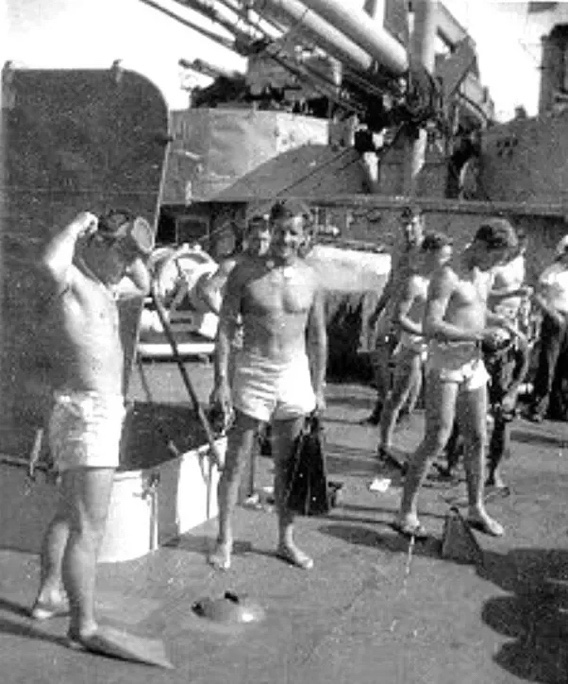
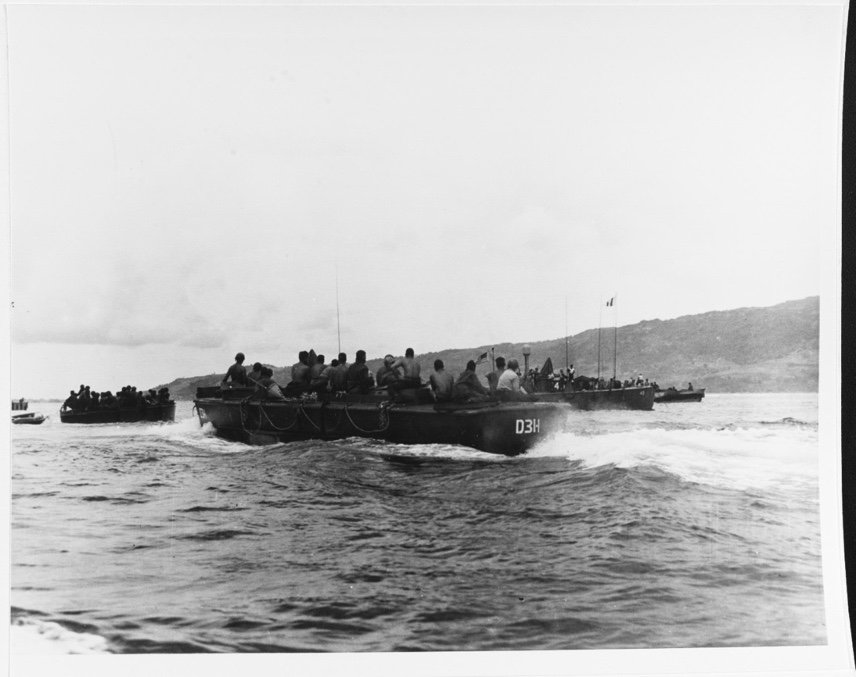
Draper Kauffman and his two Underwater Demolition Teams (5 and 7) left their cramped crew quarters on the APDs Gilmer and Brooks as the sun rose on June 14, D Day minus one, and began their part in the action, piling into four landing craft that arrived alongside the ships. Swimmers were assigned to survey the approach to a specific beach on each of the 36-foot-long LCPRs, which had sixteen swimmers on each vessel. The Japanese had not anticipated the sheer volume of preparation fires that would reach such a crescendo. They were also not expecting to see swimmers side stroking toward them as the sun rose, led by officers in vessels no more impressive than a motorized black mattress, puttering in via an electric motor toward the well-defended shore as the day broke.
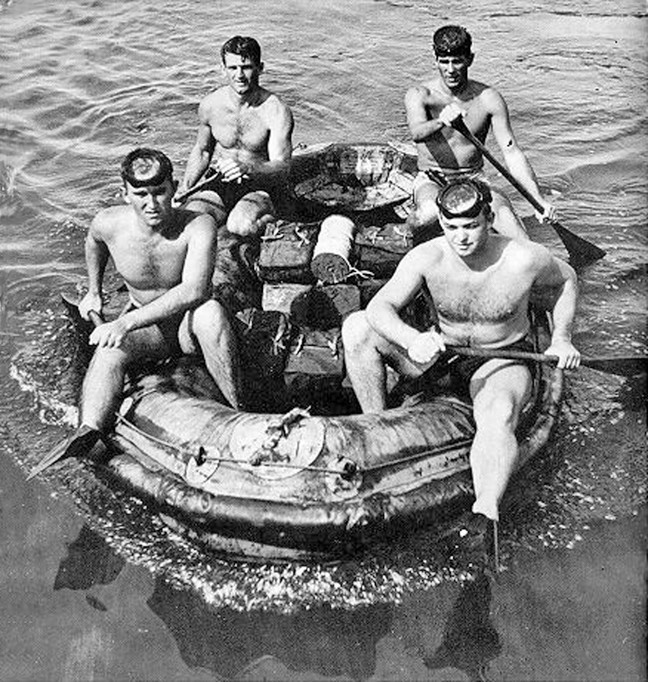
As is customary for Kauffman and his teams, they were only minimally outfitted, sporting trunks, swim shoes, a face mask, and a sheath knife. They didn’t have any fins or snorkeling equipment. Besides the buoy and reel, each pair was also equipped with an acrylic slate and a grease pencil for drawing on the water. Even though they had been trained how to use oxygen–beryllium chloride rebreathers, they did not have any on them at the time. The equipment was heavy and inconvenient. Most of Kauffman’s team leaders decided to ditch their bulky radios as well, in favor of a more rapid swim. To do this, they used a basic sidestroke known as the “invasion crawl,” which allowed them to swim across the reef and into the lagoon. Compared to an overhand crawl, it was less exhausting and produced less splash.
In Kauffman’s mind, they had resigned themselves to the fact that their chances of escaping with their lives were slim. Under Kauffman’s command, Team Five would reconnoiter the Red and Green beaches, while UDT 7 would investigate the Blue and Yellow beaches under Lieutenant Richard F. Burke’s command. He kept his third team, UDT 6, in reserve, anticipating that his casualties would be as high as fifty percent, and he was prepared for the worst. As the LCPRs neared the reef, Japanese artillery shelled the area around the ships. The frogmen began rolling over the gunwales into the water, one pair every twenty-five yards until they reached the water’s surface. A red buoy was dropped by each duo, which was attached to the point marking the seaward beginning of their route to aid them in orienting themselves for the return. When enemy shell splashes began walking in the direction of the buoys, Team 7 executive Sidney Robbins ordered the crews to stop putting them in place immediately. He also made the decision right there and then to discontinue the string reconnaissance technique that Kauffman had instructed them in. He knew it would not be easy, and he was right. The less they had to carry, the better their chances of surviving the harrowing experience that lay ahead. Kauffman and his companion, a frogman named Page, started their puttering daylight run toward the beach shortly after 8:30 a.m. by turning on their small outboard electric motor.
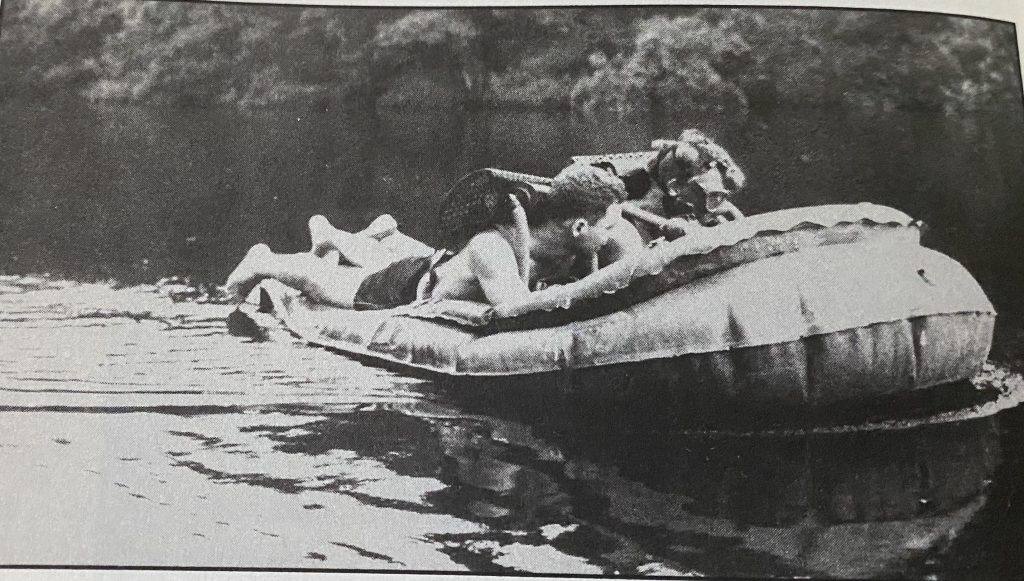
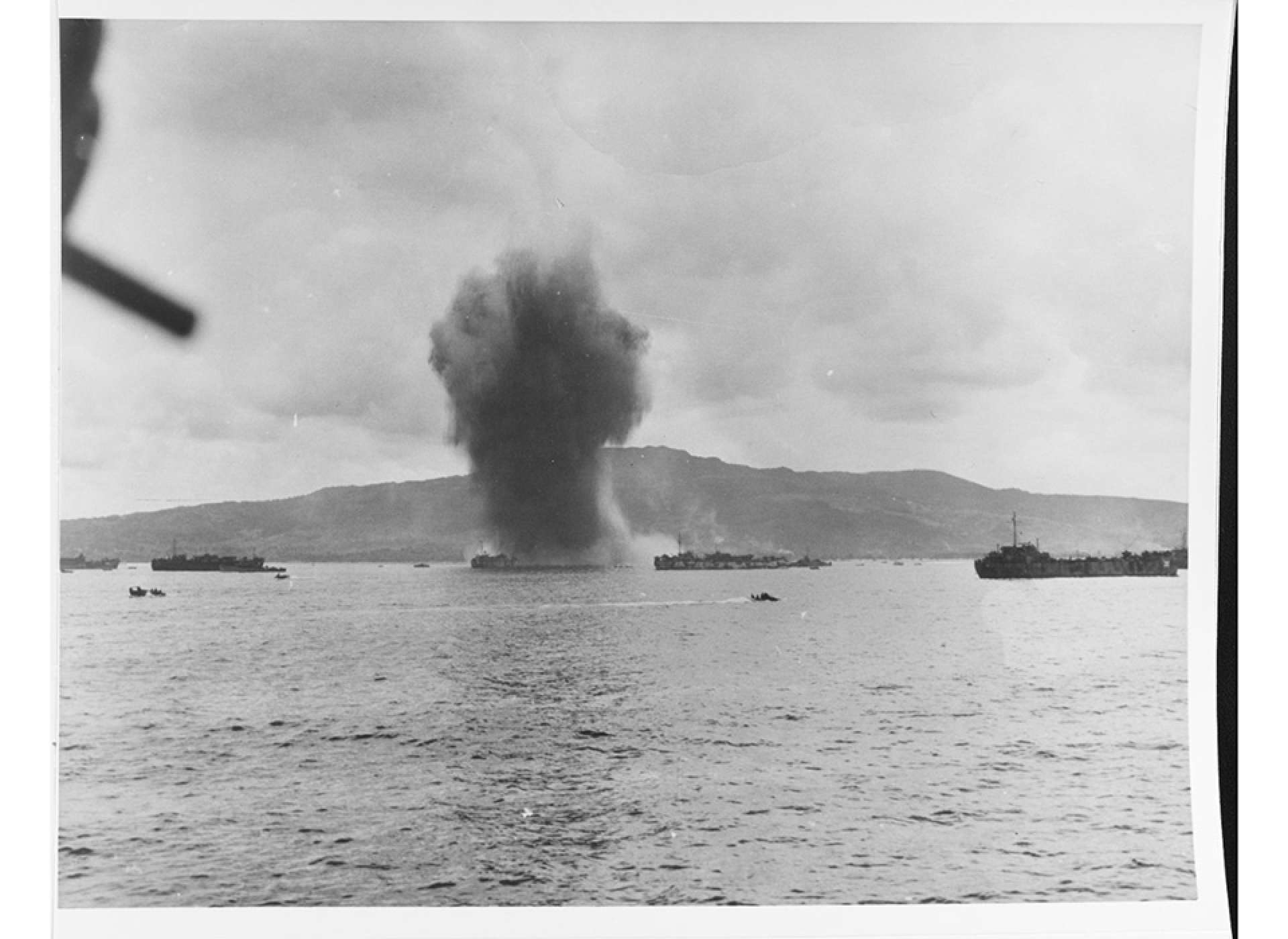
Kauffman wanted his team leaders to maintain some semblance of awareness and potential control over their eight dispersed swimming pairs, so he provided them with motorized mattresses as their starting point. According to Kauffman, he would later call them “the dumbest idea I’d had in a long time,” according to Kauffman. “They were the most magnificent targets,” says the author. He’d been told about the large sharks and man-eating giant clams that were rumored to be in the area during briefings. However, he had advised his men not to take any precautions against them because he believed that more significant threats lay ahead, including Japanese coastal guns, beach pillboxes, and mortars, to name a few examples. Kauffman was forced to abandon his floating mattress experiment due to the sheer volume of incoming fire. As soon as he realized that the morning naval bombardment had done little to aid him in his endeavor, the writing was on the wall for that bizarre scheme. Kelly Turner would be disappointed to discover that his orders to his fire-support ships—target the beachfront first, then slowly move fire inland—had gone largely unheeded by the boats. The first salvos were fired too far inland to neutralize the coastal defenses effectively. Because they could not maintain direct radio contact with the bombardment ships, the frogmen were unprepared to deal with unexpected events. Upon arriving at Blue Beach One, Sid Robbins of Team Seven was taken aback by discovering that mortar teams had set up a firing position out of a cluster of a dozen Japanese barges moored to the pier. Because of the intensity of the barrage that was rained down upon them, Robbins’ swimmers could not recognize Yellow Beach One in the first place.
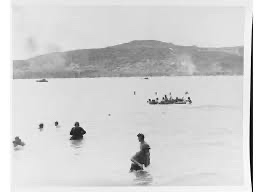
After several failed attempts, this detachment returned to the Brooks with only two men seriously injured, which seemed to be a small number considering the circumstances. When all of his swimmers returned to the reef, Kauffman informed them that their landing craft would be waiting for them. It turned out to be an unpopular order, as two of his men went missing due to the demand. But, with mortars dropping around his boats, he didn’t want to risk losing any of the critical information he had gathered about the reef and the lagoon. It was also discovered that the route the Marines had envisioned for their waterproofed tanks, which were to be paddled ashore in the wake of the assault waves, would lead them straight into disaster. The road was potholed, and the water was too deep for these improvised amtracks, which were never intended to swim and drowned quickly due to their lack of design. A smooth path that crossed the lagoon in front of Red Beach Three and led diagonally onto Green Two, Kauffman believed he had discovered a better way to get there. After work that night, Kauffman had his most skilled draftsmen create charts based on the lagoon soundings. Commanders of amtrac and tank battalions and transport groups would have hand-drawn maps delivered to them when the invasion force arrived before the next sunrise, allowing them to plan their maneuvers.
Admiral Hill summoned Kauffman to General Watson’s quarters at some point in the evening. “What in the hell is this I’m hearing about your changing the route for my tanks?” the Second Marine Division’s commanding officer inquired. He had wanted them to swim across Red Two to get to the other side.

“General, they’re never going to get through there,” Kauffman assured him, pointing to his maps.

“All right, that’s fine. But you’re going to be the one who leads that first tank in, and you’d better make damn sure that every single one of them gets in safely and doesn’t drown.”
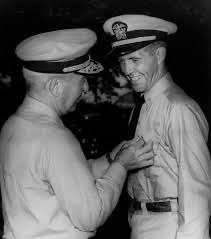
After reading Kauffman’s report and taking into consideration his calm, unwavering confidence, Kelly Turner began to believe that the idea of sending twenty thousand Marines ashore in these newfangled swamp buggies might work out after all.

RubLine Marketing Adds Stephany to Growing Team

March 13th, 2022

RubLine Marketing announces Nathan Stephany as the growing agency’s latest hire. With a strong background in videography and marketing, Stephany will use his skills and expertise to serve RubLine’s roster of clients as Creative Content Coordinator. His role will include producing photo and video assets, creating compelling brand messaging, and developing visual marketing strategies for a variety of clients.

“We’re excited to add Nathan to our talented team and see him collaborate on innovative projects for our clients,” says Chase Rohlfsen, President at RubLine Marketing. “His impressive background and skill set are the perfect complement to the RubLine family.”

Stephany is a graduate of Wartburg College with a degree in journalism and communications. He previously worked as a directr for Knight Vision Films and assisted in marketing efforts for his alma mater.

rublinemarketing.com

You Never Know Where They’ll Show Up

March 13th, 2022

Kadri Clothing T-shirt Design Contest

March 12th, 2022

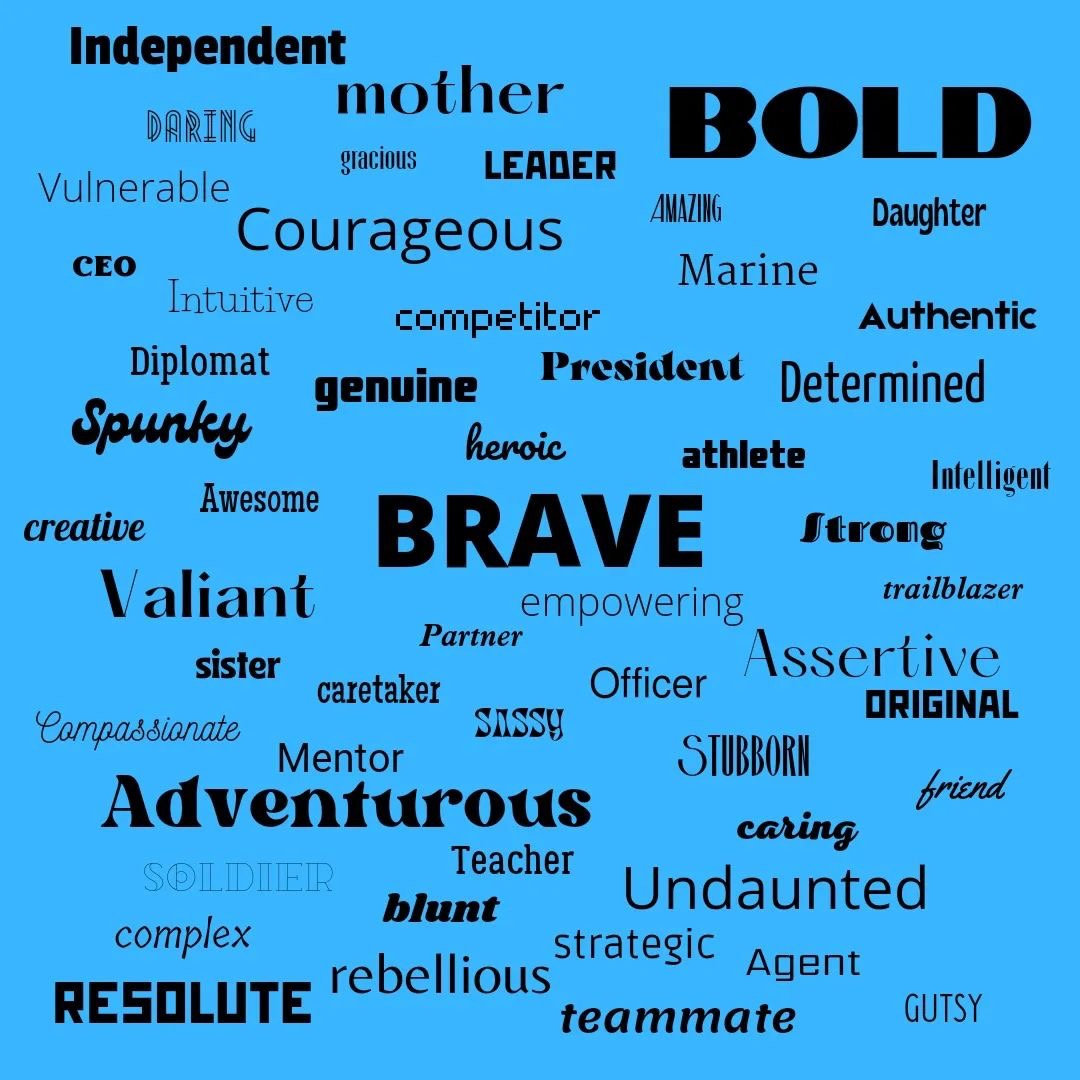
How do you define strength? In today’s society, we tend to use a very male-oriented view of strength and power–physical might, physical ability, physical prowess. We say people are strong based on how much they can lift, the number of pullups performed, or athletic ability.

But what about other definitions of strength and power? Is a mother who works a full time job during the day, takes care of the household at night without losing her shit, strong? Is a young woman driven by her ambitions to succeed in a male-oriented profession while ignoring the naysayers and battling cultural norms, powerful?

Show us your definition of women’s strength and power. Design an original graphic concept and submit by March 31. Entries will be showcased in April; the winner will be selected by social media votes.

The design will be used as a limited-run t-shirt, available for purchase on the website. The winner will also receive Valkyrie Field Pants.

Send designs via DM to the IG account, but we’d prefer an email to info@kadriclothing.com

Subject for email should be: Art Contest Submission

Happy designing!

S.O.Tech In The Movies: No Time To Die

March 12th, 2022

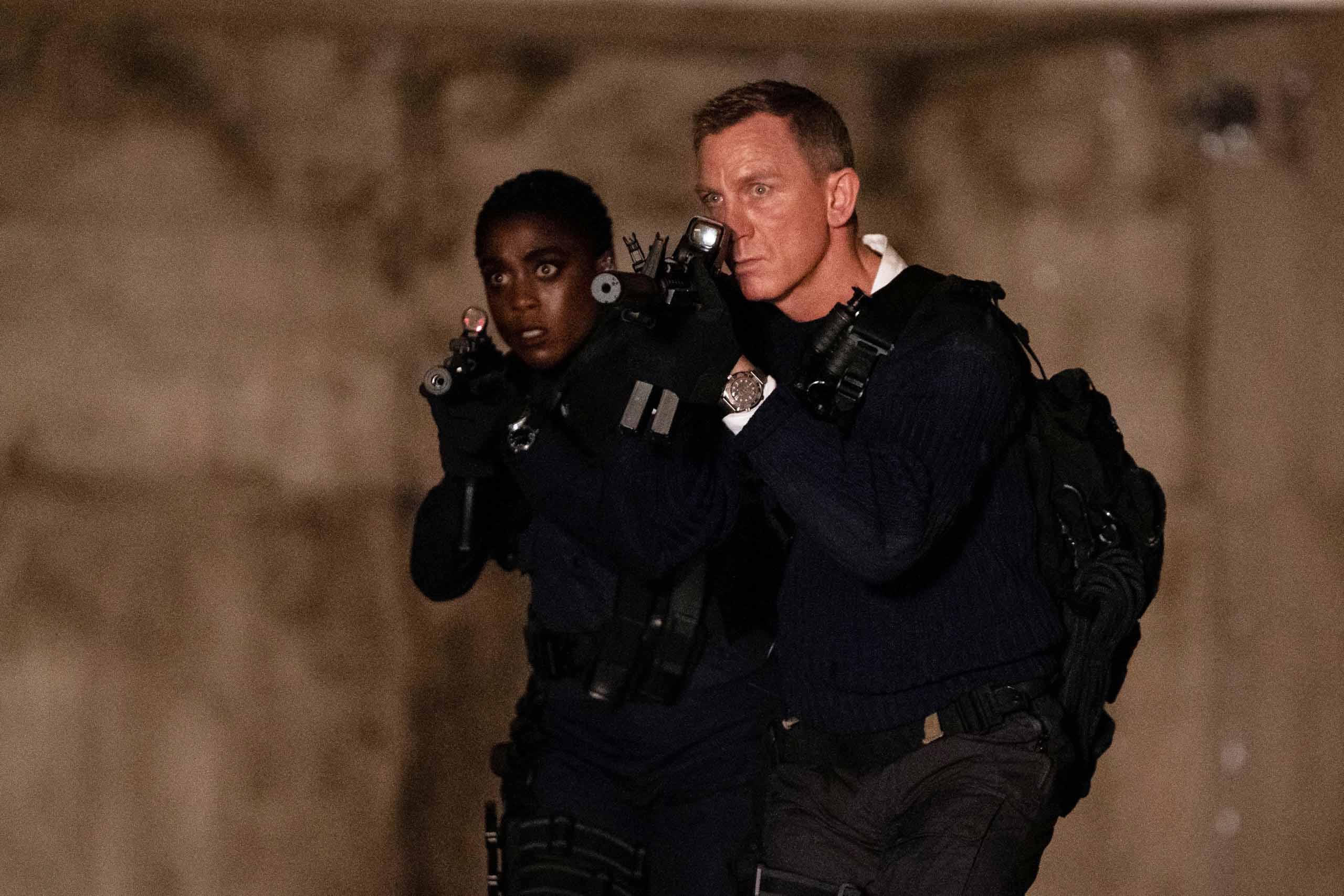
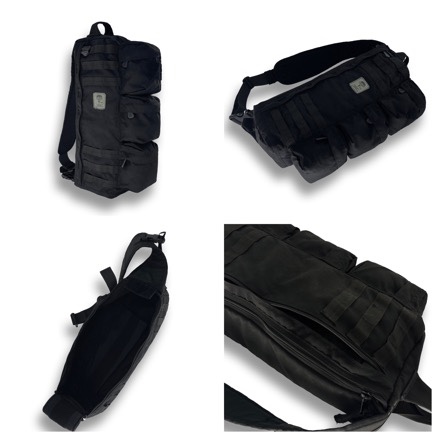
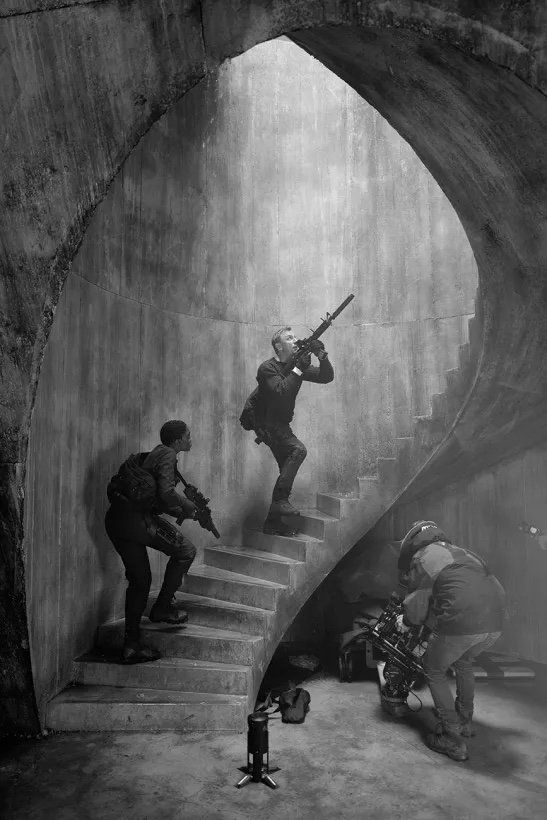
S.O.Tech has a 25 year history of supplying custom sewn tactical gear for some of Hollywood’s biggest movies. But there is something about a James Bond film that sets it apart and makes you feel like you are part of a dynasty. Just imagine watching the latest and possibly the best Bond film of the series and realizing that your bag is slung on both Daniel Craig’s (James Bond) and Lashana Lynch’s (Nomi) characters bodies in the climax battle scene of the movie! And not only do the pair of black S.O.Tech Go Bags look Bond-sexy, but the characters are using them exactly as they are designed. They are cross slung and Bond rotates the bag one handed to expose the single pull open zipper to draw his explosive charges, reverse slinging it as he goes. And then when he and 007 expend their last charges, one pinch to the release buckle and the SGBs slide off their shoulders to the floor. We thought that Josh Duhamel did our go bag right in the first Transformers movie, but nothing beats Bond destroying the lair of the Arch Villain of Chaos drawing from your go-bag.

We originally designed the S.O.Tech Go Bag with a group of superstars of the Tier 1 community. As always, we keep their identities close-hold, but the idea man’s initials are encapsulated in the product code. The wanted a survival bag for ammo, chow, radio batteries and SERE items, but they needed something that would fit in confined spaces like the Hi Lux, up-armoreds, and Little Birds and Black Hawks. The tubular design slid between the seats and when it came time to bail, one arm through the sling and it was out the door with you. And with inward facing zippers, it protected the contents while making them easily accessible pulled to the front so you could access while on the move. We have modified the bag into half a dozen different configurations including clandestine weapon carriers, camera and commo carriers, and surveillance technical packs. So ending up in a Bond move is an appropriate capital achievement for this workhorse design.

When James Bond and Nomi are both wearing my S.O.Tech Go Bag and they deploy their demolitions from the sling the way I designed it — I think we have finally achieved cinematic perfection in the world.

For decades we have custom sewn prop gear for film productions through ISS and HPR prop houses, but “No Time to Die” came to us through our friends and representatives in England and Denmark, Ian from Tactical Kit UK and Kim Starke from Gear Up Tactical. Needless to say we are truly appreciative of their choices and referrals.


To commemorate S.O.Tech’s Original Go Bag in No Time To Die we are producing a limited run of the original model as seen in the film. Bags are currently in production and scheduled to ship by March 31st. You can order yours here.

www.sotechtactical.com

“Built to survive the world’s worst!”

USAF RED HORSE Restructures to Elevate Deployment Capabilities

March 12th, 2022

MALMSTROM AIR FORCE BASE, Mont. (AFNS) —

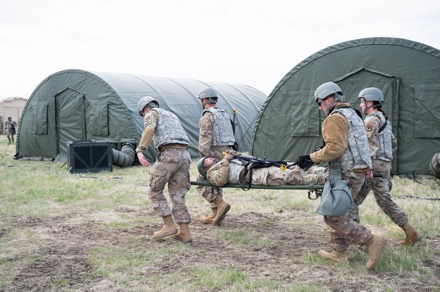
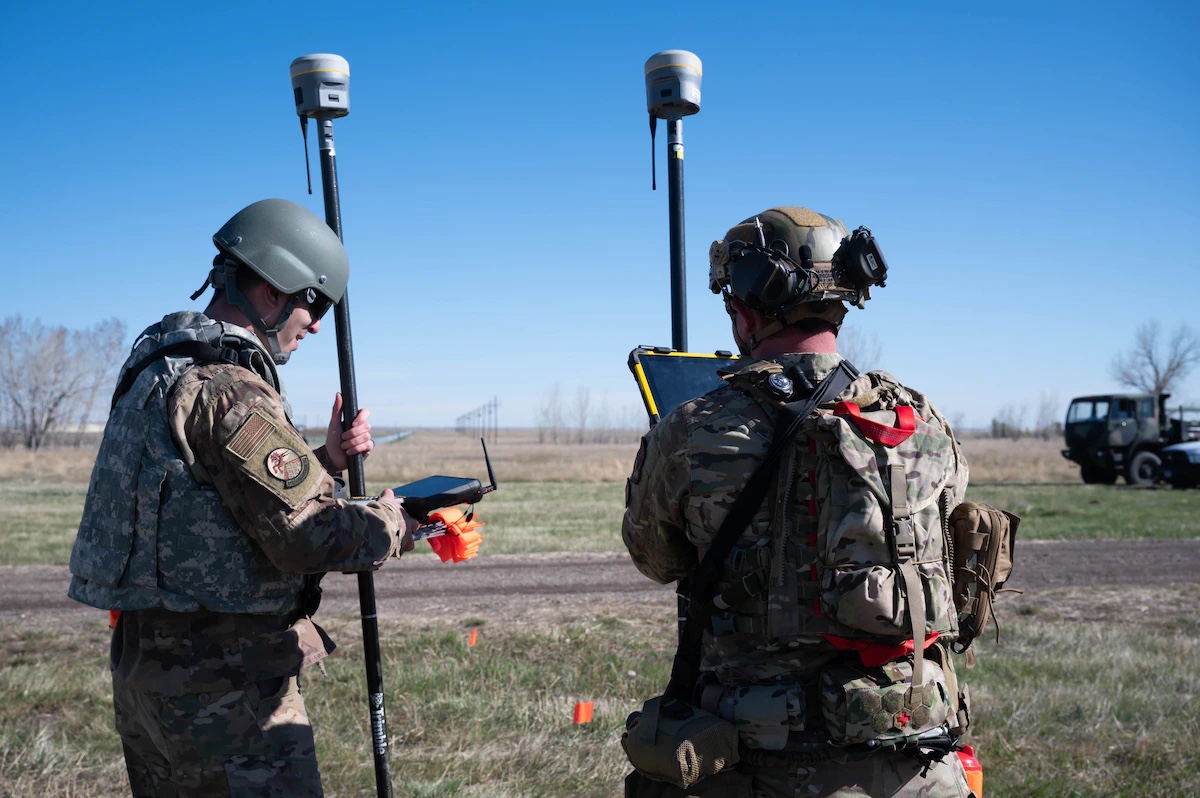
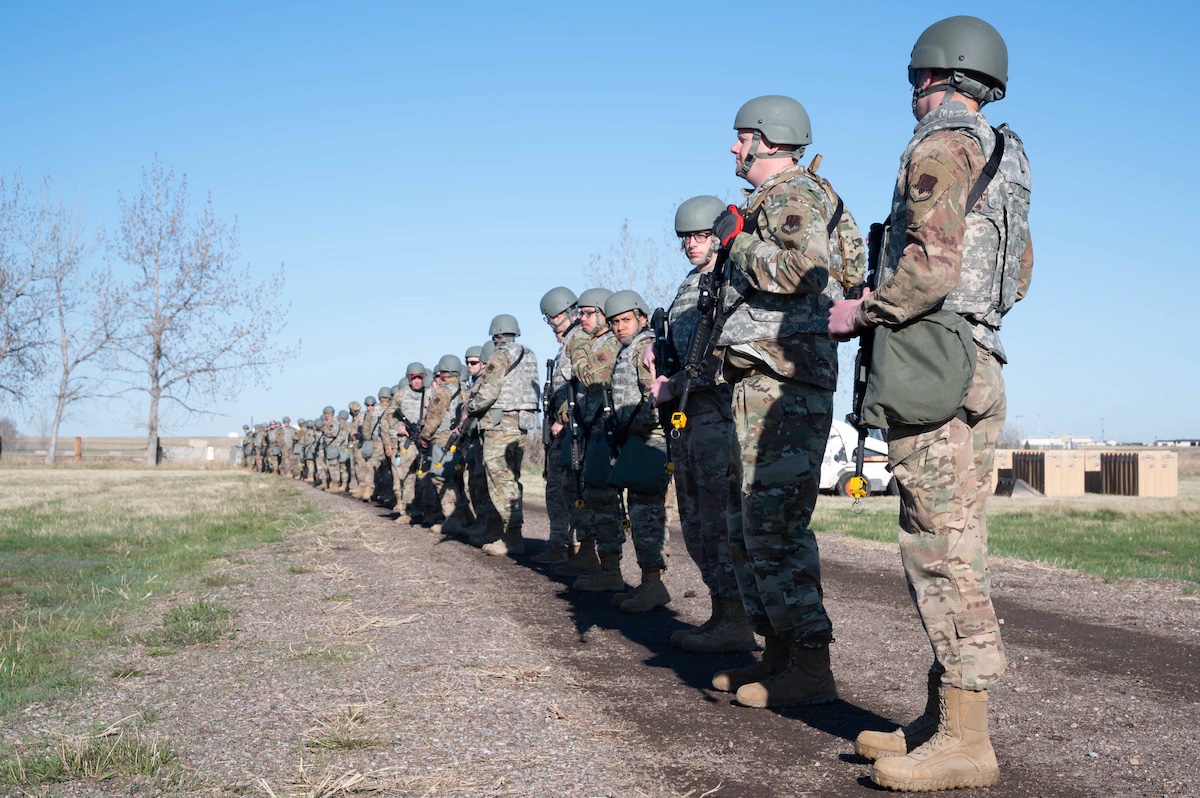
When the 819th RED HORSE Squadron was presented with the challenge of accelerating change to increase deployment capabilities across their enterprise, they responded with an innovation that will completely change the way RED HORSE trains at home and how they deploy overseas.

“One of the big objectives is to make sure we are ready to confront the challenges of the future,” said Lt. Col. Javier Velazquez, 819th RHS commander. “The only way we can possibly do that is by building our teams in garrison the same way that they are going to be deployed and working together.”


RED HORSE stands for Rapid Engineer Deployable, Heavy Operational Repair Squadron, Engineer. They are self-sufficient and mobile squadrons capable of rapid response and independent operations in remote environments worldwide. In addition to civil engineers, the squadron includes Airmen from more than 30 career fields.

Over the last several decades, RED HORSE squadrons organized themselves by those career fields. They spent time primarily with people who do the same job while they were in garrison and only built deployment teams when tasked to mobilize. This meant that when a RED HORSE team deployed, they would have to build camaraderie and learn to trust one another in the deployed environment.

“Nowadays we don’t have that luxury,” Velazquez said. “We need to be sure that we can hit the ground running on day one and that’s exactly what we’re trying to achieve with our new structure.”

Now, the squadrons will be restructured into teams based on their ability to fulfill a specific purpose. These teams include horizontal construction, demolition and quarry, vertical construction, expeditionary engineering, site assessment and support functions.

This means if a combatant commander needs, for example, an airfield built at their location, RED HORSE would send them a horizontal construction team that includes all the right people, tools and assets necessary to complete that task.

“By putting these teams together, we have the ability to not only know each other…but be organized in a way that is capabilities-based,” said Chief Master Sgt. Nathan Laidlaw, 819th RHS senior enlisted leader. “When the combatant commander comes down and says, ‘we need a water well drilled,’ we press the button and they’re there. They are organized, trained, equipped and ready to go.”

The squadron’s leadership emphasized that the idea is to spend as much time at home as possible working together, solving problems and maintaining their readiness.

“This new construct really focuses us on that capability as well as readiness,” said Maj. Keegan Vaira, 819th RHS director of operations. “In the previous way we were doing business, that wasn’t at the forefront of everyone’s mind and under our new structure, a huge piece of what these teams are doing every day is making sure they are ready to execute that mission.”

“Everyone can get ready at once,” said Senior Master Sgt. Serena Goethe, 819th RHS first sergeant. “They all got their shots at the same time, they all did their firing at the same time, they did their (computer-based trainings) at the same time so they knew they were all good to go at once.”

After the initial planning process, the 819th RHS completed the transformation in about five months from August to December 2021.

“At the beginning of any change it’s difficult and it’s a lot of unknowns,” Laidlaw said. “In that initial storming change of this transformation I would say it was a little uneasy to be honest and it should have been because we’re changing the way we’ve done business.

“Once (the Airmen) started buying in and seeing the process and understanding where we were going and seeing the benefits it provided them, the majority have come on board and have been very positive about it.”

Goethe added that while Airmen will spend most of their time working with the teams in their new flights, they will have the opportunity to work with others within their specific career fields for training and mentorship.

“I’m glad to say that the 819th is taking the lead for the entire enterprise with the support of the 800th RED HORSE Group,” Velazquez said.

The 819th RHS is the first RED HORSE squadron to complete the restructuring.

“The cumulative plan came almost exclusively from the 819th” Laidlaw said. “This unit went through a lot to come up with this concept and they deserve the credit for it.”

By Heather Heiney, 341st Missile Wing Public Affairs

HENSOLDT Supplies Complete Mission System Solution for Aerial Training and ISR Services

March 11th, 2022

Pre-integration of the mission system facilitates installation in aircraft

Immenstaad/Germany, March 9th, 2022 – Sensor solutions provider HENSOLDT has received an order from aerial services specialist QinetiQ GmbH, Mönchengladbach, to supply two complete systems for electro-optical reconnaissance. The reconnaissance system consists of the ARGOS-II HD electro-optical infrared system (EO/IR) and the EuroNAV control and evaluation software. These core elements will be pre-integrated by HENSOLDT and scaffolded by QinetiQ for ISR Services and training of national and international JTAC customers and operators with the DA62MPP aircraft manufactured by Diamond Aircrafts Industries, Austria.

“The pre-integration of the mission system by HENSOLDT facilitates the functional testing of the system before integration into the aircraft and thereby significantly reduces the risks in such a project at an extremely early stage. In addition, certification activities can be brought forward. These were decisive points for QinetiQ to commission us,” says Frank Martin, Senior Director Sales for Integrated Airborne Solutions.

The mission system with the product name MissionGrid can be used on fixed-wing aircraft, helicopters and unmanned aerial vehicles. In addition to air and naval forces, it is used for border protection, search and rescue, maritime patrol, law enforcement and asset protection. The German Federal Police use it to combat smuggling, illicit trafficking and border security operations.

The reconnaissance system covers a range of up to 40 km and can detect ships as well as small inflatable boats or individual swimmers day and night as well as in bad weather. A thermal imaging camera records the images and transmits video and data in real time to base stations on the ground. The MissionGrid mission system can also be easily and modularly supplemented with the PrecISR reconnaissance radar, as well as the HENSOLDT self-protection equipment AMPS.

A virtual training facility also allows users on the installation to be trained “remotely” on the mission system via a secure internet connection.

Griffin Armament Announces The BUSHWHACKER 36 Universal Sound Suppressor

March 11th, 2022

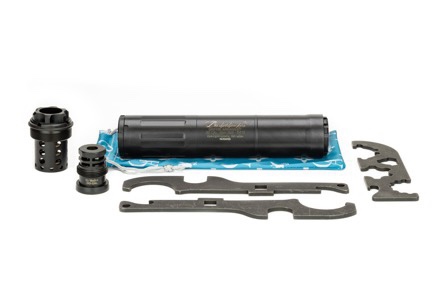
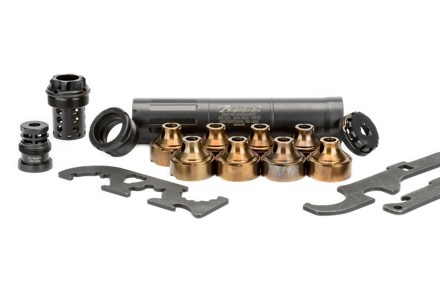
Watertown, WI, March 11, 2022 — After seventeen years of dedicated professional work and development in the sound suppressor market, Griffin Armament is proud to introduce the Bushwhacker® 36, a universal sound suppressor designed to maximize feature functionality, performance, and value with a vast selection of caliber compatibility.

The Bushwhacker’s durable 1.375×24 threaded 17-4 stainless steel tube chassis, is supplied with a Griffin Plan-A Taper Mount adapter, Taper Mount muzzle device, and a booster piston housing. These factory inclusions allow the Bushwhacker to quickly and easily be configured for centerfire rifle or handgun use. Its .36 caliber diameter provides end users with the most caliber flexibility possible, while retaining quality sound suppression. A vast range of rifle calibers are covered by this suppressor such as .338LM, .350 Legend, .308 win, 300win mag, 7.62×39, 300BLK and many others. The suppressor also can be fitted to a 9mm pistol offering large flexibility. Additionally, .338 caliber, .30 caliber and .22 caliber Ratchet-LOK™ front caps can be interfaced with the Bushwhacker 36 further improving sound performance with specific calibers.

Sound suppressors can increase in weight and reduce in internal volume, losing performance over time from carbon, lead, and copper accumulation. The Bushwhacker® 36 features Griffin Armament’s unique, patented Ratchet-LOK™ end cap which provides the user with a robust mechanism to disassemble their suppressor easily for periodic cleaning and maintenance. This consumer demanded technology and the included tools ensure that your investment can be reset to factory weight and sound performance specifications with minor preventative maintenance.

The Bushwhacker® 36 also features Griffin’s patented ECO-FLOW™ baffle technology. These baffles are engineered to provide balanced sound performance on a host of popular calibers and firearms while providing increased flow, reduced back pressure and an overall optimized experience. Impressive sound performance across a broad spectrum of calibers was the goal. This can be seen in Griffin’s popular sound testing videos. The 17-4 stainless tube, front cap and heat treated baffle stack put the Bushwhacker at 15 ounces in its Rifle configuration and 16.9 ounces in a pistol configuration.

Additional accessory support allows the Bushwhacker to be mounted to a myriad of hosts via the 3-lug QD kit, Plan-A XL, direct thread adapters, the 1.375×24 A2 adapter, as well as CAM-LOK®, EZ-LOK™, and DUAL-LOK™ systems.

Performance, Durability, and Versatility are hallmarks of the Griffin Armament brand. These qualities are embodied in the Bushwhacker® 36 and will ensure this universal sound suppressor remains a highly demanded product for years to come.

To find out more on Griffin Armament’s entire product line, please visit their website at www.GriffinArmament.com.