TYR Tactical

From Silk to Systems — How a 19th Century Textile Mill Became a Global Leader in Modern Protection

March 20th, 2026

What do silk threads and next-generation combat helmets have in common?

The answer starts in 1894, inside a small Pennsylvania silk mill that would eventually become one of the most influential protective equipment manufacturers in the world.

Gentex Corporation began as the Klots Throwing Company, producing silk fibers for different use cases. After a devastating factory fire, the company relocated to Carbondale, Pennsylvania — a move that set the stage for more than a century of reinvention.

During World War I, then operating as General Silk, the company became one of the world’s largest processors of silk, manufacturing cartridge bags for the U.S. military. In World War II, it pivoted again, producing cargo parachutes and protective containers, and experimenting with early composite materials that would shape its future.

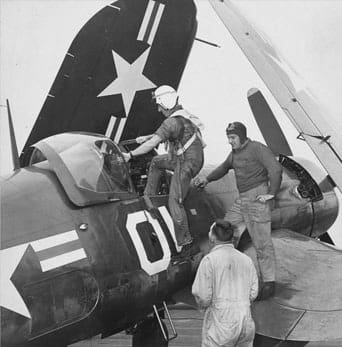
In 1948, leveraging those materials innovations, the company produced its first hard-shell pilot helmet for the U.S. Navy. That moment marked a defining shift from textiles to protection systems. By 1958, the company adopted the name Gentex and began building what would become a global portfolio of advanced helmet systems.

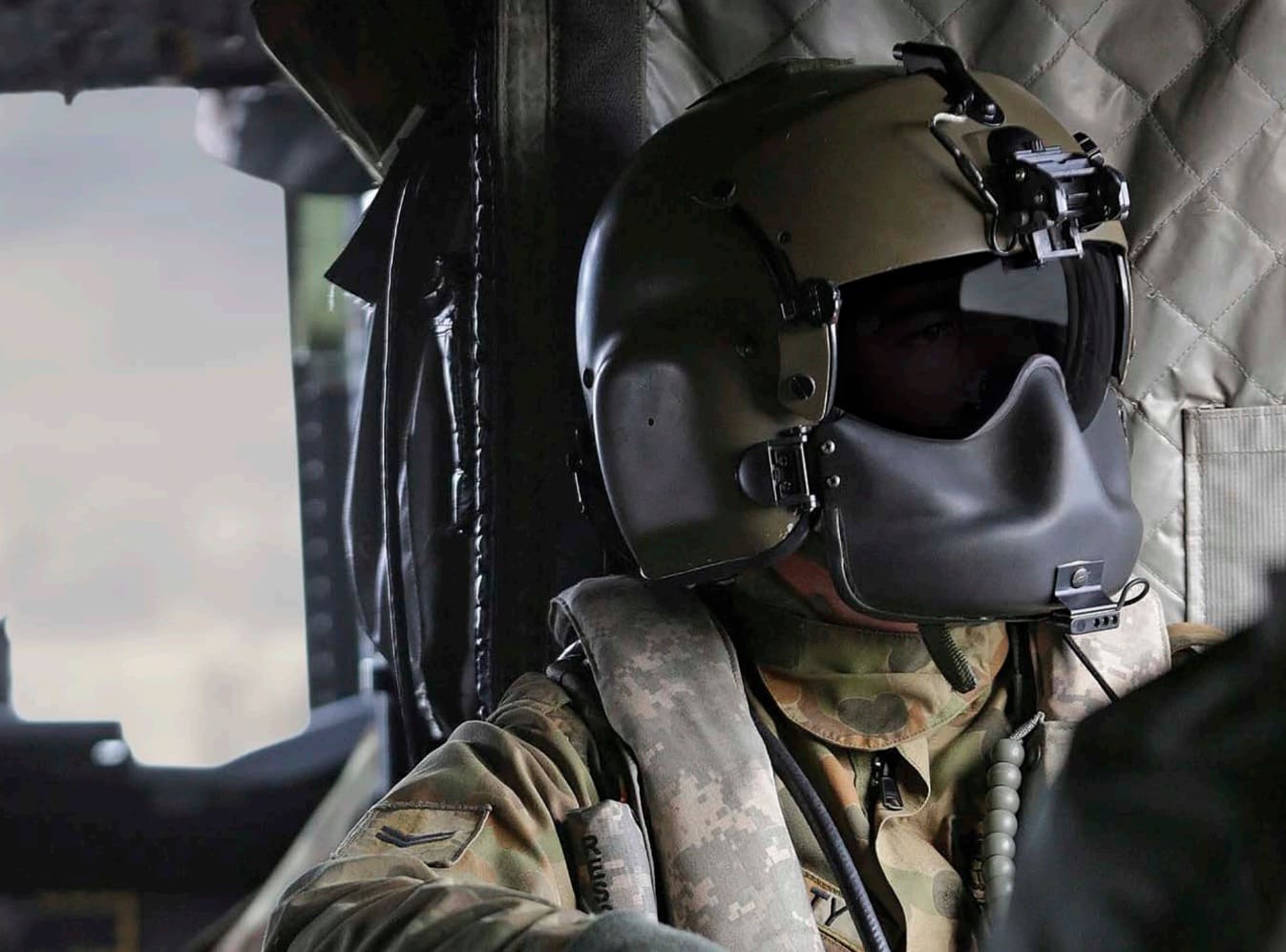
Over the decades, Gentex has helped transform the helmet from simple head protection into an integrated platform for situational awareness, combining communications, vision systems, respiratory protection, acoustics, optics, and advanced materials into mission-critical equipment used by military forces, emergency responders, and industrial professionals worldwide.

Today, the company’s products support global defense forces and aerospace programs, including advanced aircrew helmet systems and integrated soldier protection platforms, all engineered from the same Pennsylvania roots.

Why this story matters now

At a time when supply chains, domestic manufacturing, and defense innovation are under renewed scrutiny, Gentex represents a rare example of continuous American manufacturing evolution, a company that has reinvented itself across two world wars, the jet age, the space era, and today’s multi-domain battlefield.

From silk fibers to next-generation protective systems, it’s a 130-year story of material science, military partnership, and industrial resilience.

Learn more at Gentexcorp.com

FirstSpear Friday Focus: General Purpose Pockets: Small, Medium, & Large

March 20th, 2026

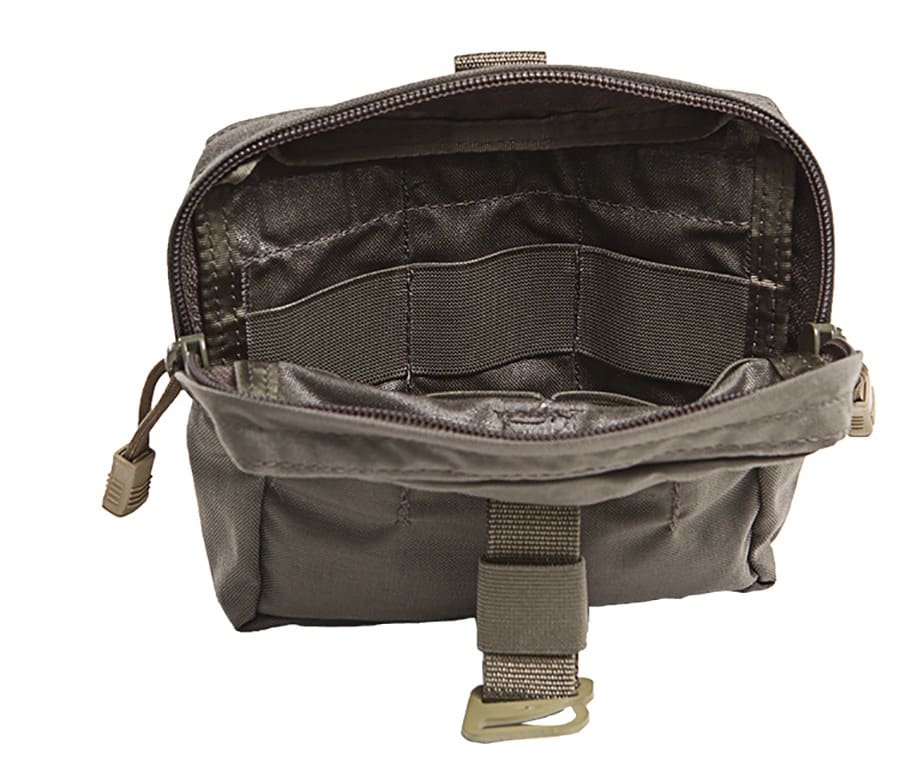
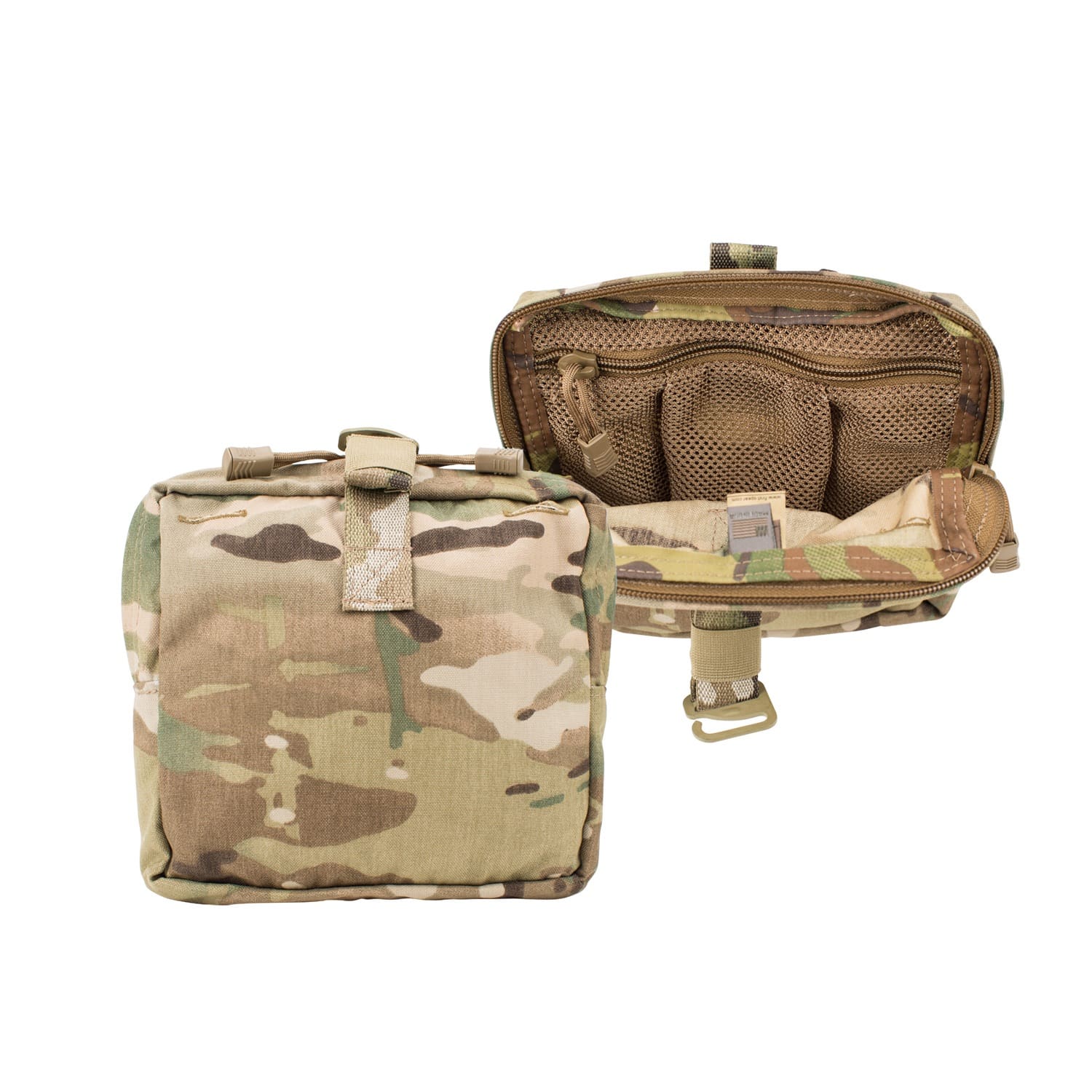
FirstSpear’s SMALL, MEDIUM, & LARGE GENERAL PURPOSE POCKETS deliver durable, mission-ready storage designed to organize essential equipment without adding unnecessary bulk. Available in three sizes, these pouches provide scalable capacity to support a wide range of operational requirements. Each pocket integrates seamlessly using FirstSpear’s 6/9 and 6/12 attachment technologies for secure mounting on plate carriers, chest rigs, and packs. Built from rugged materials and manufactured in the USA, our General Purpose Pockets are engineered for demanding military and law enforcement environments.

The GENERAL PURPOSE POCKET, SMALL offers a compact storage solution ideal for items such as cell phones, GPS units, or other small mission-essential tools. Its streamlined footprint maintains a low profile while providing rapid access through a durable dual-zipper closure.

The GENERAL PURPOSE POCKET, MEDIUM increases carrying capacity while maintaining a flat, efficient design. Internal elastic retention and loop-lined pockets allow users to organize gear and keep critical items secure and accessible. A dual-zipper closure with an integrated G-Hook provides additional retention when required.

The GENERAL PURPOSE POCKET, LARGE provides maximum storage in the series and is built to manage larger equipment or multiple items. Internal organization, including a zippered mesh compartment, improves visibility and equipment management in the field. Dual-zipper access and a G-Hook closure ensure gear stays secure during movement.

Choose the size that fits your mission and upgrade your kit with reliable, purpose-built storage today at First-Spear.com.

To request an estimate click image above or visit First-Spear.com/Request-For-Estimate. FirstSpear is the premier source for cutting-edge tactical gear for military, law enforcement and those who train. For more information visit First-Spear.com.

Senior Special Warfare Leaders Highlight Community’s Capabilities, Define Its Challenges

March 20th, 2026

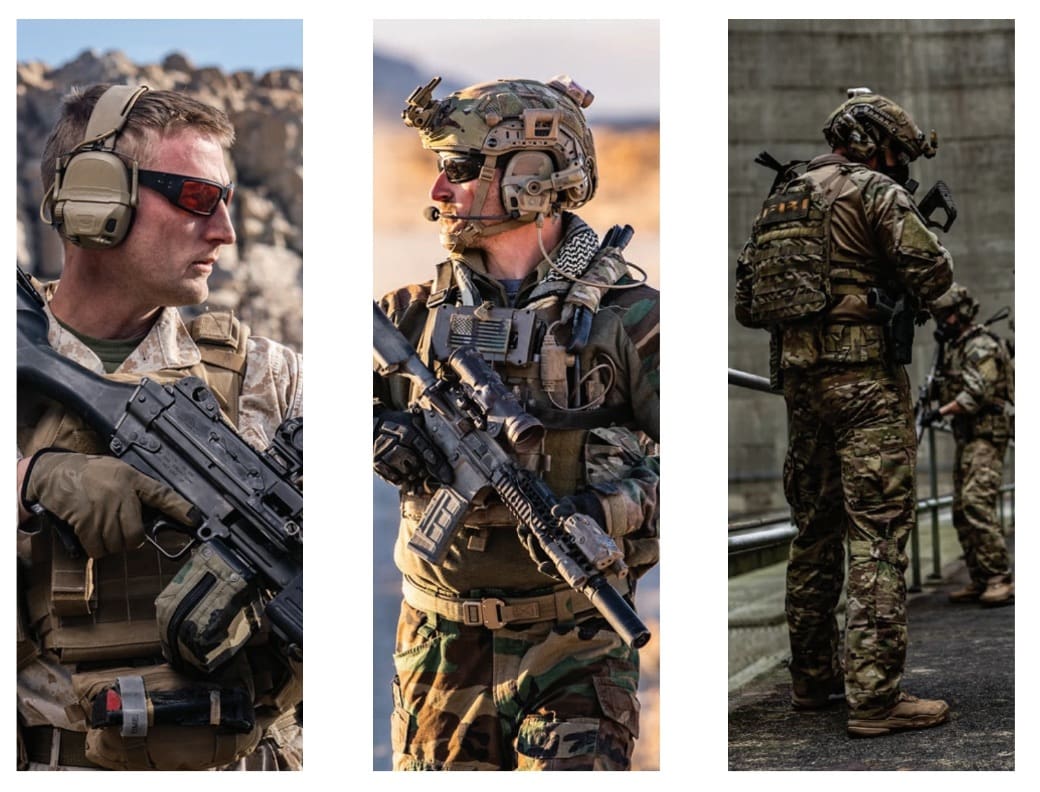
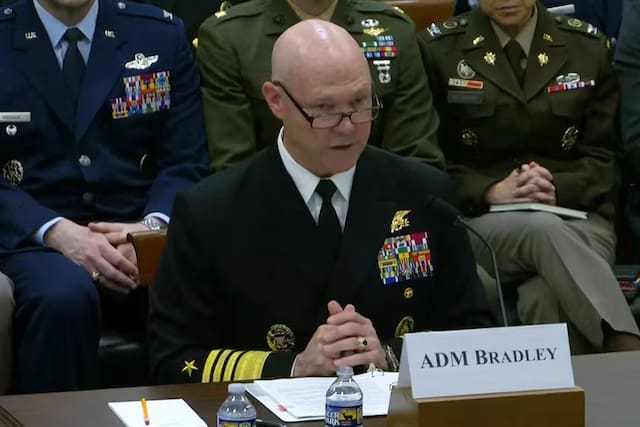
The principal civilian advisor to the U.S. secretary of war for all matters related to special operations forces and the most senior military SOF leader provided testimony at a House Armed Services Committee hearing on Capitol Hill today on the SOF community’s capabilities and challenges it faces ahead.

During the hearing, Derrick M. Anderson, assistant secretary of war for special operations and low-intensity conflict, and Navy Adm. Frank M. Bradley, head of U.S. Special Operations Command, explained how special operations forces are successfully countering U.S. adversaries overseas while comprising just 3% of the joint force and 2% of the War Department’s budget.  

“Today’s environment rewards forces that can operate persistently and decisively, often below the threshold of armed conflict, generating irregular effects by, through and with our allies and partners in order to produce a whole effect that is much greater than the sum of its parts — your special operations forces provide that capability,” Bradley explained during his remarks. 

As an example of this, Anderson pointed out that every major U.S. military operation has a SOF component to it. 

“From the Western Hemisphere, across the Indo-Pacific, to the Middle East, Africa, Europe and beyond, SOF has been decisive in defending the homeland, deterring China and enabling our partners and allies,” Anderson said. 

Bradley concurred with that statement, adding that the mission is not accomplished by technology and equipment alone. 

“[Rather,] it is executed by the most decisive advantage that we have: our people,” he said. 

Bradley added that the SOF community is strong and getting stronger, empowered by a culture of meritocracy and supported by programs committed to the preservation of SOF personnel and their families.  

During testimony, both leaders explained how building strong partnerships — both between the SOF community and the branches of the joint force and partners and allies around the world — are key to SOF success. 

“When we talk about the military department-to-department relationships, Adm. Bradley and I are 100% working with the other departments not only to give our lessons learned to the Army, the Navy [and] the Air Force, so that their acquisition processes get better, but to learn where [SOF] can get better,” Anderson told committee members. 

Bradley said there are presently 6,500 U.S. SOF operators and enablers deployed in about 80 different countries working to build, maintain and sustain generational partnerships and relationships.

He further explained that such relationships are key to countering influence operations that our adversaries are conducting to prey upon our allies and partners with malign behavior designed to gain unwarned access and leverage over them. 

“Our ability to illuminate that malign behavior, and then to pass it and make our partners aware of it — many times through diplomatic channels, but sometimes directly, mil[itary]-to-mil[itary], security service-to-security service — is a critical way to be able to help undermine our adversaries’ actions [overseas],” Bradley said. 

When asked about the top three challenges Socom currently faces this fiscal year, Bradley said that the ability to project force into increasingly contested environment, where our adversaries pose threats to the U.S., is at the top of the list. 

“Our first priority is always to maintain readiness for the current threats that are out there. Crisis response is that top priority for us being able to respond agilely to wherever [the crisis] might present,” Bradley said, adding that demands for SOF crisis response have increased 300% over the last five years. 

The second challenge, he said, is to take advantage of the cyber and virtual domain, which he said are critical maneuver spaces. 

“Another aspect of the rapidly evolving, changing character of warfare is the emergence of abundant, lethal autonomy. And yes, that is a threat that we will have to contend with, but it’s also one we can leverage,” Bradley said. 

“And finally … our people must continue to be our foundation, ensuring they are trained, ready, supported and educated for the future,” he said of the third challenge Socom is most focused on this year. 

Looking ahead, Anderson and Bradley said that SOF’s transformation and modernization are key to future success. 

“SOF needs sustained partnership, predictable resourcing and continued modernization,” Anderson told the committee, adding that congressional support of the SOF community is greatly appreciated. 

“SOF was purpose built for this era of competition, and we can provide an instant, indispensable asymmetric advantage for the joint force and the nation,” Bradley told the committee.

“And with your continued support, we will meet today’s missions while transforming to ensure that we are ready for the challenges of tomorrow,” he added.  

Watch the video of the testimony here.

By Matthew Olay, Pentagon News

DroneShield Expands Radar Interoperability with Robin Radar Systems

March 19th, 2026

Sydney, Australia – 18 March 2026DroneShield (ASX:DRO), a global leader in counter-drone technology, today announced a partnership with Robin Radar Systems, strengthening advanced radar technologies to DroneShield’s growing sensor ecosystem. The interoperability expands radar options available to customers, strengthening layered airspace awareness across defense, critical infrastructure, and public safety environments.

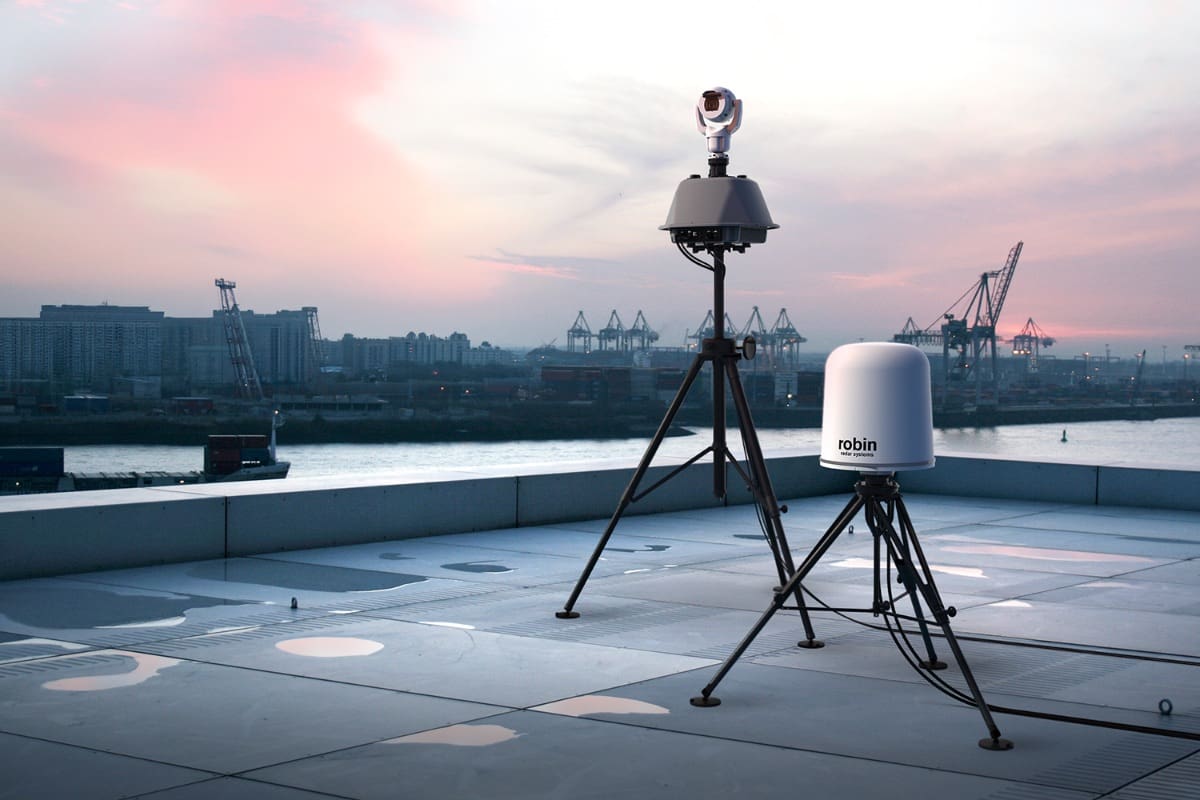
Robin Radar Systems is recognized for its 360°, 3D radar technology designed to detect and track small airborne objects, including drones. Its radars are engineered to deliver reliable detection and classification performance across complex environments.

Image: Sample configuration of DroneShield’s DroneSentry layered defense with Robin Radar Systems

Expanding the Sensor Marketplace for Operators
DroneShield’s approach to counter-UAS is intentionally ecosystem-led. Rather than offering a closed or static solution, the company has invested in building a scalable marketplace of interoperable third-party sensors. This model gives operators the flexibility to select the right sensing technologies for their specific environment, threat profile, and operational constraints, both today and as requirements evolve.

By adding Robin Radar Systems to its ecosystem, DroneShield continues to expand the options available to customers seeking radar-based detection as part of a layered CUAS deployment. Radar can play a critical role in detecting and tracking airborne objects across wide areas and in challenging conditions, supporting persistent awareness and resilience.

At the center of this ecosystem is DroneShield’s DroneSentry-C2 powered by SensorFusionAI, which combines inputs from multiple sensor types to create a consolidated operational picture that reduces ambiguity and enhances decision confidence.

“Operators need systems that adapt to their mission, not the other way around,” said Angus Bean, DroneShield’s Chief Product Officer. “By partnering with Robin Radar Systems and expanding our sensor marketplace, we give customers more freedom to design their airspace security architecture, while SensorFusionAI ensures that all sensor inputs are fused into insights that support decisive action.”

Image: DroneShield’s DroneSentry-C2 brings together multiple sensors for a clear, single operating picture

Designed for Real-World Operations
“At Robin, we see ourselves as a new generation radar company – fast, adaptive, and built for integration. Our technology is designed to deliver seamless performance within broader security architectures. We’re pleased to be partnering with DroneShield to combine our market-leading IRIS 3D radar with their CUAS platform, enabling smarter, layered airspace protection worldwide,” said Marcel Verdonk, Robin Radar’s Chief Commercial Officer.

Robin Radar Systems brings decades of radar science and innovation to this partnership, delivering systems that are engineered for accuracy and optimized for modern CUAS challenges. This partnership ensures that operators no longer need to trade coverage for clarity. By combining complementary sensing technologies into a single, AI-enhanced platform, organizations can achieve both scale and understanding without increasing complexity.

Defence Investment Agency Awards Contract to Replace Current Canadian Armed Forces Assault Rifles

March 19th, 2026

March 19, 2026 – Kitchener, Ontario       

The Government of Canada is committed to rebuilding, rearming and reinvesting in the Canadian Armed Forces (CAF) to ensure they receive the equipment they need to achieve mission success and protect Canadians.
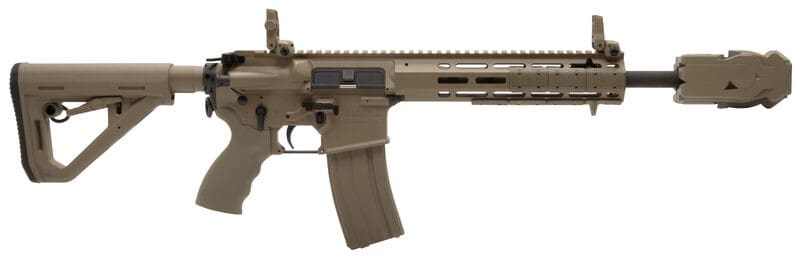
Today, the Honourable Stephen Fuhr, Secretary of State (Defence Procurement), and the Minister of National Defence, the Honourable David J. McGuinty, announced that the Defence Investment Agency has awarded a contract to Colt Canada of Kitchener, Ontario, to acquire up to 65,402 assault rifle systems under the Canadian Modular Assault Rifle (CMAR) initiative. By awarding this contract to Colt Canada, the Government of Canada is reinforcing the recently announced Defence Industrial Strategy and its commitment to invest in Canadian innovation.
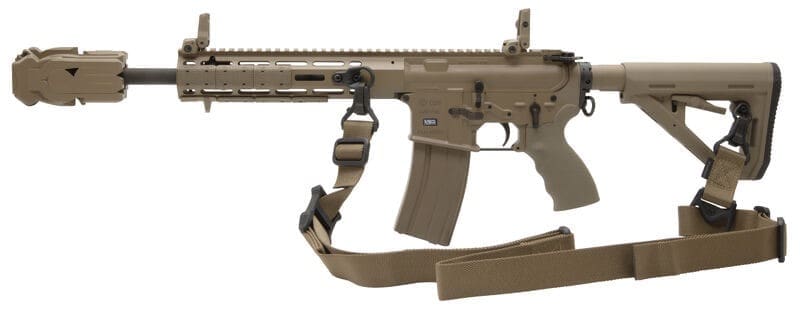
The CMAR project will be delivered through 2 phases:

Phase 1 includes procuring 30,000 General Service (GS) rifles over a three-year period. The estimated value of this initial phase is approximately $307 million, including applicable taxes.

Phase 2, which is expected to begin in year four under an optional provision, will include procuring the remaining 19,207 GS rifles, 16,195 Full Spectrum (FS) rifles, as well as associated ancillaries.

This contract will provide a modern replacement for the current C7/C8 assault rifle fleet, which has been in service for more than 35 years. The new rifles will enhance the awareness, protection, and reliability of deployed CAF members. The project also includes system integration and engineering support.

The investment will bolster Canada’s defence industrial base for years to come, creating good?paying jobs and contributing roughly $10 million annually to Canada’s GDP over the next five years. Colt Canada’s commitment to include at least 80% Canadian content will also generate opportunities for suppliers across the country. Further economic benefits are expected under the Industrial and Technological Benefits (ITB) Policy, which ensures that defence procurements generate long?term, high?value investments in Canada.

This contract is part of the first wave of high-priority defence procurements to be implemented by the Defence Investment Agency. The Agency play a central role in implementing Canada’s Defence Industrial Strategy by engaging industry earlier in the procurement process, supporting innovation and aligning procurement strategies with long-term military and industrial priorities.

Together, the Defence Investment Agency and the Defence Industrial Strategy are making generational investments in Canada’s defence ecosystem—transforming how Canada equips its military, strengthening domestic supply chains, and ensuring the Canadian Armed Forces have the equipment they need to keep Canada safe and sovereign.

To replace the current service rifle, the DIA made a deliberate decision to advance CMAR through a direct acquisition for asset replacement, and advanced the procurement using a Risk?Based Approach (RBA). These actions reflect Canada’s commitment to streamlining processes and accelerating the delivery of equipment to the CAF. This investment supports Canada’s efforts to meet its NATO defence spending targets, while ensuring the CAF has the modern equipment needed to respond to evolving operational demands. 

“Providing modern, reliable capabilities to the Canadian Armed Forces is central to the Defence Investment Agency’s mission, and our streamlined approach will deliver this capability to our troops faster. This contract with Colt Canada advances Canada’s new Defence Industrial Strategy by strengthening domestic production, creating good?paying jobs, and growing our economy. By investing in advanced systems and Canadian expertise, we are ensuring our Forces remain ready for the challenges ahead while building a stronger, more resilient defence industry at home.”

The Honourable Stephen Fuhr
Secretary of State (Defence Procurement)

“Today’s announcement reflects our government’s ongoing commitment to ensuring the Canadian Armed Forces have the capabilities they need to protect Canadians and contribute to global security. The Canadian Modular Assault Rifle project is an important step in modernizing the equipment our service members rely on every day. By investing in modern, reliable tools and working with a trusted Canadian partner, we are supporting the operational readiness of our Armed Forces while strengthening Canada’s defence industry and the skilled workforce behind it.“

The Honourable David J. McGuinty
Minister of National Defence

“Today’s announcement is a win for Canada and the Canadian Armed Forces. Rifles remain foundational to soldier effectiveness in the field, and this development brings over 40 years of technology evolution to Canada’s fighting forces. This represents tangible progress, and a clear example of how we can move with greater agility to bring modern, reliable equipment to soldiers. It is about delivering the Army Canada needs, today, and into the future.”

Lieutenant-General M.C. Wright
Commander Canadian Army

On February 17, 2026, the Prime Minister launched Canada’s first Defence Industrial Strategy to transform our defence industries by prioritising Canadian suppliers and materials, investing in Canadian innovation and commercialisation, and streamlining procurement to give businesses consistent and predictable demand. 

On October 2, 2025, the Prime Minister announced the creation of the Defence Investment Agency. This new special operating agency was established to strengthen Canada’s defence procurement system. It marks a major advancement in modernizing the process, aimed at rebuilding, rearming, and reinvesting in the Canadian Armed Forces to address evolving global threats and meet operational requirements.

The newly established Defence Investment Agency is modernizing defence procurement for the Government of Canada. The Agency is accelerating mission-critical equipment delivery to the CAF by centralizing expertise and streamlining decisions. 

Under this contract, up to 65,402 modern assault rifles will be delivered: 16,195 will be the FS variant, while the remaining 49,207 will be the GS variant. 

The FS variant is designed for front-line combat roles. It is optimized for offensive operations in urban and open terrain, and it has advanced features for soldiers in Regular Infantry units. The GS variant is intended for broader use across the CAF. It provides reliable personal protection and deterrence for personnel who are not in primary combat roles. 

The ammunition to be produced as part of the CMAR initiative will also be made in Canada.

The CMAR contract was advanced under a Risk?Based Approach (RBA), through which a procurement is managed according to its level of complexity and risk . This approach ensures that procurements receive Treasury Board (TB) approvals and oversight appropriate to their complexity, enabling timely delivery for the CAF by streamlining processes.

The Munitions Supply Program, established in 1974, ensures that the CAF have reliable sources of supply in Canada for ammunition, small arms and related equipment. Equipment is purchased from designated domestic facilities that serve as strategic sources of supply and centres of excellence. The MSP supports the development of a competitive Canadian defence industry, creating long-term economic benefits and thousands of jobs across the country.


America’s Most Advanced Mobile Tactical Cannon, SIGMA, on Display at AUSA Global Force in Huntsville, Alabama

March 19th, 2026

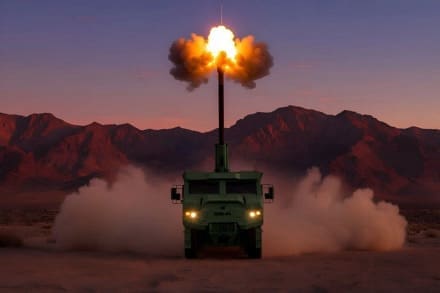
The ONLY fielded, wheeled howitzer, made in the U.S.A. that delivers revolutionary 360-degree firing, mobility, lethality, and survivability 

FORT WORTH, TEXAS – March 18, 2026?– SIGMA, Elbit Systems of America’s (Elbit America) fielded offering for the United States Army’s Self-Propelled Howitzer Modernization program will be on rare display at the AUSA Global Force Symposium and Exhibition in Huntsville, Alabama, March 24-26, 2026. 

Built in Charleston, South Carolina, SIGMA stands alone as the only self-propelled wheeled howitzer manufactured in the U.S. With advanced maneuverability, SIGMA’s 10×10 platform successfully moves with brigade combat teams across complex terrain and can shoot and scoot in less than 60 seconds.

Delivering exclusive 360-degree firing, SIGMA is equipped with an automated 155mm turret and is the only self-propelled wheeled cannon that can fire all variations of 155mm munitions in the U.S. Army’s arsenal. In the field, SIGMA serves with a 40-round onboard magazine and can shoot an astounding eight rounds per minute – all while keeping its three-person crew well protected in the armored cab.  

“SIGMA was designed to deliver real overmatch, so Soldiers can fight, survive, and win in the most contested environments,” said Luke Savoie, President and CEO of Elbit America. “This platform provides the might and modernization our U.S. Army artillery formations demand. SIGMA is built for Warriors, made with American grit, and it’s ready now.”  

In partnership with Oshkosh Defense, providers of the artillery system’s vehicle base, Elbit America’s SIGMA will be on display in Oshkosh’s booth, 411, just across the aisle from Elbit America in booth 532. Both are inside the South Hall of the Von Braun Center. The exhibit hall is open 9 a.m. to 5 p.m. March 24-25, and 9 a.m. to noon on March 26.  

Experience firsthand what American-made artillery dominance looks like with Elbit America’s SIGMA Mobile Tactical Cannon.

www.elbitamerica.com/sigma

Icon Defense Unveils Monolithic Upper Receiver Systems After a Year of Anticipation

March 19th, 2026

The Monolithic platform sets a new industry benchmark with its advanced one-piece construction, delivering unmatched rigidity and precision alignment for modern rifle builders.

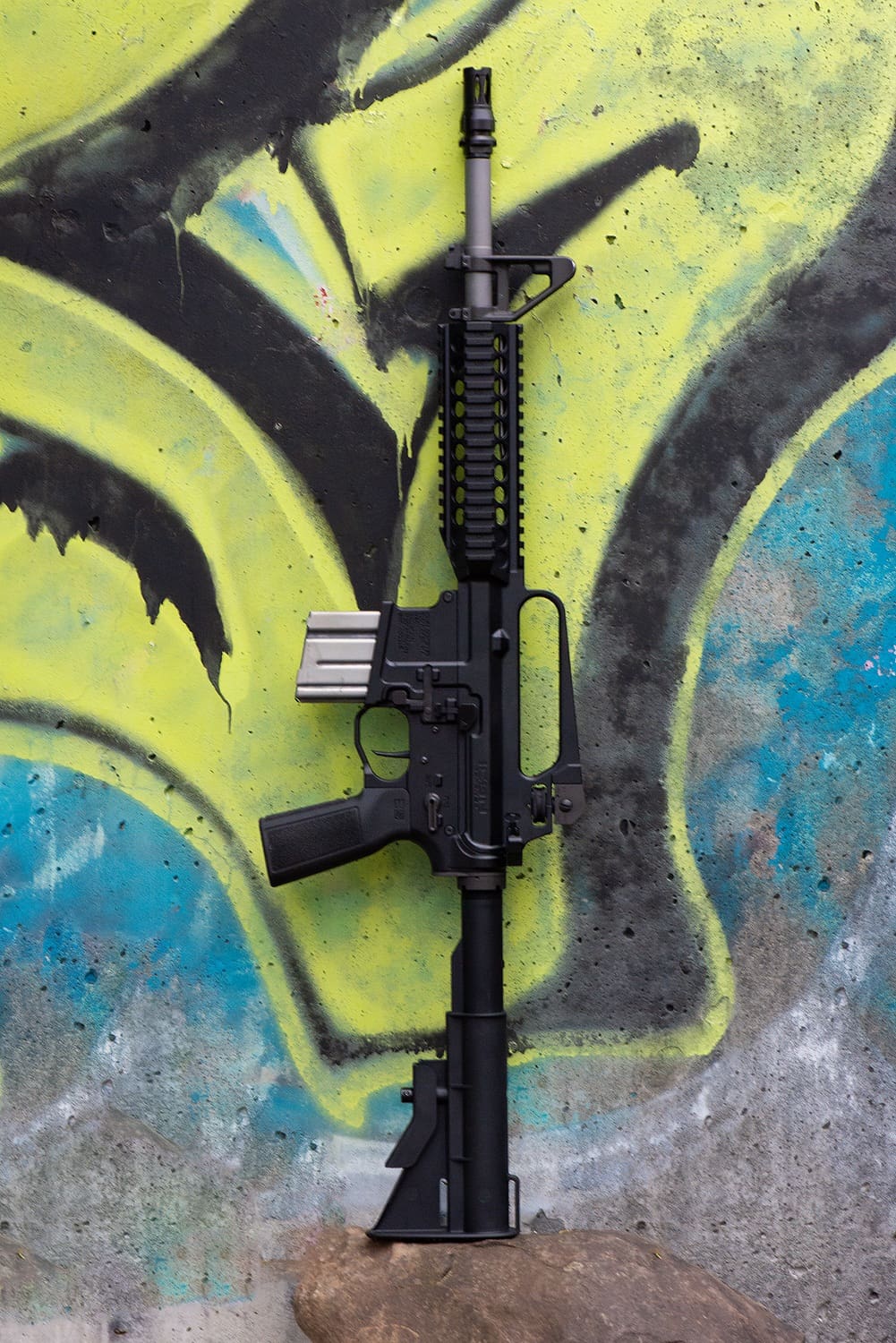
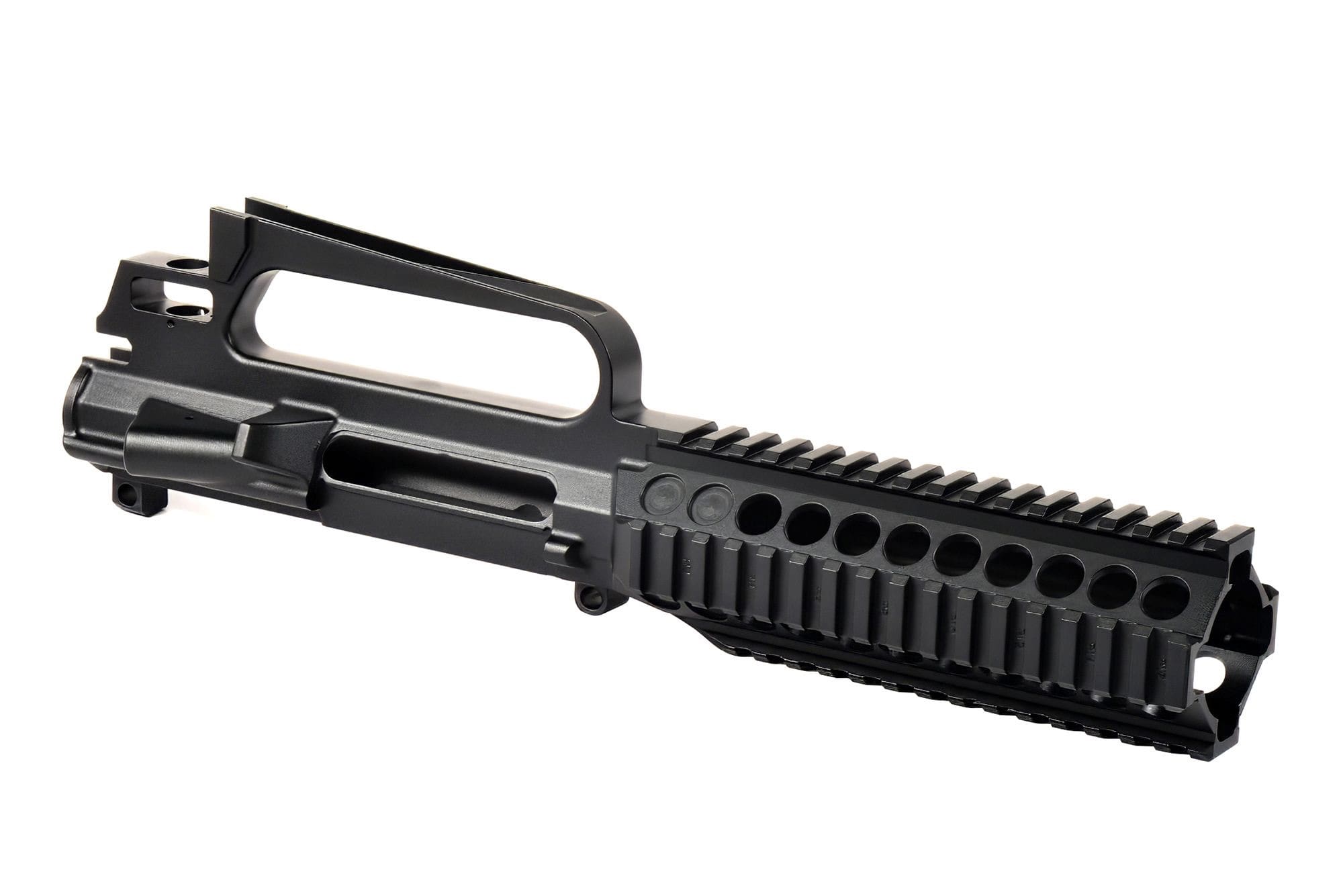
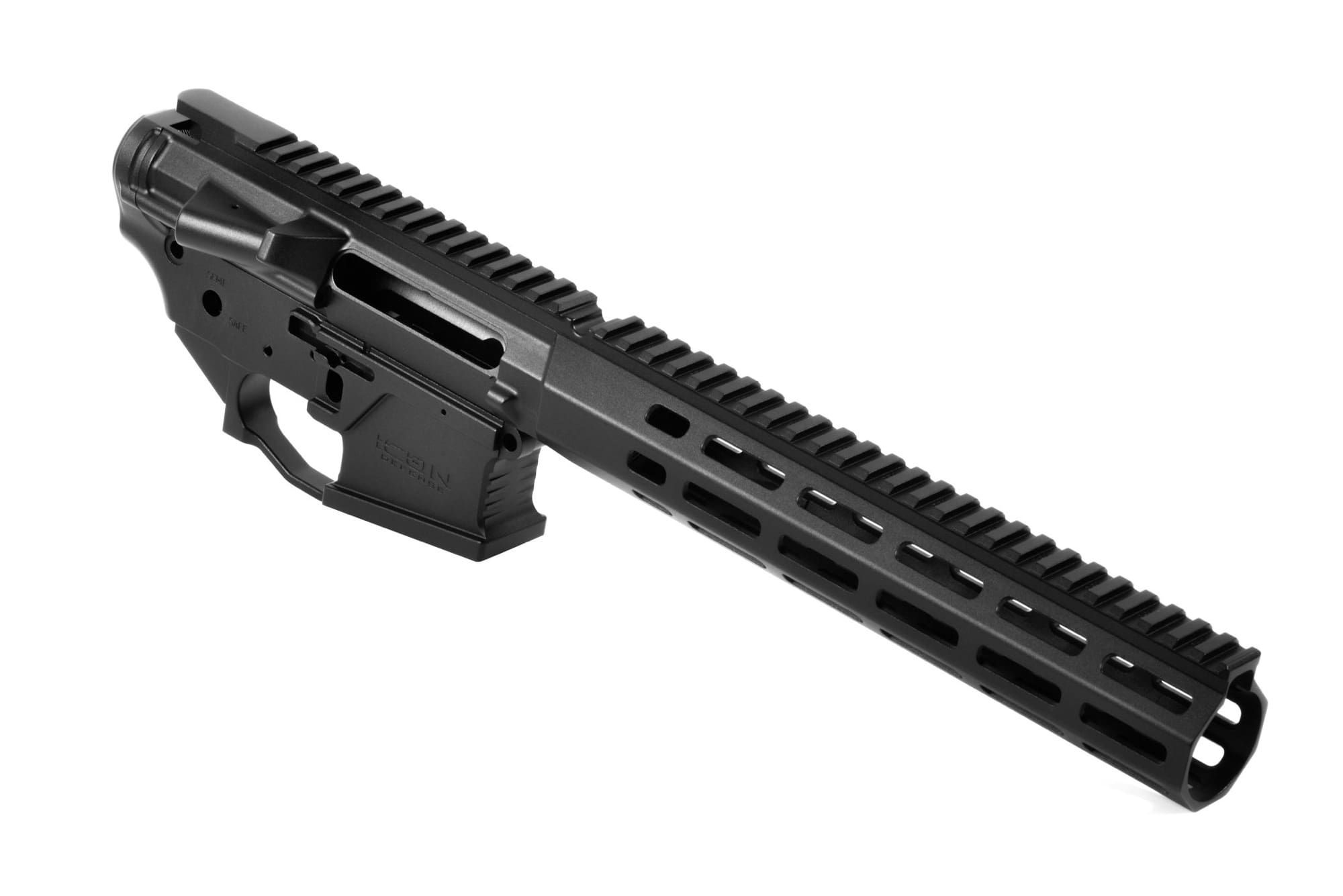
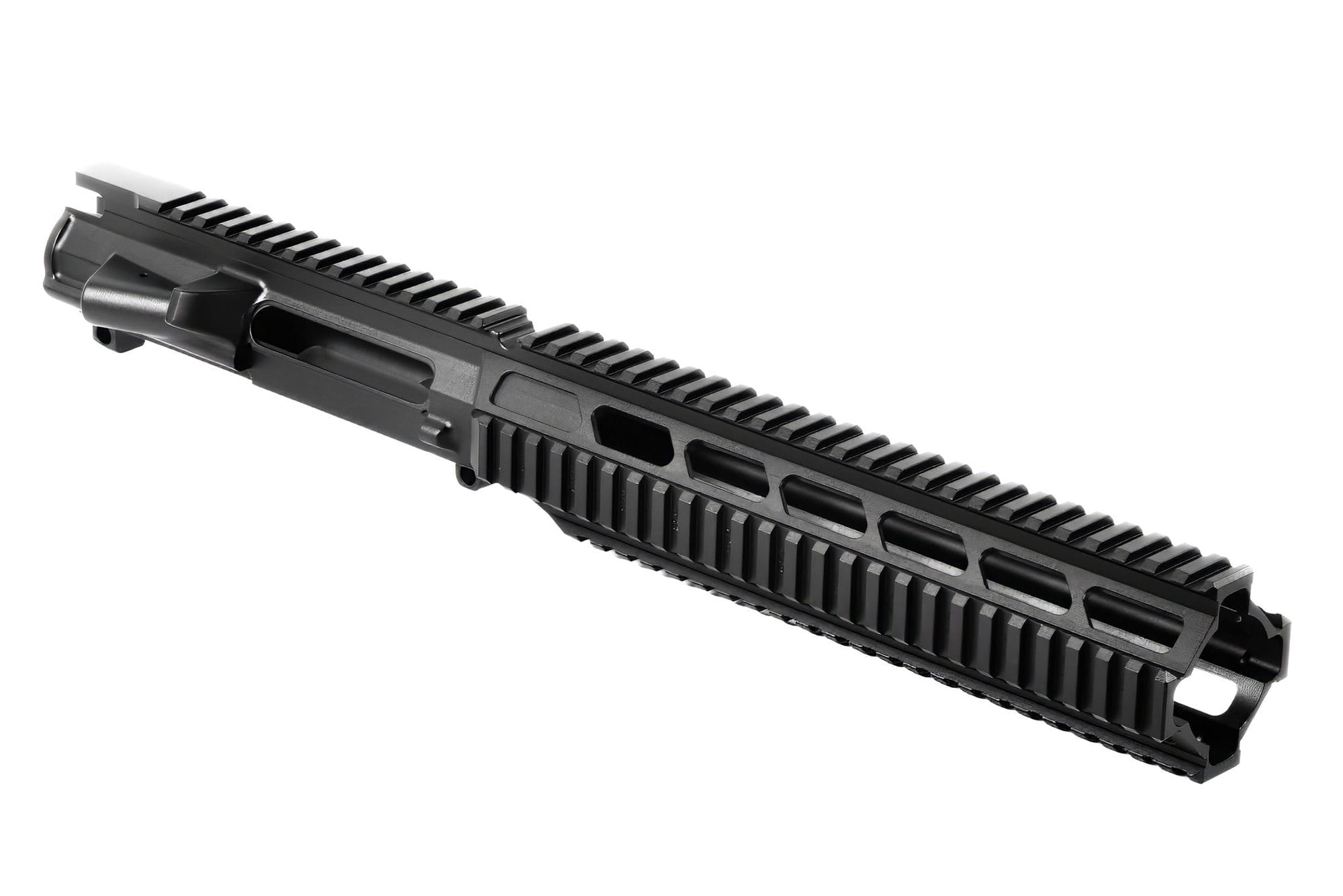
(Tumwater, WA] — [March 20, 2026) – Icon Defense today announced the official release of its highly anticipated Monolithic Upper Receiver Systems, first unveiled at SHOT Show 2025. Engineered for performance-driven shooters and builders, the new lineup introduces a fully integrated, one-piece design that enhances strength, precision, and reliability across AR-15 platforms.

Precision-machined from billet aluminum, each monolithic upper combines the receiver and handguard into a continuous structure. This design eliminates traditional flex points, resulting in exceptional rigidity, improved rail alignment, and consistent shot-to-shot performance.

“Monolithic construction represents a significant step forward in platform stability and performance,” said Dave Roberts of Icon Defense. “These uppers were designed for shooters who demand the highest level of consistency and durability from their equipment.”

Key Benefits

Enhanced Rigidity: One-piece construction eliminates movement between receiver and handguard.
Improved Alignment: Continuous top rail ensures precise mounting for optics and accessories.
Precision Machining: Billet aluminum construction for long-term durability.
Integrated Design: Streamlined profile optimized for modern rifle configurations.

Specifications

Material: 7075-T6 Aluminum.
Finish: Type III Hard Coat Anodizing.
Compatibility: Compatible with all standard AR-15 barrels.

Available Configurations:

• 5.56 M-LOK – 10.75.”
• A2 – 7.25”
• Quad Rail – 10.75” (More Lengths coming soon)

Included Components

• Titanium Monolithic Barrel Nut.
• Icon Defense Gas Block.
• Monolithic Barrel Nut Tube Wrench.
• Dust Cover Door Pin.
• Drive Lock Wrench.
• Hard Plastic Case.

The Icon Defense Monolithic Upper Receiver Systems are proudly manufactured in the United States and are available now.

For more information or to purchase, visit:
killer-innovations.com/shop/icon-defense-billet-monolithic-collection

Back “Guardians of Neutrality – Swiss Rifles Through the Ages” Now

March 19th, 2026

Now available on Kickstarter, Safar Publishing’s latest book “Guardians of Neutrality – Swiss Rifles Through the Ages” offers a deep dive into the evolution of Swiss military rifles, spanning over a century of innovation, precision, and craftsmanship.

Author Thomas Anderson promises around 550 pages of the history of Swiss rifles from 1860 to 1990 through meticulously researched data and photographs.

This is a must-have for students of small arms history.

Join over 400 other backers and secure your copy now at www.kickstarter.com/projects/345pdp/guardians-of-neutrality-swiss-rifles-through-the-ages.