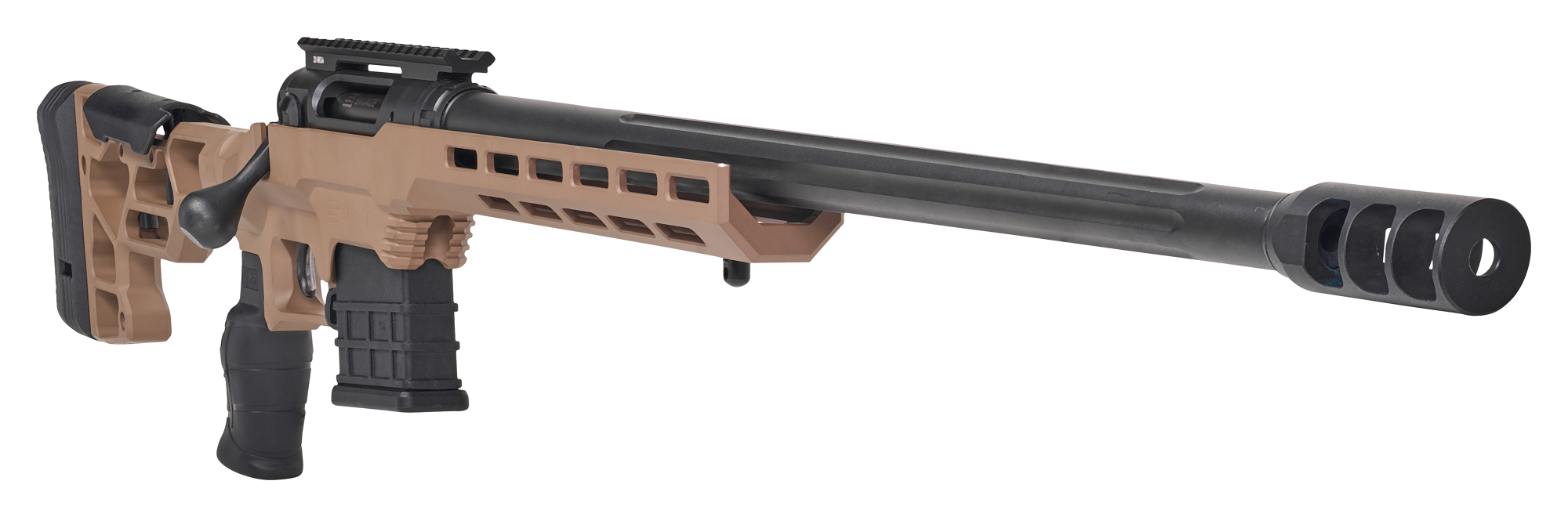
WESTFIELD, Massachusetts – December 6, 2021 – Savage Arms is proud to announce the addition of 6.5 PRC to its line of 110 Precision rifles. This new chambering provides outstanding short-magnum potential from an adaptable rifle platform that will be chambered in both right and left-hand configurations.
“The 6.5 PRC was originally designed as a long-range hunting round,” said Jessica Treglia, Sr. Brand Manager at Savage Arms. “This is essentially a magnum version of the 6.5 Creedmoor—but much of what makes the 6.5 PRC cartridge great for hunting makes it a contender on the competition side, too. 6.5 bullets are known for their exceptional ballistic coefficients and the 6.5 PRC adds more velocity from its short-magnum design. They are performing really well and are especially capable in adverse conditions.”
The 110 Precision line is built around Savage’s 110 action. With a custom LSS stock designed by the accuracy experts at Modular Driven Technologies (MDT), the 110 Precision is fully customizable. From the adjustable comb height and length of pull to the capabilities of its AccuTriger™, this aluminum-framed rifle is built for exacting performance.
Features
• Savage factory blueprinted action
• Matte black carbon steel heavy barrel, threaded 5/8-24
• MDT LSS XL Chassis with FDE Cerakote
• Exclusive skeletonized stock with fully adjustable comb height and length-of-pull
• 1.5-4 lb user adjustable AccuTrigger
• 20 MOA 1–piece EGW rail
• AICS magazine
• BA Muzzle brake
NEWINGTON, N.H., (December 6, 2021) – SIG SAUER, Inc. is proud to announce a sustained, multi-year Double Diamond sponsorship to support the important programs and initiatives of the Second Amendment Foundation (SAF).
“It’s an honor for SIG SAUER to contribute to the important work of the Second Amendment Foundation and join forces with their 700,000 plus membership to defend our constitutional rights to privately own and possess firearms,” said Tom Taylor, Chief Marketing Officer and Executive Vice President, Commercial Sales, SIG SAUER, Inc. “The Second Amendment is under constant attack and the legal activism, education, and resources provided by the Second Amendment Foundation is absolutely essential to stopping the encroachment on our constitutional rights and ensuring that the Second Amendment is preserved for future generations.”
The Second Amendment Foundation (SAF) is a non-profit organization dedicated to promoting a better understanding about our Constitutional heritage to privately own and possess firearms. SAF supports legal action and educational programs to protect and defend the Second Amendment. SAF has been engaged in legal action across the U.S. for over 45-years and has successfully defended, overturned, and set precedent in many cases.
“This unprecedented commitment from SIG SAUER is simply awesome,” said SAF founder and Executive Vice President Alan Gottlieb. “To have this legendary company as our very first Double Diamond sponsor underscores the importance of our legal and educational efforts. I am both humbled and grateful at this level of support for our efforts to defend the right to keep and bear arms.
“SIG SAUER’s commitment will guarantee that SAF can continue winning firearms freedom one lawsuit at a time,” Gottlieb added.
To learn more about the Second Amendment Foundation and support its programs visit saf.org.
Posted in 2A, Advertiser, Press Release | Comments Off on SIG SAUER Supports Second Amendment Foundation
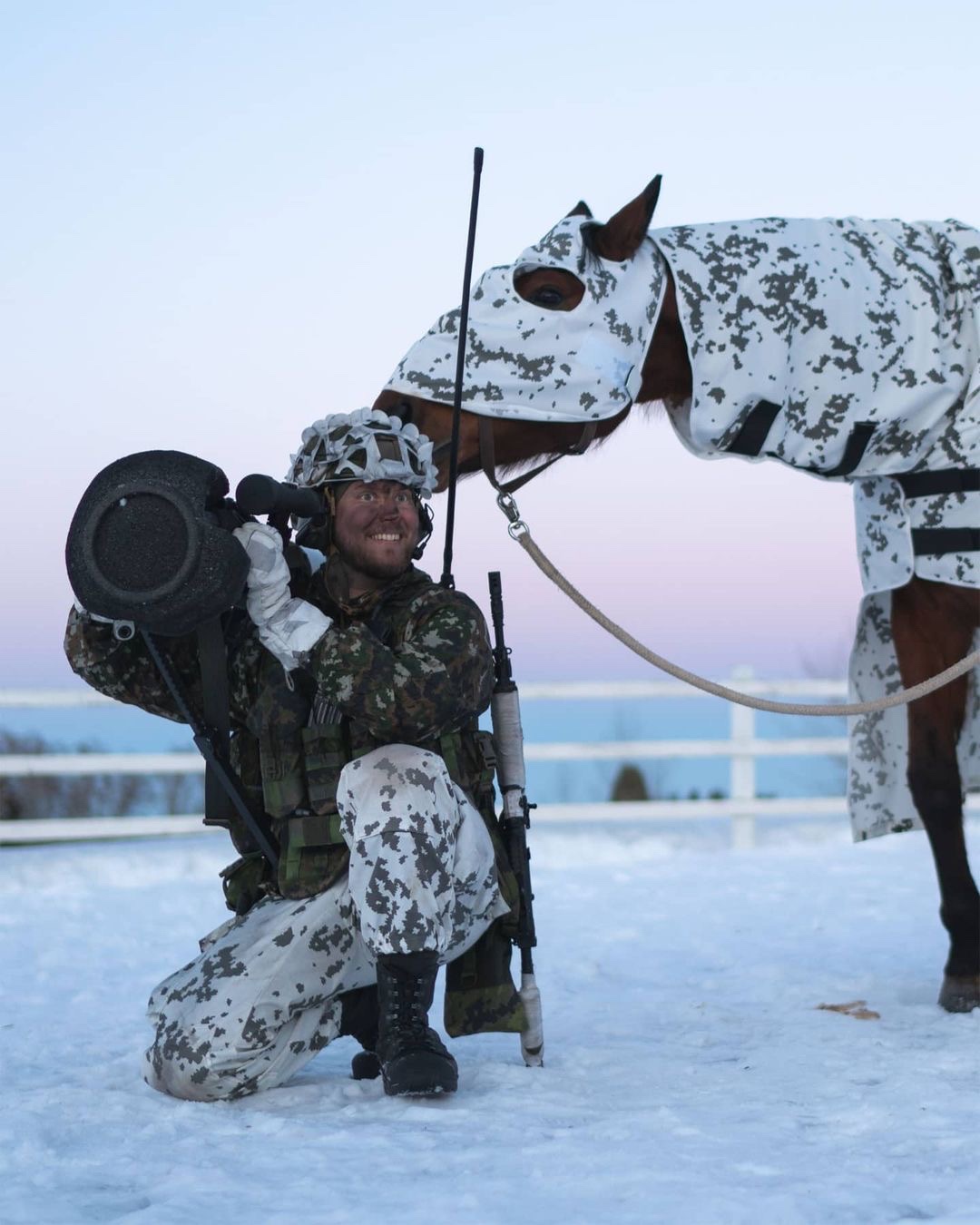
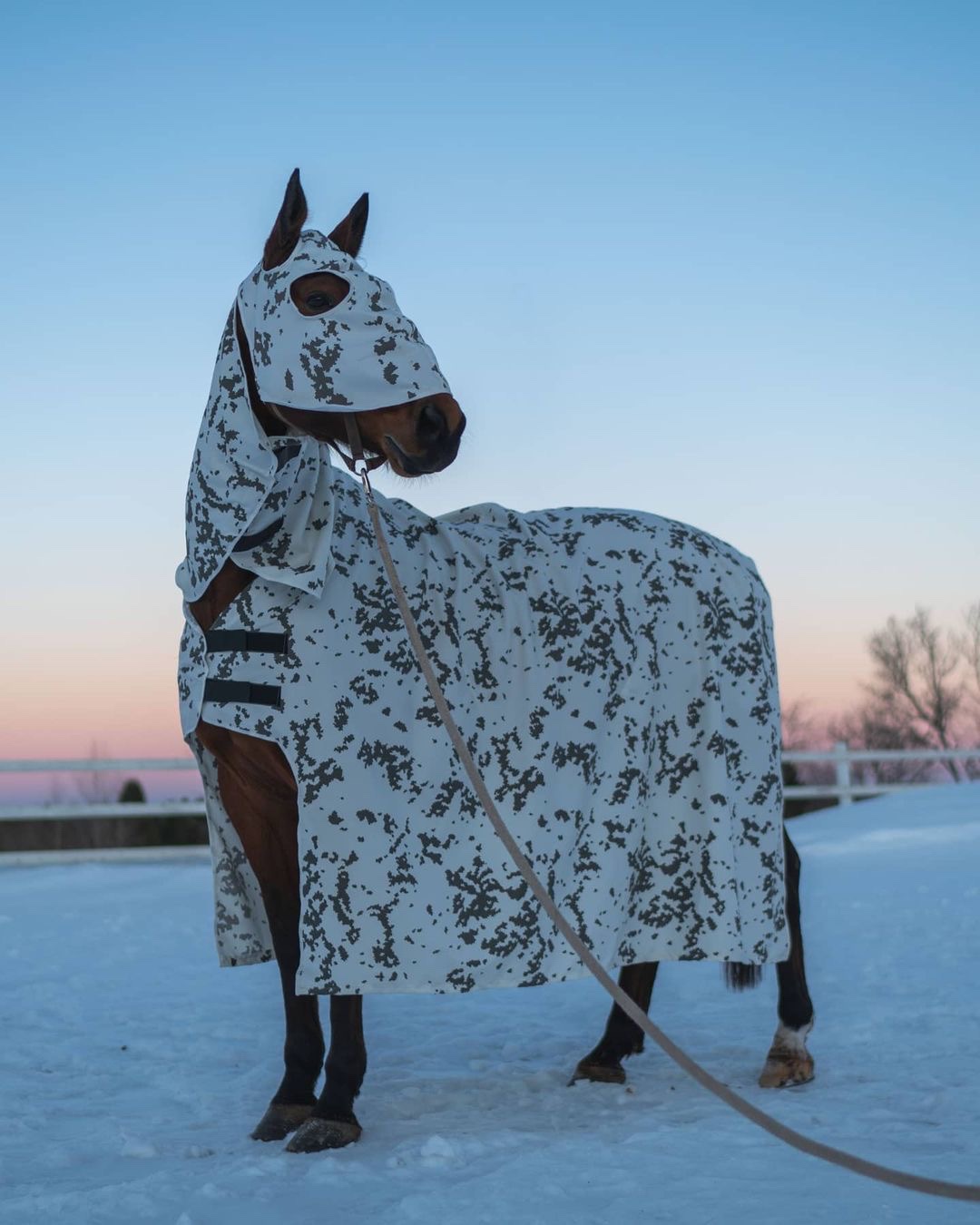
Finland’s Savotta posted this to social media and it’s simply awesome. Totally worth a share here.
Hyvää itsenäisyyspäivää Suomi!
A large part of our work, and the very existence of our company, is strongly connected to the independence of Finland. Savotta was founded in the 50’s to make gear for the lumber industry, which at the time employed a huge amount of people cutting down trees in the vast woodlands of Finland to pay war reparations to the Soviet Union and to rebuild our nation after the wars.
It didn’t take long for Savotta to start making gear for the Finnish Defence Forces as well. And oh how we have made our share of that stuff over the years. This work continues today, quite actively, and we intend to keep it that way.
Finland’s independence is a lot more than wars and such, but those things are also in reality a big part of it. Without independent Finland Savotta probably wouldn’t exist at all. So thank you all who have done and keep on doing their part to ensure the well-being and sovereignty of our people!
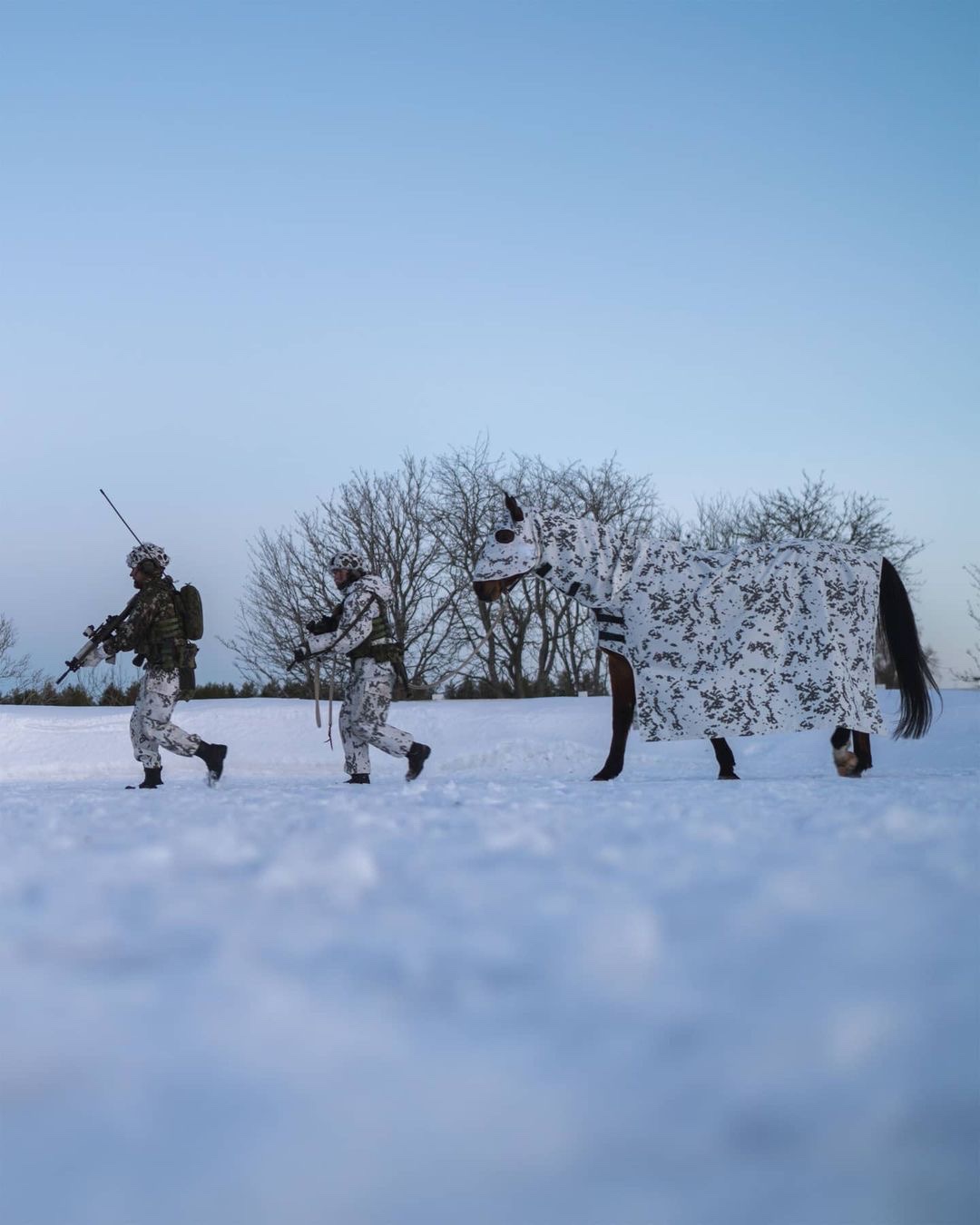
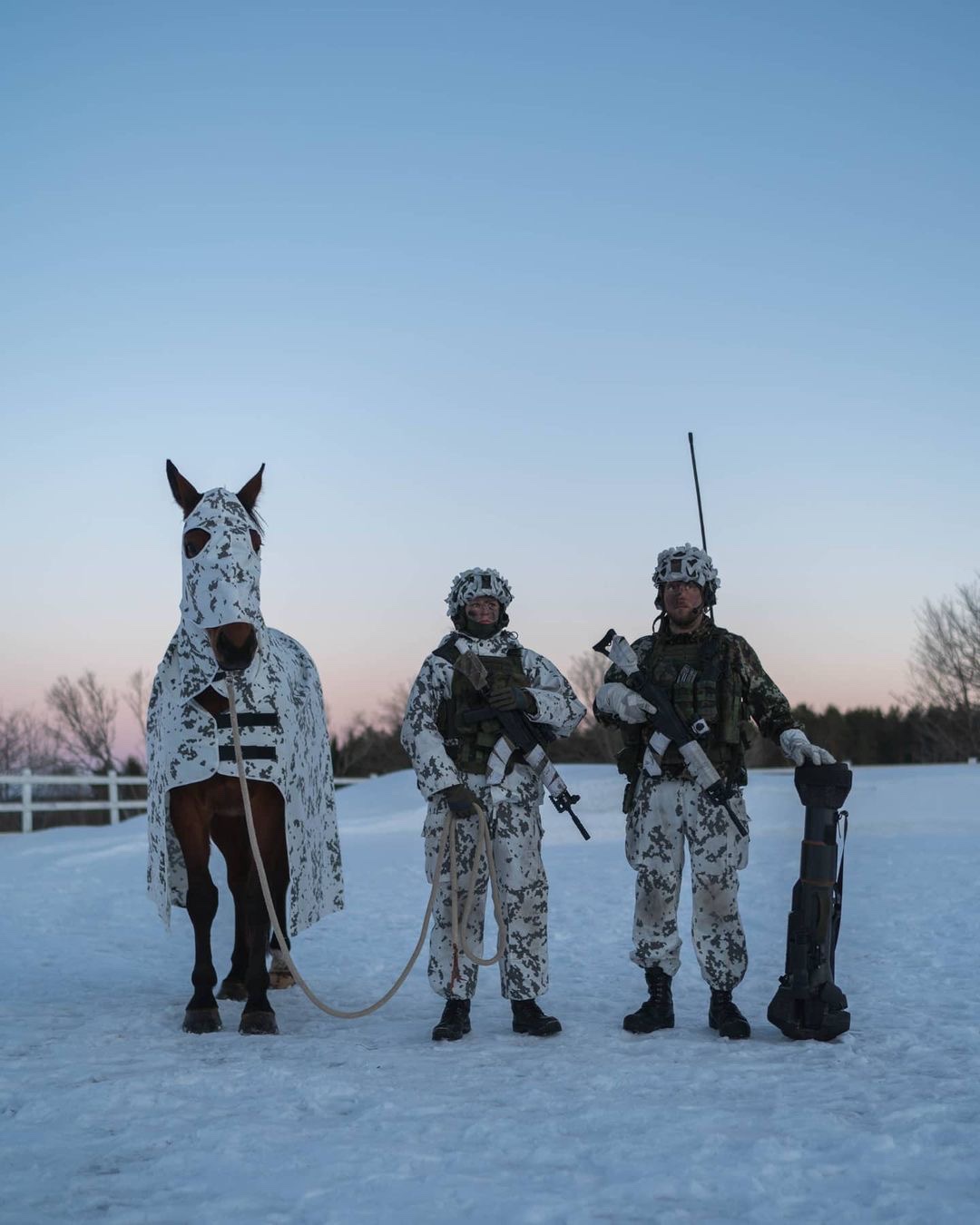
PS: The Finnish M05 snow camouflage suit worn by Matti the Horse here is our own custom piece, not available for public sales unfortunately.
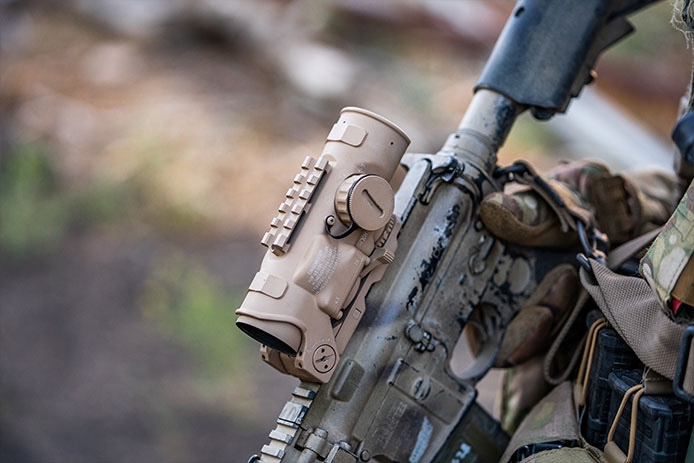
ELCAN Specter DR dual-role sight will be a vital component of the optronic system for infantry missions
Raytheon ELCAN, a Raytheon Technologies subsidiary, and LEONARDO Germany, a Leonardo SpA subsidiary, were awarded a contract for 107,929 sights to provide the main combat sight (HKV) for the German Armed Forces. Leonardo Germany is the prime contractor to the BAAINBw and will provide in-country support.
The ELCAN Specter DR 1-4x is a combined reflex and telescopic sight allowing soldiers to see close up or far away with a single sight. The sights chosen by the Bundeswehr will have a bullet-drop compensator, or BDC, etched reticle and a Picatinny/STANAG rail integrated into the housing with an ambidextrous, easy-to-use, throw lever to switch instantly between magnifications. The sights have an integrated laser filter to help keep soldiers safer on the battlefield.
“The Specter DR dual-role sight is Canadian technology and battle-proven with forces across NATO,” said Mike Lewis, rifle sights mission area lead for Raytheon ELCAN. “The variable magnification and durability of the Specter is a great advantage for the German Armed Forces.”
The Air Fitce has updated AFI 36-2903 incorporating change 3 and Certified Current 3 December 2021.
Here are the changes. As far as I see it, none of them are bad.
This interim change revises DAFI 36-2903 by adding Chief of Staff of the Air Force-approved Air Force Virtual Uniform Board items, standardizing guidance for the maintenance duty uniform, re- publishing guidance from Department of the Air Force guidance memorandum for female hair standards, and incorporating other needed corrections identified in the DAFI. Specifically, it 1) allows hands in pockets while standing or walking and beverage consumption as indicated while walking; 2) changes male hair bulk standard to 2.5 inches; 3) authorizes female hair accessories up to a 2-inch width; 4) regulates female eyelash extensions to natural eyelash color, not to exceed 14 millimeters in length; 5) authorizes permanent cosmetics for men, scalp only; 6) authorizes commanders to allow tucking of Operational Camouflage Pattern (OCP) coat for duty as necessary and folding of cuff twice inward; 7) authorizes wear of Velcro® pen/pencil holders on OCP sleeves; 8) authorizes wear of morale patches on OCP and Two-Piece Flight Duty Uniform (2PFDU); 9) authorizes unit patch or organizational symbol on OCP t-shirt; 10) authorizes wear of tactical cap; 11) authorizes sew-on nametapes and insignia on OCP fleece; 12) authorizes wear of transparent piercing spacers; 13) authorizes a ring to be worn on the thumb; 14) authorizes use of cell phone while walking; 15) authorizes wear of beret while performing duties outside of Primary Air Force Specialty Code (PAFSC) for applicable beret-wearing AFSCs; 16) authorizes females optional wear of hosiery with dress uniforms; 17) authorizes wear of sweatband with physical training gear; 18) authorizes permanent wear of USAF Honor Guard badge for Airmen with an 8G000 and 85G0 AFSC; 19) authorizes foreign aviation, medical insignia and parachutist badge to be worn outside of conferring country; 20) grants commanders of 2A, 2F, 2G, 2M, 2P, 2S, 2T, 2W, 3E, 3D, and 1P AFSC members authority to allow wear of sage maintenance duty uniform; 21) adds wear policy for multi-domain warfare badge; 22) clarifies wear of Air Advisor tab; 23) authorizes wear of Inter-American Air Forces Academy badge; 24) authorizes physical training gear short and long sleeve shirts to be worn tucked or untucked; 25) Clarified instructions for beards allowed for medical reason; and 26) Clarified instruction regarding authorized male and female hair color. A margin bar (|) indicates newly revised material.
However, there are some odd things. Take for instance the Sage Maintenance Duty Uniform. It’s an authorized uniform for certain AFSCs but there are no photos of it anywhere; like it doesn’t actually exist.
The AFI says this:
A7.7.20. Maintenance Duty Uniform (MDU). Commanders of Airmen in these AFSCs, 2A, 2F, 2G, 2M, 2P, 2S, 2T, 2W, 3E, 3D, and 1P may authorize Airmen to wear the sage MDU. The sage color MDU will be unit funded as organizational clothing and equipment. MDU will be worn with nametape, service tape and rank along with the higher headquarters patch on the left sleeve and a subdued U.S. flag and organizational patch on the right sleeve. Note: Duty identifiers, as applicable may be worn on the left sleeve. The coyote brown t-shirt, OCP patrol or tactical cap, coyote brown or green socks, and coyote brown boots, are worn with the uniform. The MDU will not be utilized for office work environments, non-industrial or non- labor tasking. The MDU is authorized for wear when transiting from home to duty location, off base short convenience stops, eating at restaurants where people wear comparable civilian attire and all locations on installations. It must be worn in serviceable condition. Do not wear off base to eat in restaurants where most diners wear business attire or at establishments that operate primarily to serve alcohol. Local coverall variants are still authorized but only in work centers and on the flight line.
The same goes for the new ball cap, which they call a “Tactical Cap.” Naturally, it’s an issue because the supply chain is harder to establish than for a coverall. All clothing items procured by DoD must be Berry Compliant meaning Made in USA from US materials. Ball caps require special machinery to manufacture and there aren’t that many of those machines here in the US. The Defense Logistics Agency has to secure contracts. Sure, there are plenty of MultiCam (OCP) ball caps on the market, but few are configured the way the AFI requires and are made in the USA. Chances are good if you see someone running around with a Tactical Cap in AF uniform (issue or not), it isn’t Berry Compliant. Once that official is procured, all of those pretenders will have to go. It says so right in the AFI (para 5.2.10).
One improvement they could make in the next go around is to actually show everything; uniforms, headgear (including berets), badges, etc.
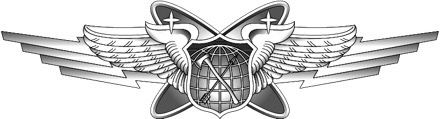
On an interesting note, here’s the new Multi-Domain Warfare Officer (AFSC 13O) badge mentioned.
With all of that stuff, tucked ACU coats, rolled under sleeves, untucked PT shirts, morale patches, all of it; this is the biggest one for me, even though I am retired. Finally…the USAF authorizes foreign aviation, medical insignia and parachutist badge to be worn outside of conferring country; I used to violate the AFI in both BDUs and Service Dress.
Get your copy while it’s hot and start wearing a T-shirt with your unit logo.
MINNEAPOLIS-ST. PAUL INTERNATIONAL AIRPORT AIR RESERVE STATION, Minn. —
Two rounds to the chest and one round to the head.
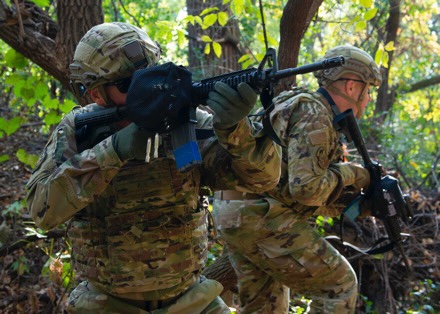
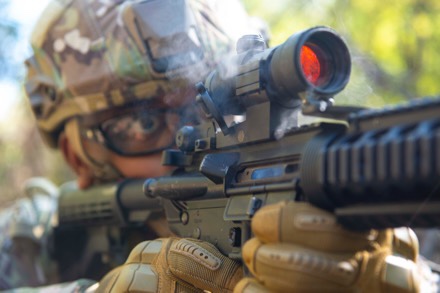
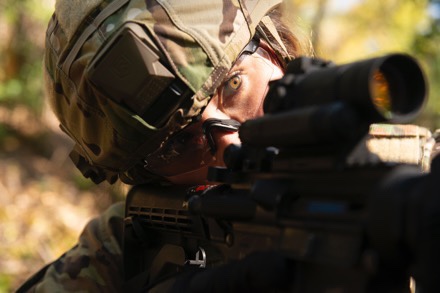
934th Aeromedical Staging Squadron Airmen engaged their targets using this shooting method while working in two-person teams with M4 carbines at the new Shoot, Move and Communicate course at Minneapolis-St. Paul International Airport Air Reserve Station, Minnesota, in October.
This close-quarter shooting method is called the Failure Drill. This technique isn’t a critique of a shooter’s performance or a countermeasure to succumb from a weapons malfunction. Instead, it is more of a failure on the engaging target’s ability to return fire after receiving two rounds to the chest and one round to the head. Furthermore, adversaries are now wearing body armor. Therefore, the final round is needed to permanently neutralize the danger.
Tech. Sgt. Charles Foster, 934th ASTS section chief of medical records, was invited to run through the new course with other ASTS Airmen. The lane structure and design were a complete mystery to him. “From word of mouth, what they had set-up here, I knew that it was out in the woods and they had a bunch of different targets with contact areas.” After going through the course five times, Foster said, “I didn’t know they had this amazing of a set-up.”
The 934th Security Forces Squadron spent most of the year building this course and making needed improvements to provide a viable training opportunity for Airmen. Before the SMC course was built, the area was a dense tree wood line with a lot of deadfalls. 934th SFS members used the base overlay to determine where the property started and ended before committing to this project.
Preceding the new course, Defenders used to maneuver between multiple 4 x 8 sheets of plywood to engage one target on a service road. The overall intensity of this course was limited due to its scale, aesthetics and allure. The SFS Defenders worked with what they had to conduct training; however, they wanted an attractive, resilient and motivating course. What they needed was an extreme course makeover, and they needed it right away.
“This whole plan fell on that cliché: design on a dime. Everything here was either from the forest naturally or donated wood from the Marines, Navy or actually from a stockpile here from pallets and things,” said Master Sgt. Kory Soderquist, 934th SFS chief of training.
Soderquist and a group of SFS Airmen and civilians volunteered to be the project managers and architects of the new course. The first thing that had to go was the flat single straight-lined lane. The new course would curve and have an upper and lower path for more Airmen to go through. Instead of engaging one single target, Airmen now have 56. Some targets were placed in plain view and others were camouflaged in a dense thicket. This forced Airmen to quickly scan their lane and rapidly react. To provide a sense of realism in an austere environment, the SMC was placed in a densely forested area. As a result, teams can’t see the course before they begin.
“My Defenders basically took a hopscotch board and added a roller coaster to it,” said Lt. Col. Charles Trovarello, 934th SFS commander. “I was incredibly impressed with how they utilized the space because when you first looked at it, you think you can’t possible do anything more from what we already had set up.”
“It is definitely one of those places we want to showcase because it’s so new,” said Soderquist. “It’s also really functional, easy to go through and easy to clean up. Basically, it’s zero maintenance when you have it up and running. You can run about 170 Airmen through it. It seems flawless and we have all the safety hazards out of the way. We haven’t had a single hang-up. It’s been good.” #ReserveReady
By Chris Farley
(Farley is assigned to the 934th Airlift Wing public affairs office.)
Strikeman Pro, the most advanced dry-fire target practice on the market for everyday consumers, released its breakthrough gaming software today featuring a rapid-fire, multi-target new training system.
Strikeman Pro introduces the latest innovative firearm technology with the capacity to fire at several targets in real time, instead of the conventional single shot, and to quickly improve reaction time and accuracy – all without the need for expensive, live ammunition.
“What sets Strikeman Pro apart from the other competitors is our new patented technology that allows the Smartphone app, laser cartridge and customized target panel to feature four gaming modules, with different target challenges emerging one after the other, in quick succession,” said Scott Hutchison, CEO of Strikeman.
“This all-new Strikeman Pro is a first-in-class product that allows you to shoot at several targets in a single training session, while enhancing your aim and training your trigger reflex to react with precision and speed before firing on a field of twelve distinct targets from nine different templates.”
Available on the Apple Store and Google Play store, the Strikeman Pro Smartphone app records laser strikes from the Strikeman laser bullet on the Strikeman target, while competing online with friends, keeping track of training improvement, and setting improvement goals to achieve new personal best performances.
The Metrics section records detailed analysis on skill improvement in different app settings such as holster unload, re-load and fire, turnaround and fire, and call out rapid fire. Strikeman Pro offers a variety of shooting scenarios that challenges critical appraisal skills on a 12-point target sheet.
Law enforcement, the military, wildlife hunters, and recreational sharpshooters, including women, have used dry-fire training systems for years, but the new Strikeman Pro training system takes that training to a whole new standard, and replaces the need to travel to a shooting range, using expensive, live ammunition. Instead, Strikeman Pro offers the convenience of at-home dry-fire training with an endless variety of target challenges and easy-to-use, practical affordability.
“The Strikeman Pro system is safe, soundless, and suitable for people of all ages to use in the comfort of their homes or any setting of their choosing,” added Hutchison. “Our customers are showing steady improvement within days of practice through live feedback from the app, and accuracy metrics that record and graph progress in every session. Beating your personal best is a daily occurrence with Strikeman Pro.”
The Strikeman Pro system is available for sale in American markets in December 2021, and in Canada, Australia, Europe, and the UK in February 2022.
“Been to Disney World one too many times? Have we, Captain Ron?”
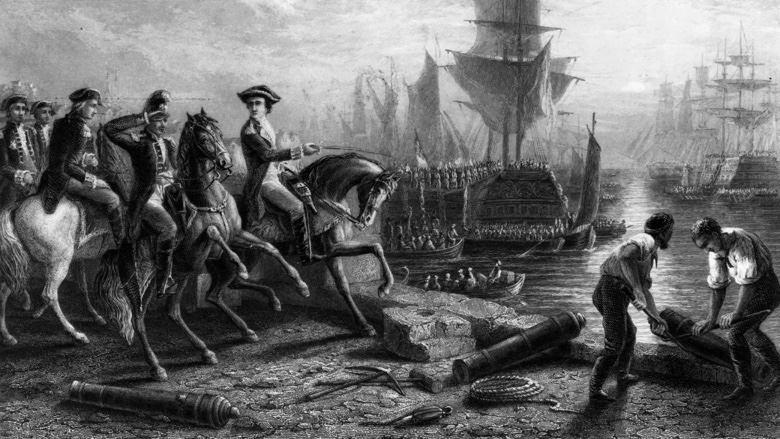
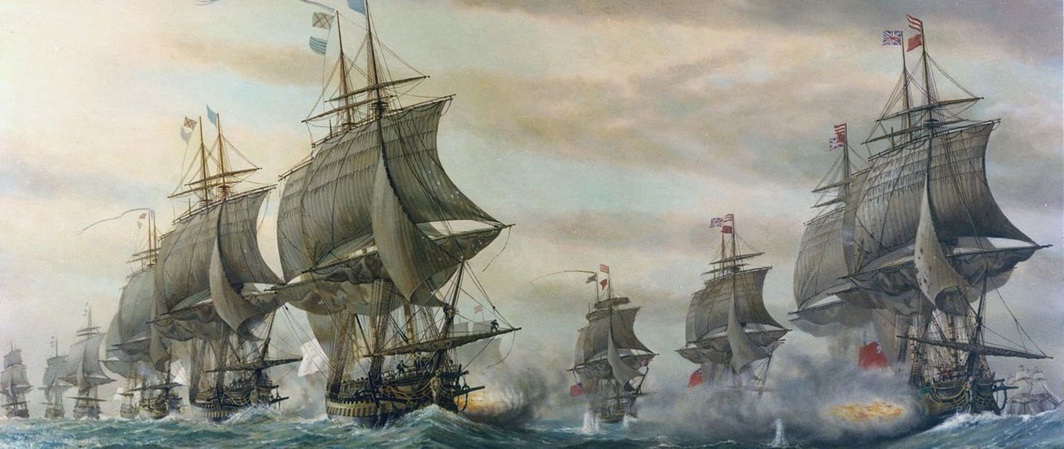
During the American Revolution, George Washington, while serving as head of the Continental army during the siege of Boston in 1775, started using pirates to help attack the British where they were most vulnerable on the sea. “Finding that we were not likely to do much in the land way, I fitted out several privateers, or rather armed vessels, on behalf of the Continent. With an offer of a percentage of spoils as an inducement, the call for citizen sailors to hijack inbound supply ships tapped the same vein of self-interest and comradeship that had led the colonies to seek independence in the first place.” Although private piracy proved detrimental to the Royal Navy, it ultimately helped turn the British public against the war.
“He said gorilla. Not guerrilla. Guer, go. HUGE difference kids,” Martin Harvey
A pirate is a seaman who threatens, seizes, or destroys any ship at high seas and often even harbors at the shore. Besides, they have been involved in many other criminal activities, such as piracy and the slave trade. Without any legal rights, the pirates are doing it for personal reasons. And they were regarded as criminals in all countries because those attacks were illegal acts. Piracy was punishable by death almost everywhere during the times when it was at its height. The critical difference between them and the privateers or buccaneers, about whom we can also claim that they were some sort of pirates, but not treated like criminals, is also the legality of their acts.
The U.S. allowed about 1,700 private warships to cruise the ocean, searching for British prizes during the Revolution, when a cash-strapped Congress could not launch an efficient navy of its own at the time. These revolutionary privateers carried congressional commissions, effectively legalized pirates, which outlawed attacks on neutral ships and prisoners’ mistreatment but otherwise allowed them free rein to rob and plunder. Most privateers were motivated by greed as much as by patriotism.
However, Washington was also outfitting a fleet of lightly armed schooners, and the debate over the navy took place in Congress. Although most members thought the idea of a navy insane, the Marine Committee was formed to oversee the production of 13 frigates.
Meanwhile, with its deep-rooted culture of fishing, shipbuilding, and ocean trade, Massachusetts considered whether to unleash its citizens by allowing state-sponsored privateering. Throughout history, governments at war have used the authority under international law to authorize independent operators to transport enemy merchant cargoes. There had already been incidents off the Massachusetts coast of scavenging looting crews abandoning ship down one side as local marauders clambered up the other side wielding clubs and cutlasses; the loot from these raids had to give them visions of bigger gains to come. To legalize privateering, the government would provide the colony with an instant navy for little to no cost.
In March of 1776, Congress followed suit and ordered that all British ships be considered “fair game for civilian warships.” After months of bitter debate on the general theme of business and patriotism, Philadelphia leaders embraced trade, going so far as to provide signed preprinted applications for commissions complete with blank spaces where names of ships, captains and owners could be inserted with minimal fuss. An early proponent of privateering, John Adams, appreciated, “I was always extremely interested in it.” Privateers had to pay monetary obligations to ensure their proper conduct under regulations. Although it is only fragmentary, incomplete information, more than 1,700 Letters of Marque were granted during the American Revolution. Approximately 800 privateers were commissioned and are frequently attributed with burning, looting, and capturing around 600 British ships.
Following congressional recognition of privateering, privateers flocked from Massachusetts, New Hampshire, and Rhode Island. Most had reputations for contraband, quirkiness, and eccentricity until this point. Most privateers just smuggled items throughout the Royal Navy’s blockade.
Weapons shortages resulted in delays in securing gunpowder, but some, like the Brown brothers, managed to solve the problem by converting their iron foundry to cannon-making. The Brown brothers were accused of charging ‘extortioners’ prices for guns for Congress’ frigates, giving preference to their vessels and advertising for crews with promises of quick fortunes, congenial captains, ample alcohol, and a thrilling opportunity to smite “the tyrant’s pilferers.”
Privateering was a natural fit for the brothers, and they immediately began cutting gun ports through the trade ships’ bulwarks and clearing holds to make room for more crewmen needed to sail the captured prizes home for auction. They were also named a member of the congressional committee that oversaw Congress’ frigates’ construction.
In 1777, the Ranger, an 18-gun sloop captained by a young John Paul Jones, sailed across the Atlantic with a vow “to draw off the enemy’s attention by attacking their defenseless structures,” a plan fulfilled the following spring in his daring hit-and-run raid on the British port of Whitehaven. However, Richard Grenville’s prediction that he would do infinite damage to their shipping was realized by the pirates he so loathed. While still skeptical of America’s ability to defeat them on the battlefield, the British were forced to concede one point about the rebel privateers that diplomats on the European Continent had noted in July 1776: “What is certain on the side of the Americans is their activity at sea and the ships of the Crown they are capturing.”.
In the Caribbean alone, whose position as the hub of Britain’s New World trade made it the primary hunting ground for at least a hundred New England privateers by May 1776, maritime losses reached over $2 million within a year. Royal Navy captains in the West Indies learned that a storm was approaching, but their superiors had no clue. “Time is running out,” they urged their companion, “for our journey to the English Channel.”
Before then, most American vessels carried goods such as tobacco and paper to trade for European munitions. The privateers among them were adventurous predators who might provision in French and Spanish ports but rarely sold prizes there (doing so violated those nations’ neutrality agreements with Britain), instead dispatching them back to America for appraisal and auction.
The first ship that sailed into Europe was the 16-gun Continental brig named Reprisal. Under its captain, Lambert Wickes, and carrying Benjamin Franklin to France to serve as an ambassador, the Reprisal sailed to Europe in December 1776 to join the endeavor to create an international alliance. Reprisal then set out to plunder the seas, capturing 13 merchant vessels before being chased into a French harbor by an enemy frigate.
Small privateers like Retaliation and most other ships were forced to flee before a frigate’s firepower, which could hurl a barrage of hurtling metal from up to two dozen 12-pound cannons mounted along each side. The frigate HMS Brune, for instance, destroyed a 12-gun schooner with a single broadside and significantly damaged a 9-gun schooner. In trying to treat the wounded among Volunteer’s crewmen, the boarding party found the vessel “so much damaged that we hardly had time to get them all on board before she sank.” Similarly, a Boston privateer, Speedwell, carrying 14 guns and 90 men, took a frigate’s broadside “between wind and water” (the portion of the hull usually below the waterline but exposed to the air the vessel is heeled over in the wind). The study revealed that “she was lost at sea immediately, and all her crew perished during the voyage.”
On May 17, 1777, another American captain, Gustavus Conyngham, sailed aboard Surprise with 25 men from the French port of Dunkirk and intercepted Prince of Orange, a mail steamer plying between Holland and the British port of Harwich.
In the late 1700s, British political and military leaders denounced the Revenge’s hit-and-run combat style and the many other warships now swarming European waters. For the people in Parliament, the pirates were an immoral group of terrorists to be exterminated. One report of the capture of a supply ship alleged that “rebels stripped the killed and wounded, robbed every article of clothes, bedding, and provisions belonging to the sick, burned the cutter and added every insult to the distress.” And any foe that would, “against the laws of God and Man,” fire on a vessel under a flag of truce deserved, it was declared in Parliament after one such incident, “all the horrors of rebellion,” by which was meant no mercy.
Privateers comprised two distinct ventures. A Letter of Marque permitted merchants to attack any hostile vessel they encountered along their commercial voyage. A privateer commission was issued to those who were commissioned to attack enemy merchant shipping. The primary objective was to engage a lightly armed commercial ship.
Privateers of every type of vessel were pressed into service. The largest 18th-century ship was the 600-ton, 26-gun ship Caesar out of Boston. Simultaneously, crew sizes were as little as a few men in a whaleboat and as high as 200 aboard a fully equipped privateer. Vessels designated for Privateering and Letters of Marque were launched from places up and down the east coast.
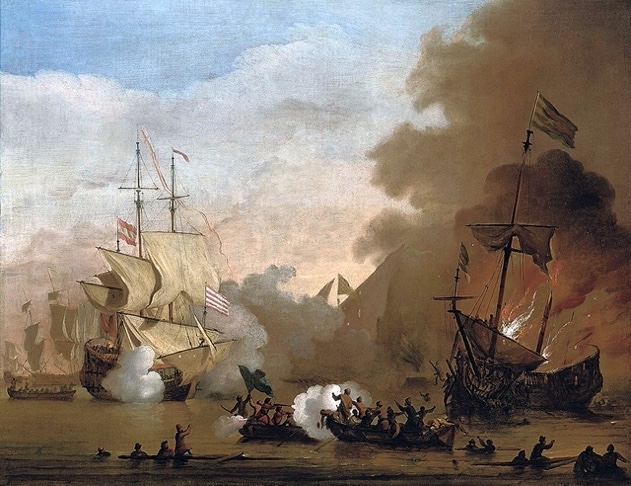
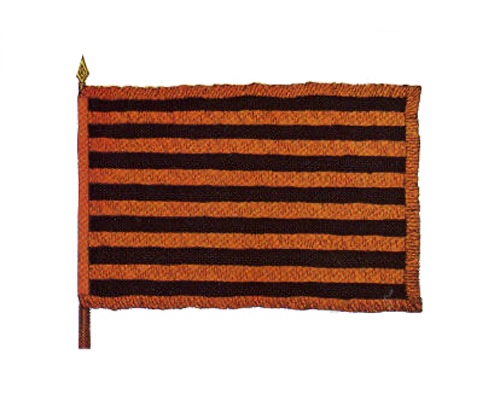
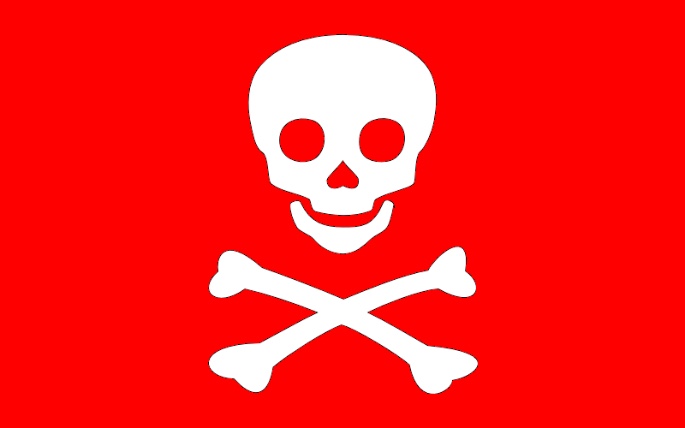
Privateers didn’t usually fly the black pirate flags; they flew a flag that looked very similar to the “Don’t tread on me flag.” Privateers that could effectively convince their opponent that the opposition was futile did the best. When that plan failed, it often resulted in extremely violent fighting with unpredictable results. Many of the pirates were captured or sank when the situation wasn’t going their way. Most did not raise the pirate flags that we know of today, but there were two basic types, Black and Red, if they did. The black was raised when you planned to raid the ship but didn’t plan on killing everyone and the Red Flag or “no quarter giving” or “the blood flag” meant they planned to kill everyone, and no mercy was to be given. It also didn’t always have to have a skull and bones. It was up to the captains what it would look like, and most pirates didn’t fly them. Those flags were used truly by pirates not necessarily by privateers.
Despite all the hardships, the crippling of British commercial shipping was highly effective, and fortunes destined to aid the founding of the new Republic were made. It is estimated that American privateers’ total economic damage was about $18 million, or about $302 million in today’s dollars during the war.
George Washington recognized early in the war that his best strategy was to “sink Britain under the disgrace and expense of war.” To survive against the formidable British military, countless small- and large-scale offensive operations needed to be conducted and maintained to keep the enemy off balance, under strain, and demoralized.
SCUBAPRO Sunday is a weekly feature focusing on maritime equipment, operations and history.