XC3 Weaponlight

Plasan and Asfir 4X4 to Unveil Stormer: A Light Tactical Special Operations Vehicle (SOV)

October 8th, 2026

Designed to rapidly deploy up to 12 personnel with mission-configurable capability

AUSA | Washington, D.C. | September 12-14, 2026 | Booth #2407

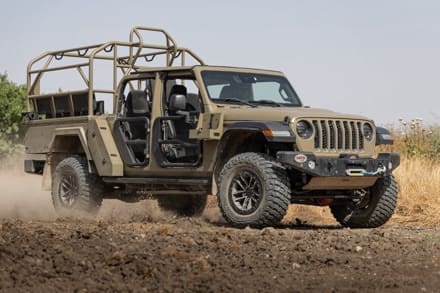
Oct 7th, 2026, Plasan and ASFIR 4X4 will unveil the new STORMER, a highly modular light tactical vehicle designed to meet the evolving requirements of special operations forces, reconnaissance units, rapid-response teams, and other missions where mobility, payload capacity, rapid deployment, and operational flexibility are critical.

Modern military and special operations forces increasingly require a vehicle capable of rapidly transporting larger teams, mission equipment, and casualties across challenging terrain while remaining easy to deploy, maintain, and sustain.

To address this need, Plasan and ASFIR 4X4 developed STORMER, a versatile tactical platform that combines the logistical simplicity of a commercial vehicle with the capability and flexibility required for demanding military operations.

Designed to carry up to 12 personnel and more than 1,000 kg (2,200 lb.) of payload, STORMER combines a proven commercial vehicle platform with a reinforced chassis and driveline, high off-road mobility, and a highly configurable mission architecture. Designed for airborne transport and rapid deployment, the vehicle enables forces to move personnel and mission equipment across demanding terrain.
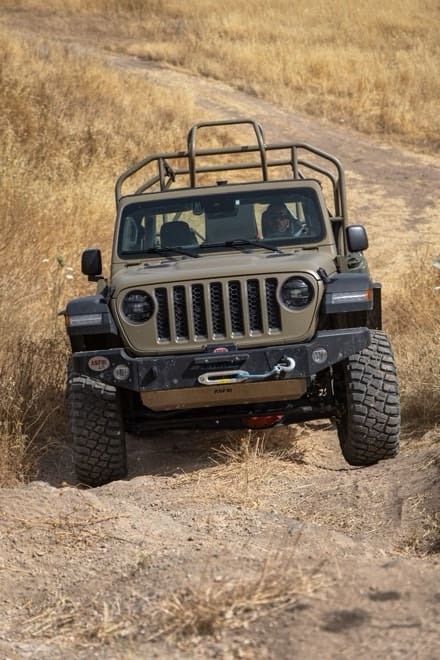
At the heart of STORMER is a rugged Jeep® Gladiator-based commercial off-the-shelf (COTS) platform, enhanced through Plasan’s automotive engineering expertise. The vehicle is powered by a 280-horsepower, 3.6-liter gasoline engine paired with an eight-speed automatic transmission, providing the power and drivability required for demanding operational environments.

The vehicle’s reinforced chassis and driveline, including upgraded Dana axles, are designed to support increased payload and durability while maintaining the mobility expected of a tactical vehicle. A modular roll-over protection system (ROPS) provides enhanced occupant protection while supporting 360-degree visibility and situational awareness.

STORMER is designed to adapt rapidly to changing mission requirements. Its configurable rear platform can support troop transport, logistics, medical evacuation (MEDEVAC), weapons, and specialized mission equipment, including radar, counter-UAS solutions, communications systems, and an electric winch. A three-position folding rear door enables rapid troop ingress and egress, secure transport of mission equipment, and a stretcher configuration for casualty evacuation.

The vehicle also incorporates a 24-volt electrical system, blackout driving capability, a communications console, and multiple antenna mounting points, supporting the integration of customer-specific mission systems. The extensive use of commercially available components is intended to simplify maintenance, logistics, and long-term sustainment.

STORMER builds on Plasan’s more than 40 years of experience in survivability, vehicle protection, and automotive engineering, as well as its proven track record with the SandCat family, which is in service across five continents. Developed in collaboration with ASFIR 4X4, STORMER combines Plasan’s defense engineering and survivability expertise with ASFIR 4X4’s extensive experience in off-road vehicle systems and components.

“STORMER was developed to address a growing operational requirement for a rapidly deployable platform capable of carrying larger teams and mission equipment without compromising mobility. By combining a proven commercial platform with Plasan’s engineering expertise, we created a highly adaptable vehicle that can be configured for multiple missions while remaining simple to operate, maintain, and sustain.”

Moshe Elazar, CEO, Plasan

“Our collaboration with Plasan enabled us to transform a proven commercial 4×4 platform into a practical and highly capable tactical solution. STORMER delivers the mobility, flexibility, and robustness required by demanding users while maintaining the reliability and supportability of a commercial vehicle platform.”

Tzachi Oz, CEO, ASFIR 4X4
US Army Releases ‘How the Army Fights’ Operational Warfighting Guidance

October 8th, 2026

WASHINGTON — The U.S. Army today released How the Army Fights, new operational warfighting guidance that provides a common framework for translating tactical success into campaign-level advantage for the Joint Force.

Developed by the Vice Chief of Staff of the Army, How the Army Fights builds on the Army’s multidomain operations doctrine by explaining how the force employs land power at the operational level of war. The guidance aligns how the Army organizes, trains, equips and sustains its formations for contested, high-intensity conflict.

“The challenge is on us as the leaders of the Army to make the decisions that are needed for the Army today,” said Acting Secretary of the Army Adam Telle. “This guidance provides a clear framework for focusing the Army’s efforts and ensuring the force is prepared to fight and win.”

The framework organizes Army land power through four interdependent operational elements:

  • Convergence creates and exploits positions of advantage by synchronizing effects across domains.
  • Strike degrades and destroys enemy systems through lethal and nonlethal fires at range.
  • Close Battle closes with and defeats enemy forces, seizes key terrain and consolidates gains.
  • Endurance postures, protects and projects combat power across time, distance and contested conditions.

Together, these elements enable operational maneuver and connect battlefield actions to campaign outcomes. Convergence and Endurance establish the conditions for success, while Strike and Close Battle deliver decisive effects.

How the Army Fights reinforces that the Army must maintain its technological edge while recognizing that war remains a human endeavor. The guidance addresses the integration of advanced capabilities, including uncrewed systems, artificial intelligence-enabled tools, resilient networks and precision fires, while underscoring the enduring importance of Soldier judgment, discipline and leadership.

“Technology will extend our reach and strengthen our combat power, but war remains a human contest of wills,” said Vice Chief of Staff of the Army Gen. Christopher C. LaNeve. “Our Soldiers remain our decisive advantage.”

The guidance directs the Army to prioritize operational readiness for the pacing threat, defend the homeland as a strategic base for power projection, and strengthen posture, interoperability and resilience with allies and partners. It also recognizes the need to sustain combat power across vast distances and under persistent adversary pressure.

How the Army Fights is unclassified and available for public download on Army.mil.

By U.S. Army Public Affairs

NIOA Welcomes Sovereign Defence Ambition

October 7th, 2026

7 OCTOBER 2026

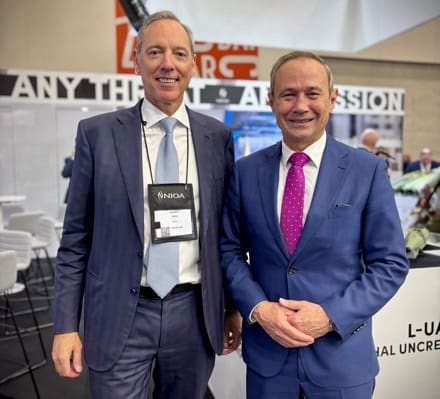
NIOA Group Managing Director and CEO Rob Nioa has welcomed NIOA’s selection as a prospective anchor tenant for Western Australia’s proposed defence and advanced-manufacturing hub.

Western Australia Premier and Defence Industries Minister Roger Cook and Minister Assisting the Minister for Defence Industries Amber-Jade Sanderson today announced that five businesses are progressing Memorandums of Understanding with the WA State Government to become prospective anchor tenants of the Western Defence Forge (WDF). First proponents identified for Western Defence Forge | Western Australian Government

The announcement was made during the Land Forces International Defence Exposition at the Perth Convention and Exhibition Centre where Australian-owned NIOA is among around 1000 exhibitors from 31 countries. 

Mr Nioa said NIOA was proud to support the WA Government in its ambition to strengthen sovereign capability.

“Australia has the foundations, capability and expertise needed to support a world-class sovereign defence industry,” he said.

“The opportunity now is to build on that strength through continued government investment and support, growing capacity, creating skilled jobs and securing critical defence capabilities for the future.

“As an Australian-owned company, NIOA has invested in sovereign munitions capability for decades and we see the WDF as an opportunity to build on that experience in partnership with the WA Government, Defence and industry.

“We look forward to working with government, industry and partners as we continue to develop important sovereign capability initiatives, supporting Australian industry and Australian jobs.”

DEFCON Advance Development Projects Presents a Capsule Event with Salomon Forces Division

October 7th, 2026

DEFCON Advance Development Projects has announced a collaboration with Salomon Forces.

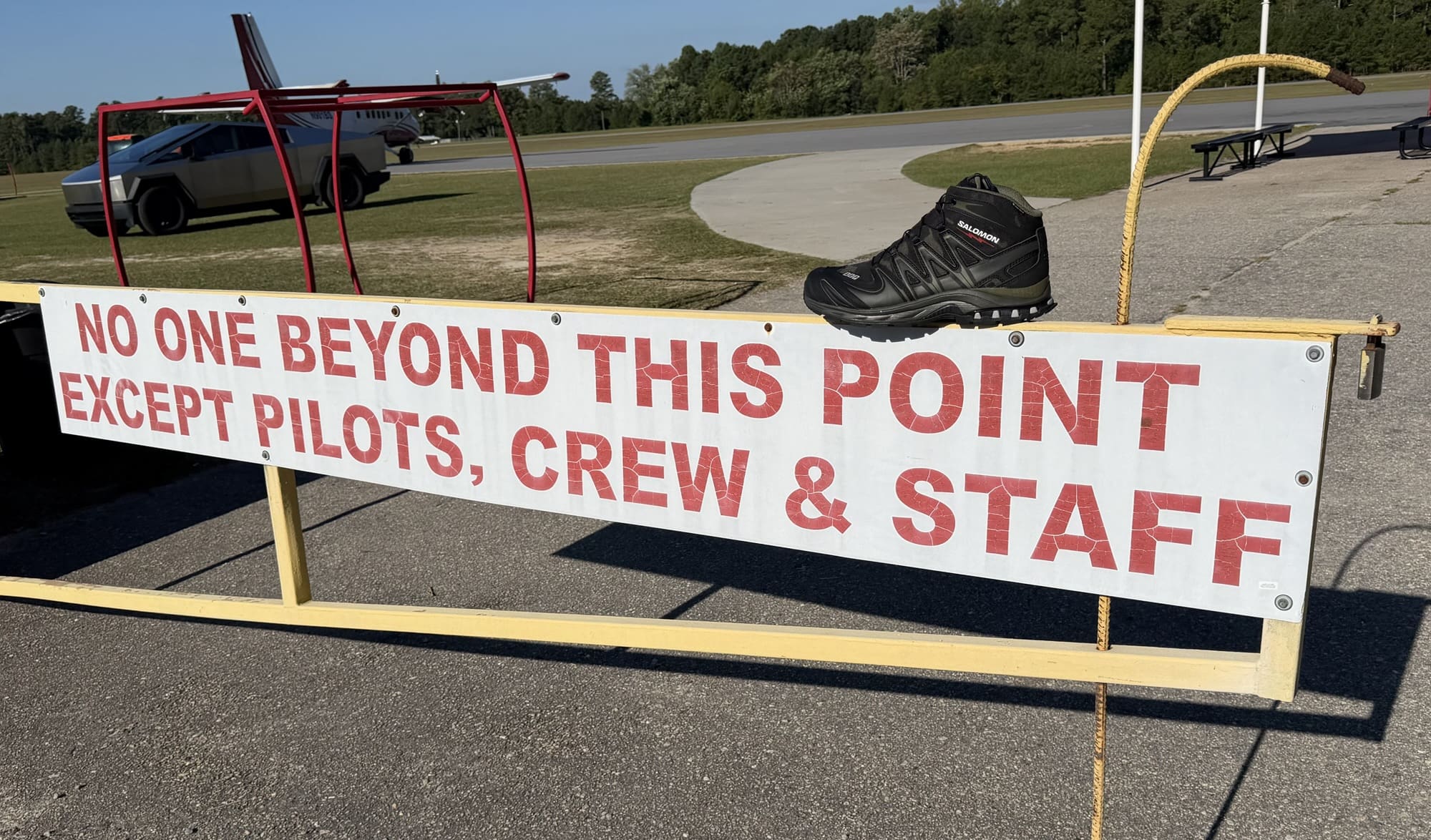
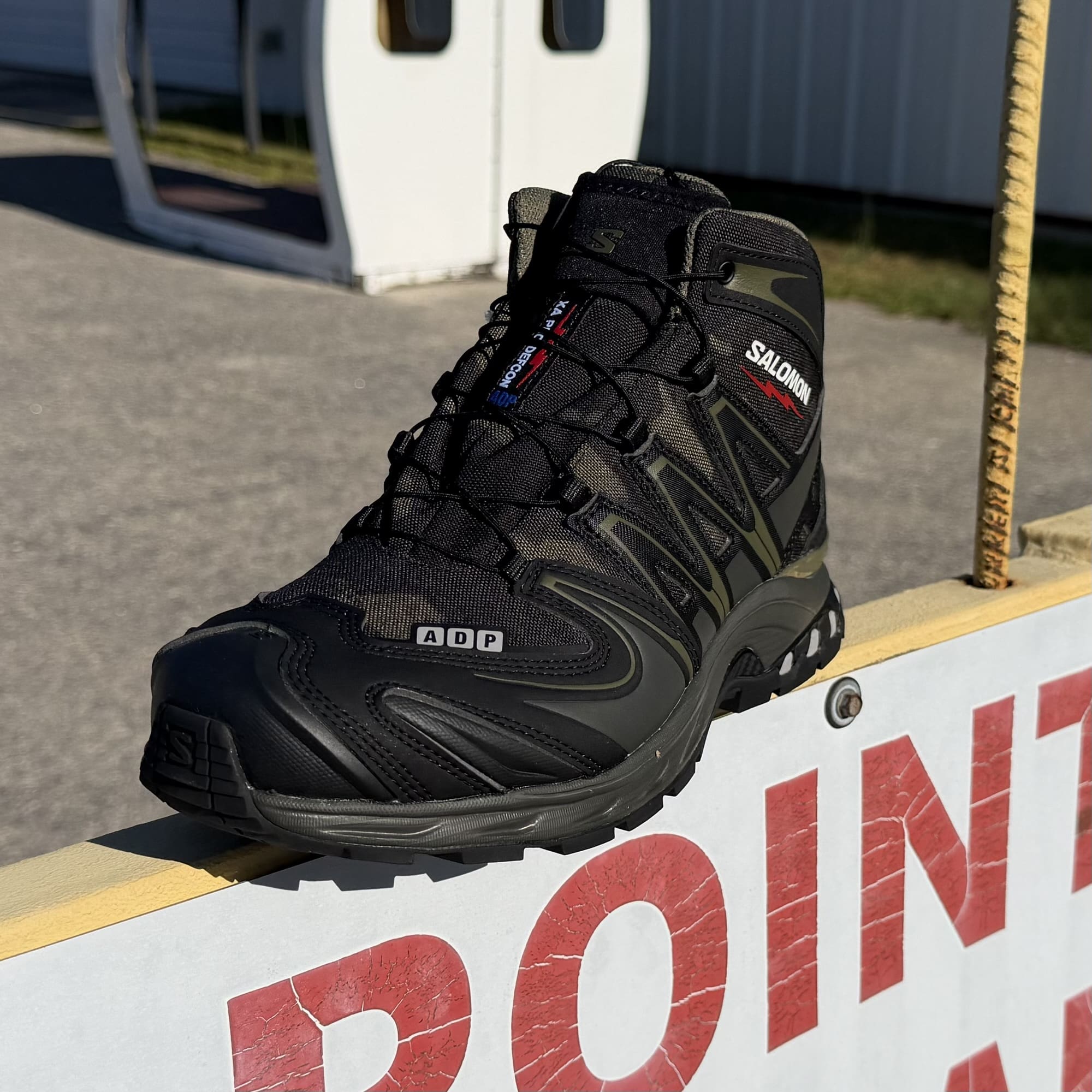
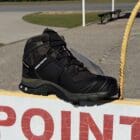
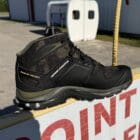
We got a preview at this week’s SHOP Show near Fort Bragg. The XA PRO MID GTX DEFCON features MultiCam Black and several DEFCON design cues. We can’t wait for you to get yours and discover them.

DEFCON’s latest capsule marks a couple of firsts:

  • This is the first time DEFCON has worked with Salomon Forces
  • This is the first time Salomon Forces has worked with another brand 
  • This is the first time Salomon Forces has used MultiCam

The capsule is releasing at a popup store in VB simultaneously online at defcongroup.com and tacticaldistributors.com

Attend the event in person:

DEFCON FORWARD OPERATIONS BASE
VIRGINIA BEACH, VA
SATURDAY, OCT 10TH

(address to be announced on socials stay tuned for location and times)

Rheinmetall and Praetorian Aeronautics Deliver Containerised AERIE Counter-Uncrewed Aircraft System

October 7th, 2026

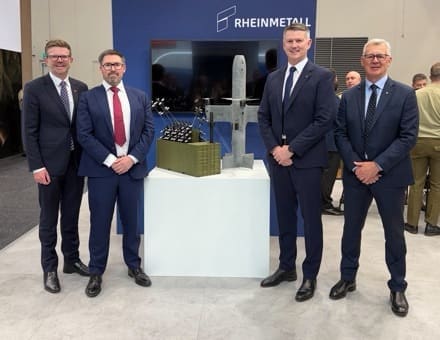
Rheinmetall, as a global integrated technology group with specialist air defence capabilities, has partnered with Australian company Praetorian Aeronautics to deliver AERIE; Autonomous-Engagement-Rapid-Interceptor-Effector – a containerised Counter-Uncrewed Aircraft System (C-UAS).

The Australian collaborative research and development partnership has delivered a prototype from concept within 12 months and signals Rheinmetall’s and Praetorian Aeronautics’ shared commitment to rapid advanced development to meet today’s evolving challenges.

The AERIE containerised air defence solution is an interceptor agnostic self-sustained, containerised deployable C-UAS launcher. It has the ability to house 20+ interceptors and is highly mobile, packing in to a 20ft ISO shipping container. 

The demonstrator features Praetorian Aeronatics’ Arrow Interceptor and Hadrian Command and Control (C2); designed and developed in Australia.

Arrow Interceptor is an autonomous, high speed, low cost interceptor for kinetic neutralisation of multiple UxS threat-types beyond visual range. Hadrian C2 is an advanced AI-enhanced system for management of autonomous effectors across air, land and maritime domains.

Able to be rapidly deployed and reloaded, AERIE offers a containerised, low-cost and effective solution to counter the threat posed by the increasing availability of low-cost uncrewed drones and aerial systems.

Speaking of the partnership, Nathan Poyner, Managing Director Rheinmetall Defence Australia highlighted the company’s global support of Australian sovereign capability.

“Rheinmetall has a long and proud history of transferring technology and forging alliances with partners around the world. Our work with Praetorian Aeronatics continues this focus and has delivered a working concept of advanced C-UAS using Australian ingenuity with global air defence engineering and manufacturing know-how” said Mr Poyner.

Praetorian Aeronautics’ CEO, Mr Brett Hill spoke of the pioneering Australian organisation’s growth and global partnerships.

“Praetorian Aeronatics has been developing cutting edge systems for more than three years. Our partnership with Rheinmetall brings together our unique AI-enhanced C2 system and Arrow Interceptor with Rheinmetall’s engineering systems and production capability.

“Together, we have delivered an Australian air defence solution for emerging global threats” said Mr Hill.

The AERIE system is scheduled to move to full operator demonstrations in Q4 2026.

Galvion Introduces SoloPack Arctic at AUSA 2026, Extending Soldier Power Capability to Extreme Cold Environments

October 7th, 2026

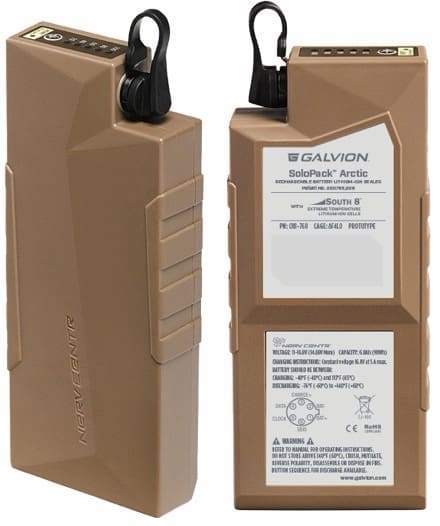
Galvion, a global leader in the design and manufacture of intelligent power and data management solutions, innovative head systems and integrated soldier systems, today announced the launch of its new Nerv Centr® SoloPack™ Arctic, an extreme-cold rechargeable battery designed to deliver reliable soldier power in Arctic operating environments. SoloPack Arctic will make its debut at AUSA 2026 in Washington, D.C., October 12–14, alongside Galvion’s full suite of Nerv Centr power and data solutions at Hall E, booth 7917.

Developed in collaboration with South 8 Technologies, SoloPack Arctic is the first product to emerge from the companies’ partnership announced in November 2025, which focused on applying South 8’s LiGas cell technology to Galvion’s field-proven SoloPack battery family for extreme-cold environments. The battery integrates South 8’s ARCTIC™ AE35 18650 cell, powered by the company’s proprietary LiGas® liquefied gas electrolyte technology. The AE35 cell is engineered to deliver power across a temperature range of -60°C to +60°C (-76°F to +140°F), extending lithium-ion performance into extreme-cold environments where conventional battery technologies can be significantly constrained, while maintaining capability across the full high-temperature operating range.

As modern military operations become increasingly dependent on powered equipment — including communications, navigation, sensing and situational-awareness systems — reliable energy has become mission-critical. Extreme cold adds another layer of complexity, making power performance and resilience an important component of Arctic operational readiness.

SoloPack Arctic builds on Galvion’s proven original SoloPack battery, retaining the familiar 98Wh, lightweight form factor while extending its capability for operations in extreme cold. At just 1.2 lbs (544 g), with an energy density of 178 Wh/kg, SoloPack Arctic provides a compact, soldier-worn power solution designed to integrate easily with existing equipment and power-management systems.

The AE35 cell also offers advantages beyond its extended temperature range. In cell-level ballistic penetration testing, South 8’s ARCTIC cells have demonstrated the ability to evacuate electrolyte following penetration, reducing burn duration to seconds at the individual cell level and reducing the risk of propagation to adjacent cells. This characteristic offers a potential benefit for soldier-worn power applications across operating environments, not only in extreme cold.

Initial quantities of SoloPack Arctic will be deployed in a number of upcoming U.S. Army field evaluations, including U.S. Army DEVCOM and International Cooperative Engagement Program for Polar Research (ICE-PPR)’s Operation Mjölnir, providing opportunities to evaluate performance in operationally relevant extreme-cold conditions.

Jonathan Blanshay, Founder and Executive Chairman of Galvion, said: “Arctic readiness is becoming an increasingly important requirement for the U.S. and allied forces, and reliable power is fundamental to operating effectively in those environments. Extreme cold exposes the limitations of equipment that performs well under normal conditions, so we need to ensure that the technologies soldiers depend on are ready to perform wherever the mission takes them.

SoloPack Arctic reflects our approach to capability development: identify a real operational challenge, bring together the right technologies and partners, and deliver a practical solution for the warfighter.”

Colt Delivers M4A1 Rifles to Guatemala Through Foreign Military Sales Program

October 7th, 2026

West Hartford, CT — October 6, 2026 — Colt is proud to support the Government of Guatemala’s Foreign Military Sales(FMS) program with the historic acquisition of more than 2,000 M4A1 rifles.

In announcing the initial delivery, the Guatemalan Army stated:

“In a ceremonial act, the High Command of the Guatemalan Army participated in the official delivery of the first batch of M4A1 rifles, acquired from the United States of America, a partner and strategic ally of Guatemala, as part of the modernization and transformation process of the three forces of the Guatemalan Army. This acquisition reflects the continuity of bilateral cooperation in defense matters and contributes to the updating of institutional capabilities for the fulfillment of the constitutional mission.”

The delivery represents an important milestone in Guatemala’s ongoing modernization efforts and reinforces the longstanding defense cooperation between Guatemala and the United States.

Colt has supported the U.S. military and allied nations for generations, providing proven small arms designed to meet the demands of military service. The M4A1 continues that legacy, delivering a trusted and field-proven platform to U.S. and allied forces around the world.

Colt is honored to support Guatemala through the FMS program and remains committed to providing dependable weapon systems that strengthen the capabilities of U.S. partners and allies.

Army Nears Crucial Brain Health Testing Milestone

October 7th, 2026

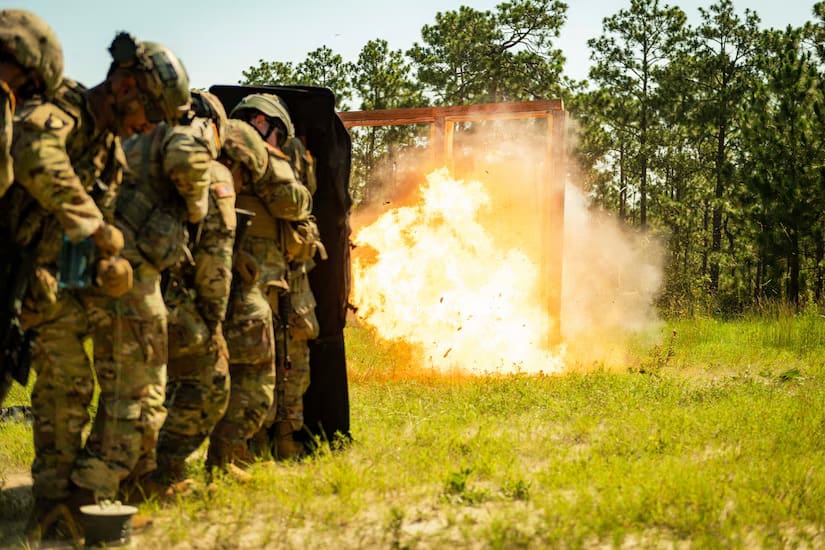
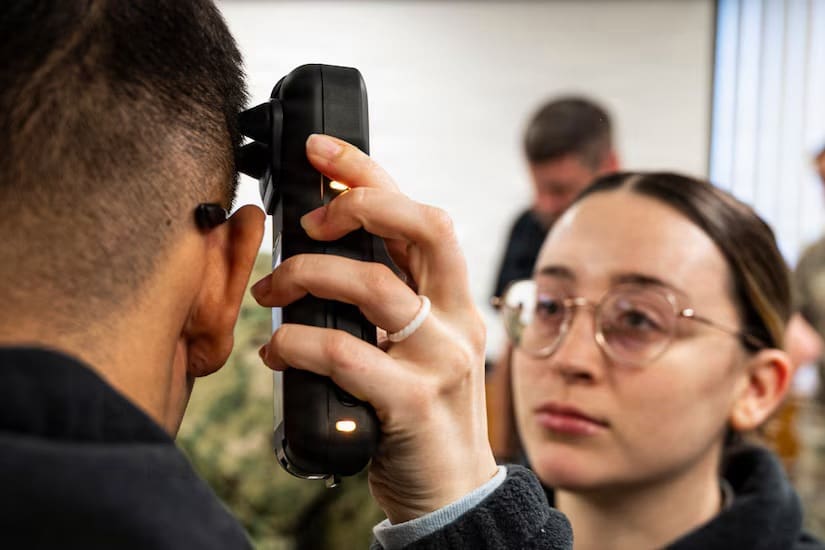
About 97% of soldiers have used the Neurocognitive Assessment Tool, helping medical professionals combat the effects of blast overpressure and low-level blast exposure, the Army’s top leader overseeing safety and occupational health said.

“It demonstrates our commitment to cognitive safety, medical readiness and warfighting capability,” said Jordan Gillis, the assistant secretary of the Army for installations, energy and environment.

The War Department established the NCAT as a required cognitive baseline assessment to monitor and track soldiers’ brain health and support recovery from traumatic brain injuries.

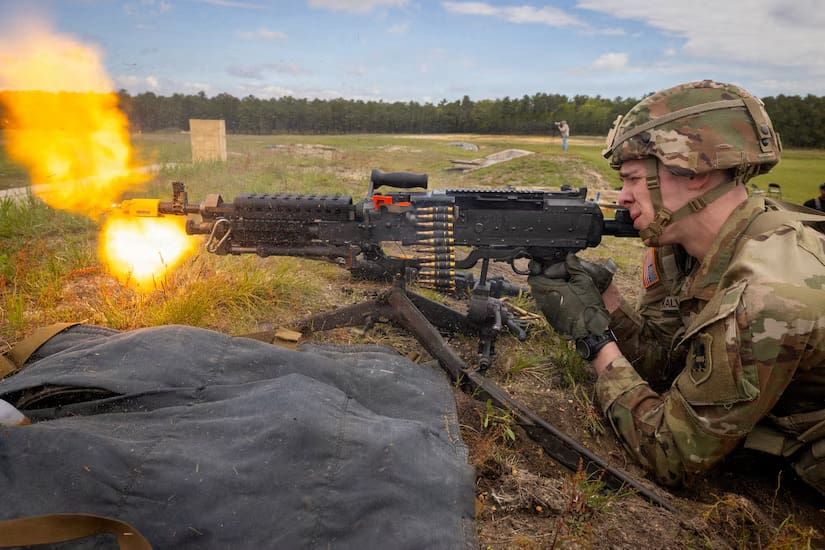
Soldiers in impacted career fields, including those operating heavy weapons systems such as field artillery, combat engineers and explosive ordnance disposal technicians, must take the assessment under a War Department directive.

Troops in these fields must take the assessment upon entering the military, before deployment and following an injury or suspected concussion. The Army requires soldiers in high-risk military occupational specialties to complete the assessment annually and for all soldiers to take the test every three years.

According to studies published by the National Institutes of Health, continuous exposure to blast shockwaves has been linked to traumatic brain injuries.

As the Army’s designated agency safety and health official, or DASHO, Gillis oversees the Army’s safety and occupational health program.

The NCAT is part of a broader overpressure program that the Army will soon publish in a servicewide directive, he said. The core tenets of the program include hazard assessment, risk assessment and exposure tracking, risk mitigation, cognitive monitoring, information management, illness and injury reporting, and training and education.

The Army identified blast overpressure and low-level blast exposure as critical occupational safety and health hazards.

“It affects everyone differently,” Gillis said. “The takeaway is we are trying to take care of soldiers and monitor their health. And if there is an impact, we’ll be able to treat them.”

Soldiers from across the force — active duty, Army National Guard and Army Reserve — must complete the NCAT; they began taking it in 2024. To further set an example for soldiers, Gillis recently took the test himself at the Pentagon Special Missions Auxiliary Clinic.

“This was the perfect time to be wearing both my DASHO hat and my Army Reserve hat and to meet the requirement that I have in the reserve [component] but also set the example for everyone across the force,” he said.

Gillis, a lieutenant colonel in the Army Reserve, serves as a field artillery officer, which places him in the high-risk category for blast overpressure effects.

During his years on active duty, he suffered injuries while deployed in support of Operation Enduring Freedom, for which he received a Purple Heart and a Bronze Star Medal. He knows firsthand the impact of exposure to heavy weapons fire and improvised explosive devices.

“I am from the era of soldiers who grew up in the height of the global war on terror, and many of us were exposed to blast overpressure through things like IED attacks,” Gillis said. “I myself experienced several IED attacks, and so I believe from personal experience that this is important to do.”

Gillis said managing soldier cognitive health and preventing potential traumatic brain injury and side effects remains a top readiness priority.

“[The NCAT] is an important part of taking care of soldiers, but what this does is, it sets a baseline for reaction times and for memory,” he said. “By establishing a baseline for all soldiers, we’re able to monitor brain health, as well as … let medical providers help with treatment, if required.”

By Joe Lacdan, War Media Activity