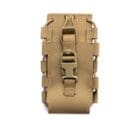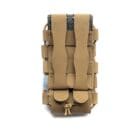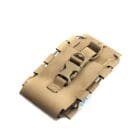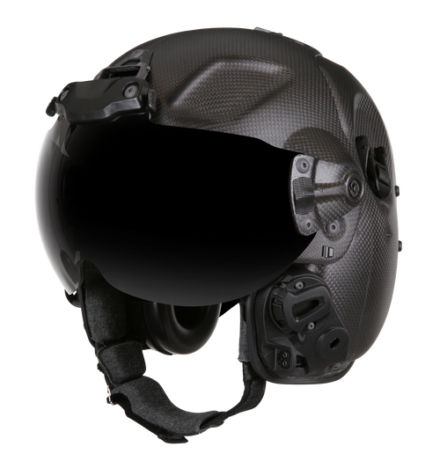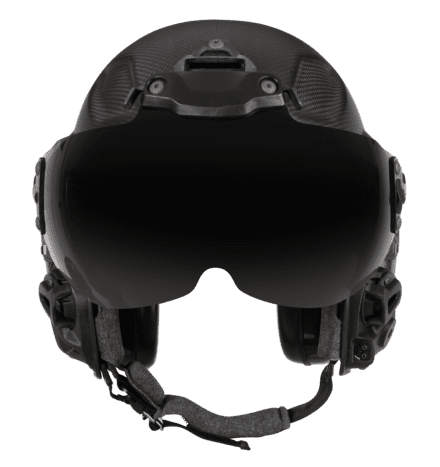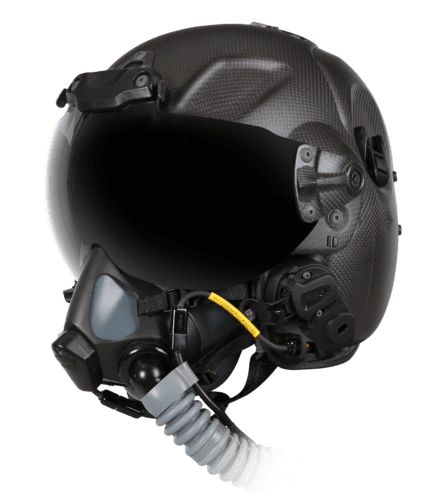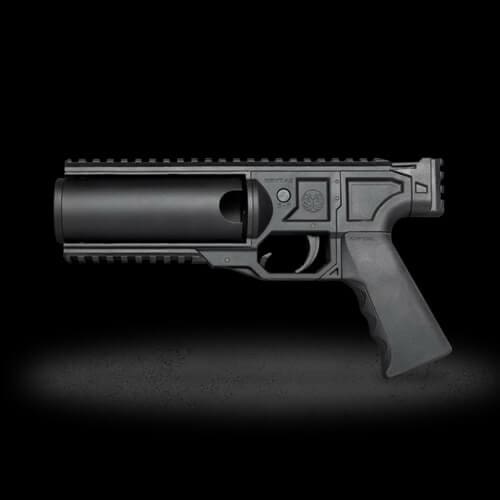
G24 Mount from Wilcox Ind

The Role of Smart Coated Fabrics in Next-Gen Battlefield Wearables and Defense Infrastructure

June 21st, 2025

Smart coated fabrics are transforming the Coated Fabrics for Defense Market by enabling adaptive, sensor-driven military textiles for next-gen combat efficiency
NEWARK, DE, UNITED STATES, June 18, 2025 — Introduction: The Evolving Utility of Coated Fabrics in Defense

In modern defense ecosystems, coated fabrics have long played a foundational role. Traditionally employed for protective tents, uniforms, vehicle covers, and chemical-resistant apparel, these fabrics are typically enhanced with coatings such as polyurethane, PVC, or silicone to improve resistance to fire, water, and chemicals. However, recent advancements are redefining this segment, transforming coated fabrics into intelligent, adaptive components of the military supply chain. This shift aligns with the broader transition toward digital warfare and performance-optimized soldier systems, where smart coatings are poised to revolutionize protection and functionality. These changes are accelerating the evolution of the Coated Fabrics for Defense Market into a hub of innovation and strategic value.

Defining Smart Coated Fabrics

What makes a coated fabric “smart” isn’t its base material but the functional capability of its coating. This could include embedded sensors, nanomaterials, or reactive compounds designed to detect, communicate, or adapt. These functionalities create fabrics that can actively participate in defense operations, rather than passively endure them.

Examples include:

– Thermochromic coatings that change color based on temperature

– Electroconductive coatings that relay biometric data

– Fluorescent detection for exposure to biological or chemical threats

– Nanostructured coatings with self-healing capabilities

These innovations are often developed using advanced materials such as graphene, metal-organic frameworks (MOFs), and phase-change polymers, which are increasingly influencing the Coated Fabrics for Defense Market outlook.

Make Informed Decisions – Access Your Sample Report Instantly! www.futuremarketinsights.com/reports/sample/rep-gb-6762

Real-World Applications in Defense

Smart coated fabrics are becoming instrumental across both soldier systems and field infrastructure. For instance, wearable fabrics with biometric sensors are now enabling commanders to monitor soldier vitals in real time. These systems can detect fatigue, dehydration, or stress and relay that data via wireless communication systems, improving situational awareness and medical response.

Meanwhile, infrastructure applications are expanding as well. Lightweight, heat-reflective tents coated with adaptive materials now provide better thermal insulation. EMI (electromagnetic interference) shielding fabrics protect mobile communication units from signal disruption in electronic warfare scenarios. These are not experimental—they’re being implemented in NATO field units and combat support facilities, further boosting the potential of the Coated Fabrics for Defense Market.

Use Case Highlights

Below are real-world implementations showcasing the potential of smart coated fabrics in defense:

– USA Army’s Warrior Web Program: Developing sensor-embedded suits that detect joint strain and prevent injury.

– Israeli Defense Forces: Utilizing nanotech coatings on tactical vests for chemical agent detection.

– Indian OFB (Ordnance Factories Board): Collaborating on smart uniforms that adjust thermal insulation in desert and Himalayan conditions.

– European Defense Agency Projects: Supporting camo coatings that adapt to surrounding infrared and visible light conditions.

Browse the Complete Report! www.futuremarketinsights.com/reports/coated-fabrics-defense-market

Market Drivers Fueling Smart Fabric Demand

Multiple forces are converging to elevate the role of smart-coated fabrics in defense strategies. The most notable include increased geopolitical tensions, a rise in chemical and biological warfare threats, and the broader movement toward digital integration in military operations. Defense procurement bodies are demanding multi-functional materials that reduce the logistical burden and enhance survivability in complex environments.

Additionally, with greater attention on soldier comfort and long-term injury prevention, wearable technologies are now embedded into fabric-based systems rather than external devices. The focus is on low-weight, durable, and integrated protection—qualities that smart coatings are uniquely positioned to deliver. These attributes are shaping the future of the Coated Fabrics for Defense Market as defense agencies seek value-added textiles.

Obstacles to Mass Adoption

Despite strong R&D momentum, smart coated fabrics face scalability and adoption challenges. Foremost among these is cost. Nanomaterial-infused coatings and embedded sensor grids significantly raise the cost per unit, making procurement difficult for lower-budget defense forces.

Purity and reliability are also concerns. Some coated fabrics face contamination or degradation in extreme climates, limiting their longevity. Additionally, power supply integration remains an unsolved issue for wearable electronics, particularly in remote or power-scarce combat zones.

Another barrier is standardization. There is currently no unified framework across NATO, BRICS, or other global blocs that governs performance benchmarks for smart-coated defense textiles. As such, cross-border procurement and integration remain complex and fragmented—an ongoing challenge for global expansion within the Coated Fabrics for Defense Market.

Regional Trends and Competitive Landscape

North America and Western Europe continue to dominate smart fabric innovation due to strong defense R&D funding and established military-industrial ecosystems. However, Asia-Pacific nations are rapidly closing the gap. China, South Korea, and India have launched targeted initiatives to localize advanced textile manufacturing for their armed forces, often supported by public-private R&D partnerships.

Textiles, Fabrics, Yarn & Fibres Industry Analysis: www.futuremarketinsights.com/industry-analysis/textiles-fabrics-yarn-and-fibres

The Middle East, with its extreme environments and growing defense budgets, is also emerging as a niche consumer for adaptive thermal fabrics and chemical-protective coatings. These trends are creating a multi-regional competitive ecosystem in the Coated Fabrics for Defense Market.

The Future of Coated Fabrics in Defense

As combat scenarios grow more asymmetric and technologically complex, coated fabrics will serve increasingly as both shield and sensor. The integration of AI for data interpretation, wearable computing, and real-time health diagnostics into fabrics is set to blur the line between clothing and equipment.

This transition won’t just change procurement contracts—it will redefine defense strategies around survivability, mobility, and intelligence. The Coated Fabrics for Defense Market is no longer confined to passive materials; it is evolving into a sector that delivers smart, data-ready, and mission-critical solutions for the battlefield of tomorrow.

Related Reports:

Industrial Pipe Insulation Materials Market: www.futuremarketinsights.com/reports/industrial-pipe-insulation-materials-market

Pharma Grade Sodium Bicarbonate Market: www.futuremarketinsights.com/reports/pharma-grade-sodium-bicarbonate-market

Cold Rolling Oils/Lubricants Market: www.futuremarketinsights.com/reports/cold-rolling-oils-lubricants-market

Hydrofluoric Acid Market: www.futuremarketinsights.com/reports/hydrofluoric-acid-market

Natural Cinnamic Aldehyde Market: www.futuremarketinsights.com/reports/natural-cinnamic-aldehyde-market

About Future Market Insights (FMI)

Future Market Insights, Inc. (ESOMAR certified, recipient of the Stevie Award, and a member of the Greater New York Chamber of Commerce) offers profound insights into the driving factors that are boosting demand in the market. FMI stands as the leading global provider of market intelligence, advisory services, consulting, and events for the Packaging, Food and Beverage, Consumer Technology, Healthcare, Industrial, and Chemicals markets. With a vast team of over 400 analysts worldwide, FMI provides global, regional, and local expertise on diverse domains and industry trends across more than 110 countries.

Join us as we commemorate 10 years of delivering trusted market insights. Reflecting on a decade of achievements, we continue to lead with integrity, innovation, and expertise.

SIG SAUER Announces the ROMEO8T-AMR and JULIET3T-AMR System

June 21st, 2025

NEWINGTON, N.H., (June 19, 2025) – SIG SAUER, industry leading manufacturer of cutting-edge firearms, optics, and ammunition announces its latest optic innovation, the ROMEO8T-AMR and JULIET3T-AMR System, featuring SIG SAUER’S all-new Automatic Modified Reticle (AMR) technology. 

“Our products are engineered to exceed the demands of elite warfighters around the world and our latest optic innovation does just that,” said Andy York, President, Electro-Optics. “Our elite end-users expect innovative, battle-tested products like our new ROMEO8T-AMR and JULIET3T-AMR System. These innovative optics provides shooters the SIG SAUER precision they need in dynamic environments.”

Inspired by SIG SAUER’s original ROMEO8T red dot, the ROMEO8T-AMR™ is a powerhouse optic pushing the technological envelope while reducing overall size and weight by over 30% compared to traditional holographic sights. 

Developed alongside the all-new JULIET3T-AMR™ micro magnifier, the ROMEO8T-AMR leverages SIG SAUER’s revolutionary Automatic Modified Reticle™ technology to instantly transition between user-selectable reticle configurations as the magnifier is engaged or disengaged. The speed and versatility of the patented AMR™ system allows shooters to maintain absolute precision while quickly transitioning between reticle configurations best suited for close-range engagements and mid-range engagements. 

Despite its compact build, the ROMEO8T-AMR boasts a massive 40MM objective lens for unrivaled situational awareness, while the high-performance coatings and lens system deliver remarkable performance under night vision. 

Engineered to exceed the demands of elite warfighters around the world, the ROMEO8T-AMR and JULIET3T-AMR system meet MIL-810-STD protocol, are IPX8 waterproof and fogproof, and fully covered by SIG SAUER’s Infinite Guarantee™.

Product Details:

AMR™ – Automatic Modified Reticle (Patented)

Massive 40MM High-Performance and Multi-Coated Lens

30% Smaller than Competitive Holographic Sights

Dedicated NV Override Control

50,000 Hour Runtime On CR123 Utilizing MOTAC™

MIL-810-STD Durability

IPX8 Waterproof and Fogproof Certified

Assembled in Oregon, USA

The ROMEO8T-AMR and JULIET3T-AMR system was previewed at SIG NEXT 2025, a one-of-a-kind innovation showcase and immersive product and brand experience that can only come from SIG SAUER, the defense contractor of the future.

The ROMEO8T-AMR and JULIET3T-AMR system is now shipping and available at retailers nationwide. To learn more, visit sigsauer.com.

WRANGB Hosts Arrival Ceremony for OA-1K Skyraider II

June 21st, 2025

WILL ROGERS AIR NATIONAL GUARD BASE, Okla.

The 137th Special Operations Wing held a welcome ceremony for the arrival of OA-1K Skyraider II aircraft to Will Rogers Air National Guard Base, June 07, 2025, Oklahoma City. 

The Skyraider II is a cost-effective, versatile aircraft that will provide essential support for operations outlined in the 2025 Interim National Defense Strategy. WRANGB now serves as the home for the Skyraider II’s formal training unit under the 492nd Special Operations Wing. 

“Seamless integration with total force partners has been the standard for the 137th Special Operations Wing,” said Col. Shelby Dreyer. “We are continuing that legacy as we usher in this Total Force Initiative alongside the 492nd Special Operations Wing to train for the multi-capable mission of the OA-1K Skyraider II.”

The ceremony introduced the Skyraiders II’s capabilities and mission set to 137 SOW Citizen Airmen. The Skyraider II is a new cost-effective crewed aircraft that supports geographically isolated Special Operations personnel in austere locations.

“The 137th SOW continues to build and preserve a force where human performance is our critical advantage – leaning into the advanced training and resource management that supports our preparedness in every environment, against every adversary,” said Dreyer. “With the partnership of our wings, this is the right time. Oklahoma is the right place.”

By SSgt Nicholas Swift

137th Special Operations Wing

Spiritus Systems Releases the EUD Bridge

June 20th, 2025

The EUD Bridge is a purpose-built mounting solution designed to integrate your End User Device (EUD) seamlessly into your Chest Rig.

Constructed from highly durable and lightweight CURV thermoplastic composite material and Squadron fabric, the EUD Bridge securely mounts between your chest rig shoulder straps, providing a stable and comfortable platform for mission-critical ATAK devices.

The EUD Bridge features a tuck-tab and pull-tab design that allows you to mount it or remove it within seconds. In addition, there is a mounting plate kit included which allows for direct hard point mounting of a MPU5 PTT but also features slits for mounting PTTs with clips. The EUD Bridge comes with a bungee retention system that can be directly mounted to the bridge to keep devices secure to the chest.

Whether you’re part of a reconnaissance team, JTAC, orcontrolling advanced tech on the battlefield, the Spiritus Systems EUD Bridge ensures your digital tools are exactly where you need them.

The EUD Bridge is available now in the following colors: MultiCam, Ranger Green, Coyote Brown, and Black.

For more information visit: www.spiritussystems.com

SIG NEXT 25 – Royal Marines L143A2

June 20th, 2025

This is a little bit of an unexpected treat. I was able to fire the Royal Marines L143A2 rifle which were purchased a couple of years for the Future Commando Force operational concept under Project HAY, but not announced until March of this year.

It’s a SIG MCX carbine features 5.56 NATO 12.5″ barrel, but there’s also a 300 BLK variant also in service.

As you can see in the photo released by the Royal Marines, this is how it is equipped for maritime operations, with optic and magnifier and suppressor.

SIG NEXT 25 – HYP Rifle

June 20th, 2025

Coming Winter 2025 is what SIG describes as the most durable AR10 platform on the market, the HYP rifle. The name stems from the rifle’s ability to handle the high pressures (HYP) from SIG’s composite case ammunition.

Like with the 516 G3 Mohawk, SIG took lessons learned from the MCX rifle and applied them to a gas impingement AR pattern gun. It features a steel cam path insert and steel feed ramp along with a chrome lined hammer forged barrel. In fact, the barrel has a QD muzzle device which accepts the MG68QD suppressor used on the Army’s Next Gen M250 machine gun. It’s also fully ambidextrous, mirroring the controls on the 516 G3 Mohawk.

I had expected the HYP to also incorporate the side charging handle found on the 516 G3 Mohawk, but they left it off of the HYP in order to keep cost down. Turns out, the HYP is $2000 less than the MCX-SPEAR, making it a great choice for those who want to take advantage of .277 FURY. As you can see above, it also uses the steel 20 round magazines for the M7 Next Gen rifle.

I increased the contrast on the photo of this gel block to give you an idea of the performance of .277 FURY. This commercial ammo features 150gr NOSLER Accubond bonded core bullets.

Additional calibers will assuredly follow .277 FURY, including the ability to fire HYP versions of .7.62 and others.

Coming Winter 2025.

SIG NEXT 25 – 516 G3 MOHAWK

June 20th, 2025

SIG was actually considering retiring the 516 but when they did a design review, the decision was made to incorporate lessons learned and best features from their other rifle offerings on a third generation of the rifle. The result is the new 516 G3 MOHAWK.

For instance, this new version of the popular 516 incorporates a steel cam pathway reinforcement insert into the upper receiver along with steel feed ramps, both found on the MCX.

The carbine also uses the MCX bolt with its tapered lugs and firing pin latch which helps prevent slam fire. Additionally, like with the MCX, the forward assist can be removed and a plug out in place.

Another feature which found its way over from the MCX line is the left-side non-reciprocating side charging handle. The side charger is removable and they’ll offer an insert to fill the slot. Likewise, you can remove the t-handle charger and replace it with a clamp to seal the rear of the receiver, eliminating gas in the face.

They’ve retained the 516 G2’s short stroke piston system, but production models will have a new valve lever with three wings in order to make it easier to manipulate between the three gas positions.

The carbine’s 16” chrome lined hammer forged barrel has a 1:7 twist and features a muzzle device which eliminates flash as well as climb and is compatible with SIG’s suppressors. Expect an 11.5” option as well.

To improve ergonomics they have incorporated a set of fully ambidextrous controls as well as installing a right side, side lock/release. Meanwhile, it has a SIG Matchlite DUO curved trigger.

Another major improvement is the new free-float handguard. Gone is the old “cheese grater” full length Picatinny rails which have been replaced with M-LOK slots.

With all of these improvements, the 516 G3 might be a good candidate for the UK’s upcoming Project Graeburn, the SA80 replacement.

The gun was very flat shooting, even on full-auto, and has soft recoil making it very controllable and easy to quickly transition targets. If I was going to buy another AR, it would be this one.

Look for the SIG 516 G3 MOHAWK winter 2025.

www.sigsauer.com/516g3-mohawk

SIG Advanced Concepts

June 20th, 2025

With the advent of a new business element named SIG Advanced Concepts, SIG SAUER has expanded their efforts to integrate their core capabilities into unmanned systems. Preferring to remain platform agnostic, they will introduce non-lethal through lethal and ISR capabilities into existing drone and other robotic systems. These are commonly referred to collectively as unmanned system or UXS where the “X” could be an Air, Ground, or Underwater system.

SIG’s goal is to work with the customer and integrate with their existing infrastructure, utilizing existing UXS, communications, and controllers. Concentrating on balancing payload versus desired effect and flight time, they optimize the customer’s drone’s configuration. Lessons learned in operational deployments of UXS are constantly applied to the development effort.

Additionally, they are training both new and existing drone operators into how to use these newly integrated systems, from basic skills all the way to the most advanced, complex operations. After mastering how to fly with the new payload, students use milsim and paint systems during the train up period before transitioning to live fire scenarios with drone borne firearms.

Look for more details soon.