Aquaterro

Red Cat Selects SpiderOak to Conduct Blue UAS Cybersecurity Assessment for Black Widow Platform

December 17th, 2025

Services strengthen cyber resilience for Army’s Short-Range Reconnaissance (SRR) program and future unmanned systems across all domains

RESTON, Va., Dec. 16, 2025 — SpiderOak, a leader in zero-trust cybersecurity solutions for space, aerospace, and defense, announced today that Red Cat Holdings (NASDAQ: RCAT), a recognized industry leader in advanced all-domain drone and robotic solutions for defense and national security, has selected SpiderOak to perform a comprehensive Blue UAS cybersecurity assessment of its Black Widow™ Short-Range Reconnaissance (SRR) platform.

As part of the Defense Innovation Unit’s (DIU) Blue UAS framework, SpiderOak—an official Recognized Assessor—will conduct vulnerability analysis, penetration testing, and Foreign Ownership, Control, or Influence (FOCI) evaluations to support Red Cat’s inclusion of the Black Widow™ on the Blue UAS Cleared List.

Strengthening Cyber Resilience Through Blue UAS Assessments

As a Defense Innovation Unit (DIU) Recognized Assessor, SpiderOak delivers a suite of independent cybersecurity evaluation services under the Blue UAS framework—designed to verify and enhance the cyber resilience of unmanned systems before they enter the Department of War supply chain.


For Red Cat’s Black Widow™ platform, SpiderOak’s team will perform a comprehensive Blue UAS assessment, including vulnerability analysis, penetration testing, and Foreign Ownership, Control, or Influence (FOCI) evaluations. These services provide critical validation that the platform meets stringent U.S. Government cybersecurity, supply chain, and compliance standards.

SpiderOak’s methodology integrates advanced threat modeling, secure-by-design analysis, and supply chain forensics to help partners like Red Cat meet or exceed requirements under NIST 800-171, NIST 800-53, and Executive Order 14028. Through its role as a Recognized Assessor, SpiderOak supports the rapid fielding of trusted, mission-ready systems that advance U.S. defense and intelligence operations across all domains.


Support for Secure All-Domain Operations

“Red Cat is an industry leader pushing the boundaries of all-domain defense operations, and the Black Widow™ platform plays a critical role in ensuring our warfighters maintain situational advantage,” said Michael Carlson, Senior Director of Business Development for SpiderOak. “Our Blue UAS assessment services are designed to deliver outcomes quickly for the warfighter—helping trusted partners like Red Cat validate cyber readiness, achieve certification, and get critical capabilities into the field sooner. By bringing zero-trust principles and a rigorous, data-driven assessment methodology to the forefront, we’re enabling faster, more secure deployment of mission-critical UAS across the Department of War.”

“Cybersecurity is foundational to trust and mission assurance,” said Jason Gunter, VP of Tech and Innovation at Red Cat Holdings. “Working with SpiderOak ensures that Black Widow™ not only meets Blue UAS standards but sets a new benchmark for how defense-grade UAS platforms should approach cyber protection and supply chain integrity.”

Enabling Secure UAS Integration into the DoD Supply Chain

This engagement reinforces the continued importance of the DIU Blue UAS program in accelerating access to secure and compliant unmanned systems across the Department of War. Through its role as a Recognized Assessor, SpiderOak supports industry partners in meeting stringent cybersecurity and compliance requirements while enhancing the resilience of command, control, and telemetry links across contested environments.

Israel Buys Colt M4A1 via FMS Contract

December 17th, 2025

Using a Foreign Military Sales contract announced earlier this week, the Israeli Defense Force has ordered M4A1 carbines from Colt Industries.

The contract awarded by Army Contracting Command is valued at $12.9 million and includes carbines and suppressors. It is to be fulfilled by the end of June of 2026.

Killer Innovations to Exhibit at SHOT Show 2026 — Booth #70929

December 17th, 2025

Tumwater, WA   – Killer Innovations, the engineering-driven manufacturer behind Icon Defense and Velocity Defense, announced today that it will exhibit at SHOT Show 2026 at Booth #70929. The company will showcase its latest advancements in precision-engineered firearm components, continuing its commitment to pushing the boundaries of performance, manufacturing, and innovation.

Killer Innovations operates on a culture of craftsmanship, ingenuity, and family. More than a traditional manufacturer, the company is a tight-knit team dedicated to rethinking how precision firearm parts are designed and produced. With a constant drive to innovate, the company actively seeks out the newest technologies, tools, and processes to improve accuracy, durability, and manufacturing efficiency. When the right solutions don’t exist, Killer Innovations engineers and builds them in-house.

Its state-of-the-art U.S. facility continues to evolve with cutting-edge capabilities, reflecting the team’s commitment to precision, quality, and continuous improvement. Every product that carries the Killer Innovations name is 100% American-made, with no outsourcing overseas—an uncompromising standard the company proudly upholds.

SHOT Show 2026 attendees are invited to visit Booth #70929 to explore the newest developments from Killer Innovations, Icon Defense, and Velocity Defense, and to meet the team behind the engineering.

To schedule a meeting or request additional information, please contact:

support@killer-innovations.com

GAO Report on Weapon Systems Testing

December 17th, 2025

In a recent report entitled, “Weapon Systems Testing: DOD Needs to Update Policies to Better Support Modernization Efforts” the Government Accounting Office suggests that the US military adopt iterative testing processes to further modernize its newly adopted acquisition methodology.

Common in software development, iterative testing is a repeated cycle of developing, testing, and refining a product in small, incremental steps, using user feedback and data from each cycle to make gradual improvements, rather than aiming for a perfect release all at once. Already adopted to rapidly fill emerging warfighting gaps like Counter-UAS and Electromagnetic Warfare, where there is little to no current capability, this process has not yet been applied to larger systems such as aircraft, ships and armored vehicles. In fact, the constant swing for the fence and a 10X capability improvement has stymied multiple programs.

The GAO offers 13 recommendations. They are extensive and directed at the Department writ large as well as the service departments.

Specifically, they recommend involvement of testers in acquisition strategies; iterative approaches to testing, including use of digital twins and threads; and ongoing end user input. DOD concurred with seven recommendations, partially concurred with five recommendations, and did not concur with one recommendation.

Army Teams with Industry to Refine AI Potential Supporting Command and Control

December 17th, 2025

ABERDEEN PROVING GROUND, Md. — There are no algorithms in foxholes – yet.

While the U.S. Army has applied emerging artificial intelligence tools to streamline processes across the enterprise — most recently with the rollout of the Department of War’s new generative AI website, GenAI.mil — the impact of AI on the tactical edge Soldier and commander is still taking shape.

With the help of industry experts and Soldier experimentation, however, the Army is building a blueprint for algorithmic warfare at the edge across technology, training, concepts, procurement, and ethical implementation. The potential of AI supporting command and control, C2 — using tools to rapidly process data, inform commanders’ decisions, speed the fires kill chain, and reduce the cognitive burden on Soldiers — is a major focus of ongoing operational prototyping of Next Generation Command and Control, NGC2, the Army’s priority effort to leverage rapid progress in commercial technology to deliver information across all warfighting functions.

The overarching goal of AI for C2, leaders said, is to enable human decisions at machine speed.

“No other technology will have a bigger impact on future warfare than artificial intelligence,” said Brig. Gen. Michael Kaloostian, director of the Command and Control Future Capability Directorate, U.S. Army Transformation and Training Command. “The way we harness and adopt AI to support decision-making, and to make sense of what is expected to be a very chaotic battlefield in the future, will ultimately give commanders options to achieve decision overmatch.”

Applying AI at echelon — designing secure models for austere conditions, tailorable for specific missions and warfighting functions — was the focus of an industry workshop conducted earlier this month by the C2 Future Capability Directorate and Army Contracting Command-Aberdeen Proving Ground.

The market research event, with technical experts from a range of companies and Army organizations, produced feedback on how the Army can better leverage private sector innovation in AI for C2. Areas to maximize industry opportunities and expertise included prioritization of desired capabilities over time, as well as the availability and relevance of Army warfighting and training data that AI models can consume.

“Everybody sees private sector investment happening in AI, so where does the tactical Army fit in the AI market?” said Col. Chris Anderson, project manager Data and AI for Capability Program Executive Command, Control, Communications and Network. “The Army’s unique value proposition for industry is our data and access to warfighters.”

The workshop session also came on the heels of a request for information released on Sam.gov on Dec. 2, focused on gaining industry feedback on the emerging data architecture for NGC2. The Army securely shared the draft architecture on Sam.gov to foster transparency and invite industry ideas that will augment the current NGC2 prototype experimentation and designs underway with vendor teams supporting the 4th Infantry Division and 25th Infantry Division.

“The Army’s approach with Next Generation C2 has always been commercially driven, with industry as foundational partners,” said Joe Welch, portfolio acquisition executive for C2/Counter C2, and Executive Director, T2COM. “That means all of industry — not just our current team leads, but a large range of companies that can contribute to a thriving ecosystem. This RFI is another step in our commitment to sharing technical details and applying industry feedback as we move forward with NGC2.”

One challenge the Army and industry are jointly facing with AI implementation at the edge is that models are only as good as the data they can ingest and interpret. But available data, as well as computing and network resources required to process it, will vary widely depending on the tactical environment.

“For AI at the strategic level, that’s almost entirely unconstrained by store and compute,” Anderson said. “Down at the foxhole, it’s an entirely different story.”

Because of that complexity, the Army is designing the NGC2 ecosystem to rapidly onboard new AI models, building on a common foundation but able to address new missions and environments.

“We’re looking to really provide an ecosystem so that model developers and Soldiers have the capability to fine-tune models at the edge,” Welch said. “When we say that the Army has specific model gaps that we need addressed, it will be a pipeline to very rapidly move that through.”

Another element of the Army’s roadmap is determining what algorithmic warfare capability is required by echelon, from Corps to company and below, informed by the data each unit needs to make decisions, Kaloostian said. The NGC2 prototyping underway with the 4th ID’s Ivy Sting and 25th ID’s Lightning Surge events is providing significant insight into those requirements, as well as the tactics, techniques and procedures for employing different AI applications, he said.

Even as technology and concepts rapidly evolve, the Army will maintain its ethical standards in using AI to support C2 decisions made by humans, leaders said. For example, during the 4ID Ivy Sting series at Fort Carson, Colorado, the division has trained AI models to review sensor data and rapidly recognize, process, and nominate targets. The commander reviews that information and decides whether to order a fire mission. At the staff level, AI can also reduce the time Soldiers spend sifting through and organizing data from a constantly expanding range of data sources and digital systems.

“A lot of what we’re looking to provide here is a reduction in the cognitive burden that comes with the use of a lot of digital tools,” Welch said. “Not just AI target recognition, but generalized AI capabilities are going to help lower that cognitive burden so that our Soldiers can focus on their core tasks to complete the mission.”

By Claire Heininger

Long Anticipated Spiritus Systems LV-120 Available Thursday @ 1500 EST

December 16th, 2025

Spiritus Systems has announced that the LV-120 Plate Carrier Kit release along with the LV-120 tubes shoulder strap (sold separately) will be available for order on their site Thursday, 18 December at 3 pm EST.

Available in MultiCam, Ranger Green, Coyote Brown, and Black. Sizes Medium and Large will be available at launch with Small and XL releasing at a later date.

www.spiritussystems.com

Major Order from the Netherlands: Rheinmetall to Supply Skyranger 30 for Mobile Air Defence – Order Value in the Triple-Digit Million Euro Range

December 16th, 2025

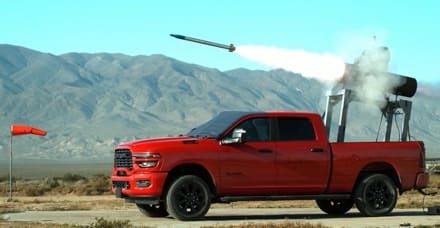
Rheinmetall has received another major order for mobile air defence systems. The Dutch Ministry of Defence has commissioned Rheinmetall Air Defence to supply a two-digit number of Skyranger air defence systems for the Dutch armed forces. The order value is in the triple-digit million euro range. The first Skyranger weapon platforms are to be delivered at the end of 2028, with the final delivery scheduled before the end of 2029. A large part of the value added will be generated locally in the Netherlands.

The Skyranger Weapon Platform consists of a standard Skyranger 30 air defence turret and a lower mount, which allows the system to be used mobile on an customer’s armoured combat support vehicle or to be operated stationary from the ground. In addition to the Skyranger weapon platforms, the customer has ordered tactical level control nodes and hooklift transport platforms for purely stationary deployment. The scope of delivery also includes the integration into the existing Dutch air defence architecture, classroom simulators and a comprehensive integrated logistics support package.

The Skyranger 30 provides the ideal balance of mobility, protection, flexibility and precision, meeting the increasing demands of challenging threat scenarios at close and very close range. Designed as a modular hybrid solution, the turret houses a powerful 30 mm x 173 KCE revolver cannon, the necessary sensors including a tracking radar and can also be equipped with additional effectors such as surface-to-air guided missiles in the future. Its well-considered design, high dynamics, large elevation range and state-of-the-art sensors enable autonomous and networked operations. The system’s airburst ammunition, which has a programmable airburst point of detonation, is particularly effective against drones.

‘We are grateful for the Dutch armed forces’ confidence in our capabilities,’ said Oliver Dürr, Managing Director of Rheinmetall Air Defence. ‘This latest order consolidates Rheinmetall’s position as the global market leader in the field of gun-based air defence. It also continues the success of the Skyranger 30. The configuration for the Dutch armed forces, which enables both highly mobile operations and stationary use without a carrier vehicle, is unique to date. Another NATO country has already expressed interest in this configuration.’

ISTEC Secures 4-year UK MOD SPTC Weapons Mount Spares Contract

December 16th, 2025

ISTEC Services Limited, a British company with 36 years of operationally proven experience in the design, manufacture and supply of complex weapon integration solutions and smoke discharger systems (SDS) for military platforms, has recently secured a 4-year contract for the supply of weapon mount spares across all 3 services via the Babcock Service Provision and Transformation Contract (SPTC).

ISTEC has been providing weapon mounts of various guises to the UK MOD for over 30 years. Their mounts were first used by Special Operations vehicles back in the 1990s and since then have been found on key vehicles used on major operations (Iraq and Afghanistan) such as WMIK, Mastiff, Husky and Jackal. Their pedestal mounts and crew-served gun mounts are fitted to the majority of Naval platforms and the GPMG mount is also fitted to the Puma 2 helicopter. As the preferred weapons mount supplier to the UK MOD, for the majority of platforms, there are thousands of mounts of various types currently in service. Therefore, ISTEC has been responsible for the necessary spares and maintenance requirements for DSG, and this new contract is a natural extension of that commitment.

In March 2025, Babcock was awarded a 5-year extension to the existing 10-year SPTC, thus cementing Babcock as a strategic partner to the British Army for the foreseeable future. Through this long-term relationship and hence deeper collaboration, Babcock is focused on delivering wider cost savings, digital transformation and improved operational readiness. ISTEC is committed to supporting Babcock’s mission to maximise the availability of critical assets through improved spares management and increased regeneration. The MOD and front-line troops benefit from reduced costs, improved spares provision and increased sustainability of critical battle-winning assets. Mick Coulson, Managing Director at ISTEC said, “As a British company with many veteran employees, we are fully committed to providing high-quality products for the best value to the UK MOD. We have a long history of delivering battle-proven, robust weapon integration solutions that front-line troops are extremely familiar with and trust. As part of that service, we also pride ourselves on providing the necessary whole-life support to maintain operational effectiveness, and we are very pleased to be working through the Babcock SPTC to deliver this aim.”