Phantom Lights

Strong and Clear – Across all Domains: Rheinmetall Showcases its Capabilities as an All Domain Power House at Eurosatory 2026 – From Land to Space

June 11th, 2026

Under the motto “Strong and Clear – Across all Domains”, Rheinmetall will showcase its comprehensive portfolio of integrated capabilities for the multidimensional operations of the future at the Eurosatory 2026 trade fair. The leading systems provider will present solutions for networked effect generation across the land, air, sea and space domains, as well as the cyber and information domains.

Modern conflict scenarios require the seamless integration of actors, sensors, effectors, platforms and command and control capabilities. Rheinmetall pursues a holistic approach that combines digital networking, artificial intelligence, unmanned systems and classic core military capabilities into a resilient overall system. The aim is to achieve information and operational superiority in highly dynamic operational scenarios. To this end, Rheinmetall combines state-of-the-art sensor technology, digital command and control capabilities and scalable effectors along the entire chain of effects – from space-based reconnaissance to precision strikes on the battlefield.

Rheinmetall will be presenting a selection of its systems and capabilities for cross-domain operations at this year’s Eurosatory trade fair, taking place from 15 to 19 June 2026 in Paris. The event will feature numerous premieres:

Containerized Missile Launcher (CLM): The modular multiple launcher for the FV-014 Loitering Munition System is part of Rheinmetall’s integrated reconnaissance and strike system. We would be delighted to invite you to the world premiere on 15 June 2026 at 4.15 pm at our stand F115/F116.

Lynx KF41 armoured reconnaissance vehicle with Counter-UAS kit: The latest version of the Lynx KF41 contributes to battlefield transparency through its capabilities for Intelligence, Surveillance, Target Acquisition and Reconnaissance (ISTAR) missions. The new Counter Unmanned Aerial Systems kit enables the Lynx KF41 to detect and counter drones at an early stage

155 mm L60 gun system, which is suitable for both wheeled and tracked self propelled howitzers and offers firing at long ranges.

MK35-E, a 35mm automatic cannon for infantry fighting vehicles and numerous other applications.

LongClaw, a next-generation lightweight glide bomb designed specifically for deployment by drones.

HX81 Heavy Equipment Transport: In collaboration with Nooteboom, the Rheinmetall Group offers a heavy-duty transporter for combat vehicles.

TG-Protected, a protected logistics truck of the TGS-Mil 8×8 type based on a commercially available platform.

Caracal 6×6 air assault vehicle: Developed in close collaboration with Mercedes-Benz and MAGNA I, the CARACAL 6×6 extends the proven W464 chassis with a third axle and a modular flatbed concept.

Komodo Unmanned Breaching System (UBS): The Komodo UBS unmanned breaching system combines Rheinmetall’s extensive expertise in engineering with DOK.ING’s proven unmanned platform technologies and Pearson Engineering’s highly specialised clearance capabilities.

Hermelin cUAS drone defence system, a modular hybrid platform that combines a reduced signature, long operational ranges and flexible mission adaptation in a future-oriented integrated system (manned-unmanned teaming) for the digitalised battlefield;

Kraken K3 Scout: With the Unmanned Surface Vessel (USV) produced in series at Blohm+Voss, Rheinmetall, together with its British joint venture partner Kraken Technology, offers an unmanned surface platform for military and civilian applications.

Other Rheinmetall highlights at Eurosatory 2026 include:

Digitalisation and networking to achieve information superiority and ensure a highly efficient, rapid and simplified closure of the ODA loop. Rapid command and control processes, supported by digitalisation and artificial intelligence, enable a swift and appropriate response to any threat;

Lynx KF41 Skyranger 30, the modern anti-aircraft system with a 30mm machine cannon on tracks;

Fuchs JAGM, the next-generation missile tank destroyer for engaging ground and air targets. It is the world’s first vehicle equipped with 24 vertically launched guided missiles (AGM-179 Joint Air-to-Ground Missile or AGM-114L Hellfire Longbow from Lockheed Martin);

Destinus RUTA Block 2, a modern cruise missile for deep-strike capabilities, which is to be produced in Unterlüß in collaboration with Destinus, starting later this year;

Ragnarok Mortar Mission Module, a 120mm mortar system that can be integrated into numerous platforms and offers ‘shoot and scoop’ capabilities;

UGV Mission Master family: as part of the accompanying live demonstrations, the new and improved Mission Master SP2 and the Mission Master CXT2 will demonstrate their versatile capabilities in combat support and protection;

Tactical HX Truck Family, serving as the logistical backbone of NATO and its allies, or as a key capability provider for tactical applications, as well as supporting mast-mounted reconnaissance and communication tasks

Furthermore, at our stand we will be providing information on our activities in the field of ammunition expertise, logistical services in theatres of operation and on the home front, as well as our comprehensive protection expertise – ranging from passive armour to the Strike Shield active hard-kill system. We look forward to welcoming you to our stand F115/F116 in the outdoor area!

Safariland and Haley Strategic Partners Launch BASELINE Belt Line

June 11th, 2026

JACKSONVILLE, Fla. –Safariland® a brand of The Safariland Group, a leading global provider of safety products designed for the public safety, military, professional and outdoor markets and one of Cadre Holdings, Inc.’s (NYSE: CDRE) (“Cadre”) key brands, is excited to announce the launch of the BASELINE™ belt line in collaboration with Haley Strategic Partners.

The launch includes two belt models, the BASELINE Slick Belt and the BASELINE MOLLE Belt, now available in black with coyote brown, multicam and ranger green to soon follow. Haley Strategic Partners also developed a suite of compatible belt accessories now available through Safariland, including D3 Pro Inner Belts, Mandible MOLLE Straps, pouches and medical support accessories.

Designed for a wide range of applications, the BASELINE Slick Belt delivers a streamlined, low-profile design engineered for durability, stability and all-day comfort. Constructed from advanced laminate materials, the next-generation gun belt provides lightweight rigidity while evenly distributing weight for extended wear. The innovative Overlock Tab Closure System works in conjunction with an integrated 1-inch Raptor® buckle to eliminate traditional weak points at the closure, creating true 360-degree support under load. Compatible with Mandible MOLLE Straps, the belt enables rapid, secure attachment of pouches and accessories while maintaining a clean, minimalist profile.

For users requiring advanced modular capability, the BASELINE MOLLE Belt offers the same rigid, lightweight foundation with an enhanced MOLLE interface featuring refined ½” spacing for more precise pouch placement. Fully compatible with standard MOLLE/PALS systems, Malice Clips® and Mandible® Straps, the belt is engineered to support demanding loadouts without unnecessary bulk. Similarly to the BASELINE Slick Belt, the BASELINE MOLLE Belt incorporates the Overlock Tab Closure System and integrated Raptor® buckle to provide superior stability, durability and comfort for performance-driven carry.

“The BASELINE belt system represents the next evolution of gun belts by combining innovative materials, streamlined design and purpose-built functionality,” said Greg Freeman, vice president and general manager of Safariland Duty Gear. “Our collaboration with Haley Strategic Partners allowed us to develop a platform that delivers the rigidity and modularity that users demand.”

“Working with Safariland on BASELINE was about bringing together two groups that understand what equipment has to do when failure isn’t an option,” said Travis Haley, Founder and CEO of Haley Strategic Partners. “The people this was built for need gear they can trust when the pressure’s on. That’s where good design starts. Not in a boardroom. In real-world use, under stress, over time. BASELINE is the result of that mindset.”

The launch of the BASELINE belt line is supported by Haley Strategic Partners’ broad ecosystem of accessories designed to enhance customization and mission adaptability. The D3 Inner Belt provides a streamlined system for secure attachment, with the D3 Pro Inner Belt boasting added comfort and support. Lightweight closure systems include the Mandible Angled MOLLE Strap and Mandible Vertical MOLLE Strap. The BASELINE 556 Mag Pouch, Single Pistol Mag Pouch and the Double Pistol Mag Pouch provide streamlined magazine retention and accessibility, while utility-focused equipment such as the Dump Pouch expand organizational capability.

Developed in collaboration with Haley Strategic Partners, the BASELINE belt line combines streamlined design with modular performance to meet the evolving needs of users. The launch is further supported by a lineup of compatible accessories developed by Haley Strategic Partners and now available through Safariland, expanding the ecosystem with solutions designed for enhanced performance and reliability.

To explore Safariland’s extensive range of holsters and accessories, visit Safariland.com.

Orqa Unveils the MRM2-10AI at Eurosatory: A Tactical Drone Designed to Dominate in the Age of Electronic Warfare

June 11th, 2026
  • Onboard compute platform ready to run customer supplied or third party AI models
  • Hybrid communications architecture with IRONghost radio control and native fibre optic plus automatic failover
  • Vision based terminal guidance for GNSS-denied operations
  • Optional advanced thermal imaging

PARIS, June 11, 2026 — Orqa – Europe’s leading developer and manufacturer of drones made without Chinese components – today announces the launch of the MRM2-10AI, a next-generation tactical drone purpose-built for contested battlefield environments and the realities of modern electronic warfare.

With armed forces increasingly facing radio-frequency jamming, GNSS disruption, and electronic attack, the MRM2-10AI sets a new standard in resilient communications, intelligent autonomy, and mission continuity, enabling it to succeed where conventional drone systems struggle.

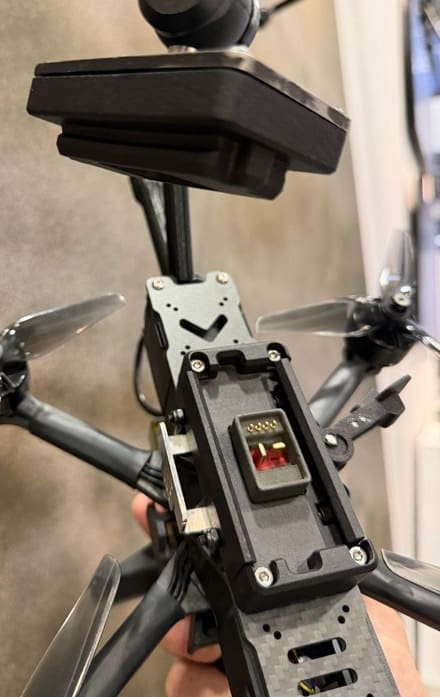
Orqa MM2-10AI the new hybrid communication channel, high performance drone.

At the heart of the platform is a hybrid communications architecture combining Orqa’s proven IRONghost radio control system with native fiber-optic integration and automatic communications failover. This enables the MRM2-10AI to use either communication method without platform reconfiguration and instantly transition to the radio-frequency link if the fiber-optic connection is broken.

The MRM2-10AI features a powerful new Auto Pilot Board that unlocks a series of cutting-edge autonomous capabilities, including vision-based terminal guidance for GNSS-denied operations, advanced computer vision applications, battlefield analytics, and collaborative multi-drone operations.

A fully open development architecture and a supported third-party Developer Program (developer.orqafpv.com) provides a foundation for AI capabilities and software solutions, while ATAK compatibility supports seamless integration with existing battlefield management and situational awareness systems.

“As the nature of warfare continues to evolve, drone operators require systems that can remain effective in contested spaces,” said Srdjan Kovacevic, co-founder and CEO of Orqa. “The MRM2-10AI combines resilient communications, onboard intelligence, and autonomous capability in a platform designed to keep missions moving. It represents the next step in tactical drone capability for today’s armed forces.”

Available in multiple configurations to meet a variety of mission requirements – including variants equipped with advanced thermal imaging and enhanced processing capabilities – the MRM2-10AI is being officially launched at Eurosatory 2026, the global event for defence and security in Paris.

INVISIO Introduces Enhanced Drone Awareness Capability at Eurosatory 2026

June 11th, 2026

Communications technology leader for mission?critical environments INVISIO is announcing a new capability in its INVISIO T30 headset that enhances the ability for users on the ground to identify drones earlier, without requiring any extra equipment. It allows personnel to keep their hands and eyes free to take counter measures, potentially saving lives and reducing injuries.

INVISIO Drone Aware™ provides an additional mode to the INVISIO T30 headset that enhances the user’s ability to hear the acoustic sound emitted by multi-rotor drones. This allows earlier awareness compared to listening with the ‘naked ear’. INVISIO Drone Aware™ is expected to be released in Q3 2026.

The announcement is significant given the ongoing impact of drones in the field, with UK Ministry of Defence saying that in Ukraine “drones now kill more people than traditional artillery”[1].

The INVISIO Drone Aware™ mode adds to the capabilities of the T30, which offers unlimited versatility in the field with zero compromise to sound quality, hearing protection and situational awareness. The T30 headset delivers market-leading hearing protection of 31 dB SNR / 33 dB NRSA20, combining passive hearing protection with active noise reduction (ANR), all while maintaining full situational awareness.

The headset connects to INVISIO control units as well as the specially designed INVISIO P30, a versatile Push-to-Talk (PTT). T30 also offers versatile power modes, operating as a standalone headset through AA batteries as well as being powered directly from radios and through control units including the V50 Gen II, V60 Gen II and P30. The headset can also be connected to digital devices such as smartphones and laptops.

INVISIO Drone Aware™ integrates directly into the headset, eliminating the need for extra equipment, allowing users to keep their hands and eyes free for effective counteraction. In addition, by simply adding a new situational awareness mode to a system the operator already knows, no extra training is required. As a passive system, it also ensures no RF emission – a must in the field.

INVISIO Drone Aware’s effectiveness in enhancing hearing and potential awareness of drones makes it potentially life-saving for users in Special Operations and other dismounted military.

Jonathan Wassberg, Product Manager of Headsets at INVISIO, said: “Becoming aware of a drone as early as possible is extremely important. Every second matters and every second gained increases the ability to better deploy counter measures for the exposure.”

“While different technologies are available for drone detection, including radar, optic and RF, the use of acoustic enhancement in the T30 headset is practical and effective, providing enhanced situational awareness for the drone threat and ensuring the end user has their hands and eyes free to counter such an attack.”

For more information about INVISIO Drone Aware™ and the T30 headset, visit the INVISIO booth (Hall 5A – C128) at Eurosatory, June 15–19 in Paris, or explore Invisio.com, or contact your local INVISIO representative.

[1] Source: www.gov.uk/government/news/major-5-billion-technology-investment-accelerates-uk-defence-innovation-in-a-european-first

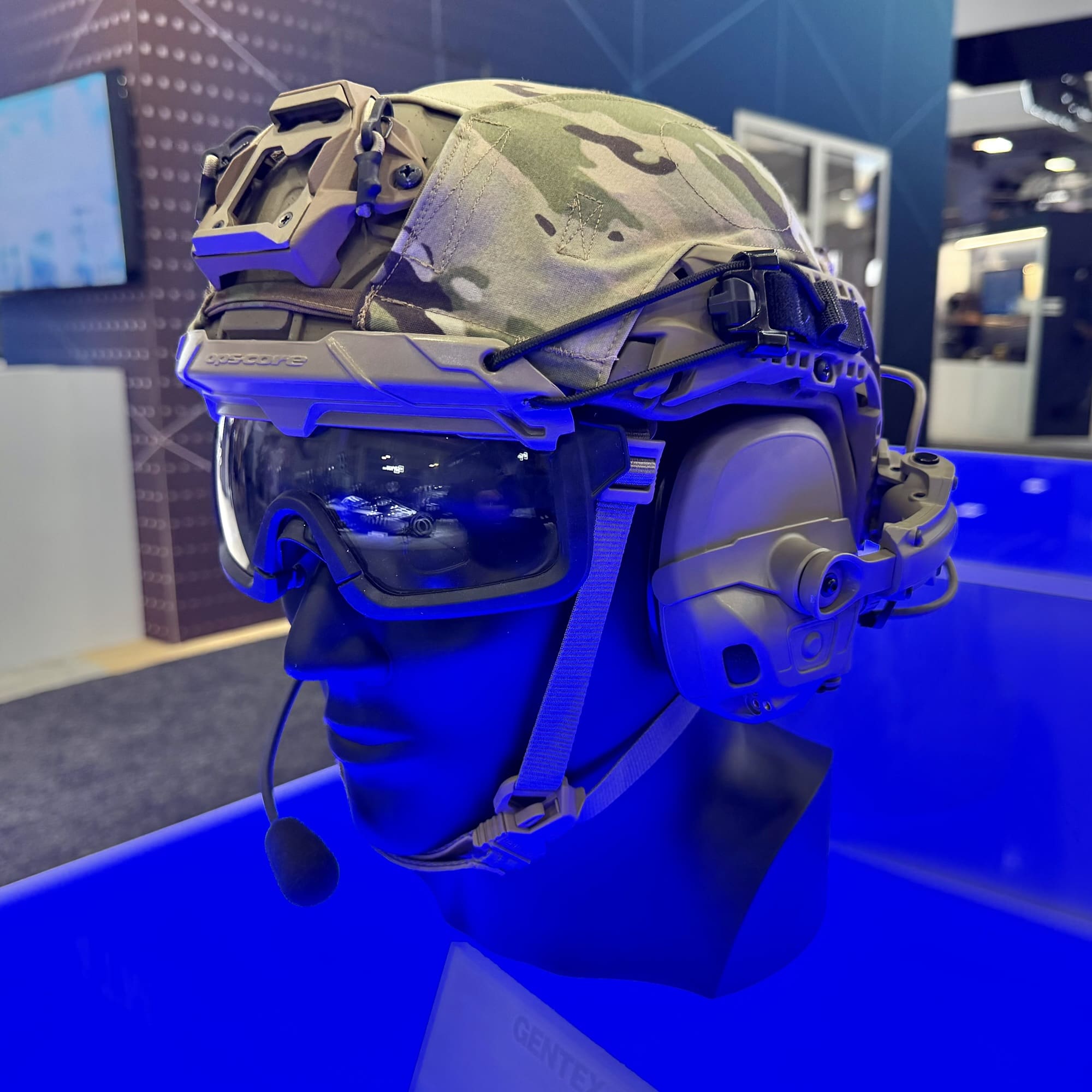
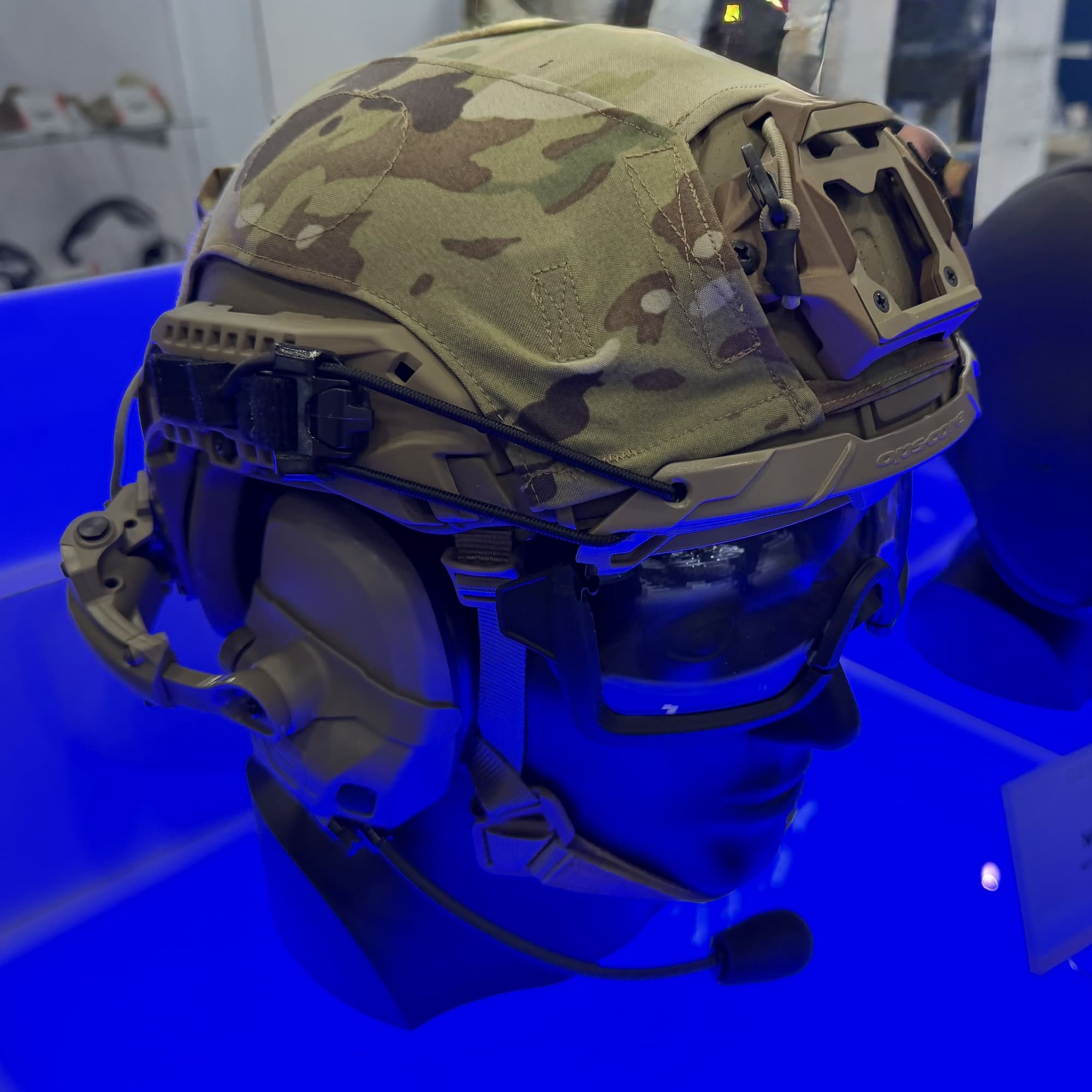
Ops-Core, a Gentex Corporation Brand, Secures $16M Order Supporting Canadian Army Soldier Systems Program

June 11th, 2026

CARBONDALE, PA – Gentex Corporation, under its Ops-Core® brand, today announced a $16 million order in support of the Canadian Army’s Directorate of Soldier Systems Program Management.

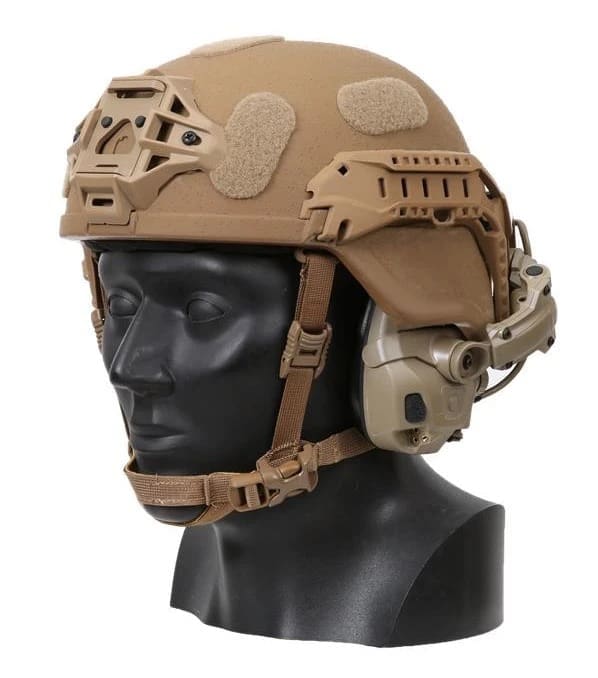
The order includes delivery of AMP® Communication Headsets equipped with the AMP Rail Mount Kit with Vent Mode, Near-Field Magnetic Induction (NFMI) Earplugs, U94 Push-To-Talk (PTT) units, and AMP U174 Downleads, providing a fully integrated, mission-adaptable hearing protection and communications solution.

This award comes shortly after the January debut of the AMP Rail Mount Kit with Vent Mode at SHOT Show. Developed directly in response to end-user feedback, Vent Mode allows the earcups to shift slightly off the ears to improve airflow and mitigate heat buildup while maintaining effective communications and hearing protection when used with NFMI. The rapid adoption of this newly introduced capability highlights strong international demand and validates Gentex’s user-driven approach to innovation.

“Our allies continue investing in capabilities that improve soldier survivability and mission performance,” said Tom Short, Senior Vice President of Global Defense at Gentex Corporation. “The AMP Communication Headset delivers advanced hearing protection, exceptional situational awareness, and the modular adaptability required for modern operations. We’re proud to support the Canadian Army.”

Engineered for today’s dynamic operational environments, the AMP Communication System provides:

  • Advanced hearing protection against impulse and steady-state noise
  • Enhanced situational awareness through optimized audio clarity
  • Seamless integration with existing communications systems
  • Modular adaptability for mounted, dismounted, and specialized operations

By combining proven hearing protection with mission-configurable communications capability, the system supports the Canadian Army’s efforts to modernize soldier equipment and improve performance across operational environments.

This award expands the deployment of Ops-Core communication and hearing protection systems across NATO and allied forces, underscoring the growing demand for integrated solutions that enhance soldier survivability, situational awareness, and mission effectiveness in today’s complex operational environments.

The Baldwin Files – What About Doctrine

June 11th, 2026

“Doctrine is the Army’s expert body of knowledge. It serves as the starting point for organizations and leaders to think about and conduct operations based on current capabilities and executable by forces currently in existence. It is dynamic and continuously evolves based on lessons learned in current operations and training, adaptive enemies, and shifts in force structure, technology, and social values. Doctrine is the language of the Army professional.”
– U.S. Army Combined Arms Center

I want to talk about doctrine. I intend to focus on current and future challenges for U.S. Army doctrine specifically, and will provide a couple of examples of past doctrinal successes and failures for additional context. I agree with the Army’s official definition above. However, in my experience, that is the description of an ideal and is not often reflective of the reality. My only direct involvement in making doctrinal “sausage” was when I was selected as the ARSOF representative and designated member (1999-2000) of a seven-person writing team for what became the 2001 edition of FM 3.0 Operations. We were assigned to the School of Advanced Military Studies (SAMS) at the Combined Arms Center, Fort Leavenworth, KS. Granted, my personal experience is both brief and outdated, and I welcome anyone with more up-to-date knowledge to correct me if the methodology has changed significantly. I am under the impression that it has not. Still, for what it is worth, here is my experience.

There is a hierarchy to doctrine. All manuals are not createdequal. FM 3.0 is considered an important “cornerstone” of Army doctrine. Other manuals in the series are expected to “nest” their descriptions and guidance within the tactical, operational, and strategic constructs outlined in FM 3.0. Before us, two other teams had worked for a year each and submitted their final products to the Army. Both drafts were rejected, and both teams were disbanded. We became the third team constituted to rewrite/revise the doctrine using the previously approved/published version, and the two earlier drafts as our starting point. To be clear, the problem was never with the writing teams; the issue was with the Army. The Cold War had ended a decade earlier, yet students at Leavenworth and rotations at the Training Centers were still wargaming Fulda Gap scenarios and Soviet surrogate opponents. It was well past time for the Army to force itself to change. Our real-worldenemies had enhanced their capabilities and were still evolving dramatically, but we were standing still doctrinally.

The Army knew that, but the senior leadership had not reached a consensus on HOW we needed to evolve. A few wanted bold change; most wanted only cautious, incremental, and modest adjustments. That became obvious to the writing team I was part of almost immediately. One by one, all the senior Army leaders, Corps Commanders and above, visited us to personally delivertheir perspective and guidance on what HAD to be in the manual and what should NOT be in the manual. We kept a running list. Rarely did any two leaders emphasize the same points. Yet they would all have a veto on what we wrote, just like they had on the two earlier attempts. As a practical matter, that meant that we were not going to be able to present or incorporate any bold departures from the status quo. Period. Furthermore, it had to clearly be an ARMY manual. That meant only a brief nod to SOF, Interagency Partners, and Joint Forces. Likewise, it wassafe to use Vietnam examples of U.S. Army “maneuver warfare” while largely avoiding any mention of “counterinsurgency.” No way was the conventional Army ever going to do that frustrating crap ever again! We were encouraged to frequently use “Unified Action” to describe the Joint fight, but always with the other players in a supporting role to the (Army) ground forces.

In the end, we hammered out a vanilla consensus version that could get rubber-stamped and published. I owned four of the chapters myself. Was it doctrinally sound? Sure. In the sense that it was simply a scene-for-scene “reboot” of earlier doctrineand could still be applicable in scenarios similar to those we had already faced. Assuming history would do us the favor of repeating itself. Did the writing team think that was good enough? I certainly did not, but that was all we were allowed to do. Was that intellectually dishonest? Sure. I left just before the “final draft” hit the street. Toward the end of my time there, a retired fellow who had been on the first writing team came on board to do some final polishing of the text (so it would not be so obvious that multiple people had written the chapters). He shared his thoughts on doctrine writing. He called it “staff masturbation” and said that doctrine writers should always follow the three rules of masturbation. I had to ask, “What rules?”  He replied: “It should only be done behind locked doors, it should never be talked about in public, and one should always wash their hands afterwards.” I think he was spot on.

9/11 happened about the time the approved version of my FM 3.0 was distributed in 2001. No one noticed. Few read it outside of a classroom. It was obsolete out of the gate. And so much for the idea that the Army was never going to do counterinsurgency again. Irony is not dead. As history has shown time and again, an Army NEEDS to be ready to fight and win any war that it gets – and not waste time hoping for the war that it WANTS. Eventually, the 2001 version was superseded by newer versions. Did it have some doctrinal nuggets of wisdom that were of any practical use to the warfighters in Afghanistan or Iraq? Not a damn one that I can remember. It was too little and too late. Neither timely nor relevant. Much like the majority of doctrine tends to be.

On paper, we had a fair chance of giving the Army something it needed and could use. After two failures to launch, a real effort was made to bring in some reasonably experienced subject matter experts (SMEs) in various disciplines like Intelligence, Logistics, Fire Support, and SOF. Fresh eyes. However, like the earlier efforts, disjointed micromanagement killed everypotential doctrinal initiative we proposed. Those modest changes that survived were those deemed non-threatening to the status quo. Truthfully, most doctrine writing doesn’t get nearly as much support or attention – positive or negative. Much as soldiers joke that our equipment is made by the lowest bidder, most doctrine is written by soldiers who are not necessarily SMEs in the subject that they are tasked to write about at all. They do their duty, but dearly wish they were doing something else. No one that I know of ever fought to get a doctrine writing job, and Promotion Boards don’t see it as favorable experience.Yet the Army claims doctrine is very important.

I say doctrine is critical – if done right. The process I experienced provided little value added to the Army’s “expert body of knowledge.” It does not have to be that way. To get more value out, you simply must put more value in up front and make it a priority. So how can the Army do that? Let me use some historical examples to illustrate. As the Army prepared itself to enter World War II and win a global conflict, it had little if any doctrine on Airborne Operations, Joint Operations, Amphibious Operations, Strategic Bombing Operations, and only an outline of Armored Operations. It had never been called on to do any of those things before – or required to do them right now and to scale. Their solution was to give the task to the best and brightest they had. Folks like Captain (later Lieutenant General) Yarborough, who was involved in building the American paratroopers’ kit from the skivvies out. Every jump from the Test Platoon on was reviewed, and lessons learned were shared immediately across the Airborne enterprise (including the Airlift assets who had to deliver the jumpers and their gear to the Drop Zones). Best practices were captured and became the Army’s Airborne doctrine. They did it right, and they did it fast.

In March of 1945, Operation Varsity, the last major parachute operation in the European Theater, was conducted. The American 17th Airborne Division and the British 6th Airborne Division were delivered across the Rhine River to enablefollow-on Allied operations deeper into Germany. Elements of the 17th had been involved in combat during the Battle of the Bulge, but had not yet made a combat jump. However, the Airborne training they received had directly benefited from the doctrinal lessons learned from combat and shared by their predecessors in the 82nd, 101st, and 11th Airborne Divisions. The 17th captured all of its objectives in just 4 hours after being dropped. Sound doctrine did not guarantee their success, but it was definitely value-added. I suggest that the Army today needs to follow that example and do doctrine faster and better than we have been.

There are a couple of doctrinal axioms that are useful to remember. One, doctrine is most helpful when it is descriptive and not prescriptive. Doctrine provides guidelines, but is not meant to be a checklist. Two, even the soundest doctrine cannot take the place of a clear strategy. If our National Leaders cannot articulate a desired/achievable strategic endstate, then doctrine cannot be expected to provide a miracle remedy. So, what about a case of doctrinal failure? I can think of several that I saw during my career. The Army’s Counterinsurgency doctrinewould be an obvious example. For one thing, FM 3-24 Counterinsurgency is too prescriptive in my professional opinion. Indeed, many leaders in theater took it as a checklist. Yes, we won “all the battles” in Vietnam, and in Afghanistan, and in Iraq. Thanks to the valor, fidelity, and professional excellence of our troops – not because of our doctrine. I would suggest that even if we had perfectly executed ourCounterinsurgency doctrine as written, it would have made no difference to the outcome. Ultimately, we achieved nothing but strategic failure.

We have to do better. We have been wrestling with Information Age challenges like drones, robots, AI, Cyber, and Space, et al, for some time now. Doctrine is too slow and simply not keeping up. It needs to be developed early and delivered to the force before we spend billions on hardware and software. That is not my opinion alone. In all the professional forums I am privy to, that is a constant topic of discussion. Much of what I am reading is frankly alarming. The Army is buying a lot of drones – and has yet to clearly articulate how our formations will fight with those tools, and in those emerging domains. I seriously doubt that making every other soldier in our formations a drone operator is the final answer – or even a good answer. And what about Large Scale Combat Operations (LSCO)? Don’t get me started. I see lots of buzzwords being strung together but damn little clarity. Frankly, LSCO seems to be a convoluted and evasive way of describing the kind of war the Army hopes to fight rather than the real wars we will need to fight.

I have been studying war and the profession of arms for half a century. The more I know, the more I realize how little I know about war. I may have this all wrong. My information is anecdotal and unscientific. Maybe Army doctrine is dynamicallymeeting all the needs of the current generation of warfighters on firewall-protected platforms I am not able to access. I am just too far out of the loop. That would be great if it were true. I just don’t think that is the case. Too many people are asking questions. Too many are confused about where we are and where we are going. Lots of individuals are out there doing the big-brain thinking that is needed, and they are sharing their thoughts in the professional journals, The Harding Project, and Line of Departure. My only complaint is that the writing on those platforms often comes off as academic rather than practical. In any case, an opinion piece – no matter how well researched and written – does not equal doctrine. But it is a good start.

I have a few suggestions that could cut down on drag and make the process a little more aerodynamic. I am thinking of those WWII doctrinal pioneers who figured out bold new ways of war on the fly and disseminated the information as fast as they could. Why can’t we do that? Let’s “go live” with Army doctrine. They got it out at the speed of the printing press. We can go at the speed of the internet. We should be able to do it in near real time. Do we even need doctrine to be organized in legacy book form of hundreds of pages each anymore? I am thinking of something more like the Wikipedia model – an easily searchable encyclopedia of doctrinal information organized to highlight relevant points with brevity and clarity, along with links to additional information if needed. As a unit or individual figures something out through experimentation or trial and error, they can post it for peer review, comment, and approval. Ideally, who should be the authors of our doctrine? How about the people who are doing the job? They would know better what works and doesn’t work than some pick-up star chamber of commissioned officers.

I certainly think we can do without some of the excessive wordsmithing in our doctrine as well. It need not, and I would argue should not, be written like a doctoral thesis. Who are we really trying to impress? Read some of the WWII doctrine. It is clear and concise with a lot fewer obfuscating buzzwords and semantic padding. Probably at the High School senior reading/writing level of the day. I’d say that is more than good enough. How about we give our sharpest soldiers, junior NCOs, Warrants, and Company Grade Officers some ownership and agency in the sausage-making business? Why not? That is probably enough talk about doctrine for now. It is not fun or high-speed, but it is important, and the Army is better served if we get doctrine right as rapidly as humanly possible – and well before we have to pay for mistakes with blood. Now I am going to wash my hands.

De Oppress Liber!

As readers can see, I have come back to writing. I was enjoying my time focusing on leadership mentoring of younger folks and not writing. Still, questions and issues related to confusing doctrinal gaps and omissions keep cropping up in discussions. I am looking at you, LSCO! There was also a lot of interest in capturing and sharing old-school tactical lessons learned. That seemed to go out of style during GWOT. Individual and small group mentoring was not going to scratch either itch. I am exploring options to do some of that myself here on SSD, and perhaps get others involved. More to follow.

LTC Terry Baldwin, US Army (Ret) served on active duty from 1975-2011 in various Infantry and Special Forces assignments. SSD has been blessed by his friendship and role as, reader, contributor and mentor. It‘s great to have him back!

Reptilia Adds a New Colorway: AR10 PULLER in Flat Dark Earth

June 11th, 2026

Hillsborough, NC – June 2026 – Reptilia is pleased to announce the release of the AR10 PULLER Ambidextrous Charging Handle in Flat Dark Earth (FDE), expanding the company’s popular charging handle lineup with a new color option for AR10 rifle platforms.

Designed to provide reliable manipulation without unnecessary bulk, the PULLER Charging Handle features a low-profile, fully ambidextrous design engineered for shooters who demand durability, simplicity, and performance. Precision machined from billet 7075-T6 aluminum and finished with MIL-STD Type III hardcoat anodizing, the PULLER is built to withstand hard use in demanding environments.

The addition of Flat Dark Earth gives AR10 owners another option for matching modern rifle configurations while maintaining the clean aesthetic and rugged construction that have become hallmarks of the PULLER series.

Like all PULLER charging handles, the AR10 model is designed to provide positive purchase under stress while minimizing snag hazards. Its streamlined profile accommodates a wide range of shooting styles and optic configurations without sacrificing strength or ease of operation.

“The PULLER was designed around the idea that a charging handle should be easy to use, durable, and stay out of the way until you need it,” said The Reptilia Team. “Adding FDE to the AR10 lineup gives customers options to personalize their rifle builds.”

The AR10 PULLER Charging Handle in Flat Dark Earth is available now.

Product Features

  • Billet 7075-T6 aluminum construction
  • Fully ambidextrous operation
  • Low-profile, snag-resistant design
  • MIL-STD Type III hardcoat anodized finish
  • Compatible with AR10 / SR-25 pattern rifles
  • Made in the USA

For additional information, Swing over to the site. reptiliacorp.com

CPE ISW Leadership Changes Hands After Pivotal Year of Reorganizations and Mission Success

June 11th, 2026

CPE ISW – Change of Charter – Brigadier General Kevin S. Chaney to Mr. Chris P. Manning. From left to right: Brigadier General Kevin S. Chaney, Mr. Joseph D. Welch (Portfolio Acquisition Executive, Command and Control and Counter-Command and Control), Mr. Chris P. Manning

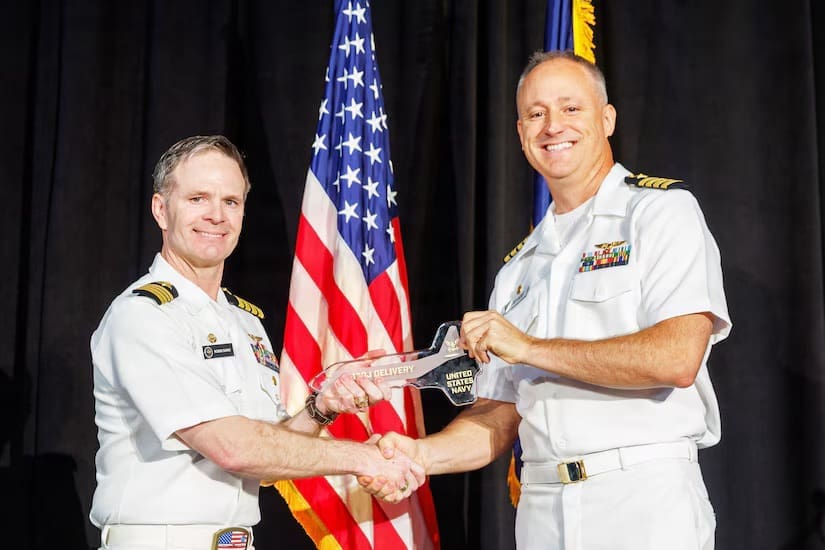
In a ceremony at Aberdeen Proving Ground on June 9, Brig. Gen. Kevin Chaney passed the leadership torch of Capability Program Executive Intelligence and Spectrum Warfare (CPE ISW) to Chris Manning, former Deputy Portfolio Acquisition Executive (PAE) for Command and Control (C2) and Counter C2.  Chaney had taken over as CPE, formerly Program Executive Offe Intelligence, Electronic Warfare and Sensors (PEO IEW&S) last July.  Chaney was not a new face to the organization when he accepted the charter having previously served multiple tours at Project Manager for Aircraft Survivability Equipment (PM ASE).

His return to the organization as CPE was short but eventful.   He led the organization’s evolution into a new structure where multiple offices were affected. Chaney deftly led the workforce through the uncertainty of reorganization, moving CPE ISW forward into the future of technology and acquisition while supporting ongoing operational events seamlessly. “So, I started the year as PEO for IEW&S and leave as CPE for ISW. Obviously, this means so much more than a name change. We have been shuffling the deck with our organizations to find efficiencies and align programs where they best meet current Army demands. We rolled with the punches, without allowing the mission to suffer. The name of the respective org may have changed, but the mission has not, field critical technology to our men and women in the field,” Chaney said.

Brigadier General Kevin S. Chaney

In a ceremony at Aberdeen Proving Ground on June 9, Brig. Gen. Kevin Chaney passed the leadership torch of Capability Program Executive Intelligence and Spectrum Warfare (CPE ISW) to Chris Manning, former Deputy Portfolio Acquisition Executive (PAE) for Command and Control (C2) and Counter C2.  Chaney had taken over as CPE, formerly Program Executive Offe Intelligence, Electronic Warfare and Sensors (PEO IEW&S) last July.  Chaney was not a new face to the organization when he accepted the charter having previously served multiple tours at Project Manager for Aircraft Survivability Equipment (PM ASE).

His return to the organization as CPE was short but eventful.   He led the organization’s evolution into a new structure where multiple offices were affected. Chaney deftly led the workforce through the uncertainty of reorganization, moving CPE ISW forward into the future of technology and acquisition while supporting ongoing operational events seamlessly. “So, I started the year as PEO for IEW&S and leave as CPE for ISW. Obviously, this means so much more than a name change. We have been shuffling the deck with our organizations to find efficiencies and align programs where they best meet current Army demands. We rolled with the punches, without allowing the mission to suffer. The name of the respective org may have changed, but the mission has not – field critical technology to our men and women in the field,” Chaney said.

CPE ISW consists of more than 80 programs that deliver and sustain technologies that provide Soldiers, joint services, allies and international partners with decisive advantage for all operational environments.  The categories of technologies within the CPE portfolio include offensive and defensive cyber capabilities, electromagnetic warfare (EW), modern intelligence systems, assured position, navigation and timing solutions, multidomain and surveillance sensors, biometric systems, force protection systems and more.

Amongst the key accomplishments of CPE ISW with Chaney at the helm, includes the timely execution of support to the Joint Task Force Southern Border. The surveillance systems and EW capabilities deployed at the tactical edge dramatically enhanced border security operations with situational awareness and integration of multiple military and federal law enforcement elements.

Under Chaney’s leadership, ISW succeeded in championing the Army’s priority of acquisition reform. The organization aggressively pursued novel contracting avenues, most notably through its first execution of Commercial Solutions Openings (CSOs).  This acquisition strategy significantly reduces acquisition timelines and rapidly transitions cutting-edge, commercially derived technologies directly to the Joint Force. Specifically, this strategy was employed in the prototype award for the Electromagnetic Warfare Rapid Integration System (ERIS). ERIS is a forward-looking initiative designed to counter sophisticated radio frequency threats through adaptable, scalable technology.

In further advancement of Army modernization initiatives, Chaney led the integration of ISW technologies into the Next Generation Command and Control (NGC2) architecture by leveraging key exercises like Lightning Surge and Ivy Sting and preparing for the upcoming Project Convergence Capstone 6.

Under Chaney’s leadership ISW also began its support to the new Intelligence Electronic Warfare (IEW) Battalions this year.  IEW Battalions are new or restructured specialized units that focus on enhancing situational understanding in large scale combat operations. Intelligence and electronic warfare are two complimentary capabilities that ISW advances through research, development, and modern acquisition strategies.

Chaney oversaw the Tactical Intelligence Targeting Access Node (TITAN) program’s completion of developmental testing and prototype acquisition, which positions the Army for procurement of the key AI-enabled intelligence systems.  This capability drastically reduces operational timelines while enhancing assured decision making.

Multi-domain modernization is necessary to expand deep sensing capabilities.  Chaney strategically divested obsolete platforms to pivot resources toward more advanced capabilities such as the Army Advanced Synthetic Aperture Radar System. He accelerated the integration of this system into the High Accuracy Detection and Exploitation System (HADES), ensuring deep-look overmatch.

With the unexpected demands of Operation Epic Fury and Operation Absolute Resolve, ISW was ready to support with their full gamut of technologies including ISR, electronic warfare, and more.  Under Chaney’s leadership, the organization addressed emerging requirements directly and contributed to increased operational readiness, lethality, and mission effectiveness of deployed forces in two highly contested theaters.

Chaney will move into his next role as Deputy PAE Maneuver Air.  There he will continue to be a leader focused on priorities and further develop a workforce that meets the current and future needs of the Army. Going back to aviation where he started his career will be an exciting challenge that Chaney welcomes

Mr. Chris P. Manning

Manning brings his experience serving concurrently as Deputy PAE C2/Counter C2, and as Deputy Assistant Secretary of the Army for Research and Technology, DASA(R&T). He advised senior leadership on the optimization of resources and meeting needs of the Warfighter more efficiently.  This is a homecoming of sorts for Manning as well. Early in his career he was assigned to the former Product Manager Global Positioning Systems office, which transitioned into the Positioning, Navigation and Timing (PNT) office. Manning established the first PEO IEW&S footprint for a Project Manager office when the organization moved from its former location in New Jersey to Aberdeen Proving Ground.


By Allison Weissert | CPE ISW Public Affairs Specialist |