Phantom Lights

Transformation in Contact Units Test Spectrum Situational Awareness System

August 22nd, 2025

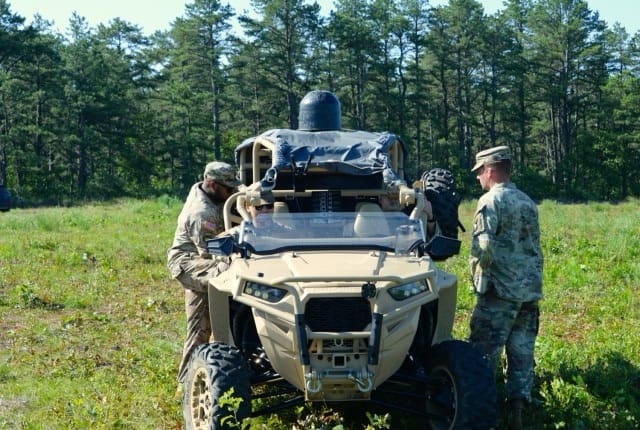
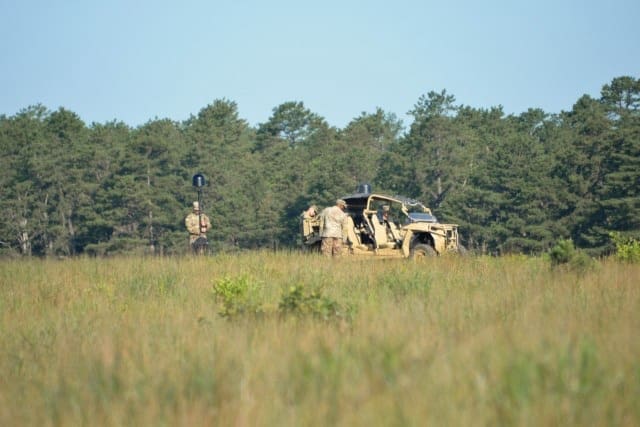
Joint Base McGuire-Dix-Lakehurst, NJ — Soldiers with the 25th Infantry Division, 101st Airborne Division, 11th Airborne Division and Special Operations Command received first touch and training on the Army’s newest addition to its Electromagnetic Warfare toolkit, Spectrum Situational Awareness System (S2AS).

The three-week User Assessment consisted of a week’s worth of training on S2AS and the Electronic Warfare Planning and Management Tool-X.

“This developmental test simulates a brigade headquarters with two dislocated companies testing out the S2AS system,” Maj. Megan Bridges, Assistant Project Manager for S2AS said. “We want to ensure the system is able to sense, detect and report emitter information.

S2AS is an electromagnetic spectrum situational awareness system that provides commanders with real-time electromagnetic spectrum (EMS) Situational Awareness to support EMS related-decisions making.

“When we incorporate missions control measures on the battlefield to ensure that the enemy can’t see us, we need to minimize who can use specific frequencies, systems, and at what power levels and bandwidth are they using to make sure we’re minimizing the enemy’s ability to see our blue force signature, whether on an installation or on a battlefield,” Master Sgt. Mike Powell, 3rd Infantry Division explained.

Understanding, and ultimately controlling, the electromagnetic spectrum on the battlefield is crucial to the Army.

“The Army has been pressing very hard on what it means to own the EMS,” Col. Leslie Gorman, Army Capabilities Manger for Electromagnetic Warfare said. “You have to understand the EMS as maneuver space and, understanding what our emissions look like on the battlefield, what the adversaries looks like on the battlefield, the countermeasures that are need to be put in place.”

S2AS is specifically designed to provide that visibility and the visualization for Soldiers and for the commanders in order to make more informed decisions.

“The Army needs an organic electromagnetic warfare sensing capability, which the system provides,” Bridges said. “It also increases the Cyber Electromagnetic Activities cell planning bandwidth, another important function S2AS brings to the table.”

“S2AS, being the Army program of record for the spectrum manager, gives us the ability to define the electromagnetic operating environment,” Powell said. “With the system, spectrum managers can identify signals on the battlefield, on a FOB, or on an installation, detect and analyze the signals and then provide that information back to commanders.”

The S2AS capabilities were effectively demonstrated during this test event. As more feedback from Soldiers becomes available through future TIC 2.0 experimentation events, the Army can ensure continuous refinement of the system to enhance its capabilities.

S2AS is slated for fielding to TIC 2.0 units in FY26.

Full Video – www.dvidshub.net/video/973339/spectrum-situational-awareness-system-s2as-news-video

By Shawn Nesaw, PEO IEW&S Strategic Communications

GA-ASI Acquires Assets of Achates Power, Inc

August 21st, 2025

SAN DIEGO – 19 August 2025 – General Atomics Aeronautical Systems, Inc. (GA-ASI), a global leader in unmanned aircraft systems and cutting-edge aerospace technologies, today announced the acquisition of key assets, including a portfolio of patents and other intellectual property, from Achates Power, Inc., a San Diego-based innovator in advanced engine technology.

The acquisition strengthens GA-ASI’s capabilities in high-performance propulsion systems and underscores GA-ASI’s commitment to advancing propulsion technologies for its line of unmanned aircraft systems that enhance the performance and sustainability of its aerospace systems.

“We are excited to incorporate Achates Power’s opposed-piston engine technology into GA-ASI’s portfolio,” said David Alexander, President of GA-ASI. “Their advancements in green technology emission reduction, fuel efficiency and power density align perfectly with our mission to deliver innovative solutions for airborne platforms.”

Achates Power has long been recognized for its groundbreaking work in developing best-in-class low-emission, fuel-efficient, and high-power-density engines.

“Achates Power’s engine designs deliver exceptional value for applications requiring high efficiency and power density, particularly in environments with strict emissions regulations,” said Dave Crompton, CEO of Achates Power. “We are proud that our technology will continue to thrive under GA-ASI, a company renowned for its technical excellence and diverse expertise.”

AV Delivers Initial P550 Autonomous Group 2 eVTOL Unmanned Aircraft Systems to US Army for LRR Program

August 21st, 2025

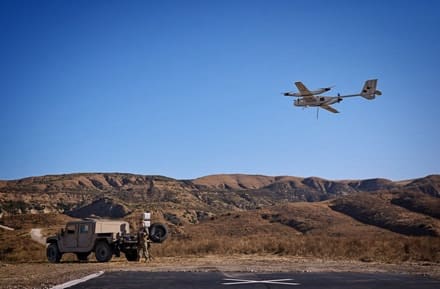
ARLINGTON, Va., August 20, 2025 –AeroVironment, Inc. (“AV”) (NASDAQ: AVAV), a leader in intelligent, multi-domain robotic systems, today announced the successful delivery of its Group 2 P550™ small Unmanned Aircraft Systems (sUAS) to the U.S. Army as part of the Long-Range Reconnaissance (LRR) program to support training and operations for Transformation in Contact (TiC) brigades. This initial delivery includes multiple P550 systems along with new equipment training and training master trainers to ensure mission readiness and rapid integration into the U.S. Army TiC Brigades and other designated units. 

This milestone marks a significant achievement for both the Army and the all-new P550 product line. Built from the ground up with a Modular Open Systems Approach (MOSA), the P550 is designed to meet evolving warfighter requirements, enabling rapid adaptation in dynamic, contested environments with multiple payload, radio, and power options to counter emerging threats and enhance lethality. It builds on decades of AV’s UAS development and production of combat-proven systems delivered to the Department of Defense and over 50 partner nations.

“We are proud to deliver the P550 to Army units, empowering warfighters with a system that can quickly adapt to fluid combat scenarios, providing unmatched reliability and flexibility,” said Trace Stevenson, AV’s President of Autonomous Systems. “Our team remains committed to supporting the Army with seamless delivery, training, and sustainment to ensure these systems are ready when needed.”

The P550 is AV’s latest autonomous Group 2 eVTOL system, redefining battlefield adaptability with rapid deployment, advanced situational awareness, and targeting and strike capabilities. Its proven AI and autonomy enable smarter, safer operations for maneuver forces. With class-leading payload capacity up to 15 pounds, endurance of up to 5 hours on all-battery power, and a Gross Take-Off Weight (GTOW) of 55 pounds, it can be reconfigured in under five minutes without tools, including hot-swapping payloads and batteries. Its open and scalable architecture not only future proofs the P550 for continuous upgrades but also keeps pace with technological advancements at low cost and risk.

The initial deliveries included comprehensive new equipment training conducted by AV’s field service representatives to ensure operators and maintainers can effectively integrate the P550 into their units. The systems were received by PM and evaluated by Master Trainers, who completed “train-the-trainer” instruction to enable rapid fielding and operational integration.

AV will continue to fulfill additional orders to support the Army’s evolving operational requirements.

Carrington Textiles Expands Military Range with ProTact by Haartz

August 21st, 2025

Adlington, United Kingdom: Global military fabrics manufacturer Carrington Textiles has partnered with Haartz® GmbH to bring the ProTact by Haartz® range of laminated fabrics to Europe, the Middle East, Africa, Australia and New Zealand.

Following an earlier announcement of the collaboration, this partnership expands Carrington Textiles’ specialist portfolio of defence fabrics with high performance technical laminates designed for military and tactical equipment. Manufactured in Germany by Haartz® GmbH, the ProTact range is engineered to meet the demanding requirements of modern military applications, including rucksacks, load carrying systems, vests and pouches.

The range offers several technical benefits for tactical equipment manufacturers, including:

  • Laser-cut ready – clean edges, no residue
  • Reduced fraying – precision layer bonding
  • Superior flexibility – softer feel, more comfortable wear
  • CORDURA® Truelock technology – consistent colour, UV fade resistance
  • No delamination – even in extreme conditions
  • Proven field performance – engineered for reliability under pressure

The initial range includes ProTact G510.1, a 500D/1000D fabric offered in black, coyote brown and the MultiCam®camouflage pattern, and ProTact G55.1, a 500D/500D option available in black, coyote brown and ranger green.

ProTact by Haartz® has already proven itself in the field with advanced durability and protection. The addition of this range complements Carrington Textiles’ existing military fabric offering and further strengthens its position as a trusted supplier to defence forces and tactical equipment manufacturers.

Colt Canada Awarded Major Danish Contract

August 21st, 2025

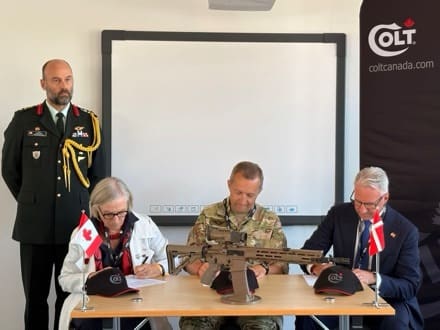
Colt Canada has been awarded a major IDIQ type contract by the Forsvarsministeriets Materiel- og Indkøbsstyrelse (FMI) / Danish Ministry of Defence Acquisition and Logistics Organisation to supply 26,000 (plus an undisclosed number of future options) of the new GV M/25 variants of their C8 MRR rifle to the Danish Armed Forces and Home Guard.  The official signing ceremony for this contract was conducted during the 2025 edition of the DALO Industry Days exhibition with the Head of the Land Division of FMI, Colonel Thomas Øgendahl Knudsen, CEO of COLT Canada, Sean Congdon, and Canada’s Ambassador to Denmark, Carolyn Bennett.

Since 1994, Colt Canada’s C7 rifle and C8 carbine have formed the foundation of Denmark’s small arms capability.  This latest contract win reinforces their position as a leading supplier of small arms to customers who demand exceptional performance, accuracy, durability, and lifecycle support.

High Value Target Strike Mission in Electronic Warfare Environment, Featuring OMNISCIENCE by OKSI and Quantum Systems Vector

August 21st, 2025

Electronic Warfare environments are growing in complexity on the modern-day battlefield. The deployment of unmanned systems in these contested environments can results in mission failures or loss of system, especially when GPS and Comms are jammed. OKSI’s OMNISCIENCE AI and Computer Vision Application Suite for UAS enables autonomous situational awareness, resilient navigation, and onboard decision-making in real time.

Subscribe to their channel on YouTube: www.youtube.com/channel/UCtDXFerttBCpjM8hUVGr54w

Follow them on LinkedIn: www.linkedin.com/company/oksi-ai

US Army Aviation Center of Excellence Launches Unmanned Advanced Lethality Course to Equip Soldiers for Future Warfare

August 21st, 2025

FORT RUCKER, Ala. — In a bold move to modernize battlefield capabilities and close critical training gaps, the U.S. Army Aviation Center of Excellence (AVCOE) has launched its inaugural Unmanned Advanced Lethality Course (UALC) at Fort Rucker. Designed to rapidly train soldiers on the lethal employment of small UAS (SUAS), including First Person View (FPV) drone operations. The course lays the foundation for standardized UAS employment across warfighting functions, redefining how small UAS platforms are used in reconnaissance, fires, and maneuver operations.
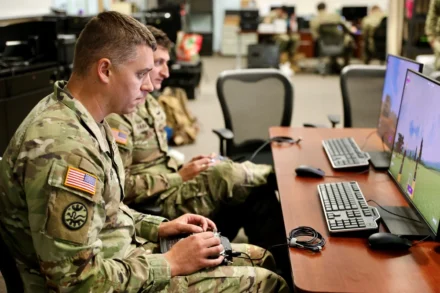
Maj. Wolf Amacker, the chief of the AVCOE Directorate of Training and Doctrine UAS and Tactics Branch, is one of many personnel at AVCOE who played a key role in developing the course.

“This is the first time the Army has done this in a TRADOC setting, coordinating between three difference COEs,” Amacker said. “We’re helping to train the most people, the quickest, on FPV systems that are having a real impact on the battlefield.
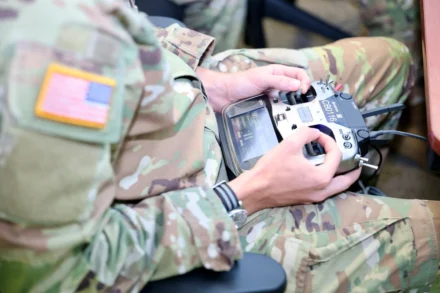
Capt. Rachel Martin, the course director, was tasked with building the program from scratch just 90 days ago. With a background as an intelligence officer in an attack helicopter battalion and an air cavalry squadron, air cavalry troop commander, and Gray Eagle company commander during a 2023 deployment, Martin brought deep operational experience to the challenge.
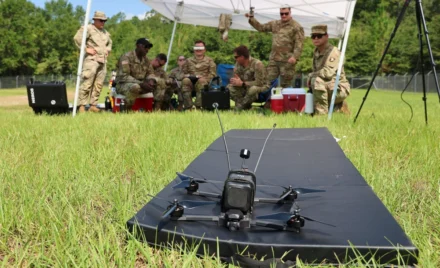
The three-week course begins in the classroom, where students use commercial off-the-shelf drones and simulation software to develop FPV flight skills. After 20 to 25 hours of simulator time, identified as the proficiency threshold through interviews with allied forces, students transition to live flight exercises at the Military Operations on Urban Terrain (MOUT) site.

Instruction also includes fire support integration, with Fires Center personnel teaching students how to adjust fire using drone video feeds in the Call for Fire Trainer.
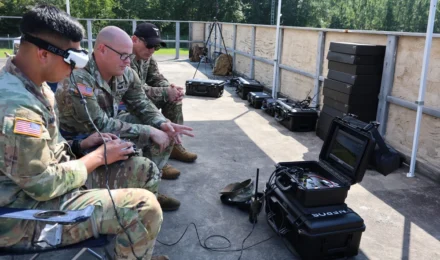
“An 11B [infantryman], 13F [fire support specialist] out there with a SUAS calling for fire and adjusting based on drone video is a relevant skill for the current and future battlefield,” Amacker said. “This may be the first time our students are introduced and trained to do that.”
This training not only enhances lethality but also demonstrates how small UAS platforms can support traditional fire missions in dynamic environments.

The course currently hosts 28 students from across the Army, including infantry soldiers, cavalry scouts, 15W and 15E aviation personnel, and warrant officers from the 150U career field. Participants were selected based on rank and certification as SUAS master trainers, and Transformation in Contact Units. Cadre from the 2-13th and 1-145th Aviation Regiments at Fort Rucker, along with additional aviation personnel, are supporting instruction.
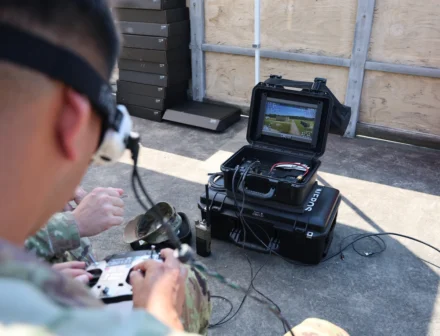
Observers from the Maneuver and Fires Centers of Excellence are evaluating the course for potential adaptation, providing feedback and implementation. The goal is to empower operational units to create their own basic qualification programs while Fort Rucker evolves into the hub for advanced UAS training.

“Aviation becomes that central integrator,” Amacker said. “We’re helping all the warfighting functions and branches get into this space. Maneuver and Fires care about how SUAS helps them engage targets and keep their operators alive, while we also care about how sustainment and MI use small UAS to fulfill their responsibilities.”

The course is designed as both a resident program and eventually a mobile training package (MTP). The accompanying Training Support Package (TSP) will allow units a way to conduct basic FPV training independently, while Fort Rucker will host advanced iterations focused on munitions, diverse UAS platforms, and tactical employment.

“Right now, we’re doing basic things,” Amacker said, highlighting that this is the pilot course, emphasizing the tasks and academics being taught are what units out in the force are struggling with right now.

Students also learn to manufacture and repair drone components using 3D printing. Instruction covers resin, filament, and carbon fiber printers, CAD software, and STL files. The course aims to build a centralized repository of print files for students to take back to their units.

“Eventually, we want students to build and test their own FPV bodies,” Amacker said. “We’re teaching and learning from the force on what’s possible and how to sustain these systems in the field.

The long-term vision for the course aligns with Fort Rucker’s broader innovation goals. Martin hopes to integrate the program with the post’s emerging innovation lab, creating a collaborative hub for data sharing and tactical experimentation.

“This course is a catch-up,” Martin said. “We’re behind globally, and this is our aggressive attempt to close that gap.”

The course also collects performance data on five different drone systems, tracking variables such as crash rates, environmental resilience, and operational effectiveness. This data will inform future procurement and training decisions across the Army.

Designed to evolve with battlefield needs, the UALC will adapt its curriculum as new technologies and tactics emerge, ensuring soldiers remain at the forefront of unmanned systems employment.
“This is constantly changing,” Amacker said. “We’re building something that can grow with the force.”

Martin emphasized the challenges of launching a drone training program from scratch.

“Most of my peers, including myself until 90 days ago, didn’t know how to do this,” she said. “Now we know what it takes, how many people, how much equipment, how much money, and we are sharing this information already with our partners out in the force.”

The pilot iteration is already producing results. Soldiers are eager to learn, and many report a lack of resources and expertise at their home units. The hope is that graduates will return to their formations equipped to train others and establish sustainable programs.

Ultimately, the course aims to empower soldiers to return to their units as trainers and innovators. Many participants are self-taught hobbyists or informal experts. This program, however, provides structure, certification, and a pathway to build unit-level drone programs.

Future iterations will expand into advanced tactics, including one-way attacks using purpose-built FPV drones. By February, Martin envisions students employing low-cost systems to prosecute targets with precision, an ambitious leap toward integrating UAS as a lethal, scalable weapon system.

“We’re creating operators who are not only lethal but also survivable. sUAS operators are the most sought-after high pay-off target on the battlefield right now,” Martin said. “I am very aware that my team has been entrusted with developing solutions for a critical need in emerging Army tactics.”

SFC Jeremy Charm, a 15W UAS Operator with the AVCOE Directorate of Evaluations and Standardization and primary flight instructor for the UALC said, “Teaching our students to know under what circumstance to use these systems to achieve commander’s intent and how to tactically employ them and survive post engagement is our ultimate goal.”

As the Army continues to modernize its approach to warfare, the UAS Lethality Course at Fort Rucker stands as a bold step toward integrating unmanned systems across all domains, and empowering soldiers with the tools and training to dominate the modern battlefield

Story by Leslie Herlick 

Aviation Center of Excellence

Achilles Heel Tactical One-Day Firearms Training Delivers Measurable Results That Last

August 20th, 2025

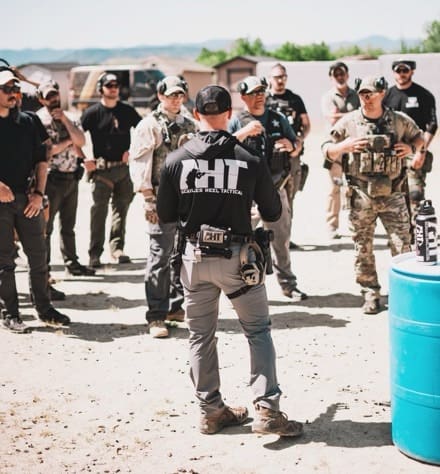
Achilles Heel Tactical’s one-day firearms training courses continue to set a new standard for shooters who want more than just range time. Designed to break through plateaus and replace outdated habits, these eight-hour training blocks focus on measurable performance gains that students can replicate long after class ends.

Unlike traditional “stand in a line and shoot” courses, Achilles Heel Tactical compresses years of bad habits into one day of corrections. Students walk away with hard data on their shooting performance, real-time feedback from seasoned instructors, and skills that hold up under pressure.

“It doesn’t take weeks or months to see change,” said Rick Crawley, founder of Achilles Heel Tactical. “One day of structured training, with the right feedback and accountability, can completely reset how someone approaches shooting.”

What Makes Achilles Heel Tactical Different

Immediate Performance Data – Drills like the Dope Drill provide objective metrics instead of guesswork.



Accountability Under Pressure – Students are pushed beyond comfort speed while maintaining accuracy.

Real-World Training – Movement, transitions, and decision-making are built into every block of instruction.

Measurable Progress – Each class starts with a baseline assessment and ends with visible improvement.

Whether pistol or carbine, students consistently leave the range shooting faster, cleaner, and more confidently than they thought possible. Even experienced shooters discover that time behind the gun doesn’t always equal skill; measured feedback does.

Enrollment Ongoing
Achilles Heel Tactical offers both Baseline Pistol and Baseline Carbine one-day courses, open to civilians, law enforcement, and military personnel. Class sizes remain limited to ensure each shooter gets individualized coaching.

For schedules and registration, check out the Training Course Catalog.