TYR Tactical

Experimenting with Technology: Soldiers and Innovators Strengthen National Defense

September 18th, 2025

Schofield Barracks, HAWAII – Soldiers from the 25th Infantry Division are testing innovative electromagnetic support systems to strengthen the Army’s ability to adapt and operate in the Pacific Theater. Partnering with industry experts through the Army’s X-Tech program, Tropic Lightning Soldiers are experimenting with emerging technology that promises to enhance battlefield awareness, reduce risks to troops, and advance multi-domain operations.

Staff Sgt. Clark J. Tequin, an electromagnetic warfare specialist assigned to the Multifunctional Reconnaissance Company, 2nd Brigade, 25th Infantry Division, emphasized the importance of this technology for future operations.

“The Army functions in multi-domain operations, and this is part of the cyberspace and electromagnetic spectrum,” Tequin said. “This allows us to fight in multiple domains throughout the battlefield. As we move forward in the Pacific, we need these types of technologies to help troops understand and have better situational awareness of the overall battlefield.”

This focus on adaptability demonstrates how the division is preparing for the challenges of modern warfare in a dynamic environment.

The tested system enables Soldiers to detect enemy activity without direct contact—giving commanders an edge in planning and protecting their forces.

“Systems like this allow us to create a baseline on the spectrum and understand what type of signatures might be out on the battlefield—what our enemies are using and how we can exploit those signatures,” Tequin explained. “For example, if our opponents use radios, we might be able to detect those specific radios and exploit their communication and other equipment.”

By developing the ability to see, sense and exploit adversary activity, the division strengthens its Lethality across multiple domains.

Working with industry partners is a key element of the division’s modernization efforts.

“It’s a good way forward as 25th Infantry Division continues to experiment with different technologies and really push the envelope on adapting to modern warfare,” Tequin said. “This is part of that multi-domain operation.”

This partnership reflects how we connect, communicate, and integrate partners as members of one team, showcasing how Soldiers and civilians can collaborate to develop solutions that directly enhance the warfighter.

That collaboration highlighted by Jessica Stillman, an X-Tech program manager, who explained the value of putting technology directly into Soldiers’ hands during first stages of development.

“It means that we are getting technology into the hands of the Soldiers early on and giving companies an opportunity to get feedback on the technology they’re developing,” Stillman said. “That way, they can iterate on it and ensure that it’s ready for field testing and ready for when it’s needed.”

Stillman noted that events like this bring both Soldiers and technical experts together, providing balanced insight.

“It brings together not only Soldiers, but also the technologists to really look at how the technology performs,” Stillman said. “It’s valuable to see what it looks like when the Soldier is using it in the field, and what it looks like from a technical or scientific perspective to ensure that the technology is actually going to work.”

Stillman’s comments reinforce the division’s value in partnerships —bridging industry and military expertise to accelerate innovation.

Sgt. Brock A. Gossling added that adaptability remains at the core of these efforts.

“Testing capabilities like this reflect that mindset because systems like these have to be adaptable and go after whatever the 25th Infantry Division has in front of them,” Gossling said. “We have to be able to use these systems and go after any targets in any area.”

Beyond adaptability, one of the fundamentals focuses on protecting Soldiers while accomplishing the mission. Gossling explained how electronic support systems enhance safety.

“Electronic support systems like these are important because they provide commanders with early warning and threat detection, so they have a better understanding of their awareness,” he said. “It also allows commanders to understand their income levels and limit the signature they output.”


This speaks directly to managing risk, ensuring that commanders can make informed decisions while minimizing risks to their troops, people, and mission.

Stillman emphasized that this is just the beginning of the Army’s partnership with X-Tech.

“This is the first experimentation that X-Tech is doing—not the last,” she said. “We have several more coming up, and Army senior leaders continue to ask how we can rapidly identify technology and get it into the hands of Soldiers. That is exactly what we will be doing in the months ahead.”

Tropic Lightning Soldiers are testing new electromagnetic support systems to sharpen Lightning Discipline and keep the division lethal and ready. By working with industry partners, leaders show Initiative and Agility to adapt faster than adversaries in the Pacific. And by connecting Soldiers with civilian experts, the division Strengthens Soldiers and Community, ensuring trust and readiness remain at the core.

PDW Awarded $20 Million Army Contract for ‘Transformation in Contact’ Initiative

September 17th, 2025

PDW to supply the U.S. Army with C100 quadcopters to demonstrate the system’s multi-mission capabilities with various payloads

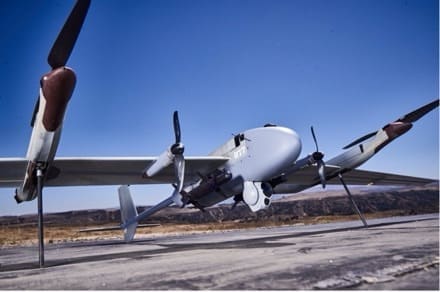
HUNTSVILLE, Ala., Sept. 16, 2025 — As the Army continues to invest in agile and emergent UAS cutting edge technologies to accelerate Transformation in Contact initiatives, PDW has responded with time sensitive delivery, support and escalating capabilities. “In order to maintain a competitive edge in the current unpredictable state of war, the U.S. must embrace technological advancements as they are introduced to adapt faster than our opponents are,” stated PDW co-founder Ryan Gury. “Right now, the advancement that can truly transform the battlefield is small, multi-mission drones like the C100, and PDW is ready to rapidly deliver these critical assets at scale.”


PDW received a $20.9 million award from the U.S. Army to supply C100 UAS and Multi-Mission Payloads (MMP) in support of the Army’s ‘Transformation in Contact’ (TiC) initiative. This is the third C100 contract for the TiC initiative, part of the Army’s Company Direct Requirement for Medium Range Reconnaissance (MRR). The goal of TiC is to rapidly move cutting-edge commercial systems and products from concept to production through real-time fielding and evaluation. The C100 was fielded to seven Army PM UAS units under the first two contracts. This next iteration of C100 systems and MMPs will support units within both 18th Airborne Corps and U.S. Army Special Operations Command (USASOC).

“Selection of PDW for another round of TiC support is a testament to the reliability, affordability and modularity of the C100,” said PDW CEO and co-founder Ryan Gury. “At a lower cost per system than comparable platforms, PDW can supply the Army with increased operational capabilities at greater reach with a true multi-mission platform.”

The MMP program delivers unprecedented organic edge capability to ground force commanders through the integration of three purpose-built payloads onto the C100. These modular integrations enable GPS-denied operation, extend peer-to-peer and BLOS communications, and detect and attack adversary signals of interest. All three payloads have demonstrated operational effectiveness in theater and now significantly elevate the C100’s mission impact—enhancing situational awareness, electronic warfare capabilities, and freedom of maneuver for the modern battlefield.

“While rapid response is critical, it is equally essential to respond equipped with the appropriate support capability,” continued Gury. “This is why the C100 is the ultimate force multiplier; It can provide varying levels of support to operators in the field with immediacy through employment of a variety of payloads.”

Under the $15 million TiC 2.0 contract PDW received in Dec. 2024, C100s were deployed across multiple high-profile theaters, including Indo-Pacific Command (INDOPACOM), European Command (EUCOM), and Central Command (CENTCOM), to enhance the capabilities of U.S. forces in critical regions across the globe. This new contract will build upon previous performance by further demonstrating the bounds and functionality of the C100 as a multi-mission platform.

Introducing Shell Tech 308 NAS3 PROGRADE Ballistic Tip Ammo

September 17th, 2025

Lightweight NAS3™ casing meets Nosler® Ballistic Tip® Technology for unmatched accuracy, velocity, and stopping power for today’s hunter.

Eubank, KY (September 2025) – Shell Shock Technologies, LLC. (SST), a leading innovator in the ammunition industry, is proud to announce the release of its newest premium ammunition: Shell Tech™ 308 NAS3™ PROGRADE Ballistic Tip Ammo. Engineered to deliver the performance hunters demand in the field: superior accuracy, flat-shooting velocity, and devastating stopping power. Built with the trusted Nosler® Ballistic Tip® projectile and SST’s advanced NAS3 casing technology, the 308 NAS3 PROGRADE provides the consistency and precision that gives hunters confidence with every shot.

At the heart of the cartridge is the 150GR Nosler Ballistic Tip, designed for controlled expansion, deep penetration, and reliable weight retention across a wide range of velocities. Its streamlined polymer tip with a full-tapered jacket and a special lead-alloy core delivers controlled expansion, optimal weight retention, and superior accuracy at long range. The heavy jacketed base prevents bullet deformation during firing, providing a stable platform for the large-diameter mushroom effect upon impact, ensuring deep penetration and decisive stopping power. Additionally, the Ballistically Engineered Solid Base® with its boat tail configuration works seamlessly with the streamlined polymer tip, improving long-range performance and simplifying the loading process. The result is consistent terminal performance, deep penetration, and decisive stopping power in hunting scenarios.

Supporting this proven projectile is Shell Shock Technologies’ NAS³ casing, which ensures ultra-consistent geometry, optimal chamber alignment, and uniform wall thickness. These attributes minimize recoil, reduce inconsistencies, and tighten groupings, giving hunters the reliable accuracy they depend on. Built from a nickel alloy body and stainless-steel head, NAS³ casings are stronger than brass, resistant to corrosion, and designed to withstand the rigors of extreme hunting environments. They are also up to 30 percent lighter than traditional brass cases, reducing fatigue in the field and allowing hunters to carry more ammunition with less weight.

The visible discoloration on each NAS³ case neck is the result of heat annealing, a process that improves bullet grip, enhances neck tension, and increases consistency shot after shot. Combined with SST’s eco-friendly, lead-free design, hunters can count on cleaner barrels, reduced fouling, and environmentally responsible performance without sacrificing results.

“The introduction of our 308 NAS3 PROGRADE Ballistic Tip Ammo represents a major step forward in our commitment to innovation, performance, and reliability,” said Peter Foss, Managing Partner and CEO of Shell Shock Technologies. “By combining our advanced NAS3 casing with Nosler’s proven Ballistic Tip technology, we’ve created a cartridge that gives hunters the confidence they need in the field: accuracy at extended ranges, flat velocity, and the stopping power to make every shot count.”

Delivering a muzzle velocity of 3,050 feet per second, superior accuracy, reduced recoil, and flawless cycling, the 308 NAS³ PROGRADE gives hunters the flat trajectories and stopping power needed for elk, deer, and other challenging pursuits. Hunters will find it to be the ultimate ally in achieving consistent results.

Shell Tech 308 NAS3 PROGRADE Ballistic Tip Ammunition Specifications:

The Shell Tech 308 NAS³ PROGRADE Ballistic Tip Ammo is available now in 20-round boxes for $54.95, with a subscription option offering 15 percent savings.

?Keep up with Shell Tech’s advanced ammunition on the website and social media platforms: Facebook, Instagram, and YouTube.

Epirus’ Leonidas High-Power Microwave Defeats 49-Drone Swarm, 100% of Drones Flown at Live-Fire Demonstration

September 17th, 2025

Leonidas neutralized 61-of-61 drones, culminating in a 49-drone swarm kill with one pulse of electromagnetic interference

Los Angeles, Calif—September 10, 2025—Epirus announced today the results of an August 26 demonstration of the company’s Leonidas high-power microwave (HPM) system that delivers weaponized electromagnetic interference to counter swarms of robotic, asymmetric threats.

The live-fire demonstration tested Leonidas against 61 drones across five operationally relevant flight scenarios. Leonidas’ suite of capability differentiators

was on full display as the system disabled 61-of-61 drones—a 100% success rate. The event was capped off by the defeat of a 49-drone swarm consisting of two threat representative drone types all with one instant and low-collateral pulse of high-energy electromagneticinterference.

Leading up to finale, the prior flight scenarios were:

?Multi-angle counter-swarm engagement

Two groups of three drones were flown in from opposite directions. Leonidas engaged and defeated the first trio of drones to the left then re-directed its HPM beam to engage and defeat the trio of drones to its right.

Selective targeting

Two drones were flown into the engagement area in close proximity to one another. An audience member chose the right drone to be targeted before Leonidas engaged and defeated the right drone and left the other drone unaffected, demonstrating the system’s software-defined, precision-controlled waveforms. Leonidas then engaged and defeated the remaining drone.

Precision intercept

A single drone flew into the fire zone. Leonidas engaged and defeated the target and dropped it to the ground within a software-defined, pre-identified safe zone. Leonidas is a low-to-no collateral counter-drone solution and uses software to defeat drones exactly when and where operators need to allow for designated safety zones to protect assets and personnel.

Multi-target engagement

Three drones flew into the fire zone at different ranges. Leonidas engaged and defeated all three drones simultaneously, demonstrating its one-to-many aerial defeat capability.

“This is a watershed moment for Epirus. We believe showcasing our weaponized electromagnetic interference is the most effective way to communicate that Leonidas is the only mission-capable, counter-swarm solution for the one-to-many fight,” sai Andy Lowery, Epirus CEO. “Those who joined us witnessed this first-hand as 61 drones went up—and 61 went down.”

The invitation-only demonstration took place at Camp Atterbury, Indiana, and was attended by representatives from throughout the U.S. Department of Defense, other U.S. Government agencies and nine allied countries. The event was conducted within site range restrictions and optimized for in-person viewing.

The event demonstrated the first generation of Leonidas, which was designed and developed using internal research and development funds in 2022. Epirus unveiled its latest version of Leonidas in July 2025, which is expected to more than double the operational range and lethality over the 2022 system in the same form factor. 

Wiley X Secures Exclusive Global License Agreement with Buzzworks for Revolutionary Wraith Facial Protection System

September 17th, 2025

FRISCO, Texas (September 16, 2025) – Wiley X, a leading provider of premium protective eyewear and gear, is proud to announce it has signed a multi-year exclusive global patent and trademark license agreement with Australian-based Buzzworks to bring the revolutionary Wraith® design to market.

Buzzworks, based in Australia, has earned global recognition for its innovation in protective systems. The agreement marks the beginning of a powerful collaboration between two veteran-founded, family-owned companies with shared values, a commitment to innovation, and a mission to protect those who protect us.

The Wraith® is a next-generation facial protection system designed to save lives in the field and on duty, reduce facial injuries, and safeguard the everyday lives of troops and first responders. While currently in the testing phase, the system represents a significant advancement in protective equipment and is poised to set a new standard in facial safety and performance.

“This partnership reflects our dedication to pushing the boundaries of protective technology,” said Dan Freeman, CEO of Wiley X. “Working alongside Buzzworks allows us to combine our decades of expertise in protective eyewear with their groundbreaking design to deliver solutions that help our military and first responders come home safe.”

SOTech Cobra Aid Bag is Jump Approved and Patented

September 17th, 2025

SOTech is proud to announce both that our Cobra Aid Bag has been added to the CAASOP being approved for Airborne operations and that we have received our US Patent for our unique design. What attracted the Cobra to the attention of the 82nd’s senior medics was it’s configuration to ride closed comfortably on the paratrooper’s back and to open splaying out flat to give quick ID and access to all of the labeled pouches. It’s sleek design can also strap to the paratrooper’s ruck keeping within the jump size limits, and it’s modular pouches allow for reload after the 72 hour sustainment window.

Aid Stations are being targeted and need to move within 2 hours.

 In the age of drone warfare, the word coming out of Ukraine was that Russian Artillery targeting aid stations was forcing them to treat and move within two hours.  SOTech has been redesigning medical load carriers to be more mobile while comfortable to wear.  The Cobra system takes a panel organizer and allows it to quickly zip closed into a super comfortable pack for fast and extended movement.

The SOTech Cobra JAKES (Jumpable Aid Kit and Equipment Sack) is designed to be jumped in conjunction with the MOLLE 4K or as a stand-alone pack. When jumped attached to the MOLLE 4K, it provides more expedient access to treatment than other current aid bags. The JAKES was evaluated by ABNSOTD who conducted a rigging exercise and actions inside the aircraft assessment. The test concluded that the overall risk of rigging, carrying, and using the JAKES during static line parachute operations is low. Solution: AEC published the Safety Confirmation; USAAAS published the updated AUL. This rigging solution will be included in CH. 12 of the CAASOP — from MJM Update 25-01 The Cobra CAAB can be jumped stand alone or piggyback to the MOLLE 4000.

Brigades of the Army’s elite 82nd ABN DIV have been purchasing the Cobra JAKES CAAB after we customized the design to clip and strap onto the outer face of the MOLLE 4000 ruck in a piggyback configuration. An octopus strap condenses the outer pockets flat so the addition of the Cobra CAAB keeps the overall dimensions of the two packs together within the cubed dimension limitations for exiting the aircraft. This also allows the Cobra to splay open perfectly when the MOLLE ruck is dropped presenting the internal pouches for quick ID and access. And it’s modular pouches allow for reload after the 72 hour sustainment window.  While the 82nd ABN DIV and 18th ABN CORPS prefer to jump the Cobra piggyback strapped to the MOLLE 4000 ruck, the Rangers, SF and SEALS all requested the ability to jump it stand alone. Per the CAASOP, JAKES is authorized to be jumped with the MOLLE 4K and IHSPR or as a stand-alone pack with the HSPR.

The ability of the tail to fold up and still give access thus allowing wall mounting inside confined vehicle spaces followed the SOF medical doctrine of Ruck-Truck-House. The layout of the pouches allows for the MARCH protocol in labelling and arrangement. And the load space allows for a paratrooper’s 72-hour medical load which coincidentally matches the size required for Prolonged Field Care / Prolonged Casualty Care guidelines.

The Cobra Aid Bags are part of a deployment system that includes travel containers as well as reload sustainment pouches.  The Cobra comes with an optional MARCH belt that can function as a hip belt.  This is supported by the Cobra pack that can be mounted on a vehicle or shelter wall.  This in turn is supported by travel duffel (Medical Organizer Rescue Pack / MORP) which contains 10 reload sustainment pouches that will velcro into the Cobra.  The MORP is supported by the Modular Medical Container Insert System / MMCIS Pelican box organizer.  The MMCIS comes with a lid pouch organizer, and space for the Cobra, MORP and a tray of sustainment medical items.  The whole kit stores inside the Pelican 1660 box.  When deployment orders come, the box can be wheeled onto the fixed wing craft for travel.  Once in-country, the box can be left in the rear and the duffel can move to the forward AO via rotary wing.  Once there, the MORP can stay in the shelter while the Cobra is mounted to the vehicle and the belt mounted to the operator.

The US Patent and Trademark Office recognizes SOTech’s innovative and unique design through its recent award of a utility patent for the Cobra.  When we began work on this design, we wanted to combine SOTech’s well known RAMMP hanging panel designs (the large black medical wall hangers with gold labels have been a staple of the Army for decades) with our super comfortable backpacks.  Our motivation was the artillery targeting on modern battlefields of aid stations by drone reconnaissance meaning aid stations could come under fire if they are set up for more than two hours.

SOTech also worked with a group of soldiers assigned to a well-regarded academic institution to perform a study on the cognitive improvement for a medic identifying and accessing pouches when they are splayed open versus a top load pack. The Cobra design was markedly faster, and the soldier felt that they were better able to function in their medical task. Pictured is comparison testing between the Cobra and MOLLE 4000. Contact SOTech for additional information.

Pictured above top left to right: Cobra Go Pack, Modular Assault Aid Bag, Cobra Assault Aid Bag-Jumpable, Modular Prolonged Field Care Cobra, and Cobra Modular Aid Station Pack. Below: Cobra Micro Pack and Cobra Mini Pack.

SOTech’s patented Cobra design has evolved into a family of products. Beginning with an assault aid bag, we expanded to a larger prolonged field care bag for Special Forces customers, and an even larger field aid station bag for our Forward Resuscitation and Surgical Teams. Next the SEALS asked us for a smaller Cobra we called the Cobra Go Pack. And concurrently we developed a belt pouch and a fanny pack we call the micro cobra and the mini cobra. Stay tuned for our medical line to drone, communications and EOD carriage.

www.SOTechTactical.com

Thunderstruck: Marines Compete in First-Ever Service-Wide Communications Team Competition

September 17th, 2025

MARINE CORPS AIR STATION MIRAMAR, Calif. —

U.S. Marines from across the globe competed in the inaugural Thunderstruck Communications Team Competition, hosted by Marine Wing Communications Squadron 38, Marine Air Control Group 38, 3rd Marine Aircraft Wing Sept. 10, 2025.

Unprecedented in scope, the service-wide event tested Marines’ ability to integrate physical endurance with expeditionary communications tasks, reflecting the operational demands of distributed operations in contested environments. Teams completed a six-mile, combat-loaded course while executing high-frequency voice transmission, Mobile User Objective System operations, and data networking, all under austere field conditions.

“The event attests to the whole-Marine concept — the ‘Marine communicator,’ not just the everyday communicator,” said Lt. Col. Brian Kerg, the commanding officer of MWCS-38. “This training and competition compelled them to do the exact things they would do in a distributed aviation operations environment.”

A total of 15 different units competed in the event each providing a four-Marine team composed of their top communicators. These units represent all three Marine Expeditionary Forces, both the Fleet and the Supporting Establishment, including the active and reserve components.

“They were not only tested on our communications training and readiness standards, but tested while under physical duress and competitive pressure, as they would in a time of war,” said Kerg. “As they would if rounds were flying at them. As they would if long-range munitions were falling on their head.”

This event marks the first time the Marine Corps has held a service-wide competition specifically dedicated to communications Marines, reflecting the increasing importance of resilient command and control (C2) in distributed operations. By pushing teams to perform under pressure, Thunderstruck highlighted the unique blend of technical skill, problem-solving, and physical toughness required to sustain communications at the tactical edge.

“Imagine a handful of Marines inserted via air and have to move the last tactical mile before they get C2 established,” said Kerg. “They are supporting aviation operations and then they are detected. They have to break down their gear, move to another survivable location, and reestablish.”

The competition directly supports the Commandant’s Planning Guidance and Force Design 2030 priorities. Both call for small, agile and self-reliant teams capable of enabling aviation and Marine Air-Ground Task Force operations in contested and dispersed environments. Events like Thunderstruck ensure that communicators are trained, tested and recognized as critical
enablers of battlefield dominance.

“This is my 15th year in communications field and there has not been a better time to be a communicator in the Marine Corps,” said Chief Warrant Officer 2 Kelson Epperson, a space and propagation engineering officer with MWCS-38. “We are now tactically integrated in every system, in every way, and Thunderstruck proves this.”

Beyond testing individual and team performance, the event served as a proof of concept for a scalable model of training. Lessons learned from this competition will inform future iterations, which are expected to expand in scope and participation.

“Today, I took away a very healthy spirit of competition with other communicators across the Marine Corps,” said Cpl. Tyler Barrack, a satellite transmissions systems operator and the fireteam leader for the winning team. “This is something I can take back to my Marines to empower them to compete in the future.”

The winning team was composed of four Marines from Communications Company, Headquarters Regiment, 1st Marine Logistics Group, based out of Marine Corps Base Camp Pendleton, California. Each Marine holds a different Military Occupational Specialty, including radio operators, communications specialists, and data network specialists.

“It takes a village for everything that took place today,” said Barrack. “Every single Marine here has taught me something at some point in my career — It takes a village to make good communicators.”

MWCS-38’s mission is to establish and sustain communications networks for aviation C2. That capability is central to 3rd MAW’s ability to fight as a distributed force and to I Marine Expeditionary Force’s success in contested environments. 

“This highlights how expeditionary we need to be in the future. We are at an age where we are no longer operating in big teams or big boxes,” said Barrack. “Now we are going forward as fire teams operating with smaller teams — and it changes the game.”

MWCS-38’s initiative in developing and executing Thunderstruck demonstrates how unit-driven innovation can directly support the Marine Corps’ modernization efforts. The competition showcased how communicators — who often work behind the scenes — are central to closing kill chains, integrating multidomain effects, and ensuring decision dominance in future conflicts.

“We are adapting to an enemy threat,” said Kerg. “Our teams are getting smaller and more capable and must be more technically proficient, more tactically skilled and tough as nails.”

1stLt Madison Walls, 3rd Marine Aircraft Wing

Thales Unveils DCM5, a Sovereign Cryptography Solution to Combat the Quantum Threat for Global Defence and Government

September 16th, 2025

Building on the trusted Datacryptor heritage, DCM5 is future-proofed for quantum readiness and offers seamless integration with existing systems. With full backward compatibility with Datacryptor 2000, it is designed for secure communications across multiple nations, including Five Eyes partners and multinational coalitions.

Key features include:

  • Sovereign Control: Customer-defined cryptography at hardware and software levels.
  • Global Interoperability: Secure use across multiple nations with mutually agreed algorithms.
  • Quantum-Ready: Smooth transition to post-quantum algorithms without hardware replacement.
  • Certified Protection: Designed to UK CAPS High Grade and FIPS 140-3 Level 3 standards.

“DCM5 is not just a product upgrade—it’s a pivotal capability for nations that must safeguard their most sensitive data against the current cyber threat landscape and tomorrow’s quantum powered adversaries,”said Chris Edwards, Managing Director of Secure Communication and Protection activities in the UK. “By empowering customers to define and control their cryptography at the hardware level, we’re delivering unmatched resilience, sovereignty, and long-term operational assurance.”

Thales has already secured an initial customer for the DCM5, marking the start of its integration into wider encryption systems globally.

Thales in Cybersecurity: Protecting What Matters Most

Thales is a global leader in data protection and cybersecurity, offering comprehensive solutions across the value chain: Identify, Protect, Detect, Respond, and Restore.

Thales provides three key offerings:

  • Sovereign Products: Advanced encryptors and sensors to protect critical governmental and institutional systems, ensuring full control over sensitive data.
  • Security Solutions: A platform for data protection, identity and access management, and application security, helping organizations secure sensitive data across all environments.
  • Cybersecurity Services: A full range of services including threat assessment, training, attack detection and response, and integration projects to enhance security resilience.
  • With over 5,800 cyber experts in 68 countries, Thales protects the world’s most sensitive data.

Thales has a proven track record, with 19 of the world’s 20 largest banks relying on its data protection, the top 5 cloud providers trusting Thales to secure their data, and 50 countries, including NATO members, using Thales encryption products to safeguard critical infrastructure.