Our friend Joe T sent us this a photo of this interesting display with the caption, “Brass was scarce in 42 used steel cases.”


Our friend Joe T sent us this a photo of this interesting display with the caption, “Brass was scarce in 42 used steel cases.”

Loughborough, UK, 15th September 2015: The Springbuck Armoured Personnel Carrier manufactured in South Africa by DCD Defence, is fitted with complete runflat wheel assemblies provided by Tyron and its South African partner Global Wheel.
The initial contract for three complete sets of wheels are fitted with the Global Wheel bolt-together rim, Tyron multi-part All Terrain Rubber Runflat inserts and Continental tyres. These systems will be exposed to extreme harsh African terrains.
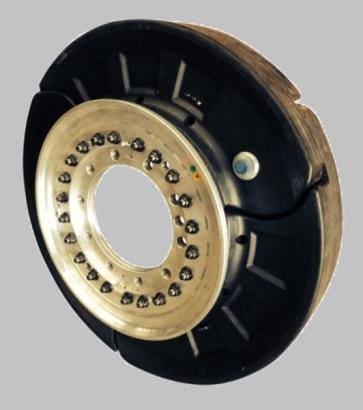
“By providing the complete assembly, DCD Defence can reduce the production line assembly requirements. The end user is provided with a proven, highly reliable solution which will keep the vehicle moving safely in the event of a sudden tyre deflation. The wheels can be changed without any special tools even at the roadside,” said Richard Glazebrook, Managing Director of Tyron Runflats Ltd.
Tyron ATR wheel assembly has a unique multi-part rubber runflat fitted to the Global Wheels two part bolt-together steel wheels. This system is locally manufactured specifically for the Springbuck APC.
The Tyron All Terrain Rubber runflat is not only a multi-piece unit but also successfully passed ballistic tests. Emphasis was placed on the connections to ensure that under severe ballistic attack the ATR is not compromised as rubber absorbs far more energy than hard materials from kerb strikes and IEDs.
The Global Wheels bolt-together wheels are available in both steel and aluminium, the rubber of the ATR is enhanced to ensure beadlock, which offers a guaranteed high level off-road flat tyre performance which is not possible with composite runflats.
With Tyron ATRs fitted, the Springbuck APC can be driven for a minimum of 50 km even with all tyres being damaged.
The Springbuck APC features a powerful MWM6 cylinder diesel turbo charged engine and carries a driver and ten personnel. With B6 ballistic protection upgradeable to B7, the all-steel armoured V-shaped hull is designed to withstand a TM57 mine directly under the hull and two under any wheel. The standard configuration can be easily adapted to suit various applications and end user requirements.
Tyron is exhibiting its range of ATRs on stand N9-300 during DSEI 2015 in London from 15 to 18 September. DCD Defence is exhibiting its range on stand N3-110.
Media Release
Date: 10th September 2015

Casualty handling on the battlefield is critical to maintaining moral. To achieve this not only is excellent training needed but also a high quality ambulance fit out. Marshall Aerospace and Defence Group has developed a range of stretcher systems to be fitted into armoured ambulances and will be discussing these during DSEI 2015 on stand S3-310.
The systems have been developed based on the proven experience of supplying stretcher solutions for a range of armoured ambulances in service across Europe and over 800 stretcher systems for the ubiquitous Land Rover Ambulance which has been in service around the world for over 40 years with the British and other Armies.
“The skills of our engineering teams in developing these stretcher systems demonstrate that not only that Marshall is able to work closely with the end user and our partners but also has the innovate skills to deliver a quality, long lasting solution which is fit for purpose,” said Steve Fitz-Gerald, Chief Executive of Marshall Aerospace and Defence Group.
“Whenever nations are either upgrading their vehicle fleets or purchasing new ones there are opportunities for us to integrate the medical equipment into the clinical white space as well as provide stretcher systems using our proven vehicle engineering skills,” he added.
The stretcher systems are designed to maximise the working space in each type of vehicle for the medical attendant to monitor and treat the casualty, whether on a stretcher or seated.
The loading systems are engineered to minimise the effort and time of loading the stretcher by the combat medics into the vehicle so reducing the risk to themselves, the casualty and the vehicle.

A recent article published by the Daily Mail shows London Metro Police outfitted in the latest equipment supplied by Edgar Brothers, Arc’teryx LEAF uniforms and SIG SAUER MCX rifles, the latter of which were missidentified within the article as G36s.
You can check out the photos at the following link: www.dailymail.co.uk/news/article-3229819/Don-t-mess-Met-terrifying-machine-gun-toting-anti-terror-police-guarding-Israeli-PM-Netanyahu-visit-London


In response to customers looking for a PALS backed harness for their Kit Bag, Hill People Gear came up with this prototype. If they decide to place it into production, it will be an add-on item and not a substitution at time of purchase.

Let them know what you think at hillpeoplegear.com/Forum.
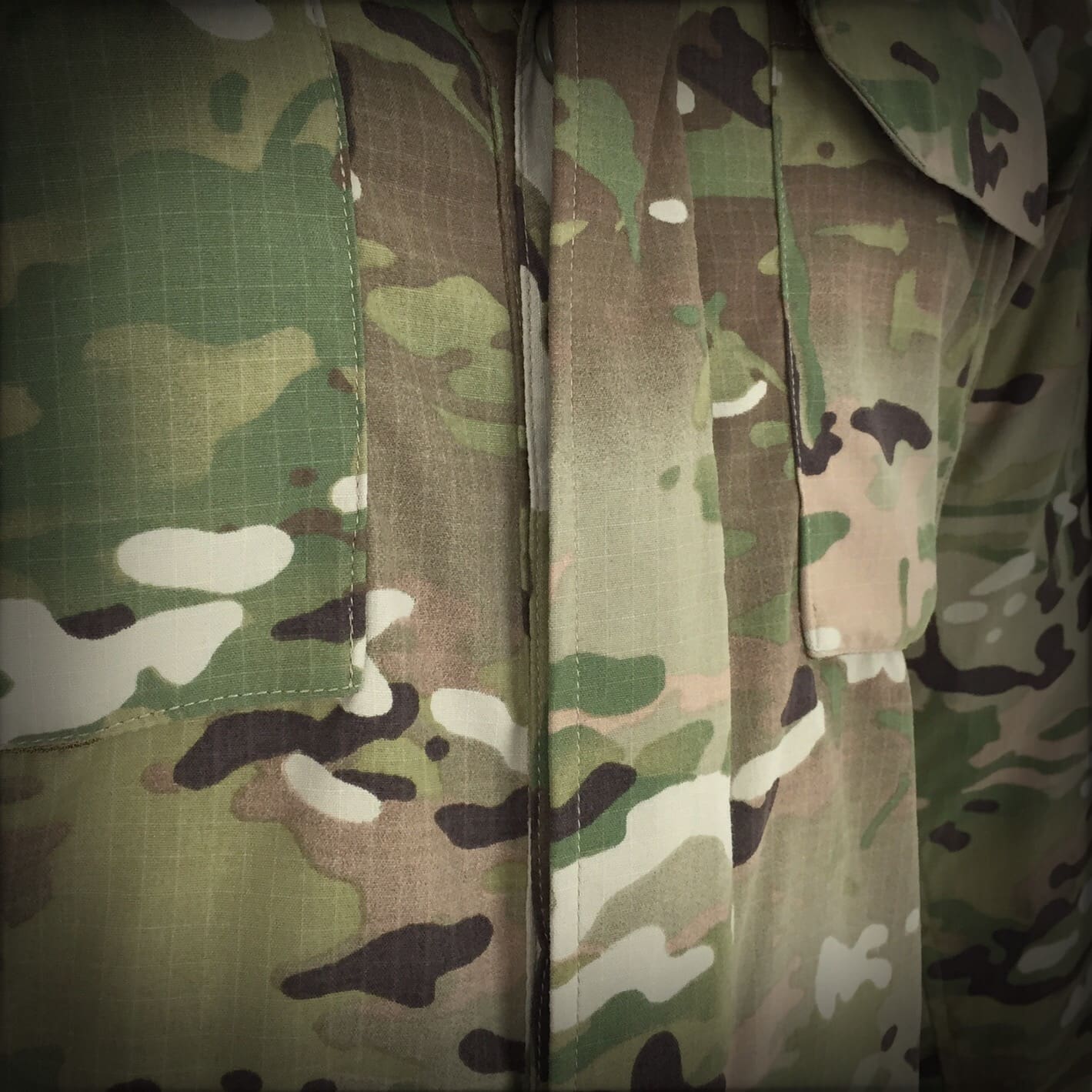
TYR Tactical is unveiling their new Huron Hot Weather uniform during next week’s DSEI at London’s ExCel Center in booth N4-374.


Look for full details here on SSD.

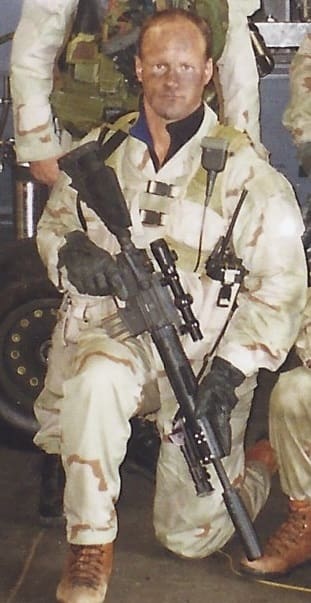
I get more questions about the “Black Gun” with a suppressor than any other weapon that I post. I called this black beauty my Recce Rifle, which the unit armorers could take an ordinary M-4 with a 16″ barrel and make it shoot 1/2 MOA groups at 100m. As a sniper, I chose this gun from my gun lockup over the other dozen guns if I needed a light weight, precision instrument for a mission that I could also use as an Assault Rifle inside a structure if needed. The suppressor was made by Knight’s and never failed me, but as much fun as these suppressors are to shoot, the extra cleaning balances it out.
Respectfully,
Daryl Holland, US Army SGM (Ret)

Larry Vickers offers these additional observations:
The early Recce rifle efforts started in the Delta Sniper Troops in the early 1990’s – post Operation Just Cause timeframe.
A variety of things were tried (such as stainless steel match barrels) but the improvements narrowed down to a few areas; improved ammo, improved triggers, a variety of optics and lastly free float hand guards and eventually rail systems. These efforts pre date the Mk12 in NSW use by many years.
Knights Armament played a big role with development of both enhanced triggers and free float rails coming out of this program. Reed Knight said from an early stage that better ammo would yield much better results than match barrels and he of course was correct. Delta pushed forward with acquiring better ammo that has led to much of the specialized 5.56mm ammo on the market today. Black Hills and Hornady both offer loadings as a direct result of these efforts.
The rifle shown in this picture had an early SR-25 carbon fiber free float tube adapted to it. This became a common modification in Delta to get more real estate for lights and lasers and better zero retention vs the carbine length KAC rail. This led to the development of the KAC MRE rail which was the first extended length rail of its kind.
Also the scope in this pic is a Microdot – a Japanese 1.25 x 4 off the shelf commercial grade scope that had a red dot in addition to a reticle. This was a stop gap optic after the need arose in Mogadishu Somalia for better target ID vs a red dot sight in the street fighting of that battle. Eventually Leupold offered an optic ( the CQT) at Deltas request to fill this need. It didn’t really answer the mail for Delta so I approached Schmidt & Bender on the Units behalf to build a more suitable optic. This is how the S&B Short Dot was born.
Delta played a critical early role in the SPR program ( later Mk12) that we know of today. In typical Unit fashion they did it quietly without books, movies and public spectacles of ‘who shot who’ played out for the world to see. The True Quiet Professionals.
-Larry Vickers, US Army MSG (Ret)
Vickers Tactical Inc.
Host of TacTV
Gunfighter Moment is a weekly feature brought to you by Alias Training & Security Services. Each week Alias brings us a different Trainer and in turn they offer us some words of wisdom.
Thanks to reader Andrew L for this inspirational images.

The Freedom Tower.


The “light” towers are actually teo blocks away from the original site.

View lookng up from the middle of each a light “tower”.

NF NF