FirstSpear

Dragonflies Overhead: sUAS and 3D Printing Empowering the 4th Infantry Division

June 3rd, 2025

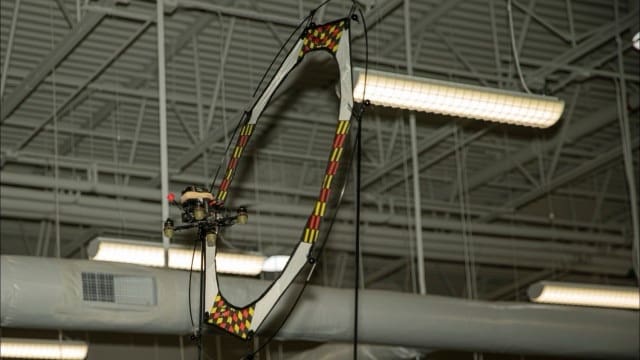
FORT CARSON, Colo. — A distinct hum and sharp buzz slice through the air inside the Ivy Eagle’s “Monster Garage.” The sounds emanate from a football-sized quadcopter, its rotors a blur as it expertly maneuvers around a complex, custom-built obstacle course.

The modern battlefield demands agility, adaptability, and technological superiority. Small unmanned aerial systems, sUAS, and 3D printing, also called additive manufacturing, technology have emerged as critical assets in achieving these objectives, providing essential reconnaissance, surveillance, target acquisition, electronic warfare and logistical support capabilities.

Pilots from the 4th Infantry Division’s sUAS Innovation Platoon, the “Dragonflies”, practice their maneuvering skills at the “Monster Garage” with the use of laptop-based simulators before progressing on to the obstacle course in the warehouse and completing larger field exercises to demonstrate how sUAS are playing a crucial role in the operational environment.

Brig. Gen. Eugene Ferris, the division’s former deputy commanding general for maneuver, said that the future of modern warfare will depend on the lethal integration and the effective deployment and sustainment of sUAS in dynamic and often contested environments, which are paramount for mission success.

Small Unmanned Aerial Systems

In military operations, sUAS serve many critical roles, providing real-time intelligence, enabling precision strikes, conducting electronic warfare, and even facilitating resupply in challenging environments.

The effectiveness of the sUAS Innovation Platoon, 6th Squadron, 17th Cavalry Regiment, 4th Combat Aviation Brigade, 4ID, in these varied and crucial roles is further amplified by the ability to tailor their designs for specific, demanding environments.

“For the 4ID and 4CAB, the ability to rapidly prototype and adapt sUAS designs is critical when operating in diverse and complex environments”, said 1st. Lt. Nicholas McDonald, platoon leader for the Dragonflies. “The performance characteristics of these systems extended flight endurance for persistent surveillance, low observability for stealth and robust construction for survivability.”
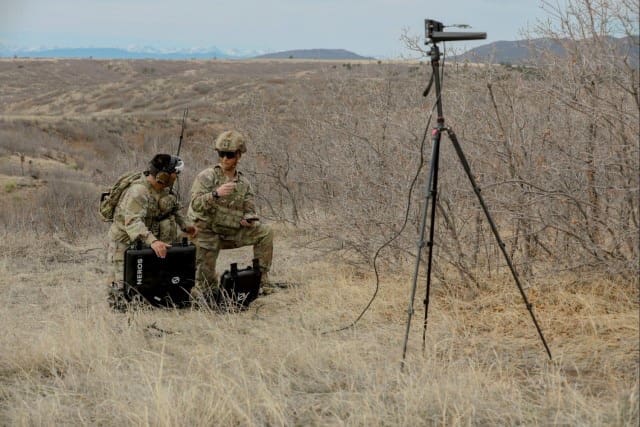
For the division, these advantages translate into tangible operational benefits: customizing sUAS to carry specific payloads or intelligence packages for information gathering, quickly prototyping and testing new sUAS configurations and integrations during training exercises to adapt to future threats.

The dynamic nature of military operations often necessitates swift responses to emerging threats or rapidly evolving tactical situations, empowering the 4th Infantry Division and the broader military to quickly translate urgent operational needs into tangible solutions for sUAS.

Additive Manufacturing

Additive manufacturing, or AM, is a transformative technology that revolutionizes how the military develops, deploys and maintains its sUAS fleets, offering unprecedented agility, customization and enhanced operational readiness.

Beyond conventional prototyping, AM enables the production of complex, lightweight components crucial for maximizing the flight performance of sUAS, reducing their signature and increasing their payload capacity. These demanding requirements necessitate the use of advanced materials and highly optimized designs, areas where AM offers significant advantages over traditional manufacturing methods.

Ferris explains that AM technologies offer specific benefits for military applications. The inherent flexibility of AM allows for integrating features that enhance functionality and survivability in contested environments.

Additive manufacturing constructs three-dimensional objects directly from a digital file. The process begins by digitally slicing the 3D model into numerous thin, horizontal cross-sections. Following these sliced instructions, the 3D printer builds the object layer by layer from the bottom up. This involves extruding melted material like plastic filament and selectively curing liquid photopolymer resin with light.

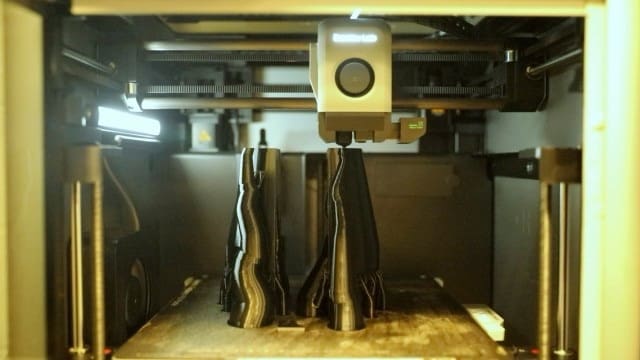
Soldiers can rapidly produce replacement parts for damaged drones, fabricate specialized tools and fixtures for maintenance at the battalion level, and even create custom adapters or mounts for unique mission requirements directly in the field, significantly saving Soldiers’ time and the division’s maintenance costs.

Such advancements in operational readiness and flexibility through AM directly support the framework established by the Ivy Division’s priorities.

Integrating the Ivy Division Priorities

Two of the division’s priorities — lethal teams and peak partners — play a significant role in sUAS and AM.

Ferris said AM empowers the 4ID to translate urgent operational needs into tangible solutions for sUAS quickly. AM enables the rapid design and fabrication of prototype sUAS or specialized components to address specific battlefield challenges.

Ferris said that units such as the 4CAB’s Dragonflies and the 10th Special Forces Group have made significant strides in integrating sUAS into training, ensuring that 4ID remains prepared for the challenges of modern warfare.
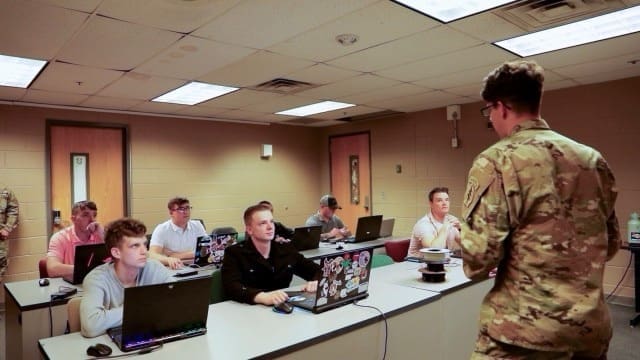
These technologies directly enhance the priorities of lethal teams by equipping Soldiers with superior situational awareness with sUAS reconnaissance and surveillance. Additive Manufacturing ensures these critical eyes-in-the-sky and other essential gear can be rapidly repaired and maintained even in austere environments, keeping teams equipped, informed and deadly.

To maintain this technological edge and ensure a future of skilled personnel, the 4th Infantry Division actively engages with the local community, especially in STEM education.

Keri Brandt, 4ID’s Ivy Human Capital Campaign manager, said the division’s collaboration with District 8 highlights its well-established connections within the wider Front Range community. Brandt explained that a significant part of their partnership development strategy includes a mentorship program for students in science, technology, engineering and mathematics. This program brings students to the military installation for on-site visits, allowing them to see directly how the 4ID applies coding, engineering, and technological principles in the operation of drone and robotics systems. Brandt explains that 4ID and Fort Carson service members participate in district events to help facilitate STEM competitions, fostering student engagement and learning opportunities.

The future holds significant promise for integrating AM and sUAS. Empowering units like the sUAS Innovation Platoon with organic manufacturing capabilities and integrating artificial intelligence and machine learning could lead to automated design optimization for battlefield repairs.

Ultimately, the potential for Soldier-level customization and repair of sUAS using user-friendly AM systems could revolutionize battlefield logistics and operational flexibility.

As AM and sUAS technology continues to mature and integrate with other advancements, its role in empowering the Ivy Division and the broader military with cutting-edge aerial capabilities will continue to grow, ensuring a decisive edge in future conflicts.

By CPL William Rogers
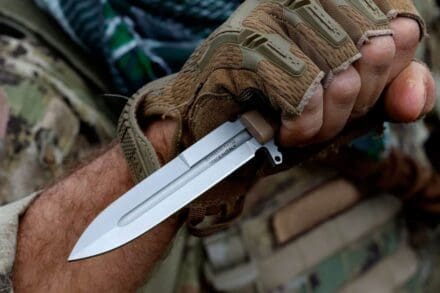
Extrema Ratio Knives – Misericordia

June 2nd, 2025

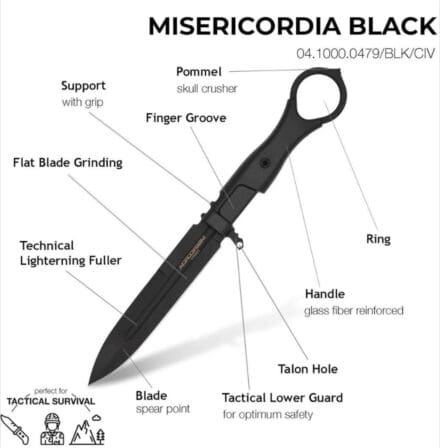
Developed and tested in conjunction with, the 4th Alpine Rangers of the Italian Army, the Extrema Ratio Misericordia features a spearpoint blade which is milled out of Böhler N690 steel, hardened at 58 HRC, it is 118 mm/4.64” long and 4mm/0,16” thick and plain edged. The blade also has a full length fuller with a ¾ length false edge. The handle integrates a ring for retention and the overall weight is 87g/3.1oz.

extremaratiousa.com/product/misericordia

D3O Partners with DEFILADE to Develop Discreet Deployment System for Law Enforcement and Crowd Control

June 2nd, 2025

Revolutionary, low-profile body armour meets urgent need for covert, scalable safety in protest policing

Huntington Beach, CA (06.02.2025) As law enforcement agencies adapt to the growing complexity of public demonstrations, D3O® has announced a partnership with DEFILADE Protective Systems to integrate its world-leading impact protection into DEFILADE’s innovative Discreet Deployment System (DDS).

The collaboration features low-profile, high-performance protection that aligns with modern best practices for protest policing, as outlined in Arizona State University’s recent guide, Dealing with Messy Democracy.

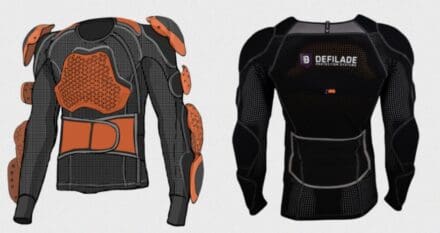
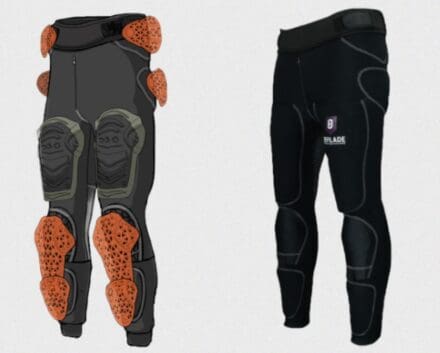
Developed in response to law enforcement demands for scalable, mission-specific safety gear, DEFILADE’s DDS consists of modular base layers including shirts, pants, and sleeves that feature removable D3O® impact protection.


Designed for covert wear under standard uniforms or plain clothes, the system enables officers to maintain mobility and discretion while protected against impact threats like thrown projectiles or physical confrontations.

“Effective protest policing is about visibility, quick reactions, and proportionate response,” said Mostyn Thomas, Chief Marketing Officer at D3O. “That starts with ensuring officers wear gear that’s protective, allows freedom of movement and doesn’t draw attention. This system gives them that protective edge without escalating tensions.”


The D3O-enhanced DDS aligns directly with the ASU guide’s recommendations for equipping officers in ways that improve safety, de-escalation, and community trust. The customizable system includes breathable, moisture-wicking, and FR-rated options designed for extended wear during evolving or high-stress environments.

Trusted by military, special forces, and leading tactical teams worldwide, D3O’s ballistic technology is already embedded in helmets, body armour, and riot control gear. This latest partnership with DEFILADE will help to advance safety, performance, and discretion for those serving on the front lines of society.

www.D3O.com

Safariland Releases New Gravity OWB Holster

June 2nd, 2025

JACKSONVILLE, Fla. – Safariland® a brand of The Safariland Group, a leading global provider of safety products designed for the public safety, military, professional and outdoor markets and one of Cadre Holdings, Inc.’s (NYSE: CDRE) (“Cadre”) key brands, is proud to introduce the Gravity™ OWB Holster—a streamlined, everyday carry solution now available in a wide range of Cordura® fabric wraps for unmatched style and personalization.

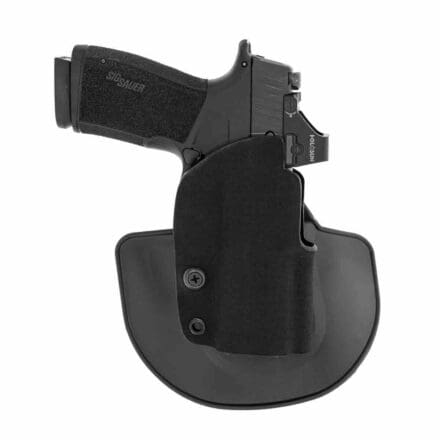
Designed for comfort, reliability, and subtle customization, the Gravity holster delivers a lightweight, low-profile design that doesn’t compromise on security or function. Built from rugged SafariLaminate™ with a tough Cordura® exterior, and the passive trigger guard detent, paired with adjustable tension, ensures secure firearm retention during dynamic movement—ideal for daily wear across a variety of environments.

“With the Gravity, we wanted to offer more than just function,” said Eric Gasvoda, Vice President and General Manager of Duty Gear for Safariland. “This holster delivers the trusted security and comfort our users expect—but with Cordura wrap options, it also allows them to express their own style without sacrificing comfort or performance”.

Key features of the Safariland Gravity include:

  • Adjustable Cant for Personalized Carry Angle
  • Fully Enclosed Trigger Guard
  • Tension Adjustment for customized draw resistance
  • Front sight clearance 13/32″ (0.406″)
  • Compatible with all Safariland 3-hole pattern mounts
  • Fits belt widths up to 1.75″ (45mm)
  • IDPA and USPSA approved

Each Gravity holster includes Safariland’s 568BL injection-molded paddle, allowing users to carry with or without a belt for maximum flexibility.

Whether you’re looking for dependable EDC performance or a holster that reflects your personality, the Gravity OWB holster delivers both—wrapped in the durability and style that Safariland is known for.

To explore Safariland’s extensive range of holsters and accessories, visit Safariland.com.

NARCO Medication Panel by Blue Tide Innovations

June 2nd, 2025

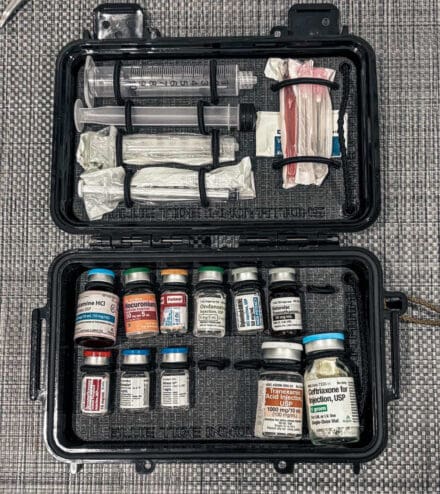
Narco Panel by Blue Tide Innovations features elastic loops on a lightweight, yet rigid board for the organized storage, accountability, and rapid deployment of controlled medications in operational environments.

Developed in collaboration with special operations medics and tactical professionals, this panel ensures critical medications are accessible, secure, and mission-ready.

The NARCO Medication panel is sold as a pair, featuring MED panel and ADMIN panel. 

Made in Miami, Florida.  Berry & IR/IRR/NIR compliant.

bluetideinnovations.com/ols/products/narco-medication-panel

Canada Pursues NATO STANAG of 6.5 x 43mm

June 2nd, 2025

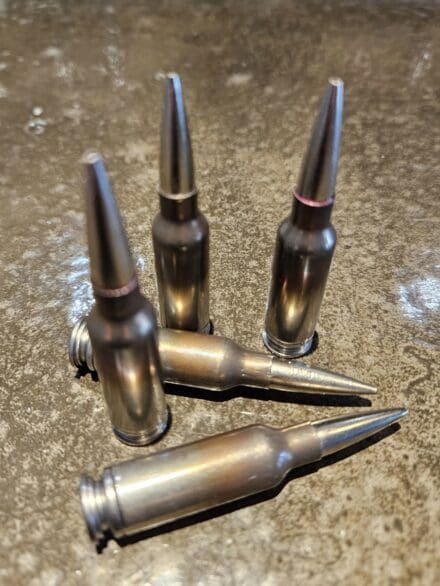
During my visit to Canada last week, I spoke with multiple people across the Army and industry and one topic dominated discussions, the 6.5 x 43 cartridge.

You probably know it by the designation of 264 USA, named when it was developed by the US Army Marksmanship Unit as an intermediate cartridge. Turns out, it’s a ballistic Goldilocks between 5.56 and 7.62 NATO and that term came up over and over in conversation. It offers additional range and lethality over both 5.56 and 7.62 NATO with a compromise in ammunition weight between the two. Additionally, it can also be used for both rifle and belt-fed applications.

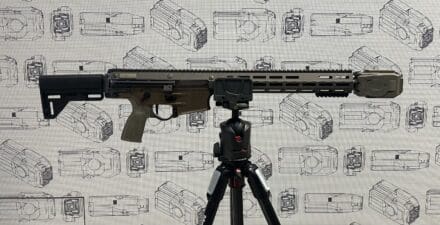
Those of you familiar with the FN America Lightweight Intermediate Caliber Cartridge (LICC) Individual Weapon System (IWS) developed for the Irregular Warfare Technology Support Directorate (IWTSD), will know the caliber which at one point has also been referred to as “264 International” as a nod to the program’s co-sponsor CANSOFCOM. They are so impressed with what they’ve observed during the LICC program that they have decided to press forward.

With an eye to the future, CANSOFCOM is pursuing a NATO Standardization Agreement (STANAG) for 6.5 x 43 mm in partnership with at least one additional NATO member. At this point, the other party has not been disclosed. However, I know it is not the US, which has been working on the 6.8 x 51mm common case cartridge as their path forward.

STANAG 4884. Technical Performance Specifications Providing For The Interchangeability of 6.5mm x 43 Ammunition.

With this new development, it seems that the caliber wars aren’t yet over. Hopefully, with NATO standardization, likely with brass and composite case designs, we will see more manufacturers of ammunition as well as additional weapon designs.

We will update this story as we learn more.

– By Eric Graves

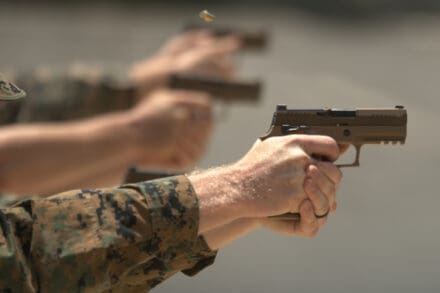
USMC Affirms Confidence in Modular Handgun System

June 2nd, 2025

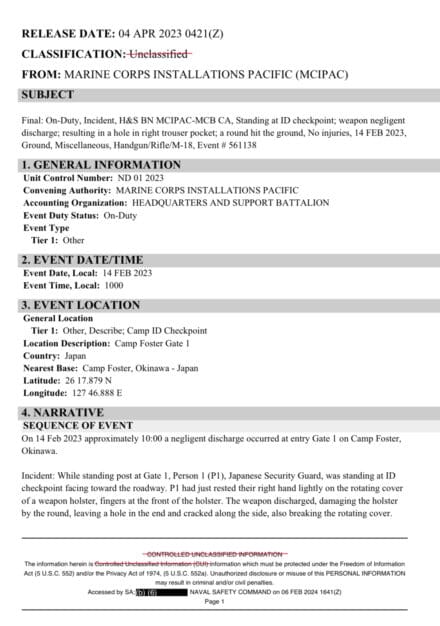
Back in April a reader posted a link to this 2023 USMC incident report regarding a negligent discharge of an M18 Modular Handgun System pistol by a foreign national gate guard on Okinawa, to the comments section of SSD. I read it and wondered why I hadn’t heard about it. Current hysteria over the P320 aside, Modular Handgun System pistols are equipped with a manual safety. If one did indeed discharge all by itself while “safe and secure in the holster”, as alleged in this indecent report, there are significant concerns over the safety of our service members regarding the over 400,000 pistols in service.

You can download the report here.

As you can imagine, the report began to circulate as confirmation bias that the M18 pistol which is based on SIG SAUER’s popular P320, is doing this or that. Unfortunately, getting to the bottom of the issue takes awhile, particularly with a vigorous travel schedule and when going back and forth with the government. Despite this, I dug in.

Considering the pistol has a manual safety and was in a holster and claims that nothing impacting the trigger, something seemed off. I asked around about the report and heard that there was more to the story and it would be best if I made a formal inquiry. Consequently, I approached the DoD Program office for MHS, Product Manager Soldier Weapons (PdM SW), which is subordinate to Project Manager Soldier Lethality at Picatinny Arsenal. They stepped right up and looked into the issue as they weren’t familiar with the mishap despite the conclusion of the incident report which was to “recommend that an engineering review of the M18 be conducted.”

I asked for a statement from PdM SW but they informed me that, as the incident had occurred in the Marine Corps, I should pursue further inquiries with Marine Corps Installation Command Pacific. I sent them an email inquiry and finally heard back after this story was published. They offered a simple statement, standing by the report.

Next, I went to Marine Corps Systems Command. Their PAO interfaced with the command and offered this statement based on my initial inquiry regarding the incident report.

The incident was appropriately reported to the Naval Safety Command, which is where the provided pdf of the incident report was sourced from in response to a FOIA request. All factual information was released in accordance with FOIA. Deliberative portions of the safety investigations are subject to executive privilege, and they will not be released to any person or entity, except within the Department of Defense, for mishap and loss prevention purposes.

I had obviously asked the wrong command, the wrong question. They didn’t investigate it. Since my main concern was whether the weapon was safe for use, that’s what I ended up asking.

Late last week, the Marine Corps Systems Command Public Affairs Office provided this statement on behalf of the command:

The M18 was rigorously tested to DoD standards before being selected for use by our Marines, and we have not seen any evidence that indicates design or manufacturing issues are present. In addition to the initial testing, each lot of weapons produced for the U.S. Government is subject to extensive lot acceptance testing with oversight by the Defense Contract Management Agency and the Service from which the order was placed (Army/Marine Corps).

The Marine Corps has full confidence in the quality, performance, and safety of the M18 handgun. The MHS is designed, built, and tested to military standards to ensure safe and effective employment during training and combat.

At least one other website reported this incident and only used the incident report as the basis of their post. They never bothered to contact the military. While we may never know what actually happened in this instance, the reality is that the Marine Corps (and Army) stand behind the safety of the MHS program. Here we are, over two years later and the pistols remain in service.

That is the ultimate concern, that service members can maintain faith and confidence in their equipment, particularly those items that they must depend their lives on, such as PPE and weapons. It was my goal to determine whether or not this was the case and the Army and Marine Corps have asserted their position that MHS is safe.

By Eric Graves

Academic Partnership Advances Quality Assurance for the Army Personnel Parachute System

June 2nd, 2025

NATICK, MASSACHUSETTS, UNITED STATES

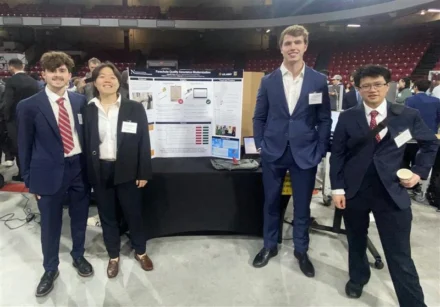
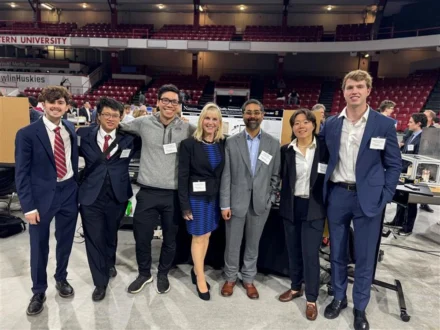
NATICK, Mass. – In a strategic collaboration with the Army’s Personnel Airdrop Systems (PADS) team, a group of Northeastern University industrial engineering students culminated their senior capstone competition, delivering more than first prize.

The Parachute Quality Assurance Modernization Team, mentored by U.S. Army Combat Capabilities Development Command (DEVCOM) aerospace engineer Tashfiq “Tash,” Salam, stood out among 40 engineering teams, each challenged to develop real-world solutions for government and industry use.

Guided by a shared mission, the team of four delivered an award-winning design: a suite of integrated digital tools, modernizing quality assurance for one of Airborne’s most critical and lifesaving capabilities – the personnel parachute systems.

Under the Assistant Secretary of the Army for Acquisition, Logistics, and Technology ASA(ALT) acquisition standards, every newly manufactured parachute must undergo a thorough inspection before being fielding to units. For the PADS team, this typically requires inspecting 8 to 13 parachutes at a time. According to the students’ research, that process can involve manually reviewing more than 5,000 data points, inspecting and measuring every stitch of fabric, harness and compartment encompassing a parachute system.

“It’s physically demanding,” Tash said. “You’re handling this large parachute; you have to inspect every inch of it. There’s a lot of surface area and a lot of steps.”

Over the course of the capstone project, the team studied those protocols applying direct feedback from quality assurance specialists, engineers and industry professionals. Their final prototype introduced an integrated software system complete with a set of digital measuring tools, capable of logging exact measurements up to 1/16th of an inch with a single click.

Tash shared how the students’ concept significantly improved the QA process, demonstrating the ability to reduce manual inspection time by nearly two hours without compromising quality.
“This is a zero-tolerance environment,” Salam said. “And the operating environment continues to get more complex every day. We needed to ensure the parachute capability we deliver is 100 percent what Soldiers need and in the way they want it. Because at the end of the day, once they land, they still have a follow-on mission. The parachute is just a ride to the mission.”

To support their research, students conducted site visits at the U.S. Army Natick Soldier Systems Center in Massachusetts, where Tash serves as a government civilian with Product Manager – Soldier Clothing and Individual Equipment (PdM SCIE), under the Program Executive Office – Soldier. They also met with DEVCOM engineers and Rhode Island National Guard members to gather feedback from quality assurance specialists and Soldiers who regularly perform parachute inspections
With more than 200,000 military free-fall and static line jumps conducted annually, ensuring consistent quality in each parachute is critical to Soldier safety.

“They understood the weight of that responsibility,” said Tash. This wasn’t about checking a box on an academic checklist; they were creating a real capability.”

The centralized system also enhances traceability, allowing inspectors to better assess the acquired measurements and key data points through the digital took it. The data is reported with real time feedback giving the PADS QA team the ability to run analytics on past inspections, identify error trends and performance metrics. As described by Tash, the system supports the PADS team mission of continuously delivering world class products to the airborne warfighter.

Ensuring students were immersed in PADS and SCIE operations was faculty advisor and key partner Dr. B. Kris’ Jaeger-Helton, Director of Capstone Design for Industrial Engineering at Northeastern. Jaeger-Helton celebrated the project as an important model for real-world learning.

“The experience was both challenging and open-ended, with clearly defined security constraints that had to be followed as well, making it the ideal Capstone project,” she said.

This year’s team built upon the foundation of the 2023–2024 capstone, which transitioned the Army’s inspection records from paper-based logs to an Excel-based digital tool. With Tash’s mentorship, this year’s Capstone expanded that concept collecting data from the T-11, MC-6, and RA-1 parachute systems.

Jaeger-Helton, who supported both capstone efforts, emphasized the value of the Army–academic collaboration.
“The capstone students genuinely benefitted from the support of Tash’s dedicated and highly knowledgeable team,” she said. “As clients, the Army PADS team communicated the importance, seriousness, and value of this initiative, while also expressing their trust and confidence in the Northeastern team. I’m looking forward to continuing our partnership for more great initiatives.”

Now in his second year mentoring a NU engineering capstone, Tash highlighted the importance of engaging with emerging talent in support of innovation and advancing Army capabilities.

“That kind of ingenuity and creativity has to come from somewhere, and it often comes from a sense of purpose in what you’re working on,” Salam said. “There was a lot of pride in the student team because they knew they were doing something that matters.”

Story by Khylee Woodford 
PEO Soldier